At least dozens, but likely many more Americans from the LGBTQIA+ community have fled to the Netherlands in recent months out of fear of Donald Trump’s policies, AD reports after surveying organizations involved in helping them. The number of American asylum applications is already higher than in the whole of 2024, the Immigration and Naturalization Service (IND) told the newspaper.
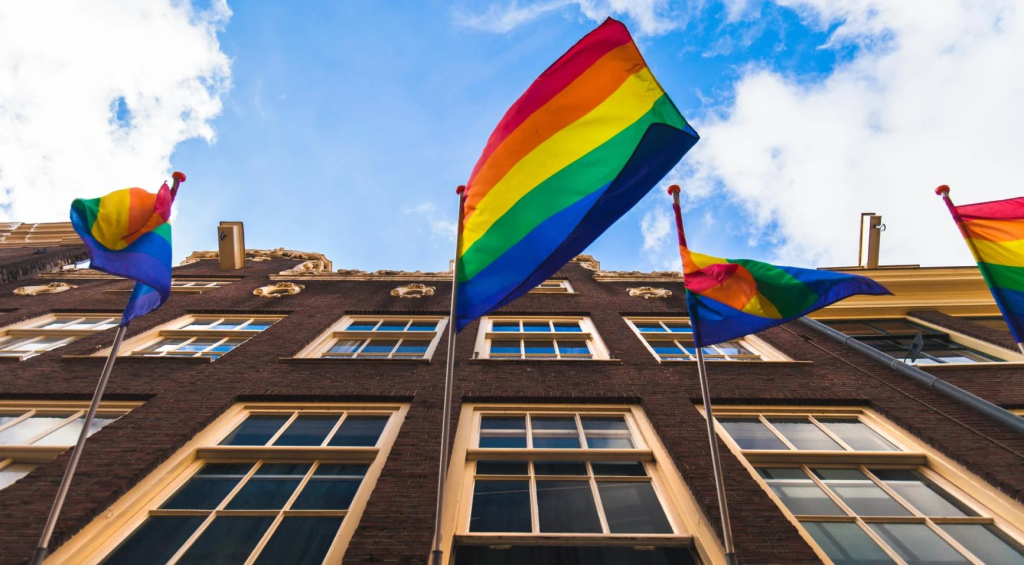
Since Trump took office for his second term as United States president, the American government implemented policy to only recognize two genders, ban rainbow flags from government buildings, scrap the funding of transgender care for young people, and officially ban terms like “gender identity,” “non-binary,” and “transsexual.” Some conservative states are going even further. Arkansas, for example, is trying to ban hairstyles that “do not match” the gender children were assigned at birth.
Organizations like Transgender Network, LGBT Asylum Support, and Trans Rescue told AD that Trump is causing great unrest in the American LGBTQIA+ community. They all report an enormous increase in requests from Americans to find housing in the Netherlands. LGBT Asylum Support alone has received over 50 requests for aid since Trump took office.
“Our people are really afraid of persecution,” Wesley de Robles of Immigration Netherlands Services, an organization that helps American entrepreneurs obtain residency in the Netherlands via the Dutch-American Friendship Treaty (DAFT), told the newspaper. The treaty, intended to promote business relations, states that Americans who register as an entrepreneur with the Chamber of Commerce and present a business plan may be eligible for a residency permit.
According to De Robles, many transgender people, in particular, are using this route to flee the United States. “Since Trump, we have received around 30 applications every month, more than half of which come from the LGBTI community.” Before Trump, there were only a handful of applications per month.
The IND is also seeing an increase in asylum requests from Americans. In the first three months of 2025, there were 20 applications, while in previous years, between 9 and 19 Americans sought asylum in the Netherlands over a whole year. About half of the applicants are transgender, Transgender Network told AD, based on data from asylum doctors.
Fewer people use the official asylum route because the IND applies strict conditions. Only those who are at serious risk of persecution or inhumane treatment have a chance. LGBT Asylum Support has, therefore, asked Asylum Minister Marjolein Faber to “recognize the deteriorating situation for transgender people as a reason for asylum.”
But Faber refused. The PVV Minister responded that Trump’s policy “gives no reason to assume that transgender people should fear persecution.” So the conditions for asylum will remain unchanged, she said.
Americans living in the Netherlands will hold a protest in front of the American consulate on Saturday, one of the organizers told NL Times. The protest is not specifically due to Trump’s treatment of the LGBTQIA+ community, but against the American government’s “violation of due process rights” in general. This follows several immigrants being taken from American streets and detained in “a brutal prison in El Salvador.”
The demonstration will happen at 1:00 p.m. on Saturday in front of the American consulate on the Museumplein in Amsterdam, which is currently closed for renovations. “On April 19, we gather to say loudly and clearly: Hands Off Our Due Process Rights!” the organizer said.
An irrefutable reality of being a member of the LGBTQ community, at any age, is that you must give more thought than non-LGBTQ people about where to live. What are the local laws that apply to LGBTQ people regarding workplace and housing discrimination, marriage equality and conversion therapy? What does available public polling reveal about acceptance of the LGBTQ community? Even if you’re not married and don’t plan to be, or even if you no longer work, such laws — or the absence of them — suggest to LGBTQ folks how safe and welcoming the locale will be for them.
The above is true whether you’re LGBTQ and 30 — or a gay retiree. You can’t just spin the globe. If you’re LGBTQ and are considering retiring abroad, it is incumbent on you to do more due diligence than your straight friends and family members would have to do in the same situation.
Best places for LGBTQ people to retire abroad
If you enlist the services of a lawyer who specializes in retirement abroad, you have to ask more questions; you have to spend more late nights googling; and you have to read more articles like this one, in which we examine the knotty issues related to gay retirement outside the U.S., include advice from both experts and expats, and make some (hopefully helpful) recommendations.
If everything falls into place, you can breathe a sigh of relief once you’re in the midst of your retirement abroad. Chris Young and Jon Kinnally, who both worked in the television industry — Young was a writer for Comedy Central, and Kinnally was a writer and producer for the sitcoms Will & Grace and Ugly Betty — lived most recently in Los Angeles before the couple moved to Spain. They chose Sitges, a vibrant, walkable beach town about 45 minutes from Barcelona. “It’s so open. You see gay and lesbian couples holding hands. And you can be old and gay here, which you can’t be in L.A.,” Young says, not entirely joking.
Below, we recommend some beautiful and culturally rich countries where LGBTQ folks can retire happily and safely. But just as the U.S. isn’t uniform in terms of acceptance, neither are most countries. The LGBTQ community scarcely needs to be told that the more populous and diverse the area — in the U.S., that means urban or coastal, or both — the more accepting the area tends to be.
But it’s worth repeating. As the founder and managing director of Mitos Relocation Solutions, Federica Grazi helps expats retire in Greece and other European countries, and she is quick to note that not all of Greece is like the gay magnets of Athens and Mykonos. “I would not recommend that gay couples move to the countryside, where there are traditional communities and not many expats — it would be harder to integrate there,” she counsels, but the same might be said of France, Spain, Italy — or the U.S.
With that in mind, here’s our hot list of retirement places.
Spain
Spain is well-known as one of the most LGBTQ-friendly countries in the world. Spain legalized same-sex marriage in 2005, a full decade before the U.S. Naturally, this factored into Young’s and Kinnally’s decision to move to Sitges, a global destination for gay tourism.
The two appreciate the fact that the resort town, while heavily gay — with a spate of gay bars, nightclubs, and hotels — is demographically diverse. “It’s not a gay ghetto,” Young says. “Sitges is a great mix,” Kinnally adds. “It’s different than a place like Provincetown. There are kids running through the streets, old Spanish ladies, and gay couples — all mixing together. It’s kind of a utopia if you want to retire.”
With health care costing the couple only 250 euros a month and three-course lunches priced from 15 to 17 euros, they can breathe easy about expenses and work on their respective book projects. (Kinnally’s I’m Prancing as Fast as I Can comes out in August.) Of the major cities, Barcelona is a gay mecca, and Madrid boasts Chueca, a festive gay neighborhood.
Greece
While same-sex marriage was only recently legalized in 2024, same-sex sexual activity was decriminalized in Greece in 1951, which compares favorably to the U.S., which granted this right far later — in 2003. Likewise, employment discrimination against gays and lesbians has been illegal in Greece since 2005 (with gender-identity protections following later), while the U.S. did not grant this protection at the federal level until 2020.
Athens boasts a large and thriving LGBTQ community, especially in the Gazi neighborhood, and the Cycladic island of Mykonos is arguably the world’s most popular summer destination for the LGBTQ community, with famous gay beaches like Elia and Super Paradise.
Former New Yorker Daniel Rentillo says that even the small, low-key island of Symi, where he retired, is a comfortable place to be LGBTQ, and he’s noticed more gay couples visiting and even making moves to relocate to the island. The fact that Greece enjoys excellent health care and a relatively low cost of living makes this country of cultural antiquities, plentiful beaches, mild weather, and fresh seafood a fine choice for retirees — LGBTQ or not.
Malta
Not only was employment discrimination against the LGBTQ community banned here, and same-sex sexual activity decriminalized years before the U.S. made these civil rights moves, but the island nation of Malta was also the first European country to ban conversion therapy. Supermajorities of Maltese support civil rights and marriage equality.
With a tiny population of half a million people living on three sunny, inhabited islands (Malta, Gozo, and Camino), the country is located south of Sicily, enjoying a similar Mediterranean climate and stunningly clear waters to swim in, especially at the natural coves at St. Peter’s Pool.
Valetta is the pedestrian-friendly capital and is the best place for gays to hole up, along with nearby Sliema. “Everyone accepts the LGBTQ community today,” says Matthew Cassar, a citizenship advocate and lawyer based in Sliema. “No one would conceive of discrimination,” noting that “there is no opposition party” set on scaling back the community’s rights. One of Cassar’s clients, worried for his transgender daughter’s rights and safety in the U.S. under the Trump administration, is in the middle of the citizenship process.
The country has two official languages: Maltese and English.
Australia
For more than a decade, public polling has shown support for gay rights and marriage quality surpassing the 70% mark. And some advances have been swift and recent: Since 2021, the country has outlawed the so-called gay panic defense, legalized marriage equality, and banned conversion therapy (in regions representing 85% of the population). In 2013, Australia implemented federal protections based on sexual orientation, gender identity, and intersex status.
Though marriage equality did not arrive in Australia until 2018, the capital of Sydney has embraced gay culture for decades: The annual Gay and Lesbian Mardi Gras, one of the world’s biggest LGBTQ celebrations, has been going strong since the 1970s. While Sydney, Adelaide and Brisbane have gay neighborhoods, the LGBTQ presence in Melbourne is more spread out.
Most retirees will find a pathway to relocate through the expensive ($500,000 to $750,000) Investor Retirement Visa. Still, it is cheaper to live in Sydney than in New York or San Francisco.
For those seeking a mild climate, beautiful cities, a friendly populace, excellent health care, and zero language barrier, “Oz” (the affectionate slang for Australia) may be the ticket.
Costa Rica
Costa Rica’s former president, Carlos Alvarado Quesada, was a notable reformer and advocate in the area of LGBTQ rights, garnering global attention when he publicly apologized for the country’s past persecution and discrimination of gays, calling it “shameful.” Same-sex marriage became legal in 2020, which was also the year that hate crimes and blackmail based on sexual orientation were criminalized. (Transgender rights already had been significantly expanded in 2018.)
A center of eco-tourism and sustainable well-being with no standing army, tropical Costa Rica has long been regarded as a kind of peaceable utopia for expats. With the Caribbean Sea on one side and the Pacific on the other, Costa Rica is known for its lush landscape and hot springs.
Gay life is centered in the capital city of San Jose and the carefree beach resort town of Manuel Antonio. Retirees will find the country very affordable, even with household help.
The Netherlands
The first country in the world to legalize same-sex marriage (in 2001) also banned discrimination based on gender identity, gender expression, and sex characteristics in 2019. Not only do most Dutch people support LGBTQ rights; many Dutch, especially those under 40, can’t even comprehend the discrimination faced by the community in other countries.
It would be an understatement to say that you can be comfortably gay in Amsterdam, with Reguliersdwarsstraat the most prominent LGBTQ area. This world-class city is postcard-perfect, teeming with cyclists, and is pedestrian-friendly (just mind the bike lanes). The visa system is straightforward and leads to residency. English is widely spoken, and the cultural opportunities seem endless.
On the downside, the country’s cost of living can feel a little pricey for those living outside major U.S. cities, and the weather in the Netherlands is rainier and chillier than in southern Europe.
Thailand
In 2024, Thailand made headlines when it became the first UN member state to approve a marriage equality law, and the country, with its myriad cultural and recreation opportunities, has long been popular with LGBTQ tourists. Therefore, LGBTQ couples and individuals may want to consider Thailand, but only if they’re of a certain stripe: adventurous and very well-traveled; tolerant of tropical heat; and veterans of previous vacations or work stints in the country.
In an exotic culture so far from friends and loved ones, it’s best to have an expat community already in place if you’re thinking of moving there. In addition, though Thailand offers the LGBTQ community a range of protections and anti-discrimination laws, local attitudes are still evolving, and social interactions should be carefully navigated (cue the established expat scene).
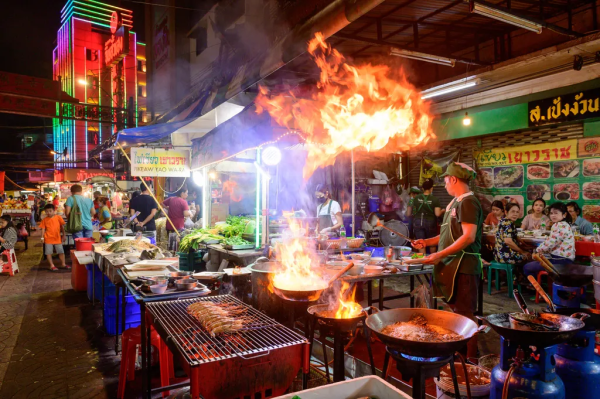
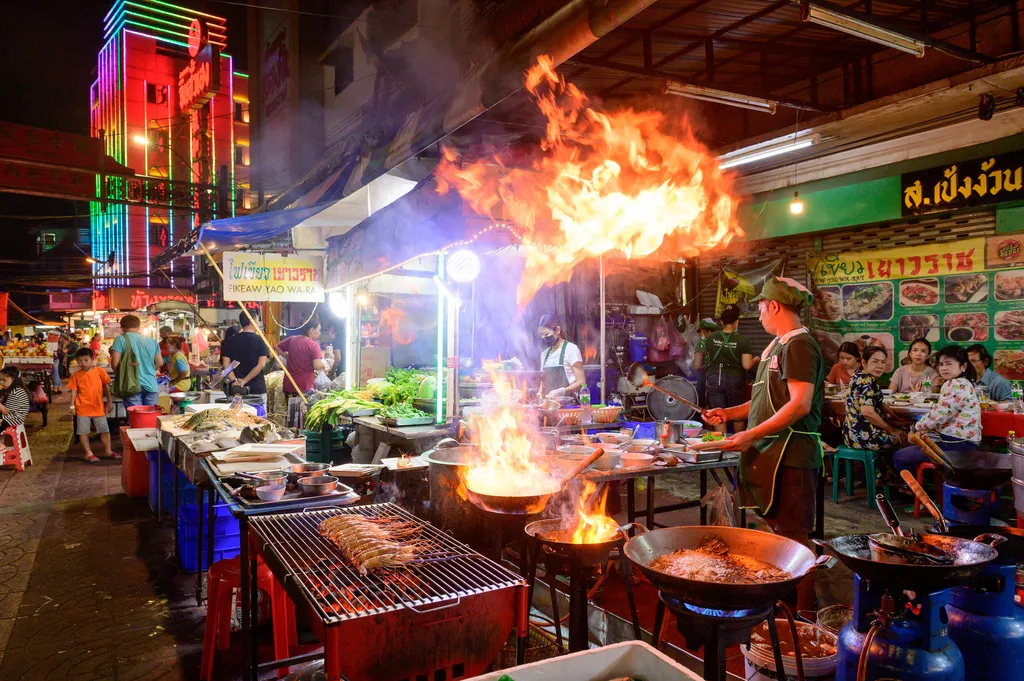
That said, this is a very inexpensive country with kind people. And if you love Thai food, having pad see ew where it was invented will be a revelation. The capital, Bangkok, is a uniquely stimulating place, where a ride on long-tailed boat along the Chao Phraya River may get you to your destination faster than an open tuk-tuk (taxi), given the city’s notoriously heavy traffic.
If you prefer a slower pace and a coastal setting, you can always base yourself in the resort areas of Phuket or Ko Samui, the latter the island where season 3 of The White Lotus was filmed.
*Opinion written by Harvey Haberman on the Dallas Voice.
I recently received a message on Facebook from my friends from Florida (and I use the term “from” loosely because they no longer live there) who, like several other friends, are leaving the country. They have moved to Curaçao in the Dutch West Indies. It’s an LGBTQ-friendly country that they felt was a safe haven in a world marching toward authoritarianism.
I don’t blame them for leaving, nor do I blame my other friends who have moved to Ireland, Canada and Mexico. They believe the handwriting on the walls of social media warning that the United States is becoming 1930s Germany.
And, frankly, that scares me.
What I find frightening is that a billionaire huckster and his cronies can so easily create chaos in a country which I had seen as being on the right track. Instead, they have derailed the country for no other reason than to grab power and steal money from American’s pockets. What I find even more frightening is that so many of my friends are willing to give up and leave.
And it’s frightening also because I know the poem that starts, “First they came for the socialists, and I did not speak out — because I was not a socialist.”
That poem was a sad commentary on Germany at the time, but the key take away for me from it is that part: “and I did not speak out because I was not a socialist.”
The poem as a whole was not so much about the oppression of certain groups, but instead about the inaction and silence of the general populace: They let it happen. In their complacency they collaborated with the Nazis as surely as if they were active supporters.
But the poem says nothing about packing up and leaving.
If all the Jews had left Germany, Hitler would have still been in power, and he would have found other scapegoats. He would have still been in power and would have continued his quest for an empire. He would have still bombed England and invaded France.
Hitler was successful, at least for a while, because not enough people spoke out.
My partner and I have discussed whether moving out of the country would be the prudent thing to do. But while it may be the prudent thing to do, I see it as capitulation. Leaving the country would leave a lot of our friends behind. I would be leaving behind my home, my family, my country. And that would be playing into the hands of a megalomaniac and a damned stupid one at that.I was heartened by Cory Booker, senior senator from New Jersey, standing up in the Senate and delivering his epic marathon speech against Trump and Musk and the whole cabal that backs them. I am heartened by the Supreme Court election in Wisconsin where — even as Elon Musk gave million-dollar checks to a few individual voters and backed a massive media campaign to install a right-wing candidate — Susan Crawford, the progressive candidate, triumphed.
Small victories as these are, they show that people are still willing to stand up and speak out against the most un-American administration in history.
A couple of weeks ago I attended a protest outside the Tesla Service Center calling for Musk to get out of the government — a government to which he was not elected. Though the turnout was small, it was visible. The turnout protesting the unlawful kidnappings by ICE drew hundreds more. And those protests are going on in every city in America. Over this past weekend, on April 5, millions turned out at events around the country in a massive national call for the administration and its unelected minions to keep their “Hands Off” things like Social Security and more.
People are speaking out. And the LGBTQ community knows a lot about speaking out. We have done it before, and we can and will do it now.
Now, I’m a stubborn old goat. My friends and I worked hard to build a community here, and, though they are a small thing, the rainbow sidewalks in Oak Lawn let me and the world know that we are here and not going away. And no matter how Trump and Musk and his cronies try to erase history and erase us, I refuse to let their fear campaign chase me away.
So, to anyone who feels they must leave, please do it safely. But as for me — I ain’t going nowhere! And I ain’t staying quiet.
Hardy Haberman is a longtime local LGBT activist and a board member of the Woodhull Freedom Alliance. His blog is atDungeonDiary.blogspot.com.
Christine Jardine said she wanted to see a potential “fast lane” for skilled US citizens.
She presented a motion on “Trump and the UK’s place in the world” to the Scottish LibDem conference in Inverness, which was backed by party members.
It called for a new customs union with the EU and a summit of Commonwealth nations to respond to US tariffs.
Her motion also called for a “visa route to allow highly skilled Americans who wish to flee the Trump presidency to come to the UK”.
Speaking to the PA news agency about her motion, the Edinburgh West MP said: “I think if there are people in America who are unhappy with a lot of the things [Trump] is talking about domestically – the LGBT community for example, a lot of minorities – they have skills, we could welcome them here.
“And I think we would be a much more welcoming society for an awful lot of people who are finding America, at the minute, difficult.”
While visas are already available for US citizens, she said the Government should encourage Americans to take up a skilled visa route.
Jardine said: “Americans could do it at the moment, they could apply, we could create a special fast lane if you like for the Americans to do it.”
On Donald Trump’s trade tariffs, she said: “We need to stand up to him, we need to say we’re not going to be dictated to.”
Alexei was married to a woman in Russia before fleeing both his marriage and the country for the safe haven of Argentina.
“[In Russia] there’s a lot of pressure to be in a relationship at a young age,” the 24-year-old dental student told the Herald. “I thought that being in a heterosexual marriage would stop people from asking so many questions.”
In recent years, Russians have emigrated to Argentina in droves to avoid conscription in the Russia-Ukraine war. Others, meanwhile, have fled a country that has grown increasingly hostile to its LGBTQ community under the authoritarian rule of President Vladimir Putin.
Over a period of weeks, the Herald spoke with several such emigrés about their experiences in Buenos Aires — and why they ultimately decided to abandon their native Russia. Because their sexual preferences and political views could violate Russian law against “illegal propaganda,” several asked to be identified exclusively by their first names.
“I’ve been dreaming of living in a gay-friendly country since I learned I was gay,” said Sergei Vakhrushev, a blogger based in Buenos Aires.
Vakhrushev was bullied relentlessly as a teenager in the small port city of Vladivostok and finally came out after moving to Moscow. Even then, he was only willing to tell a few close friends, as an adult.
Pride celebrations criminalized
As recently as 2010, conditions for the LGBTQ community in Russia were not significantly worse than in most western countries. But in 2013, Vladimir Putin signed into law a ban on the distribution of “propaganda” depicting “non-traditional sexual relationships” to minors. The ban’s definition of “propaganda” was purposefully ambiguous, which left a range of activities, from pride celebrations to public displays of affection, subject to criminal penalty.
In the years after the law went into effect, the government increased its attacks on LGBTQ representation in media and public affairs. As a result, hate crimes against queer people in Russia jumped drastically, with one study finding that attacks had tripled. For many in the LGBTQ community, going to the police was often not an option, as doing so was tantamount to confessing to a crime.
Like in other hostile societies, these persecuted groups have developed strategies to navigate Russia’s social and political pressures. But after Putin invaded Ukraine in February 2022, many in the queer community felt a new urgency to leave the country.
One such Russian was Nika, 29. She was able to access hormone replacement therapy in Russia when she began her transition in 2019, legally changing her name to reflect her gender identity.
When the Russian government criminalized all gender-affirming healthcare in July 2023, Nika had been living in Argentina for over a year. And by the time Russia expanded its propaganda law to apply to anyone, regardless of age, she had already made a new life for herself in Buenos Aires. “They decided to search for new targets,” Nika said. Under the new law, “existing is propaganda.”
Like many queer Russian immigrants, Nika applied for asylum when she first arrived in Argentina. During the application process, which she described as “chaotic,” she knew few Russians with whom she could compare her experience. As more emigrés arrived and shared their stories, however, she found — and helped build — a community of her own.
‘I just wanted to hold hands’
Many queer Russian immigrants expressed surprise at the extent to which members of the LGBTQ community in Argentina could openly express themselves.
“I just wanted to hold hands with a man and not feel judged,” said Vitalii Panferov, a psychologist based in Buenos Aires. “Even in Moscow, I would only do that at night, where no one could see in the dark. When I got to Argentina, I saw so many gay couples holding hands freely.”
Vitalii initially moved to South Africa in October 2022 to get legally married. He and his partner moved to Buenos Aires the following January. They ended up initiating divorce proceedings later that year.
As he was going through this difficult process, Vitalii found a not-for-profit support group for LGBTQ people in abusive relationships run by a Russian psychologist. In Russia, such a service would be considered illegal.
In Vitalii’s telling, the group not only helped him get back on his feet but inspired him in his own psychological practice, which primarily consists of counseling gay men and couples.
Vakhrushev hopes to get married and raise a family — something that would have been impossible in Russia. In November 2023, he came out to his mother and sister, who still live in Vladivostok, after attending his first Pride march in Argentina.
“I knew I was safe here,” he said.
‘I feel good for the first time’
Kirill Dolgov found it impossible to be openly gay in Russia. A former employee of the Russian government, he told the Herald that he was forced to change careers after being repeatedly questioned about his sexuality. In 2022, Dolgov finally moved to Argentina, where he co-founded a marketing firm with a fellow Russian emigré.
“I feel good for the first time,” he said.
After living a “closed life” in Russia, Dolgov works to foster opportunities and social spaces for other queer Russian immigrants in Argentina by collaborating with fellow emigrés and hosting events.
He also manages a wine company, Bodegas Arte, which hires immigrant artists from Russia to design its labels, each drawing inspiration from Argentine culture. It doesn’t make much money, but he claims it has helped familiarize him with Latin American markets while supporting the Russian community.
In October, Bodegas Artes co-sponsored the queer film festival Side to Side at the LGBTQ cultural center Casa Brandon in the Villa Crespo neighborhood of Buenos Aires. The festival was first held in St. Petersburg but has been barred from showing films in Russia since 2021.
Last year’s event marked the first of its kind held outside of Europe and offered films with Russian, English, and Spanish subtitles — as well as an opportunity for queer Russians to mingle with Argentina’s LGBTQ community.
“Queer expats will often turn to other queer expats because both have the experiences of being sexual dissidents and foreigners, in common,” explained Ryan Centner, a professor of urban geography at the London School of Economics who studies LGBTQ expatriate populations. “Queer expatriates often feel the most ease and trust with other queer people. You don’t have to explain or strategize in the same way that you likely would when engaging with someone who is not queer.”
Last year, Jeny, a 44-year-old art teacher, launched Feria DA! — a bazaar at the LGBTQ bar and social club Feliza in Almagro where queer Russian artists and small business owners can advertise and sell their products. As she told the Herald, many of its vendors are struggling to make ends meet amid the rising cost of living.
Jeny hopes to educate people not just about Russian arts and culture but about the diversity within the Russian immigrant population.
“There’s a problematic stereotype that all Russians in Argentina are rich,” she said.
Recent events at Feria DA! have included lesbian speed dating and queer tango, as well as sales of everything from Russian food to artisanal jewelry and ceramics.
‘I don’t want to go back into the closet’
On February 1, thousands took part in anti-fascist pride marches across Argentina and the West to protest Javier Milei’s attacks on the “LGBT agenda” at the 2025 World Economic Forum. While some Russian immigrants considered the comments harmless compared to the oppression they experienced in Russia, others expressed concern that the country that had provided them sanctuary was regressing.
When Max, 29, sought asylum in Argentina in January 2023, they discovered that they were able to indicate “other” on their application form. It was the first time that they had been able to identify as nonbinary in an official capacity.
Although they acknowledged that the 2023 elections in Argentina were democratic, Max admitted to the Herald that they sometimes feel as though they’ve left “one dictatorship for another.”
“We are not the kinds of refugees this government wants,” Max said. “Do we have the luxury of tolerating what’s happening in Argentina?”
Nika likewise noted that after escaping a ruthlessly anti-LGBTQ regime, “it feels like Groundhog Day. We are used to preparing for the worst. I don’t want to go back into the closet.”
“I see people scared or skeptical [about Milei’s comments], but we already lived it,” she added. “I want to share our experience.”
Here to stay
The LGBTQ Russian community in Buenos Aires largely organizes on Telegram, a messaging application commonly used in the Russian-speaking world. A single queer channel has well over 1,000 members.
Kirill described the group as one “big family” comprising people from many different backgrounds. Not everyone gets along all of the time — what community does? — but its members generally “want to help people with their troubles.”
Not long after his divorce, Panferov joined a Russian-Argentine choir in the hopes of making new friends. It was the first time he said that he didn’t feel judged by his fellow Russians for his sexuality.
“After living in Argentina for a while, you start to realize that it’s actually less normal to be judgmental,” he told the Herald. “That kind of judgment is not okay here.”
After escaping Russia a little over two years ago, Alexei started learning Spanish and immersing himself in his new home. “I never considered staying in my bubble,” he said, referring to the Russian immigrant community.
Even so, he is grateful for the support he received from fellow Russians in navigating the asylum process and finding work early on. He told the Herald that he invites fellow Russian queer people to his clinic for dental work as a way to practice and pay it forward.
“99% of the Russians I know [here] are gay,” he laughed. “We help each other however we can.”
Several European countries have updated their travel guidance for citizens visiting the U.S., including recent guidance for transgender and nonbinary travelers.
It’s common for countries to issue travel advisories or warnings for things like crime levels, terrorism threats, current conflicts, health concerns or natural disasters.
The U.S. issues its own travel advisories for Americans traveling abroad, but a number of other countries are doing the same for the U.S. These new advisories come as the Trump administration is tightening U.S. borders, cracking down on undocumented migrants and implementing a new federal policy to recognize male and female, rather than gender identity, as the only legitimate sexes.
Canada, the United Kingdom and Germany have also updated their travel guidance for their citizens planning to travel to the United States after several tourists were detained by U.S. immigration authorities in recent months.
Travelers from many European countries and the U.K. can travel to the U.S. for business or tourism and stay for up to 90 days without a visa under the Department of Homeland Security’s Visa Waiver Program. But several travelers from countries within the program — like Canada, Germany, the U.K. and France — have been stopped and detained by U.S. immigration authorities within recent months.
Here’s what has transpired.
Nations with LGBTQ advisories for the U.S.
President Trump signed an executive order in January that says the federal government only recognizes two biological sexes: male and female. Per that order, a visitor applying for a visa or an Electronic System for Travel Authorization (ESTA) must declare their sex assigned at birth on the application forms.
European allies, including Denmark, Finland, Germany, Ireland, the Netherlands and Portugal, issued guidance that advises transgender and nonbinary travelers to contact the U.S. Embassy in their respective countries for more information on how to proceed if they wish to travel to the U.S.
Nations with other travel advisories for the U.S.
Canada
Recent tensions between the U.S. and Canada have risen over Trump’s trade war, not to mention his musings that he would make the northern ally the U.S.’s 51st state. Canada added new information under its U.S. travel advice page regarding the requirements for foreign nationals visiting for more than 30 days.
“Canadians and other foreign nationals visiting the United States for periods longer than 30 days must be registered with the United States Government. Failure to comply with the registration requirement could result in penalties, fines, and misdemeanor prosecution,” according to the Canadian government’s website.
The rule, enforced starting April 11, comes as part of an executive order signed by Trump, which requires all visitors staying for 30 days or longer to register with the U.S. government.
Germany
Last month, Germany updated its guidelines for its citizens looking to travel to the U.S. The European nation is investigating the cases of three of its citizens being denied entry and placed into detention by U.S. immigration authorities.
“Neither a valid [ESTA] authorization nor a valid U.S. visa constitutes a right to entry into the USA,” according to a translation of the German Foreign Office website. “The final decision regarding entry is made by the U.S. border official. It is recommended that you bring proof of your return journey (e.g., flight booking) upon entry.”
The office also warns of potential legal consequences. “Criminal records in the United States, false information about the purpose of their stay, or even a slight overstay of their visa upon entry or exit can lead to arrest, detention, and deportation.”
Two German nationals were detained in January as they were separately trying to cross the San Ysidro border between San Diego and Tijuana, Mexico, the New York Times reported. They have since returned to Germany with their cases resolved. A third remaining case involves a German national — who is a legal permanent U.S. resident who received a green card residency permit in 2008 — who was detained by ICE at Boston International Airport on March 7. He is now being held at the Wyatt Detention Center in Central Falls, R.I., NBC News reported.
The United Kingdom
The U.K. Foreign Office has updated guidance on its website in recent weeks for its citizens traveling to the U.S. It currently states, “You should comply with all entry, visa and other conditions of entry. The authorities in the U.S. set and enforce entry rules strictly. You may be liable to arrest or detention if you break the rules.”
Archived versions of the same website did not include potential legal consequences at the beginning of February and only stated, “The authorities in the U.S. set and enforce entry rules,” Reuters reported.
The Foreign, Commonwealth and Development Office did not explain the reason for the change.
The update comes around the same time a British tourist said she was held for more than two weeks in Washington state. Becky Burke, a 28-year-old from Wales, was backpacking through North America when she was allegedly denied entry into Canada on Feb. 26 “due to an incorrect visa,” according to a Facebook post by her father, Paul Burke. She was subsequently denied reentry into the U.S. and was detained at a facility in Tacoma, Wash.
Burke had stayed with a host family in Oregon, where she performed chores in exchange for food and lodging. She was told she violated her visa even though she was never paid. Travelers using a temporary visitor visa cannot accept work or employment in the country. Burke was repatriated back to the U.K. on March 18, according to U.S. Immigration and Customs Enforcement.
New Zealand
Last November, New Zealand updated its travel guidelines to the U.S. to “Exercise increased caution in the United States of America (US) due to the threat of terrorism (level 2 of 4).” The nation’s government travel website points to higher active shooter incidents and violent crime in the U.S. compared to New Zealand.
A few blogs ago we broke news about Expatsi’s Move Abroad Conference. Now we have a podcast to share with you between FleeRedStates’s Bob and Expatsi’s Jen. Don’t forget to get that conference info and discounts by clicking here.
A New Hampshire man with a green card was detained by immigration officers at Logan Airport and is being held by U.S. Immigration and Customs Enforcement at the Donald W. Wyatt detention facility in Central Falls, Rhode Island.
Fabian Schmidt’s family said they are unsure of why he is being held. They said he has a recently renewed green card, and no active issues in court.
Schmidt had been visiting Luxembourg and flew back to the U.S. on Friday. His partner had gone to pick him up at Logan Airport, and waited four hours before calling authorities.
“It was just said that his green card was flagged,” said Astrid Senior, his mother. She said she didn’t hear from her son directly until Tuesday, when she learned he’d been hospitalized.
Senior described Schmidt being “violently interrogated” at Logan Airport for hours, and being stripped naked, put in a cold shower by two officials, and being put back onto a chair.
She said Schmidt told her immigration agents pressured him to give up his green card. She said he was placed on a mat in a bright room with other people at the airport, with little food or water, suffered sleep deprivation, and was denied access to his medication for anxiety and depression.
“He hardly got anything to drink. And then he wasn’t feeling very well and he collapsed,” said Senior.
He was transported by ambulance to Mass General Hospital. He didn’t know it at the time, but he also had influenza.
On Tuesday, Schmidt was transported to the regional headquarters for ICE in Burlington, Massachusetts, and then transferred to the Wyatt facility. The family, including his partner, who is a cardiologist in Nashua, have acquired attorneys and been working with the German consulate in hopes to have him released on bail.
Schmidt and his mother moved to the U.S. in 2007, and received green cards in 2008. He moved from California to New Hampshire in 2022.
Senior described her son as a hardworking electrical engineer with a partner and 8-year-old daughter who are both U.S. citizens.
“Fabian said to me that he feels he’s very fearful and is frightened,” said Senior.
Schmidt had a misdemeanor charge for having marijuana in his car in 2015, which his mother said was dismissed after laws changed in California around marijuana possession. He missed a hearing about the case in 2022 since a notice was never forwarded to his new address. Senior mentioned that Schmidt is successfully recovering from alcoholism, and had a DUI that he’s completely worked through and paid off from around ten years ago.
Can a green card holder be deported?
It’s a complicated question, but some protections exist.
Green cards grant foreign nationals the right to live and work in the U.S. as permanent residents. They’re valid for ten years and have to new renewed.
“Only the immigration judge can take away that green card. The Trump administration thinks that they can expand that and do some crazy things,” said Curtis Morrison, an immigration attorney in California with experience litigating against the Trump administration. “But the law as it is now — he needs to be able to appear before an immigration judge.”
The government has to initiate removal proceedings in immigration court, and an individual has the right to go before a judge to defend themselves and understand the government reasoning for the potential deportation.
“[It’s the] Immigration and Nationality Act — which describes different kinds of conduct or crimes that could trigger somebody with a green card being deported and put into court proceedings to have them deported,” said Gregory Chen, senior director of government relations for the American Immigration Lawyers Association.
The law doesn’t always require convictions for green card holders to be deported.
“There is a long list of behaviors, conduct and also crimes. If somebody’s been convicted of something that could make somebody deportable if they have a green card,” he said.
Chen hadn’t heard of other green card cases like Schmidt’s other than that of Palestinian and Syrian student activist Mahmoud Khalid in New York City, a green card holder who is currently detained due to his protest activity at Columbia University. In that case, attorneys are relying partially on First Amendment right of protest.
“We have seen a disturbing trend from the federal government to target people who have legal immigration status,” said Chen, including not just those who have green cards, but people with visas and varying legal statuses.
“Denying a green card holder admission on such a minor charge would be an extreme case, but it is possible under the law,” said Jaclyn Kelley-Widmer, immigration law professor at Cornell Law School of the pot possession charge and deportation.
The reasons a green card holder can be deported include many kinds of criminal convictions, even if those convictions are from a long time ago and even some very minor convictions. For marijuana convictions, a person is deportable unless the conviction is for possession of 30 grams or less of marijuana for one’s own use, she said. Otherwise, any controlled substances offense makes a green card holder deportable.





 fleeredstates.blog
You must be logged in to post a comment.