The state of Indiana just banned trans people from updating the gender markers on their driver’s licenses.
Advocate reports that the state’s Bureau of Motor Vehicles added a small statement to its website on Monday saying that it will no longer allow people to change their gender on state IDs, even if they have a court order.
The notice can be found by clicking through several webpages on the state’s BMV website:
Gender Change Rule Update
Effective Feb. 12, 2026, the BMV will no longer provide customers with the option to change their gender on their Indiana credential by using a court ordered gender change or physician statement per Amended Rule 140 Indiana Administrative Code section 7-1.1-3.
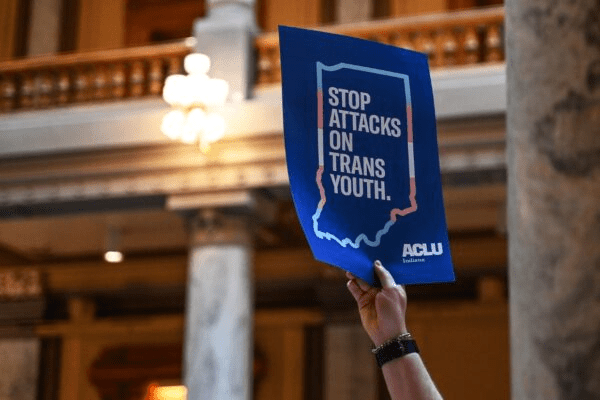
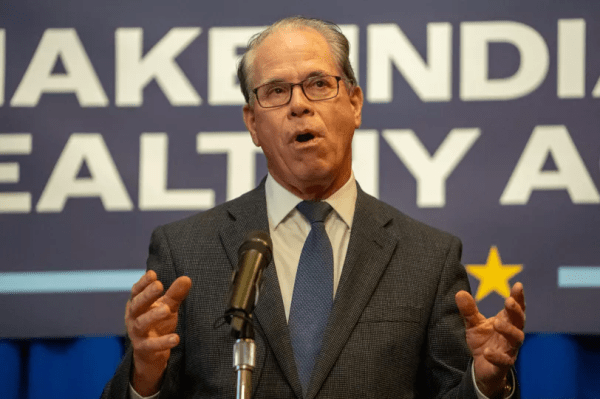
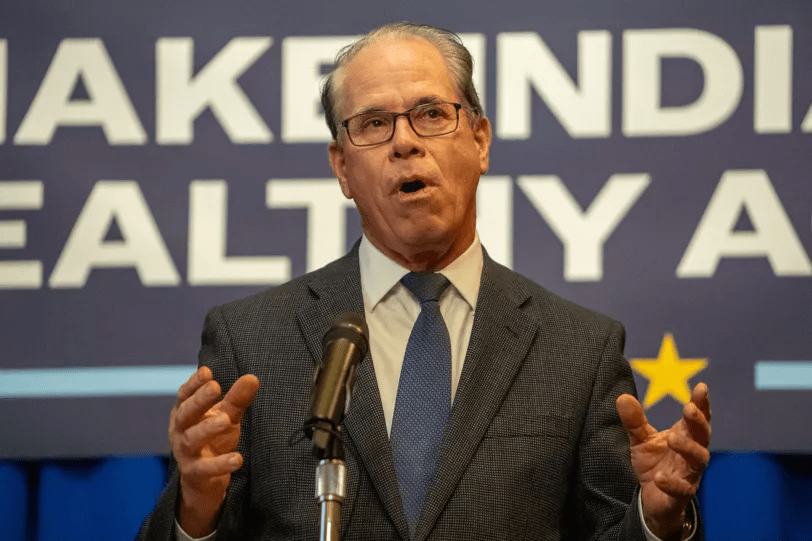
Indiana has been rolling back transgender people’s rights for the past few years. In 2014, trans people were allowed to update the gender marker on their birth certificates with a court order. In March 2025, Gov. Mike Braun (R) signed an executive order banning the practice. The ACLU sued to stop the executive order.
In January 2020, the Indiana BMV stopped allowing people to choose an “X” gender marker on their driver’s licenses, after about a year of allowing it. Then-Attorney General Curtis Hill said that the BMV had overstepped its authority in allowing the nonbinary gender markers and said that “only the General Assembly” has the power to decide if nonbinary gender markers are allowed.
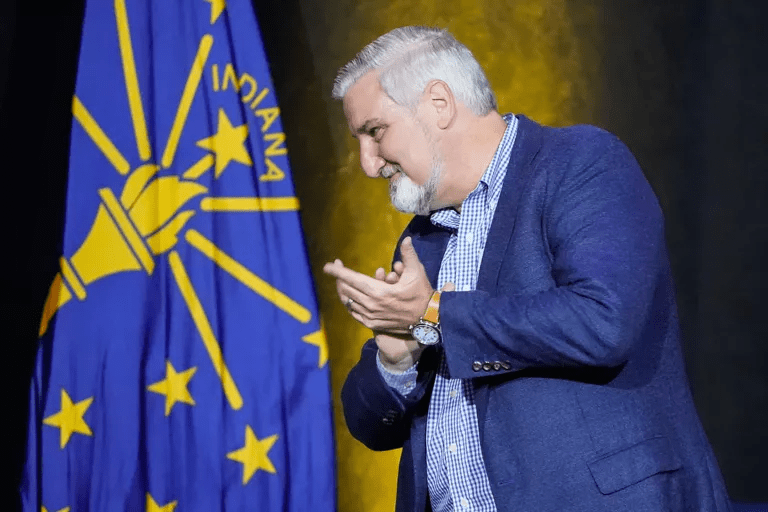
In 2023, then-Gov. Eric Holcomb (R) signed a ban on gender-affirming care for trans minors that also forced trans youth in the state to detransition if they were already receiving hormone therapy.
The Movement Advancement Project says that only three states – Texas, Tennessee, and Florida – completely ban trans people from updating the gender marker on state IDs.
Indiana Youth Group, an LGBTQ+ organization in the state, denounced the rule change.
“Denying people the ability to update the gender marker on their identification is not only discriminatory; it is dangerous,” they said in a statement. “In an increasingly hostile climate, mismatched identification can expose individuals to harassment, threats, and violence. It can also create serious barriers to employment, housing, and access to essential services.”
In 2020, a study from Drexel University found that transgender adults with gender-affirming IDs have better mental health than those whose IDs do not match their gender identity.
The study examined data provided by 22,286 trans adults in the 2015 U.S. Transgender Survey and found that those with gender-affirming identification — such as passports and driver’s licenses — were 32% less likely to be classified as seriously psychologically distressed. They were also 22% less likely to have seriously considered suicide within the last year and 25% likely to have made a suicide plan within the last year.
“Having IDs that don’t reflect how you see yourself, and how you present yourself to the world, can be upsetting,” said lead researcher Ayden Scheim. “It can also potentially expose people to harassment, violence, and denial of service.”
“Having accurate identification should be a fundamental human right. While many of us take it for granted, obtaining IDs can be very difficult for trans people. This is an area where tangible and relatively simple policy changes could aid public health.”
If you or someone you know is struggling or in crisis, help is available. Call or text 988 or chat at 988lifeline.org. The Trans Lifeline (1-877-565-8860) is staffed by trans people and will not contact law enforcement. The Trevor Project provides a safe, judgement-free place to talk for youth via chat, text (678-678), or phone (1-866-488-7386). Help is available at all three resources in English and Spanish.
Indiana’s Republican lieutenant governor appears interested in attending a service at a hate church that called for murdering LGBTQ+ people.
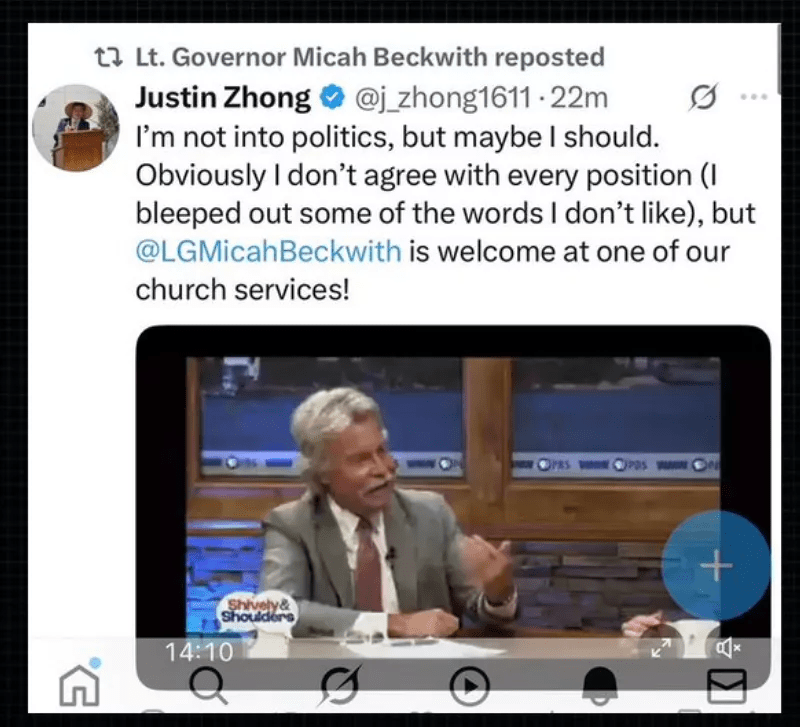
Lt. Gov. Micah Beckwith (R) shared a post from Indianapolis Sure Foundation Baptist Church leader Justin Zhong inviting him to a church service, appearing to approve of the invitation. The repost has since been deleted.
The Sure Foundation Baptist Church made national headlines recently when lay pastor Stephen Falco used slurs and called for murdering gay people during a Men’s Preaching Night.
“There’s nothing good to be proud about being a f*g. You ought to blow yourself in the head in the back of the head. You’re so disgusting,” he said. “Why do I hate sodomites, why do I hate f*gs? Because they attack children, they’re coming after your children, they are attacking them in schools today, and not only schools in public places, and they’re proud about it!”
The sermon was posted to YouTube, which removed the video, but the church’s leadership defended the sermon.
“The Bible is crystal clear that sodomites – homosexuals – deserve the death penalty carried out by a government that actually cares about the law of God,” Zhong said at the time. “I will not apologize for preaching the Word of God. I will not apologize for stating facts. I will not negotiate with terrorists, among whom the LGBTHIV crowd is full of domestic terrorists.”
Beckwith himself has a history of anti-LGBTQ+ extremism. He said in June that LGBTQ+ people in “ancient history and all the way up to today” have a “demonic spirit” associated with the Mesopotamian goddess Ishtar.
That same month, he sent an “alert” to his followers on social media that Pride Month is a sign of “Pagan Conquest” that will bring “ritual child sacrifice – with glitter and hashtags.” He claimed that Pride Month is part of a “state-corporate-pagan alliance to reprogram society” that forced people to listen to “Harvey Milk sermons” and support “government-sanctioned grooming.” Grooming is a word for tactics used by child molesters.
When running for lieutenant governor in 2024, he referred to pro-choice voters as “demonic.”
He said that Democrats had the “Jezebel spirit” and “a boldness for immorality” during a podcast interview last year. The host of the podcast said that the Jezebel spirit was “ultimately about control, which is the spirit of witchcraft, as we know. That’s what Jezebel operated in.” Beckwith nodded along.
A lot of states are passing laws that target the LGBTQ+ community — but these 15 are the absolute worst.
Over 1,000 anti-LGBTQ+ laws have been proposed across every state legislature in the U.S. over the past two years, according to the American Civil Liberties Union, and 126 have passed into law. Less than two months into the 2025 legislative session, 390 laws targeting LGBTQ+ people have been proposed.
While marriage equality and anti-discrimination protections based on sexual orientation and gender identity are still guaranteed federally by U.S. Supreme Court rulings (for now), LGBTQ+ people are still concerned about their rights being taken away, especially when only 15 states have “shield laws” protecting access to gender-affirming care and abortion.
Based on laws surrounding marriage, family rights, health care, education, and youth collected by the Movement Advancement Project, here are the 15 worst states for LGBTQ+ people.
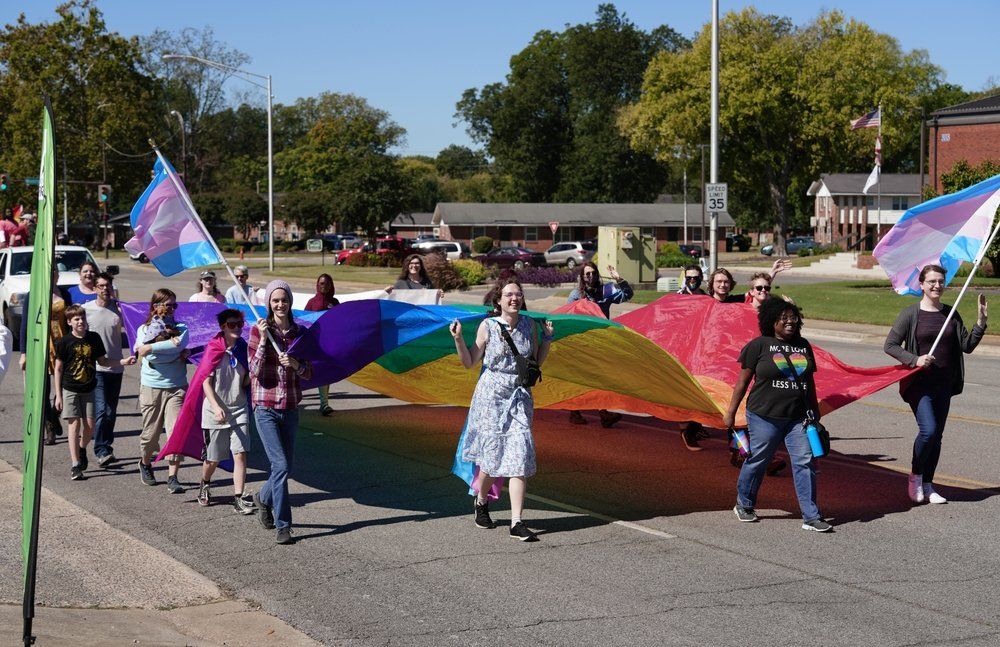
Pride Parade in Huntsville, Alabama (October 1, 2022)
Nondiscrimination laws: Alabama does not have nondiscrimination laws in employment, housing, health care, education, public accommodations, or credit/lending. Its state code incorrectly defines sex as exclusively male or female, and it prohibits transgender people from using public facilities that align with their identities.
Marriage equality and parental rights: Alabama does not have adoption or foster care nondiscrimination protections for LGBTQ+ parents. It does not have second-parent adoption for unmarried couples, confirmatory adoption, nor recognition for parents using assisted reproductive technologies. It also does not have family leave laws that encompass LGBTQ+ people.
Education and youth policies: Alabama has a “Don’t Say Gay” law restricting discussion of LGBTQ+ identities in classrooms. It has banned trans students from participating in sports or using school facilities based on their identities, and it requires staff to forcibly out LGBTQ+ students to their guardians. The state also has a “religious exemption” law for Child Welfare Services.
Healthcare access and rights: Alabama has banned life-saving gender-affirming care for youth, though it permits the discredited and harmful practice of so-called conversion therapy for youth. Health insurance companies, including Medicaid, are not required to provide coverage related to gender transition or fertility treatments. The state also has a “religious exemption” law for healthcare providers.
Criminal justice: Alabama’s hate crime laws do not encompass sexual orientation and gender identity, and it has not banned the so-called “LGBTQ+ panic” defense.
Arkansas
Danielsen_Photography / Shutterstock.com
3rd annual Pride Walk at Hot Springs National Park, Arkansas (June, 4 2021)
Nondiscrimination laws: Arkansas does not have nondiscrimination laws in employment, housing, health care, education, public accommodations, or credit/lending. The state bans cities and local ordinances from passing nondiscrimination laws, and it has law about “adult” performances that could be used to target or restrict drag.
Marriage equality and parental rights: Arkansas does not have adoption or foster care nondiscrimination protections for LGBTQ+ parents. It does not have second-parent adoption for unmarried couples, confirmatory adoption, nor recognition for parents using assisted reproductive technologies. It also does not have family leave laws that encompass LGBTQ+ people.
Education and youth policies: Arkansas has a “Don’t Say Gay” law restricting discussion of LGBTQ+ identities in classrooms. It has banned trans students from participating in sports or using school facilities based on their identities, and it requires staff to forcibly out LGBTQ+ students to their guardians.
Healthcare access and rights: Arkansas has banned life-saving gender-affirming care for youth, though it permits the discredited and harmful practice of so-called conversion therapy for youth. Medicaid is forbidden from providing coverage related to gender transition to minors, and insurance companies are not required to cover fertility treatments. The state also has a “religious exemption” law for healthcare providers.
Criminal justice: Arkansas’ hate crime laws do not encompass sexual orientation and gender identity, and it has not banned the so-called “LGBTQ+ panic” defense. It has an HIV criminalization law that may require sex offender registration.
Florida
Chris_Harris / Shutterstock.com
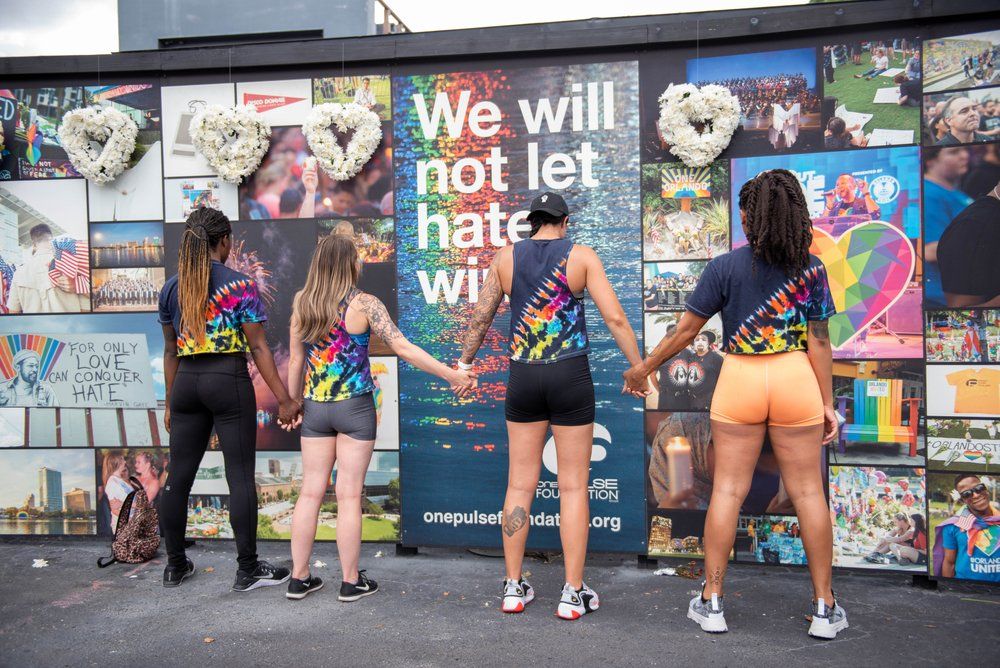
Mourners pay their respects to the fallen at the Pulse Nightclub memorial on the 5th anniversary of the Pulse mass shooting in Orlando, Florida (June 12, 2021)
Nondiscrimination laws: Florida has nondiscrimination laws in employment, housing, and public accommodations, but not in credit/lending, health care, nor education. The state prohibits transgender people from using public facilities that align with their identities, and it does not allow updating gender markers on driver’s licenses or birth certificates. It has law about “adult” performances that could be used to target or restrict drag
Marriage equality and parental rights: Florida does not have adoption or foster care nondiscrimination protections for LGBTQ+ parents. It does not have second-parent adoption for unmarried couples, confirmatory adoption, nor recognition for parents using assisted reproductive technologies. It also does not have family leave laws that encompass LGBTQ+ people.
Education and youth policies: Florida originated the “Don’t Say Gay” laws restricting discussion of LGBTQ+ identities in classrooms. It has banned trans students from participating in sports or using school facilities based on their identities, and it requires staff to forcibly out LGBTQ+ students to their guardians.
Healthcare access and rights: Florida has banned life-saving gender-affirming care for youth, though it permits the discredited and harmful practice of so-called conversion therapy for youth. Medicaid is forbidden from providing coverage related to gender transition for all ages, and insurance companies are not required to cover fertility treatments. The state also has a “religious exemption” law for healthcare providers.
Criminal justice: Florida’s hate crime laws only encompass sexual orientation, not gender identity. It has not banned the so-called “LGBTQ+ panic” defense, and it has an HIV criminalization law.
Idaho
Venture Out Media / Shutterstock.com
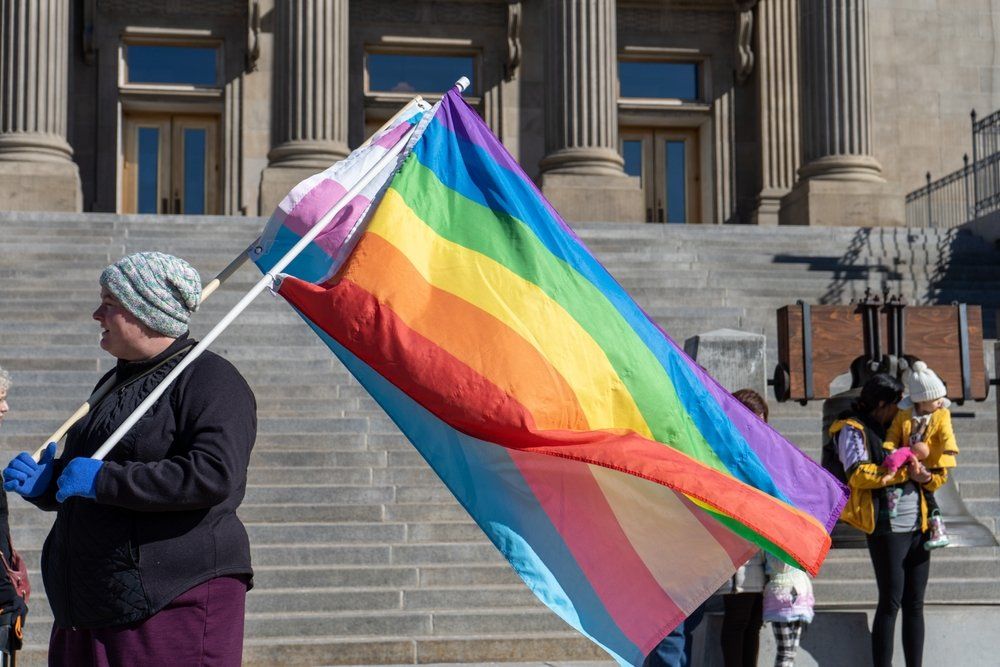
Rally in support of transgender youth and gender-affirming care in Boise, Idaho (February 24, 2023)
Nondiscrimination laws: Idaho has nondiscrimination laws in employment, housing, and public accommodations, but not in credit/lending, education, health care, nor for state employees. Its state code incorrectly defines sex as exclusively male or female.
Marriage equality and parental rights: Idaho does not have adoption or foster care nondiscrimination protections for LGBTQ+ parents. It has second-parent adoption for unmarried couples, but not confirmatory adoption nor recognition for parents using assisted reproductive technologies. It also does not have family leave laws that encompass LGBTQ+ people.
Education and youth policies: Idaho has banned trans students from participating in sports or using school facilities based on their identities, and it requires staff to forcibly out LGBTQ+ students to their guardians. The state also has a “religious exemption” law for Child Welfare Services, though it has protections for LGBTQ+ youth in the Child Welfare System.
Healthcare access and rights: Idaho has banned life-saving gender-affirming care for youth, though it permits the discredited and harmful practice of so-called conversion therapy for youth. Medicaid is forbidden from providing coverage related to gender transition for all ages, and insurance companies are not required to cover fertility treatments. The state also has a “religious exemption” law for healthcare providers.
Criminal justice: Idaho’s hate crime laws do not encompass sexual orientation and gender identity. It has not banned the so-called “LGBTQ+ panic” defense, and it has an HIV criminalization law.
Indiana
Umut Tolga Pehlivan / Shutterstock.com
Indiana University Bloomington Students walking at Indy Pride in Indianapolis, Indiana (June 4, 2008)
Nondiscrimination laws: Indiana has weaker nondiscrimination laws in employment, housing, and public accommodations, but not in credit/lending, education, nor health care. The state also has a broad “religious exemption” law.
Marriage equality and parental rights: Indiana has adoption or foster care nondiscrimination protections based on sexual orientation, but not gender identity. It has second-parent adoption for unmarried couples, but not confirmatory adoption nor recognition for parents using assisted reproductive technologies. It also does not have family leave laws that encompass LGBTQ+ people.
Education and youth policies: Indiana has a “Don’t Say Gay” law restricting discussion of LGBTQ+ identities in classrooms. It has banned trans students from participating in sports or using school facilities based on their identities, and it requires staff to forcibly out LGBTQ+ students to their guardians.
Healthcare access and rights: Indiana has banned life-saving gender-affirming care for youth, though it permits the discredited and harmful practice of so-called conversion therapy for youth. Medicaid and state health insurance plans are not required to provide coverage related to gender transition or fertility treatments, but it has trans-inclusive health benefits for state employees.
Criminal justice: Indiana’s hate crime laws do not encompass sexual orientation and gender identity, and it has not banned the so-called “LGBTQ+ panic” defense. It has an HIV criminalization law that may require sex offender registration.
Louisiana
Scott Colesby / Shutterstock.com
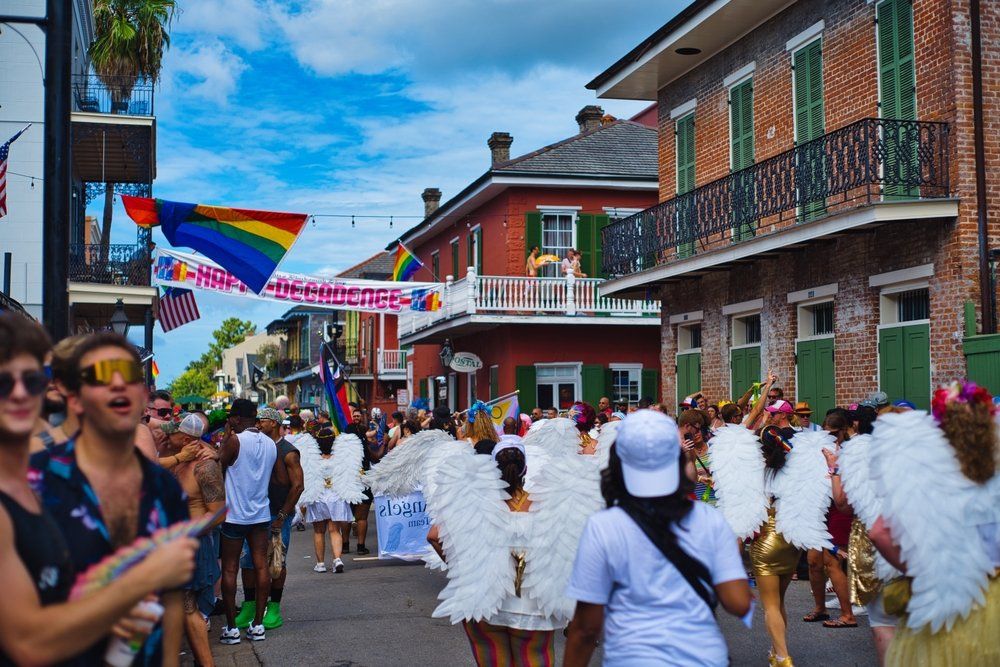
Southern Decadence Parade march through the French Quarter in New Orleans, Louisiana (September 1, 2024)
Nondiscrimination laws: Louisiana does not have nondiscrimination laws in employment, housing, health care, education, public accommodations, or credit/lending. Its state code incorrectly defines sex as exclusively male or female, and it prohibits transgender people from using public facilities that align with their identities. The state also has a broad “religious exemption” law.
Marriage equality and parental rights: Louisiana does not have adoption or foster care nondiscrimination protections for LGBTQ+ parents. It does not have second-parent adoption for unmarried couples, confirmatory adoption, nor recognition for parents using assisted reproductive technologies. It also does not have family leave laws that encompass LGBTQ+ people.
Education and youth policies: Louisiana has a “Don’t Say Gay” law restricting discussion of LGBTQ+ identities in classrooms. It has banned trans students from participating in sports or using school facilities based on their identities, and it requires staff to forcibly out LGBTQ+ students to their guardians.
Healthcare access and rights: Louisiana has banned life-saving gender-affirming care for youth, though it permits the discredited and harmful practice of so-called conversion therapy for youth. Health insurance companies, including Medicaid, are not required to provide coverage related to gender transition or fertility treatments, and state employees do not have trans-inclusive benefits.
Criminal justice: Louisiana’s hate crime laws only encompass sexual orientation, not gender identity. It has not banned the so-called “LGBTQ+ panic” defense, and it has an HIV criminalization law that may require sex offender registration.
Mississippi
Carmen K. Sisson / Shutterstock.com
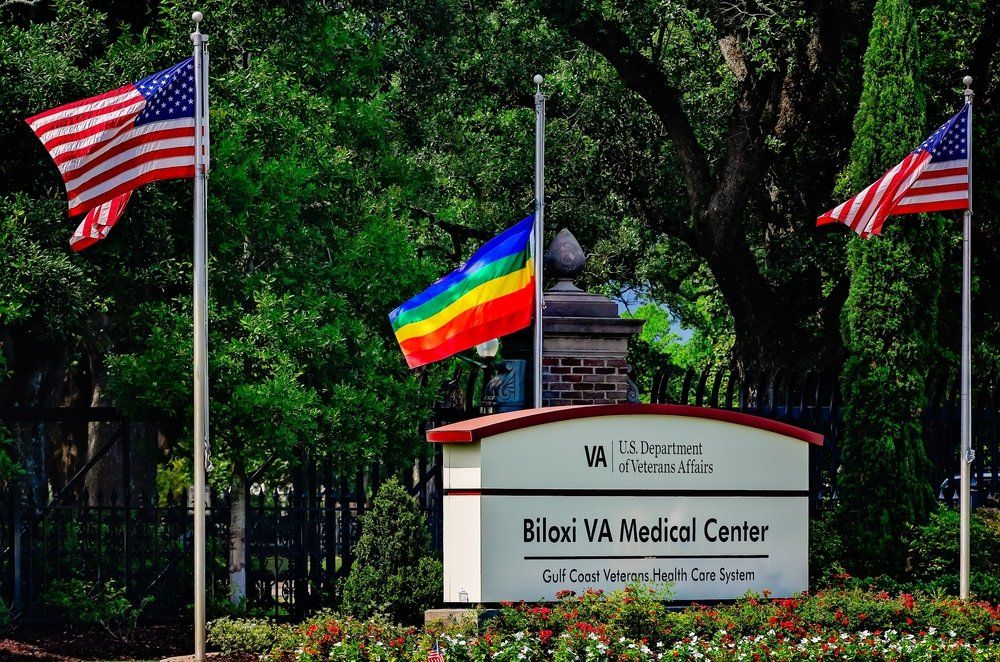
A rainbow flag supporting Pride month flies a the Biloxi VA Medical Center in Biloxi, Mississippi (June 5, 2023)
Nondiscrimination laws: Mississippi does not have nondiscrimination laws in employment, housing, health care, education, public accommodations, or credit/lending. Its state code incorrectly defines sex as exclusively male or female, and it prohibits transgender people from using public facilities that align with their identities. The state also has a broad “religious exemption” law.
Marriage equality and parental rights: Mississippi does not have adoption or foster care nondiscrimination protections for LGBTQ+ parents. It has second-parent adoption for unmarried couples, but not confirmatory adoption nor recognition for parents using assisted reproductive technologies. It also does not have family leave laws that encompass LGBTQ+ people.
Education and youth policies: Mississippi has a “Don’t Say Gay” law restricting discussion of LGBTQ+ identities in classrooms. It has banned trans students from participating in sports or using school facilities based on their identities, and it requires staff to forcibly out LGBTQ+ students to their guardians. The state also has a “religious exemption” law for Child Welfare Services.
Healthcare access and rights: Mississippi has banned life-saving gender-affirming care for youth, though it permits the discredited and harmful practice of so-called conversion therapy for youth. Medicaid is forbidden from providing coverage related to gender transition for youth, and insurance companies are not required to cover fertility treatments. The state also has a “religious exemption” law for healthcare providers.
Criminal justice: Mississippi’s hate crime laws do not encompass sexual orientation and gender identity. It has not banned the so-called “LGBTQ+ panic” defense, and it has an HIV criminalization law.
Missouri
Ryanzo W. Perez / Shutterstock.com
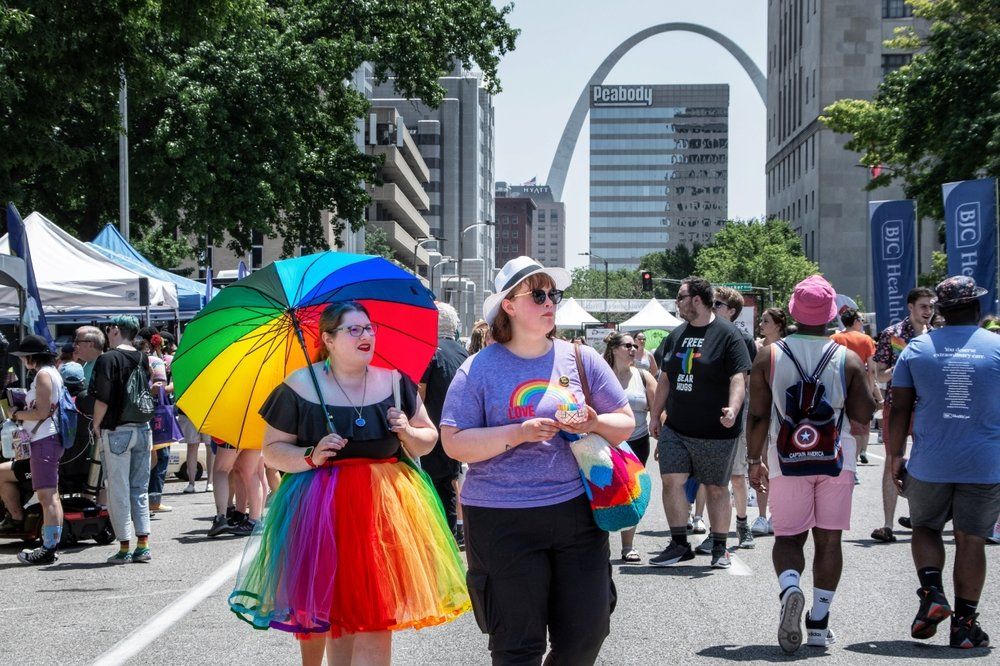
A view down one of the streets filled with celebrants during Saint Louis PrideFest in Missouri (June 24, 2023)
Nondiscrimination laws: Missouri has weaker nondiscrimination laws in housing, and public accommodations, but not in employment, credit/lending, education, nor health care. The state also has a broad “religious exemption” law.
Marriage equality and parental rights: Missouri’sadoption or foster care nondiscrimination protections only encompass sexual orientation, not gender identity. It does not have second-parent adoption for unmarried couples, confirmatory adoption, nor recognition for parents using assisted reproductive technologies. It also does not have family leave laws that encompass LGBTQ+ people.
Education and youth policies: Missouri has banned schools and districts from passing nondiscrimination or anti-bullying policies protecting LGBTQ+ students. It has banned trans students from participating in sports based on their identities, but not from using facilities that align with their identities.
Healthcare access and rights: Missouri has banned life-saving gender-affirming care for youth, though it permits the discredited and harmful practice of so-called conversion therapy for youth. Medicaid is forbidden from providing coverage related to gender transition for all ages, and insurance companies are not required to cover fertility treatments. The state also has a “religious exemption” law for healthcare providers.
Criminal justice: Missouri’s hate crime laws encompass sexual orientation and gender identity, though it has not banned the so-called “LGBTQ+ panic” defense, and it has an HIV criminalization law.
Montana
Cavan-Images / Shutterstock.com
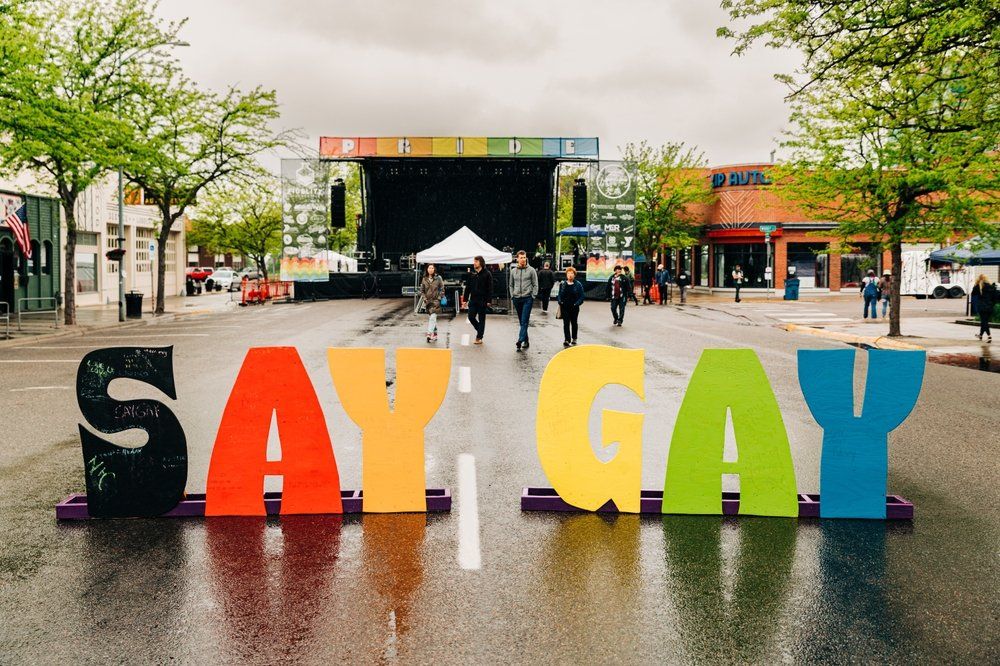
“Say Gay” sign at Missoula Pride in Montana (March 29, 2024)
Nondiscrimination laws: Montana does not have nondiscrimination laws in employment, housing, health care, education, public accommodations, or credit/lending.Its state code incorrectly defines sex as exclusively male or female, and it has a broad “religious exemption” law. The state has also explicitly restricted drag performances, and does not allow updating gender markers on birth certificates
Marriage equality and parental rights: Montana’sadoption or foster care nondiscrimination protections only encompass sexual orientation, not gender identity. It has second-parent adoption for unmarried couples, but not confirmatory adoption nor recognition for parents using assisted reproductive technologies. It also does not have family leave laws that encompass LGBTQ+ people.
Education and youth policies: Montana requires that parents be notified of LGBTQ+ curricula so they can opt out. It has banned trans students from participating in sports based on their identities, but not from using facilities that align with their identities. The state requires staff to forcibly out LGBTQ+ students to their guardians.
Healthcare access and rights: Montana has banned life-saving gender-affirming care for youth, though it permits the discredited and harmful practice of so-called conversion therapy for youth. Health insurance companies and Medicaid are required to cover care related to gender transition, and there is some coverage for fertility treatments. However, the state has a “religious exemption” law for healthcare providers.
Criminal justice: Montana’s hate crime laws do not encompass sexual orientation and gender identity. It has not banned the so-called “LGBTQ+ panic” defense, and it has an HIV criminalization law.
Oklahoma
Kit Leong / Shutterstock.com
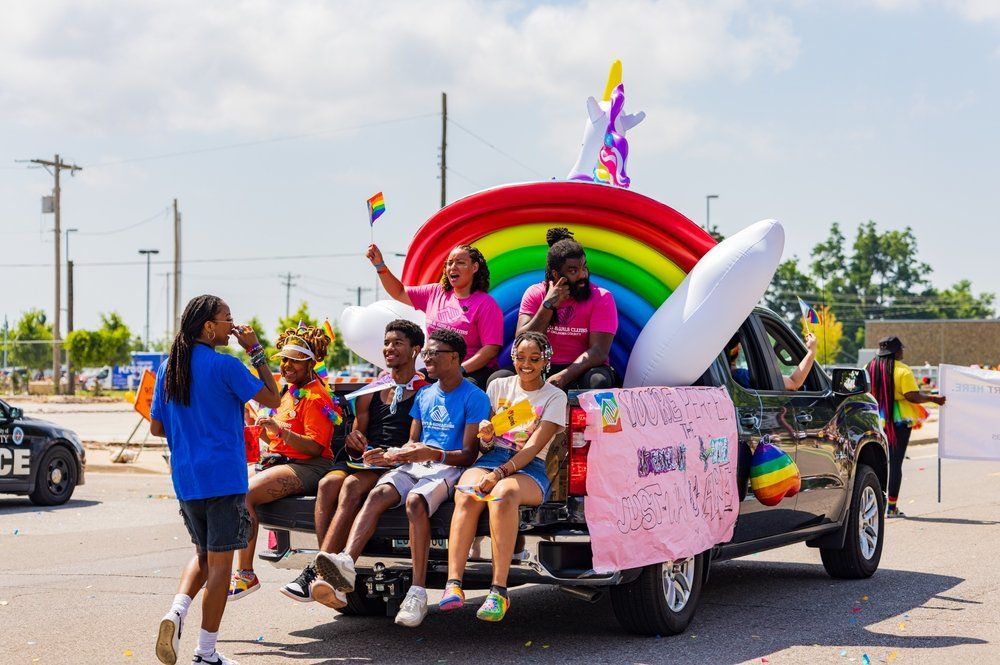
Pride Parade in Oklahoma (June 26, 2023)
Nondiscrimination laws: Oklahoma does not have nondiscrimination laws in employment, housing, health care, education, public accommodations, or credit/lending. Its state code incorrectly defines sex as exclusively male or female, and it prohibits updated gender markers on birth certificates. It also has a broad “religious exemption” law.
Marriage equality and parental rights: Oklahoma does not have adoption or foster care nondiscrimination protections for LGBTQ+ parents. It has second-parent adoption for unmarried couples, but not confirmatory adoption nor recognition for parents using assisted reproductive technologies. It also does not have family leave laws that encompass LGBTQ+ people.
Education and youth policies: Oklahoma has a weaker version of a “Don’t Say Gay” law that restricts the discussion of “homosexuality” in specific school subjects. It has banned trans students from participating in sports or using school facilities based on their identities. The state also has a “religious exemption” law for Child Welfare Services, though it has protections for LGBTQ+ youth in the Child Welfare System.
Healthcare access and rights: Oklahoma has banned life-saving gender-affirming care for youth, though it permits the discredited and harmful practice of so-called conversion therapy for youth. Health insurance companies, including Medicaid, are not required to provide coverage related to gender transition or fertility treatments, and state employees are not permitted trans-inclusive benefits.
Criminal justice: Oklahoma’s hate crime laws do not encompass sexual orientation and gender identity. It has not banned the so-called “LGBTQ+ panic” defense, and it has an HIV criminalization law.
South Carolina
Shuttershock creative
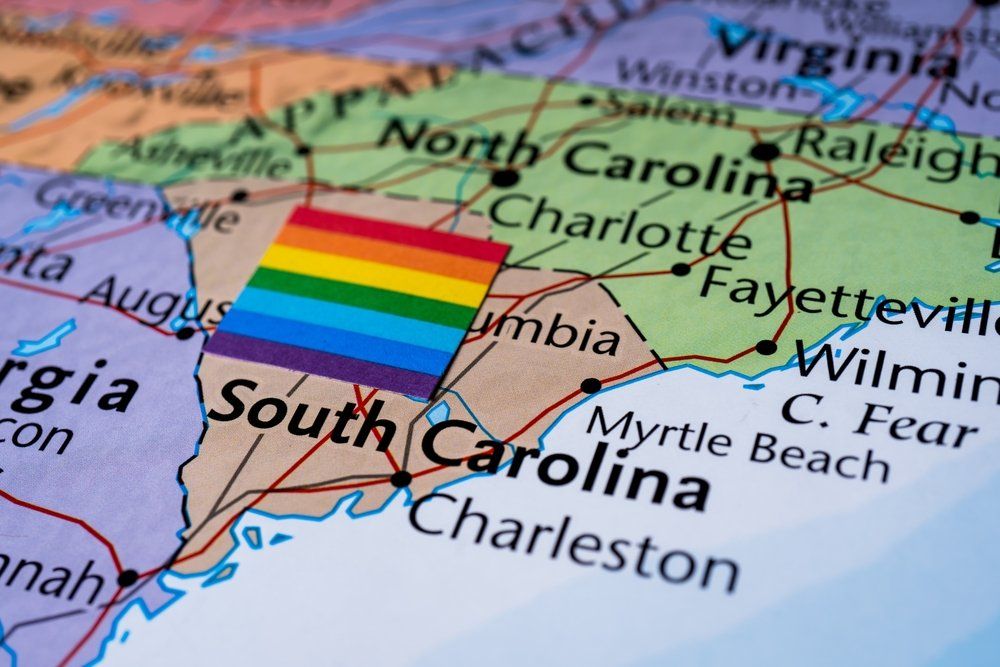
Rainbow flag on a map of South Carolina
Nondiscrimination laws: South Carolinadoes not have nondiscrimination laws in employment, housing, health care, education, public accommodations, or credit/lending. It has a broad “religious exemption” law.
Marriage equality and parental rights: South Carolina‘sadoption or foster care nondiscrimination protections only encompass sexual orientation, not gender identity. It does not have second-parent adoption for unmarried couples, confirmatory adoption, nor recognition for parents using assisted reproductive technologies. It also does not have family leave laws that encompass LGBTQ+ people.
Education and youth policies: South Carolinahas banned trans students from participating in sports based on their identities, but not from using facilities that align with their identities. The state requires staff to forcibly out LGBTQ+ students to their guardians. The state also has a “religious exemption” law for Child Welfare Services.
Healthcare access and rights: South Carolina has banned life-saving gender-affirming care for youth, though it permits the discredited and harmful practice of so-called conversion therapy for youth. Medicaid is forbidden from providing coverage related to gender transition for all ages, and insurance companies are not required to cover fertility treatments. The state also has a “religious exemption” law for healthcare providers.
Criminal justice: South Carolina‘s hate crime laws do not encompass sexual orientation and gender identity. It has not banned the so-called “LGBTQ+ panic” defense, and it has an HIV criminalization law.
South Dakota
Shuttershock creative
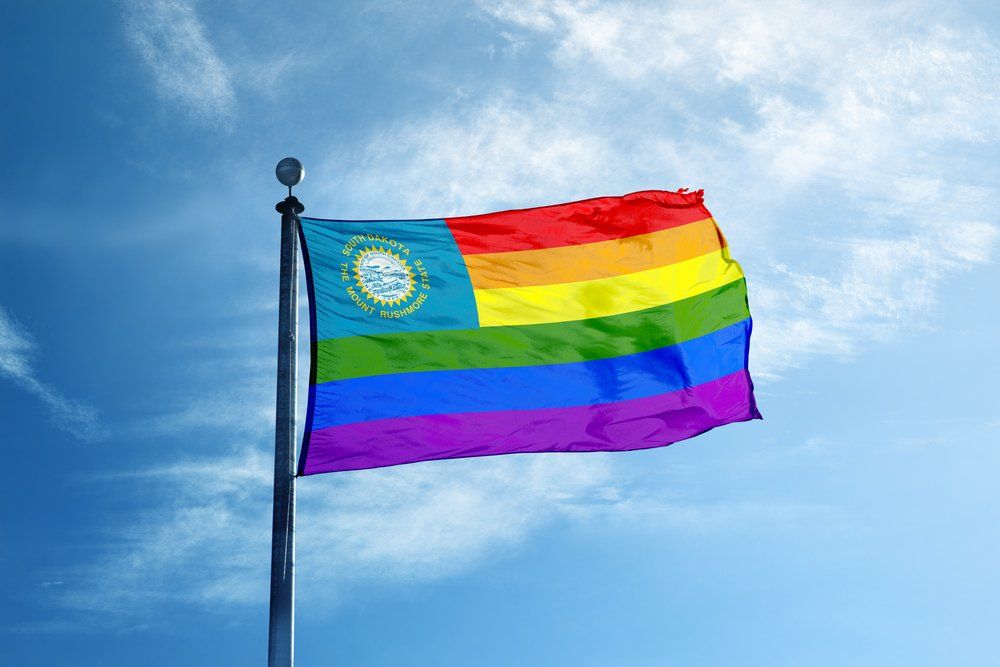
South Dakota state flag with rainbow stripes
Nondiscrimination laws: South Dakota does not have nondiscrimination laws in employment, housing, health care, education, public accommodations, or credit/lending. It has a broad “religious exemption” law.
Marriage equality and parental rights: South Dakota’sadoption or foster care nondiscrimination protections encompass sexual orientation and gender identity. However, it does not have second-parent adoption for unmarried couples, confirmatory adoption, nor recognition for parents using assisted reproductive technologies. It also does not have family leave laws that encompass LGBTQ+ people.
Education and youth policies: South Dakotahas banned schools and districts from passing nondiscrimination or anti-bullying policies protecting LGBTQ+ students. It has banned trans students from participating in sports based on their identities, but not from using facilities that align with their identities. The state also has a “religious exemption” law for Child Welfare Services, though it has protections for LGBTQ+ youth in the Child Welfare System.
Healthcare access and rights: South Dakota has banned life-saving gender-affirming care for youth, though it permits the discredited and harmful practice of so-called conversion therapy for youth. Health insurance companies, including Medicaid, are not required to provide coverage related to gender transition or fertility treatments, and state employees are not permitted trans-inclusive benefits.
Criminal justice: South Dakota‘s hate crime laws do not encompass sexual orientation and gender identity, and it has not banned the so-called “LGBTQ+ panic” defense. It has an HIV criminalization law that may require sex offender registration.
Tennessee
evenfh / Shutterstock.com
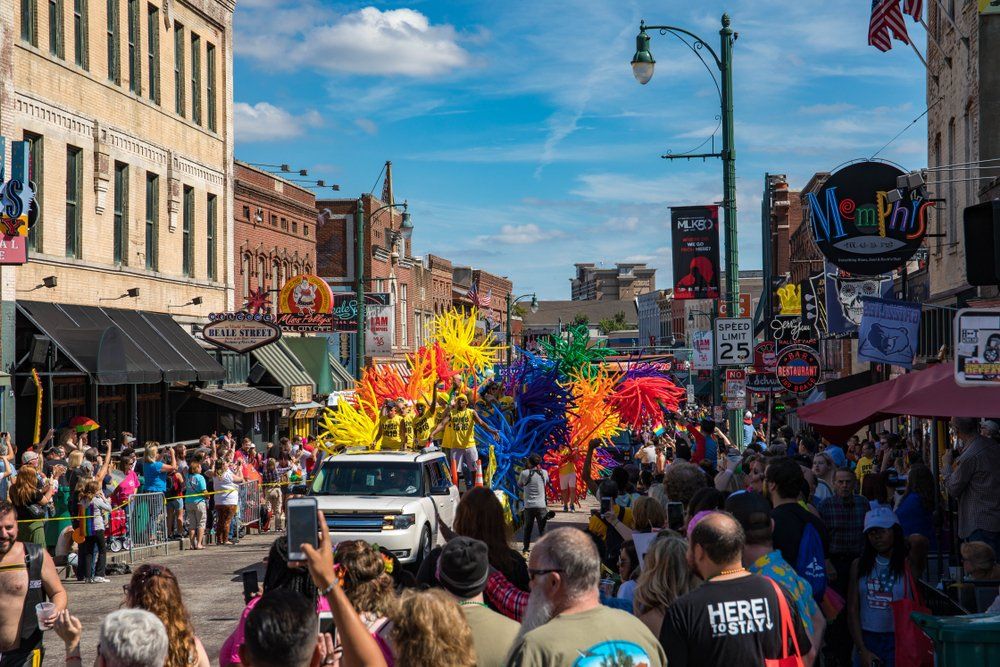
Pride Parade on Beale Street in Memphis, Tennessee (September 28, 2018)
Nondiscrimination laws: Tennessee does not have nondiscrimination laws in employment, housing, health care, education, public accommodations, or credit/lending. It instead bans cities and local ordinances from passing nondiscrimination laws. State code incorrectly defines sex as exclusively male or female, and it does not allow updating gender markers on driver’s licenses or birth certificates. The state has a broad “religious exemption” law that even allows officials to deny marriage licenses based on their personal beliefs. It has also explicitly restricted drag performances.
Marriage equality and parental rights: Tennessee’sadoption or foster care nondiscrimination protections encompass sexual orientation and gender identity. However, it does not have second-parent adoption for unmarried couples, confirmatory adoption, nor recognition for parents using assisted reproductive technologies. It also does not have family leave laws that encompass LGBTQ+ people.
Education and youth policies: Tennessee requires that parents be notified of LGBTQ+ curricula so they can opt out. It has banned trans students from participating in sports based on their identities and from using facilities that align with their identities. The state requires staff to forcibly out LGBTQ+ students to their guardians. The state also has a “religious exemption” law for Child Welfare Services, though it has protections for LGBTQ+ youth in the Child Welfare System.
Healthcare access and rights: Tennessee has banned life-saving gender-affirming care for youth, though it permits the discredited and harmful practice of so-called conversion therapy for youth. Medicaid is forbidden from providing coverage related to gender transition for all ages, and insurance companies are not required to cover fertility treatments. The state also has a “religious exemption” law for healthcare providers, and state employees are not permitted trans-inclusive benefits.
Criminal justice: Tennessee’s hate crime laws encompass sexual orientation and gender identity, though it has not banned the so-called “LGBTQ+ panic” defense, and it has an HIV criminalization law that may require sex offender registration.
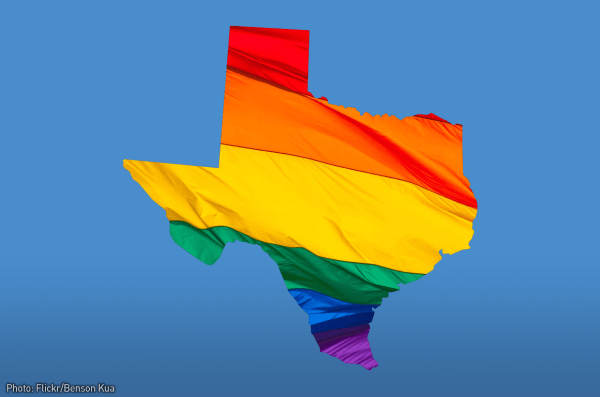
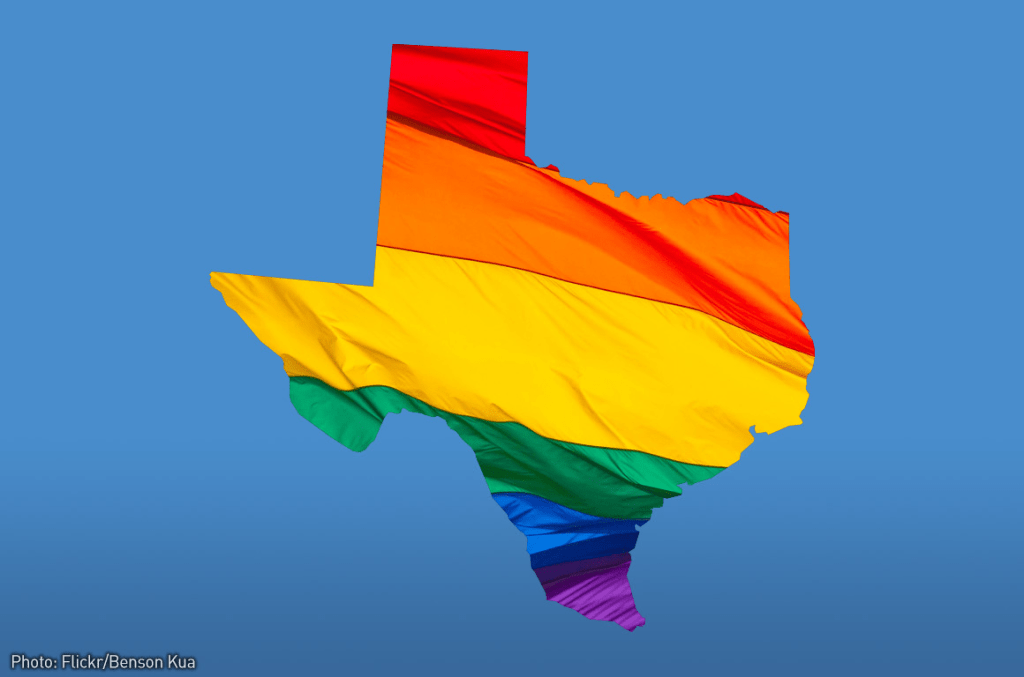
Nondiscrimination laws: Texas has nondiscrimination laws in employment and for state employees, but not in housing, public accommodations, credit/lending, education, nor health care. The state does not allow updating gender markers on driver’s licenses or birth certificates, and it has a broad “religious exemption” law.
Marriage equality and parental rights: Texas does not have adoption or foster care nondiscrimination protections for LGBTQ+ parents. It does not have second-parent adoption for unmarried couples, confirmatory adoption, nor recognition for parents using assisted reproductive technologies. It also does not have family leave laws that encompass LGBTQ+ people.
Education and youth policies: Texas has a weaker version of a “Don’t Say Gay” law that restricts the discussion of “homosexuality” in specific school subjects. It has banned trans students from participating in sports based on their identities, but not from using facilities that align with their identities. The state also has a “religious exemption” law for Child Welfare Services without protections for LGBTQ+ youth.
Healthcare access and rights: Texas has banned life-saving gender-affirming care for youth, though it permits the discredited and harmful practice of so-called conversion therapy for youth. Medicaid is forbidden from providing coverage related to gender transition for all ages, and insurance companies are not required to cover fertility treatments. State employees are not permitted trans-inclusive benefits.
Criminal justice: Texas’s hate crime laws only encompass sexual orientation, not gender identity. It has not banned the so-called “LGBTQ+ panic” defense.
Wyoming
Shuttershock creative
Double rainbow against a black sky in Wyoming
Nondiscrimination laws: Wyoming does not have nondiscrimination laws in employment, housing, health care, education, public accommodations, or credit/lending.
Marriage equality and parental rights: Wyoming does not have adoption or foster care nondiscrimination protections for LGBTQ+ parents. It does not have second-parent adoption for unmarried couples, nor confirmatory adoption. It also does not have family leave laws that encompass LGBTQ+ people. However, it does have recognition for parents using assisted reproductive technologies.
Education and youth policies: Wyoming has a weaker version of a “Don’t Say Gay” law that restricts the discussion of “homosexuality” in specific school subjects. It has banned trans students from participating in sports based on their identities, but not from using facilities that align with their identities.
Healthcare access and rights: Wyoming has banned life-saving gender-affirming care for youth, though it permits the discredited and harmful practice of so-called conversion therapy for youth. Health insurance companies, including Medicaid, are not required to provide coverage related to gender transition or fertility treatments.
Criminal justice: Wyoming’s hate crime laws do not encompass sexual orientation and gender identity, and it has not banned the so-called “LGBTQ+ panic” defense.
Dishonorable mentions
BluIz70 / Shutterstock.com
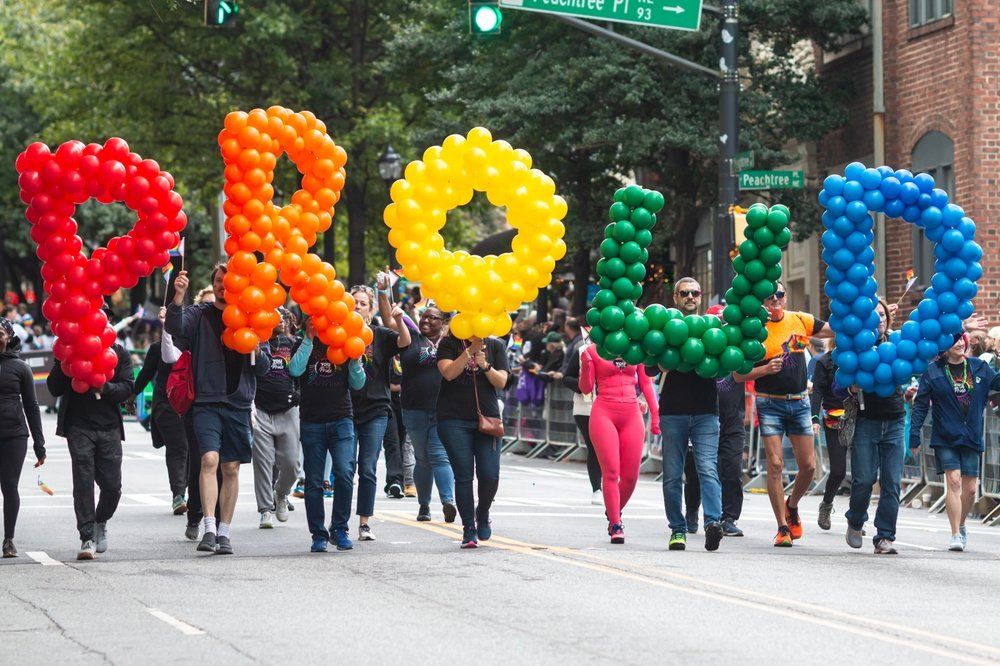
People carry large balloon letters that spell out “Proud” as they walk in the annual pride parade in Atlanta, Georgia (October 15, 2023)
Other states that ranked below average include: Alaska, Arizona, Georgia, Iowa, Kansas, Kentucky, Nebraska, North Carolina, North Dakota, Ohio, Utah, and West Virginia.
A church leader in Indianapolis is doubling down on a sermon delivered at the Sure Foundation Baptist Church in the state’s capital city last week that called on gay people to “blow yourself in the back of the head,” among other incendiary statements.
Church leader Justin Zhong endorsed the remarks delivered by lay pastor Stephen Falco during a Men’s Preaching Night service on June 29, including his assertion that, “There’s nothing good to be proud about being a f*g. You ought to blow yourself in the head in the back of the head. You’re so disgusting.”
The church posted the sermon to YouTube, and it was widely denounced by members of the LGBTQ+ community and allies who called the hate-filled screed “theologically irresponsible” and “pastorally dangerous.”
YouTube has since removed the video for violating its terms of service. A portion of the sermon was reposted by radio station 93 WIBC Indianapolis.
“Why do I hate sodomites, why do I hate f*gs? Because they attack children, they’re coming after your children, they are attacking them in schools today, and not only schools in public places, and they’re proud about it!” Falco said during the Pride month sermon titled “Pray the gay away.”
Another man identified in the same video as “Brother Wayne” followed Falco at the pulpit with a sermon he called “Worthy of Being Beaten,” according to the Indianapolis Star. He blamed society’s moral decline on a lack of discipline and physical punishment, calling beatings a deterrent that have been lost in American culture, while aiming his harshest rhetoric at immigrants and the LGBTQ+ community.
“I don’t even understand why we’re deporting these illegal criminals who are murderers, who are doing drug trafficking, sex trafficking, human trafficking. They’re putting them on a plane, and they’re sending them over to a prison in another country,” he said. “I say we put them to death right here. I say we beat them right here.”
Brother Wayne said of gay people, “I think they should be put to death. You know what, I’ll go further. I think they should be beaten in public first for all their sick and demented, just [slur] and the things they’re doing to our schools, to our government, to our institutions, to our churches. These people should be beaten and stomped in the mud, and then they should take a gun and blow the back of their heads off.”
While not officially associated with the notorious New Independent Fundamental Baptist Church, which has long espoused the death penalty for gay people, Sure Foundation Baptist Church says their pastor, Aaron Thompson, is a new IFB church member from Vancouver, Washington.
Both churches are “KJV only”, referring to their literal interpretation of the gospel from the King James Bible.
“The Bible is crystal clear that sodomites – homosexuals – deserve the death penalty carried out by a government that actually cares about the law of God,” said church leader Zhong in Falco’s defense.
“I will not apologize for preaching the Word of God. I will not apologize for stating facts. I will not negotiate with terrorists, among whom the LGBTHIV crowd is full of domestic terrorists,” Zhong said, before citing multiple verses from the Bible to make his church’s case on Facebook.
A sermon by Falco in March even directed ire at Donald Trump for appearing religious to secure political support while having a life of pride, perversion, blasphemy, and mockery of Jesus Christ.
He cited Trump’s declaration that he would date his own daughter if they weren’t related.
“Unless Donald Trump gets saved, which I hope he does … God will judge him for it and he will go to hell.”
In his June sermon, Falco also wished death on former President Joe Biden, whom he described as “a wicked reprobate.”
“I have prayed for the death of former President Biden many times,” he boasted.
But Falco’s most outlandish and threatening rhetoric was reserved for the LGBTQ+ community, which he shouted down as “evil” and “disgusting”.
Allies and activists rallied in the community’s defense, including an association of Black churches and activists.
“Such messages are not only theologically irresponsible but pastorally dangerous,” faith-based civil rights group Concerned Clergy of Indianapolis said in a statement. “The pulpit must never be used as a weapon to dehumanize, isolate, or incite fear.”
Equality Indiana called Falco’s sermon inflammatory and extremist, saying it could inspire violence against the community.
On Tuesday, Indiana Gov. Mike Braun (R) signed legislation banning trans women from playing on college women’s sports teams.
The law “prohibits a male, based on the student’s biological sex at birth in accordance with the student’s genetics and reproductive biology, from participating on an athletic team or sport designated as being a female, women’s, or girls’ athletic team or sport.” It also requires state schools and some private schools to “establish grievance procedures for a violation of these provisions.”
The legislation extends the state’s anti-trans sports policies that already exist for K-12 athletes. In 2022, the Indiana legislature voted to override then-Gov. Eric Holcomb’s (R) veto of an anti-trans sports bill, which banned transgender girls and women from participating in school sports. Holcomb claimed it was unconstitutional and addressed a nonexistent issue in the state.
In March, Braun also signed two anti-trans executive orders, one banning trans women from women’s sports at the collegiate level and the other declaring there are only two genders: male and female.
“Women’s sports create opportunities for young women to earn scholarships and develop leadership skills,” he said in a statement at the time. “Hoosiers overwhelmingly don’t want those opportunities destroyed by allowing biological males to compete in women’s sports, and today’s executive order will make sure of that.”
In a statement defending his executive order legally erasing trans and nonbinary identities, he touted the “scientific fact of biological sex” and claimed “replacing” that with “the always-changing, self-reported idea of ‘gender identity’ has real consequences.”
“Indiana will not go along with this radical new idea of what gender means,” he said, “and we will not allow tax dollars to be used to promote this ideology — instead, we’re going to focus on providing Freedom and Opportunity for all Hoosiers.”
The press release announcing the orders stated, “Indiana will not go along with the extreme gender ideology that created the problem in women’s sports in the first place.”
In reality, there is no problem in women’s sports, as there is only a record of a handful of out transgender college and K-12 students even participating.
NCAA President Charlie Baker told a Senate committee in December that he is aware of fewer than 10 transgender athletes among more than 500,000 student-athletes who compete in NCAA championship sports.
And reporting by the Associated Press in 2021 revealed that dozens of lawmakers who sponsored legislation to restrict trans athletes’ participation in school sports couldn’t cite a single example in their own state where trans athletes had caused problems.
Even more, a recent study found that trans women actually underperform when compared to cis athletes. The study confirms that transitioning presents various physical changes, such as a lower center of mass and fat distribution, decreased muscle mass and bone density, and lower blood oxygen levels.
The Trump-appointed judge argued that trans youth can still access talk therapy, suggesting that treatment options remain available to them.
A three-judge panel from the United States Court of Appeals for the Seventh Circuit has approved the implementation of Indiana’s ban on gender-affirming care for minors.
The law, signed by Governor Eric Holcomb (R) in April 2023, prohibits doctors from prescribing puberty blockers and hormone therapy to transgender minors. Despite acknowledging that the bill was “clear as mud,” Holcomb still signed it into law. The bill passed with overwhelming support in both chambers of the state legislature, giving lawmakers the ability to override a potential veto.
The ACLU of Indiana filed a lawsuit on behalf of four families to prevent the law from taking effect, and a district court judge issued a preliminary injunction to halt its implementation while the case proceeded through the legal system.
The state appealed this injunction to the Seventh Circuit, which lifted it in February and has now issued its final ruling against it. The judges concluded that the district court was wrong to claim that the law would cause “irreparable harm” to transgender youth forced to detransition, arguing that “psychotherapy and parasocial support” could serve as alternatives to gender-affirming care for treating gender dysphoria.
Judge Michael Brennan, appointed by Donald Trump, wrote, “It might be different if Indiana barred all treatment for gender dysphoria, but SEA 480 does no such thing.”
All major medical organizations in the U.S. endorse gender-affirming care as safe and effective.
The majority of the panel also ruled that the state law does not violate the due process or equal protection rights of transgender youth, noting that both transgender boys and girls are prohibited from accessing gender-affirming care.
Brennan wrote, “So, sex does not indicate on what basis treatment is prohibited. The law does not create a class of one sex and a class of another and deny treatment to just one of those classes.”
This argument hinges on not recognizing transgender people as a distinct class. Cisgender youth are still permitted to access gender-affirming care under the law, which specifically bans certain treatments only when used to alter someone’s appearance to “resemble a sex different from the individual’s sex” assigned at birth.
Judge Candace Jackson-Akiwumi, appointed by President Joe Biden, dissented from Brennan’s decision, while Judge Kenneth Ripple, appointed by Ronald Reagan, joined Brennan in the 2-1 ruling.
“We are disappointed and are considering our options,” said Kenneth Faulk of the ACLU of Indiana.
Indiana Attorney General Todd Rokita (R) praised the decision, citing God in his statement.
“The Seventh District Court of Appeal’s decision today is a huge win for Hoosiers and will help protect our most precious gift from God — our children,” he said.
For the third instance in the past year, the Supreme Court declined a chance to significantly worsen the situation for transgender youth.
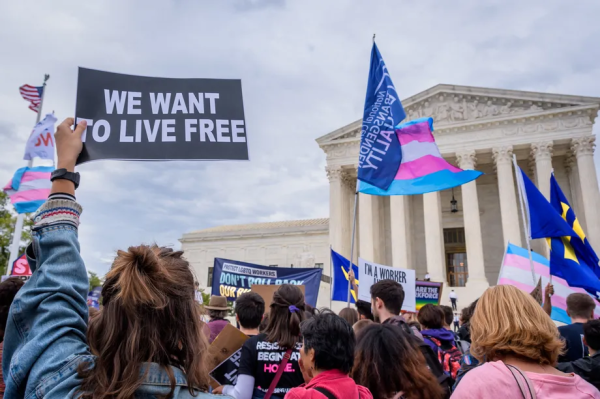
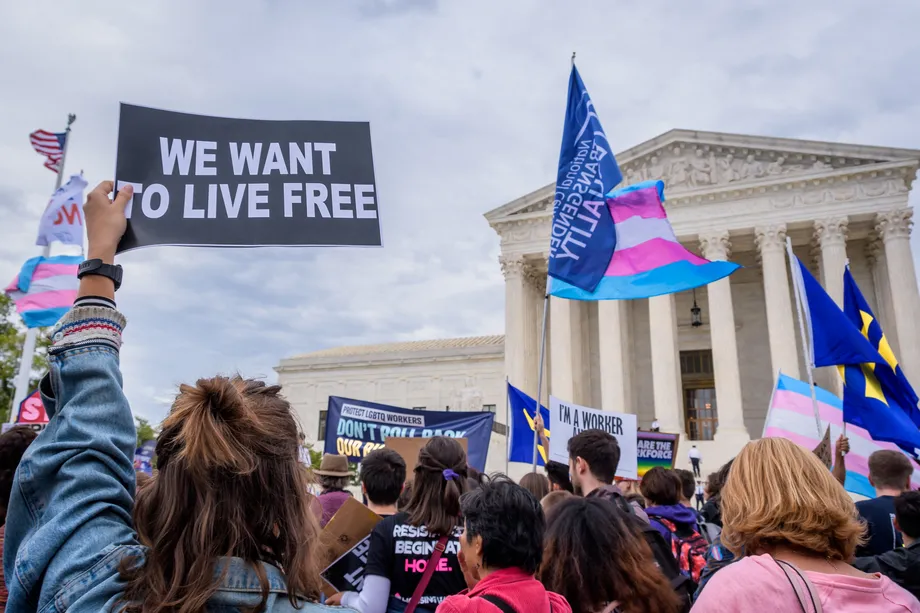
Protesters advocating for transgender rights outside the Supreme Court building in 2019.
For the third occasion in the past year, the Supreme Court surprisingly declined a case seeking to curtail the rights of young transgender individuals in a significant portion of the country.
On Tuesday, the Court declared its decision not to consider Metropolitan School District v. A.C., a case questioning whether public school districts can mandate transgender students to use bathrooms corresponding to their assigned birth sex rather than their gender identity.
In the A.C. case, the United States Court of Appeals for the Seventh Circuit sided with three transgender students, allowing them to use bathrooms that align with their gender identity. With the Supreme Court opting not to review this case, the Seventh Circuit’s decision will remain in effect, at least for the time being. The Seventh Circuit holds authority over federal legal matters in Illinois, Indiana, and Wisconsin.
Despite meeting the usual criteria the justices typically use to determine which cases to consider, the Court declined to take up this case. Notably, the issue of whether transgender students have the right to use bathrooms aligning with their gender identity has generated division among federal appeals courts, prompting the Supreme Court to often intervene and address such conflicts.
The opposition to transgender rights was also advocated by Republican attorney Paul Clement, a highly influential figure with considerable sway over the conservative wing of the Court, who previously served as the US Solicitor General.
A.C. marks the second occasion in slightly over a month where the Court has abstained from a significant LGBTQ rights dispute causing discord among lower court judges. In December, the Court similarly declared that it would not review Tingley v. Ferguson, a case challenging Washington state’s limitations on “conversion therapy” — a practice attempting to convert LGBTQ individuals into cisgender heterosexuals or hinder them from expressing their authentic sexual orientation or gender identity.
The lower court, which affirmed Washington’s restrictions, emphasized in its opinion that “every significant medical, psychiatric, psychological, and professional mental health organization opposes the utilization of conversion therapy.
Furthermore, in April of the previous year, in a case known as West Virginia v. B.P.J., the Court chose not to remove a transgender student from her middle school girl’s cross-country team. A lower court had halted a West Virginia state law preventing her from competing with other girls, and the Supreme Court declined a petition to temporarily reinstate that law during the ongoing litigation. (There remains a possibility that this case may return to the justices in the future.)
These rulings are unexpected for three main reasons. First, Republican appointees hold six out of the nine seats on the Supreme Court, and this Court has typically been highly receptive to concerns raised by the religious right. As recently as last June, the Court decided that a conservative Christian website designer possesses a constitutional right to discriminate against LGBTQ customers.
Moreover, both A.C. and Tingley met the standard criteria that justices typically employ to decide which cases to consider. In each instance, lower courts were in disagreement regarding the interpretation of federal law concerning LGBTQ rights.
Furthermore, in all three cases, the anti-LGBTQ side presented a plausible argument asserting that current law aligns with their desired result. The Tingley case hinges on conflicting language in a 2018 Supreme Court decision, which could be interpreted to endorse either outcome in Tingley. Meanwhile, the A.C. and B.P.J. cases pose questions that the Court left unresolved in its pivotal LGBTQ rights decision in Bostock v. Clayton County (2020).
In essence, it seems that, for the time being, the Court is avoiding cases related to transgender rights.
Cases involving transgender rights related to bathrooms and sports pose particularly intricate questions under the existing legal framework.
In the case of Bostock, the question revolved around whether a federal law prohibiting workplace discrimination based on “sex” also encompasses discrimination against LGBTQ individuals. Six justices determined that it does, and the Court affirmed that “it is impossible to discriminate against a person for being homosexual or transgender without discriminating against that individual based on sex.” For instance, if an employer dismisses a male employee for dating a man while allowing female employees to date men, it constitutes ordinary sex discrimination, as the employer permits women to engage in an activity not allowed for men.
Likewise, Bostock established that if an employer punishes an “employee who was identified as female at birth” for presenting as a man or participating in stereotypically male behavior, while not penalizing “a person identified as male at birth” for the same actions, it constitutes sex discrimination prohibited by federal law.
Although this marked a historic triumph for transgender rights, it also left unanswered one of the crucial questions in such cases: whether the legal concept of “gender” is distinct from the “status as either male or female [as] determined by reproductive biology.” Bostock, indeed, was decided under the assumption that the term “sex” exclusively pertains to “biological distinctions between male and female.”
Nevertheless, even under the assumption that the law pertains solely to “biological” sex, Bostock still determined that most forms of discrimination against transgender individuals contravene that law. This is because such discrimination inherently involves treating men (or individuals assigned male at birth) differently from women (or individuals assigned female at birth).
Federal law, nevertheless, allows for sex discrimination in specific restricted situations. For instance, the law prohibiting sex discrimination in most educational institutions permits these institutions to have “separate living facilities for the different
Likewise, longstanding interpretations of federal prohibitions against sex discrimination acknowledge the allowance of sex-segregated sports teams, as otherwise, women-only teams would not be viable.
Cases such as A.C. and B.P.J., in essence, pose a question that Bostock did not conclusively address. Bostock did not take a definitive stance on whether a transgender man is considered a man. In contrast, the Seventh Circuit had to determine, in deciding the A.C. case, “who counts as a ‘boy’ for the boys’ rooms, and who counts as a ‘girl’ for the girls’ rooms.”
If you seek a more in-depth examination of the legal arguments supporting and opposing the obligation for schools to treat transgender girls and boys equivalently to their cisgender counterparts, I delved into those arguments in greater detail in this piece. Presently, it’s worth noting that the Supreme Court seems resolute in avoiding a definitive resolution to this question, despite the ongoing divergence of opinions in lower courts on how it should be addressed.
Florida first. Alabama follows. Legislators in Louisiana and Ohio are currently debating legislation that is similar to the Florida statute. A similar bill will be his top priority during the following session, according to Texas Governor Greg Abbott.
At least a dozen states across the country are proposing new legislation that, in some ways, will resemble Florida’s recent contentious bill, which some opponents have dubbed “Don’t Say Gay.”






 fleeredstates.blog
You must be logged in to post a comment.