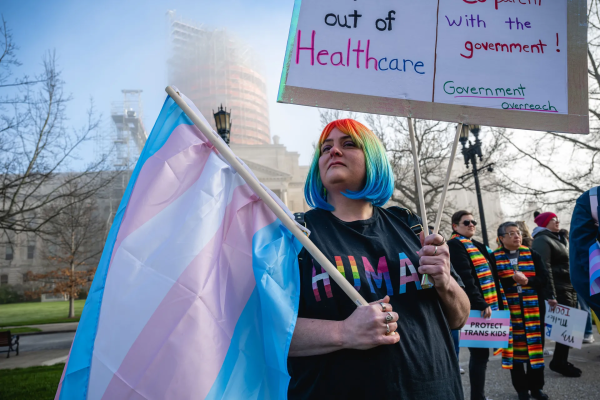
Kentucky Re-Legalizes Conversion Therapy, Restricts Adult Access to Gender-Affirming Care

*This is being reported by THEM.

Kentucky’s legislature has overridden Gov. Andy Beshear’s veto of a bill that allows conversion therapy to resume in the state and that bans Medicaid funds from being used for gender-affirming care, including for adults. Beshear also allowed a bill banning incarcerated people from receiving or continuing to receive publicly funded gender-affirming care to pass into law without his signature.

On Wednesday, the Kentucky House and Senate, which are both controlled by Republicans, voted to override Beshear’s veto of House Bill 495, per the Lexington Herald-Leader. The bill reverses the governor’s September 2024 executive order, which banned so-called conversion therapy from being practiced on youth in the state. Though HB 495 was originally only meant to roll back the ban on the harmful, discredited practice, the bill was additionally amended to add a ban on the use of Medicaid funds for gender-affirming care for trans adults, per the Herald-Leader. HB 495 has an emergency clause, meaning that it takes effect immediately. According to the Kentucky Lantern, the House voted to override the veto 78-20, and the Senate voted 31-6.

However, Beshear did not veto Senate Bill 2, which bans gender-affirming care for incarcerated trans people. At a press conference in December, Beshear stated that “convicted felons do not have the right to have any and all medical surgeries paid for entirely by tax dollars, especially when it would exceed the type of coverage available to law-abiding citizens in the private sector,” according to The Hill. As the publication noted, though, the state has never provided a gender-affirming surgery for an incarcerated person. Even so, gender-affirming care, including surgery, is medically necessary. As the ACLU’s Chase Strangio told Them in September, “Courts have consistently held that blanket denials of medical care, including medical treatment related to gender dysphoria, are unconstitutional,” since the denial of that care could violate the Eighth Amendment, which prohibits cruel and unusual punishment.

According to the Kentucky Lantern, there are only 67 trans people incarcerated in Kentucky prisons, all of whom will be forced to stop gender-affirming hormone therapy if that care is paid for with public funds. At a February hearing, Louisville psychologist Jacks Gilles testified against the bill, stating that stopping that care “will result in negative outcomes, including increased anxiety, disturbances in social and familial relationships, depression, suicidality and death,” according to the Lantern. “Gender-affirming medical care is not experimental, it’s not elective, and it’s not cosmetic,” Gilles said.

Beshear has previously been hailed as an outspoken advocate for the trans community. In a November 2024 op-ed for the New York Times, the governor pleaded with his fellow Democrats to not scapegoat trans people for the party’s loss. Though the legislature overrode his veto, in 2023 Beshear did attempt to put a stop to a wide-sweeping anti trans bill that banned minors from receiving gender-affirming care, prohibited trans kids from using the bathrooms that align with their identities at school, and banned discussion of LGBTQ+ topics in elementary schools.

In a statement posted to Facebook, Chris Hartman, the executive director of statewide LGBTQ+ advocacy organization Fairness Campaign, called the passage of the bills “a sad day in Kentucky.”

“Two anti-LGBTQ+ bills will become law with devastating consequences for our community,” he said, calling both bills “cruel” and that they “have no place in our Commonwealth.”

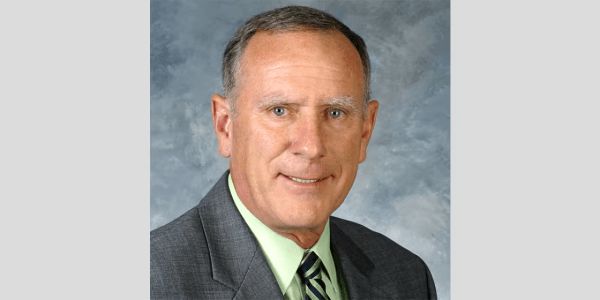
Kentucky GOP Lawmakers Approve Bill to Reverse Governor’s Ban on Conversion Therapy

*This is being reported by Gayety.

Kentucky state Representative David Hale, a Republican, has introduced legislation aimed at overturning a 2024 executive order issued by Democratic Governor Andy Beshear that bans conversion therapy. This controversial practice, which attempts to change a person’s sexual orientation or gender identity, has been widely discredited by medical and psychological experts. Despite numerous opponents testifying against Hale’s bill, the lawmaker insists that his research supports the need for the legislation, although he declined to disclose the organizations that helped him draft the bill.

Governor Beshear’s Executive Order and Its Impact

In September 2024, Governor Beshear signed an executive order that outlaws conversion therapy for minors in Kentucky. The executive order not only prohibits state-funded programs from supporting the practice, but it also calls for licensing boards for counselors to consider disciplinary action against those who engage in conversion therapy. Beshear’s order aims to protect minors from a practice that has been shown to have detrimental effects on mental health.

At the time of signing the order, Beshear emphasized that conversion therapy “has no basis in medicine or science” and cited research linking the practice to increased rates of suicide and depression. “This is about doing what is right and protecting our children,” Beshear said in a statement. “Hate is not who we are as Kentuckians.”

Hale’s Proposed Bill and its Justifications

On February 15, 2025, Hale introduced House Bill 495, a measure designed to reverse Beshear’s executive order. Hale, who is known for his conservative stances, argues that his bill would protect counselors, therapists, and pastors who offer conversion therapy from government interference. He insists that parents should have the right to seek therapy that aligns with their beliefs and the needs of their children.

During a committee meeting, Hale claimed that his bill would protect mental health providers offering “therapy to relieve discomfort or distress caused by an individual’s sex or romantic or sexual attraction.” He further added that the bill would also safeguard practitioners who offer other forms of therapy, including pro-LGBTQ or gender-affirming care. Despite the claims, Hale did not specify which organizations assisted in drafting the bill’s language.

The bill, which was approved in a 15-4 party-line vote by the committee’s Republican members, is now one step closer to being debated by the full Kentucky legislature. Some Republicans on the committee argued that the bill would ensure mental health professionals could offer care that respects both LGBTQ+ individuals and those seeking therapy to change their sexual orientation.

Opposition Voices and Concerns

Numerous witnesses spoke out against Hale’s bill, citing the harm caused by conversion therapy and the damage it can do to vulnerable individuals. Eric Russ, a licensed clinical psychologist and executive director of the Kentucky Psychological Association, testified that the bill “directly threatens the trust between a mental health provider and our clients” by legitimizing practices that are widely considered harmful.

Rev. Brandon Long, an ordained minister and former victim of conversion therapy, shared his personal experience of being subjected to the practice after coming out as gay. He described how conversion therapy had attempted to alter his sexual orientation by blaming it on childhood trauma and demonic influence. “Conversion therapy weaponized sacred pastoral practices,” Long said, adding that it was “spiritual and psychological abuse.”

Chris Hartman, executive director of the Fairness Campaign, an LGBTQ+ rights group, questioned why the committee responsible for overseeing state government functions was involved in passing legislation related to mental health care.

Hale, who said he had found “no evidence” supporting the personal testimonies of those who spoke against his bill, went on to shake hands with several of the witnesses who had opposed it. Rev. Long refused to shake his hand, accusing Hale of dismissing their lived experiences and framing their testimony as lies.

Political Landscape and Future of the Bill

Hale’s bill is part of a broader culture war in Kentucky, where conservative lawmakers have made several attempts to restrict LGBTQ+ rights. In 2023, Kentucky Republicans successfully passed a ban on gender-affirming medical care, though it is currently on hold due to ongoing court challenges. While this ban focuses on medical care, it does not address gender-affirming psychological counseling.

Conversion therapy has been banned in 23 states, and the practice has faced widespread condemnation from major U.S. medical and psychological associations. Research has consistently shown that conversion therapy leads to increased emotional distress, including depression and suicidal thoughts, particularly among LGBTQ+ youth. According to the Trevor Project, nearly 21% of LGBTQ+ youth in Kentucky have reported being subjected to conversion therapy, with 83% of those experiences occurring before the age of 18.

A Divisive Issue for Kentucky’s Future

Hale’s bill comes at a time when Republicans hold supermajorities in both chambers of Kentucky’s legislature, which could threaten the future of Beshear’s executive order. If passed, the bill would reverse the protections set forth by Beshear, allowing the practice of conversion therapy to continue in the state.

As the bill moves through the legislative process, it is clear that the debate over conversion therapy is far from settled. Advocates for LGBTQ+ rights are committed to fighting the bill, while opponents argue that parents should have the freedom to choose therapeutic options that align with their values. With the state’s political climate increasingly polarized, Kentucky’s legislature is set to remain at the center of a larger national conversation about the rights of LGBTQ+ individuals and the role of government in regulating mental health practices.

For those struggling with issues related to conversion therapy, several resources are available, including the Trevor Project (1-866-488-7386) and the Trans Lifeline (1-877-565-8860). These organizations provide safe, confidential support for LGBTQ+ youth and adults.

Kentucky’s ‘Don’t Say Gay’ Law Inflicts Hardship on LGBTQ+ Students

This blog originally appeared at Advocate.

The legislation poses a threat to gay-straight alliances and is leading to additional challenges for LGBTQ+ youth.

The enactment of Kentucky’s version of a “don’t say gay” law is causing numerous challenges for LGBTQ+ students, along with the parents and educators aiming to provide support.

In March, Kentucky’s Republican-majority legislature overrode Democratic Gov. Andy Beshear’s veto to pass one of the most expansive anti-LGBTQ+ laws in the nation. Senate Bill 150 includes a prohibition on all gender-affirming care for minors and restricts public school instruction on sexual orientation and gender identity across all grade levels. Additionally, it mandates that school districts, at the very least, prevent transgender students from using restrooms that align with their gender identity. The law also compels school personnel to disclose confidential discussions with students about sexual orientation or gender identity to parents, essentially forcing the disclosure of such information. Furthermore, it allows teachers to disregard students’ chosen pronouns.

“What initially began as a bill primarily addressing pronouns and restroom use has evolved into an extensive piece of legislation that prohibits conversations about gender and sexuality across all subjects and grades,” remarked Jason Glass, the former Kentucky commissioner of education, in a recent interview with the Kentucky Lantern. Glass stepped down from his position in September and accepted a role at Western Michigan University in the face of criticism from Republicans who opposed his backing of LGBTQ+ students, with some demanding his termination.


Numerous educators and administrators who offered support are discovering that Kentucky is no longer a conducive environment for them. Willie Carver, a gay individual honored as Kentucky’s Teacher of the Year in 2022, has exited the teaching profession due to the animosity directed at him—a plight that students continue to endure. “We’ve stripped away all of the school support from the students, so they’re consistently miserable and hopeless,” he lamented to the Lantern.

The recent law has made it more challenging for gay-straight alliances, often referred to as gender and sexuality alliances, to function in schools, despite their heightened necessity. In the small rural community of Owenton, the GSA, named PRISM (People Respecting Individuality and Sexuality Meeting), has ceased operations due to students’ apprehensions. While Owen County High School Principal Renee Boots mentioned that the club has adjusted its focus, parent Rachelle Ketron asserted that students were too frightened to persist with their meetings.

Ketron played a pivotal role in establishing the club after her transgender daughter, Meryl, tragically died by suicide in 2020. Initially meeting at the local public library, the club later gained approval as a school organization in 2022. Despite Ketron’s efforts to revive the group outside the school, students are hesitant, mainly because many of them haven’t disclosed their identities to their parents.


This year, Ketron experienced the devastating loss of another foster child, who was also part of the LGBTQ+ community, to suicide. Ketron and her wife, Marsha Newell, have been actively involved in fostering LGBTQ+ youth. Despite facing challenges and prejudice, Ketron emphasizes the importance of creating a supportive environment for queer youth in communities like Owenton. She has observed firsthand the bullying her children faced due to their LGBTQ+ identity and having two mothers.

Even in more progressive communities like Lexington, where the University of Kentucky is located, queer youth and Gender and Sexuality Alliances (GSAs) are encountering difficulties. In a local high school in Lexington, a GSA has opted for a lower profile, refraining from announcing its meetings over the school’s public address system due to concerns that administrators might take action to shut it down, according to a trans and nonbinary student interviewed by the publication.

“The school felt much safer with the knowledge that a GSA existed because there were students like you elsewhere,” expressed Anna, a student identified by that name. “You could enter and say, ‘Hey, I’m experimenting with this set of pronouns. I’m exploring more about myself. Can you all call me this for a couple of weeks?’ It provided a space where students like me could go.”

Across the nation, the count of GSAs is currently at its lowest in two decades, as per GLSEN. This decline could be attributed to students discovering alternative support systems and schools becoming more inclusive—or conversely, due to an anti-LGBTQ+ atmosphere making it challenging for them to function.

Ketron expressed her determination to persist in advocating for GSAs and is actively arranging a summit for LGBTQ+ youth. She emphasized that at its essence, a GSA serves as a protective element and is incredibly crucial, particularly in rural communities.

Appeals court lets Kentucky enforce ban on transgender care for minors

This blog originally appeared at NBC News.

The law, enacted this year over the veto of Democratic Gov. Andy Beshear, prevents transgender minors from accessing puberty blockers and hormone therapy.

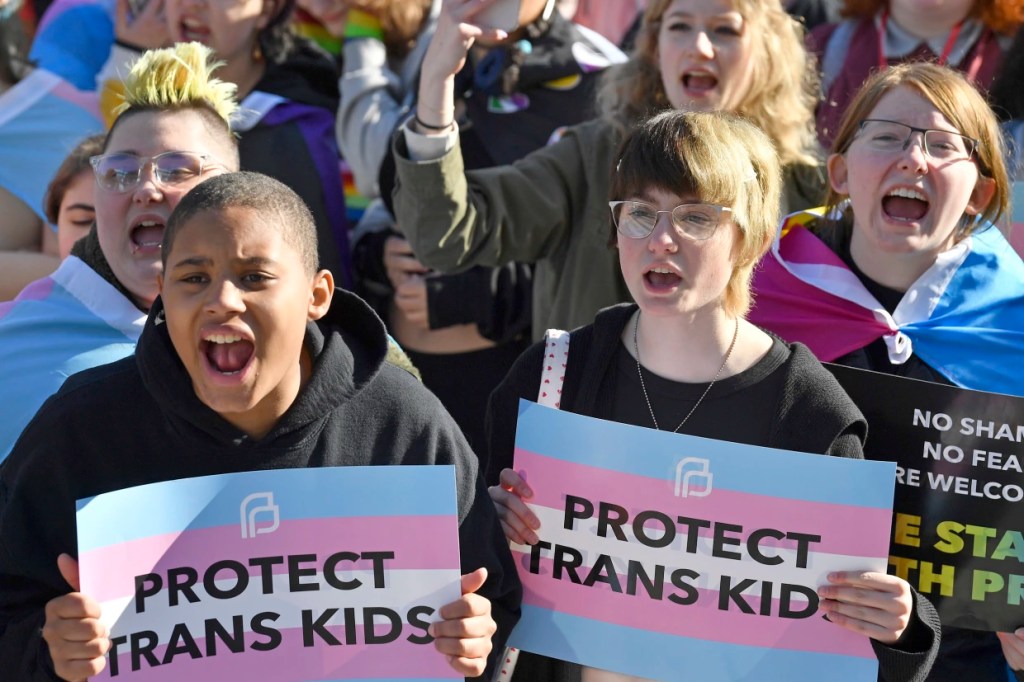
Protesters of Kentucky Senate Bill SB150 rally at the Kentucky Capitol in Frankfort, Ky., on March 29.

By The Associated Press

A federal appeals court is allowing Kentucky to enforce a recently enacted ban on gender-affirming care for young transgender people while the issue is being litigated.

The 2-1 decision Monday from the Sixth U.S. Circuit Court of Appeals in Cincinnati is not unexpected. The same three-judge panel ruled the same way earlier this month on a similar case in Tennessee.

The Kentucky law, enacted this year over the veto of Democratic Gov. Andy Beshear, prevents transgender minors from accessing puberty blockers and hormone therapy.

At least 20 states have now enacted laws restricting or banning gender-affirming medical care for transgender minors. Most of those states face lawsuits. A federal judge struck down Arkansas’ ban as unconstitutional. In other states, judges have issued disparate rulings on whether the laws can be enforced while the cases are being litigated.

In Kentucky, U.S. District Judge David Hale had initially blocked Kentucky from enforcing the ban. But he lifted that injunction July 14, after the Sixth Circuit issued its ruling in the Tennessee case.

Seven transgender children and their parents have sued to block the Kentucky law. They argue that it violates their constitutional rights and interferes with parental rights to seek established medical treatment for their children.

In Monday’s ruling, judges Jeffrey Sutton, an appointee of former President George W. Bush, and Amul Thapar, an appointee of former President Donald Trump, said that the issues in the Kentucky case are essentially identical to those in Tennessee.

In the Tennessee case, the judges wrote that decisions on emerging policy issues like transgender care are generally better left to legislatures rather than judges. They offered a similar rationale Monday in the Kentucky case.

“The people of Kentucky enacted the ban through their legislature,” the judges wrote. “That body — not the officials who disagree with the ban — sets the Commonwealth’s policies.”

The dissenting judge, Helene White, noted that Kentucky’s ban does not include a grace period for patients who are already receiving care to continue treatment, as Tennessee’s law did.

As a result, White said the need for an injunction blocking the ban in Kentucky is even greater than it was in Tennessee.

“It seems obvious that there is a tremendous difference between a statute like Tennessee’s that allows flexibility regarding treatment decisions and time to explore alternatives and one like Kentucky’s that forces doctors to either discontinue treatment immediately or risk losing their license,” wrote White, who was first nominated by former President Bill Clinton and later nominated by Bush.

click here to see full blog: https://www.nbcnews.com/nbc-out/out-politics-and-policy/appeals-court-lets-kentucky-enforce-ban-transgender-care-minors-rcna97434

Not just Florida. More than a dozen states propose so-called ‘Don’t Say Gay’ bills – NPR

This blog originally appeared at NPR News.

Florida first. Alabama follows. Legislators in Louisiana and Ohio are currently debating legislation that is similar to the Florida statute. A similar bill will be his top priority during the following session, according to Texas Governor Greg Abbott.

At least a dozen states across the country are proposing new legislation that, in some ways, will resemble Florida’s recent contentious bill, which some opponents have dubbed “Don’t Say Gay.”

Read Full Article – https://www.npr.org/2022/04/10/1091543359/15-states-dont-say-gay-anti-transgender-bills


If you’re ready to look for a better state or county for you and your family (or family of choice), reach out to us at www.FleeRedStates.com

Blog at WordPress.com.

Up ↑