Two people have been sentenced to jail time for attacking and robbing two gay men in Kenya, a ruling that has been hailed as a breakthrough moment for queer people in the east African nation.
The convicted individuals, known as Abel Meli & Another, were handed a 15-year prison sentence for robbery with violence at Milimani law courts in Nairobi on 3 March.
The victims in the case were two men, both in their mid-20s, who experienced hours of violence after they met up with a man they had been speaking to on Facebook.
After they arrived at the man’s home, three other men arrived at the property and the victims were beaten, with their phones, wallets and clothes were taken.
During the attack, the men were made to call family and friends to get them to transfer as much money as possible to the blackmailers’ accounts. They were threatened with being outed to their families and killed if they did not comply.
“I tried to resist and I wanted to fight back,” one of the victims – named as Anyango – told The Guardian. “That’s when one of them took a knife, held it at me and said: ‘If you don’t cooperate now, I will stab you and throw you out the window.’”
In the end, 100,000 Kenyan shillings (£576) was sent to the blackmailers’ accounts by friends and family of the victims.
After the incident, the men were supported in reporting the matter to the police and subsequently the attackers were arrested.
Also speaking to the outlet, a paralegal from Ishtar – an organisation providing health and wellbeing services to gay men – who went with the victims to the police said how when LGBTQ+ people go to the police they are often “harassed and discriminated against”.
“They tell you that you are not a normal citizen and they throw away your case,” they admitted.
Kenya is not a friendly country to members of the LGBTQ+ community.
The east African nation is one of 31 countries in Africa which still criminalise homosexuality, with consensual same-sex acts in the country being punishable by up to 21 years in prison with hard labor and fines.
More widely, LGBTQ+ rights are thin on the ground in the country with censorship of LGBTQ+ topics state enforced, access to gender-affirming care is often denied by doctors and no protections from discrimination in housing or employment contexts.
Njeri Gateru, executive director of the National Gay and Lesbian Human Rights Commission – which supports LGBTQ+ people in Kenya – said the attackers were part of a larger criminal organisation which prey on queer men across Kenya.
She told The Guardian: “There’s always that fear of self-incrimination. If I say that I met with a man on Grindr and I was hoping to engage in a romantic or an intimate relationship with this man, then obviously I’m evidence against myself. So the blackmailers rely on that.
“They also rely on the pervasive homophobia and homophobic attitudes within public institutions and also within the general public. And so this creates a situation that makes it possible for them to operate with quite a bit of impunity.”
“We had so many files against them,” Gateru said of the group. “We’ve had cases where these two men were arrested for other cases and later released.
“This can now serve as a deterrent to other gang members who have seen that the law has finally caught up.”
Gateru noted the queer community in the country faces great prejudice but “some of us still trust that we can find justice, so this case encourages us”.
The second victim in the case, named as Ochieng, said he has been “emotionally and physically damaged” by the ordeal.
However, they urged others who experience similar attacks to come forward and seek justice.
Morocco: Morocco has been under a long-term project to revise its legal system, and this year published reforms to the code of criminal procedure that ought to at least make the justice system more fair and limit pre-trial detention. Then again, we’ve also heard reports this year of continued crackdowns on queer people for pro-LGBT expression on the internet. [See “Coalition demands release of Morocco LGBT activist after 100 days in prison” (November 2025)]
Morocco also intends to revise its penal code, and some campaigners have been pushing to delete its sodomy and extramarital sex provisions when that happens, but no progress was made this year. I think the likelihood Morocco actually deletes its sodomy law is very slim.
Meanwhile, in October, the UN Security Council backed Morocco’s plan to resolve the dispute over the Western Sahara/Sahrawi Arab Democratic Republic, which would make it autonomous under Moroccan rule. The UN called on both sides to negotiate an actual settlement, but this seems like a big step toward eliminating an entire country from the map (which would decrease by one the number of states that criminalize homosexuality).
Chad: The government launched a commission on reinstating the death penalty, which was abolished in 2020.
West Africa
Burkina Faso, Mali and Niger: These three states run by military juntas following coups over the past half-decade took steps to deepen their integration into the Alliance of Sahel States (yes, the ASS), which is something between a supranational organization and a proto-state in its own right. They all withdrew from the Economic Community of West African States (ECOWAS), and they announced their intention to withdraw from the International Criminal Court. The states are motivated in part by antipathy to France and the West, Islamic faith, and support for and from Russia, all of which is exemplified in their pursuit of anti-LGBT policies.
Burkina Faso is also considering reinstating the death penalty as it overhauls its penal code, which ought to be a worrying sign. The new code also includes a crime of “promotion of homosexual practices and similar acts.”
Niger held a national conference that voted to extend the junta’s rule by five years and also to oppose any effort to legalize same-sex marriage.
Worryingly, some other neighbors, Chad and Togo (which both criminalize gay sex) have publicly mused about joined the ASS and have even taken some steps to integrate with them.
Of course, if the ASS ever does replace these three to five states, it would at least reduce the number of criminalizing states on the chart.
Ghana: A draconian anti-LGBTQ bill modelled after Uganda’s Anti-Homosexuality Act was reintroduced to parliament after a previous version lapsed without the president’s signature before the end of the term. This one is sponsored by a group of opposition MPs, but the government has said it intends to introduce its own version at some point. The current president has strongly suggested he will sign it.
Ghana also ratified the Treaty on the Prohibition of Nuclear Weapons.
The Trump administration used Ghana and Togo as places to deport asylum seekers, including at least one who was seeking asylum due to his sexual orientation.
The constitution review committee proposed an amendment to specifically bar the use of the death penalty. Ghana abolished the penalty in 2023 for ordinary crimes only, and the repeal was not retroactive, so those on death row still face execution.
Liberia: The government undertook a review of its laws for gender discriminatory effects – particularly around marriage, citizenship, rape, and children’s rights – but the review did not take sexual orientation or gender identity into account. I haven’t heard of further action being taken on this file.
The government intervened in the United Methodist Church over its support of same-sex marriage, including a senate investigation and even police detention. The local church has made clear its opposition to same-sex marriage.
A lawmaker was removed from a session of parliament after he disruptively attempted to introduce an anti-LGBT bill that would have imposed criminal penalties on same-sex marriage. Watch out for this to come back.
Nigeria: In a climate of regular violence against queer people, the governor of Kano state submitted a bill to the legislature to criminalize same-sex marriage. It’s already criminalized federally.
The senate was also considering a bill to expand the use of the death penalty.
Gabon: A constitutional ban on same-sex marriage, passed in 2024, took effect in 2025.
Eastern Africa
Kenya: In August, the high court directed the government to protect transgender peoples’ rights, including recognition of their chosen gender and dignified treatment in government custody. The court ordered the government enact a specific Transgender Protection Rights Act or add amendments to that effect to the Intersex Persons Act.
Meanwhile, an MP vowed to bring forward a bill to criminalize LGBTQ advocacy, but he hasn’t done so yet. Parliament was also considering a bill to abolish the death penalty.
Uganda: The World Bank has ended its suspension of lending to Uganda, which was imposed in 2023 after the passage of the Anti-Homosexuality Act. The Bank now claims it has put in place mitigation measures to ensure its funds won’t be used to discriminate, which, frankly doesn’t make a lot of sense.
Tanzania: The government has announced it is moving forward with toughening existing criminal laws banning same-sex intercourse to further ban same-sex relationships and marriages, but I haven’t actually seen legislation come forward yet.
Rwanda: Parliament passed a new health care law that specifically excludes same-sex couples from accessing surrogacy and assisted reproduction.
Mauritius: The UK and Mauritius finalized and published a treaty on the handover of the British Indian Ocean Territory, with the UK maintaining sovereignty over the military base on Diego Garcia. While the treaty hasn’t yet been ratified, once it does the BIOT will cease to exist as a separate jurisdiction where same-sex marriage is legal – unless the UK recreates it in some form to cover Diego Garcia only.
Comoros: Joined the Biological Weapons Convention.
Eritrea: Ratified the Convention on the Rights of Persons with Disabilities.
Southern Africa
Botswana: A lesbian couple filed a constitutional challenge seeking the right to marry, saying the current ban violates various sections of the constitution guaranteeing the right to equality. The high court struck down Botswana’s sodomy law in 2019, in part after finding that the constitutional prohibition on sex discrimination included sexual orientation discrimination, a decision that was upheld by the court of appeal in 2021.
Namibia: We’re still waiting on a ruling from the supreme court on the government’s appeal of 2024’s lower court decision decriminalizing sodomy.
The former president officially vetoed a bill that aimed to criminalize same-sex marriage and LGBT advocacy before leaving office (he signed a different bill late in 2024 that banned same-sex marriage, however). His successor – the country’s first female president – says she’ll fight for equality for everyone but has avoided saying anything about LGBT people. Meanwhile, Equal Namibia was seeking couples who want to challenge the country’s ban on same-sex marriage.
South Africa: The government continued to work on a unified marriage act which will combine several marriage laws for different religious communities and the same-sex Civil Union Act into a single law. It has not yet cleared parliament.
Eswatini: The leading LGBT advocacy group Eswatini Sexual and Gender Minorities went back to court to challenge the government’s decision to deny them a company registration. The supreme court had ordered the government to reconsider their application back in 2023, but the minister’s decision remained the same.
Malawi: The Minister of Justice said the country is committed to abolishing the death penalty, having already completed public consultations, but no bill has been brought forward yet.
Zambia: The constitutional court dismissed a challenge to the country’s sodomy laws, ruling that the court lacked jurisdiction as the challenge needed to be filed before the country’s high court first. The Zambia Civil Liberties Union says they will refile the case.
Zimbabwe: In July, the government launched a legal reform process to recognize the rights of intersex people. We’ll see what comes of this.
The ruling party’s national conference also vowed to intensify and enforce laws banning homosexuality in late 2024, though no new legislation has been put forward.
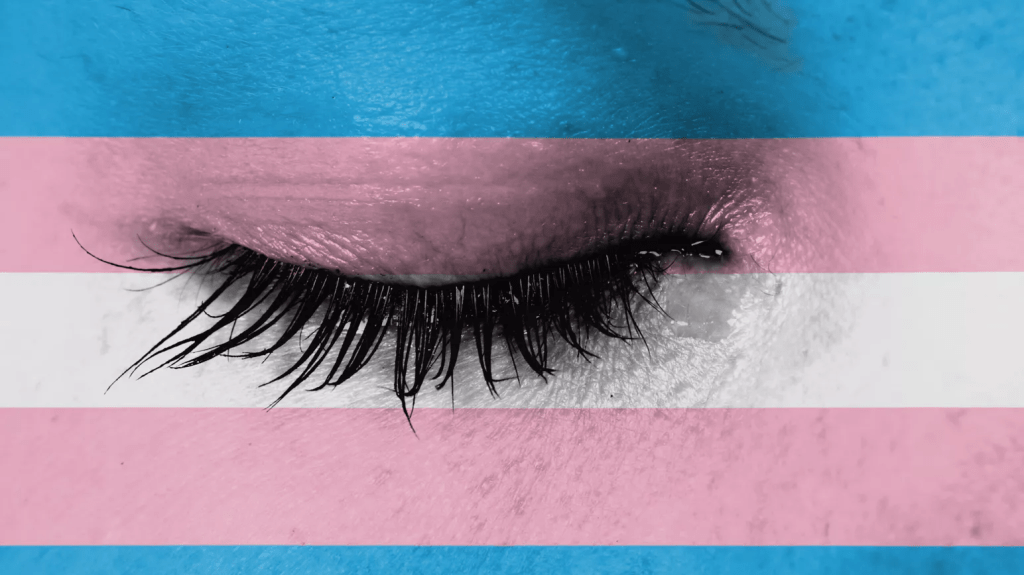
A trans woman’s court victory in Kenya could have wide-ranging implications for trans rights in the East African nation, after a judge agreed she suffered inhuman and degrading treatment at the hands of government authorities and directed Parliament to enact protections and recognition in law for trans Kenyans.
The plaintiff, Shieys Chepkosgei, was detained in 2019 and charged with “impersonation,” despite the fact that she had held official documents, including a birth certificate and passport with female sex markers, while living in another country where she had also competed in women’s athletics.
Chepkosgei was arrested by Kenyan police while visiting a teaching hospital, Q Newsreports.
She was remanded to a women’s facility, strip-searched, and ordered by a court to undergo “gender determination,” which included a genital examination, hormone testing, blood sampling, and radiological testing.
Chepkosgei challenged her detention and the nonconsensual medical examinations in court, arguing they were unconstitutional, violated her inherent dignity, and highlighted a legislative gap in the treatment of transgender persons in custody in Kenya.
Justice R. Nyakundi of the Eldoret High Court agreed that Chepkosgei’s rights to dignity, privacy, and freedom from inhuman and degrading treatment had been violated, according to Jinsiangu, a Kenyan intersex, transgender, and gender non-conforming rights group. She was awarded the equivalent of about $8000.
But the judge went a step further, directing the Kenyan government to initiate legislation in Parliament addressing the rights of transgender Kenyans, either with new protections or by amending current legislation on the rights of intersex people currently moving through Parliament.
“This is the first time a Kenyan court has explicitly ordered the State to create legislation on transgender rights, and a first on the African continent,” Jinsiangu’s Lolyne Ongeri told Mamba Online.
“If implemented, it could address decades of legal invisibility and discrimination faced by transgender persons by establishing clear legal recognition of gender identity, protections against discrimination in employment, housing, healthcare, and education, and access to public services without bias or harassment.”
Kenya has a fraught history with LGBTQ+ rights, with colonial-era penalties for same-sex behavior still in effect, and discriminatory legislation modeled on Uganda’s notorious Anti-Homosexuality Act – which allows for the death penalty for homosexuality – introduced in Parliament.
Same-sex relations remain criminalized, with “carnal knowledge against the order of nature” and “gross indecency” punishable by up to 14 years in prison.
Transgender people in Kenya face widespread stigma, discrimination, and violence. Current law bars trans Kenyans from legally changing their gender identity from the one assigned at birth.
While LGBTQ+ people have found relief in the courts, homophobia pervades Kenyan society and the legislature.
In 2023, Kenya’s Supreme Court affirmed a decision granting an LGBTQ+ rights group official status and legal recognition as a non-governmental organization (NGO). The decision ignited protests in the country’s second-largest city, led by clerics and homophobic politicians.
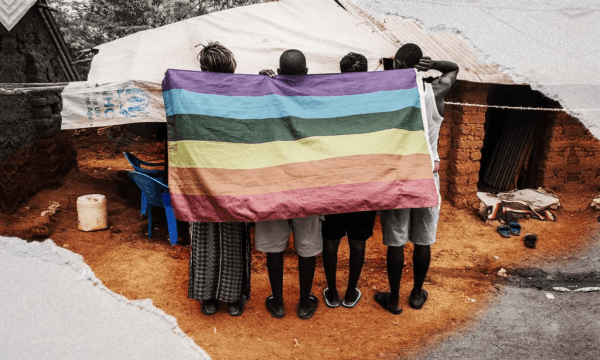
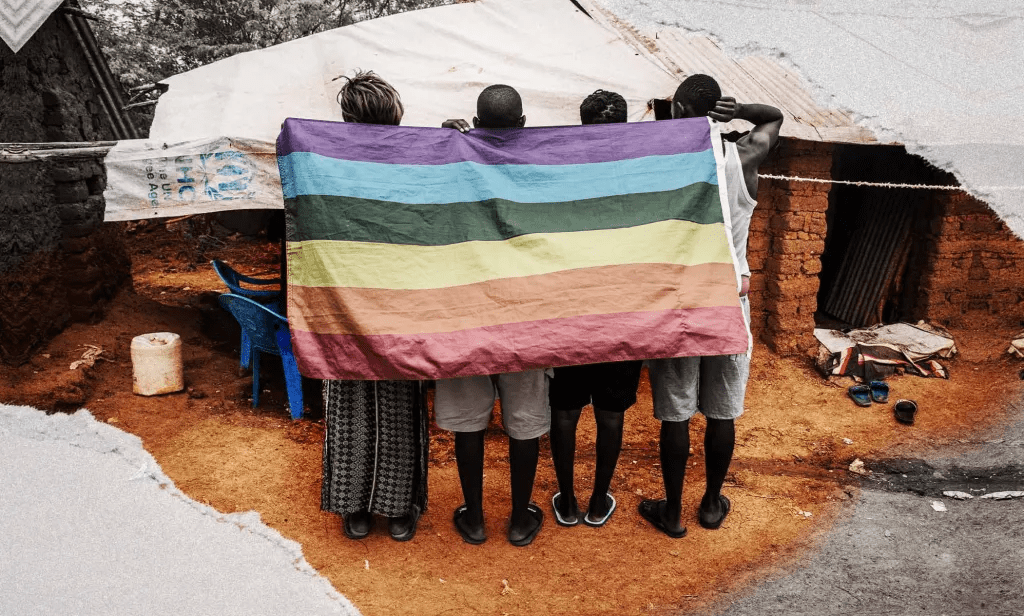
Already an outsider, Ugandan refugee Constance fears a plan to integrate hundreds of thousands of asylum seekers into Kenyan society will instead further alienate him and other LGBTQ refugees at a time of rising hostility.
The Shirika Plan, launched by President William Ruto last month, will transform two of the world’s largest refugee camps into open cities and allow the country’s more than 800,000 refugees to finally get jobs, health care and other services.
Under Shirika, which means “coming together” in Swahili, the nearly half-million refugees at the Kakuma camp in the north and the Dadaab camp near the Somali border can choose to leave the settlements to live alongside other Kenyans.
“The idea of integration is good, because it will guarantee refugees a free life and all rights, like any other Kenyan,” said Constance, who runs a safe house for Ugandan LGBTQ refugees. He did not give his last name for safety reasons.
But Constance said groups representing LGBTQ people have not been invited to public forums held in major cities to debate the plan, which was first floated in 2023.
“Unlike other refugees, we have serious concerns about security, health and housing that should be incorporated … But how will we voice these issues when we are not part of the process?” he said.
Kenya’s refugee commissioner John Burugu said all those affected by the Shirika Plan had been invited to comment.
“We have not locked any one or group out of the process,” Burugu told the Thomson Reuters Foundation by phone.
“You don’t have to physically attend the public participation forums. We have people, groups and organizations who submitted written memoranda, and we captured their views.”
But organizations defending the rights of LGBTQ refugees fear this vulnerable group is being ignored.
Chance for inclusion
The multi-year Shirika Plan has been lauded by the U.N. refugee agency UNHCR as an opportunity to improve the lives of refugees and create economic opportunities for Kenya.


 fleeredstates.blog
You must be logged in to post a comment.