An estimated 3.6 million LGBTQ+ people over the age of 50 live in the United States, and by 2030, that number will grow to 7 million. Despite those growing numbers, LGBTQ+ older adults continue to face inequities in health care, housing, and economic security due to discrimination and stigmatization from legislators, elder care workers, and medical professionals, as well as a lack of access to culturally competent healthcare and gender-affirming care.
Because all of these factors contribute to higher rates of depression, dementia, and chronic health conditions among queer elders, the need for queer-inclusive senior housing is rising. As such, the need for dedicated LGBTQ+-affirming retirement communities is more than a luxury — it’s a necessity.
Why inclusive senior housing matters
The aforementioned inequities are compounded by the fact that LGBTQ+ seniors are twice as likely to live alone and four times less likely to have children than their heterosexual peers, creating an even greater reliance on supportive housing solutions. This lack of traditional family support, combined with a lifetime of stigma and discrimination, can make aging especially isolating.
According to SAGE (Services & Advocacy for GLBT Elders), LGBTQ+ seniors in elder care facilities have been denied the right to share a room with their partner, pressured to hide their identities, or mistreated by staff unfamiliar with queer lives. The fear of going “back in the closet” in a care facility remains a real and painful possibility.
Inclusive retirement communities aim to address these challenges by:
Ensuring cultural competency training for staff: including the use of affirming language and pronouns; asking respectful and open-ended questions about relationships and family; understanding why LGBTQ+ people might not want to disclose their identities; and acknowledging the unique economic, social, physical, and mental healthcare needs (and relationship styles) of aging queers.
Creating environments where residents can live openly and authentically: Providing awareness training to help facility staff recognize and minimize implicit biases in themselves, their professional colleagues, and other facility residents; teaching community members how to respectfully engage with LGBTQ+ people; and providing various opportunities for LGBTQ+ residents to seek support.
Building spaces for social connection and belonging: Creating community events and opportunities to express and explore queerness through socializing, learning, and artistic engagement; providing a mediator, counselor, office, or ombudsman to assess/address any LGBTQ+ community needs; understanding how isolation and discrimination can uniquely affect queer seniors.
These factors are critical for both the mental and physical health of older LGBTQ+ adults.
LGBTQ+ retirement homes across the U.S.
While the number of communities remains relatively small compared to mainstream options, there are now dedicated LGBTQ+ senior housing developments and retirement villages in multiple states. Here are 21 around the United States:
Many of these developments include independent living, assisted living, or affordable housing options —reflecting the diversity of financial and medical needs among LGBTQ+ elders.
Alternatives to dedicated LGBTQ+ retirement communities
Not every queer elder has access to a specialized retirement community, but there are other options:
LGBTQ+-friendly senior living facilities: More mainstream retirement communities are adopting anti-discrimination policies, staff training, and LGBTQ+ resident programming.
Inclusive cities: Urban areas with strong LGBTQ+ networks — such as San Francisco, Chicago, Atlanta, and Philadelphia — often provide supportive social services and affirming healthcare options, especially through their queer community centers or others elder care services.
Looking ahead
The U.S. is on the cusp of a demographic shift. By 2030, all Baby Boomers will be over the age of 65, and that includes millions of openly LGBTQ+ adults. Ensuring they can age with dignity requires policy changes, cultural shifts, and investment in inclusive housing.
LGBTQ+ retirement communities represent one part of the solution. They offer safety, visibility, and belonging at a stage of life when many people need it most. But expanding access — through both dedicated communities and wider adoption of affirming practices in mainstream senior housing —remains essential.
Ready to call Spain your new home? Join the thousands of Expats who have successfully relocated to Spain with our expert advice, resources, insider knowledge and handpicked network of service providers.
We ran into Alastair & Alison Johnson through the Expatsi organization. Find out everything you need to know about moving to Spain in this informative talk from people who know! Check them out at https://movingtospain.com/
Thinking about moving to Spain to escape political extremism in the U.S.? As part of the Flee Red States project, we sit down with Alastair Johnson of MovingToSpain.com , who has lived in Spain for many years with his wife and adult son.
In this interview, Alastair shares his first-hand experiences about:
🏳️🌈 The acceptance and visibility of the LGBTQ community in Spain
🏥 Easy access to Spain’s public healthcare system
🏡 Lifestyle, culture, and why Spain is a welcoming choice for American expats
🌞 The benefits of living abroad in a progressive, inclusive country
If you’re considering moving to Spain from the USA, becoming an American expat in Europe, or simply curious about LGBTQ rights in Spain, this video gives you practical insights and inspiration.
Thinking about retiring in the Lone Star State? A new study from Bankrate says you probably shouldn’t after listing Texas as the second-to-last worst state for retirement in 2025.
Bankrate, a personal finance website, released on Monday, July 21, its findings of the best and worst states to retire in 2025. To determine ranking, Bankrate analyzed multiple data points and assigned a weight to each category, including: affordability (28%), weather (18%), neighborhood safety (17%), health care (16%), local taxes (9%), arts, entertainment and recreation (7%), people of a similar age (3%) and miscellaneous (2%).
In the ranking, Texas was ranked at No. 49, while Louisiana placed in last place. Texas did well in the taxes category, ranking seventh. However, the Lone Star State ranked dead last in health care and 49th in people of similar age, according to the study. Safety was also notably weak, as the state ranked 38th.
On the other side, New Hampshire was named the best state for retirees, ranking well in neighborhood safety (1st), health care (5th), taxes (6th) and people of similar age (7th), according to the study. Four of the top 10 best states for retirees are in New England (Maine, New Hampshire, Rhode Island and Vermont).
Bankrate used metrics from the U.S. Census, the Council for Community and Economic Research, the Environmental Protection Agency, the U.S. Department of Health and Human Services and more. The researchers also surveyed 2,260 U.S. adults between May 14-16, 2025.
The Bay State attracted 20% of interstate retirees in 2024, surpassing traditional snowbird destinations like Florida. That’s according to a new study from AInvest that used data from sources like the U.S. Census Bureau and U.S. News & World Report to analyze trends among older homebuyers.
The AI investment company identified several reasons that retirees are increasingly choosing to move to Massachusetts, including excellent healthcare, relative safety from climate-related risks, cultural and outdoor appeal and opportunity for investment.
In suburbs like Worcester or Salem, homes fetch median prices of $400,000–$500,000. These prices are significantly more affordable than Boston’s median home price of over $800,000 and offer rental yields around 5%.
“A seismic demographic shift is reshaping U.S. real estate markets, as retirees increasingly prioritize affordability, healthcare access and climate resilience over sun-soaked climates,” researchers said in the report. “This trend opens compelling opportunities for investors to capitalize on undervalued regions poised for growth.”
LGBTQ+ Americans have always been here, but as sector of society has largely been ignored until recently. LGBTQ+ seniors are continuing to increase in number, with the need for services that make them comfortable in their golden years becoming a growing issue.
According to surveys by SAGE and the Williams Institute, there are an estimated 2.7 million LGBTQ+ adults aged 50 and older in the United States, including 1.1 million who are 65 and older. By 2030, this number is projected to grow to around 7 million. Baby Boomers and Gen X, no longer plagued by the near certain early death sentence of AIDS, and contributing to growing numbers of elderly LGBTQ people.
There are a few projects across the country that have started to look at retirement community living for this sector of the population. We recently shared reporting of places in Boston MA and Austin TX. An alternative to apartment style living are single story units of housing, such as in Durham NC at the Village Hearth.
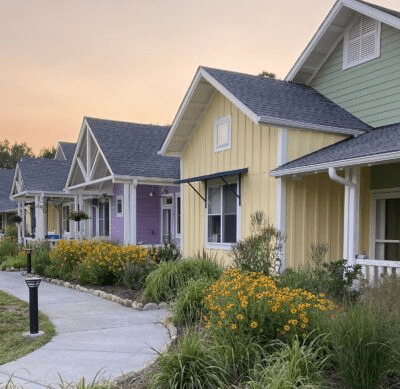
Village Hearth is located just 15 minutes from downtown Durham NC, one of NC’s major cities part of the Research Triangle. 28 homes surround a village green. For those willing to purchase their own home and be part of an HOA, this type of housing is an option.
CBS News recently profiled the village. Check out their report below.
On Wednesday, an Austin-based group broke ground on a new affordable housing development geared toward LGBTQ+ senior citizens.
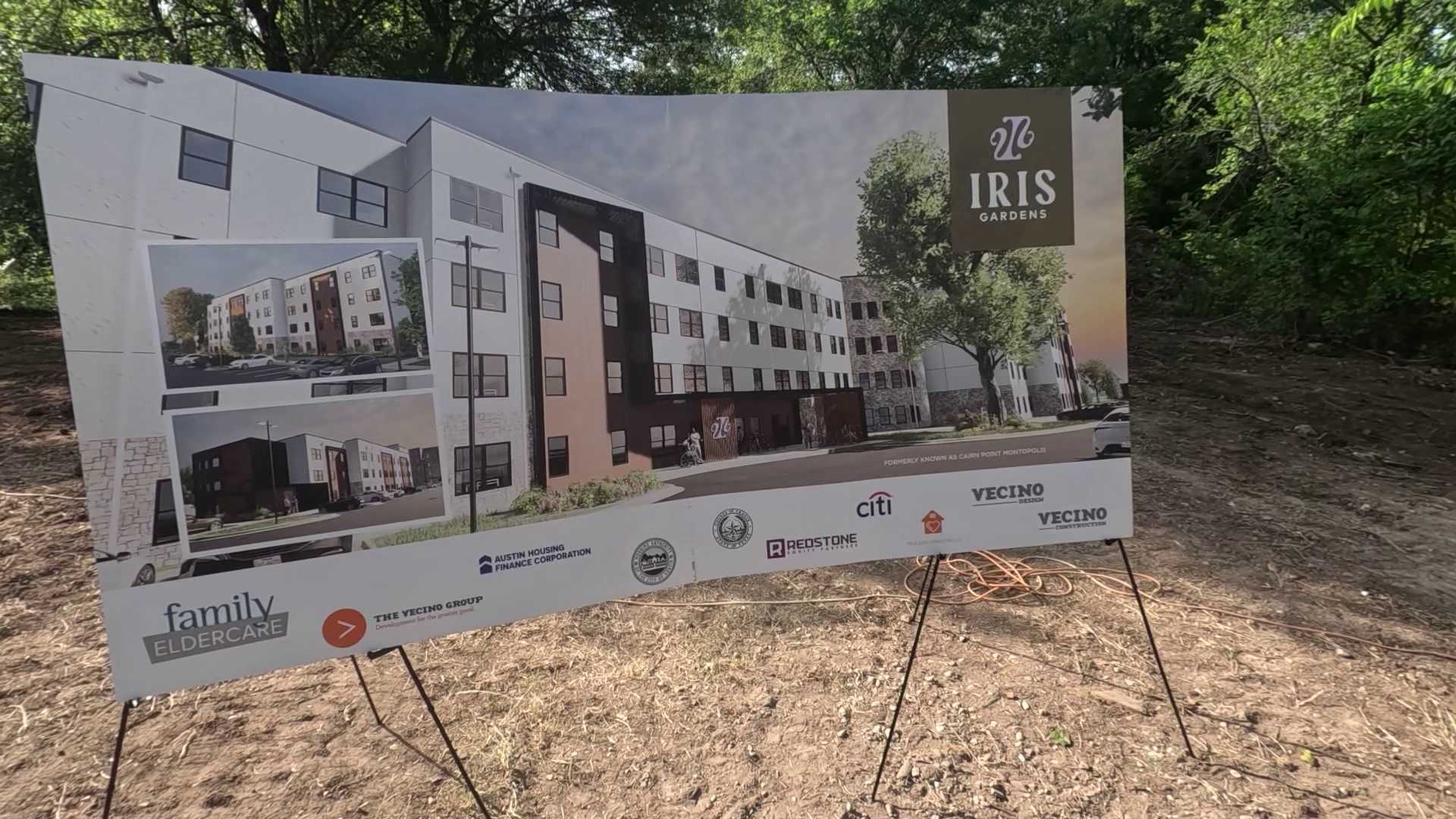
The development, which will be known as Iris Gardens, is located at 1013 Montopolis Drive in southeast Austin. It will consist of 150 units for people aged 55 and older and will be considered a first of its kind for Austin through a partnership with Family Eldercare and the national housing developer, Vecino Group.
It will also offer on-site services, including mental wellness and social connection programs.
“This project just felt like it was the right thing to do,” Family Eldercare CEO Dr. Aaron Alarcon said.
Alarcon said people who are at or below the 30% to 60% area median income will be accepted. The goal is to give people who live at the complex a safe and affordable space.
At the moment, there’s an uptick of elderly people experiencing homelessness, according to Austin’s Homeless Strategy Officer David Gray.
“Oftentimes, what happens is seniors are on a fixed income, but the cost of living in our city and in our county is going up,” Gray said.
Gray said his office plans to lend a helping hand to reduce barriers and will have a list of people set to move in. Those barriers include moving expenses, helping get identification and clearing old debt.
When it comes to adding more affordable housing in Austin, Gray noted that the city is on track to to add 1,200 units by 2026 as part of its homeless response system.
Other barriers people face as they try to gain access to affordable housing are criminal backgrounds and evictions. Gray said that one tool with landlords is to reduce screening criteria by looking past criminal history and past evictions.
However, when it comes to Iris Gardens, Gray said the city wanted to focus on a community that was not being properly served.
“While this is the groundbreaking for this development, this is not the first [and] this is not going to be the last. And we’re really excited to have more of these celebrations in the future,” Gray said.
Other organizations, like Rainbow Connections ATX, will also help with outreach.
“I feel that this is necessary; it’s a long time coming,” said Annie Saldivar, project manager for Rainbow Connections ATX.
The four-story building has a price tag of $51 million, with money coming from the Austin Housing Finance Corporation, Travis County, CITI Bank and Redstone Equity.
AUSTIN, Texas — On Wednesday, an Austin-based group broke ground on a new affordable housing development geared toward LGBTQ+ senior citizens.
The development, which will be known as Iris Gardens, is located at 1013 Montopolis Drive in southeast Austin. It will consist of 150 units for people aged 55 and older and will be considered a first of its kind for Austin through a partnership with Family Eldercare and the national housing developer, Vecino Group.
It will also offer on-site services, including mental wellness and social connection programs.
“This project just felt like it was the right thing to do,” Family Eldercare CEO Dr. Aaron Alarcon said.
Alarcon said people who are at or below the 30% to 60% area median income will be accepted. The goal is to give people who live at the complex a safe and affordable space.
At the moment, there’s an uptick of elderly people experiencing homelessness, according to Austin’s Homeless Strategy Officer David Gray.
“Oftentimes, what happens is seniors are on a fixed income, but the cost of living in our city and in our county is going up,” Gray said.
Gray said his office plans to lend a helping hand to reduce barriers and will have a list of people set to move in. Those barriers include moving expenses, helping get identification and clearing old debt.
When it comes to adding more affordable housing in Austin, Gray noted that the city is on track to to add 1,200 units by 2026 as part of its homeless response system.
Other barriers people face as they try to gain access to affordable housing are criminal backgrounds and evictions. Gray said that one tool with landlords is to reduce screening criteria by looking past criminal history and past evictions.
However, when it comes to Iris Gardens, Gray said the city wanted to focus on a community that was not being properly served.
“While this is the groundbreaking for this development, this is not the first [and] this is not going to be the last. And we’re really excited to have more of these celebrations in the future,” Gray said.
Other organizations, like Rainbow Connections ATX, will also help with outreach.
“I feel that this is necessary; it’s a long time coming,” said Annie Saldivar, project manager for Rainbow Connections ATX.
The four-story building has a price tag of $51 million, with money coming from the Austin Housing Finance Corporation, Travis County, CITI Bank and Redstone Equity.
The development is set to be completed by spring 2027.
Exactly one year after opening its doors, The Pryde has transformed the historic 1902 structure into New England’s first LGBTQ+ welcoming affordable senior housing community.
Karmen Cheung, Pennrose New England Regional VP, recalled the building’s previous state.
“I remember walking in and doing a tour of the building when it was vacant for the first time,” Cheung said. “It was actually kind of creepy, cold, dark.”
The vision, however, was clear: to turn an historic building into an independent living space where LGBTQ+ seniors could feel a strong sense of belonging. The result is a vibrant community that residents like Brian Salvaggio deeply appreciate.
“It’s bright, it’s open, it’s lively,” Salvaggio said. “It’s really the first group of people that’s lived here, so you feel part of something.”
For many residents, The Pryde offers a much-needed haven.
“As we get older and we want more community around us and we want more support around us, that’s really what brought us here,” resident Pat Xavier said.
The 100% accessible building addresses a critical need for a generation of LGBTQ+ elders who grew up without the legal protections and societal acceptance now afforded to younger generations, according to Gretchen Van Ness, executive director of LGBTQ Senior Housing.
“This generation of LGBTQ elders has faced such losses that they come into their elder years with a much smaller safety net than a lot of other folks are lucky to have,” Van Ness said.
The journey to create The Pryde was a dedicated nine-and-a-half-year collaboration between LGBTQ Senior Housing and Pennrose Management. Throughout the renovation, developers diligently preserved the building’s historic charm, retaining elements like original chalkboards and bell systems.
“Every unit is actually a little different because of those historic pieces,” Cheung said.
The Pryde is open to anyone over 62 who qualifies for affordable housing, though demand has far outstripped availability.
“We are 100% occupied,” Van Ness said. “This community is full and it’s hopping and there’s a million things going on.”
For residents, the most significant impact is the feeling of safety and liberation from discrimination and isolation.
“That’s just a wonderful feeling because, you know, there’s no more hiding,” Brian Salvaggio said. “Not at our age. We want to be who we are and enjoy the time we have.”
After a year of operation, residents and representatives alike believe The Pryde stands as a powerful blueprint for LGBTQ+ senior living communities everywhere, demonstrating how inclusive spaces can transform lives.
The fear includes having to hide who you are, if you become ill, or as you age in Connecticut.
Now, the state Senate passed legislation in a 26-10 vote that prohibits long-term care facilities and their staff from discriminating against residents including those in the LGBTQ+ community and also requires cultural competency training focused on residents who identify as lesbian, gay, bisexual, transgender or gender nonconforming or are living with HIV.
“This bill is part of our ongoing efforts to ensure that Connecticut remains a place where seniors feel safe and respected as they age,” said Sen. Jan Hochadel, D-Meriden in a statement. “No one should fear being treated differently or unfairly based on who they are. This law will send a clear message that everyone in Connecticut deserves dignity and compassion in their later years.”
Several Republicans cited concerns with the bill, particularly about how cases of discrimination would be adjudicated, with Sen. Rob Sampson, R-Wolcott, proposing an amendment to remove the DPH from the bill in being the final arbitrator of the penalties of facilities.
That amendment failed along party lines.
“The language that is included in here has an intent to politicize the notion of discrimination, almost like a DEI bill frankly,” said Sen. Rob Sampson R-Wolcott.
“Almost in an effort to try to dig us into the discussion about DEI once again and frankly I don’t want to go there. I am just as much against discrimination as anyone else is but to try and go ahead and create these training materials that will ultimately force people that work in these institutions to have to accommodate other people’s worldviews I think is offensive frankly,” he said. “The desire to impose penalties on facilities and maybe individuals because they participate in a training where they are exposed to different worldviews they disagree with and have them imposed upon them and adjust and respond to a woke understanding of the world is quite frightening frankly.”
Sen. John Kissel, R- Enfield, also spoke against the bill and his disappointment that the amendment failed.
“I have great concern when we turn too much power over to a commissioner,” he said. “We do not want discrimination. I got to be honest if I am dealing with some 85-year old woman that is in frail health and if she feels uncomfortable in a room because someone next to her is having a lifestyle choice that impedes and interferes with her quality of life, that is an interesting question. By this underlying bill we are saying we are always going to side with the person that is being overly expressive in asserting themselves in their sexual determinations.”
One couple hoping for the bill’s passage is Janet Peck and her wife, Carol Conklin. The couple faces a tough transition as they consider long-term care facilities for Conklin, who was diagnosed with Alzheimer’s.
Peck said she is concerned that the couple, who celebrate 50 years together this September, will no longer be able to live openly, fearing discrimination at a long-term facility after hearing stories from friends in such facilities.
“We have never lived in the closet and we do not ever intend to and it would be pretty awful if (Carol) would have to feel she would have to do that and if I visit her that we would feel like we would have to hide that we are together,” she said.
“I think this bill helps to ensure that at least there is training for staff about LGBTQ+ cultural issues,” she said. “I think the biggest concern is that we would not be comfortable if staff is not trained. We would not be comfortable to be out.”
While transitioning Conklin to a long-term care facility is not immediate, Peck said it is not far fetched as she was diagnosed with cancer.
“Although I am doing well and hope to continue, it may be contrary to what we have been planning for if she outlives me,” she said. “My dying wish is that Carol would be able to get the care that she is due like anyone else and that people would understand that she is a lesbian and that she be treated respectfully.”
HB 6913 passed the House 124-19 on May 8 after the adoption of a bipartisan amendment negotiated by Rep. Steve Stafstrom, D-Bridgeport, co-chair of the Judiciary Committee. The amendment struck a provision stating a transgender patient has a right not to be refused a room due to gender identity and to not be forcibly transferred.
Peck said she was disappointed that the bill “got rid of the rights of trans people.”
Rep. MJ Shannon, D-Milford, a 24-year-old gay man, said during the debate on the bill in the House, another change included is that it broadly refers to prohibiting discrimination against anyone, not just those in the LGBTQ+ community as the bill was originally written.
“The biggest pushback was (questioning) why this certain group gets to have a special law made for them,” Shannon said, explaining that lawmakers could not get over that hump so they revised the language to include everyone.
Shannon said the bill is crucial, especially the training component. He said he has also heard about discrimination of LGBTQ+ individuals in long-term care facilities from Mairead Painter, the state’s long-term care ombudsman.
“As a young gay person I know that these folks in these facilities have literally been fighting their entire lives for equal rights and equal opportunities for themselves and now that they are at the end of their life they should be able to be an old person and be in a nursing home,” he said. “They are facing discrimination just because of who they are and that is just not right.”
Shannon continued: “It is important that our LGBTQ+ elders or anyone living in these homes be treated with the respect and dignity they deserve and they age the rest of their lives gracefully and without fear of anything.”
Painter told the Courant that the state’s long-term care ombudsman’s office was looking to see this bill passed in order to ensure that “individuals receiving long-term services and supports know that in a very forward way their rights will be protected if they are in these settings.
“We really want to see them have the opportunity to live their best life and be their authentic self,” she said.
Painter said her office has seen some cases related to discrimination, harassment and isolation faced by LGBTQ+ residents within skilled nursing facilities.
“We have not seen an increase in these cases but just the fact that they have come up and part of it is a lack of awareness on some individuals’ part,” she said. “With education, outreach and by ensuring that people know that they have these rights and are protected, we are hoping as a package all around it will support the ability for everyone to live a high-quality life with respect and dignity in a long-term care setting.”
She added that surrounding states have passed similar bills.
Matt Blinstrubas, executive director of Equality CT, cited nationwide reports of incidents of discrimination against LGBTQ+ individuals in skilled nursing facilities including incidents of isolation, shunning and misgendering of people.
“I have talked to couples who have had to go back in the closet effectively and are worried about what happens when one partner is in a facility and the other is visiting,” he said. “I have heard reports of trans folks being isolated by other residents and staff and I think in one case somebody actually left Connecticut and moved to a facility in New York City as a result of this. It is also a huge concern for same-sex couples where one partner needs to enter long-term care and (fear of discrimination) makes that decision difficult and complicated. There is palpable fear about how they might be treated.”
Blinstrubas continued: “This bill is a crucial step in providing the training and guidance necessary to providers to help them meet their needs and the needs of residents and to make sure nursing homes and long-term care facilities are welcoming to everybody.”
Waterbury Alderman Bilal Tajildeen, who also serves on the board of Equality CT, said he knows of cases of older adults in long-term care facilities in Waterbury that do not disclose that they are gay or lesbian because they fear discrimination.
He said the bill is critical.
“We are talking about a group of people, a specific age of older LGBTQ+ adults who have spent almost the majority of their life experiencing discrimination,” he said. “The challenge with long-term care facilities is you have so many employees that come from so many different lives and traditions that the risk of having a caretaker that has very adverse reactions to your lifestyle is actually quite high.”
Peck recalled a story of a friend whose partner was dying in a long-term care facility and told her partner not to show affection to her in the open.
“In the end state of an illness, you do not feel comfortable that your wife can show affection to you,” she said. “That should never happen.”
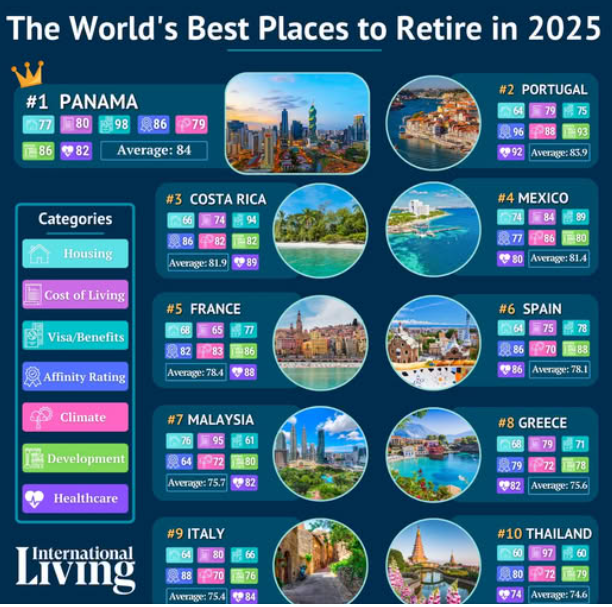
An irrefutable reality of being a member of the LGBTQ community, at any age, is that you must give more thought than non-LGBTQ people about where to live. What are the local laws that apply to LGBTQ people regarding workplace and housing discrimination, marriage equality and conversion therapy? What does available public polling reveal about acceptance of the LGBTQ community? Even if you’re not married and don’t plan to be, or even if you no longer work, such laws — or the absence of them — suggest to LGBTQ folks how safe and welcoming the locale will be for them.
The above is true whether you’re LGBTQ and 30 — or a gay retiree. You can’t just spin the globe. If you’re LGBTQ and are considering retiring abroad, it is incumbent on you to do more due diligence than your straight friends and family members would have to do in the same situation.
Best places for LGBTQ people to retire abroad
If you enlist the services of a lawyer who specializes in retirement abroad, you have to ask more questions; you have to spend more late nights googling; and you have to read more articles like this one, in which we examine the knotty issues related to gay retirement outside the U.S., include advice from both experts and expats, and make some (hopefully helpful) recommendations.
If everything falls into place, you can breathe a sigh of relief once you’re in the midst of your retirement abroad. Chris Young and Jon Kinnally, who both worked in the television industry — Young was a writer for Comedy Central, and Kinnally was a writer and producer for the sitcoms Will & Grace and Ugly Betty — lived most recently in Los Angeles before the couple moved to Spain. They chose Sitges, a vibrant, walkable beach town about 45 minutes from Barcelona. “It’s so open. You see gay and lesbian couples holding hands. And you can be old and gay here, which you can’t be in L.A.,” Young says, not entirely joking.
Below, we recommend some beautiful and culturally rich countries where LGBTQ folks can retire happily and safely. But just as the U.S. isn’t uniform in terms of acceptance, neither are most countries. The LGBTQ community scarcely needs to be told that the more populous and diverse the area — in the U.S., that means urban or coastal, or both — the more accepting the area tends to be.
But it’s worth repeating. As the founder and managing director of Mitos Relocation Solutions, Federica Grazi helps expats retire in Greece and other European countries, and she is quick to note that not all of Greece is like the gay magnets of Athens and Mykonos. “I would not recommend that gay couples move to the countryside, where there are traditional communities and not many expats — it would be harder to integrate there,” she counsels, but the same might be said of France, Spain, Italy — or the U.S.
With that in mind, here’s our hot list of retirement places.
Spain
Spain is well-known as one of the most LGBTQ-friendly countries in the world. Spain legalized same-sex marriage in 2005, a full decade before the U.S. Naturally, this factored into Young’s and Kinnally’s decision to move to Sitges, a global destination for gay tourism.
The two appreciate the fact that the resort town, while heavily gay — with a spate of gay bars, nightclubs, and hotels — is demographically diverse. “It’s not a gay ghetto,” Young says. “Sitges is a great mix,” Kinnally adds. “It’s different than a place like Provincetown. There are kids running through the streets, old Spanish ladies, and gay couples — all mixing together. It’s kind of a utopia if you want to retire.”
With health care costing the couple only 250 euros a month and three-course lunches priced from 15 to 17 euros, they can breathe easy about expenses and work on their respective book projects. (Kinnally’s I’m Prancing as Fast as I Can comes out in August.) Of the major cities, Barcelona is a gay mecca, and Madrid boasts Chueca, a festive gay neighborhood.
Greece
While same-sex marriage was only recently legalized in 2024, same-sex sexual activity was decriminalized in Greece in 1951, which compares favorably to the U.S., which granted this right far later — in 2003. Likewise, employment discrimination against gays and lesbians has been illegal in Greece since 2005 (with gender-identity protections following later), while the U.S. did not grant this protection at the federal level until 2020.
Athens boasts a large and thriving LGBTQ community, especially in the Gazi neighborhood, and the Cycladic island of Mykonos is arguably the world’s most popular summer destination for the LGBTQ community, with famous gay beaches like Elia and Super Paradise.
Former New Yorker Daniel Rentillo says that even the small, low-key island of Symi, where he retired, is a comfortable place to be LGBTQ, and he’s noticed more gay couples visiting and even making moves to relocate to the island. The fact that Greece enjoys excellent health care and a relatively low cost of living makes this country of cultural antiquities, plentiful beaches, mild weather, and fresh seafood a fine choice for retirees — LGBTQ or not.
Malta
Not only was employment discrimination against the LGBTQ community banned here, and same-sex sexual activity decriminalized years before the U.S. made these civil rights moves, but the island nation of Malta was also the first European country to ban conversion therapy. Supermajorities of Maltese support civil rights and marriage equality.
With a tiny population of half a million people living on three sunny, inhabited islands (Malta, Gozo, and Camino), the country is located south of Sicily, enjoying a similar Mediterranean climate and stunningly clear waters to swim in, especially at the natural coves at St. Peter’s Pool.
Valetta is the pedestrian-friendly capital and is the best place for gays to hole up, along with nearby Sliema. “Everyone accepts the LGBTQ community today,” says Matthew Cassar, a citizenship advocate and lawyer based in Sliema. “No one would conceive of discrimination,” noting that “there is no opposition party” set on scaling back the community’s rights. One of Cassar’s clients, worried for his transgender daughter’s rights and safety in the U.S. under the Trump administration, is in the middle of the citizenship process.
The country has two official languages: Maltese and English.
Australia
For more than a decade, public polling has shown support for gay rights and marriage quality surpassing the 70% mark. And some advances have been swift and recent: Since 2021, the country has outlawed the so-called gay panic defense, legalized marriage equality, and banned conversion therapy (in regions representing 85% of the population). In 2013, Australia implemented federal protections based on sexual orientation, gender identity, and intersex status.
Though marriage equality did not arrive in Australia until 2018, the capital of Sydney has embraced gay culture for decades: The annual Gay and Lesbian Mardi Gras, one of the world’s biggest LGBTQ celebrations, has been going strong since the 1970s. While Sydney, Adelaide and Brisbane have gay neighborhoods, the LGBTQ presence in Melbourne is more spread out.
Most retirees will find a pathway to relocate through the expensive ($500,000 to $750,000) Investor Retirement Visa. Still, it is cheaper to live in Sydney than in New York or San Francisco.
For those seeking a mild climate, beautiful cities, a friendly populace, excellent health care, and zero language barrier, “Oz” (the affectionate slang for Australia) may be the ticket.
Costa Rica
Costa Rica’s former president, Carlos Alvarado Quesada, was a notable reformer and advocate in the area of LGBTQ rights, garnering global attention when he publicly apologized for the country’s past persecution and discrimination of gays, calling it “shameful.” Same-sex marriage became legal in 2020, which was also the year that hate crimes and blackmail based on sexual orientation were criminalized. (Transgender rights already had been significantly expanded in 2018.)
A center of eco-tourism and sustainable well-being with no standing army, tropical Costa Rica has long been regarded as a kind of peaceable utopia for expats. With the Caribbean Sea on one side and the Pacific on the other, Costa Rica is known for its lush landscape and hot springs.
Gay life is centered in the capital city of San Jose and the carefree beach resort town of Manuel Antonio. Retirees will find the country very affordable, even with household help.
The Netherlands
The first country in the world to legalize same-sex marriage (in 2001) also banned discrimination based on gender identity, gender expression, and sex characteristics in 2019. Not only do most Dutch people support LGBTQ rights; many Dutch, especially those under 40, can’t even comprehend the discrimination faced by the community in other countries.
It would be an understatement to say that you can be comfortably gay in Amsterdam, with Reguliersdwarsstraat the most prominent LGBTQ area. This world-class city is postcard-perfect, teeming with cyclists, and is pedestrian-friendly (just mind the bike lanes). The visa system is straightforward and leads to residency. English is widely spoken, and the cultural opportunities seem endless.
On the downside, the country’s cost of living can feel a little pricey for those living outside major U.S. cities, and the weather in the Netherlands is rainier and chillier than in southern Europe.
Thailand
In 2024, Thailand made headlines when it became the first UN member state to approve a marriage equality law, and the country, with its myriad cultural and recreation opportunities, has long been popular with LGBTQ tourists. Therefore, LGBTQ couples and individuals may want to consider Thailand, but only if they’re of a certain stripe: adventurous and very well-traveled; tolerant of tropical heat; and veterans of previous vacations or work stints in the country.
In an exotic culture so far from friends and loved ones, it’s best to have an expat community already in place if you’re thinking of moving there. In addition, though Thailand offers the LGBTQ community a range of protections and anti-discrimination laws, local attitudes are still evolving, and social interactions should be carefully navigated (cue the established expat scene).
That said, this is a very inexpensive country with kind people. And if you love Thai food, having pad see ew where it was invented will be a revelation. The capital, Bangkok, is a uniquely stimulating place, where a ride on long-tailed boat along the Chao Phraya River may get you to your destination faster than an open tuk-tuk (taxi), given the city’s notoriously heavy traffic.
If you prefer a slower pace and a coastal setting, you can always base yourself in the resort areas of Phuket or Ko Samui, the latter the island where season 3 of The White Lotus was filmed.


















 fleeredstates.blog
You must be logged in to post a comment.