Gay men discuss the best places to live if they get priced out of bigger cities

*This is reported by Queerty.

A couple of social media postings over the weekend struck a chord with many people. They both addressed good places for gay guys to live in the US — especially if hotspots such as New York City are out of their budget.

On Threads, user @justintycarey asked, “Where are you all moving to gay/queer Americans? I live in Philadelphia after nearly 7 years in New York. It’s fine for now and it’s more affordable (I live alone) but I don’t think it’s my vibe at all. I used to live in Portland, ME which was progressive and beautiful. Walkable too! But I realized it wasn’t my thing culturally.

“Now I’m stuck! I don’t know what’s good. I want a quiet life but I also want access to New York and other metro areas.” He also wanted a good arts scene.

Fans of Philadelphia told him not to give up on the city – especially if, as indicated later, he arrived during the chilly winter months.

“I moved to Philly from New York and spent the first year or two planning my escape, but it grew on me,” said one. “It’s a place that takes some time to find your people and neighborhood. I’ve been here for 10 years now and can’t picture myself anywhere else.”

Others praised parts of New Jersey.

“Have you considered the suburbs? I’m in south jersey and while I miss the city ‘vibe’, my community feels much tighter and, as a whole, more progressive. I can get to NYC in an hour or Philly in 20 mins. It’s not for everyone but walkable and quiet with access to city.”

Another pointed to the Jersey coast.

“Asbury Park, NJ! Yes, it’s a shore town, but most people are residential there. Very queer-friendly with a quiet town vibe. Access to the train is right in Long branch — it’s under 1.5 hours to NYC by NJ transit. Art scene is pretty good too with lots of potential for growth.”

Other suggestions within commuting distance of New York City came flocking in.

“Northampton, Massachusetts, springs to mind, depending on how far from NYC you want. If you want closer to NYC, then Warwick, NY or New Paltz, or if closer, then Montclair, NJ. All are walkable, gay friendly, progressive, pretty, stuff to do, not huge cities.”

Others wanted to know why the poster wasn’t keen on Portland. He said he highly rated the place but was used to cities that are more ethnically diverse, even if the Maine location was slowly increasing in diversity.

Boston

Over on X, user @fruitsnacks42 was also pondering locations to live… in a more snappy fashion. He said he was “Too poor to be an NYC gay, too dumb to be a DC gay, too ugly to be an LA gay, too fat to be a SF gay, too lib to be a Miami gay … just damaged enough to be a Boston gay.”

The tweet received over 44k likes.

In the replies, commentators urged him to consider cities such as Atlanta, Seattle, Chicago or Austin. Bostonites also defended their city.

Others pointed to San Francisco’s thriving bear scene, suggesting the “too fat for SF” was out of line. A few also suggested it was wrong to assume all the gay men in DC are smart.

Best gay-friendly cities

Obviously, on social media, people are likely to praise their home cities… but where are the best places to live if you’re queer?

In 2023, real estate data company Clever composed a ranking of the 15 top LGBTQ-friendly cities. It looked at whether cities scored well on the Human Rights Campaigns equality tally, and such factors as the size of the queer population, the number of gay bars and the numer of local Pride events. The top 15 were as follows:

15. Milwaukee, Wisconsin

14. Baltimore, Maryland

13. Pittsburgh, Pennsylvania

12. Richmond, Virginia

11. San Jose, California

10. New Orleans, Louisiana

9. Chicago, Illinois

8. Sacramento, California

7. San Diego, California

6. Los Angeles, California

5. Denver, Colorado

4. Portland, Oregon

3. Las Vegas, Nevada

2. Hartford, Connecticut

1. San Francisco, California

It should be noted that this ranking was from 2023 and some factors may have changed, particularly regarding anti-trans laws.

If you’re older and thinking about your later years, Life Care Retirement recently merged date on LGBTQ-friendly cities with retirement hotspots. It came up with the following top ten locations for seniors.

10. Dayton, Ohio

9. Tucson, Arizona

8. Tampa, Florida

7. King City, Oregon

6. Seattle, Washington

5. Minneapolis, Minnesota

4. West Palm Beach, Florida

3. Alexandria, Virginia

2. Austin, Texas

1. Fort Lauderdale, Florida
LGBTQ seniors in Argentina face uncertain future

*This is being reported by the Washington Blade.

Argentina has undergone significant changes in its economic and social policies since President Javier Milei’s inauguration in December 2023. These changes have had a significant impact on various sectors of society, especially retirees and the LGBTQ community.

Mercedes Caracciolo, a 79-year-old sociologist and lesbian activist, shared her experience with the Washington Blade on how the new measures have affected her quality of life.

“Since Milei’s arrival in government, which began with a brutal devaluation, I am more careful in my spending than I was before,” she said.

Although Caracciolo has additional income from rental properties, she recognizes the situation is much more critical for those who exclusively depend on a pension.

With more than 7 million people receiving pensions, many find themselves “scratching the poverty line” due to the loss of purchasing power. The libertarian government’s economic policies have drastically affected their welfare, leading to a wave of protests across the country.

The reduction of social programs and the lack of LGBTQ-specific public policies have deepened the difficulties that seniors already face. The loss of economic stability particularly affects those who have historically lived on the margins, with fewer job opportunities and limited access to a decent retirement. Many older LGBTQ people, who have spent their lives unable to form traditional families, now find themselves without a support network and with an increasingly less present State.

The advance of conservative discourses has also generated a climate of insecurity and fear.

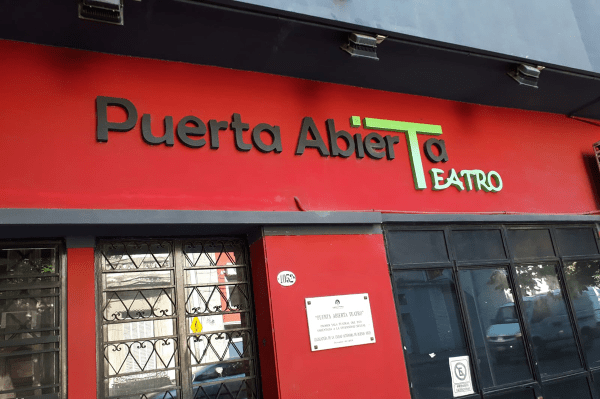
“There is no more sense of security and stability in old age,” Graciela Balestra, a psychologist who is the president of Puerta Abierta a la Diversidad, the first home for LGBTQ seniors in Argentina, explained. “Many LGBTQ+ retirees fear that there are fewer and fewer rights. They see what is happening in Argentina and globally with the advance of the right wing, and they feel that what they worked so hard to achieve is in jeopardy.”

In addition to economic difficulties, the LGBTQ community has faced additional challenges.

Caracciolo noted many supportive spaces have had their government subsidies reduced or eliminated, weakening community networks essential to the well-being of LGBTQ seniors.

“Community networks are also weakened because many of them require state support for certain types of expenses,” she noted.

Balestra warned about the psychological impact.

“Obviously it impacted mental health. There is much more anxiety, there is fear. People who say ‘I’m afraid they’ll kill me’ or ‘I’m afraid to show myself,’” she said. “Before, they used to walk down the street holding hands with their partner, and now they don’t do it anymore. A lot of hopelessness.”

For Balestra, the concern goes beyond the LGBTQ community.

“The economic issue, the rights issue, the fear that something similar to the dictatorship will return. All of this is very scary. And besides, the hopelessness of believing that this is going to continue, that it is not going to change even in the next elections,” she said.

Civil society organizations have denounced an “adjustment” in policies related to gender and diversity that Milei’s government has undertaken. Pride marches in Argentina have become a stage for protests against the president’s policies, especially over his speeches that activists consider hateful towards the LGBTQ community.

Balestra stresses the fear is not only individual, but collective.

“Human rights no longer exist anywhere, women no longer have the place they used to have, they are once again objectified, machismo is on the rise again,” she said. “This brings a lot of despair to older people.”

Despite the climate of uncertainty, Balestra emphasizes resistence forces are still in force.

“We continue working, as always,” she said. “For 25 years at Puerta Abierta we have been doing reflection groups, cultural workshops, social meetings, all with respect to being able to make LGBT people aware of their rights. We never stop meeting, but lately we are talking more and more about these things that we had already left a little behind. The issue of coming out, fear, visibility. Now we have to talk about it again.”

First D.C. LGBTQ seniors home ready to open

*This is being reported by the Washington Blade.

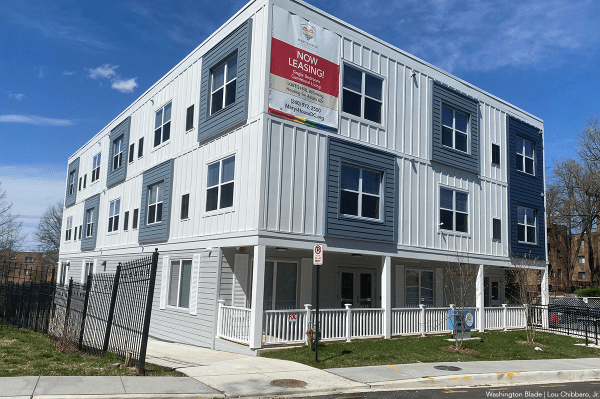
The first nine residents of Mary’s House For Older Adults, D.C.’s first LGBTQ home for seniors, are expected to move into the newly built group home within the next week or two, according to Mary’s House founder and CEO Imani Woody.

Located at 401 Anacostia Rd., S.E. in the city’s Fort Dupont neighborhood, a write-up on its website says the house includes 15 single-occupancy residential units and more than 5,000 square feet of shared communal living space.

Woody said construction of the three-story house was completed in January and leases have been obtained by the first nine of the 15 residents, with the remaining six still available for interested seniors. She points out that Mary’s House, which is a nonprofit operation, is not an assisted living facility.

A large sign hanging near the top of the front wall of the Mary’s House building says, “Now Leasing! Single Bedroom Communal Living—LGBTQ+ Affirming Housing for Adults 62+”

The sign also includes the Mary’s House phone number and website address that Woody said interested seniors or those who may know a senior who would be interested should use to contact the LGBTQ supportive seniors residence.

Woody said each of the individual units or suites includes a sleeping area, living room, bathroom, and kitchenette with a sink, microwave, and refrigerator but no stove. According to the Mary’s House website, the shared communal areas of the house include a “fully equipped kitchen, separate dining area and living room.”

It says the communal area also includes a computer room, arts and crafts room, an exercise room, laundry facilities, community meeting space for gatherings, a “tranquil quiet room for relaxation,” and an outdoor terrace with seating.

Woody said the monthly rent for Mary’s House residents, depending on their income, is currently set at $812 or $886.

“Our mission extends beyond providing housing,” a statement on the Mary’s House website says. “We strive to build welcoming communities that address affordability, accessibility, and the unique needs of LGBTQ/SGL [Same Gender Loving] older adults.”

The statement adds, “Through health and wellness programs, connections to community services, and advocacy efforts, Mary’s House for Older Adults endeavors to ensure that all elders, regardless of identity, can enjoy fulfilling and secure lives in their golden years.”

Woody said a ribbon-cutting ceremony to celebrate the opening, to be led by D.C. Mayor Muriel Bowser is planned for early May, with a specific date to be announced soon. 

Further information about Mary’s House, including a lease application, can be obtained at MarysHouseDC.org or at 240-972-2500.

Ground broken for LGBTQ-focused senior housing in Pittsburgh

*This was published by The Advocate

Ground has been broken in Pittsburgh for what will be the first LGBTQ-focused senior housing complex in western Pennsylvania and the second in the state overall.

Groundbreaking took place Thursday for the Mosaic Apartments in the city’s Oakland neighborhood, which is home to the University of Pittsburgh and Carnegie Mellon University, along with museums, health care providers, and an eclectic mix of shops and restaurants. The 48-unit complex will open in the fall of 2025, according to local media.

The affordable housing development is a project of Presbyterian SeniorCare Network, which was approached about seven years ago by the Persad Center, a provider of LGBTQ-affirming mental health services.

“One of their staff members said, ‘Can you build us an apartment building?’ It was a beautiful opportunity for us to enhance our mission and help a greatly underserved and often discriminated-against population,” Jim Pieffer, president and CEO of Presbyterian SeniorCare, told TV station WTAE.

Presbyterian SeniorCare raised $30 million for the complex but was able to acquire the land for free thanks to the University of Pittsburgh and its medical center, Pieffer told another station, KDKA.

Persad Center CEO Martin Healey told KDKA that LGBTQ+ people sometimes encounter problems in senior housing. “It’s scary — you sometimes have to go back into the closet,” he said. “There’s not necessarily a safe space all the time. … We’ve seen situations where they have fear and have isolation and loneliness that hopefully this type of place will break.”

“My hope is that this is the start of something far bigger and far greater for our community, not just here in Pittsburgh, but more across the country,” he added.

By 2030, there will be 7 million LGBTQ+ seniors in the U.S., SAGE National Resource Center on LGBTQ+ Aging estimates.

Prospective Mosaic Apartments residents can begin applying next March.

North Texas’s First LGBTQIA+ Affordable Senior Housing Development Completed

*This was first published for The Architect’s Newspaper

The U.S. has always been a difficult country to “age in place”—seniors who can’t find lodging with a loved one are often relegated to nursing homes, if they can afford the fees. The situation gets even more precarious for LGBTQIA+ seniors, who commonly see bias in the rental application process, and get turned down for apartments at high rates.

Things are especially dire in Texas, where state law doesn’t protect individuals from housing discrimination based on their sexual orientation, although LGBTQIA+ individuals are still protected under the federal Fair Housing Act. This exacerbates the problem and puts even more people at risk of poverty and social isolation.

Perkins&Will’s Dallas studio recently completed a new affordable housing project to help combat this public health crisis. Today, Oak Lawn Place in Dallas represents north Texas’s first affordable housing development of its kind, the architects shared. It offers 100 percent affordable housing for LGBTQIA+ seniors, 55 years of age and older.

Karen Chen of Sunshine Studios created a bespoke mural on every floor of the building. (James Steinkamp)

The Dallas neighborhood of Oak Lawn has been the beating heart of north Texas’s LGBTQIA+ community for decades. Oak Lawn Place was built with the developer Matthews Southwest, Volunteers of America, and Resource Center, one of the largest LGBTQIA+ community centers in the country and a key north Texas HIV/AIDS service organization.

“I’m seeing Oak Lawn Place transform people’s lives,” Resource Center CEO Cece Cox said in a press statement. “A project like this elevates everyone and makes Dallas a better place.”

In plan, Oak Lawn Place is shaped like a C. This was meant to increase natural light exposure within every unit; this feature also provides a protective wing that surrounds an outdoor deck, hidden from public view. The deck has great views of the site’s sloping topography and a nearby creek.

Mural by Karen Chen of Sunshine Studios (James Steinkamp)

Karen Chen of Sunshine Studios created a bespoke mural on every floor of the building, which helps with wayfinding. Oak Lawn Place was designed with maximum accessibility in mind—everything from the hallway seatings, elevator lobbies, to wheelchair-friendly doorways are meant to provide a positive user experience.

The design of Oak Lawn Place is economical and efficient, yet still manages to have splashes of color here and there; the facade has a rainbow flag to signify all are welcome. The 80,000-square-foot building has a total 84 units. It’s within walking distance of public transit options and Resource Center’s Community Center.

The building has a shared kitchen and other community-building amenities. (James Steinkamp)

“Oak Lawn Place helps make Dallas a more inclusive, inviting city—for those considering moving here and for those wondering, as a queer person, ‘Will I truly feel welcome? Are there spaces in Dallas for me?’ We are honored and proud to bring this project to life,’” Cox continued.

A new healthcare facility, Resource Center Health, will open across the street from Oak Lawn Place later this year.

Blog at WordPress.com.

Up ↑