After Mississippi banned his hormone shots, an 8-hour journey

This blog originally appeared at The Washington Post.

A swath of adjoining states in the South now ban transition-related care for minors, forcing families of trans youth to travel long distances for care.

Like any family, Katie and her son Ray had their road trip staples. They always packed sour peach candy. They talked more than they listened to music, and they played a game they called Nature. Anyone who spotted an animal racked up points, though the exact number depended on the species and an in-the-moment car vote.

Katie wanted to win. She looked for turtles as she pulled her SUV onto the highway around 9 one morning in early May, but her eyes went blurry with fear. She couldn’t make out anything in the distance.

“I’ll play once we get closer,” she told Ray.

Katie had done all she could to prepare for this trip. She’d asked a relative to pick up her two younger boys from school. She’d researched how to change a tire, and she’d spent hours on Google Maps, searching for the closest Walgreens in Alabama. She’d finally found a destination in Thomasville, a rural town nearly 200 miles from their suburban Mississippi home, but much remained unclear. Would they make it by noon for Ray’s telehealth appointment? Would the pharmacy give him testosterone?

Katie looked at her boy, a thin 17-year-old with wavy hair and an easy grin, and she asked herself the question that had begun to matter least: Was she breaking the law?

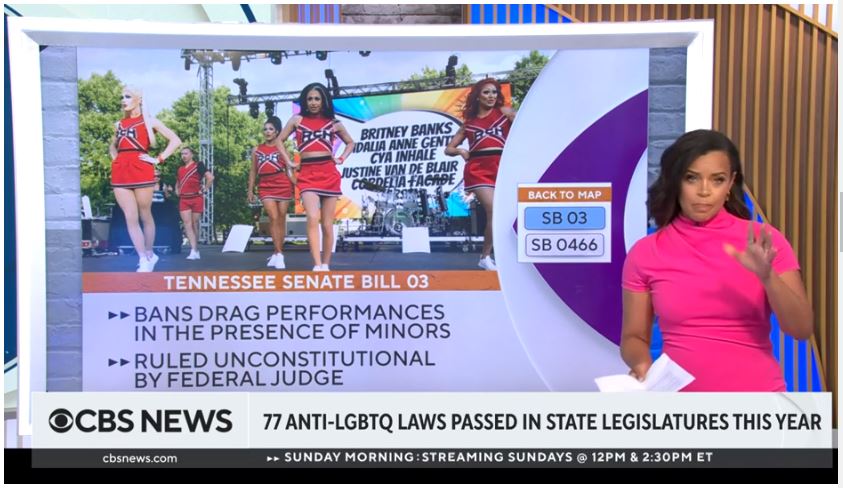
Two months earlier, Mississippi had banned transgender young people, like Ray, from accessing hormones or other gender-transition treatments. By mid-spring, nearly half the country had passed similar bills, according to the Movement Advancement Project, and now, 1 in 3 trans children lives in a state with a ban. Conservative lawmakers said they’d pushed the bills to protect young people, but Katie felt like they’d done the opposite. Testosterone had allowed her son to embody himself for the first time. Ray was present, happy. The ban would take that happiness away.

Across the country, families were doing everything they could to protect their trans children. Some uprooted their lives in red states for the promise of protections in blue ones. Others filed lawsuits. Katie couldn’t afford to move, and she needed a solution faster than the courts could offer, so she’d settled on a cheaper, quicker plan: She’d take a day off from her nursing job, and she and Ray would travel out of state for his medical care.

“It says we’ll be there by 11:48,” she said.

Katie and Ray on the road on May 4. Mississippi passed a law in late February banning transgender minors from accessing gender-transition treatments.

She knew that Mississippi’s law contained a rare aid-and-abet clause that prohibited adults from helping a minor transition. She didn’t understand the particulars, and she didn’t know what would happen to her if she broke it, but she cared less about penalties than she did about Ray, and so, the day the ban passed, she decided she’d do anything to keep her son well. (Katie and her family spoke to The Washington Post on the condition that they be identified by only their first names out of concern they could face legal consequences.)

Initially, Katie didn’t know where to go. Nearly every state within 700 miles had banned gender-affirming care for minors, and a trip to Illinois would have taken three days. She didn’t have vacation time or hotel money to spare, so the Midwest was out. The best option, she decided, was a tenuous one. A year earlier, Alabama lawmakers had passed one of the country’s first bans, but a judge had temporarily blocked the legislation, which meant teenagers could still get hormones there, at least for now.

“I guess I’m just going to Meridian, then a little farther,” she said. “I know how to get to Meridian, right?”

“I have faith in you,” Ray said.

He reached across the console, and Katie’s stomach twisted. She had told Ray she would fix this one way or another, and he believed her. But Katie couldn’t control lawmakers, and she had no idea what the pharmacist would do.

The border appeared a few minutes after 11, and Katie relaxed just a bit. She grabbed Ray’s hand.

“Welcome to sweet home Alabama,” she said. “Where you’re safe, for now.”

Katie drives across the state line into Alabama, one of the few places they could go to get Ray’s medication.

Care disrupted

Katie used to think Ray was lucky to be born when he was. Earlier generations of trans people had little or no access to gender-affirming care, but by 2019, when 13-year-old Ray told Katie he was a boy, even conservative states like Mississippi had a handful of providers who knew how to help him.

Nearly every major medical association has endorsed gender-affirming care for minors since 2012, and by the time Katie and Ray’s dad, Jody, found a pediatric endocrinologistat an LGBTQ clinic at the University of Mississippi Medical Center, the treatment was fairly standardized. Ray saw a therapist for a year, then, when he turned 15, a doctor prescribed Depo-Provera, an estrogen suppressantsometimes used as a puberty blocker. The clinic staff monitored his bloodwork and bone density.

At the time, no state prohibited transgender children from taking puberty blockers or cross-sex hormones. But in March 2021, a month after Ray started blockers, Arkansas passed a ban.

Katie figured Arkansas was an anomaly. A year passed, and in February 2022, she gave Ray his first testosterone shot. Then, seemingly overnight, the mood shifted. Texas authorities opened child abuse investigations into families with transgender children, and Alabama lawmakers approved the country’s second ban. Human Rights Campaign workers told Katie they believed Mississippi might be next.

No, Katie told them. Mississippi wouldn’t do that. The trans community was so small, it hardly seemed worth the public resources. Ray didn’t know any other kids receiving gender-affirming care, and public hospital data shows that the LGBTQ clinic treated just nine minors in fiscal 2020, and only 15 in fiscal 2023. None had surgery.

Katie understood some Mississippians might be slow to accept trans people. She hadn’t wanted to believe Ray at first, and her heart broke when he first cut his hip-length blonde hair to his chin. But she’d listened to him, and she’d trusted his doctors, and she’d seen the difference the care made in his life.

click here to see full blog: https://www.washingtonpost.com/dc-md-va/interactive/2023/mississippi-youth-transgender-care-ban-aftermath/

Why Citizenship is Better than Residence

Citizenship offers greater rights, participation in governance, security, travel privileges, national identity, and intergenerational benefits compared to residence.


In comparing citizenship to residence, it becomes clear that citizenship holds a distinct advantage in terms of belonging, rights, and opportunities. This essay delves into the legal, political, and social benefits of citizenship, highlighting why it surpasses mere residence. By recognizing these differences, we gain a deeper understanding of how citizenship fosters integration and personal fulfillment within a country.

Citizenship offers numerous advantages and surpasses mere residence status in several ways. Firstly, citizens enjoy a wide range of legal rights and protections granted by the country’s constitution and laws. These include freedom of speech, voting rights, access to public services, and protection against deportation. Additionally, citizenship enables individuals to actively participate in the political process, influencing policy decisions and contributing to the governance of their country. Citizens also experience greater security and stability, benefiting from the diplomatic support, consular services, and defense forces of their home country. Moreover, citizenship provides enhanced mobility and travel privileges, access to a broader range of government benefits and services, a sense of national identity and belonging, and the ability to pass on nationality to future generations. Overall, citizenship offers a deeper connection and commitment to a nation and its values, providing individuals with a more comprehensive and enduring status within their country of choice.

New York Passes Bill to Shield Abortion Providers Sending Pills Into States With Bans

This blog originally appeared at The New York Times.

The measure is one of several recently enacted by states aiming to expand access to medication abortion for patients who live where it is outlawed.

Under new legislation, New York’s courts and officials would not cooperate if another state with an abortion ban tries to prosecute or sue a New York health care provider who offers telemedicine abortion to a patient in the state with the ban.Credit…Kelly Burgess for The New York Times.

On Tuesday, the New York State Legislature approved a groundbreaking legislation that grants legal protection to doctors in New York to prescribe and deliver abortion pills to patients residing in states where abortion is prohibited. This measure, coupled with similar laws in several other Democrat-controlled states, has the potential to significantly expand access to medication abortions. It enables more patients in states with restrictive abortion laws to terminate their pregnancies at home, eliminating the need to travel to states where abortion is legal.

The New York bill now awaits the approval of Governor Kathy Hochul, who has expressed her support for the concept of a shield law. The legislation stipulates that New York courts and officials will not cooperate with any attempts by states with abortion bans to prosecute, sue, or penalize healthcare providers in New York who offer telemedicine abortions to patients in those states, as long as the providers adhere to New York law. The bill passed the State Assembly with a vote of 99 to 45 on Tuesday evening, following its approval in the Senate by a vote of 39 to 22 last month.

Since the Supreme Court’s decision last year to end the nationwide right to abortion, various states have enacted telemedicine abortion shield laws, including Massachusetts, Colorado, Vermont, and Washington. However, New York’s legislation is expected to have a particularly notable impact. Multiple providers in New York have expressed their intention to send abortion pills to patients in all states with abortion restrictions, and some providers are speaking publicly about it, which is a step that providers in other states with shield laws have not taken thus far.

LGBTQ+ families flee states like Kentucky with anti-trans and anti-LGBTQ laws for Illinois where their rights are protected – ABC7 Chicago

This blog originally appeared at ABC Eyewitness News.

Illinois (WLS) — Some people are leaving states with anti-trans or anti-LGBTQ+ laws and relocating to LGBTQ+ friendly states like Illinois. They said it’s an issue of safety.

A realtor and some local organizations said they’ve seen an uptick in people looking to move to the Land of Lincoln to escape anti-LGBTQ+ legislation in other states. That includes one father who told the I-Team his family is moving to Illinois because he believes it will help ensure his son’s well-being and safety.

“As a parent, you have one job, love your kid. That’s your only job and your kids telling you something over and over and over again. If you love them. You believe them,” said Mark, who asked that his last name not be used.

His family is moving to Illinois for the sake of his 7-year-old son, who is transgender. To protect his son’s identity, Mark is using another name, Connor.

“Connor just wants to be a boy. And so, you know, we weren’t dismissive, but we were sort of quiet about it the first couple times Connor said this. And we would listen to him and say, you know, ‘We can deal with that later. You’re a little young.’ But it became sort of a common thing. Maybe once a month, that maybe once a week,” Mark said.

Mark and his wife and their son are leaving Kentucky and moving to the Chicago area due to anti-trans legislation recently passed there.

“The first concern is around teachers or other employees of the school being able to deadname my child or misgendering them,” he said. “Second concern is use of a bathroom. Either they’ll have to use the nurse’s bathroom or the bathroom that is not their gender, so that would out them. A third concern is around medication. So doctors in Kentucky will lose their license if they treat my son.”

Gender-affirming care for minors will also be banned in Kentucky by late June.

“So that means we have to travel across state lines to get medicine,” Mark said. “And my fourth concern is what law comes next. And what harsher penalties and loss of right will my son experience.”

Mark is working with realtor June Allen-Smith to find a home in the Chicago area.

click here to see full blog: https://abc7chicago.com/illinois-lgtbq-rights-gender-affirming-care-drag-trans/13402900/

Supreme Court won’t hear Christian college’s challenge to Biden ban on gender identity housing discrimination

This blog originally appeared at The Hill.

The Supreme Court on Tuesday denied a private Christian college’s bid to revive its lawsuit challenging a federal directive prohibiting housing discrimination based on gender identity or sexual orientation.

In a brief, unsigned order, the justices declined to take up the College of the Ozarks’s appeal of a lower ruling that found the school had no legal standing to move forward with its pre-enforcement challenge.

In a brief, unsigned order, the Supreme Court declined to hear the appeal of the College of the Ozarks, a private Christian college, regarding its challenge to a federal directive on housing discrimination based on gender identity or sexual orientation. The college had argued that the directive violated its religious beliefs and sought to assign dormitory housing based on students’ biological sex rather than their gender identity.

The lower courts had previously ruled that the college lacked legal standing to proceed with its challenge. They found that the college had not demonstrated a concrete injury and that there was no imminent risk of enforcement against the institution. The college appealed to the Supreme Court, asserting that the administration had denied them the right to comment on the directive before its implementation.

The Supreme Court’s decision not to take up the case means that the lower court’s ruling stands, and the federal directive remains in place. The directive, issued by the Department of Housing and Urban Development (HUD) following President Biden’s executive order, interprets sex-discrimination provisions in federal laws to include protections for sexual orientation and gender identity.

The College of the Ozarks was represented by the Alliance Defending Freedom, a conservative legal group known for challenging policies related to LGBTQ rights and other issues, such as abortion access.

Please note that as an AI language model, I don’t have real-time information or the ability to provide the latest news updates. Therefore, for the most accurate and up-to-date information on this topic, I recommend referring to reliable news sources or conducting a search for recent developments on the subject.

Medical professionals describe a world of uncertainty a year after the Roe v. Wade reversal

This blog originally appeared at CNN US.


A year after the reversal of Roe v. Wade, medical professionals describe a world of uncertainty in the field of reproductive healthcare. The landmark decision, which gave states the right to ban abortion, has led to a patchwork of abortion access across the country, with some states imposing severe restrictions or outright bans on abortion. This has created significant challenges for healthcare providers and patients seeking reproductive care.

Protesters gather outside the Supreme Court in Washington, Friday, June 24, 2022, following the Supreme Court’s decision to overturn Roe v. Wade.

(CNN)_ It’s been over a year since Roe v. Wade was overturned by the US Supreme Court, eliminating the constitutional right to abortion nationwide. The opinion was one of the most consequential Supreme Court decisions in decades and paved the way for states to pass laws to limit or ban access to the procedure.

Abortion has already become one of the defining issues of the 2024 campaign and is expected to continue to be a key topic as candidates face questions about whether they support banning the procedure on the local and national level.

CNN spoke with doctors and medical professionals who responded to a request for stories about how people’s lives have changed in the wake of the ruling. Those who responded all shared stories of their professional lives being disrupted by abortion bans and severe restrictions — including in Idaho and Arizona.

Some no longer want to practice in states with limitations on the procedure. Others worry about the safety of their patients as more bans loom in the future.

Below we share the stories of three medical professionals who agreed to give us full interviews about their experiences.

Katie A., Michigan

Idaho native Katie A. had plans of returning to her home state to practice as an obstetrician/gynecologist, but after Roe v. Wade was reversed and the state passed a near-total abortion ban, she is unsure of where she will go when she completes her residency in Michigan.

Katie, who asked CNN not to use her full name due to safety concerns, was born and raised in Boise, Idaho, and went to medical school in Washington state to specialize in rural patient care.

A sign taped to a hanger hangs near the Idaho Capitol in Boise after protests against the state’s new abortion laws, which effectively banned the procedure.

“As I was doing my clinical rotations in Idaho, I could really see myself working with the population there,” she told CNN. “Idaho is a state that for a long time has had a shortage of physicians. There’s a huge centralization of medicine in Idaho, most of the hospitals and specialists are in Boise.” Because of this, Katie said many people outside of the city do not have easy access to care.

The medical resident told CNN that she envisioned making a difference in the state, especially by specializing in gynecological and obstetrics care.

“I was really excited about the idea that I get to move home with this population that I grew up with — I could make a difference,” she said.

When Roe v. Wade was overturned, Katie’s plans to practice in her native state quickly changed as she witnessed the medical landscape transform there.

“I really felt called, like I felt that was where I could still make the most difference and it was really important to me to continue to pursue obstetrics and gynecology — whatever that might look like,” she said.

“But for my safety and for my ability to really treat my patients, I knew as soon as Idaho started passing laws, criminalizing transportation across state lines and all that sort of thing that it would not be a hospitable place for me to practice medicine. And that you know is sort of heartbreaking, right?” the medical resident added.

20230717-abortion-laws-map-IA-update-card

See where abortions are banned and legal — and where it’s still in limbo

Idaho made abortions illegal last August — with only two exceptions: if the mother’s life is in danger, and in the case of rape or incest, but only after a police report has been filed and provided to the doctor. Since then, doctors who care for pregnant people and perform abortions have been fleeing the state due to new abortion restrictions.

In April, health care providers sued the state’s attorney general after he wrote in a legal opinion that the state’s abortion ban prohibits medical providers from referring patients out-of-state for abortion services. Gov. Brad Little, a Republican, also approved legislation that makes it much harder for minors in the state to obtain out-of-state abortions without parental consent. The law creates an “abortion trafficking” crime that makes it illegal for adults in the state to assist a minor with obtaining an abortion without informing the pregnant person’s parents or guardians.

Katie hopes that once she finishes her residency in four years, the situation will have evolved, helping her to more easily decide where she could eventually practice.

“I think wherever I practice; it might be Michigan, it might be Washington — I don’t know, it could be anywhere — will really depend on what local politics are and what protections are in place for physicians and patients,” she told CNN.

For the time being, she feels a sense of relief for matching with a program in a state without restrictive abortion laws.

Katie’s decision is on trend with new data which suggests that these restrictions are having an impact on where — and what — future doctors plan to practice.

The number of medical school seniors who applied to residency training programs went down by nearly 2% last year, and applications to programs in states with abortion bans dropped the most, dipping by 3%, according to an analysis in April from the Association of American Medical Colleges.

Interest in the Ob-Gyn specialty took a notable dip, according to the analysis, with applications dropping 5% nationwide and twice as much in states where abortion is banned.

click here to see full blog: https://edition.cnn.com/2023/07/23/us/doctors-reactions-roe-v-wade-reversal/index.html

Judge Strikes Down Arkansas Ban On Gender-Affirming Care For Trans Youth

This blog originally appeared at Huff Post.

The ban would have prohibited doctors from providing gender-affirming hormone treatment, puberty blockers or surgery to anyone under 18.

The ruling by a federal judge in Arkansas declared the state’s ban on gender-affirming care for children as unconstitutional. This ban was the first of its kind in the United States and had attracted significant attention as other Republican-led states were considering implementing similar restrictions.

The ban in Arkansas aimed to prohibit healthcare providers from offering gender-affirming treatments, including hormone therapy and puberty blockers, to transgender minors. However, the judge’s ruling deemed the ban unconstitutional, citing that it violated the Equal Protection Clause and the due process rights of transgender individuals.

This decision marks a significant legal development in the ongoing debate surrounding transgender rights and healthcare access for transgender minors. It may have implications for similar bans that were being considered or implemented in other states, potentially setting a precedent for future legal challenges.

It’s important to note that as an AI language model, I don’t have real-time information or the ability to provide the latest news updates. Therefore, for the most accurate and up-to-date information on this topic, I recommend referring to reliable news sources or conducting a search for recent developments on the subject.

U.S. District Judge Jay Moody issued a permanent injunction against the Arkansas law, which would have prohibited doctors from providing gender-affirming hormone treatment, puberty blockers or surgery to anyone under 18.

Arkansas’ law, which Moody temporarily blocked in 2021, also would have prohibited doctors from referring patients elsewhere for such care.

Republican lawmakers in Arkansas enacted the ban in 2021, overriding a veto by former GOP Gov. Asa Hutchinson. Hutchinson, who left office in January, said the law went too far by cutting off treatments for children currently receiving such care.

The ruling affects only the Arkansas ban but may carry implications for the fates of similar prohibitions, or discourage attempts to enact them, in other states.

At least 19 other states have enacted laws restricting or banning gender-affirming care for minors following Arkansas’ law, and federal judges have temporarily blocked similar bans in Alabama and Indiana. Three states have banned or restricted the care through regulations or administrative orders.

Florida’s law goes beyond banning the treatments for youth, by also prohibiting the use of state money for gender-affirming care and placing new restrictions on adults seeking treatment. A federal judge has blocked Florida from enforcing its ban on three children who have challenged the law.

Children’s hospitals around the country have faced harassment and threats of violence for providing such care.

The state has argued that the prohibition is within its authority to regulate the medical profession. People opposed to such treatments for children argue they are too young to make such decisions about their futures. Major medical groups, including the American Medical Association and the American Academy of Pediatrics, oppose the bans and experts say treatments are safe if properly administered.

The state is likely to appeal Moody’s decision to the 8th U.S. Circuit Court of Appeals, which last year upheld the judge’s temporary order blocking the law.

Gov. Sarah Huckabee Sanders, Hutchinson’s successor, in March signed legislation attempting to effectively reinstate Arkansas’ ban by making it easier to sue providers of gender-affirming care for children. That law doesn’t take effect until later this summer.

A roughly two-week trial before Moody included testimony from one of the transgender youths challenging the state’s ban. The teenager testified in October that the hormone therapy he has received has transformed his life and that the ban would force him to leave the state.

click here to see full blog: https://www.huffpost.com/entry/bc-us-transgender-health-arkansas_n_64920d16e4b041b71a127211

The 10 Most Affordable Small Towns Where You’d Actually Like To Live, 2023 Edition

This blog originally appeared at Realtor.com

At some point, many city dwellers realize they’ve had enough of the tiny, exorbitantly priced apartments, the noise and gridlock, the angry drivers, and the packed sidewalks. They find themselves longing for a simpler life—perhaps even putting down roots in small-town America, where they’re not always in a rush and a walk through town is sure to include at least a few friendly faces.

As you’ve probably heard, small- and medium-sized communities, farther from the country’s historic coastal population centers, have had quite a housing renaissance in the past few years. While mortgage rates were near zero and workers had more flexibility to work remotely during the COVID-19 pandemic, many descended on pretty, tranquil, formerly affordable, smaller towns—and that caused some prices to skyrocket.

But here’s the news: It’s not too late to trade in big-city bustle for small-town serenity without busting your budget. The Realtor.com® data team found America’s most affordably priced, small towns that also have lots to offer residents. These aren’t just nice places with low-priced real estate. These are places where you might actually love to live.

“I drive down the street and see 10 people I know,” says Kelsey Janssen, a Realtor® and associate broker at Coldwell Banker Town & Country Realty of Kearney, NE, one of the top spots on our list. “Even people who don’t know you wave here.”

Janssen says she has clients who have come from California, or neighboring Colorado, and they’re blown away by how friendly everyone is—on top of how much more affordable the homes are.

Some of these smaller communities have carved a niche for themselves, whether it’s live music, like in Branson, MO, or the old-world German charm of New Ulm, MN. Each has a different flavor.

To find these desirable small towns, the Realtor.com data team looked at real estate in every U.S. “micropolitan area,” the collection of counties with a population between 10,000 and 50,000. (With the surrounding areas included, a micropolitan area can technically have a population as large as 200,000, but we’re focusing on the core town within.) Then we pulled together U.S. Census Bureau data detailing the dining, entertainment, recreation, and quality-of-life business establishments in the area, and calculated their rate per 100,000. We ranked the towns using an equal combination of those categories, as well as home list prices.

We limited our list to places where the median list price per square foot is less than 150% of the national average, and we selected only the highest-ranking micropolitan area in any given state, to ensure geographic diversity.

Here’s our list of the most affordable small towns with big quality of life.

1. Cortland NY

A home for sale in Cortland, NY

Median list price: $159,250

Our No. 1 affordable small town with lots of big-city appeal is Cortland. The residents of the town in central New York have quick access to some larger cities, sitting about 35 minutes north of Ithaca and 45 minutes south of Syracuse. And the median list price is just about one-third of the national median in May. You get a lot for your money here.

Cortland, which has a history dating to the late 18th century, is surrounded by tree-covered hills, which transform into a patchwork of orange, gold, and crimson in the fall, which sets the mood for the annual Great Cortland Pumpkin Festival.

“The community events are just wonderful here,” says Jason Hage, a local real estate broker at Hage Real Estate.

“You’ve got the Pumpkin Festival and also the  We have two or three parades a year,” he adds. “Every Wednesday night from June through August, we have Homer Fireman Field Days. at the Homer elementary school. It’s such a cool thing to be able to hang out there with your neighbors and check out live music.”

Cortland, like any good small town, has a Main Street dotted with restaurants, bars, coffee shops, vintage boutiques, and tattoo parlors. Other local attractions that boost Cortland’s small-town bona fides include the Cortland Repertory Theatre, offering up a range of performances, and The 1890 House Museum, where residents can learn about the town’s history and architecture.

For the more adventurous Cortlanders, Greek Peak Mountain Resort is where to go for downhill skiing and snowboarding, as well as snowshoeing and cross-country skiing—and it’s only 15 minutes outside of town.

click here to see full blog: https://www.realtor.com/news/trends/small-american-towns-with-affordable-real-estate-and-lots-of-quality-of-life-attractions/?identityID=57d0587439de4b80070006a5&MID=2023_0620_ArticleNL&RID=4185881482&cid=eml_promo_Marketing_NonPRSL_ArticleNL_cons.16738582_2023_0620_ArticleNL-hero-blogs_trends

BBC News: She was denied an abortion in Texas – then she almost died

This blog originally appeared at BBC News.

A Texas law that bans all abortions except in dire medical circumstances is one of the strictest introduced since the right to the procedure was overturned. Critics say it is forcing many women, and their doctors, to choose between breaking the law and making the right decision for their health.

Amanda Zurawski says Texas’s abortion bans are “dystopian”

Amanda Zurawski and her husband Josh had recently purchased their dream home in Austin, Texas, a sought-after area with beautiful views. Excitedly awaiting the arrival of their first child, they envisioned a joyous moving day. However, their reality was far from what they expected. Amanda’s life was endangered when she was denied an abortion, just after being discharged from the hospital.

Reflecting on that day, Amanda shared with the BBC, “It felt like I was living in a dystopian world. In the United States, as a pregnant person, you should not be afraid for your life because of the laws.”

Since the Supreme Court’s decision to overturn Roe v Wade, granting states the power to ban abortions, 13 states have passed near-total bans. Texas, the largest state and one of the strictest, prohibits all abortions from the moment of conception, with exceptions only for a “life-threatening physical condition” or “a serious risk of substantial impairment of a major bodily function.” Violating this law can result in a hefty fine of $100,000 (£78,000) and even life imprisonment.

When Amanda discovered she was expecting a daughter, she and her husband were filled with joy. Unfortunately, on the same day she was compiling the guest list for her baby shower, she received devastating news. She was diagnosed with cervical insufficiency, a condition that weakens the cervical tissue and causes premature dilation. The doctors informed her that her unborn daughter would not survive. This heartbreaking situation placed Amanda directly in the crosshairs of Texas’s abortion ban, compounding their grief.

“She was a baby that we desperately, desperately wanted,” she said.

Texas abortion law: ‘I waited for my daughter to die so I wouldn’t die’

click here to see video: https://www.bbc.com/news/world-us-canada-65935189

Pentagon officials say GOP’s bigoted bills are hurting the military

This blog originally appeared at MSNBC.

Multiple defense officials have recently voiced concerns about the negative impact of anti-LGBTQ+ laws on military recruitment and retention. These officials have emphasized that discriminatory policies can hinder the military’s ability to attract and retain talented individuals from diverse backgrounds, including LGBTQ+ individuals. Such laws can create a hostile and unwelcoming environment, leading potential recruits to choose other career paths or discouraging current service members from reenlisting. The statements from these defense officials highlight the importance of fostering inclusivity and equality within the military to ensure its strength and effectiveness.


It is true that there are differing views within the conservative movement regarding the United States military’s diversity and inclusion efforts. While some conservatives have criticized these efforts, claiming they contribute to perceived weakness, others recognize the importance of inclusivity in the military for recruitment and retention purposes.

Senator Tommy Tuberville’s remarks, suggesting a lenient attitude towards white nationalists in the military, received criticism for downplaying concerns about extremism within the ranks. It is important to note that military leaders have consistently emphasized the value of diversity and inclusion initiatives as they contribute to a stronger and more effective force. These efforts are seen as crucial for attracting and retaining talented individuals from various backgrounds who can contribute to the mission and success of the military.

The stance taken by Senator Tuberville is not representative of all conservatives or their views on diversity and inclusion in the military. It is a complex and nuanced topic with varying opinions within the conservative movement.

If service members are thinking and concerned about the experience their kids are having, they’re not going to be focused on their jobs.

ALEX WAGNER, ASST. AIR FORCE SECRETARY

Civilian lawmakers in the Republican Party, many of whom have never served and show no discernible credibility on how to run a modern-day military operation, are some of the loudest critics claiming such measures are a waste of time or injurious to morale. 

(Check out my MSNBC colleague Steve Benen’s excellent post on the GOP’s anti-diversity crusade against the military from January.)

Fortunately, people better equipped to make these judgments are speaking up. Pentagon officials have been setting the record straight this week.

At the Center for a New American Security’s annual National Security Conference on Tuesday, a high-ranking Air Force official explained that the nationwide wave of anti-LGBTQ laws passed by conservative lawmakers could hurt the military’s readiness. 

“When I’m forced to move families from installations because their school will do nothing when their LGBT kid is being bullied — that worries me, because that’s distracting from the mission, that’s detracting from our readiness,” said Alex Wagner, assistant Air Force secretary for manpower and reserve affairs. Defense One, a news site focused on national security, was the first outlet to report the comments

“If service members are thinking and concerned about the experience their kids are having, they’re not going to be focused on their jobs,” Wagner said. “They’re not gonna be focused on their mission.”

Seems logical, right? If military folks are worried about weirdo lawmakers obsessively finding ways to target their kids, they’re not going to be able to do the important stuff we expect them to do … like, y’know, protecting the nation.

The hits kept coming.

At a Department of Defense Pride Month event on Wednesday, Space Force Chief Operating Officer Lt. Gen. DeAnna Burt pointed out that “more than 400 anti-LGBTQ+ laws have been introduced at the state level” since January.

“That number is rising and demonstrates a trend that could be dangerous for our service members, their families and the readiness of the force as a whole,” she said.

click here to see full blog: https://www.msnbc.com/the-reidout/reidout-blog/pentagon-officials-say-gops-bigoted-bills-are-hurting-military-rcna88445?fbclid=IwAR0WF91gKs28BvpuMzWrqQ77Xmn8O1W2OQQUy_vZocDzmASUzDsJ5tD47oM

Blog at WordPress.com.

Up ↑