The nonprofit said it would not remove a section on gender and sexual orientation, as Florida had requested, and advised districts not to offer the course.
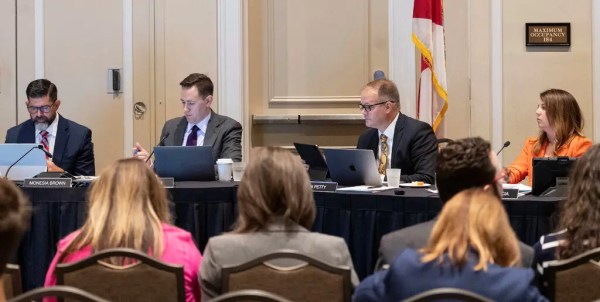
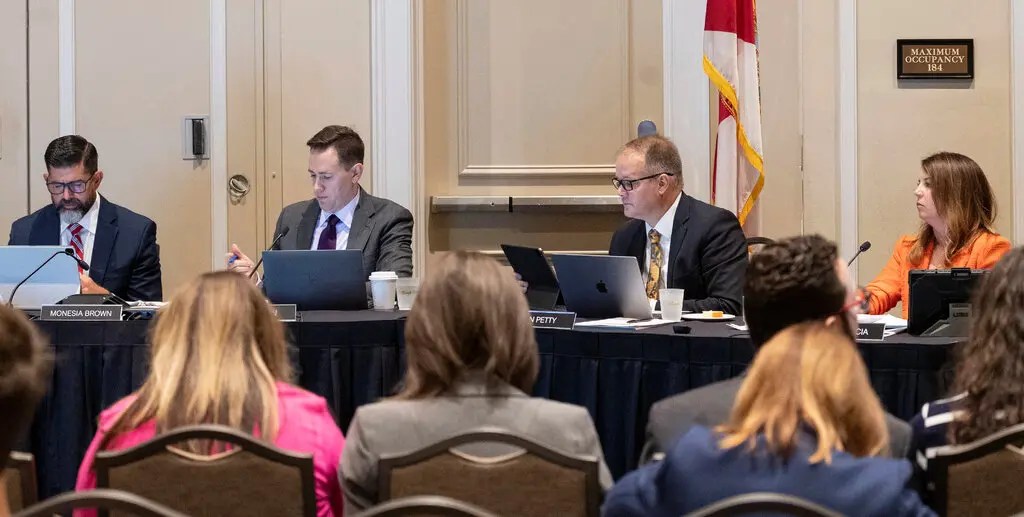
The Florida Department of Education, pictured, accused the College Board of “playing games with Florida students” and said it had not banned the course.
The College Board announced on Thursday that Florida school districts should no longer offer Advanced Placement Psychology, one of the most popular A.P. courses, the latest skirmish in its battle with the state’s Department of Education over how to teach race, gender and sexual orientation.
The College Board, the nonprofit that oversees advanced placement courses and the SAT, revoked its support for A.P. Psychology in Florida, saying it would not abide by the state’s demand to remove a longstanding section on gender and sexual orientation.
“The Florida Department of Education has effectively banned A.P. Psychology in the state,” the College Board said in a statement.
The Department of Education fired back, accusing the College Board of “playing games with Florida students” one week before school starts.
“The Department didn’t ‘ban’ the course,” the department said in a statement. “The course remains listed in Florida’s Course Code Directory for the 2023-24 school year. We encourage the College Board to stop playing games with Florida students and continue to offer the course and allow teachers to operate accordingly.”
More on U.S. Schools and Education
Houston Schools: The decision to fire librarians and effectively close libraries in some of the Texas city’s poorest schools has been the most contentious one yet made by new leaders who were imposed on the district by Gov. Greg Abbott.
Florida Schools: As a new school year begins in Florida, parents are facing bureaucracy and new rules on gender, books, bathrooms and pronouns, an offshoot of Gov. Ron DeSantis’s muscular push for “parental rights” in education.
Under an expanded Florida rule, instruction on gender identity and sexual orientation is now restricted in most cases through the 12th grade. The Florida Department of Education had asked the College Board and other providers of advanced, college-level courses to search their offerings for potential violations.
But the College Board said that it would not modify its content, and that any course that did not address gender and sexual orientation should not be labeled “advanced placement.”
“To be clear, any A.P. Psychology course taught in Florida will violate either Florida law or college requirements,” the College Board said.
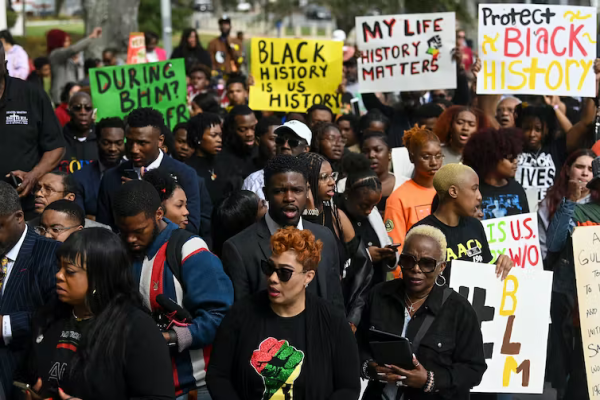
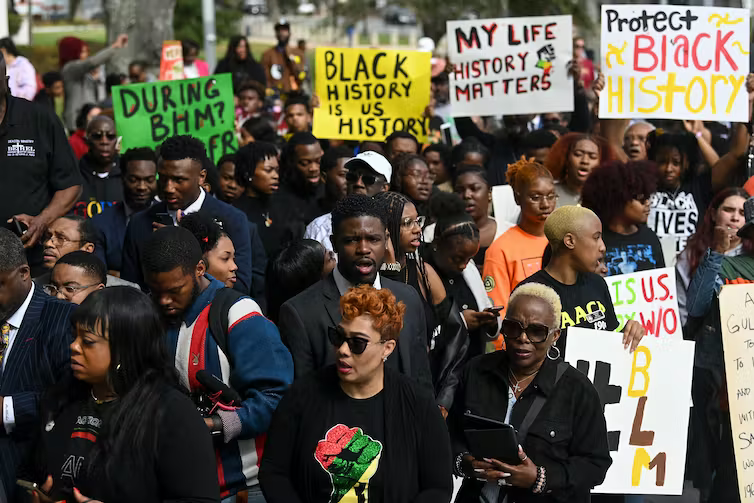
The College Board, a powerful nonprofit, has been waging war with the administration of Gov. Ron DeSantis, a Republican, since earlier this year when his administration rejected the College Board’s new African American studies course. The curriculum included topics such as “queer studies,” reparations and the Black Lives Matter movement, and the administration objected, citing a state law limiting how racism and other aspects of history are taught in public schools.
Members of the Missouri Republican Party have been widely condemned after they were filmed participating in a symbolic book burning at the St. Charles County Freedom Fest over the weekend.
State Senator Bill Eigel—a GOP candidate for the Missouri governorship who has pledged to burn books if elected—is seen on camera gleefully using a flamethrower to burn empty cardboard boxes while joined by State Senator Nick Schroer, highlighting what he would actually do to books if given the chance.
Eigel defended the video in a statement to the Kansas City Star, saying it’s symbolic of what he wants to do “to the leftist policies and RINO corruption of the Jeff City swamp.”
He added:
“But let’s be clear, you bring those woke pornographic books to Missouri schools to try to brainwash our kids, and I’ll burn those too – on the front lawn of the governor’s mansion.”
Sept 22 (Reuters) – A LGBTQ student group did not have an inherent constitutional right to hold a charity drag show on West Texas A&M University’s campus over the objections of the school’s president, who deemed such performances “misogynistic” and mocking of womanhood, a federal judge ruled.
Sept 22 (Reuters) – A LGBTQ student group did not have an inherent constitutional right to hold a charity drag show on West Texas A&M University’s campus over the objections of the school’s president, who deemed such performances “misogynistic” and mocking of womanhood, a federal judge ruled.
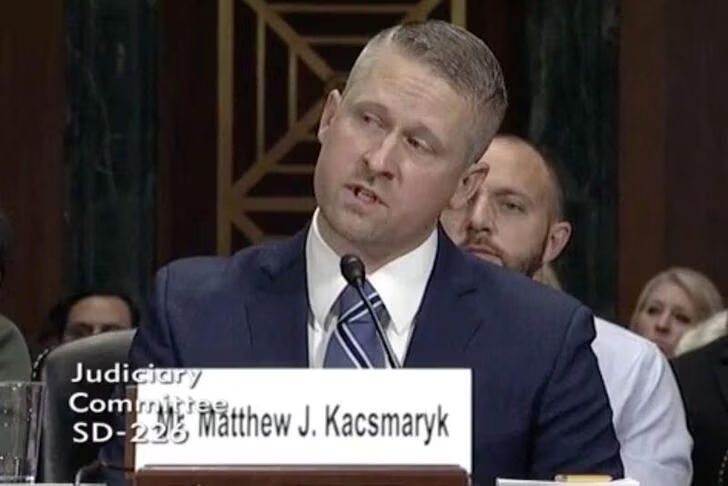
U.S. District Judge Matthew Kacsmaryk, who before becoming a judge in Amarillo, Texas, was a Christian legal activist opposed to LGBTQ rights causes, on Thursday ruled that it was far from clear that drag shows were covered by the U.S. Constitution’s First Amendment’s protections for free expression.
The LGBTQ student group, Spectrum WT, sued in March after the school’s president, Walter Wendler, barred a charity drag show set for that month from going forward even though, he said, “the law of the land appears to require it.”
The group later moved that event off campus, but it continued to seek an injunction barring him from banning future events including a planned drag show in March 2024.
But Kacsmaryk, an appointee of former Republican President Donald Trump, said Wendler was wrong that the law required him to allow drag shows, which can involve “sexualized conduct” that can be regulated to protect any children in an audience from “lewdness.”
The LGBTQ student group, Spectrum WT, sued in March after the school’s president, Walter Wendler, barred a charity drag show set for that month from going forward even though, he said, “the law of the land appears to require it.”
The group later moved that event off campus, but it continued to seek an injunction barring him from banning future events including a planned drag show in March 2024.
But Kacsmaryk, an appointee of former Republican President Donald Trump, said Wendler was wrong that the law required him to allow drag shows, which can involve “sexualized conduct” that can be regulated to protect any children in an audience from “lewdness.”
Republican Texas Attorney General Ken Paxton’s office, which defended the university, did not respond to a request for comment.
Kacsmaryk gained national attention in April when he suspended approval of the abortion pill mifepristone. An appellate court overturned parts of that ruling, and the U.S. Supreme Court has allowed the pill to remain on the market while appeals proceed.
His ruling on Thursday conflicted with recent decisions by judges in Utah, Tennessee, Montana and Texas blocking state and municipal laws banning drag shows.
Kacsmaryk in reaching his conclusion cited “older rules” of First Amendment case law that recognized an “outer limit” for expressive conduct.
He said those remain valid even under modern free speech jurisprudence, which “only intermittently” examines what is protected historically, in contrast to how the Second Amendment’s right to keep and bear arms is interpreted.
The conservative-majority Supreme Court last year ruled that gun laws must be “consistent with this nation’s historical tradition of firearm regulation” to pass muster under the Second Amendment.
The case is Spectrum WT v. Wendler, U.S. District Court, Northern District of Texas, No. 2:23-cv-00048.
For Spectrum WT: J.T. Morris of the Foundation for Individual Rights and Expression
For the West Texas A&M University defendants: Charles Eldred of the Office of the Texas Attorney General
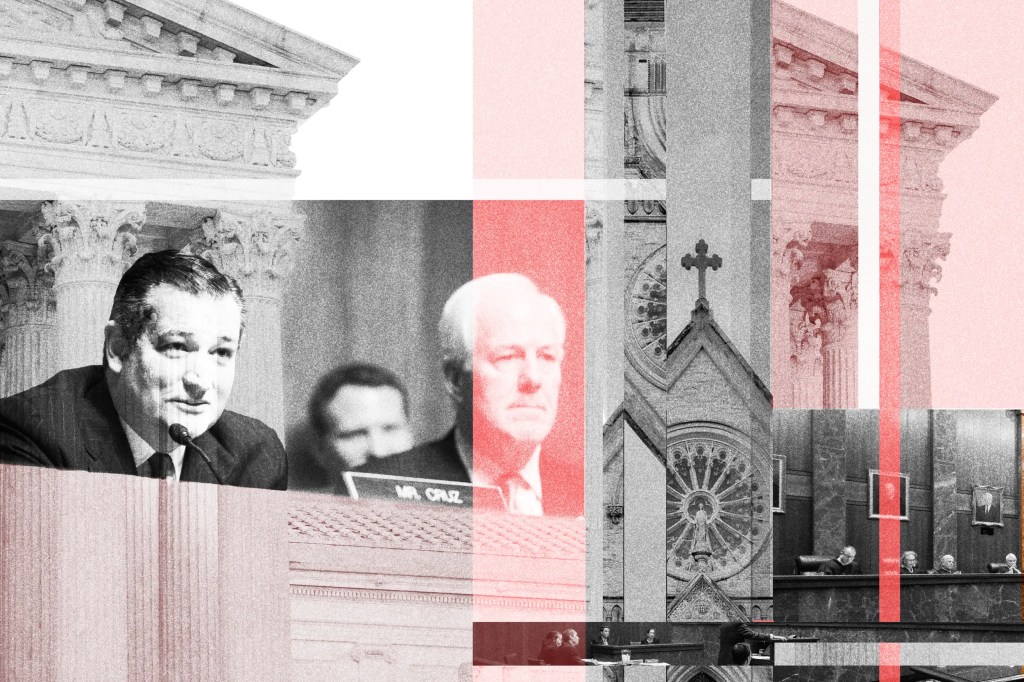
With his election as Texas attorney general, U.S. Sen. John Cornyn planted the seeds of conservatism. Gov. Greg Abbott used his tenure to cultivate them into an aggressive strain of right-wing activism aimed at driving the nation’s courts and laws to the right.
Righting the Rule of Law
In March, Texas Gov. Greg Abbott sat before the next generation of conservative legal warriors and shared with them the gospel of Texas.
The story began several decades earlier, when conservative lawyers like himself looked out over the nation’s legal landscape and saw “opinion after opinion after opinion that seemed to rewrite the Constitution,” Abbott told this gathering of law students put on by the Federalist Society.
The nation had strayed from its constitutional roots, as divined by these conservatives, and their vision of America as a Christian nation was slipping away: Federal courts were protecting abortion rights, keeping prayer out of schools, restricting gun ownership and letting the federal government rein in the liberties of states, businesses and individuals.
It was long past time to put an end to it.
“A principle that causes America to stand apart from all other countries is our Constitution and our adamant insistence on the rule of law,” Abbott explained. But the way things were going back then, “we would soon become the rule of men, whoever was interpreting and applying the law.”
The rule of law is often cast as democracy’s equalizer, a nonpartisan social contract insulated from politics and arbitrated by impartial judges. But as these conservative lawyers realized, quite the opposite is true.
Whoever shapes the courts shapes the law.
So it was to the federal judiciary, paradoxically ripe for ideological influence with its unelected, lifetime appointees, that those conservative lawyers turned for salvation. In that crusade, Texas would become their Jerusalem.
Gov. Greg Abbott speaks about this year’s legislative session to an audience at the Texas Public Policy Foundation offices in Austin on June 2.
In less than a generation, the Texas Office of the Attorney General transformed into the beating heart of a nationwide conservative legal revolution. Under three occupants, including Abbott, the office barraged the federal courts with state-funded lawsuits born of increasingly overt right-wing activism. The best and brightest of the conservative legal elite came to Austin to help Texas become “the standard bearer for the United States in showing what the rule of law is,” Abbott said.
By the time Abbott spoke to this auditorium of rapt law students in March, his was a success story. Disciples of this movement — alumni of the Texas attorney general’s office and their ideological allies — now fill the federal bench, often deciding the lawsuits Texas continues to bring against the federal government.
Foreign investors, who are keen on securing a residence permit via the Golden Visa program, continue to show unwavering dedication to purchasing properties valued at a minimum of 250,000 euros.
In this particular scenario, real estate market leaders underscore that the demand has undergone a significant transformation, now concentrating predominantly on the regions within Attica where the 250,000 euro threshold remains intact. This shift has led to a marked reduction in interest for areas where the threshold has doubled to 500,000 euros, with such locations being largely avoided.
Alexandros Risvas, the head of the Risvas & Associates law office, points out that a significant portion of investors is currently directing their attention towards properties in Piraeus and its surrounding areas. These regions remain unaffected by the recent changes that have impacted Athens and its suburbs, making them more appealing to potential investors.
Joy Alonzo accused by student of disparaging Dan Patrick in lecture on opioid crisis at Texas A&M University
The swift investigation sparked criticism from free speech advocates over the interference of politicians into classroom discussions.
The Texas A&M University professor Joy Alonzo criticized the Texas lieutenant governor, Dan Patrick, during a visiting lecture in March 2023 on the opioid crisis at the University of Texas Medical Branch in Galveston, Texas.
Just hours later, Alonzo learned a student accused her of disparaging Patrick during the lecture. The complaint reached her supervisors and the chancellor of Texas A&M, John Sharp, who was in communication directly with the lieutenant governor’s office.
The student is reportedly the daughter of the Texas land commissioner, Dawn Buckingham, who served in the Texas senate with Patrick for six years, received an endorsement from him in her run for land commissioner, and had attended Sharp’s wedding in May.
Less than two hours after the lecture had ended, Patrick’s chief of staff forwarded Alonzo’s professional biography to Sharp, reported the Texas Tribune. The chancellor responded to the lieutenant governor directly via text message that Alonzo would immediately be placed on administrative leave pending an investigation to fire her.
The University of Texas Medical Board quickly issued a censure statement, distancing itself from any comments Alonzo made during the lecture.
Texas A&M and the University of Texas Medical Board did not specify what Alonzo said during the lecture that prompted the investigation. Students interviewed by the Texas Tribune only recalled a vague reference to Patrick during the lecture on opioid overdose policies. Texas A&M ultimately allowed Alonzo to retain her job after the investigation did not reveal any wrongdoing.
The swift investigation sparked criticism from Alonzo’s colleagues and free speech advocates over the interference of politicians into classroom discussions and how state universities are managed.
Adam Steinbaugh, an attorney with the Foundation for Individual Rights and Expression, a non-profit legal group focused on protecting free speech on college campuses, criticized the investigation as “inappropriate” in an interview with the Tribune and noted its chilling effect, regardless of the outcome of the investigation.
Marcia Ory, a professor at Texas A&M Health and co-chair of the university’s Opioid Task Force with Alonzo, noted the long-term consequences of the interference in an email to Jon Mogford, vice-president of Texas A&M Health.
The reporting of the suspension and investigation of Alonzo comes as the Texas A&M president, Katherine Banks, resigned last week over the backlash to politically motivated outsiders halting the hiring by the university of Kathleen McElroy, a Black journalism professor at the University of Texas at Austin, to revive the journalism school at Texas A&M.
On Alonzo, a spokesperson for the university system told the Tribune: “It is not unusual to respond to any state official who has concerns about anything occurring at the Texas A&M System,” claiming the system followed standard procedure investigating the claim against Alonzo.
The Guardian has contacted Texas A&M, Lieutenant Governor Dan Patrick, and Joy Alonzo for further comment.
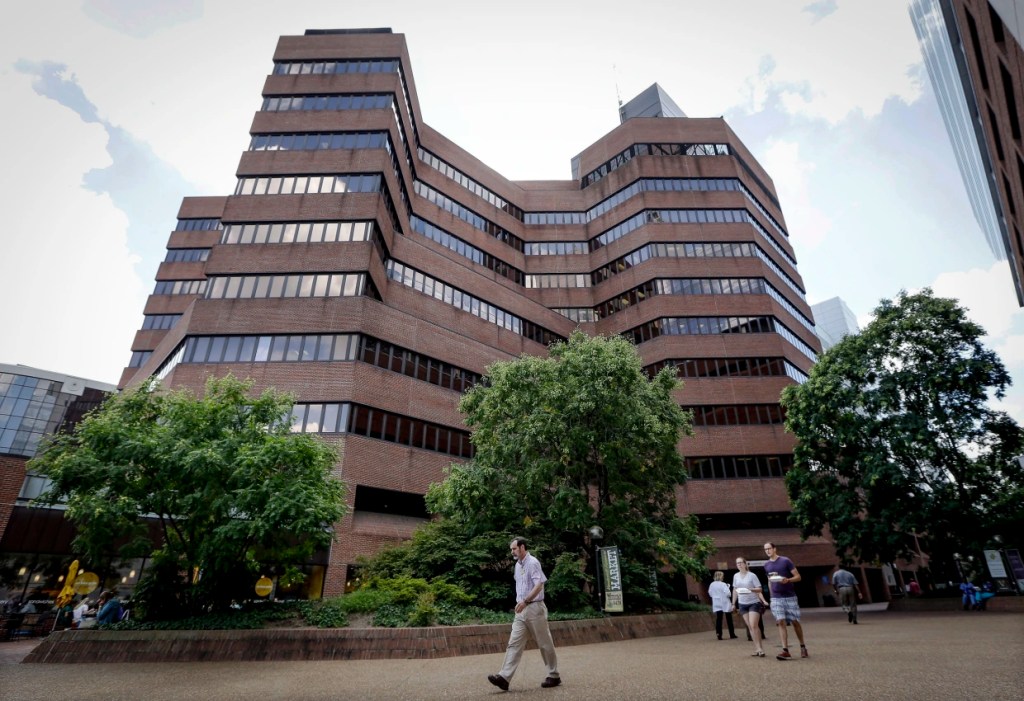
Two patients sued Monday in Nashville Chancery Court, saying they were among more than 100 people whose records were sent by Vanderbilt to Attorney General Jonathan Skrmetti. His office has said it is examining medical billing in a “run of the mill” fraud investigation that isn’t directed at patients or their families. Vanderbilt has said it was required by law to comply.
The patients say Vanderbilt was aware that Tennessee authorities are hostile toward the rights of transgender people, and should have removed their personally identifying information before turning over the records.
Tennessee has stood out among conservative-led states pushing myriad laws targeting transgender people, enacting some of the nation’s most anti-LGBTQ restrictions, even as families and advocates have voiced objections that such policies are harmful. The lawsuit seeks class-action status on behalf of everyone at the clinic whose private medical records were released to Skrmetti.
“Against that backdrop, its failure to safeguard the privacy of its patients is particularly egregious,” the lawsuit says.
The attorney general’s office has said the hospital has been providing records of its gender-related treatment billing since December 2022, and that the records have been kept confidential. Elizabeth Lane Johnson, an attorney general’s office spokesperson, noted Tuesday that the office isn’t a party to the lawsuit, and directed questions to Vanderbilt.
VUMC spokesperson John Howser said Tuesday that it’s common for health systems to get such requests in billing probes and audits, and “the decision to release patient records for any purpose is never taken lightly, even in situations such as this where VUMC was legally compelled to produce the patient records.”
Many of the patients involved are state workers, or their adult children or spouses; others are on TennCare, the state’s Medicaid plan; and some were not even patients at the transgender clinic, according to the lawsuit. It says that records for more than 100 current and former patients were sent without redacting their identities.
The lawsuit says that since the patients learned that their information was shared, they’ve been “terrified for their physical safety, have had significant anxiety and distress that has impacted their ability to work, has caused them to increase home security measures, and drop out of activities in which they normally would participate.”
The lawsuit accuses Vanderbilt of negligence that inflicted emotional damage and violated patient privacy protection and consumer protection laws. It seeks monetary damages, improved security procedures, an injunction blocking further release of their records without notice, an acknowledgement by Vanderbilt that it violated its own privacy policy, and an admission that the policy inadequately informs patients of their rights regarding disclosures.
The hospital waited months before telling patients their medical information was shared, acting only after the existence of the requests emerged as evidence in another court case. Howser said that at that point, hospital officials thought patients should hear it from them instead of media reports or other ways.
The attorney general also requested a slew of additional information, including the names of everyone referred to the transgender clinic who made at least one office visit, as well as people who volunteer for the hospital’s Trans Buddy initiative, which aims to increase access to care and improve outcomes by providing emotional support for the clinic’s patients.
Howser said Vanderbilt’s lawyers are in discussion with the attorney general’s office “about what information is relevant to their investigation and will be provided by VUMC.”
The attorney general’s office made the requests several months after conservative commentator Matt Walsh surfaced videos last September that include a medical center doctor saying gender-affirming procedures are “huge money makers” for hospitals. Vanderbilt paused all gender-affirming surgeries for minors the next month under pressure from Republican lawmakers and Gov. Bill Lee, who demanded an investigation.
Vanderbilt said it had provided about five gender-affirming surgeries to minors each year since its clinic opened in 2018, all to people over 16 who had parental consent. None received genital procedures.
First Read is your briefing from “Meet the Press” and the NBC Political Unit on the day’s most important political stories and why they matter.
If it’s TUESDAY… President Biden signs proclamation at noon ET establishing Emmett Till and Mamie Till-Mobley National Monument… Israeli parliament passes key part of Prime Minister Netanyahu’s controversial judicial overhaul… Donald Trump attends fundraiser in Louisiana… Nikki Haley and Chris Christie campaign in New Hampshire… And it appears that seven candidates have now qualified for next month’s GOP presidential debate.
But FIRST… It’s Republican governors vs. the U.S. Supreme Court and the federal government.
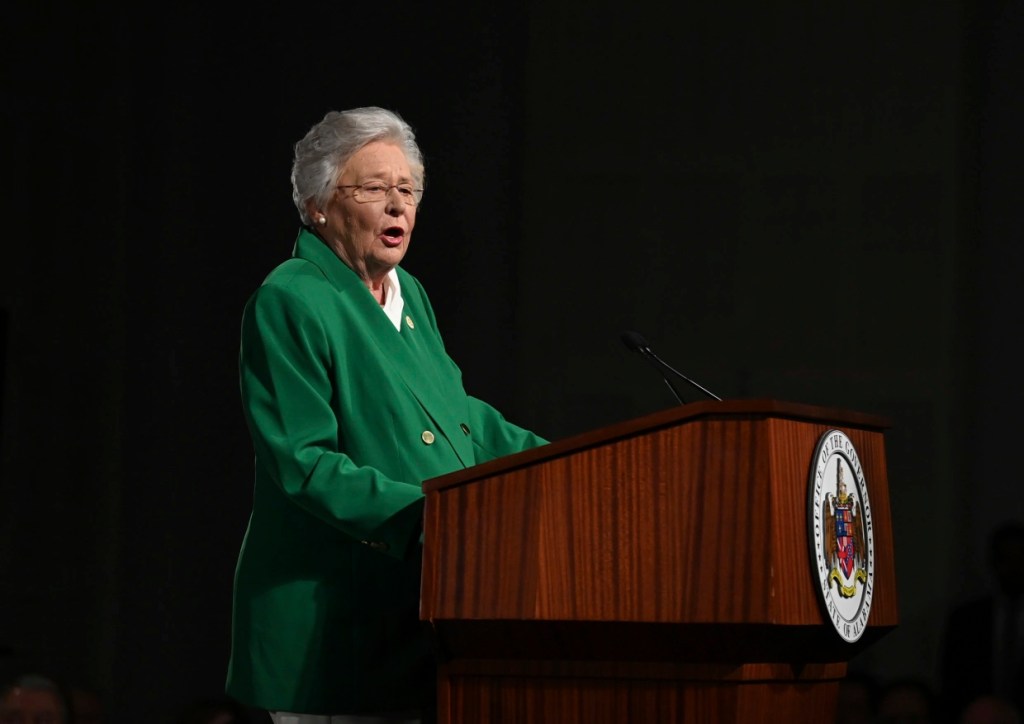
Late last week, Alabama Gov. Kay Ivey signed into law a new redistricting map that defied a Supreme Court ruling ordering the state to draw two Black-majority congressional districts — or something close to it.
Instead, the GOP-controlled legislature drew only one.
“The legislature knows our state, our people and our districts better than the federal courts or activist groups, and I am pleased that they answered the call, remained focused and produced new districts ahead of the court deadline,” Ivey said.
And on Monday, the Biden Justice Department filed a lawsuit against Texas and Republican Gov. Greg Abbott for placing buoys in the Rio Grande River to deter migrants from crossing into the United States.
The administration argues that Abbott’s buoys violate the Rivers and Harbors Appropriation Act of 1899 (which prohibits the creation of obstructions not authorized by Congress) and failed to obtain necessary permits.
“Texas will see you in court, Mr. President,” Abbott wrote President Biden.
Now presidents have routinely quarreled with governors and states controlled by the opposition party. (Remember all of California’s lawsuits against the Trump administration?)
But Alabama’s defiance appears different — and it harkens back to clashes from the 1950s and 1960s between southern states and the federal government.
That’s how many candidates so far appear to have qualified for the first GOP presidential primary debate, per the NBC News Political Unit’s analysis of public polling and statements about fundraising.
Six appeared to qualify on Monday, and that list isn’t surprising: former President Donald Trump, Florida Gov. Ron DeSantis, businessman Vivek Ramaswamy, former South Carolina Gov. Nikki Haley, South Carolina Sen. Tim Scott and former New Jersey Gov. Chris Christie.
And on Tuesday morning, North Dakota Gov. Doug Burgum also appeared to qualify for the debate thanks to Morning Consult’s weekly tracking poll, which finds Burgum at 1% in the GOP primary.
But there’s still a month to go for other candidates to get the donors and reach the polling requirements to qualify (remember: all that is moot if you don’t agree to back the party’s eventual nominee, since that’s another piece of the criteria candidates have to meet).
600 MB: The amount of data — mostly PDFs — that former New York City Police Commissioner Bernard Kerik’s lawyer gave to special counsel Jack Smith’s office as part of an ongoing investigation into efforts to overturn the 2020 election, Kerik’s lawyer said Monday.
Let’s delve into the complexities of this contentious issue and reflect on the significance of preserving an accurate and inclusive representation of history in our collective narrative.
A Florida law that took effect on July 1, 2023, restricts how educators in the state’s public colleges and universities can teach about the racial oppression that African Americans have faced in the United States.
Specifically, SB 266 forbids professors to teach that systemic racism is “inherent in the institutions of the United States.” Similarly, they cannot teach that it was designed “to maintain social, political and economic inequities.”
We are professors who teach the modern history of the Middle East and Eastern Europe, and we know that even democratically elected governments suppress histories of their own nations that don’t fit their ideology. The goal is often to smother a shameful past by casting those who speak of it as unpatriotic. Another goal is to stoke so much fear and anger that citizens welcome state censorship.
We see this playing out in Florida, with SB 266 being the most extreme example in a series of recent U.S. state bills that critics call “educational gag orders.” The tactics that Gov. Ron DeSantis is using to censor the teaching of American history in Florida look a lot like those seen in the illiberal democracies of Israel, Turkey, Russia and Poland.
Here are four ways SB 266 relates to attempts used by modern governments to censor history.
1. Invent a threat
One strategy that DeSantis shares with other world leaders is to invent a threat that taps into anxieties and then declare war against it.
In Turkey, President Recep Tayyip Erdoğan labels critics of state violence “terrorists.” More than 146 Turkish academics who signed a 2016 peace petition condemning Turkey’s violence against its Kurdish citizens faced trials for “spreading terrorist propaganda.” Ten were convicted and served jail terms before Turkey’s Constitutional Court, in a 9-8 decision in 2019, overturned their convictions because of the violation of their freedom of expression.
In Florida, the phantom threat is “wokeness,” a reference to a term that the Black Lives Matter movement made mainstream. To “stay woke” means to be self-aware and committed to racial justice. Republicans have co-opted the term and use it sarcastically to denigrate progressive ideas and drown out discussions about the reasons for America’s stark racial inequities.
2. Criminalize historical discussions
Once a fake threat has been ginned up, world leaders can use it to create new laws to criminalize speech and critical discussions of history.
In Russia, Putin uses so-called “memory laws” to, among other things, prevent knowledge about the scale of crimes committed by former Soviet leader Joseph Stalin against the Soviet people from the 1930s to the 1950s. And in 2018, Poland’s right-wing leadership added an amendment to one of its own memory laws to defend the “good name” of Poland and the Polish people against accusations of complicity in the Holocaust. Historians who defy this gag order have faced harassment and death threats.
Similarly, the Turkish government has a law against “denigrating the Turkish nation” that makes it a crime to acknowledge the early-20th-century Armenian genocide.
Turkey’s purge of its intellectuals resulted in the firing of more than 6,000 university instructors in an effort to silence critical teaching about the nation’s past and present.
SB 266, meanwhile, requires general education courses to “provide instruction on the historical background and philosophical foundation of Western civilization and this nation’s historical documents.” It also prohibits general education core courses from “teaching certain topics or presenting information in specified ways.”
The vagueness is deliberate. Teaching virtually anything related to America’s history of racism, particularly as it relates to racial inequalities in the present, could be seen as violating SB 266. Florida professors may refrain, for example, from teaching that Jim Crow laws were designed to deny African Americans equal rights. These are the same laws that Hitler used as a model for the Nuremberg Laws that stripped Jewish citizens of Germany of civil rights.
3. Punish transgressors
With laws in place that criminalize dissenting interpretations of history, governments can then punish those who violate them. Punishment can involve threatening arrest and imprisoning individuals, and stripping funding from institutions.
For example, in 2011 Israel enacted the Nakba Law, which authorizes the minister of finance to cut funding to institutions that commemorate or acknowledge what Palestinians refer to as the Nakba – or “catastrophe” in Arabic. The Nakba is the displacement of more than half of the Indigenous Palestinian population and destruction of their communities that resulted from the creation of the state of Israel in 1948.
Likewise, SB 266 defunds diversity, equity and inclusion efforts in public colleges and universities and empowers school administrators and boards to take action against those who defy the rules. It comes in the wake of Florida’s 2022 “Stop WOKE” law – which restricted discussions about race in K-12 schools and led teachers to purge their classrooms of books they worried could get them a five-year jail sentence.
4. Write new history
With actual historical events denied or suppressed, governments can then rewrite history to further monopolize truth and impose ideology. Russia offers the most egregious example of this.
If the way governments are rewriting history in other parts of the world is a guide, DeSantis’ and other states’ legislation could be the prelude to an even greater assault on accurate history and freedom of thought.
Exploring a patchwork of transgender healthcare laws that push families across state lines, creating challenges in accessing medical treatment, support, and resources.
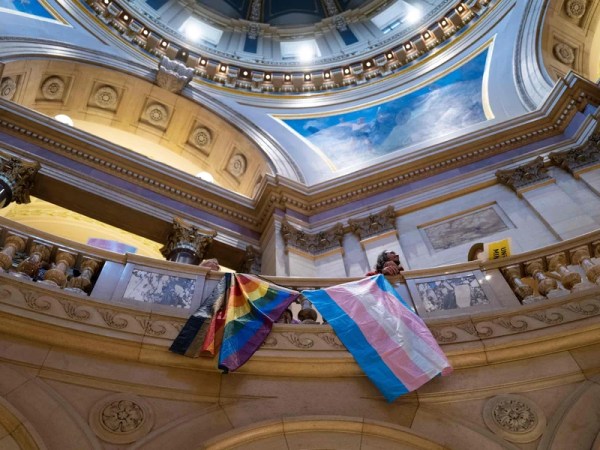
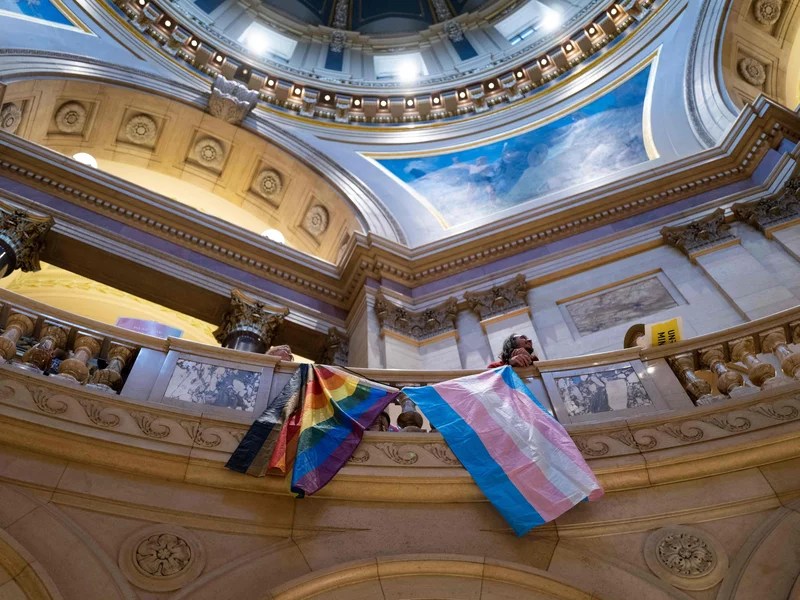
LGBTQ activists rally at the State Capitol Building in Saint Paul, Minnesota. Earlier this year state legislators put into place legal protections for trans people traveling to the state to receive healthcare.
When Utah passed a ban on gender-affirming care for people younger than 18, Kat and their family had to make a tough choice. Should they uproot their lives and leave the state?
Kat is 14 and transgender. The Utah law banned the medical care that Kat was considering.
Around 20 states have passed similar laws — meaning many families could face the same tough decision: whether to leave their homes and where to go. Often it’s to a state like Minnesota, where elected officials have protected trans health care for patients and providers.
We speak with reporters Saige Miller from KUER in Salt Lake City and Dana Ferguson, a political reporter with Minnesota Public Radio to hear how this patchwork of laws in both states affects trans patients and their doctors.










 fleeredstates.blog
You must be logged in to post a comment.