A transgender college student declared “I am here to break the law” before entering a women’s restroom at the Florida State Capitol and being led out in handcuffs by police. Civil rights attorneys say the arrest of Marcy Rheintgen last month is the first they know of for violating transgender bathroom restrictions passed by numerous state legislatures across the country.
Capitol police had been alerted and were waiting for Rheintgen, 20, when she entered the building in Tallahassee March 19. They told her she would receive a trespass warning once she entered the women’s restroom to wash her hands and pray the rosary, but she was later placed under arrest when she refused to leave, according to an arrest affidavit.
Rheintgen faces a misdemeanor trespassing charge punishable by up to 60 days in jail and is due to appear in court in May.
“I wanted people to see the absurdity of this law in practice,” Rheintgen told The Associated Press. “If I’m a criminal, it’s going to be so hard for me to live a normal life, all because I washed my hands. Like, that’s so insane.”
At least 14 states have adopted laws barring transgender women from entering women’s bathrooms at public schools and, in some cases, other government buildings. Only two — Florida and Utah — criminalize the act. A judge on Wednesday temporarily blocked Montana’s new bathroom law.
Rheintgen’s arrest in Florida is the first that American Civil Liberties Union attorneys are aware of in any state with a criminal ban, senior staff attorney Jon Davidson said.
Rheintgen was in town visiting her grandparents when she decided to pen a letter to each of Florida’s 160 state lawmakers informing them of her plan to enter a public restroom inconsistent with her sex assigned at birth. The Illinois resident said her act of civil disobedience was fueled by anger at seeing a place she loves and visits regularly grow hostile toward trans people.
English teacher Rosia Sandri was left “heartbroken” after submitting her resignation on March 31 following a campaign of hate against her that followed a TikTok video she posted highlighting her experience as a trans woman in education. That video was shared by transphobes, who called for her to be fired.
Sandri came out as a trans woman seven years ago and taught English for three years at Red Oak High School in Ellis County, Texas. Sandri said her colleagues at the Red Oak Independent School District (ROISD) supported her, and she didn’t directly come out to her class but instead started dressing differently.
Students who noticed asked if they should call her by a different name or use certain pronouns; she told them they could call her “whatever they were comfortable with” but preferred she/her pronouns.
Sandri also has a TikTok account where she posts informative videos educating people on what it is like to be trans, and she filmed some videos after hours in her classroom.
Many of her former students follow her on that account and express their support in comment section, writing “best teacher ever” and “We miss you, stay strong. Lovely makeup.”
These videos, unfortunately, caught the attention of anti-trans influencer Chaya Raichik, who runs LibsOfTikTok. Raichik reposted one of Sandri’s videos, deadnaming and misgendering her. In the clip, Sandri talked about her pupils being supportive of her journey.
“They call me ‘ma’am. ’ They call me ‘miss,’” she said. “They use my correct pronouns and know my correct name, and it’s incredibly affirming.”
Raichik asked her over 4 million followers, “Would you feel comfortable with this person teaching your kid?”
Raichik is notorious for using her social media following to single out LGBTQ+ people and allies, presenting their innocuous interactions with children as “grooming.” Her followers harass and threaten businesses and institutions that support LGBTQ+ people, some going as far as to send bomb threats to children’s hospitals for providing gender treatment to trans youth. Schools targeted by Libs of TikTok faced similar repercussions.
Sandri was out sick when Libs of TikTok reposted her video but stated that she started receiving threats and harassment on her personal and school email. The human resources department at ROISD and the deputy superintendent reported that they have also received threats and have placed Sandri on administrative leave for two days while the school launches an investigation.
Texas state Rep. Brian Harrison (R) shared the Libs of TikTok post and called for Sandri to be fired.
“As the State Representative for Red Oak ISD, I am demanding that THIS TEACHER BE IMMEDIATELY TERMINATED!” Harrison tweeted.
On Monday, Sandri agreed with the school that she would resign.
“When I signed that resignation, it felt like my dream was being taken away from me,” Sandri told NBC. “I’m not going to get hired again as a teacher in Texas, and that hurts. It hurts I have to leave my students in the middle of the year…they keep on messaging me and asking if it’s illegal to be a trans teacher.”
Harrison later told NBC News that he was proud to have helped remove Sandri from her job.
“Any teacher who claims to get gender euphoria from their minor students and teaches them that boys can become girls should be terminated immediately,” Harrison said.
Despite this, Sandri has stated that she still wants to be a teacher and hopes to find a way.
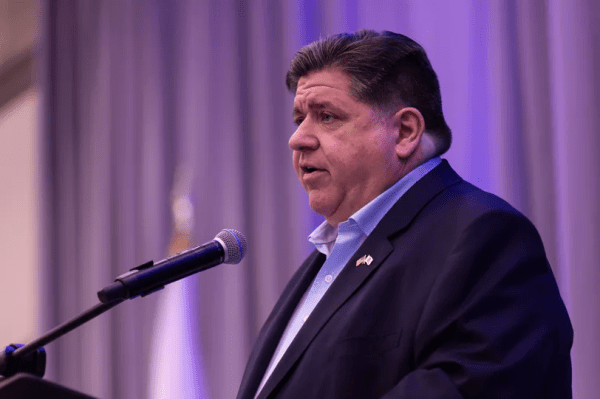
Illinois Gov. J.B. Pritzker (D) has never shied away from standing up to Donald Trump, and he has also made it clear he supports the LGBTQ+ community.
At a recent Human Rights Campaign dinner in Los Angeles, Pritzker reaffirmed his commitment to supporting queer folks and resisting Trump.
“The Trump administration and his Republican lackeys in Congress are looking to reverse every single victory this community has won over the last 50 years,” Pritzker said. “And right now it’s drag queens reading books and transgender people serving in the military. Tomorrow, it’s your marriage license and your job they want to take.”
“Bending to the whims of a bully will not end his cruelty. It will only embolden him. The response to authoritarianism isn’t acquiescence. Bullies respond to one thing, and one thing only, a punch in the face.”
He also spoke directly to transgender youth to tell them they are not alone.
“And in the midst of this existential fight, this battle that seems to consume everything, well, let’s not take the soul-sucking path of sacrificing the most persecuted for that which we deem to be most popular.”
“I know that there are transgender children right now looking out at this world and wondering if anyone is going to stand up for them and for their simple right to exist. Well, I am. We are. We will.”
He also spoke about his mother’s activism for LGBTQ+ rights and reproductive rights and declared, “I have to laugh when I hear the right-wing carry on about the dangers of exposing kids to trans people or same-sex couples, because I’m living proof that introducing your kids to the gay agenda might result in them growing up to be governor.”
Pritzker has long advocated for LGBTQ+ people as governor. In 2023, he signed a landmark bill making Illinois the first state to make it illegal for libraries to ban books.
President Trump‘s decision to target transgender care in a proclamation declaring April National Child Abuse Prevention Month “betrays” the month’s purpose, LGBTQ advocates said.
Why it matters: Framing the trans youth experience as “abuse” further stigmatizes an already vulnerable community, as the Trump administration tries to erase trans people from American life through policies limiting access tohealth care, careers, sports, education and more.
Driving the news: Trump’s Thursday proclamation singled out transgender care, labeling it a form of child abuse without acknowledging the most common risk factors for neglected or abused children.
“It is deeply disingenuous for Trump to use National Child Abuse Prevention Month as a platform to attack and stigmatize the trans community,” Ash Lazarus Orr, a spokesperson for Advocates for Trans Equality, told Axios.
Reality check: Gender-affirming care is supported as both medically appropriate and potentially life saving for children and adults by major medical associations, including the American Medical Association, the American Academy of Pediatrics and the American Psychiatric Association.
Drugs like puberty blockers are temporary and reversible. They are given to trans youth and non-trans youth who experience early onset puberty.
What they’re saying: Trump’s proclamation “is vile and upsetting but importantly it is just a press release,” Chase Strangio, co-director of the ACLU’s LGBT & HIV Project said in a statement on Instagram.
“It does not change the law or direct any agency action. But it does continue to suggest that the government is moving towards efforts to explicitly criminalize trans life and support of trans people.”
“Using the language of ‘child protection’ to justify the oppression of trans youth betrays the very values this month is meant to uphold,” Orr said.
“Denying trans youth medical care won’t change who they are.”
“Supporting a child — regardless of their gender identity — is an act of love, period,” Jarred Keller, a Human Rights Campaign spokesperson, said.
“The idea that affirming a child’s gender identity constitutes something harmful is an insult to the parents who support their transgender children with compassion and understanding.”
Threat level: Trump wrote that “a stable family with loving parents” is a safeguard against child abuse, but most victims are abused by a parent, according to the National Children’s Alliance.
By the numbers: In 2022, a reported 434,000 perpetrators abused or neglected a child, per the alliance.
76% of children were victimized by a parent or legal guardian in substantiated child abuse cases, meaning that child protective services agencies determined that abuse or neglect occurred.
Zoom out: Trump in January signed an executive order to defund youth gender-affirming care and a separate one threatening funding for K-12 schools that accommodate transgender children.
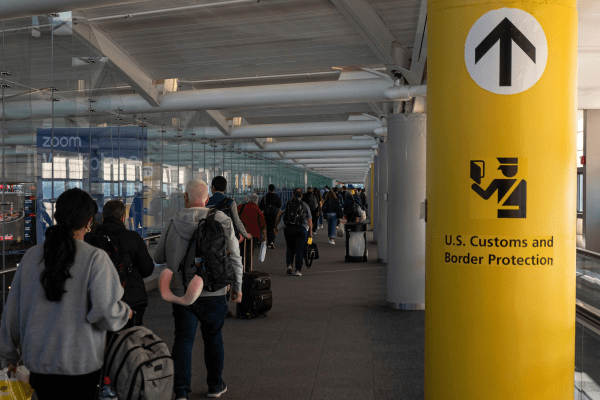
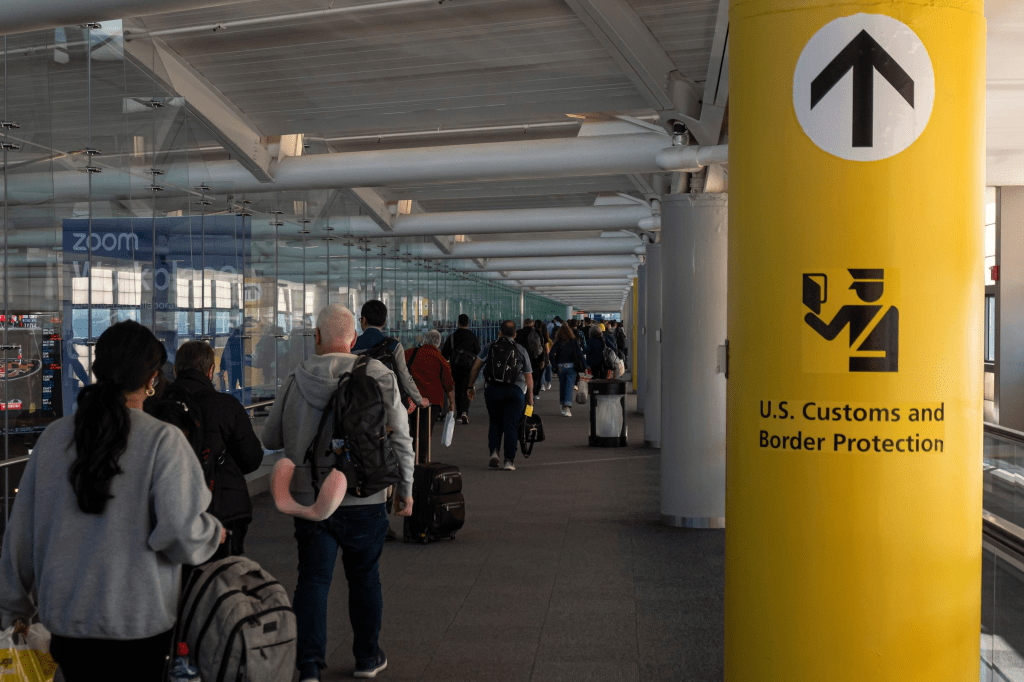
American hostility toward trans people has prompted U.S. allies to issue travel advisories for trans travelers, warning them that they must designate one “sex” on their travel forms and it has to reflect the gender they were assigned at birth.
Alexei was married to a woman in Russia before fleeing both his marriage and the country for the safe haven of Argentina.
“[In Russia] there’s a lot of pressure to be in a relationship at a young age,” the 24-year-old dental student told the Herald. “I thought that being in a heterosexual marriage would stop people from asking so many questions.”
In recent years, Russians have emigrated to Argentina in droves to avoid conscription in the Russia-Ukraine war. Others, meanwhile, have fled a country that has grown increasingly hostile to its LGBTQ community under the authoritarian rule of President Vladimir Putin.
Over a period of weeks, the Herald spoke with several such emigrés about their experiences in Buenos Aires — and why they ultimately decided to abandon their native Russia. Because their sexual preferences and political views could violate Russian law against “illegal propaganda,” several asked to be identified exclusively by their first names.
“I’ve been dreaming of living in a gay-friendly country since I learned I was gay,” said Sergei Vakhrushev, a blogger based in Buenos Aires.
Vakhrushev was bullied relentlessly as a teenager in the small port city of Vladivostok and finally came out after moving to Moscow. Even then, he was only willing to tell a few close friends, as an adult.
Pride celebrations criminalized
As recently as 2010, conditions for the LGBTQ community in Russia were not significantly worse than in most western countries. But in 2013, Vladimir Putin signed into law a ban on the distribution of “propaganda” depicting “non-traditional sexual relationships” to minors. The ban’s definition of “propaganda” was purposefully ambiguous, which left a range of activities, from pride celebrations to public displays of affection, subject to criminal penalty.
In the years after the law went into effect, the government increased its attacks on LGBTQ representation in media and public affairs. As a result, hate crimes against queer people in Russia jumped drastically, with one study finding that attacks had tripled. For many in the LGBTQ community, going to the police was often not an option, as doing so was tantamount to confessing to a crime.
Like in other hostile societies, these persecuted groups have developed strategies to navigate Russia’s social and political pressures. But after Putin invaded Ukraine in February 2022, many in the queer community felt a new urgency to leave the country.
One such Russian was Nika, 29. She was able to access hormone replacement therapy in Russia when she began her transition in 2019, legally changing her name to reflect her gender identity.
When the Russian government criminalized all gender-affirming healthcare in July 2023, Nika had been living in Argentina for over a year. And by the time Russia expanded its propaganda law to apply to anyone, regardless of age, she had already made a new life for herself in Buenos Aires. “They decided to search for new targets,” Nika said. Under the new law, “existing is propaganda.”
Like many queer Russian immigrants, Nika applied for asylum when she first arrived in Argentina. During the application process, which she described as “chaotic,” she knew few Russians with whom she could compare her experience. As more emigrés arrived and shared their stories, however, she found — and helped build — a community of her own.
‘I just wanted to hold hands’
Many queer Russian immigrants expressed surprise at the extent to which members of the LGBTQ community in Argentina could openly express themselves.
“I just wanted to hold hands with a man and not feel judged,” said Vitalii Panferov, a psychologist based in Buenos Aires. “Even in Moscow, I would only do that at night, where no one could see in the dark. When I got to Argentina, I saw so many gay couples holding hands freely.”
Vitalii initially moved to South Africa in October 2022 to get legally married. He and his partner moved to Buenos Aires the following January. They ended up initiating divorce proceedings later that year.
As he was going through this difficult process, Vitalii found a not-for-profit support group for LGBTQ people in abusive relationships run by a Russian psychologist. In Russia, such a service would be considered illegal.
In Vitalii’s telling, the group not only helped him get back on his feet but inspired him in his own psychological practice, which primarily consists of counseling gay men and couples.
Vakhrushev hopes to get married and raise a family — something that would have been impossible in Russia. In November 2023, he came out to his mother and sister, who still live in Vladivostok, after attending his first Pride march in Argentina.
“I knew I was safe here,” he said.
‘I feel good for the first time’
Kirill Dolgov found it impossible to be openly gay in Russia. A former employee of the Russian government, he told the Herald that he was forced to change careers after being repeatedly questioned about his sexuality. In 2022, Dolgov finally moved to Argentina, where he co-founded a marketing firm with a fellow Russian emigré.
“I feel good for the first time,” he said.
After living a “closed life” in Russia, Dolgov works to foster opportunities and social spaces for other queer Russian immigrants in Argentina by collaborating with fellow emigrés and hosting events.
He also manages a wine company, Bodegas Arte, which hires immigrant artists from Russia to design its labels, each drawing inspiration from Argentine culture. It doesn’t make much money, but he claims it has helped familiarize him with Latin American markets while supporting the Russian community.
In October, Bodegas Artes co-sponsored the queer film festival Side to Side at the LGBTQ cultural center Casa Brandon in the Villa Crespo neighborhood of Buenos Aires. The festival was first held in St. Petersburg but has been barred from showing films in Russia since 2021.
Last year’s event marked the first of its kind held outside of Europe and offered films with Russian, English, and Spanish subtitles — as well as an opportunity for queer Russians to mingle with Argentina’s LGBTQ community.
“Queer expats will often turn to other queer expats because both have the experiences of being sexual dissidents and foreigners, in common,” explained Ryan Centner, a professor of urban geography at the London School of Economics who studies LGBTQ expatriate populations. “Queer expatriates often feel the most ease and trust with other queer people. You don’t have to explain or strategize in the same way that you likely would when engaging with someone who is not queer.”
Last year, Jeny, a 44-year-old art teacher, launched Feria DA! — a bazaar at the LGBTQ bar and social club Feliza in Almagro where queer Russian artists and small business owners can advertise and sell their products. As she told the Herald, many of its vendors are struggling to make ends meet amid the rising cost of living.
Jeny hopes to educate people not just about Russian arts and culture but about the diversity within the Russian immigrant population.
“There’s a problematic stereotype that all Russians in Argentina are rich,” she said.
Recent events at Feria DA! have included lesbian speed dating and queer tango, as well as sales of everything from Russian food to artisanal jewelry and ceramics.
‘I don’t want to go back into the closet’
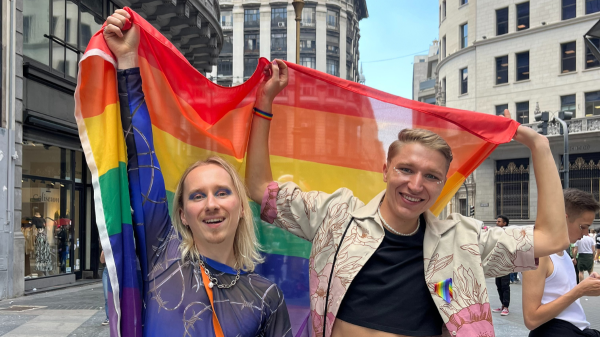
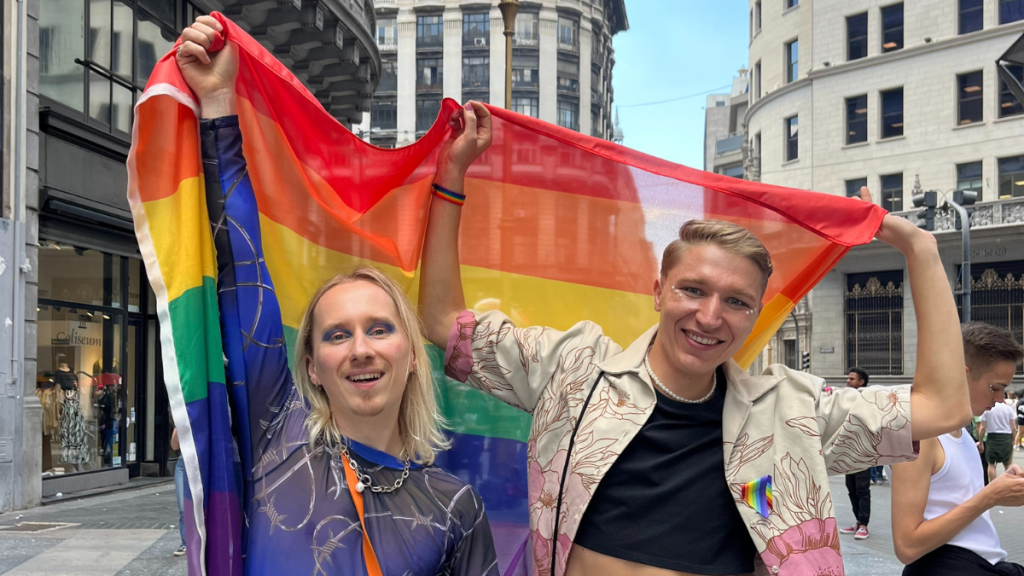
On February 1, thousands took part in anti-fascist pride marches across Argentina and the West to protest Javier Milei’s attacks on the “LGBT agenda” at the 2025 World Economic Forum. While some Russian immigrants considered the comments harmless compared to the oppression they experienced in Russia, others expressed concern that the country that had provided them sanctuary was regressing.
When Max, 29, sought asylum in Argentina in January 2023, they discovered that they were able to indicate “other” on their application form. It was the first time that they had been able to identify as nonbinary in an official capacity.
Although they acknowledged that the 2023 elections in Argentina were democratic, Max admitted to the Herald that they sometimes feel as though they’ve left “one dictatorship for another.”
“We are not the kinds of refugees this government wants,” Max said. “Do we have the luxury of tolerating what’s happening in Argentina?”
Nika likewise noted that after escaping a ruthlessly anti-LGBTQ regime, “it feels like Groundhog Day. We are used to preparing for the worst. I don’t want to go back into the closet.”
“I see people scared or skeptical [about Milei’s comments], but we already lived it,” she added. “I want to share our experience.”
Here to stay
The LGBTQ Russian community in Buenos Aires largely organizes on Telegram, a messaging application commonly used in the Russian-speaking world. A single queer channel has well over 1,000 members.
Kirill described the group as one “big family” comprising people from many different backgrounds. Not everyone gets along all of the time — what community does? — but its members generally “want to help people with their troubles.”
Not long after his divorce, Panferov joined a Russian-Argentine choir in the hopes of making new friends. It was the first time he said that he didn’t feel judged by his fellow Russians for his sexuality.
“After living in Argentina for a while, you start to realize that it’s actually less normal to be judgmental,” he told the Herald. “That kind of judgment is not okay here.”
After escaping Russia a little over two years ago, Alexei started learning Spanish and immersing himself in his new home. “I never considered staying in my bubble,” he said, referring to the Russian immigrant community.
Even so, he is grateful for the support he received from fellow Russians in navigating the asylum process and finding work early on. He told the Herald that he invites fellow Russian queer people to his clinic for dental work as a way to practice and pay it forward.
“99% of the Russians I know [here] are gay,” he laughed. “We help each other however we can.”
Several European countries have updated their travel guidance for citizens visiting the U.S., including recent guidance for transgender and nonbinary travelers.
It’s common for countries to issue travel advisories or warnings for things like crime levels, terrorism threats, current conflicts, health concerns or natural disasters.
The U.S. issues its own travel advisories for Americans traveling abroad, but a number of other countries are doing the same for the U.S. These new advisories come as the Trump administration is tightening U.S. borders, cracking down on undocumented migrants and implementing a new federal policy to recognize male and female, rather than gender identity, as the only legitimate sexes.
Canada, the United Kingdom and Germany have also updated their travel guidance for their citizens planning to travel to the United States after several tourists were detained by U.S. immigration authorities in recent months.
Travelers from many European countries and the U.K. can travel to the U.S. for business or tourism and stay for up to 90 days without a visa under the Department of Homeland Security’s Visa Waiver Program. But several travelers from countries within the program — like Canada, Germany, the U.K. and France — have been stopped and detained by U.S. immigration authorities within recent months.
Here’s what has transpired.
Nations with LGBTQ advisories for the U.S.
President Trump signed an executive order in January that says the federal government only recognizes two biological sexes: male and female. Per that order, a visitor applying for a visa or an Electronic System for Travel Authorization (ESTA) must declare their sex assigned at birth on the application forms.
European allies, including Denmark, Finland, Germany, Ireland, the Netherlands and Portugal, issued guidance that advises transgender and nonbinary travelers to contact the U.S. Embassy in their respective countries for more information on how to proceed if they wish to travel to the U.S.
Nations with other travel advisories for the U.S.
Canada
Recent tensions between the U.S. and Canada have risen over Trump’s trade war, not to mention his musings that he would make the northern ally the U.S.’s 51st state. Canada added new information under its U.S. travel advice page regarding the requirements for foreign nationals visiting for more than 30 days.
“Canadians and other foreign nationals visiting the United States for periods longer than 30 days must be registered with the United States Government. Failure to comply with the registration requirement could result in penalties, fines, and misdemeanor prosecution,” according to the Canadian government’s website.
The rule, enforced starting April 11, comes as part of an executive order signed by Trump, which requires all visitors staying for 30 days or longer to register with the U.S. government.
Germany
Last month, Germany updated its guidelines for its citizens looking to travel to the U.S. The European nation is investigating the cases of three of its citizens being denied entry and placed into detention by U.S. immigration authorities.
“Neither a valid [ESTA] authorization nor a valid U.S. visa constitutes a right to entry into the USA,” according to a translation of the German Foreign Office website. “The final decision regarding entry is made by the U.S. border official. It is recommended that you bring proof of your return journey (e.g., flight booking) upon entry.”
The office also warns of potential legal consequences. “Criminal records in the United States, false information about the purpose of their stay, or even a slight overstay of their visa upon entry or exit can lead to arrest, detention, and deportation.”
Two German nationals were detained in January as they were separately trying to cross the San Ysidro border between San Diego and Tijuana, Mexico, the New York Times reported. They have since returned to Germany with their cases resolved. A third remaining case involves a German national — who is a legal permanent U.S. resident who received a green card residency permit in 2008 — who was detained by ICE at Boston International Airport on March 7. He is now being held at the Wyatt Detention Center in Central Falls, R.I., NBC News reported.
The United Kingdom
The U.K. Foreign Office has updated guidance on its website in recent weeks for its citizens traveling to the U.S. It currently states, “You should comply with all entry, visa and other conditions of entry. The authorities in the U.S. set and enforce entry rules strictly. You may be liable to arrest or detention if you break the rules.”
Archived versions of the same website did not include potential legal consequences at the beginning of February and only stated, “The authorities in the U.S. set and enforce entry rules,” Reuters reported.
The Foreign, Commonwealth and Development Office did not explain the reason for the change.
The update comes around the same time a British tourist said she was held for more than two weeks in Washington state. Becky Burke, a 28-year-old from Wales, was backpacking through North America when she was allegedly denied entry into Canada on Feb. 26 “due to an incorrect visa,” according to a Facebook post by her father, Paul Burke. She was subsequently denied reentry into the U.S. and was detained at a facility in Tacoma, Wash.
Burke had stayed with a host family in Oregon, where she performed chores in exchange for food and lodging. She was told she violated her visa even though she was never paid. Travelers using a temporary visitor visa cannot accept work or employment in the country. Burke was repatriated back to the U.K. on March 18, according to U.S. Immigration and Customs Enforcement.
New Zealand
Last November, New Zealand updated its travel guidelines to the U.S. to “Exercise increased caution in the United States of America (US) due to the threat of terrorism (level 2 of 4).” The nation’s government travel website points to higher active shooter incidents and violent crime in the U.S. compared to New Zealand.
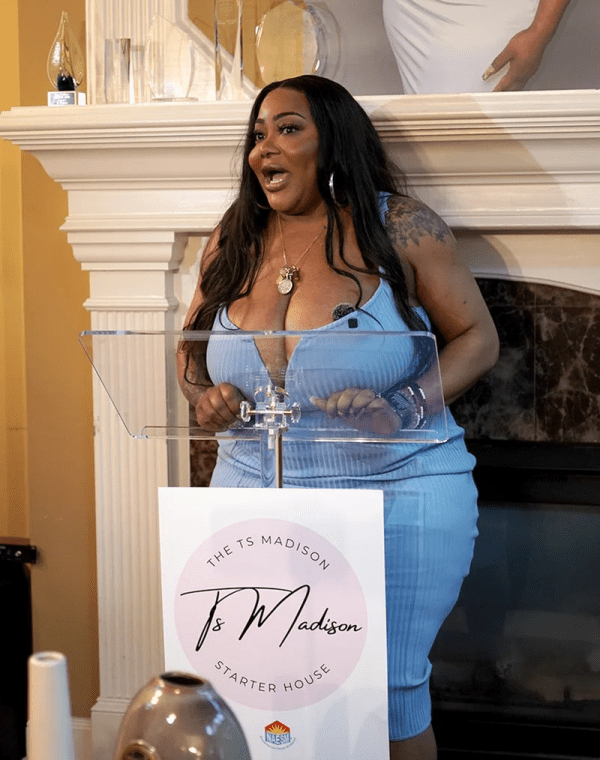
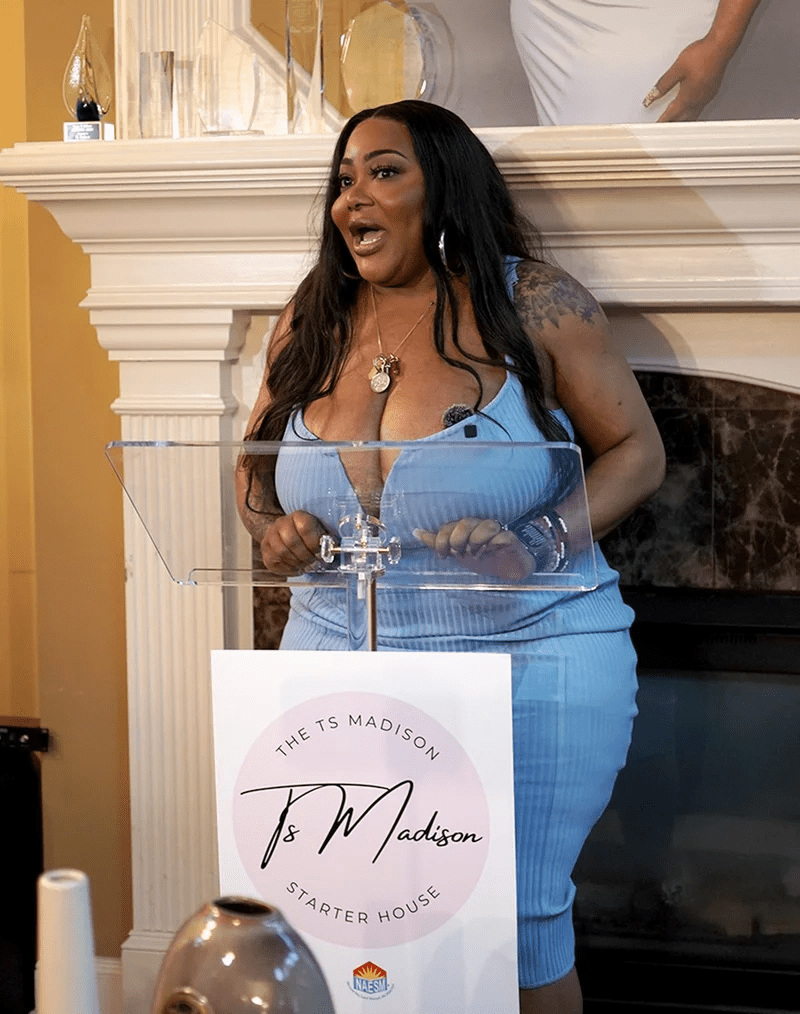
Trans icon Ts Madison has now opened a groundbreaking new initiative — dubbed as a “Starter House” — for trans women in Atlanta, GA, coinciding with 16th annual Transgender Day of Visibility. The trans advocate has partnered with NAESM, a historic Black HIV/AIDS organization, to launch a groundbreaking housing initiative aimed at supporting Black trans women engaged in sex work.
Located in Ts Madison’s former residence, the facility offers Black trans individuals access to safe housing, gender-affirming healthcare, economic opportunities, and holistic support.
The grand opening stirred deep emotions for the RuPaul’s Drag Race judge. “This morning I was having withdrawals because this is a big thing. Like, this is my house. I’m like, I’m giving my house to the community. That means people are going to be transitioning in and out and in and out of this house. I built a legacy here, but I’m still attached to this house. These are girls that are disenfranchised. These are girls that are homeless. These are girls that are trying to find another way in their life.”
The Ts Madison Starter House is part of A New Way of Life’s SAFE Housing Network, a global coalition of over 30 organizations focused on providing reentry support for women who have been incarcerated. Founded in 1998, the SAFE Housing Network aims to reduce incarceration rates in the U.S. by offering safe housing, assisting individuals in healing from the trauma of their experiences, and empowering them to take a leadership role in the movement to end mass incarceration.
Dominique Morgan, the Executive Director of the project, emphasized the importance of community support. “I think so many of us feel the fear of what’s happening in this climate, and so many folks feel like, oh my goodness, are we going to make it. And what today really symbolizes for me is that we have answers happening all over the place, and that we have the power to decide how we show up for each other.”
This facility will serve as a vital stepping stone for women, providing safe, affirming housing that prioritizes dignity and stability. To learn more and/or make a donation to the project, visit the official page for the Ts Madison Starter house.
The law, which will take effect on July 1, 2025, prohibits state universities like Iowa State from starting, maintaining or funding DEI offices or positions unless required by law or for accreditation. The Iowa Board of Regents imposed directives and a Dec. 31 deadline to eliminate functions like the Center.
Holding a ‘funeral’ for a community resource
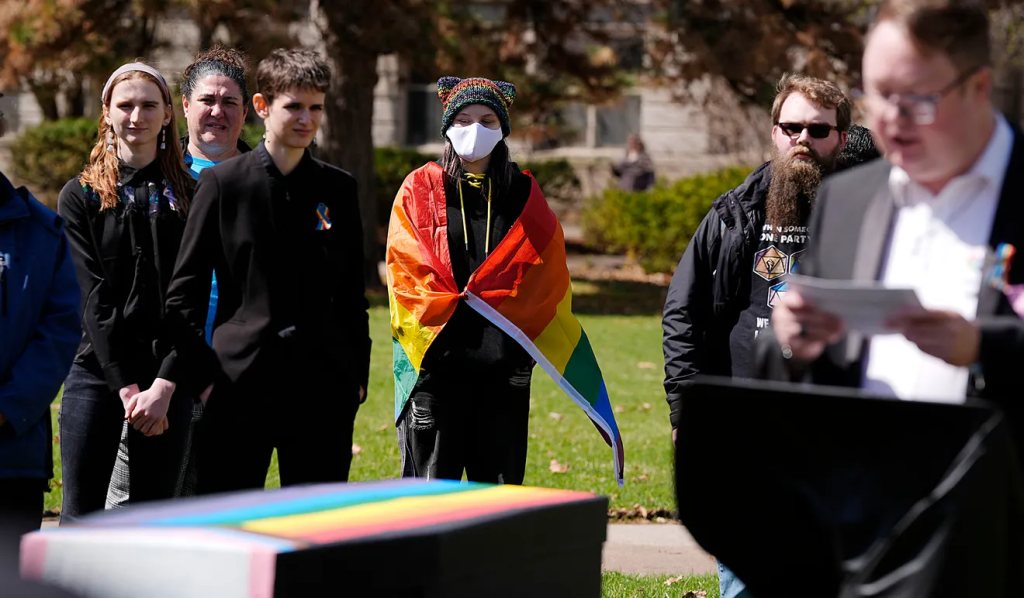
ISU Students Against SF 2435 Coalition published a mock obituary and shared it with the Ames Tribune prior to Wednesday’s event. The obituary said the Center was “killed” on Dec. 31, “with the assistance of Iowa State University.”
“This marks a great loss for the community, and we encourage those impacted to join us and find community in these trying times,” the mock obituary reads.
Several students addressed the crowd on Wednesday, noting how the Center provided them with a safe space to connect with their community. They said they are frustrated that it’s closing. Several said the presence of the Center was a key factor in attending the university.
The Center is a place where LGBTQIA+ students could go for safety and support, Iowa State student Silvera Dudenhoefer said on Wednesday.
“It was a space that celebrated queer joy and accomplishment, academically and personally,” Dudenhoefer said. “Above all, it was a clear mark that LGBTQIA+ students mattered to this school.”
By removing the LGBTQIA+ from the Center, Dudenhoefer said the Board of Regents has “shown who they’re willing to push aside in an effort to comply.”
The Center, according to Iowa State’s website, is still open from 8 a.m. to 5 p.m., Monday through Friday, on the fourth floor of the Iowa State Memorial Union. Iowa State now lists The Center under the umbrella of multicultural student affairs.
‘The Center’ has been a LGBTQIA+ student resource for more than 30 years
Iowa State University’s Lesbian Gay Bisexual and Transgender Student Services (LGBTSS) opened on Nov. 8, 1992, and was housed above Student Services. It was initially staffed by student volunteers until 1997, when four full-time staff members were brought on.
The LGBTSS was rebranded as The Center for LGBTQIA+ Student Success in 2019 and relocated to the Memorial Union.
The Center is “a space for you to be yourself, find and build community, get involved, and explore lesbian, gay, bisexual, transgender, queer, intersex, asexual, and ally life at Iowa State University,” according to the school’s website.
Senator Quirmbach voices support for ‘encouraging’ campus environment
Senator Herman Quirmbach of Ames attended Wednesday’s gathering and addressed the crowd. He said Iowa State has a responsibility to provide a supportive and encouraging environment for every student, regardless of their background.
“This university is failing in its moral responsibility,” Quirmbach said. “The members of the Board of Regents are failing. And the legislature? Don’t get me started.”
Iowa State graduate student Amanda Thomas assured the gathered students that they have allies willing to support them.
“When attacks like this hurt my friends, my family, my coworkers and my peers, it hurts me and that’s not okay,” Thomas said. “Allies are here, even if you can’t see them.”
Reverand Kelli Clement from the Unitarian Universalist Fellowship of Ames said students are learning to take the “stone in their shoe” that came with Senate File 2435 being passed.
“When you find your people, it is a holy moment,” Clement said. “And the loss of this center does not mean that your people go away.”
Rep. Chris Pappas (D-NH) launched his campaign for the open U.S. Senate seat from New Hampshire this morning. The seat is open after Sen. Jeanne Shaheen (D-NH) said that she would not seek reelection in 2026.
“I’m running for Senate because our economy, our democracy, and our way of life are on the line, and New Hampshire deserves a Senator who is grounded in the people, places, and values of this state,” he said in a statement. “You can count on me to lead the charge to confront this administration, self-dealing billionaires, and extreme politicians who threaten our future and our ability to get things done for New Hampshire.”
His Senate campaign released a video today to announce his candidacy called “Taking on the big fights.” The video mentions billionaire Elon Musk without naming the president.
Pappas considers himself a pragmatic member of Congress, and his political positions can be described as moderate for his party. He regularly touts his independence from the Democratic party, bragging last year about being one of the Democrats in the House to cross party lines the most when voting.
He is the only out LGBTQ+ member of Congress to vote in favor of the 2025 NDAA, which contained a provision banning the children of U.S. servicemembers from accessing gender-affirming care if they’re trans.
“No political party has a monopoly on good ideas, and policies that put the needs of everyday people first are found on the left and the right,” he said in February 2024.
Pappas is the first Democrat to announce that he’s running for the Senate seat. The other congressmember from New Hampshire, Rep. Maggie Goodlander (D-NH), is also expected to announce a Senate bid this year.
“He’s had a very successful track record running for the 1st District, which is kind of a difficult swing district,” University of New Hampshire political science professor Dante Scala told the New Hampshire Bulletin last month. “Pappas is very much, even in these days, not a polarizing figure. He’s squarely in the Democratic camp but will occasionally make an effort to reach across the aisle.”
“On paper at least, he’s the most logical successor.”
Pappas could be the first out gay man to win an election to the Senate. There is currently only one out U.S. senator: Sen. Tammy Baldwin (D-WI).
In Greece, a country at the forefront of progressive legislation moving LGBTQ+ rights forward in Europe, the country’s justice minister made a surprising announcement on Tuesday.
Giorgos Floridis said proposed changes to Greece’s civil code will clarify that only women will be able to start a family through surrogacy, disenfranchising single straight men, single gay men and same-sex male couples from benefiting from the procedure.
“We are now clarifying unequivocally that the concept of inability to carry a pregnancy does not refer to an inability arising from one’s gender,” Floridis told reporters. “In other words, a woman may be unable to carry a pregnancy whether she is in a male-female couple, a female same-sex couple or on her own.”
The changes mean gay women — single or couples — will still be able to use surrogacy to start a family, while gay men won’t.
Greece legalized same-sex marriage last year despite fierce opposition from the Orthodox Church, becoming the first Orthodox Christian-majority country to do so.
The marriage equality law will “boldly abolish a serious inequality,” Prime Minister Kyriakos Mitsotakis of the center-right New Democracy party said at the time.
Gay opposition leader Stefanos Kasselakis of the left-leaning Syriza party was instrumental in passing the landmark bill, despite opposing a prohibition on surrogacy for gay couples included in the bill. Current law does grant gay spouses — women and men — the right to adoption.
In 2022, Greece banned conversion therapy, joining a list of 14 other countries that bar the debunked practice. The same year, Greece passed a law banning “sex-normalizing” surgeries for babies born intersex.
In 2017, the Greek Parliament passed the Legal Gender Recognition Law, which allows transgender people to change their legal gender without needing prior medical interventions or tests.
The legal landscape for surrogacy varies widely. Many countries ban it outright while others impose restrictions on its use. Commercial surrogacy is common in the U.S. but barred in other countries, including Spain and Italy.
The far-right government of Prime Minister Giorgia Meloni had already banned both surrogacy and domestic or international adoption by same-sex couples in Italy before the Italian Senate pushed forward the West’s most restrictive ban on international surrogacy in 2024, making it a crime punishable by prison time for Italians to use surrogates in another country.









 fleeredstates.blog
You must be logged in to post a comment.