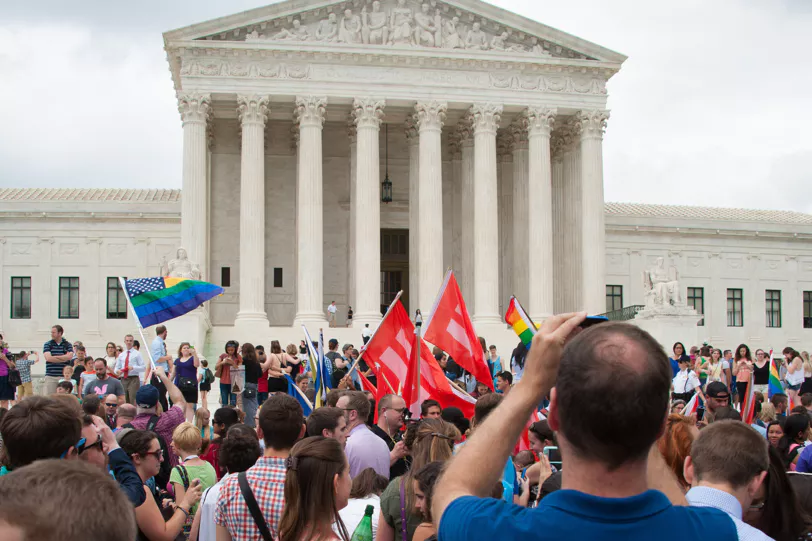
The U.S. Supreme Court has refused to hear a lawsuit challenging Tennessee‘s drag ban, leaving in place an appeals court ruling upholding the law.
The state’s controversial Adult Entertainment Act, passed in 2023, prohibits “adult cabaret entertainment” on public property or in any location where minors could view it. Thelaw defines such entertainment as performances that are “adult-oriented” and “harmful to minors,” including acts by topless dancers, go-go dancers, exotic dancers, strippers, and “male or female impersonators.”
Friends of George’s Inc., a Memphis-based theater group known for its drag performances, filed a lawsuit against the AEA, arguing that the ban is overly broad and vague, and effectively criminalizes their performances.The Sixth Circuit Court of Appeals dismissed the legal challenge in Julyy, claiming that the plaintiffs did not have standing to sue. The decision reversed a lower court’s ruling that had declared the law unconstitutional.
A separate lawsuit against the ban is still ongoing, brought by the American Civil Liberties Union on behalf of Blount County Pride. Organizers filed the suit after District Attorney General Ryan Desmond threatened to prosecute anyone violating the law during a 2023 Pride festival.
Friends of George’s denounced the Supreme Court’s ruling in a statement, maintaining that “this ruling does not define us — we do. And we refuse to be silenced.”
“Friends of George’s Theatre Company will continue exercising our First Amendment right — bringing inclusive, joyful art to our community while raising thousands for charities that uphold dignity and respect for all,” the group said. “Oppression is nothing new to the LGBTQ+ community. Every attempt to silence us has only made us louder, stronger, and more relentless. This moment is no different.”
“To our trans siblings who have led this fight from the start — you are not alone. Your courage fuels us. Your struggle is our struggle. We stand with you,” they continued. “To every performer, artist, and activist — keep using your voice, your craft, your presence. Every soapbox is sacred, and we will not step off it. To our supporters, friends, and allies — this fight is bigger than us. It’s about life, liberty, and the pursuit of happiness — for everyone. We will resist with joy, art, and the unshakable belief that laughter is defiance.”
Senate Democrats on Monday blocked a GOP-led bill that would ban transgender athletes from women’s and girls’ sports at federally funded schools and educational institutions.
The bill’s failure to advance highlights the limits of Republicans’ narrow margins in Congress, despite control of both chambers. The party still needs support from Democrats in the Senate for most legislation to clear a 60-vote threshold. The party line vote was 51-45.
The Senate vote comes as GOP-led states across the country continue to put forward anti-trans measures, including bills intended to keep transgender students from playing on sports teams consistent with their gender identity.
Republicans put attacks over transgender issues front and center in competitive races during the last election cycle, including at the top of the ticket in the presidential race. In the aftermath of President Donald Trump’s White House win, some Democrats have said their party must do more to address potential voter concerns.
The bill seeks to amend federal law to require that “sex shall be recognized based solely on a person’s reproductive biology and genetics at birth,” for the purpose of determining compliance with Title IX in athletics, according to the legislative text.
Title IX prohibits discrimination on the basis of sex in education programs or activities that receive funding from the federal government, and applies to schools and other educational institutions.
Republicans have argued that transgender women hold a physical advantage over cisgender women in sports and thus their participation could consequentially limit opportunities for others.
Democrats have said that policies to restrict transgender athletes’ participation in team sports adds to the discrimination that trans people face, particularly trans youth. And they argue that Republicans are seeking to undermine the rights of LGBTQ students by advancing the bill.
Senate Republicans have 53 seats. Typically, that would mean that at least seven Democrats would need to vote with Republicans to hit the 60-vote threshold to advance a bill subject to a filibuster.
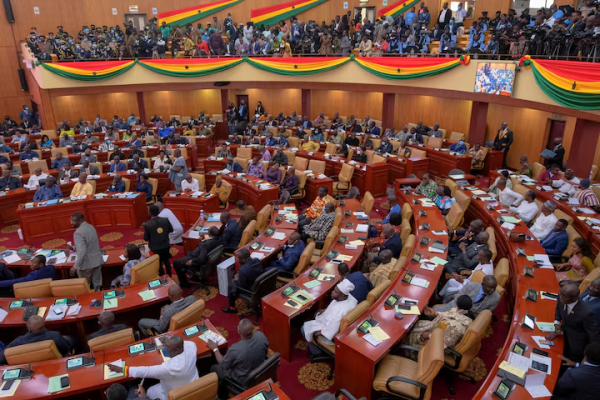
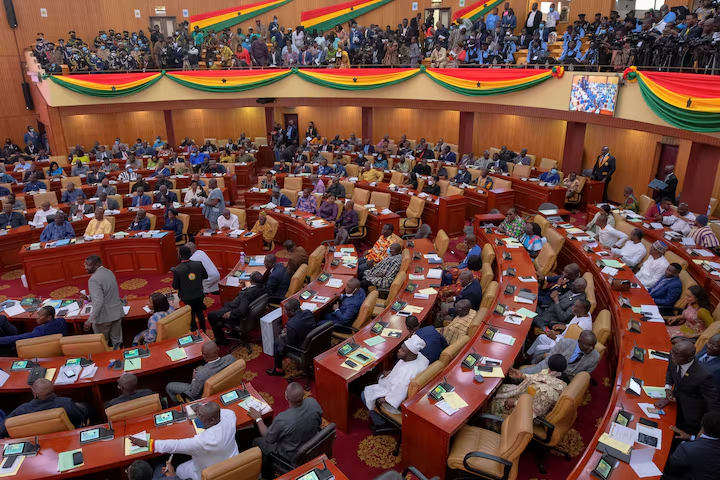
ACCRA, March 3 (Reuters) – Ghanaian lawmakers have reintroduced a bill that would become one of Africa’s most restrictive pieces of anti-LGBTQ legislation, three sponsors told Reuters, after an earlier attempt to enact it fell short because of legal challenges.
Same-sex sexual acts are currently punishable by up to three years in prison in Ghana. The bill would increase the maximum penalty to five years and also impose jail time for the “willful promotion, sponsorship, or support of LGBTQ+ activities”.
Ghana’s parliament approved the bill in February 2024 but then-President Nana Akufo-Addo did not sign it before his term ended and John Dramani Mahama took office in January.
Any bill passed by parliament must go to the president to be signed into law.
Ruling party lawmakers Samuel Nartey George and Emmanuel Kwasi Bedzrah and opposition lawmaker John Ntim Fordjour told Reuters the same bill had been reintroduced in parliament on February 25, sponsored by 10 lawmakers in total.
The bill intensifies a crackdown on the rights of LGBTQ people and those accused of “promotion” of sexual and gender minority rights.
Va-Bene Elikem Fiatsi, a Ghanaian trans woman and LGBTQ activist, told Reuters the bill’s reintroduction was “disheartening and hard to process” but that pro-LGBTQ activism would continue.
The fate of the legislation is unclear. Mahama has said he’d prefer a government-sponsored law rather than one sponsored by parliamentarians.
Last year Ghana’s finance ministry warned that the bill, if signed into law, could jeopardise $3.8 billion in World Bank financing and derail a $3 billion loan package from the International Monetary Fund.
Past polling has shown a lack of tolerance for LGBTQ people in Ghana and Fordjour said the country no longer needed to fear economic sanctions.
“The global political climate is favorable for conservative values as demonstrated in the bold conservative pronouncements of (U.S.) President Donald Trump,” he said.
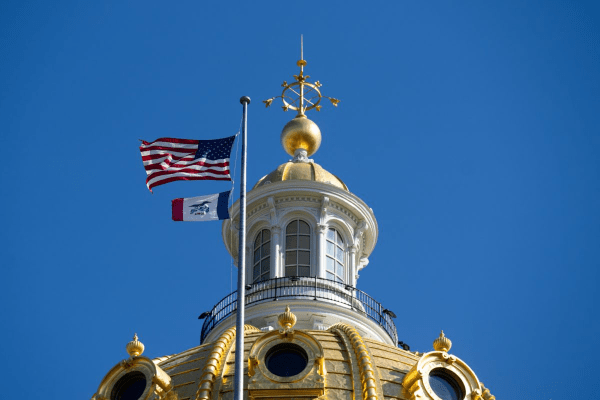
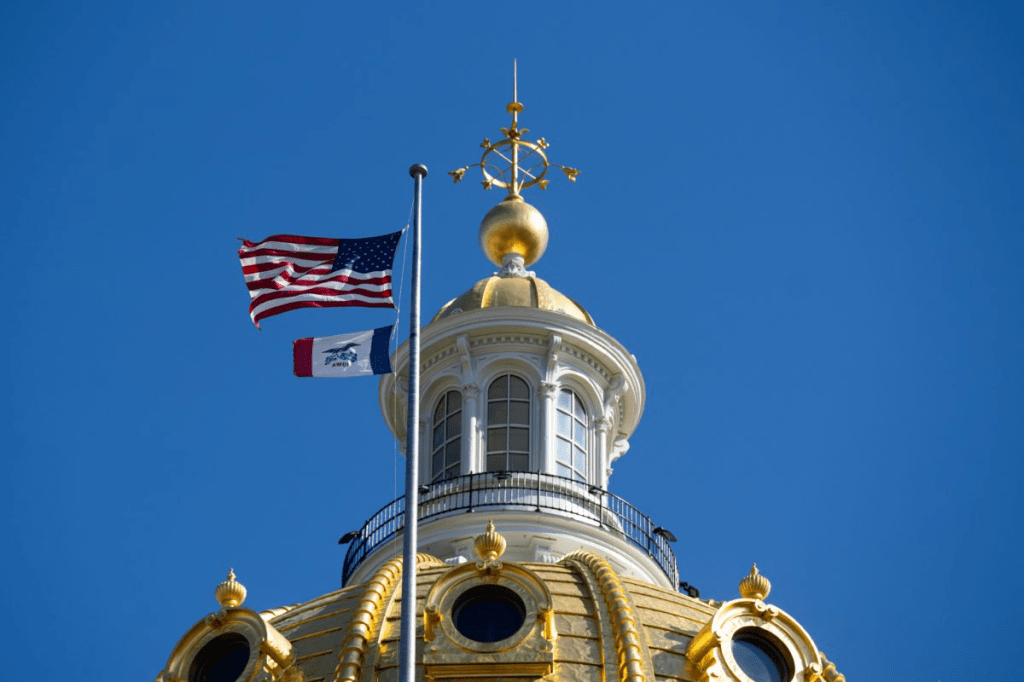
DES MOINES, Iowa (AP) — Iowa moved to remove gender identity protections from the state’s civil rights code Thursday despite massive protests by opponents who say it could expose transgender people to discrimination in numerous areas of life.
The Iowa House approved the bill that would strip the state civil rights code of protections based on gender identity, less than an hour after the state Senate backed the legislation. First introduced last week, the measure raced through the legislative process.
Hundreds of LGBTQ+ advocates streamed into the Capitol rotunda on Thursday waving signs reading “Trans rights are human rights” and chanting slogans including “No hate in our state!” There was a heavy police presence, with state troopers stationed around the rotunda. Of the 167 people who signed up to testify at the public hearing before a House committee, all but 24 were opposed to the bill.
Protesters that watched the vote from the House gallery loudly booed and shouted “Shame!” as the House adjourned. Many admonished Iowa state Rep. Steven Holt, who floor managed the bill and delivered a fierce defense of it before it passed.
The bill would remove gender identity as a protected class from the state’s civil rights law and explicitly define female and male, as well as gender, which would be considered a synonym for sex and “shall not be considered a synonym or shorthand expression for gender identity, experienced gender, gender expression, or gender role.”
The measure would be the first legislative action removing nondiscrimination protections based on gender identity, said Logan Casey, director of policy research at the Movement Advancement Project, an LGBTQ+ rights think tank.
Supporters of the change say the current law incorrectly codified the idea that people can transition to another gender and granted transgender women access to spaces such as bathrooms, locker rooms and sports teams that should be protected for people who were assigned female at birth.
The legislation now goes to Republican Gov. Kim Reynolds, who has been supportive of efforts to limit gender identity protections.
The Iowa lawmakers’ actions came on the same day the Georgia House backed away from removing gender protections from the state’s hate crimes law, which was passed in 2020 after the death of Ahmaud Arbery.
Iowa’s current civil rights law protects against discrimination based on race, color, creed, gender identity, sex, sexual orientation, religion, national origin or disability status.
Sexual orientation and gender identity were not originally included in the state’s Civil Rights Act of 1965. They were added by the Democratic-controlled Legislature in 2007, also with the support of about a dozen Republicans across the two chambers.
Iowa Republicans say their changes are intended to reinforce the state’s ban on sports participation and public bathroom access for transgender students. If approved, the bill would go to Republican Gov. Kim Reynolds, who signed those policies into law. A spokesperson for Reynolds declined to comment on whether she would sign the bill.
V Fixmer-Oraiz, a county supervisor in eastern Johnson County, was the first to testify against the bill at the public hearing. A trans Iowan, they said they have faced their “fair share of discrimination” already and worried that the bill will expose trans Iowans to even more.
“Is it not the role of government to affirm rather than to deny law-abiding citizens their inalienable rights?” Fixmer-Oraiz said. “The people of Iowa deserve better.”
Among those speaking in support of the bill was Shellie Flockhart of Dallas Center, who said she is in favor as a woman and a mother, a “defender of women’s rights” and someone “who believes in the truth of God’s creation.”
“Identity does not change biology,” Flockhart said.
About half of U.S. states include gender identity in their civil rights code to protect against discrimination in housing and public places, such as stores or restaurants, according to the Movement Advancement Project. Some additional states do not explicitly protect against such discrimination but it is included in legal interpretations of statutes.
Iowa’s Supreme Court has expressly rejected the argument that discrimination based on sex includes discrimination based on gender identity.
Several Republican-led legislatures are also pushing to enact more laws this year creating legal definitions of male and female based on the reproductive organs at birth following an executive order from President Donald Trump.
North Carolina State Representative Deb Butler (D–New Hanover), one of the first openly gay members of the state House, has filed two bills aimed at securing marriage equality and protecting LGBTQ+ families in the state.
The proposals – H174 and H175 – come as lawmakers brace for potential challenges to same-sex marriage rights amid a shifting federal judiciary.
H174 seeks to repeal North Carolina’s outdated ban on same-sex marriage, a statute that remains on the books despite being rendered unenforceable by the U.S. Supreme Court’s 2015 ruling in Obergefell v. Hodges. If enacted, the bill would affirm the federal protections of all married couples, regardless of gender.
H175 would introduce a constitutional amendment explicitly safeguarding marriage equality in North Carolina. The amendment is designed as a long-term shield, ensuring that even if the Supreme Court revisits Obergefell, LGBTQ+ families will remain protected from discriminatory state-level policies.
“In North Carolina, we must defend the rights of our LGBTQ+ citizens,” Rep. Butler said. “Marriage equality is a settled issue for the vast majority of Americans, and our state should reflect that reality. These bills are about ensuring dignity, security and legal protection for all families in the face of uncertainty at the federal level.”
According to a news release, Butler’s initiative is part of a broader effort to fortify civil rights protections across North Carolina. Advocates, legal experts and LGBTQ+ organizations have voiced strong support for the bills, emphasizing the urgent need for state-level safeguards amid a volatile national political climate.
The legislation now heads to the North Carolina General Assembly.
*This is being reported by the AP on WFMY2’s website.
The military services have 30 days to figure out how they will seek out and identify transgender service members to remove them from the force — a daunting task that may end up relying on troops self-reporting or tattling on their colleagues.
A memo sent to Defense Department leaders on Thursday — after the Pentagon filed it late Wednesday as part of a response to a lawsuit — orders the services to set up procedures to identify troops diagnosed with or being treated for gender dysphoria by March 26. They will then have 30 days to begin removing those troops from service.
The order expands on the executive order signed by President Donald Trump during his early days in office setting out steps toward banning transgender individuals from serving in the military. The directive has been challenged in court.
A senior defense official said Thursday they believe there are about 4,200 troops diagnosed with gender dysphoria currently serving in the active duty, National Guard and Reserves.
The official, who spoke on condition of anonymity to discuss personnel issues, said that between 2015 and 2024, the total cost for psychotherapy, gender-affirming hormone therapy, gender-affirming surgery and other treatment for service members is about $52 million.
There are about 2.1 million troops serving.
However, the issue has taken up a large part of the Pentagon’s attention and time as Trump and Defense Secretary Pete Hegseth work to root them out, arguing that their medical condition doesn’t meet military standards.
The order expands on the executive order signed by President Donald Trump during his early days in office setting out steps toward banning transgender individuals from serving in the military. The directive has been challenged in court.
A senior defense official said Thursday they believe there are about 4,200 troops diagnosed with gender dysphoria currently serving in the active duty, National Guard and Reserves.
The official, who spoke on condition of anonymity to discuss personnel issues, said that between 2015 and 2024, the total cost for psychotherapy, gender-affirming hormone therapy, gender-affirming surgery and other treatment for service members is about $52 million.
There are about 2.1 million troops serving.
However, the issue has taken up a large part of the Pentagon’s attention and time as Trump and Defense Secretary Pete Hegseth work to root them out, arguing that their medical condition doesn’t meet military standards.
Sarah Warbelow, vice president for legal affairs for the Human Rights Campaign, said the new policy puts service members in a difficult position and pushes transgender troops to self-identify.
“All of a sudden, you are going to be required to out yourself. Other people are going to be required to out you,” Warbelow said. “If you’ve got a best friend in the military who happens to know that you are transgender, under this new guidance they’re required — if you are a woman who is transgender — they’re required to start referring to you as ‘he’ and ‘sir,’ as of today.”
Troops are put in the position of having to choose “between the safety of their friends and violating direct orders,” Warbelow said, adding that transgender service members may feel pressure to self-identify, knowing that they may be penalized by not coming forward.
On Thursday, U.S. officials said early rough numbers suggest about 600 transgender troops can be quickly identified in the Navy, between 300 and 500 in the Army and fewer than 50 in the Marine Corps. Officials said individuals could, for example, be identified by documented medical treatments, and acknowledged those numbers are likely to increase.
Other numbers were not available, according to the officials, who spoke on condition of anonymity to discuss personnel issues.
The officials noted, however, that the early numbers likely fall short of actual totals because some service members may have joined the service after any transition and may not have had medical or surgical procedures that could identify them. And officials also have warned that they may be limited by health privacy laws on what they can and can’t discern or report from records.
A 2018 independent study by the Palm Center, which researched LGBTQ issues, assessed there were an estimated 14,000 transgender troops among the more than 2 million troops serving.
The new Pentagon policy provides two exceptions: if transgender personnel who seek to enlist can prove on a case-by-case basis that they directly support warfighting activities, or if an existing service member, who was diagnosed with gender dysphoria, can prove they support a specific warfighting need and never transitioned to the gender they identify with and proves over 36 months they are stable in their biological sex “without clinically significant distress.”
Gender dysphoria occurs when a person’s biological sex does not match up with their gender identity.
If a waiver is issued, the applicant would still face a situation where only their biological sex was recognized for bathroom facilities, sleeping quarters and even in official recognition, such as being called “Sir” or “Ma’am.”
Warbelow said transgender troops should wait for additional clarity from the service and their commanding officers before doing anything that would affect their military service — also noting that ongoing court cases could affect the policy.
Trump tried to ban transgender troops from serving during his first term, but the issue ended up mired in lawsuits until former President Joe Biden was elected and overturned the ban.
First year freshman Texas state house representative Brent Money (R-Greenville) filed House Bill 3399 on Wednesday which would ultimately ban all gender transitioning procedures in the state of Texas, regardless of age of the patient.
The section of the bill that would prohibit doctors from providing this care to adults is written in this section:
Sec. 161.702. PROHIBITED PROVISION OF GENDER TRANSITIONING OR GENDER REASSIGNMENT PROCEDURES AND TREATMENTS [TO CERTAIN CHILDREN]. For the purpose of transitioning a person’s [child’s] biological sex as determined by the sex organs, chromosomes, and endogenous profiles of the person [child] or affirming the person’s [child’s] perception of the person’s [child’s] sex if that perception is inconsistent with the person’s [child’s] biological sex, a physician or health care provider may not knowingly: (1) perform a surgery that sterilizes the person [child], including: (A) castration; (B) vasectomy; (C) hysterectomy; (D) oophorectomy; (E) metoidioplasty; (F) orchiectomy; (G) penectomy; (H) phalloplasty; and (I) vaginoplasty; (2) perform a mastectomy; (3) provide, prescribe, administer, or dispense any of the following prescription drugs that induce transient or permanent infertility: (A) puberty suppression or blocking prescription drugs to stop or delay normal puberty; (B) supraphysiologic doses of testosterone to females; or (C) supraphysiologic doses of estrogen to males; or (4) remove any otherwise healthy or non-diseased body part or tissue.
Did you think this was all about protecting the children? Of course not. They are coming for you, regardless of whether you are a grown adult or not.
The one glimmer of hope in this situation is that bills filed by freshman state reps in Texas typically do not making anywhere close to the floor for a vote. It would be a rare case if it did, and at this time there are also no co-authors to the bill. This meant he’s out on a limb on his own with this legislation. It may be a red meat attention getter for his constituents and the GOP at large.
The Department of Homeland Security has eliminated policies preventing the investigation of individuals or groups solely based on their sexual orientation or gender identity.
The DHS Office of Intelligence and Analysis quietly updated its policy manual earlier this month, as first reported by Bloomberg, removing LGBTQ+ identities from the General Requirements section that prohibit surveillance based solely on immutable characteristics.
The manual now states: “OSIC Personnel are prohibited from engaging in intelligence activities based solely on an individual’s or group’s race, ethnicity, sex, religion, country of birth, nationality, or disability. The use of these characteristics is permitted only in combination with other information, and only where (1) intended and reasonably believed to support one or more of I&A’s national or departmental missions and (2) narrowly focused in support of that mission (or those missions).”
The manual previously stated, via the internet archive: “OSIC Personnel are prohibited from engaging in intelligence activities based solely on an individual’s or group’s race, ethnicity, gender,religion, sexual orientation, gender identity, country of birth, nationality, or disability. The use of these characteristics is permitted only in combination with other information, and only where (1) intended and reasonably believed to support one or more of I&A’s national or departmental missions and (2) narrowly focused in support of that mission (or those missions).”
DHS quietly eliminates ban on surveillance based on sexual orientation and gender identity
shutterstock creative
All directions surveillance camera
The DHS quietly updated its policy manual earlier this month, removing LGBTQ+ identities from the section prohibiting surveillance based solely on immutable characteristics.
The Department of Homeland Security has eliminated policies preventing the investigation of individuals or groups solely based on their sexual orientation or gender identity.
The DHS Office of Intelligence and Analysis quietly updated its policy manual earlier this month, as first reported by Bloomberg, removing LGBTQ+ identities from the General Requirements section that prohibit surveillance based solely on immutable characteristics.
The manual now states: “OSIC Personnel are prohibited from engaging in intelligence activities based solely on an individual’s or group’s race, ethnicity, sex, religion, country of birth, nationality, or disability. The use of these characteristics is permitted only in combination with other information, and only where (1) intended and reasonably believed to support one or more of I&A’s national or departmental missions and (2) narrowly focused in support of that mission (or those missions).”
The manual previously stated, via the internet archive: “OSIC Personnel are prohibited from engaging in intelligence activities based solely on an individual’s or group’s race, ethnicity, gender, religion, sexual orientation, gender identity, country of birth, nationality, or disability. The use of these characteristics is permitted only in combination with other information, and only where (1) intended and reasonably believed to support one or more of I&A’s national or departmental missions and (2) narrowly focused in support of that mission (or those missions).”
The changes come shortly after Donald Trump signed executive orders forcing the removal of all references to diversity, equity, and inclusion in government, as well as mandating that the federal government deny the existence of transgender people by recognizing only two sexes — male or female — despite the scientific and medical consensus that sex is a spectrum.
Trump has appointed Kristi Noem, former governor of South Dakota, as the Secretary of Homeland Security. Noem has a history of targeting LGBTQ+ rights, including by signing executive orders banning transgender athletes from participating on teams that align with their identities and banning gender-affirming care for youth, though she is best known for her admission that she killed a 14-month-old puppy she deemed untrainable.
The Office of Intelligence and Analysis “has a long track record of civil liberties and civil rights abuses,” according to the Brennan Center for Justice, including unconstitutionally surveilling journalists and racial justice activists as well as monitoring “political views shared by millions of Americans — about topics like abortion, government, and elections — that DHS baldly asserts will lead to violence.”
Nine states are now seeing Republican efforts to overturn Obergefell v. Hodges, the 2015 Supreme Court decision that legalized marriage equality in all 50 states. This is a new trend; state Republican lawmakers have been focused on rolling back trans rights since 2020.
In five of the states — Idaho, Michigan, Montana, North Dakota, and South Dakota — Republican lawmakers have introduced resolutions calling for the Supreme Court to overturn Obergefell. Those measures have been passed by at least one chamber of the state legislature in Idaho and North Dakota.
In the four other states – Missouri, Oklahoma, Tennessee, and Texas – Republican legislators have introduced bills to privilege heterosexual marriages, with some of the states referring to a new institution called “covenant marriage,” which would be limited to heterosexual couples. The point there, according to the sponsor of one such bill in Oklahoma, is to create inequality in marriage rights between opposite- and same-sex couples and invite a legal challenge that could be taken to the Supreme Court to overturn Obergefell.
Two justices on the Supreme Court have openly stated that they want to overturn Obergefell, and the Court has moved to the right since 2015. Justices Ruth Bader Ginsburg, Anthony Kennedy, and Stephen Breyer were all in the Obergefell majority but have either retired or passed away in the last ten years. Only one was replaced by a Democratic president. It is not clear if there are the five votes needed to protect marriage equality on the Court if it were to take up a test case.
Thirty-five states have amendments or statutes banning same-sex marriage, and most would likely go into effect if the Supreme Court were to overturn Obergefell. Because of the 2022 federal Respect for Marriage Act, though, state and federal governments would have to recognize same-sex marriages performed in other states.
“It’s good to anticipate things that could happen in order that we do our best job preparing ourselves,” Jenny Pizer, chief legal officer of Lambda Legal, told LGBTQ Nation last month. “The bottom line for people is that, if there are things that you can do to secure your relationships, your family status and to take other protective measures, please do those things. Don’t be lulled into complacency by our informed and reasonably expert speculation about what may happen.”
Michigan Rep. Josh Schriver is proposing a resolution that would urge the U.S. Supreme Court to overturn the ruling that legalized same-sex marriage nationwide.
Schriver says allowing gay marriage has led to “religious persecution” and goes against “the sanctity of marriage.”
Gay marriage is banned in Michigan’s constitution, but is allowed due to the 2015 Supreme Court ruling that Schriver and the resolution’s co-sponsors wish to overturn.
LANSING, Mich. (FOX 2) – A Michigan lawmaker plans to introduce a resolution to the state House of Representatives, urging the United States Supreme Court to overturn Obergefell v. Hodges, the case that legalized same-sex marriage nationwide.
Rep. Josh Schriver (R-Oxford), along with 12 co-sponsors, will introduce the House resolution following Tuesday’s session.
The backstory:
The resolution comes after Schriver posted on social media late in 2024 that gay marriage should be banned.
“America only ‘accepted’ gay marriage after it was thrusted into her by a perverted Supreme Court ruling,” he wrote in part on X. “Make gay marriage illegal again. This is not remotely controversial or extreme.”
In a release announcing the new resolution, Schriver wrote that Obergefell v. Hodges “is at odds with the sanctity of marriage, the Michigan Constitution, and the principles upon which the country was established.”
Without the Obergefill ruling, gay marriage would be illegal in Michigan due to an amendment voters passed in 2004. However, the Supreme Court decision supersedes that.
Schriver went on to reference what he called “religious persecution” since the 2015 ruling, including a wedding venue that was fined for turning away an LGBTQ couple, and Michigan Attorney General Dana Nessel attempting to ban adoption agencies from turning away same-sex couples for religious reasons. However, a judge later ruled that faith-based adoption agencies can turn away prospective parents because they are LGBTQ.
Lawmakers in other states, including Idaho, Montana, North Dakota, and South Dakota, have also been pushing the Supreme Court to revisit the ruling and overturn it.
The new resolution received pushback from Democrats, with state Democratic Party Chair Curtis Hertel releasing a statement condemning the resolution:
“Unfortunately, this isn’t a surprise coming from Josh Schriver and the right-wing extremists that populate Matt Hall’s Republican caucus – and it’s deeply dangerous. Schriver is attacking hundreds of thousands of Michiganders who are nurses, teachers, soldiers, and beloved members of the community.
“From spreading racist conspiracy theories to homophobic rhetoric, Schriver does not deserve to serve the people of Michigan, let alone sit on a politically motivated oversight committee in the state House. Thankfully, I know that Democrats will continue to fight for Michiganders’ civil rights and personal freedoms in the face of these ugly attacks.”
Gay marriage in Michigan
Because Michigan voters banned gay marriage in 2004, legalizing the practice would first require voters to remove the ban from the state constitution via ballot proposal.
Under the existing amendment, if Obergefell were to be overturned, existing marriages in Michigan would be recognized, but future LGBTQ+ marriages would be banned, said Rep. Jason Morgan (D-Ann Arbor).
A similar scenario played out in 2022 when nationwide abortion was removed following a Supreme Court ruling. The overturning of that ruling allowed states to decide if they would allow abortions. Michigan had an existing abortion ban that was lifted after voters passed a proposal to allow the procedure.
After the Roe ruling, Justice Clarence Thomas said that the Supreme Court should reconsider rulings that legalized same-sex marriage and protected same-sex relationships, creating fear in states that don’t have protections in place.

































 fleeredstates.blog
You must be logged in to post a comment.