Individuals attempting to change their gender will be entered into a database accessible by state Republicans.
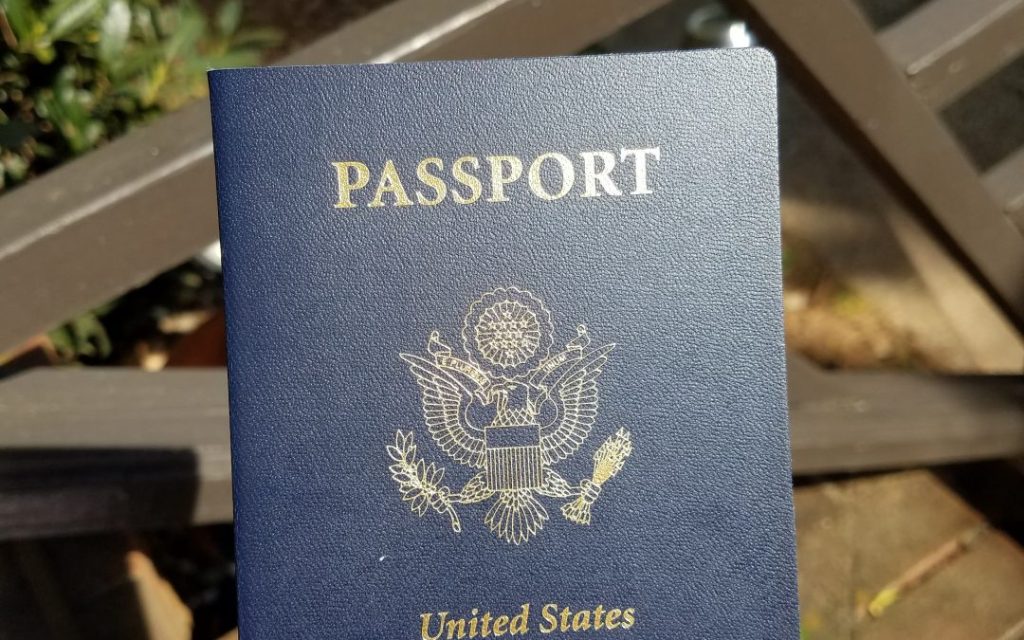
According to KUT, transgender Texans can no longer update the gender marker on their state IDs, even if they have a court order or an amended birth certificate. The only exception is if the change is proven to be a clerical error. However, the Texas Department of Public Safety (DPS) stated that this rule is no longer in effect, and the relevant information was quietly removed from their website yesterday. A DPS spokesperson attributed the change to Texas Attorney General Ken Paxton (R).
“The Office of the Attorney General (OAG) has recently expressed concerns about the validity of court orders directing state agencies, including the DPS, to change the sex of individuals in government records like driver licenses and birth certificates,” the agency informed KUT.
“Neither DPS nor other government agencies are involved in the legal proceedings that result in these court orders, and the absence of legislative authority and evidentiary standards for courts to issue such orders has necessitated a thorough legal review by DPS and the OAG. Therefore, as of Aug. 20, 2024, DPS has stopped accepting these court orders as valid for changing sex identification in department records, including driver licenses,” the agency stated.
Ian Pittman, an attorney assisting trans Texans, told The Texas Tribune that this policy shift raises significant privacy concerns for transgender individuals, as they will now be forced to carry IDs that don’t reflect their gender. This mismatch can result in discrimination, harassment, violence, and barriers to accessing services that require identification.
The DPS now officially documents and scans any birth certificate changes or court orders related to gender markers but does not use them to process updates. “This policy effectively puts people on a list that could interfere with their health care,” Pittman said, urging trans Texans not to submit court orders to the DPS.
The change comes amid broader efforts in states like Florida and Kansas to block transgender individuals from altering ID markers, alongside numerous anti-LGBTQ actions by Texas Attorney General Ken Paxton and Governor Greg Abbott (R). Two years ago, Paxton directed DPS employees to create a list of individuals who had requested gender marker changes.
“Texans will now be subject to involuntary surveillance simply for trying to update a government document,” said Brad Pritchett, interim CEO of Equality Texas. “There is no clear rationale for why DPS would need this information, nor a valid reason to deny gender marker updates on driver’s licenses.”
Correction: This article has been updated to clarify that Audrey Louis’s district does not encompass Bexar County.
Texas Attorney General Ken Paxton’s (R) office carried out search warrants in one of the state’s largest urban counties, a major Democratic stronghold, alleging incidents of vote tampering.
On Tuesday, the Texas Attorney General’s office conducted searches in Bexar County, the fourth most populous county in the state and home to San Antonio.
The searches followed a two-year investigation, with the office stating that “secure elections are the cornerstone of our republic.”
This action is part of a broader effort by Paxton to pursue election fraud cases, an initiative that spent $2.3 million in 2023 to prosecute just four cases, according to the Houston Chronicle.
“We are completely committed to protecting the security of the ballot box and the integrity of every legal vote. This means ensuring accountability for anyone committing election crimes,” Paxton said in a statement.
The case was referred by state District Attorney Audrey Louis, a conservative Republican whose district borders Bexar County.
Louis made the referral in 2022, following a 2021 ruling by the Court of Criminal Appeals (CCA), which determined that Paxton could not independently investigate election crimes. The ruling required him to work with local district attorneys in such cases, a decision that led Paxton to encourage his supporters to inundate the court with calls.
“The CCA’s shameful decision means local DAs with radical liberal views have the sole power to prosecute election fraud in Texas — which they will never do,” Paxton wrote at the time.
Audrey Louis, a conservative Republican, unseated Democratic incumbent René Peña, her former boss, in 2016. Peña had fired her just hours after she announced her candidacy.
While Louis’s jurisdiction includes the less populous Frio and Atascosa counties, Bexar County is not part of her district.
The attorney general’s office has declined to provide further details on the ongoing investigation, which unfolds amid unexpectedly close national races for both president and Congress in Texas, following Paxton’s previous efforts to challenge the 2020 election results.
While polling shows former President Trump, a Paxton ally and the Republican presidential nominee, maintaining a lead in Texas, Democrats are closing the gap. A recent ActiVote poll showed Vice President Harris trailing by 6.6 points — a smaller margin compared to Trump’s 2020 victory over Joe Biden.
Similarly, in the Senate race between Rep. Colin Allred (D-Texas) and Sen. Ted Cruz (R), The Hill/Decision Desk HQ tracker shows a similar gap, though polling from two Texas universities in July found the race to be as close as 3 points.
In 2020, Biden won Bexar County, home to 2 million voters, by an 18-point margin, while Trump dominated rural Atascosa and Frio counties — the latter seeing a 21-point shift toward Republicans, reflecting a broader trend of some Texas Latino voters moving toward the GOP.
Paxton played a key role in Republican efforts to overturn Biden’s victory, spending years advancing false claims that the election was stolen. In December 2020, he filed a lawsuit against four battleground states that Biden had won, arguing that their “failure to abide by the rule of law casts a dark shadow of doubt over the outcome of the entire election.”
The conservative-majority Supreme Court dismissed Paxton’s lawsuit just three days after it was filed. Additionally, the Texas State Bar has moved to discipline Paxton, with a Bar disciplinary committee labeling the lawsuit “dishonest.”
Despite Paxton’s objections, a state appellate court ruled in April that the Texas Bar could discipline him for his lawsuit challenging the 2020 election results. In response, Paxton appealed the decision in June to the state Supreme Court, accusing the appellate court of engaging in “politically motivated lawfare” against him.
In his filing, Paxton urged the state’s high court “to intervene to prevent the State Bar’s continued abuse of the legal system.”
But was the diversity committee merely a façade from the start?
When the municipal government of Frisco, Texas, issued its first-ever Pride declaration in June 2022, the moment garnered attention for an unexpected reason: it attracted the Proud Boys.
The far-right extremist group, known for its violent opposition to LGBTQ+ expression—particularly drag shows and Pride events—targeted the occasion. In Frisco, members of the Proud Boys harassed a prominent organizer, following him and other supporters to a celebratory gathering at a local restaurant after the proclamation.
Justin Culpepper, 36, co-founder of the nonprofit Pride Frisco alongside his spouse, recounted that the Proud Boys had threatened to physically assault him. “I went into the restaurant, and the people who worked there protected me,” he recalled.
Jon Culpepper, 45, described the event as “traumatic,” but Justin Culpepper has been reluctant to discuss it with the media, fearing that it would give undue attention to the extremists. Instead, Justin reserved most of his criticism for the lack of response from the police and city government. He told LGBTQ Nation, “When you bring these concerns to the city council and the police chief, the reaction is to erase LGBTQ people or minimize our existence to avoid provoking the Proud Boys, rather than asking, ‘Why the f**k do we have Proud Boys in our city, and what are we doing about it?’”
He continued, “Why hasn’t the mayor or city council denounced these people or their actions? Even if they don’t, why not elevate positive things, like a Pride proclamation?”
In contrast to other communities that have responded to far-right group incursions with condemnation and displays of unity, Frisco has taken a different path. Since the incident, not only has the city government refused to officially acknowledge Pride again, but they have also dismantled much of their previous diversity initiative. According to the Culpeppers, the city only supported them when it was politically convenient. Now, under pressure from Texas Republicans and following a broader national trend, Frisco’s leaders appear to be sweeping the LGBTQ+ community under the rug.
“When it comes to LGBTQ people, Frisco politicians act like we have cooties,” Justin remarked. “They don’t want to be seen with us in public or be on record supporting our positions, out of fear it’ll be used against them.”
Part of the Dallas-Fort Worth metroplex, Frisco has grown to over 200,000 residents, often ranking as one of the fastest-growing cities in the U.S. Pride Frisco, which hosted its first annual Pride event in 2022, has garnered around 5,000 supporters from the region, reflecting the area’s increasing diversity. The Culpeppers moved to Frisco in 2018 and founded Pride Frisco three years later. In addition to their LGBTQ+ advocacy, the couple runs a real estate brokerage and property management business. Jon is a licensed real estate broker and co-owner of an IT software consulting firm.
The Culpeppers explained that Pride Frisco offers crucial support to LGBTQ+ individuals who may not have easy access to Dallas’s urban core. Since its inception, the organization has focused on providing regular events that go beyond the annual Pride celebration, including gender marker and name change clinics for transgender residents. Their long-term goal is to persuade Frisco to help establish a physical LGBTQ+ resource center.
“We look at the unmet needs of the community,” Justin said, emphasizing the importance of education for those new to LGBTQ+ life. “The fundamental thing you need is good information, because that empowers decision-makers.”
Despite Pride Frisco’s rapid growth, official recognition from Frisco’s government has been inconsistent, and at times, even misleading.
In 2020, Mayor Jeff Cheney launched the Mayor’s Inclusion Committee, eventually inviting Justin to join. Like many cities eager to show their commitment to diversity, equity, and inclusion (DEI) after nationwide civil rights protests, Frisco’s initial enthusiasm was short-lived. The Inclusion Committee was soon plagued by internal disputes, and when Justin suggested supporting DEI initiatives in Frisco’s public schools, he was told to “keep the chat focused on Frisco Inclusion work.”
According to Jon, the committee lacked real power and was merely a tool for the city to display its commitment to diversity when convenient. For instance, the Inclusion Committee was listed in the region’s successful 2022 bid to host FIFA Soccer for the 2026 World Cup.
“They used the committee to show they were working on diversity,” Jon said, “but now they’re quietly trying to get rid of it.”
By 2023, the city’s token support for diversity, including the Pride proclamation, was fading, especially as DEI initiatives faced mounting pressure from Texas Republicans. When Pride Frisco applied for another proclamation in 2023, the city cited a new rule preventing repeat proclamations within the same year. In 2024, procedural excuses were used again to deny the proclamation, even though the city continues to recognize events like Bicycle Month and Garden Week annually.
A public information request revealed the Inclusion Committee had no formal meeting minutes or complete list of members, leading many to believe the committee was never officially recognized by the Frisco City Council. It existed only as a façade, disappearing after the Proud Boys march in the city.
“We’ve seen this across the country,” said Callie Butcher, a Dallas-based attorney involved in LGBTQ+ rights cases. “There’s a political movement against diversity, equity, and inclusion, often targeting equity.”
This trend extends beyond Texas. Other cities, like Rowlett, have faced similar battles over DEI commissions, and the issue has become part of a larger national attack on DEI efforts, led by Republican lawmakers. Texas recently passed S.B. 17, banning DEI offices at state-run universities, echoing similar legislation in states like Florida and North Carolina.
Sarah Kate Ellis, CEO and President of GLAAD, highlighted the damaging impact of such efforts. “Instead of erasing our efforts, they should be uplifted,” she said. “Frisco is not only erasing DEI initiatives but ignoring the contributions of local LGBTQ organizers.”
While Texas’ new law doesn’t directly affect city-run DEI committees, it has created an environment where city governments feel pressured to distance themselves from anything resembling DEI.
In May 2023, Frisco City Council replaced the Inclusion Committee with a new Frisco Multicultural Committee, under the arts department. The proclamation for this new committee made no mention of the LGBTQ+ community, raising further concerns.
Despite this, Pride Frisco remains committed to advocating for an LGBTQ+ community center and is preparing for the next Pride festival at Frisco’s Toyota Stadium on October 6.
New Hampshire recently passed a series of anti-trans laws, and now the community is pushing back.
Last Friday, two New Hampshire teenagers, both soccer players who have identified as girls since childhood, filed a lawsuit against the state challenging its transgender sports ban. With support from the ACLU, the lawsuit argues that the ban violates the Equal Protection Clause of the Fourteenth Amendment and Title IX, a 1972 amendment ensuring equal opportunities in education based on sex.
The lawsuit further states that the plaintiffs are seeking a restraining order against the defendants, along with a request for a temporary injunction on the bill, to allow the girls to return to playing sports while the case is being decided.
Chris Erchull, senior staff attorney with GLBTQ Legal Advocates & Defenders (GLAD), emphasized in a statement, “Sports are a crucial part of education in New Hampshire public schools, offering numerous benefits such as physical and mental health, leadership development, and social growth. The state cannot justify excluding transgender girls and denying them these important educational opportunities available to other students.”
H.B. 1205, signed into law last month by Gov. Chris Sununu (R), prohibits transgender girls from participating on girls’ sports teams throughout high school. The bill was enacted alongside two other anti-trans laws, while a fourth bill aimed at overturning the state’s anti-discrimination protections for trans individuals was vetoed by the governor.
The lawsuit names the Commissioner of the New Hampshire Department of Education, members of the New Hampshire Board of Education, and the girls’ high school school board as defendants. The plaintiffs are represented by Chris Erchull and Ben Klein from GLAD, Henry Klementowicz and Gilles Bissonnette from the ACLU of New Hampshire, and Louis Lobel, Kevin DeJong, and Elaine Blais from Goodwin.
Henry Klementowicz, Deputy Legal Director of the ACLU of New Hampshire, stated, “H.B. 1205 discriminates against and stigmatizes transgender girls, sending the message that they are unworthy of the same educational opportunities as other girls. All students thrive when they have access to resources that support their mental, emotional, and physical well-being, and transgender girls deserve the same access.”
A video of the incident shows the disturbing assault, with multiple men stomping and kicking the victim as he defensively curls into a fetal position.
A gay man in Washington, D.C., was allegedly assaulted by a group of Shake Shack employees in Dupont Circle after sharing a kiss with his boyfriend while waiting for their food. The incident occurred on Saturday when 28-year-old Christian Dingus, a D.C. resident, attempted to defuse a confrontation between an employee who had objected to the kiss and his boyfriend, who was upset by the employee’s remark.
While we were back there in the restaurant — just for a moment — we began to kiss,” Dingus told NBC News. “At that point, a worker approached us and said, ‘You can’t be doing that here, can’t do that type of stuff here.
Dingus’ boyfriend defended their actions, stating they had done nothing wrong, which led to the two men being escorted outside. As tensions escalated, Dingus told an employee not to speak disrespectfully to his boyfriend. It was then that the Shake Shack employees allegedly began attacking him.
“One of the men forcefully pushed me on my shoulder,” Dingus recalled. “Next thing I know, that seemed to spark the rest of them. They all just started attacking me, dragging me across the floor and continuously punching me in the head.”
A video taken by another patron captured the assault, showing Dingus being knocked to the ground and assaulted by several men, who are then seen running outside to continue the attack.
“There was a clear desire to be violent towards me, and I think it’s very evident in the video,” Dingus remarked.
Dingus explained that after being thrown to the ground, he curled up into a “fetal position” and waited for the attack to end. While he wasn’t sure who stopped the beating, a woman dining at Shake Shack came to his aid, and the person who recorded the video offered it to him.
The incident is being investigated as a hate crime, with police classifying it as a simple assault with an anti-gay bias, according to the Metropolitan Police Department’s report.
A Shake Shack spokesperson stated that all employees involved were suspended pending further review. “We are aware of the incident on Saturday, Aug. 17, at our Dupont Circle location and are taking it very seriously,” the spokesperson said in a statement. “At Shake Shack, the safety and well-being of our guests and team members are our top priority, and we have a zero-tolerance policy for any form of violence.” The company is committed to taking appropriate action based on the findings.
Though an ambulance arrived on the scene, Dingus declined to take it. Later that day, after experiencing severe pain in his jaw, he visited the emergency room, where he was diagnosed with a concussion and trauma to his jaw. The emotional impact of the assault has also been significant.
“You hear all the time that this stuff happens, but I had started to believe it didn’t,” Dingus shared. “I’d been thinking of progress and how great the community is here, and for that to all be shattered like this—it really sucks.”
She initially won her case after her employer refused to cover her healthcare, but that decision has since been overturned.
This blog originally appeared at
An anti-trans discrimination ruling from Georgia in May has been nullified by an appeals court, with half of its judges appointed by former President Donald Trump.
The case involves a transgender deputy who was denied equal medical care after the Houston County Sheriff’s Office refused to cover her gender-affirming care through their health insurance policy. This decision follows the county’s expenditure of $1.2 million in legal fees to avoid covering the deputy’s $10,000 surgery.
Sgt. Anna Lange, represented by the Transgender Legal Defense and Education Fund (TLDEF), filed her lawsuit in 2019 after her employer refused to provide coverage for her gender-affirming care, despite her having worked for the Sheriff’s Office since 2006.
In 2022, a federal judge from the U.S. District Court for the Middle District of Georgia ruled that Sgt. Lange had been illegally discriminated against, referencing the 2020 Supreme Court case Bostock v. Clayton County, which determined that anti-LGBTQ+ discrimination falls under sex-based discrimination prohibited by Title VII.
While a three-judge panel from the 11th Circuit Court of Appeals ruled in Lange’s favor in May, the full court later ordered the case to be reheard, vacating the prior decision after Houston County appealed. A date for the new ruling has yet to be set.
In the 2022 case, Lange was awarded $60,000. This latest ruling will have significant implications for transgender individuals in Florida, Georgia, and Alabama.
Six of the 12 judges on the court were appointed by Donald Trump, making it one of the most conservative appeals courts in the country.
The panel’s decision in May stated, “Because transgender persons are the only (insurance) plan participants who qualify for gender-affirming surgery, the (county’s) plan denies health care coverage based on transgender status.”
It also concluded, “Houston County deprived Lange of a benefit or privilege of her employment by reason of her nonconforming traits, thereby unlawfully punishing her for her gender nonconformity.”
Texas Attorney General Ken Paxton (R) has once again filed a lawsuit against the Biden administration, this time targeting federal protections for transgender employees in the workplace.
The lawsuit, submitted Thursday in federal court, is directed at the Equal Employment Opportunity Commission (EEOC) and the Justice Department (DOJ). It challenges the legality of agency guidelines that define workplace harassment under federal law, seeking a permanent injunction to prevent their enforcement.
The EEOC guidelines, though not legally binding, assert that denying employees accommodations based on their gender identity—such as misgendering transgender workers or denying them access to gender-appropriate restrooms—constitutes unlawful workplace harassment.
In Thursday’s lawsuit, Paxton, alongside the conservative think tank Heritage Foundation, claimed the opposite. “The Biden-Harris Administration is once again attempting to rewrite federal law through undemocratic and illegal agency action,” Paxton stated. “This time, they are unlawfully weaponizing the Equal Employment Opportunity Commission to force private businesses and States to adopt ‘transgender’ mandates—Texas is suing to stop them.”
The lawsuit was filed in the Northern District of Texas’s Amarillo Division, where U.S. District Judge Matthew Kacsmaryk, a Trump appointee, presides over most cases. Last month, Kacsmaryk dismissed Paxton’s request to block an earlier version of the EEOC guidance, stating that a new complaint was required.
The EEOC declined to comment, referring inquiries to the DOJ, which did not immediately respond. Paxton, a vocal critic of progressive LGBTQ protections, has filed numerous lawsuits against the Biden administration since 2021, with most being directed to Kacsmaryk, according to the Texas Tribune.
The legislation has sparked nationwide protests and drawn condemnation from human rights organizations.
On Friday, Bulgaria officially published the text of a contentious law banning LGBTQ+ “propaganda” in schools after President Rumen Radev declined to veto the bill. The amendment to the education code, introduced by the far-right, pro-Russian Revival party and unexpectedly supported by pro-European Union parties, prohibits the “propaganda, promotion, or incitement” of LGBTQ+ “ideas and views” in schools, though the specifics remain vague. The law passed with a significant majority in parliament on August 7, sparking protests across the country, including the most recent demonstration in front of the presidential palace on Thursday.
“This law isn’t just a Bulgarian issue; it’s a Russian law that has infiltrated the heart of Europe,” said Rémy Bonny, executive director of Forbidden Colours, an LGBTQ+ rights advocacy group, in an interview with POLITICO’s Brussels Playbook. He called on the European Commission to intervene and hold Bulgaria accountable.
Senior members of the European Parliament’s LGBTI Intergroup also urged action, sending a letter last week to European Commission President Ursula von der Leyen and Equality Commissioner Helena Dalli. The letter implored the Commission to “urgently condemn” the new law.
“This law is a direct attack on the LGBTIQ+ community, particularly targeting children,” wrote group co-presidents Kim van Sparrentak from the Netherlands and Marc Angel from Luxembourg. “Such ‘anti-propaganda’ bills endanger children and youth by fostering a hostile environment where LGBTIQ+ children may face bullying, harassment, and increased health risks.”
In response, the European Commission confirmed that Commissioner Dalli had sent a letter on August 13 to Bulgarian Education and Science Minister Galin Tsokov, seeking more information about the legislation.
“The Commission remains unwavering in its commitment to addressing discrimination, inequalities, and the challenges faced by LGBTIQ individuals, including in education, as highlighted in our LGBTIQ Equality Strategy of November 2020,” a Commission spokesperson stated.
Human rights organizations, including Action, Buditelkite, Forbidden Colours, LevFem, Feminist Mobilisations, and Deystvie, have condemned the bill. A petition asking the Bulgarian president to veto the amendment garnered about 7,000 signatures, and academics have issued an open letter urging the same.
Kostadin Kostadinov, chairman of the Revival Party that introduced the legislation, hailed the adoption of the law as a “historic breakthrough” last week, declaring that “LGBT propaganda is anti-human and won’t be accepted in Bulgaria.”
Same-sex marriage remains unrecognized in Bulgaria, and the country has yet to ratify the Istanbul Convention, which aims to combat violence against women.
In 2024, Bulgaria was ranked the third-worst in the EU for LGBTQ+ rights protections, with only Romania and Poland scoring lower, according to ILGA-Europe, an LGBTQ+ advocacy group that annually evaluates the state of LGBTQ+ rights across Europe.
Bulgaria’s law mirrors similar legislation passed in Russia and Hungary in recent years, which also target LGBTQ+ rights. Georgia’s government has introduced a comparable draft law as well.
Bulgaria’s Ministry of Education, Ministry of Justice, and the prime minister’s office did not immediately respond to requests for comment.
WASHINGTON, Aug 16 (Reuters) – On Friday, the U.S. Supreme Court refused to allow the Biden administration to enforce a significant portion of a new rule aimed at protecting LGBT students from discrimination based on gender identity in schools and colleges. This decision affects 10 Republican-led states that had challenged the rule.
The justices declined the administration’s request to partially lift lower court injunctions that had blocked the rule from being implemented under Title IX, which prohibits sex discrimination in federally funded education programs. As a result, the U.S. Education Department is unable to enforce the rule, which was announced in April and scheduled to take effect on Aug. 1, in Tennessee, Louisiana, and eight other states while litigation continues.
The Biden administration aimed to reinstate a crucial provision that clarifies that discrimination “on the basis of sex” includes sexual orientation and gender identity. Additionally, the rule contains several other provisions unrelated to gender identity.
The administration requested the Supreme Court’s emergency intervention in two lawsuits: one filed by Louisiana, Mississippi, Montana, Idaho, and multiple Louisiana school boards, and another brought by Tennessee, Kentucky, Ohio, Indiana, Virginia, West Virginia, and an association of Christian educators.
When the rule was announced, U.S. Assistant Secretary for Civil Rights Catherine Lhamon stated, “These final regulations clarify Title IX’s requirement that schools promptly and effectively address all forms of sex discrimination. We look forward to working with schools, students, and families to prevent and eliminate sex discrimination.”
On the other hand, Louisiana Attorney General Liz Murrill criticized the rule as a federal overreach, arguing that it would undermine Title IX. She also condemned what she referred to as Biden’s “extreme gender ideology.”
Louisiana Attorney General Liz Murrill criticized the federal rule as part of a political agenda that disregards significant safety concerns for young women in schools across the country. “This rule forces schools to change their behavior, language, and policies regarding private spaces for girls and women. It is enormously invasive and goes far beyond a mere suggestion; it is a mandate that well exceeds their statutory authority,” Murrill said when announcing the state’s lawsuit.
The plaintiffs, including the states, argued that the rule would compel schools to allow transgender students to use restrooms and locker rooms aligning with their gender identities, and require faculty to use the pronouns that correspond with those identities. These lawsuits are among several that have successfully blocked the rule in 22 states, nearly all Republican-governed, contending that the Biden administration is unlawfully rewriting a law originally designed over 50 years ago to protect women from discrimination in education.
On July 30, the administration achieved a victory when a federal judge in Alabama declined to block the rule in that state, as well as in Florida, Georgia, and South Carolina. However, the following day, the Atlanta-based 11th U.S. Circuit Court of Appeals temporarily halted that ruling.
The Biden administration’s rule introduces numerous changes to regulations combating sex discrimination under Title IX of the Education Amendments of 1972, extending protections to LGBT individuals and strengthening safeguards for pregnant students, parents, and guardians. The administration argued that protecting LGBT students under Title IX is a “straightforward application” of the Supreme Court’s landmark 2020 decision, which determined that a similar law, Title VII, prohibits workplace discrimination against gay and transgender employees.
However, U.S. Judge Terry Doughty in Monroe, Louisiana, and U.S. Judge Danny Reeves in Lexington, Kentucky, concluded that Title IX’s reference to sex pertains only to “biological” males and females, and that the Supreme Court’s 2020 ruling does not apply in this context.
The administration has emphasized that most of the rule does not concern gender identity and should be allowed to take effect. However, they agreed that two key provisions—one regarding restrooms and locker rooms and the other potentially involving the use of pronouns—could remain blocked while the appeals proceed.
Additionally, the administration clarified that the rule does not alter “existing requirements governing sex separation in athletics,” noting that this issue is subject to a “separate rulemaking.”
Both the New Orleans-based 5th U.S. Circuit Court of Appeals and the Cincinnati-based 6th U.S. Circuit Court of Appeals denied requests to partially enforce the rule, leading the administration to seek intervention from the Supreme Court.
In June, the Supreme Court agreed to hear another case from Tennessee, involving a Republican-supported ban on gender-affirming medical care for transgender minors. The court is scheduled to hear that case in its next term, which begins in October.
Despite being the most powerful Democrat in the state, he was defeated by her.
In Hawaii, transgender woman Kim Coco Iwamoto (D), a former member of both the Hawai’i Civil Rights Commission and the Hawai’i Board of Education, has just made history. She defeated the incumbent in her district’s Democratic primary, becoming the first transgender person elected to the legislature. Iwamoto unseated state House Speaker Scott Saiki, who had held the position for three decades, winning by a margin of about 5%. Iwamoto received 49.3% of the votes, while Saiki garnered 44.6%.
“It feels incredible, especially knowing that so many powerful figures endorsed him,” said Iwamoto. “I wasn’t just running against him; I was up against the entire Democratic establishment.”
Kim Coco Iwamoto has a distinguished career as an attorney and has been elected twice to the Hawai’i Board of Education. In the mid-2010s, she was appointed as a commissioner to the Hawaii Civil Rights Commission. Despite previous unsuccessful runs for office, including a bid for lieutenant governor in 2018 and two challenges for Saiki’s seat, Iwamoto has remained a prominent figure in progressive politics.
Recognized by former President Barack Obama for her work, Iwamoto is a strong advocate for progressive causes. She aligns with groups that share the politics of U.S. Sen. Bernie Sanders (I-VT), supporting initiatives like the Green New Deal, increasing funding for public education, mass reform of the criminal justice system, and investment in affordable housing.
Iwamoto is also a staunch supporter of LGBTQ+ rights. Her campaign website outlines her commitment to prohibiting discrimination based on sexual orientation, gender expression, and identity. She advocates for fully funding enforcement divisions at state agencies to ensure compliance with non-discrimination laws. Additionally, she believes that every unaccompanied minor deserves a safe home, including LGBTIQ+ minors in foster and group homes.
In contrast, Saiki has let his long record of public service define his policy stance. His contributions include helping to pass a ban on conversion therapy, supporting Title IX protections in the state, fighting financial inequality between men and women, and allocating millions to combat homelessness. Saiki has served as the speaker of the House since 2017.
You must be logged in to post a comment.