A Texas A&M committee agreed that the university was wrong to fire a professor earlier this year after a controversy over a classroom video that showed a student objecting to a children’s literature lesson about gender identity.
The internal committee ruled that the university didn’t follow proper procedures and didn’t prove there was good cause to fire Melissa McCoul, who was a senior lecturer in the English department with over a decade of teaching experience. Republican lawmakers, including Gov. Greg Abbott, had called for her termination after seeing the video.
The committee unanimously voted earlier this week that “the summary dismissal of Dr. McCoul was not justified.”
The university said in a statement that interim President Tommy Williams has received the committee’s nonbinding recommendation and will make a decision in the coming days or weeks after reviewing it.
McCoul’s lawyer, Amanda Reichek, said this dispute seems destined to wind up in court because the university appears to plan to continue fighting and the interim president is facing the same political pressure.
“Dr. McCoul asserts that the flimsy reasons proffered by A&M for her termination are a pretext for the University’s true motivation: capitulation to Governor Abbott’s demands,” Reichek said in a statement.
The video showing a student questioning whether the class discussion was legal under President Trump’s executive order on gender roiled the campus and led to sharp criticism of university president Mark Welsh, who later resigned, but he didn’t offer a reason and never mentioned the video in his resignation announcement.
The opening of the video posted by state Rep. Brian Harrison showed a slide titled “Gender Unicorn” that highlighted different gender identities and expressions.
Students in the class told the Texas Tribune that they were discussing a book called “Jude Saves the World” about a middle schooler who is coming out as nonbinary. That was just one of several books included in the course that highlights LGBTQ+ issues.
After a brief back-and-forth discussion about the legality of teaching those lessons, McCoul asked the student to leave the class. Harrison posted other recordings of the student’s meeting with Welsh that show the university president defending McCoul’s teaching.
The Tribune reported that McCoul had taught the same course at A&M at least 12 times since 2018. University officials decided to end this particular summer class early after the confrontation, but McCoul returned to teach in the fall until after the videos were published online.
Welsh had said when McCoul was fired that he learned she had continued teaching content in a children’s literature course “that did not align with any reasonable expectation of standard curriculum for the course.” He also said that the course content was not matching its catalog descriptions. But her lawyer disputed that, and said McCoul was never instructed to change her course content in any way, shape or form.
Earlier this month, the Texas A&M Regents decided that professors now need to receive approval from the school president to discuss some race and gender topics.
The new policy states that no academic course “will advocate race or gender ideology, or topics related to sexual orientation or gender identity” unless approved in advance by a campus president.
Various universities and their presidents around the country, including Harvard and Columbia have come under scrutiny from conservative critics and President Donald Trump administration over diversity, equity and inclusion practices and their responses to campus protests.
South Korea made a quiet but meaningful policy change in October. For the first time, the national census now allows same-sex couples living together to identify each other as “spouse” in official records.
While this adjustment does not confer any legal rights, it marks a symbolic step in recognizing LGBTQ+ households in the state’s demographic data.
But as same-sex couples slowly appear in national statistics, legal marriage still remains out of reach. And public support for it is not growing. In fact, it is recently shrinking.
Two major opinion surveys in 2025 have confirmed the trend. In a Hankook Research poll, 31 percent of South Koreans said they supported the legalization of same-sex marriage, down from 36 percent in 2021. In a separate survey by Gallup Korea, 34 percent backed legalization while 58 percent opposed it, a reversal that returns the numbers to where they stood nearly a decade ago.
Although many advocates have long assumed that rising visibility and generational change would drive progress, the latest data presents a different picture. The Korea Herald consulted two advocates who argue that it may be time to ask a different question: Does same-sex marriage need broad public support to move forward, or can the law lead the way?
Public may seem unsure until ‘law decides for them’
Yi Ho-rim, executive director of Marriage for All Korea, a leading local LGBTQ+ advocacy group, sees this moment as a reminder that legal change is not always a popularity contest. “The support for legalization has declined somewhat, but that doesn’t mean the conversation is stagnant,” Yi said.
“In fact, we see the current moment as a result of political polarization, not public apathy.”
Yi links the decline to the broader social climate. “Far-right mobilization earlier this year, combined with heightened political tension and increased online radicalization among young men, likely influenced the shift,” she noted. “When public discourse is overwhelmed by noise and fear, minority issues like same-sex marriage naturally become sidelined.”
Yi has argued that laws can reshape public perception. “In Taiwan, support for same-sex marriage was limited before legalization in 2019. But once the law passed, social attitudes evolved quickly. That pattern is not unique to Taiwan. We’ve seen similar changes in many countries.”
This pattern is not just anecdotal. Yi points to a notable case in South Korea’s own polling history. “There’s no way to prove causality,” she said, “but it’s hard to see it as a coincidence that Gallup Korea’s support numbers jumped by 10 percentage points between 2013 and 2014, exactly when countries like New Zealand, France and several US states made headlines by legalizing same-sex marriage.”
Park Dae-seung, a political philosopher at Seoul National University and director of the Institute for Inequality and Citizenship in Seoul, agrees. “Constitutional democracies are designed to protect minority rights, even when those rights are unpopular,” Park said.
“Laws that affirm dignity and equality are rarely embraced by a majority at first. But they send a powerful social signal. They tell people what is ‘normal’. In other words, it’s the law that decides for them what’s acceptable.”
“Korean politicians routinely cite ‘lack of public consensus’ as a reason to delay bills like the Life Partnership Act or Marriage Equality Act, both of which remain stalled in the National Assembly for years,” he added. “But it’s an excuse.”
While younger South Koreans have historically been more supportive of LGBTQ+ rights, the generational divide is showing unexpected shifts. The latest Gallup Korea poll revealed that support for same-sex marriage among people in their 20s dropped by 15 percentage points between 2023 and 2025. At the same time, support among those over 70 nearly doubled, from 10 percent to 19 percent.
Yi sees this as a sign that older generations are not immovable. “These are people who still get most of their information from legacy media. When the 2024 Supreme Court ruling recognized same-sex cohabiting partners as eligible for health insurance benefits, it was widely reported. That may have helped normalize the issue.”
Groups like the Coalition Against Homosexuality and Same-Sex Marriage, backed by conservative Christian organizations, have actively resisted even symbolic shifts. In October, the group filed a criminal complaint against government officials who authorized same-sex partner recognition in the 2025 census. They claimed it violated the law by creating “false public records” and warned of a wider moral collapse.
Yi has contended that public discomfort should not be used to delay basic rights. “Many of these objections rely on the idea that LGBTQ+ people do not value love, care or long-term commitment,” she said.
“But that is only because most people have never met a same-sex couple in their daily lives. We are still largely invisible, and the numbers show it. In the 2025 Hankook Research survey, people who personally know an LGBTQ+ person were nearly twice as likely to support same-sex marriage. Visibility alone makes a real difference.”
The Dominican Republic’s Constitutional Court recently struck down provisions that criminalized consensual same-sex conduct by officers in the country’s National Police and Armed Forces.
Codes of Justice for the two security forces previously punished same-sex “sodomy” by officers with up to two years in prison. No equivalent penalties existed for heterosexual sexual acts.
The court ruled that those references to sodomy are “not in accordance with the Constitution,” and ordered their removal.
The court emphasized that the criminalization of same-sex conduct in the security forces lacked “a legitimate constitutional interest or aims to strengthen and improve institutional efficiency.”
“No regulation issued by state authorities or private individuals may diminish or restrict in any way a person’s rights based on their sexual orientation, an essential aspect of personal privacy and the free development of personality,” the court said in a resounding affirmation of the personal rights and freedoms of LGBTQ+ people in the Dominican Republic.
“For decades, these provisions forced LGBT officers to live in fear of punishment simply for who they are,” said Cristian González Cabrera, a senior researcher with Human Rights Watch, which filed an amicus brief in the case last year.
“This ruling is a resounding affirmation that a more inclusive future is both possible and required under Dominican law.,” Cabrera added.
The Human Rights Campaign (HRC) called the ruling, made public on Tuesday, “a landmark victory for equality, ending a regime of state-sanctioned discrimination that violated the human rights of lesbian, gay, bisexual, and transgender officers.”
“This positive outcome represents the first case of general applicability advancing equality and dignity for LGBTI people in the Dominican Republic,” said Anderson Javiel Dirocie De León, one of the lawyers who brought the legal challenge against the policy. “There is still a long way to go, but it sets a historic precedent in the fight against discrimination based on sexual orientation.”
The Dominican Republic lags behind other island nations in the Caribbean on the issue of LGBTQ+ rights. The country doesn’t recognize same-sex unions, lacks discrimination protections, has outlawed adoption by gay couples, and doesn’t recognize nonbinary citizens. There are, however, no LGBTQ+ censorship laws in the country, and gender-affirming care remains legal there.
In the Caribbean region, five Anglophone countries — Grenada, Guyana, Jamaica, Saint Vincent and the Grenadines, and Trinidad and Tobago — still have laws on the books that criminalize consensual same-sex conduct, a relic of British colonialism. Similar laws are widespread in Africa as well.
“President Luis Abinader and Congress should use the momentum of this landmark ruling to advance long-overdue protections for LGBT people,” said HRC’s González. “By moving forward with laws addressing discrimination and violence, the Dominican Republic can align itself with progress in Latin America and demonstrate a genuine commitment to equality and dignity for all.”
A 16-year FBI employee has filed a lawsuit alleging he was fired last month because he had a Pride flag draped near his desk.
David Maltinsky, who was weeks away from being elevated to the position of agent, claims the firing was unlawful and sent a ripple of fear through the LGBT employees at the FBI.
“We’re not the enemy and we’re not some political mob. We’re proud members of the FBI, and we have a mission to do. We go to work every day to do it,” Maltinsky told CBS News in his first interview.
In a civil complaint filed Wednesday in the U.S. District Court for the District of Columbia, Maltinsky seeks a court order to restore his job.
The suit makes several allegations, including an argument that the FBI has violated Maltinsky’s First Amendment rights and retaliated against him for protected expression.
According to the lawsuit, the First Amendment “forbids government officials from firing government employees, or otherwise retaliating against them, simply for engaging in expressive conduct concerning a matter of public concern.”
The lawsuit states that Maltinsky was fired in a letter signed by FBI Director Kash Patel in October. A copy of the letter was provided by Maltinsky to CBS News. In it, Patel writes: “I have determined that you exercised poor judgment with an inappropriate display of political signage in your work area during your previous assignment at the Los Angeles Field Office. Pursuant to Article II of the United States Constitution and the laws of the United States, your employment with the Federal Bureau of Investigation is hereby terminated.”
The FBI had no comment regarding Maltinsky’s lawsuit.
Maltinsky, who began working at the FBI in 2008, was in the midst of a training program for future agents at the FBI’s facility in Quantico, Virginia, when he was fired, according to the lawsuit.
The rainbow flag that Maltinsky displayed at his workspace in the FBI’s Los Angeles Field Office was presented to him after it had previously been displayed outside the Bureau’s federal office complex there, according to the lawsuit.
Maltinsky said the federal government approved the display of Pride flags at federal office complexes in June 2021. His lawsuit alleges that a colleague filed a complaint with a supervisor about Maltinsky’s flag on Jan. 20, 2025, the day of President Trump’s second Inaugural.
In an hourlong interview with CBS News, Maltinsky said his firing has had a chilling impact inside the Bureau.
“The ripple effect of fear has been felt. Many gay colleagues have removed Pride flags from their desks, allies have removed Pride flags from their desk,” he said.
“David’s dream was to serve our country as an FBI Special Agent,” said Christopher M. Mattei, counsel for Maltinsky and a partner at Koskoff, Koskoff & Bieder, PC. “When that dream was cruelly taken from him, he stayed true to his oath and is now fighting to protect the rights of all Americans.”
“This case is about far more than one man’s career—it’s about whether the government can punish Americans simply for saying who they are,” Mattei said.
Under questioning at a congressional hearing in September, Patel told senators he was not taking action against any “enemies list,” including among FBI employees.
“The only actions we take, generally speaking, for personnel at the FBI, are ones based on merit and qualification and your ability to uphold your constitutional duty,” Patel said.
“You fall short, you don’t work there anymore.”
Maltinsky’s firing is part of a large and growing wave of terminations, resignations and retirements inside the Justice Department since Jan. 20. Justice Connection, an organization that supports the ex-employees, told CBS News more than 5,000 employees have left or been fired from the agency this year.
The purge includes agents and prosecutors who handled the U.S. Capitol riot prosecutions and the special counsel criminal probes of President Trump, which were dropped after Mr. Trump won the election in November 2024.
“It’s very sad that it’s happening,” Maltinsky told CBS News. “But part of this filing is that: I’m not intimidated. We’re not intimidated.”
“Diversity means so much to so many different people,” he added. “There is no one definition that everyone will agree on. What I believe is diversity brings strength.”
A Dutch court has upheld the decision to reject an American trans woman’s application for asylum after the 28-year-old challenged the decision earlier this year.
Veronica Clifford-Carlos, a visual artist from California, applied for asylum in the Netherlands in the wake of the president’s continued targeting of trans rights and villainization of the trans community.
With the support of Dutch advocacy group LGBT Asylum Support – which is working with about 20 other trans Americans on asylum claims as well – Clifford-Carlos said the anti-trans administration has made her feel unsafe remaining in the United States.
The court, however, disagreed that Clifford-Carlos personally faces a legitimate risk of persecution, Reuters reported. The judge also said she did not prove she systemically lacks protection or access to essential services.
The court sent her case back to immigration authorities to review again due to a procedural error the first time around.
A statement from LGBT Asylum Support in August explained that the Netherlands’ Immigration and Naturalisation Service (IND) “generally states that discrimination by authorities and fellow citizens can be considered an act of persecution if it is so severe that victims can no longer function socially and societally” but that it “maintains that there are no grounds for exceptional treatment of transgender and queer refugees from the U.S.”
Clifford-Carlos was the first trans American to legally challenge an asylum rejection in the Netherlands. In September, she toldReuters how bad it had become in the States for her since the new administration took office.
“I have people screaming f**got at me in the street… I have people threatening my life, threatening to assault me, threatening to follow me home and kill my family.”
She spoke to The World in September from a Dutch refugee camp, where she explained, “It feels like the U.S. doesn’t see me as human. I am not seen as a woman in the eyes of the government, and because of my transition, I am technically not a man either.”
She said the thought of returning to the U.S. gives her “more dread than I have ever experienced in my entire life.”
The Netherlands has long been considered a refuge for LGBTQ+ acceptance. In 1981, it was the first country in the world to grant refugee status to someone due to their sexual orientation, and in 2001, it became the first country to grant marriage equality.
But Marlou Schrover, an economic and social history professor in the country, told The World that reality has not lived up to the reputation. She said it is extremely rare for someone to be given refugee status based solely on LGBTQ+ identity, and that one must not only prove they have experienced physical violence, but that the police refused to help when it was reported.
Schrover explained that Dutch immigration authorities still view the United States as mostly safe for trans people because there are many other states they can move to if they don’t feel safe in their own.
The administration’s anti-trans policies may also not be enough, she said. “Exclusion from the military or exclusion from sports may be unpleasant and horrible, but it’s not seen as persecution in the eyes of Dutch immigration officials.”
She added that granting asylum to trans people from the U.S. is a risky decision because it makes a big statement about the U.S. and could affect relations between the two countries.
If you are an LGBTQ fan of the New Zealand Breakers of Australia’s National Basketball League, your favorite team won’t be wearing a Pride rainbow in 2026.
The NBL holds a Pride Round annually to celebrate the diversity of LGBTQ basketball fans worldwide, but the Breakers decided as a team to forgo wearing any Pride symbols, rainbows or colors this season that could be construed as supporting the gay community.
“In line with the league’s voluntary participation policy to wear the patch, the players discussed the matter as a team,” a team source said. “Some players raised religious and cultural concerns about wearing the insignia.”
The NBL’s Pride Round is from January 21 to February 1, 2026. The Breakers appear to be the only team that decided to skip honoring LGBTQ fans; the resulting uproar has spilled over to social media platforms like Instagram.
Many people have shared their disappointment with the players on the team in the comments section of any post involving the Breakers.
“Long-term member, won’t be anymore. Disgusted at the team, not supporting inclusion. Should all be ashamed,” someone wrote.
Another fan resounded the sentiment: “Been with the Breakers through thick and thin, but you’ve lost me on this one.”
It’s refreshing to see people stand with LGBTQ fans during a Pride controversy, as a handful of homophobes are often quick to complain anytime a pro sports franchise celebrates Pride.
Statistical analysis suggests that Australia is very supportive of gay people, with a study in 2023 reporting that seven percent more people in Australia support gay couples having children than an average of the rest of the world.
What makes the Breakers’ boycott of Pride even more disappointing is the fact that the team will be playing against the only openly gay player in the NBL during the Pride Round.
Isaac Humphries plays for the Adelaide 36ers, and he will face the Breakers in January during what could have been their Pride Night. Humphries went viral in 2022 when he came out in front of his teammates and talked about the difficulties of his journey.
Keeping the gay away from the Breakers certainly hasn’t given the team any sort of ability to win games this season. They are currently ninth in the NBL standings as of this writing. May their lack of support continue to deliver bad mojo for the rest of the year and beyond!
Two Denver-area Catholic parishes asked the U.S. Supreme Court on Thursday to reconsider a lower court decision that said parish preschools participating in Colorado’s state-funded preschool program couldn’t deny admission to LGBTQ children or children from LGBTQ families.
The appeal to the Supreme Court comes about six weeks after the 10th Circuit Court of Appeals ruled against the Catholic parishes, which had argued that enrolling children from LGBTQ families would conflict with their religious beliefs.
Gov. Jared Polis lauded the circuit court’s Sept. 30 ruling, which was a major win for the state.
If the Supreme Court agrees to hear the case, the justices could answer a question at the heart of the case: Can private religious schools that accept public education dollars refuse to enroll certain kids based on religious principles? The state and two lower courts have said no. The Supreme Court, which has a conservative majority, could give a different answer.
A spokesperson for Colorado Department of Early Childhood, which runs the state-funded preschool program, said officials won’t comment on pending or active litigation.
The Catholic preschools sued the state in 2023 as Colorado launched its new universal preschool program, which provides tuition-free preschool to 4-year-olds statewide. The $349 million program serves more than 40,000 children and allows families to choose from public, private, or religious preschools.
St. Mary Catholic Virtue School in Littleton and Wellspring Catholic Academy in Lakewood wanted to join the program when it started, but didn’t want to admit LGBTQ children or children from LGBTQ families.
They asked for an exemption from state rules banning discrimination based on sexual orientation and gender identity, but the Colorado Department of Early Childhood refused. The two preschools never joined the program, and in August 2023, the parishes that ran the preschools sued the state.
Of more than 2,000 preschools participating in Colorado’s universal preschool program this year, about 40 are religious.
Attorneys from The Becket Fund for Religious Liberty, which is representing the Catholic preschools in the case, have argued that Colorado is discriminating against the preschools based on religion.
“Colorado is picking winners and losers based on the content of their religious beliefs,” Nick Reaves, senior counsel at Becket, said in a press release Friday.
The release suggests that Colorado’s rules barring discrimination have hurt Catholic preschool enrollment.
Since universal preschool began, “enrollment at Catholic preschools has swiftly declined, while two Catholic preschools have shuttered their doors, including one that predominantly served low-income and minority families,” the press release said.
Wellspring, one of two parish preschools involved in the case, did close last year when the K-8 school it was part of closed because of low enrollment and financial problems. A Catholic preschool in Denver also shuttered when the K-8 school it was part of — Guardian Angels Catholic School — closed at the end of the 2024-25 school year. At the time the Archdiocese of Denver announced the closure of Wellspring and Guardian Angels, it also announced the consolidation of two Catholic high schools into one campus.
Arlington Mayor Jim Ross stood under the June sun and delivered an impassioned speech in front of a crowd awash in rainbows and glitter.
“You know Martin Luther King taught us way back in the ‘60s, that there’s only one thing strong enough to overcome hate,” the North Texas mayor said.
“Love! Love!” the crowd gathered at the city’s annual Pride celebration shouted, answering his call.
His faith, he continued, instructed him to love his neighbor regardless of their differences.
“So I wanted to come here and say thank you for loving us,” he said. “And I love you!”
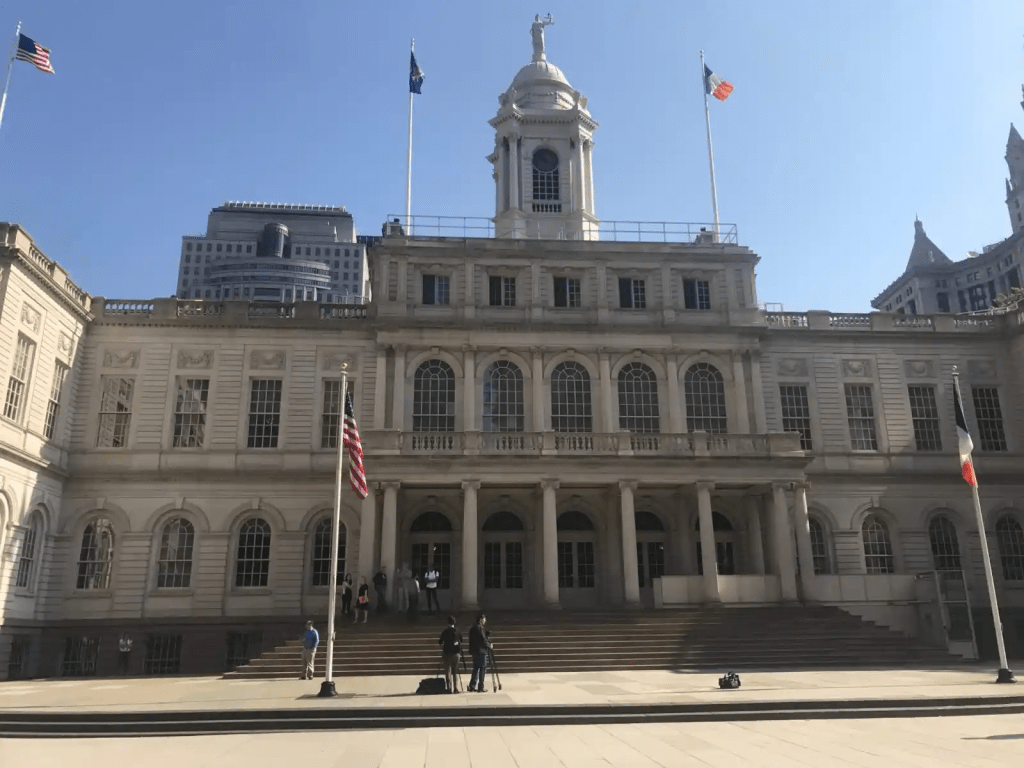
Five months later, Ross faced a similar crowd at City Hall on Oct. 14. There was no love in the room.
The Dallas-area suburb was — in an effort to comply with new presidential executive orders — considering eliminating the city’s protections for LGBTQ+ people that prohibit employers and any business providing accommodation from discriminating against them.
More than $60 million in federal funds for parks, roads and public safety were at stake, city leaders said.
“It’s a horrible balancing attempt,” Ross said in a recent interview with The Texas Tribune, referring to protecting the city’s budget and its residents.
Other Texas cities, including Dallas and Fort Worth, have revised city policies and ended programs that comply with Trump’s executive orders that end diversity and inclusion efforts. Arlington is believed to be the first city to consider ending explicit protections for LGBTQ+ residents.
The City Council tabled its vote and is expected to revisit the issue Monday night. The impending vote is the result of a pressure campaign waged by conservative activists, state Republican lawmakers and the White House to roll back protections for LGBTQ+ people they say are unfair and harm women and children.
LGBTQ+ advocates, meanwhile, argue that such revisions push residents further away from public life. And these decisions erode the recognition and acceptance this community worked for decades to secure.
Texas — like many states — has a long history of criminalizing certain acts by LGBTQ+ people. While the U.S. Supreme Court has overturned sodomy laws and legalized same-sex marriage, Texas state lawmakers and Gov. Greg Abbott have since 2023 sought to undo those victories by passing a suite of laws that put new limits on how LGBTQ+ people live their lives and express their identities in public.
Meanwhile, at the federal level, President Donald Trump has, since returning to office in January, instructed government agencies to remove words and phrases associated with diversity, race and transgender people — exerting the full strength of the federal government across the U.S. to achieve its agenda.
It’s those executive orders that triggered the Arlington City Council to review its policies, which LGBTQ+ advocates fought to put in place to provide protections that don’t exist at the state and federal levels.
Brad Pritchett, interim CEO of Equality Texas, one of the state’s oldest advocacy groups, said the policies at the city level are one of this community’s few available safeguard.
“It has fallen on local municipalities to find a way to protect the folks that live in their communities,” he said. “And I think when we see these types of non-discrimination laws passed at the local level, what that’s really doing is sending a message to the residents of these cities that who you are should not impact whether or not you have a job, a roof over your head, or can access basic services.”
Many of the recent efforts to curtail the LGBTQ+ community have been largely targeted toward transgender people. However, Pritchett said the Arlington debate shows more is on the line for all LGBTQ+ people.
“When they shift their gaze to another group of people that they don’t like,” he said, “they’ve proven that they can weaponize government to harm anyone they want.”
Conservative leaders say they aim to reset an imbalance pushed by former Democratic presidential administrations and to protect women. Passing these laws and executive orders, conservatives argue, is a necessary step toward acknowledging the differences between the two genders.
“I think what’s been missing a lot of times from the opposition is the recognition of the rights of women and the vulnerability that women have in these private spaces,” said Mary Elizabeth Castle, director of government relations at Texas Values, a statewide nonprofit that advocates to end abortion, expand religious liberties, and other conservative causes. “It’s very important to have that in law because the dignity of the two sexes is not recognized. A lot of rights and modesty that belong to women are diminished.”
“I promised to obey the law”
Ross, the Arlington mayor, first learned the city might have to revisit its anti-discrimination policies when the city’s lawyer told him the municipality lost out on a $50,000 federal grant because a certain policy used the word “inclusive.”
Ignoring Trump’s orders could come at too great an economic loss for the city. And his job is to obey the law, he said.
“I took an oath, and I promised to obey the law,” Ross said. “I didn’t say I’ll follow the law unless I disagree with it, so I’m torn. I don’t want to do things that are harmful to any part of our community or that paint the perception that we don’t love every single person here.”
To be sure, executive orders are not laws. They serve as marching orders for agencies across state and local governments, said Cathryn Oakley, senior director of legal policy at the Human Rights Campaign, a nationwide LGBTQ+ advocacy group.
The manner in which the Trump administration has issued its orders is meant to intimidate and bully, Oakley said.
“It’s really frustrating if you’re a person who cares about the rule of law,” Oakley said. “It is not clear how folks are supposed to implement these things, and it sets up this culture of fear and intimidation because there’s no safe harbor. Either the president will come after you, or the governor will come after you.”
Presidents of both political parties have used executive orders increasingly to drive policy outcomes. For example, President Joe Biden used executive orders to push a climate-friendly agenda and diversity efforts in the wake of the 2020 Black Lives Matter movement.
Sherry Sylvester, a senior fellow at the conservative Texas Public Policy Foundation, said rolling back Biden-era DEI efforts was a return to the status quo — and fundamentally American.
“When you remove Diversity, Equity and Inclusion policies from agencies, universities and public schools, all you’re saying is all decisions must be made on merit,” Sylvester said. “When you interview people for a job, you’ve hired a person who is most qualified for the job. You get no points if you’re African American, no points if you’re female, no points if you have a gender identity based on your sexual preference.”
Executive orders are meant to spur local governments to act quickly and comply to win much-needed capital to keep their cities operating. Conservatives supporting Trump’s efforts say the tactic began with former President Barack Obama.
In 2011, Obama issued a directive intended to crack down on sexual violence in public schools and universities. In 2016, the U.S. Department of Education updated those rules and said that schools receiving federal funding had to respect a transgender student’s gender identity, which Castle said sparked a movement to oppose such acknowledgements, including in Texas.
In 2017, the Texas Legislature attempted to pass a bill restricting transgender people’s access to restrooms. It died in the legislative process. With Trump back in office this year, the movement to regulate transgender people’s actions in public gained momentum and lawmakers passed a bill restricting the restrooms transgender people can use in government buildings and schools. Castle insisted that such a bill would promote safety in restrooms.
“No one is being denied going to the restroom,” Castle said. “They just have to go to the restroom based on their biological gender.”
The result of Trump’s orders naming transgender people undermines decades of work by the LGBTQ+, the scientific and medical community to participate in public life, said Elana Redfield, federal policy director for UCLA’s School of Law. And they undermine years of scientific research that helped governments and communities understand transgender people’s place in society.
“We can’t function in society without bathrooms,” Redfield said. “It’s very difficult to have a job, take public transportation, travel long distances, go shopping, or do anything without access to bathrooms. These kinds of laws really do have the potential to deeply, deeply exclude transgender people from all aspects of society.”
A renewed movement for queer equity
LGBTQ+ Texans are familiar with laws regulating their right to exist publicly and have fought for an equal standing with everyone else for just as long. The modern movement can be traced back to the 1960s, said Wesley Phelps, a historian at the University of North Texas whose focus is the LGBTQ+ community in the south.
At the time, Texas advocates fought sodomy laws banning sex for gay men and lesbian women.
“There were activists all over Texas who understood that as long as that sodomy law was on the books, as long as it was illegal to engage in sex with someone of the same sex, queer people would always wear that stigma of criminality,” Phelps said. “You could be denied employment, you could be denied housing, you could be denied food stamp assistance, because if you were gay, you were an admitted criminal.”
By the 1970s, advocacy groups had been established in major cities, including Dallas and Houston. And in these cities, activists formed political advocacy groups. The sentiment eventually spread farther, reaching Austin, San Antonio and El Paso. Part of that movement included adding local protections to city charters that prohibited housing and employment discrimination that don’t exist at the state or federal level.
And in 2003, the Texas Supreme Court ruled the sodomy law unconstitutional.
The push to eliminate protections for the broader LGBTQ+ community will trigger a backlash, Phelps said.
“I think things like that have reignited a movement for queer equality today,” Phelps said. “It’s not just that we’re entering a period where it’s going to be difficult to win victories, but the ones already achieved are under threat.”
Many Texans told The Texas Tribune that they plan to stay put, regardless of the policies seeking to regulate their everyday lives. They are turning to optimism and each other, reminding themselves of their right to live openly, they said.
In Houston, Daron Yanez Perez hosts support groups for transgender men. Trans Men Empowerment, which he founded in 2023, has more than 200 members and hosts meetings in person and online. As part of the programming, Perez invites policy and mental health experts who help the members understand how the policies affect them.
Many of Perez’s members are reluctant to use public restrooms, he said, out of fear for their safety. Perez said he would not use the women’s restroom because he does not think women would feel comfortable sharing a restroom with him.
“They’re using restrooms to go after us because they don’t like us, but we’re not going anywhere, we’ve always been here,” Perez said.
In Dallas, Javier Enriquez helps LGBTQ+ people who struggle with loneliness. Enriquez, who is president of the Dallas Social Queer Association, hosts about a dozen events a month. Up to 40 attended each event, which include gay trivia and activities tailored for disabled, elderly people, Hispanic and Asian Pacific Islanders who identify as LGBTQ+.
Enriquez said directives that spell out limits for transgender people and rainbow crosswalks are a distraction from real issues like potholes and unmet trash service. And LGBTQ+ Texans as a community are used to enact that distraction, he said. The resources spent on removing the rainbow colors from the crosswalks, he said, could be put to better use on the city’s infrastructure.
Still, he acknowledged that the orders have instilled fear.
“There are people, especially our transgender siblings, who are worried about being able to call Dallas their home with everything going on, and not all of them have the privilege of the resources to be able to move out,” he said. “And to some of them, this is home, where they built their lives and families… and despite what happens in this world, we are here and we aren’t going anywhere.”
Are you thinking about leaving the United States for safety, stability, or a better quality of life? In this powerful conversation, we sit down with Dan Brotman, an American expat based in Montreal who specializes in investment migration—including Golden Visas, Digital Nomad Visas, and residency-by-investment options tailored to the LGBTQ+ community.
With an academic background in immigration policy, multiple citizenships, and years of frontline experience helping people relocate, Dan brings unmatched insight into how Americans can legally, safely, and strategically build a future outside the U.S. Follow Dan on Instagram: @danbrotman linktr.ee/danbrotman
🏡 IN THIS VIDEO, WE COVER:
🌍 Why Americans—Especially LGBTQ+ People—Are Exploring Life Abroad
We discuss political extremism, threats to civil rights, financial instability, and what it means to live somewhere your rights are not up for debate.
💶 Golden Visas & Migration Pathways
Dan explains the residency-by-investment programs opening doors across Europe, Latin America, and beyond—and why securing a visa before your “red line” is crossed is essential.
❤️🩹 Healthcare Without Fear
Real stories from Spain, Uruguay, and Canada:
€80/month private healthcare in Spain
A 5-day ICU stay for $19
An emergency room visit in Canada that cost $0
A U.S. insurance premium high enough to rent an apartment in Valencia
🧠 Financial Relief & Peace of Mind
We explore how predictable, low-cost healthcare abroad reduces anxiety for families who worry about a single medical emergency derailing their finances.
🎓 Education & Opportunity
Why families are sending their children to Europe—especially the Netherlands—for nearly free, world-class university education.
🏳️🌈 Rights, Safety & Community
Dan discusses LGBTQ+ rights, abortion access, universal healthcare, and gun laws in Canada—issues considered settled and not weaponized politically.
🚨 Red Lines & Safety Planning
We explore how LGBTQ+ people can assess danger, decide their personal boundaries, and obtain the documentation needed to leave quickly if the situation in the U.S. deteriorates.
This is an essential conversation for anyone considering relocation for safety, rights, opportunity, or long-term stability.
🔔 Subscribe for more guides on LGBTQ+ migration, Golden Visa pathways, and global relocation options.
Explore how to choose countries where you can live authentically and safely. We’ll discuss rights, culture, and communities for LGBTQ+ expats worldwide. You’ll finish with both encouragement and practical strategies for finding your ideal destination.
You must be logged in to post a comment.