Texas tops list of worst places to live and work in America, study says

This blog originally appeared at Austin American Statesman.

According to a recent study, Texas has been ranked as the worst state to live and work in America. The study analyzed various factors such as job opportunities, work-life balance, cost of living, healthcare quality, education, and safety. While Texas may have a strong economy and job market, it received low scores in categories like work-life balance, healthcare, and education. The study highlights the challenges that residents face in terms of affordability, access to quality healthcare, and the overall quality of life. It’s important to note that rankings like these are subjective and can vary based on individual preferences and priorities.

Texas has received the number one spot on a not-so-pleasant list: The top ten worst places in America to live and work in 2023.

While Texas landed at number six on CNBC’s yearly America’s Top States for Business study, the state scored significantly low in one category: Life, Health & Inclusion. Factors in this category include:

  • crime rates
  • environmental quality
  • health care
  • quality and availability of childcare
  • inclusiveness in state laws such as reproductive rights, protections against discrimination and voting rights

Texas received 53 out of 350 points for its 2023 Life, Health & Inclusion score, giving it an F in its Top States grade and the lowest nationwide, securing its number one spot on the list.

The Study’s Key Findings:

Job Opportunities: Texas is renowned for its robust economy and job market, but the study reveals that job opportunities alone don’t necessarily equate to a high quality of life. Other factors play a significant role in residents’ overall satisfaction.

Work-Life Balance:

Texas received low scores in the work-life balance category. While it may offer ample employment opportunities, the demands of the workforce can sometimes tip the scales unfavorably in terms of personal time and well-being.

Cost of Living:

Texas often boasts a lower cost of living compared to some other states, but this advantage can be offset by challenges in other areas, such as healthcare and education.

Healthcare Quality:

One of the areas where Texas faced significant challenges was in healthcare quality. Access to quality healthcare services is a critical aspect of overall well-being, and this factor appears to be a concern for many residents.

Education:

Education is a cornerstone of personal and societal growth, and Texas’s educational system received criticism in the study. Improvements in education are crucial for the state’s long-term success and the future prospects of its residents.

Safety:

Safety is a fundamental concern for all communities. While Texas is home to many safe and vibrant areas, there are regions where concerns about safety persist.

Subjectivity and Individual Priorities:

It’s essential to recognize that rankings like these are subjective and depend on the priorities and preferences of individuals. What one person values most in a state may differ significantly from another’s perspective. Texas has a diverse population with varying needs and expectations, making it challenging to generalize its appeal or drawbacks.

Conclusion:

While the recent ranking labeling Texas as the worst state to live and work in America has generated attention, it’s crucial to approach such studies with a critical and open mind. Texas is a state of contrasts, offering economic opportunities alongside challenges in healthcare, education, and work-life balance.

For those considering a move to Texas or evaluating their current situation, it’s advisable to assess personal priorities and weigh the pros and cons carefully. Every state has its strengths and weaknesses, and what matters most is finding the place that aligns best with your individual goals and values.

In the end, the ranking serves as a reminder that no state is without its unique set of challenges, and the pursuit of a fulfilling life involves finding the right balance between various factors that contribute to one’s well-being.

More: Austin drops in ‘best places to live’ report — again. Here’s why.

Texas’ low ranking in its Life, Health & Inclusion score is attributed to a lack of inclusiveness, according to CNBC, considering factors such as laws targeting the LGBTQ+ population, voting rights, and the strict abortion ban implemented statewide. Another weakness identified in the study was worker protections.

click here to see full blog: https://www.statesman.com/story/news/local/2023/07/18/texas-worst-places-states-to-live-work-in-america-cnbc-business/70421581007/

Thousands march at Budapest Pride as LGBTQ+ community voices anxiety over Hungary’s restrictive laws

This blog originally appeared at Kxan.

US Ambassador to Hungary David Pressman holds his country’s flag as he participates in the 28th Budapest Pride parade in Budapest, Hungary, Saturday, July 15, 2023.

BUDAPEST, Hungary (AP) — Thousands of participants of the Budapest Pride march wound through the streets of the Hungarian capital on Saturday with marchers voicing their anxiety over the increasing pressure on the LGBTQ+ community from the country’s right-wing government.

The 28th annual event comes as the country’s laws, which ban the depiction of homosexuality or gender transition, to minors under 18 have begun to be applied with increasing regularity, resulting in fines and other penalties for those who disseminate LGBTQ+ content.

Before the march, which began in Budapest’s city park, Pride organizer Jojo Majercsik said that while the laws, passed in 2021, didn’t have immediate practical effects, they are now increasingly being used to crack down on LGBTQ+ visibility.

“You can now see how the propaganda law passed two years ago is being applied in practice and how the public discourse has become more angry,” Majercsik said, referring to the 2021 law. “It is now apparent how they are trying to limit the rights of LGBTQ people in the media world, in the world of movies, films and books.”

Majercsik pointed to a number of recent instances of media content that depicted LGBTQ+ people being restricted. This week, a national bookseller was fined around $36,000 for placing a popular LGBTQ+ graphic novel in its youth literature section, and for failing to place it in closed packaging as required by law.MOST READ: 2 dead after crash on SH 71

Additionally, a 30-second animated campaign video produced by Budapest Pride — in which two female characters meet and touch foreheads — was ruled unsuitable for audiences under 18 by Hungary’s media authority, and may therefore only be broadcast between 10 p.m. and 5 a.m.

click here to see full blog: https://www.kxan.com/news/international/ap-thousands-march-at-budapest-pride-as-lgbtq-community-voices-anxiety-over-hungarys-restrictive-laws/?fbclid=IwAR3LcMK1tRrt5Ks-40dEQsnKJJ49HNYTpNW3GTE9kB9uf7nc1DQL7OewqxM

LGBTQ conservatives say they feel misled by DeSantis

This blog originally appeared at The Hill.

LGBTQ conservatives are speaking out, expressing their sense of being misled by Governor DeSantis. In this blog post, we shed light on the perspectives and experiences of LGBTQ conservatives who feel their trust has been misplaced. Join us as we delve into the complexities of this issue, examining the implications it holds for both the LGBTQ community and conservative politics. Get ready to explore the intersection of identity, politics, and public perception as we navigate the concerns raised by LGBTQ conservatives in relation to Governor DeSantis.

LGBTQ Republicans say they feel misled by Florida Gov. Ron DeSantis (R) after the GOP presidential hopeful’s “war room” shared a bizarre video widely seen as inflammatory.

The video bashed former President Donald Trump’s (R) support for the LGBTQ community and leaned into conservative state policies passed under DeSantis this year that were criticized as anti-LGBTQ.

LGBTQ conservatives, reacting to the video, said DeSantis had shown his true colors as an “anti-LGBT champion,” undermining his arguments that his support for the policies were about protecting children and parents’ rights.

“It’s like he’s going mask off,” said Brad Polumbo, a Michigan-based libertarian journalist. “The cat’s out of the bag.”

Polumbo said he’d have considered voting for DeSantis at one time.

“I’m somebody who has my fair share of policy disagreements with DeSantis, but I was considering voting for him in the primary before he entered the race officially,” he said. “Since then, he’s done thing after thing that really makes me increasingly write off that possibility.”

Rep. George Santos (R-N.Y.), who has endorsed Trump for president but vocally supported Florida’s “Don’t Say Gay” bill on the campaign trail last year, said that in light of Friday’s video, he now feels that he was “used” and misled by DeSantis.

“I used to think he was a great governor,” Santos, the first non-incumbent gay Republican elected to Congress, said of DeSantis. “Now, I’m starting to think differently.”

Meta-provided Facebook chats led a woman to plead guilty to abortion-related charges

This blog originally appeared at The Verge.

Facebook chats played a pivotal role in leading a woman to plead guilty to abortion-related charges, emphasizing the increasing influence of social media in legal proceedings and prompting discussions on privacy, digital evidence, and the intersection of technology and law.

An investigating officer served a warrant to Meta, which provided unencrypted chat sessions showing the woman and her daughter discussing abortion pills.

By Wes Davis, a weekend editor who covers the latest in tech and entertainment. He has written news, reviews, and more as a tech journalist since 2020.

A Norfolk, Nebraska, woman pleaded guilty to helping her daughter have a medication abortion last year. The charges came after Facebook, by court order, provided police with evidence that bolstered a Madison County prosecutor’s case against her.

Last year, it emerged that the two were charged after police acquired Facebook messages that proved the two had acquired abortion medication intended for first-trimester abortions. In a June 2022 affidavit, the officer investigating Celeste Burgess, the daughter who was charged along with her mother, Jessica Burgess, said he’d served Meta a warrant seeking their messages, and the company quickly complied.

The charges include having an abortion after 20 weeks, false reporting, and tampering with human skeletal remains. According to last year’s affidavit, Burgess was about 23 weeks along in her pregnancy, which is also later than the Nebraska 20-week post-fertilization abortion ban in place at the time. Nebraska has since implemented a 12-week abortion ban.

The case underscores a crucial privacy drawback of Facebook Messenger, which to this day doesn’t default to end-to-end encryption (E2EE) like other messengers, such as Signal, Meta’s own WhatsApp, or Apple’s iMessage do. Because it’s not the default, average people not being intentional about their messaging may not realize they can even turn it on.

E2EE is important because, when it’s properly implemented, the company offering it has no key to unlock the messages — the only person who can access the messages is the sender and the receiver, and in some cases, you can even set the messages to be deleted.

In June, when the investigating officer’s affidavit was filed, the Supreme Court was on the precipice of striking down Roe v. Wade — which it did only nine days afterward on June 24th, 2022. Afterward, existing, unenforceable abortion bans around the country immediately took effect, while many states got to work passing new restrictions, and women’s rights advocacy groups warned of digital privacy risks illuminated in cases just like the Burgess’.

click here to see full blog: https://www.theverge.com/2023/7/11/23790923/facebook-meta-woman-daughter-guilty-abortion-nebraska-messenger-encryption-privacy

A monumental LGBTQ rights case is barreling toward the Supreme Court

This blog originally appeared at Vox.

A new federal appeals court decision is a terrible blow to trans rights, and a potential earthquake in the fight for LGBTQ equality.

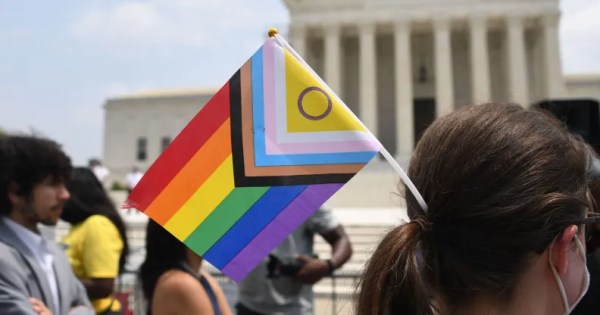
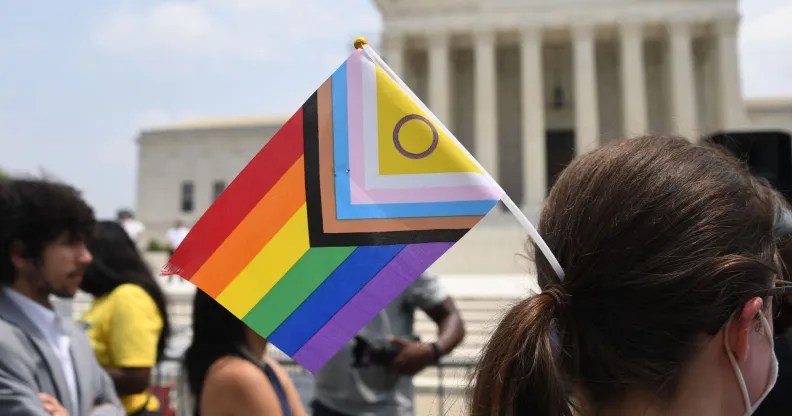
A same-sex marriage supporter waves an LGBTQIA Pride flag in front of the US Supreme Court building.

Ian Millhiser is a senior correspondent at Vox, where he focuses on the Supreme Court, the Constitution, and the decline of liberal democracy in the United States. He received a JD from Duke University and is the author of two books on the Supreme Court.

In recent months, Republican lawmakers in many states enacted laws targeting LGBTQ Americans, attempting to shut down their right to free expression and even deny them medical care, among other things. Until Saturday, however, civil rights lawyers challenging these laws fared surprisingly well in federal court, convincing even many Republican judges.

The United States Court of Appeals for the Sixth Circuit’s decision in L.W. v. Skrmetti, threatens to upend all of that. Before L.W. was handed down this past weekend, there was a consensus among federal courts that the Constitution prohibits states from banning gender-affirming medical care.

L.W. destroys that consensus. It reinstated a Tennessee law, previously blocked by a federal trial court, that prohibits gender-affirming care for transgender patients under the age of 18. And the Sixth Circuit’s opinion was written by Chief Judge Jeffrey Sutton, a widely respected judge, especially among the Supreme Court’s GOP-appointed majority.

Sutton, a George W. Bush appointee, is one of the federal judiciary’s leading “feeder” judges, meaning that his law clerks are frequently hired to clerk for the Supreme Court justices — a sign that the justices are likely to pay careful attention to Sutton’s views when deciding how to resolve a case like L.W.

Sutton’s decision to reinstate Tennessee’s anti-trans law is temporary, and he ends his opinion by saying his court will reconsider this question “with the goal of resolving it no later than September 30, 2023.” So it is possible that the Sixth Circuit will reconsider and join the other courts that have blocked bans on transgender health care.

In the fairly likely event that the Sixth Circuit hews to Sutton’s position, however, that will make it very likely that the Supreme Court will take up this issue, and soon. The justices pay special attention to legal questions that have divided lower federal appeals courts when deciding which cases to hear.

click here to see full blog: https://www.vox.com/scotus/2023/7/10/23789633/supreme-court-lgbtq-lw-skrmetti-transgender-health-care-jeffrey-sutton-sixth-circuit

This Michigan Hair Salon Owner Will Apparently Refuse Trans And Queer Clients

This blog originally appeared at Huff Post.

Transgender people needing a haircut should go to “a local pet groomer,” Christine Geiger wrote, according to a local news outlet.

A Michigan hair salon owner announced on Facebook that she would not be providing services to transgender or queer people, reportedly writing that they should seek a grooming service for animals.

Christine Geiger, the owner of Studio 8 Hair Lab in Traverse City, told local outlet 9&10 News that she is OK with lesbian, gay and bisexual people but refuses to use preferred pronouns and has a right to deny service.

This comes just weeks after the U.S. Supreme Court made it easier for some business owners to discriminate against members of the LGBTQ+ community.

“If a human identifies as anything other than a man/woman, please seek services at a local pet groomer,” Geiger wrote on Studio 8 Hair Lab’s Facebook page, according to screenshots published by 9&10 News.

“You are not welcome at this salon. Period,” she added.

“This is America; free speech. This small business has the right to refuse services. We are not bound to any oaths as realtors are regarding discrimination. My recent airport experience validates this,” Geiger wrote without further explanation.

HuffPost was not able to independently verify the Facebook post since Geiger made her business’ social media accounts private in the wake of reporting on her new discrimination policy. Phone calls to the business went straight to a voicemail box that was not accepting new messages.

click here to see full blog: https://www.huffpost.com/entry/michigan-hair-salon-lgbtq-discrimination_n_64adb6a6e4b03d308d97e287

‘Unfriendly political environment’: Broward convention cancellations blame Florida as reason for exodus

This blog originally appeared at South Florida Sun Sentinel.

We delve into Broward County’s recent convention cancellations, attributing the exodus to a perceived unfriendly political environment. Join us as we uncover the factors behind this shift and explore the implications for local and national politics. Let’s unveil the truth behind Broward’s convention scene.

Broward County has lost more than a half-dozen conventions as their organizers cite the divisive political climate as their reason to stay out of Florida.

The list was compiled by Visit Lauderdale, formerly known as the Greater Fort Lauderdale Convention & Visitors Bureau.

Broward’s tourism arm said the lost conventions could have brought hotel stays to Fort Lauderdale and its surrounding cities, which also meant money spent on restaurants and attractions.

“We lost this program due to political climate,” according to a Visit Lauderdale spreadsheet listing the decision of the Supreme Council of America Inc., Ancient & Accepted Scottish Rite Masons to cancel their convention — and 855 rooms — in August 2024.

“We were so close on this one,” reads the notes on the entry for the 2024 National Family and Community Engagement and Community Schools Conference, which needed more than 2,000 rooms and has bailed. “But, group decided to pull out of Florida due to concerns about what the Governor is doing in the education/schools and that he will likely run in 2024. They do not want to lose attendees due to this.”

Under the explanation for a nationally funded Mississippi-based organization that deals with health care workers, the reason simply reads: “Governor DeSantis.”

An organizer for the event, who did not have authority to speak, said Thursday the group was planning to come to Fort Lauderdale for a staff retreat this summer and have opted for Denver instead.

The reason: The polarization of gay rights and “assault on diversity and equity and inclusion.”

Stacy Ritter, president and CEO of Visit Lauderdale, Broward County’s tourism promotion arm, said she’s “saddened” by the loss of tourism, but said, “It’s not directed at South Florida. We’re not doing anything different than we’ve been doing for the last 30 years.”

She also said the effects won’t be felt for years because the conventions generally book far in advance.

“From an economic standpoint, this is very harmful. We saw in 2020 what happens when visitors stay away — people lose their jobs.  By not coming here, the residents of our county, whose values align with these organizations, get hurt. Minority, women and LGBTQ+ businesses rely on visitors for their existence. Staying away hurts those very people.”

The Chicago-based American Specialty Toy Retailing Association had planned a 3,000-person conference in Fort Lauderdale in 2026. A spokeswoman said Thursday they are “probably” headed to Milwaukee instead.

The organization has “a lot of people that don’t like those politics at all,” said spokeswoman Beth Miller.

In a note to the tourism office, she cited the “unfriendly political environment in Florida.”

“This would otherwise be such a fabulous destination for the group. I sure hope things become less polarizing soon,” she wrote the county.

Said Ritter: “I’m saddened because my hometown is welcoming and inclusive and everybody knows that. This isn’t directed at us, which is heartening because they know our values are of supporting diversity and inclusion. It’s a bigger message and there’s little we can do about that.”

RELATED ARTICLES

A get-away weekend run by the Atlanta-based aParent Miracles Foundation for this November is headed to Texas instead.

The group changed its mind after the NAACP issued a travel advisory for Florida “in direct response to Governor Ron DeSantis’ attempts to erase Black history, and to restrict diversity, equity, and inclusion programs in Florida schools,” the organizer wrote Ritter’s office.

And the Washington, D.C.-based Association of Farmworker Opportunity Programs, which was scheduled to come to Fort Lauderdale in January, diverted to New Orleans instead.

Because of what’s perceived as anti-migrant policies, “we heard some rumblings some people might not be willing to attend,” said Daniel Sheehan, executive director. “We canceled out of an abundance of caution. Maybe some day in the future” the group will return, he said.

The loss of conventions has been particularly felt in Orlando, where groups canceling their events have cited laws that banned most abortions after six weeks, allowed Floridians to carry concealed weapons without a permit, cracked down on illegal immigration, and targeted transgender and LGBTQ+ issues.

The National Society of Black Engineers’ 50th conference, which would have brought up to 15,000 visitors to the Orange County Convention Center in 2024, will now be held in a different city. Organizers with the National Society of Black Engineers told the Orlando Sentinel they were troubled by DeSantis’ efforts to target diversity, equity and inclusion programs in schools and how that would affect student members of the group.

And the Con of Thrones, which typically draws 3,000 to 4,000 fans of the “Game of Thrones” books and television shows, also announced it was pulling the plug on a gathering planned for Aug. 25-27 at the Hyatt Regency Orlando.

A spokesperson for DeSantis on Thursday called the announcements by the groups “nothing more than a media-driven stunt.”

“As Governor DeSantis announced in May, Florida is experiencing record tourism, with the Q1 2023 having the largest volume of visitors during a single quarter in recorded history,” Press Secretary Jeremy T. Redfern said in an email to the South Florida Sun Sentinel. “Under the leadership of Governor DeSantis, Florida’s economy is booming, with Florida being the fastest growing state and having the largest net domestic in-migration.”

click here to see full blog: https://www.sun-sentinel.com/2023/07/07/unfriendly-political-environment-broward-convention-center-cancellations-blame-florida-as-reason-for-exodus/

LGBTQIA+ Community Taking Businesses, Economic Impact To Places That Will ‘Love You Back’

This blog originally appeared at BisNow.

Amid one of the toughest civil rights climates in a generation for LGBTQIA+ rights, some members of the community are ditching red states and taking their incomes, businesses and economic impact with them. 

Amid one of the toughest civil rights climates in a generation for LGBTQIA+ rights, some members of the community are ditching red states and taking their incomes, businesses and economic impact with them. 

click here to see full blog: https://www.bisnow.com/national/news/commercial-real-estate/some-lgbtq-people-taking-their-economic-impact-to-places-that-will-love-you-back-119599

BBC News: Issue 1: Ohio vote delivers win for abortion-rights supporters

This blog originally appeared at BBC News.

Ohio has rejected a Republican motion to make it harder to change the state’s constitution – a move seen as a defeat for anti-abortion groups.

The Republican-controlled state legislature had hoped to raise the bar for constitutional amendments to 60% instead of a simple majority.

It was largely seen as a move to derail a planned referendum to place abortion rights into the constitution.

President Joe Biden called it a victory for democracy and for women.

The Republican-backed move was a “blatant attempt to weaken voters’ voices and further erode the freedom of women to make their own health care decisions”, Mr Biden said.

When the US Supreme Court ended the nationwide right of women to have an abortion a year ago, a ban on the procedure after six weeks of pregnancy came into effect in Ohio – although it is currently on hold following a legal challenge.

Pro-choice groups in Ohio are planning on using November’s elections to reverse this, by getting the right to have an abortion enshrined into the midwestern state’s constitution.

The measure being voted on, called Issue 1, was rejected by a margin of 57% to 43% with nearly all voting precincts tallied by Wednesday morning.

A campaign group One Person, One Vote told Politico in a statement that Issue 1 was a “deceptive power grab designed to silence” the voice of voters.

Ohio Democratic Party Chair Liz Walters told the Columbus Dispatch that the result is “a victory for the kind of state we want to see”.

More than 600,000 submitted early ballots on the issue – a historically high turnout for August elections in the state.

So was the vote on Issue 1 about protecting the constitution, as its supporters claim, or was it really about abortion?

What is Issue 1?

Issue 1 was the only question on the ballot in Ohio’s 8 August special election.

If passed, it would have changed the threshold for approving amendments from 50% to 60%. And Issue 1 would have also made it harder to put amendments before voters in the first place, asking petitioners to gather signatures from 5% of eligible voters in each of Ohio’s 88 counties, instead of the current 44.

In the 111 years since Ohio first granted voters the power to introduce citizen-led amendments, just 19 of 71 proposed measures have passed the 50% benchmark.

click here to see full blog: https://www.bbc.com/news/world-us-canada-66442370

Florida announces restrictions on Vermont licenses

This blog originally appeared at My Champlain Valley.

Florida has announced new restrictions on Vermont licenses, imposing additional requirements or limitations on their validity or recognition within the state. The move highlights the complex landscape of interstate licensing agreements and regulations, which can vary from state to state.

Montpelier, VT – Florida Governor Ron DeSantis announced the passing of a law that could render driver’s licenses and other forms of identification from several states invalid, including Vermont.

Florida Senate Bill 1718 is considered to be a policy to crack down on illegal immigration, attempting to prevent the use of publicly funded services by those who may not pay taxes.

As of July 1, in addition to Vermont, four other states’ IDs will face extra scrutiny from police, as they may provide forms of identification to applicants who do not give proof of citizenship or legal status:

  • Delaware
  • Connecticut
  • Hawaii
  • Rhode Island

The law directs Florida police officers to write a ticket to anyone they pull over who has what is now recognized as an invalid license.

clilck here to see full blog: https://www.mychamplainvalley.com/news/local-news/florida-announces-restrictions-on-vermont-licenses/

Blog at WordPress.com.

Up ↑