Opponents of gender-affirming care say children are too young to make transition decisions and claim medical interventions are not safe.
Shigeru Nightengale, 15, recently moved from Iowa to Illinois for protections as a transgender teen and student. Shigeru loves collecting rocks and picked up a stone before sitting down at a swing set in the Nightengales’ new backyard.
By Max Lubbers | CHICAGO, Ill. – In the spring, Kimberly Reynolds found herself gazing at a map of the United States, each state shaded with a gradient of colors. Red represented states with the strictest active anti-transgender laws, while bright blue indicated those with the most comprehensive protections for transgender individuals.
The sight of Florida, her home state, bathed in a sea of red was disheartening. The nearest state painted in blue? Illinois.
Reynolds took a deep breath, then allowed herself some time to grapple with the growing panic in her chest.
She had embarked on this daunting journey of researching a new place to call home when lawmakers in Florida introduced a wave of anti-transgender bills, many of which directly targeted transgender youth — including her 11-year-old son.
“Something inside me just broke,” she shared. “I’ve dealt with a lot of policies in Florida that are not okay. But now they’re coming after my child. So that’s why we’re done. We’re getting out, one way or another.”
She approached her son with the weighty question: “How do you feel about moving?”
Joseph Reynolds, her 11-year-old, didn’t hesitate. “I was like, ‘Yeah, let’s move. Let’s get out of this place. Let’s get out of this climate,'” he recalled thinking. “‘Let’s get out of this house. Get away from these people.'”
In May, Florida’s Republican Governor, Ron DeSantis, signed several of the anti-trans bills into law. Reynolds revisited that map she’d stared at before, and this time, her state had a new, ominous designation — marked with black stripes: “Do Not Travel.”
Three months later, as the new school year began, the Reynolds family still found themselves in Florida, but they were determined not to stay. The impact of the laws on her child was already profound, and she was eager to relocate her family to Illinois as swiftly as possible.
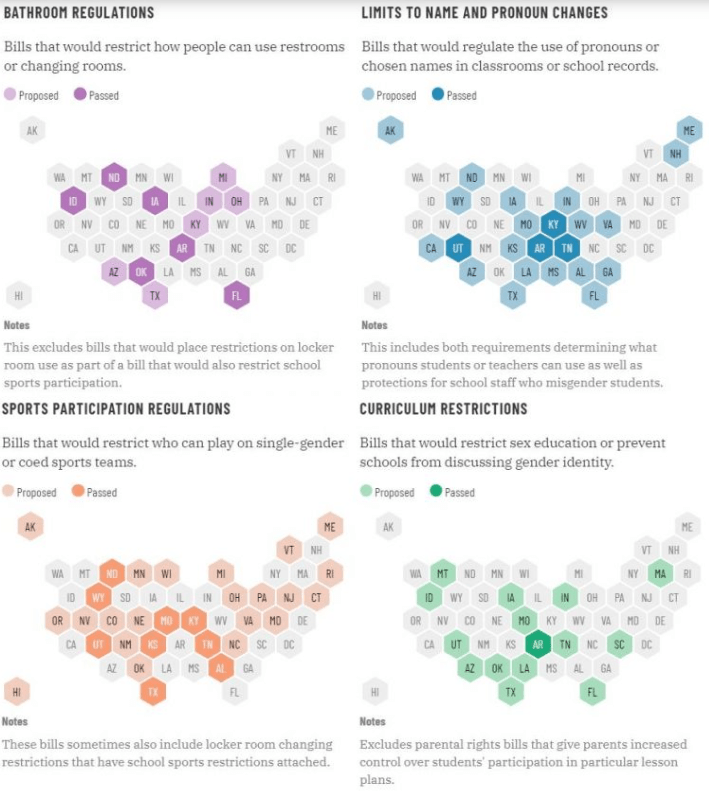
Florida is far from the only state grappling with or enacting anti-transgender legislation. This year, according to an analysis by Chalkbeat using data from the American Civil Liberties Union (ACLU), at least 14 states passed laws that specifically regulated issues like bathroom access, sports participation, and pronoun and name changes in K-12 schools. Additionally, at least 18 states approved laws that restricted gender-affirming health care, primarily for minors but not exclusively.
For many families striving to shield their transgender children in the school environment and retain control over their medical choices, moving appears to be the only recourse — and Illinois stands out as a safe haven.
Restrictions Impacting K-12 Schools During This Year’s Legislative Sessions: Chalkbeat meticulously reviewed and categorized 494 bills from the ACLU’s tracker of LGBT-related state legislation. The focus was on identifying those that aimed to regulate K-12 schools and students, offering a comprehensive assessment of the landscape confronting trans and nonbinary students.
Approximately 45% of the proposed bills sought to change policies or procedures within K-12 schools.
Notes: The analysis excludes bills that utilize variations of “parental rights” language, which sometimes encompass broad restrictions across multiple categories. The ACLU’s 2023 legislative tracker also encompasses bills proposed in 2022 that extend into 2023.
Source: This information is derived from a Chalkbeat analysis of ACLU data obtained from the tracker as of August 18, 2023.
Credit: Kae Petrin & Thomas Wilburn / Chalkbeat
Bills Impact School Policies and the Sense of Safety for Trans Students Illinois stands as a stark contrast to many states across the nation where anti-transgender policies are unfolding within the educational system. In Illinois, state laws safeguard students against discrimination based on their gender identities. State guidance mandates that students must be granted access to bathrooms, locker rooms, and sports teams that align with their gender identities.
The Reynolds family’s desire to relocate is significantly influenced by changes in educational policy.
For instance, Florida’s board of education has enacted policies that forbid public schools from educating students about sexual orientation or gender identity. State law also prohibits school staff from inquiring about students’ pronouns or requiring their usage. Furthermore, a law compels K-12 schools and postsecondary institutions to take disciplinary actions against students who use restrooms that do not correspond to their assigned sex at birth.
In 2023, Anti-LGBTQ Legislation Frequently Targeted School Policy More than 4 in 10 bills categorized as anti-LGBTQ by the American Civil Liberties Union (ACLU) would directly impact policies and procedures in K-12 schools if they were to become law.
Selling your house is a big decision. And that can make it feel both exciting and a little bit nerve-wracking. But the key to a successful sale is finding the perfect listing agent to work with you throughout the process. A listing agent, also known as a seller’s agent, helps market and sell your house while advocating for you every step of the way.
But, how do you know you’ve found the perfect match in an agent? Here are three key skills you’ll want your listing agent to have.
They Price Your House Based on the Latest Data
While it may be tempting to pick the agent who suggests the highest asking price for your house, that strategy may cost you. It’s easy to get caught up in the excitement when you see a bigger number, but overpricing your house can have consequences. It could mean it’ll sit on the market longer because the higher price is actually deterring buyers.
Instead, you want to pick an agent who’s going to have an open conversation about how they think you should price your house and why. A great agent will base their pricing strategy on solid data. They won’t throw out a number just to win your listing. Instead, they’ll show you the facts, explain their pricing strategy, and make sure you’re on the same page. As NerdWallet explains:
“An agent who recommends the highest price isn’t always the best choice. Choose an agent who backs up the recommendation with market knowledge.”
They’re a Great Negotiator
The home-selling process can be emotional, especially if you’ve been in your house for a long time. You’re connected to it and have a lot of memories there. This can make the negotiation process harder. That’s where a trusted professional comes in.
A skilled listing agent will be calm under pressure and will be your point-person in all of those conversations. Their experience in handling the back-and-forth gives you with the peace of mind that you’ve got someone on your side who’s got your best interests in mind throughout this journey.
They’re a Skilled Problem Solver
At the heart of it all, a listing agent’s main priority is to get your house sold. A great agent never loses sight of that goal and will help you prioritize your needs above all else. If they identify any necessary steps you need to take, they’ll be open with you about it. Their commitment to your success means they’ll work with you to address any potential roadblocks and find creative solutions to anything that pops up along the way.
BankRate explains it like this:
“Just as important as the knowledge and experience agents bring is their ability to guide you smoothly through the process. Above all, go with an agent you trust and will feel comfortable with. . .”
Bottom Line
Whether you’re a first-time seller or you’ve been through selling a house before, a great listing agent is the key to success. Let’s connect so you have a skilled local expert by your side to guide you through every step of the process.
In an era defined by remote work and an ever-increasing desire for adventure, Southeast Asia has emerged as a magnet for a new breed of wanderers – digital nomads. These tech-savvy individuals are turning their backs on the traditional 9-to-5 grind, seeking greener pastures in the vibrant landscapes of Southeast Asia. In this blog, we embark on a journey to uncover the secrets behind the allure of three specific cities in the region that have rapidly risen to prominence as hotspots for digital nomads. Join us as we explore the unique blend of culture, connectivity, and opportunity that makes these cities the top choices for those who’ve chosen to live life on their terms.
When we picture digital nomads, one of the primary regions that often springs to mind is Southeast Asia.
This part of the world has long been a natural haven for those who embrace the laptop lifestyle, and the allure is easily understood.
Southeast Asia offers a captivating blend of countries featuring vibrant cities, pristine beaches that have earned international acclaim, a cost of living that won’t break the bank, and a culinary scene that’s nothing short of exceptional. It’s no wonder that Southeast Asia has evolved from merely a tourist destination into a thriving hotspot for digital nomads.
Cities like Bangkok, Ho Chi Minh City, and Singapore have rapidly risen to the top of the charts as favorites among remote workers. Numerous reports consistently rank them as leaders in safety, quality of life, and popularity within the digital nomad community.
However, while these bustling mega-cities certainly deserve their reputation, there’s a quiet revolution happening in Southeast Asia. Other cities are beginning to capture the attention of digital nomads, offering unique advantages that make them increasingly attractive options for those living the laptop lifestyle.
In the midst of a highly charged political landscape, Wisconsin finds itself at the center of a contentious debate that has sent shockwaves through its political circles. The topic of discussion? The potential impeachment of a newly appointed state Supreme Court justice. As the echoes of partisan discord reverberate, this blog delves deep into the intricacies of why Wisconsin’s Republicans are considering such a dramatic move and the implications it holds for the state’s judicial system, its citizens, and the broader national discourse. Join us as we unravel the unfolding controversy and explore the factors fueling this unprecedented debate.
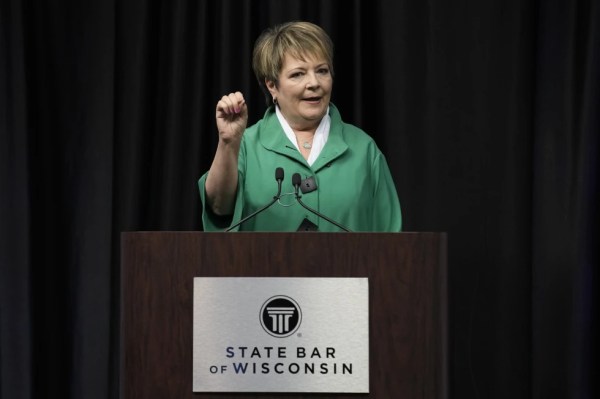
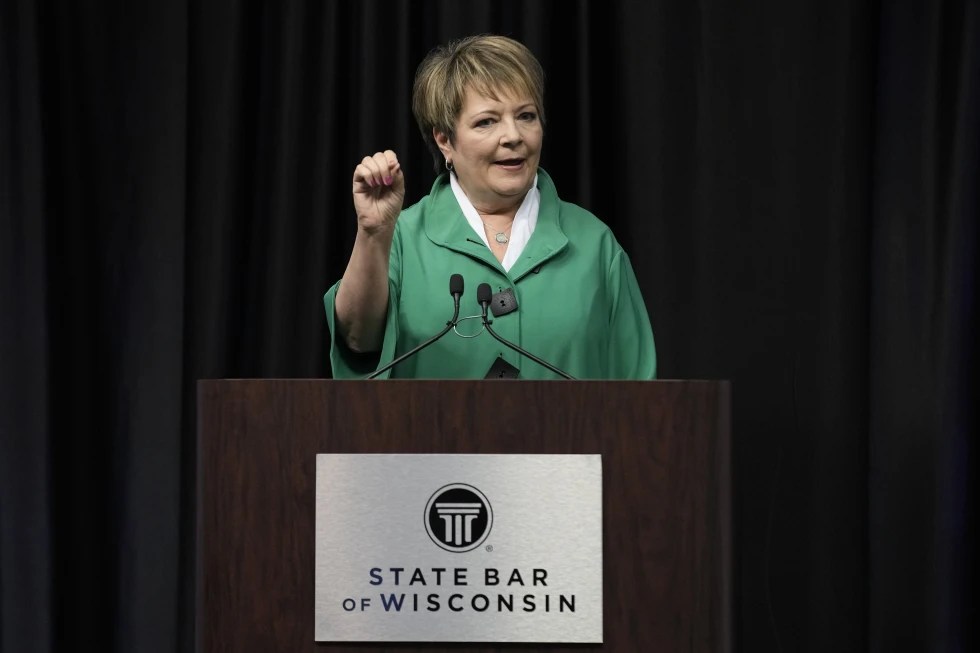
Wisconsin Supreme Court candidate Democratic-supported Janet Protasiewicz participates in a debate, March 21, 2023, in Madison, Wis. Even before the newly elected justice who gave liberals a one-seat majority on the Wisconsin Supreme Court has heard a case, Republican lawmakers are talking about taking the unprecedented step of impeaching and removing her from office. And they have the votes to do it.
The Republican-controlled Legislature in Wisconsin is considering the impeachment of Justice Janet Protasiewicz, a newly elected liberal state Supreme Court justice, even before she has had the opportunity to hear a case. This move is highly unusual and has raised concerns about the politicization of the state’s judiciary.
The impeachment effort is taking place at a time when the state Supreme Court is being asked to review legislative electoral maps that were drawn by the Republican-controlled Legislature in 2011. These maps were instrumental in solidifying the Republican Party’s majorities in the state, with a 65-34 majority in the Assembly and a 22-11 supermajority in the Senate.
The situation raises questions about the separation of powers and the potential for political interference in the judicial branch. It underscores the broader national debate over the fairness and neutrality of the judiciary, particularly in cases related to redistricting and electoral politics.
The attempt to impeach a sitting justice is a rare and contentious move that has sparked debates about the role of the judiciary and the boundaries of political power in Wisconsin. It remains to be seen how this situation will unfold and what implications it may have for the state’s judicial system and political landscape.
Protasiewicz won election in April to a 10-year term on the Wisconsin Supreme Court beginning Aug. 1. Her 11-point victory gave liberals a 4-3 majority, ending a 15-year run with conservatives in control.
During her first week in office, two lawsuits were filed by Democratic-friendly groups and law firms seeking to overturn Republican-drawn legislative maps.
WHY IS THERE TALK OF IMPEACHMENT?
Republican lawmakers, including Assembly Speaker Robin Vos, have raised concerns about Justice Janet Protasiewicz’s impartiality in redistricting cases pending before the Supreme Court. They allege that comments she made during her campaign suggest she has prejudged the cases. Additionally, they argue that her acceptance of nearly $10 million in campaign funds from the Wisconsin Democratic Party disqualifies her from participating in these cases.
It’s worth noting that the state Democratic Party is not a party to either of the redistricting lawsuits, but they support the legal challenges.
As of now, the court has not made a decision on whether it will hear the redistricting challenges, and Justice Protasiewicz has not indicated whether she will recuse herself from these cases, including the decision on whether to hear them.
If Justice Protasiewicz were to recuse herself, the court would be evenly divided with three liberal and three conservative justices. However, it’s important to note that conservative Justice Brian Hagedorn has previously aligned with liberal justices on significant cases, which has caused frustration among Republicans.
This situation highlights the complex and contentious nature of judicial appointments and the potential for political considerations to impact the independence and neutrality of the judiciary. It also underscores the ongoing debate over the role of money in judicial campaigns and the challenges of maintaining public confidence in the judicial system.
MONT BELVIEU, Texas — A Black student in Texas, who spent over a month in in-school suspension due to his dreadlocks, has been informed that he will be transferred from his high school to a disciplinary alternative education program on Thursday.
Barbers Hill ISD is asking the Texas court to clarify the CROWN Act after suspending high school student Darryl George for his dreadlocks.
Darryl George, an 18-year-old junior at Barbers Hill High School in Mont Belvieu, has been under suspension since August 31. The school principal stated in a letter dated Wednesday, which was provided to The Associated Press by the family, that he will be attending EPIC, an alternative school program, from October 12 to November 29 due to “failure to comply” with multiple campus and classroom regulations.
The video above pertains to Barbers Hill ISD seeking legal clarification from the Texas court regarding the CROWN Act after suspending George for the second time over his dreadlocks.
Principal Lance Murphy stated that George has consistently breached the district’s established standards of student behavior. The letter further indicates that George can resume regular classroom instruction on November 30th but will not be permitted to enter the high school campus until that date unless he’s attending a meeting with school administrators to address his conduct.
Barbers Hill Independent School District enforces a dress code that bars male students from having hair extending beyond specific limits – below the eyebrows, ear lobes, or the top of a T-shirt collar, as specified in the student handbook. Furthermore, the code dictates that all students must maintain clean, well-groomed, and geometrically styled hair that does not feature unnatural colors or variations. It’s important to note that the school does not mandate uniforms.
However, George’s mother, Darresha George, and the family’s legal representative contend that the teenager’s hairstyle does not infringe upon the dress code. Last month, the family lodged a formal complaint with the Texas Education Agency and initiated a federal civil rights lawsuit against the state’s governor and attorney general, alleging their failure to enforce a newly established law that forbids discrimination based on hairstyles.
The family claims that George’s suspension and subsequent disciplinary actions are in violation of Texas’ CROWN Act, which became effective on September 1. The CROWN Act, short for “Create a Respectful and Open World for Natural Hair,” aims to prevent discrimination based on race-related hair characteristics. It prohibits employers and schools from penalizing individuals due to their hair texture or protective hairstyles, which encompass Afros, braids, dreadlocks, twists, or Bantu knots.
A federal version of this legislation passed in the U.S. House of Representatives last year but did not advance in the Senate.
Furthermore, the school district has initiated a lawsuit in state district court, seeking a judge’s clarification on whether its dress code regulations, including hair length restrictions for male students, are in compliance with the CROWN Act. This legal action was filed in Chambers County, located east of Houston.
Previously, George’s school had encountered conflicts with two other African American male students regarding the school’s dress code.
In 2020, Barbers Hill authorities instructed De’Andre Arnold and Kaden Bradford, who are cousins, to shorten their dreadlocks. In response, their families filed a lawsuit against the district in May 2020. A federal judge subsequently determined that the district’s hair policy was discriminatory. This ongoing legal case played a role in motivating Texas legislators to pass the state’s CROWN Act. Arnold and Bradford both withdrew from the school, with Bradford later returning after the judge’s ruling.
An emerging Christian nationalist movement is actively advocating for the reintegration of religious traditions in schools, with a notable focus on Texas. This movement is concurrently promoting a series of anti-LGBTQ+ policies.
Texas suburb’s ideological battle unveiled in Grapevine podcast.
The NBC News podcast “Grapevine” delves into the penetration of far-right figures into school districts. These groups assert their mission is to eliminate what they perceive as “indoctrination” by “woke” educators and leaders.
Former President Donald Trump expressed his regret about the absence of religious teachings in schools at the Conservative Political Action Conference last year. Trump stated, “School prayer is banned, but drag shows are allowed to permeate the whole place.” He further emphasized the resonance of this message among his supporters during a speech in North Carolina, as reported by NBC.
At the heart of this evolving situation is Texas, with a particular focus on the suburban region of Grapevine. The report underscored how recently elected school board members, supported by far-right Christian backers, endorsed a plan that limits discussions of “gender fluidity” within classrooms and libraries. Similar situations are unfolding across the country, illustrating a coordinated endeavor to intertwine religious traditions with educational policies.
In a noteworthy incident from August 2022, a mother at a crowded school board meeting in Grapevine alleged that a teacher had encouraged her child to undergo gender transition, declaring, “I lost my son.” Nevertheless, further scrutiny by NBC reporters Mike Hixenbaugh and Antonia Hylton unveiled a multifaceted narrative.
The podcast’s description paints a picture of a transgender child seeking understanding, a mother deeply entrenched in her religious convictions, and an English teacher ensnared within this complex web of religious and social tensions. The podcast highlights the wider consequences of this narrative, portraying it as a component of a larger religious movement that is gaining influence over educational policies, driven by evangelical interpretations of biblical values, as reported by NBC.
In Oklahoma and Florida, state officials are actively pushing forward with education agendas centered around Christian principles. Oklahoma’s Republican education chief, Ryan Walters, has advocated for the display of the Ten Commandments in classrooms.
Simultaneously, Florida’s Department of Education gave the green light to educational materials from the Christian conservative organization PragerU Kids for public school use. During this period, they also significantly restricted any reference to LGBTQ+ individuals within Florida’s comprehensive public education curriculum. Additionally, they undertook a controversial revision of the history of slavery, asserting that those who were enslaved benefited from their enslavement due to the skills they acquired. While this claim has faced widespread criticism, Florida Governor Ron DeSantis, a prospective candidate for the 2024 GOP presidential nomination, has staunchly defended the perspective of his state’s education department.
Circuit court judge rules proposal ‘results in the diminishment of Black voters’ ability to elect their candidate of choice’
A judge in Florida has delivered a verdict in favor of voting rights groups that had filed a lawsuit against a congressional redistricting map endorsed by Ron DeSantis in 2022. The map had faced criticism from voting rights advocates for undermining political influence in Black communities.
In the ruling, Leon County Circuit Judge J. Lee Marsh has ordered the map to be returned to the Florida legislature for a redraw that aligns with the state’s constitution.
In his ruling, Marsh stated, “Under the stipulated facts (in the lawsuit), plaintiffs have shown that the enacted plan results in the diminishment of Black voters’ ability to elect their candidate of choice in violation of the Florida constitution.”
The recent ruling is expected to be appealed by the state of Florida, which could ultimately bring the case before the Florida Supreme Court.
The lawsuit specifically centered on a congressional district in north Florida that was previously represented by Democrat Al Lawson, who is Black. Lawson’s district was redrawn into districts represented by white Republicans.
In 2022, Governor Ron DeSantis vetoed a map that initially preserved Lawson’s district and submitted his own map, calling for a special legislative session to enforce its acceptance. Judge Marsh rejected arguments from Florida Republicans who claimed that the state’s provision against weakening or eliminating minority-dominant districts violated the U.S. Constitution.
Olivia Mendoza, the director of litigation and policy for the National Redistricting Foundation, an affiliate of the National Democratic Redistricting Committee, hailed the ruling as a significant victory for fair representation for Black Floridians. She emphasized the need to replace the current discriminatory map with one that restores the fifth congressional district in a way that empowers Black voters to elect their preferred candidate.
In 2022, the Florida Legislative Black Caucus labeled the congressional map approved by DeSantis as voter suppression. The map resulted in Florida Republicans gaining four congressional seats, increasing their representation from 16 to 20 out of 28 seats and securing a narrow majority in the House in 2022.
Before the court decision, the state of Florida and the voting rights groups involved in the lawsuit had reached an agreement that narrowed the focus of the lawsuit to Lawson’s congressional seat. However, a separate lawsuit over the state’s congressional maps is still pending in federal court.
This court decision adds to a series of rulings in the South against Republican-drawn congressional maps due to concerns that redistricting had diminished Black voting power. In June, the U.S. Supreme Court overturned a Republican-drawn map in Alabama and later lifted a hold on a case involving redistricting in Louisiana, returning the case to a lower court. This increases the likelihood that Louisiana will be required to create a second congressional district that empowers Black voters.
In an increasingly divided America, where political ideologies often clash and social justice issues take center stage, a small Illinois town has emerged as a symbol of hope, compassion, and unity. Nestled amidst the heartland of the nation, this town has quietly opened its arms to those seeking refuge from the far-right tyranny that has gripped several Southern states. In this blog, we explore the remarkable story of how an unlikely hero, an Illinois community, is stepping up to provide sanctuary and support to gender migrants facing discrimination, oppression, and persecution in their homelands. Join us on a journey of resilience, humanity, and the enduring spirit of solidarity as we delve into the inspiring narrative of “Facing South.”
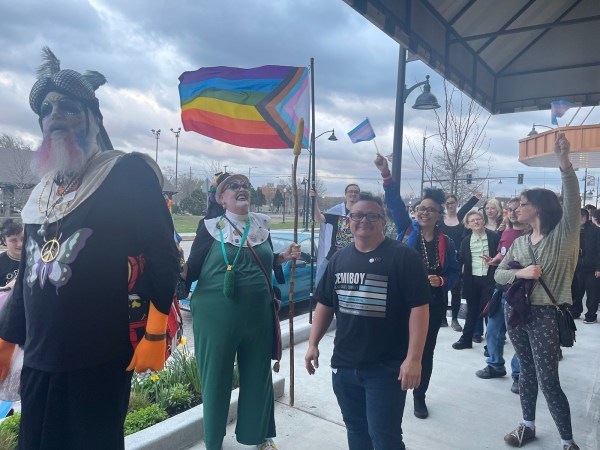
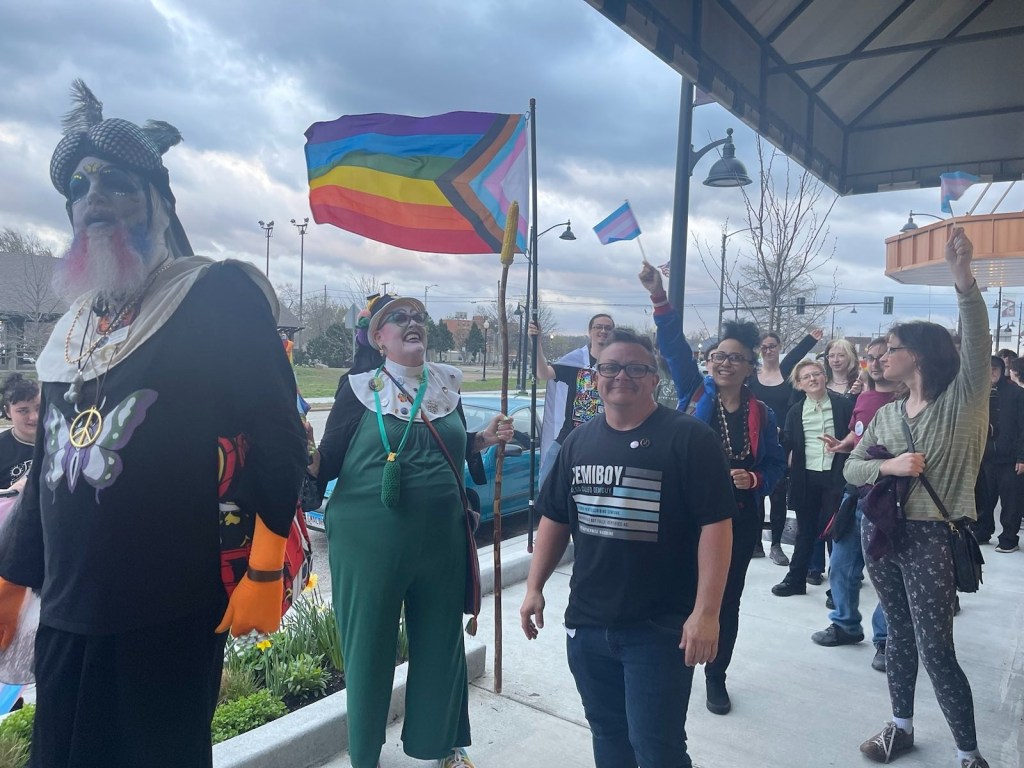
A group takes part in Transgender Day of Visibility and the Southern Illinois Trans Resource Fair in Carbondale on March 31, 2023. The Illinois town’s trans-welcoming reputation and resource groups like the Carbondale Assembly for Radical Equity have drawn transgender people from across the country, who are being forced to leave their home states due to anti-trans legislative policies and health care bans.
When the time came for Ellie Winter*, a 34-year-old transgender woman in a lesbian relationship, to leave Florida, she had to leave behind not just her bed but also a job she cherished, a close-knit circle of friends, and cherished memories.
Florida was where Ellie had met her fiancée, fallen in love, and become engaged. However, it was also where she experienced her worst fears of discrimination as a series of oppressive measures, collectively known as the “slate of hate,” were signed into law this spring. These included the infamous “Don’t Say Gay” bill, restrictions on healthcare and restroom access, attacks on gender and race education, and permission to discriminate in healthcare.
“I was especially concerned because I worked at a school, and with all the rhetoric and false accusations targeting queer individuals as pedophiles, I didn’t know whom I could trust,” Winter shared with Facing South. “Basically, I thought, ‘I’ve got to get out of here.'”
In June, Ellie and her partner left Florida with only their clothing, books, and guitars, and very little in their wallets or bank accounts. They embarked on a journey to Carbondale, Illinois, a place they had never visited before. While they were fleeing danger, they also felt they were moving toward a more welcoming and accepting environment. They had chosen the college town of Carbondale, with its 21,000 residents on the edge of the Shawnee National Forest, primarily because they knew that the Carbondale Assembly for Radical Equity (C.A.R.E.) would be there to welcome them with open arms.
For the founders of C.A.R.E., Cassandra Coffey, Carrie Vine, and Mattie Stearns, establishing the organization was a crucial response to the increasing persecution and injustice faced by LGBTQ+ individuals. “I’ve heard comrades in Texas and Florida say they’re digging in, they’re not leaving, it’s their home, and they’re going to fight,” Stearns told Facing South. “But if you’re someone who feels unsafe, get in touch with us. We focus on connecting people with communities to figure out where to go (or not go), where to rent or buy a house, or find jobs. And we can do that all day long.”
Currently, C.A.R.E. is assisting 16 “cases” through its subsidiary, Rainbow Refuge, primarily from Florida, with others coming from Texas, Oklahoma, and Tennessee, according to Carrie Vine, one of C.A.R.E.’s founders and volunteer case managers. Across the United States, states with bans on gender-affirming healthcare are disproportionately located in the South. Organizations like the Campaign for Southern Equality have established the “Southern Trans Youth Emergency Project,” a regional initiative in response to anti-trans healthcare bans in the South, which includes providing support to families with transgender children through emergency grants for travel expenses.
As the far-right intensifies its rhetoric around “parental rights,” organizers at C.A.R.E. anticipate a surge in demand for support. In preparation for further assaults on transgender rights, Carbondale City Council unanimously passed bodily autonomy and human rights ordinances during its July meeting. Clare Killman, a transgender city council member who initiated these ordinances, has described the city as “the last hope for a lot of people in any one direction.”
Self-help, mutual aid, and a spirit of resilience
Cassandra Coffey, a 40-year-old transgender woman who stands at an impressive 6 feet 6 inches, and whose voice remains deep despite years of transition and hormone replacement therapy, shared her experience with Facing South. She relocated to Carbondale from Indiana in 2015 and found it to be a haven.
“I used to live in a nice neighborhood in Evansville, and I could walk to the corner store and back wearing a dress without any issues. But if I ventured into the middle-class Christian, conservative neighborhood, my experience was different,” Coffey recounted. “In contrast, walking around presenting as femme in Carbondale feels safe.”
Carbondale’s reputation as a welcoming place for transgender individuals attracted Ellie Winter and her partner, who embarked on a 15-hour journey, fueled by energy drinks, to reach the town they had never visited before.
The first surge of emotion came when they crossed into Georgia. “I remember feeling so elated when we crossed the Florida border,” Winter said. The second surge of emotion occurred while driving through the Great Smoky Mountains, as her fiancée had never seen mountains before. The third surge came when they reached the “Welcome to Illinois” sign. “We screamed in relief, letting go of the anxiety, but also brimming with excitement about starting a new life here,” Winter explained.
Upon their arrival, they encountered what Winter described as “classic Midwestern hospitality” and, with the assistance of C.A.R.E., were able to secure housing, employment, and a sense of community. Once settled, Winter became actively involved, joining the welcoming committee at Rainbow Refuge. She expressed that she had never felt safer or more comfortable anywhere else.
Coffey, an experienced organizer in radical queer spaces, had foreseen a backlash against LGBTQ+ communities following the Supreme Court’s legalization of gay marriage in 2015. She described C.A.R.E.’s organizing as a collective effort. “We identified the need, pooled our resources, sought out individuals with relevant skills, and everyone worked together,” she explained during an interview on Locust Radio.
C.A.R.E.’s inaugural meeting in April 2023 was marked by a sense of urgency. Coffey had observed an acceleration of violent rhetoric in far-right online groups she had been monitoring for years. “They discussed seeing signs of genocide on a Holocaust Museum’s posts and would say, ‘Let’s escalate it further,'” she revealed.
Of the 30 people who attended C.A.R.E.’s first meeting, 26 remain “very active,” according to Coffey. They convene monthly at the Rainbow Cafe LGBTQ Center, with security being a top priority. Communication takes place over Signal’s encrypted platform, and only individuals personally met and vetted are allowed to join their Signal threads.
Since its inception, C.A.R.E. has hosted several successful events, including a music festival and art auction, a brunch and variety show, and several concerts, all aimed at raising funds for mutual aid. Now, they are looking to expand their efforts and hope to enlist the support of Chicago-based trans punk star Laura Jane Grace for Rainbow Refuge.
The group’s consistent but understated presence has led to unsolicited acts of generosity. For instance, Carbondale Starbucks Workers United organized a Drag Bingo event in June, donating the proceeds to C.A.R.E. A local grandmother of a trans teenager spontaneously wrote them a $500 check. On September 23, a touring troupe of performers named Fine and Bawdy Wenches plans to hold a pirate-themed pub crawl in honor of “Talk Like a Pirate Day,” with the proceeds benefiting Rainbow Refuge.
The time to help people is now
C.A.R.E. and Rainbow Refuge view their organizing efforts as a means of building community and keeping each other informed, while remaining responsive and avoiding organizational bureaucracy.
Coffey emphasized the importance of getting to know one another to form the foundation for community defense. “No invisible people. We have to establish lines of communication, do check-ins, educate the public about the issues, and the importance of taking action,” she said.
Mattie Stearns, who identifies as nonbinary, also adopts an inclusive approach in their work with C.A.R.E. and Rainbow Refuge. “Now is the time to help people,” Stearns told Facing South. “When you don’t know what to do, gather your friends and start figuring out what you can do. Then, someone else might say, ‘I can do something similar,’ and things start to grow and gain synergy.”
The group avoids rigid structures and prefers to act flexibly. According to Stearns, the essential question is: “If a transgender child approached you and said they felt unsafe, what would you do?”
For Kimberly Reynolds, a 39-year-old mother from Pensacola, Florida, with an 11-year-old transgender son named Joe, this question is not hypothetical.
“I know everyone obviously feels this way about their own child, but Joe is the light of our life,” Reynolds shared with Facing South.
“Unfortunately, Joe is an early bloomer, already developing a prominent chest at 11. My child is dealing with severe depression, which is heartbreaking,” Reynolds continued. “And now, they feel like their state is against them, their school is against them, that there’s no protection, and any of the teachers could use their deadname [previous name] at any time, which makes them even more self-conscious.”
When Reynolds discussed the option of staying or leaving with Joe, there was no hesitation. Joe immediately said, “Let’s get out of here.”
They hope to relocate to Carbondale by Christmas, although financial constraints have delayed their move. Reynolds gave birth seven months ago, and they also care for their 11-year-old nephew, who is likely to accompany them.
“We are living below the poverty level. Honestly, I’m not working because of the baby,” she explained. Childcare costs are prohibitive, and while her husband works in a bar and restaurant kitchen, he earns a modest salary. Nevertheless, they are determined, selling their possessions and starting a GoFundMe campaign to raise funds for their move to Illinois. An Associated Press report from June revealed that since the beginning of the year, individuals have contributed over $200,000 to GoFundMe campaigns started by transgender individuals seeking to leave Florida.
“Now that I’ve made this decision for the sake of my child, I’ve realized that Florida has been oppressive to me for a long time,” Reynolds reflected. “I hadn’t realized how much state policies can vary.”
In 2023, Illinois Governor J.B. Pritzker signed protections for gender-affirming care into law, alongside measures prohibiting library book bans and mandating the teaching of Native American history in public schools — all issues that hold significance for Reynolds.
However, Reynolds ultimately chose Carbondale because of a single factor: Carrie Vine, co-founder of C.A.R.E., and her deep love for the city. Vine has provided job leads to Reynolds’ husband, information about tuition at Southern.
The Virginia Beach School Board has updated its transgender model policies to align with the guidelines promoted by Gov. Glenn Youngkin’s administration. This decision occurs amid the ongoing debate over policies related to transgender students’ rights in Virginia school districts and the actions of the Republican administration against them.
In a 9-1 vote, the board revised transgender student guidelines, sparking intensified local dialogue amid a broader debate on transgender rights and education policies in Virginia.
By a majority vote of 9-1, the board approved the amendments on Tuesday, introducing new regulations concerning changes to students’ official records, naming conventions for school staff, and the use of facilities based on the sex indicated in official documents, as reported by WAVY, the NBC affiliate in the Hampton Roads area. One member voted against the changes, and another abstained from voting.
The revised policies now mandate that any amendment to a student’s official record concerning their legal name or sex requires a legal document such as a birth certificate or a court order. School personnel are instructed to refer to each student using only the name that appears in the official record, a designated nickname, or a name commonly associated with the name appearing in the official register.
Additionally, the policies dictate that students are to use restrooms, locker rooms, and changing facilities corresponding to the sex designated in their official records, except when state or federal laws mandate otherwise.
This decision represents a departure from the positions of several other school districts in Virginia. Earlier this year, numerous communities rejected Governor Youngkin’s model policies, citing concerns that they discriminated against transgender students.
As reported by The Advocate earlier, Francisco Durán, the superintendent of Arlington Public Schools, stated that his district’s current policies were already aligned with Virginia law. He expressed the view that the adoption of Governor Youngkin’s new guidelines was unnecessary, as he believed they did not serve all students in the community.
Several school districts across the state have similarly rejected these policies, which the governor has called for compliance with. However, there appears to be no established enforcement mechanism for implementing what critics describe as Governor Youngkin’s discriminatory policies.
The decision by the Virginia Beach School Board comes after a series of heated meetings spanning three months since the Virginia Department of Education introduced the governor’s model policies. These meetings featured passionate statements from both supporters of the governor’s model policies and LGBTQ+ students who opposed them.
The ongoing discussions in Virginia Beach are reflective of a larger statewide and national dialogue regarding transgender rights and parental involvement in education. As school districts throughout the state grapple with these complex issues, the actions of the Virginia Beach School Board may serve as a potential example for other districts in Virginia.
More than 89,000 transgender people ages 13 to 17 live in states that limit their access to gender-affirming care, research shows.
States that declared themselves refuges for transgender people have essentially issued an invitation: Get your gender-affirming health care here without fearing prosecution at home.
Now that bans on such care for minors are taking effect around the country — Texas could be next, depending on the outcome of a court hearing this week — patients and their families are testing clinics’ capacity. Already-long waiting lists are growing, yet there are only so many providers of gender-affirming care and only so many patients they can see in a day.
For those refuge states — so far, California, Connecticut, Colorado, Illinois, Massachusetts, Maryland, Minnesota, New Jersey, New Mexico, Washington and Vermont, plus Washington, D.C. — the question is how to move beyond promises of legal protection and build a network to serve more patients.
“We’re trying our best to make sure we can get those kids in so that they don’t experience an interruption in their care,” said Dr. Angela Kade Goepferd, medical director of the gender health program at Children’s Minnesota hospital in the Twin Cities. “For patients who have not yet been seen and would be added to a general waiting list, it is daunting to think that it’s going to be a year or more before you’re going to be seen by somebody.”
Appointment requests are flooding into Children’s from all over the country — including Texas, Montana and Florida, which all have bans. Requests have grown in a year from about 100 a month to 140-150. The program hopes to hire more staff to meet demand, but it will take time, Goepferd said.
More than 89,000 transgender people ages 13 to 17 live in states that limit their access to gender-affirming care, according to a research letter published in late July in the Journal of the American Medical Association, though not all trans people choose or can afford gender-affirming care.
Rhys Perez, a transmasculine and nonbinary 17-year-old, is preparing to move this month from Houston to Los Angeles to start college. The teen, who said they’re “escaping Texas in the nick of time,” said California’s protection for gender-affirming care was one of the main factors in their decision on where to go for college.
Perez has just begun their search for a provider in Southern California but already has encountered several clinics with waits for an initial consultation between nine and 14 months. They were disappointed to learn they likely could not begin hormone replacement therapy until their sophomore year.
“Hormones and stuff, that was never something my family fully understood or supported, really,” Perez said. “I figured it was best to wait until I move for college, but now it’s frustrating to know I’m going to have to wait even longer.”
“I wish I could start college as fully me,” they said.
Initial sanctuary laws or executive orders were an emergency step to protect transgender people and their families from the threat of prosecution by more than 20 states that have restricted or banned such health care, advocates say. They generally do not contain provisions to shore up health systems, but advocates say that needs to be the next step.
“That’s what we’re hoping to set up over the next year to two years, is making sure that not only are we making this promise of being a refuge for folks, but we’re actually living up to that and ensuring that folks who come here have access to care when they need it,” said Kat Rohn, executive director of the LGBTQ+ advocacy group OutFront Minnesota.
Those efforts will likely need to involve legislators, governors, large employers, Medicaid plans and boards of medicine, said Kellan Baker, executive director of the Whitman-Walker Institute, the policy and education arm of a clinic with the same name in Washington, D.C.
“I would hope that it would be a comprehensive effort, that everyone at every level enacting these shield laws is aware that it’s not just about making a promise of access on paper, but that it needs to be backed up by the availability of providers,” Baker said.
Texas Gov. Greg Abbott, a Republican, became the first governor to order the investigation of families of transgender minors who receive gender-affirming care, and legislators this year passed a ban on such care.
Whether that law takes effect on Sept. 1 will be decided by a state judge in Austin, who is hearing arguments Tuesday and Wednesday in a lawsuit filed by families and doctors seeking a temporary injunction. The lawsuit argues the bill violates parental rights and discriminates against transgender teens. It is unclear when the judge will rule.
Ginger Chun, the education and family engagement manager at the Transgender Education Network of Texas, said she was in contact last year with about 15 families with trans family members. This year already, she has talked to about 250 families, who are asking about everything from clarification on legislation to looking for ways to access care. Those who are looking for care outside Texas are encountering waiting lists.
The research published in JAMA found that Texas youths’ average travel time to a clinic for gender-affirming care increased from just under an hour to over 7 1/2 hours.
“It’s like a daily, ever-changing process to figure out where people can access care,” Chun said.
Minnesota state Rep. Leigh Finke, a Democrat who sponsored a bill to protect gender-affirming care, predicts “thousands” of people will travel to the state for care within two years. She’s also seeking solutions to the provider shortage and expects to take a closer look when the next legislative session begins in February.
“I’m not sure what as a legislature we can do to increase the number of people who provide a certain kind of medical care,” said Finke, a transgender woman who represents part of the Twin Cities area. “I’m not sure as a policymaker what the mechanisms are to say we need more of one kind of specific health care provider, assuming that those exist. I’m certainly going to be interested in looking at them.”
The number of providers nationwide is limited, and for many, it’s not their full-time job. Minnesota, for instance, is home to 91 providers, according to a search on the website of the World Professional Association for Transgender Health. The state has 29,500 transgender people 13 and older, according to the Williams Institute, an LGBTQ+ think tank at the UCLA School of Law.
Dr. Katy Miller, the medical director of adolescent medicine for Children’s Minnesota, estimates “probably at least hundreds of families” are moving to the Twin Cities for gender-affirming care.
“People are going to kind of extraordinary lengths, like pulling kids out of school, moving.” Miller said.
In many ways, the quest for gender-affirming care parallels that of abortion access, for which people also cross state borders, sometimes under threat of prosecution. The main difference with gender-affirming care is that treatment is ongoing, generally for the rest of a person’s life, so permanent access is key.
Anticipating long waits, some parents preemptively sought out gender-affirming care providers for a child, like Minnesota activist Kelsey Waits. Her 10-year-old transgender child, Kit, got into the system at a hospital that could eventually provide blockers or hormones so that they wouldn’t have to start puberty without a doctor’s support.
“A lot happens in puberty in one year,” Waits said. “Just the stress of that on a family — the kids, the parents who are trying to find care for their child — it’s a lot.”














 fleeredstates.blog
You must be logged in to post a comment.