Same-sex couples just won a crucial Supreme Court victory in the Philippines

Read more at LGBTQ Nation.

In a precedent-setting decision that could bode well for the legalization of same-sex marriage in the Philippines, the country’s Supreme Court has ruled that same-sex couples can be considered co-owners of property acquired over the course of their relationship.

The ruling came about based on a lesbian couple that is decidedly not interested in getting married, the Philippines Star reported.

The ruling promulgated on February 5 and penned by Associate Justice Jhosep Lopez made its way to the country’s highest court after the two women had lived together for several years. In that time, they purchased a house and lot in Quezon City, and registered it under only one partner’s name.

Then they decided to split.

The two women initially agreed to sell the property and divide the proceeds equally. Knowing they wouldn’t benefit from community property laws afforded to married couples, the partner who officially owned the house and lot signed an “acknowledgment” confirming that the other had paid for roughly 50% of the purchase and renovation costs of the property.

Then she reneged on the deal.

After she denied the other woman’s co-ownership and refused to sell, the scorned partner went to court, filing a case based on the signed acknowledgement.

A back-and-forth over culpability, damages, and lack of proof ensued across two courts and appeals before the case landed at the nation’s highest court.

A case pitting a similar but married plaintiff and defendant would normally fall under Article 147 of the Philippines Family Code. That article applies to couples who are legally eligible to marry and “presumes” joint ownership of property acquired during cohabitation, the high court explained.

But because the Family Code limits marriage to a union between a man and a woman, the high court held that the case of the battling lesbian couple necessarily fell under Article 148, which applies to those prohibited from marriage and requires proof of actual contribution for a property to be considered common. 

That signed “acknowledgement” provided the proof.

“Having admitted the actual contribution of petitioner, their corresponding shares are prima facie presumed equal. Thus, with Article 148 of the Family Code and the Acknowledgement executed by respondent, petitioner is a co-owner to the extent of 50% share of the subject property,” the ruling read. 

“Considering that there is co-ownership between petitioner and respondent, then each co-owner may demand at any time the partition of the thing owned in common, insofar as her share is concerned. Having rightful interest over the subject property, petitioner has the right to demand the division of the subject property,” Judge Lopez added.

Legislation legalizing civil unions or full marriage equality for same-sex couples in the Philippines has been stalled in the country’s Congress over multiple sessions.

Concurring opinions in the case noted the gap between public opinion, which is generally supportive of LGBTQ+ rights in the Philippines, and legislative action.

Justice Lazaro‑Javier recognized “the prevailing values in modern society as well as the glaring yet unjustified difference in the treatment of heterosexual couples vis-à-vis their homosexual counterparts,” while the majority ruling called on Congress to address the issue at the core of the case more broadly.

“Mostly, public reason needs to be first shaped through the crucible of campaigns and advocacies within our political forums before it is sharpened for judicial fiat,” the court said.

2 celebrities among 12 people arrested in anti-gay sweep in Senegal

Read more at LGBTQ Nation.

Two of Senegal’s highest-profile celebrities were among 12 people rounded up and charged with committing “unnatural,” or homosexual, acts, among other crimes, police in the capital of Dakar announced Sunday.

Pape Cheikh Diallo, a widely admired TV and radio presenter, and Djiby Dramé, a popular musician, were two of the men charged in the case linked to an individual who has admitted to knowingly spreading HIV, according to The New York Times.

An HIV-positive individual “confessed to knowingly infecting about ten people he had contacted, primarily through WhatsApp groups,” authorities said.

Police didn’t elaborate on who the individual is or his connection with the other men, but all 12 men were remanded to prison while a judge investigates the case.

A preliminary indictment from prosecutors added a charge of money laundering to the evidence used to initially round the men up, Senegal news site Seneweb reports. All of the men broke down in tears as the judge announced their pretrial detention.

“A lot of what’s being said in the media about Pape Cheikh is not true,” said a lawyer for TV presenter Diallo, Abdou Dieng, after the hearing. Other lawyers in court declined to comment.

Diallo, 42, is best known for interviewing celebrities on TV and radio, and enjoys a large fan base of young people on TikTok, with about three million followers.

Dramé, also in his 40s, appeals to older Senegalese and is well known for duets with his wife that feature prominently at weddings in the country. They host an annual high-society gala that celebrates Bazin, the luxurious damask cotton fabric with roots in West Africa.

Stop Homophobie, a Paris-based LGBTQ+ rights group with ties to Senegal, condemned the arrests. The state action will further expose the community to stigma in the devoutly Muslim country, the group’s director told Seneweb.

Senegal earns a score of 4 out of 100 on the Equaldex Equality Index.

The Senegal Penal Code states, “whoever will have committed an improper or unnatural act with a person of the same sex will be punished by imprisonment of between one and five years.”

As well as Diallo and Dramé, one of West Africa’s most iconic artists has been swept up in the controversy surrounding the arrests. TFM, the country’s most-watched television channel and Diallo’s employer, was founded by Senegalese singer Youssou N’Dour, described by Rolling Stone as “perhaps the most famous singer alive” in Senegal and much of Africa.

Islamist critics of “degenerate” Western values are implicating N’Dour in the scandal over his connection with Diallo as his “boss” at TFM.

“Whoever plays games with Islam will suffer the wrath of God,” said one reply to Seneweb’s story of the arrests.

A Republican governor just vetoed a GOP-led anti-trans bill.

Read more at LGBTQ Nation.

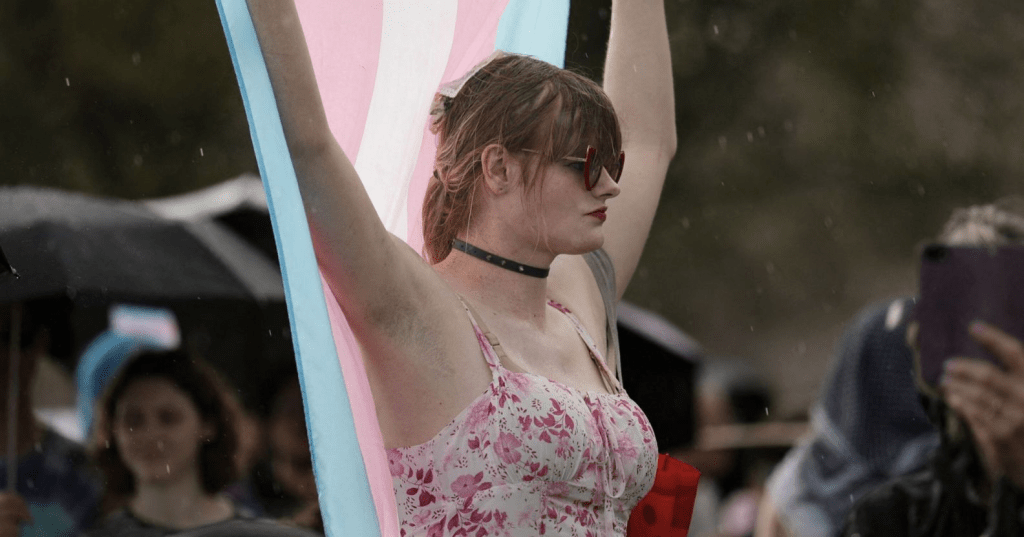
New Hampshire Gov. Kelly Ayotte (R) vetoed an anti-transgender bathroom and sports bill last Friday. Republicans in the state legislature won’t likely have enough votes to override her veto.

The bill, S.B. 268, sought to carve out exceptions to the state’s 2018 anti-discrimination laws (which protect people from discrimination on the basis of “gender identity”) and ban trans people from accessing any restrooms, locker rooms, prisons, detention centers, and non-voluntary treatment centers that match their gender identity. Furthermore, the bill sought to ban trans women from any “athletic or sporting events or competitions” in which “biological males” have physical advantages.

“There are certain limited circumstances in which classification of persons based on biological sex is proper because such classification serves the compelling state interests of protecting the privacy rights and physical safety of such persons and others,” the bill stated, echoing right-wing rhetoric about trans people being a risk to other people’s safety, especially in locker rooms and toilets.

The broadly written bill neither explained how the law would be enforced nor provided any special penalties for violating it. As such, enforcement would have likely depended on individuals filing complaints if they shared a facility with a trans person, leaving state legal authorities to investigate and prosecute such claims.

“I vetoed a nearly identical bill to this one last year,” said Gov. Ayotte, according to The New Hampshire Bulletin. “I made it clear this issue needed to be addressed in a thoughtful, narrow way that protects the privacy, safety, and rights of all Granite Staters. Unfortunately, there is minimal difference between Senate Bill 268 and the bill I vetoed last year, which [Republican] Governor [Chris] Sununu vetoed the year prior.”

When Gov. Ayotte vetoed a similar bill last year, she said, “I believe there are important and legitimate privacy and safety concerns raised by biological males using places such as female locker rooms and being placed in female correctional facilities. At the same time, I see that [this bill] is overly broad and impractical to enforce, potentially creating an exclusionary environment for some of our citizens.”

It’s unlikely that Republican state legislators will have the votes they need to override Gov. Ayotte’s veto in both chambers. New Hampshire state law requires a two-thirds majority vote in both the House of Representatives and the Senate to override a governor’s veto. While the 16 Republicans in the state’s 24-member Senate could reach that threshold, the 222 Republican legislators in the state’s 400-member House could not.

LGBTQ+ advocates cheered on Gov. Ayotte’s veto.

“This is a huge relief for every transgender or gender nonconforming person in New Hampshire,” said Aimee Terravechia, executive director of the statewide LGBTQ+ organization 603 Equality. “In a time of unrelenting legislative attacks and misinformation campaigns around transgender people and their rights, Gov. Ayotte’s veto affirms the basic rights and dignity for all Granite Staters. Transgender and gender nonconforming people deserve safe access to public spaces as they go about living, working, and contributing to our communities. Bathroom bans simply have no place in New Hampshire.”

Heidi Carrington Heath, executive director of NH Outright, said, “This veto is a win for the Granite State, and sends a much-needed message to LGBTQ+ youth and families that they are welcomed and valued members of our communities. Today, Governor Ayotte stood in a long tradition of New Hampshire values protecting freedom and individual liberty. Like all youth, our LGBTQ+ young people deserve access to all of the spaces and places they need to thrive, and this veto helps ensure they can continue to do just that.”

Chris Erchull, senior staff attorney at GLAD Law, said, “We’re pleased with Governor Ayotte’s veto of S.B. 268, which keeps the bipartisan nondiscrimination law passed in 2018 intact and ensures all Granite Staters – including our transgender friends, neighbors, and co-workers – continue to have fair and safe access to our public spaces. Though S.B. 268 will not be the last politically motivated attack on LGBTQ+ people we have to confront in this legislative session, this is a moment worth celebrating – and an opportunity for more Granite Staters to come together in support of fairness, dignity, and freedom for all.”

Virginia governor gives voters a chance to erase their state’s anti-marriage amendment

Read more at LGBTQ Nation.

Virginia Gov. Abigail Spanberger (D) signed legislation that sent several potential state constitutional amendments to voters this past Friday, including a measure that would remove the state’s ban on same-sex marriage from the state constitution, which was originally passed in 2006.

While the state’s ban on marriage equality has not been enforced since the 2015 Obergefell v. Hodges Supreme Court decision, which legalized marriage equality in all 50 states, advocates for its removal say that it is discriminatory and could be enforced if Obergefell were ever overturned.

“We want to make sure that Virginia families know that here in Virginia, it is not just a Supreme Court decision that protects them, but it is also our state constitution,” Spanberger said in comments during the signing ceremony. “It’ll be a big step for Virginia to ensure that every family knows that Virginia is a place that welcomes them, appreciates them, and sees them for the wonderful family and Virginians that they are.”

“So before I get too emotional on that one, I will start signing.”

LGBTQ+ issues played a large role in the 2025 Virginia gubernatorial campaign, with Republican candidate Winsome Earle-Sears running ads throughout the election season that accused Spanberger of wanting “boys to play sports and share locker rooms with little girls” and letting “children change genders without telling their parents.”

At a debate later in the year, Spanberger pointed out Earle-Sears’ opposition to anti-discrimination laws and her opposition to marriage equality. Earle-Sears blurted out, “That’s not discrimination!” when Spanberger brought up how Earle-Sears believes “it’s OK for someone to be fired from their job for being gay.”

LGBTQ+ advocates hailed the marriage ballot initiative measure.

“Twenty years after banning marriage equality, it’s time for our commonwealth to fully complete our evolution – and finish the job on protecting marriage equality for all,” said Equality Virginia Executive Director Narissa Rahaman in a statement. “It’s up to all of us to vote on November 3, 2026 to safeguard marriage for all Virginians and remove the stain that exists in our constitution. We have come too far over the past 20 years to have any doubt that Virginia voters will support love and dignity for all couples this November.”

Spanberger also signed a bill that will send a reproductive rights amendment to voters in the fall. The proposed amendment would give Virginians a right to reproductive health care and include IVF, contraception, and abortion.

“This amendment protects families’ entire scope of reproductive needs,” said state Sen. Jennifer Boysko (D), who introduced it in the Virginia Senate.

“I look forward to spending ample time in advance of the 2026 elections campaigning to make sure that people understand the importance of this constitutional amendment,” Gov. Spanberger said last year, according to the Virginia Mercury.

Spanberger sent two other constitutional amendments to voters on Friday. One would automatically restore voting rights for convicted felons who finished their prison sentences (they currently have to appeal to the governer after their sentences are over to get their voting rights back), and the other would allow the state’s General Assembly to change the state’s congressional district map in the middle of decades in order to respond to other states doing the same, according to WOBC.

Detransitioner who regrets mastectomy wins $2 million in malpractice lawsuit against doctors

Read more at LGBTQ Nation.

A woman who sued her doctors over a breast removal surgery she received when she was 16 and identified as transgender has been awarded $2 million in damages, marking the first time a detransitioner has won a medical malpractice lawsuit over the care they received as part of their transition.

Multiple right-wing news outlets are calling the decision “historic,” but even the woman’s lawyer is downplaying its significance, insisting the case was never about “the legitimacy of gender-affirming care.”

As The Free Press first reported, on Friday, a jury in New York State sided with 22-year-old Fox Varian, who sued her psychologist and a plastic surgeon, accusing them of failing to adhere to standards of care around gender-affirming care for minors. According to the New York Times, Varian claimed that her doctors did not obtain adequate consent or adequately inform her of the risks associated with a double mastectomy she received in 2019 and came to regret.

As multiple outlets have reported, Varian suffered from depression, anxiety, social phobia, eating disorders, and body-image issues as an adolescent, and was diagnosed with autism at 14. Court documents reportedly show she began questioning her gender at 15. She changed her name multiple times, used he/him pronouns, began binding her breasts, and told her psychologist, Kenneth Einhorn, that she wanted to transition.

According to both the New York Times and the Epoch Times, Einhorn, who has no formal training in treating transgender patients, claimed in court that Varian insisted she needed top surgery. In October 19, nine months after Varian expressed a desire to transition, Einhorn referred her to plastic surgeon Simon Chin.

Crucially, however, Einhorn referred to Varian’s diagnosis as “body dysmorphia” rather than gender dysphoria in his letter to Chin. He also reportedly referred her to an LGBTQ+ nonprofit center for additional counseling, where Varian continued to express uncertainty about her gender. However, Einhorn never followed up with the center. According to the Epoch Times, both Einhorn and Chin admitted in court that had they known about Varian’s continued uncertainty, they would not have referred her for the surgery or performed it.

As both the Epoch Times and the New Republic noted, the jury was not asked to issue a verdict on whether minors should receive gender-affirming surgeries — such procedures are already exceptionally rare — but whether Einhorn and Chin had adhered to accepted standards of care.

Dr. Loren Schechter, president-elect of the World Professional Association for Transgender Health (WPATH), which sets medical standards for gender-related care, even testified as an expert witness on behalf of Varian. Schechter testified that he believed the Einhorn and Chin’s decision to approve the surgery was based on “assumption and inference,” according to the New York Times.

“This case was a medical malpractice case, not a referendum on gender-affirming care,” WPATH said in a statement following the verdict. “When care is delivered ethically and responsibly within these guidelines, the integrity of the field is strengthened.”

Similarly, Varian’s lawyer, Adam Deutsch, issued a statement echoing arguments he’d made in court. “This was never a debate over the legitimacy of gender-affirming care,” he said, according to the Times. “It was about whether medical professionals met the standards that covered their own profession.”

Einhorn and Chin “just didn’t have the experience to deal with someone questioning their gender identity,” Deutsch added. “At the bottom of all of this was a lack of collaboration between the two of them, and lack of communication to follow through.”

At the same time, Benjamin Ryan, an independent journalist who covered the case for The Free Press and who has been critical of gender-affirming care for minors, suggested in a video promoting his reporting that the verdict “could help reshape the legal landscape around youth gender medicine.”

Describing the jury’s verdict as “decisive and historic,” Ryan said that Varian’s case “marks a turning point” and “could contribute to a reckoning over lax assessment standards by care providers when they consider whether irreversible medical interventions should be offered or given to minors with gender dysphoria.”

He said the case “signals a growing wave of detransitioners turning to the courts” and noted that by his count, nearly 30 similar civil cases are currently working their way through courts across the U.S. But as the Times noted, it remains unclear what impact Varian’s case will have on other cases.

Following Friday’s verdict, the American Society of Plastic Surgeons (ASPS) released a statement advising against conducting “gender-related breast/chest, genital, and facial surgery” on people under the age of 19. While the February 3 statement does not mention the Varian case, as the Times notes, it marks the first time a major American medical association has shifted its guidance on gender-affirming care for minors.

LGBTQ Pride flag removed from NYC Stonewall National Monument after Trump admin directive

Read more at Yahoo News.

A rainbow pride flag has been removed from the Stonewall National Monument in Greenwich Village because of a directive from the Trump administration — outraging LGBTQ New Yorkers and local elected officials who feel the move will “erase our history.”

Apparently following orders from a Jan. 21 memo from the U.S. Department of the Interior, the large pride flag was removed from the monument in Christopher Park near the Stonewall Inn over the weekend, according to local elected officials.

“It’s an outrage that really strikes at the heart of the LGBTQ community’s human rights movement,” Manhattan Borough President Brad Hoylman-Sigal said. “Stonewall is the birthplace of the contemporary human rights movement and to have the federal administration, Donald Trump, remove the pride flag that has been there proudly for decades is an affront to New Yorkers and all Americans who care about human rights.”

The federal memo notes that flagpoles and buildings under the jurisdiction of the U.S. General Services Administration, which the monument is under, “are not intended to serve as a forum for free expression by the public.”

“Only the U.S. flag, flags of the Department of the Interior, and the POW/MIA flag will be flown by the National Parks Service in public spaces where the NPS is responsible for the upkeep, maintenance, and operation of the flag and flagpole,” the memo states.

Hoylman-Sigal said that he and other local, state and federal officials plan to raise a rainbow flag back up the flagpole in protest on Thursday. He noted the Trump administration previously removed references to transgender people from the Stonewall Monument’s government website.

“I really think this is about standing up for the future of the LGBTQ community, just as those Stonewall veterans back in 1969 did the same,” Hoylman-Sigal said. “To me, it’s deeply personal as an out LGBTQ elected official, but also as a parent. What lesson are we sending to our young people about their family members, their parents, their friends at school or themselves?”

A spokesperson for the National Park service said in a statement the removal was in line with longstanding rules.

“The policy governing flag displays on federal property has been in place for decades,” the statement said. “Recent guidance clarifies how that longstanding policy is applied consistently across NPS-managed sites.”

“Stonewall National Monument continues to preserve and interpret the site’s historic significance through exhibits and programs,” the statement adds.

There are “limited exceptions” to the rule, according to the statement. Non-agency flags can be flown “for a specific special occasion” or “as an expression of the federal government’s official sentiments,” the memo said.

No flags were flying on the poles at the Stonewall Monument on Tuesday, although several small pride flags were peppered around the park.

Sen. Charles Schumer called the removal of the flag a “deeply outrageous action that must be reversed right now.”

“New Yorkers are right to be outraged, but if there’s one thing I know about this latest attempt to rewrite history, stoke division and discrimination and erase our community pride, it’s this: That flag will return,” he added. “New Yorkers will see to it.”

The Stonewall National Monument visitor center was open but workers declined to comment on the new directive.

Stonewall was designated a national monument by President Barack Obama in 2016. The riot at the Stonewall Inn in 1969 is recognized as the beginning of the LGBTQ movement in the U.S.

Longtime Village resident Mimi McGurl, 62, was stunned by what she saw as a smack in the face against the LGBTQ community.

“This is our home,” she said. “This is where we can feel safe and comfortable. And, I think that’s not what his administration wants. I don’t think they want us to ever feel safe and comfortable, unless we’re in a closet.”

Julie Muzina, a trans woman from Buffalo, just signed a lease on an apartment near Christopher Park, partly because the monument was nearby.

“This (whole area) is like a symbol of love,” Muzina, 26, told the Daily News as she looked over the park. “(Now) there’s like a gaping hole in the middle of it.”

“We’re still here. We’re not going anywhere,” she added. “You’re removing a flag in an area that is just going to be louder because you’ve done it.”

Council Speaker Julie Menin said the removal of the pride flag “is a deliberate and cowardly attempt to erase” the history of the LGBTQ movement.

“This is an attack on LGBTQ+ New Yorkers, and we will not stand for it,” she wrote on X. “Our history will not be rewritten, and our rights will not be rolled back.”

Heartstopper, Trans Rights, and Moving to Where Your Rights Are Protected —Flee Red States

In this powerful conversation, we sit down with Rowan Murphy, co-author of Why Are We Like This? Stories of Transformation, a book exploring the extraordinary global response to Netflix’s Heartstopper. Rowan shares his personal journey as a transgender gay man in his early 50s, including: His lived experience navigating identity, visibility, and authenticity Why he ultimately chose to leave the United States How growing civil rights restrictions on LGBTQ people are shaping real-life decisions The deep emotional and psychological impact Heartstopper has had on LGBTQ audiences worldwide.

Republican lawmakers want to take away drivers licenses from trans people in Kansas with new bill

Read more at LGBTQ Nation.

Kansas Republicans are trying to take away currently valid driver’s licenses from transgender people in the state if they have corrected the gender marker on them in a new bill that has also been expanded – under a sneaky maneuver that allows changes to a bill without a public hearing – to be one of the “most extreme” bathroom bills in the nation.

H.B. 2426 was already very anti-trans. It defines “gender” under the law in terms of “chromosomes,… hormones, gonads and nonambiguous internal and external genitalia present at birth” and says that driver’s licenses can only have someone’s sex assigned at birth on it. The bill instructs the state government to invalidate all driver’s licenses that do not have a gender marker on them that reflects a person’s sex assigned at birth and to reissue new driver’s licenses.

But state Republican lawmakers expanded the bill last week, adding a strict anti-trans bathroom ban to a bill already seeking to ban trans Kansanians from changing the gender markers on their driver’s licenses.

The legislators used a state procedure called gut-and-go, which allows lawmakers to completely replace an existing bill’s language with pretty much anything they want while bypassing a public hearing.

Even before the addition of the bathroom amendment, Kansas lawmakers were already trying to push the bill through with as little public input as possible.

Republicans introduced the gender marker aspect of the bill with less than 24 hours’ notice before a public hearing. But residents nonetheless rose to the occasion, submitting hundreds of testimonies opposing the bill.

“You had a bill introduced one day at 3:58 p.m., it was scheduled for a hearing the next day, less than 24 hours notice,” state House minority leader Brandon Woodard (D) told the Topeka Capital-Journal. “Testimony had to be submitted by 10 a.m., and yet Kansans cobbled together hundreds of pieces of testimony that we were still able to print and submit.”

Republicans, Woodard said, “do those sorts of things in an attempt to shield. They know that the public’s not on the side with them. That’s not civil. When we delivered those pieces of testimony, the committee assistant said, ‘Oh my goodness, this is going to take me days and days to upload.’ I said, ‘Next time, the chair should consider giving people and Kansans a couple of days notice.’”

After all that, the Republicans weren’t done. Democrats are enraged over the addition of the bathroom amendment, proposed by State Rep. Bob Lewis (R). “We all thought that this bill was probably a bathroom bill, and now it’s showing its true colors,” state Rep. John Carmichael (D) told the Kansas Reflector.

“What this bill is about, with this amendment, is making it so that people who are transgender or people who are intersex have no safe place to go to the bathroom.”

“This is an attempt to obfuscate what we’re doing here,” Carmichael added. “If you’re in favor of a lack of transparency, if you’re in favor of taking bill numbers and playing them like a shell game, this is the amendment for you.” 

Lewis claimed the amendment was “for privacy concerns and for public safety concerns.”

“I think this is a necessary bill,” he told the Capital-Journal.

Trans journalist Erin Reed called the bill “the most extreme anti-transgender measure in the United States,” explaining that it could punish trans people who use the bathroom that does not align with their sex assigned at birth with a misdemeanor with possible jail time.

But what “turbocharges it,” she said, is a provision allowing individual people to sue trans people for using the bathroom they deem “incorrect.”

“Critically, nothing in the provision limits its application to publicly owned buildings,” Reed explained. “As written, it would not only be the first bathroom bounty law to target transgender people directly, but also the first to extend a bathroom ban into private spaces—effectively creating the nation’s first private bathroom ban if enacted by empowering bounty hunters to search for trans people in bathrooms.”

Reed said she confirmed with multiple legal experts and lawmakers that, despite the bill appearing to only target public spaces, it would also apply to private bathrooms.

The bill is supported by Kansas Attorney General Kris Kobach (R). Republicans have made it a major priority and are trying to pass it as quickly as possible. Democratic Kansas Gov. Laura Kelly will likely veto it if it makes it to her desk.

“If passed,” Reed said, “what follows would be the bill’s most consequential test: an effort to override that veto in a Legislature where Republicans currently hold a veto-proof majority, but where some may view the bill as too extreme. For transgender people in the state, that effort may be the most consequential in years.”

Wisconsin pediatric hospitals end gender-affirming care, risking health of trans youth

Read more at LGBTQ Nation.

Two of Wisconsin’s largest pediatric hospitals have stopped providing gender-affirming care for transgender youth, Wisconsin Public Radio reports.

Children’s Wisconsin and University of Wisconsin (UW) Health have ended the treatment for minors, after pressure from the Trump administration. Advocates say the end of gender-affirming medical care will lead to negative mental health effects for trans youth.

In a statement, Children’s Wisconsin cited “escalating legal and federal regulatory risk” facing providers across the nation as the reason it is “currently unable to provide gender-affirming pharmacologic care.” The hospital added that LGBTQ+ children should be treated with “support, respect, dignity, and compassion.”

The hospital will continue to offer mental health services for patients and families.

In December, the Department of Health and Human Services, under the direction of Secretary Robert F. Kennedy Jr., announced plans to end all Medicaid and Medicare funding for hospitals that provide gender-affirming care to minors.  

“Under my leadership, and answering President Trump’s call to action, the federal government will do everything in its power to stop unsafe, irreversible practices that put our children at risk,” Kennedy said, announcing the funding threat. “This administration will protect America’s most vulnerable. Our children deserve better — and we are delivering on that promise.”

In reality, gender-affirming medications for young people are considered by every major American medical association to be safe, reversible, and essential to the well-being of trans youth.

UW Health said its hospital system will pause prescribing puberty blockers and hormone therapy for patients under 18 years old “due to recent federal actions.” The hospital remains committed to providing “high-quality, compassionate” care to LGBTQ+ patients, officials said in a statement.

“We recognize the uncertainty faced by our impacted patients and families seeking this gender-affirming care and will continue to support their health and well-being,” they said.  

Steve Starkey, executive director for OutReach LGBTQ+ Community Center in Madison, said the consequences of ending the care will be grave.

“It will definitely have a negative impact on the rates of suicide, and the mental health of the trans community” in general, he said. “It affects trans adults as well, because it’s like an attack on all trans people.”

Starkey pointed to rates of suicide and suicidal ideation, which are already high for the trans community.

2023 study by the Williams Institute at the UCLA School of Law found that more than 80% of trans adults had suicidal thoughts, while more than 40% had attempted suicide.

“For trans people of all ages, being able to express themselves in the gender that they feel that they are is important for their mental and physical health,” Starkey said. “By not allowing trans people to do that, to have the support, it just means that they are not able to be wholly who they are.”

In the last week alone, hospitals and clinics in Orange County, Riverside, and San Diego, California — and in Tacoma, Washington too — announced plans to shutter gender-affirming care programs for trans youth.

Those closures follow dozens of other hospitals and healthcare facilities ending the care under threats from the Trump administration, in the form of funding cuts or investigations initiated by the Justice Department, even before last month’s federal funding ultimatum.

A year ago this week, Trump issued an executive order vowing to end what he called the “chemical and surgical mutilation” of children with gender-affirming care. Republicans have used these terms to outrage people and vilify medical providers of the care, but puberty blockers and hormone replacement therapies don’t “mutilate” kids, and gender-affirming surgeries are rarely (if ever) conducted on minors.

A protester at Children’s Hospital of Orange County this week described the same care as life-saving.

“I’m a transgender woman, and I’m here to tell you that denying people this gender-affirming care doesn’t make gender dysphoria go away,” Stephanie Wade, chair of Lavender Democrats of Orange County, told LAist. “All it does is make it metastasize into suicidal depression. And I’ve been there. I dealt with this as a child. We can’t take this away from kids.”

If you or someone you know is struggling or in crisis, help is available. Call or text 988 or chat at 988lifeline.org. The Trans Lifeline (1-877-565-8860) is staffed by trans people and will not contact law enforcement. The Trevor Project provides a safe, judgement-free place to talk for youth via chat, text (678-678), or phone (1-866-488-7386). Help is available at all three resources in English and Spanish.

City of Dallas to TxDOT: Rainbow crosswalks will be removed soon

Read more at the Dallas Voice.

According to a press release dated Jan. 30 and time-stamped 7:38 p.m., the city of Dallas has officially caved to the rainbow-hating homophobes in Texas government, and Oak Lawn’s privately-funded rainbow crosswalks — and any other nonstandard crosswalk designs in the city — will be removed within the next 90 days.

The press release says: “The City of Dallas has notified the Texas Department of Transportation that it will comply with TxDOT’s directive requiring removal or correction of non-compliant pavement markings.”

The TxDOT “request” (aka Greg Abbott’s homophobic demand in order to kowtow to Trump, just like he did with the mid-decade congressional redistricting and by turning over Texas voter rolls to the feds) covers 30 decorative crosswalks citywide, the press release said.

“In a letter signed by Dallas City Manager Kimberly Bizor Tolbert, the city notified the director of the TxDOT Traffic Safety Division that it will comply with the order within 90 days,” the press release continues, quoting Tolbert as saying that “The city appreciates TxDOT’s partnership in sustaining safe multimodal transportation in Dallas. The city will work with affected communities on ways to recognize their neighborhoods.”

The press release concludes: “TxDOT rejected the city’s appeal of the directive to remove pavement markings stating the intersections identified did not meet current Texas Manual on Uniform Traffic Control Devices requirements. TxDOT emphasized that all treatments must comply with the TMUTCD, the Secretary of Transportation’s Safe Road Initiative, and the governor’s directive issued Oct. 8, 2025, which prioritize uniformity and predictability in traffic control devices statewide.”

Considering that numerous studies and incidental data have proven that creative crosswalk designs actually enhance safety, the obvious truth is that Abbott and his minions don’t actually give a fat rat’s ass about safety; they just want to try and suppress the LGBTQ+ community and, at the same time, lick Trump’s boots.

Knowing our LGBTQ+/Oak Lawn community, however, we feel sure that while the homophobes may be winning this battle in the Rainbow War, the fight continues. We expect to see even more rainbows waving proudly across Oak Lawn soon.

Blog at WordPress.com.

Up ↑