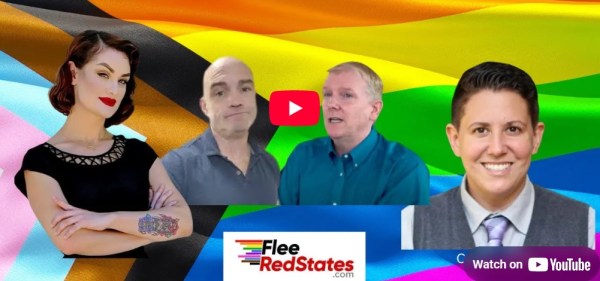
What happens when real estate meets resistance, advocacy, and identity? In this candid conversation, LGBTQ+ real estate professionals Callen Jones, Bob McCranie, Kimber Fox, and Leslie Wilson sit down to discuss the evolving challenges of being openly queer in an industry—and a country—facing political pushback.
🏳️🌈 Topics covered include: How anti-LGBTQ+ legislation affects clients and agents The role of advocacy in real estate Why “just doing business” isn’t neutral anymore Personal stories from the frontlines of inclusion in housing
📍 Whether you’re an agent, ally, or advocate, this video unpacks the real stakes of LGBTQ+ visibility in today’s market.
The fear includes having to hide who you are, if you become ill, or as you age in Connecticut.
Now, the state Senate passed legislation in a 26-10 vote that prohibits long-term care facilities and their staff from discriminating against residents including those in the LGBTQ+ community and also requires cultural competency training focused on residents who identify as lesbian, gay, bisexual, transgender or gender nonconforming or are living with HIV.
“This bill is part of our ongoing efforts to ensure that Connecticut remains a place where seniors feel safe and respected as they age,” said Sen. Jan Hochadel, D-Meriden in a statement. “No one should fear being treated differently or unfairly based on who they are. This law will send a clear message that everyone in Connecticut deserves dignity and compassion in their later years.”
Several Republicans cited concerns with the bill, particularly about how cases of discrimination would be adjudicated, with Sen. Rob Sampson, R-Wolcott, proposing an amendment to remove the DPH from the bill in being the final arbitrator of the penalties of facilities.
That amendment failed along party lines.
“The language that is included in here has an intent to politicize the notion of discrimination, almost like a DEI bill frankly,” said Sen. Rob Sampson R-Wolcott.
“Almost in an effort to try to dig us into the discussion about DEI once again and frankly I don’t want to go there. I am just as much against discrimination as anyone else is but to try and go ahead and create these training materials that will ultimately force people that work in these institutions to have to accommodate other people’s worldviews I think is offensive frankly,” he said. “The desire to impose penalties on facilities and maybe individuals because they participate in a training where they are exposed to different worldviews they disagree with and have them imposed upon them and adjust and respond to a woke understanding of the world is quite frightening frankly.”
Sen. John Kissel, R- Enfield, also spoke against the bill and his disappointment that the amendment failed.
“I have great concern when we turn too much power over to a commissioner,” he said. “We do not want discrimination. I got to be honest if I am dealing with some 85-year old woman that is in frail health and if she feels uncomfortable in a room because someone next to her is having a lifestyle choice that impedes and interferes with her quality of life, that is an interesting question. By this underlying bill we are saying we are always going to side with the person that is being overly expressive in asserting themselves in their sexual determinations.”
One couple hoping for the bill’s passage is Janet Peck and her wife, Carol Conklin. The couple faces a tough transition as they consider long-term care facilities for Conklin, who was diagnosed with Alzheimer’s.
Peck said she is concerned that the couple, who celebrate 50 years together this September, will no longer be able to live openly, fearing discrimination at a long-term facility after hearing stories from friends in such facilities.
“We have never lived in the closet and we do not ever intend to and it would be pretty awful if (Carol) would have to feel she would have to do that and if I visit her that we would feel like we would have to hide that we are together,” she said.
“I think this bill helps to ensure that at least there is training for staff about LGBTQ+ cultural issues,” she said. “I think the biggest concern is that we would not be comfortable if staff is not trained. We would not be comfortable to be out.”
While transitioning Conklin to a long-term care facility is not immediate, Peck said it is not far fetched as she was diagnosed with cancer.
“Although I am doing well and hope to continue, it may be contrary to what we have been planning for if she outlives me,” she said. “My dying wish is that Carol would be able to get the care that she is due like anyone else and that people would understand that she is a lesbian and that she be treated respectfully.”
HB 6913 passed the House 124-19 on May 8 after the adoption of a bipartisan amendment negotiated by Rep. Steve Stafstrom, D-Bridgeport, co-chair of the Judiciary Committee. The amendment struck a provision stating a transgender patient has a right not to be refused a room due to gender identity and to not be forcibly transferred.
Peck said she was disappointed that the bill “got rid of the rights of trans people.”
Rep. MJ Shannon, D-Milford, a 24-year-old gay man, said during the debate on the bill in the House, another change included is that it broadly refers to prohibiting discrimination against anyone, not just those in the LGBTQ+ community as the bill was originally written.
“The biggest pushback was (questioning) why this certain group gets to have a special law made for them,” Shannon said, explaining that lawmakers could not get over that hump so they revised the language to include everyone.
Shannon said the bill is crucial, especially the training component. He said he has also heard about discrimination of LGBTQ+ individuals in long-term care facilities from Mairead Painter, the state’s long-term care ombudsman.
“As a young gay person I know that these folks in these facilities have literally been fighting their entire lives for equal rights and equal opportunities for themselves and now that they are at the end of their life they should be able to be an old person and be in a nursing home,” he said. “They are facing discrimination just because of who they are and that is just not right.”
Shannon continued: “It is important that our LGBTQ+ elders or anyone living in these homes be treated with the respect and dignity they deserve and they age the rest of their lives gracefully and without fear of anything.”
Painter told the Courant that the state’s long-term care ombudsman’s office was looking to see this bill passed in order to ensure that “individuals receiving long-term services and supports know that in a very forward way their rights will be protected if they are in these settings.
“We really want to see them have the opportunity to live their best life and be their authentic self,” she said.
Painter said her office has seen some cases related to discrimination, harassment and isolation faced by LGBTQ+ residents within skilled nursing facilities.
“We have not seen an increase in these cases but just the fact that they have come up and part of it is a lack of awareness on some individuals’ part,” she said. “With education, outreach and by ensuring that people know that they have these rights and are protected, we are hoping as a package all around it will support the ability for everyone to live a high-quality life with respect and dignity in a long-term care setting.”
She added that surrounding states have passed similar bills.
Matt Blinstrubas, executive director of Equality CT, cited nationwide reports of incidents of discrimination against LGBTQ+ individuals in skilled nursing facilities including incidents of isolation, shunning and misgendering of people.
“I have talked to couples who have had to go back in the closet effectively and are worried about what happens when one partner is in a facility and the other is visiting,” he said. “I have heard reports of trans folks being isolated by other residents and staff and I think in one case somebody actually left Connecticut and moved to a facility in New York City as a result of this. It is also a huge concern for same-sex couples where one partner needs to enter long-term care and (fear of discrimination) makes that decision difficult and complicated. There is palpable fear about how they might be treated.”
Blinstrubas continued: “This bill is a crucial step in providing the training and guidance necessary to providers to help them meet their needs and the needs of residents and to make sure nursing homes and long-term care facilities are welcoming to everybody.”
Waterbury Alderman Bilal Tajildeen, who also serves on the board of Equality CT, said he knows of cases of older adults in long-term care facilities in Waterbury that do not disclose that they are gay or lesbian because they fear discrimination.
He said the bill is critical.
“We are talking about a group of people, a specific age of older LGBTQ+ adults who have spent almost the majority of their life experiencing discrimination,” he said. “The challenge with long-term care facilities is you have so many employees that come from so many different lives and traditions that the risk of having a caretaker that has very adverse reactions to your lifestyle is actually quite high.”
Peck recalled a story of a friend whose partner was dying in a long-term care facility and told her partner not to show affection to her in the open.
“In the end state of an illness, you do not feel comfortable that your wife can show affection to you,” she said. “That should never happen.”
Transgender woman Michelle Rosenblum, of Ventura, California, has been planning a family vacation to Hawaii, but recent law changes regarding identification documents have made her wary of travel.
After President Donald Trump’s election to a second term last November, Rosenblum had been rushing to get her identification in order as a safety precaution.
According to Rosenblum, she updated her California birth certificate to show she had transitioned and renewed her passport.
Rosenblum was shocked to receive a letter from the State Department telling her she needed to correct her information on her passport application to show her biological sex at birth.
As Rosenblum prepares to fly, she fears that the discrepancies between her California Real ID and her passport will create problems when traveling. While the federal government requires Real ID for air travelers, states oversee the gender marker listed on the IDs.
Rosenblum is now debating traveling with a stack of documents, such as her birth certificate, Social Security card, and a court order showing her gender change.
Rosenblum tells The Los Angeles Times, “In the 10 years that I’ve been transitioned, I have never felt like, ‘Whoa, I need to get all my papers together.’ I was never concerned about traveling.”
Rosenblum’s experience echoes similar concerns that trans people have about traveling, as noted in a recent survey conducted by the Williams Institute at the UCLA School of Law. In the survey, 302 trans, nonbinary, and other gender non-conforming American adults were surveyed — nearly a third said they were travelling less frequently as a result of the 2024 election.
Though the survey was conducted a month before Trump’s official inauguration. Trump’s campaign focused heavily on attacking the rights of trans people. On the day of his inauguration, President Trump issued an executive order directing the federal government to no longer acknowledge the existence of trans people in any capacity. This led the State Department, which issues passports to U.S. citizens, to announce they no longer accept gender markers that do not align with a person’s sex assigned at birth.
Trump’s continual attacks on the trans community in his official capacity as president have emboldened many GOP members to begin proposing anti-trans legislation in their home states, making travel even less desirable.
In the survey, nearly 70% of respondents said they’d be less willing to vacation in states they viewed as more hostile to trans people, particularly states that hold a GOP majority.
The survey also showed that 48% of respondents were considering moving to or had already moved to states they viewed as safer, particularly states with a liberal majority, such as Washington, California, New York, and Minnesota.
Lead author of the survey, Abbie Goldberg, wrote, “When you feel that you need to consider moving, you’ve been pushed to a certain point…. If you’re a trans person living in the U.S., particularly in a state with not a lot of protections and some explicitly anti-trans legislation, you’re thinking about your physical safety, your children’s safety at school, the possibility you could be fired from your job, and no way to push back.”
Rosenblum said she is grateful to live in California, where she is protected by anti-discrimination laws but as she gets ready for vacation, she said, “It feels like people are trying to shove me back into the closet.”
Maryland Gov. Wes Moore (D) signed legislation on Tuesday that decriminalizes HIV. The Carlton R. Smith Act – named for a local HIV activist who died last year – eliminates criminal penalties based on one’s HIV status. Maryland is the 5th state to decriminalize HIV, with North Dakota making the move just last month.
Until now, it was a misdemeanor in Maryland to “knowingly transfer or attempt to transfer” HIV to someone else. The law did not require intent to transmit, actual transmission, or conduct that would transmit the virus. Penalties included up to three years incarceration and a fine of up to $2,500.
Laws like this can deter people from being tested and treated for HIV. In addition, Maryland’s law has been disproportionately used to target Black people.
The Williams Institute found that from 2000 to 2020, Black people accounted for 82% of HIV-related criminal cases in the state, despite only making up 30% of the population and 71% of the people living with HIV. The study also found that Black men make up 68% of people accused in HIV-related criminal cases, despite being 14% of the state’s population and 44% of the population living with HIV.
When the study was released, Williams Institute HIV Criminalization Project Director Nathan Cisneros explained that the law was put in place “at the height of the AIDS crisis before we had effective treatments for HIV.”
“We now have medical treatments that wholly eliminate the risk of transmitting HIV through sex,” Cisneros explained, “yet these advances are not reflected in Maryland law despite several reform attempts in recent years.”
In a statement, Phillip Westry, director of the state LGBTQ+ organization FreeState Justice, celebrated the passage of the Carlton R. Smith Act, calling it “a testament to the power of education, research, and courageous leadership.”
“It sends a clear message,” Westry continued, “Maryland is committed to evidence-based policymaking and to ending the criminalization of people living with HIV. We honor the memory of Carlton R. Smith by continuing the work of building a more just, inclusive, and informed society.”
A memorial to the gay people who were sent to concentration camps during the Third Reich was unveiled in Paris this weekend.
The monument is a giant steel star created by artist Jean-Luc Verna and is located near Place de la Bastille in a park. The monument recognizes the estimated 5000 to 15,000 people sent to concentration camps during World War II for homosexuality.
“Recognition means saying ‘This happened’ and saying ‘We don’t want this to happen again,’” Paris Mayor Anne Hidalgo said at the inauguration ceremony. She said that there is still an “obligation to fight against denial and mitigation” and that there “are, today, extremely dangerous, strong, opposing winds that would like to deny the diversity of the victims.”
The memorial is “a big thing so that it’s seen, so that it’s finally seen,” artist Verna told the French LGBTQ+ magazine TETU, describing the symbolism of the memorial. “The black side of the star is the bodies that were burned, it’s grief, it’s also a shadow that tells us that these things can happen again. The other side, the mirror, is the present, with colors from the weather and the sky of Paris that change as fast as public opinion can turn backwards.”
The memorial was unveiled on May 17, the International Day Against Homophobia, Biphobia, and Transphobia (IDAHOBIT), and comes after France started recognizing in recent decades that gay people were also victims of the Holocaust.
According to TETU, for years after World War II, people didn’t discuss the pink triangles that were used to designate people put in concentration camps due to their sexuality, until the 1990s when testimony from Pierre Seel was published. Seel was sent to the Schirmeck Concentration Camp in Alsace in 1941 after the Third Reich took over that part of France. In 2010, a memorial plaque was installed in Seel’s hometown of Mulhouse in “memory of Pierre Seel and other anonymous Mulhousiens arrested and sent to concentration camps due to homosexuality.”
“We are here to remember that the Nazis wanted to eliminate the most weak, the most fragile, the people suffering from handicap whose existence was considered an affront to their concept of man and society,” former French President Jacques Chiarc said in 2005. “In Germany, as well as in our territory, those who were different, I’m thinking about the homosexuals, were hunted down, arrested, and sent to concentration camps.”
Today, historians estimate that there were anywhere between 60 and 200 people sent to concentration camps due to their sexuality from France.
There are also monuments to the gay victims of the Holocaust in Amsterdam, Barcelona, Tel Aviv, and Sydney, all in the shape of a pink triangle, the symbol that the Nazis had sewn to the people held in concentration camps for homosexuality.
*This is reported by New Republic Opinion via Yahoo News.
A MAGA judge in Texas has issued a sweeping ruling that destroys workplace discrimination protections for LGBTQ+ people in the United States.
Judge Matthew Kacsmaryk, who holds a reputation for being a far-right activist judge, declared that while Title VII of the Civil Rights Act does not protect LGBTQ people from workplace harassment based on their sexual or gender orientation. The case was brought forth by the Heritage Foundation, a far-right, culturally conservative organization that heavily influenced the writings and goals of Project 2025.
Kacsmaryk, a Trump appointee, specifically targeted transgender people in his ruling, stating that they had to simply deal with any kind of discriminatory treatment in their workplace. He deduced that “a male employee must use male facilities like other males,” an assertion that completely invalidates transgender identity in its entirety rather than actually acknowledging the issues they face at work. Kacsmaryk even went so far as to order federal employment policy to remove“all language defining ‘sex’ in Title VII to include ‘sexual orientation’ and ‘gender identity.”.
This all directly contradicts the Supreme Court’s 2020 Bostock v. Clayton County ruling, which stated plainly that Title VII protects LGBTQ workers from identity-based firing and harassment.
Kacsmaryk is not new to this. He has been referred to as the “go-to jurist” for right wingers looking for judicial validation for cruel, oppressive, and deeply culturally conservative policy. He attacked LGBTQ protections in the Affordable Care Act, suspended FDA approval of the live-saving abortion pill mifepristone, and tried (and failed) to make Planned Parenthood pay $2 billion to Texas and Louisiana on the grounds that they were “defrauding” Medicaid. This is yet another coordinated attack from the right intended to erode hard fought social justice victories.
More than two dozen Ohio lawmakers are supporting a bill that would designate the weeks between Mother’s Day and Father’s Day “Natural Family Month.”
Though the bill, introduced by Republican state Reps. Josh Williams and Beth Lear, doesn’t define “natural family” in its text, critics say it is intended to exclude LGBTQ families and promote marriage and childrearing between heterosexual, monogamous couples only.
When asked whether “Natural Family Month” will also recognize gay couples and parents with adopted children, Williams said in an emailed statement to NBC News that “the purpose of the month is to promote natural families—meaning a man, a woman, and their children—as a way to encourage higher birth rates.”
He added, “This is not about discriminating against other family structures, but about supporting the one most directly tied to the creation and raising of children.”
Lear did not return a request for comment.
After introducing the bill earlier this week, Williams and Lear said in joint statements that the initiative is intended to promote child rearing.
“At a time when marriage is trending downward and young couples are often choosing to remain childless, it’s important for the State of Ohio to make a statement that marriage and families are the cornerstone of civil society, and absolutely imperative if we want to maintain a healthy and stable Republic,” Lear said.
Dwayne Steward, the director of statewide LGBTQ advocacy group Equality Ohio, told a local queer news site that the bill is both bad policy and a “calculated act of strategic erasure.”
“It not only invalidates the existence of single parents and countless other caregivers, but it takes direct aim at LGBTQ+ families across our state,” Steward told the Buckeye Flame. “The so-called ‘Natural Family Foundation,’ the group pushing this legislation, has made their ideology clear: if you’re not a heterosexual, monogamous couple with children, you don’t count as a family at all.”
Steward, who did not immediately return NBC News’ request for comment, added, “As an adoptive parent, myself, I feel this erasure personally. This bill is not just offensive; it’s dangerous.”
Last year, Ohio considered eight bills targeting LGBTQ people, according to a tally by the American Civil Liberties Union. Two of those — a provision that requires school personnel to notify parents of “any request by a student to identify as a gender that does not align with the student’s” birth sex, and a measure that prohibits certain transition-related medical care for minors — became law.
The military has been ordered to identify troops who either have or may have gender dysphoria, the psychological term for the distress caused by one’s gender identity and sex assigned at birth not being the same. The goal is to get started on forcing transgender people out of the military ahead of the June 6 date set by Defense Secretary Pete Hegseth to start the purge.
Earlier this month, the Supreme Court ruled that the administration could start forcing transgender people out of the military, while several legal challenges to the trans military ban are being heard by lower courts. Hegseth then said that transgender service members would have until June 6 (or July 7 for those in the reserves) to voluntarily leave the military and have a chance to keep some of the benefits they accrued in their time in the armed services.
Orders issued yesterday, Advocate reports, will have each branch of the military start identifying transgender people to kick out after June 6. It tells each branch to identify people who have a diagnosis of gender dysphoria or “symptoms consistent with gender dysphoria” and review their medical records.
“Commanders who are aware of service members in their units with gender dysphoria, a history of gender dysphoria, or symptoms consistent with gender dysphoria will direct individualized medical record reviews,” the directive says. It also reaffirms that gender-affirming care is banned for transgender active-duty members of the military.
Stars and Stripes reports that an unnamed senior Defense Department official explained that commanders can now start medical screenings for servicemembers who don’t identify as transgender but who they suspect may have gender dysphoria.
“[This] is also consistent with what we expect and require of commanders generally, to ensure that their service members are fit and capable for duty — whether it’s under this policy or any other qualification where they may have concern that that service member requires medical intervention or is not able to perform their duties,” they said.
“The implementation requires some steps to ensure that those who go forward in service remain eligible to meet the high standards of the department. The department requires high standards to ensure that the force is ready to fight and win the nation’s wars as called upon.”
On May 8, Hegseth issued a memo saying that transgender servicemembers would have until June 6 to voluntarily start the process of leaving the military and get an honorable discharge, which would make them eligible for voluntary separation pay, as well as some health care and employment assistance benefits.
“There’s no guarantee to access to your pension or severance or an honorable discharge,” said Rae Timberlake of the trans service member organization Sparta Pride. They are one of the estimated 1000 transgender service members choosing to leave the military voluntarily now in order to get some of the benefits they have been earning throughout their career that might not be available if the military forces them out for being transgender after June 6.
“This is not voluntary,” they said. “This is a decision that folks are coming to under duress.”
National Center for Lesbian Rights attorney Shannon Minter told Advocate that the May 15 memo is “disturbing.”
“From the beginning this policy has been implemented in a rushed and chaotic manner that is completely unnecessary and deeply disrespectful to these service members, who deserve at the very least clear information and an orderly process so that they can make informed decisions that will have such a profound effect on their lives and their families,” he said.
“It is also deeply concerning that the separation codes that this guidance indicates will appear on the records of officers who are involuntarily separated will create the false impression that they are some sort of risk to national security. This is grossly untrue and will needlessly limit their civilian employment opportunities.”
The purge stems from an executive order issued in January that said that trans people can’t lead “an honorable, truthful, and disciplined lifestyle and that not using pronouns associated with a person’s sex assigned at birth violates the military’s “high standards for troop readiness, lethality, cohesion, honesty, humility, uniformity, and integrity.” This runs counter to actual studies of transgender people in the military that have found that they can serve without issue.
The executive order led to several lawsuits challenging it, including a lawsuit filed in Washington state brought by seven transgender servicemembers and one trans person who wants to join the military. A federal judge in that case issued a temporary injunction, blocking the Department of Defense from implementing the ban while the court heard the case.
Trump’s Department of Justice (DOJ) appealed the injunction, but the U.S. Court of Appeals for the Ninth Circuit refused to lift it. So, the DOJ appealed to the Supreme Court, which lifted the injunction earlier this month.
Stars and Stripes reports that there are around 4200 service members with a diagnosis of gender dysphoria.
The Rainbow Map and Index has been published annually since 2009 and ranks all 49 European countries on legal and policy practices for LGBTQ+ people.
The latest rankings, published on Wednesday (14 May), show that the UK had dropped to 22nd, with an overall score of 46 per cent, making it now the second-worst country for LGBTQ+ laws in western Europe and Scandinavia – above only Italy.
The UK was named the best place in Europe for LGBTQ+ rights, with an 86 per cent rating, in 2015. But it has been falling ever since and dropped seven places from last year’s position, mainly because of the recent Supreme Court ruling which deemed that the protected characteristic of “sex” in the 2010 Equality Act was based on “biology” and excluded trans people.
For laws that relate to the recognition of trans people’s gender identity, the UK is now ranked 45th. ILGA-Europe said that the Supreme Court’s verdict constituted a legal block on effective recognition of trans people’s identities. The only other European nations in a similar position are Bulgaria, Georgia, Hungary and Russia.
While Scotland had had introduced the Hate Crime and Public Order (Scotland) Act, which came into effect last year, the legislation only applies to the devolved nation so had only a minimal effect on the UK’s overall score.
Malta tops the new list, with a score of 89 per cent, followed by Belgium (85 per cent), Iceland (84 per cent), Denmark (80 per cent) and Spain (78 per cent).
Other nations above the UK include Finland (70 per cent), Ireland (63 per cent), Austria (54 per cent), Croatia (49 per cent) and Estonia (46 per cent).
‘The UK must do better’
Commenting on the rankings, ILGA-Europe’s executive director, Chaber, said: “The time to push back is now, before the targeted attacks we’re seeing in countries like Hungary, the UK and Georgia become the norm rather than the exception. Political leaders must lead by example and turn their words into action.”
A spokesperson for TGEU, the European transgender rights network, claimed that while the UK was once a “frontrunner on equality”, it now has a Supreme Court, prime minister and equality watchdog “singing from the same hymn sheet as anti-trans campaigners”.
They went on to say: “The UK Supreme Court’s decision, which defined a ‘woman’ for the anti-discrimination law, has severely undermined legal certainty for trans people. Furthermore, it has reinforced privacy risks and exclusion from essential services such as hospital wards, public toilets, changing rooms and refuges, as well as reception centres for asylum seekers.”
Meanwhile, Equality Network chief executive Rebecca Don Kennedy said: “It is shameful that having been ranked best in Europe for LGBTI+ laws 10 years ago, we have fallen so far. For our treatment of trans people after the Supreme Court ruling, we are now known as one of the worst countries in Europe. The UK must do better.
“Scotland, when analysed separately, has in the past been considered progressive and a beacon of LGBTI+ equality and human rights. That seems to be quickly deteriorating. We ask the Scottish government to act now and do everything they can to improve the lives of LGBTI+ people and to not submit to growing anti-LGBTI+ narratives both globally and right here in Scotland.
And Vic Valentine, the manager of Scottish Trans, said: “That the UK has slipped so far down the rankings for LGBTI+ equality in Europe is an important reminder that we can’t take progress for granted.
“From the outside, the UK is viewed as a cautionary tale of how things can go backwards rather than forwards. But none of this is inevitable.
“Governments and parliaments can – and should be – forced to protect and promote the rights of everyone. Yet politicians across the UK are quietly watching on as last month’s Supreme Court ruling seems to have set back trans people’s rights by two decades. It is very much in their power to put us back on the right path.
‘We call on the UK government to urgently take whatever action is needed to ensure that trans people can live safely and freely, and [to] reverse this decade of decline in the rights of LGBTI+ people.”
The Texas House voted today to repeal the “anti sodomy” law that has been on the books since 1973. HB1738 was the first bill to make it to the House floor for a vote since the law was enacted, and subsequently deemed unconstitutional in 2003 by the Lawrence v Texas ruling of the Supreme Court of the United States.
The bill for was authored by Dallas state representative Venton Jones, a member of the LGBTQ Caucus and long time activist.
The bill repeals Penal Code Section 21.06. Texas Penal Code Section 21.06, also known as “homosexual conduct,” makes it a Class C misdemeanor to engage in deviate sexual intercourse with another individual of the same sex. This means that the law criminalizes sexual activity between people of the same gender. The penalty for a Class C misdemeanor is generally a fine of up to $500.
The vote was 72 Yeas, 55 Nays, 5 Present Not Voting. The vote remains to be certified.
The bill faces an uphill battle in the Republican controlled Texas Senate. The Texas legislative session ends June 2.
11 other states still have some form of sodomy law on the books.





















You must be logged in to post a comment.