Iowa approves bill removing gender identity protections despite massive protests

*This is reported by PBS

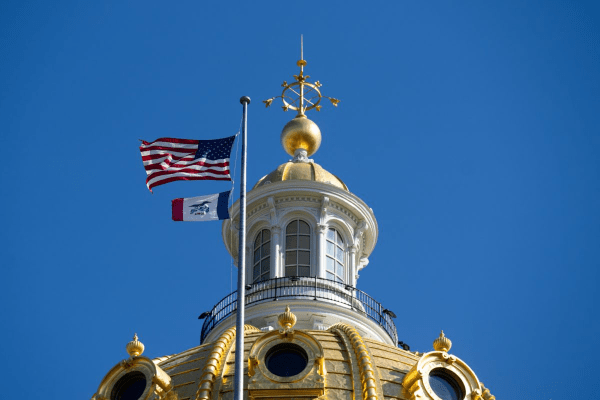
DES MOINES, Iowa (AP) — Iowa moved to remove gender identity protections from the state’s civil rights code Thursday despite massive protests by opponents who say it could expose transgender people to discrimination in numerous areas of life.

The Iowa House approved the bill that would strip the state civil rights code of protections based on gender identity, less than an hour after the state Senate backed the legislation. First introduced last week, the measure raced through the legislative process.

Hundreds of LGBTQ+ advocates streamed into the Capitol rotunda on Thursday waving signs reading “Trans rights are human rights” and chanting slogans including “No hate in our state!” There was a heavy police presence, with state troopers stationed around the rotunda. Of the 167 people who signed up to testify at the public hearing before a House committee, all but 24 were opposed to the bill.

Protesters that watched the vote from the House gallery loudly booed and shouted “Shame!” as the House adjourned. Many admonished Iowa state Rep. Steven Holt, who floor managed the bill and delivered a fierce defense of it before it passed.

The bill would remove gender identity as a protected class from the state’s civil rights law and explicitly define female and male, as well as gender, which would be considered a synonym for sex and “shall not be considered a synonym or shorthand expression for gender identity, experienced gender, gender expression, or gender role.”

The measure would be the first legislative action removing nondiscrimination protections based on gender identity, said Logan Casey, director of policy research at the Movement Advancement Project, an LGBTQ+ rights think tank.

Supporters of the change say the current law incorrectly codified the idea that people can transition to another gender and granted transgender women access to spaces such as bathrooms, locker rooms and sports teams that should be protected for people who were assigned female at birth.

The legislation now goes to Republican Gov. Kim Reynolds, who has been supportive of efforts to limit gender identity protections.

The Iowa lawmakers’ actions came on the same day the Georgia House backed away from removing gender protections from the state’s hate crimes law, which was passed in 2020 after the death of Ahmaud Arbery.

Iowa’s current civil rights law protects against discrimination based on race, color, creed, gender identity, sex, sexual orientation, religion, national origin or disability status.

Sexual orientation and gender identity were not originally included in the state’s Civil Rights Act of 1965. They were added by the Democratic-controlled Legislature in 2007, also with the support of about a dozen Republicans across the two chambers.

Iowa Republicans say their changes are intended to reinforce the state’s ban on sports participation and public bathroom access for transgender students. If approved, the bill would go to Republican Gov. Kim Reynolds, who signed those policies into law. A spokesperson for Reynolds declined to comment on whether she would sign the bill.

V Fixmer-Oraiz, a county supervisor in eastern Johnson County, was the first to testify against the bill at the public hearing. A trans Iowan, they said they have faced their “fair share of discrimination” already and worried that the bill will expose trans Iowans to even more.

“Is it not the role of government to affirm rather than to deny law-abiding citizens their inalienable rights?” Fixmer-Oraiz said. “The people of Iowa deserve better.”

Among those speaking in support of the bill was Shellie Flockhart of Dallas Center, who said she is in favor as a woman and a mother, a “defender of women’s rights” and someone “who believes in the truth of God’s creation.”

“Identity does not change biology,” Flockhart said.

About half of U.S. states include gender identity in their civil rights code to protect against discrimination in housing and public places, such as stores or restaurants, according to the Movement Advancement Project. Some additional states do not explicitly protect against such discrimination but it is included in legal interpretations of statutes.

Iowa’s Supreme Court has expressly rejected the argument that discrimination based on sex includes discrimination based on gender identity.

Several Republican-led legislatures are also pushing to enact more laws this year creating legal definitions of male and female based on the reproductive organs at birth following an executive order from President Donald Trump.

Marriage equality bills filed to protect same-sex marriage in North Carolina

*Reported by WWAY News

North Carolina State Representative Deb Butler (D–New Hanover), one of the first openly gay members of the state House, has filed two bills aimed at securing marriage equality and protecting LGBTQ+ families in the state.

The proposals – H174 and H175 – come as lawmakers brace for potential challenges to same-sex marriage rights amid a shifting federal judiciary.

H174 seeks to repeal North Carolina’s outdated ban on same-sex marriage, a statute that remains on the books despite being rendered unenforceable by the U.S. Supreme Court’s 2015 ruling in Obergefell v. Hodges. If enacted, the bill would affirm the federal protections of all married couples, regardless of gender.

H175 would introduce a constitutional amendment explicitly safeguarding marriage equality in North Carolina. The amendment is designed as a long-term shield, ensuring that even if the Supreme Court revisits Obergefell, LGBTQ+ families will remain protected from discriminatory state-level policies.

“In North Carolina, we must defend the rights of our LGBTQ+ citizens,” Rep. Butler said. “Marriage equality is a settled issue for the vast majority of Americans, and our state should reflect that reality. These bills are about ensuring dignity, security and legal protection for all families in the face of uncertainty at the federal level.”

According to a news release, Butler’s initiative is part of a broader effort to fortify civil rights protections across North Carolina. Advocates, legal experts and LGBTQ+ organizations have voiced strong support for the bills, emphasizing the urgent need for state-level safeguards amid a volatile national political climate.

The legislation now heads to the North Carolina General Assembly.

Transgender troops are now being identified for removal under Pentagon orders

*This is being reported by the AP on WFMY2’s website.

The military services have 30 days to figure out how they will seek out and identify transgender service members to remove them from the force — a daunting task that may end up relying on troops self-reporting or tattling on their colleagues.

A memo sent to Defense Department leaders on Thursday — after the Pentagon filed it late Wednesday as part of a response to a lawsuit — orders the services to set up procedures to identify troops diagnosed with or being treated for gender dysphoria by March 26. They will then have 30 days to begin removing those troops from service.

The order expands on the executive order signed by President Donald Trump during his early days in office setting out steps toward banning transgender individuals from serving in the military. The directive has been challenged in court.

A senior defense official said Thursday they believe there are about 4,200 troops diagnosed with gender dysphoria currently serving in the active duty, National Guard and Reserves.

The official, who spoke on condition of anonymity to discuss personnel issues, said that between 2015 and 2024, the total cost for psychotherapy, gender-affirming hormone therapy, gender-affirming surgery and other treatment for service members is about $52 million.

There are about 2.1 million troops serving.

However, the issue has taken up a large part of the Pentagon’s attention and time as Trump and Defense Secretary Pete Hegseth work to root them out, arguing that their medical condition doesn’t meet military standards.

The order expands on the executive order signed by President Donald Trump during his early days in office setting out steps toward banning transgender individuals from serving in the military. The directive has been challenged in court.

A senior defense official said Thursday they believe there are about 4,200 troops diagnosed with gender dysphoria currently serving in the active duty, National Guard and Reserves.

The official, who spoke on condition of anonymity to discuss personnel issues, said that between 2015 and 2024, the total cost for psychotherapy, gender-affirming hormone therapy, gender-affirming surgery and other treatment for service members is about $52 million.

There are about 2.1 million troops serving.

However, the issue has taken up a large part of the Pentagon’s attention and time as Trump and Defense Secretary Pete Hegseth work to root them out, arguing that their medical condition doesn’t meet military standards.

Sarah Warbelow, vice president for legal affairs for the Human Rights Campaign, said the new policy puts service members in a difficult position and pushes transgender troops to self-identify.

“All of a sudden, you are going to be required to out yourself. Other people are going to be required to out you,” Warbelow said. “If you’ve got a best friend in the military who happens to know that you are transgender, under this new guidance they’re required — if you are a woman who is transgender — they’re required to start referring to you as ‘he’ and ‘sir,’ as of today.”

Troops are put in the position of having to choose “between the safety of their friends and violating direct orders,” Warbelow said, adding that transgender service members may feel pressure to self-identify, knowing that they may be penalized by not coming forward.

On Thursday, U.S. officials said early rough numbers suggest about 600 transgender troops can be quickly identified in the Navy, between 300 and 500 in the Army and fewer than 50 in the Marine Corps. Officials said individuals could, for example, be identified by documented medical treatments, and acknowledged those numbers are likely to increase.

Other numbers were not available, according to the officials, who spoke on condition of anonymity to discuss personnel issues.

The officials noted, however, that the early numbers likely fall short of actual totals because some service members may have joined the service after any transition and may not have had medical or surgical procedures that could identify them. And officials also have warned that they may be limited by health privacy laws on what they can and can’t discern or report from records.

A 2018 independent study by the Palm Center, which researched LGBTQ issues, assessed there were an estimated 14,000 transgender troops among the more than 2 million troops serving.

The new Pentagon policy provides two exceptions: if transgender personnel who seek to enlist can prove on a case-by-case basis that they directly support warfighting activities, or if an existing service member, who was diagnosed with gender dysphoria, can prove they support a specific warfighting need and never transitioned to the gender they identify with and proves over 36 months they are stable in their biological sex “without clinically significant distress.”

Gender dysphoria occurs when a person’s biological sex does not match up with their gender identity.

If a waiver is issued, the applicant would still face a situation where only their biological sex was recognized for bathroom facilities, sleeping quarters and even in official recognition, such as being called “Sir” or “Ma’am.”

Warbelow said transgender troops should wait for additional clarity from the service and their commanding officers before doing anything that would affect their military service — also noting that ongoing court cases could affect the policy.

Trump tried to ban transgender troops from serving during his first term, but the issue ended up mired in lawsuits until former President Joe Biden was elected and overturned the ban.

Republicans in 9 states are pushing measures to end same-sex marriage rights

*This was published by LGBTNation.com

Nine states are now seeing Republican efforts to overturn Obergefell v. Hodges, the 2015 Supreme Court decision that legalized marriage equality in all 50 states. This is a new trend; state Republican lawmakers have been focused on rolling back trans rights since 2020.

In five of the states — Idaho, Michigan, Montana, North Dakota, and South Dakota — Republican lawmakers have introduced resolutions calling for the Supreme Court to overturn Obergefell. Those measures have been passed by at least one chamber of the state legislature in Idaho and North Dakota.

In the four other states – Missouri, Oklahoma, Tennessee, and Texas – Republican legislators have introduced bills to privilege heterosexual marriages, with some of the states referring to a new institution called “covenant marriage,” which would be limited to heterosexual couples. The point there, according to the sponsor of one such bill in Oklahoma, is to create inequality in marriage rights between opposite- and same-sex couples and invite a legal challenge that could be taken to the Supreme Court to overturn Obergefell.

Two justices on the Supreme Court have openly stated that they want to overturn Obergefell, and the Court has moved to the right since 2015. Justices Ruth Bader Ginsburg, Anthony Kennedy, and Stephen Breyer were all in the Obergefell majority but have either retired or passed away in the last ten years. Only one was replaced by a Democratic president. It is not clear if there are the five votes needed to protect marriage equality on the Court if it were to take up a test case.

Thirty-five states have amendments or statutes banning same-sex marriage, and most would likely go into effect if the Supreme Court were to overturn Obergefell. Because of the 2022 federal Respect for Marriage Act, though, state and federal governments would have to recognize same-sex marriages performed in other states.

“It’s good to anticipate things that could happen in order that we do our best job preparing ourselves,” Jenny Pizer, chief legal officer of Lambda Legal, told LGBTQ Nation last month. “The bottom line for people is that, if there are things that you can do to secure your relationships, your family status and to take other protective measures, please do those things. Don’t be lulled into complacency by our informed and reasonably expert speculation about what may happen.”

Michigan lawmaker urges US Supreme Court to overturn gay marriage ruling

*This is being reported by FOX 2 Detroit.

The Brief

    • Michigan Rep. Josh Schriver is proposing a resolution that would urge the U.S. Supreme Court to overturn the ruling that legalized same-sex marriage nationwide.
    • Schriver says allowing gay marriage has led to “religious persecution” and goes against “the sanctity of marriage.”
    • Gay marriage is banned in Michigan’s constitution, but is allowed due to the 2015 Supreme Court ruling that Schriver and the resolution’s co-sponsors wish to overturn.

LANSING, Mich. (FOX 2) – A Michigan lawmaker plans to introduce a resolution to the state House of Representatives, urging the United States Supreme Court to overturn Obergefell v. Hodges, the case that legalized same-sex marriage nationwide.

Rep. Josh Schriver (R-Oxford), along with 12 co-sponsors, will introduce the House resolution following Tuesday’s session.

The backstory:

The resolution comes after Schriver posted on social media late in 2024 that gay marriage should be banned.

“America only ‘accepted’ gay marriage after it was thrusted into her by a perverted Supreme Court ruling,” he wrote in part on X. “Make gay marriage illegal again. This is not remotely controversial or extreme.”

Schriver doubled down on what he said in a statement, where he wrote that gay marriage offends God. 

In a release announcing the new resolution, Schriver wrote that Obergefell v. Hodges “is at odds with the sanctity of marriage, the Michigan Constitution, and the principles upon which the country was established.”

Without the Obergefill ruling, gay marriage would be illegal in Michigan due to an amendment voters passed in 2004. However, the Supreme Court decision supersedes that. 

Schriver went on to reference what he called “religious persecution” since the 2015 ruling, including a wedding venue that was fined for turning away an LGBTQ couple, and Michigan Attorney General Dana Nessel attempting to ban adoption agencies from turning away same-sex couples for religious reasons. However, a judge later ruled that faith-based adoption agencies can turn away prospective parents because they are LGBTQ.

What they’re saying:

Fears that the Supreme Court may take another look at the ruling and overturn it arose after Roe v. Wade was overturned, and has increased as lawmakers begin introducing legislation aimed at the landmark case.

Lawmakers in other states, including IdahoMontanaNorth Dakota, and South Dakota, have also been pushing the Supreme Court to revisit the ruling and overturn it. 

The new resolution received pushback from Democrats, with state Democratic Party Chair Curtis Hertel releasing a statement condemning the resolution:

“Unfortunately, this isn’t a surprise coming from Josh Schriver and the right-wing extremists that populate Matt Hall’s Republican caucus – and it’s deeply dangerous. Schriver is attacking hundreds of thousands of Michiganders who are nurses, teachers, soldiers, and beloved members of the community.

“From spreading racist conspiracy theories to homophobic rhetoric, Schriver does not deserve to serve the people of Michigan, let alone sit on a politically motivated oversight committee in the state House. Thankfully, I know that Democrats will continue to fight for Michiganders’ civil rights and personal freedoms in the face of these ugly attacks.”

Gay marriage in Michigan

Because Michigan voters banned gay marriage in 2004, legalizing the practice would first require voters to remove the ban from the state constitution via ballot proposal.

Lawmakers have been pushing to codify same-sex marriage to protect it if Obergefell were to be overturned.

Under the existing amendment, if Obergefell were to be overturned, existing marriages in Michigan would be recognized, but future LGBTQ+ marriages would be banned, said Rep. Jason Morgan (D-Ann Arbor).

A similar scenario played out in 2022 when nationwide abortion was removed following a Supreme Court ruling. The overturning of that ruling allowed states to decide if they would allow abortions. Michigan had an existing abortion ban that was lifted after voters passed a proposal to allow the procedure.

After the Roe ruling, Justice Clarence Thomas said that the Supreme Court should reconsider rulings that legalized same-sex marriage and protected same-sex relationships, creating fear in states that don’t have protections in place.

More Americans than ever identify as LGBTQ+

*This was reported by LGBTQNation.com

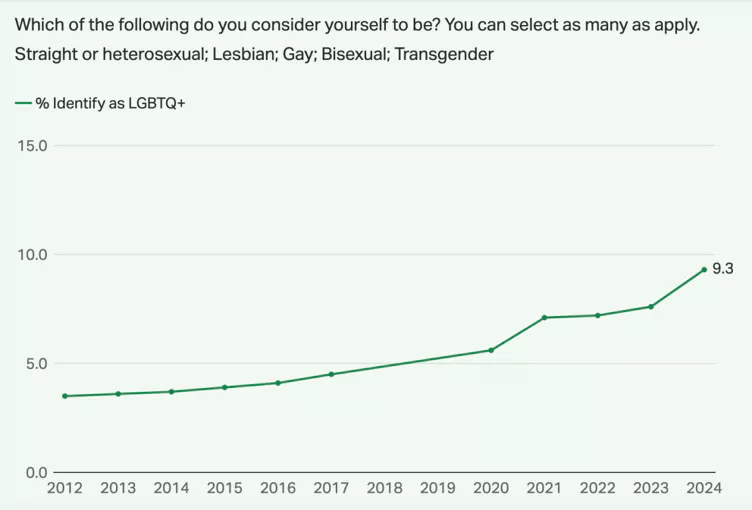
The number of Americans identifying as LGBTQ+ continued to rise, according to the latest Gallup poll.

In 2024, 9.3% of U.S. adults identified as lesbian, gay, bisexual, transgender, or something other than heterosexual.

That’s an increase of more than one point since a 2023 survey, double the number from 2020, and up from 3.5% when Gallup first asked about sexual identity in 2012.

14,000 respondents in a phone survey were asked, “Which of the following do you consider yourself to be? You can select as many as apply. Straight or heterosexual; Lesbian; Gay; Bisexual; Transgender.”

Overall, 85.7% say they are straight, 5.2% are bisexual, 2.0% are gay, 1.4% are lesbian, and 1.3% are transgender. Just under 1% mention another LGBTQ+ identity, such as pansexual, asexual, or queer. Five percent of respondents declined to answer the question.

The survey found LGBTQ+ identification is increasing as younger generations of Americans enter adulthood. Younger people are much more likely than older generations to say they are something other than heterosexual.

Both Gen Z and millennials came of age with the expansion of LGBTQ+ rights, marriage equality, and greater representation in the culture.

More than one in five Gen Z adults — those born between 1997 and 2006, who were between the ages of 18 and 27 in 2024 — identify as LGBTQ+. Each older generation of adults, from millennials to the Silent Generation, has successively lower rates of identification, down to 1.8% among the oldest Americans, those born before 1946.

The largest increase was among younger people identifying as bisexual. 59% of LGBTQ+ Gen Z Americans (ages 18-27) called themselves bisexual, along with more than half (52%) of LGBTQ+ millennials (ages 28-43).

Among the nearly 900 LGBTQ+ individuals Gallup interviewed last year, more than half, 56%, said they were bisexual. Twenty-one percent said they were gay, 15% lesbian, 14% transgender, and 6% something else. These figures total more than 100% because the survey allows respondents to report multiple LGBTQ+ identities.

The overall estimate of 9.3% of U.S. adults who identify as LGBTQ+ counts each respondent only once, even if they have multiple identities.

The survey broke down LGBTQ+ identification associated with sex, politics, and geography, as well.

Democrats (14%) and independents (11%) are far more likely than Republicans (3%) to identify as LGBTQ+.

21% of liberals, compared with 8% of moderates and 3% of conservatives, say they are lesbian, gay, bisexual, or transgender.

LGBTQ+ identification is higher among people living in cities (11%) and suburbs (10%) than in rural areas (7%).

College graduates (9%) and nongraduates (10%) are about equally likely to identify as LGBTQ+, while 10% of women versus 6% of men say they are LGBTQ+. That gender gap is most pronounced in younger generations.

31% of Gen Z women versus 12% of Gen Z men identify as LGBTQ+, with most of those younger women saying they are bisexual.

Kansas Lawmakers Override Veto of Ban on Transition Care for Minors

*This was reported by the NY Times

The Republican-controlled Kansas Legislature on Tuesday overrode the Democratic governor’s veto of a bill that bans gender-transition treatments for minors, fulfilling a longtime goal of conservative lawmakers and joining about half of the country’s states in enacting bans or sharp limits on those procedures.

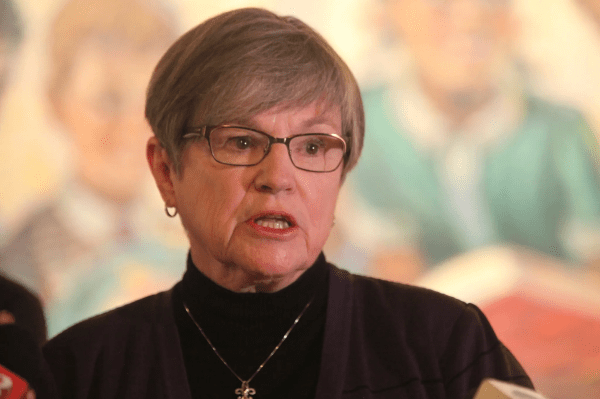
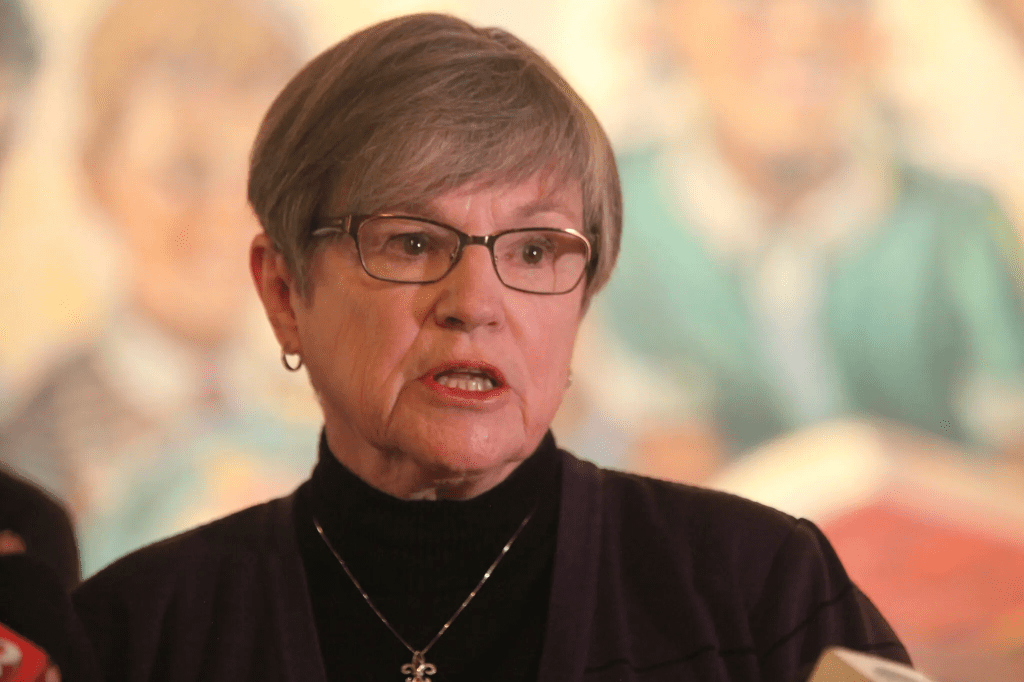
The Kansas bill had broad Republican support, but its status had been uncertain because of the opposition of Gov. Laura Kelly, who said it was “disappointing that the Legislature continues to push for government interference in Kansans’ private medical decisions.” Ms. Kelly vetoed similar bills in each of the last two years, and lawmakers had previously failed to override her.

This time, Republicans in both chambers mustered the two-thirds margin necessary to override her and celebrated the decision as following President Trump’s lead on the issue. Kansas had been among the only states where Republicans hold significant legislative power without such a law.

“Today, a supermajority of the Kansas Senate declared that Kansas is no longer a sanctuary state” for those procedures, Senator Ty Masterson, the chamber’s president, said in a statement.

Republican supporters of the measure, which bans hormone treatments, puberty blockers and transition surgeries for transgender patients younger than 18, described it as guarding young people from life-altering choices that they could later regret. Under the new law, doctors who provide those treatments to minors could lose their licenses and be sued by patients or their parents.

The shift in Kansas comes as President Trump and his administration crack down on gender transitions for minors nationally, seeking to end funding for hospitals that provide those treatments. The Trump administration has also moved to ban trans women and girls from competing in women’s sports, to bar trans people from serving openly in the military, to house trans women who are federal prisoners with men, and to no longer reflect the gender identities of trans people on passports.

Democrats and L.G.B.T.Q. advocates called the Kansas legislation an invasion of privacy that would have devastating health consequences. In her veto message, Ms. Kelly said “infringing on parental rights is not appropriate, nor is it a Kansas value,” and warned that enacting the measure could have economic consequences.

“This legislation will also drive families, businesses, and health care workers out of our state, stifling our economy and exacerbating our workforce shortage issue,” the governor wrote.

The new law comes as part of a broader push by Republicans in Kansas, a state that Mr. Trump carried last year by 16 percentage points, to place limits on transgender people. Kansas stopped changing birth certificates to reflect gender identity in 2023 after lawmakers overrode another veto by Ms. Kelly and passed a law defining male and female as a person’s sex at birth.

But as Republicans across the country have moved in recent years to restrict transition treatments for minors, Kansas had remained an outlier on the Great Plains. Bans or severe limits are already in place in three of its four bordering states — Colorado is the exception — and across much of the rest of the Midwest.

Bans elsewhere have been challenged in state and federal courts with a range of preliminary outcomes. Many expect the U.S. Supreme Court to ultimately decide whether there is a national right to access such treatments.

No evidence of hate crime in ‘torture’ killing of transgender man in upstate New York

*This is being reported by ABC News

Investigators probing what they described as the torturous killing of a 24-year-old transgender man in upstate New York, allegedly at the hands of five people, say they have found no evidence that the homicide was a hate crime.

The remains of the victim, identified as 24-year-old Sam Nordquist of Minnesota, were discovered on Wednesday in a field in Benton, New York, in Yates County, according to Capt. Kelly Swift, a New York State Police investigator.

Swift said investigators suspect that Nordquist was tortured and killed in neighboring Ontario County and moved “in an attempt to conceal a crime.”

“Based on evidence and witness statements, we have determined that Sam endured prolonged physical and psychological abuse at the hands of multiple individuals,” Swift said Friday during a news conference.

A criminal complaint obtained by Rochester, New York, ABC affiliate WHAM alleged that the suspects sexually assaulted Nordquist with a “table leg and broomstick.” The complaint further alleges that the suspects subjected Nordquist to “prolonged beatings by punching, kicking and striking [Nordquist] with numerous objects, including but not limited to sticks, dog toys, rope, bottles, belts, canes and wooden boards.”

According to the complaint, the torture allegedly took place in room 22 at Patty’s Lodge in Hopewell, New York, in Ontario County between Jan. 1 and Feb. 2.

Swift said investigators executed a search warrant at the hotel on Thursday, specifically searching room 22 for evidence.

“In my 20-year law enforcement career, this is one of the most horrific crimes I have ever investigated,” Swift added. “My thoughts are with Sam’s family during this time.”

Suspects charged with murder

The suspects arrested in the case were identified by Swift as Precious Arzuaga, 38, of Canandaigua, New York; Jennifer Quijano, 30, of Geneva, New York; Kyle Sage, 33, of Rochester, New York; Patrick Goodwin, 30, also of Canandaigua; and Emily Motyka, 19, of Lima, New York.

Ontario County District Attorney James Ritts said all five suspects have all been charged with second-degree murder under the state’s depraved indifference statute. He said the suspects have been arraigned and are being held without bail at the Ontario County Jail.

It was unclear if the suspects had hired or were appointed attorneys to represent them.

No indication of a hate crime

In a joint statement released on Sunday, the state police and Ritts addressed whether investigators are pursuing hate crime charges against the suspects.

“At this time we have no indication that Sam’s murder was a hate crime,” the joint statement reads. “To help alleviate the understandable concern his murder could be a hate crime, we are disclosing that Sam and his assailants were known to each other, identified as LGBTQ+, and at least one of the defendants lived with Sam in the time period leading up to the instant offense.”

Authorities said they released the information after getting “multiple inquiries from across our community, New York State and the entire nation.”

In the statement, officials noted that under the New York State penal code, a hate crime is defined as an offense committed “in whole or in substantial part because of a belief or perception regarding the race, color, national origin, ancestry, gender, gender identity or expression, religion, religious practice, age, disability or sexual orientation of a person regardless of whether the belief or perception is correct.”

“We are still in the early stages of this investigation,” the joint statement reads. “While significant evidence has been obtained, we are continuing to follow up on leads brought to State Police. We urge the community not to speculate into the motive behind the murder as we work to find justice for Sam.”

Governor described the killing as ‘sickening’

New York Gov. Kathy Hochul said in a statement released Sunday that she had directed the State Police to provide any support and resources to Ritts’ office “as they continue their investigation, including into whether this was a hate crime.” The statement further said that Hochul had directed the New York State Division of Human Rights Hate and Bias Prevention Unit to offer assistance and support “to all community members affected by this terrible act of violence,” adding, “There must be justice for Sam Nordquist.”

Hochul also said that she had instructed the New York State Office of Victim Services to offer support to Nordquist’s family.

“The charges against these individuals are sickening and all New Yorkers should join together to condemn this horrific act,” Hochul said in the statement. “We are praying for Sam Nordquist’s family, community and loved ones who are experiencing unimaginable grief.”

‘Beyond depraved’

“The facts and the circumstances of this crime are beyond depraved,” Ritts said Friday during the press conference. “This is by far the worst homicide investigation that our office has ever been part of. No human being should have to endure what Sam endured.”

Nordquist’s family filed a missing person report with the Canandaigua Police Department on Feb. 9, after last hearing from Nordquist on Jan. 1, according to a missing-person flyer issued by the Missing People in America organization.

According to the flyer, Nordquist’s family said he left Minnesota on Sept. 28, 2024, with a round-trip plane ticket to New York. The family, according to the flyer, alleged that he met a woman online who convinced him to visit her.

The family, according to the flyer, claimed Nordquist was planning to fly back to Minnesota within two weeks, but never boarded his return flight.

“I don’t understand why someone would do that to another person,” Kayla Nordquist, Sam’s sister, told Saint Paul, Minnesota, ABC affiliate KSTP. “Sam was amazing and would give the shirt off his back to anyone.”

When asked Friday about the missing-person flyer, Swift declined to comment.

Swift would not disclose details of the abuse, saying the investigation is in its early stages. However, she said, Nordquist was “subjected to repeated acts of violence and torture in a manner that ultimately led to his death.”

Swift said more arrests were possible and asked anyone with information about the crime to contact state police investigators.

Ritts said he anticipates a grand jury will take action in the case “very quickly.”

Multiple vigils for Nordquist are being scheduled this week in several states, including one Monday evening at the Wood Library in Canandaigua, New York, according to Family Counseling Service of the Finger Lakes, which is hosting the event. Two other vigils are planned for Monday night in Nordquist’s home state of Minnesota, including one outside the Minnesota State Capitol building in Saint Paul.

On Tuesday evening, vigils are scheduled to take place at the Phelps Arts Center in Phelps, New York, and at The Presbyterian Church in Geneva, New York. On Thursday, a vigil is scheduled to take place on the Main Plaza in downtown New Braunfels, Texas, about 30 miles northeast of San Antonio.

HUD Secretary Turner Halts Equal Access Rule Enforcement

*This is reporting by NILHC.org


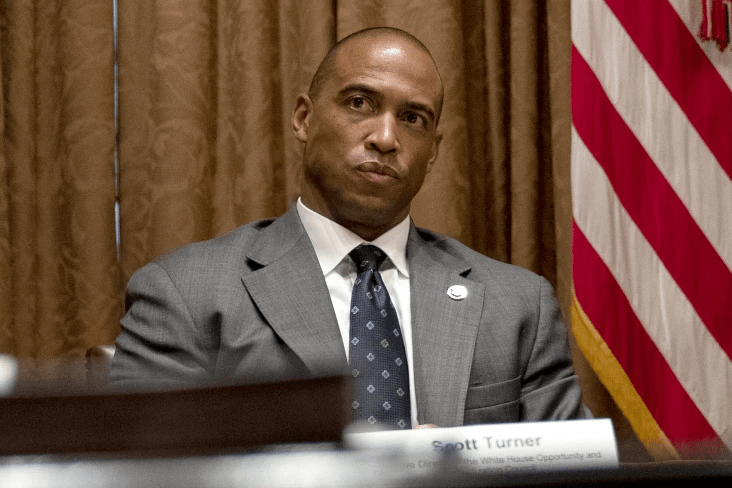
On February 7, HUD Secretary Scott Turner announced HUD will stop enforcing the 2016 Equal Access Rule, which requires housing, facilities, and services funded through HUD’s Office of Community Planning and Development (CPD) to ensure equal access to programs for individuals based on their gender identity without intrusive questioning or being asked to provide documentation. Secretary Turner stated that the action “will ensure housing programs, shelters and other HUD-funded providers offer services to Americans based on their sex at birth.” NLIHC will continue to advocate for equal access and fair housing for LGBTQ+ people. 

In a press conference following Secretary Turner’s first address to HUD, Turner stated, “I am directing HUD staff to halt any pending or future enforcement actions related to HUD’s 2016 Equal Access Rule, which, in essence, tied housing programs, shelters and other facilities funded by HUD to far-left gender ideology.” Turner continued: “We, at this agency, are carrying out the mission laid out by President Trump on January 20th when he signed an executive order to restore biological truth to the federal government.” 

Weakening the Equal Access Rule and its enforcement mechanisms is unacceptable. Access to shelter is a basic, fundamental necessity. LGBTQ youth are more than twice as likely to experience homelessness than their non-LGBTQ peers, and black LGBTQ youth have the highest rates of youth homelessness. One in three transgender people will experience homelessness in their lifetime, and 70% of trans people who have used a shelter have experienced harassment. NLIHC will continue to work with LGBTQ advocates to ensure that everyone has access to safe, decent, affordable housing. 

Read the statement from Secretary Turner here

View the press conference here.  

Read more about the Equal Access Rule here.

Pro-LGBTQ Protests in Berlin Germany

Pro LGBTQ protesters took to the streets of Berlin Germany to march in support of left wing political parties that support LGBTQ rights and safety, ahead of the German Bundestag elections that will be held on February 23, 2025.

The centrist party Central Democrats hold a lead in the polls, however gains have been made by the far right party Alternative for Germany. The ruling central left party Social Democrats have lost 12 points since the last election and are currently polling 3rd.

Blog at WordPress.com.

Up ↑