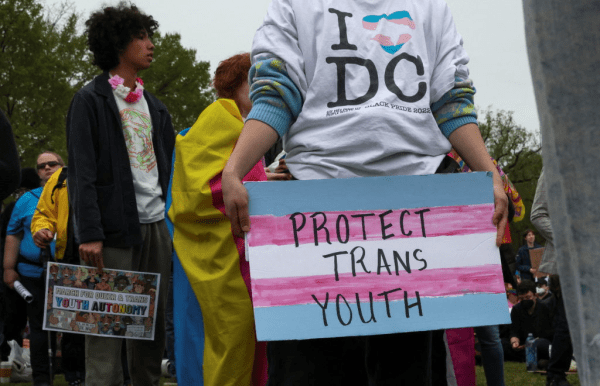
References to transgender and queer removed from Stonewall National Monument’s web page

*This was first reported by NBC News.

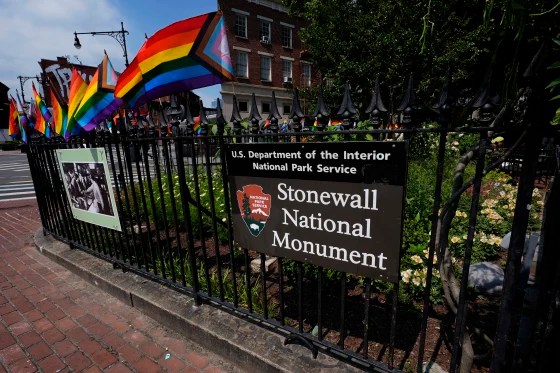
References to transgender and queer people were erased from the Stonewall National Monument’s web page, marking one of the latest moves of the current administration after President Donald Trump said the government would recognize male and female as the only biological sexes.

The page used to say “LGBTQ+,” according to an archived version of the National Park Service’s website. It now only says “LGB.”

Stacy Lentz, co-owner of the Stonewall Inn and the chief executive of the nonprofit Stonewall Inn Gives Back Initiative, said the Trump administration was trying to “erase trans people from history and from existing.” A protest is scheduled for noon on Friday.

“There is no Pride without Trans folks leading that fight! Trying to erase them from the Birthplace of the modern LGBTQ+ rights movement will not happen! We need to show up and speak out for our trans and nonbinary siblings who are under attack,” Lentz wrote in an Instagram post announcing the protest.

In a joint statement, the Stonewall Inn and the Stonewall Inn Gives Back Initiative said it was “outraged.”

“This blatant act of erasure not only distorts the truth of our history, but it also dishonors the immense contributions of transgender individuals – especially transgender women of color – who were at the forefront of the Stonewall Riots and the broader fight for LGBTQ+ rights,” the statement read.

“Let us be clear: Stonewall is transgender history. Marsha P. Johnson, Sylvia Rivera, and countless other trans and gender-nonconforming individuals fought bravely, and often at great personal risk to push against oppressive systems,” it continued. “Their courage, sacrifice, and leadership were central to the resistance we now celebrate as the foundation of the modern LGBTQ+ rights movement.”

The statement said removing the word transgender is an attempt to marginalize the people who fought for change in the community. They called it a “direct attack on transgender people” and demanded the word be added back to the website.

Trans youth care ban vetoed by Kansas governor again

*This was published by ABC News.

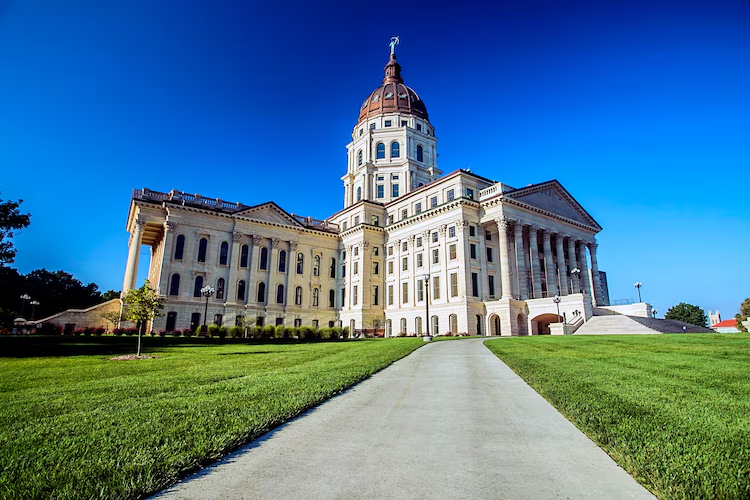
Kansas Gov. Laura Kelly has vetoed Senate Bill 63, which would have restricted gender-affirming care for transgender youth.

“Right now, the legislature should be focused on ways to help Kansans cope with rising prices,” Kelly said in a statement emailed late Tuesday. “That is the most important issue for Kansans. That is where my focus is.”

The bill would bar health care providers from administering gender-affirming medical care – including puberty suppressants and hormone therapies – for someone under the age of 18, only for the purposes of gender transitioning. The ban would also apply to gender-affirming surgeries.

“Infringing on parental rights is not appropriate, nor is it a Kansas value,” said Kelly in her veto message. “As I’ve said before, it is not the job of politicians to stand between a parent and a child who needs medical care of any kind. This legislation will also drive families, businesses, and health care workers out of our state, stifling our economy and exacerbating our workforce shortage issue.”

This is the third time Kelly has vetoed similar transgender youth care bills, but the bill may now have the support to pass.

The bill passed the state legislature with flying colors – passing the House 83-35 and the Senate 32-8.

In 2023, the attempt to override a past trans care ban veto lost in the House 82-43.

State Republicans quickly denounced Kelly’s veto.

“The governor’s devotion to extreme left-wing ideology knows no bounds, vetoing a bipartisan bill that prevents the mutilation of minors,” said State Sen. Ty Masterson in an online statement. “The Senate stands firmly on the side of protecting Kansas children and will swiftly override her veto before the ink from her pen is dry.”

Top national medical associations such as the American Medical Association, American Academy of Child and Adolescent Psychiatry, and American Academy of Pediatrics and more than 20 others argue that gender-affirming care is safe, effective, beneficial, and medically necessary for transgender populations.

Kelly joins governors past and present in Ohio and Arkansas in vetoing bills that targeted gender-affirming youth care. However, both of their vetoes were overridden.

Across the country, trans youth care restrictions have faced legal hurdles in their enforcement.

The battle and debate has most recently made its way to the national stage, with the Supreme Court considering U.S. v. Skrmetti, which will decide if Tennessee’s law banning some gender-affirming care for transgender minors violates the Equal Protection Clause of the U.S. Constitution.

Worcester MA leaders vote to become a sanctuary city for trans community

*This was published by NBC Boston.

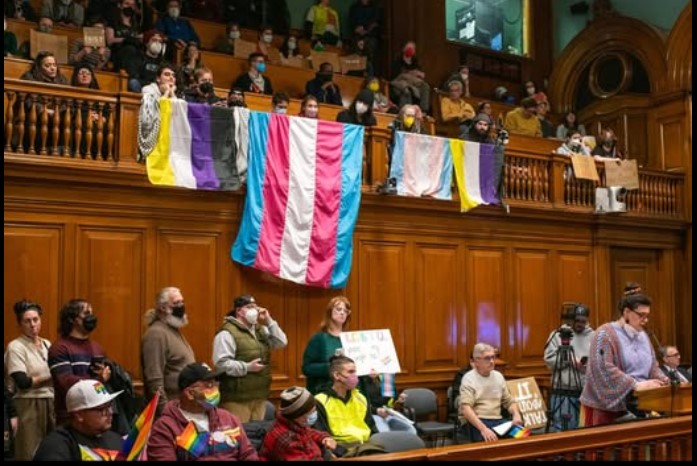
There’s a new safe haven for those who identify as transgender in the Bay State, after Worcester officially became a sanctuary city for that community during a lengthy city council meeting on Tuesday night.

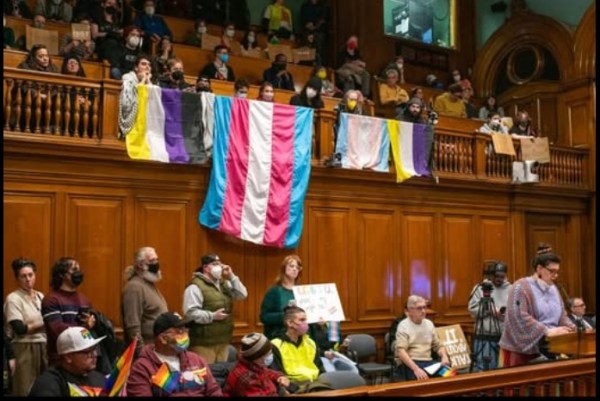
This meeting lasted about five hours and there were about 200 people who showed up to voice their support.

It was standing room only inside council chambers – as dozens of residents spoke before the city council in favor of making Worcester a sanctuary city for those who identify as transgender or of other diverse genders.

This campaign comes on the heels of the first openly nonbinary member elected to the council — Worcester City Councilor-at-Large Thu Nguyen — taking a hiatus from the council, after they say the environment was transphobic.

Local organization Queer Residents of Worcester and Our Allies filed the petition asking councilors to make Worcester a sanctuary city for transgender and gender diverse people.

The petition specifically asks the city to not cooperate with federal and state policies aimed at harming transgender and gender diverse people, and to ensure that the LGBTQ+ community here has access to healthcare, housing, education, and employment without fear of discrimination.

“You have an incredible opportunity as a community to support our children, you have an opportunity to decrease the rates of depression and suicide by showing our children that their safety and dignity are a priority,” one meeting attendee said.

“It is your responsibility to stand up and fight for our people, for your people, for the people,” another added.

The city council approved it by a vote of 9-2.

Donald Trump stops giving PrEP to gay men & sex workers, ensuring HIV outbreaks abroad

*This was originally published by LGBTQNation.com

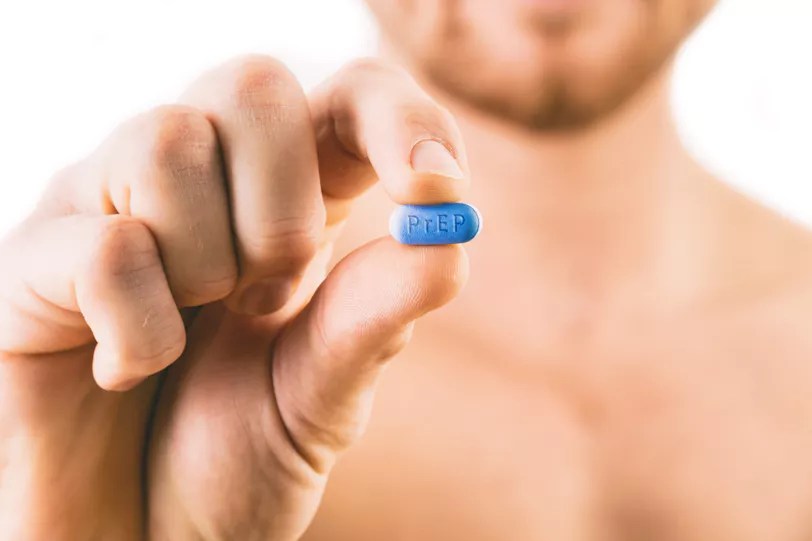
The U.S. State Department has issued a memo stating that the President’s Emergency Plan for AIDS Relief (PEPFAR), a program to prevent HIV in low- and middle-income foreign countries, can only offer HIV-preventing pre-exposure prophylaxis (PrEP) medications to pregnant and breastfeeding women (PBFW) rather than to LGBTQ+ people, sex workers and other groups at high-risk for contracting HIV.

The memo circulated by the State Department’s Global Health Security and Diplomacy program states, “People other than PBFW who may be at high risk of HIV infection or were previously initiated on a PrEP option cannot be offered PEPFAR-funded PrEP during this pause of U.S. Foreign Assistance or until further notice.”

The “pause” mentioned in the memo refers to a 90-day hold on all foreign aid issued by President Donald Trump’s executive order on “reevaluatig and realigning” U.S. foreign aid. The State Department added that Trump’s order is “rooting out waste” and “blocking woke programs” to ensure that funding only benefits efforts “fully aligned” with Trump’s foreign policy.

“We are outraged by the Trump Administration’s puritanical distribution of life-saving medication that brazenly discriminates against anyone not having sex exclusively for procreation,” said Wayne Besen, executive director of the LGBTQ+ advocacy organization Truth Wins Out. “This… could cruelly lead to the infection, and eventual death, of hundreds of thousands of people worldwide.

“There is no other explanation for these guidelines other than cruel, vindictive behavior meant to cause pain and suffering to vulnerable communities disfavored by President Trump’s right-wing base,” Besen continued, adding, “Aren’t conservatives supposed to be pro-life, or do they only care about ‘life’ for those who are just like them?”

Secretary of State Marco Rubio issued a waiver for lifesaving medicines and medical services affected by the pause, but his memo explained that PEPFAR funds will be restricted in various ways. In addition to denying PrEP medications to all but PBFW, Rubio’s restrictions also prohibit surveys and systems tracking the spread of HIV and child abuse in regional populations, as well as any projects scheduled beyond December 31 of this year.

As a result, the program’s HIV-prevention drugs are reportedly still not reaching their intended recipients, many clinics have ceased offering services, and healthcare workers haven’t been paid, the Kaiser Family Foundation (KFF) reported. These all increase the likelihood of rising HIV rates, outbreaks, and HIV-related deaths abroad, KFF and Besen said.

The freeze and restrictions on PEPFAR funding have coincided with the dismantling of USAID – the independent U.S. international development agency that implements most U.S. global health programs – by Trump’s unofficial Department of Government Efficiency (DOGE). DOGE, which is not an official federal department created through required congressional approval, is headed by the world’s richest man, Elon Musk.

Musk has made the elimination of the agency a top DOGE priority, stating, “USAID is a criminal organization. Time for it to die,” without citing any evidence. Although USAID is the primary source of funding for HIV/AIDS relief for over 25 million people in 54 countries, the agency’s website has since been disabled.

A large portion of USAID’s personnel have been furloughed or fired; PEPFAR recipients have been left with no way to reach longtime contacts or access guidance. The Trump administration announced its intention to remove almost all USAID workers from their jobs and out of the field worldwide. Rubio said recipient organizations would have to apply for waivers to restart the funding.

Opponents have called Trump and Musk’s actions against PEPFAR and USAID illegal and unconstitutional. Lawsuits against the dismantling of the agency have been filed by USAID contractors – who say that the Trump administration owes them millions in unpaid bills that had been pledged in the last congressional budget – and also by a pair of nonprofit organizations, including the AIDS Vaccine Advocacy Coalition (AVAC), an HIV-prevention nonprofit.

The State Department is blocking new passports for trans Americans

*This was originally published on 19thNews.org

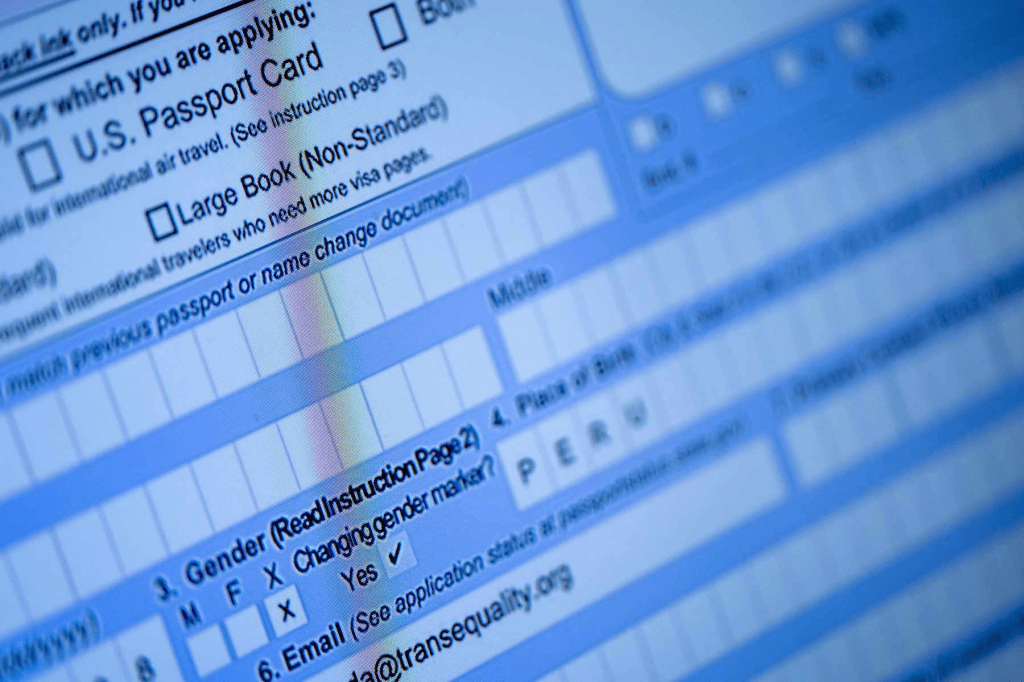
The State Department is no longer issuing U.S. passports with “X” gender markers and has suspended processing all applications from Americans seeking to update their passports with a new gender marker. This suspension, made in response to President Donald Trump’s executive order signaling his administration’s opposition to gender diversity, affects all transgender and nonbinary Americans, including those currently traveling or overseas. 

The agency says that it will issue guidance on previously issued passports with an “X” marker and that more information will be available on its travel website. However, no formal policy has been released, which is fueling confusion among trans and nonbinary people trying to update their documents. 

That includes Ash Lazarus Orr, a trans activist living in West Virginia. Orr applied to update their name and gender marker on their passport on January 16 — days before Trump was sworn into office. He paid $300 for expedited service, but his paperwork wasn’t processed until January 22. When Orr called the agency’s hotline for Americans waiting on passports who have upcoming international travel, they were told that the agency had no guidance to offer and that their documents had been “set aside.” 

Now Orr is without his passport, without his birth certificate and without his marriage license. Over the phone, he was told that his documents are being held in San Francisco, where they were originally being processed. 

“They have my documentation that is very personal to me, and they cannot tell me if I’m going to be getting that back,” they said. 

The American Civil Liberties Union has warned trans and nonbinary Americans that if they submit a new application to change the gender marker on their passport, they risk losing access to their passport and supporting documents while their application is being processed. An ACLU spokesperson attributed this information to reports of discrimination received through the organization’s online intake form, as well as direct conversations with people who have described this happening to them. 

Trump’s executive order directed federal agencies to require that government-issued identification documents, including passports and visas, reflect sex assigned at birth. Since this order states that it is the policy of the United States to recognize two sexes, male and female, and that these sexes are not changeable, “the department’s issuance of U.S. passports will reflect the individual’s biological sex,” an agency spokesperson said in an emailed statement on Friday evening. Under Trump’s executive order, “sex” explicitly excludes gender identity.

Secretary of State Marco Rubio reportedly instructed agency staff on Thursday to implement that executive order as it pertains to passports immediately, as first reported by The Guardian and The Intercept. Now, Orr is without his personal identity documents six weeks before pre-planned international travel and in the middle of planning a move out of West Virginia. 

The Biden administration made it easier for trans and nonbinary people to update their federal identity documents. Accurate and consistent gender markers on identity documents dramatically reduces the risk that trans people will face violence, harassment and discrimination, according to the Movement Advancement Project, which tracks LGBTQ+ policy.

The dismantling of this policy has radical consequences, said a former State Department official who spoke on condition of anonymity due to fear of lingering retaliation from the agency under the Trump administration. Not only does it force transgender people to carry identity documents that don’t accurately reflect their identity, this move also signals globally that U.S. policy on trans rights is moving backward, they said. 

“The confusion that this decision creates is intentional. It is designed to make things harder for trans and nonbinary people,” they said.

When The 19th called the National Passport Information Center on January 23 to ask for more information, an employee on the technical support desk said that the State Department is aware of Trump’s executive order and that guidance will be posted online once information is available. 

Erin Ryan Heyneman, a nonbinary person living in Massachusetts, called that same hotline. They don’t need to renew their passport; they said they just wanted to find out what was going on. Although they feel safe in their state, which has nondiscrimination protections in place for LGBTQ+ people, they still felt the need to act because of the way confusion can endanger their wider community.

“People just really don’t know who to believe or what to believe,” they said. More LGBTQ+ people need to seek information from trusted sources, they said. But when trying to seek that information from an official source, Heyneman was met with more uncertainty. The employee on the phone was sympathetic, but they had no information about passports being confiscated. 

As Orr waits to learn whether they will get their passport back due to federal anti-trans policies, they are facing down the prospect of leaving their home because of transphobia within the state. 

West Virginia has become increasingly hostile to trans and nonbinary people like himself amid a surge in anti-trans rhetoric across the country, and Orr expects a surge in state anti-trans bills introduced in West Virginia’s next legislative session. After receiving death threats and recently being attacked inside a men’s bathroom, he doesn’t leave the house without his spouse. 

“I can’t stay in the state. And it’s heartbreaking, because I love it here. I love the people, but it is truly, at this point in time, it’s either I leave or I die,” they said.

I was misgendered for having “female breasts” as a kid. Here’s why it hurt.

*This commentary by Matt Keeley was originally published by LGBTNation.

Some cisgender people think the recent Republican fad of banning of transgender people from sports and bathrooms won’t affect them, and that if people just conform closely to gender stereotypes, they won’t have trouble. But these don’t realize that random nuts have confronted cis women in the ladies’ room just for wearing pants and having short hair.

Gender policing goes from controlling how we look to controlling how we behave. And cis people who have never been misgendered may not realize just how much it can hurt… but as a cis man who has been misgendered, I do.

As a kid, I had gynecomastia, a condition where prominent breasts develop on a boy or man. And my breasts were indeed prominent — probably a C- or D-cup in bra size. It started around when I was 10 or so. While we never figured out the reason, it doesn’t really matter when you’re in middle school and kids confront you in the bathroom, calling you “titty boy.” 

Even friends would make the occasional crack to my chagrin. I remember once talking about how my uncle’s internal organs were backwards; one of my friends immediately joked, “And you’ve got two hearts: here and here,” gesturing at each breast. It didn’t feel great!

I hated my breasts. I often fantasized about chopping them off. It was never gory or gross in my mind — it usually was more like picking off a scab — a little bit of pain at first, but then perfectly fine with a normal chest just like every other boy.

The teasing changed my relationship with my body. My nipples usually inverted into my areolas by nature. But whenever they weren’t, I’d push them back in because, in my weird kid mind, women’s breasts had outward-facing nipples for babies to feed. If mine pointed inward, then that meant they weren’t breasts like what women had, and were…. something different.

I didn’t know the word “dysmorphia” at the time, but looking back, it seems like a manifestation of that. Most of all, I wanted to ignore that my breasts even existed. I hated even using the word “breast” in any context. While taking swimming lessons, I’d refer to the breaststroke as the “whip-kick stroke” based on the leg movements. When I wore collared shirts, they had chest pockets — men had chests, women had breasts.

While the teasing and bullying was bad, unintentional cruelty was somehow even worse. One expects bullies to be mean and to focus on one’s flaws. But if someone unintentionally misgendered me, it felt like they couldn’t help but hurt me, based solely on my appearance, infringing on my misguided attempts to ignore and feel indifferent to my own body.

One moment that’s seared in my brain (and will be for the rest of my life) happened around age 11 one afternoon at an office supply store. I needed a new graphing calculator for math class. I approached a worker kneeling on the floor, re-stocking the bottom shelf. 

“Pardon me, do you know where the graphing calculators are?” I asked.

“Oh, sure, sir,” he said, turning and seeing my shoes. 

His eyes raised to my chest and said, “…ma’am…”

His eyes then hit my face and he quickly went back to “sir,” before telling me where they were located.

I could tell he wasn’t being mean, he was just processing the visual stimuli in the order presented. I could tell he was embarrassed and neither of us wanted to call attention to his error, so I thanked him, and went to pick up the TI-85 calculator I needed. 

I have no idea if he remembers that day at all. Probably not. But it’s a moment I relive over and over. I was wearing my standard uniform of jeans and a loose-fitting green/yellow Hypercolor T-shirt — it was the early ‘90s after all.

It’s hard to explain why it hurt so much to be mistaken for a woman. It wasn’t merely that it proved I was “different” from other boys. It wasn’t shame at being seen as a woman or less than “manly” — in fact, I don’t think real-or-perceived misogyny played a part in what happened or how I felt. I’ve always had various “feminine”-coded interests even as a kid: In first grade, I loved The Baby-Sitter’s Club book series (which features mostly girl characters) and I’d often pretend to be the magical Mrs. Piggle-Wiggle from the classic children’s novels.

The misgendering bothered me more so because it just wasn’t me — I wasn’t being perceived correctly. I couldn’t put it into words; I wasn’t necessarily “manly” and had no real desire to be seen as such, but I was a man (or at least, I would be one day when I grew up).

I was lucky; I was able to get a breast reduction — top surgery in trans masc parlance — the summer I turned 13. My surgeon, Dr. Kropp — whose name somewhat matched his surgical specialty — was excellent, and confirmed that I had excess breast tissue, not just fat. 

That fall, I came into a new school as a high school freshman, and no one ever commented on my chest again; I was thankfully average. Friends even seemingly forgot about it, and no one asked about the change.

It took me a very long time to get over it — my chest was the one thing I was sensitive about. I’m pushing 45 now; it’s been 30 years, and the wounds have finally scabbed over. (The figurative ones, I mean. As for the actual surgical scars, those healed very nicely and relatively quickly after the procedure.)

But it took decades for me to get over the misgendering. And I immediately “passed as male” otherwise, if you wanted to call it that. It was just: one day boobs, one day none. So I can only imagine the pain that accumulates over when a trans person gets misidentified for so long, sometimes even after transitioning. 

Misgendering can lead to depression and psychological distress. (It certainly did for me.) It can also create a sense of emotional exhaustion. I know that when I came home from a particularly bad day at school, I just wanted to shove everything out of my mind, and just veg in front of the TV. But the teasing made me think about self-obliteration. I never attempted suicide — but the idea of just not existing for a while definitely appealed to me.

Truthfully, these days, when I start feeling very anxious, stressed, or depressed, the idea of not existing for a while still appeals to me. And I can’t help but think that this desire to disappear first began when people mocked and mistook me for having “female” body parts.

I have just a glimpse of how cruel Trump and his transphobic followers have been in their constant crusade to demonize and misgender trans people. I can’t imagine feeling the full force from a lifetime of this meanness — the years I endured it was enough for me.

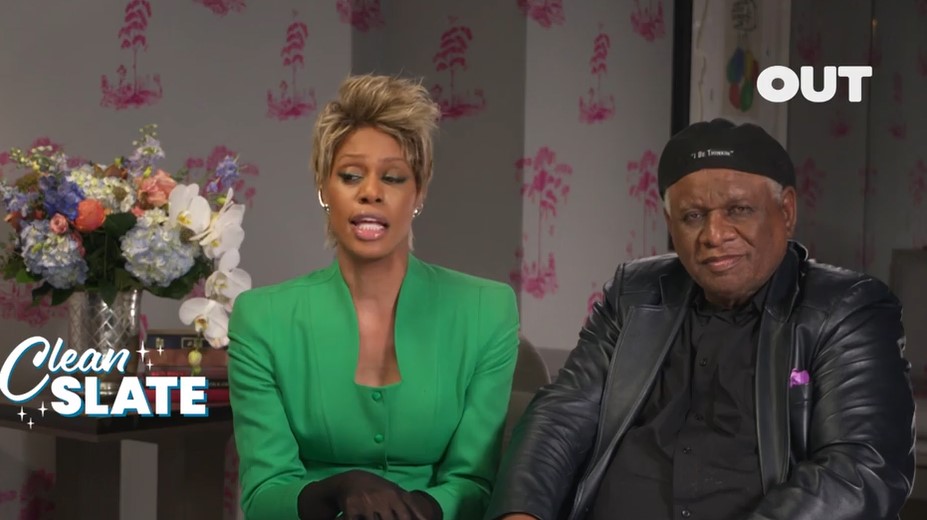
Laverne Cox New TV Series Clean Slate Challenges Red States & ‘Rehumanization’

*This was first published by Out.com

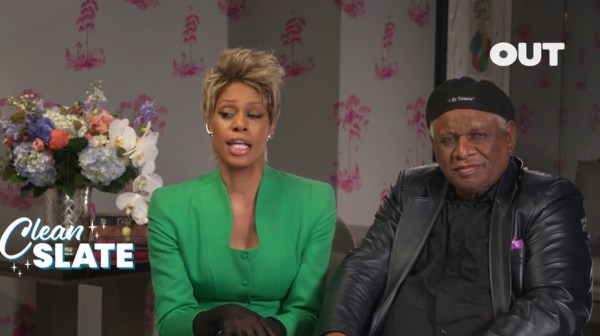
Laverne Cox believes the timing of her new Prime Video series Clean Slate is “divine.”

In this lighthearted yet poignant show, the Emmy winner portrays Desiree, a trans woman who returns to her hometown of Mobile, Alabama, to reconnect with her estranged father, Harry, after 23 years of no contact. In addition to her starring role, Cox is credited as the series creator alongside George Wallace and Dan Ewen.

The series, executive produced by the late legendary television producer Norman Lear, faced numerous challenges before making it to the airwaves. Reflecting on her journey, Cox expressed her gratitude for the opportunity.

“I’m so humbled because we got no’s from every place. We pitched this everywhere. We sent the script out everywhere, and it was a ‘no’ from everywhere. And it was really Brent Miller and Norman Lear, and their tenacity and pushing, that got us asked to Amazon Prime.”

The development process for Clean Slate spanned seven years, during which Cox and her team encountered considerable resistance from Hollywood.

“I think getting a show on the air period is insanely difficult. There was a time when I was pitching this alongside two other projects with really established, Oscar-winning people, wonderful stories with trans characters, and none of them went through. They weren’t buying trans stories.”

Cox believes that the significance of this show is heightened in today’s political climate.

“And I think this show happening at this particular political moment feels, not like an accident. It feels divine because we are in a space culturally where trans people have been dehumanized to such an extent that taking away our rights and denying our legitimacy is something that people take for granted. And it’s happening on a federal level.”

She hopes that the series will encourage viewers to empathize with trans individuals.

“And so that is my hope that people will have empathy for the trans character that I play and hopefully be inspired to have empathy for trans people in real life and hopefully get to know us,” Cox says.

“We’re not a theory. We’re not an ideology. We’re human beings walking around, living with these experiences. We’re human, and the rehumanization process is what needs to happen. If we’re interested in love and justice for trans people, as well as for immigrants and for those who think differently from us, we need to counter a culture that dehumanizes. We need to engage in a process of humanizing each other across the board.”

The first season of Clean Slate will feature eight episodes and is now streaming exclusively on Prime Video.

LGBTQ advocates fear Iowa bill targeting ‘obscenity’ would deter drag performances

*This was originally published by the Des Moines Register.

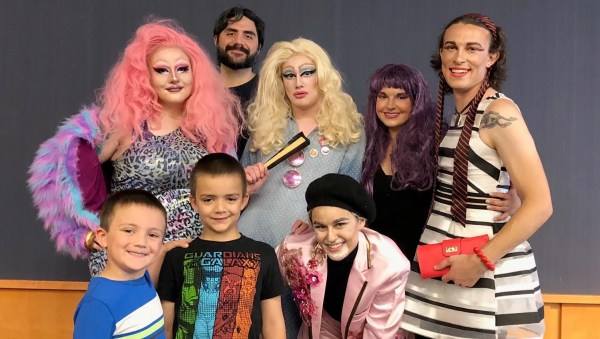
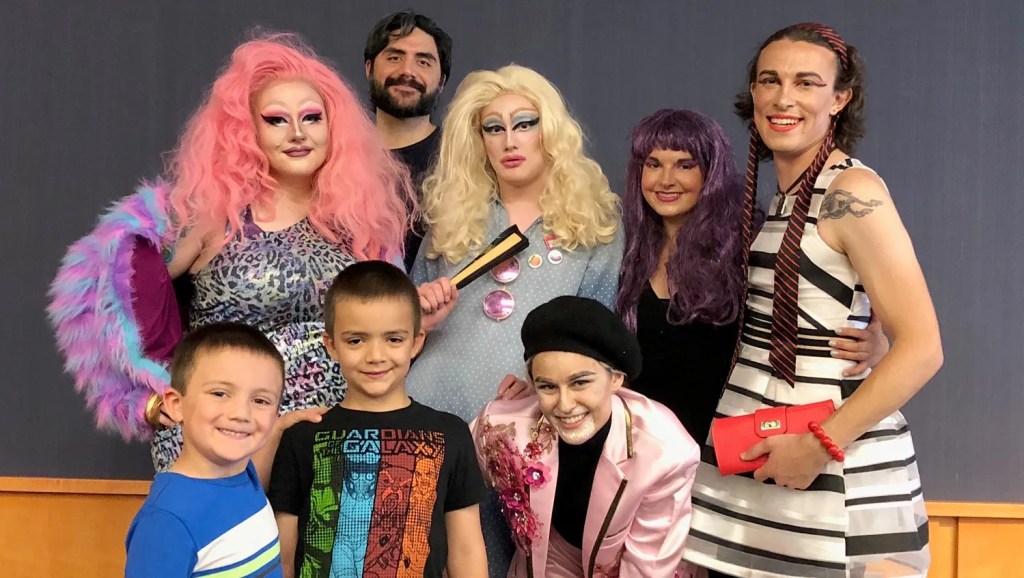
Exposing minors to an “obscene performance” would be a crime under a bill winding through the Iowa Senate that critics fear could discourage drag shows and spur lawsuits against venues offering LGBTQ pride programming.

The legislation, Senate File 116, would make knowingly exposing anyone younger than 18 to such a performance an aggravated misdemeanor, as well as knowingly selling a ticket or admitting a minor to a venue where such a performance is held.

Similar to legislation that was introduced but did not pass last year, the bill that advanced out of subcommittee Wednesday defines “obscene performance” as one that exposes genitals, invokes sexual acts or “appeals to the prurient interest and is patently offensive.”

“I brought this bill forward because I had constituents complain to me about performances that, if not meeting the definition of obscenity in our law, at least approach that definition, and concerned about this in our communities and the exposure of minors to it,” said Sen. Sandy Salmon, R-Janesville, who was part of a group of GOP lawmakers who introduced the legislation.

Critics argue the bill would encourage frivolous lawsuits

Keenan Crow, policy and advocacy director for One Iowa, a statewide LGBTQ advocacy organization, raised concerns with a provision establishing a private civil cause of action allowing parents of minor children to sue to determine whether something is obscene.

The bill states “a cause of action may be brought against any person that has knowingly disseminated or exhibited obscene material to the minor or who engaged in or caused or allowed a person to knowingly engage in an obscene performance in the presence of the minor.” It sets the minimum award of damages at $10,000.

While drag shows are not explicitly labeled in the bill as obscene performances, those opposed to the legislation fear it would target drag performances.

“What we are doing is we are allowing parents to target these venues for SLAPP suits, Strategic Lawsuits Against Public Participation, which are not designed to actually win the suit,” Crow said. “They are designed to make venues spend money and to reconsider hosting drag events entirely, lest they be sued on the off chance that it meets the obscenity definition, which obviously Drag Story Time does not.”

Drag Story Time events are sometimes held at libraries or other venues where drag performers read stories to children. In recent years, the events have increasingly been at the center of a larger GOP-led effort to restrict public drag events as conservative critics suggest they “sexualize” children.

Sen. Janice Weiner, D-Iowa City, said she worried the provision would incentivize frivolous lawsuits.

“This bill, as written, could encourage potential frivolous or bad actors to shake down local governments and private businesses, and that’s the taxpayer on the hook,” said Weiner, who opposed the bill.

Elizabeth Hall, a local trans woman, said bills targeting the LGBTQ population create “an aura of fear” among trans people that has pushed those she knows into psychiatric care.

“We fear for our communities,” Hall said. “We fear for our lives, and even if the particulars of how this bill would come into effect aren’t necessarily like that extreme, that fear still has a tangible effect on our lives and has caused so many people that I know to reach ends that I fear have continued to lead to detrimental effects.”

Supporters say the bill ensures performances shown to minors are ‘age appropriate’

Ryan Benn, a lobbyist for the conservative religious group The Family Leader, said the group supported the law because obscene materials that may be illegal to show children in movies or other material are not illegal to perform.

“I think it fixes that loophole,” Benn said.

Sen. Jeff Taylor, R-Sioux Center, said he would like to see a more clear definition of a “performance,” but overall obscenity is rarely prosecuted.

“In general, obscenity does not have constitutional protection in terms of freedom of speech,” Taylor said. “Something that’s obscene is, by definition, not protected by the First Amendment, and that’s regardless whether you’re sharing that with adults or with children. But to me, especially in the case of children, I feel like this is appropriate.”

Sen. Cherielynn Westrich, R-Ottumwa, said she supported the bill to protect children from obscenities.

“I think that what the one thing that we all in this room have agreed on is that we need to protect children from those sort of obscene or performances that are sexual in nature,” Westrich said.

Bill would repeal exemptions for public institutions

Melissa Peterson, with the Iowa State Education Association, said the group opposed the bill, especially a proposal to repeal an Iowa code section that allows minors to access appropriate material for educational purposes, at art exhibitions or in public libraries.

She said Senate File 496, the 2023 state law that requires school staff to remove books depicting sex acts, already sought to establish what content was age appropriate by existing obscenity standards.

“We worked closely together in a compromised fashion to come with what we thought would be considered age appropriate, and we would really like to see that exemption maintained for public institutions that are public spaces,” Peterson said.

Weiner also opposed repealing the exemption for public institutions.

“To repeal it is in some ways to admit that this bill really isn’t about obscenity,” Weiner said.

Even in States Where You’re Supposed to ‘Say Gay,’ Fear Often Outweighs the Law

Even in States Where You’re Supposed to ‘Say Gay,’ Fear Often Outweighs the Law

‘Inclusive curriculum’ laws are supposed to create welcoming school climates for LGBTQ and other marginalized students. Making it work is really hard

By

This story first appeared at The 74, a nonprofit news site covering education. Sign up for free newsletters from The 74 to get more like this in your inbox.

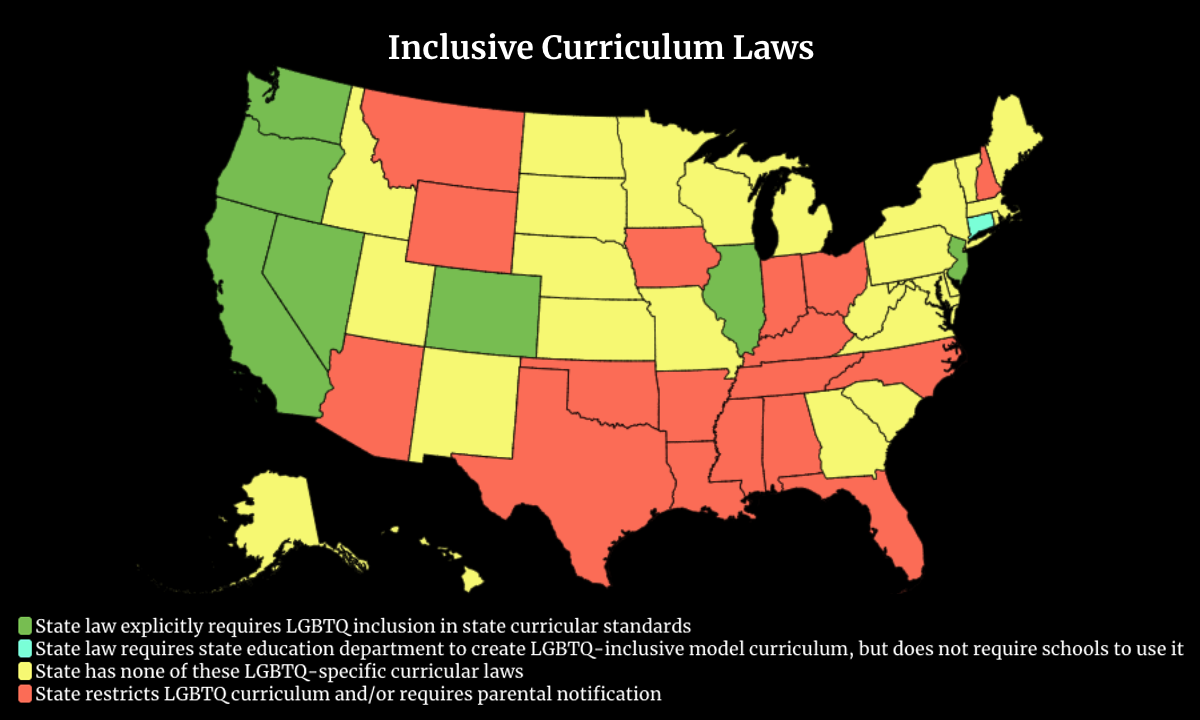
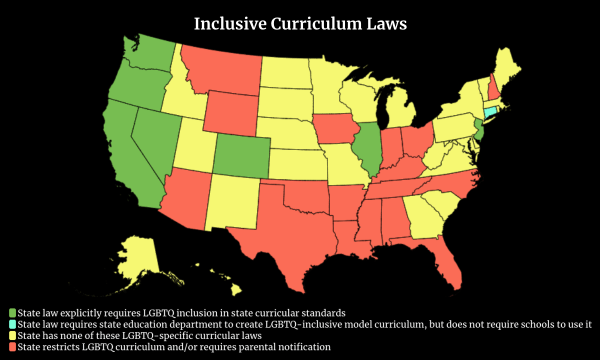
Lost amid headlines about hundreds of bills seeking to curtail protections for LGBTQ students over the last five years is a surprising fact: More LGBTQ teens live in states that require schools to teach LGBTQ people’s historical and cultural contributions to society than in places that ban their mention in classrooms. 

More than 1 in 4 queer 13- to 17-year-olds attend school in the seven states that now mandate this inclusive instruction, versus 20% who live in the 20 states that have passed what advocates call Don’t Say Gay laws. 

Research shows schools are safest for LGBTQ children and educators, and that students learn best, when they see themselves in classroom materials. They are far less likely to hear homophobic and transphobic slurs, to feel unsafe because of their identity or gender expression, to miss school or to be victimized. They attend school more consistently, get better grades and are more likely to say they have multiple teachers who are supportive. 

The presence of clubs known as gay-straight alliances improves school climates for all students — especially those from marginalized backgrounds. And straight, cisgender educators report feeling more confident in their ability to meet students’ needs when they themselves learn about LGBTQ people and topics. 

But the question of whether laws requiring accurate and positive portrayals of LGBTQ people, history and events make schools more welcoming is a complicated one. The first state to adopt a mandate, California, has seen only incremental change after 15 years. Other states that more recently began requiring inclusive instruction — most notably Illinois and Oregon — took note, wrote stronger laws and have seen more rapid progress. 

Policymakers and advocates are amassing research pinpointing practical reasons why the mandates succeed or fail. Perhaps a law didn’t include funding for new resources, set deadlines or require state officials to follow up to make sure schools complied. Maybe it gave few specifics about which changes to textbooks would fulfill the requirements and even less guidance to help  educators and the public understand why they are important for LGBTQ students’ well-being and academic success. Or it could be that districts found it easier to comply with policies that identified or created free, optional materials, called for training teachers and principals on their use and on incorporating students’ feedback, and issued step-by-step guidance on implementation.      

Whatever the factors involved, the fact is that during the last two decades, the number of LGBTQ students who say they are exposed to inclusive instruction has dropped nationwide, from 20% to 16%. Nearly 15% say they are taught negative depictions. And though it’s early in the implementation process in some places, the number of students who say their classes included positive lessons in the seven states that mandate them ranges from 15% to 32%, with an average of 22.5%. 

Even in communities where educators are eager to make the called-for changes, school board meetings have become contentious, as organized groups charge that allowing discussion of LGBTQ topics leads to the “grooming” of students to become gay or trans. 

The resulting fear and confusion are frequently more powerful than the letter of the law. And administrators and even district attorneys often lack clarity on what the law is, including in places with strong protections for LGBTQ kids and educators.

It’s a tough political reality that is about to get even harsher

President Donald Trump has repeatedly threatened to withhold funding from “any school pushing critical race theory, transgender insanity and other inappropriate racial, sexual or political content on our children.”

Well-tested legal limits on federal involvement in what schools teach may make it difficult for Trump to starve schools that teach “woke” concepts. But the constant drumbeat of threatening headlines demonstrates that in practice, he may well get his way.

A culture of fear and intimidation

“There is a lot of talk happening now about clamping down on inclusive learning coming from the incoming administration,” says Brian Dittmeier, policy director of GLSEN, which has been monitoring school climate for LGBTQ students for 25 years. “I just want to make clear that there’s a long bipartisan record, and requirements from Congress, that the U.S. Department of Education not dictate curriculum to the states.”

But classroom materials are just one element of what makes a school welcoming, he adds. School leaders need to take a number of steps to build trust with marginalized students — which can be hard to do in the face of ideological assaults. 

“You can adopt policies, you can put books on the library shelves,” says Dittmeier, “but if there is a culture of fear and intimidation, and there’s not the follow-through of inclusion, it’s going to impact the success of those interventions when it comes to reducing adverse mental health outcomes and diminished academic performance.” 

U.S. education policy has long put local leaders in charge of many decisions, so long as school systems meet thresholds set by state and federal officials. So while states create curricular standards — guidelines spelling out what students are expected to learn in each grade and subject — for the most part, district leaders can decide how to include those required topics in classroom lessons.  

Because of this, there are countless places where things can fall apart between a governor signing a bill into law and a teacher feeling safe enough to mention, for example, that astronaut Sally Ride was a lesbian or that Pride Month recognizes the revolt at the Stonewall Inn.  

It’s long been understood that all children learn best when they see themselves in classroom materials. One popular theory describes curricula featuring people of different races, abilities and backgrounds as providing “windows and mirrors” — a mirror so a child feels connected to the material and a window for learning about other cultures. 

In the case of LGBTQ students, inclusive curriculum — instruction that includes the societal contributions of queer people — also makes schools safer. According to GLSEN, which advocates for policies making schools more welcoming, 4 in 5 queer youth ages 13 to 17 feel unsafe in school, making a third uncomfortable enough to miss at least one day a month. 

Last year, GLSEN analyzed 20 years of data comparing the experiences of LGBTQ students in schools that use inclusive curriculum and those that don’t. Researchers found dramatic differences in student mental health and academic engagement, as well as overall school climate. The positive impacts are also felt by LGBTQ students of color and gender-nonconforming students, who typically report the highest levels of victimization.   

Compared with students in schools that don’t use inclusive curriculum, they are far less likely to routinely hear homophobic and transphobic remarks. Less than half (49%) hear the word “gay” used in a negative way, compared with almost three-fourths (72%) in schools that don’t use inclusive curriculum. One in 4 (27%) hear slurs such as “fag” or “dyke,” compared with almost half (48%). 

LGBTQ students in schools that use inclusive curriculum are almost twice as likely (67% vs. 35%) to say their classmates are accepting. They are dramatically less likely to feel unsafe, half as likely to be victimized in person and less likely to miss school. Consistent attendance is particularly important in light of past GLSEN surveys that put the LGBTQ dropout rate at 35% — three times the national average.  

California’s glacial pace

Armed with early versions of this research and with stories of being bullied, in 2006 some 500 students, accompanied by friends and families, descended on the California statehouse to demand passage of a law that would require schools to use “bias-free” curriculum. Then-Gov. Arnold Schwarzenegger ultimately vetoed the initial bill. 

In 2011, the state Assembly passed the law, the first in the country requiring schools to include the contributions of LGBTQ people in their instruction. As he signed the FAIR Education Act, which also called on educators to teach about people with disabilities, then-Gov. Jerry Brown said he expected it to take four years for textbooks and other materials reflecting the mandated changes to reach classrooms. 

In fact, that estimate was wildly optimistic. Notably, the law did not include a deadline for compliance, a mechanism for monitoring implementation or consequences if schools did not shift instruction. Fifteen years after its passage, it remains unimplemented in most of the state’s nearly 1,000 school systems.

A recent survey by the advocacy group Equality California found that fewer than a third of districts had adopted all the required changes, though 60% had taken at least one step toward compliance. In 2021, just 27% of California LGBTQ students aged 13 to 17 told GLSEN they had been exposed to positive representations of LGBTQ people in class, an increase of only 5 points since the law’s passage.

To be fair, implementation of curricular standards is never quick. Once a law calling for change is passed, state officials typically appoint a group of educators and subject-matter experts to decide which facts or skills should be taught in each grade. The potential revision is then shared with the public for feedback. 

In the case of the FAIR Act, California’s updated history and social studies standards were published in 2017, six years after the law’s passage. In deference to local control, districts were left to decide what materials to use.    

But determining whether a textbook meets standards is painstaking work that exceeds the capacity of many districts. And materials featuring diverse people are scarce.    

For example, a 2018 review by University of Wisconsin researchers of the 3,000 children’s books published the previous year found that half of characters were white, 27% were animals, 10% Black, 7% Asian or Pacific Islander, 5% Latino and 1% Native American. 

Last year, The Education Trust reviewed 300 K-8 books that are part of five curricula that received favorable ratings from EdReports, an organization that evaluates classroom materials for quality. Less than 40% of the texts reviewed featured people of color. In most of those that did, reviewers found “limited representation, such as through stereotypes or as background to the stories of others.” 

When the FAIR Act was passed in 2011, suitable resources were even harder to find. The books Education Trust reviewed included two gay men and six individuals with disabilities, for example. The law required state officials to screen and approve textbooks that districts could voluntarily adopt.

State academic standards vary widely and are often met with political opposition, making the process of approving materials contentious. Publishers are under pressure to customize materials to meet each state’s parameters. Because of their size and tendency to adopt standards at opposite ends of the ideological spectrum, California, with 6.7 million K-12 students, and Texas, with 5.8 million, have outsized influence on what publishers produce. 

A January 2020 New York Times piece contrasted textbooks printed for both markets, finding discordant recountings of the history of capitalism, Reconstruction, immigration, white flight and what one Texas volume called the “Americanization” of Native Americans. A month later, a CBS investigation found seven states did not directly mention slavery in their standards, and 16 listed states’ rights as the cause of the Civil War.      

In California, advocates and members of the state commission reviewing classroom resources scrapped over how to identify historical figures such as Emily Dickinson, James Buchanan and Ralph Waldo Emerson; how to characterize people who were not out when they were alive; and whether to include context regarding sexual orientation or gender identity in texts given to students, or only in teachers’ guides. 

At one point, for example, McGraw-Hill pushed back against the commission’s request to describe Ellen DeGeneres as “a lesbian and humanitarian,” suggesting the materials instead say DeGeneres “works hard to help people. She and her wife want all citizens to be treated fairly and equally,” according to the news site EdSource. 

Ultimately, the state rejected two sets of materials from one commercial publisher, Houghton Mifflin Harcourt, and accepted 10. Examples of age-appropriate lessons the state advisory board approved include a section titled “Different Kinds of Families” in a second-grade book, an entry on the legal recognition of same-sex marriage for fourth-graders and a lesson for 11th-graders on homosexual life under Nazi rule.    

In 2018, appropriate curricula were ready for classroom use. A year later, the number of California LGBTQ students ages 13 to 17 surveyed by GLSEN who said they were exposed to positive representations of queer people had risen from 22% to 33%. 

But the next time GLSEN administered its school climate survey, in 2021, the culture wars were in full swing and the rate had fallen to 27%. Last fall, an Equality California survey found that fewer than one-third of schools had fully implemented the law’s requirements. 

Illinois, Oregon learn from California’s missteps

In 2019, New Jersey, Colorado, Illinois and Oregon adopted inclusive curricular standards. Nevada would follow in 2021, and Washington state in 2024. Like California’s, the new laws require instruction about other rarely discussed groups as well, such as Native Americans and people with disabilities. During the same time period, three other states — Vermont, Connecticut and Delaware — passed legislation requiring state officials to create model curricula and updated standards.

The new policies vary in approach, with several states taking steps to avoid problems that dogged implementation in California. Colorado lawmakers, for example, set aside money to pay for textbooks. A number of districts, including Denver Public Schools, did not wait for the state review process and instead turned to Teaching Tolerance, the Human Rights Campaign and other outside groups for model lesson plans

In Illinois, officials appointed an advisory council composed of advocates, academic subject-matter experts and health officials to come up with curricula and resources for schools and professional development programs to use. Like California’s, the law leaves the question of whether to adopt the materials up to local officials, but it mandates checks on whether the instruction is being provided as part of a process of monitoring whether districts are following a number of state requirements. So far, no Illinois district has been found to be out of compliance, according to the state Board of Education. 

Mollie McQuillan is an assistant professor of educational leadership and policy analysis at the University of Wisconsin-Madison who studies the implementation of LGBTQ school policies. Illinois has a lot of work left to do, says McQuillan, who uses they/them pronouns. “But they’ve filled some of these holes that we see in other states.” 

The same committee of advocates and experts that screened classroom materials, the Illinois Inclusive Curriculum Advisory Council, also wrote the guidance for how school systems could meet the new standards. Essentially a how-to manual, the document explains why inclusion is important, how to determine whether a lesson is age-appropriate and how to gain teacher buy-in. For example, it suggests back-to-school night is a good time to let parents know about the new law and its goal of a safe and supportive school climate, and to encourage families to ask questions.      

If inclusive standards requirements are not accompanied by anti-bullying and anti-discrimination policies — and similarly specific instructions for implementation — confusion can arise. Faced with uncertainty, McQuillan says, local leaders often default to the status quo.                  

Few principal and superintendent licensure preparation programs include training on sexual orientation or gender, they say. Because of this, school leaders may not be aware of their students’ needs, much less have a sense of urgency about meeting them. 

Far from having considered how transgender and nonbinary students may experience school, administrators and district leaders often don’t realize how strong traditional gender norms can be. They may never have questioned how their schools’ physical spaces and activities are organized. 

A member of the advisory council that has guided the implementation of the Illinois law, Julio Flores trains educators, school administrators and families on LGBTQ topics. Demand, he says, has been strong — and often, the information sought is much more basic than how to frame a lesson.

In his workshops, the mere mention of new curricular standards often triggers a much broader conversation among teachers and school leaders who, depending on the demographics of their communities, might have questions ranging from what constitutes respectful speech to how to make their classrooms safe. One of the topics most frequently raised is the difference between sexual orientation and gender.  

“One common question is, ‘How do young people know that their gender identity does not align with the sex they were assigned at birth?’ ” he says. “ ‘How can I support young people, especially if their parents are not supportive?’ That’s a huge challenge for adults, wanting to support their young people but also recognizing parents also have their own process.”

Data on how quickly school climates shift after an inclusive curriculum mandate is adopted are scant. In the four states that passed requirements in 2019, implementation was sometimes held up as school leaders scrambled to figure out how to respond to COVID-19, and the most recent school climate research from GLSEN — the most detailed data available — was published in 2021. (A new dataset is expected later this year.) 

But there are early suggestions that enacting several LGBTQ student protection policies at the same time — and being explicit about how they are to be enacted — can be effective. The second state to pass a curriculum law was New Jersey, which requires the teaching of accurate representations of queer and disabled people but leaves it to individual school boards to decide what inclusive means. Compared with 2011, the state saw a 3 percentage point drop in the number of students who said they were exposed to positive representations. 

By contrast, Oregon, where standards will not be mandatory until the 2026-27 school year, saw a 9-point gain. In its recent analysis, GLSEN noted that the degree of specificity and the  comprehensive nature of the state’s directions to school systems are likely key reasons why. In addition to the kinds of advice included in Illinois’ guidance, Oregon’s encompasses other steps educators should take to make schools more welcoming. For example, after explaining that fostering trust between students and administrators is crucial, the state’s guidance directs school leaders to create a process for youth and staff to report incidences of bias and to spell out what steps will be taken.  

Based on the data the organization has gathered over the last 25 years, GLSEN researchers say that to make the most difference in student welfare, inclusive curriculum should be accompanied by teacher training — both in colleges of education and in on-the-job professional development — by the adoption of non-discrimination and anti-bullying laws and by the creation of forums where LGBTQ youth can express their needs. 

According to GLSEN’s Dittmeier, six states now require that teachers be trained on LGBTQ inclusion, and seven have developed materials for educator professional development.

“All of these supports are really key to ensuring that LGBTQ youth feel included in their school environment and can obtain the success of their peers,” says Dittmeier. “When these interventions are available in the school, it really results in a dramatically different school experience for LGBTQ youth.”

But other research has documented an increase in ambivalence about inclusive instruction among teachers. A 2022 survey administered by Educators for Excellence found that 1 in 3 do not support including LGBTQ topics in instruction, while 11% believe their school does not enroll any queer children at all. 

Support for inclusive instruction was weakest among older educators and white ones, with 82% of teachers under age 50 expressing support and 97% of Black, Latino and Indigenous educators saying they are in favor. Educators also told the researchers they fear the wave of state legislation curtailing classroom speech and are unsure what they can say. 

Over the last two years, Oregon has trained 1,000 educators and staff at universities and nonprofits that work with schools to implement the new standards. The state has awarded grants to organizations to provide professional development, instructional materials, affirming drop-in spaces for homework help and youth summits, and it requires districts to have formal community engagement processes.

Uniquely, Oregon also recognized that discussions of LGBTQ school inclusion typically focus on bullying, suicidality and other negative experiences. So officials asked students where they feel most accepted and has helped community groups create opportunities — many of them tailored to young people of a particular race or ethnicity — for queer youth to have fun and spend time with affirming adults.   

School board pushback — and a lawsuit

In May 2023, a newly elected conservative school board majority in California’s Temecula Valley Unified School District overruled a group of teachers who had selected new, state-adopted social studies textbooks for grades 1-5. The reviewers had solicited feedback from parents, which was overwhelmingly positive or neutral.  

The three new board members — who earlier banned instruction on critical race theory, which is not taught in K-12 schools — said they opposed the curriculum because they did not want students to learn about Harvey Milk, the first openly gay man elected to public office in California. 

A tug of war with state officials ensued. The state Department of Education and California Attorney General Rob Bonta launched investigations, and Gov. Gavin Newsom threatened consequences. But the FAIR Act did not set deadlines for schools to shift their instruction, require state officials to monitor implementation or spell out what would happen in districts that ignored the mandate.

In July, the Temecula Valley board doubled down, again voting to reject the curriculum. Within a day, the governor said he planned to order the books and send the district the $1.6 million bill. Newsom also said that if the Assembly passed a bill that would create consequences for flaunting the FAIR Act and other laws requiring inclusive instruction, he would fine the district $1.5 million.      

The second law would, in fact, pass, but not until two months after the Temecula Valley board backed down and agreed to adopt most of the curriculum. A few days later, the district’s teachers union, a group of educators and parents sued the board, charging that its votes rejecting instruction required by state standards and a variety of other edicts involving race, sexuality and gender violated students’ constitutional rights. The case is wending its way through courts.         

‘Anti-LGBTQ animus is still socially acceptable’ 

Even if federal law continues to curtail Trump’s ability to force the elimination of inclusive curriculum, the culture wars may ultimately stymie implementation in many places. 

A survey released last spring by University of Southern California researchers Anna Saavedra and Morgan Polikoff found deep partisan divides in which topics Americans feel are appropriate for classroom discussions, with the biggest gulf on LGBTQ subjects. 

Unlike many polls, the survey asked about hypothetical scenarios in which students’ ages and the content of possible lessons varied from exposing elementary-aged children to stories with a variety of kinds of families to topics that include sex.   

Depending on the scenario, 4 in 5 Democrats said they support inclusive instruction in high school and half or fewer in lower grades. Republicans, by contrast, were comfortable with LGBTQ topics less than 40% of the time at the high school level and less than 10% in elementary school.     

Blue state government notwithstanding, Polikoff wrote in a commentary for CalMatters, California has the same partisan divides on inclusive curriculum as other places. The political right, he noted, had “fixed its gaze” on LGBTQ issues in schools.   

“The reason for this shift is obvious: Anti-LGBTQ animus is still socially acceptable,” Polikoff wrote. “The reality is that LGBTQ issues in schools are a thorny problem, and Californians are intensely divided on what to do about them.”
The range of responses, he told The 74, does suggest a path forward, albeit a long one: “We really do need to have a discussion about what’s age-appropriate, what parents want and kids need. And that’s probably not going to be one conversation. That’s probably going to be 50 conversations, one in each state. Or maybe 13,000 conversations, one in each district.”


Trump Bans Gender-Affirming Care for Minors 

*This was first published by The Hill

President Trump on Tuesday signed a sweeping executive order meant to broadly restrict access to gender-affirming care for transgender children and teenagers younger than 19, inching closer to fulfilling a key campaign promise to ban treatments that he and his administration have cast as experimental and dangerous, in conflict with major medical associations and transgender health experts. 

“Across the country today, medical professionals are maiming and sterilizing a growing number of impressionable children under the radical and false claim that adults can change a child’s sex through a series of irreversible medical interventions,” Tuesday’s order states. “This dangerous trend will be a stain on our Nation’s history, and it must end.” 

“Accordingly, it is the policy of the United States that it will not fund, sponsor, promote, assist, or support the so-called ‘transition’ of a child from one sex to another, and it will rigorously enforce all laws that prohibit or limit these destructive and life-altering procedures,” the order states. 

Every major medical organization supports gender-affirming care for transgender adults and minors, although not every trans person chooses to medically transition or has access to care. 

Trump’s executive order, titled “Protecting Children from Chemical and Surgical Mutilation,” tasks federal agencies with rescinding or amending policies that rely on guidance from the World Professional Association for Transgender Health (WPATH), including the organization’s latest standards of care, released in 2022. 

WPATH, a nonprofit professional organization devoted to transgender health care, did not immediately return a request for comment. 

Trump’s order tasks the incoming Secretary of Health and Human Services (HHS) with publishing a review of existing literature on best practices “for promoting the health of children who assert gender dysphoria, rapid-onset gender dysphoria, or other identity-based confusion.”  

Rapid-onset gender dysphoria, which claims that adolescents identify as transgender because of influence from friends or social media, is not recognized as a valid medical diagnosis by major professional medical organizations. In 2021, 61 professional health care organizations, including the American Psychological Association, signed a letter stating the condition lacks “rigorous empirical support for its existence.” 

According to Tuesday’s order, heads of executive departments and agencies that provide research and education grants to medical institutions, including medical schools and hospitals, should take immediate steps to block funding for institutions that continue providing gender-affirming care to minors. 

Meredithe McNamara, an assistant professor of pediatrics at Yale University specializing in adolescent medicine, said the provision amounts to “an immediate de facto ban on medical care” for trans youth who receive care at academic medical centers. 

“It basically defunds those medical centers if they continue to provide that care,” McNamara said of the order. 

“This is a stunning example of how all health care is tied together, and how the most effective way to attack gender-affirming care is to attack the entire health care apparatus as a whole,” she added in an interview. “They’re holding everyone hostage and saying, ‘We’re going to take away everyone’s healthcare unless you systematically deprive just these people.’” 

Trump’s executive order additionally directs the HHS Secretary — a position he wants for Robert F. Kennedy, Jr. — to bar access to gender-affirming care for transgender minors through federal programs like Medicaid and Medicare and withdraw the department’s 2022 guidance supporting gender-affirming care. The secretary should issue new guidance, in consultation with the incoming attorney general, “protecting whistleblowers who take action related to ensuring compliance with this order,” according to Tuesday’s order. 

The executive order also directs Defense Secretary Pete Hegseth to draft a rule to exclude coverage for gender-affirming care for minors from TRICARE, the military’s health program. Former President Biden in December signed a $895 billion defense policy bill barring TRICARE from covering transition-related care for transgender children of active-duty service members, a provision that military families with transgender kids called a “slap in the face.” 

Tuesday’s order similarly tasks the director of the Office of Personnel Management with taking steps to remove coverage for gender-affirming care for trans youth from federal health plans. 

It also asks the attorney general to prioritize enforcement of existing federal laws against female genital mutilation, which carry a penalty of up to 10 years in prison. The attorney general should also “prioritize investigations and take appropriate action to end deception of consumers, fraud, and violations of the Food, Drug, and Cosmetic Act” by entities that may be “misleading the public” about the long-term side effects of transition-related care. 

Republican state attorneys general have, in recent years, used consumer protection laws to investigate individuals and organizations that provide gender-affirming care to minors. A Senate Finance Committee report released in April claimed that at least four GOP attorneys general — Ken Paxton of Texas, Todd Rokita of Indiana, Jonathan Skrmetti of Tennessee and Andrew Bailey of Missouri — abused their oversight authorities to “further ideological and political goals.” 

Trump’s executive order additionally directs the attorney general to work with Congress to “draft, propose, and promote legislation” to enact a private right of action for children, as well as their parents, “whose healthy body parts have been damaged” by medical professionals practicing transgender health care. 

The attorney general should also take “appropriate action,” the order states, “to end child-abusive practices by so-called sanctuary States,” including through the potential application of the Parental Kidnapping Prevention Act, a federal law preventing one parent from interfering with another parent’s custody rights. 

Conservative organizations celebrated Trump’s executive order Tuesday evening. In a joint statement, Independent Women’s Forum and Independent Women’s Voice said the move restores the “true meaning of ‘care’ for America’s youngest generation.” 

Kristina Rasmussen, executive director of Do No Harm, a health policy group that opposes gender-affirming care for minors, said Trump’s order prioritizes “safety, scientific integrity, and family autonomy.” 

Omar Gonzalez-Pagan, senior counsel and health care strategist at the LGBTQ civil rights organization Lambda Legal, called the order “morally reprehensible and patently unlawful” and said the group would sue. 

“The federal government — particularly, this administration — has no right to insert itself into conversations and decision-making that rightly belongs only to parents, their adolescent children, and their medical providers,” he said. 

The executive order comes after Trump signed separate orders declaring that the federal government recognizes only two sexes, male and female, and barring transgender people from serving openly in the military. 

Blog at WordPress.com.

Up ↑