New Jersey LGBTQ Advocates from Garden State Equality Say They’ll Continue to Pushback with Facts

*This was first published by GLAAD.

LGBTQ activists in New Jersey say they’re fortunate to live in New Jersey as the new administration kicks-off its term by attacking the transgender community and diversity initiatives. Advocates at Garden State Equality say New Jersey sets a standard for legal equality that can inspire states throughout the country.

As part of its education and advocacy “Going Local” programming across the country, the GLAAD Media Institute (GMI) – GLAAD’s training, research and consulting division – convened meetings with local leaders and community advocates at Garden State Equality and throughout the nation. Attendees who complete a program or session with the GLAAD Media Institute are immediately deemed GLAAD Media Institute Alumni, who are equipped to maximize community impact by leveraging their own story for culture change.

The state is known for its tough pro-equality laws like New Jersey Law Against Discrimination (LAD), which is considered one of the most comprehensive anti-discrimination laws in the country. Yet, new laws in the state legislature help combat a rise of LGBTQ disinformation and hate speech, straight out of Project 2025. The anti-LGBTQ hate machine has affected dozens of Jersey school board’s policies on book bans, critical race theory, and sex education.

Since Garden State Equality’s founding in 2004, over “230 LGBTQ civil rights laws” have been enacted at the state, county, and local levels. According to the organization’s website, that’s “more laws in less time than in any other state in American history.”  

On a federal level, President Trump began his second term signing executive orders to dispute the fact that transgender and gender diverse people exist. On Trump’s first days in office he signed an executive order titled Defending Women From Gender Ideology Extremism and Restoring Biological Truth to the Federal Government. The order is used to delegitimize trans truth, history, and science, which promptly raised concerns over a federal ban of the “x” gender marker for people of nonbinary, trans or gender nonconforming experience in the United States. 

“As of today, it will henceforth be the official policy of the United States government that there are only two genders, male and female,” President Trump incorrectly said upon signing the order.

Garden State Equality says they’re ready to resist these efforts by the current administration, and continue to encourage diversity, equity, and inclusion (DEI) programs, while uplifting best practices for LGBTQ youth and adult community members as they have within their state government, says advocates. 

“We want our youth to understand that they don’t just live in a bubble here in New Jersey, that the work that they are doing to be activists here in our state is going to influence other states and other students across the nation,” Natalie Hernandez  told GLAAD. 

Natalie Hernandez, Project Manager & Trainer
Natalie Hernandez, camp director and project manager & trainer; Screenshot by Lana Leonard

Hernandez is the Camp Director of Garden State Equality’s Changemakers Youth Leadership summer program. Empowering youth leaders helps inform the work of other departments and so forth, it’s a collaborative effort to fight for legal equality for the state organization. 

Hime Sarah Thomas, project manager and trainer with the Education and Youth Development Department, grew up in a queer family who introduced Thomas to Garden State Equality through the Changemakers Youth Leadership summer program. Thomas works to encourage youth to become “changemakers” by giving them an outlet to express their frustrations, and amplify their voices.

Only a small number of youth actually transition: less than one-tenth of one percent of teenagers with private insurance in the United States are transgender and receive gender-related medicine, according to a study by JAMA Pediatrics

“These youth need a space where they can talk about all the things that are happening in the news and the world because they don’t have the autonomy to be able to vote and make those choices on who is representing them,” Thomas said.  

For Aisling MacDonald, a project manager for the organization’s Training and Trans Resiliency Program, which advocates for the wellness of transgender and gender nonconforming adults and families moving into New Jersey for their LGBTQ protections.

“Our world is ever evolving. There are some very legitimate anxieties, and also… we are really, really fortunate to live here,” MacDonald said. 

MacDonald spends much of her day building coalition relationships and legal resources for name changes and documents for trans people who have been under attack on social media, through legislation, and the news. 

Hime Sarah Thomas, project manager & trainer; Screenshot by GLAAD
Hime Sarah Thomas, project manager & trainer; Screenshot by Lana Leonard

“My experience as a woman of trans experience who is from some very particular demographics, and a very particular flavor of multiple marginalizations, is that we do not have a lot of trust for systems, institutions and legislators, especially,” MacDonald said. “And I think more than anything else in 2025 we have an opportunity to build a different kind of community.”

These insights into the LGBTQ community of Asbury Park lead into a larger narrative about community needs in New Jersey and beyond. Even still, Garden State Equality recognizes that there are hurdles that must still be overcome. 

More about the GLAAD Media Institute: The GLAAD Media Institute provides training, consultation, and actionable research to develop an army of social justice ambassadors for all marginalized communities to champion acceptance and amplify media impact. Using the best practices, tools, and techniques we’ve perfected over the past 30 years, the GLAAD Media Institute turns education into armor for today’s culture war—transforming individuals into compelling storytellers, media-savvy navigators, and mighty ambassadors whose voices break through the noise and incite real change. Activate with the GLAAD Media Institute now at glaad.org/institute

Study: LGBTQ youth, family relocate amid increasing anxiety over laws directed at them

*This was published on USA Today

More than a quarter million LGBTQ+ young people and family members in the U.S. have relocated to other states because of LGBTQ+-related politics or laws, according to estimates outlined in a new report exploring the population’s response to hostile policy environments.

According to the brief compiled by The Trevor Project and Movement Advancement Project, 9 in 10 LGBTQ+ young people say politics have impacted their well-being, while 4 in 10 say they’ve thought about moving to another state because of unfriendly LGBTQ+ politics or laws at home.

The portion was even higher for transgender and nonbinary youth, 94% of whom said politics had affected their well-being and nearly half (45%) who said they’d considered relocating.

“For many LGBTQ+ young people in the U.S., the steady stream of anti-LGBTQ+ news may feel overwhelming right now,” said Steven Hobaica, a research scientist for the Trevor Project, a national LGBTQ+ youth advocacy group focused on suicide prevention. “It’s heartbreaking to see that nearly half of transgender and nonbinary youth have considered moving due to anti-LGBTQ+ policies.”

While just 4% of LGBTQ+ young people ages 13 to 24 reported uprooting because of anti-LGBTQ+ policies, that translates to roughly 266,000 young people and family members based on LGBTQ+ youth population estimates, the groups said.

Trump administration presents new threats

The report comes as President Donald Trump returns to the White House after making gender identity issues a focal point of his campaign. On Monday, after being sworn in, Trump issued a spate of executive orders that included seeking to remove legal protections for transgender people in federal spaces, laying the groundwork to potentially bar transgender individuals from military service and declaring that the U.S. government will only recognize two sexes, male and female.

“No matter a person’s political beliefs, we know, from our research and from what LGBTQ+ young people tell us, that policies like these take a damaging toll on LGBTQ+ young people’s mental health,” said Janson Wu, The Trevor Project’s senior director of state advocacy and government affairs. 

The organization said its crisis services saw a 33% increase on Inauguration Day compared to typical volume. But that still paled, it noted, to the sevenfold increase in crisis services experienced the day after the 2024 election.

“No matter your political beliefs or how you feel about the current administration, one thing must be made clear to all of us living in the United States: Real young people’s lives are at risk,” said Trevor Project CEO Jaymes Black.

Recent years have already seen increasing numbers of state laws and proposed legislation targeting the LGBTQ+ community, especially measures aimed at curbing the rights of transgender youth.

“It’s critical that we not only call attention to the negative impact of these divisive political attacks but also highlight that this research supports the idea that more inclusive policy environments lead to better outcomes for LGBTQ young people across a range of measures,” said Logan Casey, director of policy research for Movement Advancement Project.

Hostile climates raise mental, emotional health risk

The organizations said they compiled the report given a lack of research into how LGBTQ+ young people respond to hostile policy environments, despite studies showing that those youths experience greater mental health challenges and higher suicide risk in such environments.

“By gaining more knowledge of how LGBTQ+ young people respond to their policy environment, advocates and policymakers can create or modify policy to better support LGBTQ+ young people and their families,” the report said.

Their joint report is based on data gleaned from The Trevor Project’s 2024 U.S. National Survey on the Mental Health of LGBTQ+ Young People, which collected responses from more than 18,600 LGBTQ+ individuals between the ages of 13 and 24. It also incorporates data from Movement Advancement Project, a Boulder, Colorado-based group that tracks LGBTQ+-related laws and policies throughout the U.S. and its territories and assigns each a negative or positive policy index.

More than a quarter (27%) of respondents lived in states with negative policy indexes, the report said. Those individuals were more likely than their counterparts to consider moving to other states and also likelier to travel to other states to receive health care.

The report noted that not all LGBTQ+ young people and their families desiring to relocate have the resources to do so.

“Notably, the same factors that might preclude the ability of LGBTQ+ young people and their families from moving, such as poverty, housing discrimination, and employment access, are the same ones that disproportionately affect LGBTQ+ people of color and increase their risk of mental health and suicide,” the report said.

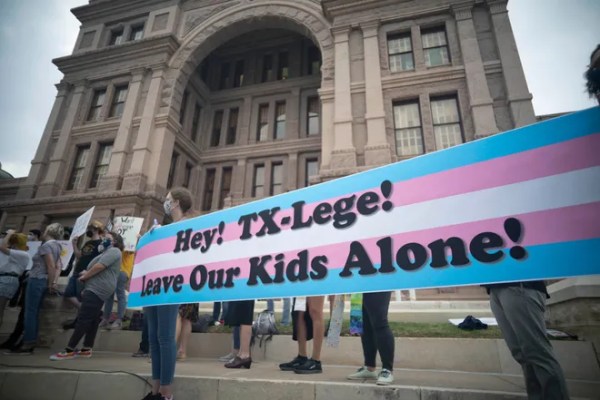
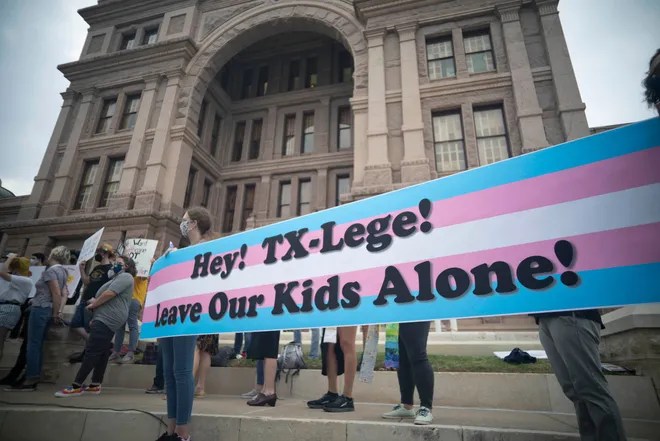
Bob Daemmrich, USA TODAY NETWORK

Same-sex marriages will soon become legal in Thailand after historic law

*This first appeared on AP News

BANGKOK (AP) — They have been in a committed relationship for more than 13 years, and even had a wedding in 2019. Since then, Danaya Phonphayung and Sunma Piamboon, both women, have considered themselves a married couple, even if same-sex marriages were not legally recognized.

The walls of their home in suburban Bangkok are decorated with faded photos from their happy union, filled with joy and love from their families and friends. Come this Thursday, their wedded status will be recognized by the nation as well, when a law that allows members of the LGBTQ+ community in Thailand to get married and have the same legal rights as heterosexual couples takes effect.

The couple said they can’t wait to formalize their union. They plan to register their marriage at a district office near their home on the very first day that the law allows.

“I think I’ll cry,” Danaya, an office worker, said with a big smile, thinking about the moment that they will sign the paper. “I’m so happy. It’s something that was more than I could’ve dreamed of, that suddenly this day is happening.”

“We live together. We bought a house. We bought a car. But we cannot share these things together like a married couple. When this is happening, we feel that it’s our rights that we need to secure as quickly as possible,” she said.

The marriage equality bill, which sailed through both the House of Representatives and the Senate, amended the Civil and Commercial Code to change the words “men and women” and “husband and wife” to “individuals” and “marriage partners.” It would open up access to full legal, financial and medical rights for LGBTQ+ couples.

Sunma, who owns a travel agency, said that she had realized how crucial being legally married was when Danaya was hospitalized with dengue fever, as they don’t live close to her parents.

“The doctors asked me who I was, and I said I was the girlfriend, and they were like, ‘so what’?’ I couldn’t make any decision until her condition became quite serious,” she said. “I was so upset, like, if I had lost her … there would be nothing that could’ve made up for it. So, I think this is very important for both of us.”

How marriage equality became law

Thailand has a reputation for acceptance and inclusivity, but struggled for decades to pass a marriage equality law. Thai society largely holds conservative values. Members of the LGBTQ+ community say they face discrimination in everyday life, although they note that things have improved greatly in recent years.

The government led by the Pheu Thai party made marriage equality one of its main goals. It made a major effort to identify itself with the annual Bangkok Pride parade in June, in which thousands of people celebrated in one of Bangkok’s busiest commercial districts.

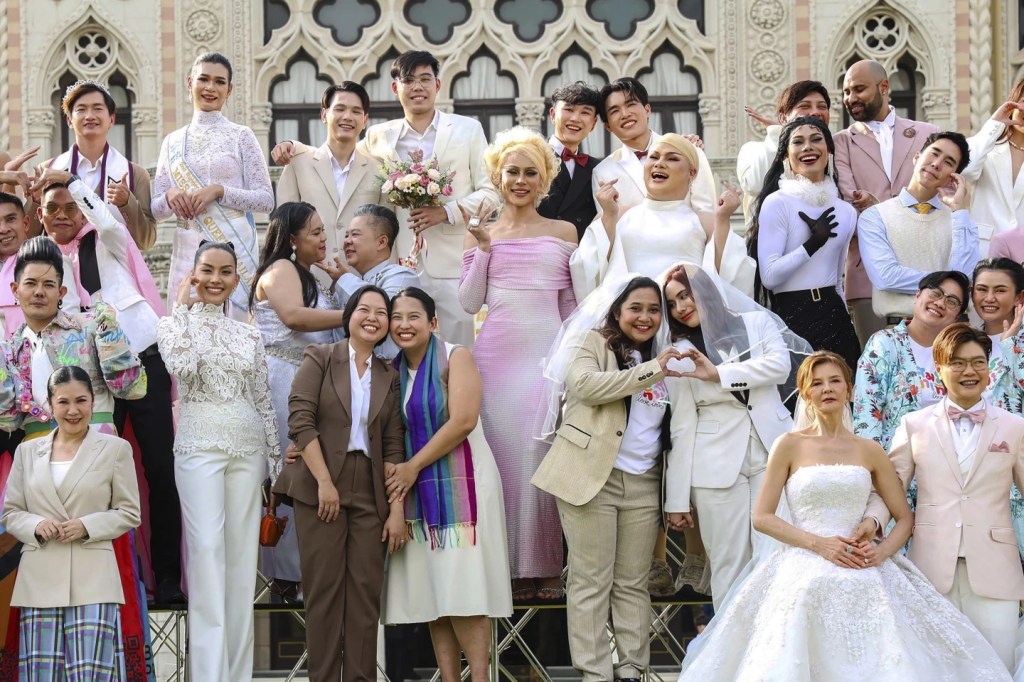
Last week, Government House invited dozens of LGBTQ+ couples and activists for a photo op and a meeting with Prime Minister Paetongtarn Shinawatra and several high ranking officials to celebrate the law coming into effect, making Thailand the first in Southeast Asia and the third place in Asia, after Taiwan and Nepal, to legalize same-sex marriage.

“It is almost like a dream, but it’s not. So, congratulations to all,” Paetongtarn said. “I think it’s very important that the world notice us, and know that in this small country we have this kind of thought. We have this kind of support for our people. So, we all should be proud.”

The organizers of Bangkok Pride have collaborated with relevant government agencies to hold a grand celebration in central Bangkok and facilitate couples who wish to register their marriage on the very first day. They said that more than 300 couples have registered to officially tie the knot on Thursday at the event.

“(The law) is about returning our dignity, and confirming that we also have dignity as a human being,” said Ann “Waaddao” Chumaporn, a gender equality activist and the lead organizer of Bangkok Pride. “That day is going to be meaningful to all the couples that have gone through this journey together. I’d like to thank everyone, every love, that has faithfully struggled so that today would finally happen.”

How the law will be implemented

The government and state agencies in Thailand are historically traditional in outlook. To prepare them for change, the Bangkok Metropolitan Administration said that it has organized workshops for staff of all Bangkok district offices who are in charge of handling marriage registration. They included lectures raising awareness about gender diversity and guidance on how to properly communicate with those who come for the service.

“It’s like a missing piece of the jigsaw,” Bangkok Deputy Gov. Sanon Wangsrangboon said at one of the workshops earlier this month. “Society is ready. The law is getting ready. But the last piece of the jigsaw is the understanding from officials.”

He acknowledged there that would be problems in the beginning, but said that he hoped they would gradually improve over time.

After they register their marriage, Sunma said that she’s looking forward to having a “real marriage celebration” with her and Danaya’s families.

“It’s not just the two of us that are happy, but both of our families feel it is a big deal, and it is what everyone has been waiting for. Everyone said they are waiting for Jan. 23,” she said.

(AP Photo/Jirasak jivawavatanawanit)

Trump two-gender edict would upend “X” identity on passports

This article first appeared on CNN.com

The federal government is set to only recognize two sexes, male and female, under an executive order that President Donald Trump is soon expected to sign.

The order would reverse efforts by the Biden administration to broaden gender identity designations, including on passports.

“As of today, it will henceforth be the official policy of the United States government that there are only two genders, male and female,” Trump said during his inaugural address Monday, taking an early step to fulfill one of his culture war campaign promises.

The order, a Trump administration official told reporters Monday, is aimed at “defending women from gender ideology extremism and restoring biological truths to the federal government.” Male and female “are sexes that are not changeable, and they are grounded in fundamental and incontrovertible reality,” the official said.

The federal government would also shift from using the term “gender” to “sex,” and that sex would be “an individual’s immutable biological classification,” the official said.

All government agencies would ensure that official documents, including passports and visas, “reflect sex accurately,” the official said. Also, departments running federal prisons, migrant shelters, rape shelters and other “intimate spaces” would be directed to protect single-sex spaces for privacy. And employee records would also adhere to the executive order, as would federal departments’ messaging.

“Agencies are no longer going to promote gender ideology through communication forms and other messages,” the official said, adding that grants and contracts would be reviewed to ensure that “federal funds shall not be used to promote gender ideology.”

Reversing Biden expansion

Trump’s executive order would dismantle efforts by the Biden administration to be more inclusive of Americans’ gender identification.

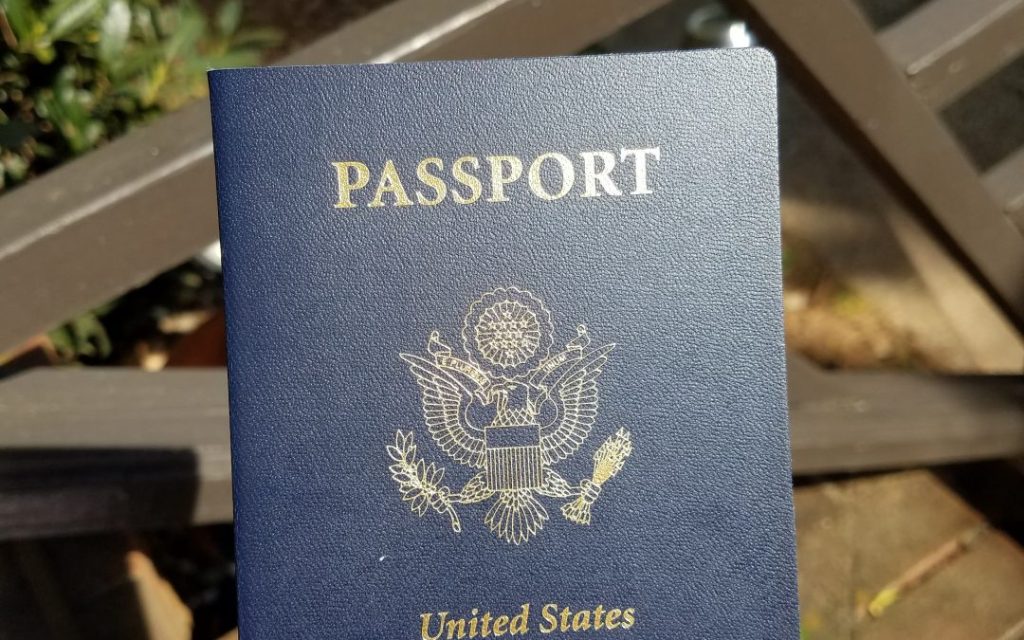
As of 2022, US citizens have been able to select “X” as their gender marker on passports. One’s marker does not need to match the gender on citizenship documents or photo ID, nor is medical documentation needed to change one’s gender, according to the State Department.

“We promote the freedom, dignity, and equality of all people – including LGBTQI+ individuals,” the department’s website says. “We are demonstrating this commitment to better serve all U.S. citizens, regardless of gender identity.”

Later that year, Americans were able to start changing their sex identification with the Social Security Administration without needing to provide medical certification. However, Social Security’s record systems still require a designation of male or female, though the administration said it was exploring policy and systems updates to support an “X” designation.

“The Social Security Administration’s Equity Action Plan includes a commitment to decrease administrative burdens and ensure people who identify as gender diverse or transgender have options in the Social Security number card application process,” said Kilolo Kijakazi, the administration’s acting commissioner at the time.

Republican urges Supreme Court to reject and overturn same-sex marriage

This blog is originally appeared at LGBTQ Nation

Democrats labeled it “yet another example” of GOP extremists “stirring up divisive social issues to create problems where none exist.”

Republicans in Idaho’s House of Representatives are contemplating a formal statement urging the U.S. Supreme Court to reverse its landmark 2015 ruling that legalized same-sex marriage.

The resolution, proposed by Republican state Rep. Heather Scott, characterizes the court’s decision as an “illegitimate overreach.” Scott’s proposal calls for the restoration of the “natural definition of marriage,” despite the fact that various forms of marriage, including same-sex unions, have existed throughout history.

Rep. Heather Scott stated that the purpose of her resolution is to “affirm our state authority to regulate marriage” during a Tuesday hearing.

The 2015 Supreme Court ruling in Obergefell v. Hodges legalized same-sex marriage nationwide, following decades of LGBTQ+ activism. At the time of the ruling, many states still had bans on gay marriage, despite growing public support for such unions.

The decision, made by a 5-4 vote, preceded the appointments of three conservative justices during the presidency of Donald Trump—Neil Gorsuch, Brett Kavanaugh, and Amy Coney Barrett. Justices Clarence Thomas and Samuel Alito have since called for a reconsideration of the Obergefell decision.

While Scott’s resolution holds no legal authority, it will be forwarded to the Supreme Court for consideration. The state committee advanced it on Tuesday, and a public hearing will be scheduled at a later date.

State House Minority Leader Ilana Rubel (D) and Senate Minority Leader Melissa Wintrow (D) dismissed Scott’s resolution as a “sad distraction,” criticizing it as another attempt by the far-right of the Republican Party to “gin up divisive social issues to create problems where none exist.” They emphasized that “big government has no business telling consenting adults who they should love.”

They added, “This resolution may be a helpful gimmick for winning in closed GOP primaries, but it should be offensive to all Idahoans who value their individual rights and freedoms and just want to live their lives without egregious government interference.”

In 2021, Rep. Scott compared Idaho’s mask mandate to Nazi Germany’s policies. Despite a federal judge ruling that Idaho’s ban on same-sex marriage violates the U.S. Constitution, the ban remains on the books. Recent polling shows that more Idahoans support same-sex marriage than oppose it.

Democratic lawmaker introduces bill to safeguard trans people’s privacy as Donald Trump assumes office

This blog is originally appeared at LGBTQ Nation

California must stand strong in support of our trans community members.

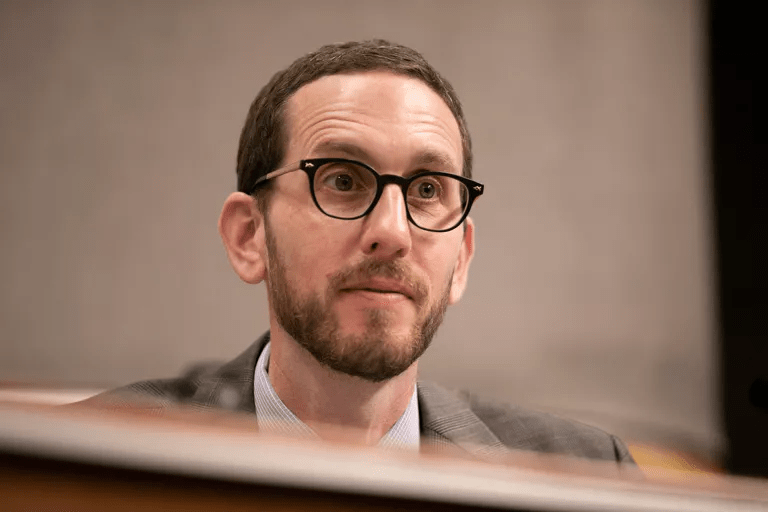
Out California State Sen. Scott Wiener (D) has introduced a bill aimed at protecting the privacy of trans people in anticipation of the incoming Trump administration. Wiener warned that Trump’s hostility toward trans individuals and his planned rollback of their rights would “only embolden abusive right-wing extremists.”

The proposed legislation, S.B. 59, known as the Transgender Privacy Act, seeks to create an automatic process to seal all court records related to an individual’s gender transition in the state. This would include retroactively sealing existing records. The bill also ensures that any gender transition records that reference a person’s dead name or sex assigned at birth would be kept sealed.

A similar law protecting youth was passed in 2023, but Wiener’s bill specifically targets individuals over 18.

“The incoming Trump administration and Republican congressional leadership have made it clear that targeting and erasing trans people is one of their highest policy priorities, and California must stand by our trans community members,” Wiener said in a statement. “Making personal identifying information public after someone transitions—such as their dead name or the fact that they are trans or nonbinary—needlessly exposes trans and nonbinary Californians to harassment and potential violence.”

If passed, California would join Washington, Oregon, and New York in enacting privacy laws that protect trans people from being forcibly outed through state records.

“When I learned I was unable to change my name in California without being forcibly outed online and exposed to harassment, I was appalled,” said Hazel Williams, a trans activist who worked with Wiener on the legislation, according to the Bay Area Reporter. “I’m proud to help rally community members and advocacy organizations to fix this. There are 220,000 transgender and nonbinary adults in California. All of us deserve privacy and safety, and this legislation is a vital step in that direction.”

The bill follows a ruling last year by Fresno’s 5th District Court of Appeal, which granted a trans woman the right to seal her transition-related records after being outed on social media, harassed by anonymous users, and forced to close all her accounts. While the decision set a precedent for judges to allow requests to seal such records, it does not mandate it in the way Wiener’s bill would.

“As Trump and his cronies continue their cynical incitements of violence against transgender people, it’s critical that we fight back with progressive protections at the state level,” said Syd Simpson, co-chair of the Harvey Milk LGBTQ+ Democratic Club’s Transgender Caucus, in an interview with the Bay Area Reporter.

“It’s really scary to know that there are people out there who want to hurt you, and that your personal information is just sitting there for them to exploit. The right to privacy and the right to be safe are precious to our community, and we’ve got to fight for them.”

Police arrest suspect accused of attempting to set fire to queer bar just days after its opening

This blog is originally appeared at LGBTQ Nation

“There are many people who clearly do not want us to be here.”

Police in Santa Cruz, California, have charged 45-year-old James Eason with vandalizing The Neighbor’s, a queer bar, just days after it opened. Eason faces charges of vandalism, arson, and committing a hate crime.

The incident occurred early last Tuesday morning when a suspect set fire to a button panel outside the bar’s front door, which is used to assist disabled patrons. The vandal also attempted to push burning napkins through the door’s cracks and carved a homophobic slur into the glass, according to bar owner Frankie Farr, who spoke with Lookout.

“I was like, ‘You’ve got to be kidding, we’re not even open a week,’” Farr said. “[We are] still a bit in shock that it happened so quickly… There are clearly many people who do not want us to exist.”

They contacted the police, and detectives were able to identify the suspect after reviewing surveillance footage from nearby businesses. At the time Eason was named a suspect in the vandalism, he was already in custody at the county jail for an unrelated offense.

The bar opened in early December with a ribbon-cutting ceremony attended by Santa Cruz Mayor Fred Keeley, City Councilmember Sonja Brunner, and more than 100 patrons eager to explore the new space.

Although the city is home to LGBTQ+-inclusive businesses, Farr felt there was a lack of dedicated spaces for queer individuals to meet, socialize, and build a sense of community. In addition to offering food and serving as a performance venue for regional DJs, queer performers, and drag artists, Farr hopes the bar can also support environmental and social movements and attract LGBTQ+ tourists to Santa Cruz.

“It’s pretty depressing to think of all these people driving over the hill or all the way to San Francisco just to find [queer] community when we have it right here,” Farr said.

Months before the opening, Farr shared, “I really want [the bar] to be a place for people who aren’t out or in unsafe situations where they can’t disclose their sexuality to family or others they live with—where they can give a sly little wave and say, ‘I’m just going to hang out at The Neighbor’s.’”

Despite the attack, the bar resumed normal business hours right away. Farr expressed gratitude that the incident wasn’t worse.

“We’re very fortunate that nobody was inside,” Farr said. “However, there are apartments above, and those residents don’t deserve this either. They could have been seriously injured.”

Police Chief Appeals to Stop Spreading False Claims About Wisconsin School Shooter’s Gender Identity

This blog is originally appeared at LGBTQ Nation

“I wish people would set aside their personal biases in this situation,” the local police chief stated.

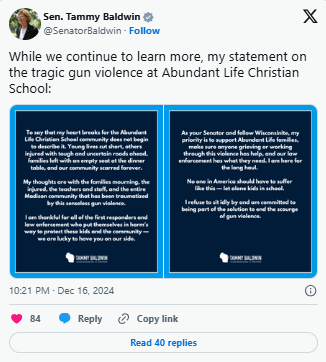
Police in Madison, Wisconsin, have urged the public to stop speculating about the gender identity of the individual responsible for the tragic shooting at Abundant Life Christian School on Monday. The shooting resulted in three fatalities, including the suspected shooter, and left six others injured. Among those expressing condolences for the victims were openly gay U.S. Rep. Mark Pocan (D-WI) and lesbian Sen. Tammy Baldwin (D-WI).

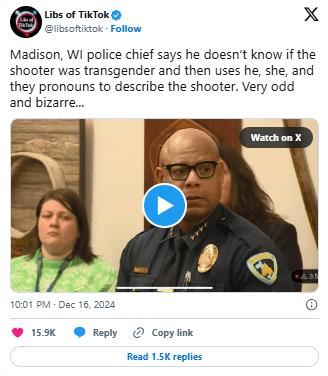
The suspect, 15-year-old student Natalie Rupnow, opened fire with a handgun around 11 a.m. local time in a study hall, according to CNN. She took her own life, as well as that of a teacher and a student, and left six others injured, two of whom remain in critical condition. Authorities have not yet released any details regarding the shooter’s gender identity or the motive behind the attack. However, transphobic groups have wrongfully used this incident to spread false claims that the shooter was transgender, aiming to further stigmatize the trans community as dangerous.

“I don’t know whether the shooter was transgender or not,” Police Chief Shone Barnes stated during a press conference on Monday evening. “I don’t think whatever happened today has anything to do with how she or he or they may have wanted to identify.”

Barnes emphasized, “I wish people would leave their own personal biases out of this. Whether or not she was, he was, or they were transgender is something that may come out later. But for what we’re doing right now, eight hours after a mass shooting, it is of no consequence.”

While there have been reports suggesting that Rupnow may have left behind writings later shared online by someone claiming to be connected to her, police have not yet verified the authenticity of these writings. The suspected shooter’s parents are reportedly cooperating with investigators and, at this time, face no legal charges, according to authorities.

There have been at least 83 school shootings in the U.S. so far this year, CNN reports. In the aftermath of some incidents, right-wing figures have spread misinformation about the shooters identifying as transgender.

Following Monday’s shooting, anti-LGBTQ+ activist Chaya Raichik, known for running the LibsOfTikTok account, shared a video of Chief Barnes using different pronouns to refer to the shooter. Raichik suggested that Barnes did so due to Rupnow’s gender identity.

In early January, Raichik made a similar claim, posting misinformation that suggested five recent school shooters had identified as nonbinary or transgender. Her image also falsely asserted that the 2022 Uvalde, Texas school shooter was transgender—this was not the case, and the person shown posing with a trans flag in her image was not the actual shooter.

The transphobic billionaire Elon Musk amplified Raichik’s inaccurate post, commenting with “!!” to further spread the misinformation.

In response to the recent shooting, Rep. Pocan issued a statement: “‘Thoughts and prayers’ offer comfort to the families and communities affected but have not changed our unique reality as Americans. It’s time for action. I am a co-sponsor of several gun violence prevention and youth mental health bills that will help prevent future tragedies like this. It’s time for my Republican colleagues to grow a backbone and put our children above the gun lobby by passing commonsense gun safety laws that will save countless lives.”

He continued, “My heart goes out to the victims of the Abundant Life Christian School shooting, their loved ones, and our entire community.” He also expressed gratitude toward the police and first responders who assisted the school.

Sen. Baldwin shared her thoughts on X, saying that her “heart breaks” for the community, which has been “scarred forever.” She added, “My thoughts are with the families mourning, the injured, the teachers and staff, and the entire Madison community that has been traumatized by this senseless gun violence.”

“No one in America should have to suffer like this—let alone kids in school,” she wrote. “I refuse to sit idly by and am committed to being part of the solution to end the scourge of gun violence.”

Echoing the false claims about a trans shooter, right-wing figures like Rep. Marjorie Taylor Greene (R-GA), Rep. Lauren Boebert (R-CO), and former Fox News host Tucker Carlson have repeatedly argued that trans people are dangerous because they are “mentally ill.” These transphobes assert that transgender individuals are mentally unstable and seek to “groom” and “sexualize” children with what they call “gender ideology,” which they claim confuses and coerces kids into pursuing “irreversible” medical procedures that will “mutilate” them for life. Boebert has even suggested that affirming trans people’s identities directly contributes to school shootings.

However, the truth is that the vast majority of mass shooters in the U.S. are cisgender males. The right-wing focus on linking trans identity to violence and mental illness often serves to stigmatize queer individuals while distracting from the real issue—gun control. Proposals for stronger gun regulations are often ignored, despite their potential to prevent mass shootings in the first place.

A CNN analyst criticized conservatives for scapegoating trans people in the wake of school shootings. Rather than focusing on the shooter’s gender identity, the analyst emphasized the need to address broader issues, such as mental health, child protection, school security, and firearm safety reforms, as essential steps in preventing future tragedies.

Voters remove fiercely anti-trans city council trio and elect the city’s first openly gay councilmember

This blog is originally appeared at LGBTQ Nation

Residents sought councilmembers focused on solving real issues rather than spreading fear.

Voters in Odessa, Texas, have decisively rejected the city’s anti-trans stance by ousting three city council members who backed the controversial bathroom ban and electing the city’s first openly gay councilmember.

Craig Stoker, the executive director of the local Meals on Wheels, ran on a platform centered around improving the city’s infrastructure. In contrast, his opponent, incumbent Denise Swanner, focused her campaign on homophobic rhetoric.

Swanner’s campaign distributed political mailers stating that the only thing she and Stoker had in common was being in relationships with men. Although the race was nonpartisan, this was part of Swanner’s effort to associate Stoker with the Democratic Party.

Craig Stoker remained unfazed by the attacks during the campaign.

“None of it was truly about me,” Stoker told the Texas Tribune. “It was their fear of losing a seat, losing an election, losing the title. I came into this campaign with the mindset that I’m going to have to rely on the work I’ve done in the community and the reputation I’ve built preceding me. That’s all I got.”

He added, “I understood the outcome was too important. If I could pull this off, what I would have the ability to do completely outweighed whatever they were slinging at me. And the ability to represent people who have probably never had a voice in the City Council chamber became too important to me.”

Stoker’s strategy resonated with voters. He secured the at-large seat with 56% of the vote, a remarkable achievement in a county where Donald Trump earned 76% of the vote.

His opponent, Denise Swanner, and two other incumbents—Mayor Javier Joven and councilmember Mark Matta—were key figures in a conservative majority on the six-member council. This group had pushed an agenda that included a $10,000 bounty on transgender individuals who use bathrooms or locker rooms not aligned with their sex assigned at birth.

“Voters said this is not how we want our city run… I agree, and we have to do a better job for the people,” said Cal Hendrick, who defeated Joven, in an interview with the Odessa American, which had dubbed the trio “The Squad.”

The election results have sparked hope among residents that city leadership will pivot away from divisive social issues and refocus on critical local concerns like infrastructure.

Odessa gained national attention for its extreme anti-trans bathroom ordinance, which allows any individual—regardless of residency—to sue a transgender person for at least $10,000 in damages for using a bathroom not aligned with their sex assigned at birth. There is no limit on the potential damages.

Last month, the city council expanded the ordinance to apply to private facilities in addition to public ones. The law also enforces criminal penalties, deeming violations a Class C misdemeanor punishable by a fine of up to $500. Refusal to leave a bathroom after being asked can result in trespassing charges.

The ordinance defines biological sex based on birth certificates, whether issued at birth or amended for clerical errors. This means transgender individuals with updated birth certificates reflecting their gender identity could still violate the law if they use bathrooms aligning with their gender.

The election marks a significant shift in Odessa’s political landscape and a potential turning point for the city’s future direction.

UK Trans Youth Activists Stage Protest Outside Wes Streeting’s Office Against Puberty Blocker Ban

This blog is originally appeared at LGBTQ Nation

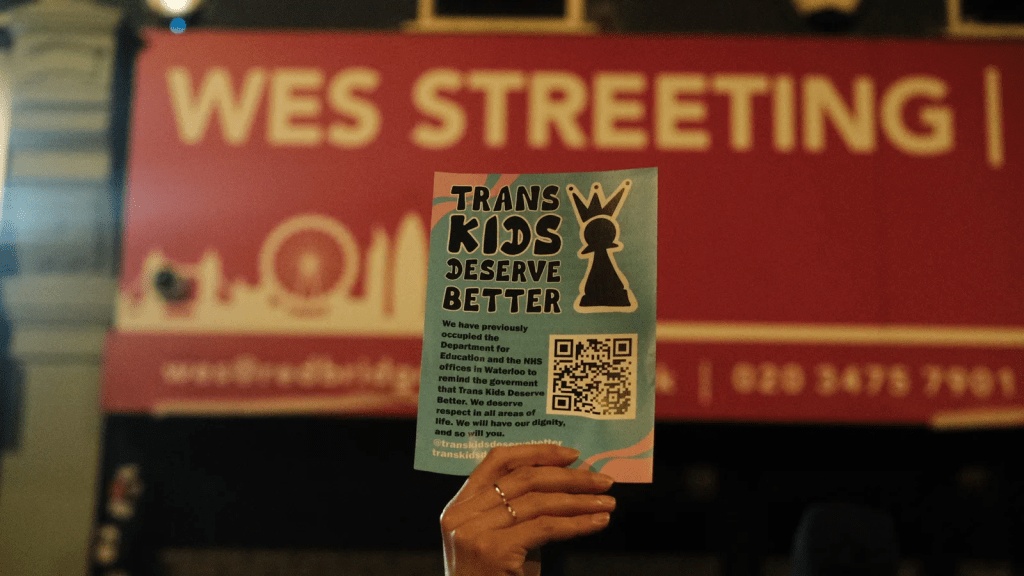
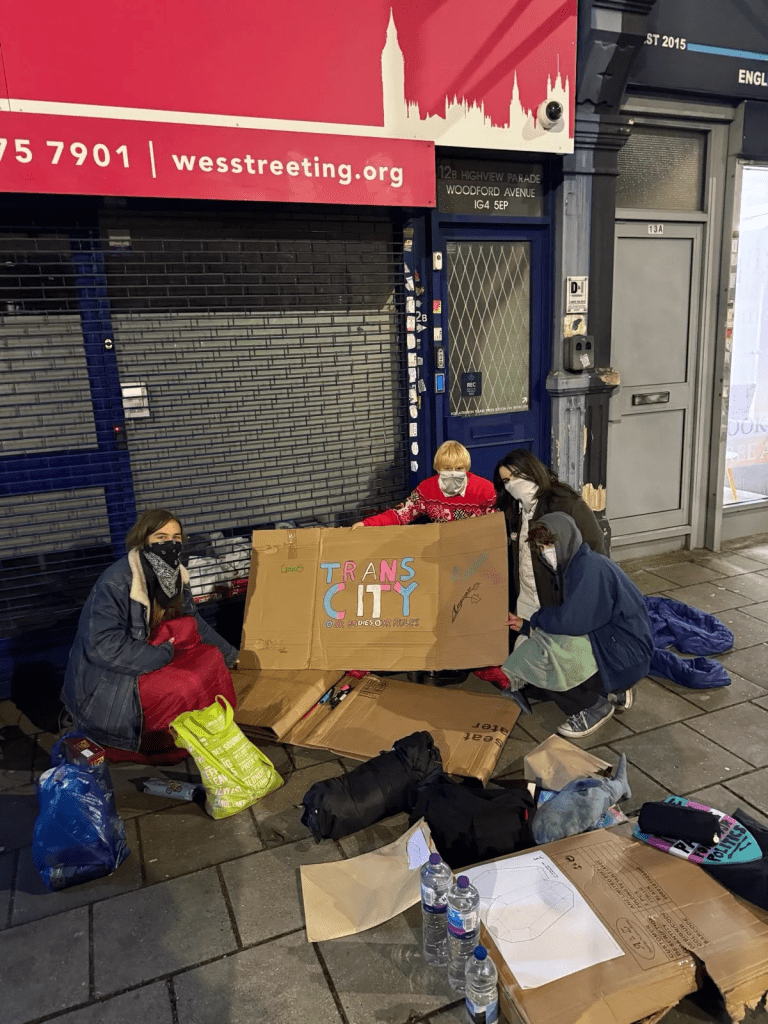
The activists, part of the group Trans Kids Deserve Better, staged an overnight protest outside the Department of Health and Social Care offices.

In response to the announcement by Health Secretary Wes Streeting and the Department of Health and Social Care that puberty blockers for treating gender dysphoria in trans youth would be banned “indefinitely,” a group of trans youth activists set up a temporary encampment outside Streeting’s office.
On December 11, Trans Kids Deserve Better and their supporters set up camp outside Wes Streeting’s office, remaining there overnight until the following day, according to an Instagram post from the group. While puberty blockers have effectively been banned in the U.K. since May, when the Department of Health and Social Care imposed an “emergency ban” on the medication for trans youth, Streeting’s recent announcement on Wednesday further extended the ban. He stated that the National Health Service (NHS) and private doctors are prohibited from prescribing or supplying puberty blockers to trans youth for gender dysphoria treatment until 2027. However, existing prescriptions for trans youth will continue to be honored. In contrast, cisgender youth experiencing precocious puberty are still permitted to receive prescriptions for the blockers.

In an article for Huck Magazine, one of the group’s activists, known as Grin, wrote that “while today isn’t a big change, it is a sign that the denial of our healthcare is now institutionalized.” Gender clinics in the U.K. have faced criticism for notoriously long waiting times, with an August study revealing that trans youth wait an average of two years to begin receiving gender-affirming care.

Grin wrote that Streeting “has promised ‘clinical trials’ on the effects of hormone blockers.” However, many clinical studies on the subject already exist, and the overwhelming majority conclude that hormone blockers are beneficial to the well-being of trans youth.

“But we already know what happens when we get them. We get to live happier, healthier lives because our bodies won’t be permanently altered in ways we don’t want,” Grin continued. “The real trial or experiment he has now created is to keep us from our healthcare and see what happens when an entire generation of trans people grows up knowing the trauma they’ve gone through was avoidable. I’ve not consented to be part of that experiment — I just wanted healthcare.”

The group has been targeting Streeting since August as part of a separate campaign called Trans Kids Are Dying, Wes Streeting. According to Grin’s article in Huck Magazine, the group has visited the secretary’s office daily since July, delivering “handmade paper coffins” to symbolize the lives of trans people already lost and those still at risk. Grin also mentioned that the group had received an invitation to meet with Streeting, but that it “never happened,” despite “constant emails to follow up on his invitation.”

On this occasion, the activists left a life-sized cardboard coffin outside Streeting’s office, as detailed in an Instagram post by Jude Guitamacchi, who participated in the overnight protest.

In their Instagram caption, they wrote, “This healthcare ban starts with trans+ kids but won’t end with them. This is about all of us. We must work together and do everything we can to challenge the ban and fight for the human rights of the trans+ community in the UK.”


Blog at WordPress.com.

Up ↑