
Democrats argue that it could aid prosecutors in states with strict abortion restrictions or bans.

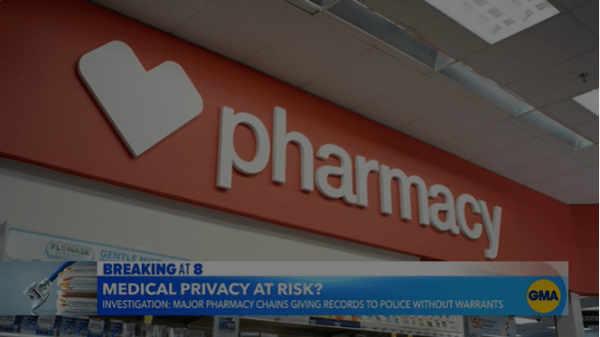
Lawmakers reveal that Americans’ prescription drug records are being shared with law enforcement without customer consent or a judge’s warrant in certain instances.
Democrats express concern over the disclosure, fearing that the policies of prominent retail pharmacy chains, permitted under federal regulations, might aid prosecutors in states with abortion restrictions to pursue individuals assisting women traveling for abortion procedures.
Lawmakers are urging Health and Human Services Secretary Xavier Becerra to enhance regulations, proposing that pharmacies should only disclose medical records to investigators upon judicial approval, seeking tighter control over the release of such sensitive information.
HHS has announced its efforts to finalize a rule that would reinforce current privacy regulations, especially safeguarding records linked to reproductive health.
“In our discussions with major pharmacies, it became evident that law enforcement agencies annually acquire the prescription records of numerous Americans in a clandestine manner, lacking a warrant,” they stated. “In numerous instances, pharmacies are disclosing confidential medical records without scrutiny by legal authorities. Despite the legal permission for pharmacies to notify customers about government requests for their data, most opt not to do so.”

A letter, initially reported by The Washington Post, comes after an extensive congressional inquiry by Democrats into medical privacy following the U.S. Supreme Court’s decision to overturn Roe vs. Wade. It was endorsed by Senate Commerce Committee Chairman Ron Wyden, D-Oregon, and Democratic Representatives Pramila Jayapal of Washington and Sara Jacobs of California.
Pharmacies cited in the letter assert compliance with privacy laws and federal health regulations, which presently don’t necessitate a warrant signed by a judge. Frequently, law enforcement provides subpoenas endorsed by a government agency but not subjected to judicial review.

CVS Health, one of the mentioned pharmacies, has proposed that regulators consider requiring a warrant or judge-issued subpoena. The company emphasizes that it depends on a legal team to ensure that all requests comply with the law.
“By law, we are obligated to keep most investigative requests from regulatory agencies and law enforcement confidential,” CVS stated in a response to ABC News. “For requests without a confidentiality directive, we assess on a case-by-case basis whether it is appropriate to inform the individual who is the subject of the request.”
According to the letter addressed to Becerra, pharmacies are contending with tens of thousands of requests annually, predominantly linked to civil litigation rather than criminal cases.
The matter is expected to gain heightened importance for Democrats as states continue to grapple with differing perspectives on abortion access, with some jurisdictions enacting laws targeting what they term “abortion trafficking,” or aiding a woman in traveling out of state for an abortion.

Federal regulations permit the prescription of mifepristone for patients up to 10 weeks of gestation, allowing them to pick it up at a local pharmacy under specific guidelines. Although the patient must be in a state where abortion is legal to obtain the drug, pharmacy access has helped abortion providers in states like California, Colorado, and Illinois serve more patients through virtual clinics.
Anti-abortion rights groups have filed lawsuits in an attempt to remove mifepristone from the market. The Supreme Court recently agreed to hear the case, with a likely ruling expected by next summer.
Lawmakers and privacy experts are concerned that large pharmacy chains, with access to a person’s medical records across multiple states, could be exploited by prosecutors seeking to target individuals assisting women in traveling for abortions.
Lawmakers are urging the Biden administration to mandate, under the Health Insurance Portability and Accountability Act (HIPAA), that pharmacies require a warrant before sharing sensitive information. They also advocate for notifying customers, unless a judge deems it would impede an investigation.


 fleeredstates.blog
You must be logged in to post a comment.