Poland’s leader promises to start recognizing foreign same-sex marriages, after EU court ruling

Read more at LGBTQ Nation.

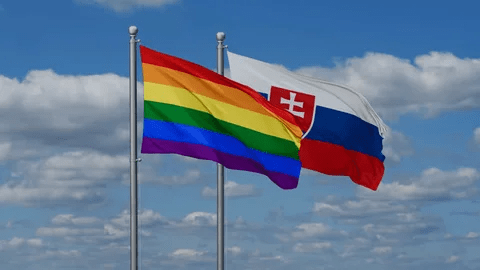
Poland’s Prime Minister Donald Tusk said on Tuesday that his government would quickly work to follow recent court rulings requiring Poland to legally recognize same-sex marriages conducted in other European Union (EU) member nations.

Recent rulings by the Court of Justice of the European Union (CJEU) and Poland’s Supreme Administrative Court (NSA) both require Poland to recognize foreign same-sex marriages, after a married same-sex couple (including a Polish citizen) weren’t allowed to have their 2018 German marriage certificate entered into the Polish civil registry.

The men challenged the denial at the NSA, which then referred the case to the CJEU. The CJEU ruled in November 2025 that the couple’s marriage was valid throughout the EU’s 27-member bloc, and that Poland could recognize their union without also altering its laws to start offering same-sex marriages.

Then, last March, the NSA ordered the government to transcribe the men’s same-sex marriage certificate into the Polish system, resulting in de facto government recognition of a same-sex couple’s marriage in the country; a historic first for Poland.

In comments to the media before a closed cabinet meeting on Tuesday, Tusk apologized for the “years of rejection and humiliation” that same-sex couples have experienced due to Poland not legally recognizing their marriages, Notes from Poland reported.

“[This is] a matter of human dignity: the right to happiness, the right to equal treatment by the state,” Tusk said. “I would like to apologize to all those who, for many, many years, felt rejected and humiliated. For many years, the [Polish] state has failed the test.”

Tusk also said that Poland currently “lacks statutory regulations” that would ensure that same-sex couples receive the same legal and social protections as different-sex couples.

However, he said, “We have committed to – and I will personally ensure this – abiding by the rulings as a priority,” adding that any changes must be conducted in compliance with existing Polish law. He also urged government members “to respect the dignity of every human being” while figuring out and implementing new policies, some of which may require parliamentary or executive approval.

Tusk also said any legal recognition is “no way a path to the possibility of adoption.”

Karolina Gierdal, a lawyer with the Polish LGBTQ+ advocacy organization Lambda Warszawa, told TVP World, “It is sad that the LGBT community is once again presented as a threat, as if society needs reassurance that adoption rights ‘won’t happen.’ The reality is that children are already being raised in same-sex families in Poland, and maintaining the current legal situation means reducing the level of legal protection available to those children.”

Separately, Warsaw Mayor Rafał Trzaskowski, who is a senior figure in Tusk’s Civic Platform party (Platforma Obywatelska, PO), announced that his city would begin legally recognizing foreign same-sex marriages immediately on a municipal level, long before the national government updates its own policies.

Last month, a group of over 100 non-governmental organizations urged Poland to take action to abide by the CJEU and NSA’s rulings. The groups noted that Tusk and his party were elected to power in 2023 on promises to restore Poland’s rule of law, after 10 years of corrupt, anti-democratic rule by the country’s far-right, anti-LGBTQ+ Law and Justice Party.

“Right-wing governments have distorted what we understand by the rule of law, treating it as an empty slogan rather than a real principle of state operation,” the groups wrote. “In a democratic state governed by the rule of law, the government has no authority to decide which judgments merit enforcement.”

So far, 18 countries in the EU offer legalized same-sex marriages, though all member countries are required to legally recognize them, even if they don’t offer them to their own citizens.

While Tusk’s political party promised to work to offer national same-sex civil partnerships, the initiative died due to opposition from Poland’s center-right Polish People’s Party (PSL). A parliamentary coalition considered offering some rights to same-sex couples and unmarried partners instead, but without actually offering civil unions nationwide.

However, neither proposal has come up for a parliamentary vote.

Parents in Korea share heartwarming deposition in support of legalizing daughter’s same-sex marriage

Read more at LGBTQ Nation.

A same-sex couple fighting for a legal marriage in South Korea has the staunch support of two very loving parents behind them.

Park Yeo-jin and Hwang Hee-yeon committed to each other for life in a 2020 wedding ceremony, but have been unable to register their marriage legally, since South Korea doesn’t recognize marriage between two people of the same sex.

They have filed a lawsuit in response, and Yeo-Jin’s parents have submitted heartwarming depositions in support, as reported by South Korean publication Hankyoreh.

“I can’t help wondering what is so wrong about the courage and devotion that these two people have shown,” wrote her father.

He admitted he was “worried that they could end up hurt” when he first learned they were dating, due to “how hostile the world can be.” He also thought it could be a phase.

“But the two of them have been truly brave,” he said, “supporting each other with love and devotion through all of life’s hardships. As a father and a human being, I respect Park Yeo-jin and Hwang Hee-yeon and their wishes.”

“As someone who knows them well, I don’t see any difference between them and other married couples, even if they are a same-sex couple,” he continued. “I think we make society better when we focus on and embrace what is fundamentally right rather than discriminating based on difference.”

Yeo-jin’s mother also wrote to the court, saying that the couple has shown “love and dedication to one another, living and planning their future together.” She said seeing that “helped turn my concerns into affirmation and support for them.”

“If marriage is a relationship based on love and trust where you spend your life together, overcoming life’s difficulties through understanding and dedication,” she added, “then Yeo-jin and Hee-yeon are unquestionably a married couple.”

The court held a hearing on the matter on April 27, reportedly the first time in 11 years that a case of this nature was not dismissed outright.

“I was surprised and thankful that we were unexpectedly given this hearing,” Hee-yeon told Hankyoreh. “The fact that we were able to share our experience was encouraging and meaningful.”

“What we want isn’t special rights or treatment,” she added. “All we want is for the bare minimum rights so that we can protect and take responsibility for one another, just like any other couple.”

South Korea has made some advances recently. In October 2025, it was announced that the country’s census would allow same-sex couples to identify themselves as spouses for the first time.  LGBTQ+ activists praised the move as a significant step toward equality.

While homosexuality is not criminalized in the country, same-sex marriage remains illegal, and according to Equaldex, only 23% of the public fully supports LGBTQ+ people being open about who they are.

Despite South Korea’s portrayal in its global entertainment industry as modern and gay-friendly, the country has long tolerated LGBTQ+ discrimination and, in a 2020 report, was ranked among the least gay-inclusive countries in the Organization for Economic Cooperation and Development.

The absence of progress can be traced to lobbying efforts by the United Christian Churches of Korea and other church associations, and to very public hate campaigns by loosely affiliated groups like Anti-Homosexuality Christian Solidarity, who have deep-rooted connections to the country’s political class.

Efforts to pass a broad anti-discrimination law through the legislature have failed many times, but hope was renewed last year when the country’s liberal party took a majority of seats in the legislature.

While LGBTQ+ rights have a long way to go in South Korea, advocates scored another major victory in the summer of 2024, when the nation’s top court ruled to uphold the rights of people in same-sex relationships, giving them the same rights as people in heterosexual relationships.

The landmark ruling states that benefits from South Korea’s National Health Insurance Service (NHIS) can be claimed by people in same-sex partnerships and that treating same-sex couples differently from heterosexual ones is “an act of discrimination that… violates human dignity and the right to pursue happiness.”

Hobby Lobby is funding the latest push to end marriage equality

Read more at LGBTQ Nation.

Earlier this year, a group of 47 anti-LGBTQ+ organizations launched a new campaign to end marriage equality in the U.S., demanding that the Supreme Court overturn Obergefell v. Hodges. The campaign, called “Greater Than” – a response to the push for equality by claiming that straight people are “greater than” queer people – immediately got the media’s attention.

Now the Seattle Times has revealed that a key organization behind the Greater Than campaign is being funded by the conservative Christian business Hobby Lobby, the same business that got the Supreme Court to rule in 2014 that for-profit corporations don’t have to pay for employees’ health care that covers contraception if that contraception goes against the corporation’s religious beliefs.

Katy Faust is the founder and president of Them Before Us, an organization devoted to ending marriage rights for same-sex couples in the U.S. Faust’s mother is a lesbian who came out after marrying Faust’s father, and her parents divorced when she was 10. She converted to Christianity a few years later, when she was in high school.

Faust insists that she didn’t devote her life to attacking LGBTQ+ rights out of some kind of resentment towards her mother, although she now says she no longer considers her mother a parent.

The Seattle Times notes that Faust has been campaigning against marriage rights since at least 2012, when she started a blog called “Ask The Bigot,” a website she claimed would “debunk” the notion that marriage rights opponents are bigots.

She advocated for ending marriage rights over the years, but saw an opportunity for a renewed push after the Supreme Court overturned federal reproductive rights protections guaranteed in Roe v. Wade in 2022. The Court effectively let states decide whether abortion would be legal, and many of them immediately banned it, something people like Faust hope to see happen for same-sex marriage.

And the recent push is getting more funding. Them Before Us was founded in 2018, and its IRS reports show that it received less than $50,000 in revenue for its first few years of operation before Roe was overturned. In 2022, though, it received $200,000. In 2024, that became nearly $1 million, and Faust collected a salary of $135,000.

Them Before Us’s 2024 filings show a $300,000 donation from The Servant Foundation, a Christian organization funded by Hobby Lobby’s founder, David Green, and his family. It’s the same organization behind those “He Gets Us” ads about Jesus that ran during the 2024 and 2025 Super Bowls.

Them Before Us – referring to how children’s interests should come before adults’ – is attempting to refocus the debate on marriage rights around children in order to capitalize on the recent moral panic around “groomers,” a push from the right that started in the early 2020s to associate LGBTQ+ people with child sex abuse once again.

Faust claims that marriage equality has made children’s lives worse, contrary to what social science says on the matterShe said in a March Uncloseted Media interview that there is no “right to adopt” but that children “have a natural right to be known and loved by their mother and father.”

Faust herself has adopted a child who is from China.

South Carolina Republicans demand Supreme Court overturn marriage equality

Read more at LGBTQ Nation.

Republican lawmakers in South Carolina are trying to pass a resolution to demand the Supreme Court overturn its 2015 Obergefell v. Hodges ruling that legalized marriage equality in all the states that hadn’t yet done so, including South Carolina.

A group of 12 Republicans in the South Carolina House of Representatives introduced H-5501, a concurrent resolution that calls on the state to “reject the Supreme Court of the United States’ Obergefell decision and to call on the Supreme Court to reverse Obergefell and restore the natural law definition of marriage, a union of one man and one woman and to insist on restoring the issue of marriage and enforcement of all laws pertaining to marriage back to the several states and the people.”

The local TV news station WACH notes that concurrent resolutions have no legal force in South Carolina. Still, progressive advocates called out the resolution.

“Lawmakers in South Carolina cannot undo marriage for all committed couples in this country,” ACLU of South Carolina executive director Jce Woodrum said. “These lawmakers are fringe extremists.”

South Carolina passed a state constitutional amendment banning same-sex couples from getting married in 2006. In 2025, a PRRI poll found that 54% of people in South Carolina now support marriage rights for same-sex couples.

The resolution is part of a trend started last year, as far-right Republicans in state legislatures across the country started introducing resolutions demanding the Supreme Court overturn marriage equality. Other states that have seen such resolutions include Idaho, Michigan, Montana, North Dakota, and South Dakota.

Several red states have also considered bills that would give extra rights to opposite-sex couples who get married.

Two Supreme Court justices said in 2020 that they would like to overturn Obergefell. Conservative Justice Amy Coney Barrett said in 2025 that it is unlikely to happen.

State House approves bill to redefine marriage in Pennsylvania, moves to Senate

Read more at WGAL.

The Pennsylvania House passed House Bill 1800, focusing on marriage equality, on a 127-72 vote, moving to change the state’s definition of marriage from a contract between a man and a woman to a contract between two individuals.

HB 1800 passes state House

The bill is sponsored by Democrat Rep. Malcolm Kenyatta of Philadelphia. The vote mostly followed party lines, with some Democrats voting against and some Republicans voting for the bill.

Opponents argued marriage should stay out of government, while supporters said the change would keep government out of marriage.

The bill would change the definition of marriage in the state to be between two consenting adults and remove a section stating that if a same-sex marriage happens in another state, it would be void in Pennsylvania.

Lawmaker comments on floor and response

“I don’t believe that we need government to put a stamp of approval on marriage. And I’ve been in the minority for that position for some time,” said Rep. Bryan Cutler, R-Pa. Dist. 100. “We need to recognize the foundation of marriage is actually for the stability of children, whether it’s history or whether it’s consistent with beliefs.”

“It is about a covenant that is deep and meaningful, and the one that I share, and thousands of Pennsylvanians share is deep and meaningful,” said Rep. Kenyatta. “So, marriage is not symbolic. They are legal, they are practical. There are financial things connected to the institution of marriage.”

“Marriage equality has been something I’ve been advocating for my entire career. It’s about time that we update Pennsylvania’s laws to reflect modern society,” said Rep. Dave Madsen, D-Pa. Dist. 104.

What’s next

The bill now heads to the Republican-controlled Senate, where it is unclear whether lawmakers will take up the proposal and vote on it.

Only one state still opposes marriage equality. Is it yours?

Read more at LGBTQ Nation.

Only one U.S. state has a majority that opposes marriage equality, another has the highest concentration of LGBTQ+-identified people, and a majority of Republicans agree that transgender people deserve the same rights and protections as other Americans, according to a newly released 50-state survey conducted by the Public Religion Research Institute (PRRI).

PRRI interviewed more than 22,000 adults nationwide throughout the last year as part of its American Values Atlas. The findings provide a snapshot of how individual states and demographic groups view same-sex marriage, anti-discrimination protections, and trans rights at a time when all of those are under attack from Christian nationalist forces.

The survey revealed the two U.S. states with the lowest levels of support for same-sex marriage: Only 47% of respondents from Mississippi support same-sex marriage with Arkansas close behind at 50%. Conversely, the highest levels of support for same-sex marriage were expressed by 85% of respondents from Massachusetts and the same amount Rhode Island, with the 81% of respondents from Vermont close behind.

The survey asked respondents whether they self-identified as LGBTQ. It found that 17% of respondents in Nevada self-identified as LGBTQ — the highest percentage of all U.S. states, followed by 14% of respondents in Maine, Nebraska, and Wyoming.

The states with the lowest percentage of self-identified LGBTQ respondents were Hawaii and South Dakota, with just 5% each. Kansas was the state with the second-lowest number of self-identified LGBT respondents, with just 6%.

Among states whose respondents voiced the highest level of support for nondiscrimination protections for LGBTQ+ people were Massachusetts (85%), Maryland (82%), and Alaska (81%). However, Mississippi (60%), Wyoming (57%), and Arkansas (53%) showed the lowest support for such protections.

States with the most respondents opposed to religiously based ant-LGBTQ+ service refusals were Massachusetts (72%), Hawaii (71%), Vermont (71%), and Connecticut (70%). Conversely, only 44% of West Virginia respondents voiced opposition to such refusals — the lowest percentage among all U.S. states.

Interestingly, the poll found that seven in 10 Americans (71%) agreed that “transgender people deserve the same rights and protections as other Americans,” including most Democrats (88%), independents (77%), and Republicans (57%). This is especially surprising, seeing as the Republican Party and its president have spent the last decade vilifying trans people as mentally ill and a danger to the privacy and safety of women, girls, and children.

PRRI’s survey also looked at LGBTQ+ attitudes in relation to Christian nationalism. It found that Christian nationalism rejecters (91%) were the most likely to support LGBTQ+ nondiscrimination protections, followed by 77% of skeptics, 61% of sympathizers, and 42% of adherents of Christian nationalism.

Unsurprisingly, adherents and sympathizers of Christian nationalism were less likely to support same-sex marriage and less likely to oppose religiously based refusals for LGBTQ+ people, compared to respondents who either reject or are skeptical of Christian nationalism.

Idaho House passes resolution- again- asking SCOTUS to overturn marriage equality

Read more at LGBTQ Nation.

The Idaho House of Representatives passed a measure this week asking the Supreme Court to overturn its landmark 2015 decision legalizing same-sex marriage across the U.S. But the legislation lost three Republican votes compared to a similar measure that passed in the state House last year.

As the Idaho Statesman reports, House Joint Memorial 17 passed in a 44–26 vote Tuesday. The measure, introduced by State Rep. Tony Wisniewski (R), is a formal legislative request for the Supreme Court to overturn its 2015 decision in Overgefell v. Hodges. The measure argues that the decision establishing the constitutional right of same-sex couple to legally marry is “at odds with the Constitution of the United States and the principles upon which the United States is established.” In its Obergefell ruling, the measure argues, the Court applied a definition of liberty that would not have been recognized by the country’s founders. The decision, it says, “relies on the dangerous fiction of treating the Due Process Clause of the Fourteenth Amendment to the Constitution as a font of substantive rights” which “strays from the full meaning of the Constitution.”

House Joint Memorial 17 is identical to House Joint Memorial 1, which the Idaho House passed last year.

This time around, however, 17 Republican lawmakers joined House Democrats to vote against the measure, with three more Republican no votes than in 2025.

According to the Statesman, Republican Reps. Dori Healey and Mike Pohanka, who both voted for House Joint Memorial 1 last year, both voted against the 2026 measure. Grayson Stone, who is serving as a long-term substitute for Rep. Don Hall (R) and recently announced that he is running for Hall’s seat, also voted against the measure. Late last year, Hall replaced former Republican Rep. Lance Clow, who voted for House Joint Memorial 1. Hall resigned due to health issues earlier this year.

Stone reportedly acknowledged that his no vote might amount to “political suicide,” but cited the Bible as the reason for his vote.

“This entire argument is rooted in the Bible,” Stone said, according to the Statesman, noting that the Bible includes instructions on how to shave. “I just don’t understand why we have to apply the Bible to specific aspects of our life, but not all of it. So, I will be voting against this bill.”

Pohanka, meanwhile, noted that his own religious beliefs on same-sex marriage have not changed since he voted for the 2025 measure. However, he told the Statesman that he represents all his constituents and wants to get back to actually legislating.

“I thought we advanced [House Joint Memorial 1] last year,” he said. “This year, to me, it’s just going to cause hurt and pain and I don’t want to do that.”

Healey declined to comment on his vote, according to the Statesman.

House Joint Memorial 17 now advances to the Idaho Senate, which declined to vote on the 2025 measure. Even if the state senate approves House Joint Memorial 17, it would not compel the Supreme Court to act.

While conservative Justices Clarence Thomas and Samuel Alito have repeatedly signaled that they are eager to overturn Obergefell, last November the Court declined to hear a case challenging the decision. Fellow conservative Justice Amy Coney Barrett has also said that she thinks the court’s same-sex marriage ruling would remain in place because it affects many other rights, including medical, financial, family, and other social rights.

Tennessee’s newest anti-LGBTQ bills go against U.S. Supreme Court rulings

Read more at WPLN News.

Tennessee lawmakers have advanced a host of anti-LGBTQ bills that would run counter to U.S. Supreme Court precedent.

Two measures, both proposed by Rep. Gino Bulso, R-Franklin, would challenge landmark cases that legalized same-sex marriage and established protections for discrimination based on sexual orientation or gender identity.

Rep. Gloria Johnson, D-Knoxville, questioned the legality to going against Bostock v. Clayton County, which established that LGBTQ people are protected from discrimination under the Civil Rights Act of 1964.

“We’re talking about federal law that supersedes state law,” Johnson said. “You can’t just ignore the federal law. So, therein is the problem for those of us who believe in our U.S. Constitution.”

Bulso answered, arguing that, “The Civil Rights Act of 1964 does not govern all employers. It only governs employers with more than 15 employees.”

The legislation, Bulso said, would only apply to small businesses — but could jeopardize federal funding by putting the state at odds with federal law.

There’s a similar fiscal note on another of Bulso’s bills that would challenge Obergefell v. Hodges. Bulso argued that the opinion only dictates that public actors must recognize same-sex marriages, not private citizens.

Tom Lee, member of the Board of Directors of the Tennessee Pride Chamber, spoke against the bill, arguing that it could allow discrimination against LGBTQ couples.

“Imagine if under this bill a private employer said, ‘Well, you can’t take family leave because I, as a private citizen, don’t recognize — using the language of the bill — your purported marriage,’” Lee said. “Or a bank says, ‘You’ll pay the higher rate (for unmarried couples). We’re not bound by the 14th Amendment. You’re not married in our eyes.’”

Both measures advanced Wednesday along party lines.

Other measures proposed this year would expand previous bills aimed at LGBTQ Tennesseans. State law that allows teachers to ignore a student’s preferred pronouns would expand to include honorifics like “Mr.” or “Mrs,” and the state’s drag ban would expand the type of businesses that could be penalized under the law.

Marcus Ellsworth with the Tennessee Equality Project said that the legislature wants to consider queer people obscene at a time when all people, regardless of gender or sexuality, are struggling.

“What is actually obscene is that every year we have to watch our state prioritize wasting time, money, and resources, fabricating ways to hurt us,” Ellsworth said.

Virginia governor gives voters a chance to erase their state’s anti-marriage amendment

Read more at LGBTQ Nation.

Virginia Gov. Abigail Spanberger (D) signed legislation that sent several potential state constitutional amendments to voters this past Friday, including a measure that would remove the state’s ban on same-sex marriage from the state constitution, which was originally passed in 2006.

While the state’s ban on marriage equality has not been enforced since the 2015 Obergefell v. Hodges Supreme Court decision, which legalized marriage equality in all 50 states, advocates for its removal say that it is discriminatory and could be enforced if Obergefell were ever overturned.

“We want to make sure that Virginia families know that here in Virginia, it is not just a Supreme Court decision that protects them, but it is also our state constitution,” Spanberger said in comments during the signing ceremony. “It’ll be a big step for Virginia to ensure that every family knows that Virginia is a place that welcomes them, appreciates them, and sees them for the wonderful family and Virginians that they are.”

“So before I get too emotional on that one, I will start signing.”

LGBTQ+ issues played a large role in the 2025 Virginia gubernatorial campaign, with Republican candidate Winsome Earle-Sears running ads throughout the election season that accused Spanberger of wanting “boys to play sports and share locker rooms with little girls” and letting “children change genders without telling their parents.”

At a debate later in the year, Spanberger pointed out Earle-Sears’ opposition to anti-discrimination laws and her opposition to marriage equality. Earle-Sears blurted out, “That’s not discrimination!” when Spanberger brought up how Earle-Sears believes “it’s OK for someone to be fired from their job for being gay.”

LGBTQ+ advocates hailed the marriage ballot initiative measure.

“Twenty years after banning marriage equality, it’s time for our commonwealth to fully complete our evolution – and finish the job on protecting marriage equality for all,” said Equality Virginia Executive Director Narissa Rahaman in a statement. “It’s up to all of us to vote on November 3, 2026 to safeguard marriage for all Virginians and remove the stain that exists in our constitution. We have come too far over the past 20 years to have any doubt that Virginia voters will support love and dignity for all couples this November.”

Spanberger also signed a bill that will send a reproductive rights amendment to voters in the fall. The proposed amendment would give Virginians a right to reproductive health care and include IVF, contraception, and abortion.

“This amendment protects families’ entire scope of reproductive needs,” said state Sen. Jennifer Boysko (D), who introduced it in the Virginia Senate.

“I look forward to spending ample time in advance of the 2026 elections campaigning to make sure that people understand the importance of this constitutional amendment,” Gov. Spanberger said last year, according to the Virginia Mercury.

Spanberger sent two other constitutional amendments to voters on Friday. One would automatically restore voting rights for convicted felons who finished their prison sentences (they currently have to appeal to the governer after their sentences are over to get their voting rights back), and the other would allow the state’s General Assembly to change the state’s congressional district map in the middle of decades in order to respond to other states doing the same, according to WOBC.

Virginia takes one step closer to enshrining marriage equality in its state constitution

Read more at LGBTQ Nation.

The Virginia Senate voted this past Friday in favor of repealing an amendment to the state constitution that defines marriage as only between a man and a woman.

Senate Joint Resolution 3, introduced by state Sen. Adam Ebbin (D), passed the chamber in a 26-13 vote and would ban the state “from denying the issuance of a marriage license to two adult persons seeking a lawful marriage on the basis of the sex, gender, or race of such persons.” It also requires Virginia to “recognize any lawful marriage between two adult persons and to treat such marriages equally under the law, regardless of the sex, gender, or race of such persons.”

A proposed Constitutional amendment must be voted on by two successive state legislatures before heading to the ballot, where voters ultimately decide its fate. Both chambers voted in favor of the resolution in 2025, and the House of Delegates already approved it again earlier this month. As such, the resolution will go to voters during the November 2026 elections.

Virginia’s 2006 constitutional ban on same-sex marriage has been unenforceable since the 2015 Supreme Court Obergefell v. Hodges decision that legalized marriage equality nationwide. In 2024, amid increasing threats that the Court may reexamine the decision, then-Gov. Glenn Youngkin (R) (who is generally anti-LGBTQ+) signed a bill codifying same-sex marriage in the Commonwealth.

The law now ensures same-sex marriage remains legal in Virginia regardless of any change in federal protections, but those championing the constitutional amendment say it’s still not enough.

“It’s time for the Virginia constitution to accurately reflect the law of the land. Full stop,” Ebbin said in a statement. “20 years ago, the Virginia Bill of Rights was unnecessarily stained in an overreaction. It’s past time to fix that and see that loving Virginia couples are not mistreated or discriminated against. I am confident that the voters will ratify this marriage equality amendment in November.”

“It’s about time Virginia gets this done,” added state Rep. Mark Sickles (D), who introduced the resolution in the House of Delegates. “All Virginia couples deserve the freedom to marry without fear that their rights could be rolled back. By advancing this amendment, we’re ensuring that the freedom to marry is protected by the people. It’s up to the voters now and I’m confident they’ll do the right thing in November.”

Virginia’s resolution comes after a new trend last year in which several Republican-led states introduced resolutions calling for the Supreme Court to overturn Obergefell. Two justices on the Supreme Court have openly stated that they want to overturn Obergefell, which has stirred fears in the LGBTQ+ community as the court has moved increasingly to the right.

In a victory for LGBTQ+ people, the Supreme Court opted in November not to hear an appeal from former Kentucky county clerk Kim Davis asking the court to reconsider its marriage equality decision.

Even if the Supreme Court had taken the case, Chris Geidner, the gay publisher and author of Law Dorktold LGBTQ Nation last year that he didn’t think a case like Davis’ would provide sufficient legal reasoning to overturn same-sex marriage entirely.

Rather, he said that a successful religious freedom or free speech challenge to Obergefell would do other “bad things,” like hollow out civil protections or public accommodations for same-sex couples, essentially inconveniencing or endangering them, but not outright denying them the right to a marriage license.

Blog at WordPress.com.

Up ↑