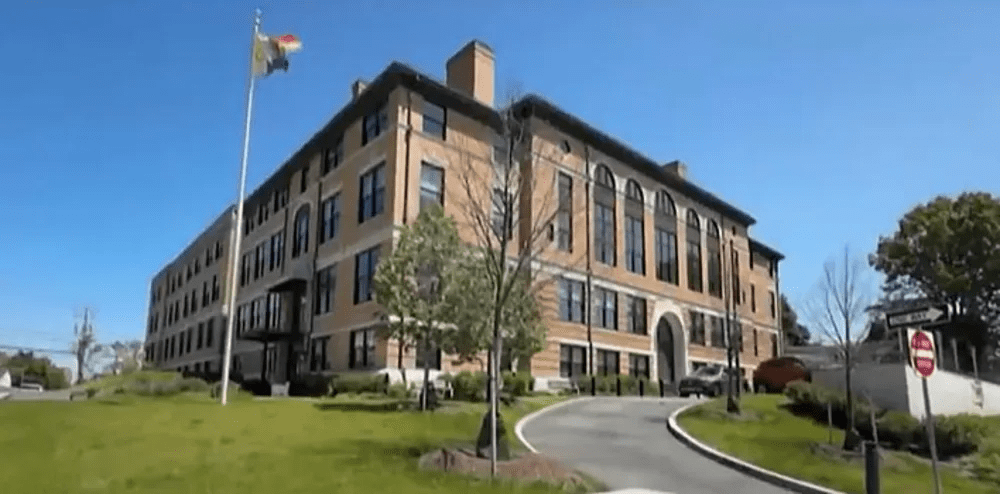
Exactly one year after opening its doors, The Pryde has transformed the historic 1902 structure into New England’s first LGBTQ+ welcoming affordable senior housing community.
Karmen Cheung, Pennrose New England Regional VP, recalled the building’s previous state.
“I remember walking in and doing a tour of the building when it was vacant for the first time,” Cheung said. “It was actually kind of creepy, cold, dark.”
The vision, however, was clear: to turn an historic building into an independent living space where LGBTQ+ seniors could feel a strong sense of belonging. The result is a vibrant community that residents like Brian Salvaggio deeply appreciate.
“It’s bright, it’s open, it’s lively,” Salvaggio said. “It’s really the first group of people that’s lived here, so you feel part of something.”
For many residents, The Pryde offers a much-needed haven.
“As we get older and we want more community around us and we want more support around us, that’s really what brought us here,” resident Pat Xavier said.
The 100% accessible building addresses a critical need for a generation of LGBTQ+ elders who grew up without the legal protections and societal acceptance now afforded to younger generations, according to Gretchen Van Ness, executive director of LGBTQ Senior Housing.
“This generation of LGBTQ elders has faced such losses that they come into their elder years with a much smaller safety net than a lot of other folks are lucky to have,” Van Ness said.
The journey to create The Pryde was a dedicated nine-and-a-half-year collaboration between LGBTQ Senior Housing and Pennrose Management. Throughout the renovation, developers diligently preserved the building’s historic charm, retaining elements like original chalkboards and bell systems.
“Every unit is actually a little different because of those historic pieces,” Cheung said.
The Pryde is open to anyone over 62 who qualifies for affordable housing, though demand has far outstripped availability.
“We are 100% occupied,” Van Ness said. “This community is full and it’s hopping and there’s a million things going on.”
For residents, the most significant impact is the feeling of safety and liberation from discrimination and isolation.
“That’s just a wonderful feeling because, you know, there’s no more hiding,” Brian Salvaggio said. “Not at our age. We want to be who we are and enjoy the time we have.”
After a year of operation, residents and representatives alike believe The Pryde stands as a powerful blueprint for LGBTQ+ senior living communities everywhere, demonstrating how inclusive spaces can transform lives.
As Oklahoman legislators push to restrict trans rights and overturn the 2015 Supreme Court decision legalizing gay marriage, Zane Eaves says his identity as a transgender man has put a target on his back in his home state.
One of 18,900 trans adults in Oklahoma, Eaves has received death threats as has his wife of 10 years and their two children.
“All the hatred and political stuff going on” are driving this Oklahoma lifer from the place he was born and raised, Eaves, 35, said. He has only crossed the state line three times in his life, but in recent weeks, he made the difficult decision to move his family to North Carolina to be closer to friends and allies.
“I am just trying to stay alive and keep my marriage,” Eaves said.
Oklahoma ranks 44th in the nation on a list released Monday of the most and least welcoming states for lesbian, gay, bisexual, transgender and queer Americans.
LGBTQ+ equality fell across the board for the third straight year, according to Out Leadership’s State LGBTQ+ Business Climate Index shared exclusively with USA TODAY. But the sharpest declines came in Republican-led states.
While progressive strongholds championed supportive policies and protections, conservative states elected a slate of leaders who openly oppose gay and trans rights and sponsored an unprecedented wave of anti-LGBTQ+ legislation, Out Leadership CEO and founder Todd Sears said.
So-called “Don’t Say Gay” bills, religious exemptions and other legislation tanked the rankings of 19 red states in the Out Leadership index, according to Sears.
Today, the divide between states that roll out the welcome mat and less hospitable parts of the country is wider than ever, he said.
The least and most welcoming LGBTQ+ states
Each year for the last seven, Out Leadership has released the State LGBTQ+ Business Climate Index to gauge the overall climate for gay and transgender people state by state, mapping out where they will face the most and the least discrimination and hardship.
Out Leadership’s index measures the impact of state government policies and prevalent attitudes about the LGBTQ+ community, weighing factors such as support for young people and families, health access and safety, political and religious attitudes, work environment and employment and nondiscrimination protections.
The Northeast had six of the 10 highest-ranked states, while the Southeast had six of the lowest-ranked.
Massachusetts, led by the nation’s first openly lesbian governor, Democrat Maura Healey and New York, which guaranteed gender-affirming care and LGBTQ+ refugee protections, tied for first place in this year’s index, with Connecticut and New Jersey close behind.
The least LGBTQ+ friendly state was Arkansas, which ranked last for the third straight year. South Carolina, Louisiana, South Dakota and Alabama also received low scores.
The states that had the largest gains in the index were Kentucky and Michigan, which Out Leadership attributed to “pro-equality” leadership from governors Andy Beshear and Gretchen Whitmer, both Democrats. The steepest declines were in Ohio, Florida and Utah, all led by Republican governors.
Where are the safest places to live?
The Out Leadership index was created as a LGBTQ+ inclusion reference guide for business leaders. But gay and trans people soon began using it to figure out where they should – and should not – live and work, never more so than now as rights rollbacks from the Trump administration and red statehouses hit close to home.
Opposition to transgender rights was a central plank in Trump’s presidential campaign and since taking office he has signed a series of executive orders recognizing only male and female genders, keeping trans athletes out of women’s sports, banning trans people from serving in the military and restricting federal funding for gender-affirming care for trans people under age 19.
Even states seen as safer for LGBTQ+ people have been navigating these edicts around trans athletes. Trump threatened to cut federal funding to California if a trans girl competed in a state track and field event held Saturday.
AB Hernandez, a junior from Jurupa Valley High School in Riverside County, shared first place in the high jump and triple jump and second in the long jump. She shared the awards podium with her cisgender competitors under a new rule drafted by state athletics officials days before the event to mollify critics.
Republican-led states have been in the vanguard of anti-trans legislation, causing greater geographic polarization and prompting fears among LGBTQ+ residents, even those who live in liberal cities.
Jordan McGuire, a 27-year-old gay man in North Dakota, said the years he spent living in the Deep South taught him about the repressive discrimination routinely faced by gay and genderqueer people.
At the same time, socially progressive cities in conservative states like Fargo and Grand Forks are no longer the safe havens they once were, he said.
Now that his fiancee is transitioning to female, the couple is exploring a move to a “sanctuary” state that will be safer for them.
“It feels like five or 10 years ago, trans people were not under the same microscope they are now and that has definitely influenced our move,” McGuire said. “Yeah, people were prejudiced but it wasn’t a witch hunt. They weren’t looking for people in bathrooms and schools. But now things are so polarized.”
That rising anxiety was captured in a post-election survey from UCLA’s Williams Institute which found that nearly half of transgender people had already fled unsupportive communities and nearly 1 in 4 were considering uprooting their lives.
The most frequently cited reasons for wanting to move were concerns about LGBTQ+ rights – 76% – the sociopolitical climate – 71% – anti-trans rhetoric and climate – 60% – and anti-trans laws and policies – 47%.
LGBTQ+ Americans on the move
Interest in relocating to friendlier states is even higher today than it was after Trump’s reelection, say nonprofit workers who aid trans and gender-diverse people relocate to more liberal states with broader protections.
So far in 2025, Rainbow Railroad in Canada has received more than 3,000 requests from LGBTQ+ people living in the United States, up more than 1,000% from the same time last year, according to communications director Timothy Chan.
Nearly all requested international relocation support. For now, Rainbow Railroad can’t aid Americans with resettlement services because of immigration restrictions, Chan said.
TRACTION has heard from a record number of people from states as far away as Texas, Oklahoma and Arkansas with many of them reporting being threatened or feeling unsafe in their homes and neighborhoods, said Michael Woodward, the executive director of the trans-led organization in Washington state.
Trans and gender-diverse people historically face financial hardship due to systemic oppression and discrimination, and need assistance finding jobs and housing as well as with interstate moving expenses that can run tens of thousands, Woodward said.
TRACTION used to get a few applications a week until Trump won a second term. In the two weeks following the election, “we received as many requests for assistance as we’d received in the entire life of the project thus far,” he said.
After the inauguration, TRACTION started getting three to five applications every day. With one employee and a handful of volunteers, his organization is struggling to keep up with demand, Woodward said.
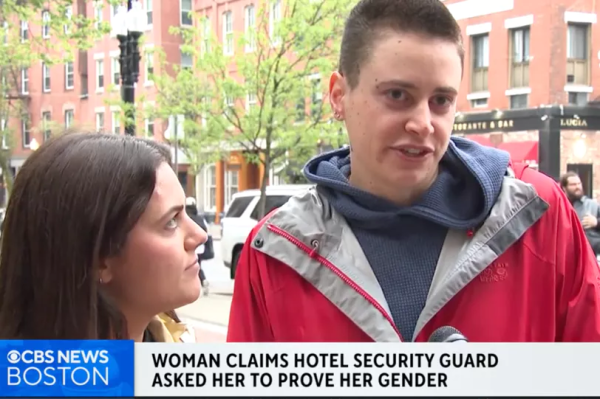
After defending the actions of a security guard who threw a lesbian couple out of a women’s restroom and accused one of them of being a man, a five-star hotel in Boston has suspended the guard and admitted he acted in error.
In addition to sidelining the staff member, the Liberty Hotel on Boston’s Beacon Hill said all staff are being retrained “on inclusive practices and guest interaction protocols.” The hotel is also donating to a local LGBTQ+ organization, WBZ News reports.
“The Liberty Hotel is and always will be an ally of the LGBTQ+ community and a place where everyone is welcome and celebrated,” the hotel said in a statement. “We will continue to educate and train our team to ensure that everyone feels safe and accepted within our four walls, and guests who do not show tolerance and acceptance towards others will be removed.”
The hotel’s statement issued Tuesday was in stark contrast to their initial reaction to the incident on Saturday during a Kentucky Derby viewing party, when the guard stormed into the women’s restroom in the hotel lobby and began banging on stall doors. He accused one of the lesbian partners of being a man.
“All of a sudden there was banging on the door,” said one of the women, Ansley Baker.
“I pulled my shorts up. I hadn’t even tied them. One of the security guards was there telling me to get out of the bathroom, that I was a man in the women’s bathroom. I said, ‘I’m a woman.’”
Baker’s partner, Liz Victor, was waiting by the sinks and heard the commotion.
“I looked down and I saw her shoes, and that’s when I was like, ‘What is going on?”
As Baker was escorted out, the women said, other women in line for the restroom hurled insults at her, calling Baker “a creep” and demanding she be removed. The security guard then demanded to see the women’s IDs to prove their gender.
After a heated exchange, the couple was told to leave the hotel.
In their initial statement issued Monday, the Liberty Hotel accused the two women of sharing one stall.
“An incident occurred at the Liberty Hotel on Saturday, May 3 where several women alerted security of two adults sharing a bathroom stall,” the hotel wrote. “The bathroom was cleared out as two adults in one stall are not permitted. After leaving the bathroom, a member of the couple from the stall put their hands on our security team and it was then that they were removed from the premises.”
“The Liberty Hotel has a zero-tolerance policy for any physical altercations on our property,” the hotel continued. “The safety of our guests and staff is our priority, and this event is under investigation.”
With the investigation complete, the hotel has changed its story.
The couple vehemently denied being in the same stall.
“If that’s what he thought the issue was once he opened the stall door, obviously there was only one person in there, so it should’ve been case closed,” Victor said. “Let her tie up her shorts and go about her day.”
The couple said they went public hoping to make a difference for others experiencing the same kind of treatment.
“We know we’re not the only ones that face this kind of thing and just hope it doesn’t happen again and that other people who go through this receive the same support,” said Baker.
Victor added, “It was a very scary situation, but trans women experience this every single day in the U.S. and across the world.”
Since 2016, Massachusetts state law has allowedall people to use restrooms and locker rooms that are most aligned with their gender identity.
This past Friday, the Salem City Council unanimously passed a resolution to make the City of Salem a sanctuary city for transgender and nonbinary individuals. In its proclamation, the council notes this status in necessary because “the federal government’s continued actions have encouraged discrimination towards transgender persons by state and local governments, schools, hospitals, businesses, other public and private institutions.”
“The City Council of the City of Salem hereby reiterates its commitment to uphold transgender rights and equal protections for transgender community members under the Constitutions, Laws, Ordinances and Regulations of the United States, the Commonwealth of Massachusetts, and the City of Salem and declares itself a sanctuary city and a place of safety for transgender and gender non-conforming people,” states the proclamation in part.
The proclamation goes on to affirm:
“that the City of Salem recognizes the importance of gender-affirming healthcare as a matter of health, privacy, and equality, and to ensure that those rights are upheld for all residents and visitors within the City of Salem.
“that the City of Salem will ensure a safe and supportive environment for all students regardless of gender identity or expression in the Salem Public Schools, including the protection of teachers and other city employees who help to foster such an environment,” and
“that the City of Salem shall endeavor to work with the Salem Human Rights Coalition; to further identify equity shortcomings for the city’s transgender and gender non-conforming community within municipal government, operations, and practices, to ensure the full protection of said community’s residents and visitors.”
City Council voted 9-0, with one abstention, to approve a resolution declaring Greenfield a “sanctuary city” for transgender and gender-diverse people Wednesday evening.
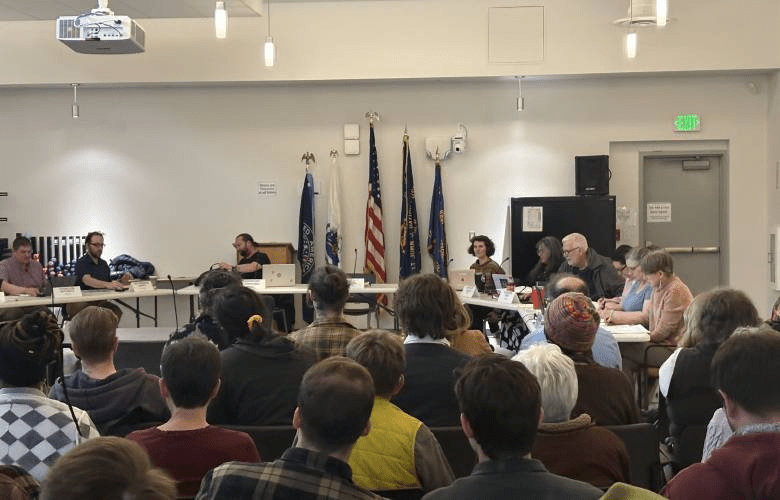
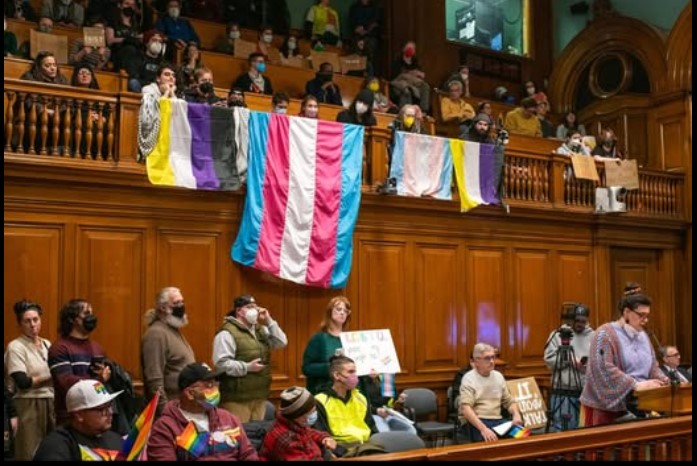
The vote followed more than two hours of public comment, with more than 20 residents voicing their support.
The resolution, which was initially proposed by resident Trystan Greist, was written in anticipation of a federal rollback on LGBTQ rights. Prior to the passage of the resolution, councilors had expressed plans to pass an ordinance in the near future vowing support for the trans community, which would codify it into municipal law.
“There’s absolutely no reason that we shouldn’t do this and a million reasons why we should,” Precinct 2 Councilor Rachel Gordon said. “My only concern is that it’s just a resolution. … I think it’s really important as a community and a council that we then make this into an ordinance that has real teeth so that people have as much protection as possible.”
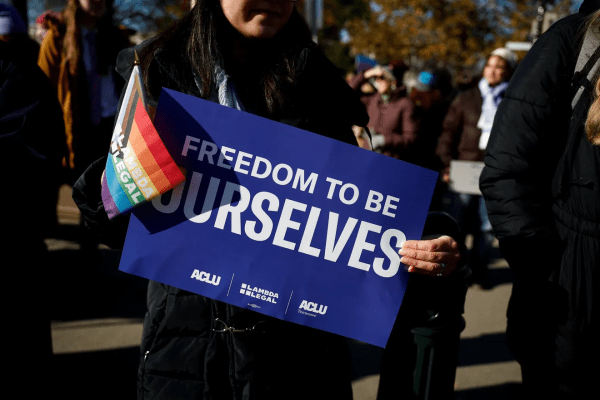
Among the dozens of resolution supporters — some carrying signs and pinning trans flags to their clothes — was Greist, who explained that while the resolution might not have any legal backing, it could serve as a determining factor for trans and gender-diverse individuals deciding whether to move to Greenfield.
“The reason I wrote [this resolution] wasn’t just for the trans people living in the region — and there are a lot of us, and there are more coming — but it’s for all of the trans families in the nation that are currently under siege,” Greist explained. “We need to put out that we’re here and that we’re welcoming and that we’re safe. To be perfectly honest, I’m hoping that if enough cities in Massachusetts pass resolutions like this, we will eventually become a trans sanctuary state.”
Some residents and activists who spoke in support of the resolution shared their concerns over the state of the trans and broader queer communities, with some expressing fear that the “X” gender marker on their licenses would put targets on their backs in other states.
Others shared experiences of having their pride flags removed from their properties, or facing other forms of discrimination and intimidation because of their gender identities.
“My wife is from here, and when we closed on our house on High Street, before we unlocked our door, the first things that we did were we hung our pride flag on the porch and stamped our Black Lives Matter sign into the front yard,” resident Lev BenEzra said. “Since that time, our pride flag has been ripped down from our porch not once, not twice, but three different times, and yanked in such a manner that the person had to have climbed up onto our porch.”
Other residents, such as Trystan Greist’s spouse Arjuna Greist, quoted pastor and Holocaust survivor Martin Niemöller’s famous poem “First They Came,” to argue that even those outside the trans community have a moral obligation to take a stand against mistreatment and discrimination.
“‘First they came for the socialists’ — we all know the poem. We hear the powerful lesson that we must speak up for any group under attack by a fascist regime, if only to ensure that someone is left to help when they inevitably come for us,” Arjuna Greist said. “We have an opportunity today, here in Greenfield and all over our state and country, to write our own poem together.”
Prior to his vote, At-Large Councilor John Garrett, who also works as a high school history teacher, spoke to Arjuna Greist’s reference to the poem in his remarks. He said the comments “chilled him” and gave historical context to a moral obligation against neutrality.
City Council President Lora Wondolowski, one of the resolution’s early supporters, expressed enthusiasm and pride for the community’s support of the resolution.
“I’m really moved. I knew it would be emotional to hear the stories and I still feel it deep in my heart. When my ex-wife and I moved to Greenfield over 20 years ago, we didn’t know if we’d be welcomed here. I’ve had Slurpees thrown at me from moving cars, and I’ve also seen the best and had neighbors who I never thought would be supportive be really supportive of our family,” Wondolowski said. “This resolution allows us to be full-throated in our support of the community.”
A New Hampshire man with a green card was detained by immigration officers at Logan Airport and is being held by U.S. Immigration and Customs Enforcement at the Donald W. Wyatt detention facility in Central Falls, Rhode Island.
Fabian Schmidt’s family said they are unsure of why he is being held. They said he has a recently renewed green card, and no active issues in court.
Schmidt had been visiting Luxembourg and flew back to the U.S. on Friday. His partner had gone to pick him up at Logan Airport, and waited four hours before calling authorities.
“It was just said that his green card was flagged,” said Astrid Senior, his mother. She said she didn’t hear from her son directly until Tuesday, when she learned he’d been hospitalized.
Senior described Schmidt being “violently interrogated” at Logan Airport for hours, and being stripped naked, put in a cold shower by two officials, and being put back onto a chair.
She said Schmidt told her immigration agents pressured him to give up his green card. She said he was placed on a mat in a bright room with other people at the airport, with little food or water, suffered sleep deprivation, and was denied access to his medication for anxiety and depression.
“He hardly got anything to drink. And then he wasn’t feeling very well and he collapsed,” said Senior.
He was transported by ambulance to Mass General Hospital. He didn’t know it at the time, but he also had influenza.
On Tuesday, Schmidt was transported to the regional headquarters for ICE in Burlington, Massachusetts, and then transferred to the Wyatt facility. The family, including his partner, who is a cardiologist in Nashua, have acquired attorneys and been working with the German consulate in hopes to have him released on bail.
Schmidt and his mother moved to the U.S. in 2007, and received green cards in 2008. He moved from California to New Hampshire in 2022.
Senior described her son as a hardworking electrical engineer with a partner and 8-year-old daughter who are both U.S. citizens.
“Fabian said to me that he feels he’s very fearful and is frightened,” said Senior.
Schmidt had a misdemeanor charge for having marijuana in his car in 2015, which his mother said was dismissed after laws changed in California around marijuana possession. He missed a hearing about the case in 2022 since a notice was never forwarded to his new address. Senior mentioned that Schmidt is successfully recovering from alcoholism, and had a DUI that he’s completely worked through and paid off from around ten years ago.
Can a green card holder be deported?
It’s a complicated question, but some protections exist.
Green cards grant foreign nationals the right to live and work in the U.S. as permanent residents. They’re valid for ten years and have to new renewed.
“Only the immigration judge can take away that green card. The Trump administration thinks that they can expand that and do some crazy things,” said Curtis Morrison, an immigration attorney in California with experience litigating against the Trump administration. “But the law as it is now — he needs to be able to appear before an immigration judge.”
The government has to initiate removal proceedings in immigration court, and an individual has the right to go before a judge to defend themselves and understand the government reasoning for the potential deportation.
“[It’s the] Immigration and Nationality Act — which describes different kinds of conduct or crimes that could trigger somebody with a green card being deported and put into court proceedings to have them deported,” said Gregory Chen, senior director of government relations for the American Immigration Lawyers Association.
The law doesn’t always require convictions for green card holders to be deported.
“There is a long list of behaviors, conduct and also crimes. If somebody’s been convicted of something that could make somebody deportable if they have a green card,” he said.
Chen hadn’t heard of other green card cases like Schmidt’s other than that of Palestinian and Syrian student activist Mahmoud Khalid in New York City, a green card holder who is currently detained due to his protest activity at Columbia University. In that case, attorneys are relying partially on First Amendment right of protest.
“We have seen a disturbing trend from the federal government to target people who have legal immigration status,” said Chen, including not just those who have green cards, but people with visas and varying legal statuses.
“Denying a green card holder admission on such a minor charge would be an extreme case, but it is possible under the law,” said Jaclyn Kelley-Widmer, immigration law professor at Cornell Law School of the pot possession charge and deportation.
The reasons a green card holder can be deported include many kinds of criminal convictions, even if those convictions are from a long time ago and even some very minor convictions. For marijuana convictions, a person is deportable unless the conviction is for possession of 30 grams or less of marijuana for one’s own use, she said. Otherwise, any controlled substances offense makes a green card holder deportable.
City councilors in Boston voted 12-1 Wednesday to make Boston a sanctuary city for members of the LGBTQ+ community.
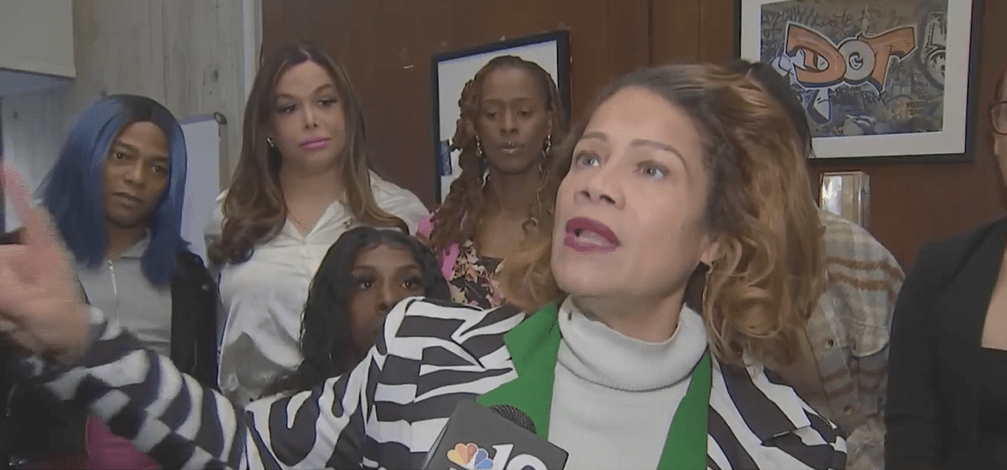
Councilor-at-Large Julia Mejia and District 9 Councilor Liz Breadon called on Boston to adopt the measure supporting transgender people, pointing to what they see as harmful rhetoric coming from President Donald Trump and the White House.
“Boston is not going to back down,” Mejia said Wednesday. “We’re seeing attacks on our trans loved ones, and here on the local level, a lot of folks are feeling helpless.”
City Councilor Ed Flynn was the only member of the body to vote against the measure.
“I would like to learn more about what this resolution does as it relates to sanctuary cities, the Trust Act, what impact it has on city services, what role the city departments will play,” Flynn said, according to The Boston Herald. “I don’t want to be disrespectful to anybody, but it’s just something I would like to have before I vote.”
Sam Whiting of the Massachusetts Family Institute, a group that describes itself as recognizing “the male and female sexes as a real and enduring part of a person’s created nature, not an imaginary social construct,” pushed back on the councilors’ framing of the Trump administration’s actions.
“We think it misrepresents the executive orders, and we do support these orders and the efforts to protect children from the harms of gender ideology,” Whiting told NBC10 Boston.
Mejia said the measure is critical.
“It’s really a love letter and an opportunity to set the groundwork for the legislation,” she said.
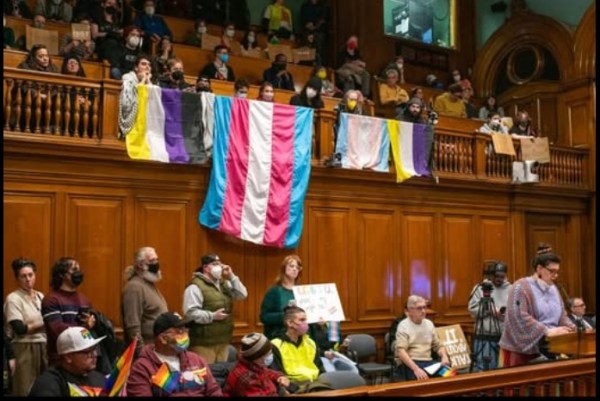
This meeting lasted about five hours and there were about 200 people who showed up to voice their support.
It was standing room only inside council chambers – as dozens of residents spoke before the city council in favor of making Worcester a sanctuary city for those who identify as transgender or of other diverse genders.
This campaign comes on the heels of the first openly nonbinary member elected to the council — Worcester City Councilor-at-Large Thu Nguyen — taking a hiatus from the council, after they say the environment was transphobic.
Local organization Queer Residents of Worcester and Our Allies filed the petition asking councilors to make Worcester a sanctuary city for transgender and gender diverse people.
The petition specifically asks the city to not cooperate with federal and state policies aimed at harming transgender and gender diverse people, and to ensure that the LGBTQ+ community here has access to healthcare, housing, education, and employment without fear of discrimination.
“You have an incredible opportunity as a community to support our children, you have an opportunity to decrease the rates of depression and suicide by showing our children that their safety and dignity are a priority,” one meeting attendee said.
“It is your responsibility to stand up and fight for our people, for your people, for the people,” another added.
At the same time as the decision, several communities have decided to outlaw the flags on government land.
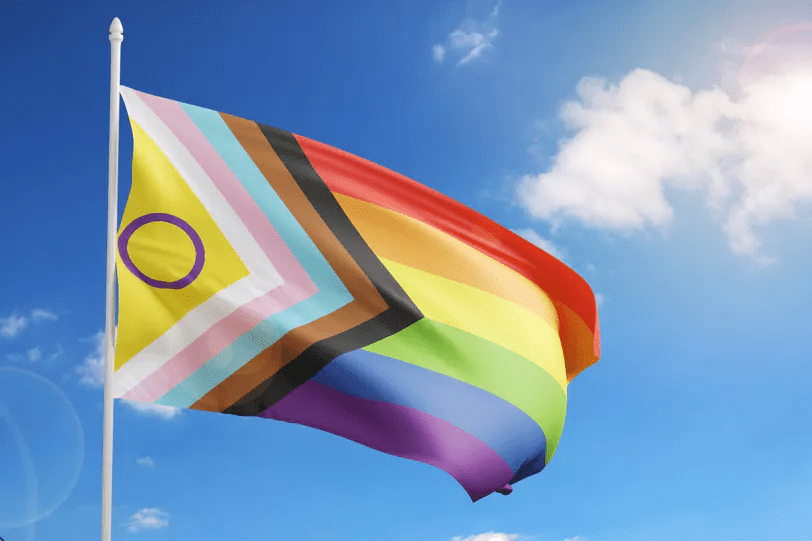
Williamstown, Massachusetts people voted 175 to 90 in favor of passing a bylaw permitting the Progress Pride flag to be flown atop municipal flagpoles. The vote took place during a city board meeting, and it coincides with other cities’ bans on the flying of rainbow-colored Pride flags from public buildings.
The 7,513-person town’s board discussed last Thursday how to change a bylaw pertaining to the town’s flag policy. Residents’ opinions regarding whether the flag, which specifically honors transgender people and people of color in the LGBTQ+ community, should be allowed under the amendment were taken into consideration by the board.
According to Jack Has, a member of the Gender Sexuality Alliance at Mount Greylock Regional High School, “for many, the flag is a symbol that, in our town, they belong.” iberkshires.com reports that he was one of eight speakers who remarked in favor of the flags.
When Justin Adkins moved to Williamstown in 2007, he told another supporter that he felt like the only other transgender person in the city. Since then, more LGBTQ+ families have relocated to the town because, as Adkins pointed out, they feel that it is an accepting community.
Adkins stated, “When I moved here, most people had never met a trans person.” That is not the case now. Many of the folks in this room may freely express who they are now.
“LGBTQ-plus youth still face a world where their basic being is questioned and legislated.… Flying a flag is, really, the least we can do,” Adkins added.
The bylaw’s opponents were concerned that changing the bylaw might ultimately lead to a large number of requests for flags supporting specific causes, such as banners supporting the Black Lives Matter anti-racist movement, “Free Palestine,” or “Back the Blue” (referring to the police).
Robert McCarthy, an older local, stated, “You have the right—every single group in this town has the right to put up any flag you want.” It can be placed on your house, yard, or place of business. I urge everyone with a plan to raise the flag. If you would like to fly your own flags, that is great, but please do not fly them atop city poles. Let’s keep the American flag and the POW/MIA flag alone.
The town’s decision was made concurrently with other communities’ votes to outlaw the flying of flags from public buildings. The people who live in Huntington Beach, California decided in March to outlaw Pride flags on municipal land. The town of Enfield, Connecticut, forbade the flying of the flag on any building owned by the town in January, citing the possibility that doing so would someday allow terrorist organizations to fly their own banners.
However, many cities allow their government spaces to display the Pride flag. In January, the town of Norwich, Ontario in Canada voted to reverse its Pride fag ban.
In terms of LGBTQ rights and acceptance, the United States has made significant progress, but the level of LGBTQ-friendliness can vary across states. In this article, we will discuss five states that are considered the best for LGBTQ couples, taking into account factors such as anti-discrimination laws, marriage equality, and LGBTQ community resources.
California:
California is known for its welcoming environment for LGBTQ individuals and couples. The state legalized same-sex marriage early on and has strict anti-discrimination laws. Cities like San Francisco have vibrant LGBTQ communities and host large-scale pride events.
New York:
New York has a rich history of LGBTQ activism and a sizable LGBTQ population. The state legalized same-sex marriage in 2011 and has strong anti-discrimination laws. New York City, particularly neighborhoods like Chelsea and Greenwich Village, is known for its LGBTQ-friendly atmosphere and iconic landmarks.
Virginia:
Although not typically mentioned among LGBTQ-friendly states, Virginia has made significant progress recently. The Virginia Values Act protects LGBTQ individuals from discrimination, and the state has a growing LGBTQ community with events like Hampton Roads Pride and Virginia PrideFest.
Massachusetts:
Massachusetts holds the distinction of being the first state to legalize same-sex marriage in 2004. It has a robust network of LGBTQ community centers, progressive anti-discrimination laws, and a vibrant LGBTQ tourism industry. Boston, in particular, has a thriving LGBTQ population.
Washington:
Washington state legalized same-sex marriage in 2012 and has enacted progressive legislation to protect LGBTQ rights. Seattle, in particular, has a strong LGBTQ community with ample resources and support services. The state is also known for its progressive politics and environmental activism.
It is important for LGBTQ couples to carefully consider their options and prioritize their needs when choosing a place to live or visit in the United States. The states mentioned above offer a welcoming environment, legal protections, vibrant LGBTQ communities, and an abundance of resources and support services.







You must be logged in to post a comment.