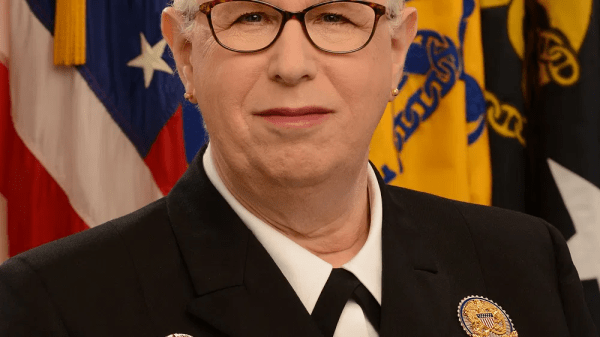
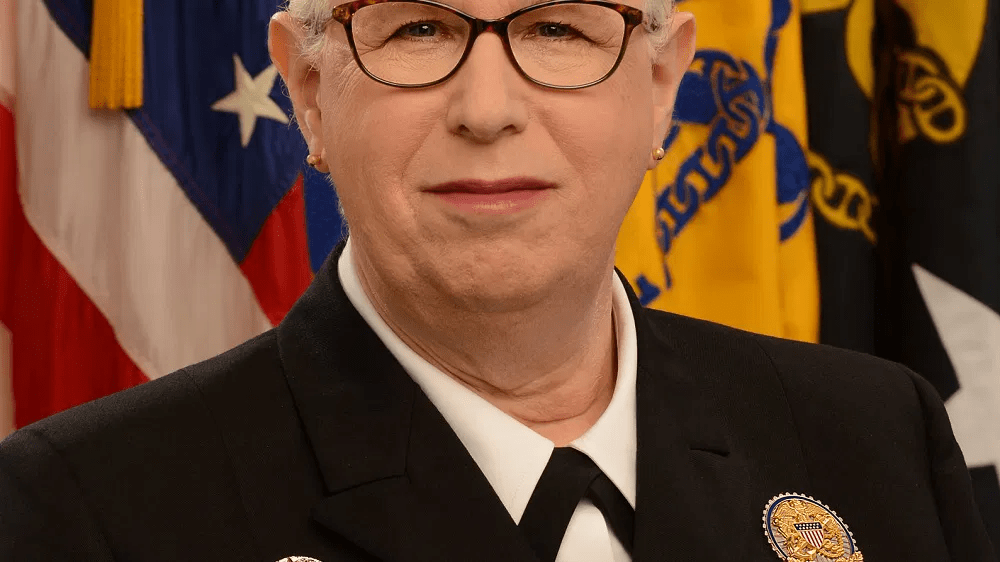
The Department of Health and Human Services (HHS) has altered the official portrait of Adm. Rachel Levine, the out transgender former assistant secretary for health under President Joe Biden, to display Levine’s deadname — a needless act of transphobia that Levine has called “petty.” Her portrait hangs in the HHS office alongside those of other federal officials who have led the U.S. Public Health Corps.
“During the federal shutdown, the current leadership of the Office of the Assistant Secretary for Health changed Admiral Levine’s photo to remove her current legal name and use a prior name,” Levine’s spokesperson Adrian Shanker, former deputy assistant secretary for health policy under Biden, told NPR. Shanker called the move an “unprecedented” act “of bigotry against her.” Though Levine said, “I’m not going to comment on this type of petty action.”
When asked about the alteration, HHS spokesperson Andrew Nixon told the aforementioned news outlet, “Our priority is ensuring that the information presented internally and externally by HHS reflects gold standard science. We remain committed to reversing harmful policies enacted by Levine and ensuring that biological reality guides our approach to public health.”
An anonymous HHS staffer told NPR that they considered the change “disrespectful,” adding that it exemplifies “the erasure of transgender individuals by this administration.” Upon taking office, the president issued numerous executive orders denying all federal recognition of trans people and kicking trans people out of the military for being selfish, dishonorable, deceitful, and undisciplined.
Levine was the first out trans person to receive Senate confirmation. On October 19, 2021, became the first out trans four-star officer in the U.S. Public Health Service Commissioned Corps, a noncombatant service of the nation’s eight uniformed services which promotes public health and safety. She resigned on the current president’s first day in office.
The current assistant secretary for health is Adm. Brian Christine, MD, who was appointed in November.
The Air Force says in a new memo that transgender airmen ousted under a recent Trump administration directive will no longer have the chance to argue before a board of their peers for the right to continue serving their country.
The memo dated Tuesday says military separation boards cannot independently decide whether to keep or discharge transgender airmen and instead “must recommend separation of the member” if the airman has a diagnosis of gender dysphoria — when a person’s biological sex does not match up with their gender identity.
Military legal experts who have been advising transgender troops told The Associated Press that the new policy is unlawful, and while they were not aware of the other services releasing similar memos, they fear it could serve as a blueprint across the military. Advocacy groups say the change threatens to weaken trust in the military’s leadership.
It is the second policy change the Air Force has taken in recent weeks to crack down on transgender service members. The Associated Press reported last week that the Air Force would deny transgender troops early retirement benefits and was moving to revoke requests already approved.
The Air Force declined to answer questions about the policy and its legal implications.
The service provided a statement saying the new guidance “is consistent with and responsive to Department of Defense policy regarding Service members with a diagnosis of, or history of, or exhibiting symptoms consistent with, gender dysphoria.”
How the boards usually work
The boards traditionally offer a quasi-legal hearing to determine if a service member set to depart is still of value to the military and should stay on. Fellow service members hear evidence of whatever wrongdoing occurred and about the person’s character, fitness and performance.
The hearings are not a formal court, but they have much the same structure. Service members are often represented by lawyers, they can present evidence in their defense and they can appeal the board’s findings to federal court.
The Pentagon’s policy on separating officers notes that they are entitled to “fair and impartial” hearings that should be “a forum for the officer concerned to present reasons the contemplated action should not be taken.”
This impartial nature means that the boards can sometimes reach surprising conclusions.
For example, the three active-duty Marines who were part of the mob that stormed the Capitol on Jan. 6, 2021, were retained.
The commanding officer of the USS McCain, a destroyer that collided with an oil tanker in the Pacific in 2017, killing 10, was not recommended for separation in 2019.
Military lawyers decry the Air Force change
Priya Rashid, a military lawyer who has represented service members before hundreds of separation boards, said she “has never seen an order like this.”
“I’ve seen people with three DUIs retained, I’ve seen people that beat their wives retained, I’ve seen all kinds of people retained because the board is empowered to retain anyone for any reason if they feel it’s in the best interest of the service,” she said.
Rashid said she and other lawyers working with transgender troops view the guidance as telling the boards to automatically order separation based solely on a diagnosis or symptoms of gender dysphoria.
She said that constitutes an unlawful command by the Air Force and upends impartiality.
“This instruction is essentially saying you will not make a determination of whether somebody has future potential in the service,” Rashid said.
The new Air Force guidance also prohibits recording the proceedings.
Rashid said the lack of an independent transcript would not only prevent Air Force leaders from reviewing the hearings to ensure they were conducted appropriately but would undercut any meaningful chance to appeal.
Stepped-up efforts to oust transgender troops
Pentagon officials say 4,240 troops have been diagnosed with gender dysphoria, which the military is using as an identifier of being transgender.
The Pentagon got the green light from Supreme Court in May to move forward with a ban on all transgender troops. It offered two options: volunteer to leave and take a one-time separation payout or be discharged at a later date without pay.
Some transgender troops decided to fight to stay by turning to the boards.
Senior Master Sgt. Jamie Hash, who has served in the Air Force since 2011, said she “wanted to face an objective board to be evaluated on my years of proven capability.”
“I wanted the board to see the assignments overseas and at the Pentagon, the deployments to different Combatant Commands, the service medals and the sustained operational and mission effectiveness,” she said in an interview.
But now, she said, that “the path ahead feels more uncertain than it ever has.”
Logan Ireland, a master sergeant in the Air Force with 15 years of service that includes a deployment to Afghanistan, was planning to retire early until his request was denied last week.
After that, he decided he would take a stand at the separation board.
“I chose the involuntary route because I believed in the promise of a fair hearing — judged on my service, my record and the facts,” he said.
“Now that promise is being ripped away, replaced with a process designed to decide my fate before I even walk in the room,” he said, adding that “all I’m asking for is the same fairness and justice every service member deserves.”
Both Ireland and Hash said they have yet to hear from their immediate superiors on what the new policy will mean for them.
Lawyers are worried it will set a precedent that will spread throughout the military.
Rashid said both the Army and Navy are “going to look at what the Air Force is doing as a standard of law … is this the minimum standard of law that we will afford our service members.”
Transgender troops warn the policy could have wider implications
Col. Bree Fram, a transgender officer in the Space Force who has long been seen as a leader among transgender troops, argued that the policy is a threat to other service members.
”Today it’s gender dysphoria; tomorrow it can be any condition or class the politics of the moment calls for,” she argued.
If the new policy is allowed to sideline “evidence of fitness, deployment history, awards, and commander input — the very material boards were built to evaluate,” Fram said, it sends a message that performance is no longer relevant to staying in the military.
Cathy Marcello, interim director for Modern Military Association of America, said the change adds to a “growing loss of trust” because outcomes are determined by politics, not performance. The organization advocates for LGBTQ+ service members, military spouses, veterans, their families and allies.
“It’s a signal that identity, not ability or achievement, determines who stays in uniform and who gets a fair shot,” she said.
The U.S. Air Force said Thursday it would deny all transgender service members who have served between 15 and 18 years the option to retire early and would instead separate them without retirement benefits. One Air Force sergeant said he was “betrayed and devastated” by the move.
The move means that transgender service members will now be faced with the choice of either taking a lump-sum separation payment offered to junior troops or be removed from the service.
An Air Force spokesperson told The Associated Press that “although service members with 15 to 18 years of honorable service were permitted to apply for an exception to policy, none of the exceptions to policy were approved.” About a dozen service members had been “prematurely notified” that they would be able to retire before that decision was reversed, according to the spokesperson who spoke on condition of anonymity to discuss internal Air Force policy.
A memo issued Monday announcing the new policy, which was reviewed by the AP, said that the choice to deny retirement benefits was made “after careful consideration of the individual applications.”
All transgender members of the Air Force are being separated from the service under the Trump administration’s policies.
Separation process has hit some bumps
The move comes after the Pentagon was given permission in early May by the Supreme Court to move forward with a ban on all transgender troops serving in the military. Days later, Defense Secretary Pete Hegseth announced a policy that would offer currently openly serving transgender troops the option to either volunteer to leave and take a large, one-time separation payout or be involuntarily separated at later date.
A Pentagon official told reporters in May that they viewed the policy as treating “anyone impacted by it with dignity and respect.”
However, in late July, transgender troops told Military.com that they were finding the entire separation process, which has included reverting their service records back to their birth gender, “dehumanizing” or “open cruelty.”
Shannon Leary, a lawyer who represents LGBTQ+ people in employment discrimination cases, says she expects lawsuits to challenge Thursday’s decision. “It seems quite arbitrary on its face and cruel,” she said. “These military members have dedicated their lives to serving our country.”
Normally, Leary said, when early retirement is offered in the military, it’s available to all members who have served over 15 years. She said she expects other service branches to follow the Air Force’s path.
One Air Force service member says he’s ‘devastated’
Logan Ireland, a master sergeant in the U.S. Air Force who has 15 years of service, including a deployment to Afghanistan, is one of the airmen impacted by the policy. “I feel betrayed and devastated by the news,” he said.
Ireland said he was told that his retirement was being denied on Wednesday when his chain of command, “with tears in their eyes,” told him the news.
Officials have said that as of Dec. 9, 2024, there were 4,240 troops diagnosed with “gender dysphoria” on active duty, National Guard and Reserve. Pentagon officials have decided to use the condition and its diagnosis as the main way to identify troops who are trans.
However, the two are not an exact match — not every transgender person has the condition. As a result, there is an understanding that the actual number of transgender people within the military’s roughly 2 million troops may be higher.
Under the latest policy, active duty troops had until June 6 to voluntarily identify themselves and receive a payout while troops in the National Guard and Reserve had until July 7. Pentagon officials previously told reporters that they plan to lean on commanders and existing annual medical screenings to find any transgender service members who do not come forward.
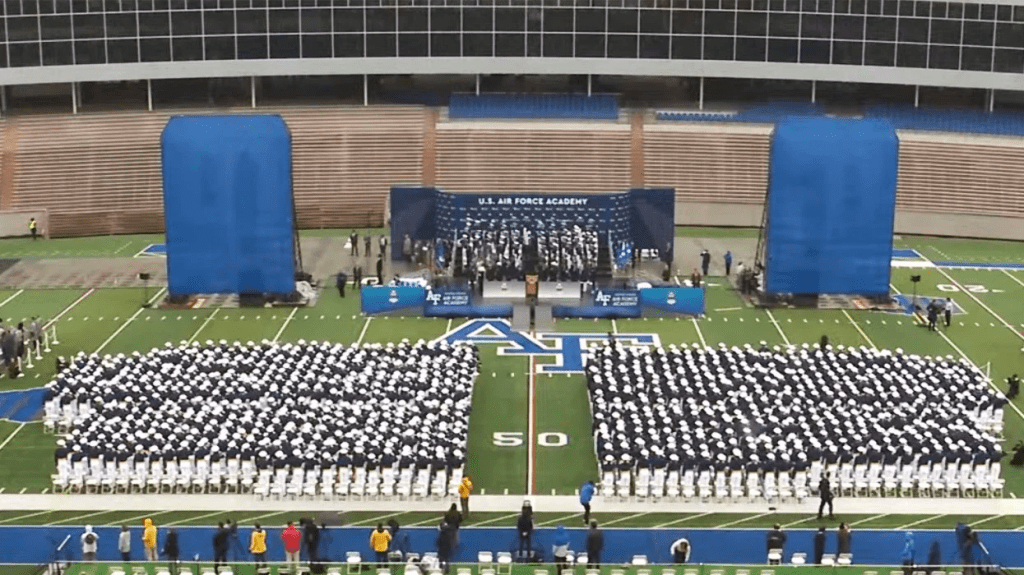
They stood in formation at Falcon Stadium, diplomas in hand, having met every standard of physical endurance, academic excellence, and military discipline. But, on Thursday, when the time came for the U.S. Air Force Academy’s class of 2025 in Colorado Springs, Colorado, to commission as second lieutenants, three cadets were quietly held back.
They are the first out transgender cadets to graduate from the Academy. And under a newly reinstated Trump administration ban, they will not be allowed to serve.
One of them, Hunter Marquez, had spent years preparing to become a combat systems officer. He earned dual degrees in aeronautical engineering and applied mathematics. He passed the Air Force’s fitness standards for men. And he did so as himself, having transitioned while enrolled at the Academy. “I really want to stay in for as long as possible, fight this out,” Marquez toldThe Colorado Springs Gazette.
But the rules changed. On May 6, the U.S. Supreme Court allowed the Trump administration to begin enforcing Executive Order 14183, which bans transgender people from military service. The unsigned order—issued without full argument and over the dissent of the Court’s three liberal justices—overturned a Washington state lower court’s preliminary injunction and gave the Pentagon the green light to begin separations.
Marquez, along with the two other graduates, was placed on administrative absence, barred from taking the oath, and warned he might need to repay the cost of his education if he refused to leave voluntarily, the paper reports. That education—funded by taxpayers—is valued in the hundreds of thousands of dollars. According to The Gazette, Marquez was later told by Air Force officials that if he is involuntarily separated, he won’t be billed. But the message was clear: his government does not want him in uniform.
And yet, there is no question he met the standard. “We want warfighters. We want people with grit, that are resilient. They have done all that,” a U.S. Air Force Academy staff member told The Gazette, speaking anonymously for fear of retaliation. All three cadets passed physical fitness tests for both men and women. All three graduated with distinction.
What disqualifies them is not their performance but their identity.
Marquez is a plaintiff in Talbott v. United States, one of the central legal challenges to the policy. In a sworn statement, he wrote that the executive order describes people like him as “undisciplined,selfish, and dishonest.” “None of those are correct descriptions of my character or my abilities,” he wrote. “I have achieved alongside my peers throughout my time at the Academy.”
The policy is not theoretical. It is personal. It has required cadets like Marquez to trek across dorms to find gender-compliant restrooms and showers. It has forced them to race through final semesters in case they’re expelled before graduating. And it has turned what should have been a joyful week of ceremonies into a lesson in resilience.
Marquez, now 23, is applying to the University of Colorado Boulder to earn an advanced degree in aerospace engineering. He is still receiving medical benefits and cadet pay, but he knows that may be temporary. “There’s still a lot of anger and frustration and sadness,” he said. “Just because I have worked so hard to be a second lieutenant in the Air Force, and at the very end that was taken from me.”
Academy alumni have responded with solidarity. Nearly 1,000 graduates have signed an open letter defending transgender cadets and midshipmen. “Being transgender is in no way incompatible with any of our Academies’ cherished virtues and values,” the letter reads, according to Military.com.
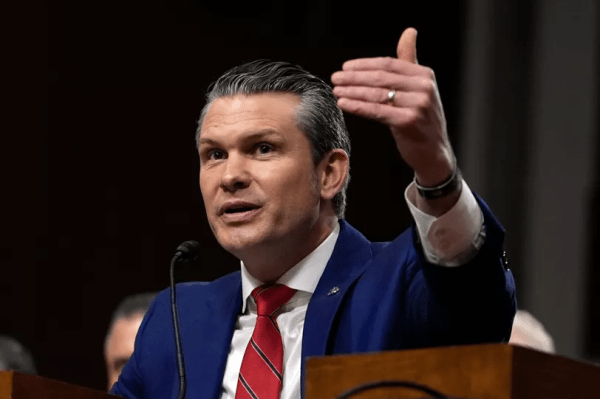
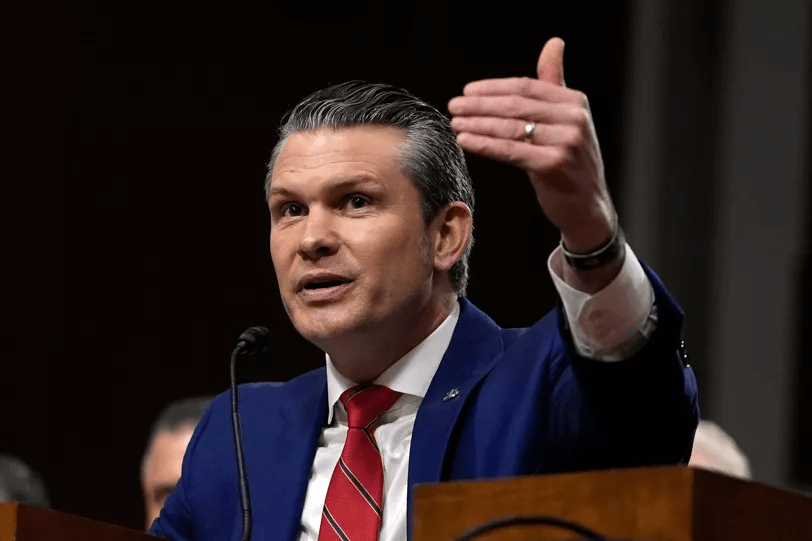
Secretary of Defense Pete Hegseth has ordered the secretary of the Navy to rename the oiler ship USNS Harvey Milk, according to a defense official.
The ship, which was launched in 2021 and named after the gay rights activist and Navy veteran, who was made to resign from the force because of his sexual orientation, is set to be officially renamed later this month, the official said. It is not clear what the new name will be, but the timing is notable given that June is Pride Month.
The Office of the Secretary of Defense did not respond to a request for comment.
It is rare for a ship to be renamed, and it has not happened on the orders of a defense secretary in recent memory.
The last time a ship was renamed in 2023, the move was based upon the recommendation of a congressional commission established to review names across the military with ties to the Confederacy. As a result of the study, the Navy decided to rename the cruiser USS Chancellorsville and research ship USNS Maury.
The USNS Harvey Milk is part of the John Lewis class of oiler ships that are named after civil rights leaders. Other ships in this class include the USNS Earl Warren, USNS Robert F. Kennedy, USNS Lucy Stone and USNS Sojourner Truth.
Enter your email to sign up for CNN’s “What Matters” Newsletter.
The move is in line with Hegseth’s focus on reestablishing a “warrior culture” across the military, which he has mainly tried to do by eliminating diversity, equity and inclusion programs and content throughout the Defense Department and finding creative ways to revert military bases back to their original, Confederate-linked names.
Chief Pentagon Spokesperson Sean Parnell issued a statement saying decisions to rename any vessels would be announced when internal reviews are complete.
“Secretary Hegseth is committed to ensuring that the names attached to all DOD installations and assets are reflective of the Commander-in-Chief’s priorities, our nation’s history, and the warrior ethos. Any potential renaming(s) will be announced after internal reviews are complete,” Parnell said.
In a statement, former House speaker Nancy Pelosi of California said that “the reported decision by the Trump Administration to change the names of the USNS Harvey Milk and other ships in the John Lewis-class is a shameful, vindictive erasure of those who fought to break down barriers for all to chase the American Dream. Our military is the most powerful in the world – but this spiteful move does not strengthen our national security or the ‘warrior’ ethos. Instead, it is a surrender of a fundamental American value: to honor the legacy of those who worked to build a better country.”
Who was Harvey Milk?
At the time the ship was launched, the Biden administration had a very different stance on diversity.
“He made a difference. That’s the kind of naval leader that we need,” then-Secretary of the Navy Carlos Del Toro said of Milk during the christening ceremony in November 2021.
The ship was co-sponsored by then-Sen. Dianne Feinstein, a California Democrat who was the president of the San Francisco Board of Supervisors when Milk served on the board. She publicly announced Milk’s assassination in 1978 at the age of 48. Milk was one of the first out gay politicians elected to office in the United States, and the first out gay official elected in California.
Milk served in the Navy as a diving officer during the Korean War, at a time when gay service members were not allowed to openly acknowledge their sexuality.
During his time as a diving instructor in San Diego in the 1950s, his supervisors caught him at a park popular with gay men, according to his nephew Stuart Milk.
In 1955, after the Navy officially questioned Milk about his sexual orientation, he was made to resign with the rank of lieutenant junior grade.
After moving from New York to California, Milk helped start the Castro Village Association, one of the first predominantly LGBTQ-owned business groups in the country. In 1977, he was elected to San Francisco’s Board of Supervisors.
While serving as a city supervisor, Milk introduced legislation to protect the gay community, including a gay rights ordinance in 1978 to ban discrimination against LGBTQ people in housing or employment. He and other activists also succeeded in striking down Proposition 6, which would have mandated the firing of gay or lesbian teachers in California.
Less than a year after Milk was inaugurated as city supervisor, he and Mayor George Moscone were shot to death in the San Francisco City Hall by a former fellow city supervisor over a job dispute.
When his killer was sentenced to seven years, riots broke out over what many perceived to be a lenient sentence.
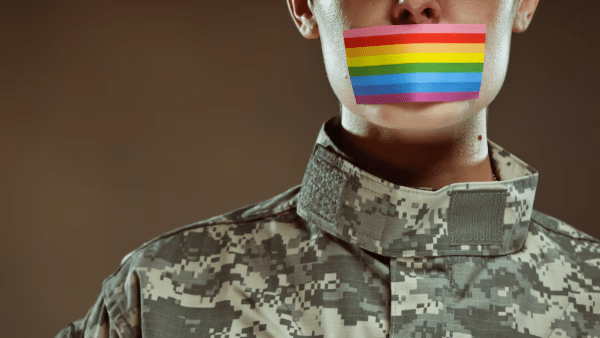
The military has been ordered to identify troops who either have or may have gender dysphoria, the psychological term for the distress caused by one’s gender identity and sex assigned at birth not being the same. The goal is to get started on forcing transgender people out of the military ahead of the June 6 date set by Defense Secretary Pete Hegseth to start the purge.
Earlier this month, the Supreme Court ruled that the administration could start forcing transgender people out of the military, while several legal challenges to the trans military ban are being heard by lower courts. Hegseth then said that transgender service members would have until June 6 (or July 7 for those in the reserves) to voluntarily leave the military and have a chance to keep some of the benefits they accrued in their time in the armed services.
Orders issued yesterday, Advocate reports, will have each branch of the military start identifying transgender people to kick out after June 6. It tells each branch to identify people who have a diagnosis of gender dysphoria or “symptoms consistent with gender dysphoria” and review their medical records.
“Commanders who are aware of service members in their units with gender dysphoria, a history of gender dysphoria, or symptoms consistent with gender dysphoria will direct individualized medical record reviews,” the directive says. It also reaffirms that gender-affirming care is banned for transgender active-duty members of the military.
Stars and Stripes reports that an unnamed senior Defense Department official explained that commanders can now start medical screenings for servicemembers who don’t identify as transgender but who they suspect may have gender dysphoria.
“[This] is also consistent with what we expect and require of commanders generally, to ensure that their service members are fit and capable for duty — whether it’s under this policy or any other qualification where they may have concern that that service member requires medical intervention or is not able to perform their duties,” they said.
“The implementation requires some steps to ensure that those who go forward in service remain eligible to meet the high standards of the department. The department requires high standards to ensure that the force is ready to fight and win the nation’s wars as called upon.”
On May 8, Hegseth issued a memo saying that transgender servicemembers would have until June 6 to voluntarily start the process of leaving the military and get an honorable discharge, which would make them eligible for voluntary separation pay, as well as some health care and employment assistance benefits.
“There’s no guarantee to access to your pension or severance or an honorable discharge,” said Rae Timberlake of the trans service member organization Sparta Pride. They are one of the estimated 1000 transgender service members choosing to leave the military voluntarily now in order to get some of the benefits they have been earning throughout their career that might not be available if the military forces them out for being transgender after June 6.
“This is not voluntary,” they said. “This is a decision that folks are coming to under duress.”
National Center for Lesbian Rights attorney Shannon Minter told Advocate that the May 15 memo is “disturbing.”
“From the beginning this policy has been implemented in a rushed and chaotic manner that is completely unnecessary and deeply disrespectful to these service members, who deserve at the very least clear information and an orderly process so that they can make informed decisions that will have such a profound effect on their lives and their families,” he said.
“It is also deeply concerning that the separation codes that this guidance indicates will appear on the records of officers who are involuntarily separated will create the false impression that they are some sort of risk to national security. This is grossly untrue and will needlessly limit their civilian employment opportunities.”
The purge stems from an executive order issued in January that said that trans people can’t lead “an honorable, truthful, and disciplined lifestyle and that not using pronouns associated with a person’s sex assigned at birth violates the military’s “high standards for troop readiness, lethality, cohesion, honesty, humility, uniformity, and integrity.” This runs counter to actual studies of transgender people in the military that have found that they can serve without issue.
The executive order led to several lawsuits challenging it, including a lawsuit filed in Washington state brought by seven transgender servicemembers and one trans person who wants to join the military. A federal judge in that case issued a temporary injunction, blocking the Department of Defense from implementing the ban while the court heard the case.
Trump’s Department of Justice (DOJ) appealed the injunction, but the U.S. Court of Appeals for the Ninth Circuit refused to lift it. So, the DOJ appealed to the Supreme Court, which lifted the injunction earlier this month.
Stars and Stripes reports that there are around 4200 service members with a diagnosis of gender dysphoria.
The U.S. Air Force is reversing its ban on including preferred pronouns in email signatures and in other professional communications.
In a news release published April 3, the Air Force said it has “rescinded” an earlier “directive to cease the use of ‘preferred pronouns’ (he/him, she/her, or they/them) to identify one’s gender identity in professional communications.”
Airmen and civilian employees may now include their preferred pronouns in email signature blocks, memoranda, letters, papers, social media, official websites and any Department of the Air Force official correspondence, the news release said.
The original ban was announced on Feb. 4, in guidance on President Trump’s executive order, “Defending Women from Gender Ideology Extremism and Restoring Biological Truth to the Federal Government.”
Military.com reported that the ban reversal came after the Air Force learned that a provision of the National Defense Authorization Act, signed into law in 2023, said the defense secretary “may not require or prohibit a member of the armed forces or a civilian employee of the Department of Defense to identify the gender or personal pronouns of such member or employee in any official correspondence of the Department.”
A federal judge on Tuesday indefinitely blocked implementation of President Trump’s executive order effectively barring transgender people from serving openly in the military, a stark blow to the administration’s efforts to curb transgender rights.
U.S. District Judge Ana Reyes, an appointee of former President Biden, barred Defense Secretary Pete Hegseth and other military officials from implementing Trump’s order or otherwise putting new policy into place effectuating it. She also said the plaintiffs’ military statuses must remain unchanged until further order of the court.
The judge said her order intends to “maintain the status quo” of military policy regarding transgender service that existed before Trump signed the order titled “Prioritizing Military Excellence and Readiness.” She stayed her order until Friday to give the administration time to appeal.
“The Court knows that this opinion will lead to heated public debate and appeals,” Reyes wrote in her opinion. “In a healthy democracy, both are positive outcomes.”
Six active service members and two individuals seeking to enlist in the military sued the Trump administration soon after the Jan. 27 order was signed, asserting it violates their constitutional rights. Two similar lawsuits are moving through the courts.
Trump’s order suggests that transgender people cannot “satisfy the rigorous standards necessary for military service” because they threaten the lethality of the armed forces and undermine unit cohesion, an argument long used to keep marginalized communities from serving.
“A man’s assertion that he is a woman, and his requirement that others honor this falsehood, is not consistent with the humility and selflessness required of a service member,” the executive order states.
Reyes wrote in her opinion that the president has both the power and obligation to ensure military readiness but noted that leaders of the armed forces have long used that justification to “deny marginalized persons the privilege of serving.”
“‘[Fill in the blank] is not fully capable and will hinder combat effectiveness; [fill in the blank] will disrupt unit cohesion and so diminish military effectiveness; allowing [fill in the blank] to serve will undermine training, make it impossible to recruit successfully, and disrupt military order,’” Reyes wrote.
“First minorities, then women in combat, then gays filled in that blank,” she continued. “Today, however, our military is stronger and our Nation is safer for the millions of such blanks (and all other persons) who serve.”
A 2016 RAND Corp. study commissioned by the Pentagon found that allowing trans individuals to serve in the military had no negative impact on unit cohesion, operational effectiveness or readiness.
During several hearings across multiple weeks, Reyes tore into Justice Department lawyers over Trump’s order and Hegseth’s policy effectuating it, which was set to go into effect on March 26.
A Department of Defense memo dated Feb. 26 said individuals with a “current diagnosis or history of, or exhibit symptoms consistent with, gender dysphoria” are not fit for military service. It added that the Pentagon recognizes only two sexes, male and female, in compliance with another Trump executive order, and requires service members to “only serve in accordance with their sex.”
Reyes noted that symptoms of gender dysphoria could “mean anything,” from “cross-dressing” to mental health conditions like depression, which are also common among members of the military who do not identify as transgender.
“How can I say that a policy is limited, when on its own terms, it could include almost any transgender person?” the judge asked Justice Department lawyers during a March 13 hearing.
Department of Justice (DOJ) lawyer Jason Manion argued that judges must accede to the “current” military, not those under the leadership of past administrations.
“You defer to the military,” he said. “You do not reassess the evidence they are doing.”
Nonetheless, the judge questioned the Defense Department’s use of “cherry-picked” studies to back up its new policy, which she said were “totally, grossly” misrepresented by Hegseth.
In her ruling Tuesday, Reyes pointed to that lack of evidence as reason to take a different course.
“Yes, the Court must defer,” the judge wrote. “But not blindly.”
At an earlier hearing last month before Hegseth’s policy was announced, Reyes sparred with DOJ lawyer Jason Lynch over the breadth of Trump’s order, suggesting it amounted to “unadulterated animus” backed up by little evidence.
She directed Lynch to sit down and purported she would ban all graduates of the University of Virginia School of Law — his alma mater — from appearing before her because they’re “liars” and “lack integrity,” terms mimicking Trump’s executive order.
“Is that animus?” she asked, calling Lynch back to the podium.
Following that hearing, the Justice Department filed a complaint against Reyes accusing her of misconduct. Attorney General Pam Bondi’s chief of staff, Chad Mizelle, claimed the judge sought to “embarrass” Lynch with her hypothetical scenario.
Another seven transgender service members, backed by two LGBTQ civil rights organizations, are challenging Trump’s order on transgender troops in a separate lawsuit filed earlier this month in Washington state. Two more active-duty members challenged the order in a suit filed Monday in New Jersey.
In a statement, Jennifer Levi, senior director of transgender and queer rights at GLBTQ Legal Advocates & Defenders, one of the groups representing the plaintiffs at the center of Reyes’s ruling, said Tuesday’s decision “speaks volumes.”
“The Court’s unambiguous factual findings lay bare how this ban specifically targets and undermines our courageous service members who have committed themselves to defending our nation. Given the Court’s clear-eyed assessment, we are confident this ruling will stand strong on appeal,” Levi said.
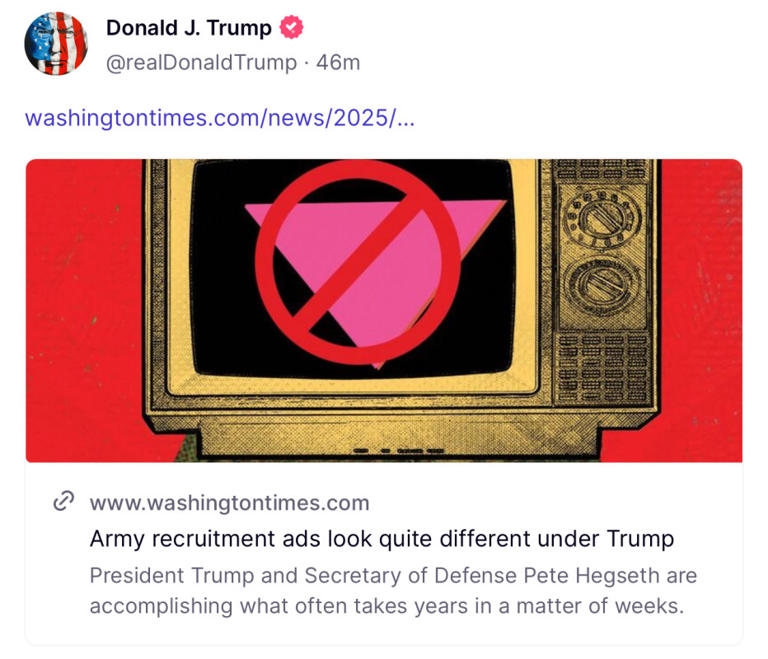
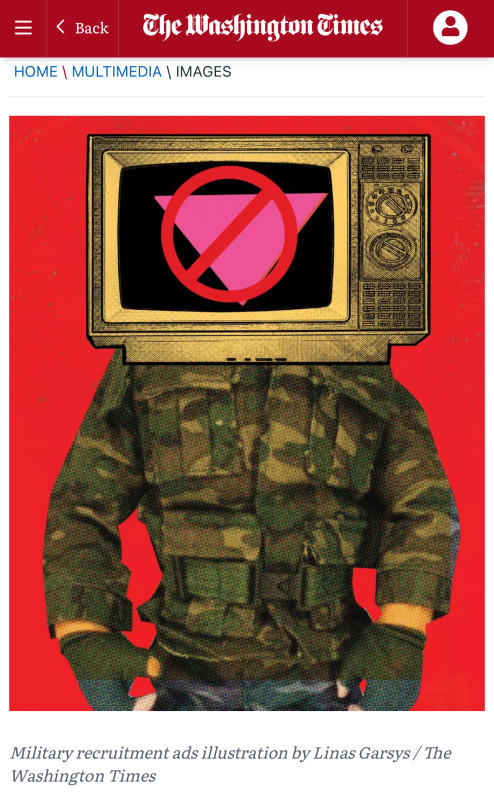
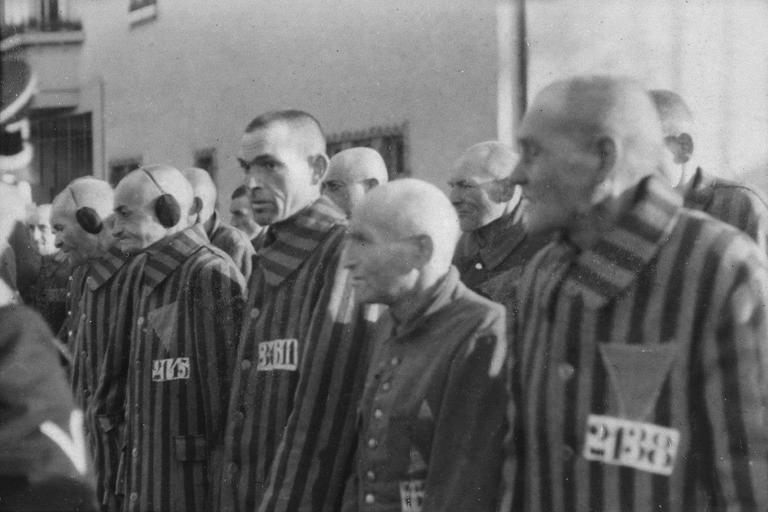
Trump posted an article to his Truth Social account this weekend featuring a deeply troubling image: a pink triangle—the Nazi-era symbol used to identify and persecute gay men in concentration camps—covered with a red prohibited sign. Historically, the LGBTQ+ rights movement reclaimed the pink triangle as a symbol of resistance, pride, and remembrance.
The article itself titled, “Army recruitment ads look quite different under Trump,” published by the Washington Times praises Trump and Defense Secretary Pete Hegseth for refocusing the military on “lethality” and reversing Biden-era policies that embraced diversity, including ads featuring LGBTQ+ soldiers.
The image, placed in the context of military recruitment, strongly suggests a rejection of LGBTQ+ service members, at least in the terms of recruitment, under Trump’s leadership.
He has long opposed LGBTQ+ inclusion in the military, previously criticizing the repeal of Don’t Ask, Don’t Tell.
Now, under his leadership, Trump appears to be reinforcing the idea that LGBTQ+ individuals are unwelcome in the armed forces—not just through policy but through amplifying symbolic messaging with disturbing historical roots.
Trump’s amplification of a Nazi-era symbol to promote this shift sends a message signaling a return to exclusionary policies that many believed were left in the past.
*This is being reported by the AP on WFMY2’s website.
The military services have 30 days to figure out how they will seek out and identify transgender service members to remove them from the force — a daunting task that may end up relying on troops self-reporting or tattling on their colleagues.
A memo sent to Defense Department leaders on Thursday — after the Pentagon filed it late Wednesday as part of a response to a lawsuit — orders the services to set up procedures to identify troops diagnosed with or being treated for gender dysphoria by March 26. They will then have 30 days to begin removing those troops from service.
The order expands on the executive order signed by President Donald Trump during his early days in office setting out steps toward banning transgender individuals from serving in the military. The directive has been challenged in court.
A senior defense official said Thursday they believe there are about 4,200 troops diagnosed with gender dysphoria currently serving in the active duty, National Guard and Reserves.
The official, who spoke on condition of anonymity to discuss personnel issues, said that between 2015 and 2024, the total cost for psychotherapy, gender-affirming hormone therapy, gender-affirming surgery and other treatment for service members is about $52 million.
There are about 2.1 million troops serving.
However, the issue has taken up a large part of the Pentagon’s attention and time as Trump and Defense Secretary Pete Hegseth work to root them out, arguing that their medical condition doesn’t meet military standards.
The order expands on the executive order signed by President Donald Trump during his early days in office setting out steps toward banning transgender individuals from serving in the military. The directive has been challenged in court.
A senior defense official said Thursday they believe there are about 4,200 troops diagnosed with gender dysphoria currently serving in the active duty, National Guard and Reserves.
The official, who spoke on condition of anonymity to discuss personnel issues, said that between 2015 and 2024, the total cost for psychotherapy, gender-affirming hormone therapy, gender-affirming surgery and other treatment for service members is about $52 million.
There are about 2.1 million troops serving.
However, the issue has taken up a large part of the Pentagon’s attention and time as Trump and Defense Secretary Pete Hegseth work to root them out, arguing that their medical condition doesn’t meet military standards.
Sarah Warbelow, vice president for legal affairs for the Human Rights Campaign, said the new policy puts service members in a difficult position and pushes transgender troops to self-identify.
“All of a sudden, you are going to be required to out yourself. Other people are going to be required to out you,” Warbelow said. “If you’ve got a best friend in the military who happens to know that you are transgender, under this new guidance they’re required — if you are a woman who is transgender — they’re required to start referring to you as ‘he’ and ‘sir,’ as of today.”
Troops are put in the position of having to choose “between the safety of their friends and violating direct orders,” Warbelow said, adding that transgender service members may feel pressure to self-identify, knowing that they may be penalized by not coming forward.
On Thursday, U.S. officials said early rough numbers suggest about 600 transgender troops can be quickly identified in the Navy, between 300 and 500 in the Army and fewer than 50 in the Marine Corps. Officials said individuals could, for example, be identified by documented medical treatments, and acknowledged those numbers are likely to increase.
Other numbers were not available, according to the officials, who spoke on condition of anonymity to discuss personnel issues.
The officials noted, however, that the early numbers likely fall short of actual totals because some service members may have joined the service after any transition and may not have had medical or surgical procedures that could identify them. And officials also have warned that they may be limited by health privacy laws on what they can and can’t discern or report from records.
A 2018 independent study by the Palm Center, which researched LGBTQ issues, assessed there were an estimated 14,000 transgender troops among the more than 2 million troops serving.
The new Pentagon policy provides two exceptions: if transgender personnel who seek to enlist can prove on a case-by-case basis that they directly support warfighting activities, or if an existing service member, who was diagnosed with gender dysphoria, can prove they support a specific warfighting need and never transitioned to the gender they identify with and proves over 36 months they are stable in their biological sex “without clinically significant distress.”
Gender dysphoria occurs when a person’s biological sex does not match up with their gender identity.
If a waiver is issued, the applicant would still face a situation where only their biological sex was recognized for bathroom facilities, sleeping quarters and even in official recognition, such as being called “Sir” or “Ma’am.”
Warbelow said transgender troops should wait for additional clarity from the service and their commanding officers before doing anything that would affect their military service — also noting that ongoing court cases could affect the policy.
Trump tried to ban transgender troops from serving during his first term, but the issue ended up mired in lawsuits until former President Joe Biden was elected and overturned the ban.














 fleeredstates.blog
You must be logged in to post a comment.