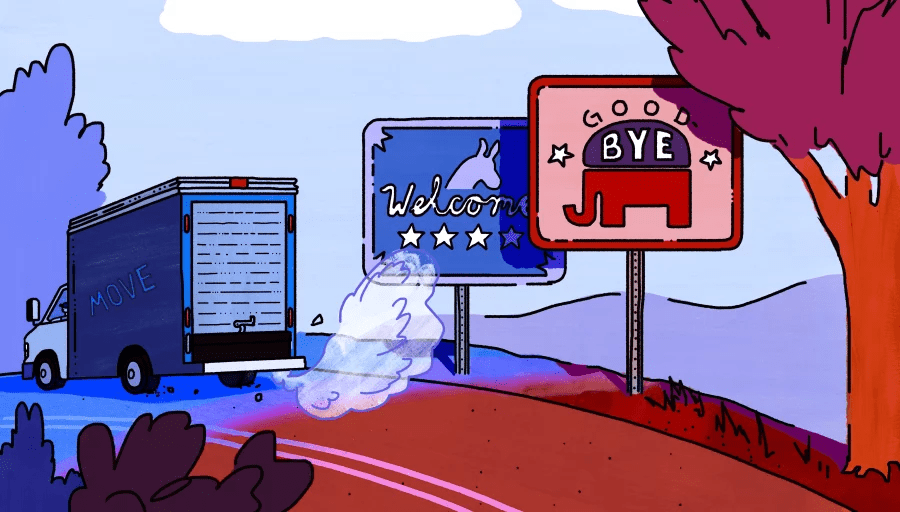
Leaving Texas isn’t so simple for LGBTQ residents

Read more at Axios.

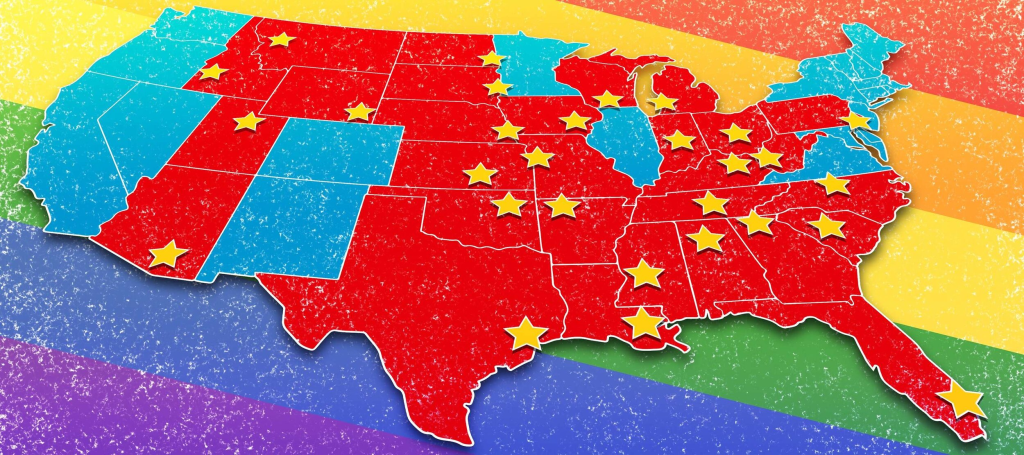
LGBTQ Americans aren’t just fleeing red states like Texas for blue enclaves. They are also building lives in cheaper, fast-growing metros where jobs, housing and politics collide.

Why it matters: The “red-state exodus” narrative misses a quieter reality.

  • Affordability and work are keeping some LGBTQ+ people in — and drawing others to — places that may be politically complicated but economically viable.

The big picture: LGBTQ Americans have lower homeownership rates than non-LGBTQ Americans, according to the Williams Institute.

  • And, LGBTQ-friendly cities with stronger LGBTQ protections — such as San Francisco and Boston — often come with significantly higher housing costs, creating a tension between safety and affordability.

By the numbers: Homebuyers needed to earn $150,364 annually to afford the median-priced home in states with LGBTQ housing protections as of 2024, per an Axios analysis of real estate company Redfin data.

  • That’s 46.8% more income needed than in states, like Texas, without such protections.

Zoom in: Around 4% of adults in North Texas identify as LGBTQ, according to Williams Institute data.

  • Same-sex married households in North Texas almost doubled from 2019-24, increasing from around 11,000 couples to roughly 21,600, per a Dallas Morning News analysis of Census Bureau data.

Between the lines: 9% of the region’s homes for sale were affordable for someone earning the local median household income, according to Redfin.

  • By contrast, less than 2% of homes for sale were considered affordable in San Diego and Los Angeles, which have larger percentages of adults who identify as LGBTQ.

Caveat: Researchers caution that LGBTQ migration data remains limited because federal surveys have historically failed to consistently collect sexual orientation and gender identity data.

What they’re doing: Oak Lawn United Methodist Church painted its steps in rainbow colors after Gov. Greg Abbott ordered the removal of rainbow crosswalks statewide last year.

  • “This is our way of speaking to our community of sharing a message of boldness and courage that who you are is beloved and worthy of dignity and belonging,” Rev. Rachel Griffin-Allison, the church’s senior pastor, told NBC5 in January.

The bottom line: The tension between affordability, opportunity and rights is quietly reshaping the map of LGBTQ America.

Trans man flees US after unending discrimination & violence: “I have to get out or I’m going to die”

Read more at LGBTQ Nation.

Since Elliot Hefty came out as a trans man in 2020, he has lost his job, been evicted, and received KKK flyers at his front door – all because of his gender identity. He was also a victim of sexual assault in a men’s bathroom and thinks his gender identity is what caused the perpetrator to act.

After the 2024 presidential election, a person shoved him on the street and began yelling anti-trans slurs. “I’m laying in the street bleeding. Not one person stopped to help me or see if I was okay. And I got up, and I’m bleeding. My hands are bleeding, my knees are bleeding, my face is bleeding.” It was then that he decided he had to leave the country.

“I have to get out or I’m going to die,” he said.

In a conversation with WABE, Atlanta’s public radio station, Hefty opened up about his decision to move to the Netherlands, along with his brother, Koda. The pair share a bedroom in a refugee center in Limburg, where Hefty said he enjoys support from the other LGBTQ+ asylum seekers from around the world who share a kitchen and common dining area with them.

Hefty is part of the record number of LGBTQ+ people in the U.S. fleeing the president’s anti-transgender policies by seeking asylum in other countries, according to a report released last Saturday by the LGBTQ+ asylum relocation assistance group Rainbow Railroad.

Simultaneously, fewer LGBTQ+ refugees from other anti-LGBTQ+ countries are seeking asylum in the U.S., a result of the president’s anti-immigration policies, according to the group’s report, Understanding the State of Global LGBTQI+ Persecution, which was released on World Refugee Day.

Last year, Rainbow Railroad received 20,215 direct requests for relocation assistance from queer and trans people, a 51% increase over 2024 and the highest number of requests the group has received since its founding in 2006.

Approximately 31% of last year’s requests came from people living in the U.S. The previous year, that percentage was about 13%. While past requests to leave the U.S. had in the past predominantly come from queer immigrants who had been resettled in the states, about 88% of the requests in 2025 came from American citizens who said they were fleeing the current administration’s anti-LGBTQ+ policies.

Exactly 1,177 U.S. residents reached out to Rainbow Railroad for support the day after the president was re-elected, Rainbow Railroad’s Chief Programs Officer Devon Matthews told The Los Angeles Blade.

“That single day generated more than twice the number of requests for help we had received from across the United States during the previous 10 months combined,” Matthews said.

Matthews also told WABE that the United States has joined the likes of Uganda, Egypt, Afghanistan, Pakistan, Iraq, Russia, Canada, Turkey, and Kenya when it comes to the number of LGBTQ+ people seeking refuge outside of their home countries.

Hefty, whose lawyer is currently working on an appeal regarding his refugee status, said he has no plans to reenter the United States, not even to visit for a sibling’s wedding.

Trans people in the United States are also fleeing anti-trans red states and moving to blue states, some of which have declared themselves sanctuaries for trans rights.

An October 2025 survey by the Movement Advancement Project (MAP) found that between November 2024 and June 2025, roughly 9% of trans people in the United States moved to another state, with 43% considering a move.

Gallup estimates there are roughly 4.5 million trans people in the country, meaning over 400,000 people (and their families) have relocated. As anti-trans legislation has only ramped up since June 2025, it’s safe to assume that the number of people relocating has increased as well.

But blue states are struggling to meet the demand. In May, for example, the Seattle LGBTQ Commission petitioned the city’s mayor to declare a civil state of emergency to accommodate the massive influx of LGBTQ+ people, which has strained the resources of community-based organizations that weren’t set up to handle this volume. Those organizations are responsible for a range of services, the letter explained, including “emergency financial assistance, transportation, housing navigation, legal support, safety planning, community connections, and access to gender-affirming healthcare.”

Doctors have also begged blue state legislators for more funding to accommodate the rise in demand for gender-affirming care services.

Why leaving red states isn’t so simple for LGBTQ Americans

Read more at Axios.

LGBTQ Americans aren’t just fleeing red states for blue enclaves. They are also building lives in cheaper, fast-growing metros where jobs, housing and politics collide.

Why it matters: The “red-state exodus” narrative misses a quieter reality. Affordability and work are keeping some LGBTQ+ people in — and drawing others to — places that may be politically complicated but economically viable.

By the numbers: Homebuyers needed to earn $150,364 annually to afford the median-priced home in states with LGBTQ housing protections as of 2024, per an Axios analysis of real estate company Redfin data.

  • That’s 46.8% more income needed than in states without such protections.
  • LGBTQ Americans have lower homeownership rates and face higher rates of poverty and housing instability than non-LGBTQ Americans, according to the Williams Institute.
  • The LGBTQ homeownership rate trails the rate for straight and cisgender Americans by about 20 percentage points, according to the Urban Institute.

Zoom in: There is evidence of strong LGBTQ populations in the Southern metros that complicate the old “blue enclave” frame.

  • The Atlanta metro had an estimated 194,000 LGBT adults, or 4.6% of adults, according to the Williams Institute.
  • The Raleigh-Cary metro area in North Carolina had an estimated 32,000 LGBT adults, and the broader Triangle’s LGBTQ footprint includes Durham’s long-running Pride infrastructure and LGBTQ networks.
  • The Charlotte metro had an estimated 74,000 LGBTQ adults, or 4% of adults.

State of play: Advocacy groups warn that conservative-led statehouses are making some states riskier for LGBTQ people, especially transgender people, as the ACLU tracks more than 500 anti-LGBTQ bills in 2026.

  • Groups now maintain emergency relocation resources for LGBTQ families and transgender people affected by hostile state laws.
  • Blue states are often framed as safer legal destinations because they tend to have stronger nondiscrimination laws and protections for health care access — in addition to friendlier rules on identity documents.

Yes, but: Cities with stronger LGBTQ protections like San Francisco and Boston often come with significantly higher housing costs, creating a tension between safety and affordability.

What they’re saying: “LGBTQ people across the country, just like everyone else across the country, are thinking about economics and affordability every day,” Logan Casey, director of policy research for the advocacy group Movement Advancement Project, tells Axios.

  • Casey said many LGBTQ Americans are weighing wages, health care and proximity to family while also navigating state policies over safety and legal protections.
  • “The point is less about the outcome of whether you choose to move or not. It’s more about the fact that LGBTQ people are being forced to think about it in the first place.”

Caveat: There is still no definitive national dataset proving LGBTQ Americans are relocating en masse to cheaper red-state metros.

  • Researchers caution that LGBTQ migration data remains limited because federal surveys have historically failed to consistently collect sexual orientation and gender identity data.

Flashback: After the 1969 Stonewall uprising, LGBTQ migration became closely associated with urban enclaves, like New York’s Greenwich Village, San Francisco’s Castro District and parts of Los Angeles, Chicago and Houston.

  • Those neighborhoods offered safety, political organizing, nightlife and community at a time when LGBTQ Americans had few alternatives.
  • LGBTQ people always lived in every state, congressional district and rural county, but it defined the public imagination of where queer life happened.

The bottom line: The tension between affordability, opportunity and rights is quietly reshaping the map of LGBTQ America.

The red state, blue state divide is real. But it’s driven by more than just politics

*Read more at NPR. Flee Red States is featured in this article.

Three years ago, Jessa Davis had an epiphany: After she came out as a trans woman, remaining in deep-red Texas felt untenable. So, she sold her house in Odessa and moved to the liberal bastion of Seattle, Wash.

Davis describes herself as a trans refugee. Back in Texas, she says, lived in a “pretty hostile and frankly dangerous” place. “I had a lot of close calls, a lot of threats.”

Davis volunteered with organizations advocating for trans and queer rights in Odessa and remembers thinking, “I’ve got one life and I don’t want to spend the next 20 years of [it] fighting a battle that I’m not sure we’re going to win in a place like Texas.”

Her fight for LGBTQ rights continues, but it feels more manageable in a city she views as welcoming and supportive. After arriving, Davis quickly became active in local issues and now serves as co-chair on a commission advising the city on LGBTQ issues. She and other commissioners have urged Seattle to declare a state of emergency to provide more resources for the growing number of people relocating there to escape anti-LGBTQ laws and hostile social climates elsewhere in the country.

Davis’ case reflects what sociologists call “ideological sorting” — the tendency to choose communities aligned with one’s political and cultural values. Popularized in the 2008 book The Big Sort, it sets out to explain the widening divide between red and blue America.

In a country that’s growing ever-more polarized, the shifting demographics cut in both directions — and it is happening across the country. In one study from 2022, researchers concluded that “at no point since the Civil War have partisans been as clustered within individual states as today.”

Research in recent years, however, suggests that the story is more complex and nuanced — and that simply seeking out like-minded neighbors is more often than not just one factor among several driving the shift.

From blue state to red

As Davis and others arrive in Seattle seeking refuge from hostile laws and rhetoric, some of Seattle’s longtime residents, like Kirby Wilbur, have moved out, fleeing to conservative enclaves.

Wilbur also describes himself as a “refugee.” He relates an experience that is a virtual mirror image of Davis’. In Seattle, the local conservative talk show host — who also briefly served as Washington state Republican chair — felt like a stranger in a strange land.

As he neared retirement, he and his wife Trina began thinking about an escape plan. A friend told them about McKinney, Texas, a conservative Dallas-Fort Worth suburb. Wilbur had never heard of McKinney, but decided to have a look.

“There were like 3,000 square foot homes with a pool for $300,000,” he says.

In Texas, Wilbur met with Paul Chabot in 2020, who runs a specialty realty service, Conservative Move. Started in 2017, the company has helped thousands of people relocate from blue states to red states, Chabot says.

But the Wilburs still weren’t ready. Then came the 2020 George Floyd protests in Seattle. Kirby Wilbur says after the mobs, looting and vandalism, he and Trina had their own epiphany. “We looked at each other and said, ‘No, we can’t live this way. This is it.'”

Chabot, a retired U.S. Navy commander, says Wilbur — who has since become a part-time realtor with Conservative Move — is like most of his clients, who “feel like they can’t talk politics with people on their street.”

Conservative Move assists a lot of families with children who say they want a better quality of life for their kids — things like lower crime, stronger schools and lower taxes, according to Chabot. They also want to be somewhere they don’t feel judged for their political beliefs, he says.

“It’s not like people are leaving just because they hate Democrats. They don’t like Democrat policies, but they really feel like they’re alone, alienated, ostracized,” he says.

Chabot’s counterpart on the left is Bob McCranie. In 2020, McCranie started a web page called Flee Texas. “Very quickly… it got overwhelmed by people from all sorts of other places saying, ‘Oh my gosh, talk to me,'” he says.

As a result, he broadened the reach a few years later, launching Flee Red States. Since then, he says he has 40 closings related to the project and more than 875 people on a mailing list. He says he’s even helped people move out of the country.

McCranie says for some of his clients, the stakes are much higher than simply whether they can have a political conversation over the back fence. “People are moving because they don’t feel safe in their own state, in their own country,” he says.

For instance, some conservative groups are trying to overturn Obergefell v. Hodges, the U.S. Supreme Court’s landmark 2015 ruling that established same-sex marriage as a constitutional right. McCranie says some of his clients are wondering, “Where would we be safe as a couple and as a family?”

U.S. Census Bureau data for 2024 indicates that almost exactly as many people moved from Texas to Washington as went the other direction. However, a nationwide Stateline analysis paints a more one-sided picture. Republican counties, defined by the 2020 presidential election votegained 3.7 million people from mid-2020 to mid-2023, while blue counties lost the same amount — a time period that encompasses pandemic dislocations and lockdowns and the rise of remote work, Stateline notes.

But those broad trends can belie individual experiences. Rachelle Vega, interviewed last year by NPR, moved from Austin — widely considered the most progressive city in Texas — to Santa Fe, N.M., which has some of the country’s strongest LGBTQ protections. Vega wanted a more welcoming environment for her two adult trans children. In her new home, “There’s this sense of live and let live that is pervasive,” she told NPR.

This political sorting is not only occurring from state to state, but on a city, county and neighborhood level, according to Bruce Desmarais, a professor of political science and social data analytics at Penn State University. In a 2019 study, Desmarais and colleagues found that “people tend to be moving from one very sort of left-leaning city to the next” — like Vega — and the same is true, Desmarais says, for people moving from one right-leaning area to another.

Ticking the boxes beyond party affiliation

Take Stefanie Chiappetta’s experience. Four years ago, she and her husband, Samuel, moved from Middleborough, Mass., to Conway, S.C., and politics were the main reason.

In solidly blue Massachusetts, the town of Middleborough is an exception. It went for President Trump over Vice President Kamala Harris by a comfortable margin in 2024.

Chiappetta says “more conservative” was “box one” on her list when looking for a fresh start after retirement. Second was taxes. She and her husband had been paying nearly $7,000 a year in property taxes in Massachusetts, but in Conway, it’s a fraction of that, she says. The last important item was the weather. Chiappetta says she and her husband both have back issues. The cold weather “was making us more miserable,” she says.

Although Chiappetta puts politics at the forefront, her weighting of other factors illustrates a key caveat, says Steven Webster, an associate professor of political science at Indiana University.

“Americans do have a preference for living near co-partisans,” Webster, who has also researched ideological sorting, says. However, “things like the affordability of homes [and] living in a good school district far outweigh any explicit partisan-based motivation for choosing one location over another.”

The neighbor agreeing with you about President Trump is “the cherry on top,” he says.

Just as Chiappetta gravitated to a lower-tax city and state — which often tend to be conservative — “a Democrat might move to an area with good access to public transportation,” Webster says.

“While desiring access to public transportation may correlate with being a Democrat, one’s decision to move to that area is based [on] that desire rather than being with other Democrats,” he says.

“Places shape people more than people sort into places,” he concludes.

Political birds of a feather

Some researchers put more weight on party realignment — a long-term shift in the political landscape caused by voters changing their allegiances – than voter migration to explain the biggest share of the ideological sorting.

“Southern whites converted Republican, suburbs of major cities converted Democratic, and the political map redrew itself without most people moving,” notes Josh Zhang, an assistant professor of sociology at Stony Brook University.

In 2023, Zhang and colleagues published a study that looked at ideological sorting on a granular level. Using anonymized cell-phone data and other real-time information, they found that “people in heavily Democratic or Republican neighborhoods tend to visit places — religious institutions, schools, restaurants — whose other visitors lean the same way.”

James Henson, director of the Texas Politics Project at the University of Texas at Austin, points out that while the general trend is understood, “geographic sorting is rarely, if ever, going to be absolute. Despite aggregate sorting, there are always going to be individual exceptions in a given area.”

Despite Wilbur’s decision to move to be closer to fellow conservatives, he readily acknowledges that such ideological sorting is a negative for the country as a whole. “Nobody talks to each other anymore,” he says. The divisions in our political discourse have increasingly led to physical division, he says.

Davis is also concerned about “isolating ourselves in bubbles” and recalls the rare occasions when she was able to break through to someone in Odessa. She argues that physical sorting reduces those opportunities for connection.

“That’s the importance of being able to sit down with someone, share a beer in a dive bar in West Texas, and have a conversation about why I’m leaving — what’s happening, and why I feel I have to go.”

So many LGBTQ Texans are moving to this city, it may declare an ’emergency’

Read more at the Houston Chronicle.

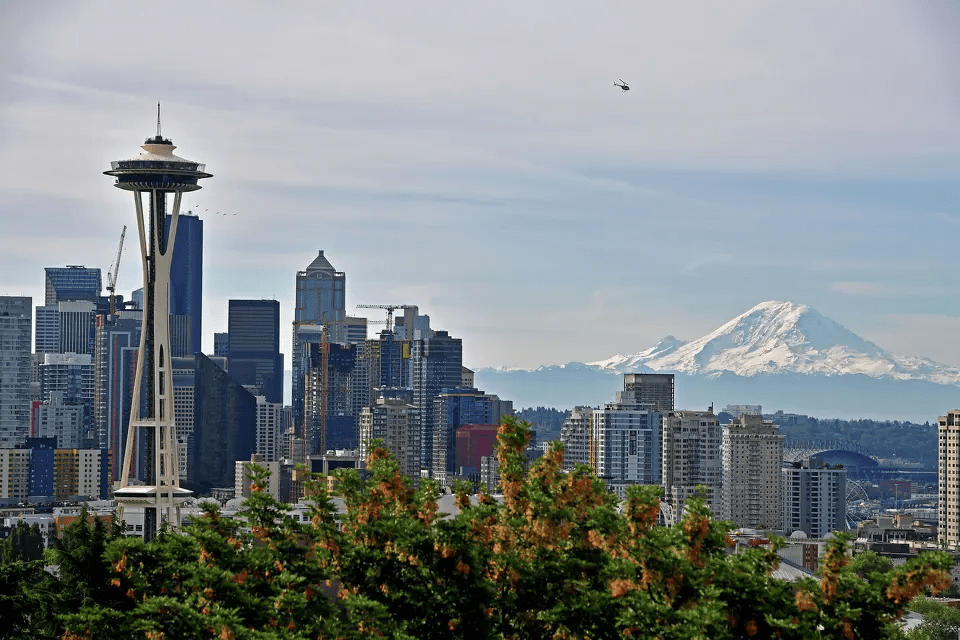
Amid a glut of anti-LGBTQ+ laws passed by the state legislature over the past half-decade, many queer Texans have decided to pack up and move to greener, more supportive pastures. So many have chosen Seattle that the  Pacific Northwest city is now considering declaring an emergency.

As first reported by the Seattle Gay News, the City of Seattle is close to declaring a state of civil emergency in response to LGBTQ+ refugees from red states moving there. That comes after Seattle’s LGBTQ Commission, an advisory committee that counsels local leaders on matters related to Seattle’s queer community, reportedly sent a letter last month asking the city council to make an emergency declaration. The commission said that the city needed “an effective and empathetic response” to protect a “rapid influx of 2SLGBTQIA+ persons seeking refuge in Seattle.”

For some ex-Texans, Seattle has become a haven. Victoria Scott, a trans woman and freelance writer, lived in Houston working as a programmer at NASA after college in 2018. After coming out as transgender, she said that she found both Houston and Texas hostile. Scott moved around and lived briefly in Reno, Nevada, before settling in Seattle with her wife at the end of 2023. In Seattle, Scott found the foundation she had long needed.

“It’s done more for my day-to-day lived experience and mental health as a trans woman than basically any other thing I’ve ever done,” Scott told Chron.

For her, Seattle was everything Houston wasn’t. (For one, it isn’t nearly as hot.) Scott appreciates the city’s relatively decent cost of living and protective state and local laws for LGBTQ+ residents. But Scott also said that there were more queer and trans people out and about in Seattle, noting that she could form physical communities in a way she couldn’t in Texas. She attributed that to Seattle’s long, vibrant queer history.

“Trans people here are normalized to a degree they’re not elsewhere,” Scott said. “I get culture shock visiting other places now because I return pretty suddenly to people staring or murmuring about me … Here, I genuinely feel like just another woman.”

Seattle isn’t perfect, but Scott noted that many of the problems she encounters in the city have nothing to do with her being transgender, something she couldn’t say while living in the South. In addition to writing, she now works with a Washington state non-profit called TRACTION that serves transgender people throughout the state. The group’s Open Arms program helps transgender people across the nation resettle in supportive states and cities, mostly in Seattle. Scott says she’s seen plenty of queer and trans Seattle transplants both through her work and out in the community.

“It is very much an ongoing migration,” Scott said

In its letter, the Seattle LGBTQ Commission cited data from a 2025 survey by the non-profit Movement Advancement Project. That survey found that after the 2024 election, queer and trans people were moving from Republican-led states that have passed anti-LGBTQ legislation to Democratic-led states like Washington. Texas was noted as one such hostile state in the Seattle LGBTQ Commission’s letter.

“Many [internally displaced persons] have relocated from states such as Texas, Florida, Tennessee, Kansas, and Idaho due to anti-trans legislation, threats to personal safety, and barriers to healthcare and legal recognition,” the commission wrote. 

In response to a wave of anti-trans legislation in both Texas and in statehouses around the country, some transgender Americans have migrated out of red states like Texas and Florida and into large cities with established LGBTQ+ communities like ChicagoNew York City and San Francisco. Minnesota, which has notably strong non-discrimination laws and protects gender-affirming care at the statewide level, has also become a hub for trans Americans looking for safetySome have even sought shelter in Canada

Aspen Coyle, who manages the Open Arms program at TRACTION, told Chron via email that the group matches trans people in need with volunteers who help them through the process of moving. Coyle said that of the 533 people TRACTION has been in contact with, 117 have been from Texas, the highest of any state, followed by Florida and Ohio. That tracks, Coyle said, with a 2025 study by Plume, an online gender-affirming care provider, which found that Texas had the highest number of trans residents who fled their home state: nearly 20 percent. The top location trans respondents moved to in that Plume survey? Washington state. 

Coyle said Texas transplants she’s worked with have described trans people leaving the state as an “exodus,” and that many tell her “they’re the last trans people in their area.”

“It is absolutely dire. People are leaving because they can’t get healthcare, they can’t get a job, they might get arrested for going to the bathroom, they get harassed in public,” Coyle said. “The baseline hostility to their existence is unbearable.”

Americans Are Leaving the U.S. in Record Numbers — Here’s Where They’re Going |Jen Barnett (Expatsi)

More Americans are leaving the United States than moving in—for the first time in decades. In this conversation, Bob McCranie sits down with Jen Barnett of Expatsi to break down what’s really happening, and how everyday people—not just the wealthy—are successfully relocating abroad.

We cover the rise of global mobility, why “ordinary folks” are now exploring options like Spain, Germany, and Panama, and how Expatsi helps Americans take real steps toward a safer, healthier, and more stable life overseas.

You’ll learn:

Why net negative migration is happening now
How regular people are retiring or working abroad
What “scouting trips” look like and why they matter
Visa pathways (including student and investor visas)
How tools like Google Translate make the transition easier
What it feels like to live in places with stronger civil protections and less daily stress

We also discuss Move Abroad Con, Expatsi’s major conference that helps people turn interest into action. Bob and Leslie spoke at last year’s event, and the results speak for themselves—many attendees have already made the move.

If you’ve ever wondered, “Could I actually live somewhere else?” — this is your starting point.

Make 2026 Your Year: Move Abroad Con, Live in San Diego
Two days of expert insights, life-changing connections, and the practical roadmap you need to finally make your move abroad. Limited tickets available—secure yours now before they’re gone.

May 9-10, 2026, Hard Rock Hotel, San Diego, California

https://expatsi.com/mac-2026

Angelina Jolie Plans to Flee the Country This Year

Read more at The Daily Beast.

Angelina Jolie appears ready to close the chapter on her life in the United States, with her final obstacle to leaving set to be resolved in a few months.

The Eternals star has been waiting for twins Knox and Vivienne to turn 18 in July before making a long-considered move abroad, telling reporters at the San Sebastian Film Festival that while she still “loves” America, she no longer “recognize[s]” it the way she once did.

The comment underscored a shift that has been years in the making for the Academy Award winner, who has increasingly framed the U.S. as just one stop in a much more global life.

Jolie, 50, has been open about that mindset across multiple interviews. Speaking to The Hollywood Reporter in 2024, she described Los Angeles less as a permanent home and more as a practical base for raising her six children. Calling her multi-million dollar home “a place where I raise my children,” she said, before adding that the “humanity that I found across the world is not what I grew up with here.”

That global pull has long competed with the realities of her custody arrangement with ex-husband Brad Pitt. The former couple shares six children—Maddox, 24; Pax, 22; Zahara, 21; Shiloh, 19; and twins Knox and Vivienne, who turn 18 this summer. Until now, Jolie’s ability to relocate has been constrained by the need to remain close to Pitt, 61.

A source close to the star told People that the restriction is finally lifting. The insider said Jolie “never wanted to live in L.A. full-time” and has been quietly preparing for a move once her youngest children reached adulthood. With that milestone approaching, she is now reportedly taking concrete steps—including preparing to sell her Los Feliz estate.

Jolie purchased the $24.5 million home in 2017, a year after filing for divorce from Pitt. At the time, she told Page Six the decision was driven by proximity: she “wanted it to be close to their dad,” who lived just minutes away.

The property—featuring six bedrooms and 10 bathrooms—served as a central base during years of custody negotiations and legal disputes.

Now, that chapter appears to be ending. In a September 2025 interview with Variety, Jolie emphasized that she has “always lived internationally,” pointing to her network of family and friends across the globe.

If there is a frontrunner for her next home, it is Cambodia. Jolie has repeatedly described the country as deeply personal to her, dating back to her time filming 2001’s Lara Croft: Tomb Raider film. It was there that Jolie adopted her eldest son, Maddox, in 2002 and has maintained close ties ever since.

Jolie has repeatedly referenced Cambodia as a place that feels like home “in my heart.”The star said she felt compelled to produce her 2017 film They Killed My Father about the Cambodian genocide after coming to fall “in love with its people,” describing “becoming a part of a Cambodian family” as life-changing.

n a separate interview with People, the actress dove deeper into her connection with Cambodia. Revealing that she and her son Maddox frequently travel back and forth, sometimes spending months there at a time—a reflection of the family’s enduring connection to the country.

The Daily Beast has reached out to Jolie’s team for comment.

Heartstopper, Trans Rights, and Moving to Where Your Rights Are Protected —Flee Red States

In this powerful conversation, we sit down with Rowan Murphy, co-author of Why Are We Like This? Stories of Transformation, a book exploring the extraordinary global response to Netflix’s Heartstopper. Rowan shares his personal journey as a transgender gay man in his early 50s, including: His lived experience navigating identity, visibility, and authenticity Why he ultimately chose to leave the United States How growing civil rights restrictions on LGBTQ people are shaping real-life decisions The deep emotional and psychological impact Heartstopper has had on LGBTQ audiences worldwide.

Greek Golden Visa Through Real Estate Investment

The Greek Golden Visa offers one of the most accessible residence permit programs in the European Union. Investors gain the opportunity to conduct business abroad, open bank accounts in EU banks, live in Greece, and travel visa-free within the Schengen Area.

From €250,000

Real Estate Investment

3-6 months

Processing time for obtaining a residence permit

Get more info and handy guide at Astons Greece.

Gay-Friendly Guide to Moving to Mexico

Read more at Out in Mexico.

Hola, future LGBTQ+ immigrant! When I first considered moving to Mexico, I was excited but also nervous about the unknowns. Having made the leap, I’ve discovered a country full of beauty, surprises, and opportunities for personal growth. Whether you’re seeking adventure, a lower cost of living, or a fresh start, Mexico has something for everyone. However, a smooth transition requires careful planning.

In this guide, I’ll share the lessons I’ve learned—from finding a home to navigating daily life—so you can start your journey with confidence.

VISA PROCESS – HOW TO LEGALLY LIVE IN MEXICO

To live in Mexico long-term, expats typically need a residency visa. There are many people who travel back and forth from the USA and leverage the “180 days” when entering Mexico. The downside to this approach is that it is up to the officer stamping passports at the airport and you can easily get less than 180 days. 

 Temporary Resident Visa

Ideal for those looking to stay in Mexico for up to four years, this visa requires proof of financial solvency.

 Permanent Resident Visa

This visa is for individuals who plan to stay in Mexico indefinitely and provides nearly the same rights as Mexican citizens, except for voting. 

 Work Visa

If you plan to work for a Mexican employer, you’ll need a work visa, which typically requires a job offer from a Mexican company. Many LGBTQ+ expats work remotely for employers abroad, which can be done under temporary or permanent residency.

 Financial Requirements (estimates for 2026)

Residency visas require proof of income and/or savings. Requirements vary and can change due to exchange rates, so it’s best to check with the Mexican consulate you will apply. Below are the estimates for 2026. These vary by consulate and currency fluctuations impact them. So take these as directional. 

  • Temporary Residency: Approximately $74,500 – $87,599 USD/$98,000 – $112,500 CDN in Savings (monthly ending balance for the last 12 months) or $4,500-$5,250 USD/$5,800-$6,750 CDN a month in retirement or income 
  • Permanent Residency: Approximately $280,000- $350,000 USD/$350,000-$450,000 CDN in Savings (monthly ending balance for the last 12 month) or $7,200-$8,750 USD/$9,800 – $11,250 CDN a month in retirement income (there may be some consulates that consider regular income instead of retirement)

 Application Process

Residency applications usually start at a Mexican consulate in the USA (or Canada). Prepare documents like financial statements, identification, and passport. The requirements vary by consulate as well as ease of setting up appointments for the process. I utilized the Orlando consulate (while I was still living in San Francisco), the process was very smooth and easy.

 Enter Mexico and Complete the Process

With your visa in hand, it’s time to head to Mexico. But don’t get too comfortable yet—you’ll need to complete a few more steps to secure your residency card.

  • Enter Mexico Within 180 Days: Once your visa is issued, you have 180 days to enter Mexico. After arrival, you’ll have 30 days to start the residency card application process.
  • Visit the INM Office (Instituto Nacional de Migración): Head to the local immigration office (INM) in the city you plan to live. Here, you’ll submit additional documents, including your visa, passport, and application form.
  • Complete Biometrics and Finalize Application: At the INM office, they’ll take your fingerprints and photograph again. Once everything’s approved, they’ll issue your residency card, which you’ll need to pick up in person.

 Renewal or Transition to Permanent Residency (for Temporary Residents)

If you start with a temporary residency, remember that it needs annual renewals. After your first year of temporary residency, you can renew for 1 year or up to 3 years. After four years of temporary residency, you can transition to permanent residency if you wish. The transition process is generally straightforward, requiring less documentation than your initial application.

COST OF LIVING

When I arrived in Mexico, I was amazed at how far my money stretched. Life here can be incredibly affordable, but it all depends on your lifestyle and location. Whether you’re looking for luxury or a budget-friendly existence, there’s a place for you. My overall living expenses in Mexico are roughly 55% less than in the U.S.

Typical Expenses

Moving Belongings: Moving personal items to Mexico can be costly, ranging from $5,000 to $10,000 USD. I opted to downsize significantly and made multiple trips by car, which saved me money and simplified the process. Downsizing also felt freeing—less clutter, more peace of mind! Plus all the things you need for a home is available in Mexico. 

Housing: My one-bedroom apartment in Guadalajara costs $1,200  USD/month, which is nearer the top end of prices but I was looking in a specific neighborhood with the desired amenities. By contrast, luxury rentals in popular beach towns like Puerto Vallarta can range from $1,500 to $2,500 USD/month. Renting in less touristy areas, such as Querétaro or Mérida, can save you even more.

Utilities: Most of the year, my power bills rarely exceed $40 USD/month. A couple of months a year it warms up in Guadalajara and I run the a/c quite often which will double the power bill. In warmer regions, air conditioning can significantly increase costs. Paying bills at OXXO or other convenience stores is the norm here.

Internet and Phone: I use TotalPlay for fast and reliable internet at $35 USD/month, ideal for remote work. For phone service, AT&T’s unlimited plan ($85 USD monthly) covers the U.S., Latin America, and Canada, while I prepaid for a year of AT&T Mexico service for seamless local communication ($120 USD annually).

Groceries: Shopping at local mercados has been a game-changer. Fresh produce is affordable and flavorful, and I’ve discovered fruits like mamey and guanabana that I’d never tried before. Local restaurants offer some of the best, most authentic food at great prices.

Pro Tip: Dining at small, locally-owned restaurants not only saves money but also supports the community and gives you a taste of authentic Mexican cuisine. I love my local Mercados, so many food vendors where you can get three tacos and a drink for less than $10USD. 

Water: In most areas of Mexico, it is advised to not drink the water. There are many water companies that will deliver garrafones (20 liters or approximately 5 gallons). I use 4 garrafones a month which runs $250pesos or $15 USD. 

CHOOSING THE RIGHT LOCATION

Finding the perfect place to live in Mexico was one of the most exciting parts of my journey. Each city has its own personality, so take your time exploring.

Popular Cities and Regions

Mexico City: This bustling metropolis offers world-class museums, vibrant nightlife, and incredible food. Perfect for those who love big-city energy, though traffic and the fast pace can feel overwhelming. The main gayborhoods in the city are Zona Rosa, Condesa and Roma but close by neighborhoods are super gay-friendly such as Navarte & Napoles.

CHECK OUT MY MEXICO CITY GAY GUIDE 

Guadalajara: My chosen home. It’s a perfect mix of modern amenities, historic charm, moderate weather and a thriving gay scene. Affordable and vibrant, it’s an excellent base for expats. The main gayborhoods are Colonia Americana and Centro Historico.

CHECK OUT MY GUADALAJARA GAY GUIDE

Puerto Vallarta: Known for its stunning beaches and welcoming gay community, this coastal town feels like a constant vacation. However, it’s more touristy and pricier than inland cities. Gay life centers around Zona Romantica but the city is super gay-friendly where ever you go. Check out the up & coming neighborhood or Versalles.

 CHECK OUT MY PUERTO VALLARTA GAY GUIDE

Tulum/Playa del Carmen: Ideal for eco-conscious and wellness-focused expats, with a laid-back vibe and breathtaking turquoise waters.

Other Options: Consider Mérida for its colonial charm and safety, Oaxaca for its cultural richness, or Querétaro for its modern amenities and family-friendly atmosphere.

My Tip: Rent before you buy! I spent my first few months exploring neighborhoods and getting a feel for different cities before settling down.

HEALTHCARE

Healthcare was a major concern for me before moving, but I’ve been pleasantly surprised by the quality and affordability here.

Key Points

Private Healthcare: A consultation at a private clinic cost me just $40 USD. The facilities were modern, clean, and the staff were friendly and bilingual.

Public Healthcare (IMSS): I am currently in the process of applying for IMSS and will provide an update on the steps and outcome. 

Insurance: Combining private health insurance with IMSS provides excellent coverage for emergencies and routine care. Note that insurers in Mexico can deny coverage for pre-existing conditions.

For Prep & testing for Sexual Transmitted Infections: Most major cities have organizations that do testing & offer Prep for a very low price ($20 USD). The costs for non residents are more expensive but affordable. I utilize Checcos in Guadalajara which provides a fantastic service for the community. 

Pro Tip: Major cities like Guadalajara and Mexico City have top-tier hospitals equipped with cutting-edge technology.

TRANSPORTATION OPTIONS

Getting around in Mexico is a diverse experience, offering everything from efficient public transportation to affordable ride-hailing services. Whether you’re commuting within a city, traveling between regions, or exploring off-the-beaten-path destinations, understanding your transportation options can make your transition smoother.

Public Transportation

Bike Share: My go-to transportation choice in Guadalajara is the MiBiCi bike share program. My annual membership is around $22. There are no additional charges if you keep each trip less than 30 minutes. Most major cities in Mexico have bike share programs, one of the biggest in Latin America is Ecobici in Mexico City. 

Pro Tip: Auto drivers have the right of way in Mexico, so be cautious when biking. 

City Buses: City buses are a popular and inexpensive way to get around urban areas. In cities like Mexico City, Guadalajara, and Monterrey, buses are frequent, but routes can be tricky for newcomers to navigate. Fares range from $0.30 to $0.60 USD per ride.

Pro Tip: Ask locals or consult Google Maps to understand routes. Always carry small change for bus fares.

Metro Systems: Mexico City has a world-class metro system with extensive coverage and fares as low as $0.25 USD per ride. Other cities, like Monterrey and Guadalajara, also have metro or light rail systems that are affordable and reliable.

Collectivos (Shared Vans): Shared vans, known as collectivos, are a popular option in smaller cities and rural areas. They run fixed routes and are cheaper than taxis. Look for signs on the windshield indicating their destination.

Ride-Hailing Apps: 

Ride-hailing apps like Uber and Didi are widely available in major cities and tourist areas, offering affordable, safe, and convenient rides. Prices are generally lower than traditional taxis, and the apps allow you to track your ride and driver.

Pro Tip: Use Uber or Didi for late-night travel or when navigating unfamiliar areas.

Taxis:

Street Taxis: While taxis are plentiful, they often lack meters, so fares should be negotiated upfront. They are more common in smaller towns but are gradually being replaced by ride-hailing apps in cities.

Authorized Taxis at Airports: At airports, only authorized taxis are allowed to pick up passengers. These are generally safe but more expensive than ride-hailing apps. Look for the official taxi stands inside the airport terminal.

Rental Cars: 

All the major US rental car brands have a presence in Mexico. If I am heading out of town to a nearby location, I do often opt for a rental car. Mexican law requires a valid drivers license from the US or Canada. When renting a car, you are also required to get the liability insurance for potential accidents. 


LANGUAGE & COMMUNICATION

Learning Spanish in Mexico

Learning Spanish transforms your experience in Mexico, enhancing daily life, cultural immersion, and personal connections. While many Mexicans in tourist areas speak some English, knowing Spanish allows for smoother navigation of tasks like grocery shopping or asking for directions. It also shows respect and effort, fostering deeper relationships with locals and helping you feel more integrated in your new environment. I started with an online tutor, took a couple of classes locally in Guadalajara and now using a in-person tutor. 

Steps to Learn Spanish Effectively

1. Start with Basic Resources: Apps like Duolingo, Babbel, and Anki flashcards are ideal for building foundational vocabulary. Transition to local Spanish classes, such as those offered by IMAC in Guadalajara or Instituto de Español de Puerto Vallarta, for structured learning and networking with other expats.

2. Practice Daily with Locals: Use simple phrases in everyday interactions, such as greeting neighbors or ordering at a market. Focus on practical vocabulary like “¿Cuánto cuesta?” (How much does it cost?) and immerse yourself in Spanish media—watch Mexican TV, listen to podcasts, and read local headlines to improve your listening and reading skills.

Overcoming Common Challenges

Fear of mistakes is natural, but Mexicans are patient and supportive of your efforts. Laughing at errors can even serve as an icebreaker. Regional slang (e.g., chido for “cool” or ¿Qué onda? for “What’s up?”) and the fast pace of conversation may feel daunting. Politely ask locals to slow down or explain unfamiliar phrases. Active listening and consistent practice will build confidence over time.

Pro Tips for Success

Set realistic goals, such as learning 5–10 new words daily, and celebrate small wins like completing your first full conversation. Join conversation groups or language exchanges to practice regularly and avoid over-relying on English. Immersion and consistency are key—challenge yourself to use Spanish as much as possible, and remember that every effort contributes to your progress.

CULTURAL ADAPTION: EMBRACING LIFE IN MEXICO

Adapting to Mexican culture has been one of the most rewarding aspects of my move. The slower pace of life, deep-rooted traditions, and strong sense of community have taught me invaluable lessons about connection, patience, and perspective. Understanding and respecting cultural norms is essential to integrating into society and enjoying the richness of Mexican life.

Key Cultural Norms to Note

  • Family-Oriented Society:  Family is at the Heart of Everything.  In Mexico, family ties are deeply valued and often take precedence over work or social commitments. Large family gatherings are common, often featuring laughter, music, and incredible homemade food.
    • Being Invited to Family Events: If you’re invited to a family gathering, accept the invitation! It’s a sign of trust and inclusion. These events may range from birthday parties to casual Sunday meals, often with a festive atmosphere.
    • Role of Extended Family: It’s not uncommon for multiple generations to live under one roof or within close proximity. When you meet a Mexican man, it is highly likely they live at home with their family. Elders are highly respected and often play an integral role in decision-making.
    • Pro Tip: When attending a family gathering, it’s customary to greet everyone individually with a handshake, hug, or kiss on the cheek, depending on the level of familiarity.
  • “Mexican Time”
    • Flexibility Over Punctuality: The concept of “Mexican time” reflects a more relaxed approach to punctuality. Plans often start later than scheduled, whether it’s a social event or a casual meeting. 
    • Adapting to the Pace: This cultural trait taught me to be more flexible and patient. It’s not about disrespect but rather about prioritizing relationships and enjoying the moment. This can be frustrating at times but I have learned that it is easier to adapt than try to get people to be punctual. 
    • How to Approach It:
      • For social events, expect a buffer of 30 minutes to an hour. Arriving too early might even catch your host unprepared!
      • For professional settings, punctuality is more expected, but slight delays are still common.
    • Pro Tip: If timing is critical, clarify expectations by saying something like “¿Es a las 7 en punto?” (Is it at 7 sharp?). 
  • Social Customs and Politeness
    • Everyday Politeness: Simple courtesies like saying “gracias” (thank you), “por favor” (please), and “buenos días” (good morning) are highly valued. These small gestures create a positive impression and help build connections.
    • Greetings: A handshake is common for first meetings, while a kiss on the cheek is customary for closer friends or family. Men may pat each other on the back as part of a handshake. When entering a room, it’s polite to greet everyone individually rather than just offering a general hello.
    • Goodbyes: Similar to greetings, farewells are often done individually. A quick wave is considered impersonal.
    • Pro Tip: Avoid skipping greetings and goodbyes—it’s seen as rude or dismissive.
  • The Importance of Hospitality
    • Generosity as a Norm: Mexicans are famously hospitable. If you visit someone’s home, you’ll often be offered food, drinks, or even gifts. Declining can sometimes be perceived as impolite, so it’s better to accept with gratitude, even if it’s something small.
    • Hosting Etiquette: When hosting, it’s important to go the extra mile to ensure guests feel welcomed. Food and drinks should be plentiful, and attention to detail is appreciated.
    • Pro Tip: If invited to someone’s home, bring a small gift like flowers, wine, or dessert. It’s a thoughtful gesture that shows appreciation.


SAFETY & SECURITY IN MEXICO

Safety was a significant concern before I moved, especially as a member of the gay community. However, I’ve found that with proper precautions and awareness, Mexico can be a welcoming and safe place for expats, including gay individuals. Here’s an expanded guide to staying safe in Mexico, with specific tips for gay expats.

Understanding Safety in Mexico: Facts and Statistics


Crime Trends:

Crime rates in Mexico vary widely by region. Some states face challenges related to organized crime, while others—like Yucatán—rank among the safest areas in Latin America. For example, Mérida, the capital of Yucatán, has a homicide rate comparable to that of European countries like Switzerland.

Tourist destinations such as Puerto Vallarta, Mexico City, and Tulum are relatively safe and take measures to protect visitors due to their economic importance.

One recent statistic (from World Population Review) ranking countries based on safety, Mexico ranks five places farther down the list than the United States. 

LGBTQ+ Rights and Safety:

Mexico is increasingly gay-friendly, with same-sex marriage legal in all 32 states as of 2022. Many major cities, such as Mexico City and Guadalajara, have vibrant gay communities and pride events.

Despite progress, acceptance varies by region. Urban areas and tourist hubs tend to be more open-minded, while smaller towns or rural regions may hold more conservative attitudes.

Tips for Staying Safe in Mexico

While safety concerns exist, taking precautions can help you feel confident and secure. Below are general safety tips along with advice tailored for gay individuals.

General Safety Tips

  • Choose Neighborhoods Wisely:
    • Neighborhood safety varies widely. For example, I live in Colonia Americana in Guadalajara, a trendy and gay-friendly area known for its vibrant atmosphere and relative safety.
    • Research neighborhoods using online forums, expat groups, and local recommendations before committing to housing.
  • Stay Aware of Your Surroundings:
    • Avoid displaying valuables like expensive jewelry or electronics, especially in crowded areas.
  • Use ride-hailing apps like Uber or Didi for transportation, particularly at night.
  • Be Cautious in Public Spaces: Avoid walking alone in unfamiliar areas, especially after dark. Stick to well-lit, busy streets and use reliable transportation when needed.
  • Blend In Where Possible: Dress modestly and avoid drawing unnecessary attention to yourself, especially in conservative areas. This advice applies to anyone, regardless of sexual orientation.

Gay Safety Tips

  • Stick to Gay-Friendly Areas:
    • Cities like Puerto VallartaMexico City, and Guadalajara are known for their thriving gay scenes and are generally safe for gay individuals. In these cities, you’ll find gay-friendly bars, clubs, and community spaces.
  • Be Mindful of Displays of Affection: Public displays of affection (PDAs) can be more accepted in urban areas, but in conservative regions, they might draw unwanted attention. Gauge the environment and act accordingly.
  • Research Venues in Advance: Before visiting bars, clubs, or other social venues, check reviews and recommendations to ensure they are gay-friendly. Apps like Grindr or Google Maps often have user reviews that highlight safe and welcoming establishments.
  • Travel with Trusted Friends: If you’re new to a city or attending an event, go with someone you trust. Being part of a group can increase safety in unfamiliar areas.
  • Know Your Rights: Mexico’s legal protections for LGBTQ+ individuals include anti-discrimination laws. However, enforcement can vary. If you encounter discrimination, remain calm and seek help from local authorities or LGBTQ+ organizations.
  • Resources for LGBTQ+ Expats:  Look for LGBTQ+ support groups or advocacy organizations in your area. For example, Colectivo Vallarta and Diversidad Jalisco support LGBTQ+ rights in Puerto Vallarta and Guadalajara, respectively.


KEY THINGS TO DO WHEN YOU ARRIVE

 Finish up your residency process at the Insituto National de Migracion (INM) where you will receive your residency card. You will need to make an appointment in advance. They will need proof of address (usually a utility bill will suffice). 

 Request an RFC (Mexican tax identification number) at your local SAT office. You will need an RFC to open a bank account, buy a car and apply for IMSS. You will need an appointment in advance. 

Open a Mexican Bank account. You will need your CURP, RFC, Mexican Telephone number and address. 

 Rent an apartment: check Facebook marketplace or Inmuebles24.com for listings in your location. Also walk around your desired neighborhood to see if there are any for rent signs. 

FAQS

What visa do I need to live in Mexico long-term?

To live in Mexico long-term, you’ll need a Temporary Resident Visa (good for up to 4 years) or a Permanent Resident Visa. The right one for you depends on factors like income, length of stay, and personal circumstances. Begin the process at a Mexican consulate in your home country.

How much money do I need to move to Mexico?

The cost varies based on your lifestyle and location. Budget at least $5,000–$10,000 USD for moving expenses, such as visa fees, housing deposits, and transportation. Monthly living expenses can range from $2,500 to $5,000 USD, depending on your lifestyle and city.

Is it safe to live in Mexico?

Yes, many areas in Mexico are safe. Research neighborhoods carefully, avoid risky areas, and use common sense (e.g., avoid walking alone at night and don’t flash valuables). Cities like Guadalajara, Mérida, and parts of Mexico City are popular with expats for their safety and amenities.

Can I work remotely for a U.S. company while living in Mexico?

Yes, many expats work remotely for U.S. companies while living in Mexico. Check the tax implications for both the U.S. and Mexico. Consulting a tax professional is highly recommended.

How can I open a bank account in Mexico?

To open a bank account in Mexico, you’ll need a Temporary or Permanent Resident Visa, proof of residency, an RFC (tax ID), and a Mexican phone number. Popular banks for expats include Santander, BBVA, and Banorte.

Do I need to speak Spanish to live in Mexico?

While it’s possible to get by in tourist areas with limited Spanish, learning the language greatly enhances your experience. Start with basic phrases and build your skills through apps, classes, and daily practice.

What is healthcare like in Mexico?

Mexico offers high-quality and affordable healthcare. Private clinics and hospitals are modern and accessible, while the public IMSS system provides basic care for residents. Many expats combine private health insurance with IMSS for comprehensive coverage.

How do I find housing in Mexico?

Start with short-term rentals through Airbnb or similar platforms while exploring neighborhoods. Long-term rentals can be found on Facebook groups, local real estate websites, or by walking around and noting rental signs. Negotiating rent is common and can often lower costs.

Can I bring my pet to Mexico?

Yes, you can bring your pet to Mexico, but you’ll need to comply with Mexican import regulations. The rules have changed recently, what you will need to bring your pet to Mexico: 

  • Minimum age: The dog must be at least six months old.
  • Microchip: An ISO-compatible microchip.
  • CDC Form: Complete it two to ten days before the trip.
  • Rabies vaccination.
  • Health certificate including Screw worm examination.

What’s the best way to meet people and build a community?

Join expat Facebook groups, attend local events like farmers’ markets and art fairs, or volunteer with charities to meet like-minded people. Taking language classes is also a great way to connect with locals and other expats.

How to a get a Mexican Drivers License

To obtain a driver’s license in Mexico as a resident, you’ll need to visit your local Secretaría de Movilidad y Transporte (SEMOVI) or equivalent office with required documents, including your Temporary or Permanent Resident Visa, CURP, proof of address, and valid ID. Some states may also require your RFC or foreign driver’s license. You’ll typically need to pass a vision test, a written exam on traffic laws, and a practical driving test unless your foreign license can be exchanged. Costs range from $20–$50 USD depending on the state and license validity (1–5 years). The process is usually completed in one day, and having a Mexican license ensures compliance with local laws as a resident.

FINAL THOUGHTS

Moving to Mexico has been one of the most enriching experiences of my life. While challenges like navigating bureaucracy or adapting to cultural differences exist, they’re far outweighed by the warmth of the people, rich culture, and incredible quality of life.

Whether you’re sipping coffee in a sunlit plaza, exploring vibrant mercados, or hiking through lush jungles, Mexico offers endless opportunities for adventure and personal growth. With preparation and an open mind, you’ll soon see why so many expats call this beautiful country home.

What excites you most about moving to Mexico? Let me know in the comments, or reach out with your questions—I’m here to help!

About the Author

Tim is a seasoned  travel writer and the creator of Out in Mexico, a dedicated resource for gay travelers exploring Mexico’s vibrant destinations. After relocating to Guadalajara, he has spent years immersing himself in Mexico’s gay culture, from the iconic beaches of Puerto Vallarta to the nightlife of Mexico City.

With firsthand experience in Mexico’s gay scene, Tim has personally visited the bars, hotels, and events featured in this guide. His insights have helped gay travelers plan unforgettable trips while ensuring they feel safe, welcomed, and informed.

When he’s not writing, you’ll find him sipping a mezcal cocktail at a bar in Guadalajara or travel to a new exciting destination in Mexico.

Follow his adventures: @i.am.out.in.mexico

Blog at WordPress.com.

Up ↑