

*This is reported by LGBTQ Nation.
A memorial to the gay people who were sent to concentration camps during the Third Reich was unveiled in Paris this weekend.
The monument is a giant steel star created by artist Jean-Luc Verna and is located near Place de la Bastille in a park. The monument recognizes the estimated 5000 to 15,000 people sent to concentration camps during World War II for homosexuality.
“Recognition means saying ‘This happened’ and saying ‘We don’t want this to happen again,’” Paris Mayor Anne Hidalgo said at the inauguration ceremony. She said that there is still an “obligation to fight against denial and mitigation” and that there “are, today, extremely dangerous, strong, opposing winds that would like to deny the diversity of the victims.”
The memorial is “a big thing so that it’s seen, so that it’s finally seen,” artist Verna told the French LGBTQ+ magazine TETU, describing the symbolism of the memorial. “The black side of the star is the bodies that were burned, it’s grief, it’s also a shadow that tells us that these things can happen again. The other side, the mirror, is the present, with colors from the weather and the sky of Paris that change as fast as public opinion can turn backwards.”
The memorial was unveiled on May 17, the International Day Against Homophobia, Biphobia, and Transphobia (IDAHOBIT), and comes after France started recognizing in recent decades that gay people were also victims of the Holocaust.
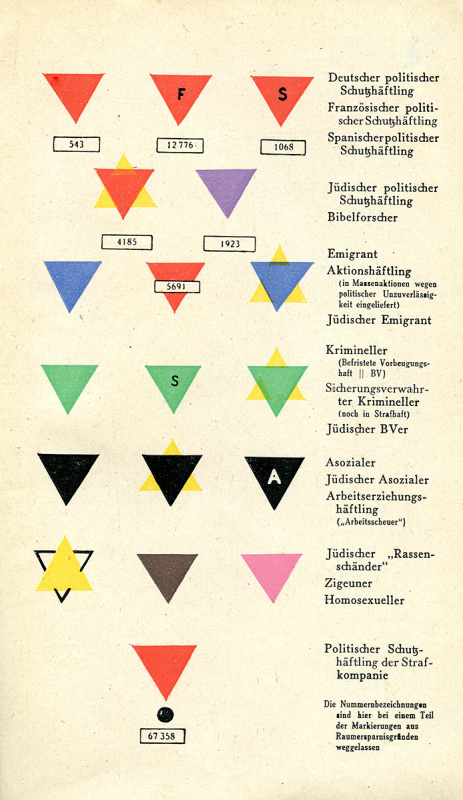
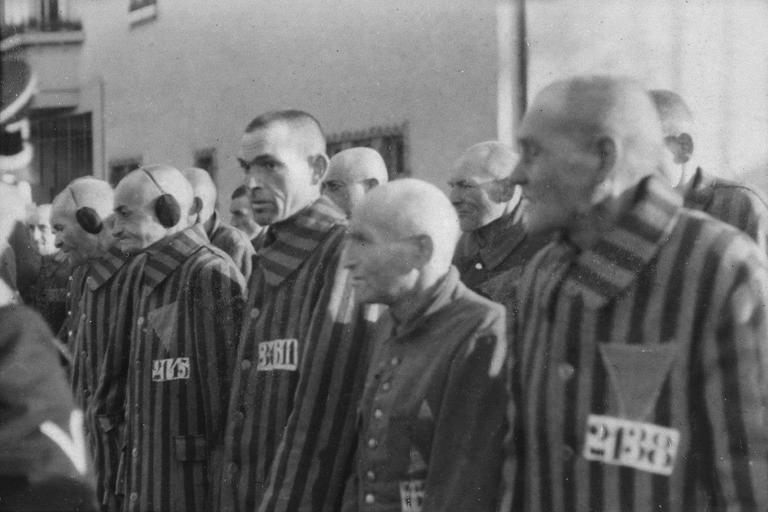
According to TETU, for years after World War II, people didn’t discuss the pink triangles that were used to designate people put in concentration camps due to their sexuality, until the 1990s when testimony from Pierre Seel was published. Seel was sent to the Schirmeck Concentration Camp in Alsace in 1941 after the Third Reich took over that part of France. In 2010, a memorial plaque was installed in Seel’s hometown of Mulhouse in “memory of Pierre Seel and other anonymous Mulhousiens arrested and sent to concentration camps due to homosexuality.”
“We are here to remember that the Nazis wanted to eliminate the most weak, the most fragile, the people suffering from handicap whose existence was considered an affront to their concept of man and society,” former French President Jacques Chiarc said in 2005. “In Germany, as well as in our territory, those who were different, I’m thinking about the homosexuals, were hunted down, arrested, and sent to concentration camps.”
Today, historians estimate that there were anywhere between 60 and 200 people sent to concentration camps due to their sexuality from France.
There are also monuments to the gay victims of the Holocaust in Amsterdam, Barcelona, Tel Aviv, and Sydney, all in the shape of a pink triangle, the symbol that the Nazis had sewn to the people held in concentration camps for homosexuality.




 fleeredstates.blog
You must be logged in to post a comment.