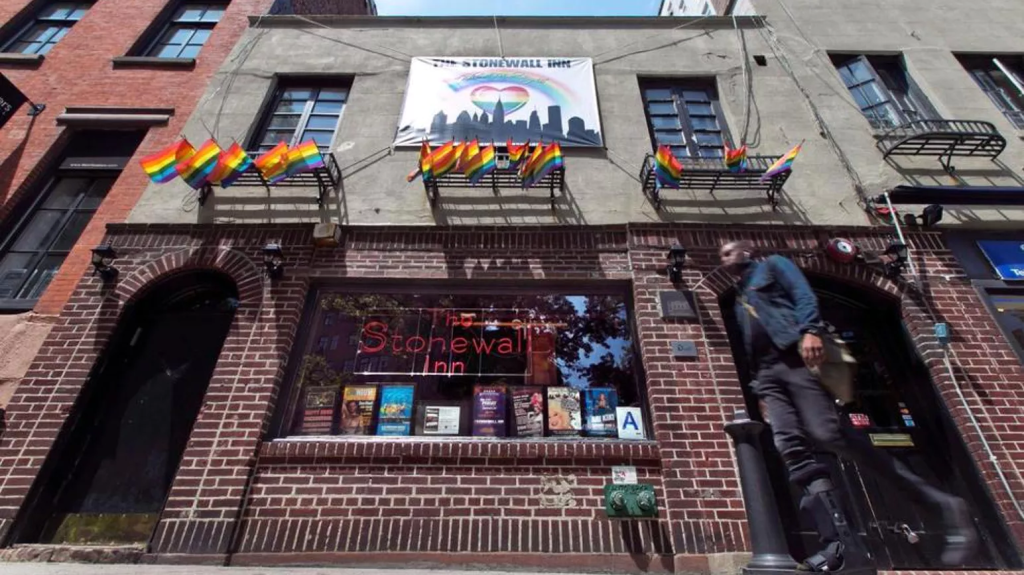
NYC lawmakers accuse Amtrak of ‘Stonewall era’ tactics in Penn Station cruising crackdown

Read more at the Gothamist.

New York lawmakers are demanding that Amtrak police stop arresting LGBTQ people on charges of public lewdness in a men’s bathroom at Penn Station, likening the crackdown to “the Stonewall era.”

The letter from Rep. Jerrold Nadler, two state senators and a state assemblymember follows reports by Gothamist and The City that 200 people have been arrested since June for alleged public lewdness or indecent exposure in the bathroom. At least 20 of those people were immigrants transferred to ICE custody after the arrest, law enforcement officials said.

“We demand that Amtrak Police immediately cease identifying and targeting members of the LGBTQ community for search, seizure and arrest on the basis of their perceived sexual orientation or gender identity,” the lawmakers wrote to Amtrak President Roger Harris. “While Amtrak is entitled to ensure that its facilities are not used for illicit purposes, we do not believe Amtrak should be doing so with a hostile arrest campaign reminiscent of anti-LGBTQ policing from the Stonewall era.”

State Sens. Brad Hoylman-Sigal and Liz Krueger, and Assemblymember Tony Simone, who all represent parts of Manhattan, also signed the letter.

The crackdown involved undercover officers posted in the bathrooms at urinals or in stalls, looking for men meeting up for anonymous sex. A cruising app called “Sniffies” featured a group dedicated to the bathroom. In recent weeks it featured numerous men warning others to avoid the bathroom because of the police presence.

The lawmakers alleged police were using “questionable and potentially discriminatory tactics.”

The lawmakers requested a meeting with Amtrak police to discuss the issue. The surge in enforcement comes as President Donald Trump’s administration has taken over the redevelopment of Penn Station from the MTA.

“As you may know, there is a long and painful tradition of police forces using loitering, identification, prostitution, lewdness and similar laws to target LGBTQ people for harassment, arrest and incarceration,” the letter read.

Amtrak Deputy Police Chief Martin Conway previously said the arrests came in response to complaints from customers. Amtrak spokesperson Jason Abrams said incidents at Penn Station have declined since the enforcement surge.

“Amtrak remains committed to maintaining a safe and welcoming environment for all travelers and will continue to monitor conditions closely, making adjustments as needed to uphold the highest standards of security,” Abrams said.

First US homeless shelter for transgender people opens in New York City 

Read more at The Hill.

The nation’s first shelter for transgender and gender-nonconforming people experiencing homelessness opened its doors this week in New York City. 

The shelter, a joint venture between a local LGBTQ nonprofit and the city government, will provide transitional housing and specialized services for trans New Yorkers who are homeless, including mental health support and job training and placement. The city is fully funding the facility in Long Island City, which will cost $65 million to operate through 2030, the local news outlet Gothamist reported

“It’s been just a labor of love to watch it manifest, to hear from community what it is that they want to see in a project, in a program, and to watch other community advocates become excited about it as well,” said Sean Ebony Coleman, founder and CEO of Destination Tomorrow, the organization that will manage the shelter. 

The shelter’s name, Ace’s Place, honors Coleman’s late mother, who would have turned 72 this week.

“Ace was my mom’s nickname, and she dealt with her own challenges and struggles, but the one thing was that she always had a home because my grandmother made sure of it,” Coleman told The Hill in an interview on Wednesday. “Regardless of what my mom’s struggles were, she always had a safe place that she could come and reset and recenter. I thought that was the best way to honor her memory, while also doing the same thing for community members.” 

With 150 beds — housed in 100 single bedrooms and 25 doubles — residents will each have access to their own restroom and two commercial kitchens. One of the kitchens will be used as a teaching space for the shelter’s culinary arts and hospitality program, Coleman said, part of its commitment to facilitating economic mobility. 

Ace’s Place will also have a full-time, onsite psychiatric nurse practitioner who will work closely with social workers and other credentialed staff providing mental health support, according to a news release announcing the shelter’s opening. Added onsite clinical staff will provide health education through coaching and counseling sessions, and yoga and meditation classes are also available to residents. 

Coleman and Destination Tomorrow plan to work closely with New York City officials in operating the shelter, Coleman said. 

“We couldn’t be prouder to make this historic announcement that strongly affirms our values and commitment to strengthening the safety net for transgender New Yorkers at a time when their rights are roundly under attack,” New York City Department of Social Services Commissioner Molly Wasow Park said in a statement, referencing a string of recent Trump administration actions targeting transgender Americans. 

Joslyn Carter, administrator for the city’s Department of Homeless Services, said Ace’s Place is the nation’s first city-funded shelter of its kind. “New York City has long been a leader in advancing LGBTQ+ rights,” she said. 

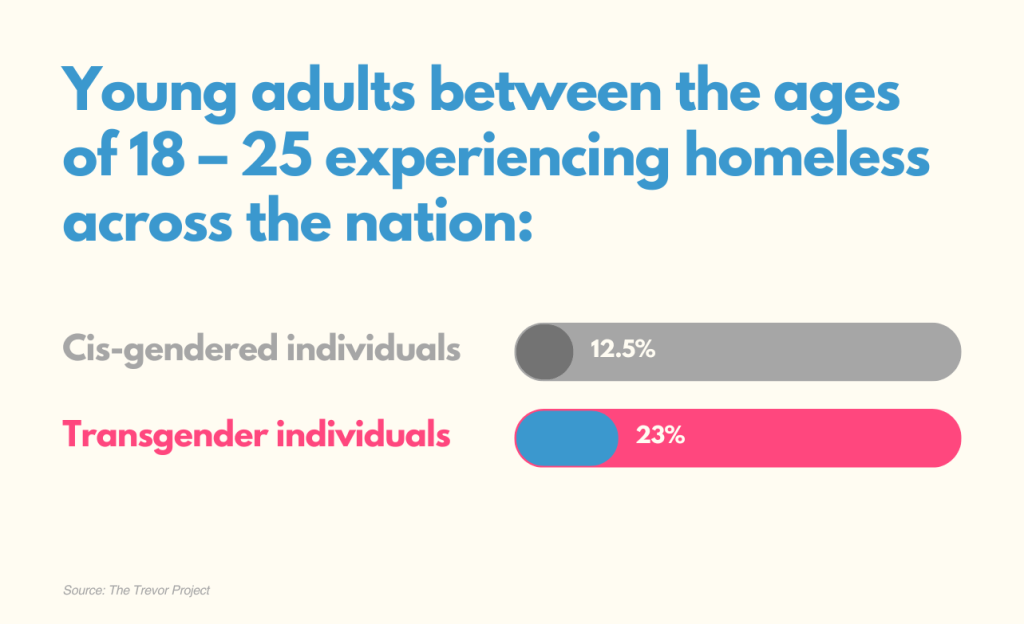
In the U.S., LGBTQ people experience homelessness at disproportionately higher rates than heterosexual and cisgender people, studies on the subject have found. Roughly 17 percent of lesbian, gay and bisexual adults have experienced homelessness at some point in their lives, the Williams Institute reported in 2020, and more than 8 percent of transgender people said they were homeless in the past year. 

A 2018 National Alliance to End Homelessness analysis of Department of Housing and Urban Development (HUD) data found that transgender people accounted for approximately 0.6 percent of the general population and 0.5 percent of the nation’s total homeless population. The U.S. Transgender Survey, the largest survey of transgender people in the U.S., reported in 2024 that 30 percent of respondents said they had experienced homelessness in their lifetime. 

Reported rates of homelessness are even higher among transgender people of color; more than half of Black transgender women who took the U.S. Trans Survey in 2015 said they experienced homelessness in their lifetime. Nearly 60 percent of Native American transgender women also reported experiencing homelessness, as did 49 percent of trans women of Middle Eastern descent and 51 percent of multiracial trans women. 

“For far too long, Transgender and non-binary people — especially Black and Brown Trans people — have been forced to navigate systems never built for us,” said Bryan Ellicott-Cook, a New York City-based transgender rights advocate, in a statement about the opening of Ace’s Place. “This shelter, created for Trans people by Trans people, represents safety, dignity, and a tangible investment in our community’s right not only to survive, but to thrive. It continues to show what we have always known — that Trans people are the ones taking care of each other, from elders to youth, from healthcare to housing and beyond.”

What states are the best for LGBTQ+ people? These are the top 15

Read more at The Advocate.
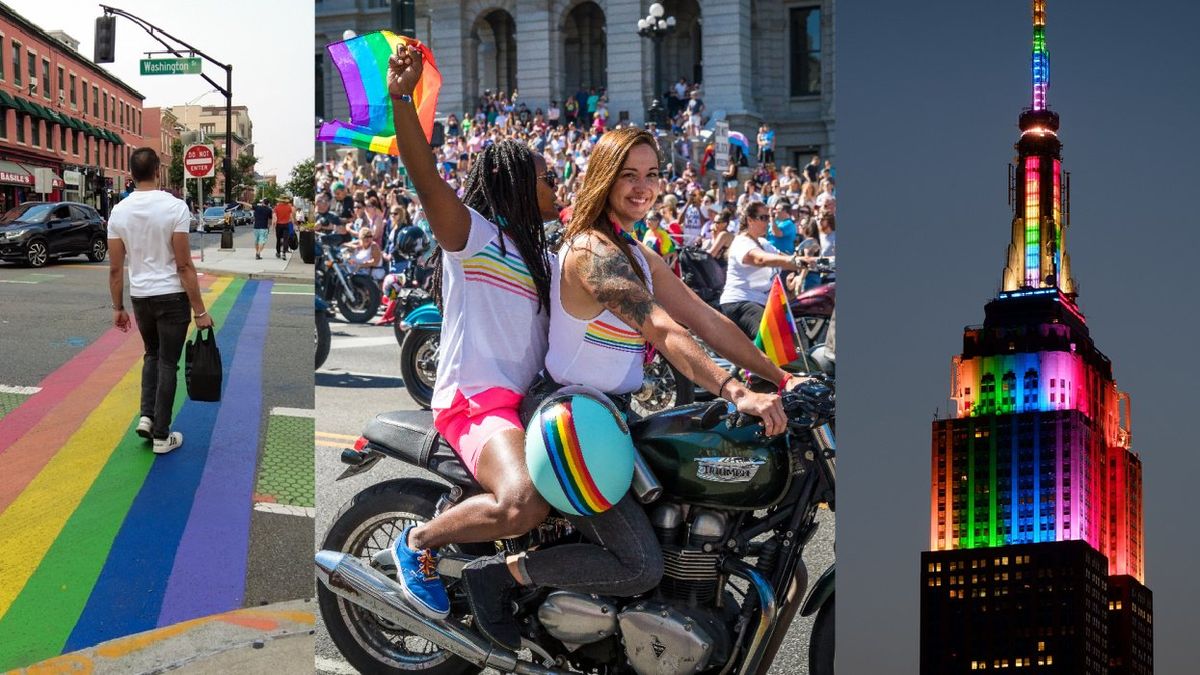
\u200bRainbow crosswalk in Hoboken (L); Women on motorcycles at Denver Pride (M); Empire State Building in rainbow colors (R)

Kirkam / Shutterstock.com; Philipp Salveter / Shutterstock.com; anaglic / Shutterstock.com

Rainbow LGBTQ+ Pride crosswalk in Hoboken, New Jersey (L); Women on motorcycles at Pride celebration in Denver, Colorado (M); Empire State Building in NYC lit up in rainbow colors (R)

    Legislative attacks on the LGBTQ+ community have been pushed everywhere from city councils to the White House — but there are still some areas that are safe.

    Over 1,000 anti-LGBTQ+ laws have been proposed across every state legislature in the U.S. over the past two years, according to the American Civil Liberties Union, and 126 have passed into law. Less than two months into the 2025 legislative session, 390 laws targeting LGBTQ+ people have been proposed.

    Still, marriage equality and anti-discrimination protections based on sexual orientation and gender identity are still guaranteed federally by U.S. Supreme Court rulings (for now). On top of that, at least 15 states have “shield laws” protecting access to gender-affirming care and abortion.

    Based on laws surrounding marriage, family rights, health care, education, and youth collected by the Movement Advancement Project, here are the 15 best states for LGBTQ+ people.

    Related: What states are the most dangerous for LGBTQ+ people? Here are the worst 15

    California
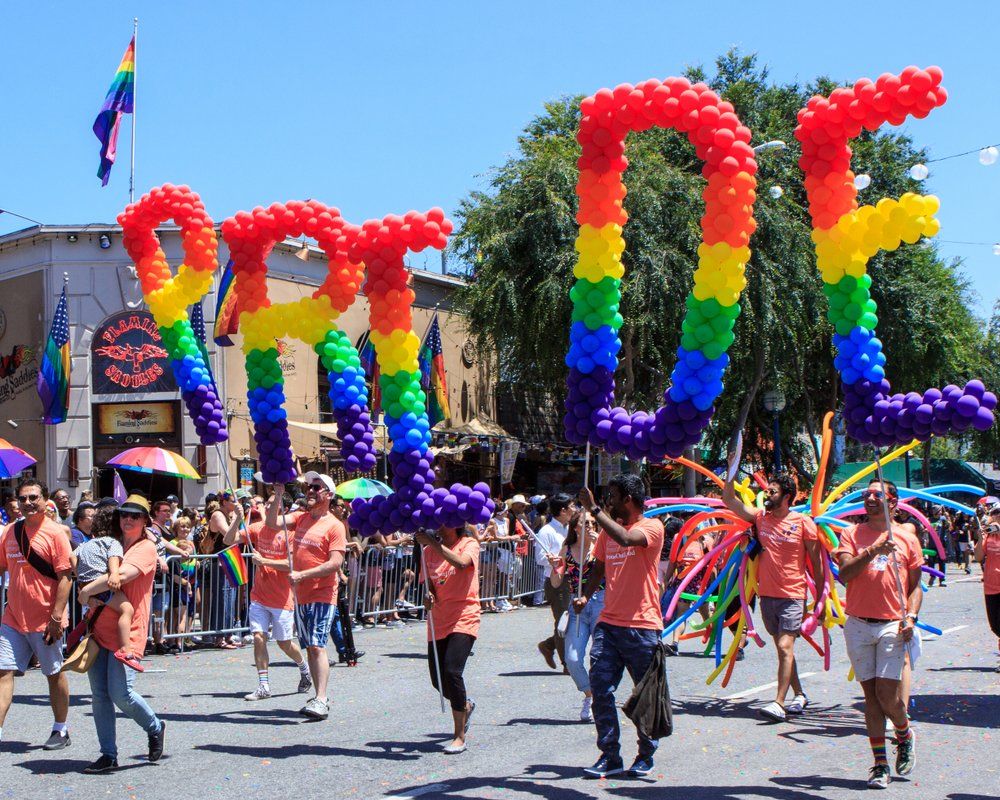
    West Hollywood Pride balloons

    GrandAve / Shutterstock.com

    Pride celebration in West Hollywood, California – June 9, 2019

      Nondiscrimination laws: California has nondiscrimination laws in employment, housing, health care, education, public accommodations, and credit/lending.

      Marriage equality and parental rights: California has adoption and foster care nondiscrimination protections for LGBTQ+ parents, second-parent adoption for unmarried couples and confirmatory adoption, and recognition for parents using assisted reproductive technologies. It also has family leave laws, which include LGBTQ-inclusive definitions.

      Education and youth policies: California does not restrict discussion of LGBTQ+ identities in classrooms, and instead requires curriculum to be LGBTQ-inclusive, which parents are not required to be notified of. It does not prevent transgender students from participating in sports or using school facilities based on their identities, and it does not require staff to forcibly out LGBTQ+ students to their guardians.

      Healthcare access and rights: California has “shield” laws protecting access to gender-affirming care for youth, as well as abortion. The state has also banned so-called conversion therapy for youth. Health insurance companies, including Medicaid, are not allowed to deny coverage related to gender transition. However, they are not required to cover fertility treatments.

      Criminal justice: California’s hate crime laws encompass sexual orientation and gender identity, and it has banned the so-called “LGBTQ+ panic” defense. While the state does not criminalize HIV, it does have sentencing enhancements for sex-related convictions for those with HIV.

      Colorado
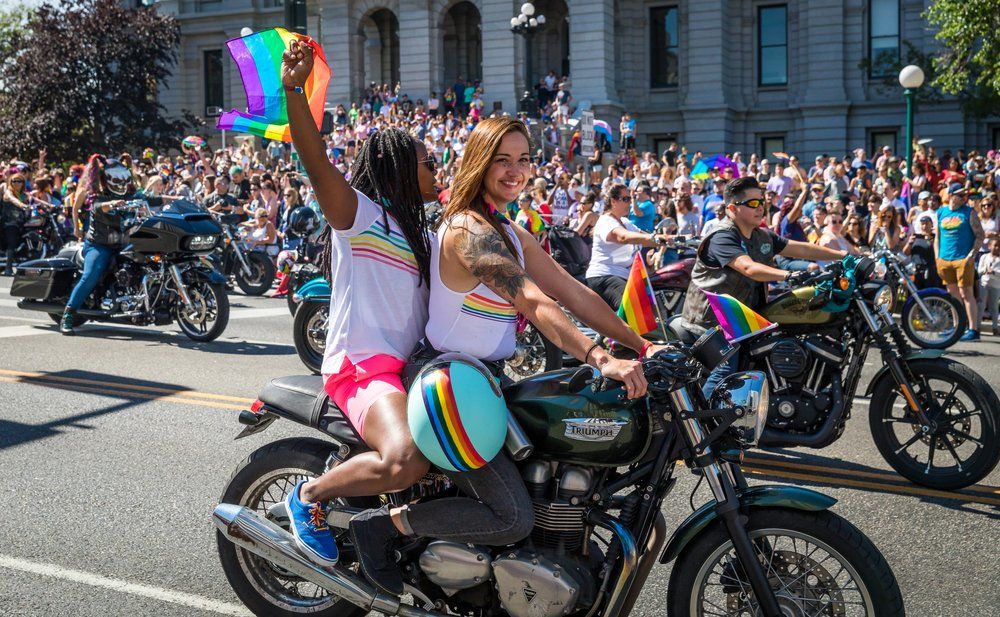
      Women on motorcycles at Denver Pride celebration

      Philipp Salveter / Shutterstock.com

      Women on motorcycles at Pride celebration in Denver, Colorado, USA – June 16th 2019

        Nondiscrimination laws: Colorado has nondiscrimination laws in employment, housing, education, health care, public accommodations, and credit/lending.

        Marriage equality and parental rights: Colorado has adoption and foster care nondiscrimination protections for LGBTQ+ parents, second-parent adoption for unmarried couples and confirmatory adoption, and recognition for parents using assisted reproductive technologies. It also has family leave laws, which include LGBTQ-inclusive definitions.

        Education and youth policies: Colorado does not prevent transgender students from participating in sports or using school facilities based on their identities, and it does not require staff to forcibly out LGBTQ+ students to their guardians. It does not restrict discussion of LGBTQ+ identities in classrooms, and instead requires curriculum to be LGBTQ-inclusive, which parents are not required to be notified of.

        Healthcare access and rights: Colorado has “shield” laws protecting access to gender-affirming care for youth, as well as abortion. The state has also banned so-called conversion therapy for youth. Health insurance companies, including Medicaid, are not allowed to deny coverage related to gender transition. However, state employees who are transgender do not have inclusive health benefits. Insurance companies are also not required to cover fertility treatments.

        Criminal justice: The state’s hate crime laws encompass sexual orientation and gender identity, and it has banned the so-called “LGBTQ+ panic” defense. Like California, Colorado does not criminalize HIV, but it does have sentencing enhancements for sex-related convictions for those with HIV.

        Connecticut
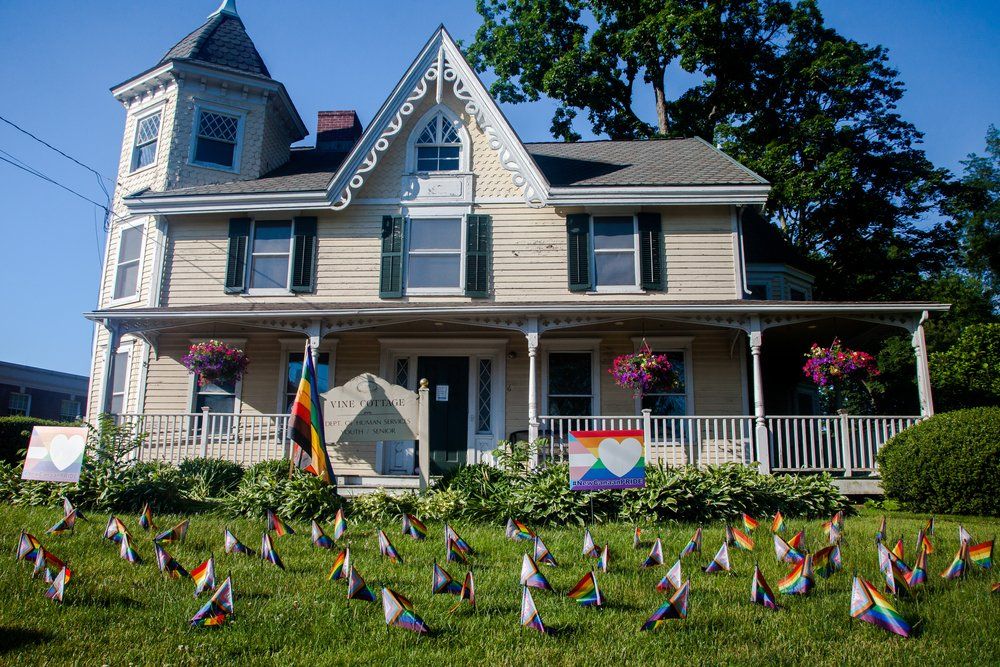
        Pride flags outside Vine Cottage CT

        Miro Vrlik Photography / Shutterstock.com

        LGBTQ+ Pride flags outside Vine Cottage in New Canaan, Connecticut – June 13, 2021

          Nondiscrimination laws: Connecticut has nondiscrimination laws in employment, housing, education, public accommodations, and credit/lending. It does not have nondiscrimination laws for private healthcare, and it does have a broad “Religious Exemption” law.

          Marriage equality and parental rights: Connecticut has adoption and foster care nondiscrimination protections for LGBTQ+ parents, second-parent adoption for unmarried couples and confirmatory adoption, and recognition for parents using assisted reproductive technologies. It also has family leave laws, but their LGBTQ-inclusive definitions are not as robust as those of California or Colorado.

          Education and youth policies: Connecticut does not restrict discussion of LGBTQ+ identities in classrooms, but it does not have LGBTQ-inclusive curriculum. It does not prevent transgender students from participating in sports or using school facilities based on their identities, and it does not require staff to forcibly out LGBTQ+ students to their guardians.

          Healthcare access and rights: Connecticut has “shield” laws protecting access to gender-affirming care for youth, as well as abortion. The state has also banned so-called conversion therapy for youth. Health insurance companies, including Medicaid, are not allowed to deny coverage related to gender transition. Private insurance is required to cover some fertility treatments, but Medicaid is not.Criminal justice:Connecticut’s hate crime law encompasses sexual orientation but not gender identity. It also does not have nondiscrimination laws for LGBTQ+ people in jury selection.

          Illinois
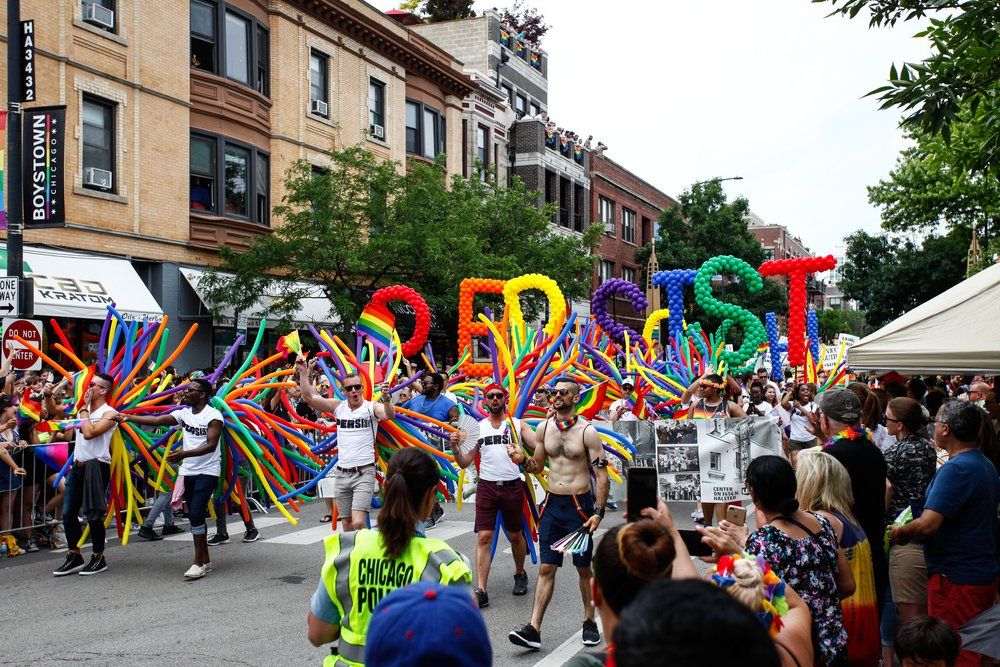
          "Persist" balloons at Chicago

          Dominique Robinson / Shutterstock.com

          LGBTQ+ Pride in Chicago, Illinois – June 30th 2019

            Nondiscrimination laws: Illinois has nondiscrimination laws in employment, housing, health care, education, public accommodations, and credit/lending. However, it does have a broad “Religious Exemption” law.

            Marriage equality and parental rights: Illinois has adoption and foster care nondiscrimination protections for LGBTQ+ parents, second-parent adoption for unmarried couples, and recognition for parents using assisted reproductive technologies. It also has family leave laws, which include LGBTQ-inclusive definitions. It does not have confirmatory adoption.

            Education and youth policies: Illinois does not restrict discussion of LGBTQ+ identities in classrooms, and instead requires curriculum to be LGBTQ-inclusive, which parents are not required to be notified of. It does not prevent transgender students from participating in sports or using school facilities based on their identities, and it does not require staff to forcibly out LGBTQ+ students to their guardians.

            Healthcare access and rights: Illinois has “shield” laws protecting access to gender-affirming care for youth, as well as abortion. The state has also banned so-called conversion therapy for youth. Health insurance companies, including Medicaid, are not allowed to deny coverage related to gender transition or fertility treatments.

            Criminal justice: Illinois’ hate crime laws encompass sexual orientation and gender identity, and it has banned the so-called “LGBTQ+ panic” defense.

            Maine
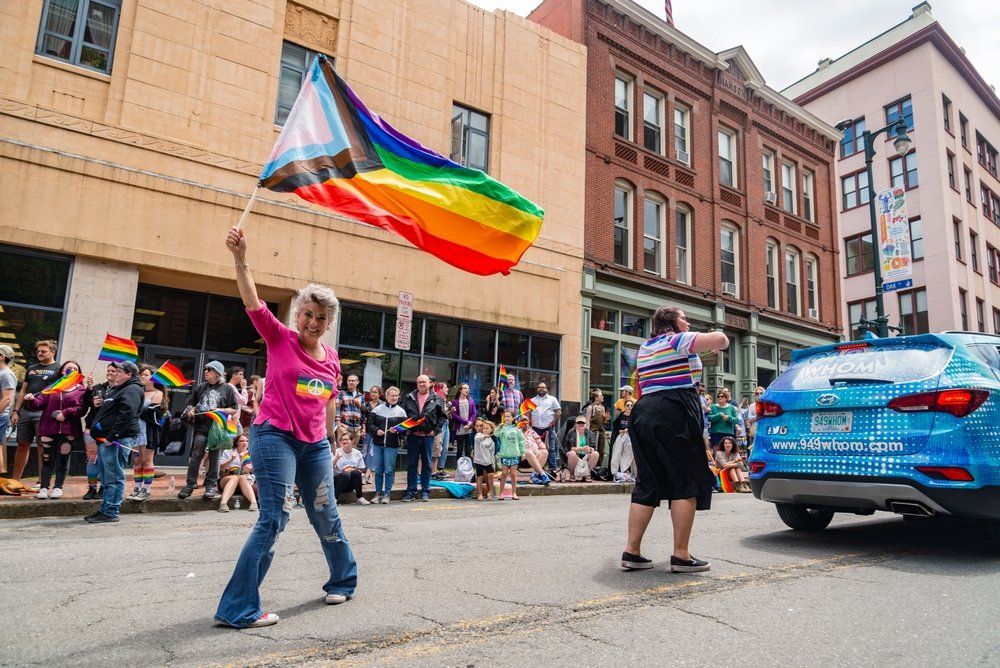
            Woman waving flag at Pride in Portland, Maine

            Enrico Della Pietra / Shutterstock.com

            LGBTQ+ Pride in Portland, Maine – June 18, 2022

              Nondiscrimination laws: Maine has nondiscrimination laws in employment, housing, health care, education, public accommodations, and credit/lending.

              Marriage equality and parental rights: Maine has adoption and foster care nondiscrimination protections for LGBTQ+ parents, second-parent adoption for unmarried couples and confirmatory adoption, and recognition for parents using assisted reproductive technologies. It also has family leave laws, which include LGBTQ-inclusive definitions.

              Education and youth policies: Maine does not restrict discussion of LGBTQ+ identities in classrooms, but it does not have LGBTQ-inclusive curriculum. It does not prevent transgender students from participating in sports or using school facilities based on their identities, and it does not require staff to forcibly out LGBTQ+ students to their guardians.

              Healthcare access and rights: Maine has “shield” laws protecting access to gender-affirming care for youth, as well as abortion. The state has also banned so-called conversion therapy for youth. Health insurance companies, including Medicaid, are not allowed to deny coverage related to gender transition. Private insurance is required to cover some fertility treatments, but Medicaid is not.Criminal justice:Maine’s hate crime laws encompass sexual orientation and gender identity, and it has banned the so-called “LGBTQ+ panic” defense.

              Maryland
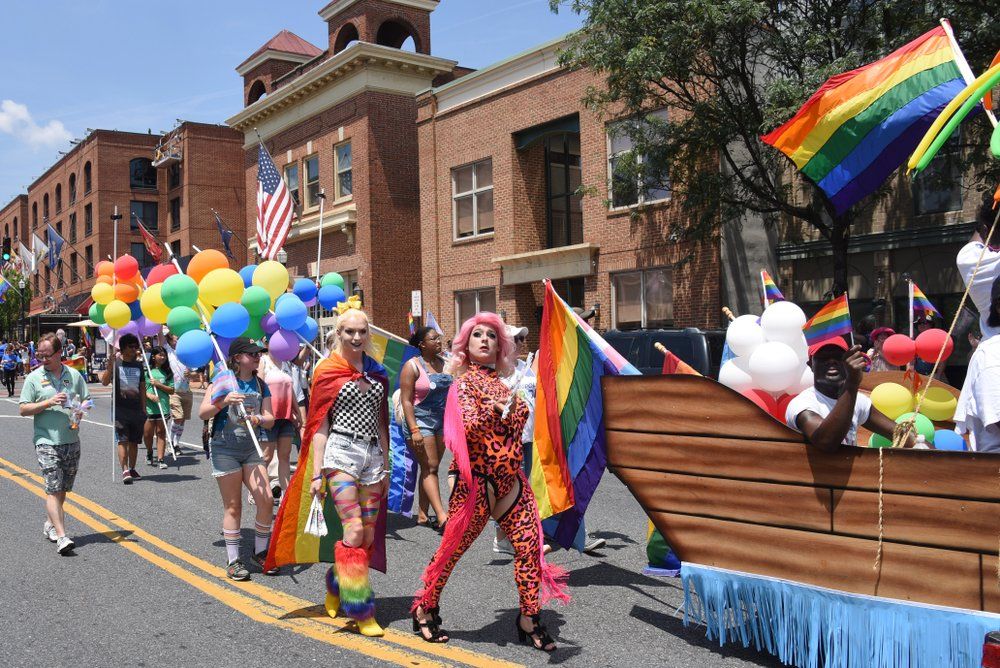
              Marchers and floats in the first Annapolis Pride parade

              Keri Delaney / Shutterstock.com

              The inaugural Pride Parade in Annapolis, Maryland – June 29, 2019

                Nondiscrimination laws: Maryland has nondiscrimination laws in employment, housing, health care, education, public accommodations, and credit/lending.

                Marriage equality and parental rights: Maryland has adoption and foster care nondiscrimination protections for LGBTQ+ parents, confirmatory adoption, and recognition for parents using assisted reproductive technologies. It does not second-parent adoption for unmarried couples. It also has family leave laws, but their LGBTQ-inclusive definitions are not as robust as others.

                Education and youth policies: Maryland does not restrict discussion of LGBTQ+ identities in classrooms, but it does not have LGBTQ-inclusive curriculum. It does not prevent transgender students from participating in sports or using school facilities based on their identities, and it does not require staff to forcibly out LGBTQ+ students to their guardians.

                Healthcare access and rights: Maryland has “shield” laws protecting access to gender-affirming care for youth, as well as abortion. The state has also banned so-called conversion therapy for youth. Health insurance companies, including Medicaid, are not allowed to deny coverage related to gender transition. Private insurance is required to cover some fertility treatments, but Medicaid is not.

                Criminal justice: Maryland’s hate crime laws encompass sexual orientation and gender identity, and it has banned the so-called “LGBTQ+ panic” defense. It does have a law criminalizing the transmission of HIV.

                Massachusetts
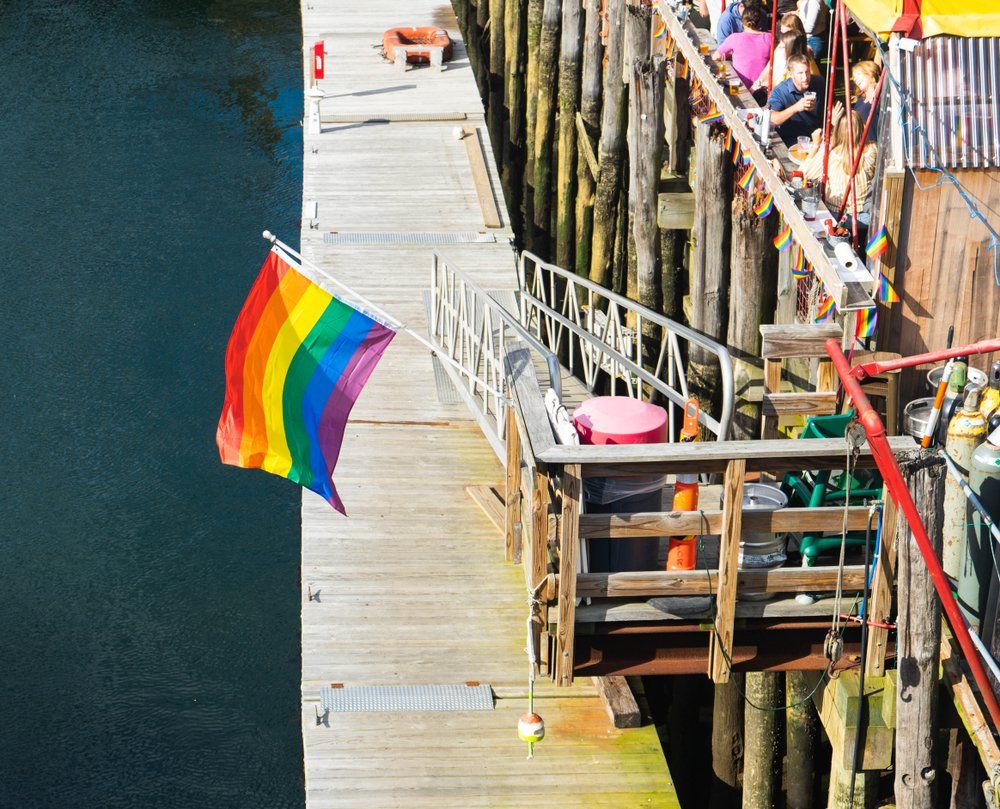
                Pride flag over Boston Seaport

                Michael Moloney / Shutterstock.com

                LGBTQ+ Pride flag waving in the wind over the Boston Seaport – JUNE 2, 2019

                  Nondiscrimination laws: Massachusetts has nondiscrimination laws in employment, housing, education, public accommodations, and credit/lending. It has nondiscrimination laws for gender identity in private healthcare, but not for sexual orientation.

                  Marriage equality and parental rights: Massachusetts has adoption and foster care nondiscrimination protections for LGBTQ+ parents, second-parent adoption for unmarried couples, and recognition for parents using assisted reproductive technologies. It also has family leave laws, which include LGBTQ-inclusive definitions. It does not have confirmatory adoption.

                  Education and youth policies: Massachusetts does not restrict discussion of LGBTQ+ identities in classrooms, but it does not have LGBTQ-inclusive curriculum. It does not prevent transgender students from participating in sports or using school facilities based on their identities, and it does not require staff to forcibly out LGBTQ+ students to their guardians.

                  Healthcare access and rights: Massachusetts has “shield” laws protecting access to gender-affirming care for youth, as well as abortion. The state has also banned so-called conversion therapy for youth. Health insurance companies, including Medicaid, are not allowed to deny coverage related to gender transition. Private insurance is required to cover some fertility treatments, but Medicaid is not.

                  Criminal justice: Maryland’s hate crime laws encompass sexual orientation and gender identity, but it has not banned the so-called “LGBTQ+ panic” defense. It does not have nondiscrimination protections based on gender identity for jury selection.

                  Minnesota

                  Lowry Avenue Bridge in Minneapolis lit in Rainbow Colors

                  Shuttershock Creative

                  Lowry Avenue Bridge in Minneapolis lit in Rainbow Colors in Honor of Orlando Victims

                    Nondiscrimination laws: Minnesota has nondiscrimination laws in employment, housing, health care, education, public accommodations, and credit/lending.

                    Marriage equality and parental rights: Minnesota has adoption and foster care nondiscrimination protections for LGBTQ+ parents. It does have family leave laws, which include LGBTQ-inclusive definitions. It does not have second-parent adoption for unmarried couples, confirmatory adoption, nor recognition for parents using assisted reproductive technologies.

                    Education and youth policies: Minnesota does not restrict discussion of LGBTQ+ identities in classrooms, but it does not have LGBTQ-inclusive curriculum. It does not prevent transgender students from participating in sports or using school facilities based on their identities, and it does not require staff to forcibly out LGBTQ+ students to their guardians.

                    Healthcare access and rights: Minnesota has “shield” laws protecting access to gender-affirming care for youth, as well as abortion. The state has also banned so-called conversion therapy for youth. Health insurance companies, including Medicaid, are not allowed to deny coverage related to gender transition. However, they are not required to cover fertility treatments.

                    Criminal justice: Minnesota’s hate crime laws encompass sexual orientation and gender identity, and it has banned the so-called “LGBTQ+ panic” defense.

                    Nevada
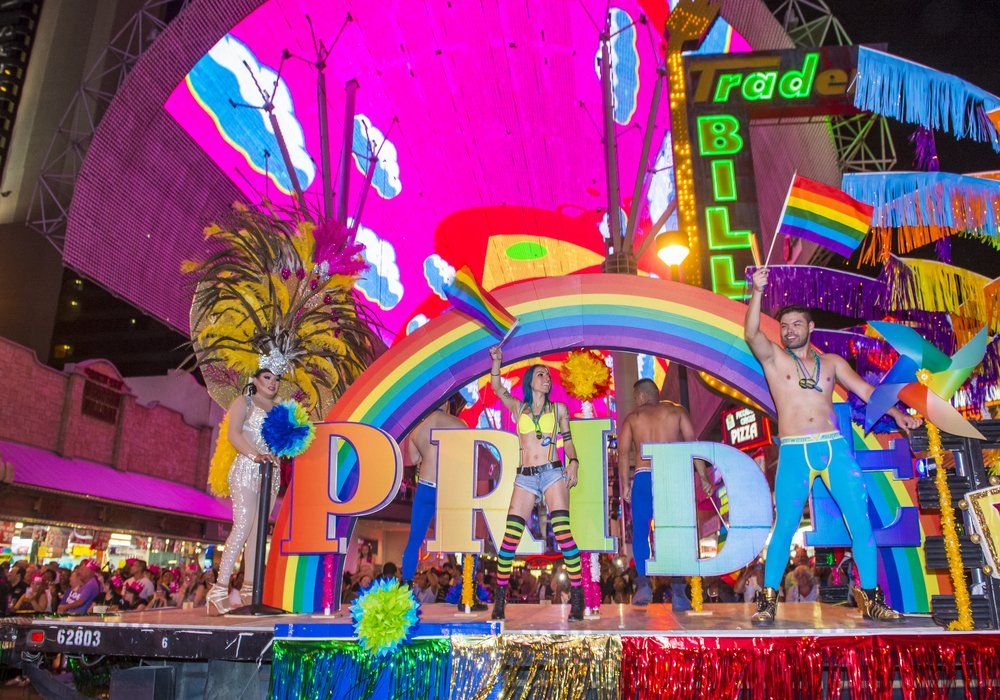
                    Las Vegas Pride parade float

                    Kobby Dagan / Shutterstock

                    LGBTQ+ Pride parade in Las Vegas, Nevada – October 21 , 2016

                      Nondiscrimination laws: Nevada has nondiscrimination laws in employment, housing, health care, education, public accommodations, and credit/lending.

                      Marriage equality and parental rights: Nevada has adoption and foster care nondiscrimination protections for LGBTQ+ parents, second-parent adoption for unmarried couples, and recognition for parents using assisted reproductive technologies. It also has family leave laws, which include LGBTQ-inclusive definitions. It does not have confirmatory adoption.

                      Education and youth policies: Nevada does not restrict discussion of LGBTQ+ identities in classrooms, and instead requires curriculum to be LGBTQ-inclusive, which parents are not required to be notified of. It does not prevent transgender students from participating in sports or using school facilities based on their identities, but it does not require staff to forcibly out students who change their gender identity to their guardians

                      Healthcare access and rights: Nevada does not have shield laws for gender-affirming care and abortion. The state has also banned so-called conversion therapy for youth. Health insurance companies, including Medicaid, are not allowed to deny coverage related to gender transition. However, they are not required to cover fertility treatments.

                      Criminal justice: Nevada’s hate crime laws encompass sexual orientation and gender identity, and it has banned the so-called “LGBTQ+ panic” defense. It does not have nondiscrimination protections based on gender identity for jury selection.

                      New Jersey
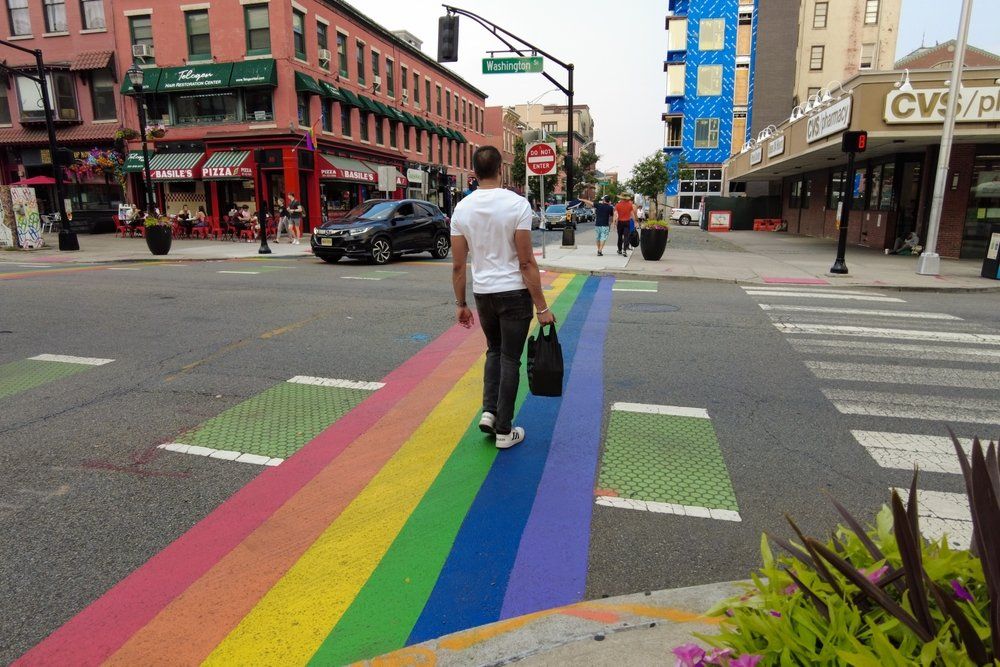
                      Rainbow crosswalk in Hoboken, New Jersey

                      Kirkam / Shutterstock.com

                      Rainbow LGBTQ+ Pride crosswalk in Hoboken, New Jersey, – June 25, 2023

                        Nondiscrimination laws: New Jersey has nondiscrimination laws in employment, housing, education, public accommodations, and credit/lending. It has nondiscrimination laws for gender identity in private healthcare, but not for sexual orientation.

                        Marriage equality and parental rights: New Jersey has adoption and foster care nondiscrimination protections for LGBTQ+ parents, and second-parent adoption for unmarried couples and confirmatory adoption. It also has family leave laws, which include LGBTQ-inclusive definitions. It does not have recognition for parents using assisted reproductive technologies.

                        Education and youth policies: New Jersey does not restrict discussion of LGBTQ+ identities in classrooms, and instead requires curriculum to be LGBTQ-inclusive, which parents are not required to be notified of. It does not prevent transgender students from participating in sports or using school facilities based on their identities, and it does not require staff to forcibly out LGBTQ+ students to their guardians.

                        Healthcare access and rights: New Jersey has “shield” laws protecting access to gender-affirming care for youth, as well as abortion. The state has also banned so-called conversion therapy for youth. Health insurance companies, including Medicaid, are not allowed to deny coverage related to gender transition. Private insurance is required to cover some fertility treatments, but Medicaid is not.

                        Criminal justice: New Jersey’s hate crime laws encompass sexual orientation and gender identity, and it has banned the so-called “LGBTQ+ panic” defense. It does not have nondiscrimination laws for LGBTQ+ people in jury selection.

                        New York
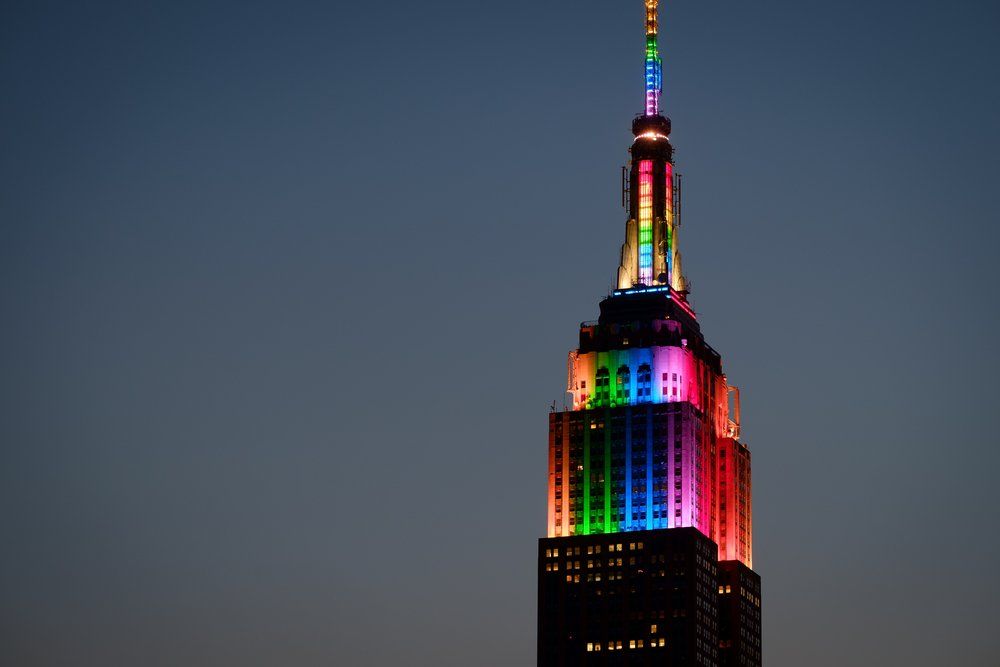
                        Empire State Building in rainbow colors

                        anaglic / Shutterstock.com

                        Empire State Building in rainbow colors in honor of the Orlando shooting victims, New York City – June 26, 2016

                          Nondiscrimination laws: New York has nondiscrimination laws in employment, housing, health care, education, public accommodations, and credit/lending.

                          Marriage equality and parental rights: New York has adoption and foster care nondiscrimination protections for LGBTQ+ parents, second-parent adoption for unmarried couples, and recognition for parents using assisted reproductive technologies. It also has family leave laws, which include LGBTQ-inclusive definitions. It does not have confirmatory adoption.

                          Education and youth policies: New York does not restrict discussion of LGBTQ+ identities in classrooms, but it does not have LGBTQ-inclusive curriculum. It does not prevent transgender students from participating in sports or using school facilities based on their identities, and it does not require staff to forcibly out LGBTQ+ students to their guardians.

                          Healthcare access and rights: New York has “shield” laws protecting access to gender-affirming care for youth, as well as abortion. The state has also banned so-called conversion therapy for youth. Health insurance companies, including Medicaid, are not allowed to deny coverage related to gender transition. Private insurance and Medicaid are also required to cover some fertility treatments.

                          Criminal justice: New York’s hate crime laws encompass sexual orientation and gender identity, and it has banned the so-called “LGBTQ+ panic” defense.

                          Oregon
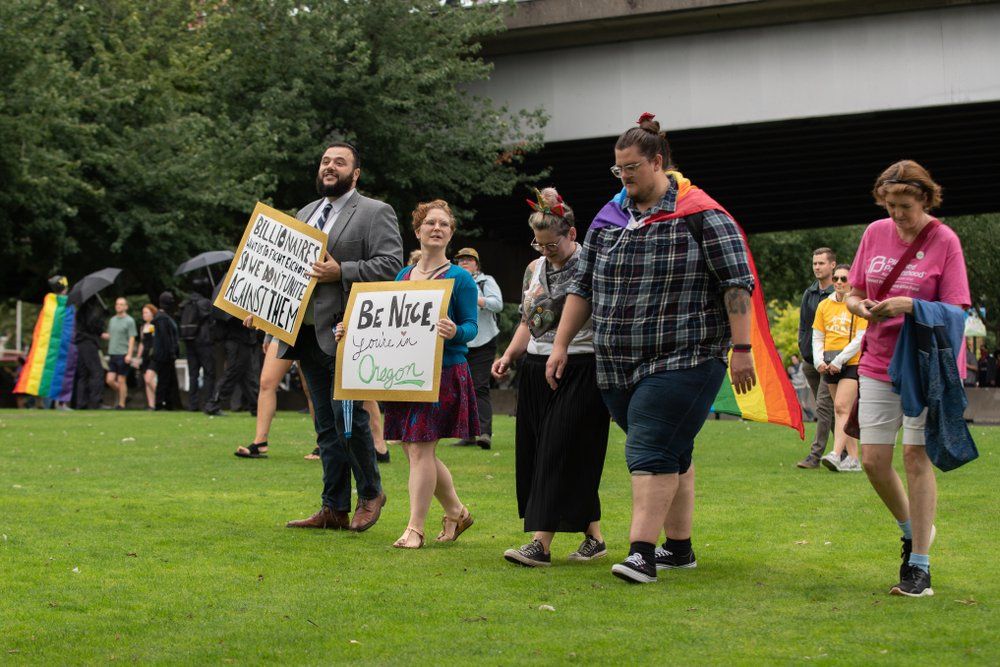
                          Protestors wear rainbow flag capes and carry a sign reading "Be nice, you're in Oregon"

                          Alexander Oganezov / Shutterstock.com

                          Protestors wear rainbow flag capes and carry a sign reading “Be nice, you’re in Oregon” at anti-fascism protest in Portland, Oregon – August 17, 2019

                            Nondiscrimination laws: Oregon has nondiscrimination laws in employment, housing, health care, education, and public accommodations. It does not have nondiscrimination laws in credit/lending.

                            Marriage equality and parental rights: Oregon has adoption and foster care nondiscrimination protections for LGBTQ+ parents and second-parent adoption for unmarried couples. It does have family leave laws, which include LGBTQ-inclusive definitions. It does not have confirmatory adoption, nor recognition for parents using assisted reproductive technologies.

                            Education and youth policies: Oregon does not prevent transgender students from participating in sports or using school facilities based on their identities, and it does not require staff to forcibly out LGBTQ+ students to their guardians. It does not restrict discussion of LGBTQ+ identities in classrooms, and instead requires curriculum to be LGBTQ-inclusive, which parents are not required to be notified of.

                            Healthcare access and rights: Oregon has “shield” laws protecting access to gender-affirming care for youth, as well as abortion. The state has also banned so-called conversion therapy for youth. Health insurance companies, including Medicaid, are not allowed to deny coverage related to gender transition. However, they are not required to cover fertility treatments.

                            Criminal justice: Oregon’s hate crime laws encompass sexual orientation and gender identity, and it has banned the so-called “LGBTQ+ panic” defense.

                            Rhode Island
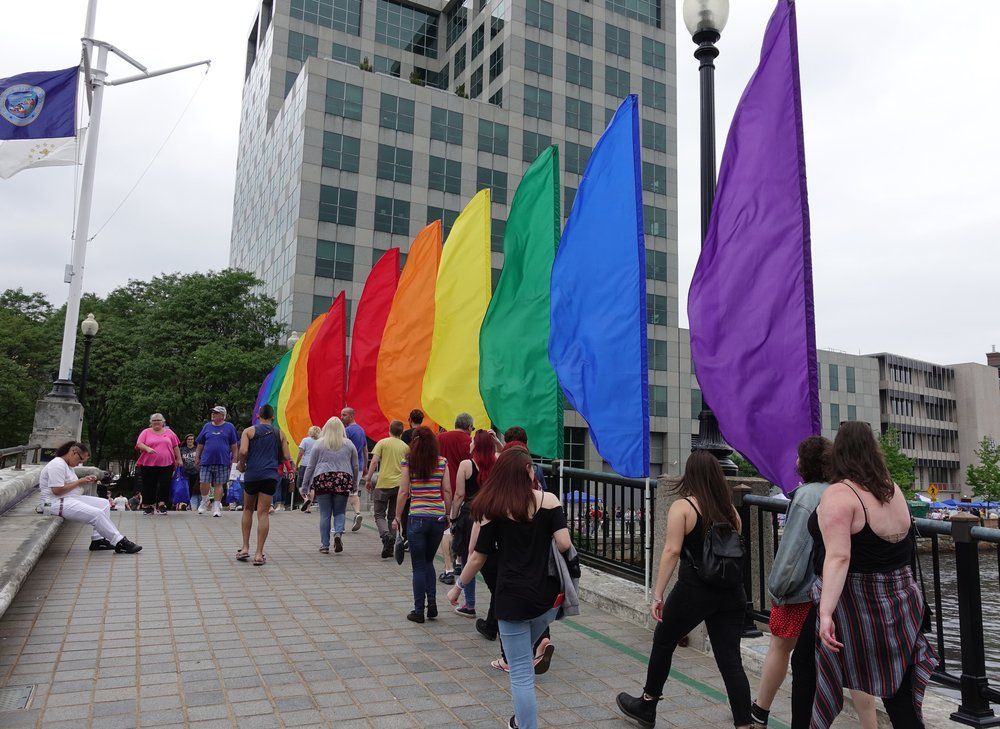
                            Rainbow flags on bridge over water in Providence, Rhode Island

                            Anthony Ricci / Shutterstock.com

                            Pride festival in downtown Providence, Rhode Island – June 17, 2017

                              Nondiscrimination laws: Rhode Island has nondiscrimination laws in employment, housing, education, public accommodations, and credit/lending. It has nondiscrimination laws for gender identity in private healthcare, but not for sexual orientation. It also has a broad “Religious Exemption” law.

                              Marriage equality and parental rights: Rhode Island has adoption and foster care nondiscrimination protections for LGBTQ+ parents, second-parent adoption for unmarried couples and confirmatory adoption, and recognition for parents using assisted reproductive technologies. It also has family leave laws, but their LGBTQ-inclusive definitions are not as robust as others.

                              Education and youth policies: Rhode Island does not restrict discussion of LGBTQ+ identities in classrooms, but it does not have LGBTQ-inclusive curriculum. It does not prevent transgender students from participating in sports or using school facilities based on their identities, and it does not require staff to forcibly out LGBTQ+ students to their guardians.

                              Healthcare access and rights: Rhode Island has “shield” laws protecting access to gender-affirming care for youth, as well as abortion. The state has also banned so-called conversion therapy for youth. Health insurance companies, including Medicaid, are not allowed to deny coverage related to gender transition. Private insurance is required to cover some fertility treatments, but Medicaid is not.

                              Criminal justice: Rhode Island’s hate crime laws encompass sexual orientation and gender identity, and it has banned the so-called “LGBTQ+ panic” defense. It does not have nondiscrimination laws for LGBTQ+ people in jury selection.

                              Vermont
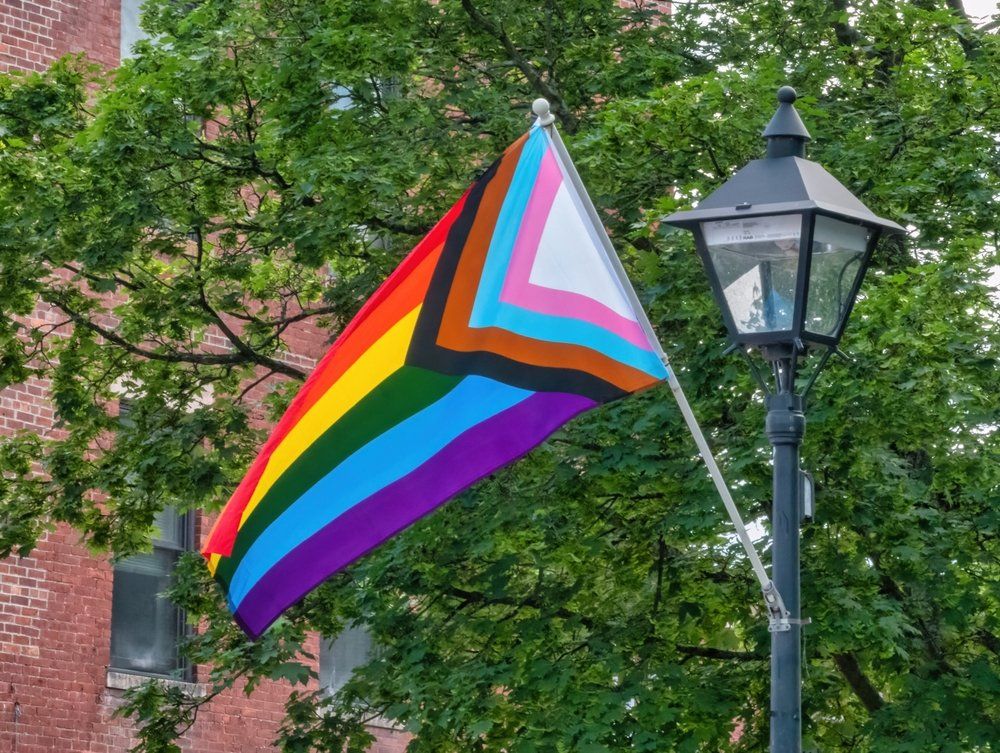
                              Pride flag on lamppost in Montpelier, Vermont

                              Charles Patrick Ewing / Shutterstock.com

                              LGBTQ+ Pride flag on lamppost in Montpelier, Vermont – June 11, 2022

                                Nondiscrimination laws: Vermont has nondiscrimination laws in employment, housing, health care, education, public accommodations, and credit/lending.

                                Marriage equality and parental rights: Vermont has adoption and foster care nondiscrimination protections for LGBTQ+ parents, second-parent adoption for unmarried couples, and recognition for parents using assisted reproductive technologies. It also has family leave laws, which include LGBTQ-inclusive definitions. It does not have confirmatory adoption.

                                Education and youth policies: Vermont does not restrict discussion of LGBTQ+ identities in classrooms, but it does not have LGBTQ-inclusive curriculum. It does not prevent transgender students from participating in sports or using school facilities based on their identities, and it does not require staff to forcibly out LGBTQ+ students to their guardians.

                                Healthcare access and rights: Vermont has “shield” laws protecting access to gender-affirming care for youth, as well as abortion. The state has also banned so-called conversion therapy for youth. Health insurance companies, including Medicaid, are not allowed to deny coverage related to gender transition. However, state employees who are transgender do not have inclusive health benefits. Insurance companies are also not required to cover fertility treatments.

                                Criminal justice: Vermont’s hate crime laws encompass sexual orientation and gender identity, and it has banned the so-called “LGBTQ+ panic” defense. It does not have nondiscrimination laws for LGBTQ+ people in jury selection.

                                Washington
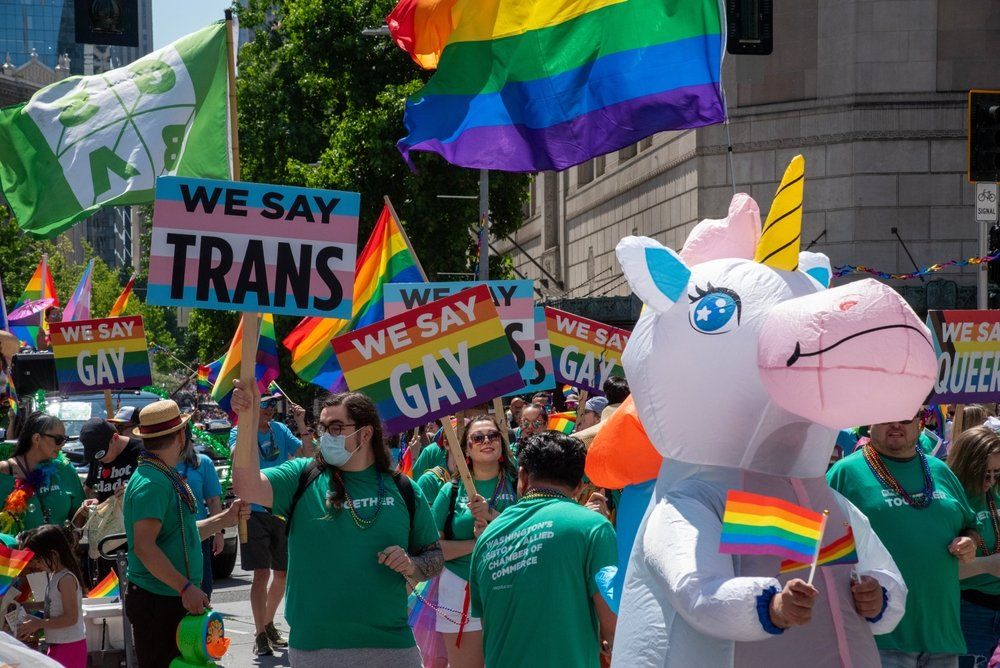
                                People carrying "We say trans" and "We say gay" signs at Seattle Pride

                                SeaRick1 / Shutterstock.com

                                People carrying rainbow signs reading “We say trans” and “We say gay” at LGBTQ+ Pride in Seattle, Washington – June 25, 2023

                                  Nondiscrimination laws: Washington has nondiscrimination laws in employment, housing, health care, education, public accommodations, and credit/lending.

                                  Marriage equality and parental rights: Washington has adoption and foster care nondiscrimination protections for LGBTQ+ parents and recognition for parents using assisted reproductive technologies.. It does have family leave laws, which include LGBTQ-inclusive definitions. It does not have second-parent adoption for unmarried couples, nor confirmatory adoption.

                                  Education and youth policies: Washington does not restrict discussion of LGBTQ+ identities in classrooms, and instead requires curriculum to be LGBTQ-inclusive, which parents are not required to be notified of. It does not prevent transgender students from participating in sports or using school facilities based on their identities, and it does not require staff to forcibly out LGBTQ+ students to their guardians.

                                  Healthcare access and rights: Washington has “shield” laws protecting access to gender-affirming care for youth, as well as abortion. The state has also banned so-called conversion therapy for youth. Health insurance companies, including Medicaid, are not allowed to deny coverage related to gender transition. However, they are not required to cover fertility treatments.

                                  Criminal justice: Washington’s hate crime laws encompass sexual orientation and gender identity, and it has banned the so-called “LGBTQ+ panic” defense. It does have a law criminalizing the transmission of HIV.

                                  Honorable mentions
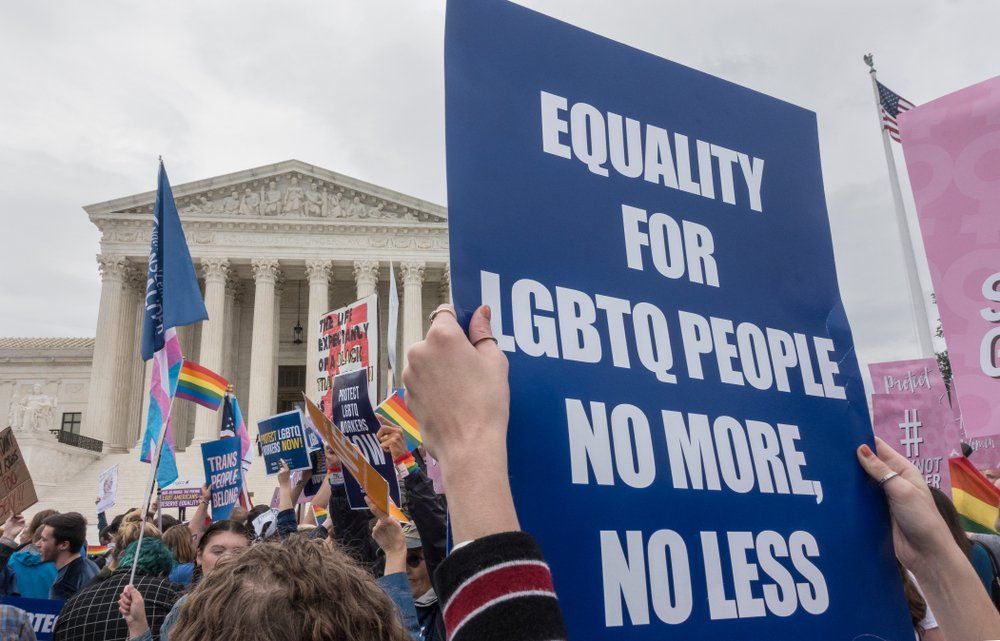
                                  Sign outside SCOTUS reading "Equality for LGBTQ people no more, no less"

                                  Bob Korn / Shutterstock.com

                                  Rally for LGBTQ rights outside Supreme Court in Washington, D.C. – OCT. 8, 2019

                                    Washington, D.C. also ranked high on MAP’s assessment, though it does not currently have statehood.

                                    Other states that ranked above average include: Delaware, Hawaii, Michigan, New Hampshire, New Mexico, and Virginia.

                                    Marriage Equality at 10 and Already in Danger.

                                    *This is the opinion of the author.

                                    June 26, 2015 was a milestone day in the United States when the SCOTUS decision was announced in the case of Obergefell v Hodges. A narrow 5-4 ruling brought nationwide marriage equality for LGBTQ people much sooner than many expected it. I certainly did not even think it would occur in my lifetime. The nation was split down the middle on the topic. A piecemeal approach was commonplace, with some states making it legal before the ruling, and others staunchly opposed to it in their state constitutions. Yet, a conservative justice saw fit to challenge the status quo and actually base a ruling on the US Constitution for a change, rather than political ideology.

                                    We had already been married for almost 4 years at that point. We were living in Texas in July 2011 and my boyfriend at the time decided to ask me to marry him (now her, but that is another story for another day). We had been living together nearly 10 years. Going to Canada was floated as an idea. I had family in New Jersey and Andrew Cuomo in New York had just its own marriage equality law June 24 that year to take effect in July. So, New York it was! I had become an internet wedding planner of my own wedding by then to be wed on October 09, 2011, one day difference from our “10th anniversary”. It was tedious. It was stressful. It was fun. It was one of the best days of my life. I will never do it again. Sorry boys and girls.

                                    While our own wedding anniversary of 14 years is coming this fall, I sit here writing this and worried that we will have to go through even more bullshit to not only keep our marriage legally intact, but to ensure future generations maintain their right to due process and equality under the law. We have a Supreme Court who has already shown it has the balls to revisit and repeal established forward thinking case law precedent. See, Roe v Wade’s death as a result of Dobbs v. Jackson Women’s Health Organization. Chief Justice Roberts and Justices Thomas, and Alito, who each wrote a dissenting opinion in Obergefell v Hodges are still proudly part of the conservative super majority on the bench. Yes, there is a Respect for Marriage Act that was finally passed in 2022 to help reaffirm O v H.

                                    But we also have a President and House who are willing to turn back time. We have state legislators, who are now firing the opening salvo towards repeal of marriage equality. House reps in 9 states in 2025 proposed resolutions urging SCOTUS to repeal O v H. Those resolutions were passed in North Dakota and Idaho. 4 other states introduced bills, which failed, to introduce covenant marriage to their books, which would have created an exclusive category for opposite sex couples.

                                    I hope everyone enjoys their anniversary, whether you were married today or at another point in time. But please remain vigilant and pay fucking attention to what is going on around you. Your rights can always be removed with the stroke of a pen. And sometimes that pen needs to be shoved into an uncomfortable place.

                                    This is us. Climate change was on full display.

                                    John Turner-McClelland is the editor of several blogs including FleeRedStates. He is a licensed real estate agent in Texas and North Carolina. He was on a Vice News panel once and was allowed to speak for 5 seconds on air. He has been a proud liberal LGBTQ activist and former elected official for a few decades or so. Yes, he is still married.

                                    NYC’s Stonewall monument excludes trans flags this year, but activists are defying the ban

                                    *This is reported on LGBTQ Nation.

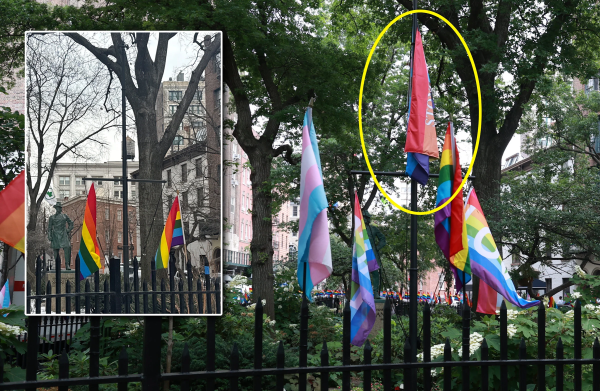
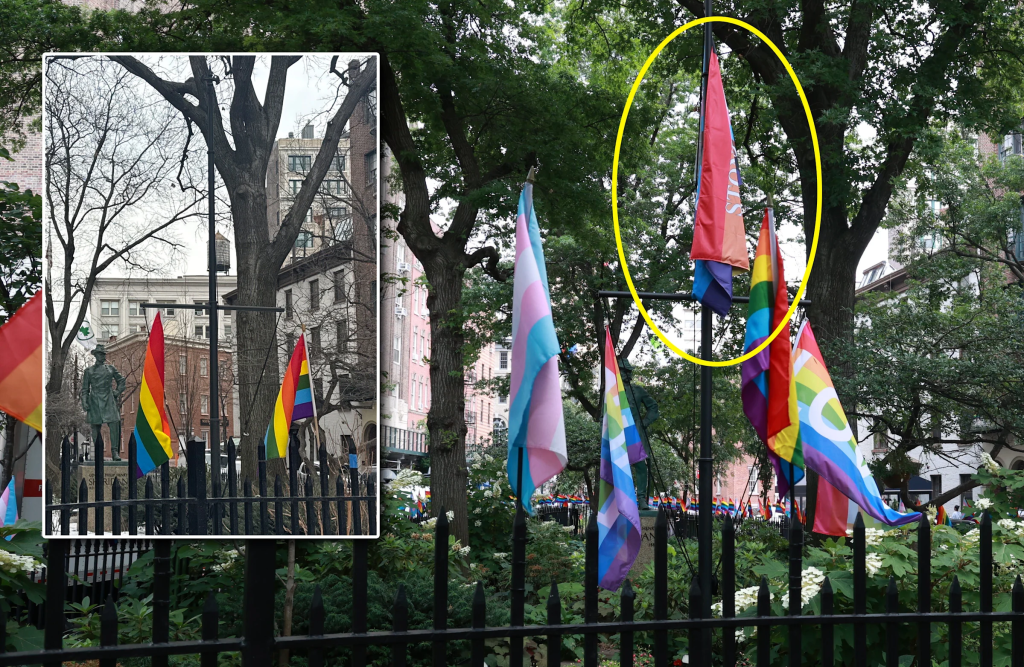
                                    For the past nine years, the transgender flag was included among those that flew around the Stonewall National Monument in Christopher Park during Pride Month. However, the National Park Service(NPS) will no longer be displaying the Transgender Pride flag or the Progress Pride flag, stating a change of protocol as the reason.

                                    The New York City monument commemorating the Stonewall Uprising of 1969 is the first U.S. National Monument dedicated to LGBTQ+ rights, having been designated as such in 2016 by then-President Barack Obama. It has since become tradition for the monument, located in a park across the street from the Stonewall Inn, to be adorned with various Pride flags, including the trans flag. NPS funds the installation of these flags. This year, however, NPS told photographer, advocate, and installation creator Steven Love Mendez that the park will not allow Trans or Progress Pride flags this year.

                                    The censorious move comes after the Trump administration wiped all references to trans and nonbinary people from the monument’s website in February, as part of his wider initiative to purge trans and nonbinary people from all references and resources provided by the federal government. The removal of trans people from a monument in which a transgender person was considered a key figure has led to outrage, with many coming to the monument to protest.

                                    Speaking to CBS, Mendez comments, “It’s a terrible action for them to take.” he continues, “I used to be listed as an LGBTQ activist, and now it says ‘Steven Menendez, LGB activist,’” Menendez said. “They took out the Q and the T.”

                                    The trans-exclusionary initialism of “LGB” is sometimes used by transphobes to encourage a social and ideological split between gay, lesbian, and bisexual people and transgender people, based on their differing gender experiences.

                                    Upon learning of the monument’s trans erasure, many New Yorkers and tourists came to the monument to set up unauthorized pride flags in protest, including smaller trans flags planted in the soil.

                                    Jay Edinin of Queens, New York, was one of the people who brought his own flag and told CBS, “I’m not going to stand by and watch us be erased from our own history, from our own communities, and from the visibility that we desperately need right now.”  

                                    Willa Kingsford of Portland, Oregon, stated, “I think it’s absurd. I think it’s petty,”

                                    Patty Carter of Los Angeles, California, stated, “It’s horrible. They’re changing all of our history.”

                                    The Stonewall Riots, to which the monument is dedicated, to began on June 28, 1969. During that time law enforcement commonly raided queer bars since New York had outlawed homosexuality and “cross-dressing.” During the raid at the Stonewall Inn, the LGBTQ+ community decided they had reached their tipping point and fought back against law enforcement. The resulting six days riots were said to have marked the beginning of the LGBTQ+ rights movement and became the reason why Pride Month is celebrated in June.

                                    Two of the most notable figures in this uprising were Marsha P. Johnson and Sylvia Rivera, both trans women. It is believed that Johnson instigated the riot by throwing a brick at a police officer. Rivera is also considered to be a key instigator; she is said to be one of the first people to fight back against the police, to which many quote her as saying, “I’m not missing a minute of this—it’s the revolution!”

                                    VA patient died by suicide at top of hospital’s garage in Syracuse

                                    *Reported by Syracuse.com

                                    A patient at Syracuse VA Medical Center died by an apparent suicide outside the top of the hospital’s parking garage Monday.

                                    Witnesses said the person was wrapped in a body-length transgender pride flag.

                                    The transgender veteran hanged themselves by jumping from the garage, according to a notification the VA gave government officials. The veteran had been discharged from the VA’s inpatient psychiatry unit on Jan. 21, according to the notification.

                                    Passers-by spotted the body at the garage next to the hospital and across the street from Syracuse University’s JMA Wireless Dome at about 11:15 a.m. Monday. That day, syracuse.com reported that a body had been found.

                                    Anne C. Bellows, a professor of food studies, said she was walking back to her office on the top floor of the Falk College building when she and other SU faculty saw the body.

                                    She said the person was wrapped in a body-length flag that was light pink, light blue and white — which she confirmed to be the trans flag.

                                    The Syracuse VA officials declined to answer questions from Syracuse.com | The Post-Standard about the death. A VA spokesperson issued a statement that only confirmed a veteran had died at the VA Monday. It said officials will not provide more details, citing respect to the veteran’s family and an ongoing investigation.

                                    Several members of the SU community reported seeing the body Monday, according to a university community alert.

                                    ***

                                    Do you have information about the incident Monday? Did you know the veteran and would like to share their story? Please contact Rylee Kirk at 315-396-5961 or rkirk@syracuse.com or Greta Stuckey at 484-379-7395 or gstuckey@syracuse.com.

                                    ***

                                    Where to get help

                                    If in crisis, help is available by calling, texting or chatting with the Suicide and Crisis Lifeline at 988, or contact the Crisis Text Line by texting TALK to 741741.

                                    For a Veteran specific crisis line dial 988 and press 1 or text 838255.

                                    For a transgender-specific crisis line, call the Trans Lifeline at 877-565-8860.

                                    For an LGBTQ+ specific crisis line call 866-488-7386 or text 678678.

                                    No evidence of hate crime in ‘torture’ killing of transgender man in upstate New York

                                    *This is being reported by ABC News

                                    Investigators probing what they described as the torturous killing of a 24-year-old transgender man in upstate New York, allegedly at the hands of five people, say they have found no evidence that the homicide was a hate crime.

                                    The remains of the victim, identified as 24-year-old Sam Nordquist of Minnesota, were discovered on Wednesday in a field in Benton, New York, in Yates County, according to Capt. Kelly Swift, a New York State Police investigator.

                                    Swift said investigators suspect that Nordquist was tortured and killed in neighboring Ontario County and moved “in an attempt to conceal a crime.”

                                    “Based on evidence and witness statements, we have determined that Sam endured prolonged physical and psychological abuse at the hands of multiple individuals,” Swift said Friday during a news conference.

                                    A criminal complaint obtained by Rochester, New York, ABC affiliate WHAM alleged that the suspects sexually assaulted Nordquist with a “table leg and broomstick.” The complaint further alleges that the suspects subjected Nordquist to “prolonged beatings by punching, kicking and striking [Nordquist] with numerous objects, including but not limited to sticks, dog toys, rope, bottles, belts, canes and wooden boards.”

                                    According to the complaint, the torture allegedly took place in room 22 at Patty’s Lodge in Hopewell, New York, in Ontario County between Jan. 1 and Feb. 2.

                                    Swift said investigators executed a search warrant at the hotel on Thursday, specifically searching room 22 for evidence.

                                    “In my 20-year law enforcement career, this is one of the most horrific crimes I have ever investigated,” Swift added. “My thoughts are with Sam’s family during this time.”

                                    Suspects charged with murder

                                    The suspects arrested in the case were identified by Swift as Precious Arzuaga, 38, of Canandaigua, New York; Jennifer Quijano, 30, of Geneva, New York; Kyle Sage, 33, of Rochester, New York; Patrick Goodwin, 30, also of Canandaigua; and Emily Motyka, 19, of Lima, New York.

                                    Ontario County District Attorney James Ritts said all five suspects have all been charged with second-degree murder under the state’s depraved indifference statute. He said the suspects have been arraigned and are being held without bail at the Ontario County Jail.

                                    It was unclear if the suspects had hired or were appointed attorneys to represent them.

                                    No indication of a hate crime

                                    In a joint statement released on Sunday, the state police and Ritts addressed whether investigators are pursuing hate crime charges against the suspects.

                                    “At this time we have no indication that Sam’s murder was a hate crime,” the joint statement reads. “To help alleviate the understandable concern his murder could be a hate crime, we are disclosing that Sam and his assailants were known to each other, identified as LGBTQ+, and at least one of the defendants lived with Sam in the time period leading up to the instant offense.”

                                    Authorities said they released the information after getting “multiple inquiries from across our community, New York State and the entire nation.”

                                    In the statement, officials noted that under the New York State penal code, a hate crime is defined as an offense committed “in whole or in substantial part because of a belief or perception regarding the race, color, national origin, ancestry, gender, gender identity or expression, religion, religious practice, age, disability or sexual orientation of a person regardless of whether the belief or perception is correct.”

                                    “We are still in the early stages of this investigation,” the joint statement reads. “While significant evidence has been obtained, we are continuing to follow up on leads brought to State Police. We urge the community not to speculate into the motive behind the murder as we work to find justice for Sam.”

                                    Governor described the killing as ‘sickening’

                                    New York Gov. Kathy Hochul said in a statement released Sunday that she had directed the State Police to provide any support and resources to Ritts’ office “as they continue their investigation, including into whether this was a hate crime.” The statement further said that Hochul had directed the New York State Division of Human Rights Hate and Bias Prevention Unit to offer assistance and support “to all community members affected by this terrible act of violence,” adding, “There must be justice for Sam Nordquist.”

                                    Hochul also said that she had instructed the New York State Office of Victim Services to offer support to Nordquist’s family.

                                    “The charges against these individuals are sickening and all New Yorkers should join together to condemn this horrific act,” Hochul said in the statement. “We are praying for Sam Nordquist’s family, community and loved ones who are experiencing unimaginable grief.”

                                    ‘Beyond depraved’

                                    “The facts and the circumstances of this crime are beyond depraved,” Ritts said Friday during the press conference. “This is by far the worst homicide investigation that our office has ever been part of. No human being should have to endure what Sam endured.”

                                    Nordquist’s family filed a missing person report with the Canandaigua Police Department on Feb. 9, after last hearing from Nordquist on Jan. 1, according to a missing-person flyer issued by the Missing People in America organization.

                                    According to the flyer, Nordquist’s family said he left Minnesota on Sept. 28, 2024, with a round-trip plane ticket to New York. The family, according to the flyer, alleged that he met a woman online who convinced him to visit her.

                                    The family, according to the flyer, claimed Nordquist was planning to fly back to Minnesota within two weeks, but never boarded his return flight.

                                    “I don’t understand why someone would do that to another person,” Kayla Nordquist, Sam’s sister, told Saint Paul, Minnesota, ABC affiliate KSTP. “Sam was amazing and would give the shirt off his back to anyone.”

                                    When asked Friday about the missing-person flyer, Swift declined to comment.

                                    Swift would not disclose details of the abuse, saying the investigation is in its early stages. However, she said, Nordquist was “subjected to repeated acts of violence and torture in a manner that ultimately led to his death.”

                                    Swift said more arrests were possible and asked anyone with information about the crime to contact state police investigators.

                                    Ritts said he anticipates a grand jury will take action in the case “very quickly.”

                                    Multiple vigils for Nordquist are being scheduled this week in several states, including one Monday evening at the Wood Library in Canandaigua, New York, according to Family Counseling Service of the Finger Lakes, which is hosting the event. Two other vigils are planned for Monday night in Nordquist’s home state of Minnesota, including one outside the Minnesota State Capitol building in Saint Paul.

                                    On Tuesday evening, vigils are scheduled to take place at the Phelps Arts Center in Phelps, New York, and at The Presbyterian Church in Geneva, New York. On Thursday, a vigil is scheduled to take place on the Main Plaza in downtown New Braunfels, Texas, about 30 miles northeast of San Antonio.

                                    Florida’s surgeon general defies scientific consensus amid measles outbreak | The Washington Post

                                    This blog originally appeared at THE WASHINGTON POST.

                                    Florida Surgeon General Joseph Ladapo in 2021.

                                    As a Florida elementary school grapples with a growing measles outbreak, the state’s top health official is providing advice that contradicts scientific consensus, potentially putting unvaccinated children at risk of contracting one of the most contagious pathogens on Earth, according to clinicians and public health experts.

                                    In a letter to parents at a Fort Lauderdale-area school following six confirmed measles cases, Florida Surgeon General Joseph A. Ladapo failed to urge parents to vaccinate their children or to keep unvaccinated students home as a precaution.

                                    Instead of following the “normal” recommendation that parents keep unvaccinated children home for up to 21 days — the incubation period for measles — Ladapo stated that the state health department “is deferring to parents or guardians to make decisions about school attendance.”

                                    Ladapo’s controversial decision continues a pattern of defying public health norms, especially regarding vaccines. Last month, he called for halting the use of mRNA coronavirus vaccines, a move widely condemned by the public health community.

                                    Ben Hoffman, president of the American Academy of Pediatrics, criticized Florida’s guidance, stating that it contradicts longstanding and widely accepted public health recommendations for measles, a disease that can lead to severe complications, including death.

                                    “It contradicts everything I’ve ever heard and read,” Hoffman stated. “It goes against our policy and what the Centers for Disease Control and Prevention would recommend.”

                                    In 2024, measles outbreaks have surged, with the CDC recording at least 26 cases across 12 states, doubling the count from the previous year. Apart from the six cases identified in the Florida school, instances have been documented in Arizona, California, Georgia, Maryland, Minnesota, Missouri, New Jersey, New York City, Ohio, Pennsylvania, and Virginia.

                                    The surge in measles outbreaks is attributed to the increasing number of parents seeking exemptions from childhood vaccinations. This trend has emerged in the wake of political opposition to COVID-19 mandates and widespread dissemination of misinformation regarding vaccine safety.

                                    In January, the CDC issued a caution to healthcare providers to remain vigilant for additional measles cases. Contagion can occur from four days before the onset of a rash until four days after.

                                    Because measles virus particles can persist in the air and on surfaces for up to two hours after an infected individual departs, up to 90 percent of non-immune individuals may contract measles if exposed. Those who have been infected or have received both doses of the MMR vaccine are 98 percent protected and highly unlikely to contract the disease. This is why public health officials usually recommend vaccination during outbreaks.

                                    “The measles outbreak in Florida schools is a result of too many parents failing to ensure their children are protected by the safe and effective measles vaccine,” explained John P. Moore, a professor of microbiology and immunology at Weill Cornell Medical College. “And why is that? It’s because anti-vaccine sentiment in Florida is propagated from the top of the public health hierarchy: Joseph Ladapo.”

                                    When requested for comment, the Florida health department provided a link to Ladapo’s letter.

                                    Ladapo’s reluctance to utilize public health measures mirrors the efforts of conservative and libertarian factions to weaken public health’s capacity to control diseases such as the highly contagious measles. In an outbreak in Ohio that commenced in late 2022, most of the 85 afflicted children were eligible for vaccination, but their parents opted against it, according to officials. In 2021, the state legislature curtailed health officials’ authority to mandate quarantine for individuals suspected of having an infectious disease.

                                    Ladapo’s communication with parents arrives amidst increased concern regarding the public health impacts of anti-vaccine sentiment, an ongoing issue that has resulted in declines in childhood immunization rates in various areas across the United States. Federal data released last year revealed that the percentage of kindergartners exempted from at least one state-required childhood vaccination reached its highest level yet during the 2022-2023 school year, standing at 3 percent.

                                    According to Paul Offit, a pediatric infectious diseases expert at Children’s Hospital of Philadelphia, Ladapo’s neglect to promote vaccination puts children at risk.

                                    “In light of the data showing measles as the most contagious vaccine-preventable disease, surpassing even influenza or COVID, is Ladapo attempting to suggest otherwise?” Offit questioned in an email.

                                    Measles is highly contagious, spreading swiftly, particularly affecting young children who receive their first dose of the vaccine between 12 to 15 months of age. The CDC advises two doses of the MMR vaccine, with the second typically administered between 4 to 6 years old.

                                    When measles vaccination coverage falls below 95 percent, it undermines herd immunity, facilitating the virus’s rapid spread. While Florida’s overall vaccination coverage stands at 90.6 percent, it doesn’t pinpoint areas with potentially lower coverage rates.

                                    If unvaccinated individuals fail to adhere to public health guidelines and stay home from school during the contagious period, the outbreak could escalate dramatically, posing a significant community risk. Patsy Stinchfield, President of the National Foundation for Infectious Diseases and a nurse practitioner in Minneapolis, has firsthand experience managing measles outbreaks, including the 2017 outbreak in Minnesota, which impacted 75 individuals, predominantly unvaccinated children.

                                    Approximately 1 in 5 unvaccinated individuals in the United States who contract measles require hospitalization, as reported by the CDC. Among children, up to 1 out of 20 develop pneumonia, which is the leading cause of death from measles in this age group. Additionally, around 1 child out of every 1,000 with measles experiences brain swelling, which can result in seizures and long-term consequences such as deafness or intellectual disability. Unvaccinated infants who contract measles face an even graver risk, with 1 in 600 developing a fatal neurological complication that may remain latent for years.

                                    This week, officials at Manatee Bay Elementary School, located approximately 20 miles west of Fort Lauderdale, confirmed six cases of measles. According to Broward County Schools Superintendent Peter B. Licata, out of the school’s 1,067 students, 33 have not been vaccinated with the MMR vaccine. During a school board meeting on Wednesday, Licata provided this information. Additionally, a district official mentioned that the district has organized “four vaccination opportunities,” comprising two sessions held at the school and two at other venues within the community.

                                    Florida health officials reported the first case on Friday, involving a third-grade child with no travel history abroad.

                                    School officials redirected inquiries to the Broward County school district, which stated it is adhering to guidance from the state health department.

                                    Forty-four out of 50 US states exacerbate inequality with ‘upside-down’ taxes.

                                    Recent studies reveal that the poorest fifth of households pay, on average, a tax rate 60% higher than the top 1% of households.

                                    An analysis has determined that 44 out of the 50 US states contribute to inequality by imposing a lower share of income taxes on the wealthy compared to lower-income individuals.

                                    The latest research reveals that state and local tax systems are ‘upside-down,’ with inadequate or absent personal income taxes in several states enabling wealthier Americans to evade taxes. This imbalance is exacerbated by a dependence on regressive sales and excise taxes, which disproportionately affect lower-income individuals.

                                    When surveying public opinion on a fair tax code, the consensus is overwhelmingly against the idea that the wealthiest should pay the least,” remarked Carl Davis, Research Director of the Institute on Taxation and Economic Policy (ITEP), the organization behind the analysis.


                                    “But despite this public sentiment, a significant disparity exists between what citizens desire and the tax systems currently in place in most states. It’s a concerning mismatch between public preferences and the actions taken by state legislators,” highlighted Carl Davis, Research Director of the Institute on Taxation and Economic Policy (ITEP).


                                    “Out of the 50 states, along with the District of Columbia, merely six states boast tax systems designed to alleviate rather than exacerbate inequality. On average, the poorest fifth of individuals face a tax rate 60% higher than the top 1% of households in the majority of states,” emphasized the report.


                                    “The ultra-wealthy receive notably favorable treatment from the tax system, with the top 1% contributing less than any other income group in 42 states. Additionally, in 36 states, the most impoverished residents are subjected to a higher tax rate than any other demographic,” highlighted the analysis.

                                    Ranked in order of regressive taxation, the states with the most inequitable tax systems are Florida, Washington, Tennessee, Pennsylvania, and Nevada. Conversely, the least regressive jurisdictions are the District of Columbia, Minnesota, Vermont, New York, and California.

                                    State-level policies, including tax cuts benefiting the affluent under the guise of stimulating economic activity, have exacerbated this issue, according to the report. In recent decades, inequality in the US has surpassed that of comparable countries. While certain pandemic-era measures, like a child tax credit, temporarily alleviated the burden on the poorest, many of these interventions have expired.


                                    “But we know this doesn’t have to be the case,” stated Aidan Davis, ITEP’s state policy director.


                                    “There’s a clear path to reverse regressive tax systems, and we’ve seen several states come close to achieving it. The regressive state tax laws we witness today are a deliberate policy choice, and it’s evident that lawmakers have better options available,” expressed Aidan Davis, ITEP’s state policy director.

                                    This article was updated on January 11, 2024. Due to inaccurate information provided to us, an earlier version incorrectly listed New Jersey as the fifth least regressive tax jurisdiction according to the ITEP report, when it should be California.

                                    Day of Action! Stand with NYC Libraries Against Book Bans and for the #FreedomToRead

                                    This blog originally appeared at New York Public Library.

                                    Join New York City libraries on Wednesday, October 4, for a city-wide Day of Action to stand against censorship in all forms as part of Banned Books Week.

                                    Join Us! Wednesday, October 4, 2023

                                    Stand with New York City libraries to protect the #FreedomToRead! The New York Public Library, Brooklyn Public Library, and Queens Public Library are dedicated to free and open access to information and knowledge—a mission that is directly opposed to censorship. 

                                    Unfortunately, over the past several years, there has been an alarming increase in book bans and challenges across the country. The American Library Association (ALA) reported that last year, the United States saw the highest number of attempted book bans since they started keeping records more than 20 years ago. Preliminary ALA data for 2023 shows we are again on track for a record number of censorship attempts, including a higher number of challenges to public libraries. The majority of the banned or challenged books feature LGBTQ+ voices and people of color.

                                    Free people have the right to read freely. Books can build bridges, introduce us to new perspectives, and show us we are not alone. Join us on October 4 to celebrate the power of books, reading, and public libraries—and stand for the #FreedomToRead!

                                    Ways to Participate

                                    At 10 AM on Wednesday, October 4, show your support for libraries and the freedom to read on Twitter, Instagram, Facebook, and more. Use the hashtag #FreedomToRead to share why open access to books, information, and knowledge is important to you or your community. Feel free to include a book that’s meaningful to you! Use the sample posts below, or write your own. Tag NYC libraries in your posts as well: @bklynlibrary, @nypl, @QPLNYC.

                                    Option 1: Share a Photo of a Book

                                    1. Take a picture of a book that is meaningful to you.
                                    2. Post the picture on your social media platform(s) of choice.
                                    3. Use #FreedomToRead to join fellow readers in New York and beyond in standing against censorship and book banning.

                                    Sample Social Media Posts

                                    I’m joining @bklynlibrary @nypl @QPLNYC to stand against book bans and censorship. Here’s the book I’m reading, what are you reading? #FreedomToRead 

                                    Books like this have the power to change lives. That’s why I am standing for the #FreedomToRead this Banned Books Week to oppose censorship of all kinds. Share your favorite book!

                                    Option 2: Share Your Support

                                    1. Download one of the graphics below. 
                                    2. Share it on social media with hashtag #FreedomToRead!

                                    Sample Social Media Posts

                                    During this Banned Books Week, we stand with NYC public libraries to support the #FreedomToRead! Stand against book bans—everyone should be able to read whatever they want. 

                                    This Banned Books Week, I’m standing against censorship of all kinds and celebrating the right to read what I want. #FreedomtoRead

                                    Click here to see Social Media Graphics: https://www.nypl.org/spotlight/banned-books/day-of-action

                                    Blog at WordPress.com.

                                    Up ↑