A far-right party in New Zealand that is hostile to trans rights preempted a government announcement on Wednesday that the country will indefinitely ban the use of puberty blockers by trans youth.
The New Zealand First party, a minority member of Parliament’s coalition government, made the announcement three hours ahead of the government’s own health ministry, declaring a victory in its “war on woke,” Erin in the Morning reports.
“Today, sanity won another battle in the war on woke,” the surprise announcement read. “After years of dangerous ideological experimentation pushed by radical activists and rubber-stamped by weak politicians, the New Zealand Government has officially banned puberty blockers for children. This is what happens when you back a party that actually delivers.”
“While other parties can’t even define what a woman is, we’ve stood up for families, for truth, and for children.”
The preemptive declaration was one more indication of the politicization of healthcare for trans youth in New Zealand and around the world, and a clue to the party’s intimate involvement in crafting the government’s policy. The change adds New Zealand to a growing list of countries and U.S. states banning gender-affirming care for trans youth.
The government’s own announcement described the decision as “a precautionary approach” to gender-affirming care for transgender youth.
There is a lack of “high-quality evidence that demonstrates the benefits or risks” of puberty-blocking drugs for trans youth, Health Minister Simeon Brown said.
113 patients in New Zealand were using puberty blockers in 2023, according to the health ministry.
While the policy announcement didn’t mention the widely criticized Cass Report, the controversial document claiming a lack of evidence supporting gender-affirming care for young people that was released in the UK last year, it’s the basis of the UK’s own indefinite ban on puberty blockers, which New Zealand is following.
Both countries say they’ll wait for the results of a UK government-sponsored clinical trial on the efficacy of puberty blockers for trans youth before making a final determination on their use. The prohibition won’t affect trans kids currently taking the drugs.
“By pinning the resumption of prescribing to a UK trial result expected in 2031, the Government has effectively sacrificed a generation of trans youth,” said New Zealand civil rights organization Rights Aotearoa. “They are demanding a level of evidence for trans healthcare that they do not demand for hundreds of other treatments routinely used in pediatrics.”
Both bans make an exception for children experiencing early-onset puberty and other conditions, raising equal protection questions.
“This will undoubtedly end up in court – very quickly as the subject of a Judicial Review,” Rights Aotearoa’s Paul Thistoll posted after news of the decision. He called it a “blatant violation” of New Zealand’s Human Rights Act.
If you are an LGBTQ fan of the New Zealand Breakers of Australia’s National Basketball League, your favorite team won’t be wearing a Pride rainbow in 2026.
The NBL holds a Pride Round annually to celebrate the diversity of LGBTQ basketball fans worldwide, but the Breakers decided as a team to forgo wearing any Pride symbols, rainbows or colors this season that could be construed as supporting the gay community.
“In line with the league’s voluntary participation policy to wear the patch, the players discussed the matter as a team,” a team source said. “Some players raised religious and cultural concerns about wearing the insignia.”
The NBL’s Pride Round is from January 21 to February 1, 2026. The Breakers appear to be the only team that decided to skip honoring LGBTQ fans; the resulting uproar has spilled over to social media platforms like Instagram.
Many people have shared their disappointment with the players on the team in the comments section of any post involving the Breakers.
“Long-term member, won’t be anymore. Disgusted at the team, not supporting inclusion. Should all be ashamed,” someone wrote.
Another fan resounded the sentiment: “Been with the Breakers through thick and thin, but you’ve lost me on this one.”
It’s refreshing to see people stand with LGBTQ fans during a Pride controversy, as a handful of homophobes are often quick to complain anytime a pro sports franchise celebrates Pride.
Statistical analysis suggests that Australia is very supportive of gay people, with a study in 2023 reporting that seven percent more people in Australia support gay couples having children than an average of the rest of the world.
What makes the Breakers’ boycott of Pride even more disappointing is the fact that the team will be playing against the only openly gay player in the NBL during the Pride Round.
Isaac Humphries plays for the Adelaide 36ers, and he will face the Breakers in January during what could have been their Pride Night. Humphries went viral in 2022 when he came out in front of his teammates and talked about the difficulties of his journey.
Keeping the gay away from the Breakers certainly hasn’t given the team any sort of ability to win games this season. They are currently ninth in the NBL standings as of this writing. May their lack of support continue to deliver bad mojo for the rest of the year and beyond!
Several European countries have updated their travel guidance for citizens visiting the U.S., including recent guidance for transgender and nonbinary travelers.
It’s common for countries to issue travel advisories or warnings for things like crime levels, terrorism threats, current conflicts, health concerns or natural disasters.
The U.S. issues its own travel advisories for Americans traveling abroad, but a number of other countries are doing the same for the U.S. These new advisories come as the Trump administration is tightening U.S. borders, cracking down on undocumented migrants and implementing a new federal policy to recognize male and female, rather than gender identity, as the only legitimate sexes.
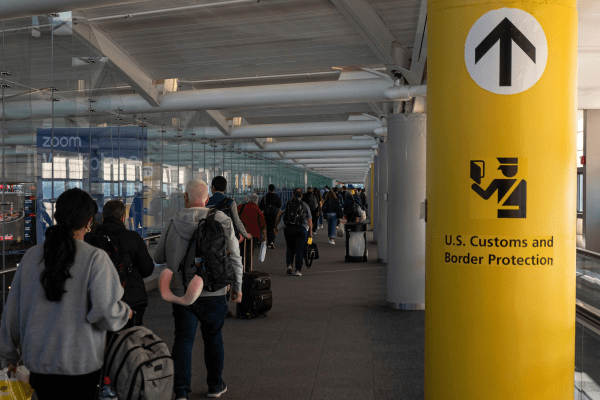
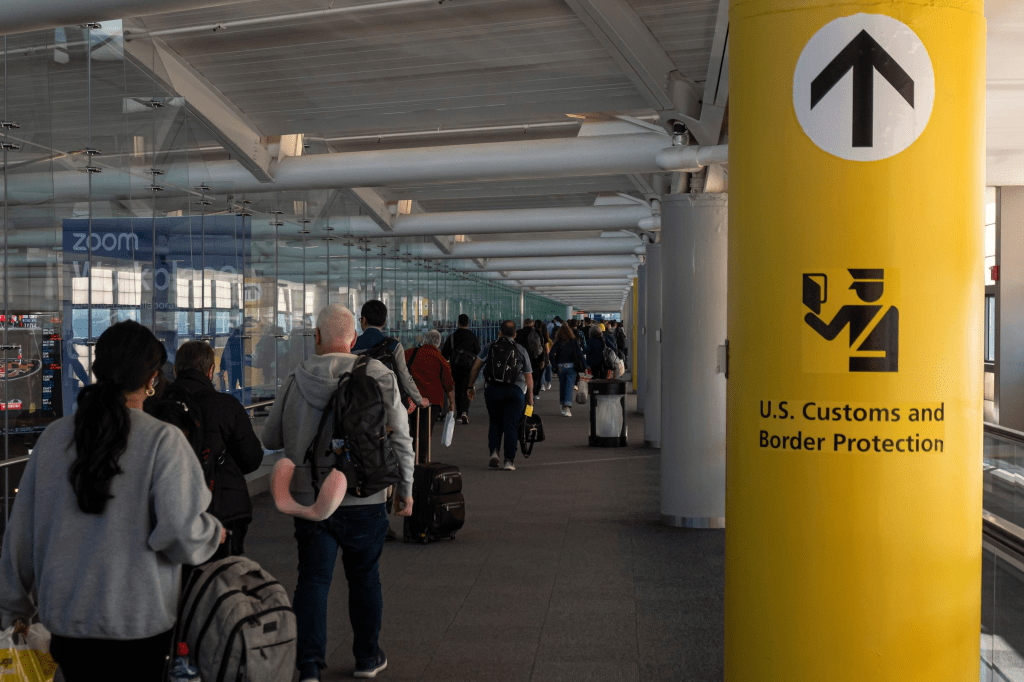
Canada, the United Kingdom and Germany have also updated their travel guidance for their citizens planning to travel to the United States after several tourists were detained by U.S. immigration authorities in recent months.
Travelers from many European countries and the U.K. can travel to the U.S. for business or tourism and stay for up to 90 days without a visa under the Department of Homeland Security’s Visa Waiver Program. But several travelers from countries within the program — like Canada, Germany, the U.K. and France — have been stopped and detained by U.S. immigration authorities within recent months.
Here’s what has transpired.
Nations with LGBTQ advisories for the U.S.
President Trump signed an executive order in January that says the federal government only recognizes two biological sexes: male and female. Per that order, a visitor applying for a visa or an Electronic System for Travel Authorization (ESTA) must declare their sex assigned at birth on the application forms.
European allies, including Denmark, Finland, Germany, Ireland, the Netherlands and Portugal, issued guidance that advises transgender and nonbinary travelers to contact the U.S. Embassy in their respective countries for more information on how to proceed if they wish to travel to the U.S.
Nations with other travel advisories for the U.S.
Canada
Recent tensions between the U.S. and Canada have risen over Trump’s trade war, not to mention his musings that he would make the northern ally the U.S.’s 51st state. Canada added new information under its U.S. travel advice page regarding the requirements for foreign nationals visiting for more than 30 days.
“Canadians and other foreign nationals visiting the United States for periods longer than 30 days must be registered with the United States Government. Failure to comply with the registration requirement could result in penalties, fines, and misdemeanor prosecution,” according to the Canadian government’s website.
The rule, enforced starting April 11, comes as part of an executive order signed by Trump, which requires all visitors staying for 30 days or longer to register with the U.S. government.
Germany
Last month, Germany updated its guidelines for its citizens looking to travel to the U.S. The European nation is investigating the cases of three of its citizens being denied entry and placed into detention by U.S. immigration authorities.
“Neither a valid [ESTA] authorization nor a valid U.S. visa constitutes a right to entry into the USA,” according to a translation of the German Foreign Office website. “The final decision regarding entry is made by the U.S. border official. It is recommended that you bring proof of your return journey (e.g., flight booking) upon entry.”
The office also warns of potential legal consequences. “Criminal records in the United States, false information about the purpose of their stay, or even a slight overstay of their visa upon entry or exit can lead to arrest, detention, and deportation.”
Two German nationals were detained in January as they were separately trying to cross the San Ysidro border between San Diego and Tijuana, Mexico, the New York Times reported. They have since returned to Germany with their cases resolved. A third remaining case involves a German national — who is a legal permanent U.S. resident who received a green card residency permit in 2008 — who was detained by ICE at Boston International Airport on March 7. He is now being held at the Wyatt Detention Center in Central Falls, R.I., NBC News reported.
The United Kingdom
The U.K. Foreign Office has updated guidance on its website in recent weeks for its citizens traveling to the U.S. It currently states, “You should comply with all entry, visa and other conditions of entry. The authorities in the U.S. set and enforce entry rules strictly. You may be liable to arrest or detention if you break the rules.”
Archived versions of the same website did not include potential legal consequences at the beginning of February and only stated, “The authorities in the U.S. set and enforce entry rules,” Reuters reported.
The Foreign, Commonwealth and Development Office did not explain the reason for the change.
The update comes around the same time a British tourist said she was held for more than two weeks in Washington state. Becky Burke, a 28-year-old from Wales, was backpacking through North America when she was allegedly denied entry into Canada on Feb. 26 “due to an incorrect visa,” according to a Facebook post by her father, Paul Burke. She was subsequently denied reentry into the U.S. and was detained at a facility in Tacoma, Wash.
Burke had stayed with a host family in Oregon, where she performed chores in exchange for food and lodging. She was told she violated her visa even though she was never paid. Travelers using a temporary visitor visa cannot accept work or employment in the country. Burke was repatriated back to the U.K. on March 18, according to U.S. Immigration and Customs Enforcement.
New Zealand
Last November, New Zealand updated its travel guidelines to the U.S. to “Exercise increased caution in the United States of America (US) due to the threat of terrorism (level 2 of 4).” The nation’s government travel website points to higher active shooter incidents and violent crime in the U.S. compared to New Zealand.
Check out this slideshow put together and posted to MSN.
While some places still make same-sex marriage complicated (or even illegal), others celebrate it fully, offering welcoming venues and stunning locations for your big day. If you’re looking for somewhere unique, safe, and unforgettable to say “I do,” these destinations offer the perfect mix of charm, romance, and friendliness toward the queer community.
The cities mentioned in the slideshow are:
Amsterdam Netherlands
Queenstown New Zealand
Toronto Canada
Cape Town South Africa
Reykjavik Iceland
Barcelona Spain
Valleta Malta
Sydney Australia
Mexico City Mexico
Copenhagen Denmark
Each town on the slide deck has a short excerpt about why the author included them. Be sure to read it.
Anti-trans bills and threats leave adults and children fearing for their safety at home
This month, Lauren Rodriguez will move out of her home in Texas, a state where she has lived for 20 years, to relocate to New Zealand. “People think we are dramatic for leaving, but when you look at what’s happened to my family, we’re not,” she says, amid packing up her life’s belongings. “It has been a total witch-hunt. It takes its toll.”
Six years ago, Rodriguez’s son Grey told her that he was transgender. That first night, she stayed up Googling “what to do when your kid tells you they’re trans”. From there, she took him to get his “first boy haircut” and contacted local LGBTQ+ organizations for advice.
Although she describes the climate against trans people then as less hostile than it has become, the news was not well received by some in their neighborhood. At the extreme, neighbors, a teacher, and even family members reported Rodriguez to Child Protection Services (CPS) for helping her son, who was then under 18, access gender-affirming medical care. Rodriguez, a social worker, has been on the receiving end of more than 10 complaints to the CPS. All cases were opened, investigated and closed.
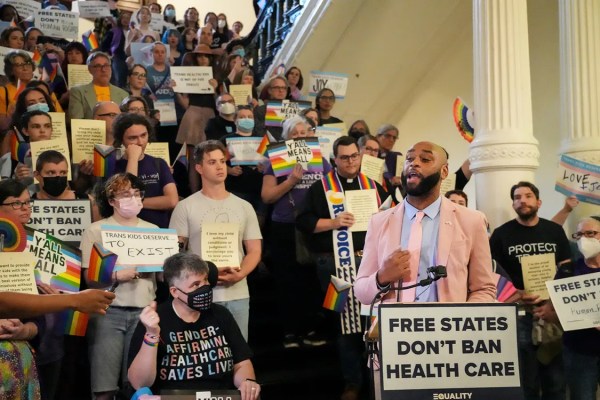
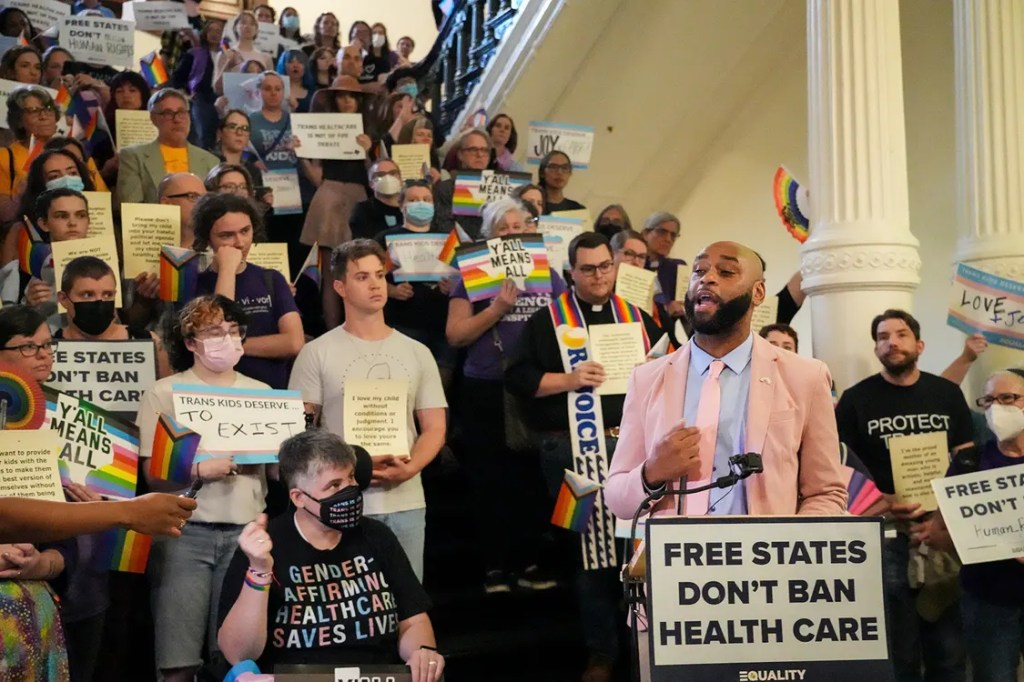
The state representative Christian Manuel speaks as LGBTQ+ activists protest against SB14 at the Texas capitol last month. Photograph: Mikala Compton/AP
During this period, Texas was one of a number of Republican-led states where the political mood was changing. The current legislative session in Texas has seen an unprecedented number of anti-gay and anti-trans bills pass through the senate. Some restrict teaching about gender and sexuality in schools. One bill has a section that would allow anyone to criminally prosecute an individual librarian in a school for distributing “harmful material”.
Rodriguez’s story is one of many; swathes of LGBTQ+ Americans are either migrating or want to migrate due to anti-LGBTQ+ sentiment in their states. The Miami Heat basketball player Dwyane Wade, who has a teenage trans daughter, recently made headlines for moving his family to California because he did not feel safe raising a child in south Florida amid mounting hostility and regressive legislation. The bill SB254, signed by Governor Ron DeSantis in May 2023, would not only prohibit gender-affirming care for anyone under the age of 18 in Florida, and restrict adult access to this care, but would allow the state to temporarily remove parental custody of trans children.
These laws encourage the “financial and emotional destruction” of LGBTQ+ people, says Bob McCranie, a Texas real estate agent who runs Flee Red States, an initiative he decided to launch in 2021 after observing intimidation of LGBTQ+ friends and colleagues.
Flee Red States operates almost like a refugee organization – except that the migration is internal. People with the financial capital and flexibility to do so are fleeing political persecution in their own country.
So far he has facilitated moves to Illinois, Colorado, Connecticut, New England, New York and California, working on behalf of those looking to leave states where legislation is making life unlivable, including Texas, Missouri, Alabama, Florida, Indianapolis and Tennessee.
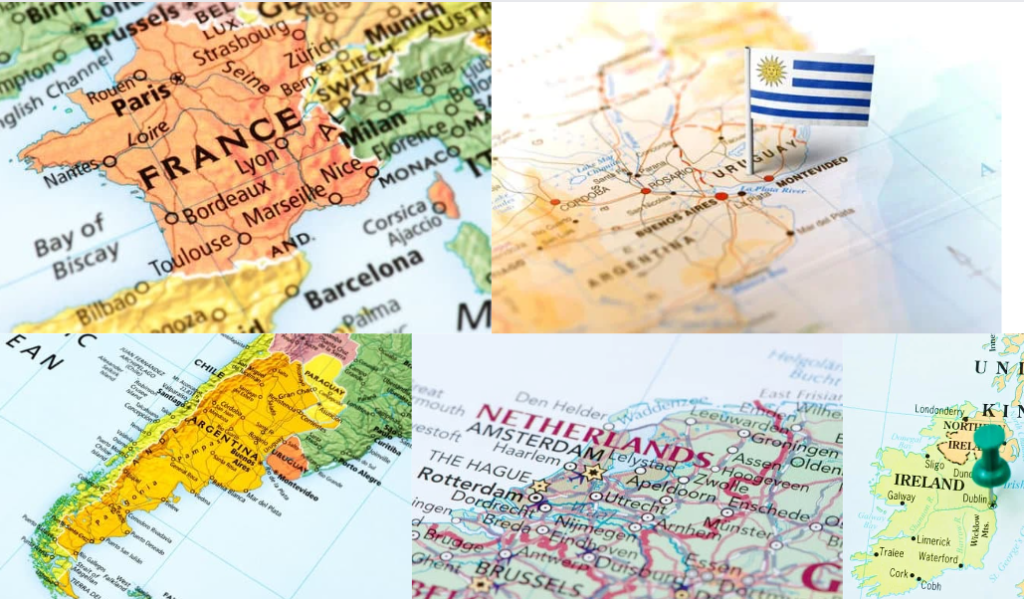
Prior to this week’s stunning presidential election results, a number of LGBTQ advocates and celebrities threatened to leave the U.S. should Donald Trump be elected. Now that the real estate mogul and reality TV star is America’s president-elect, NBC OUT has compiled a handy list of LGBTQ-friendly countries for U.S. expatriates.





 fleeredstates.blog
You must be logged in to post a comment.