Oakland gets first rainbow crosswalk: ‘It tells every trans, queer and non-binary person … they are welcome’

Read more at Oakland North.

Dozens of local queer leaders, community members and allies gathered at the Oakland LGBTQ Community Center on a rainy Thursday afternoon to celebrate the unveiling of the city’s first permanent rainbow crosswalk and the second anniversary of the Lakeshore LGBTQ Cultural District.

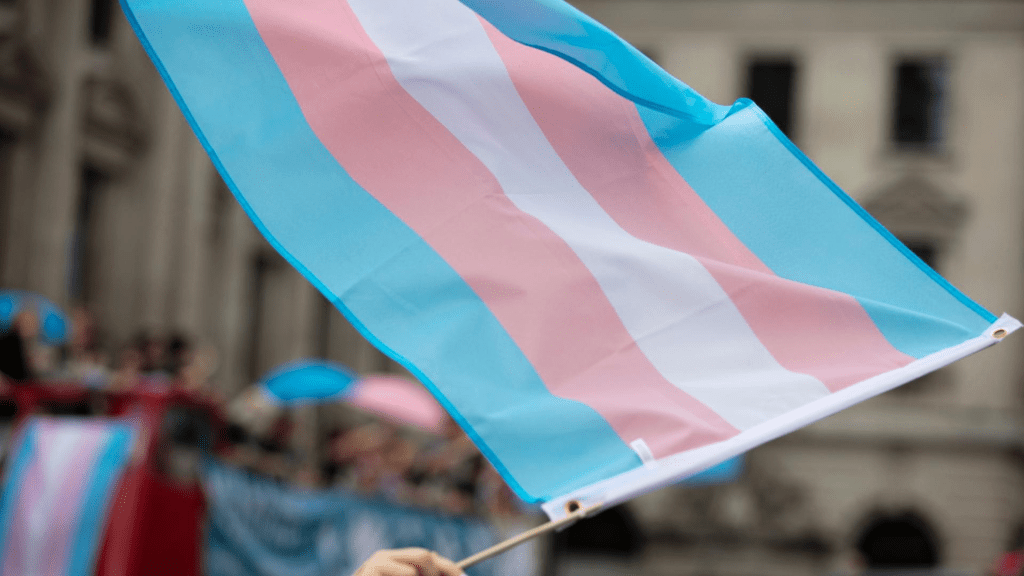
The crosswalk was installed on Lakeshore Avenue, outside the LGBTQ center, symbolizing Oakland’s commitment to LGBTQ inclusion and visibility, the center said in a news release. Instead of paint, it is made from thermoplastic materials to ensure durability and safety.

“It tells every trans, queer and non-binary person who visits our LGBTQ district that they are welcome, seen, safe, and celebrated right here in Oakland,” said Jeff Myers, chair of the Lakeshore LGBTQ Cultural District Committee, which plans events and does community outreach in the neighborhood.

A two-hour indoor ceremony preceded the unveiling, hosted by center co-chairs Myers and Joe Hawkins and emcee MCYB. It featured music from flutist Piedpiper KJ, singer-songwriter Cadence Myles and the Oakland Gay Men’s Chorus, as well as remarks from elected officials and neighborhood business owners. 

Speakers emphasized the importance of the Lakeshore District, which was established in 2023, and the new rainbow crosswalk as markers of queer visibility in Oakland during a time of fraught messaging from the federal government. 

“The Lakeshore LGBTQ Cultural District is more than just geography,” said Kin Folkz, a visual artist, poet and founder of the neighborhood’s Queer Arts Center. “It is the way that we refuse to disappear.”

Mayor Barbara Lee presented Lakeshore District leaders with a placard proclaiming Nov. 13 as “Lakeshore LGBTQ Cultural District Day.” 

“The rainbow crosswalk is a signal that you are part of the fabric of Oakland’s history and of Oakland’s future,” Lee said.

Hawkins thanked Lee for securing grant funding to support improvements at the center during her tenure in Congress. He also praised the Alameda County Supervisors for helping make up for the center’s recent loss of federal funding. The Supervisors approved $1.5 million for LGBTQ service providers, with the Oakland center getting some of that funding.

“Our city and county are helping,” Hawkins said. “I’m very confident this is more help than we’ve ever received.”

Bucking the trend

Councilmember Charlene Wang, who represents the Lakeshore District, applauded Oakland for installing the rainbow crosswalk, while lamenting the removal of such crosswalks in Florida and Texas cities. U.S. Transportation Secretary Sean Duffy launched a “roadway safety initiative” in July, urging governors to remove “political messaging and artwork” from intersections. Following that announcement, Orlando, Miami Beach, Gainesville, and Houston removed colorful crosswalks.

“While those cities caved, we are standing strong and we are adding crosswalks,” Wang said.

Megan Wier, an assistant director at the city’s Transportation Department, told Oakland North that the city worked with the LGBTQ center and Councilmember Rowena Brown’s office on a design that reflected diversity but also followed Americans with Disabilities Act requirements.

After the ceremony, everyone shuffled out of the building and into the rain for the crosswalk unveiling. Onlookers clustered under tents to watch Lee, Myers and Brown cut a ceremonial red ribbon, flanked by members of the Lakeshore District committee and the Transportation Department. 

Oakland resident Darron Lewis said he was overjoyed to be there. Lewis, whose boyfriend works for the LGBTQ center, recently moved from Seattle and expressed his admiration for Oakland. 

“It’s an adaptable place,” Lewis said. “There’s nothing more queer than a rainy day in Oakland.”

CBP Enforces Binary Sex Codes and Enhanced US Passport Validation in APIS

Read more at Greenberg Traurig.

U.S. Customs and Border Protection (CBP) has issued updates to the Advance Passenger Information System (APIS) requirements that may affect business travelers and airlines. These changes, implemented in response to Executive Order 14168, “Defending Women from Gender Ideology Extremism and Restoring Biological Truth to the Federal Government” issued in January 2025, introduce enhanced validation requirements for passenger data submitted by commercial air carriers.

Key Changes Overview

Sex Field Requirements: Effective Oct. 14, 2025, CBP systems will only accept “M” (Male) or “F” (Female) in the sex field of APIS transmissions. Any other characters will result in an “X Response-Insufficient Information” error, requiring airlines to resubmit the passenger data with corrected information.

U.S. Passport Format Validation: Starting Oct. 6, 2025, CBP will implement stricter validation for U.S. passport numbers transmitted through APIS.

Implementation Timeline

  • Sept. 17, 2025: Testing environment (EDU) available for sex field validation changes.
  • Sept. 24, 2025: Testing environment available for U.S. passport format validation.
  • Oct. 6, 2025: U.S. passport format validation goes live in production.
  • Oct. 14, 2025: Sex field validation goes live in production.

U.S. Passport Number Format Requirements

Valid U.S. passport numbers must follow one of these formats:

Option 1: Numeric Format

  • Nine numeric digits
  • Must have a numerical value of 4XXXXXXXX or higher

Option 2: Alpha-Numeric Format

  • Nine characters total
  • First character must be A, X, Y, or Z
  • Followed by exactly eight numeric digits

The leading alpha characters indicate passport type:

  • A: Regular passport
  • X: Diplomatic passport
  • Y: Official passport
  • Z: Service passport

Impact on Business Travel

Employer Considerations:

  • Review travel policies and booking procedures with travel management companies;
  • Ensure corporate travel booking systems capture accurate passenger information;
  • Brief frequent business travelers on the importance of providing exact passport details; and
  • Consider potential delays if incorrect information requires resubmission.

Employees Considerations:

  • Double-check that passport information matches exactly what is on the physical document when booking travel;
  • Verify that airlines have the correct sex designation as listed on the passport;
  • Allow additional time for potential rebooking if passenger information errors occur; and
  • Ensure the U.S. passport number format is valid if traveling on a U.S. passport.

Carrier Responsibilities

Airlines remain responsible for comparing travel documents passengers present with the information transmitted to CBP. Airline carriers must ensure accuracy in all APIS data submissions, including traveler sex designation and passport number formatting.

Practical Considerations

  1. Document Verification: Provide passport information exactly as it appears on travel documents.
  2. Sex Designation Accuracy: Ensure the sex designation transmitted to CBP matches exactly what appears on passports, regardless of personal identification.
  3. Passport Updates: Consider whether passport updates may be necessary to ensure smooth travel.
  4. Early Booking: Complete travel bookings in advance to allow time for any necessary corrections.
  5. Travel Management: Work with experienced travel agencies familiar with APIS requirements.
  6. Communication: Ensure clear communication between travelers, booking agents, and airlines regarding exact document details.

Special Considerations

Document Inconsistencies: If travelers’ passports contains a sex designation that differs from their current identification, airlines must still transmit the information exactly as it appears on their passport documents. CBP systems will only accept the “M” or “F” designation that matches travel documents.

Non-Binary Passport Designations: Passports issued with “X” or other non-binary markers will be rejected by CBP systems, requiring resubmission with valid documentation showing “M” or “F” designation.

Passport Updates: Travelers experiencing documentation inconsistencies may wish to consult with the relevant passport issuing authority about available options for updating travel documents.

Takeaways

The implementation of these changes may cause initial adjustment periods. Business travelers and employers should work closely with their travel management companies to enhance compliance with these new requirements. Providing accurate and complete travel documentation remains essential for efficient international travel.

Puerto Rico Supreme Court recognizes ‘X’ as third gender for birth certificates in landmark decision

*This is reported by The Advocate.

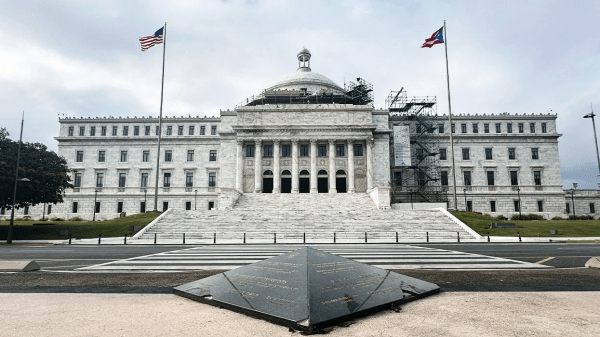
Puerto Rico’s Supreme Court has mandated that the government include an “X” gender marker on birth certificates in a ruling issued on Monday. A group of nonbinary Puerto Ricans filed the case, and the ruling allows for the representation of those who identify outside of the gender binary.

“Puerto Rico’s current Birth Certificate Policy is not supported by a rational basis, and therefore violates the Equal Protection Clause of the Fourteenth Amendment,” the justices wrote in their 19-page decision.

The court found that while the government might have a legitimate interest in maintaining an accurate record of each citizen’s sex assigned at birth, lawyers for the government “failed to articulate why this particular interest is furthered by treating nonbinary individuals differently than binary individuals.”

Puerto Rico’s Supreme Court has mandated that the government include an “X” gender marker on birth certificates in a ruling issued on Monday. A group of nonbinary Puerto Ricans filed the case, and the ruling allows for the representation of those who identify outside of the gender binary.

Keep up with the latest in LGBTQ+ news and politics. Sign up for The Advocate’s email newsletter.

“Puerto Rico’s current Birth Certificate Policy is not supported by a rational basis, and therefore violates the Equal Protection Clause of the Fourteenth Amendment,” the justices wrote in their 19-page decision.

The court found that while the government might have a legitimate interest in maintaining an accurate record of each citizen’s sex assigned at birth, lawyers for the government “failed to articulate why this particular interest is furthered by treating nonbinary individuals differently than binary individuals.”

RELATED: Trump’s ‘two genders’ executive order will hurt millions of Americans: study

A federal court in 2018 ordered Puerto Rico to permit transgender individuals to change their gender markers, but nonbinary individuals were left unable to accurately reflect their gender identity on official records. Six nonbinary plaintiffs filed suit in court, and the court on Monday ruled in their favor.

Puerto Rico’s Supreme Court has mandated that the government include an “X” gender marker on birth certificates in a ruling issued on Monday. A group of nonbinary Puerto Ricans filed the case, and the ruling allows for the representation of those who identify outside of the gender binary.

Keep up with the latest in LGBTQ+ news and politics. Sign up for The Advocate’s email newsletter.

“Puerto Rico’s current Birth Certificate Policy is not supported by a rational basis, and therefore violates the Equal Protection Clause of the Fourteenth Amendment,” the justices wrote in their 19-page decision.

The court found that while the government might have a legitimate interest in maintaining an accurate record of each citizen’s sex assigned at birth, lawyers for the government “failed to articulate why this particular interest is furthered by treating nonbinary individuals differently than binary individuals.”

RELATED: Trump’s ‘two genders’ executive order will hurt millions of Americans: study

A federal court in 2018 ordered Puerto Rico to permit transgender individuals to change their gender markers, but nonbinary individuals were left unable to accurately reflect their gender identity on official records. Six nonbinary plaintiffs filed suit in court, and the court on Monday ruled in their favor.

“Their request is simple: to be permitted to have a gender marker on their birth certificate that reflects their true gender identity, like everyone else,” the justices wrote of the plaintiffs in their decision. “Specifically, Plaintiffs request the Court to order the Demographic Registry of Puerto Rico to modify its application to amend a Puerto Rican birth certificate, to include an option to change one’s gender marker to an ‘X.’”

The justices found the government’s current birth certificate gender identification policy discriminatory and that there was no rational reason to deny the plaintiff’s request.

“The current Birth Certificate Policy of the Commonwealth of Puerto Rico arbitrarily distinguishes between binary and nonbinary individuals and subjects nonbinary individuals to disfavored treatment, without any justification for doing so,” the justices concluded in their ruling. “In such cases, it is the duty of the federal courts to intervene, to guarantee the equal protection of all persons under the law.”

Puerto Rico’s Republican Governor Jenniffer González Colón indicated that she would consult with government lawyers before determining her future course of action.

Puerto Rico Representative Jorge “Georgie” Navarro Suárez announced he was introducing a non-binding resolution condemning the ruling.

“The Federal Court’s ruling represents a challenge to the administrative and social stability of Puerto Rico,” Navarro Suárez said in a statement announcing the resolution. “While we fully respect human dignity and rights, we firmly believe that traditional gender identification based on male and female provides essential clarity and consistency in the administrative processes of the Demographic Registry.”

Navarro Suárez is a member of the New Progressive Party (PNP), which advocates for statehood with the U.S. Both of Navarro Suárez’s brothers were recently arrested on federal corruption charges. Edgardo Navarro Suárez and Ricardo Luis Suárez were arrested in April and charged with financial fraud and money laundering of federal funds meant for relief during the global economic shutdown. Prosecutors claim the two brothers and a third man attempted to bribe a bank official to help facilitate over $2 million in allegedly bogus COVID-19 relief funds.

Judge blocks Trump administration from passport changes affecting some transgender Americans

*This is being reported by WFAA.

A federal judge on Friday blocked the Trump administration from enacting a policy that bans the use of “X” marker used by many nonbinary people on passports as well as the changing of gender markers.

In an executive order signed in January, the president used a narrow definition of the sexes instead of a broader conception of gender. The order says a person is male or female and it rejects the idea that someone can transition from the sex assigned at birth to another gender. The framing is in line with many conservatives’ views but at odds with major medical groups and policies under former President Joe Biden.

U.S. District Judge Julia Kobick, who was appointed by President Joe Biden, sided with the American Civil Liberties Union’s motion for a preliminary injunction, which stays the action while the lawsuit plays out.

“The Executive Order and the Passport Policy on their face classify passport applicants on the basis of sex and thus must be reviewed under intermediate judicial scrutiny,” Kobick wrote. “That standard requires the government to demonstrate that its actions are substantially related to an important governmental interest. The government has failed to meet this standard.”

The ACLU, which sued the Trump administration on behalf of five transgender Americans and two nonbinary plaintiffs, said the new policy would effectively mean transgender, nonbinary and intersex Americans could not get an accurate passport.

“We all have a right to accurate identity documents, and this policy invites harassment, discrimination, and violence against transgender Americans who can no longer obtain or renew a passport that matches who they are,” ACLU lawyer Sruti Swaminathan said.

In response to the lawsuit, the Trump administration argued the passport policy change “does not violate the equal protection guarantees of the Constitution.” They also contended that the president has broad discretion in setting passport policy and that plaintiffs would not be harmed by the policy, since they are still free to travel abroad.

Blog at WordPress.com.

Up ↑