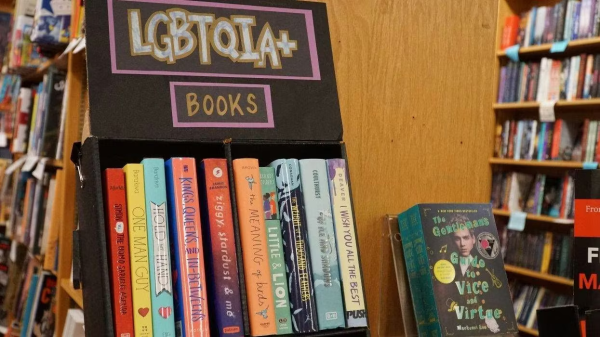
A county government in central North Carolina has dissolved its entire public library board after trustees voted to keep a children’s picture book about a transgender character on library shelves, turning a local book challenge into one of the most severe reprisals yet in the national campaign against LGBTQ-inclusive materials.
The Randolph County Board of Commissioners voted 3–2 last week to dismiss all members of the county library board, weeks after trustees declined to move or remove Call Me Max, a picture book about a transgender boy who asks his teacher to use his chosen name. The decision followed a public hearing that drew nearly 200 residents and revealed a community split almost evenly between those calling for the board’s removal and those urging commissioners to respect the library’s review process.
Library staff and trustees had reviewed the complaint earlier this fall and, in October, voted to keep the book in the children’s section, concluding it complied with the county’s collection policies, local CBS affiliate WFMY reported. Commissioners nonetheless moved to dissolve the nine-member board outright — a step allowed under North Carolina law but rarely taken.
Free-expression advocates said the action represents a dramatic escalation in the political response to book challenges. Kasey Meehan, director of the Freedom to Read program at PEN America, told The Washington Post that Randolph County’s decision is among the harshest penalties she has seen imposed over a single title.
“It’s a pretty dramatic response to wanting to have diverse and inclusive books on shelves,” Meehan said.
Opponents of the book claimed the dispute was a matter of child protection. Tami Fitzgerald, executive director of the conservative North Carolina Values Coalition, which urged supporters to attend the commission meeting, argued that Call Me Max teaches children that their parents may be “wrong” about their gender.
The book has been banned by several school districts and was prominently invoked by RepublicanFlorida Gov. Ron DeSantis in 2022 while promoting his so-called “don’t say gay” legislation restricting classroom discussions of gender identity, a law later challenged in court.
To critics, the Randolph County episode demonstrates how procedural safeguards are increasingly overridden when LGBTQ+ inclusion is at stake. Kyle Lukoff, the book’s author, who is a trans man, said the case is especially troubling because the library followed its own policies and was still punished.
“Policies can be helpful, but this is ultimately a question of power,” Lukoff told The Post. “If there are people in power who believe trans people don’t belong in their communities or the world at large, they will twist those policies to make it a reality.”
Randolph County, home to about 150,000 people, voted nearly four to one for President Donald Trump. Commissioners have not announced when or how they plan to reconstitute the library board.
Karen Hinkley, an attorney in Belmont, filed a lawsuit in Gaston County on October 30 claiming the city of Belmont violated North Carolina’s open-government laws when the city council removed workplace protections for LGBTQ employees in March.
The City of Belmont, a suburban community with a population around 15,000, is generally viewed as more politically moderate than the rest of Gaston County, where Donald Trump received about 62% of the vote in 2024.
In June 2020 Belmont added protections based on sexual orientation and gender identity for its employees after a statewide moratorium on local nondiscrimination ordinances was due to expire. Several other cities such as Asheville, Charlotte, and Durham also added protections for LGBTQ residents and employees around this time.
The lawsuit centers on a March 3 vote in which the city council unanimously approved a new personnel policy that no longer includes explicit nondiscrimination protections based on sexual orientation and gender identity. The Gaston Gazette reported that “After several unsuccessful public records requests for documentation of behind-the-scenes conversations among City council members, Hinkley filed a lawsuit.”
North Carolina’s Open Meetings Law states that it “is the public policy of North Carolina that the hearings, deliberations, and actions of public bodies be conducted openly.”
According to the suit, city officials discussed the policy change outside of public meetings and used private text messages to coordinate the decision, violating North Carolina’s Open Meetings Law and Public Records Law. Hinkley argues that these private exchanges and the lack of transparency denied residents their legal right to witness how local policies are made.
The Gazette also reported that Hinckley “spoke about the policy change during public comment at a meeting on April 7. The video recording of that meeting began late and lacked audio for about 30 minutes, she said in the lawsuit, and minutes of the meeting misrepresented her comments. To Hinkley, the paraphrased notes about her comments in the official minutes of that meeting make it sound like she was supporting the removal of the protective language when the opposite is true,” she said.
Belmont city officials have not publicly commented on the lawsuit.
If the lawsuit is successful, the case could require Belmont to revisit its decision and restore LGBTQ protections, while also serving as a reminder that local governments must conduct business openly and transparently, and that secret policymaking, even on sensitive issues, can carry legal repercussions.
Four North Carolina Democratic lawmakers broke with their party in voting to override Governor Josh Stein’s veto of eight bills, a move that helped push several harmful measures into law.
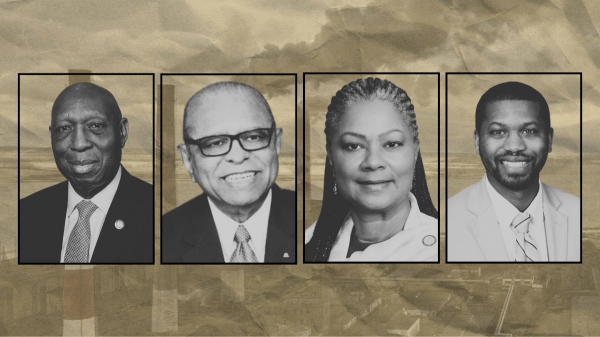
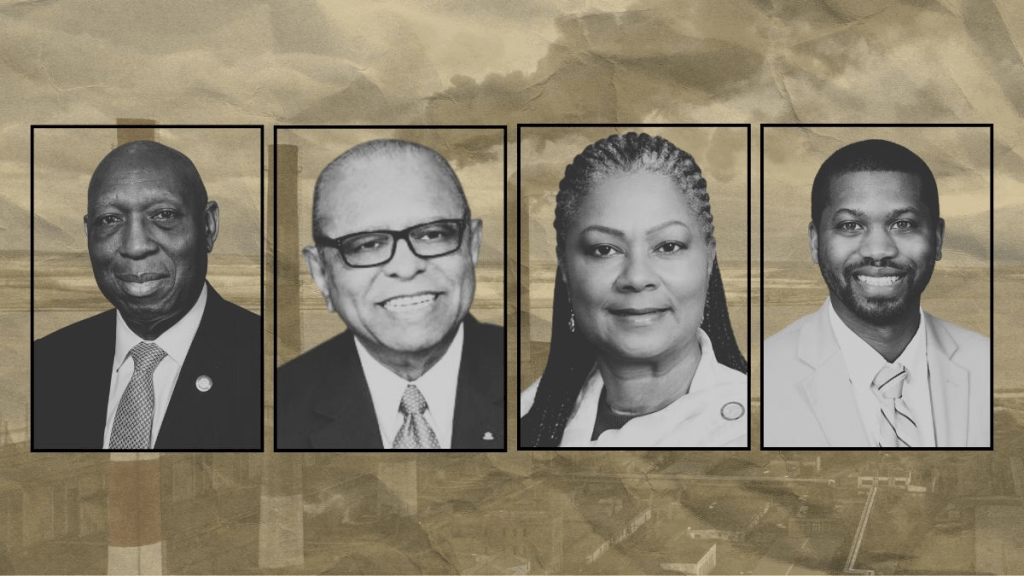
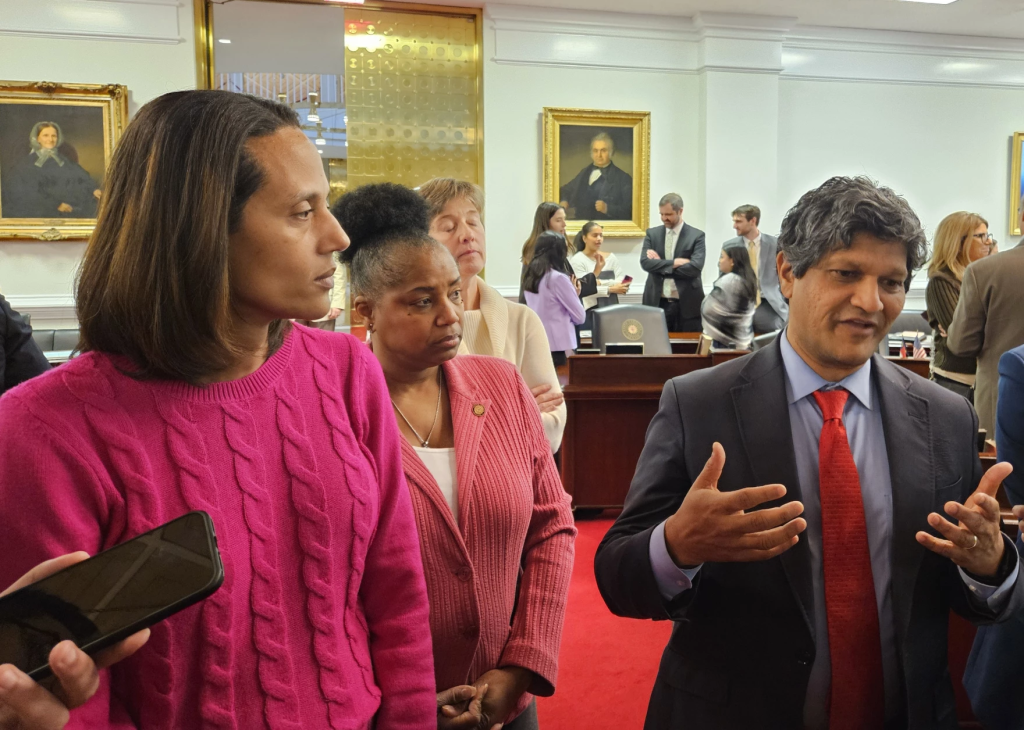
The four Democrats who voted with state Republican lawmakers on one or more of the override votes were:
In both of the state’s legislative chambers, a 60% threshold is required to override a governor’s veto of a bill. Due to the four democratic lawmakers going against their party, House Democrats were unable to sustain Governor Stein’s vetoes on eight bills, including House Bill 805, House Bill 318, Senate Bill 266, and House Bill 193.
Here is a breakdown of the bills and how the four lawmakers voted:
Senate Bill 266 is a harmful bill that will raise utility bills for North Carolinians, roll back clean energy progress, and shift costs onto working families so that large corporations pay less.
The veto override passed 74-46, with Cunningham, Majeed, and Willingham being the deciding votes.
House Bill 193 is a dangerous policy that allows nearly anyone with minimal training to carry a concealed firearm at a private school, creating a serious safety risk for students, teachers, and school support staff.
The Republican veto override passed 72-48, with Willingham being the deciding vote.
In an interview with Bryan Anderson, Willingham stated that Governor Stein personally called him on Monday night to ask him to sustain his vetoes of several harmful bills.
Willingham declined, saying, “Governor Stein, he’s just getting to know me. I think now he knows that whatever I say I’m going to do, that’s what I’m going to do. So he could take that to the bank.”
“They say, ‘Well, we want you to sustain the governor’s veto,’” Willingham said. “My thing is I sustain my vote.”
House Bill 805 was originally a bipartisan bill that would have helped people who appeared in sexually explicit photos and videos online to have them removed. However, state Republicans changed the bill to attack transgender North Carolinians along with other controversial provisions.
In his veto statement, Governor Stein said that while he agreed with the portions of House Bill 805 protecting women and minors from sexual exploitation on websites, the attacks towards transgender North Carolinians are “mean-spirited.”
Governor Stein wrote, “My faith teaches me that we are all children of God no matter our differences and that it is wrong to target vulnerable people, as this legislation does.”
Ultimately, state Republicans overrode Governor Stein’s veto, 72-48, with Majeed being the deciding vote.
House Bill 318 is an anti-immigration measure that will force sheriffs to cooperate with Immigration and Customs Enforcement (ICE).
In a statement following his veto of HB 318, Governor Stein stated, “My oath of office requires that I uphold the Constitution of the United States. Therefore, I cannot sign this bill because it would require sheriffs to unconstitutionally detain people for up to 48 hours after they would otherwise be released. The Fourth Circuit is clear that local law enforcement officers cannot keep people in custody solely based on a suspected immigration violation. But let me be clear: anyone who commits a serious crime in North Carolina must be prosecuted and held accountable regardless of their immigration status.”
Despite the bill setting up a dangerous precedent, state Republicans overrode Stein’s veto, 72-48.
Rep. Carla Cunningham, who was the deciding vote, gave a speech on the House floor defending her action to help Republicans override Gov. Josh Stein’s veto of the anti-immigration bill.
In what Rep. Cunningham referred to as sharing her “unapologetic truth”, the Mecklenburg lawmaker went on to state, “First, as a people, we need to recognize that it’s not just the numbers that matter, but also where the immigrants come from and the culture they bring with them to another country. As the social scientists report, all cultures are not equal.”
“Some immigrants come and believe they can function in isolation, refusing to adapt,” Cunningham stated. “They have come to our country for many reasons, but I suggest they must assimilate, adapt to the culture of the country they wish to live in.”
She added, “It’s time to turn the conveyor belt off.”
North Carolina Democratic Leaders Push Back
Several Democrats decried the override vetoes on the eight bills, including the Duke Energy bill, attacks towards transgender North Carolinians, and allowing concealed carry on private school grounds.
On the floor, Rep. Marcia Morey, D-Durham, a former judge, pushed back against Cunningham’s remarks, stating, “We all agree we want safe communities. That’s no longer the issue with this bill — it is scapegoating. It is scapegoating immigrants.”
“Research has shown us that the immigrant community is less likely to commit crimes than the US citizen. That is a fact. We need to work towards finding solutions, not creating divisiveness and ignoring community concerns. This is furthering an anti-immigrant agenda no matter the cost. And when police act as immigration agents, witnesses or victims of crime are going to be less likely to report crime.”
According to the News & Observer, Senate Democratic Leader Sydney Batch called Cunningham’s remarks “absolutely uncalled for.”
“The very fact that you would say that not all people, or not all immigrants, are equal, is just – one, it’s contrary to our Constitution. It’s contrary to how this country was formed. This country was formed because of Native Americans, Blacks that were enslaved, and immigrants, including every single person that was here other than Native Americans,” Batch told reporters.
“To say that we are not equal goes and flies in the face of anything that a Democrat, in my opinion, believes and holds, near and dear.”
In a statement last week, the Young Democrats of North Carolina joined Democratic members in condemning Cunningham’s remarks, saying that the lawmaker “disgraced her office with a hate-filled speech attacking the very immigrant communities she was elected to serve.”
“You will be held accountable by your community,” the group stated. “Good luck.”
A senior Heritage Foundation official and co-author of the far-right Project 2025 agenda has filed a comprehensive public records request targeting more than 70 courses at the University of North Carolina at Chapel Hill, demanding access to teaching materials that reference diversity, race, gender, and LGBTQ+ identities.
According to UNC’s public records portal, Mike Howell, executive director of the Heritage Foundation’s Oversight Project, submitted the request on July 2, asking UNC to turn over syllabi, lecture slides, assignments, and internal communications that include any of 30 flagged terms. Among them: “transgender,” “LGBTQ+,” “cisgender,” “queer,” “intersectionality,” “nonbinary,” “white privilege,” and “restorative justice.” The request spans content shared since Jan. 19, 2025, and directs the university to search platforms such as Canvas, Microsoft Teams, Signal, and Slack.
The courses flagged by the Oversight Project include Gender and Sexuality in Islam, Transnational Black Feminist Thought and Practice, Islam and Sexual Diversity, Race and Gender in the Atlantic World, and Black Families in Social and Contemporary Contexts. Also targeted are courses like Diversity and Inclusion at Work, Diversity in Education, Social Theory and Cultural Diversity, and Gender and Sexuality in Middle Eastern Literature.
Howell cited two executive orders signed by President Donald Trump earlier this year, Executive Orders 14151 and 14173, which condition federal funding on the elimination of DEI-related content. In the request, Howell argued that the records “will shed light on potential inconsistencies between internal practices and public representations made by officials in a matter of substantial national importance.”
Since taking office in January, Trump has aggressively implemented policies that target diversity, equity, and inclusion efforts, as well as gender and LGBTQ+ protections. Though he previously distanced himself from Project 2025, calling some of its authors “severe right” and its proposals “seriously extreme,” his administration has moved swiftly to enact many of its recommendations. The nearly 1,000-page blueprint, authored by the Heritage Foundation and allied organizations, calls for the dismantling of DEI programs, bans on transgendermilitary service, elimination of non-discrimination protections, and the closure of the Department of Education. Many of the document’s contributors now hold key posts in federal agencies.
Scholars have long cautioned that excluding race, gender, and sexuality from coursework risks reinforcing bias rather than promoting academic neutrality. The American Psychological Association encourages inclusive curricula that reflect students’ lived experiences. In a 1992 paper, psychologist Susan B. Goldstein noted that even cross-cultural psychology can marginalize women and LGBTQ+ people when it generalizes findings from white, heterosexual men as universal. She urged faculty to treat diversity as central to understanding human behavior, not an elective or ideological add-on. A study in the Harvard Educational Review found that engagement with racially diverse peers enhances students’ critical thinking, academic growth, and civic awareness.
UNC has not yet fulfilled the Oversight Project’s request. A university spokesperson told Inside Higher Ed, which first reported the story, that course materials are “the intellectual property of the preparer” and the university is still determining what, if any, documents will be released.
Chris Petsko, a professor whose course was among those targeted, told Inside Higher Ed he will not comply. He said the request is an intimidation tactic designed to distort academic work and stifle inclusive teaching. On LinkedIn, he advised fellow faculty to review institutional intellectual property policies.
Howell dismissed objections. “Syllabi are public records and belong to the public,” he told Inside Higher Ed. “If a professor is too much of a wimp to let me read his syllabus then he’s in the wrong business.”
Howell has previously drawn scrutiny for hypocrisy. In 2024, The Advocatereported on a 2012 Yelp photo showing Howell smiling beside a friend in drag, despite his vocal condemnations of drag culture and LGBTQ+ rights. When contacted, Howell confirmed the photo’s authenticity and dismissed it as Halloween mischief.
GLAAD President Sarah Kate Ellis called Howell’s behavior “the definition of hypocrisy” at the time, adding that Project 2025 is a “dangerous, unhinged playbook” that exposes the intent of “anti-LGBTQ extremists hell-bent on destroying democracy.”
The school board of Johnston County, North Carolina, voted 4-2 to ban district schools from displaying rainbow Pride flags on Tuesday. The ban is just the latest in a long line of conservative efforts to ban the LGBTQ+ flag from schools and government property.
According to The Raleigh News & Observer, the newly approved policy states: “Principals and teachers shall limit displays in the classrooms, school buildings, ball fields, school grounds, and buses, such as signs and flags, to materials that represent the United States, the state of North Carolina, Johnston County, the school name, mascot, post-secondary institutions, school-sponsored events, sponsorships, military flags, family photos, student art and/or the approved curriculum.”
One board member who voted against the measure, Kay Carroll, said, “It’s important that they know when they see somebody wear a human rights pin or a rainbow pin, the message is that this is a safe place for people in the LGBTQ+ community…. It’s comforting to see these symbols of acceptance and tolerance. When they see these symbols — which are signals — they know they are safe to be their authentic selves. We’re just treating human beings decently.”
The school board claimed that it will continue to support “all students and school employees.” However, the board is currently considering removing sexual orientation and gender identity from its anti-bullying and anti-discrimination policies. The board will re-vote on the removal soon after failing to advance the measure in a 3-3 tie vote last Tuesday.
Numerous school districts nationwide have banned the display of Pride flags, with conservative school board members claiming that the flags are a “divisive” form of “indoctrination.”
However, recent polling by the Trevor Project suggests that LGBTQ+ students may benefit from visible displays of support, considering that 39% of LGBTQ+ young people and 46% of trans and nonbinary young people reported attempting suicide in the past year, and 49% of respondents between ages 13 to 17 said they experienced bullying in the past year. Young people who were bullied were also significantly more likely to have attempted suicide in the past year.
Earlier this year, both Utah and Idaho became the first U.S. states to pass laws restricting the flying of Pride flags in schools and on government property. The move led the capital city governments of Salt Lake City, Utah, and Boise, Idaho, to designate the Pride flags as official city flags, so they can still fly them under the bans.
Criticizing the state legislature for failing to pass a new state budget because lawmakers are too focused on culture war political fights, Gov. Josh Stein on Thursday vetoed four bills targeting diversity and gender issues.
Senate Bill 558, Senate Bill 227, House Bill 171 all deal with efforts to crack down on pro-diversity efforts in public schools and state government agencies. Supporters have cited Republican President Donald Trump’s efforts to attack diversity, equity and inclusion programs in federal government and say North Carolina similarly needs to eliminate DEI.
The fourth bill, House Bill 805, started as an effort to help people take down private photos or videos of themselves from the internet and passed the state House unanimously. But the state Senate then turned the bill into a grab-bag of social conservative issues about transgender people and other issues related to gender and LGBTQ rights, and the House also agreed to pass that new version of the bill which Stein has now vetoed in addition to the DEI bills.
Meanwhile, when the state’s new fiscal year began this week, state lawmakers were on vacation without having passed a new budget. They’ve made no progress on negotiations for a spending plan and, just before the legislature adjourned, House Speaker Destin Hall told reporters the GOP lawmakers had such strong disagreements on how to fund state government that it’s possible no budget deal gets passed at all until sometime next year.
Stein said that his vetoes highlight his belief that the Republican-led legislature has its priorities all wrong.
“At a time when teachers, law enforcement, and state employees need pay raises and people need shorter lines at the DMV, the legislature failed to pass a budget and, instead, wants to distract us by stoking culture wars that further divide us,” Stein wrote. “These mean-spirited bills would marginalize vulnerable people and also undermine the quality of public services and public education. Therefore, I am vetoing them. I stand ready to work with the legislature when it gets serious about protecting people and addressing North Carolinians’ pressing concerns.”
State House Majority Leader Rep. Brendan Jones, R-Columbus, has been a key proponent of the anti-DEI measures and criticized Stein’s veto Thursday.
“I find it odd that Gov. Stein is against merit based hiring in state government,” Jones said. “I look forward to overriding this veto.”
The vetoes come a day after Stein also vetoed three other bills including a Duke Energy-backed bill to let the utility giant avoid climate goals and change the way it charges North Carolinians.
June 26, 2015 was a milestone day in the United States when the SCOTUS decision was announced in the case of Obergefell v Hodges. A narrow 5-4 ruling brought nationwide marriage equality for LGBTQ people much sooner than many expected it. I certainly did not even think it would occur in my lifetime. The nation was split down the middle on the topic. A piecemeal approach was commonplace, with some states making it legal before the ruling, and others staunchly opposed to it in their state constitutions. Yet, a conservative justice saw fit to challenge the status quo and actually base a ruling on the US Constitution for a change, rather than political ideology.
We had already been married for almost 4 years at that point. We were living in Texas in July 2011 and my boyfriend at the time decided to ask me to marry him (now her, but that is another story for another day). We had been living together nearly 10 years. Going to Canada was floated as an idea. I had family in New Jersey and Andrew Cuomo in New York had just its own marriage equality law June 24 that year to take effect in July. So, New York it was! I had become an internet wedding planner of my own wedding by then to be wed on October 09, 2011, one day difference from our “10th anniversary”. It was tedious. It was stressful. It was fun. It was one of the best days of my life. I will never do it again. Sorry boys and girls.
While our own wedding anniversary of 14 years is coming this fall, I sit here writing this and worried that we will have to go through even more bullshit to not only keep our marriage legally intact, but to ensure future generations maintain their right to due process and equality under the law. We have a Supreme Court who has already shown it has the balls to revisit and repeal established forward thinking case law precedent. See, Roe v Wade’s death as a result of Dobbs v. Jackson Women’s Health Organization. Chief Justice Roberts and Justices Thomas, and Alito, who each wrote a dissenting opinion in Obergefell v Hodges are still proudly part of the conservative super majority on the bench. Yes, there is a Respect for Marriage Act that was finally passed in 2022 to help reaffirm O v H.
But we also have a President and House who are willing to turn back time. We have state legislators, who are now firing the opening salvo towards repeal of marriage equality. House reps in 9 states in 2025 proposed resolutions urging SCOTUS to repeal O v H. Those resolutions were passed in North Dakota and Idaho. 4 other states introduced bills, which failed, to introduce covenant marriage to their books, which would have created an exclusive category for opposite sex couples.
I hope everyone enjoys their anniversary, whether you were married today or at another point in time. But please remain vigilant and pay fucking attention to what is going on around you. Your rights can always be removed with the stroke of a pen. And sometimes that pen needs to be shoved into an uncomfortable place.
This is us. Climate change was on full display.
John Turner-McClelland is the editor of several blogs including FleeRedStates. He is a licensed real estate agent in Texas and North Carolina. He was on a Vice News panel once and was allowed to speak for 5 seconds on air. He has been a proud liberal LGBTQ activist and former elected official for a few decades or so. Yes, he is still married.
The state Senate approved a bill Tuesday that includes multiple controversial LGBTQ policies. Democrats objected to a GOP move to add the proposals to a popular House bill, prompting a heated fight over the Senate’s rules.
The original version of House Bill 805 added new consent requirements for pornographic websites, and it got unanimous support from Democrats and Republicans. It would allow people who appear in sexually explicit photos and videos online the option to have them removed.
The Senate added a lot more. Its bill would allow lawsuits against medical providers over gender transitions, and change the definition of biological sex in state law to exclude gender identity. The new definitions would say that gender identity is “a subjective internal sense” that “shall not be treated as legally or biologically equivalent to sex.” The change could affect transgender people seeking to change their birth certificate.
Sen. Buck Newton, R-Wilson, is the bill’s sponsor. “We cannot ignore the biological realities, and we believe our state laws should reflect that,” he said. “Women are being systemically erased from our language, whether it’s changing words from pregnant women to pregnant person, or mother to a birthing parent.”
The bill would also require schools to provide parents with a list of school library books and allow the parents to ban their children from checking out specific titles.
But Senate Minority Leader Sydney Batch says the new provisions are harmful, and it means the original pornography bill likely won’t make it to the governor’s desk.
“When my Republican colleagues loaded this bill with culture war amendments, they didn’t just distract from the problem, they made it impossible to solve,” she said.
The bill put Democrats in the difficult position of voting against legislation titled “Prevent Sexual Exploitation.” Instead of voting no, they took an unusual approach. Asked to vote yes or no, most responded “I vote present.”
Sen. Ralph Hise, R-Mitchell, that’s not an option in the state Senate.
“Notice, you have a green button and a red button, not an extra ‘whatever I came up with today’ button,” he said. “Those are the options under the Senate rules.”
The dispute put a lengthy delay on the vote as senators paged through their rulebooks. Batch said the only law she could find requiring legislators to vote yes or no dates to the 1700s.
“What it does say, if we don’t actually move and we don’t discharge our duty, which I assume that my colleagues are saying today, it’s a $10 fine,” she said, brandishing a stack of cash on the Senate floor. “I have $10 for every single one of the members in my caucus who voted present.”
But Republicans decided to count the present votes as excused absences, so on paper, Tuesday’s vote looks nearly unanimous in support of the controversial bill. It’s unclear if House Republicans will approve the Senate’s version of the bill.
Even if the House doesn’t take it up, Wednesday’s vote could wind up in campaign ads next year. “This was about elections and mailers and things like that,” said Sen. Lisa Grafstein, D-Wake. “You can already see, somebody didn’t get the memo, and they’ve been attacking members on voting no, when we did not vote no. That’s absolutely what it’s about.”
LGBTQ+ Americans have always been here, but as sector of society has largely been ignored until recently. LGBTQ+ seniors are continuing to increase in number, with the need for services that make them comfortable in their golden years becoming a growing issue.
According to surveys by SAGE and the Williams Institute, there are an estimated 2.7 million LGBTQ+ adults aged 50 and older in the United States, including 1.1 million who are 65 and older. By 2030, this number is projected to grow to around 7 million. Baby Boomers and Gen X, no longer plagued by the near certain early death sentence of AIDS, and contributing to growing numbers of elderly LGBTQ people.
There are a few projects across the country that have started to look at retirement community living for this sector of the population. We recently shared reporting of places in Boston MA and Austin TX. An alternative to apartment style living are single story units of housing, such as in Durham NC at the Village Hearth.
Village Hearth is located just 15 minutes from downtown Durham NC, one of NC’s major cities part of the Research Triangle. 28 homes surround a village green. For those willing to purchase their own home and be part of an HOA, this type of housing is an option.
CBS News recently profiled the village. Check out their report below.
An LGBTQIA+ fitness group in Apex claimed their pride flag was vandalized several times in the last few weeks, most recently on Wednesday, June 4.
The Apex Police Department is now involved.
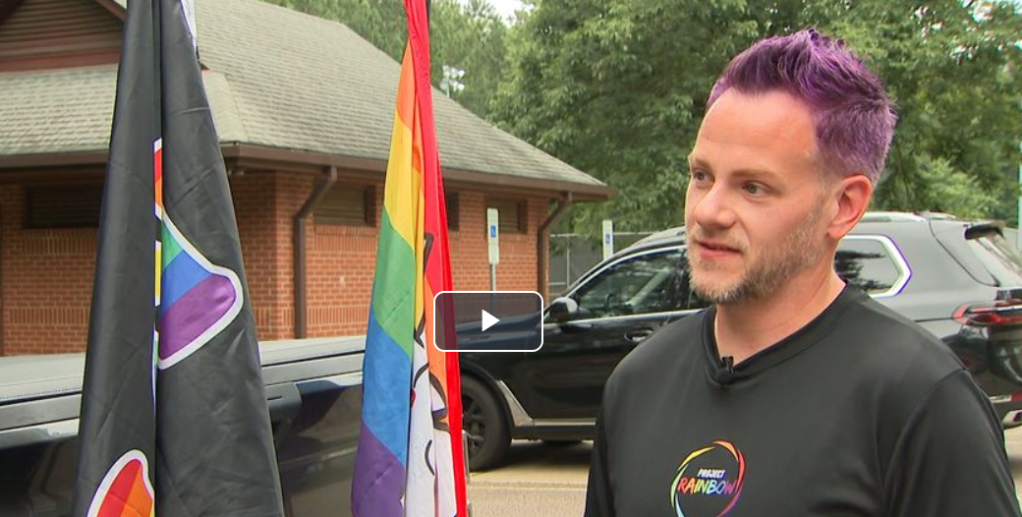
Project Rainbow is a fitness and wellness group based in Apex that holds weekly community walks around the area, specifically in Apex Community Park.
On May 28, the group recorded and confronted a man who deliberately removed and destroyed a pride flag that serves as a marker for the group to identify the gathering location at the park. The flag was then discarded into the surrounding woods.
Initially believed to be an isolated incident, the group returned to Apex Park for their walk Wednesday. This time, the group had a larger turnout and additional flags were added to show “unity and resilience.”
Project Rainbow said the same man came back and repeated the same act of vandalism.
The group said the actions from this person have caused “concern among participants” and highlights “the need for increased community awareness and support for safe, inclusive spaces.”
Tom Voss, the lead of Project Rainbow, said when the vandalism was happening, it was “unreal.”
“I was like, ‘wow this is actually happening in our backyard here in Apex.’ It was disheartening too,” said Voss. “This is an inclusive community and, we feel great coming here and will continue to be here but when it happened again, it was kind of mind blowing.”
Voss said they have added more safety protocols to the group and will continue to host walks in the park.
WRAL News reached out to Apex Police to ask if they’re planning to investigate the person and figure out their motivation. No charges have been announced.
This incident occurred during an important month for the LGBTQIA+ community, as June is Pride Month, which WRAL News recognizes by highlighting LGBTQIA+ history, local leaders and events happening around the Triangle for Pride Month.









 fleeredstates.blog
You must be logged in to post a comment.