Marriage Equality at 10 and Already in Danger.

*This is the opinion of the author.

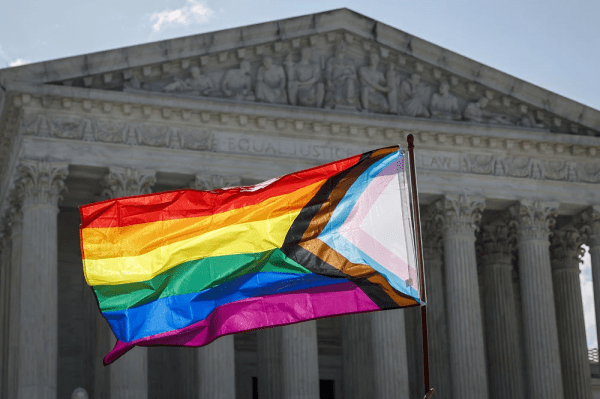
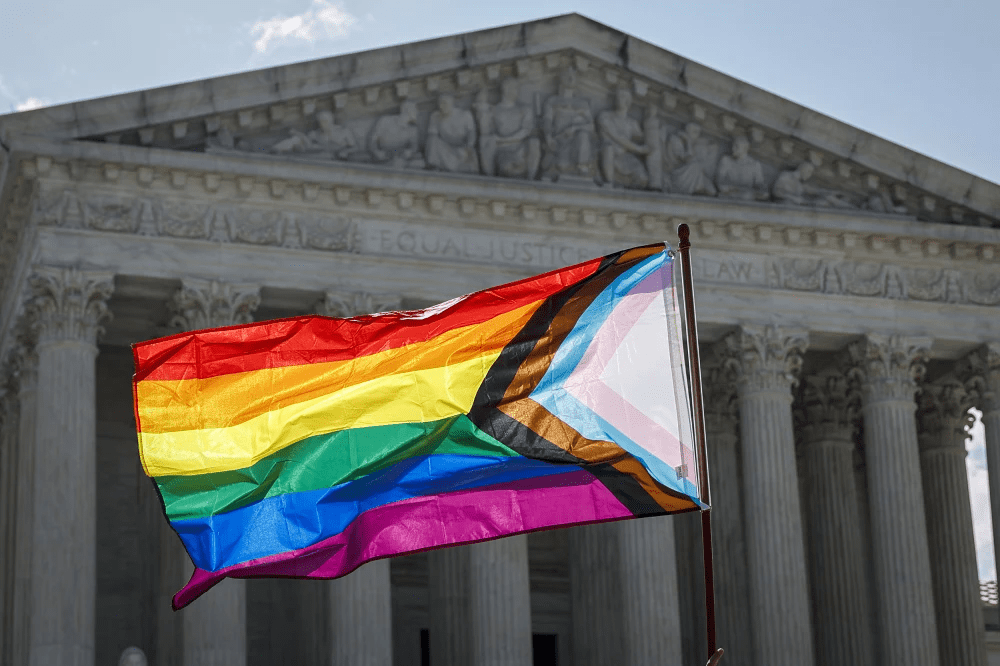
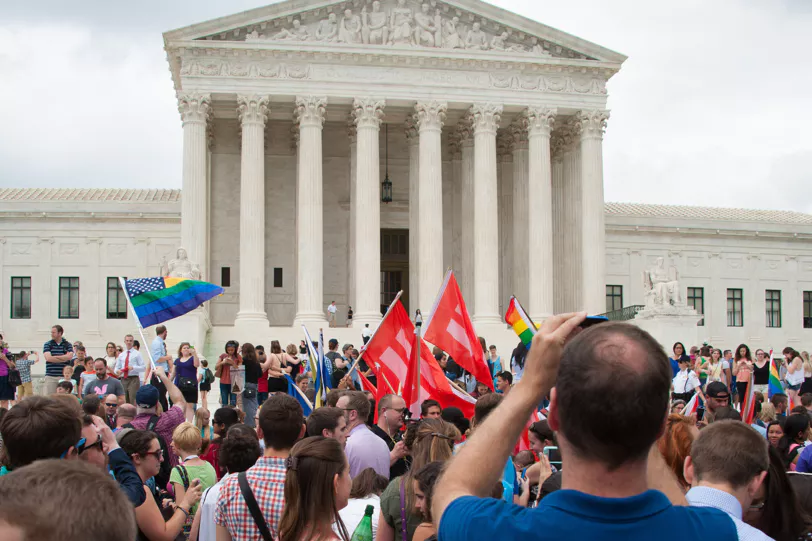
June 26, 2015 was a milestone day in the United States when the SCOTUS decision was announced in the case of Obergefell v Hodges. A narrow 5-4 ruling brought nationwide marriage equality for LGBTQ people much sooner than many expected it. I certainly did not even think it would occur in my lifetime. The nation was split down the middle on the topic. A piecemeal approach was commonplace, with some states making it legal before the ruling, and others staunchly opposed to it in their state constitutions. Yet, a conservative justice saw fit to challenge the status quo and actually base a ruling on the US Constitution for a change, rather than political ideology.

We had already been married for almost 4 years at that point. We were living in Texas in July 2011 and my boyfriend at the time decided to ask me to marry him (now her, but that is another story for another day). We had been living together nearly 10 years. Going to Canada was floated as an idea. I had family in New Jersey and Andrew Cuomo in New York had just its own marriage equality law June 24 that year to take effect in July. So, New York it was! I had become an internet wedding planner of my own wedding by then to be wed on October 09, 2011, one day difference from our “10th anniversary”. It was tedious. It was stressful. It was fun. It was one of the best days of my life. I will never do it again. Sorry boys and girls.

While our own wedding anniversary of 14 years is coming this fall, I sit here writing this and worried that we will have to go through even more bullshit to not only keep our marriage legally intact, but to ensure future generations maintain their right to due process and equality under the law. We have a Supreme Court who has already shown it has the balls to revisit and repeal established forward thinking case law precedent. See, Roe v Wade’s death as a result of Dobbs v. Jackson Women’s Health Organization. Chief Justice Roberts and Justices Thomas, and Alito, who each wrote a dissenting opinion in Obergefell v Hodges are still proudly part of the conservative super majority on the bench. Yes, there is a Respect for Marriage Act that was finally passed in 2022 to help reaffirm O v H.

But we also have a President and House who are willing to turn back time. We have state legislators, who are now firing the opening salvo towards repeal of marriage equality. House reps in 9 states in 2025 proposed resolutions urging SCOTUS to repeal O v H. Those resolutions were passed in North Dakota and Idaho. 4 other states introduced bills, which failed, to introduce covenant marriage to their books, which would have created an exclusive category for opposite sex couples.

I hope everyone enjoys their anniversary, whether you were married today or at another point in time. But please remain vigilant and pay fucking attention to what is going on around you. Your rights can always be removed with the stroke of a pen. And sometimes that pen needs to be shoved into an uncomfortable place.

This is us. Climate change was on full display.

John Turner-McClelland is the editor of several blogs including FleeRedStates. He is a licensed real estate agent in Texas and North Carolina. He was on a Vice News panel once and was allowed to speak for 5 seconds on air. He has been a proud liberal LGBTQ activist and former elected official for a few decades or so. Yes, he is still married.
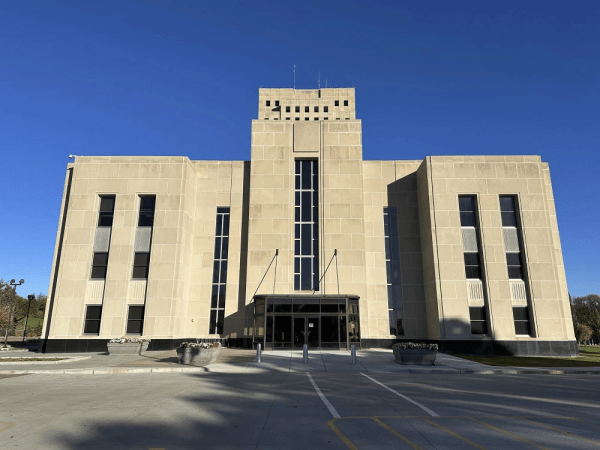
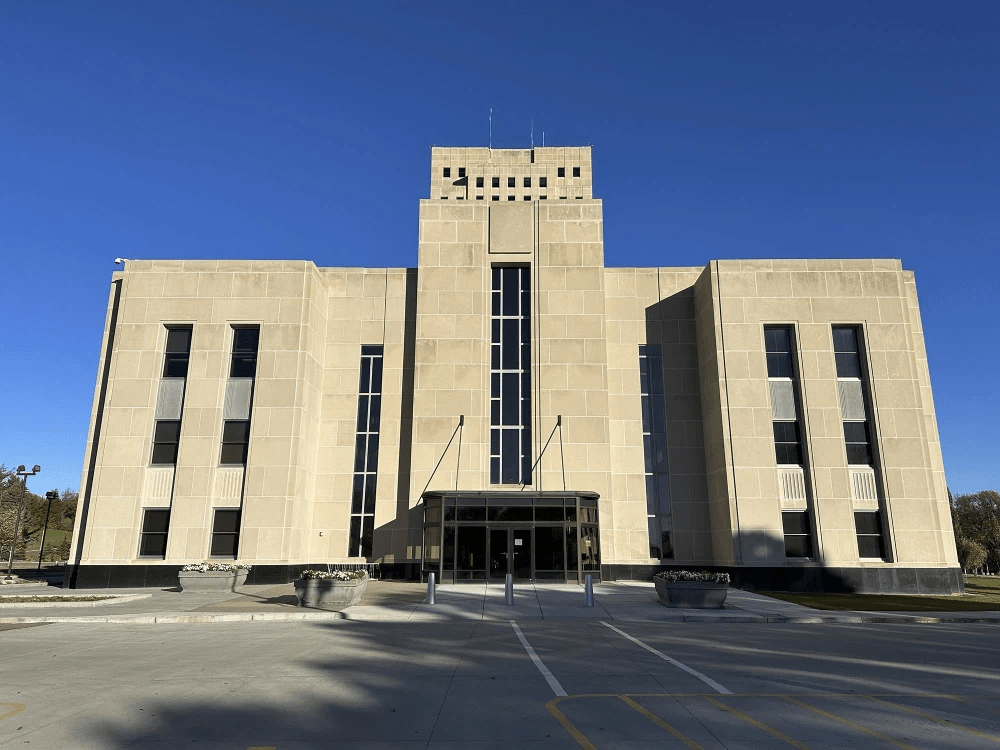
North Dakota Senate rejects resolution asking Supreme Court to overturn gay marriage ruling

*This is being reported by NBC.

The North Dakota Senate on Thursday rejected a measure that would have asked the U.S. Supreme Court to overturn its landmark 2015 ruling that legalized same-sex marriage nationwide.

A vote to approve would have made North Dakota the first state to make such an overture to the high court, after the state House passed the measure last month.

The resolution failed in a 16-31 Senate vote after about 10 minutes of debate.

Democratic Sen. Josh Boschee said in opposition, “I understand that this puts us all in a tough spot, but I ask you to think about who’s put in the toughest position with this resolution: the people of North Dakota who are the subject of the resolution … the gay and lesbian North Dakotans who did not ask to be the subject of this conversation, but the conversation was brought to us.”

Republican Sen. David Clemens supported the measure, saying that while the U.S. Constitution does not mention marriage, the North Dakota Constitution recognizes marriage as between a man and a woman. Clemens said he took an oath to uphold that document.

Several people in the gallery applauded when the measure’s defeat was announced.

Massachusetts-based MassResistance pushed the measure and ones in other states. The group called itself an “international pro-family group.” But it has been labeled an “anti-LGBTQ hate group” by the LGBTQ advocacy organization GLAAD.

Lawmakers in at least nine states have recently introduced measures to try to chip away at same-sex couples’ right to marry. Five of them, including North Dakota’s failed resolution, urge the Supreme Court to overturn its 2015 landmark same-sex marriage ruling.

North Dakota Legislature close to asking Supreme Court to undo landmark gay marriage ruling

*This is reported by NBC.

North Dakota lawmakers are on the verge of making their state the first to tell the U.S. Supreme Court to overturn its decade-old ruling that legalized same-sex marriage nationwide.

Similar efforts — which would not have any direct sway with the nation’s top courts — have been introduced in a handful of states this year. North Dakota’s resolution passed the Republican-led House in February but still requires Senate approval, which is not assured.

“The original Supreme Court ruling in 2015 went totally against the Tenth Amendment, went totally against the North Dakota Constitution and North Dakota Century Code (state laws),” sponsor Republican Rep. Bill Tveit said. “Why did I introduce it? Every one of us in this building took an oath to uphold the Constitution of the United States and the state.”

When the Legislature considers such resolutions, attorney and North Dakota National Guard member Laura Balliet said she wonders why she stays in her home state. The measure makes her feel unwanted, unwelcome and judged because of who she is, she said. She married her wife in 2020.

“I don’t know what this resolution does other than to tell people like myself, my friends and my family that we’re not welcome here, and I’m angry about that because I want to be welcome here. This is my home,” Balliet told the Senate panel that heard the measure on Wednesday — one in a stream of opponents who testified against it.

A push across states

Massachusetts-based MassResistance, which describes itself as an “international pro-family group” but has been labeled “anti-LGBTQ hate group” by the LGBTQ advocacy organization GLAAD, is pushing the resolution across the country.

Massachusetts became the first state to recognize same-sex marriage, in 2004. Over the next 11 years, most states began to recognize it through laws, ballot measures or court decisions before the Supreme Court made it legal nationwide.

Outside of Idaho and North Dakota, the measures have not progressed far, according to an analysis of legislation collected by the bill-tracking service Plural.

By contrast, there have been additional protections for same-sex marriage over the years, including a federal law in 2022. Since 2020, California, Colorado, Hawaii and Nevada have repealed old constitutional amendments that defined marriage as being allowed only between a man and a woman, and Virginia lawmakers advanced a similar measure this year. It could be on the ballot there in 2026.

Differing views

The North Dakota measure states that the Legislature “rejects” the 2015 Obergefell v. Hodges decision and urges the U.S. Supreme Court “to overturn the decision and leave unaddressed the natural definition of marriage as a union between one man, a biological male, and one woman, a biological female.”

In the court’s 2022 ruling that overturned the constitutional right to an abortion, Justice Clarence Thomas said the court should reconsider its precedents in the marriage decision and other past cases.

Soon after the measure passed the North Dakota House last month, several Republican state reps who voted for it stated they meant to vote no or regretted voting yes.

Republican Rep. Matt Ruby said he wished he had voted against the measure, saying his yes vote was for a different intent he realized wasn’t going to happen. The vote sent a bad message “that your marriage isn’t valid and you’re not welcome,” Ruby said. He said he supports the right for same-sex couples to be married.

Republican Rep. Dwight Kiefert said he voted for the resolution because of his Christian faith and that the institution of marriage was established in the Bible in the Garden of Eden between Adam and Eve.

‘Slap in the face’

The measure is a slap in the face to North Dakotans who are happily married and invested in their state, said Democratic Sen. Ryan Braunberger, who is gay and sits on the Senate panel that heard the resolution. The measure sends a dangerous message as North Dakota wants to grow its population and expand economically, he said.

“We want to make sure that we bring everybody in the best of the crop, and that runs the gamut of all sorts of different races, ethnicities, sexual orientations through that,” Braunberger said.

The measure is a declaration, if passed, that lawmakers would want to define marriage through what is arguably a religious lens, which dangerously gets close to infringing upon the Establishment Clause of the U.S. Constitution, said Cody Schuler, advocacy manager for the American Civil Liberties Union’s North Dakota chapter.

“Marriage defined as ‘one man, one woman’ is a particular religious view. It is not held by all religions, all societies or by nonreligious people, and so therefore it is dangerous to be making that kind of statement because it puts legislators on record as to how they might vote on law, on a binding law versus this nonbinding resolution,” Schuler said.

Republicans in 9 states are pushing measures to end same-sex marriage rights

*This was published by LGBTNation.com

Nine states are now seeing Republican efforts to overturn Obergefell v. Hodges, the 2015 Supreme Court decision that legalized marriage equality in all 50 states. This is a new trend; state Republican lawmakers have been focused on rolling back trans rights since 2020.

In five of the states — Idaho, Michigan, Montana, North Dakota, and South Dakota — Republican lawmakers have introduced resolutions calling for the Supreme Court to overturn Obergefell. Those measures have been passed by at least one chamber of the state legislature in Idaho and North Dakota.

In the four other states – Missouri, Oklahoma, Tennessee, and Texas – Republican legislators have introduced bills to privilege heterosexual marriages, with some of the states referring to a new institution called “covenant marriage,” which would be limited to heterosexual couples. The point there, according to the sponsor of one such bill in Oklahoma, is to create inequality in marriage rights between opposite- and same-sex couples and invite a legal challenge that could be taken to the Supreme Court to overturn Obergefell.

Two justices on the Supreme Court have openly stated that they want to overturn Obergefell, and the Court has moved to the right since 2015. Justices Ruth Bader Ginsburg, Anthony Kennedy, and Stephen Breyer were all in the Obergefell majority but have either retired or passed away in the last ten years. Only one was replaced by a Democratic president. It is not clear if there are the five votes needed to protect marriage equality on the Court if it were to take up a test case.

Thirty-five states have amendments or statutes banning same-sex marriage, and most would likely go into effect if the Supreme Court were to overturn Obergefell. Because of the 2022 federal Respect for Marriage Act, though, state and federal governments would have to recognize same-sex marriages performed in other states.

“It’s good to anticipate things that could happen in order that we do our best job preparing ourselves,” Jenny Pizer, chief legal officer of Lambda Legal, told LGBTQ Nation last month. “The bottom line for people is that, if there are things that you can do to secure your relationships, your family status and to take other protective measures, please do those things. Don’t be lulled into complacency by our informed and reasonably expert speculation about what may happen.”

Blog at WordPress.com.

Up ↑