Transgender Candidate Seeks to Replace the Cosponsor of a Stringent Anti-Drag Bill

This blog originally appeared at LGBTQ Nation.

“If you choose to target our communities, be prepared to face competition from within our community.”


A transgender woman is seeking to replace an Ohio legislator who endorsed the state’s anti-drag bill. If successful, she would also become the first openly transgender individual to hold a position in the state’s House of Representatives.

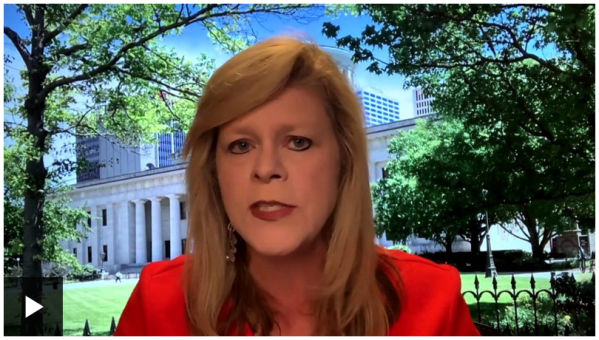
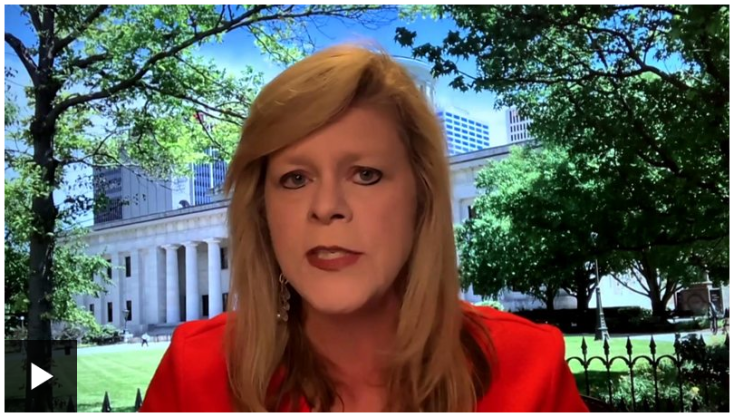
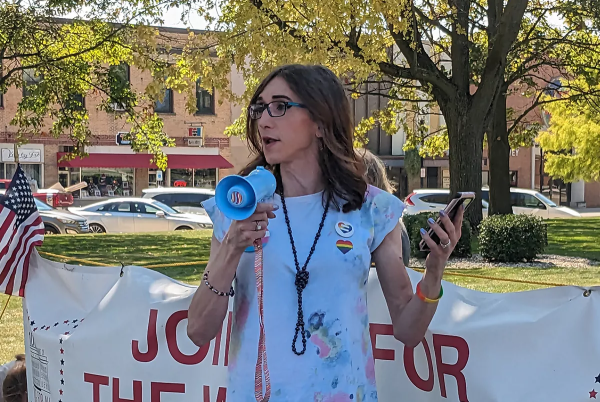
Arienne Childrey is presently the sole candidate in the unopposed March 19 Democratic primary election for the representation of Ohio’s District 84. The 40-year-old shared with the local Cincinnati outlet CityBeat that her decision to run was driven by the intention to challenge state Rep. Angela King (R).


During the previous summer, King and her fellow Republican state Rep. Josh Williams presented House Bill 245. This bill aimed to alter the legal definition of “adult cabaret performances” in the state, encompassing “performers or entertainers who exhibit a gender identity that is different from the performer’s or entertainer’s gender assigned at birth using clothing, makeup, prosthetic or imitation genitals or breasts, or other physical markers.”


The introduced legislation is among numerous bills in state legislatures nationwide that seek to prohibit drag performances in the presence of children. During testimony last month, King referenced a video of a drag performance that occurred in her community.


While King asserted that under HB 245, transgender individuals would still have the freedom to “express their gender as they go to a grocery store, the post office, and live their daily lives,” critics argue that the bill would disproportionately impact the transgender community. In a statement during the summer, Densil Porteus, the executive director of Stonewall Columbus, mentioned that the proposed law “aims to give power to others as to when they believe gender impersonation/drag is being performed.”


As highlighted by writer Joy Ellison in an August editorial for Matter, the current version of the bill explicitly states that transgender entertainers would face a prohibition on performing in locations other than adult venues in Ohio.


Childrey, a resident of Ohio since 2014 and the founder of Northwest Ohio Trans Advocacy, expressed to CityBeat that she couldn’t passively observe King running unopposed in the imminent November election.

“If you’re going to target our communities, then you’ll need to contend with someone from within our community,” she asserted.

“It’s long overdue for us to have someone at the Statehouse genuinely dedicated to addressing those issues—matters that truly affect people and can enhance our lives—rather than someone more focused on causing harm rather than providing assistance,” she added.

Childrey stands against Ohio’s recently enacted prohibition on gender-affirming care. Additionally, her campaign emphasizes education-related matters such as boosting teacher salaries, expanding broadband access in rural areas, and fortifying unions throughout the state.


“Arienne’s dedication to public service and her ability to persevere in the face of challenges set a compelling example for everyone,” stated the transgender advocacy organization TransOhio. “As she confronts the hurdles that come with this groundbreaking journey, we also want to recognize the importance of her candidacy and the influence it will have in paving the way for future generations of trans leaders.”


“The only thing that could bring me more joy than being the first trans woman elected in the state of Ohio,” Childrey expressed, “is to not be the only trans person elected in the state of Ohio.”
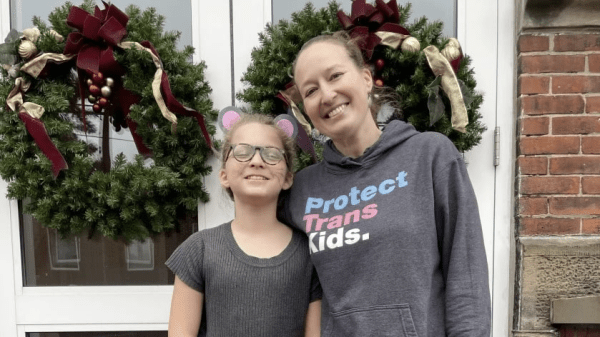
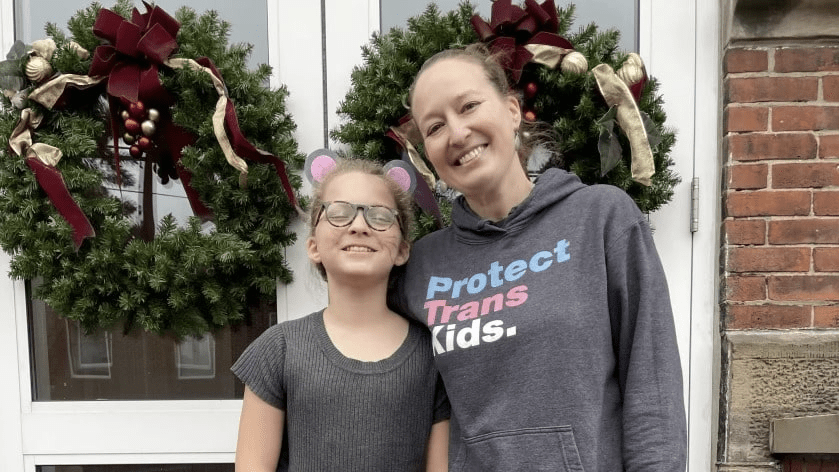
Laws regarding transgender issues compelled this Ohio family to depart from the state.

This blog originally appeared at The Buckeye Flame.


“We are not the parents whom they wish to grant rights.

Blaze, a 12-year-old transgender girl, stands with her parent Dani Beale in front of the Unitarian Universalist Church in Kent. They relocated from Ohio to Western New York due to the state legislature’s decision to prohibit gender-affirming healthcare for transgender youth.

This month, legislators approved House Bill 68, prohibiting gender-affirming healthcare for transgender minors and restricting the participation of trans girls on girls’ and women’s scholastic sports teams.

Governor Mike DeWine has not yet signed the bill into law.

Dani Beale and her family, including 12-year-old transgender daughter Blaze, relocated from Ohio to Western New York due to what they perceive as the anti-trans measures taken by Ohio lawmakers.


Beale expressed that her family felt compelled to relocate when Republican lawmakers introduced the legislation that eventually became HB 68 earlier this year.


“We began to observe the language in the bills, and we realized that we wouldn’t have a choice if we were going to care for our child in the way we believe is necessary for her,” Beale explained.


“The moment that hit me was when Blaze said, ‘I don’t want to live in a state that doesn’t want me.’ That really struck me when she said those words out loud,” she expressed.

Blaze conveyed that she, along with other trans individuals, senses being singled out by lawmakers.


“This has been blown way out of proportion. It’s like 2% of people are trans,” she said. “It’s not affecting a lot of people, but the people that it is affecting, it’s affecting them so much.”

Medical care is the chief concern.


The Saving Adolescents from Experimentation Act (SAFE Act) prohibits gender-affirming healthcare, encompassing puberty blockers and hormone replacement therapies. Detractors argue that it essentially outlaws counseling for transgender youth. This act was consolidated into HB 68 along with the Save Women’s Sports Act, which prohibits transgender girls from participating in girls’ and women’s scholastic sports.

Ohio is currently contemplating a range of restrictions, including the “bathroom bill,” which would prevent students from using restrooms or locker rooms assigned to a sex other than that listed on their birth certificate.


According to Dani Beale, the various proposed bills in Ohio, especially those like the “bathroom bill,” are discriminatory towards her child. However, the primary concern for her family was the potential restriction of medical care. They felt the need to ensure their child could receive proper medical care without facing penalties or risks to their ability to parent, and the legislative environment in Ohio raised concerns in this regard.


Beale and other advocates reference support from institutions like the National Institutes of Health, the American Medical Association, and various other groups endorsing gender-affirming care. They argue that such care has been safely administered for decades.


Beale emphasized that gender-affirming care is the appropriate treatment for Blaze.

“What puberty blockers do is essentially hit pause, preventing puberty and allowing us a few more years to have conversations with her, for her to grow up and explore her identity, ensuring this is the path we want to take,” she explained.

“Individuals can form their opinions on our parenting choices, but when it comes to legislation dictating what I, as a parent, can decide for my child, that’s a significant concern. Particularly in a state where parental rights are highly valued by many, yet we, as parents, are not granted those rights,” Beale expressed.

The politics of gender

Blaze recognized her gender identity as a girl at an early age.

“I’ve known since I could remember that being a boy wasn’t really who I am,” she expressed.


However, she isn’t overly focused on gender.


She emphasized that her identity as a trans person or part of the LGBTQ community has never defined her personality. She’d rather be recognized for her interests and activities, such as playing the euphonium, being part of a basketball team, and her previous involvement in a jump rope team. For her, these are the aspects she wants people to associate with her, rather than her past gender identity, as it doesn’t hold significance in defining who she is.

She thinks that the legislature is overly fixated on the politics of gender, overlooking her humanity in the process.


“I wish they could see beyond my name and gender, delving deep to recognize that I’m not just a trans girl; I am simply a human.” 🔥

BBC News: Issue 1: Ohio vote delivers win for abortion-rights supporters

This blog originally appeared at BBC News.

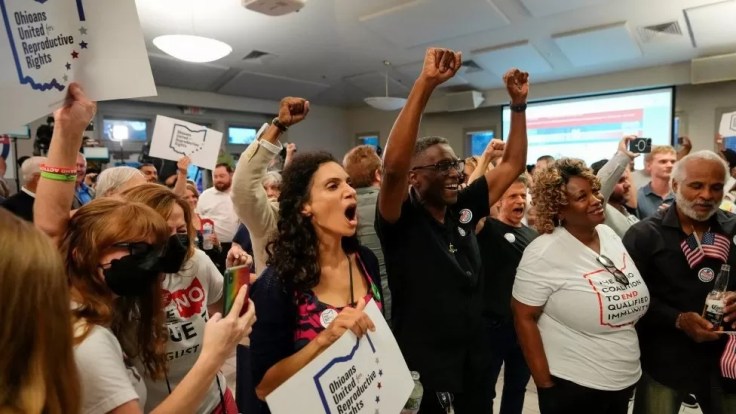
Ohio has rejected a Republican motion to make it harder to change the state’s constitution – a move seen as a defeat for anti-abortion groups.

The Republican-controlled state legislature had hoped to raise the bar for constitutional amendments to 60% instead of a simple majority.

It was largely seen as a move to derail a planned referendum to place abortion rights into the constitution.

President Joe Biden called it a victory for democracy and for women.

The Republican-backed move was a “blatant attempt to weaken voters’ voices and further erode the freedom of women to make their own health care decisions”, Mr Biden said.

When the US Supreme Court ended the nationwide right of women to have an abortion a year ago, a ban on the procedure after six weeks of pregnancy came into effect in Ohio – although it is currently on hold following a legal challenge.

Pro-choice groups in Ohio are planning on using November’s elections to reverse this, by getting the right to have an abortion enshrined into the midwestern state’s constitution.

The measure being voted on, called Issue 1, was rejected by a margin of 57% to 43% with nearly all voting precincts tallied by Wednesday morning.

A campaign group One Person, One Vote told Politico in a statement that Issue 1 was a “deceptive power grab designed to silence” the voice of voters.

Ohio Democratic Party Chair Liz Walters told the Columbus Dispatch that the result is “a victory for the kind of state we want to see”.

More than 600,000 submitted early ballots on the issue – a historically high turnout for August elections in the state.

So was the vote on Issue 1 about protecting the constitution, as its supporters claim, or was it really about abortion?

What is Issue 1?

Issue 1 was the only question on the ballot in Ohio’s 8 August special election.

If passed, it would have changed the threshold for approving amendments from 50% to 60%. And Issue 1 would have also made it harder to put amendments before voters in the first place, asking petitioners to gather signatures from 5% of eligible voters in each of Ohio’s 88 counties, instead of the current 44.

In the 111 years since Ohio first granted voters the power to introduce citizen-led amendments, just 19 of 71 proposed measures have passed the 50% benchmark.

click here to see full blog: https://www.bbc.com/news/world-us-canada-66442370

The 10 Best—and Cheapest—Cities for LGBTQ Homebuyers, 2022 – REALTOR.com

This blog originally appeared at Realtor.com

Pride Month means it’s time to celebrate all things that encourage the dignity, equality, and increased recognition of the LGBTQ community. So go ahead and wave that big, beautiful rainbow flag—and, just maybe, zero in on a place to buy a great new home.

It’s also the perfect time to pause and recognize that while the United States has come a long way from the 1969 Stonewall riots, which sparked the modern gay rights movement, 2022 is on track to break the record for the number of anti-LGBTQ bills introduced in states across the country, with at least 320 highly restrictive bills pending in state legislatures, according to the rights group Freedom for All Americans.

So, as we do each year, Realtor.com® searched for the most LGBTQ-friendly and affordable cities for homebuyers. We looked well past the big coastal cities famous for their thriving gay scenes—and wildly exorbitant home prices—like New York and San Francisco. Instead, we set our sights on smaller cities that are gay-friendly and budget-friendly, where housing is still modestly priced and the overall community and laws are more welcoming and favorable to lesbian, gay, bisexual, transgender, and queer individuals. All of these places have tons of fun things to do—and prices that are still (relatively) within reach.

Read Full Article – https://www.realtor.com/news/trends/the-most-affordable-lgbtq-friendly-places-to-live/


If you’re ready to look for a better state or county for you and your family (or family of choice), reach out to us at www.FleeRedStates.com

Not just Florida. More than a dozen states propose so-called ‘Don’t Say Gay’ bills – NPR

This blog originally appeared at NPR News.

Florida first. Alabama follows. Legislators in Louisiana and Ohio are currently debating legislation that is similar to the Florida statute. A similar bill will be his top priority during the following session, according to Texas Governor Greg Abbott.

At least a dozen states across the country are proposing new legislation that, in some ways, will resemble Florida’s recent contentious bill, which some opponents have dubbed “Don’t Say Gay.”

Read Full Article – https://www.npr.org/2022/04/10/1091543359/15-states-dont-say-gay-anti-transgender-bills


If you’re ready to look for a better state or county for you and your family (or family of choice), reach out to us at www.FleeRedStates.com

Blog at WordPress.com.

Up ↑