The University of Oklahoma (OU) recently dismissed a professor for telling students that they wouldn’t be counted absent from her class if they attended an on-campus protest in support of a transgender teaching assistant (TA) who was placed on administrative leave after she failed a student’s essay that referred to trans people as “demonic.” The newly dismissed professor reportedly didn’t give the same option to students who wanted to protest against the trans TA’s reinstatement, OU said.
OU composition professor Kelli Alvarez was accused of viewpoint discrimination for her alleged actions, OU said in an official statement cited by KFOR. OU’s director of first-year composition emailed Alvarez’s students, calling Alvarez’s actions “inappropriate and wrong,” adding, “The university classroom exists to teach students how to think, not what to think.”
The director informed students that they could miss the Friday class to attend either the protest or the counterprotest. The director also noted that Alvarez has been replaced for the remainder of the term, which ends on December 19. OU said it agrees with the director’s actions.
“Classroom instructors have a special obligation to ensure that the classroom is never used to grant preferential treatment based on personal political beliefs, nor to pressure students to adopt particular political or ideological views,” OU wrote in its statement.
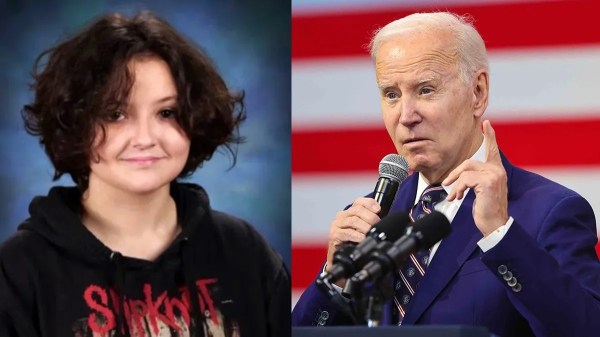
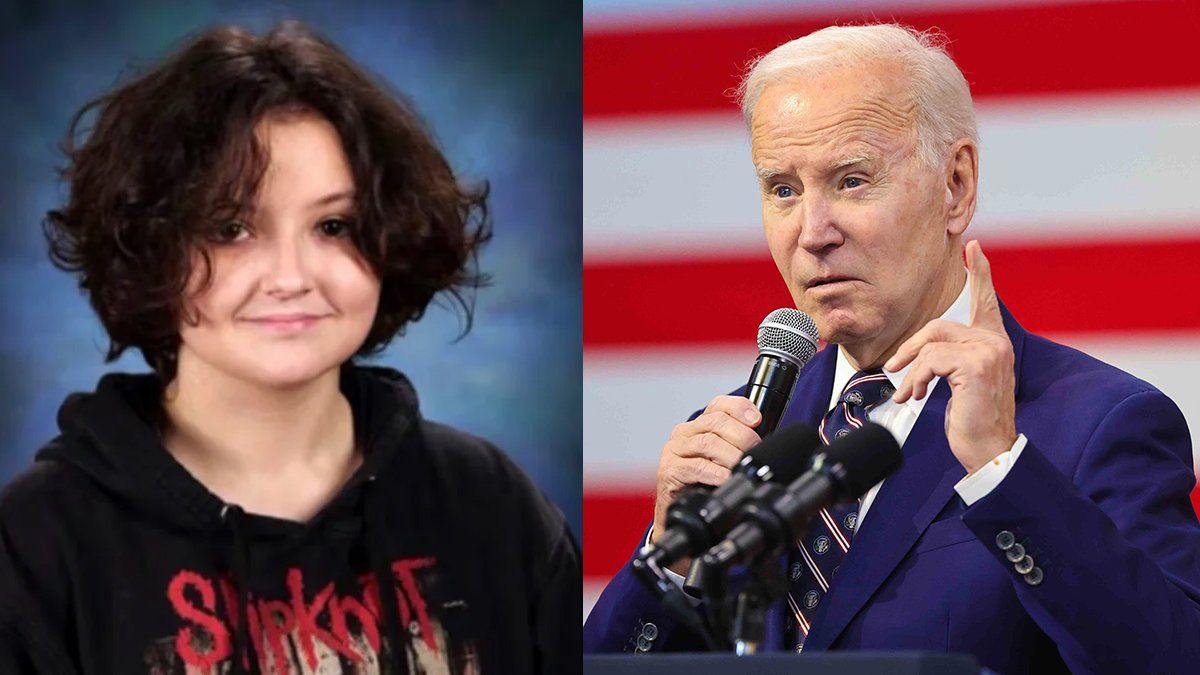
At the Friday protest, hundreds of students rallied in support of Mel Curth, a trans TA who OU placed on administrative leave after she gave a student a grade of zero on an essay about a study on gender roles in which the student called trans people “demonic.” The student, Samantha Fulnecky, filed a religious discrimination complaint with OU in November, and the university put Curth on administrative leave.
Students at the protest chanted, “OU shame on you,” “Protect our professors,” and “Justice for Mel,” KOKH-TV reported. Even students who didn’t agree with Curth’s failing grade for the student agreed that Fulnecky’s essay was poorly written and that Curth didn’t need to be put on leave.
At one point in the protest, a Turning Point USA (TPUSA) supporter got in front of the crowd and began counterprotesting.
The OU Chapter of the right-wing young conservatives group published a transphobic tweet saying, “We should not be letting mentally ill professors around students. Clearly this professor lacks the intellectual maturity to set her own bias aside and take grading seriously. Professors like this are the very reason conservatives can’t voice their beliefs in the classroom.”
In her paper, Fulnecky wrote that people aren’t “pressured to be more masculine or feminine,” that she doesn’t see it as a problem when peers use teasing to enforce gender norms, and that “eliminating gender in our society… pulls us farther from God’s original plan.” She also said trans identities are “demonic and severely [harm] American youth.”
In her response, Curth — to whom the OU Department of Psychology recently gave its Outstanding Graduate Teaching Award — wrote that her grade wasn’t because Fulnecky had “certain beliefs,” but rather because the paper “does not answer the questions for this assigment, contradicts itself, heavily uses personal ideology over empirical evidence in a scientific class, and is at times offensive.”
In a statement, OU wrote that it takes First Amendment rights and religious freedoms seriously and began a “full review” of the situation to “swiftly” address the matter, including a “formal grade appeals process” and a review of the student’s claim of “illegal discrimination based on religious beliefs.”
The university also said that Curth had been placed on administrative leave during the finalization of the discrimination review, leaving “a full-time professor” to serve as the course’s instructor for the rest of the semester.
A lot of states are passing laws that target the LGBTQ+ community — but these 15 are the absolute worst.
Over 1,000 anti-LGBTQ+ laws have been proposed across every state legislature in the U.S. over the past two years, according to the American Civil Liberties Union, and 126 have passed into law. Less than two months into the 2025 legislative session, 390 laws targeting LGBTQ+ people have been proposed.
While marriage equality and anti-discrimination protections based on sexual orientation and gender identity are still guaranteed federally by U.S. Supreme Court rulings (for now), LGBTQ+ people are still concerned about their rights being taken away, especially when only 15 states have “shield laws” protecting access to gender-affirming care and abortion.
Based on laws surrounding marriage, family rights, health care, education, and youth collected by the Movement Advancement Project, here are the 15 worst states for LGBTQ+ people.
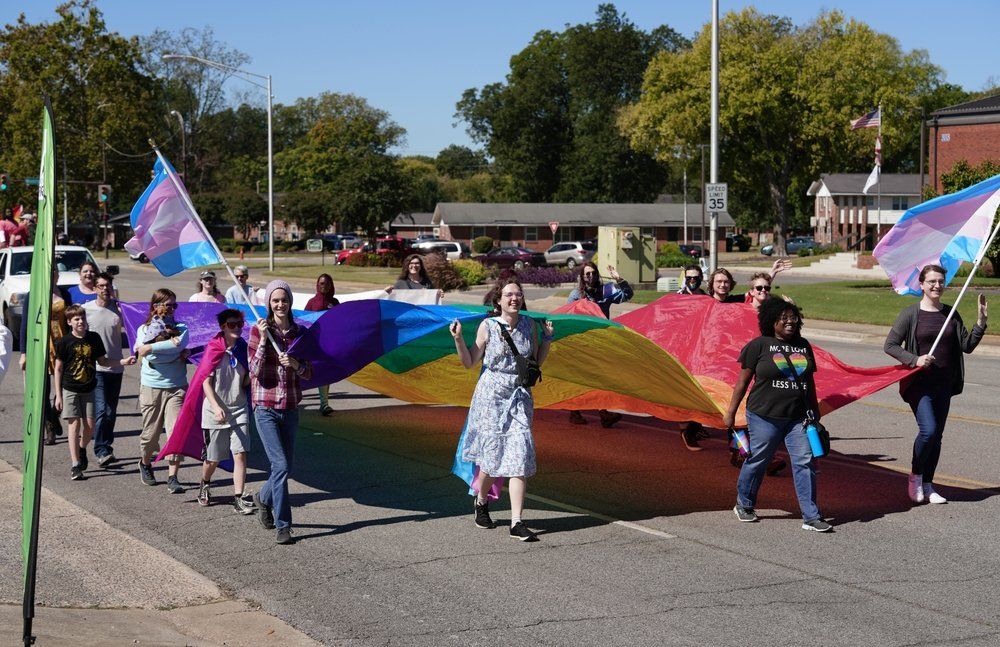
Pride Parade in Huntsville, Alabama (October 1, 2022)
Nondiscrimination laws: Alabama does not have nondiscrimination laws in employment, housing, health care, education, public accommodations, or credit/lending. Its state code incorrectly defines sex as exclusively male or female, and it prohibits transgender people from using public facilities that align with their identities.
Marriage equality and parental rights: Alabama does not have adoption or foster care nondiscrimination protections for LGBTQ+ parents. It does not have second-parent adoption for unmarried couples, confirmatory adoption, nor recognition for parents using assisted reproductive technologies. It also does not have family leave laws that encompass LGBTQ+ people.
Education and youth policies: Alabama has a “Don’t Say Gay” law restricting discussion of LGBTQ+ identities in classrooms. It has banned trans students from participating in sports or using school facilities based on their identities, and it requires staff to forcibly out LGBTQ+ students to their guardians. The state also has a “religious exemption” law for Child Welfare Services.
Healthcare access and rights: Alabama has banned life-saving gender-affirming care for youth, though it permits the discredited and harmful practice of so-called conversion therapy for youth. Health insurance companies, including Medicaid, are not required to provide coverage related to gender transition or fertility treatments. The state also has a “religious exemption” law for healthcare providers.
Criminal justice: Alabama’s hate crime laws do not encompass sexual orientation and gender identity, and it has not banned the so-called “LGBTQ+ panic” defense.
Arkansas
Danielsen_Photography / Shutterstock.com
3rd annual Pride Walk at Hot Springs National Park, Arkansas (June, 4 2021)
Nondiscrimination laws: Arkansas does not have nondiscrimination laws in employment, housing, health care, education, public accommodations, or credit/lending. The state bans cities and local ordinances from passing nondiscrimination laws, and it has law about “adult” performances that could be used to target or restrict drag.
Marriage equality and parental rights: Arkansas does not have adoption or foster care nondiscrimination protections for LGBTQ+ parents. It does not have second-parent adoption for unmarried couples, confirmatory adoption, nor recognition for parents using assisted reproductive technologies. It also does not have family leave laws that encompass LGBTQ+ people.
Education and youth policies: Arkansas has a “Don’t Say Gay” law restricting discussion of LGBTQ+ identities in classrooms. It has banned trans students from participating in sports or using school facilities based on their identities, and it requires staff to forcibly out LGBTQ+ students to their guardians.
Healthcare access and rights: Arkansas has banned life-saving gender-affirming care for youth, though it permits the discredited and harmful practice of so-called conversion therapy for youth. Medicaid is forbidden from providing coverage related to gender transition to minors, and insurance companies are not required to cover fertility treatments. The state also has a “religious exemption” law for healthcare providers.
Criminal justice: Arkansas’ hate crime laws do not encompass sexual orientation and gender identity, and it has not banned the so-called “LGBTQ+ panic” defense. It has an HIV criminalization law that may require sex offender registration.
Florida
Chris_Harris / Shutterstock.com
Mourners pay their respects to the fallen at the Pulse Nightclub memorial on the 5th anniversary of the Pulse mass shooting in Orlando, Florida (June 12, 2021)
Nondiscrimination laws: Florida has nondiscrimination laws in employment, housing, and public accommodations, but not in credit/lending, health care, nor education. The state prohibits transgender people from using public facilities that align with their identities, and it does not allow updating gender markers on driver’s licenses or birth certificates. It has law about “adult” performances that could be used to target or restrict drag
Marriage equality and parental rights: Florida does not have adoption or foster care nondiscrimination protections for LGBTQ+ parents. It does not have second-parent adoption for unmarried couples, confirmatory adoption, nor recognition for parents using assisted reproductive technologies. It also does not have family leave laws that encompass LGBTQ+ people.
Education and youth policies: Florida originated the “Don’t Say Gay” laws restricting discussion of LGBTQ+ identities in classrooms. It has banned trans students from participating in sports or using school facilities based on their identities, and it requires staff to forcibly out LGBTQ+ students to their guardians.
Healthcare access and rights: Florida has banned life-saving gender-affirming care for youth, though it permits the discredited and harmful practice of so-called conversion therapy for youth. Medicaid is forbidden from providing coverage related to gender transition for all ages, and insurance companies are not required to cover fertility treatments. The state also has a “religious exemption” law for healthcare providers.
Criminal justice: Florida’s hate crime laws only encompass sexual orientation, not gender identity. It has not banned the so-called “LGBTQ+ panic” defense, and it has an HIV criminalization law.
Idaho
Venture Out Media / Shutterstock.com
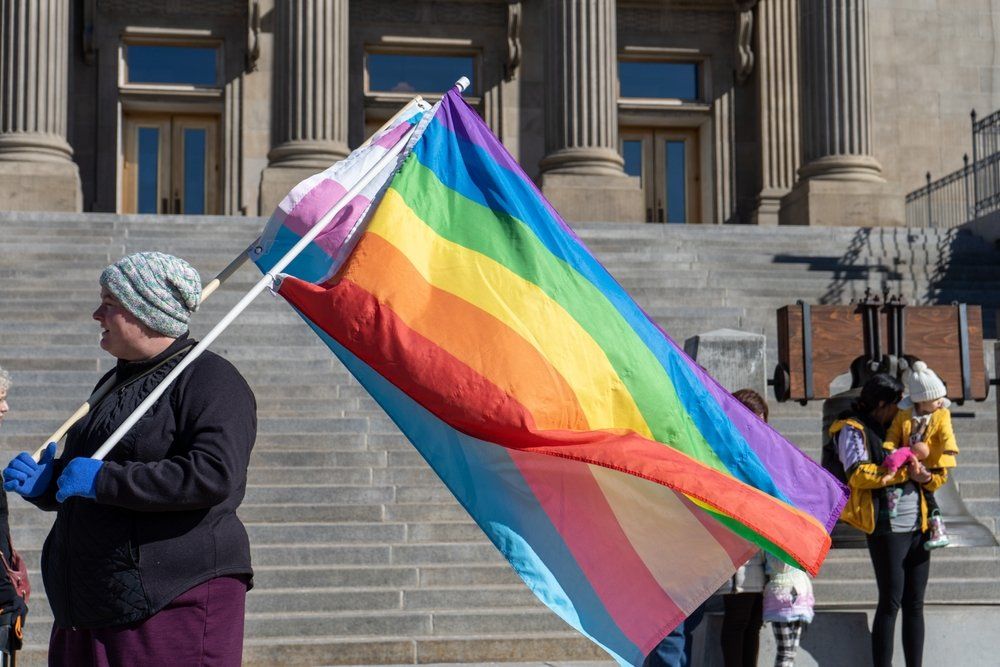
Rally in support of transgender youth and gender-affirming care in Boise, Idaho (February 24, 2023)
Nondiscrimination laws: Idaho has nondiscrimination laws in employment, housing, and public accommodations, but not in credit/lending, education, health care, nor for state employees. Its state code incorrectly defines sex as exclusively male or female.
Marriage equality and parental rights: Idaho does not have adoption or foster care nondiscrimination protections for LGBTQ+ parents. It has second-parent adoption for unmarried couples, but not confirmatory adoption nor recognition for parents using assisted reproductive technologies. It also does not have family leave laws that encompass LGBTQ+ people.
Education and youth policies: Idaho has banned trans students from participating in sports or using school facilities based on their identities, and it requires staff to forcibly out LGBTQ+ students to their guardians. The state also has a “religious exemption” law for Child Welfare Services, though it has protections for LGBTQ+ youth in the Child Welfare System.
Healthcare access and rights: Idaho has banned life-saving gender-affirming care for youth, though it permits the discredited and harmful practice of so-called conversion therapy for youth. Medicaid is forbidden from providing coverage related to gender transition for all ages, and insurance companies are not required to cover fertility treatments. The state also has a “religious exemption” law for healthcare providers.
Criminal justice: Idaho’s hate crime laws do not encompass sexual orientation and gender identity. It has not banned the so-called “LGBTQ+ panic” defense, and it has an HIV criminalization law.
Indiana
Umut Tolga Pehlivan / Shutterstock.com
Indiana University Bloomington Students walking at Indy Pride in Indianapolis, Indiana (June 4, 2008)
Nondiscrimination laws: Indiana has weaker nondiscrimination laws in employment, housing, and public accommodations, but not in credit/lending, education, nor health care. The state also has a broad “religious exemption” law.
Marriage equality and parental rights: Indiana has adoption or foster care nondiscrimination protections based on sexual orientation, but not gender identity. It has second-parent adoption for unmarried couples, but not confirmatory adoption nor recognition for parents using assisted reproductive technologies. It also does not have family leave laws that encompass LGBTQ+ people.
Education and youth policies: Indiana has a “Don’t Say Gay” law restricting discussion of LGBTQ+ identities in classrooms. It has banned trans students from participating in sports or using school facilities based on their identities, and it requires staff to forcibly out LGBTQ+ students to their guardians.
Healthcare access and rights: Indiana has banned life-saving gender-affirming care for youth, though it permits the discredited and harmful practice of so-called conversion therapy for youth. Medicaid and state health insurance plans are not required to provide coverage related to gender transition or fertility treatments, but it has trans-inclusive health benefits for state employees.
Criminal justice: Indiana’s hate crime laws do not encompass sexual orientation and gender identity, and it has not banned the so-called “LGBTQ+ panic” defense. It has an HIV criminalization law that may require sex offender registration.
Louisiana
Scott Colesby / Shutterstock.com
Southern Decadence Parade march through the French Quarter in New Orleans, Louisiana (September 1, 2024)
Nondiscrimination laws: Louisiana does not have nondiscrimination laws in employment, housing, health care, education, public accommodations, or credit/lending. Its state code incorrectly defines sex as exclusively male or female, and it prohibits transgender people from using public facilities that align with their identities. The state also has a broad “religious exemption” law.
Marriage equality and parental rights: Louisiana does not have adoption or foster care nondiscrimination protections for LGBTQ+ parents. It does not have second-parent adoption for unmarried couples, confirmatory adoption, nor recognition for parents using assisted reproductive technologies. It also does not have family leave laws that encompass LGBTQ+ people.
Education and youth policies: Louisiana has a “Don’t Say Gay” law restricting discussion of LGBTQ+ identities in classrooms. It has banned trans students from participating in sports or using school facilities based on their identities, and it requires staff to forcibly out LGBTQ+ students to their guardians.
Healthcare access and rights: Louisiana has banned life-saving gender-affirming care for youth, though it permits the discredited and harmful practice of so-called conversion therapy for youth. Health insurance companies, including Medicaid, are not required to provide coverage related to gender transition or fertility treatments, and state employees do not have trans-inclusive benefits.
Criminal justice: Louisiana’s hate crime laws only encompass sexual orientation, not gender identity. It has not banned the so-called “LGBTQ+ panic” defense, and it has an HIV criminalization law that may require sex offender registration.
Mississippi
Carmen K. Sisson / Shutterstock.com
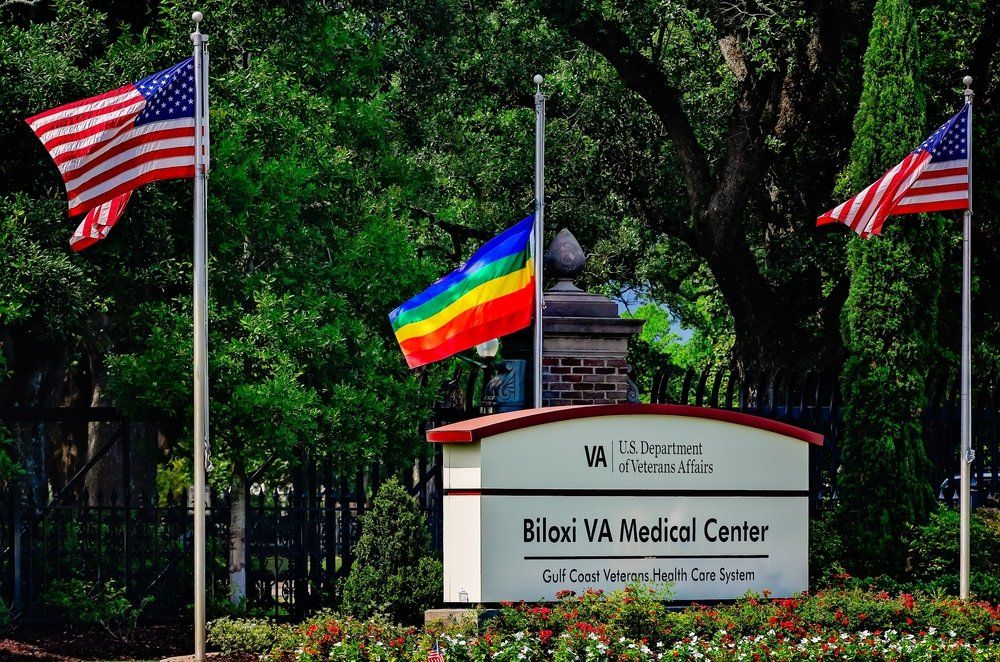
A rainbow flag supporting Pride month flies a the Biloxi VA Medical Center in Biloxi, Mississippi (June 5, 2023)
Nondiscrimination laws: Mississippi does not have nondiscrimination laws in employment, housing, health care, education, public accommodations, or credit/lending. Its state code incorrectly defines sex as exclusively male or female, and it prohibits transgender people from using public facilities that align with their identities. The state also has a broad “religious exemption” law.
Marriage equality and parental rights: Mississippi does not have adoption or foster care nondiscrimination protections for LGBTQ+ parents. It has second-parent adoption for unmarried couples, but not confirmatory adoption nor recognition for parents using assisted reproductive technologies. It also does not have family leave laws that encompass LGBTQ+ people.
Education and youth policies: Mississippi has a “Don’t Say Gay” law restricting discussion of LGBTQ+ identities in classrooms. It has banned trans students from participating in sports or using school facilities based on their identities, and it requires staff to forcibly out LGBTQ+ students to their guardians. The state also has a “religious exemption” law for Child Welfare Services.
Healthcare access and rights: Mississippi has banned life-saving gender-affirming care for youth, though it permits the discredited and harmful practice of so-called conversion therapy for youth. Medicaid is forbidden from providing coverage related to gender transition for youth, and insurance companies are not required to cover fertility treatments. The state also has a “religious exemption” law for healthcare providers.
Criminal justice: Mississippi’s hate crime laws do not encompass sexual orientation and gender identity. It has not banned the so-called “LGBTQ+ panic” defense, and it has an HIV criminalization law.
Missouri
Ryanzo W. Perez / Shutterstock.com
A view down one of the streets filled with celebrants during Saint Louis PrideFest in Missouri (June 24, 2023)
Nondiscrimination laws: Missouri has weaker nondiscrimination laws in housing, and public accommodations, but not in employment, credit/lending, education, nor health care. The state also has a broad “religious exemption” law.
Marriage equality and parental rights: Missouri’sadoption or foster care nondiscrimination protections only encompass sexual orientation, not gender identity. It does not have second-parent adoption for unmarried couples, confirmatory adoption, nor recognition for parents using assisted reproductive technologies. It also does not have family leave laws that encompass LGBTQ+ people.
Education and youth policies: Missouri has banned schools and districts from passing nondiscrimination or anti-bullying policies protecting LGBTQ+ students. It has banned trans students from participating in sports based on their identities, but not from using facilities that align with their identities.
Healthcare access and rights: Missouri has banned life-saving gender-affirming care for youth, though it permits the discredited and harmful practice of so-called conversion therapy for youth. Medicaid is forbidden from providing coverage related to gender transition for all ages, and insurance companies are not required to cover fertility treatments. The state also has a “religious exemption” law for healthcare providers.
Criminal justice: Missouri’s hate crime laws encompass sexual orientation and gender identity, though it has not banned the so-called “LGBTQ+ panic” defense, and it has an HIV criminalization law.
Montana
Cavan-Images / Shutterstock.com
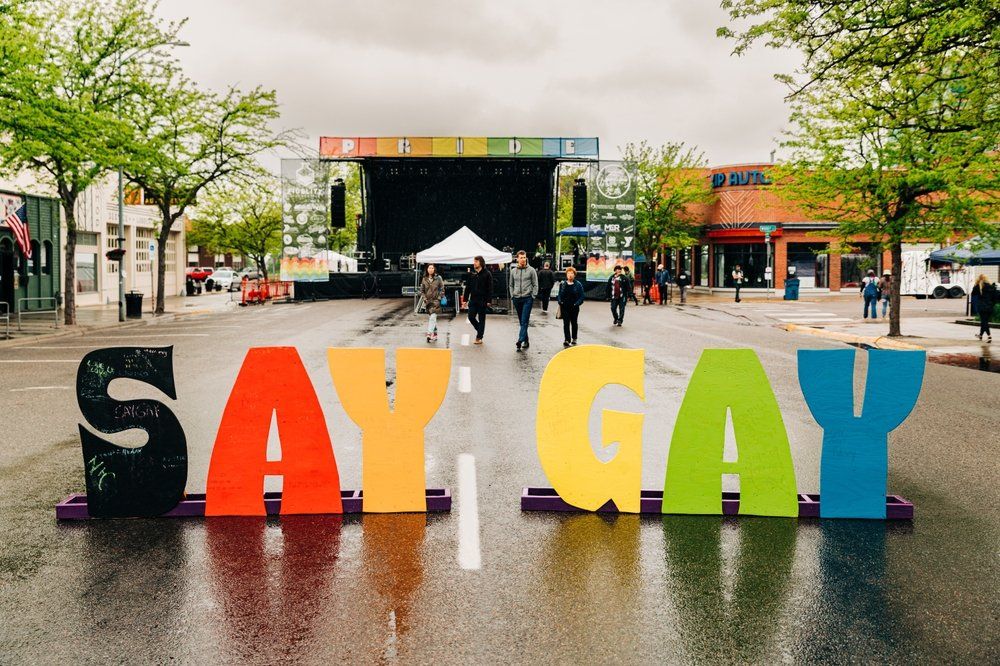
“Say Gay” sign at Missoula Pride in Montana (March 29, 2024)
Nondiscrimination laws: Montana does not have nondiscrimination laws in employment, housing, health care, education, public accommodations, or credit/lending.Its state code incorrectly defines sex as exclusively male or female, and it has a broad “religious exemption” law. The state has also explicitly restricted drag performances, and does not allow updating gender markers on birth certificates
Marriage equality and parental rights: Montana’sadoption or foster care nondiscrimination protections only encompass sexual orientation, not gender identity. It has second-parent adoption for unmarried couples, but not confirmatory adoption nor recognition for parents using assisted reproductive technologies. It also does not have family leave laws that encompass LGBTQ+ people.
Education and youth policies: Montana requires that parents be notified of LGBTQ+ curricula so they can opt out. It has banned trans students from participating in sports based on their identities, but not from using facilities that align with their identities. The state requires staff to forcibly out LGBTQ+ students to their guardians.
Healthcare access and rights: Montana has banned life-saving gender-affirming care for youth, though it permits the discredited and harmful practice of so-called conversion therapy for youth. Health insurance companies and Medicaid are required to cover care related to gender transition, and there is some coverage for fertility treatments. However, the state has a “religious exemption” law for healthcare providers.
Criminal justice: Montana’s hate crime laws do not encompass sexual orientation and gender identity. It has not banned the so-called “LGBTQ+ panic” defense, and it has an HIV criminalization law.
Oklahoma
Kit Leong / Shutterstock.com
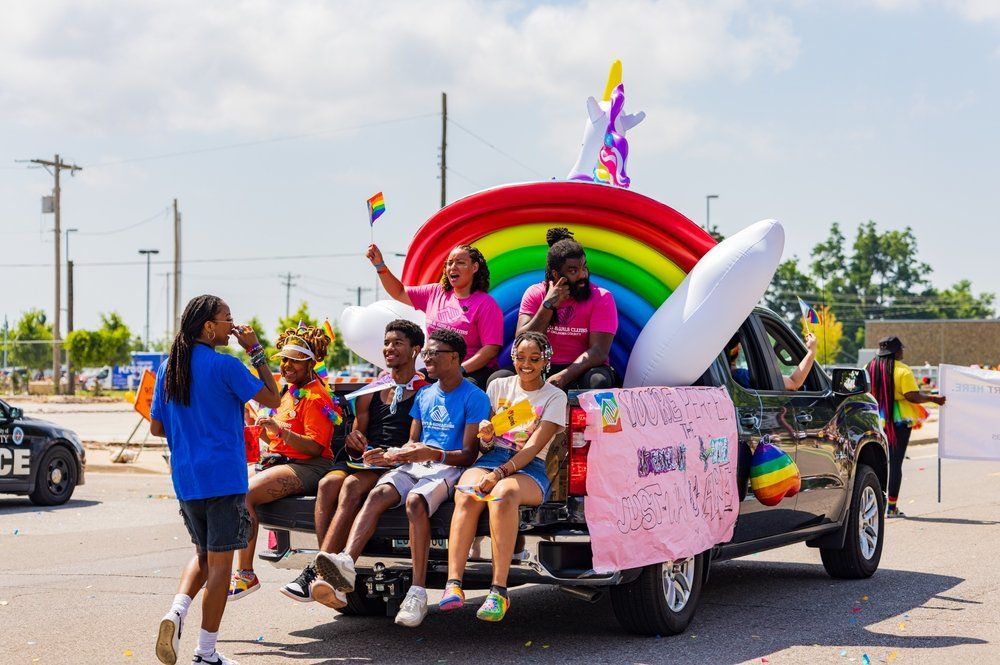
Pride Parade in Oklahoma (June 26, 2023)
Nondiscrimination laws: Oklahoma does not have nondiscrimination laws in employment, housing, health care, education, public accommodations, or credit/lending. Its state code incorrectly defines sex as exclusively male or female, and it prohibits updated gender markers on birth certificates. It also has a broad “religious exemption” law.
Marriage equality and parental rights: Oklahoma does not have adoption or foster care nondiscrimination protections for LGBTQ+ parents. It has second-parent adoption for unmarried couples, but not confirmatory adoption nor recognition for parents using assisted reproductive technologies. It also does not have family leave laws that encompass LGBTQ+ people.
Education and youth policies: Oklahoma has a weaker version of a “Don’t Say Gay” law that restricts the discussion of “homosexuality” in specific school subjects. It has banned trans students from participating in sports or using school facilities based on their identities. The state also has a “religious exemption” law for Child Welfare Services, though it has protections for LGBTQ+ youth in the Child Welfare System.
Healthcare access and rights: Oklahoma has banned life-saving gender-affirming care for youth, though it permits the discredited and harmful practice of so-called conversion therapy for youth. Health insurance companies, including Medicaid, are not required to provide coverage related to gender transition or fertility treatments, and state employees are not permitted trans-inclusive benefits.
Criminal justice: Oklahoma’s hate crime laws do not encompass sexual orientation and gender identity. It has not banned the so-called “LGBTQ+ panic” defense, and it has an HIV criminalization law.
South Carolina
Shuttershock creative
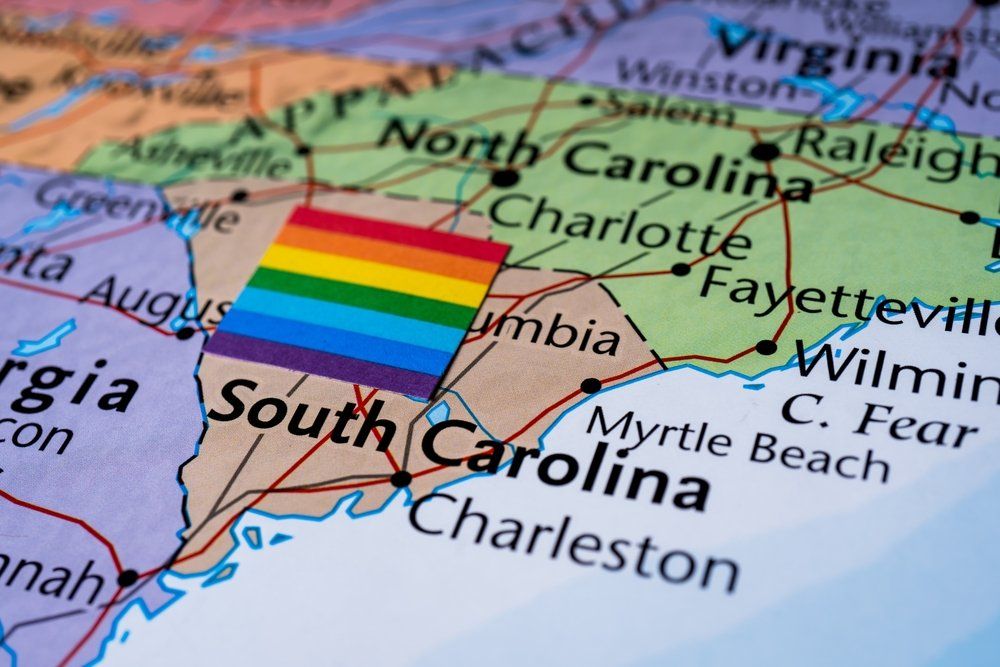
Rainbow flag on a map of South Carolina
Nondiscrimination laws: South Carolinadoes not have nondiscrimination laws in employment, housing, health care, education, public accommodations, or credit/lending. It has a broad “religious exemption” law.
Marriage equality and parental rights: South Carolina‘sadoption or foster care nondiscrimination protections only encompass sexual orientation, not gender identity. It does not have second-parent adoption for unmarried couples, confirmatory adoption, nor recognition for parents using assisted reproductive technologies. It also does not have family leave laws that encompass LGBTQ+ people.
Education and youth policies: South Carolinahas banned trans students from participating in sports based on their identities, but not from using facilities that align with their identities. The state requires staff to forcibly out LGBTQ+ students to their guardians. The state also has a “religious exemption” law for Child Welfare Services.
Healthcare access and rights: South Carolina has banned life-saving gender-affirming care for youth, though it permits the discredited and harmful practice of so-called conversion therapy for youth. Medicaid is forbidden from providing coverage related to gender transition for all ages, and insurance companies are not required to cover fertility treatments. The state also has a “religious exemption” law for healthcare providers.
Criminal justice: South Carolina‘s hate crime laws do not encompass sexual orientation and gender identity. It has not banned the so-called “LGBTQ+ panic” defense, and it has an HIV criminalization law.
South Dakota
Shuttershock creative
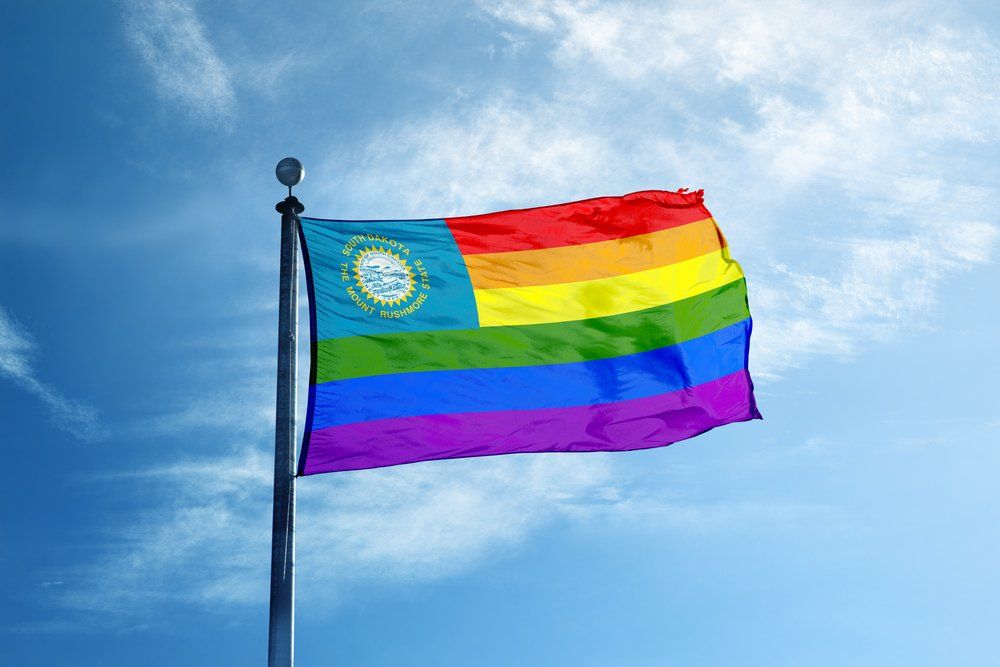
South Dakota state flag with rainbow stripes
Nondiscrimination laws: South Dakota does not have nondiscrimination laws in employment, housing, health care, education, public accommodations, or credit/lending. It has a broad “religious exemption” law.
Marriage equality and parental rights: South Dakota’sadoption or foster care nondiscrimination protections encompass sexual orientation and gender identity. However, it does not have second-parent adoption for unmarried couples, confirmatory adoption, nor recognition for parents using assisted reproductive technologies. It also does not have family leave laws that encompass LGBTQ+ people.
Education and youth policies: South Dakotahas banned schools and districts from passing nondiscrimination or anti-bullying policies protecting LGBTQ+ students. It has banned trans students from participating in sports based on their identities, but not from using facilities that align with their identities. The state also has a “religious exemption” law for Child Welfare Services, though it has protections for LGBTQ+ youth in the Child Welfare System.
Healthcare access and rights: South Dakota has banned life-saving gender-affirming care for youth, though it permits the discredited and harmful practice of so-called conversion therapy for youth. Health insurance companies, including Medicaid, are not required to provide coverage related to gender transition or fertility treatments, and state employees are not permitted trans-inclusive benefits.
Criminal justice: South Dakota‘s hate crime laws do not encompass sexual orientation and gender identity, and it has not banned the so-called “LGBTQ+ panic” defense. It has an HIV criminalization law that may require sex offender registration.
Tennessee
evenfh / Shutterstock.com
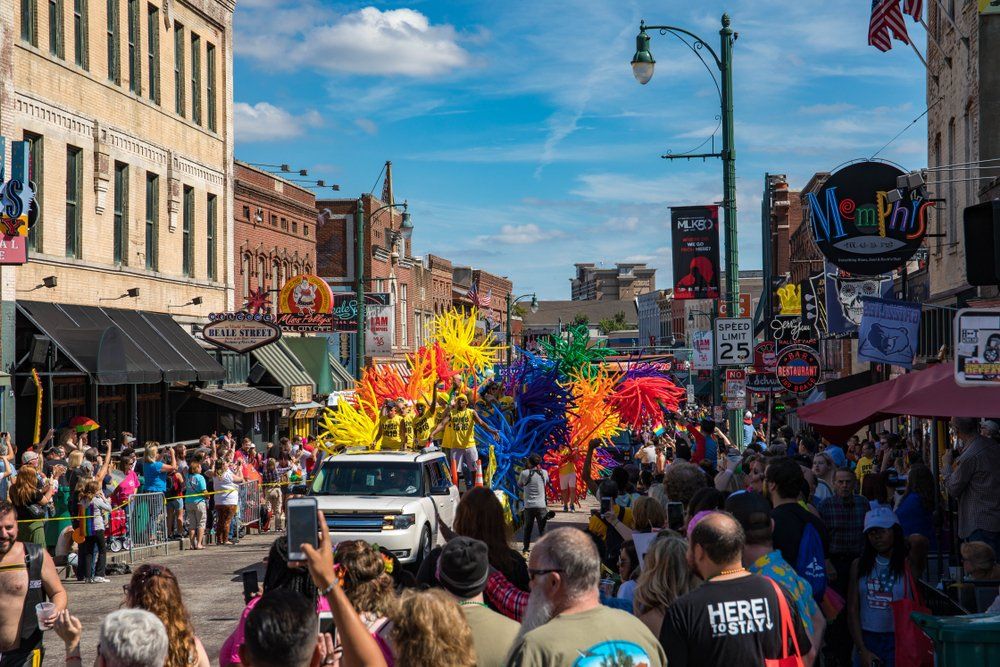
Pride Parade on Beale Street in Memphis, Tennessee (September 28, 2018)
Nondiscrimination laws: Tennessee does not have nondiscrimination laws in employment, housing, health care, education, public accommodations, or credit/lending. It instead bans cities and local ordinances from passing nondiscrimination laws. State code incorrectly defines sex as exclusively male or female, and it does not allow updating gender markers on driver’s licenses or birth certificates. The state has a broad “religious exemption” law that even allows officials to deny marriage licenses based on their personal beliefs. It has also explicitly restricted drag performances.
Marriage equality and parental rights: Tennessee’sadoption or foster care nondiscrimination protections encompass sexual orientation and gender identity. However, it does not have second-parent adoption for unmarried couples, confirmatory adoption, nor recognition for parents using assisted reproductive technologies. It also does not have family leave laws that encompass LGBTQ+ people.
Education and youth policies: Tennessee requires that parents be notified of LGBTQ+ curricula so they can opt out. It has banned trans students from participating in sports based on their identities and from using facilities that align with their identities. The state requires staff to forcibly out LGBTQ+ students to their guardians. The state also has a “religious exemption” law for Child Welfare Services, though it has protections for LGBTQ+ youth in the Child Welfare System.
Healthcare access and rights: Tennessee has banned life-saving gender-affirming care for youth, though it permits the discredited and harmful practice of so-called conversion therapy for youth. Medicaid is forbidden from providing coverage related to gender transition for all ages, and insurance companies are not required to cover fertility treatments. The state also has a “religious exemption” law for healthcare providers, and state employees are not permitted trans-inclusive benefits.
Criminal justice: Tennessee’s hate crime laws encompass sexual orientation and gender identity, though it has not banned the so-called “LGBTQ+ panic” defense, and it has an HIV criminalization law that may require sex offender registration.
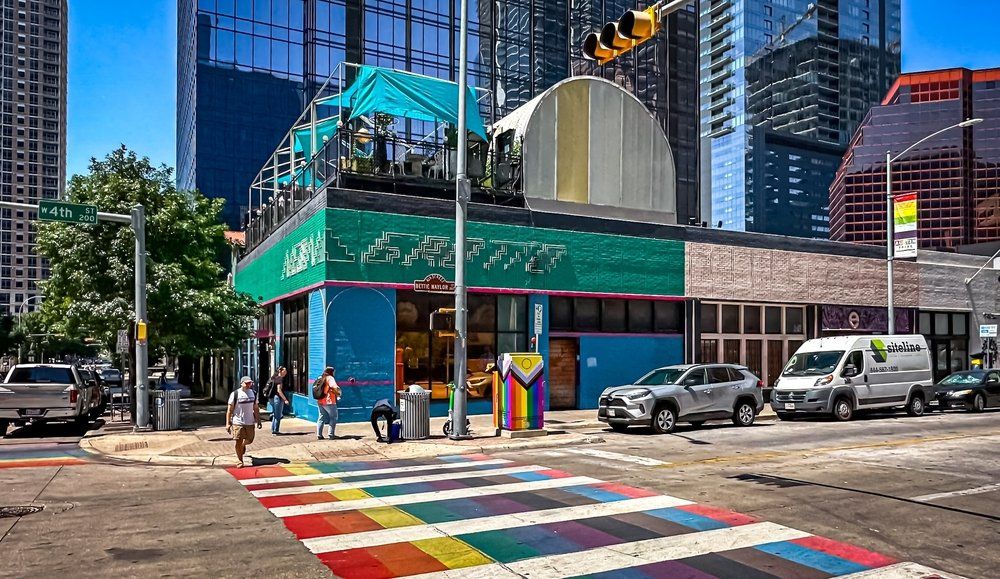
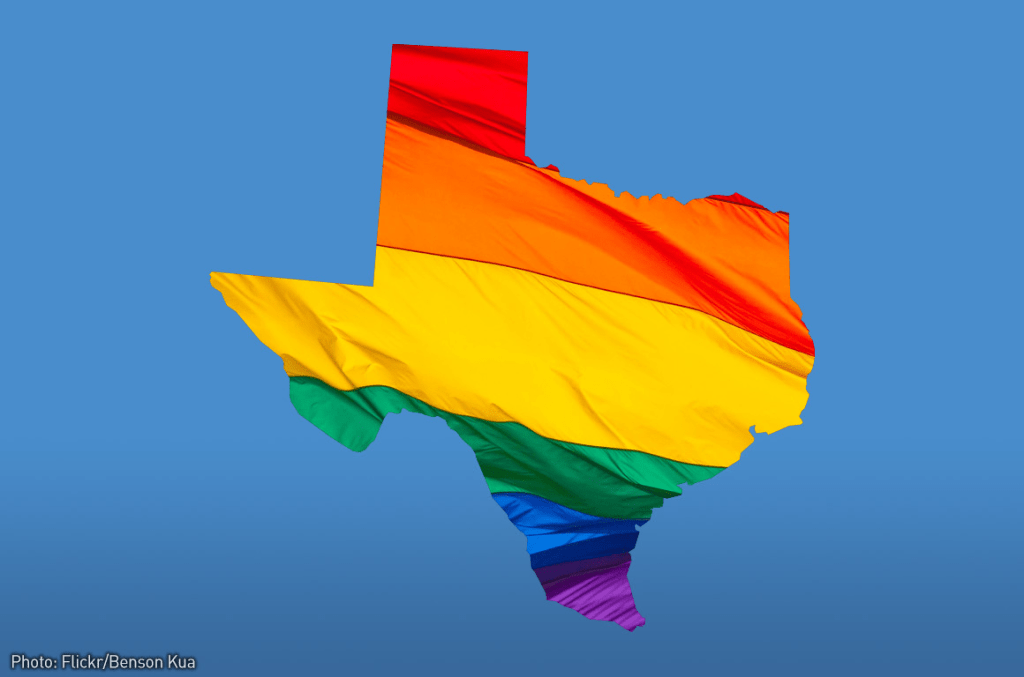
Nondiscrimination laws: Texas has nondiscrimination laws in employment and for state employees, but not in housing, public accommodations, credit/lending, education, nor health care. The state does not allow updating gender markers on driver’s licenses or birth certificates, and it has a broad “religious exemption” law.
Marriage equality and parental rights: Texas does not have adoption or foster care nondiscrimination protections for LGBTQ+ parents. It does not have second-parent adoption for unmarried couples, confirmatory adoption, nor recognition for parents using assisted reproductive technologies. It also does not have family leave laws that encompass LGBTQ+ people.
Education and youth policies: Texas has a weaker version of a “Don’t Say Gay” law that restricts the discussion of “homosexuality” in specific school subjects. It has banned trans students from participating in sports based on their identities, but not from using facilities that align with their identities. The state also has a “religious exemption” law for Child Welfare Services without protections for LGBTQ+ youth.
Healthcare access and rights: Texas has banned life-saving gender-affirming care for youth, though it permits the discredited and harmful practice of so-called conversion therapy for youth. Medicaid is forbidden from providing coverage related to gender transition for all ages, and insurance companies are not required to cover fertility treatments. State employees are not permitted trans-inclusive benefits.
Criminal justice: Texas’s hate crime laws only encompass sexual orientation, not gender identity. It has not banned the so-called “LGBTQ+ panic” defense.
Wyoming
Shuttershock creative
Double rainbow against a black sky in Wyoming
Nondiscrimination laws: Wyoming does not have nondiscrimination laws in employment, housing, health care, education, public accommodations, or credit/lending.
Marriage equality and parental rights: Wyoming does not have adoption or foster care nondiscrimination protections for LGBTQ+ parents. It does not have second-parent adoption for unmarried couples, nor confirmatory adoption. It also does not have family leave laws that encompass LGBTQ+ people. However, it does have recognition for parents using assisted reproductive technologies.
Education and youth policies: Wyoming has a weaker version of a “Don’t Say Gay” law that restricts the discussion of “homosexuality” in specific school subjects. It has banned trans students from participating in sports based on their identities, but not from using facilities that align with their identities.
Healthcare access and rights: Wyoming has banned life-saving gender-affirming care for youth, though it permits the discredited and harmful practice of so-called conversion therapy for youth. Health insurance companies, including Medicaid, are not required to provide coverage related to gender transition or fertility treatments.
Criminal justice: Wyoming’s hate crime laws do not encompass sexual orientation and gender identity, and it has not banned the so-called “LGBTQ+ panic” defense.
Dishonorable mentions
BluIz70 / Shutterstock.com
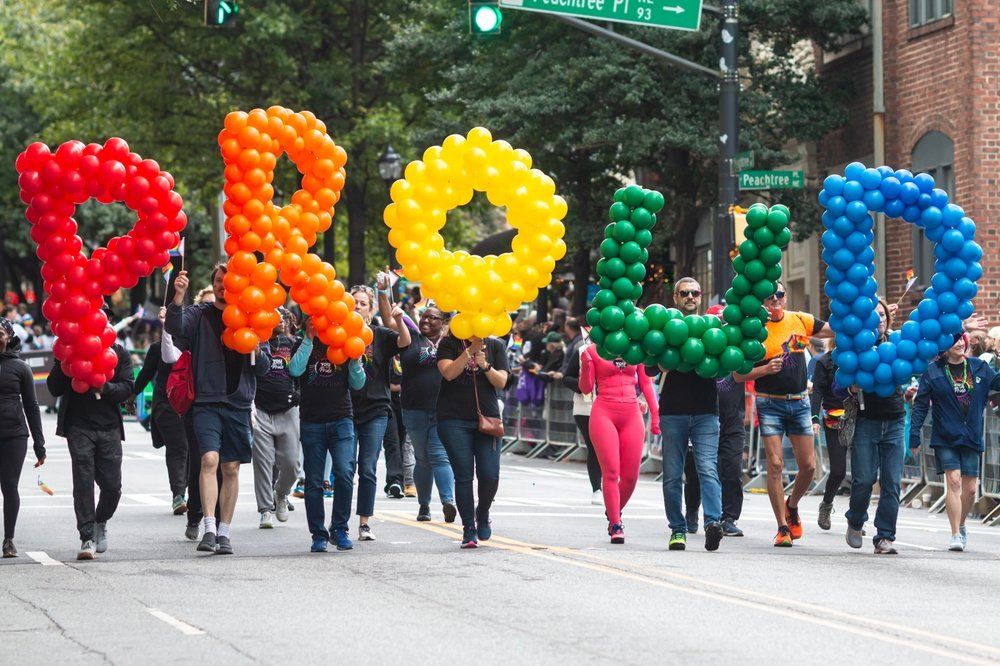
People carry large balloon letters that spell out “Proud” as they walk in the annual pride parade in Atlanta, Georgia (October 15, 2023)
Other states that ranked below average include: Alaska, Arizona, Georgia, Iowa, Kansas, Kentucky, Nebraska, North Carolina, North Dakota, Ohio, Utah, and West Virginia.
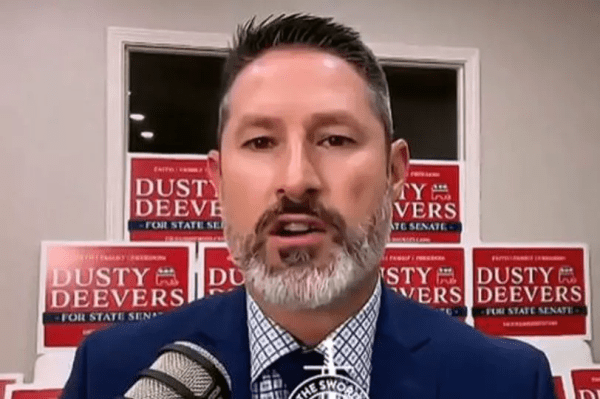
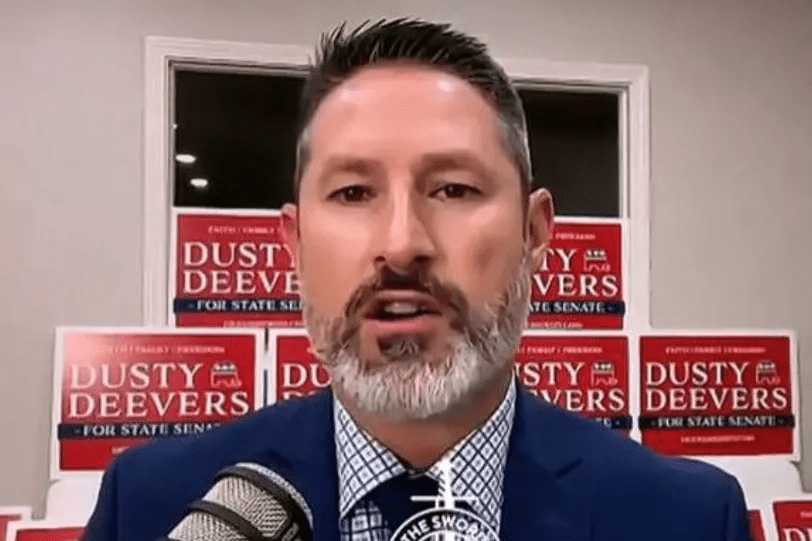
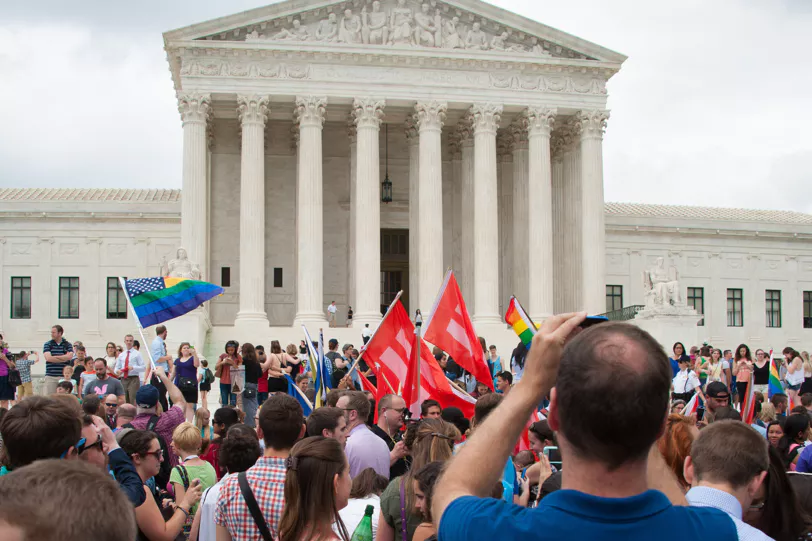
Christian nationalist Oklahoma state Sen. Dusty Deevers (R) and state Rep. Jim Olsen (R) have filed a resolution asking the U.S. Supreme Court to overturn Obergefell v. Hodges, the 2015 U.S. Supreme Court decision that legalized same-sex marriage nationwide. Republican lawmakers in at least five other states have introduced similar resolutions, all of which are largely symbolic and non-binding.
Senate Concurrent Resolution 8 claims that the 2015 high court ruling conflicts with the original meaning of the U.S. Constitution, the country’s founding principles, and “the deeply rooted history and tradition” regarding state regulation of marriage rights. It also notes that 75% of Oklahoma voters supported banning any recognition of same-sex unions in a 2004 ballot measure.
The resolution refers to the Supreme Court decision as an “unwarranted governmental intrusion,” accuses the high court of abusing “the Fourteenth Amendment’s Due Process Clause to fabricate substantive rights,” and says the 2015 decision is “undermining the civil liberties” of states “without any valid constitutional warrant for doing so.”
“For millennia marriage has been understood, both in biblical teaching and in the Anglo-American common-law tradition, as the lifelong covenant union of one man and one woman,” the resolution states. “Obergefell arbitrarily and unjustly rejected and prohibited states from recognizing this definition of marriage in favor of its own definition of marriage and a novel, flawed interpretation” of the U.S. Constitution.
It also notes that both Democratic Justices Ruth Bader Ginsburg and Elena Kagan had previously officiated same-sex weddings before the ruling and “should have recused themselves” from the Obergefell case. It further states that the decision has resulted in litigation directly targeting Christian business owners who refuse to accommodate same-sex couples and has resulted in Christians being vilified as “bigoted.”
“Obergefell played a role in erasing biological distinctions in other arenas, threatening women’s privacy, safety, and athletic opportunities,” the resolution adds, drawing a dubious connection between same-sex marriage and transgender people’s civil rights.
If the resolution is approved by state lawmakers, copies of it will be distributed to the Supreme Court, the president of the U.S. Senate, the Speaker of the House of Representatives, members of the Oklahoma congressional delegation and the Oklahoma attorney general, the resolution states.
Similar resolutions have been introduced in at least five other states: Michigan, Idaho, Montana, North Dakota, and South Dakota.
Deevers & Olsen’s resolution relies on legal misinterpretations
The court’s 2015 decision relied partially on the 1967 high court ruling in Loving v. Virginia, which granted marriage rights to heterosexual couples consisting of individuals from different racial ethnicities.
“If rights were defined by who exercised them in the past, then received practices could serve as their own continued justification and new groups could not invoke rights once denied,” the Supreme Court wrote in its 2015 decision.
The court’s majority opinion also ruled that governmental refusal to recognize same-sex marriages denies them numerous benefits of marriage, including the ability to care for children and family members. State bans on same-sex marriages also restricted same-sex couples’ and their families’ ability to move freely around the country, since their rights could vary greatly if they moved to an anti-marriage state, the court ruling said.
As such, the court ruled that same-sex marriage bans violate both the Due Process Clause and the Equal Protection Clause by needlessly introducing instability into same-sex relationships for no justifiable or compelling government interest.
While some Christian businesses have been sued for refusing to serve LGBTQ+ people and same-sex couples based on “sincerely held religious beliefs,” these lawsuits have focused on how such refusals violate public accommodations protections in state anti-discrimination laws, which require businesses to treat citizens equally, regardless of sexual orientation.
Deevers has long opposed same-sex marriages
Speaking last month to Tony Perkins, president of the Family Research Council (FRC) — which has been certified as a hate group by the Southern Poverty Research Center — Deevers said, “The fact is, Obergefell is fundamentally antithetical to all of these, and there is just no right to gay marriage in the Constitution.”
Despite this claim, the Supreme Court believes that the Constitution’s equal protection and due process provisions require the government to treat all individuals equally under the law unless there’s a compelling government interest to do otherwise.
“Ultimately, marriage is not the state’s institution, it’s God’s institution,” Deevers said. “No Supreme Court ruling that redefines a God-ordained institution is ever truly settled: not morally or culturally, and even constitutionally. The rogue court will stand in judgment before God for their decision.”
Deevers’s campaign website also clearly states his anti-LGBTQ+ beliefs.
“It is outrageous that drag queens are permitted to dance and twerk for children at pride parades and story hours in our state,” his website states. “It is outrageous that … public schools have exposed elementary and middle school children to… LGBTQ+ propaganda…. It is outrageous that Critical Race Theory and Queer Theory dominate in many of our public institutions. I promise to support legislation to put a stop to all of this.”
Nine states are now seeing Republican efforts to overturn Obergefell v. Hodges, the 2015 Supreme Court decision that legalized marriage equality in all 50 states. This is a new trend; state Republican lawmakers have been focused on rolling back trans rights since 2020.
In five of the states — Idaho, Michigan, Montana, North Dakota, and South Dakota — Republican lawmakers have introduced resolutions calling for the Supreme Court to overturn Obergefell. Those measures have been passed by at least one chamber of the state legislature in Idaho and North Dakota.
In the four other states – Missouri, Oklahoma, Tennessee, and Texas – Republican legislators have introduced bills to privilege heterosexual marriages, with some of the states referring to a new institution called “covenant marriage,” which would be limited to heterosexual couples. The point there, according to the sponsor of one such bill in Oklahoma, is to create inequality in marriage rights between opposite- and same-sex couples and invite a legal challenge that could be taken to the Supreme Court to overturn Obergefell.
Two justices on the Supreme Court have openly stated that they want to overturn Obergefell, and the Court has moved to the right since 2015. Justices Ruth Bader Ginsburg, Anthony Kennedy, and Stephen Breyer were all in the Obergefell majority but have either retired or passed away in the last ten years. Only one was replaced by a Democratic president. It is not clear if there are the five votes needed to protect marriage equality on the Court if it were to take up a test case.
Thirty-five states have amendments or statutes banning same-sex marriage, and most would likely go into effect if the Supreme Court were to overturn Obergefell. Because of the 2022 federal Respect for Marriage Act, though, state and federal governments would have to recognize same-sex marriages performed in other states.
“It’s good to anticipate things that could happen in order that we do our best job preparing ourselves,” Jenny Pizer, chief legal officer of Lambda Legal, told LGBTQ Nation last month. “The bottom line for people is that, if there are things that you can do to secure your relationships, your family status and to take other protective measures, please do those things. Don’t be lulled into complacency by our informed and reasonably expert speculation about what may happen.”
The Oklahoma Superintendent of Schools recently spent $25,000 in state funds on Trump Bibles.
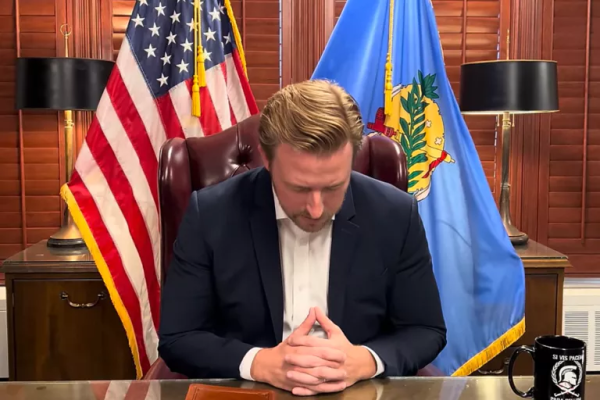
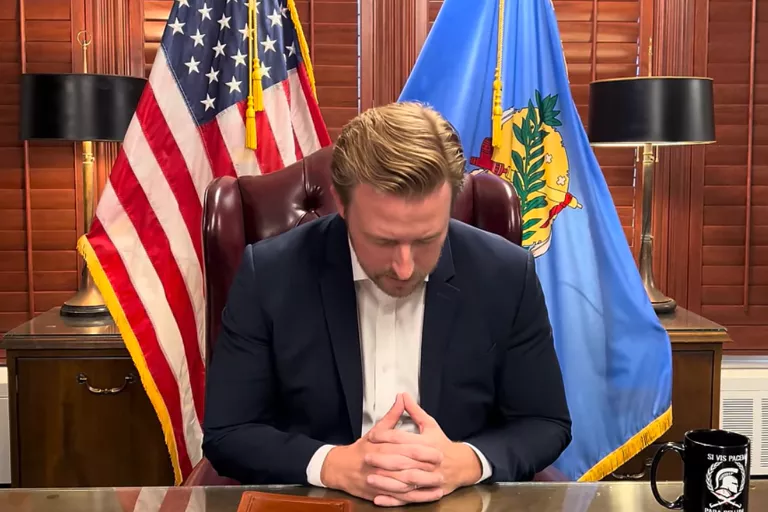
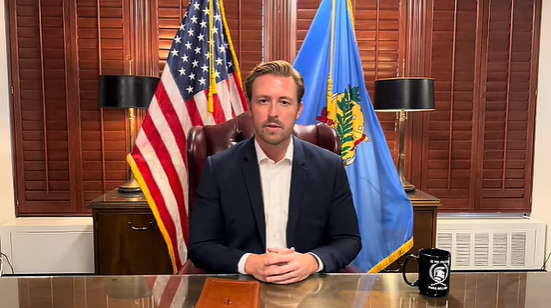
Ryan Walters, the controversial Oklahoma Superintendent of Schools, has directed school districts statewide to show a video of him praying for President-elect Donald Trump. This unusual and politically charged directive, issued amidst a recall effort against Walters, has sparked strong opposition from local school administrators. The video and accompanying order were sent out to schools on Thursday.
At least seven major Oklahoma school districts announced Friday that they will not show a video in which Superintendent Ryan Walters discusses the objectives of his newly established Office of Religious Liberty and Patriotism, concluding with a prayer for former and future President Donald Trump.
The video, which carries a highly partisan tone, criticizes the “radical left” for attacking religious freedom in schools and accuses teacher unions of undermining patriotism.
“We will not tolerate that in any school in Oklahoma,” Walters declares in the video. “We want our students to be patriotic. We want our students to love this country, and we want all students’ religious liberty to be protected.”
The video wraps up with a prayer in which Walters asks for divine guidance for the nation’s leaders and specifically prays for Trump and his team.
“Dear God, thank you for all the blessings you’ve given our country. I pray for our leaders to make the right decisions. I pray in particular for Donald Trump and his team as they continue to bring about change to the country,” Walters says.
Edmond Public Schools Superintendent Angela Grunewald informed parents on Friday that her district will not disrupt its locally approved curriculum to show Walters’ video.
Grunewald emphasized that her district will continue to teach the Oklahoma state standards and the curriculum set by the local school board. “Any changes to that would be based on local decisions,” she said, citing a recent ruling by the Oklahoma Supreme Court that upheld the authority of local school districts to make such decisions.
Similarly, Midwest City-Del City Public Schools Superintendent Rick Cobb told the Oklahoma Voice that his district will not show the video. “We do not believe he has the statutory authority to require us to share this content,” Cobb said.
The Oklahoma Attorney General’s Office supported this stance, declaring the mandate unenforceable. “Not only is this edict unenforceable, it is contrary to parents’ rights, local control, and individual free-exercise rights,” said Attorney General spokesperson Phil Bacharach.
Newly sworn-in Democratic state Sen. Mark Mann, a former member of the Oklahoma City Board of Education, also urged other districts to resist the mandate. “When Oklahoma needs to make gains in reading and math scores, the last thing we need to be doing is pushing the superintendent’s blatant, self-serving political agenda,” Mann remarked.
Walters’ controversial order, which is seen as unenforceable, accompanies his ongoing effort to distribute 55,000 Bibles to Oklahoma schools. On the same day his prayer video was released, Walters posted another video celebrating the arrival of the first 500 Bibles in AP Government classrooms.
Walters’ budget request was specifically aimed at purchasing a version of the Bible known as the “Trump Bible,” which combines the Declaration of Independence, the U.S. Constitution, and the Old and New Testaments into a single Christian nationalist text. The initial purchase of these Bibles amounted to $25,000.
Walters has been mentioned as a potential candidate for Secretary of Education in Trump’s second-term Cabinet. Both Walters and Trump have advocated for the abolition of the U.S. Department of Education.
A superintendent stated that Ryan Walters’ mandate “seems more like a personal political stunt.
Nearly five dozen superintendents from Oklahoma school districts have stated they have no intention of altering their curricula to comply with Republican State Superintendent Ryan Walters’ anti-LGBTQ+ mandate to teach the Bible in public schools.
In June, Walters issued a directive for all state districts to incorporate the Bible and the Ten Commandments into their curricula for grades five through 12. The following month, the Oklahoma State Department of Education (OSDE) released guidelines on how schools should implement these changes starting in the 2024–2025 school year.
In late July, The Oklahoman reported that several of the state’s largest school districts had already refused to comply with the directive, expressing concerns that it could violate state laws. By early August, KGOU reported that at least 17 school districts across Oklahoma had announced they would not adjust their curricula to include the Bible.
The number of districts rejecting the Bible mandate has continued to rise. A recent survey by Oklahoma public radio’s StateImpact revealed that of approximately 540 public school districts and charter schools, 54 superintendents responded, with 46 stating their districts would not require teachers to incorporate the Bible into social studies or English curricula.
One respondent noted, “At best, they are uncomfortable with the mandate. At worst, they feel it infringes on personal religious beliefs and could open Pandora’s box.” Many cited state law that grants districts control over instructional materials, while others expressed concerns about violating laws by using public funds to purchase religious texts.
Despite this, Walters has threatened to penalize non-compliant schools, stating that districts refusing to teach the Bible would be held accountable. His office claims that state law mandates teaching the Bible’s historical significance, though Oklahoma’s academic standards allow for, but do not require, such inclusion.
Several superintendents criticized Walters’ directive as politically motivated. One described it as “a personal political gimmick,” while another said, “This directive is purely political and has no intention of improving education. It was designed to cause controversy and gain national attention.”
Walters has indeed attracted media attention, particularly after appointing Chaya Raichik from Libs of TikTok to a library advisory committee and facing backlash following the death of a trans teen. His anti-LGBTQ+ policies have also come under fire, with over 350 rights groups calling for his removal from office. Recently, 21 Oklahoma Republican lawmakers have even called for an impeachment investigation into Walters’ leadership of the OSDE.
In a 2024 study by WalletHub ranking the best states to live in, Oklahoma was placed as the 7th-worst.
The personal finance company evaluated each state using 51 key indicators of livability, ranging from housing costs and income growth to education levels and the quality of hospital systems.
Here’s how Oklahoma measured up:
Oklahoma ranks as the 7th-worst state to live in. Overall, Oklahoma came in 44th in the study ranking the best states to live in.
Here’s where the state stood on some key indicators:
49th in percentage of insured population
45th in income growth
43rd in percentage of population in poverty
43rd in percentage of adults in fair or poor health
42nd in average weekly work hours
38th in homeownership rate
25th in restaurants per capita
Top 10 Best States to Live In WalletHub analyst Cassandra Happe emphasized that financial factors should be a primary consideration when choosing where to live. She also noted that while many states boast strong economies, it’s crucial to consider other aspects, such as the potential impact on one’s health and safety.
Massachusetts Ranked as the Best State to Live In
The study named Massachusetts the top state to live in, with WalletHub analyst Cassandra Happe attributing this achievement to the state’s strong healthcare system and high-quality education.
“Massachusetts has the lowest premature death rate in the country and the lowest percentage of adults in fair or poor health,” Happe said. “The Bay State also ranks first in the nation for the quality of its school systems. In addition, Massachusetts has the third-highest median household income, at over $94,000.”
WalletHub’s Top 10 Best States to Live In for 2024:
Massachusetts
Florida
New Jersey
Utah
New Hampshire
Idaho
Pennsylvania
Wisconsin
New York
Wyoming
Ten Worst States to Live In
With Oklahoma ranking as the 7th-worst state to live in, Randal Ice, professor emeritus at the University of Central Oklahoma, emphasized in the study that state policymakers need to ensure competitive tax rates, especially for high-income and highly mobile individuals, to attract new residents.
However, even highly paid CEOs can relocate a company to a low-tax area, taking many jobs with them when tax rates are unfavorable,” Ice noted. “But life is about more than just taxes. Quality of life factors also influence where people choose to settle. States should take these aspects into account when providing services to residents and adjust accordingly. It’s a highly competitive environment for attracting the best and brightest.
WalletHub’s Top 10 Worst States to Live In for 2024:
President Joe Biden highlighted the teenager’s passing and urged an end to bullying.
President Joe Biden released a statement from the White House on Thursday in response to the untimely murder of 16-year-old Nex Benedict of Oklahoma. He expressed his sympathies, along with those of the First Lady, and urged the country to address the bullying problem that he described as affecting LGBTQ+ youth.
The Chief Medical Examiner’s office in Oklahoma reports that Benedict, a transgender and nonbinary student at Owasso High School, committed himself by overdosing on two popular prescription and over-the-counter drugs, which caused toxicity.
Biden stated, “Jill and I are devastated by Nex Benedict’s tragic passing. “Every young person has the fundamental right to be free to be themselves, to feel safe and supported in their communities and at school. We ought to still be here with Nex Benedict today—a young person who only wanted to be accepted.
The president made his remarks in the face of growing dissatisfaction and doubt regarding the medical examiner’s one-page summary of Benedict’s death report. The medical examiner’s office has ten business days, per state law, to deliver the complete autopsy report. The summary, according to advocates and community people, does not adequately address the bullying and assault that occurred before to Benedict’s death, highlighting the fact that tragedies of this nature are inextricably linked to the conditions that give rise to them.
GLAAD has issued a warning against oversimplifying Benedict’s tragic story and brought attention to the structural problems with bullying and prejudice that LGBTQ+ kids face.
In response to the news of Benedict’s likely cause of death, Peggy Rajski, interim CEO and creator of The Trevor Project, a nonprofit that offers support and crisis counseling to LGBTQ+ children, released a statement.
“We are incredibly saddened to discover that Nex Benedict took his own life following severe harassment and assaults at their educational institution,” Rajski stated. Although this terrible tragedy has captured the attention of the country, we also know that it is, sadly, not unusual. LGBTQ+ youth have a suicide death rate that is more than four times higher than that of their peers. This isn’t due of any innate identification trait; rather, it’s a result of the extreme pressures, rejection, and hostility that many of them encounter in society.
Rajski went on, “Research by The Trevor Project indicates that having at least one accepting adult in an LGBTQ+ young person’s life significantly lowers their likelihood of attempting suicide. Ex’s death is a tragic reminder that we all have a role to play in reducing and eventually eradicating LGBTQ+ youth suicide.” Supporting young people who are living in their truth, whether as a teacher, caregiver, neighbor, or friend, is a life-saving and affirming act of allyship.
In his supportive letter, Biden mentioned the difficulties LGBTQ+ adolescents confront.
Some of the bravest Americans I know are nonbinary and transgender individuals. However, Biden stated that no one should need bravery in order to be themselves.
Benedict’s story has brought attention to the serious effects of bullying, especially when it comes to pupils who identify as LGBTQ+. Benedict was beaten in a school restroom just before he passed away, an event that highlighted the ongoing harassment he experienced because of his gender identity. Benedict admitted to the policeman on the footage obtained after the attack that he was bullied a lot.
In his speech, Biden reaffirmed his administration’s support for LGBTQ+ safety and rights, saying, “I will always have your back.”
Biden stated, “Parents and schools must take reports of bullying seriously.” He continued, “In memory of Nex, we must all recommit to our work to end discrimination and address the suicide crisis impacting too many nonbinary and transgender children.”
For 24/7 access to free and confidential services, please phone, text, or chat with the 988 Suicide & Crisis Lifeline at 988lifeline.org if you or someone you know needs mental health resources and support. For those who identify as transgender or gender nonconforming, Trans Lifeline can be contacted at (877) 565-8860. In addition, the lifeline offers support for other crises, like those involving domestic abuse. (866) 488-7386 is the Trevor Project Lifeline number for LGBTQ+ youth (age 24 and under). Additionally, users can text START to 678678 or use the chat services at TheTrevorProject.org/Help.
The introduction of such a bill targeting Pride Month celebrations by Oklahoma Republicans reflects ongoing efforts to curtail LGBTQ+ rights and visibility in the state. It raises concerns about discrimination and exclusion of LGBTQ+ individuals from public recognition and acknowledgment of their identities and contributions to society.
The introduction of HB 3217, dubbed the “Patriotism Not Pride Act,” by Oklahoma Republicans is a significant move aimed at barring state agencies from recognizing or promoting LGBTQ+ Pride Month. This bill seeks to prevent the use of state funds for any activities or events related to Pride Month and prohibits the display of LGBTQ+ Pride flags on state grounds or property. It reflects a broader trend of legislative efforts to suppress LGBTQ+ visibility and rights, raising concerns about discrimination and erasure of LGBTQ+ communities’ identities and experiences.
It also declares a state of emergency “by reason whereof this act shall take effect and be in full force” immediately after its passage and approval.
The introduction of bills similar to HB 3217 in Texas and Tennessee, which seek to ban LGBTQ+ pride flags in schools, underscores a broader trend of legislative efforts targeting LGBTQ+ visibility and rights across multiple states. These bills represent a concerted push by conservative lawmakers to suppress expressions of LGBTQ+ identity and pride within educational institutions. Such initiatives have raised concerns among LGBTQ+ advocates about the potential for discrimination and erasure of LGBTQ+ students’ experiences and identities in school environments.
West told NBC News that he authored the bill “because Oklahoma taxpayer dollars should not be used to promote or recognize activities that are not in line with the values of most Oklahomans.”
The LGBTQ+ community, he said, “would still have the freedom to express their views or opinions or tell the world about their lifestyle choices, they would simply not be able to use state resources to do so.”
Freedom Oklahoma executive director Nicole McAfee said the bill was “clearly designed to chill speech, and further disrupt the ability of Oklahoma agencies to serve” the state’s LGBTQ+ community.
“We’re everywhere — small towns, big cities, on tribal land, and everywhere in between,” McAfee said. “We make up communities, and even work for the state. You can’t ban us or disappear us, and it’s a shame that Rep. Kevin West is continuing his obsessive focus on targeting and isolating 2SLGBTQ+ Oklahomans with [this] latest attack. And yet, we’ve always been here and will always be here, during pride and beyond.”
The significant number of anti-LGBTQ+ bills introduced in Oklahoma, including HB 3217, reflects a concerning trend of legislative attacks on LGBTQ+ rights and visibility in the state. With nearly 400 similar bills introduced nationwide in 2024, Oklahoma’s Republican lawmakers stand out for their aggressive pursuit of anti-LGBTQ+ measures. This flurry of legislation underscores the ongoing battle for LGBTQ+ rights and protections at both the state and national levels, with advocates and activists mobilizing to oppose discriminatory laws and uphold equality and inclusion for all individuals, regardless of sexual orientation or gender identity.
An announcement in Oklahoma caused shockwaves in educational and political circles as the individual behind the anti-LGBTQ+ social media account “Libs of TikTok” was appointed to a government position.
Even after Oklahoma schools suffered a series of bomb threats after she posted about them, the state government is bringing her in to advise about books in libraries.
Chaya Raichik, the individual associated with the controversial “Libs of TikTok” account, has been appointed to the Library Media Advisory Committee of the Oklahoma State Department of Education. The appointment has sparked widespread criticism, raising concerns about Raichik’s lack of educational background, her involvement in stirring controversies, and potential implications of stochastic terrorism.
State Superintendent Ryan Walters, a Republican, announced Chaya Raichik’s appointment to the Library Media Advisory Committee of the Oklahoma State Department of Education last week. Walters praised Raichik for being on the “front lines” against what he referred to as “the radical left’s” agenda in schools.
“Her unique perspective is invaluable as part of my plan to make Oklahoma schools safer for kids and friendly to parents,” Walters said in a statement.
Chaya Raichik, a former Brooklyn real estate agent, has been a full-time right-wing online provocateur since her Libs of TikTok account gained attention and support, amassing more than 2.8 million followers. Despite being labeled as a right-wing extremist, she was temporarily removed from the Anti-Defamation League’s glossary of extremism due to a legal threat. Raichik neither resides in Oklahoma nor has a background in education or children’s development.
Raichik has made false and inflammatory assertions, including labeling the LGBTQ+ community as an “evil cult” and suggesting that teachers, particularly those who identify with the community, aim to “groom kids.”
Mickey Dollens, a Democratic state representative in Oklahoma, raised concerns about the appointment, questioning State Superintendent Ryan Walters’ decision.
“Why did Superintendent Walters appoint a social media influencer to the state’s Library Media Advisory Committee? What are her qualifications? Is she a librarian? No. Education background? No. Does she even live in Oklahoma?” Dollens asked.
The appointment has faced criticism from various quarters, including GLAAD and the Human Rights Campaign.
GLAAD president and CEO Sarah Kate Ellis shared her thoughts on the matter in a statement to The Advocate.
“Book bans are at a record high because a fringe few extremists are deliberately gaming the system at everyone else’s expense, including students, educators, and taxpayers. It’s obvious that education advisory committee members should have an education background, a close connection to the community they serve, and a record that does not include spreading lies and encouraging disparagement and violence that endangers every student, school, and family,” Ellis said, noting “Oklahomans should see this for the farce it is: an appointment that deserves an F on its face, and an A for trolling, which this particular social media extremist excels at for her own profit.”
The Human Rights Campaign (HRC) also criticized the selection of Chaya Raichik.
Oklahoma State Superintendent Walters’s decision to legitimize an internet troll who takes glee in causing direct harm to innocent people is a violation of his duty to the citizens of his state, particularly the LGBTQ+ community of Oklahoma,” HRC spokesperson Delphine Luneau told The Advocate.
“This is just another example of the MAGA mindset that prioritizes antagonizing marginalized people over actually doing the true work of government to make lives better for everyone,” she continued.
The Library Media Advisory Committee, to which Raichik has been appointed, is tasked with the goal of “removing pornographic or sexualized content” from public school libraries. The committee operates on a voluntary basis, with no compensation provided to its members, all of whom are appointed by Superintendent Ryan Walters, according to Oklahoma public radio station KOSU.
According to the state education department, the committee is composed of parents, active and retired librarians, and English literature teachers.
Following Libs of TikTok posts, a USA Today investigation revealed a pattern of threats, including bomb threats to schools, libraries, and hospitals across the United States. Collaborating with Media Matters for America, the investigation confirmed dozens of threats linked to Raichik’s posts since February 2022, indicating an escalating pattern of hostility and danger following her attention.
In Oklahoma, there have been alarming instances of bomb threats following posts by Libs of TikTok. For example, in August, Union Public Schools in Tulsa faced a series of bomb threats over six days, which began shortly after Raichik shared a critical post about one of its school librarians. The threats significantly disrupted school operations and caused widespread fear and anxiety in the community.
Experts have accused Raichik’s account and social media activity of engaging in what’s known as stochastic terrorism—an allegation Raichik has mocked.
Stochastic terrorism refers to public speech that incites random acts of violence, which is statistically predictable but unpredictable for individuals. Raichik’s posts have been linked to threats that, according to experts, fit the pattern of stochastic terrorism.
In response to a post by Walters on X (formerly Twitter), Alejandra Caraballo, a clinical instructor at the Harvard Law School Cyberlaw Clinic and trans rights activist, criticized the appointment.
“You named a terrorist to your advisory board who incited bomb threats for weeks against a school library in Tulsa,” Caraballo wrote in a comment to Walters.
The Advocate reached out to Walters’ office to inquire about Racihik’s new role, but did not receive a response.









 fleeredstates.blog
You must be logged in to post a comment.