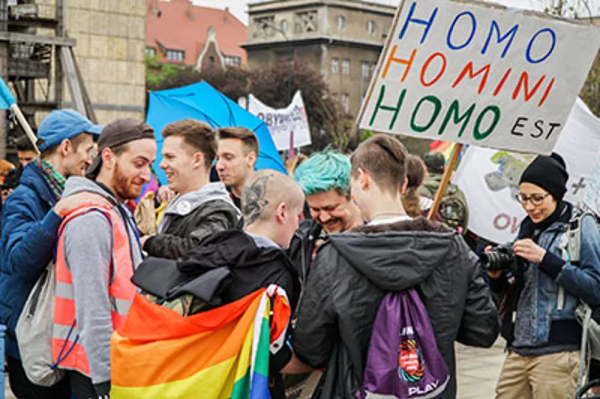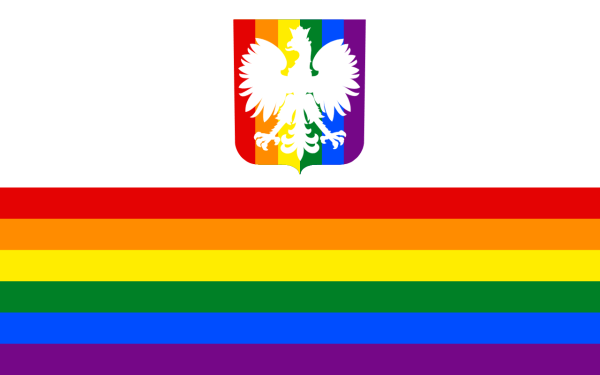
The president of Poland, Karol Nawrocki, vetoed two bills last week that would have extended recognition to same-sex couples.
The bills would have created “cohabitation contracts,” according to Reuters, which would have given some legal recognition to same-sex couples when it comes to medical information, property rights, and funeral arrangements.
The bills were part of reforms promised when Prime Minister Donald Tusk took office in 2023, which included measures regarding LGBTQ+ people’s rights and abortion. The current ruling coalition in parliament is considered liberal and pro-European.
Nawrocki, though, ran as an independent in 2025 after having been chosen as the candidate for the right-wing Law and Justice (PiS) party, moving the country to the right. He said that the cohabitation contracts were too similar to marriage.
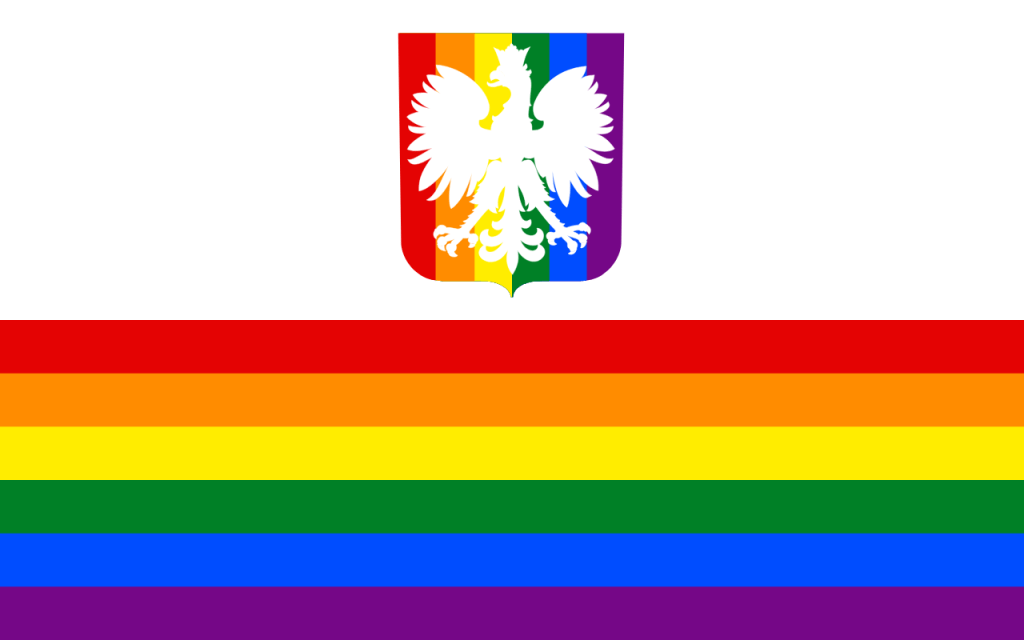
“These proposals create a new, formalized institution of family law, equipped with a broad catalog of rights similar to those of marriage,” he said in a statement. He said that the bills would lead to “the loss of the special status of marriage,” defined as “a union of a man and a woman under the protection and care of the Republic of Poland.”
LGBTQ+ rights advocates denounced the vetoes. The organization Campaign Against Homophobia said that the bills were “merely a fragment” of what they wanted to get when it comes to domestic partnership rights in the country.
“Today’s veto of the bill, however, shows that even the absolute minimum of rights the bill was intended to provide is too much for the president,” the group said.
Former Equality Minister and New Left Member of Parliament Katarzyna Kotula said Nawroicki “turned his back on 2 million people living today in informal relationships.”
Earlier this year, a gay couple who traveled to Berlin to get married won the right in court to have their marriage recognized in Poland.
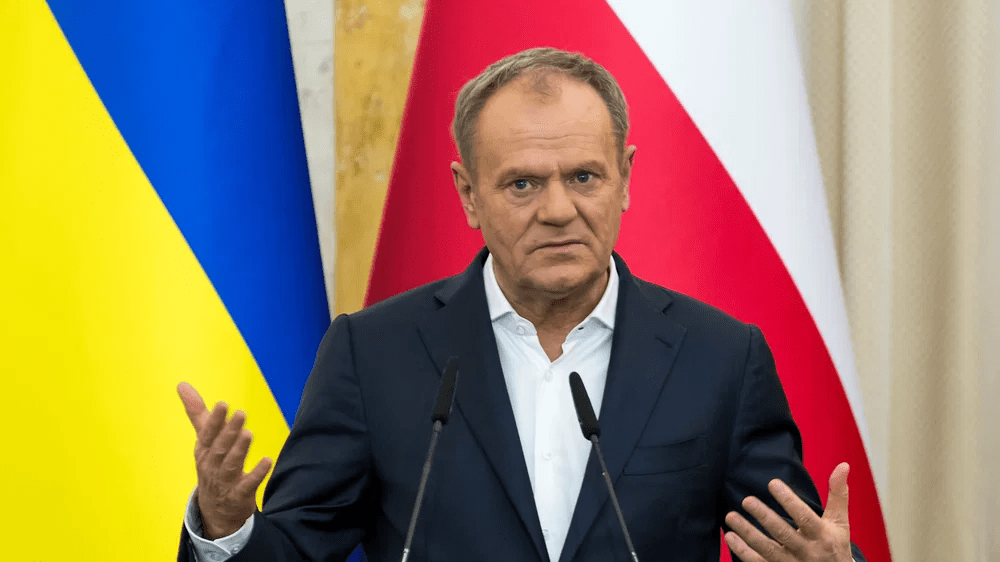
Poland’s Prime Minister Donald Tusk said on Tuesday that his government would quickly work to follow recent court rulings requiring Poland to legally recognize same-sex marriages conducted in other European Union (EU) member nations.
Recent rulings by the Court of Justice of the European Union (CJEU) and Poland’s Supreme Administrative Court (NSA) both require Poland to recognize foreign same-sex marriages, after a married same-sex couple (including a Polish citizen) weren’t allowed to have their 2018 German marriage certificate entered into the Polish civil registry.
The men challenged the denial at the NSA, which then referred the case to the CJEU. The CJEU ruled in November 2025 that the couple’s marriage was valid throughout the EU’s 27-member bloc, and that Poland could recognize their union without also altering its laws to start offering same-sex marriages.
Then, last March, the NSA ordered the government to transcribe the men’s same-sex marriage certificate into the Polish system, resulting in de facto government recognition of a same-sex couple’s marriage in the country; a historic first for Poland.
In comments to the media before a closed cabinet meeting on Tuesday, Tusk apologized for the “years of rejection and humiliation” that same-sex couples have experienced due to Poland not legally recognizing their marriages, Notes from Poland reported.
“[This is] a matter of human dignity: the right to happiness, the right to equal treatment by the state,” Tusk said. “I would like to apologize to all those who, for many, many years, felt rejected and humiliated. For many years, the [Polish] state has failed the test.”
Tusk also said that Poland currently “lacks statutory regulations” that would ensure that same-sex couples receive the same legal and social protections as different-sex couples.
However, he said, “We have committed to – and I will personally ensure this – abiding by the rulings as a priority,” adding that any changes must be conducted in compliance with existing Polish law. He also urged government members “to respect the dignity of every human being” while figuring out and implementing new policies, some of which may require parliamentary or executive approval.
Karolina Gierdal, a lawyer with the Polish LGBTQ+ advocacy organization Lambda Warszawa, told TVP World, “It is sad that the LGBT community is once again presented as a threat, as if society needs reassurance that adoption rights ‘won’t happen.’ The reality is that children are already being raised in same-sex families in Poland, and maintaining the current legal situation means reducing the level of legal protection available to those children.”
Separately, Warsaw Mayor Rafał Trzaskowski, who is a senior figure in Tusk’s Civic Platform party (Platforma Obywatelska, PO), announced that his city would begin legally recognizing foreign same-sex marriages immediately on a municipal level, long before the national government updates its own policies.
Last month, a group of over 100 non-governmental organizations urged Poland to take action to abide by the CJEU and NSA’s rulings. The groups noted that Tusk and his party were elected to power in 2023 on promises to restore Poland’s rule of law, after 10 years of corrupt, anti-democratic rule by the country’s far-right, anti-LGBTQ+ Law and Justice Party.
“Right-wing governments have distorted what we understand by the rule of law, treating it as an empty slogan rather than a real principle of state operation,” the groups wrote. “In a democratic state governed by the rule of law, the government has no authority to decide which judgments merit enforcement.”
So far, 18 countries in the EU offer legalized same-sex marriages, though all member countries are required to legally recognize them, even if they don’t offer them to their own citizens.
While Tusk’s political party promised to work to offer national same-sex civil partnerships, the initiative died due to opposition from Poland’s center-right Polish People’s Party (PSL). A parliamentary coalition considered offering some rights to same-sex couples and unmarried partners instead, but without actually offering civil unions nationwide.
However, neither proposal has come up for a parliamentary vote.
Ten years after the far-right Law and Justice Party was elected to power in Poland, and two years after their defeat in national elections, a last vestige of the party’s state-sanctioned anti-LGBTQ+ policies has finally been eliminated.
On Thursday, a council in the southeastern Polish town of Łańcut officially abolished the country’s last remaining ‘LGBT-free’ resolution.
The resolution, introduced by the previous government, was one among about 100 that declared local regions “LGBT-free” or banning “LGBT ideology,” barring the “promotion” of homosexuality and other minority sexual identities, especially in schools.
The declarations drew criticism from human rights groups as well as the European Union, which withheld funding from Poland on the grounds the resolutions were discriminatory and breached the multi-national bloc’s fundamental values.
The move resulted in the freezing of billions of Euros worth of funding to Poland.
In 2022, Poland’s Supreme Administrative Court ruled that the effect of the resolutions was a “violation of the dignity, honor, good name and closely related private life of a specific group of residents,” and deemed them unconstitutional.
The court held that Poland has a duty to protect all its citizens, including members of minority groups. In the aftermath, all of the local resolutions were repealed, leaving Łańcut the final holdout in the country.
“Councilors have been taught a lesson not to succumb to propaganda that appeals to their emotions,” said Jakub Gawron, an activist who ran the so-called Atlas of Hate, an interactive online map illustrating the regions with the “LGBT-free” declarations.
European leaders punished Poland for its anti-LGBTQ+ zones
In 2021, the European Commission warned five Polish regions that “declaring LGBTIQ-free/unwelcome territories, workplace or services constitutes an action that is against the values set out in Article 2 of the Treaty on European Union.” Municipalities with those discriminatory policies were notified that they wouldn’t receive funding for infrastructure, environmental initiatives, and other EU-sponsored projects.
Later in 2021, the EU Parliament formally condemned Poland for trying to create “LGBT-free” zones, with lawmakers comparing the policies to “Jew-free” zones that existed in the years before and during World War II.
European Commission President Ursula von der Leyen said in a State of the Union address the same year that “LGBT-free zones” are “humanity-free zones.”
“They have no place in our Union,” von der Leyen told European lawmakers. “I will not rest when it comes to building a union of equality. A Union where you can be who you are and love who you want – without fear of recrimination or discrimination.”
“Let me be clear: LGBTQ+ rights are human rights — and ‘LGBT-free zones’ have no place in the European Union or anywhere in the world,” Biden posted to Twitter.
The repeal in Poland comes amid a wave of anti-LGBTQ+ legislation arising in the fellow EU member nation of Hungary, as well as Vladimir Putin’s continued crackdown on LGBTQ+ identity in Russia with his implementation of successively broader anti-“gay propaganda” laws.
You must be logged in to post a comment.