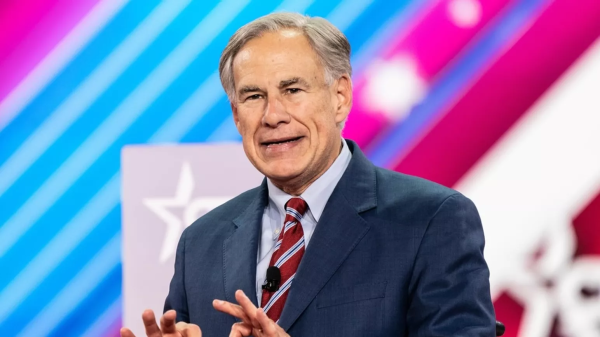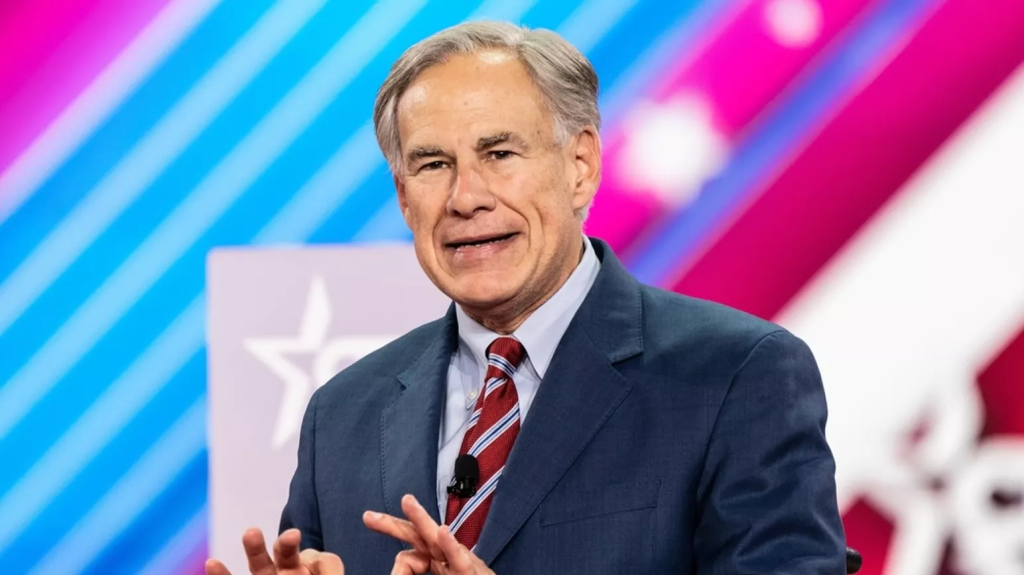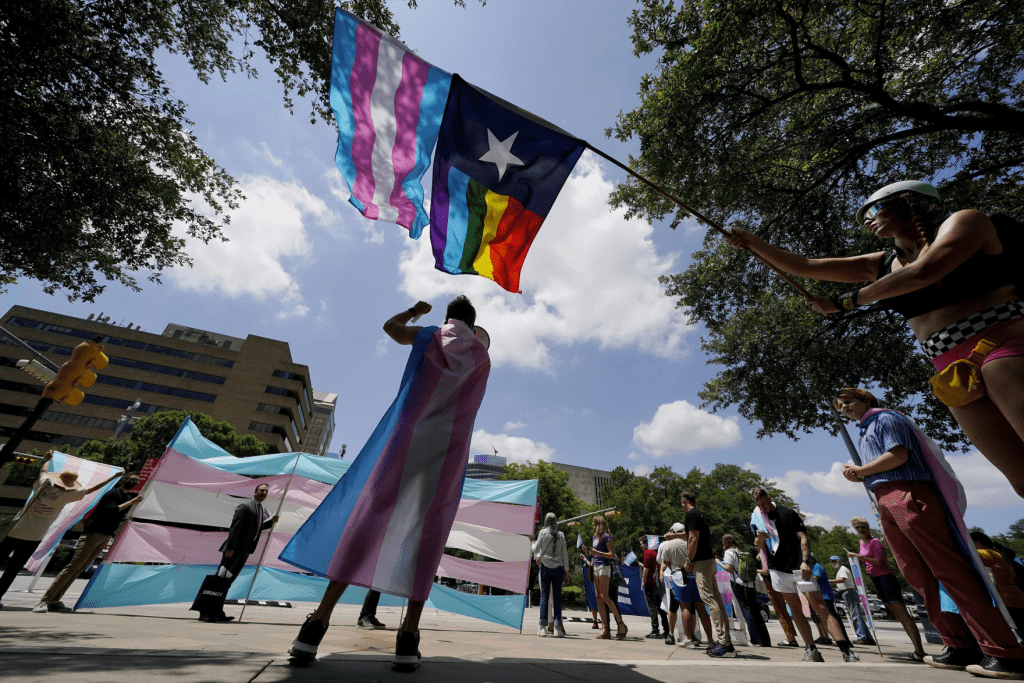
Texas Gov. Greg Abbott (R) has called a special legislative session to address the deadly floods that have left 134 people dead and 101 others missing. However, in preparation for the session, state GOP lawmakers have filed 82 measures, none of which address the flooding. Instead, they seek to ban transgender women from using women’s facilities (and Abbott personally supports the idea).
In Abbott’s proclamation for the special session, he laid out 18 priorities. The first four addressed the need for improved emergency warning, communication, and aid systems. The other priorities included further restricting abortions and election access, gerrymandering the state electoral map to favor Republicans, and “legislation protecting women’s privacy in sex-segregated spaces.”
The state constitution says legislators can only file bills related to the governor’s priorities, but Republican legislators haven’t filed any bills related to the deadly floods, KXAN reported.
Instead, Republican state Rep. Valoree Swanson filed H.B. 32, which would require people only to use facilities in public schools, state universities, government-owned buildings, jails, and family violence shelters that match the “biological sex” assigned on their original birth certificate. Texas recently changed its laws to forbid transgender people from changing the gender markers on their birth certificates and driver’s licenses.
Anyone who allows the proposed law to be violated could be subject to civil fines from $5,000 to $25,000, as well as additional penalties. Swanson filed a similar bill during the previous legislative session, but it failed to pass after missing several legislative deadlines, Chron reported.
Three other special session bills, H.B. 37, 65, and 70, would punish any person or internet service provider who aids or abets the distribution of abortion medication.
H.B. 38, introduced by Democratic state Rep. Jessica Gonzalez (who is also chair of the Texas House LGBTQ Ca ucus), would prohibit workplace, housing, and public accommodations discrimination against LGBTQ+ people, but there’s no way it’ll pass the state’s Republican-majority legislative chambers. It’s also unclear how the bill relates to Abbott’s list of priorities.
“I am proud to have filed H.B. 38 in preparation for the upcoming special session of our legislature,” González wrote in a statement on Tuesday. “H.B. 38 is a comprehensive nondiscrimination bill that would codify equal protection for the LGBTQ+ community and military veterans in employment, housing, and public accommodations.”
New HampshireRepublican Gov. Kelly Ayotte has gone against her party and vetoed two anti-LGBTQ+ bills and three other far-right ones.
Ayotte vetoed the bills Tuesday, while signing 101 others into law.
House Bill 324 would have barred schools from distributing books and other materials deemed “harmful to minors.” It was aimed primarily at sexual content and likely would have been used against books with LGBTQ+ characters and themes. It also would have required school districts to strengthen the process through which parents could challenge these materials.
“Current state law appears to provide a mechanism for parents through their local school district to exercise their rights to ensure their children are not exposed to inappropriate materials,” Ayotte said in her veto message. Under this law, “parents must be notified at least two weeks in advance of course materials that involve human sexuality, sexual education, sexual orientation, gender, gender identity, or gender expression,” she noted. “If a parent objects in writing, New Hampshire law further requires an alternative agreed upon between the school district and the parent.”
“Therefore, I do not believe the State of New Hampshire needs to, nor should it, engage in the role of addressing questions of literary value and appropriateness, particularly where the system created by House Bill 324 calls for monetary penalties based on subjective standards,” Ayotte added. Parents who were dissatisfied could have filed lawsuits.
House Bill 148 would have let businesses and correctional facilities to classify and segregate people by sex assigned at birth rather than gender identity, affecting restroom and locker room use. State law bans discrimination based on gender identity, but under the bill, these classifications would not have been considered a violation of the law.
“I believe there are important and legitimate privacy and safety concerns raised by biological males using places such as female locker rooms and being placed in female correctional facilities,” Ayotte wrote. “At the same time, I see that House Bill 148 is overly broad and impractical to enforce, potentially creating an exclusionary environment for some of our citizens.” It could have led to lawsuits as well, she said. Her immediate predecessor as governor, fellow Republican Chris Sununu, had vetoed a similar bill.
Additionally, Ayotte vetoed House Bill 358, “which would make it easier for parents to apply for religious exemptions to child vaccine requirements in school,” House Bill 446, “which would require schools to get explicit parental permission before giving students non-academic surveys,” and House Bill 667, “which would require sex education courses to include ‘a high quality computer generated animation or ultrasound video that shows the development of the heart, brain, and other vital organs in early fetal development,’” the New Hampshire Bulletin reports. She also vetoed two budget-related bills.
It would take a two-thirds majority in both the state House and Senate to override Ayotte’s vetoes. Republicans do not have a veto-proof majority in the House.
House Democratic Leader Alexis Simpson issued a statement Tuesday praising the vetoes without mentioning Ayotte. “We’re grateful that today New Hampshire chose to protect the rights and dignity of our transgender neighbors — and House Democrats will keep fighting until every Granite Stater can live freely, openly, and safely, no matter who they are,” Simpson said, according to the Bulletin.
The state Senate approved a bill Tuesday that includes multiple controversial LGBTQ policies. Democrats objected to a GOP move to add the proposals to a popular House bill, prompting a heated fight over the Senate’s rules.
The original version of House Bill 805 added new consent requirements for pornographic websites, and it got unanimous support from Democrats and Republicans. It would allow people who appear in sexually explicit photos and videos online the option to have them removed.
The Senate added a lot more. Its bill would allow lawsuits against medical providers over gender transitions, and change the definition of biological sex in state law to exclude gender identity. The new definitions would say that gender identity is “a subjective internal sense” that “shall not be treated as legally or biologically equivalent to sex.” The change could affect transgender people seeking to change their birth certificate.
Sen. Buck Newton, R-Wilson, is the bill’s sponsor. “We cannot ignore the biological realities, and we believe our state laws should reflect that,” he said. “Women are being systemically erased from our language, whether it’s changing words from pregnant women to pregnant person, or mother to a birthing parent.”
The bill would also require schools to provide parents with a list of school library books and allow the parents to ban their children from checking out specific titles.
But Senate Minority Leader Sydney Batch says the new provisions are harmful, and it means the original pornography bill likely won’t make it to the governor’s desk.
“When my Republican colleagues loaded this bill with culture war amendments, they didn’t just distract from the problem, they made it impossible to solve,” she said.
The bill put Democrats in the difficult position of voting against legislation titled “Prevent Sexual Exploitation.” Instead of voting no, they took an unusual approach. Asked to vote yes or no, most responded “I vote present.”
Sen. Ralph Hise, R-Mitchell, that’s not an option in the state Senate.
“Notice, you have a green button and a red button, not an extra ‘whatever I came up with today’ button,” he said. “Those are the options under the Senate rules.”
The dispute put a lengthy delay on the vote as senators paged through their rulebooks. Batch said the only law she could find requiring legislators to vote yes or no dates to the 1700s.
“What it does say, if we don’t actually move and we don’t discharge our duty, which I assume that my colleagues are saying today, it’s a $10 fine,” she said, brandishing a stack of cash on the Senate floor. “I have $10 for every single one of the members in my caucus who voted present.”
But Republicans decided to count the present votes as excused absences, so on paper, Tuesday’s vote looks nearly unanimous in support of the controversial bill. It’s unclear if House Republicans will approve the Senate’s version of the bill.
Even if the House doesn’t take it up, Wednesday’s vote could wind up in campaign ads next year. “This was about elections and mailers and things like that,” said Sen. Lisa Grafstein, D-Wake. “You can already see, somebody didn’t get the memo, and they’ve been attacking members on voting no, when we did not vote no. That’s absolutely what it’s about.”
Democrats took to the floor of the Texas House on Saturday to label a ban on clubs that support gay teens the work of “monsters” and to say the ban endangers children and strips them of their dignity.
The Democratic representatives grew emotional in opposition to a bill that would ban K-12 student clubs focused on sexuality and gender identity.
Senate Bill 12, authored by Sen. Brandon Creighton, won final legislative passage Saturday after lawmakers in both chambers adopted the conference committee reports that specifically clarified that schools will be banned from authorizing or sponsoring student clubs based on sexual orientation or gender identity.
Backers proclaimed that the bill enshrines a parent’s rights and puts the parent not just at the table, but at the head of the table where the child’s best interests are decided. They also targeted diversity, equity and inclusion (DEI) policies, claiming that they project ideologies on students and put too much focus on race, sexuality and gender identity instead of the quality of education.
Rep. Gene Wu, D-Houston, emphasized that these clubs exist because of a long history of oppression against the LGBTQ+ community. He warned against demonizing students and teachers for discussing gender and sexuality.
“The real monsters are not kids trying to figure out who they are,” Wu said during the House discussion. “The monsters are not the teachers who love them and encourage them and support them. They are not the books that provide them with some amount of comfort and information. The real monsters are here.”
Lawmakers shared personal stories about LGBTQ+ youth. Rep. Rafael Anchía said his daughter was a vice president of a pride club at her school. He stressed that these clubs “are no more about sex than 4-H or ROTC or the basketball team.”
“It wasn’t a sex club,” Anchía said. “They’d get together and they’d watch movies. They’d color. They’d go to musicals. It was about a kid who felt weird who found her people and everything about it was good. I don’t know why grown-ups in this body are so triggered with my daughter getting together with her classmates in a school-sponsored activity.”
Anchía also told the Texas Tribune he “didn’t sign up for five anti-LGBT bills this session.”
Rep. Jolanda Jones, D-Houston, shared her experience as a Black woman and a lesbian, saying she didn’t come out until the age of 50 because she knew “the world wasn’t safe.” She warned that banning LGBTQ+ clubs could worsen bullying.
“And we have the nerve to say that we care about mental health,” Jones said. “We’ve passed bill after bill about access to care, about youth suicide, about prevention and treatment. But this bill makes kids sicker, sadder, more alone. This bill doesn’t protect children. It endangers them. It doesn’t give parents more rights. It strips children of their dignity.”
SB 12 is often referred to as the “Parental Bill of Rights” because it claims to give parents more control over their children’s schools. But Rep. Erin Zwiener, D-Driftwood, addressed those who are “afraid that your kids or your grandkids might grow up queer,” warning that the bill could harm family relationships.
“Getting silence in schools from the LGBTQ community, which is what this bill is designed to do, will not stop your kids from being gay,” Zwiener said. “It will just make them afraid to come out. It will make them afraid to live their lives as their full selves. It will make them afraid to tell you when they figure out that they’re LGBTQ and it might damage your relationship with them forever.”
Rep. Nicole Collier, D-Fort Worth, argued that allowing religious organizations in schools but banning “clubs that allow students to be who they are, is a double standard that flies in the face of the principles you say you support.”
“An LGBTQ person can’t change who they are any more than the fact that I can’t change that I’m Black,” Collier said. “What you’re saying to students today is that you will be accepted as long as you are who we say you should be.”
If signed by the governor, the bill will become law on Sept. 1.
The Texas Senate has sent legislation to Gov. Greg Abbott (R) that would strictly define genders across state law based on male and female reproductive organs — potentially creating new hurdles for transgender and intersex Texans whose gender identity would revert to the sex they were assigned at birth in state records.
Abbott spokesman Andrew Mahaleris confirmed to The Hill on Wednesday that the governor plans to approve the measure.
“The State of Texas recognizes only two sexes — male and female,” Mahaleris said. “Governor Abbott looks forward to reaffirming this universal truth and signing HB 229 into law.”
Supporters of the legislation said that it follows a directive Abbot issued earlier this year that state government in “Texas recognizes only two sexes — male and female.”
Abbott cited in the directive an executive order that President Trump signed shortly after his January inauguration that designates male and female as the only sexes recognized by the federal government and on a biological basis.
“All Texas agencies must ensure that agency rules, internal policies, employment practices, and other actions comply with the law and the biological reality that there are only two sexes—male and female,” Abbott wrote in his January letter to state agencies.
The latest Senate-approved bill, dubbed the “Women’s Bill of Rights,” defines sex as “an individual’s biological sex, either male or female.” Under the legislation, a woman or female is an “individual whose biological reproductive system is developed to produce ova” and a male or man is “someone whose reproductive system is developed to fertilize the ova of a female.”
Additionally, it defines “mother” as “a parent of the female sex.”
Critics of the measure argue that the bill oversimplifies sex, gender and a broad spectrum of personal experiences.
“If a law forces non-binary Texans, who are real people, into categories that don’t reflect their lived experiences or identities … that would actually become discrimination in practice,” state Sen. José Menéndez (D) said during the floor debate on the bill before its passage. “That’s a concern that I have.”
State Sen. Mayes Middleton (R), who sponsored the bill, said that it would preserve women’s designated spaces, like restrooms and prisons, based on “biological reality.” He noted that it carries no criminal or civil penalties.
“For our entire history we never had to define this because common sense dictated we didn’t, but unfortunately, that seems to have changed,” he said in the floor debate.
Abbott has previously pushed back against past criticism for signing laws that target LGBTQ people. He approved legislation in 2023 and 2021 to bar transgender athletes from competing in women’s and girls sports in Texas schools and colleges.
The Texas House of Representatives today (Friday, May 23) passed Senate Bill 11 mandating a daily period set aside in Texas public schools for prayer and reading the Bible. Having passed both chambers of the Texas Legislature, the measure is now headed to Gov. Greg Abbott’s desk for his signature.
Texas Freedom Network Political Director Rocío Fierro-Pérez criticized the vote in a written statement, warning that the bill “allows politicians to impose their preferred religion on millions of Texas families,” and noting that it is “a blatant violation of the First Amendment and an escalation in the ongoing effort to turn public schools into tools of government-endorsed religion.
“Coercing students into state-sanctioned prayer disrespects the religious and nonreligious beliefs of families across our state,” she said.
Fierro Pérez added, “This bill undermines parental rights and places public educators in the impossible position of enforcing deeply personal and spiritual practices. We are outraged that lawmakers are wasting time serving their self-interests while ignoring urgent problems in our schools.
“Texas needs leaders who fight for the freedom of all families, not just those who share their religious views. Texans deserve leadership that defends liberty, not legislation that tramples it.”
SB 11 will, no doubt, face legal challenge, and established precedent would seem to be against it.
In its landmark 1962 decision Engel v. Vitale, the U.S. Supreme Court ruled that mandatory, state-sponsored prayer in public schools violates the First Amendment’s Establishment Clause, therefore public schools cannot require or sponsor religious activities, even if participation is voluntary. The following year, in Abington School District v. Schempp, SCOTUS ruled that school-sponsored Bible reading before class is unconstitutional.
The news out of the #txlege is heavy, but we will continue to fight back against anti-LGBTQIA+ legislation at the Capitol and across Texas.
These bills will have a massive impact on trans Texans. This week is a time of grief and a source of pain for many. During this time of uncertainty and confusion, please hold on to each other and know that you are not alone. Hundreds of thousands of Texans are in your corner.
This past Monday, we passed a key landmark. All House bills that had not been referred out of committee are no longer eligible to become law. That means that 139 of the 200+ bad bills have died—bills that would have criminalized being trans or sought to ban trans care for adults outright.
“Despite some of the worst bills dying, the news of HB 229 and HB 778 passing the House weighs heavy on all of us. No matter where the fight takes us, we will survive, and we will do it together.” -Brad Pritchett, Interim CEO of Equality Texas
If you are struggling right now, please consider reaching out to:
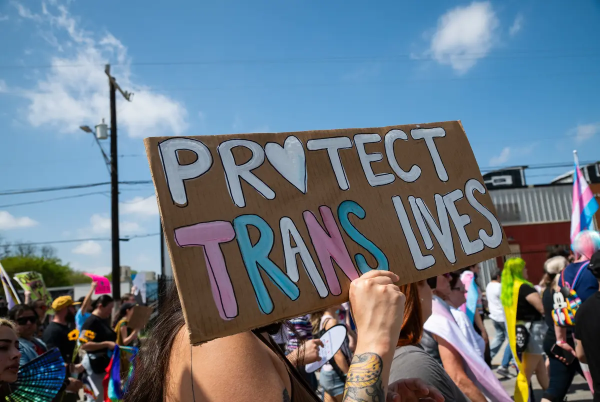
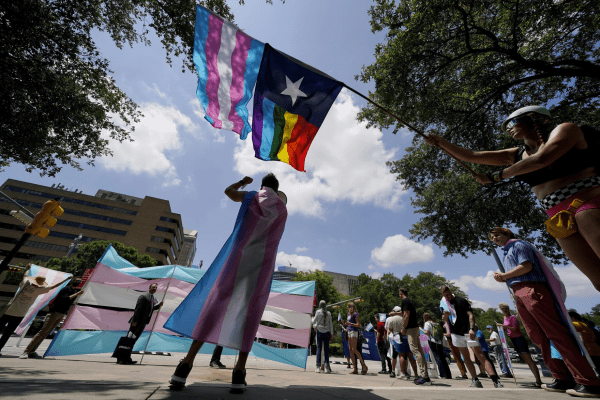
Dozens of trans people and their allies gathered in the outdoor Capitol rotunda Friday, chanting at the top of their lungs.
They will not erase us.
The next day, the Texas House of Representatives preliminarily passed a bill that aims to do just that.
House Bill 229 strictly defines men and women based on the reproductive organs they were born with, and orders state records to reflect this binary. The bill, titled the “Women’s Bill of Rights,” lays out the “biological truth for anybody who is confused,” said author Rep. Ellen Troxclair, an Austin Republican.
The bill passed on second reading 86-36 after an at times tense debate, and is expected to be finally approved next week before going to the Senate, which has already passed several bills with a similar focus.
Surrounded by a cadre of Republican women, Troxclair said the goal of the bill was to ensure women’s rights aren’t “eroded by activists” as more people come out as trans and nonbinary. Democrats argued against the bill for almost three hours with Rep. Jessica González, D-Dallas, saying “it is harmful, it is dangerous, and it is really freaking insulting.”
If this bill becomes law, more than 120,000 trans Texans would be forced to be defined in state records by the sex they were assigned at birth, rather than the gender they identify as, even if they’ve already legally changed their birth certificates and driver’s licenses.
This year, the proposals that have gained the most traction reflect a more fundamental question: what is a woman?
For conservative lawmakers, the answer is simple, and best defined by reproductive organs. For trans people and their allies, the answer is simple, and best left to an individual’s assertion of their gender identity.
Only one of those groups controls the Texas Capitol.
“We’re a state that believes in truth, and we’re a state that honors the hard-won achievements of women, the women who fought for the right to vote, to compete in sports and to be safe in public spaces, to be treated equally under the law,” Troxclair said on the floor. “But if we can no longer define what a woman is, we cannot defend what women have won. We cannot protect what we cannot define.”
In the bill, a woman is defined as “an individual whose biological reproductive system is developed to produce ova,” and a man is “an individual whose biological reproductive system is developed to fertilize the ova of a female.” Democrats criticized this as overly simplistic, excluding trans people, but also intersex people and those who can’t conceive children.
“Any biologist knows there are variations in sex chromosomes, hormone levels and other traits … where an individual’s biological characteristics don’t align with typical male or female categorization,” said Rep. Jon Rosenthal, a Democrat from Houston. “The real question is, do you believe that all people have the basic rights of life, liberty and the pursuit of their own personal happiness?”
This bill aligns with an executive order from Gov. Greg Abbott, who declared in January that Texas only recognizes two sexes, male and female, and a non-binding legal opinion from Attorney General Ken Paxton, who said state agencies should not honor court opinions to change someone’s sex listed on official documents.
At the Capitol rally on Friday, Lambda Legal senior attorney Shelly Skeen said revoking these changed documents, and preventing people from changing them in the future, “affects every aspect of our daily lives.” Having a birth certificate or drivers’ license that reflects a different sex than their physical presentation, or that doesn’t align with their passport or other documents, could leave trans people in a legal limbo and potentially open them up to violence, she said.
It could impact the state facilities, like prisons, they are sorted into, the bathrooms and locker rooms they are supposed to use and the discrimination protections they are entitled to, Skeen said. Unlike other bills, like the so-called “bathroom bill,” this legislation does not have civil or criminal penalties for using a facility that doesn’t align with one’s sex.
Troxclair did accept one amendment, by El Paso Democrat Rep. Mary González, to clarify how intersex people, who are born with both sets of reproductive organs, fit into these definitions.
The chamber also preliminarily approved Senate Bill 1257, which would require health insurers that cover gender-affirming care also cover any adverse consequences and costs of detransitioning. The bill, authored by Sen. Bryan Hughes and sponsored by Rep. Jeff Leach, passed 82-37.
Leach said he brought this bill on behalf of people who were left with tens and hundreds of thousands of dollars of medical bills because their health insurance wouldn’t cover the costs of detransitioning.
“The illustration that I think best describes this is, if you take somebody to the dance and they want to go home, then you have to take them home,” Leach said during the debate on Saturday.
The bill says that any insurance company that covers gender-affirming care must cover all detransition-related costs for its members, even if that person wasn’t on the health insurance plan at the time they transitioned. Democrats filed more than half a dozen amendments to narrow the scope of the bill, critiquing the bill as a health insurance mandate. None of the amendments passed.
Last session, Texas lawmakers outlawed gender-affirming care for minors. Trans advocates worry that raising the cost of covering gender-affirming care will result in health insurers not covering the treatments for adults, either.
“If you can make it painful enough for providers and insurers, health care is gone,” said Emmett Schelling, the executive director of the Transgender Education Network of Texas. “It doesn’t just feed into gender-affirming care. It bleeds into health care that we all need, that we all deserve.”
Speaking on the floor Saturday, Rep. Ann Johnson, a Houston Democrat, said the Legislature was telling insurance companies not to cover gender-affirming care.
“The reality is this bill, however you couch it, is about eliminating the existence of trans individuals in Texas,” Johnson said. “Stop pretending that you’re for freedom. Stop pretending that this is about the kids.”
A proposed bill aimed at protecting public employees, teachers and students who misgender their peers cleared the Texas Senate on Thursday, moving one step closer to becoming law.
Senate Bill 1999, authored by Republican Sen. Bryan Hughes of Mineola, would prevent state agencies and schools from punishing employees or students who refer to another person using terms “consistent with (their) biological sex,” even if that term doesn’t match the person’s gender identity. According to the bill, this law wouldn’t limit a school “from adopting policies and procedures to prohibit and prevent bullying.”
“A teacher may have a moral or religious objection that prevents them from using language with a student or other person’s biological sex,” Hughes said. “No teacher, no public employee, should be punished for using a pronoun consistent with a person’s biological sex.”
The bill was passed on a vote of 20 to 11. This came after Sen. José Menéndez, a Democrat from San Antonio, offered a floor amendment on Wednesday that would’ve offered similar protections to those who choose to express their gender identity.
“There are gonna be people out there that are going to feel as if this legislation is trying to take away their right to exist as who they are,” Menéndez said on Wednesday. “Just like we can’t force anyone to use pronouns, we can’t also force someone not to have them or express them.”
Hughes pushed back against the proposed amendment, saying his bill wouldn’t prevent “someone from asking to be identified as whatever they wish,” but would instead prevent teachers and other public employees from being “punished because they get it wrong.”
Menéndez’s amendment was ultimately struck down on Wednesday, paving the way for the bill’s final passage one day later. The bill now heads to the Texas House for consideration.
Christian nationalist Oklahoma state Sen. Dusty Deevers (R) and state Rep. Jim Olsen (R) have filed a resolution asking the U.S. Supreme Court to overturn Obergefell v. Hodges, the 2015 U.S. Supreme Court decision that legalized same-sex marriage nationwide. Republican lawmakers in at least five other states have introduced similar resolutions, all of which are largely symbolic and non-binding.
Senate Concurrent Resolution 8 claims that the 2015 high court ruling conflicts with the original meaning of the U.S. Constitution, the country’s founding principles, and “the deeply rooted history and tradition” regarding state regulation of marriage rights. It also notes that 75% of Oklahoma voters supported banning any recognition of same-sex unions in a 2004 ballot measure.
The resolution refers to the Supreme Court decision as an “unwarranted governmental intrusion,” accuses the high court of abusing “the Fourteenth Amendment’s Due Process Clause to fabricate substantive rights,” and says the 2015 decision is “undermining the civil liberties” of states “without any valid constitutional warrant for doing so.”
“For millennia marriage has been understood, both in biblical teaching and in the Anglo-American common-law tradition, as the lifelong covenant union of one man and one woman,” the resolution states. “Obergefell arbitrarily and unjustly rejected and prohibited states from recognizing this definition of marriage in favor of its own definition of marriage and a novel, flawed interpretation” of the U.S. Constitution.
It also notes that both Democratic Justices Ruth Bader Ginsburg and Elena Kagan had previously officiated same-sex weddings before the ruling and “should have recused themselves” from the Obergefell case. It further states that the decision has resulted in litigation directly targeting Christian business owners who refuse to accommodate same-sex couples and has resulted in Christians being vilified as “bigoted.”
“Obergefell played a role in erasing biological distinctions in other arenas, threatening women’s privacy, safety, and athletic opportunities,” the resolution adds, drawing a dubious connection between same-sex marriage and transgender people’s civil rights.
If the resolution is approved by state lawmakers, copies of it will be distributed to the Supreme Court, the president of the U.S. Senate, the Speaker of the House of Representatives, members of the Oklahoma congressional delegation and the Oklahoma attorney general, the resolution states.
Similar resolutions have been introduced in at least five other states: Michigan, Idaho, Montana, North Dakota, and South Dakota.
Deevers & Olsen’s resolution relies on legal misinterpretations
The court’s 2015 decision relied partially on the 1967 high court ruling in Loving v. Virginia, which granted marriage rights to heterosexual couples consisting of individuals from different racial ethnicities.
“If rights were defined by who exercised them in the past, then received practices could serve as their own continued justification and new groups could not invoke rights once denied,” the Supreme Court wrote in its 2015 decision.
The court’s majority opinion also ruled that governmental refusal to recognize same-sex marriages denies them numerous benefits of marriage, including the ability to care for children and family members. State bans on same-sex marriages also restricted same-sex couples’ and their families’ ability to move freely around the country, since their rights could vary greatly if they moved to an anti-marriage state, the court ruling said.
As such, the court ruled that same-sex marriage bans violate both the Due Process Clause and the Equal Protection Clause by needlessly introducing instability into same-sex relationships for no justifiable or compelling government interest.
While some Christian businesses have been sued for refusing to serve LGBTQ+ people and same-sex couples based on “sincerely held religious beliefs,” these lawsuits have focused on how such refusals violate public accommodations protections in state anti-discrimination laws, which require businesses to treat citizens equally, regardless of sexual orientation.
Deevers has long opposed same-sex marriages
Speaking last month to Tony Perkins, president of the Family Research Council (FRC) — which has been certified as a hate group by the Southern Poverty Research Center — Deevers said, “The fact is, Obergefell is fundamentally antithetical to all of these, and there is just no right to gay marriage in the Constitution.”
Despite this claim, the Supreme Court believes that the Constitution’s equal protection and due process provisions require the government to treat all individuals equally under the law unless there’s a compelling government interest to do otherwise.
“Ultimately, marriage is not the state’s institution, it’s God’s institution,” Deevers said. “No Supreme Court ruling that redefines a God-ordained institution is ever truly settled: not morally or culturally, and even constitutionally. The rogue court will stand in judgment before God for their decision.”
Deevers’s campaign website also clearly states his anti-LGBTQ+ beliefs.
“It is outrageous that drag queens are permitted to dance and twerk for children at pride parades and story hours in our state,” his website states. “It is outrageous that … public schools have exposed elementary and middle school children to… LGBTQ+ propaganda…. It is outrageous that Critical Race Theory and Queer Theory dominate in many of our public institutions. I promise to support legislation to put a stop to all of this.”
You must be logged in to post a comment.