These lawmakers’ speeches were so powerful that 29 Republicans abandoned their anti-trans bill

*This is being reported by LGBTQNation.

In a shocking turn of events, Republican House representatives in Montana decided to cross the aisle and vote against two anti-transgender bills, following powerful speeches delivered by transgender Reps. Zooey Zephyr and SJ Howell.

President Donald Trump has made his opposition to LGBTQ+ rights very clear, and as a result, Republicans and even some Democrats have felt emboldened to push anti-LGBTQ+ sentiment. Republican legislators in numerous states have proposed bills targeting trans people, and GOP-dominated states like Montana are no exception.

On March 6, day 47 in Montana’s 69th Legislature, lawmakers debated nearly 250 bills, including ones targeting the trans population, which Republican representatives largely supported, with some notable exceptions.

House Bill 675, sponsored by Rep. Caleb Hinkle (R), would ban drag performances and Pride parades in Montana. Hinkle proposed it in response to a previous drag ban he sponsored being struck down by the courts after it was used against a trans woman who was not a drag artist to prevent her from speaking at a library event.

To circumvent this ruling, Rep. Hinkle proposed granting individuals the private right to sue drag performers rather than relying on state enforcement. Hinkle called being transgender “a fetish” during committee hearings.

Rep. Zooey Zephyr (D) took to the floor and gave an impassioned speech in response.

“At its very core, drag is art. It is very beautiful art. It has a deep history in this country, and it is important to my community. You know, if you are a woman in this body wearing a suit today, you are in some way challenging gender norms that existed long ago,” she said.

“There were three-article-of-clothing laws 50 years ago that said if you wore three articles of clothing that were indicative of the opposite gender, they could stop you, arrest you,” she continued. “It was those laws that led to the police raiding an LGBTQ+ bar that led to the Stonewall riots, one of the most important civil rights moments in my community’s history.”

She added, “The sponsor … said this bill is needed… and I quote his words… ‘because transgenderism is a fetish based on crossdressing.’ And I am here to stand before the body and say that my life is not a fetish. My existence is not a fetish. I was proud a month ago to have my son up in the gallery here. Many of you on the other side met him. When I go to walk him to school, that’s not a lascivious display. That is not a fetish. That is my family. This is what these bills are trying to come after… not obscene shows in front of children; we have the Miller test for that, we have laws for that. This is a way to target the trans community, and that is in my opinion, and in the speaker’s own words.”

In a surprising turn of events, Rep. Sherry Essmann (R) rose to Rep. Zephyr’s defense, chastising the bill’s sponsor for using parental rights as his argument for bringing this bill into law, pointing out that such a bill would impede on the rights of parents such as Rep. Zephyr, and that representatives who support parents’ rights should vote against this bill.

In Rep. Essmann’s own words, “I’m speaking as a parent and a grandmother. And I’m very emotional because I know the representative in seat 20 is also a parent. No matter what you think of that, she is doing her best to raise a child. I did my best to raise my children as I saw fit, and I’m taking it for granted that my children are going to raise my grandchildren as they see fit,”

Following these two speeches, 13 Republican representatives voted against the bill.

This turn of events would’ve been remarkable in its own right, but this wasn’t the only occurrence of aisle-crossing on trans issues this session.

House Bill 754, if passed, would’ve had even more devastating consequences. The measure would’ve allowed the state to remove transgender children from their parents.

Rep. SJ Howell (D) took the floor to argue against the passing of the bill. Rep. Howell, who is non-binary, pointed out the vagueness of what the bill defines as a transgender child as it could mean a child who does anything that defies conventional gender norms, such as having a certain haircut or trying out a new nickname.

“Transitioning gender is not defined in this bill… so what does that mean? Maybe it means, as the sponsor said, surgery or medical treatment. Maybe it means therapy, mental healthcare. Maybe it means a kid who gets a haircut and a new set of clothes. Maybe a name change… a legal name change, or someone who wants to try out a different name… a strict reading of this bill could include all of that,” Howell said.

Rep. Howell further drove their point that the decision for the state to intervene in the removal of a child is a serious matter that holds a great deal of weight. They urged lawmakers to keep that in mind and consider the real consequences.

“Put yourself in the shoes of a [Child Protective Services] worker who is confronted with a young person, 15 years old maybe, who is happy… healthy… living in a stable home with loving parents, who is supported and has their needs met? And they are supposed to remove that child from their home and put them in the care of the state? We should absolutely not be doing that,” they said.

The bill went to a vote; this time, the Montana Republican party was fully fractured on the matter with 29 Republican representatives voting nay, killing the bill with a majority vote from all representatives. 

When discussing the results of these two decisions, Rep. Zephyr took to Bluesky, where in a post she typed, “These kind of votes are born out of trans representation in government.”

Equality Florida Resistance Report- Bad Bills Are Moving

*This is being reported by Equality Florida.

We’re heading into week #3 of the legislative session — and there’s a LOT happening. But reinforcements are on the way! Soon, we’ll be welcoming hundreds of volunteers to Tallahassee for our Pride At The Capitol kick-off campaign on Tuesday and Wednesday — and we have a packed schedule! Multiple bad bills are moving through the legislative process, and it’s all hands on deck to fight back against them.

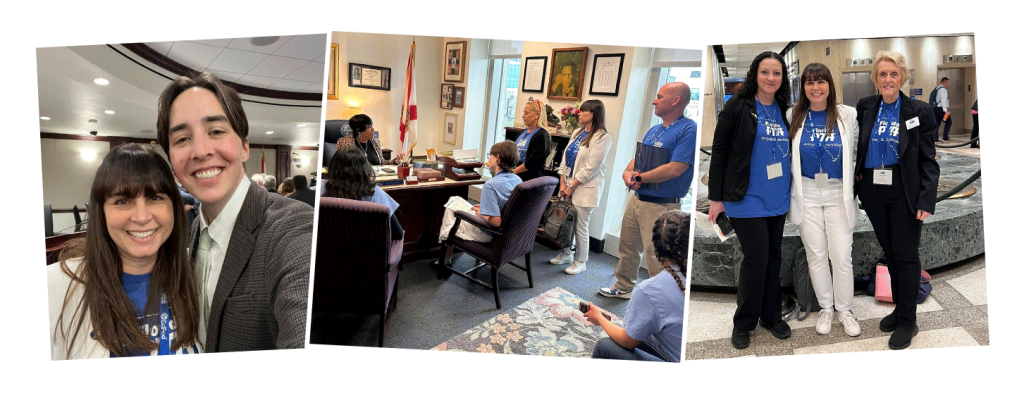
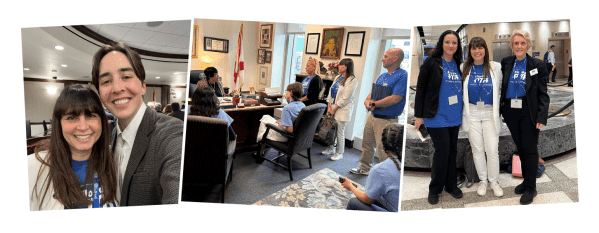
But that’s not all. Earlier this week, Jennifer Solomon — Equality Florida’s Parents and Families Support Manager and the President of Kaleidoscope PTA, which advocates for safe, supportive, and respectful learning environments for ALL students — joined parents from across the state in the Capitol for the Florida PTA’s Legislative Convention. The message from Kaleidoscope PTA was clear: we want policies that protect every student and respect every family.

Our ongoing Pride At The Capitol program is a crucial element of our goal to combat and minimize the impact of bad bills and prepare for legal challenges against any that are passed into law.

But this effort relies heavily on pro-equality supporters like YOU taking action. Your presence in Tallahassee, your stories, and your participation in committee hearings are crucial. We have a phenomenal group joining us in the Capitol next week, but we’re still signing folks up for the weeks beyond to stand with us on the front lines. Whether you can join us for a day or the entire week, find a time that works for you!

If you can’t join us in person, please consider a donation to help us get as many people to Tallahassee as possible. Every dollar counts!

Now, we’re going to take you through exactly what happened in Week #2, what’s still coming, and how you can take action.

🚨OPPOSE: End Citizen-Led Amendments (HB 1205/SB 7016)🚨
Sponsors:
 Rep. Jenna Persons-Mulicka

  • What it does: These bills attempt to effectively End Citizen-Led Amendments that allow we the people to change the state constitution via statewide referendum. Florida already has some of the strictest requirements in the nation for citizen-led amendments, but this legislation imposes new and insurmountable barriers that put constitutional amendments even further out of reach and consolidate power toward politicians and away from the voters.
  • What happened: SB 7016 PASSED out of its first committee by a 6-3 vote this week. Next, it heads to the Senate Fiscal Policy Committee — its final committee in the Senate before it reaches the floor for a full vote.
    How you can help: We need you to contact members of the Senate Fiscal Policy Committee right away and urge them to vote NO on SB 7016.

  • 🚨Anti-Diversity In Local Government (HB 1571/SB 420)🚨
  • Sponsors: Sen. Clay Yarborough and Rep. Dean Black
  • What it does: These bills prohibit local governments from enacting DEI-related policies, ordinances, or resolutions, and can subject local officials who previously voted for them to removal from office. This outrageous state overreach censors local governments and restricts their ability to respond to community needs and priorities.
  • What’s coming: SB 420 has been scheduled for a vote in its first Senate Committee, Community Affairs, on Monday, March 17th at 4:00pm ET.
  • How you can help: We need you to contact members of the Senate Community Affairs Committee right away and urge them to vote NO on SB 420.

  • 🚨Don’t Say Gay or Trans at Work 2.0 (HB 1495/SB 440)🚨
  • Sponsors: Sen. Stan McClain and Rep. Rachel Plakon
  • What it does: This bill enacts state regulations on pronoun use in public and certain private workplaces. It shields employees from accountability for anti-trans harassment and intentional misgendering, and prohibits the inclusion of a transgender or nonbinary gender option on any job application or related employment form. The bill also prohibits LGBTQ-related cultural competency training requirements for government workers.
  • What’s coming: SB 440 has been scheduled for a vote in its first Senate Committee, Governmental Oversight and Accountability, on Tuesday, March 18th at 3:30pm ET.
  • How you can help: We need you to contact members of the Governmental Oversight and Accountability Committee right away and urge them to vote NO on SB 440.

  • 🏆 THE GOOD BILLS 🏆
  • We’re keeping up the pressure on lawmakers to support and co-sponsor these bills, and we need your help.
  • 🏆 The Health Care Freedom Act (HB 823/SB 932) 🏆
  • Sponsors: Rep. Anna V. Eskamani and Sen. Shevrin Jones
  • Restores Reproductive Rights: Repeals Governor DeSantis’ 6-Week Abortion Ban, reinstating abortion access up until the start of the third trimester, in line with broader medical and legal standards.
  • Protects Medical Care For Transgender People: Eliminates restrictions on essential medical care for transgender individuals, ensuring access to treatments supported by leading medical authorities like the American Academy of Pediatrics and the American Medical Association.

  • 🏆 Freedom to Learn Act (HB 811/SB 930) 🏆
  • Sponsors: Rep. Angie Nixon and Sen. Tracie Davis
  • Safeguards Academic Freedom: Repeals provisions of the Stop WOKE Act and the “Don’t Say LGBTQ” law, protecting the right to teach honest history, discuss systemic injustices, and fully address LGBTQ topics in educational settings.
  • Promotes Inclusive Education: Allows higher education institutions to fund DEI programs and activities on campus, and requires the inclusion of LGBTQ history in public education, alongside Holocaust education, African American history, and women’s contributions, and restricts book-banning practices by limiting who can raise objections to school materials to only parents of public school students.
  • Send a message to lawmakers urging them to support the two Freedom bills.

Our public policy team has been reviewing hundreds of bills filed this legislative session. View our full legislative slate of priority bills Equality Florida supports and opposes.

Florida has been setting the example for bad policy that’s now being taken up at the federal level. Earlier this week, we held a virtual briefing with national partners to discuss ways we’re resisting attacks from the Trump Administration in the courts.

Texas House Representative Attempts to Criminalize Being Transgender

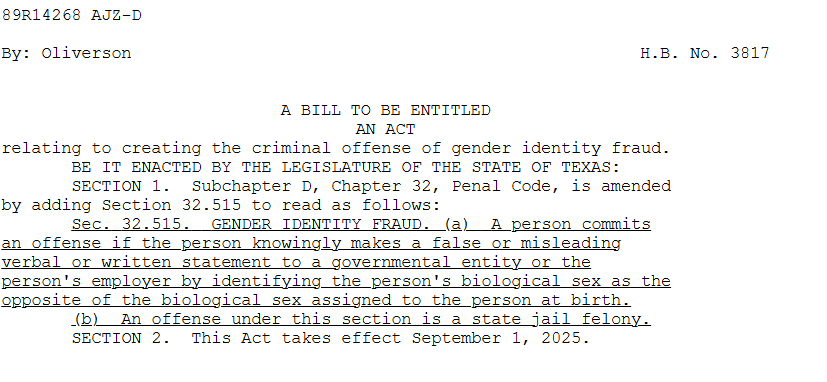
Not to be outdone by Rep. Money, who earlier filed an attempted ban on gender transition, Texas State House Representative Tom Oliverson (R-Cypress) filed House Bill 3817 on March 5 that would make simply being transgender a state felony. Below is the entirety of the bill text:

Oliverson is the Vice Chair of the House Republican Caucus. He had previously filed a bill in January to establish a “Religious Freedom Commission”.

Senate Democrats block GOP-led bill to ban transgender athletes from women’s sports

*This is being reported by CNN.


Senate Democrats on Monday blocked a GOP-led bill that would ban transgender athletes from women’s and girls’ sports at federally funded schools and educational institutions.

The bill’s failure to advance highlights the limits of Republicans’ narrow margins in Congress, despite control of both chambers. The party still needs support from Democrats in the Senate for most legislation to clear a 60-vote threshold. The party line vote was 51-45.

The Senate vote comes as GOP-led states across the country continue to put forward anti-trans measures, including bills intended to keep transgender students from playing on sports teams consistent with their gender identity.

Republicans put attacks over transgender issues front and center in competitive races during the last election cycle, including at the top of the ticket in the presidential race. In the aftermath of President Donald Trump’s White House win, some Democrats have said their party must do more to address potential voter concerns.

The GOP-led House passed their own version of the legislation in January by a vote 218-206 with two Democrats voting in favor and one Democrat voting “present.”

The bill seeks to amend federal law to require that “sex shall be recognized based solely on a person’s reproductive biology and genetics at birth,” for the purpose of determining compliance with Title IX in athletics, according to the legislative text.

Title IX prohibits discrimination on the basis of sex in education programs or activities that receive funding from the federal government, and applies to schools and other educational institutions.

Republicans have argued that transgender women hold a physical advantage over cisgender women in sports and thus their participation could consequentially limit opportunities for others.

Democrats have said that policies to restrict transgender athletes’ participation in team sports adds to the discrimination that trans people face, particularly trans youth. And they argue that Republicans are seeking to undermine the rights of LGBTQ students by advancing the bill.

Senate Republicans have 53 seats. Typically, that would mean that at least seven Democrats would need to vote with Republicans to hit the 60-vote threshold to advance a bill subject to a filibuster.

Iowa approves bill removing gender identity protections despite massive protests

*This is reported by PBS

DES MOINES, Iowa (AP) — Iowa moved to remove gender identity protections from the state’s civil rights code Thursday despite massive protests by opponents who say it could expose transgender people to discrimination in numerous areas of life.

The Iowa House approved the bill that would strip the state civil rights code of protections based on gender identity, less than an hour after the state Senate backed the legislation. First introduced last week, the measure raced through the legislative process.

Hundreds of LGBTQ+ advocates streamed into the Capitol rotunda on Thursday waving signs reading “Trans rights are human rights” and chanting slogans including “No hate in our state!” There was a heavy police presence, with state troopers stationed around the rotunda. Of the 167 people who signed up to testify at the public hearing before a House committee, all but 24 were opposed to the bill.

Protesters that watched the vote from the House gallery loudly booed and shouted “Shame!” as the House adjourned. Many admonished Iowa state Rep. Steven Holt, who floor managed the bill and delivered a fierce defense of it before it passed.

The bill would remove gender identity as a protected class from the state’s civil rights law and explicitly define female and male, as well as gender, which would be considered a synonym for sex and “shall not be considered a synonym or shorthand expression for gender identity, experienced gender, gender expression, or gender role.”

The measure would be the first legislative action removing nondiscrimination protections based on gender identity, said Logan Casey, director of policy research at the Movement Advancement Project, an LGBTQ+ rights think tank.

Supporters of the change say the current law incorrectly codified the idea that people can transition to another gender and granted transgender women access to spaces such as bathrooms, locker rooms and sports teams that should be protected for people who were assigned female at birth.

The legislation now goes to Republican Gov. Kim Reynolds, who has been supportive of efforts to limit gender identity protections.

The Iowa lawmakers’ actions came on the same day the Georgia House backed away from removing gender protections from the state’s hate crimes law, which was passed in 2020 after the death of Ahmaud Arbery.

Iowa’s current civil rights law protects against discrimination based on race, color, creed, gender identity, sex, sexual orientation, religion, national origin or disability status.

Sexual orientation and gender identity were not originally included in the state’s Civil Rights Act of 1965. They were added by the Democratic-controlled Legislature in 2007, also with the support of about a dozen Republicans across the two chambers.

Iowa Republicans say their changes are intended to reinforce the state’s ban on sports participation and public bathroom access for transgender students. If approved, the bill would go to Republican Gov. Kim Reynolds, who signed those policies into law. A spokesperson for Reynolds declined to comment on whether she would sign the bill.

V Fixmer-Oraiz, a county supervisor in eastern Johnson County, was the first to testify against the bill at the public hearing. A trans Iowan, they said they have faced their “fair share of discrimination” already and worried that the bill will expose trans Iowans to even more.

“Is it not the role of government to affirm rather than to deny law-abiding citizens their inalienable rights?” Fixmer-Oraiz said. “The people of Iowa deserve better.”

Among those speaking in support of the bill was Shellie Flockhart of Dallas Center, who said she is in favor as a woman and a mother, a “defender of women’s rights” and someone “who believes in the truth of God’s creation.”

“Identity does not change biology,” Flockhart said.

About half of U.S. states include gender identity in their civil rights code to protect against discrimination in housing and public places, such as stores or restaurants, according to the Movement Advancement Project. Some additional states do not explicitly protect against such discrimination but it is included in legal interpretations of statutes.

Iowa’s Supreme Court has expressly rejected the argument that discrimination based on sex includes discrimination based on gender identity.

Several Republican-led legislatures are also pushing to enact more laws this year creating legal definitions of male and female based on the reproductive organs at birth following an executive order from President Donald Trump.

Marriage equality bills filed to protect same-sex marriage in North Carolina

*Reported by WWAY News

North Carolina State Representative Deb Butler (D–New Hanover), one of the first openly gay members of the state House, has filed two bills aimed at securing marriage equality and protecting LGBTQ+ families in the state.

The proposals – H174 and H175 – come as lawmakers brace for potential challenges to same-sex marriage rights amid a shifting federal judiciary.

H174 seeks to repeal North Carolina’s outdated ban on same-sex marriage, a statute that remains on the books despite being rendered unenforceable by the U.S. Supreme Court’s 2015 ruling in Obergefell v. Hodges. If enacted, the bill would affirm the federal protections of all married couples, regardless of gender.

H175 would introduce a constitutional amendment explicitly safeguarding marriage equality in North Carolina. The amendment is designed as a long-term shield, ensuring that even if the Supreme Court revisits Obergefell, LGBTQ+ families will remain protected from discriminatory state-level policies.

“In North Carolina, we must defend the rights of our LGBTQ+ citizens,” Rep. Butler said. “Marriage equality is a settled issue for the vast majority of Americans, and our state should reflect that reality. These bills are about ensuring dignity, security and legal protection for all families in the face of uncertainty at the federal level.”

According to a news release, Butler’s initiative is part of a broader effort to fortify civil rights protections across North Carolina. Advocates, legal experts and LGBTQ+ organizations have voiced strong support for the bills, emphasizing the urgent need for state-level safeguards amid a volatile national political climate.

The legislation now heads to the North Carolina General Assembly.

WATCH: Woman is forcibly removed from Idaho town hall meeting by plainclothes security workers

*This is being reported by PBS.

BOISE, Idaho (AP) — A Republican-hosted legislative town hall meeting in northern Idaho descended into chaos after three plainclothes security workers forcibly removed a woman who was heckling the speakers.

In the video player above, watch recent examples of Americans voicing their objections at town hall meetings, including Teresa Borrenpohl, who is shown being forcibly removed from an event in Kootenai County, Idaho, after interrupting a speaker.

The incident Saturday at Coeur d’Alene High School, first reported by the Coeur d’Alene Press, drew widespread attention after videos of the turbulence were posted online. Now more than $120,000 has been raised for Teresa Borrenpohl’s legal costs, and the police chief has asked to have the security firm’s business license revoked.

The city attorney’s office also dismissed a misdemeanor battery citation against Borrenpohl “in the interest of justice,” Coeur d’Alene Police Chief Lee White said Monday, and detectives are reviewing video to determine whether the security officers violated any laws.

Roughly 450 people attended the legislative town hall hosted by the Kootenai County Republican Central Committee, said the organization’s chairman Brent Regan. All of them were told that security officers were present, and that “anyone who refused to respect the rights of others would be removed from the event.”

Still, videos show cheers and jeers were erupting throughout the crowd at times — including when one lawmaker mentioned legislation that he said protected doctors from “being forced to do abortions.”

“Women are dying,” one person in the audience shouted. “And doctors are leaving our state!” another yelled. A moderator tried to quiet the crowd, scolding people for “popping off with stupid remarks.”

That’s when Borrenpohl, a Democratic legislative candidate who has run unsuccessfully in the deeply Republican region, began to shout as well.

“Is this a town hall, or a lecture?” she asked, others in the audience echoing the question.

By that point, Borrenpohl had been warned at least three times to stop interrupting the speakers, said Regan.

“We’re trying to respect the rights of the 450 people that were there to listen. One person can’t stand up to bring a halt to the whole event,” Regan said.

Kootenai County Sheriff Bob Norris, who was in plain clothes but wearing his badge on his belt, approached Borrenpohl. He introduced himself and told her to leave or she would be escorted out. Then the sheriff stepped back and began recording on his cellphone as three unidentified men approached and began grabbing Borrenpohl.

Tonya Coppedge, who was sitting behind Borrenpohl and shot video of the disruption on her cellphone, said the men refused her repeated requests to identify themselves. One of the men bent Borrenpohl’s wrist into a flexed position, and later Borrenpohl bit one of the men on the hand as he continued to grab her, Coppedge said.

“They were not very kind to her — it was pretty violent and traumatic,” Coppedge said.

Alicia Abbott, a friend of Borrenpohl’s who organized a GoFundMe on her behalf, said Borrenpohl has bruises from the incident. She suggested Borrenpohl was wrongly detained.

“Who were these people to detain Teresa in the first place?” Abbott asked. “This is not the first time we’ve seen this kind of security presence in public meetings or town halls. If they’re going to be detaining people, do they even have knowledge of the law? Are they trained to safely remove people?”

The men worked for the private security company LEAR Asset Management, based in Hayden, Idaho. Messages left for CEO Paul Trouette were not immediately returned. The men appeared to have violated Coeur d’Alene City ordinances, which require security personnel to wear uniforms with the word “Security” clearly marked “in letters no less than 1-inch tall on the front of the uniform.”

White, the police chief, told The Associated Press, said he had requested the revocation of company’s business licenses and the security agent licenses from the individuals who were involved.

Organizers arranged for extra security at the event after one of the lawmakers told them he had been facing death threats, Regan said. Rep. Jordan Redman, a Republican, had recently been threatened with bombings by an individual on social media, and so KCRCC notified the sheriff and arranged for security, Regan said. The Coeur d’Alene Police Department also had officers stationed in the parking lot outside.

On Monday, Kootenai County Undersheriff Brett Nelson released a statement saying the agency will have a “complete and independent investigation of the incident conducted by an outside agency.”

Michigan lawmaker urges US Supreme Court to overturn gay marriage ruling

*This is being reported by FOX 2 Detroit.

The Brief

    • Michigan Rep. Josh Schriver is proposing a resolution that would urge the U.S. Supreme Court to overturn the ruling that legalized same-sex marriage nationwide.
    • Schriver says allowing gay marriage has led to “religious persecution” and goes against “the sanctity of marriage.”
    • Gay marriage is banned in Michigan’s constitution, but is allowed due to the 2015 Supreme Court ruling that Schriver and the resolution’s co-sponsors wish to overturn.

LANSING, Mich. (FOX 2) – A Michigan lawmaker plans to introduce a resolution to the state House of Representatives, urging the United States Supreme Court to overturn Obergefell v. Hodges, the case that legalized same-sex marriage nationwide.

Rep. Josh Schriver (R-Oxford), along with 12 co-sponsors, will introduce the House resolution following Tuesday’s session.

The backstory:

The resolution comes after Schriver posted on social media late in 2024 that gay marriage should be banned.

“America only ‘accepted’ gay marriage after it was thrusted into her by a perverted Supreme Court ruling,” he wrote in part on X. “Make gay marriage illegal again. This is not remotely controversial or extreme.”

Schriver doubled down on what he said in a statement, where he wrote that gay marriage offends God. 

In a release announcing the new resolution, Schriver wrote that Obergefell v. Hodges “is at odds with the sanctity of marriage, the Michigan Constitution, and the principles upon which the country was established.”

Without the Obergefill ruling, gay marriage would be illegal in Michigan due to an amendment voters passed in 2004. However, the Supreme Court decision supersedes that. 

Schriver went on to reference what he called “religious persecution” since the 2015 ruling, including a wedding venue that was fined for turning away an LGBTQ couple, and Michigan Attorney General Dana Nessel attempting to ban adoption agencies from turning away same-sex couples for religious reasons. However, a judge later ruled that faith-based adoption agencies can turn away prospective parents because they are LGBTQ.

What they’re saying:

Fears that the Supreme Court may take another look at the ruling and overturn it arose after Roe v. Wade was overturned, and has increased as lawmakers begin introducing legislation aimed at the landmark case.

Lawmakers in other states, including IdahoMontanaNorth Dakota, and South Dakota, have also been pushing the Supreme Court to revisit the ruling and overturn it. 

The new resolution received pushback from Democrats, with state Democratic Party Chair Curtis Hertel releasing a statement condemning the resolution:

“Unfortunately, this isn’t a surprise coming from Josh Schriver and the right-wing extremists that populate Matt Hall’s Republican caucus – and it’s deeply dangerous. Schriver is attacking hundreds of thousands of Michiganders who are nurses, teachers, soldiers, and beloved members of the community.

“From spreading racist conspiracy theories to homophobic rhetoric, Schriver does not deserve to serve the people of Michigan, let alone sit on a politically motivated oversight committee in the state House. Thankfully, I know that Democrats will continue to fight for Michiganders’ civil rights and personal freedoms in the face of these ugly attacks.”

Gay marriage in Michigan

Because Michigan voters banned gay marriage in 2004, legalizing the practice would first require voters to remove the ban from the state constitution via ballot proposal.

Lawmakers have been pushing to codify same-sex marriage to protect it if Obergefell were to be overturned.

Under the existing amendment, if Obergefell were to be overturned, existing marriages in Michigan would be recognized, but future LGBTQ+ marriages would be banned, said Rep. Jason Morgan (D-Ann Arbor).

A similar scenario played out in 2022 when nationwide abortion was removed following a Supreme Court ruling. The overturning of that ruling allowed states to decide if they would allow abortions. Michigan had an existing abortion ban that was lifted after voters passed a proposal to allow the procedure.

After the Roe ruling, Justice Clarence Thomas said that the Supreme Court should reconsider rulings that legalized same-sex marriage and protected same-sex relationships, creating fear in states that don’t have protections in place.

New Jersey LGBTQ Advocates from Garden State Equality Say They’ll Continue to Pushback with Facts

*This was first published by GLAAD.

LGBTQ activists in New Jersey say they’re fortunate to live in New Jersey as the new administration kicks-off its term by attacking the transgender community and diversity initiatives. Advocates at Garden State Equality say New Jersey sets a standard for legal equality that can inspire states throughout the country.

As part of its education and advocacy “Going Local” programming across the country, the GLAAD Media Institute (GMI) – GLAAD’s training, research and consulting division – convened meetings with local leaders and community advocates at Garden State Equality and throughout the nation. Attendees who complete a program or session with the GLAAD Media Institute are immediately deemed GLAAD Media Institute Alumni, who are equipped to maximize community impact by leveraging their own story for culture change.

The state is known for its tough pro-equality laws like New Jersey Law Against Discrimination (LAD), which is considered one of the most comprehensive anti-discrimination laws in the country. Yet, new laws in the state legislature help combat a rise of LGBTQ disinformation and hate speech, straight out of Project 2025. The anti-LGBTQ hate machine has affected dozens of Jersey school board’s policies on book bans, critical race theory, and sex education.

Since Garden State Equality’s founding in 2004, over “230 LGBTQ civil rights laws” have been enacted at the state, county, and local levels. According to the organization’s website, that’s “more laws in less time than in any other state in American history.”  

On a federal level, President Trump began his second term signing executive orders to dispute the fact that transgender and gender diverse people exist. On Trump’s first days in office he signed an executive order titled Defending Women From Gender Ideology Extremism and Restoring Biological Truth to the Federal Government. The order is used to delegitimize trans truth, history, and science, which promptly raised concerns over a federal ban of the “x” gender marker for people of nonbinary, trans or gender nonconforming experience in the United States. 

“As of today, it will henceforth be the official policy of the United States government that there are only two genders, male and female,” President Trump incorrectly said upon signing the order.

Garden State Equality says they’re ready to resist these efforts by the current administration, and continue to encourage diversity, equity, and inclusion (DEI) programs, while uplifting best practices for LGBTQ youth and adult community members as they have within their state government, says advocates. 

“We want our youth to understand that they don’t just live in a bubble here in New Jersey, that the work that they are doing to be activists here in our state is going to influence other states and other students across the nation,” Natalie Hernandez  told GLAAD. 

Natalie Hernandez, Project Manager & Trainer
Natalie Hernandez, camp director and project manager & trainer; Screenshot by Lana Leonard

Hernandez is the Camp Director of Garden State Equality’s Changemakers Youth Leadership summer program. Empowering youth leaders helps inform the work of other departments and so forth, it’s a collaborative effort to fight for legal equality for the state organization. 

Hime Sarah Thomas, project manager and trainer with the Education and Youth Development Department, grew up in a queer family who introduced Thomas to Garden State Equality through the Changemakers Youth Leadership summer program. Thomas works to encourage youth to become “changemakers” by giving them an outlet to express their frustrations, and amplify their voices.

Only a small number of youth actually transition: less than one-tenth of one percent of teenagers with private insurance in the United States are transgender and receive gender-related medicine, according to a study by JAMA Pediatrics

“These youth need a space where they can talk about all the things that are happening in the news and the world because they don’t have the autonomy to be able to vote and make those choices on who is representing them,” Thomas said.  

For Aisling MacDonald, a project manager for the organization’s Training and Trans Resiliency Program, which advocates for the wellness of transgender and gender nonconforming adults and families moving into New Jersey for their LGBTQ protections.

“Our world is ever evolving. There are some very legitimate anxieties, and also… we are really, really fortunate to live here,” MacDonald said. 

MacDonald spends much of her day building coalition relationships and legal resources for name changes and documents for trans people who have been under attack on social media, through legislation, and the news. 

Hime Sarah Thomas, project manager & trainer; Screenshot by GLAAD
Hime Sarah Thomas, project manager & trainer; Screenshot by Lana Leonard

“My experience as a woman of trans experience who is from some very particular demographics, and a very particular flavor of multiple marginalizations, is that we do not have a lot of trust for systems, institutions and legislators, especially,” MacDonald said. “And I think more than anything else in 2025 we have an opportunity to build a different kind of community.”

These insights into the LGBTQ community of Asbury Park lead into a larger narrative about community needs in New Jersey and beyond. Even still, Garden State Equality recognizes that there are hurdles that must still be overcome. 

More about the GLAAD Media Institute: The GLAAD Media Institute provides training, consultation, and actionable research to develop an army of social justice ambassadors for all marginalized communities to champion acceptance and amplify media impact. Using the best practices, tools, and techniques we’ve perfected over the past 30 years, the GLAAD Media Institute turns education into armor for today’s culture war—transforming individuals into compelling storytellers, media-savvy navigators, and mighty ambassadors whose voices break through the noise and incite real change. Activate with the GLAAD Media Institute now at glaad.org/institute

Study: LGBTQ youth, family relocate amid increasing anxiety over laws directed at them

*This was published on USA Today

More than a quarter million LGBTQ+ young people and family members in the U.S. have relocated to other states because of LGBTQ+-related politics or laws, according to estimates outlined in a new report exploring the population’s response to hostile policy environments.

According to the brief compiled by The Trevor Project and Movement Advancement Project, 9 in 10 LGBTQ+ young people say politics have impacted their well-being, while 4 in 10 say they’ve thought about moving to another state because of unfriendly LGBTQ+ politics or laws at home.

The portion was even higher for transgender and nonbinary youth, 94% of whom said politics had affected their well-being and nearly half (45%) who said they’d considered relocating.

“For many LGBTQ+ young people in the U.S., the steady stream of anti-LGBTQ+ news may feel overwhelming right now,” said Steven Hobaica, a research scientist for the Trevor Project, a national LGBTQ+ youth advocacy group focused on suicide prevention. “It’s heartbreaking to see that nearly half of transgender and nonbinary youth have considered moving due to anti-LGBTQ+ policies.”

While just 4% of LGBTQ+ young people ages 13 to 24 reported uprooting because of anti-LGBTQ+ policies, that translates to roughly 266,000 young people and family members based on LGBTQ+ youth population estimates, the groups said.

Trump administration presents new threats

The report comes as President Donald Trump returns to the White House after making gender identity issues a focal point of his campaign. On Monday, after being sworn in, Trump issued a spate of executive orders that included seeking to remove legal protections for transgender people in federal spaces, laying the groundwork to potentially bar transgender individuals from military service and declaring that the U.S. government will only recognize two sexes, male and female.

“No matter a person’s political beliefs, we know, from our research and from what LGBTQ+ young people tell us, that policies like these take a damaging toll on LGBTQ+ young people’s mental health,” said Janson Wu, The Trevor Project’s senior director of state advocacy and government affairs. 

The organization said its crisis services saw a 33% increase on Inauguration Day compared to typical volume. But that still paled, it noted, to the sevenfold increase in crisis services experienced the day after the 2024 election.

“No matter your political beliefs or how you feel about the current administration, one thing must be made clear to all of us living in the United States: Real young people’s lives are at risk,” said Trevor Project CEO Jaymes Black.

Recent years have already seen increasing numbers of state laws and proposed legislation targeting the LGBTQ+ community, especially measures aimed at curbing the rights of transgender youth.

“It’s critical that we not only call attention to the negative impact of these divisive political attacks but also highlight that this research supports the idea that more inclusive policy environments lead to better outcomes for LGBTQ young people across a range of measures,” said Logan Casey, director of policy research for Movement Advancement Project.

Hostile climates raise mental, emotional health risk

The organizations said they compiled the report given a lack of research into how LGBTQ+ young people respond to hostile policy environments, despite studies showing that those youths experience greater mental health challenges and higher suicide risk in such environments.

“By gaining more knowledge of how LGBTQ+ young people respond to their policy environment, advocates and policymakers can create or modify policy to better support LGBTQ+ young people and their families,” the report said.

Their joint report is based on data gleaned from The Trevor Project’s 2024 U.S. National Survey on the Mental Health of LGBTQ+ Young People, which collected responses from more than 18,600 LGBTQ+ individuals between the ages of 13 and 24. It also incorporates data from Movement Advancement Project, a Boulder, Colorado-based group that tracks LGBTQ+-related laws and policies throughout the U.S. and its territories and assigns each a negative or positive policy index.

More than a quarter (27%) of respondents lived in states with negative policy indexes, the report said. Those individuals were more likely than their counterparts to consider moving to other states and also likelier to travel to other states to receive health care.

The report noted that not all LGBTQ+ young people and their families desiring to relocate have the resources to do so.

“Notably, the same factors that might preclude the ability of LGBTQ+ young people and their families from moving, such as poverty, housing discrimination, and employment access, are the same ones that disproportionately affect LGBTQ+ people of color and increase their risk of mental health and suicide,” the report said.

Bob Daemmrich, USA TODAY NETWORK

Blog at WordPress.com.

Up ↑