Supreme Court rules against Colorado’s ban on conversion therapy aimed at LGBTQ youth

Read more at NBC News.

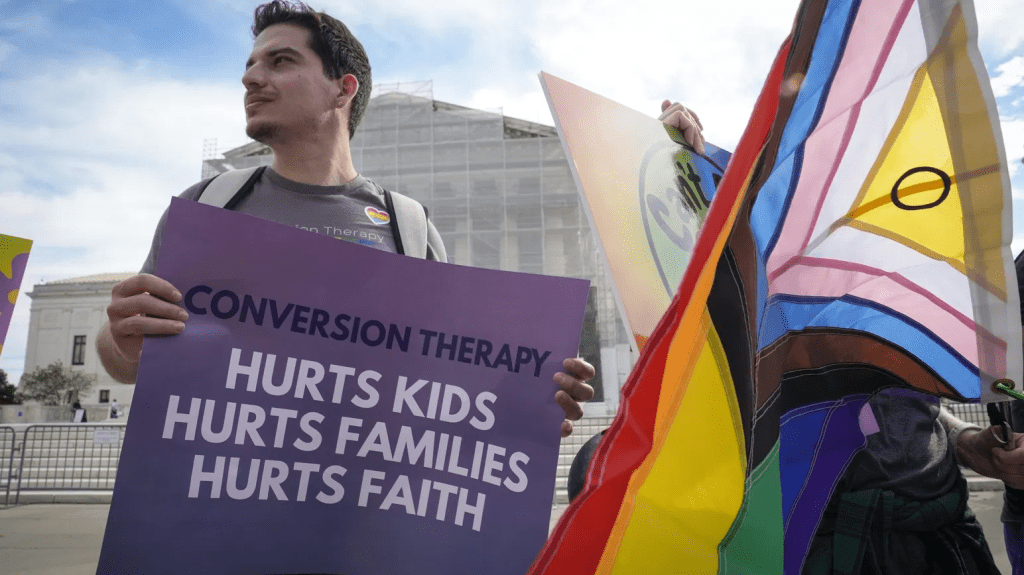
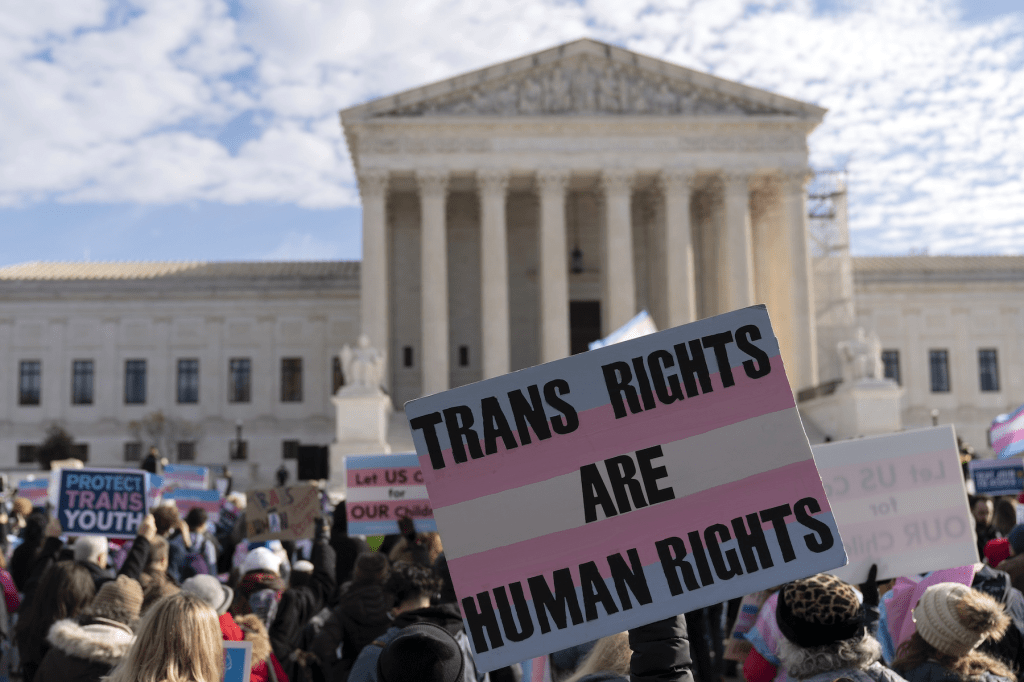
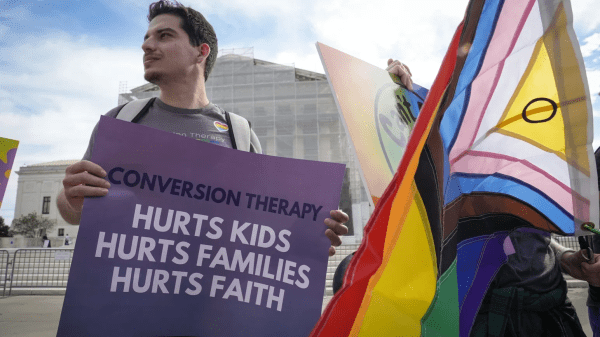
In a blow to LGBTQ rights, the Supreme Court on Tuesday ruled that Colorado’s ban on conversion therapy aimed at youths struggling with their sexual orientation or gender identity violates the free speech rights of a conservative Christian therapist.

The 8-1 decision in favor of therapist Kaley Chiles on her claim brought under the Constitution’s First Amendment is likely to have national implications — more than 20 states have similar laws. It could also have an impact on other forms of medical treatment that involve speech.

Writing for the majority, Justice Neil Gorsuch said that “the First Amendment stands as a shield against any effort to enforce orthodoxy in thought or speech in this country.”

Colorado’s law “does not just ban physical interventions,” Gorsuch wrote. It also “censors speech based on viewpoint.”

In deciding the case, the court embraced Chiles’ argument that the Colorado law banning conversion therapy regulates speech, not conduct, as Colorado had argued. As such, the measure is not like other health care regulations that focus on conduct, the court concluded. The case, decided on the global Transgender Day of Visibility, will now return to the lower courts.

“The Supreme Court’s ruling is a victory for counselors and, more importantly, kids and families everywhere,” Chiles said in a statement. With the ban not in effect, she will be able to speak freely to clients “when they choose the goal of growing comfortable with their bodies,” she added.

Liberal Justice Ketanji Brown Jackson was the sole dissenter, taking the unusual step of reading a summary of her opinion in the courtroom. She focused on the distinction between speech and conduct.

“Under our precedents, bedrock First Amendment principles have far less salience when the speakers are medical professionals,” Jackson wrote.

Conversion therapy, favored by some religious conservatives, seeks to encourage gay or lesbian minors to identify as heterosexual and for transgender children to identify as the gender assigned to them at birth. Colorado bans the practice for licensed therapists, not for religious entities or family members.

The practice is widely discredited by medical organizations, including the American Medical Association, the American Psychological Association and the American Academy of Pediatrics. Conversion therapy is ineffective, research has found, and can even be harmful, increasing a risk of suicide among people subjected to it.

The ruling could have an impact on other forms of medical regulation, with Jackson saying the court could be “ushering in an era of unprofessional and unsafe medical care” where some forms of treatment are effectively free from regulation. She mentioned as an example what are known as “informed consent” regulations that require medical practitioners to ensure patients are aware of any potential risks before they undergo a treatment.

“The fallout could be catastrophic,” Jackson added.

Fellow liberal Justice Elena Kagan wrote a concurring opinion making it clear the Colorado law did implicate free speech rights, but so would what she called “mirror image” laws that could seek to ban therapy aimed at affirming a teen’s gender identity.

“Once again, because the state has suppressed one side of a debate, while aiding the other, the constitutional issue is straightforward,” she said, describing how courts would address such a measure.

The Supreme Court has a 6-3 conservative majority that has frequently ruled in favor of Christian conservatives who bring free speech cases that touch upon their religious beliefs.

The ruling follows a similar 2018 decision in which the conservative majority backed a free speech challenge to a California law that requires anti-abortion pregnancy centers to notify clients about where abortion services can be obtained.

The Supreme Court has backed LGBTQ rights in the past, legalizing same-sex marriage in 2015 and ruling five years later that a federal law barring employment discrimination applies to both gay and transgender people.

But, in a separate string of cases, the court has embraced free speech and religious expression rights when they conflict with anti-discrimination laws aimed at protecting LGBTQ people.

Last year, for example, the court backed a religious rights challenge to a Maryland school district’s policy of featuring LGBTQ-themed books in elementary schools without providing an opt-out option for families.
Supreme Court forces California to allow teachers to out trans kids

Read more at LGBTQ Nation.

The Supreme Court yesterday blocked a law in California that bans teachers from outing trans kids to their parents from going into effect. The decision was 6-3, with the six Republican appointees opposing trans rights and the three Democratic appointees taking the side of trans kids.

The case involves teachers from Escondido Union School District who claim that their Christian faith requires them to out trans kids to their parents. They argue that their “right to exercise [their] own religious beliefs” is being violated by the district policy, which was established in response to 2016 legal guidance from the California Department of Education advising districts not to out students.

Trans and nonbinary youth can be put at risk of parental rejection and homelessness if outed to their parents.

The teachers, who were later joined by several parents in their lawsuit, won their case in a lower court in December, where Bush-appointed Judge Roger Benitez said that California should “trust parents to do the right thing for their child” and let teachers out trans kids to their parents, even in cases where the child fears abuse, neglect, or homelessness as a result. Trans and nonbinary youth are much more likely to experience homelessness compared to cisgender youth.

In early January, a panel of judges on the Ninth Circuit U.S. Court of Appeals issued a stay to Benitez’s injunction, allowing California to enforce its trans youth protections as appeals work their way through the legal system.

But the teachers appealed to the Supreme Court, which sided with them and granted their emergency request for a stay.

The Court issued an 18-page unsigned ruling that said they believe that the parents are “likely to succeed on the merits” of their religious freedom claim, which was that there is a “right of parents to guide the religious development of their children” that also implies a right to know how their children are presenting their gender at school. The Court said that not outing kids to their parents is an even “greater… intrusion on the parents’ free exercise rights” than schools letting kids read books with LGBTQ+ characters, which the Court also ruled schools couldn’t do in its Mahmoud v. Taylor ruling last year.

In her dissent, Justice Elena Kagan wrote that this case shows how the “emergency docket can malfunction” because the case involved “novel legal questions” that the Court is ruling on with “inadequate briefing.”

“The Court is impatient: It already knows what it thinks, and insists on getting everything over quickly,” she wrote, noting that the federal appeals court hasn’t even ruled on the appeals in the case yet.

On the more substantive issues, Kagan wrote that the Constitution makes no mention of parental rights and that the conservatives on the Court relied on the Due Process Clause, which they usually read narrowly. She pointed out that the idea that women have a right to control their own bodies elicits “outright hostility” from her conservative colleagues when it’s suggested to be part of the Constitution’s due process protections. But now the same conservatives found that that clause gives parents the right to know how their children are presenting their genders at school.

She added that parents’ rights have to be balanced against the “critical interests in the care and education of children” that the state has, and that they needed to follow “ordinary processes” to address that balance.

Outing trans youth to their parents puts them at increased risk of homelessness, according to the Williams Institute. Not only that, they might still be exploring their identities and need to exercise control over their coming-out process.

“Transition isn’t a flick of a switch; it’s a complex, gradual, weaving journey of identity,” Connie Walden, a trans woman, wrote to the New York Times in 2023.

“My own transition started in high school. At what stage between my experimenting with makeup now and then to asking specific friends to call me Connie would I have officially, suddenly, socially transitioned? When should I have been robbed of the right to come out to my own family, to decide when to include them in my own process?”

“I recognize the pain of well-meaning parents who feel that their child kept such a large ‘secret’ from them. Yet with transition being a gradual process of experimentation, there is no big secret. There’s only kids slowly figuring out who they are, like all other kids.”

US Supreme Court backs parents’ right to opt out of LGBTQ-themed school books

Read more at MSN.

The United States Supreme Court has ruled in favour of a group of parents seeking to exempt their children from public school instruction that conflicts with their religious beliefs, in a 6-3 decision that reinforces constitutional protections for religious freedom.

The case was brought by Christian, Muslim, and Jewish parents in Montgomery County, Maryland, who objected to the use of LGBTQ-themed storybooks in elementary school classrooms, particularly books addressing same-sex marriage and gender identity.

Justice Samuel Alito, delivering the majority opinion, wrote that refusing to permit parents to opt their children out of such instruction “poses a very real threat of undermining their religious beliefs and practices” and violates the First Amendment’s guarantee of the free exercise of religion.

“The Montgomery County Board of Education’s introduction of the ‘LGBTQ+-inclusive’ storybooks, along with its decision to withhold opt outs, places an unconstitutional burden on the parents’ rights to the free exercise of their religion,” Alito wrote.

The justices found that the parents were likely to succeed in their legal challenge and should be granted a preliminary injunction while the case continues, meaning the school board must temporarily accommodate their request to be notified in advance of any related instruction and allow their children to be excused.

“In her dissent, Sotomayor accused the court of inventing a ‘constitutional right to avoid exposure to subtle themes contrary to the religious principles that parents wish to instill in their children.’” She was joined in dissent by Justices Elena Kagan and Ketanji Brown Jackson.

The dispute stems from a 2022 policy change when the school district introduced several LGBTQ-themed books into its language arts curriculum and initially allowed parents to opt out. A year later, the board reversed that decision, arguing the opt-out system was unmanageable and conflicted with the district’s commitment to inclusion.

The parents argued that mandatory exposure to the material, without an option to decline, amounted to “government-led indoctrination about sensitive matters of sexuality.” School officials, however, maintained that the books are intended to introduce children to “diverse viewpoints and ideas.”

During oral arguments in April, the court’s conservative majority signaled strong support for parental rights in such cases, indicating that allowing families to opt out of instruction on sensitive subjects should be “common sense.”

Catholic preschools appeal to Supreme Court in Colorado case over LGBTQ rights and religious liberty

Read more at CPR News.

Two Denver-area Catholic parishes asked the U.S. Supreme Court on Thursday to reconsider a lower court decision that said parish preschools participating in Colorado’s state-funded preschool program couldn’t deny admission to LGBTQ children or children from LGBTQ families.

The appeal to the Supreme Court comes about six weeks after the 10th Circuit Court of Appeals ruled against the Catholic parishes, which had argued that enrolling children from LGBTQ families would conflict with their religious beliefs.

Gov. Jared Polis lauded the circuit court’s Sept. 30 ruling, which was a major win for the state.

If the Supreme Court agrees to hear the case, the justices could answer a question at the heart of the case: Can private religious schools that accept public education dollars refuse to enroll certain kids based on religious principles? The state and two lower courts have said no. The Supreme Court, which has a conservative majority, could give a different answer.

A spokesperson for Colorado Department of Early Childhood, which runs the state-funded preschool program, said officials won’t comment on pending or active litigation.

The Catholic preschools sued the state in 2023 as Colorado launched its new universal preschool program, which provides tuition-free preschool to 4-year-olds statewide. The $349 million program serves more than 40,000 children and allows families to choose from public, private, or religious preschools.

St. Mary Catholic Virtue School in Littleton and Wellspring Catholic Academy in Lakewood wanted to join the program when it started, but didn’t want to admit LGBTQ children or children from LGBTQ families.

They asked for an exemption from state rules banning discrimination based on sexual orientation and gender identity, but the Colorado Department of Early Childhood refused. The two preschools never joined the program, and in August 2023, the parishes that ran the preschools sued the state.

Of more than 2,000 preschools participating in Colorado’s universal preschool program this year, about 40 are religious.

Attorneys from The Becket Fund for Religious Liberty, which is representing the Catholic preschools in the case, have argued that Colorado is discriminating against the preschools based on religion.

“Colorado is picking winners and losers based on the content of their religious beliefs,” Nick Reaves, senior counsel at Becket, said in a press release Friday.

The release suggests that Colorado’s rules barring discrimination have hurt Catholic preschool enrollment.

Since universal preschool began, “enrollment at Catholic preschools has swiftly declined, while two Catholic preschools have shuttered their doors, including one that predominantly served low-income and minority families,” the press release said.

Wellspring, one of two parish preschools involved in the case, did close last year when the K-8 school it was part of closed because of low enrollment and financial problems. A Catholic preschool in Denver also shuttered when the K-8 school it was part of — Guardian Angels Catholic School — closed at the end of the 2024-25 school year. At the time the Archdiocese of Denver announced the closure of Wellspring and Guardian Angels, it also announced the consolidation of two Catholic high schools into one campus.

Christian conservative group that tried to overturn marriage equality vows that it’s not over

Read more at LGBTQ Nation.

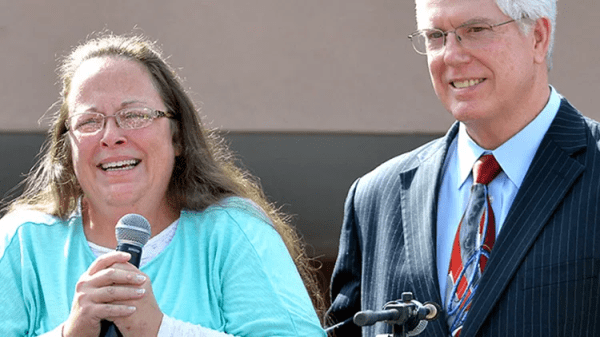
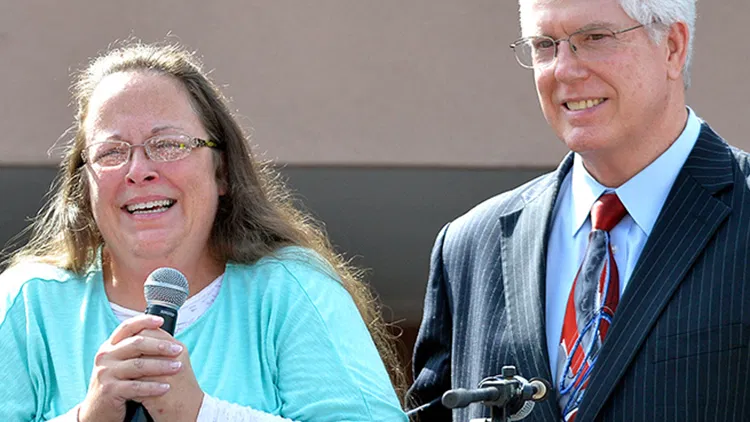
Liberty Counsel, the Christian hate group behind Kim Davis’s attempt to have the Supreme Court overturn its marriage equality decision, says their fight to end LGBTQ+ equality is far from over.

“I have no doubt that Davis’s resolve will serve as a catalyst to raise up many more challenges to the wrongly decided Obergefell opinion,” wrote Liberty Counsel President Mat Staver in a message on the group’s website. “Until then, we must pray, fight, and contend for when Obergefell is no longer the law of the land.”

The Supreme Court ruled in its 2015 Obergefell v. Hodges decision that people have a fundamental right to choose who to marry, regardless of their spouse’s gender. The decision legalized marriage equality in all 50 states.

A county clerk in Kentucky, Kim Davis, refused to issue marriage licenses to same-sex couples, which led to a lawsuit and ten years of legal fights.

This year, with help from the lawyers at Liberty Counsel, she filed an appeal to the Supreme Court to overturn a judgment against her that required her to pay $360,000 to a gay couple whom she had illegally denied a marriage license. In that petition, she asked the Supreme Court to end marriage equality, arguing that her case proved that LGBTQ+ equality was inherently a threat to the rights of Christians like herself.

Last week, the Supreme Court rejected her appeal, leaving its decision in favor of marriage rights in place for at least another year.

Anti-LGBTQ+ activists, though, aren’t going to give up.

“This time, Kim Davis is the victim of religious animus and is being deprived of her constitutional freedom of religion,” Staver wrote. “Tomorrow, it could be you.”

“This may mark the end of an era in litigating Davis’s case, but the fight to overturn Obergefell and protect religious liberty has just begun.”

Staver’s argument is similar to an argument that Justices Clarence Thomas and Samuel Alito made in 2020 that the mere existence of married same-sex couples is a violation of Christians’ religious freedom because seeing married same-sex couples encourages people to judge Christians “as bigots.” (That opinion was delivered in the context of a different appeal filed by Davis.)

“Since Obergefell, parties have continually attempted to label people of good will as bigots merely for refusing to alter their religious beliefs in the wake of prevailing orthodoxy,” Thomas wrote at the time.

Supreme Court rejects bid to overturn same-sex marriage ruling

Read more at The Hill.

The Supreme Court rejected a longshot effort Monday to overturn its ruling guaranteeing same-sex marriage nationwide. 

Former Kentucky county clerk Kim Davis directly asked the justices to overrule the 2015 landmark decision after a jury awarded damages to a couple whom Davis refused to issue a marriage license. 

“The Court can and should fix this mistake,” her attorneys wrote in court filings. 

In a brief order, the justices declined to take up Davis’s appeal alongside dozens of other petitions up for consideration at the justices’ weekly closed-door conference. There were no noted dissents.

Court watchers viewed Davis’s appeal as a longshot effort, but it sparked trepidation among LGBTQ rights groups since several conservative justices who dissented in the decade-old case remain on the court. 

Davis gained national attention after she raised religious objections to issuing marriage licenses to same-sex couples despite the Supreme Court’s decision in Obergefell v. Hodges. 

Among the refused couples was David Ermold and David Moore, who sued. Davis was found to have violated a judge’s order in another case, which required her to keep issuing licenses. 

Davis was jailed for five days, the couple obtained their license and Kentucky later passed a law enabling clerks to keep their signatures off marriage certificates. 

But Davis kept fighting in court after the couple won $100,000 in emotional distress damages from a jury plus $260,000 in attorneys’ fees. 

Primarily, Davis’s appeal concerned arguments that she has a private First Amendment religious defense against the award, despite acting as a government official.  

She tacked onto it a request to overturn Obergefell outright, insisting the whole lawsuit would fall if the justices do so. 

Supreme Court reinstates Trump administration’s transgender passport policy

Read more at The Hill.

The Supreme Court on Thursday ruled President Trump’s State Department can prohibit transgender Americans from listing their gender identity on their passports, for now. 

It hands another legal victory for Trump in his efforts to eviscerate what his administration calls “gender ideology.” The Justice Department brought the emergency appeal after lower courts blocked the passport policy for being rooted in “irrational prejudice.” 

“Displaying passport holders’ sex at birth no more offends equal protection principles than displaying their country of birth—in both cases, the Government is merely attesting to a historical fact without subjecting anyone to differential treatment,” the majority wrote in its unsigned ruling

The ruling appeared to be along the court’s 6-3 ideological lines, though the justices do not have to publicly disclose their votes. 

In dissent, the court’s liberals called the ruling “pointless but painful perversion.” 

“Such senseless sidestepping of the obvious equitable outcome has become an unfortunate pattern,” wrote Justice Ketanji Brown Jackson, joined by Justices Elena Kagan and Sonia Sotomayor. 

“So, too, has my own refusal to look the other way when basic principles are selectively discarded,” the dissent continued. 

Solicitor General D. John Sauer called lower rulings blocking the administration’s policy “untenable,” casting them as infringing on Trump’s constitutional authority over foreign affairs. 

“The President’s choice to revert to prior policy and rely on biological sex—a choice that bound the State Department—should be the last place for novel equal-protection claims or Administrative Procedure Act objections,” Sauer wrote in court filings. 

The State Department policy requires passport holders to use their sex assigned at birth as their sex designation, prohibiting transgender people from matching it with their gender identity. The policy also removed the option for people to select “X,” leaving male and female as the only two options. 

“This new policy puts transgender, nonbinary, and intersex people in potential danger whenever they use a passport,” American Civil Liberties Union (ACLU) attorney Chase Strangio warned in court filings. 

Strangio and the ACLU represent transgender and nonbinary Americans who are suing over the State Department’s changes. 

They argue it violates federal law and constitutional equal protection rights, convincing a federal district judge appointed by former President Biden and later the 1st U.S. Circuit Court of Appeals to halt the policy.  

It marked the latest case implicating Trump’s Day 1 executive order that cracks down on what he calls “gender ideology” to reach the Supreme Court. Previously, the justices issued emergency orders allowing the administration to enforce its transgender troops ban and cancel diversity-linked health grants. 

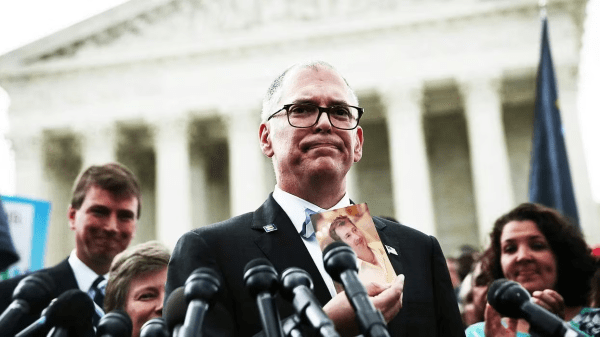
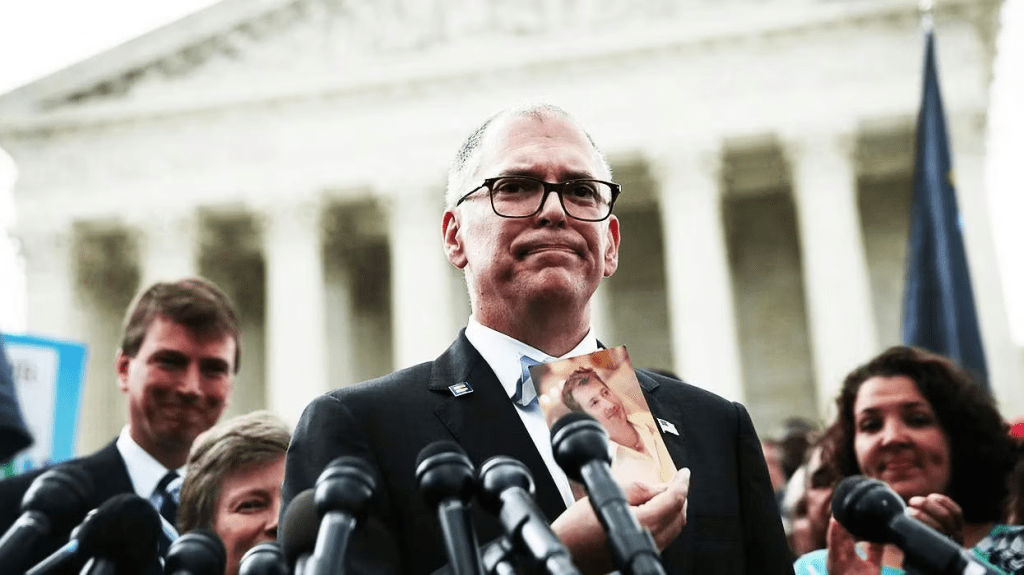
Jim Obergefell warns, ‘People should be concerned’ about Supreme Court considering marriage equality case

Read more at The Advocate.


When the nine U.S. Supreme Court justices meet behind closed doors on Friday, the justices will decide whether to hear an appeal from former Kentucky county clerk Kim Davis, a name that became synonymous with anti-LGBTQ+ attitudes to marriage equality a decade ago.

Davis, who refused to issue marriage licenses to same-sex couples after Obergefell v. Hodges made marriage equality the law of the land in 2015, has asked the court not only to overturn her financial settlement in a civil case loss in lower courts but also to reconsider the landmark ruling itself.

While Davis’s petition centers on whether she can be held personally liable for emotional-distress damages, her legal team is also urging the justices to revisit the constitutional right to marry. For those who remember the culture war that surrounded Davis’s defiance, the possibility that her name might again appear on the Supreme Court docket has reignited deep anxiety across the LGBTQ+ community

In separate interviews with The Advocate, Jim Obergefell, the plaintiff whose name now defines that right, and GLAD Law legal director Josh Rovenger described the moment as both surreal and revealing. One is the man who stood before the Court ten years ago and won the right to have his marriage recognized. The other works at the organization that helped secure that victory. Both see the Davis petition not just as a legal maneuver but as a test of whether the country can sustain a principle it once declared settled.

“A narrow case, shoehorning a broad agenda”

Rovenger explained what this case is and what it isn’t.

“This is a narrow case with a technical legal question,” he said, emphasizing that it concerns emotional-distress damages and qualified immunity, not marriage equality itself. “Attorneys who want to overturn Obergefell are trying to shoehorn that into a very narrow case.”

Davis, a former Rowan County clerk, was found liable for denying marriage licenses to same-sex couples in violation of clearly established law. A jury awarded damages to those couples, and the Sixth Circuit Court of Appeals affirmed the decision. Davis’s petition now asks the Supreme Court to review that ruling, Rovinger explained. While she has framed the case as one about her religious freedom, Rovenger said the issue before the Court remains technical.

“The Supreme Court receives thousands of petitions a year,” he said. “It would really be anomalous for them to take a case with such a narrow fact pattern and use it to revisit Obergefell.”

Still, Rovenger acknowledged why people are uneasy.

“Given the rollback of rights we’ve seen in other areas, Dobbs being the most prominent, that fear makes sense,” he said. “But this case is not the vehicle for that kind of sweeping reversal.”

The limits of the Respect for Marriage Act

Part of the current confusion, Rovenger said, stems from uncertainty about how the Respect for Marriage Act interacts with the Obergefell decision. The 2022 law, signed by President Joe Biden, requires states and the federal government to recognize marriages performed in other states. However, it does not compel every state to issue marriage licenses if Obergefell were to be overturned.

“In a world where Obergefell didn’t exist,” he said, “a couple married in one state would still have their marriage recognized federally and by other states, but not necessarily be able to marry everywhere.”

He called that distinction significant, not only for its practical consequences but for what it would signal about equality itself.

“A patchwork approach across states,” he said, “is fundamentally different from a nationwide right.”

Rovenger also pointed to the Supreme Court’s own language on “reliance interests” — the idea that people build their lives on the stability of established rights. Trump-appointed Justice Amy Coney Barrett, he noted, has recently said marriage equality has created such interests, making it less likely to be undone. Barrett had told the New York Times that Obergefell created “concrete reliance interests.”

“Those interests,” Rovinger said, “remain one of the critical factors the Court considers when deciding whether to revisit precedent.” According to Gallup, 68 percent of Americans support marriage equality.

Jim Obergefell: “Disgusted by this twisting of religious freedom”

For Jim Obergefell, the case is personal. He said he was “disgusted” that his fellow citizens would work against another group’s well-being and happiness, using religious liberty as an excuse.

“This modern version of religious freedom — this belief that one’s personal religion trumps everything else — is a twisting and perverting of what our founders intended,” he said.

Obergefell said Davis’s refusal to follow the law was emblematic of a broader problem: public officials placing private faith above civic duty.

“She swore an oath to serve all people,” he said. “And yet she used her government position to persecute others.”

His frustration extends to the justices themselves and their recent decisions, which have often ignored established understandings of the law. Justice Clarence Thomas recently said that past decisions “aren’t gospel.”

“Why should anyone feel secure about the right to marry,” he asked, “when this Court has proven it doesn’t believe in precedent?”

He pointed to Thomas’s concurrence in the ruling that overturned Roe v. WadeRoe v. Wade, Dobbs v. Jackson Women’s Health Organization. Thomas explicitly suggested revisiting Obergefell.

“One of those justices’ own marriage exists because of a Supreme Court decision,” Obergefell said, referring to Loving v. Virginia, the 1967 ruling that struck down bans on interracial marriage. Thomas is Black, and his wife, Ginny, is white. “If this Court overturns Obergefell, then what does that say about their own logic?” Obergefell added.

“People should be concerned”

Obergefell said that the LGBTQ+ community’s fear is warranted.

“Absolutely, people should be concerned. I’m concerned,” he said on Saturday. “Yesterday I officiated a wedding for a cousin who asked whether they should get married now instead of waiting. My answer was yes.”

He explained that even with the Respect for Marriage Act in place, states could still move swiftly to block new marriages if Obergefell were struck down.

“Ohio [where I live] still has a Defense of Marriage Act on the books,” he said. “If Obergefell is overturned, Ohio could immediately say, ‘no more marriage licenses for queer couples.’”

Obergefell warned that political forces aligned against LGBTQ+ rights have shown a willingness to manipulate electoral systems to maintain power.

“We have a political party that has turned its back on democracy,” he said. “They’re doing everything they can solely to remain in power — to punish and to be vindictive.”

A fragile majority, a durable principle

Despite deep pessimism about the Court, Obergefell said he still finds hope in younger generations.

“They don’t see difference the way older generations do,” he said. “There are millions of people out there who share my values, who believe in humanity, who believe every person deserves happiness and rights. That gives me hope.”

Rovenger echoed the sentiment, though his version is more procedural.

“We’re all watching closely,” he said. “We’ll keep an eye on whether the case gets relisted and on any separate statements that come out. But we’re not panicking. We’re prepared for all possibilities and ready to meet that moment if it comes.”

For now, the fate of Obergefell doesn’t hinge on oral arguments or public hearings but on what happens in a private conference room inside the marble halls of the Supreme Court. Whether the justices see the Davis case as a technical dispute or a cultural flashpoint will determine not only one woman’s liability but perhaps the trajectory of a right that has defined a generation.

If the Court declines to hear the case, the lower-court rulings stand, and marriage equality remains intact. If it grants review, the nation will enter another defining chapter in its legal history.

Either way, Obergefell’s warning lingers: “They’ve turned the idea of freedom on its head,” he said. “And unless we stand up for what it truly means, we risk losing more than marriage, and we risk losing the very promise of equality itself.”

Supreme Court allows trans kids in South Carolina to use the right bathrooms in school

Read more at LGBTQ Nation.

The U.S. Supreme Court said Wednesday that South Carolina cannot enforce its anti-trans bathroom ban against one transgender student while his challenge to the law moves through the courts.

The law, which went into effect in 2024, requires students in South Carolina public schools to use bathrooms that align with their “biological sex … as objectively determined by anatomy and genetics existing at the time of birth.”

Last year, a 13-year-old transgender boy identified in court documents as John Doe was suspended for using the boys’ restroom at his Berkeley County school. Despite none of his peers objecting to his use of the boys’ restroom, when Doe returned from suspension, school staff were instructed to police his bathroom use, and teachers began dividing students into “boys” and “girls” lines before restroom breaks to enforce the policy.

Faced with constant harassment by teachers and the threat of another suspension, Doe’s parents withdrew him from the school and enrolled him in an online program.

The following November, Doe’s family, along with LGBTQ+ advocacy group Alliance for Full Acceptance, filed a class action suit challenging the South Carolina law. As MSNBC notes, a district court judge in the state halted the case in July after the Supreme Court announced it would hear two cases related to transgender women’s participation in sports. Doe appealed to the U.S. Court of Appeals for the Fourth Circuit, which issued an injunction in the boy’s favor in August, preventing the state, the school district, and other defendants from enforcing the law against him while the appeal proceeds through the courts.

According to MSNBC, the three-judge panel cited the court’s 2020 ruling in Grimm v. Gloucester County School Board that trans students are entitled to use restrooms aligned with their gender identity. However, George W. Bush-appointee Steven Agee stipulated that the Grimm decision was the only reason he sided with Doe and expressed hope that the Supreme Court would overturn that case, which he described as having been decided wrongly.

That same month, South Carolina asked the Supreme Court to lift the Fourth Circuit’s injunction, arguing in its emergency relief application that Grimm was wrongly decided and that the Fourth Circuit should have considered the Supreme Court’s recent decision in United States v. Skrmetti, which upheld Tennessee’s restrictions on gender-affirming care for trans youth. The state argued that it, the school district, and students were “suffering actual, ongoing, material harms” due to Doe being allowed to use the boys’ restroom at school.

On Wednesday, a six-justice majority denied South Carolina’s request, with Republican appointees Clarence Thomas, Samuel Alito, and Neil Gorsuch saying they would have sided with the state, according to HuffPost.

In its order, the Court wrote that its denial of South Carolina’s application was “not a ruling on the merits of the legal issues presented in the litigation.” Rather, the justices wrote, “it is based on the standards applicable for obtaining emergency relief from this Court.”

SCOTUS Protects Affordable Access to PrEP

*This is a release by HRC.

Today (June 27, 2025), the U.S. Supreme Court upheld the constitutionality of the United States Preventive Services Task Force (USPSTF) membership structure and its recommendations for preventive services made after passage of the Affordable Care Act (ACA) in March 2010. 

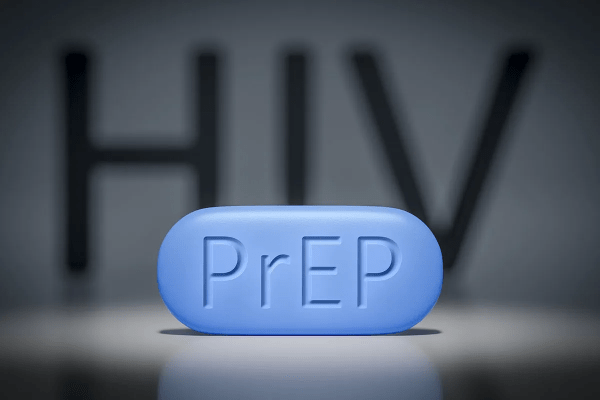
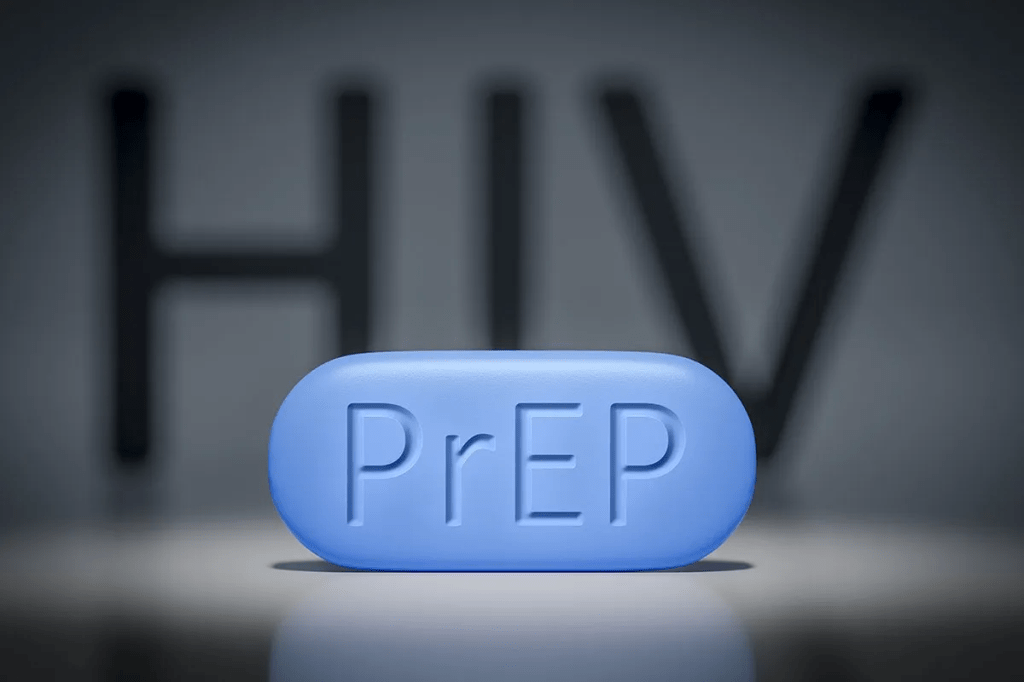
These services—including the HIV prevention medicine PrEP, breast cancer screenings, depression screenings, Hepatitis B and C and other STI counseling and screenings—must be covered by nearly all private insurance plans at no cost to enrollees as mandated by the ACA. This decision in Kennedy v. Braidwood overturns a portion of the Fifth Circuit’s ruling and will have numerous benefits for Americans nationwide, including the LGBTQ+ community who disproportionately rely on PrEP, which when taken as prescribed, reduces the chance of HIV transmission by close to 100%.

Human Rights Campaign’s President Kelley Robinson released the following statement:

“This decision means millions of Americans, for now, can breathe easier, knowing that critical preventive care remains within reach—not a luxury reserved for the privileged few. The LGBTQ+ community has historically faced societal and economic barriers that have worsened health outcomes and widened gaps in healthcare inequality–barriers that have only grown worse as anti-equality lawmakers continue to attack our healthcare. While we’re pleased that the Supreme Court has blocked this attempt to create even more burdens on people seeking lifesaving care, we must remain vigilant. The HHS, under Secretary Robert F. Kennedy Jr, has exhibited an open hostility toward the health needs of LGTBQ+ people and has already undermined critical protections against HIV. We must continue to work to ensure everyone, no matter your sexual orientation, gender identity, race, income or location, can access the care they need to thrive.” 

Blog at WordPress.com.

Up ↑