The Spanish government has announced a plan to legalise the status of undocumented migrants, a measure expected to benefit at least half a million people.
Regularisation will be available to foreign nationals who do not have a criminal record and can prove they lived in Spain for at least five months prior to 31 December 2025.
“This is an historic day for our country,” said Elma Saiz, Spain’s minister of inclusion, social security and migration.
The measure will provide beneficiaries with an initial one-year residence permit, which can then be extended. Requests for legalisation are expected to begin in April and the process will remain open until the end of June.
“We are reinforcing a migratory model based on human rights, integration, co-existence and which is compatible with economic growth and social cohesion,” Saiz said.
Spain has seen a large influx of migrants in recent years, mainly from Latin America.
The conservative think-tank Funcas found that the number of undocumented migrants in Spain had risen from 107,409 in 2017 to 837,938 in 2025 – an eight-fold increase.
The highest number of undocumented arrivals currently living in Spain are believed to be from Colombia, Peru and Honduras.
Spain’s socialist-led coalition government has been an outlier on this issue among the larger European nations, underlining the importance of migrants for the economy.
The country has been outperforming the other main EU economies in recent years, posting expected growth of close to 3% in 2025.
Unemployment, a longstanding weakness of the Spanish economy, has dipped below 10% for the first time since 2008, according to figures released on Tuesday.
Prime Minister Pedro Sánchez has described immigrants as representing “wealth, development and prosperity” for Spain, pointing to their contribution to the social security system.
The government and parties on the left have also emphasised the need to treat migrants in a humane way.
“Providing rights is the answer to racism,” said Irene Montero, of the far-left Podemos party and a former minister in a coalition government with the Socialists.
She has campaigned for this measure, which followed an agreement between the party and the government. A civic legislative proposal, calling for a mass migrant regularisation, received the support of around 700,000 people but had been languishing in parliament.
This measure will be approved by royal decree, meaning it does not require parliamentary approval.
It is the first large-scale migrant regularisation in Spain for two decades.
Several such initiatives, by governments of both the Socialists and the conservative People’s Party (PP), legalised the status of an estimated half a million migrants between 1986 and 2005.
However, Alberto Núñez Feijóo, leader of the PP, said the latest mass legalisation would “increase the pull effect and overwhelm our public services”.
Pepa Millán, spokeswoman for the far-right Vox, said the initiative “attacks our identity”, adding that the party would appeal before the Supreme Court in a bid to block it.
For LGBTQ+ people, safety has never been an abstract idea. Concerns for our community show up in legislation, healthcare and how the government treats its citizens. In the United States, where LGBTQ+ rights are being rolled back at both the state and federal level following President Donald Trump’s reelection, many people are quietly asking the same question: where, if anywhere, does stability still exist, and what does real safety actually look like?
That question shapes real decisions. Not just about travel, but about long-term plans, family, work, medical care and whether it is possible to build a future without constant political uncertainty. International data from organizations including ILGA-Europe and Equaldex, alongside migration analysis and residency reporting from Get Golden Visa, points to a widening global divide. Some countries are strengthening legal protections and expanding access to care. Others are narrowing definitions of who is protected under the law, often by targeting transgender people first and testing how much rollback the public will tolerate.
The countries highlighted here represent a snapshot of places that currently offer strong legal protections and relative social stability for LGBTQ+ people. This is by no means an exhaustive list, and conditions can change quickly as governments shift and political climates evolve. Still, these examples help illustrate what safety looks like when it is embedded into legal systems, healthcare infrastructure, and public accountability, rather than left to cultural goodwill or temporary leadership.
One country that consistently ranks at the top is Malta. It has held the number one position on ILGA-Europe’s Rainbow Index for multiple consecutive years, a reflection of both legal protections and enforcement. Same-sex marriage has been legal since 2017, conversion therapy is banned nationwide, and gender identity is explicitly protected under the constitution. Legal gender recognition is based on self-determination, without medical or psychiatric requirements, and those protections extend into healthcare, employment, education, and family law, creating long-term security rather than symbolic inclusion.
Iceland also continues to stand out for both legal protections and social acceptance. Same-sex marriage has been legal since 2010, non-binary gender markers are recognized, and gender-affirming care is available through the public healthcare system. Comprehensive anti-discrimination laws are paired with high levels of public trust in institutions, which means LGBTQ+ protections are not constantly relitigated or politicized, but treated as settled rights reflected in daily life.
.Finland has taken meaningful steps in recent years, particularly for transgender people. A 2023 update to its law allows transgender adults to change their gender through self-determination, removing medical gatekeeping that had long been criticized by advocacy groups. While non-binary recognition remains limited, Finland’s strong social safety net and political consensus around equality have kept LGBTQ+ rights largely outside culture war framing, offering stability rather than constant legal vulnerability.
Spain has long been viewed as one of Europe’s most LGBTQ+-affirming countries, and recent legislation has reinforced that reputation. Same-sex marriage has been legal since 2005, and a 2023 gender self-identification law allows people to change legal gender without medical or psychological evaluations. Conversion therapy is banned, and public opinion surveys consistently show strong support for LGBTQ+ equality, particularly in major cities where protections are paired with visible community infrastructure.
In North America, Canada has become a focal point for LGBTQ+ Americans seeking stability. Same-sex marriage has been legal since 2005, non-binary gender markers are available on federal identification, and conversion therapy was banned nationwide in 2022. Advocacy organizations and international reporting have documented a rise in inquiries from U.S. LGBTQ+ residents since the 2024 election, especially among transgender people weighing whether legal protections at home will continue to erode.
The Netherlands remains one of the most legally secure environments for LGBTQ+ people. As the first country to legalize same-sex marriage, it continues to offer robust anti-discrimination protections and publicly funded gender-affirming healthcare. For some U.S. citizens, the Dutch-American Friendship Treaty has made relocation more feasible, a trend that has accelerated since the 2024 US presidential election.
None of these countries are immune to political change, and none represent a perfect solution. But in 2026, they show what becomes possible when LGBTQ+ safety is treated as a structural commitment rather than a cultural preference. As rights erode in some places, the countries that choose to protect them are defining where dignity, stability, and the possibility of a future still exist.
Are you thinking about leaving the United States for safety, stability, or a better quality of life? In this powerful conversation, we sit down with Dan Brotman, an American expat based in Montreal who specializes in investment migration—including Golden Visas, Digital Nomad Visas, and residency-by-investment options tailored to the LGBTQ+ community.
With an academic background in immigration policy, multiple citizenships, and years of frontline experience helping people relocate, Dan brings unmatched insight into how Americans can legally, safely, and strategically build a future outside the U.S. Follow Dan on Instagram: @danbrotman linktr.ee/danbrotman
🏡 IN THIS VIDEO, WE COVER:
🌍 Why Americans—Especially LGBTQ+ People—Are Exploring Life Abroad
We discuss political extremism, threats to civil rights, financial instability, and what it means to live somewhere your rights are not up for debate.
💶 Golden Visas & Migration Pathways
Dan explains the residency-by-investment programs opening doors across Europe, Latin America, and beyond—and why securing a visa before your “red line” is crossed is essential.
❤️🩹 Healthcare Without Fear
Real stories from Spain, Uruguay, and Canada:
€80/month private healthcare in Spain
A 5-day ICU stay for $19
An emergency room visit in Canada that cost $0
A U.S. insurance premium high enough to rent an apartment in Valencia
🧠 Financial Relief & Peace of Mind
We explore how predictable, low-cost healthcare abroad reduces anxiety for families who worry about a single medical emergency derailing their finances.
🎓 Education & Opportunity
Why families are sending their children to Europe—especially the Netherlands—for nearly free, world-class university education.
🏳️🌈 Rights, Safety & Community
Dan discusses LGBTQ+ rights, abortion access, universal healthcare, and gun laws in Canada—issues considered settled and not weaponized politically.
🚨 Red Lines & Safety Planning
We explore how LGBTQ+ people can assess danger, decide their personal boundaries, and obtain the documentation needed to leave quickly if the situation in the U.S. deteriorates.
This is an essential conversation for anyone considering relocation for safety, rights, opportunity, or long-term stability.
🔔 Subscribe for more guides on LGBTQ+ migration, Golden Visa pathways, and global relocation options.
Mark Bray, an assistant professor of history at Rutgers University who was nicknamed “Dr. Antifa” by students, left the U.S. for Spain Thursday night due to death threats he has received after he was accused of antifa membership.
The campus chapter of Turning Point USA and other conservative groups accused Bray of involvement with antifa and started a petition to get him fired, The Associated Press reported.
Bray has studied the history of the left and is considered an expert in anti-fascist movements but denies any involvement with antifa, which the Trump administration has labeled as a terrorist organization
“I am not now, nor have I ever been, part of any kind of antifascist or anti-racist organization – I just haven’t. I’m a professor,” Bray told The Guardian.
He took off on Thursday for Spain from Newark Liberty International Airport with his family, according to his social media, after initially being told his reservation had been canceled.
Conservative students labeled Bray a danger to campus.
“You have a teacher that so often promotes political violence, especially in his book ‘Antifa: The Anti-Fascist Handbook,’ which talks about militant fascism, which is on term with political violence,” student Megyn Doyle told Fox News.
The Hill has reached out to Rutgers for comment.
Conservatives said Bray donated to antifa when he committed 50 percent “of the author’s proceeds would go to the International Anti-Fascist Defense fund” from his 2017 book.
He countered those funds go “to help with the legal or medical costs of people facing charges for organizing pertaining to anti-fascism or anti-racism” and that the antifa group referenced does not have a centralized committee or leader, according to The Guardian.
Bray said the threats to him picked up with the petition and President Trump’s executive order to designate antifa as a terrorist group, prompting him to leave the country.
In his order, Trump said antifa is a “domestic terrorist organization” and gave the government authority to investigate anyone who provides “material support” to the group.
“Individuals associated with and acting on behalf of Antifa further coordinate with other organizations and entities for the purpose of spreading, fomenting, and advancing political violence and suppressing lawful political speech,” the order states. “This organized effort designed to achieve policy objectives by coercion and intimidation is domestic terrorism.”
When Bray first tried to leave the country with his family on Wednesday, they were not allowed on the plane and their reservation was canceled.
“‘Someone’ cancelled my family’s flight out of the country at the last second,” Bray posted on Bluesky. “We got our boarding passes. We checked our bags. Went through security. Then at our gate our reservation ‘disappeared.’”
The news he was trying to leave the country was first reported by NJ.com. The airline rescheduled them for the Thursday flight, which they successfully boarded.
Turning Point says it doesn’t support threats or doxing to any person, but students who have rallied in support of Bray are calling for its Rutgers chapter to be shut down.
“The Rutgers chapter of Turning Point USA (TPUSA) has been continuously promoting hate speech and inciting violence against our community. This disturbing behavior has created a toxic environment that has already led to tragic consequences,” a petition against the chapter reads.
The Hill has reached out to Turning Point for comment.
Ready to call Spain your new home? Join the thousands of Expats who have successfully relocated to Spain with our expert advice, resources, insider knowledge and handpicked network of service providers.
We ran into Alastair & Alison Johnson through the Expatsi organization. Find out everything you need to know about moving to Spain in this informative talk from people who know! Check them out at https://movingtospain.com/
Thinking about moving to Spain to escape political extremism in the U.S.? As part of the Flee Red States project, we sit down with Alastair Johnson of MovingToSpain.com , who has lived in Spain for many years with his wife and adult son.
In this interview, Alastair shares his first-hand experiences about:
🏳️🌈 The acceptance and visibility of the LGBTQ community in Spain
🏥 Easy access to Spain’s public healthcare system
🏡 Lifestyle, culture, and why Spain is a welcoming choice for American expats
🌞 The benefits of living abroad in a progressive, inclusive country
If you’re considering moving to Spain from the USA, becoming an American expat in Europe, or simply curious about LGBTQ rights in Spain, this video gives you practical insights and inspiration.
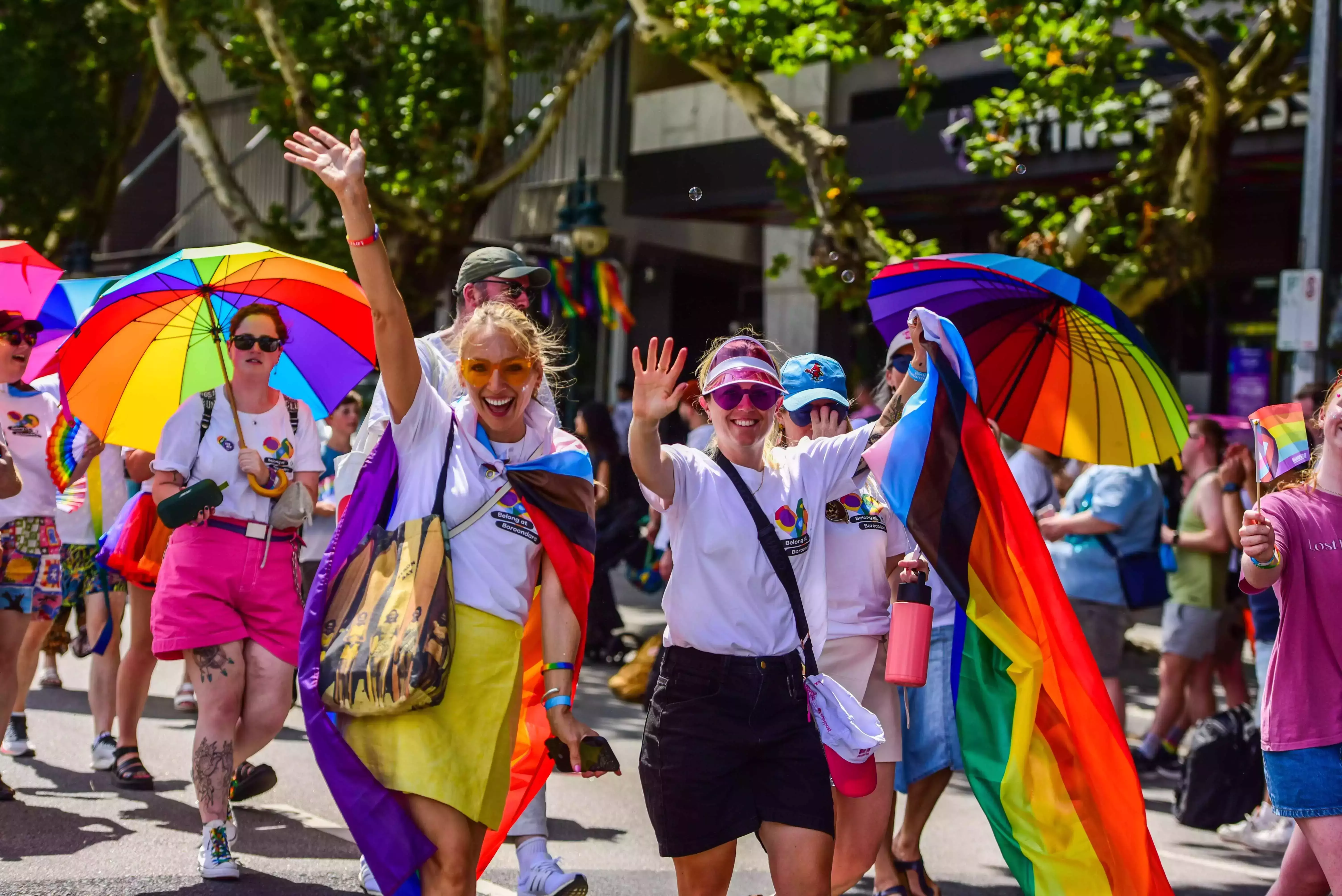
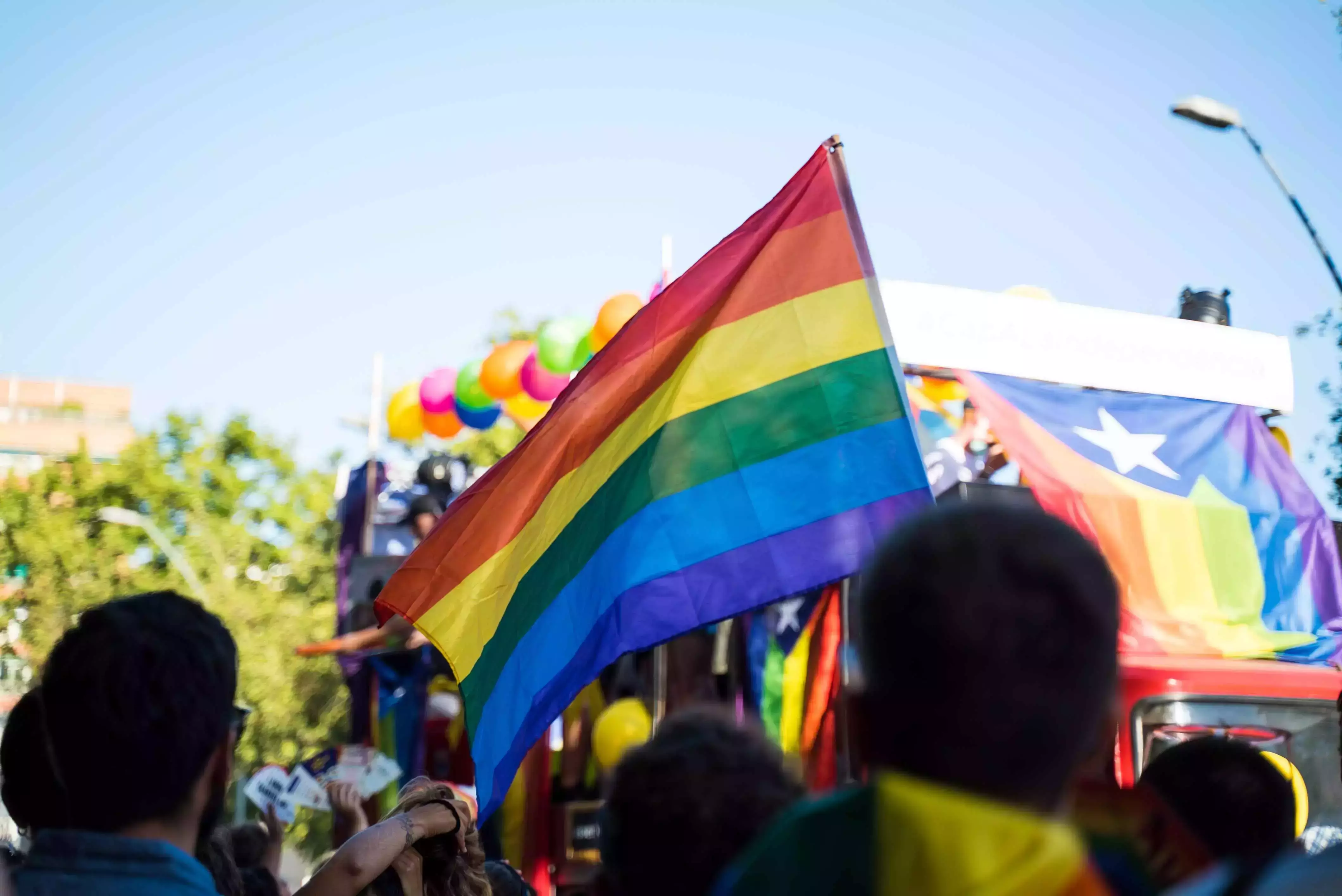
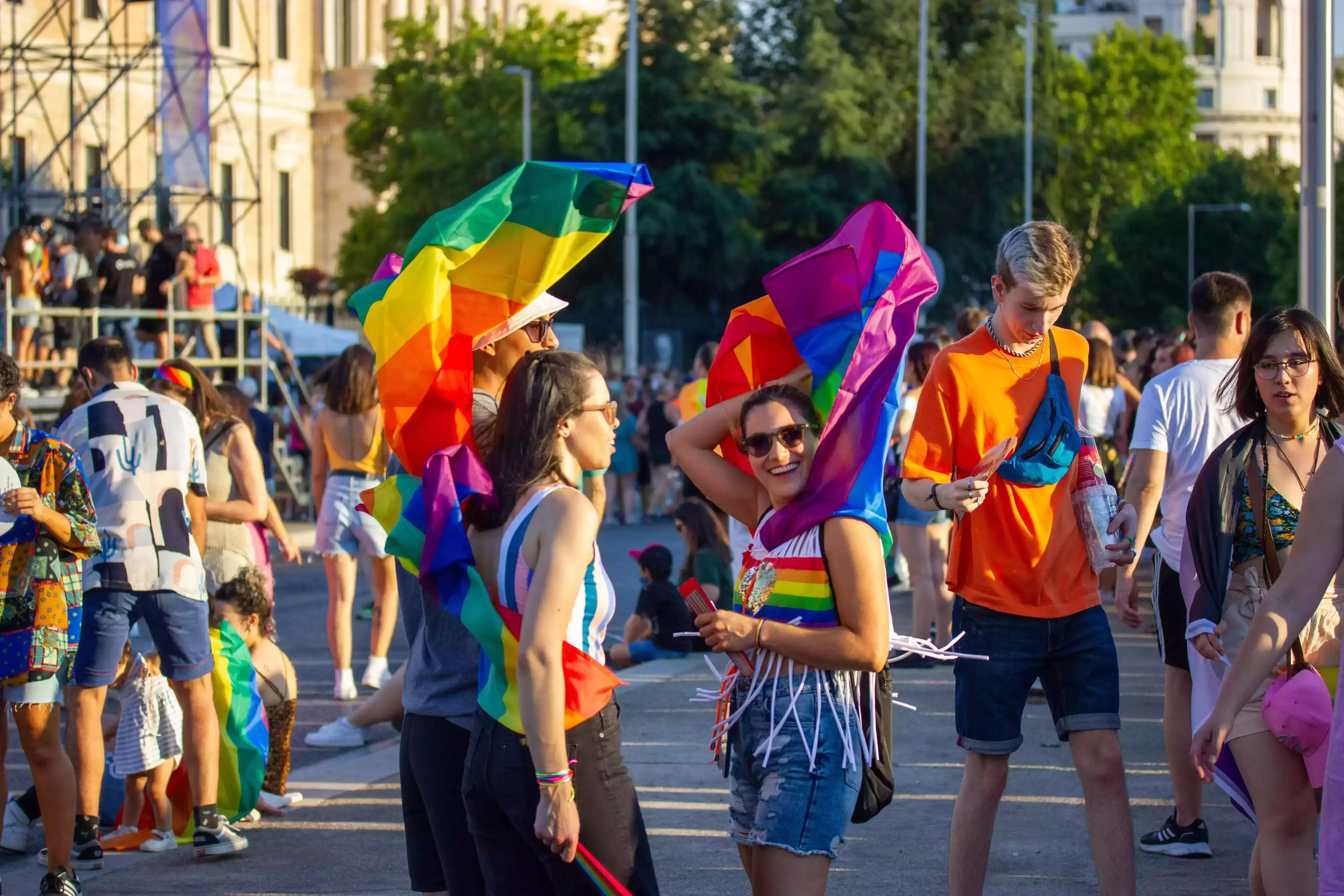
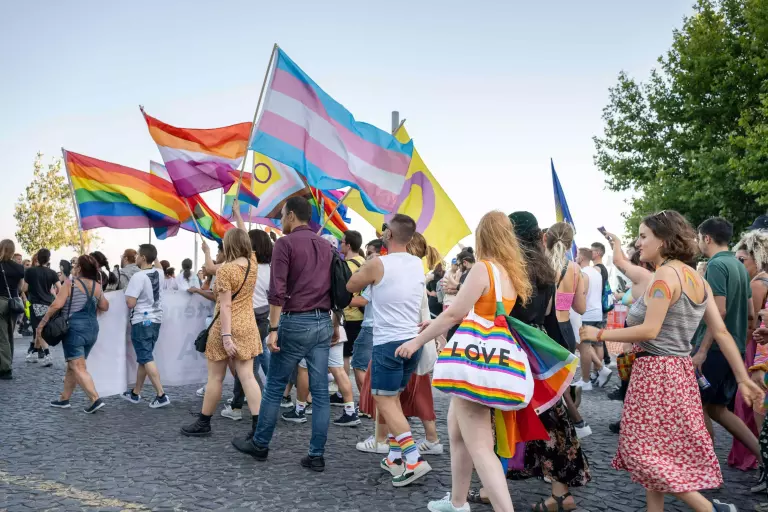
When Diana, a bisexual Russian asylum seeker, took part in her first Madrid Pride festival last year, she was delighted to see people waving the white-blue-white flag that has become a symbol of Russian opposition to its war on Ukraine.
She was also ecstatic to be among around 100 Russians who were waving LGBTQ flags and chanting, “Russia without Putin.” It felt surreal, said the 24-year-old, who did not want to give her last name for fear of retaliation.
“I couldn’t believe I would not be sent to prison. Everyone around was so happy,” she recalled as she marched again for Pride in the Spanish capital in July.
Also taking part was Ilia Andreev, who was vigorously waving a bright pink Mr Gay contest flag as the float he was perched on crept slowly through the crowds. For the 23-year-old, who fled Russia’s anti-LGBTQ laws in 2023, it was a moment to savour.
“I can be proud,” he said in Spanish.
The occasion was a far cry from the repression that drove him and other LGBTQ Russians out of their homeland in recent years, with many seeking refuge in Spain, which ranks fifth in the 2025 ILGA-Europe Rainbow Index, which ranks countries’ legal and policy practices.
“Spain is internationally recognized as a country that respects human rights and in particular the rights and freedoms of the LGBTQI+ community,” said Elma Saiz, the minister for Inclusion, Social Security and Migration, on International LGBTQI+ Pride Day in June.
Asylum applications from Russians more than doubled to 1,694 in 2023 from 684 in 2022, with Russia becoming one of the top 10 origin countries for applications in Spain, according to the Spanish Commission for Refugees (CEAR).
Of those processed, 59.7% received refugee status.
Elena Munoz, coordinator of the legal team at CEAR, said there had been a rise in Russian LGBTQ-related applications, although data on specific motives for asylum applications are not yet being collected.
The main reasons Russians gave for leaving their home included forced recruitment into the armed forces and the deteriorating human rights situation, including regarding gender identity and sexual orientation.
As well as introducing a raft of anti-LGBTQ laws, Russian President Vladimir Putin has been using the LGBTQ community as a political scapegoat, said Marc Marginedas, a journalist and expert in Russian affairs.
“Propaganda has fostered a climate comparable to Nazi Germany,” Marginedas said, saying Putin was using an “external enemy” to rally society and distract from military failures.
Legal crackdown in Russia
In 2013, Russian lawmakers passed a government-sponsored ban on distributing “propaganda of nontraditional sexual relationships” among minors.
In December 2022, after Russia launched its invasion of Ukraine, Putin signed an amendment to the law, extending the prohibition to all age groups.
The crackdown has led to the arrest of journalists, lawyers and human rights activists, with many others leaving the country.
Andreev, who worked as a TV journalist in the city of Kazan in southwestern Russia, said he had to hide his identity after he was accused of spreading “LGBTQ+ propaganda.”
“When I once wore earrings on air, I was called in by the news director and the executive program producer. She told me they had received many calls complaining about so-called gay propaganda because of the earrings,” he said.
He decided to come to Spain in 2023 on the recommendation of a friend, who had also moved.
Diana said she was fired after her boss saw her kiss her partner. She did not want to give details of her job or where she lived for fear of retribution.
While on holiday in Georgia in 2022, her home in Russia was visited by authorities because of her volunteer work with Ukrainians in Russian-occupied areas, and she decided she could not return. Growing anti-LGBTQ rhetoric in Georgia pushed her to move to Spain two years later.
Red tape and barriers
Andreev and Diana both applied for asylum and are still waiting for a ruling.
The legally mandated six-month process often stretches much longer, even up to two years. After six months, asylum seekers are allowed to seek work.
But it can take months to get an initial appointment with immigration authorities, and without this, asylum applicants cannot access state aid or support from organizations like CEAR.
Delays are also driving an illegal black market.
According to NGOs, Spanish police and officials, criminals collect immigration appointments using bots and then sell these so-called “mafia de citas,” or mafia appointments, for hundreds of euros on WhatsApp or Telegram to desperate asylum seekers.
And now things are getting for Russians hoping to submit asylum claims in Spain.
From July 12, Spain requires Russian citizens to obtain transit visas to pass through the country.
In the past, Russians would buy a ticket with a layover in Spain and then seek asylum during their stopover.
“It makes it difficult to reach safe territory, in this case Spain, because they no longer have a legal and safe route,” said Munoz, adding that reforms were needed to make the system more efficient.
The Ministry of Foreign Affairs, which is responsible for visa policy, did not respond to requests for comment.
While they await their asylum decisions, Diana and Andreev are rebuilding their lives.
Andreev, who volunteers in an LGBTQ rights group, has found a home in a small town near Madrid and is working on his Spanish — he hopes to return to journalism one day. But he has struggled to build new relationships.
The stress of job hunting and trying to get all the documents he needs, plus the time it takes up make it hard to focus on building connections, he said.
Diana now has stable online work and says she has found her chosen family in Madrid, mainly thanks to online networks of LGBTQ+ Russians who offer each other support.
She feels free, even if she still fears Russian retaliation.
“If I want, I can date women, I can date men, I can date whoever. I’m not in a hurry. Why would you be in a hurry? The Spanish lifestyle relaxes you a little bit.”
Pride Month is not quite over yet! Just in time for some more LGBTQ friendliness is this list from Big 7 Enjoy Travel. They rank the top 30 LGBTQ friendly cities on the planet.
For a city to rank highly as LGBTQ+ friendly, first and foremost, it needs to protect LGBTQ+ people with laws and legislation. Then, it needs a vibrant gay nightlife and dating scene, whether within a gay village or across the city. Either way, there needs to be a safe community for LGBTQ+ people, as well as open-minded citizens and low levels of hate crime.
Ranking criteria:
Gay Index Rating – measures how safe a country is for LGBT people, considering the legal situation and living conditions
Equality Index Rating – measures the status of LGBT rights, laws, and freedoms as well as public attitudes towards LGBT people
The final scores show the Top 30 LGBTQ+ Friendly Cities in the World! Here’s your ultimate gay-friendly travel list…
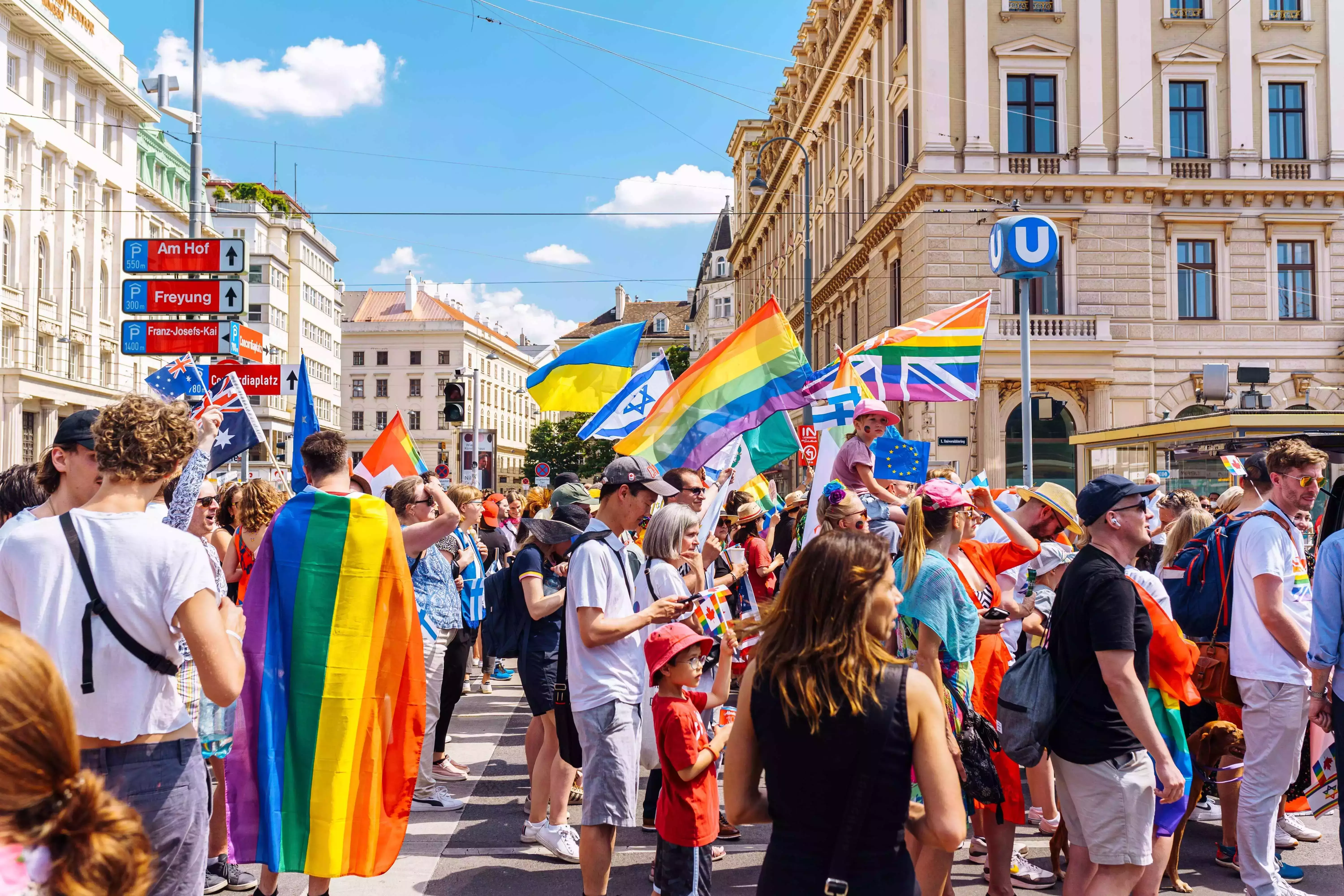
30. Vienna, Austria
Vienna is widely known for its gender, disability, LGBTQ and racial inclusivity and equality, with many parades, pride events and specialist causes. While Vienna doesn’t have a specific gay village or district, its Naschmarkt area is full of gay bars and clubs, making it a hotspot for LGBTQ+ members.
Vienna has also hosted the EuroPride and hosts an annual citywide Pride parade in June. Vienna is also an LGBTI Core Group member and has a reasonably high Gay Index Rating, making it a safe and appealing place for LGBTQ+ members. It’s safe to say that Vienna is a welcoming and inclusive city for not just LGBTQ+ people, but for everyone, no matter your sexuality, gender, religion or ethnic group.
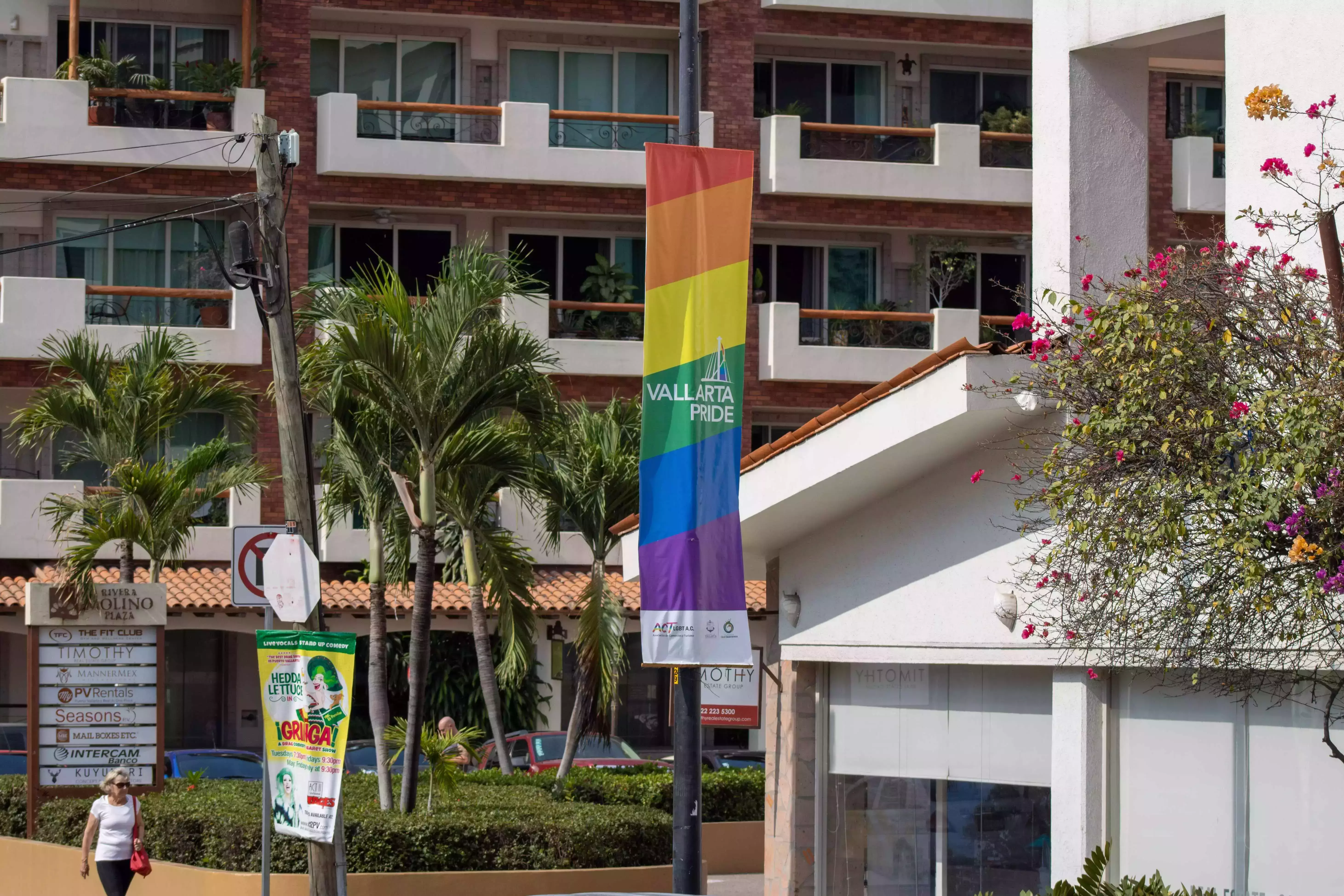
29. Puerto Vallarta, Mexico
You may not have heard of this city against its larger and more tourist-centred neighbours of Mexico City and Cancun, but Puerto Vallarta deserves to be celebrated for its strong LGBTQ+ representation and inclusivity. According to our rankings, Puerto Vallarta scored highly in terms of Gay Index Rating, and attendance to the city’s annual Pride event is significant.
Puerto Vallarta has been cited as the ‘gay capital of Mexico’, thanks to its bustling Zona Romantica area, which is heavily centred around LGBTQ+, with vibrant gay bars, inclusive hotels and lively clubs. While you’re likely to find LGBTQ+ friendly areas across Mexico, Puerto Vallarta is one of the best places to celebrate being a member of the community.
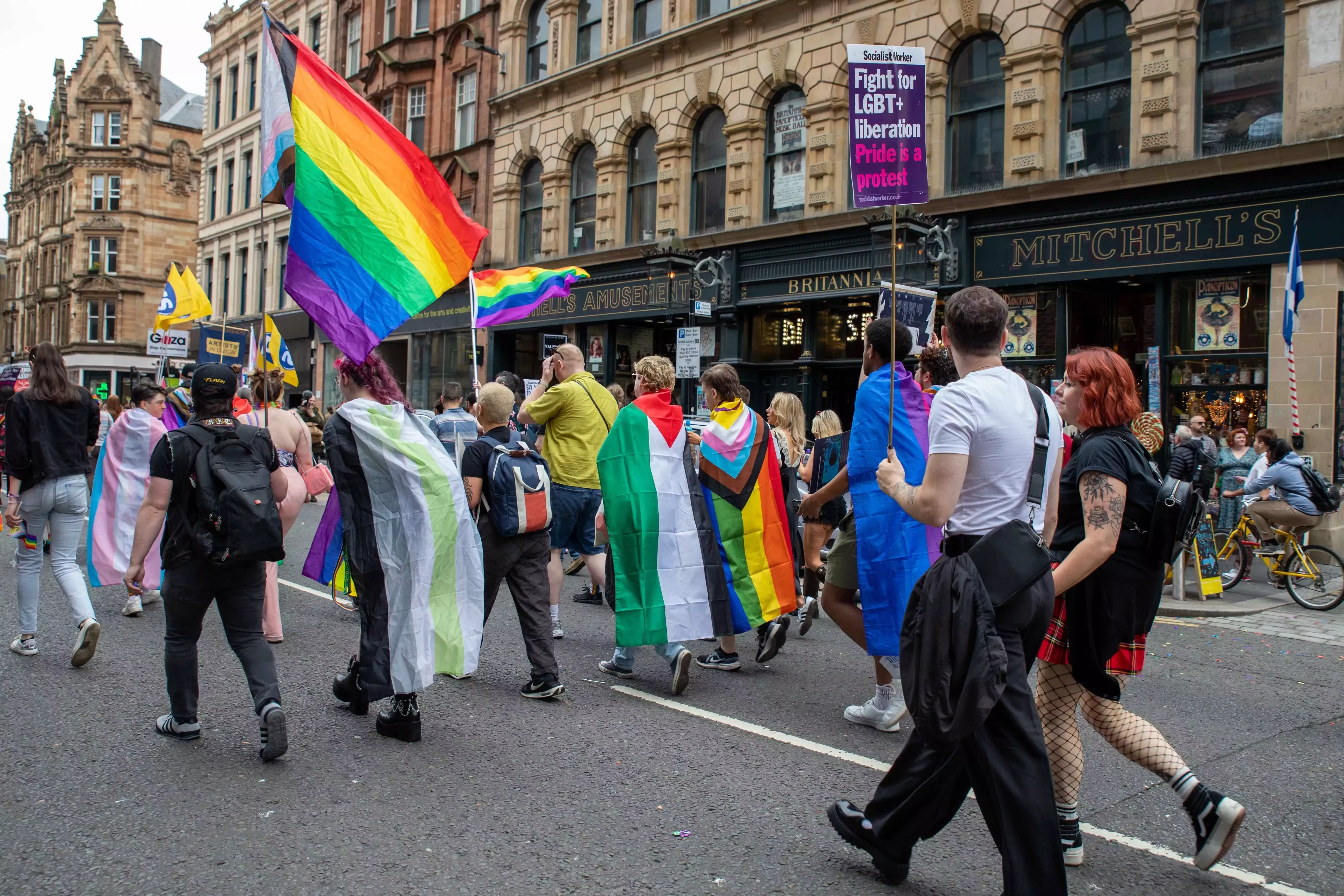
28. Glasgow, UK
Glasgow, Scotland’s largest city, is a hub for inclusivity, with its lively Merchant City district being the LGTBQ+ capital. You can expect to find a variety of LGBTQ+ friendly bars and clubs, as well as a welcoming and open-minded atmosphere. Glasgow’s annual pride event amasses thousands of attendees each year, seeing proud members of the community come together to march and parade, surrounded by the signature rainbow flags.
Glasgow’s quality of life and general acceptance for the LGBTQ+ community is high, giving an indication of how strong its LGBTQ+ community and representation is. The city is also an LGBTI Core Group Member.
27. Melbourne, Australia
Melbourne is generally an accepting city for most types of groups within society, which gives an indication as to its welcoming and inclusive atmosphere. It scores highly on the Gay Index Rating, and is a member of the LGBTI Core Group, as well as scoring highly on the Equaldex Score. But, data aside, there is a thriving and welcoming community right at its core that appeals to all groups in society, whether members of the LGBTQ+ community or not.
Its annual Pride march has also surpassed 60,000 attendees in recent years. Melbourne’s Fitzroy area is considered to be the ‘gay village’, with a number of LGBTQ+ friendly bars and clubs and a buzzing atmosphere both before and after dark, but generally no matter where you go in Melbourne you’ll be met with a warm and friendly welcome.
26. Taipei, Taiwan
You may not commonly associate Taiwan with LGBTQ+ communities, but its capital Taipei has one of the largest LGBTQ+ presences, with a vibrant LGBTQ+ presence in its Ximen Red House area of the city, which features a lively and bustling scene with bars and clubs. Taipei is known for its inclusivity, and is perhaps a hidden gem amongst the most LGBTQ+ friendly cities, but definitely worth a visit. Taipei also hosts its annual Pride march, which is considered to be the largest of its kind in East Asia, seeing an attendance of more than 120,000 in recent years.
25. Barcelona, Spain
Barcelona, along with Madrid, are widely known as the LGBTQ+ capitals of Spain, with a high Gay Index Rating and a large Pride attendance across each city. Barcelona and the rest of Spain are highly regarded for their acceptance of the LGBTQ+ community, as Spain was one of the first countries in the world to legalise gay marriage in 2005. Barcelona has a thriving LGBTQ+ scene, with an abundance of gay bars, clubs and even beaches that cater to the LGBTQ + community – no matter where you go in Barcelona, you’ll be welcomed with open arms regardless of your sexual orientation or gender.
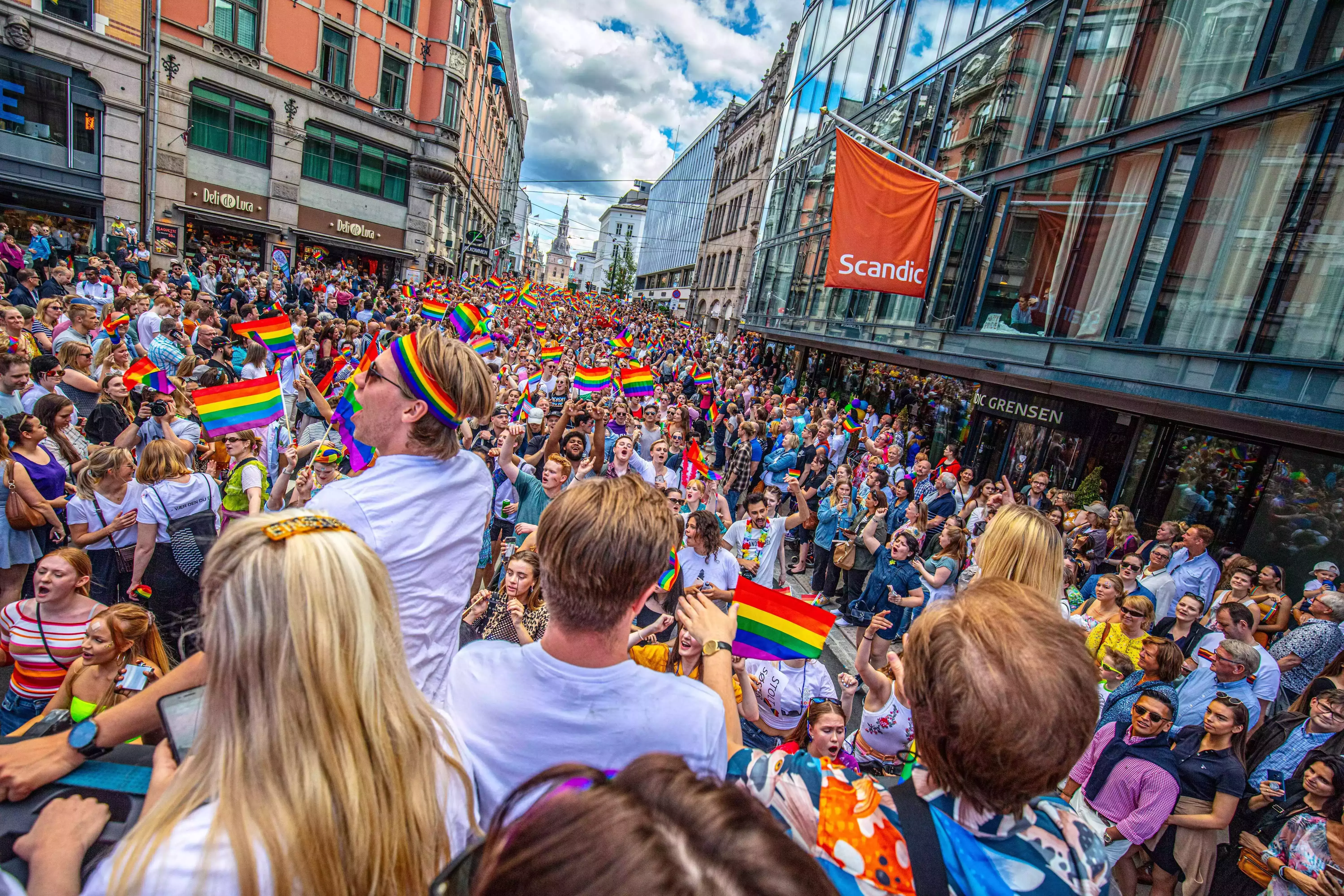
24. Oslo, Norway
Norway is commonly associated with being a liberal, inclusive and welcoming country, and its capital Oslo comes out on top in terms of LGBTQ+ representation and inclusivity. The city has high Equaldex Score and Gay Index Rating, so is a must-visit for members of the LGBTQ+ community. Did you know that Oslo also hosts an annual Pride event that has amassed around 90,000 attendees in recent years? Oslo’s main LGBTQ+ friendly area is Grünerløkka, where you’ll find a large collection of LGBTQ+ friendly bars, restaurants and clubs, although the city as a whole is welcoming and accepting no matter where you go.
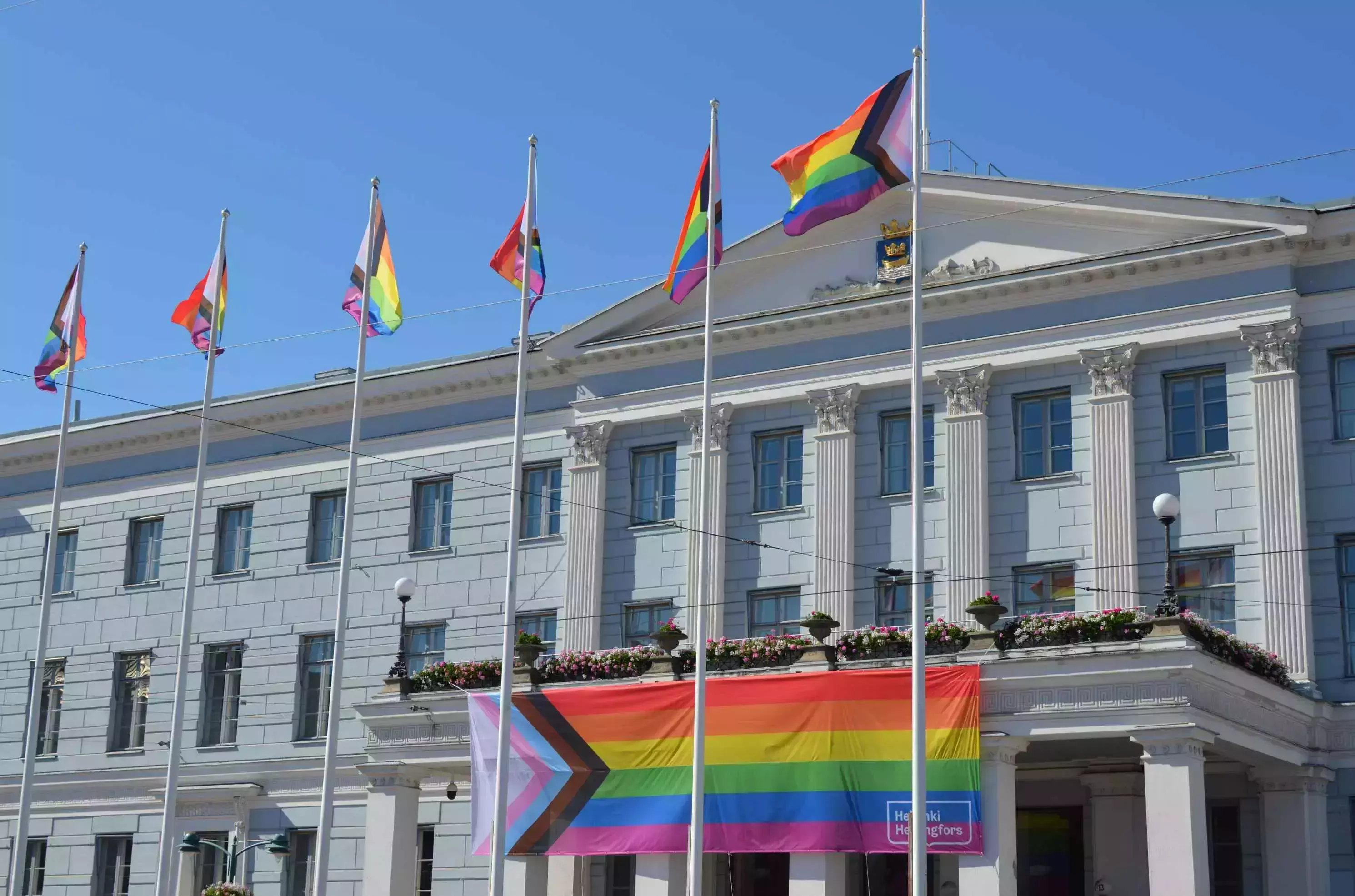
23. Helsinki, Finland
Scoring highly on both the Equaldex and Gay Index Rating, as well as having a large Pride attendance and overall LGBTQ+ presence, Helsinki is one of the best places to be if you want to feel welcomed with open arms in every corner of the city, no matter your sexual orientation, gender or who you identify as.
Helsinki’s annual Pride march and parade typically sees more than 100,000 attendees, giving an idea of how inclusive the city really is. Finland is known for being a progressive and liberal country, and same-sex marriage has been legal in the country since 2017, having been decriminalised since the early 1970s and views changing in the early 80s.
22. Montreal, Canada
Montreal is one of the LGBTQ+ capitals of Canada, celebrating the community with a designated ‘gay village’ district and a large attendance to the city’s annual Pride events. Montreal is considered a trailblazer in terms of promoting and accepting LGBTQ+ rights, as Quebec was the first province of Canada to ban discrimination around sexuality and sexual orientation in 1977. As with much of the rest of Canada, Montreal has since adopted a liberal and accepting stance on LGBTQ+ communities, and scores highly on both the Equaldex and Gay Index rankings.
21. Buenos Aires, Argentina
Argentina’s capital is often cited as the ‘gay capital of South America’, with a downtown district that is rife with gay bars, restaurants and clubs, and a high Gay Index Rating. Argentina was also the first Latin-American country to legalise same-sex marriage in 2010, and has since become the place to be in terms of inclusivity and LGBTQ+ rights.
Buenos Aires also has a large Pride attendance and citywide celebrations, with a thriving LGBTQ+ presence that makes the city rank highly for equality, inclusivity and representation. Aside from the obvious inclusivity that Buenos Aires offers, the city is a vibrant social hub and welcomes people from all social groups and communities.
20. Reykjavik, Iceland
Reykjavik has long been considered a haven for LGBTQ+ members and most groups in society, and although the city may be small, it packs a punch in terms of LGBTQ+ rights and representation. Reykjavik’s most recognisable street is so iconic thanks to its rainbow road, which indicates and highlights Reykjavik’s support for equality surrounding the LGBTQ+ community. Reykjavik’s Pride event is a large-scale affair, with thousands of locals and tourists attending to show their support. Reykjavik also has one of the highest Gay Index Ratings and Equaldex Scores.
19. Bogotá, Colombia
Although Bogota has the lowest Equaldex score, it has a high Gay Index Rating and a vibrant gay village that features what is considered to be the largest gay club in South America, Theatron.
Bogota’s annual Pride event has also seen crowd sizes of more than 100,000 people, making it one of the largest Pride celebrations around. It’s clear that Bogota is a friendly, inclusive and welcoming place for every tourist, whether they’re part of the LGBTQ+ community or not.
18. Valletta, Malta
This small city packs an almighty punch in terms of LGBTQ+ inclusivity. Valletta ranks highly on both Gay Index Rating and Equaldex, with scores of 8.5 and 100, respectively, giving an idea of how supportive the city is for the rights of LGBTQ+. Valletta also sees a large turnout for its annual Pride festival and march, and has hosted the widely renowned EuroPride in 2023, adding to Valletta’s reputation as one of the most LGBTQ+ friendly cities in Europe.
17. Copenhagen, Denmark
The Scandinavian countries are known for their progressiveness, inclusivity, liberal stances and welcoming and accepting cultures, especially when it comes to LGBTQ+ rights and support. Copenhagen, Denmark’s capital, is known for its lively and thriving LGBTQ+ community, with many gay bars and clubs, as well as a large Pride event. Denmark was one of the first countries in Europe to legalise gay marriage in 2012, and has recognised and accepted homosexuality since the 1930s.
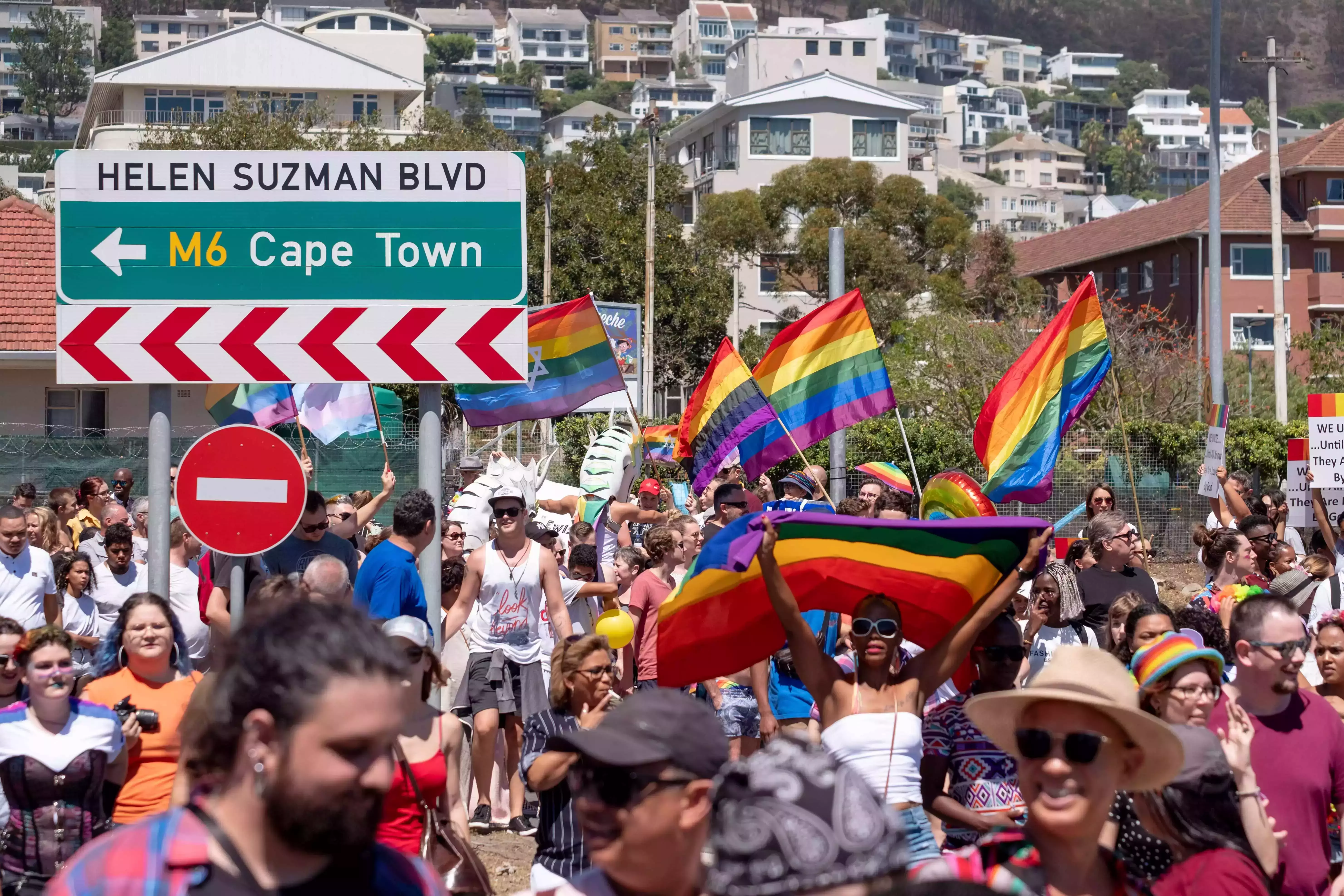
16. Cape Town, South Africa
South Africa is a trailblazer for LGBTQ+ rights on the continent, becoming the first country in Africa to legalise same sex marriage in 2006, and Cape Town is at the heart of this legacy. The progressive and inclusive stance makes the city both welcoming and fun for queer locals and visitors, with a schedule of gay-friendly events throughout the year. The coastal capital bursts into the colours of Pride every February/March, and other vibrant celebrations include the Mother City Queer Project and the Out in Africa Film Festival. The De Waterkant neighbourhood is the city’s LGBTQ+ hub, with gay-owned bars, gyms, shops, and cafes, as well as the iconic rainbow crossing – a visual representation of South Africa’s anti-discrimination laws.
15. Mexico City, Mexico
Mexico City was the first Latin American city to legalise same-sex marriage in 2007, and since then, the city has upheld their views and stances on LGBTQ+ support. The city celebrates with one of the world’s largest Pride events, having been attended by more than 1 million people in recent years.
Mexico City scores well on the Gay Index and Equaldex Rating, and its Zona Rosa region is one of the liveliest LGBTQ+ hubs around. It’s safe to say that you’ll be welcomed and supported as a member of the LGBTQ+ community in Mexico City.
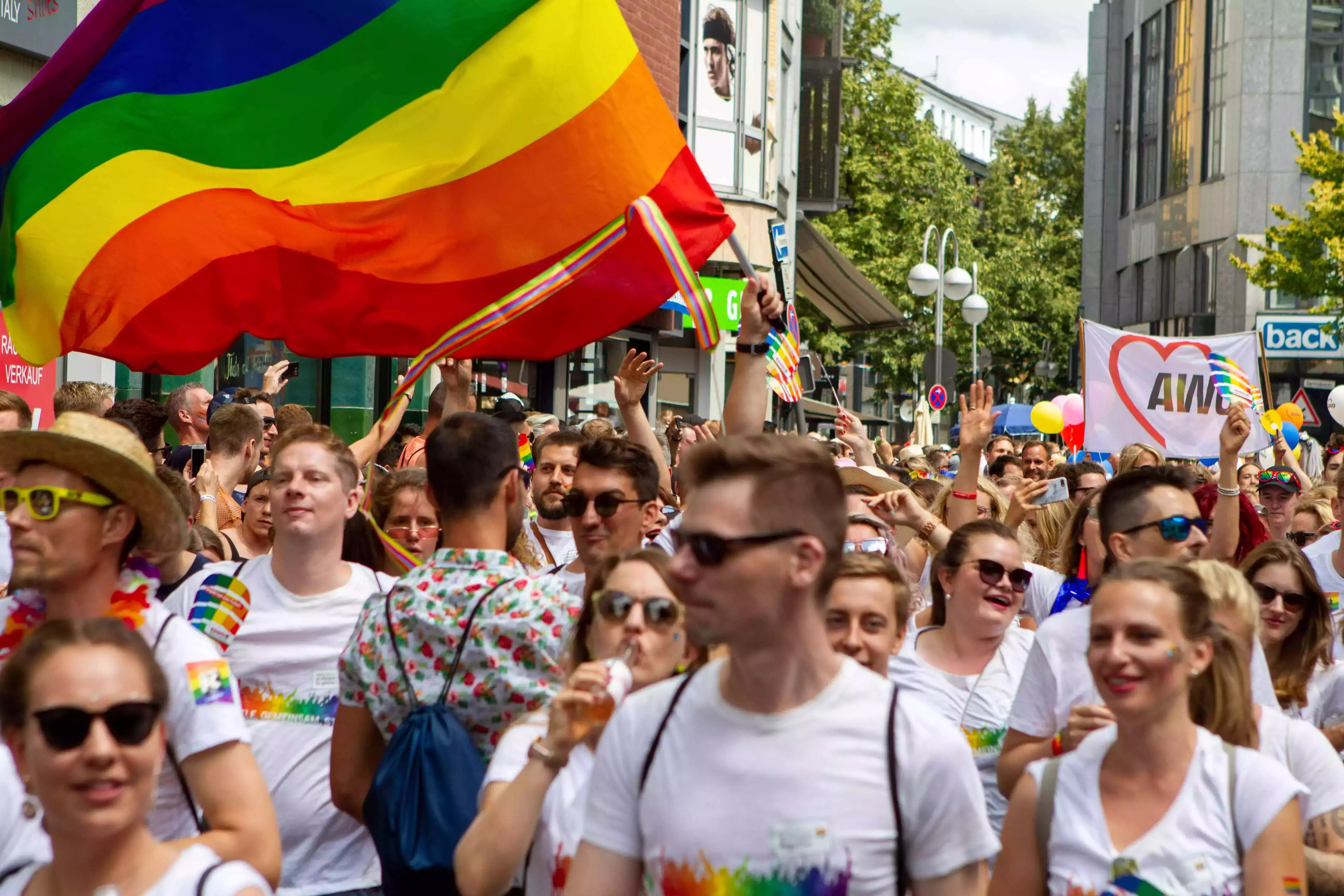
14. Cologne, Germany
Although this city underperforms on the Gay Index Rating, its quality of life and inclusivity for members of the LGBTQ+ community far outweigh this. Cologne’s Pride is the largest in Germany and one of the largest in Europe, with over 1 million attendees in recent years.
Cologne is also often considered by many as the ‘gay capital of Germany’, thanks to its large-scale Pride attendance and modern and progressive views on the LGBTQ+ community and rights. Cologne is a vibrant and lively city, with a population that is accepting, friendly and welcoming to every tourist, no matter their social group or community.
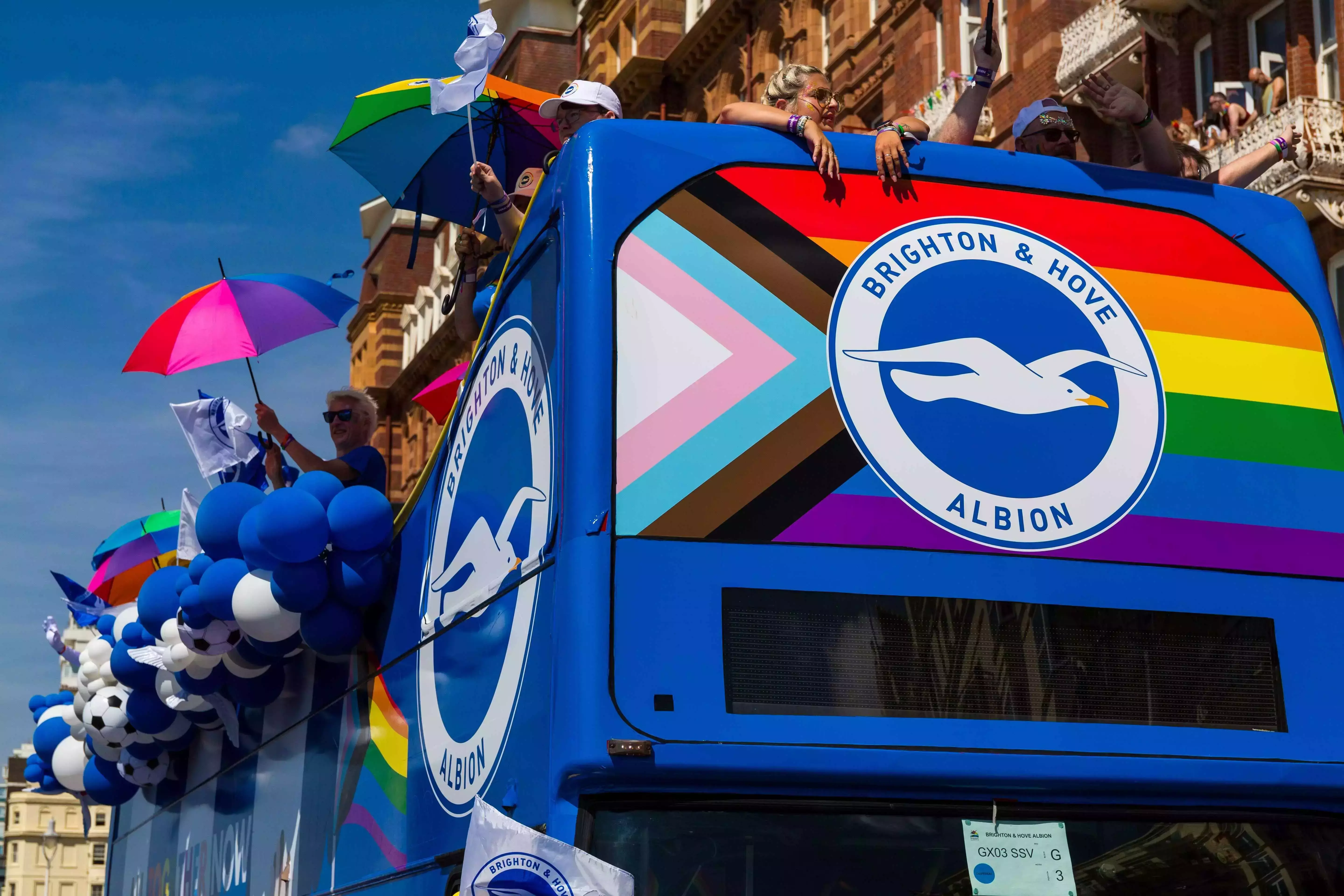
13. Brighton, UK
Brighton has a reputation in the UK for being the ‘gay capital’, with a strong sense of community, support and representation for all members of the LGBTQ+ community. Brighton has long had a reputation for its LGBTQ+ scene, dating back to the 1930s, when the city flourished as an inclusive and openly LGBTQ+ space.
The city has since embraced its LGBTQ+ population with an annual large-scale Pride event that sees more than 500,000 attendees. The city is well known for its Pride event, which has been cited as the best in the UK, and its resident gay village and LGBTQ+ district of Kemptown is rife with inclusive bars, clubs and spaces.
12. Paris, France
Paris really comes out on top with its diversity and inclusion for all groups in society. Paris’s annual pride event regularly attracts more than 700,000 attendees, and its vibrant and thriving Marais district is associated with a large LGBTQ+ population. Paris and France as a whole legalised same-sex marriage in 2013, making them one of the first countries/cities in Europe to do so.
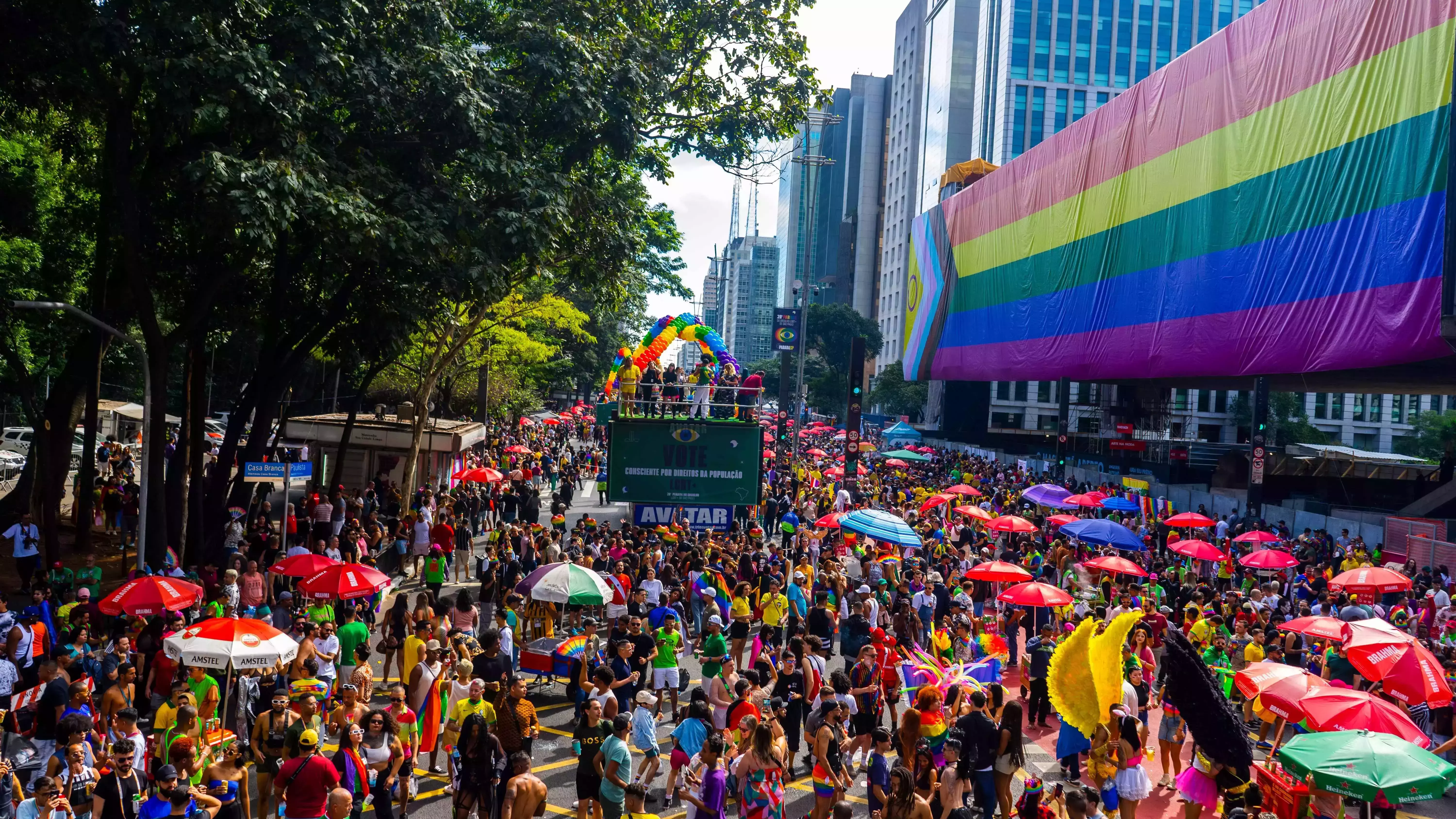
11. São Paulo, Brazil
If there’s one thing Brazil knows how to do, it’s throw spectacular street parties and parades. São Paulo’s annual Pride is often considered to be the largest in the world, with more than three million attendees in recent years. São Paulo has also featured in the Guinness World Record for the size and scale of its Pride event.
What’s more, the city is a hub for all things LGBTQ+, with a lively district dedicated to welcoming and representing its LGBTQ+ population. Although the city has a relatively low Gay Index Rating and Equaldex Score, its citywide celebration of LGBTQ+ is enough to make it rank highly for best LGBTQ+ friendly cities.
10. Sydney, Australia
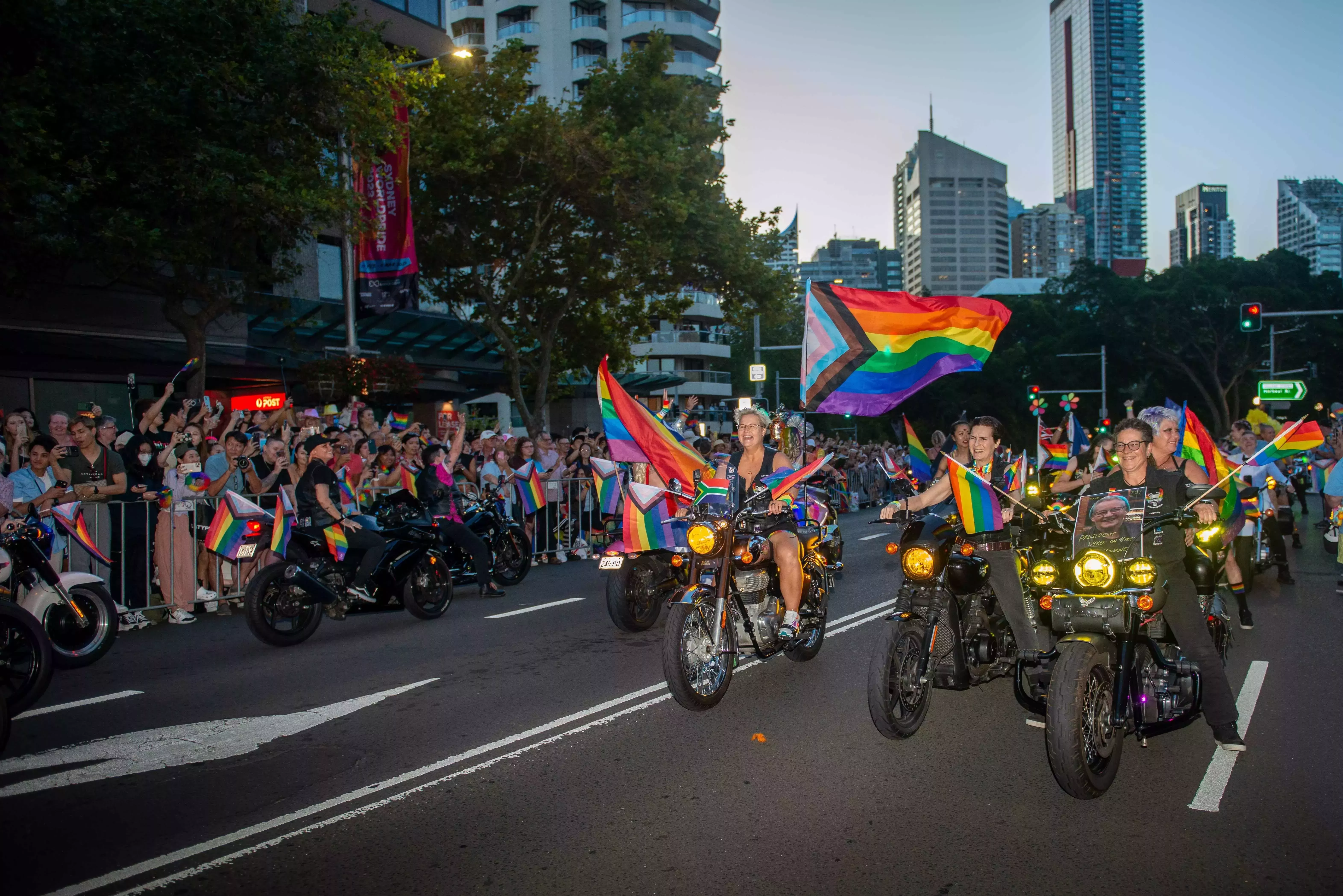
Sydney is one of the most LGBTQ+ friendly cities in the world, and the gay capital of Australia, with its annual Gay and Lesbian Mardi Gras festival leading the way in LGBTQ+ representation and support. Sydney’s Darlinghurst region is considered the gay hub of the city, and has a lengthy history of supporting and upholding LGBTQ+ community rights. Sydney ranks highly on both the Equaldex and Gay Index rankings, and it is a member of the Core LGBTI Group.
Sydney and Australia as a whole have a long history of protecting and supporting the rights of LGBTQ+ members, as homosexuality was decriminalised in the state of New South Wales in 1984, and same-sex marriage was legalised in Australia in 2017. Its annual Gay and Lesbian Mardi Gras event also sees attendees of more than 200,000, making it the largest Pride event in Australia and Oceania as a whole.
9. Toronto, Canada
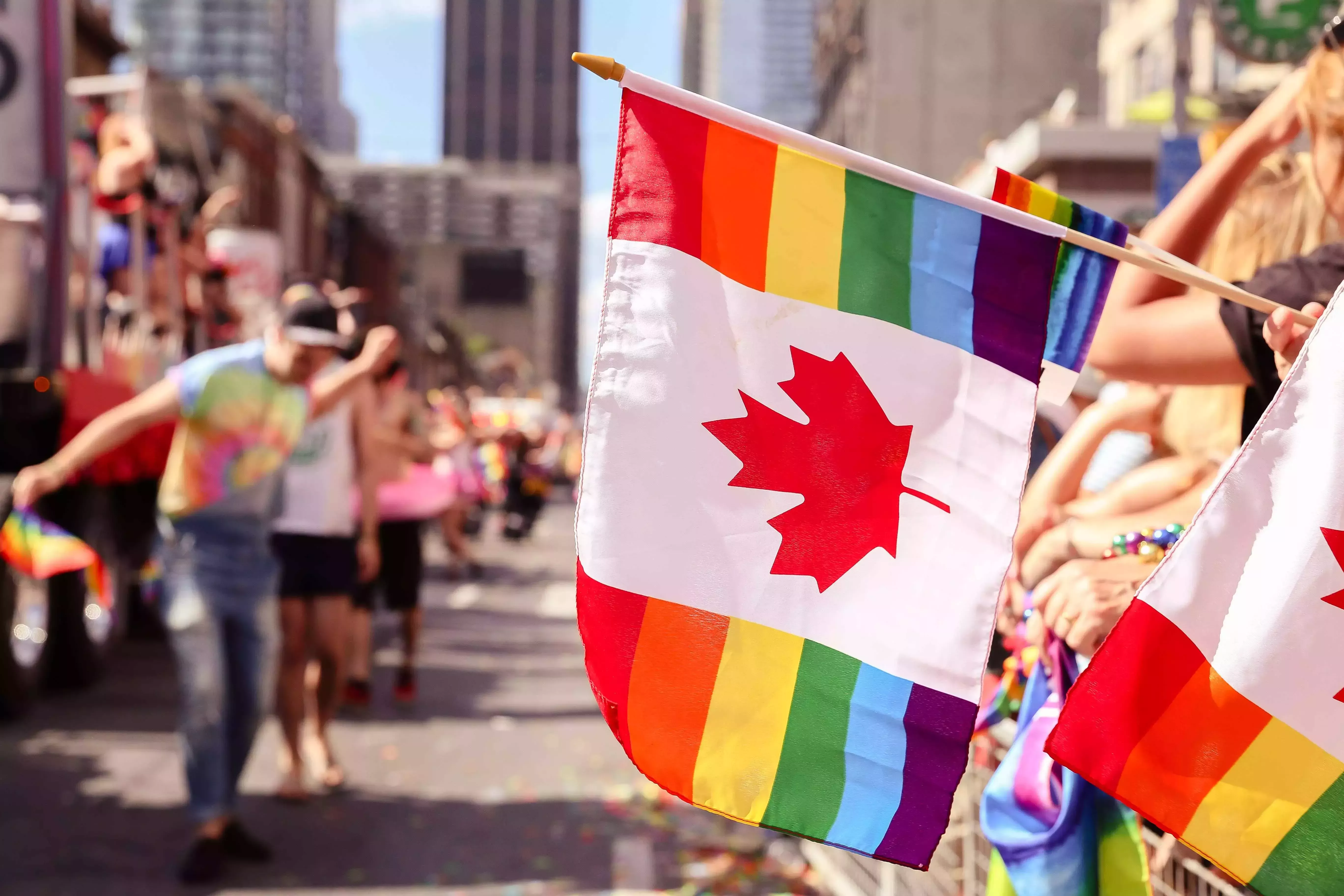
Canada’s largest city hosts the country’s largest Pride event, with just shy of 3 million attendees in recent years, making it North America’s largest and most spectacular Pride Event. Toronto is a buzzing hub for queer peoples, and is one of the most LGBTQ+ friendly cities in the world. Its Church and Wellesley district is the focal point for the LGBTQ+ community, as it is rife with bars, clubs and spaces that are openly supportive.
In terms of statistics, Toronto has a Gay Index Score of 8 and an Equaldex Score of 100, making it one of the best cities for the community. Toronto and Canada as a whole’s LGBTQ+ history is lengthy, with homosexuality becoming decriminalised in the late 1960s, and same-sex marriage being legalised in 2003 in Ontario Province, with the rest following suit not long after.
8. San Francisco, USA
San Francisco is a trendy and diverse Californian city, considered the gay capital of the state. The city is often ranked highly among the world’s most LGBTQ+ friendly cities, and has a sprawling LGBTQ+ scene and district that makes it welcoming and appealing to all members of the community. The city’s annual Pride event is also one of the largest in the US and the world, with around 1 million attendees in recent years. San Francisco and California State are known for their more liberal and progressive views on several matters, not just gay rights, so it makes sense that San Francisco adopts the same inclusive views and atmosphere.
San Francisco ranks at 8.5 on the Gay Index Ranking and at 100 on the Equaldex, giving an indication of its support of LGBTQ+ rights and representation. San Francisco was also one of the first cities in the US to allow same-sex marriage in 2004, despite it not being legal statewide until 2013. Since this, San Francisco has been recognised as one of the LGBTQ+ capitals of the US.
7. Amsterdam, Netherlands
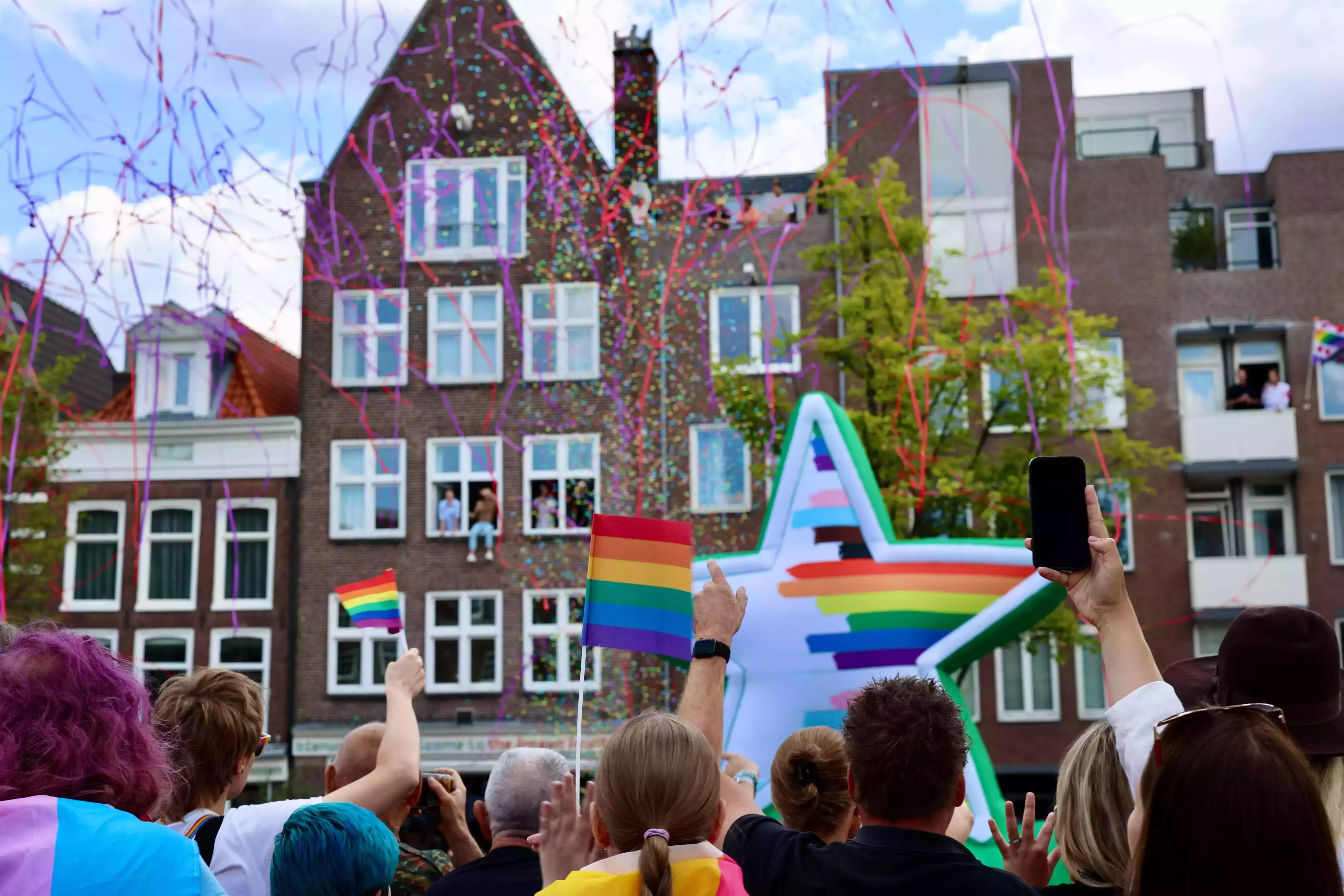
Did you know that the Netherlands was the first country in the world to legalise same-sex marriage in 2001? The city is home to some of the most progressive and liberal views on LGBTQ+ communities in the world. It also has one of the longest LGBTQ+ histories, with homosexuality apparently being decriminalised as far back as 1811, and gay bars and clubs being established in the late 1920s. Since then, Amsterdam and the Netherlands as a whole have become inclusive, supportive and proud of their resident LGBTQ+ communities.
Amsterdam itself has a Gay Index ranking of 8, and an Equaldex score of 100, and its lively Canal Parade Pride event sees attendee numbers of more than 500,000, making Amsterdam’s Pride scene one of the largest in Europe and the world. Amsterdam’s Reguliersdwarsstraat region is the most significant LGBTQ+ area in the city, with a collection of LGBTQ+ friendly establishments, bars, clubs and restaurants.
6. Berlin, Germany
Berlin has a lengthy history of supporting and protecting LGBTQ+ rights, and is one of Germany’s ‘gay capitals’, and certainly one of the ‘gay capitals’ of Europe. The city has, for a long time, recognised and respected the rights of LGBTQ+ members, with a thriving gay village and a strong sense of community and inclusivity across the city.
Berlin ranks highly on the Gay Index and has a high Equaldex score, demonstrating how inclusive and safe it is for proud LGBTQ+ members. Its annual Pride event attracts between 500,000-1 million attendees, with the whole city and tourists coming together to support the community and partake in parades and marches. Germany is known for its progressive and liberal stance on LGBTQ+ rights and protection, so it makes sense that Berlin is a thriving hub for community members.
5. Madrid, Spain
With a thriving LGBTQ+ culture, Europe’s largest Pride event with more than 2 million attendees, and a plethora of LGBTQ+ friendly bars, clubs and restaurants, Madrid is definitely the place to be. Spain was one of the first countries in the world to legalise same-sex marriage in 2005, and homosexuality was legalised in 1979.
Madrid has a thriving LGBTQ+ community and scene, and caters to the community in a number of inclusive ways. Its Pride event is one of the city’s most important events of the year, and sees well over 2 million people attend each year. Madrid also has one of the highest Gay Index scores and an Equaldex score of 100.
4. London, UK
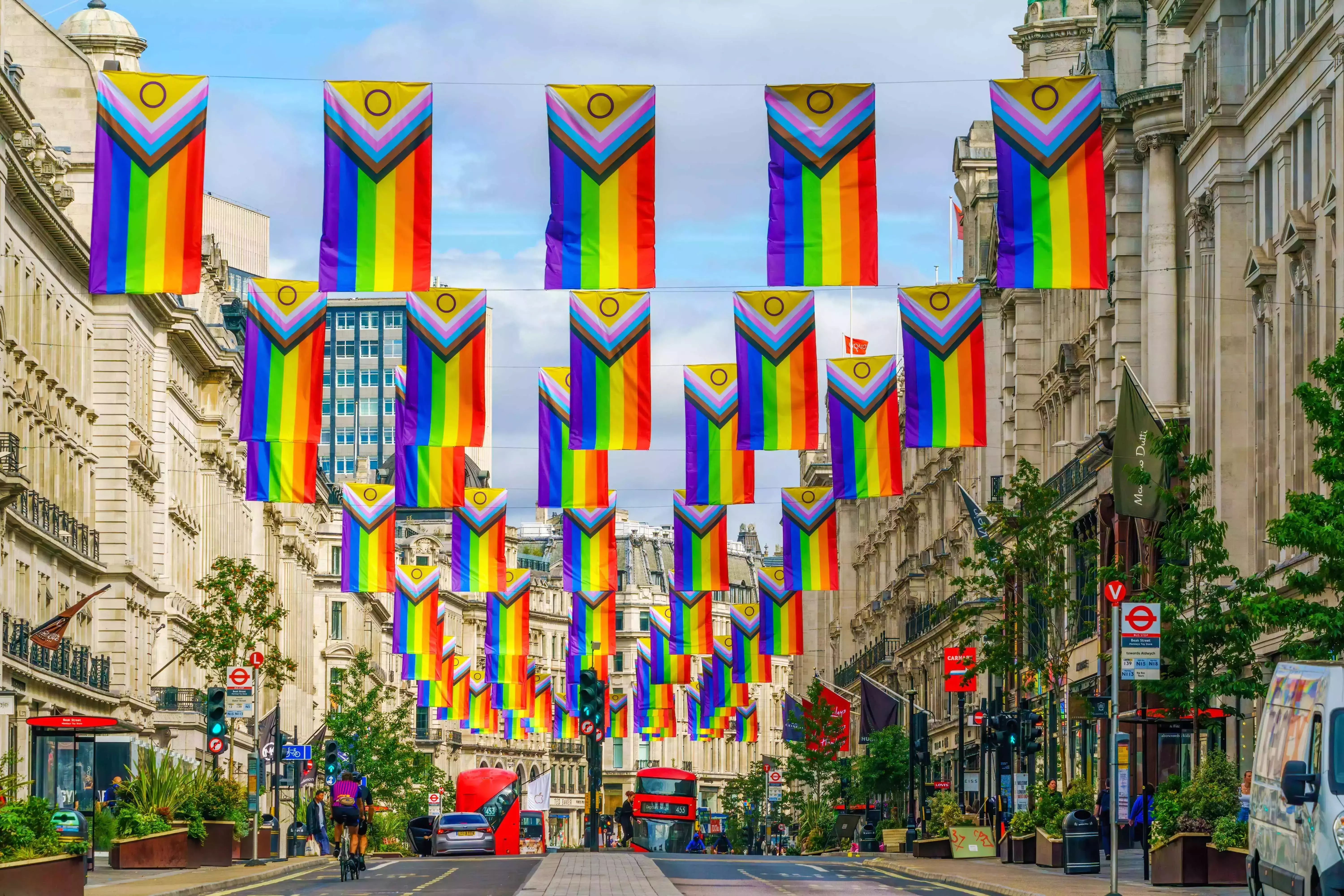
London is associated with a thriving and strong LGBTQ+ presence, and a number of gay bars, restaurants and exclusive LGBTQ+ spaces. Soho is the beating heart of the LGBTQ+ community, with a wide range of LGBTQ+ friendly spaces, but most of London is accepting and inclusive towards the community. Not only does London score highly on both the Gay Index and Equaldex rankings, but since the late 1960s, views and laws surrounding same-sex activities have become much more liberal and accepting, with same-sex marriage becoming officially legal across the UK in 2013.
London’s annual Pride event sees a turnout of more than 1 million people, making it one of the largest Pride events in the world. London also has a lengthy and significant LGBTQ+ history, with activism, marches and events being at the forefront. It’s safe to say that London is not only the capital of the UK, but it is one of the capitals of the world when it comes to LGBTQ+ rights and acceptance.
3. Porto, Portugal
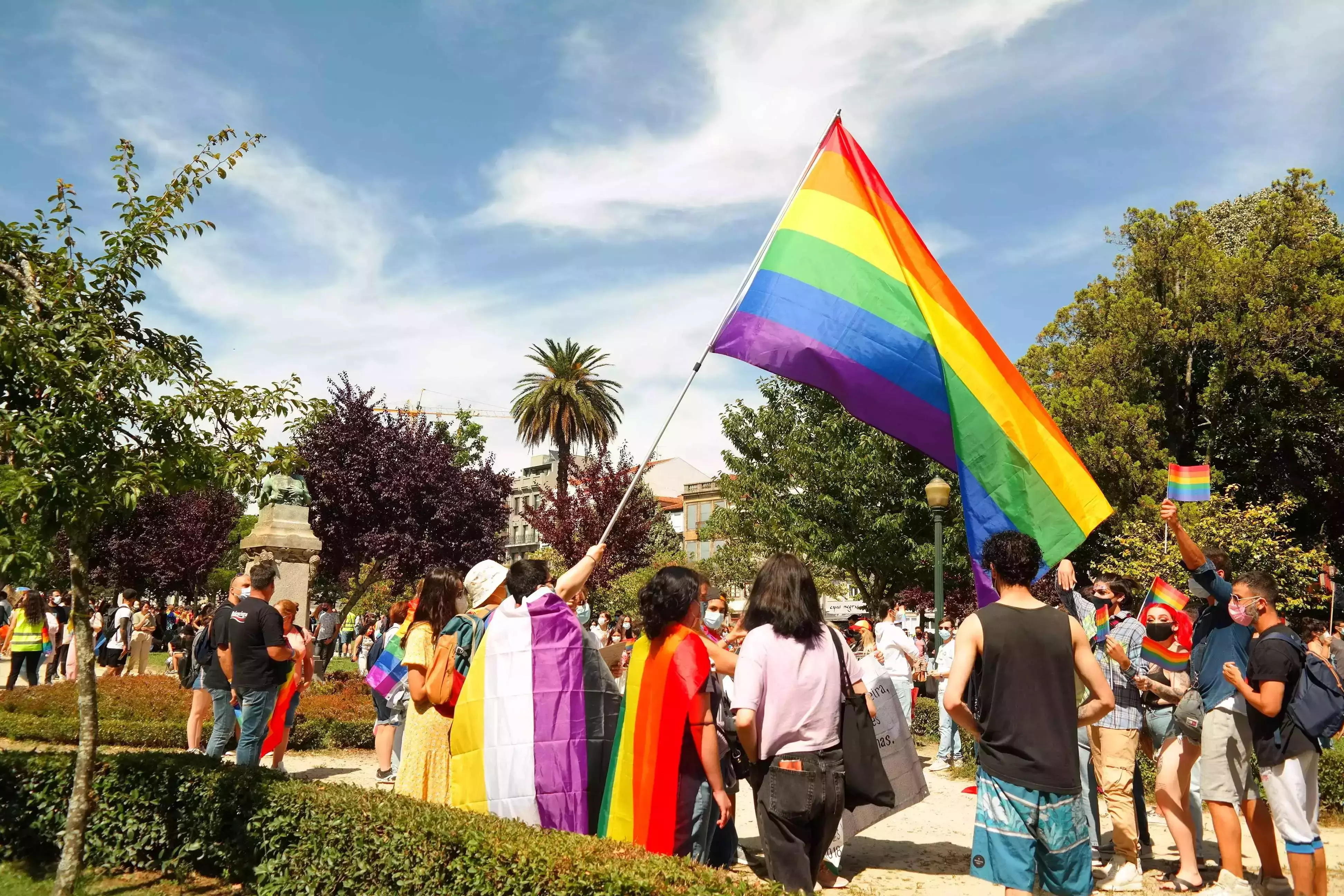
First and foremost, Portugal was one of the first countries to legalise same-sex marriage in 2010, with its cities of Lisbon and Porto becoming thriving LGBTQ+ hubs since.
,Porto’s main LGBTQ+ district is Galerias de Paris and several other spots around the city, but the city as a whole has an inclusive and accepting feel no matter where you go. Although Porto has one of the lowest Gay Index scores of 6.9, it makes up for it with its Pride celebration that sees a significant turnout and its high Equaldex score of 93.
2. Dublin, Ireland
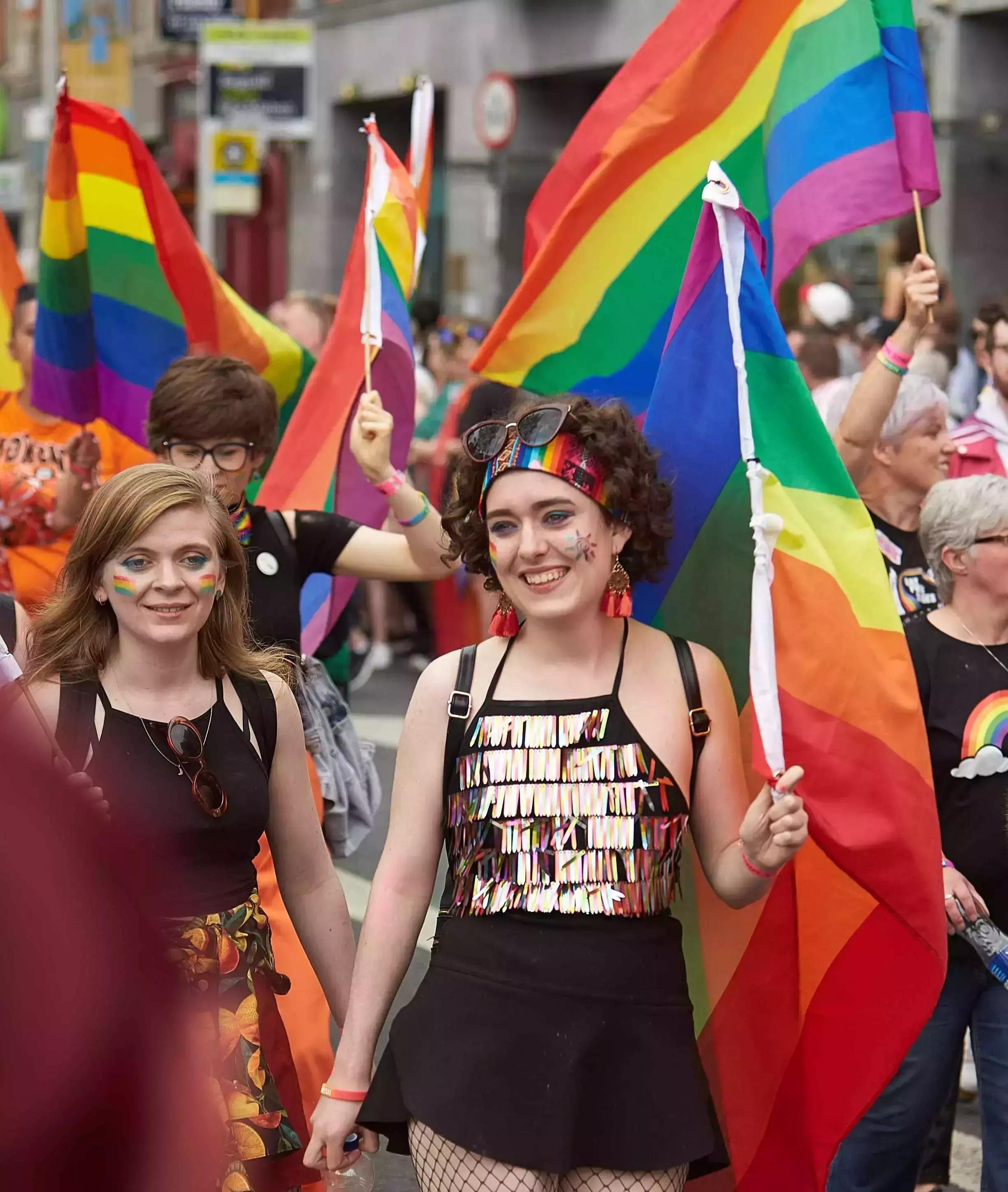
Dublin hasn’t always been the safe and accepting place for the LGBTQ+ community that it is now, but views and laws have drastically changed since homosexuality was decriminalised in 1993, and same-sex marriage was legalised by popular vote in 2015, making Ireland the first country in the world to legalise it in this way.
Dublin is now a thriving hub for all members of the community. The city’s progressive stances on LGBTQ+ make it all the more welcoming and inclusive to people of all backgrounds. To further Dublin’s changing views on LGBTQ+, its annual Pride event sees attendees of more than 70,000 take to the streets in solidarity for the community and its rights.
1. Lisbon, Portugal
Now we come to number 1, the world’s most LGBTQ+ friendly city: Lisbon. The city is a trailblazer in cultivating a safe, supportive, and fun community for queer people. It’s not just the capital that’s gay-friendly; Portugal decriminalised homosexuality in 1982 and was the eighth country in the world to legalise same-sex marriage in 2010.
The city’s chart-topping Equaldex score of 100 solidifies it as an inclusive powerhouse, and Lisbon celebrates in true festive style with a colourful, fun-filled Pride weekend in June. Lisbon also hosts the International Queer Film Festival.
For queer people like me, the desire to move to a different country often stems from a deep curiosity about what lies beyond what we are allowed to embody here in the U.S. — a restlessness, as one interviewee told me, to understand ourselves uninhibited by the weight of social expectations.
Others leave out of fear, scrambling to find a safer haven where they’re not treated like political pawns. With an election marked by an abundance of anti-queer rhetoric from conservatives and even silence from Democrats on trans rights, moving abroad may soon become a reality for many queer Americans.
Navigating the world as queer individuals involves questions that many take for granted: Would I find community? Is the health care affirming? If parts of America do not feel like a queer haven, is there a promised land awaiting somewhere else? As I’ve learned, so many LGBTQ Americans of all ages have found their home abroad — and some of their overseas journeys began with a spontaneous swipe.
When Bill McKinley, 64, matched with a Spaniard named Ricardo on Big Muscle Bears, a dating website, 14 years ago, the Indiana native had no idea his Midwestern life was about to be upended forever.
Growing up between Indianapolis and Muncie, Indiana—a place he describes to me as “the most average town in America”— McKinley was forced into conversion therapy for several years, a life chapter he detailed in a 2022 HuffPost article.
While his parents later converted to The Church of Christ, a more queer-welcoming denomination, their earlier parenting was shaped by their profoundly devout Catholicism. His experiences led to advocacy work as a young adult and he eventually found his support system and became a gay-rights activist, actor and performer.
McKinley always thought he would call the United States home, but after talking to Ricardo for almost a year, he decided to visit him for three weeks in his Madrid home and soon fell in love. Despite returning to Indiana for 11 months, he permanently settled in the Spanish capital in the fall of 2011. On Valentine’s Day 2012, he and Ricardo got married. “I didn’t leave the United States; I came to Ricardo,” he says, when reflecting on the big move.
Now living in Chueca, “the world’s largest gay neighborhood,” as he describes it, McKinley cannot picture himself far from the quaint streets of low-rise, custard-colored buildings that fill Madrid’s downtown. “I can’t imagine going back to the United States,” he says. “I don’t know that we would ever live somewhere else.”
For queer people like McKinley, life outside the American border can offer a renewed sense of freedom and security — whether or not it was longed for — and places like Barcelona, Bogotá or Paris can become havens for the queer community.
Living abroad as a queer American is part of a broad historical trend, with literary icons such as James Baldwin and Audre Lorde standing out as two of its most influential examples. Baldwin settled down in France in 1948 and Lorde spent several years in Berlin in the 80s. Through works like Lorde’s “Berlin Is Hard on Colored Girls” and Baldwin’s ”Giovanni’s Room,” both writers inspired a generation of queer Americans — especially queer people of color — to venture beyond their homeland.
Moved by Baldwin’s legacy, Prince Shakur, a 30-year-old gay artist and author of ”When They Tell You To Be Good,” became curious about Paris. The Jamaican-American writer ended up living there for three years over several intervals. During this time, he became involved in the city’s protest scene, particularly around the Nuit Debout demonstrations.
As a Black American, he was shocked by the way police treated activists in France. “Their relation to Blackness felt a little less violent compared to America,” he tells me. Living there, he says, partly liberated him from certain constraints racial minorities experience in the U.S. “Being queer and Black, I get a little more freedom … that made it easier for me to have fun and feel comfortable.”
The term “freedom” was frequently used by the LGBTQ+ Americans now living abroad whom I spoke with. Moving to Barcelona about two-and-a-half years ago allowed Lars Wenzel, a 30-year-old queer man, to disclose his transness on his own terms. For Wenzel, who was already a foreign exchange student in Italy in 2010, moving there was an affirming experience — one that resonates with many in the LGBTQ community.
“Diasporic travel can be really appealing to queer people, because in terms of relationships with people that have known us since we were little, there’s this framework of, ‘This is who you always were,’” Wenzel says. His words resonate; even though anti-queerness does exist in every corner of the world, there’s something to be said about intentionally distancing yourself from a past that you no longer believe serves you.
In New York, where Wenzel lived before moving to Barcelona, the LGBTQ+ community felt quite siloed to him, especially in nightlife. Each letter stayed within their own bubbles, he says. Barcelona’s queer spaces felt more porous, reflecting a culture that is less fixated on identity compared to the American one. “Even in the Spanish language, how people talk about queerness with terms like travesti and maricón, all these things flow together. It doesn’t feel so important to understand exactly what words you use to describe yourself,” he says. “Queerness feels more cultural than identity-focused.”
Access to free health care is another reason Wenzel decided to settle down in Barcelona. As a trans person, his identity constantly relies on good medical care, he says, but Spain’s universal coverage also provides him with a sense of safety regarding his overall sexual health. According to recent OECD data, 53% of Americans primarily relied on private health insurance, 38% on public coverage, and 9% remained uninsured, whereas the public system in Spain covers over 99% of the population. “Having unprotected sex doesn’t mean that you could be putting someone at risk of a medical bill,” he says. “And there’s very little stigma surrounding STIs and HIV.”
Ben Seaman, a 58-year-old queer man who grew up in a “WASP household with a lot of emotional repression,” as he describes it, between Kansas and Connecticut, echoes Wenzel’s sentiment. A painter and a psychotherapist, Seaman always gravitated toward Spanish people and culture, and since the ’90s, he has been visiting Madrid, a city he initially thought was “a bit behind in terms of technology” compared to New York, but “more open in terms of gay life.”
Once he turned 50 and started to look for places to spend his “third and final childhood,” the Spanish capital was on top of his list. Along with his husband, he spent five weeks there this spring and their connection to the city’s vibrant social fabric grew even stronger. But feeling safe and well-treated by the Spanish health care system was a crucial factor in his decision. “They [healthcare system] are here to help you, and they don’t divide into insured and uninsured,” he says. “They just keep people healthy.” Next month, Seaman will finally settle down in Madrid.
Safety, however, encompasses more than just having access to quality health care. For Lola Mendez, a 35-year-old pansexual journalist who grew up in Kansas and moved to Chiang Mai, Thailand, this past March, the United States’ gun violence epidemic drove her to leave the country. And she doesn’t plan to return anytime soon. “If you’re under 18, your most likely cause of death is a gunshot,” Mendez says. “I can’t live in a society where I could be killed at any given moment.”
And in an increasingly hostile legislative environment for the trans community, some queer Americans have even sought legal protections abroad. Eric (who prefers to use a pseudonym for safety purposes) is a 40-year-old queer person from Arizona who was living in Ohio with his wife and their 5-year-old daughter, a trans girl, when state lawmakers started to push for bills targeting the trans community.
Fearing for their child’s safety, they flew to Ireland in March and applied for asylum there. “We didn’t have plans, we didn’t know anybody here, but we just needed to get out,” he tells me. Although he is still waiting for his case to be resolved, he remains hopeful about their future life in Ireland. “They put us in housing in one of the most conservative counties in the country, so that didn’t super work for us, but it’s already safer than the U.S.,” he says.
After our interview took place, he and his family were moved to Cork, a more progressive city, and their daughter has enrolled in school. “Everyone from teachers to principal were amazing and affirming, and she has a bunch of other little girls trying to make friends with her here,” he said.
Moving to a place that is affirming and protective of queer identity is essential, but for many American immigrants, access to community and LGBTQ spaces is also crucial. After growing up in South Florida and attending college in Maine, Tasha Sandoval, a 33-year-old queer journalist, decided to move to Bogotá, where she was born, in 2019 to reconnect with her roots. She eventually returned to New York, but this March, she took advantage of her work flexibility and gave Bogotá another chance.
While other Colombian places such as Medellín feel relatively conservative, Bogotá stands out as a cosmopolitan and diverse city where the queer community thrives within a vibrant cultural scene, Sandoval says. “This time around feels like it has more potential. I feel more queerness around me,” she adds.
After spending two years in San José, Costa Rica, Aaron Bailey finally built a community there — one centered around queer friendships. The 47-year-old gay Michigan native experienced a midlife crisis in Denver, his former home, and purchased a vacation house in the Central American country, where he eventually found himself spending more time.
The house, located in a tourist and transient area, felt detached from the local society, so he moved to the capital. Bailey describes it as more queer-friendly and safe and says he now feels integrated into the community, and so Costa Rica has come to feel like his new home. “At this point, I can’t imagine leaving Costa Rica; certainly I can’t imagine moving back to the United States,” he says. “I feel really settled and rooted here, and that’s something I haven’t felt in decades in the United States.”
Living abroad has its own set of challenges, and many queer immigrants carry a guilt around leaving loved ones that sinks deep, no matter the number of calls and Sunday morning FaceTimes. The black screen will always look back at you, reminding you of the missed 30th birthday and the wedding you will never attend — but it is a price many deem worth it.
“I will do absolutely everything I can to help any person who wants to get out of the United States get connected with resources,” Wenzel says.
Spain has consistently ranked high for quality of life, and there are numerous compelling reasons why expats should consider making it their new home:
Lifestyle and Culture:
High Quality of Life: Spain frequently tops rankings for quality of life, with expats reporting high satisfaction with the climate, culture, and overall living conditions.
Laid-back Lifestyle: Spaniards are known for their relaxed and friendly approach to life, prioritizing enjoyment and social connections over stress. This can be a refreshing change for those accustomed to a faster pace.
Rich Culture and History: Spain boasts a diverse cultural heritage, with influences from various civilizations evident in its architecture, language, and traditions. There are numerous festivals and celebrations throughout the year.
Outdoor Activities: With varied topography and a pleasant climate, Spain offers a wide range of outdoor activities, from skiing in the Sierra Nevada to watersports along its extensive coastline.
Gastronomy: Spanish cuisine is world-renowned, emphasizing fresh, local ingredients and social dining. Tapas culture is a significant part of Spanish social life.
Cost of Living:
Affordable: Generally, the cost of living in Spain is considered affordable compared to many other Western European countries and the United States. This includes rent, groceries, and dining out.
Regional Variations: The cost of living can vary significantly depending on the city and region, with major cities like Madrid and Barcelona being more expensive than smaller towns.
Healthcare:
Excellent Healthcare System: Spain has a highly-rated universal healthcare system (Sistema Nacional de Salud – SNS) that provides free or low-cost basic services to residents.
Accessibility for Expats: Expats can access the public healthcare system once registered, often tied to employment or residency. Private health insurance is also available and relatively affordable.
Community and Integration:
Welcoming Environment: Spaniards are generally known for their friendliness and hospitality, making it easier for expats to feel at ease and integrate.
Large Expat Communities: Spain has a significant number of expats, particularly in major cities and coastal areas, fostering a diverse and supportive environment. It’s often easy to find communities based on nationality or interests.
Climate and Geography:
Pleasant Climate: Many regions of Spain enjoy a mild climate with plenty of sunshine, encouraging an active outdoor lifestyle year-round.
Diverse Landscapes: From the northern coast with its surfing culture to the Mediterranean beaches and the mountainous regions, Spain offers a variety of landscapes to explore.
Transportation:
Modern and Affordable: Spain has a well-developed and affordable transportation system, including high-speed trains, metro networks, buses, and trams, especially in urban areas.
Things to Consider:
Language: While English is spoken in tourist areas and by some expats, learning Spanish is crucial for full integration and daily life, especially in more local settings.
Bureaucracy: Navigating administrative processes can sometimes be challenging.
Job Market: Depending on your profession, the job market might differ from your home country. Salaries may also be lower in some sectors.
Overall, Spain offers a compelling combination of a high quality of life, affordable living, excellent healthcare, and a welcoming culture, making it an attractive destination for expats seeking a fulfilling experience abroad.
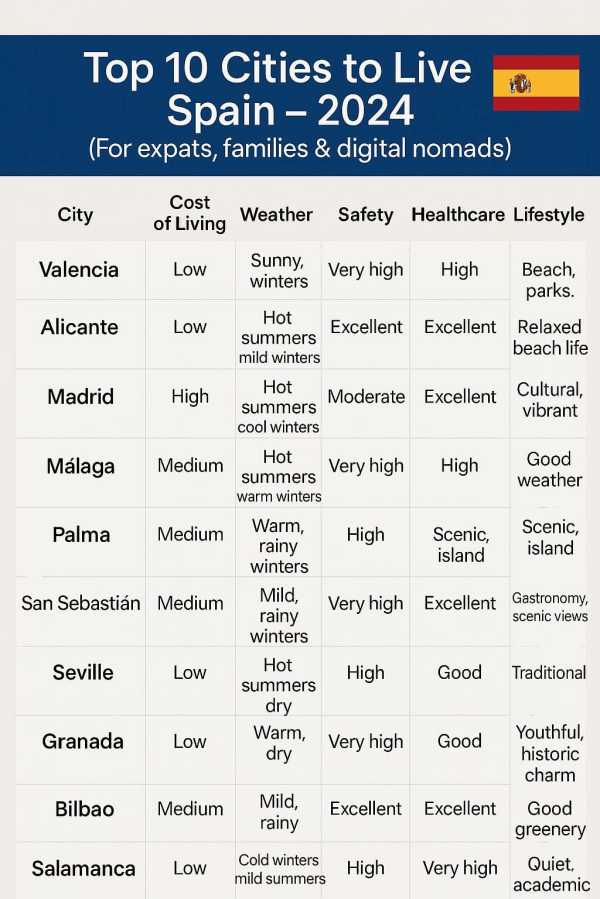
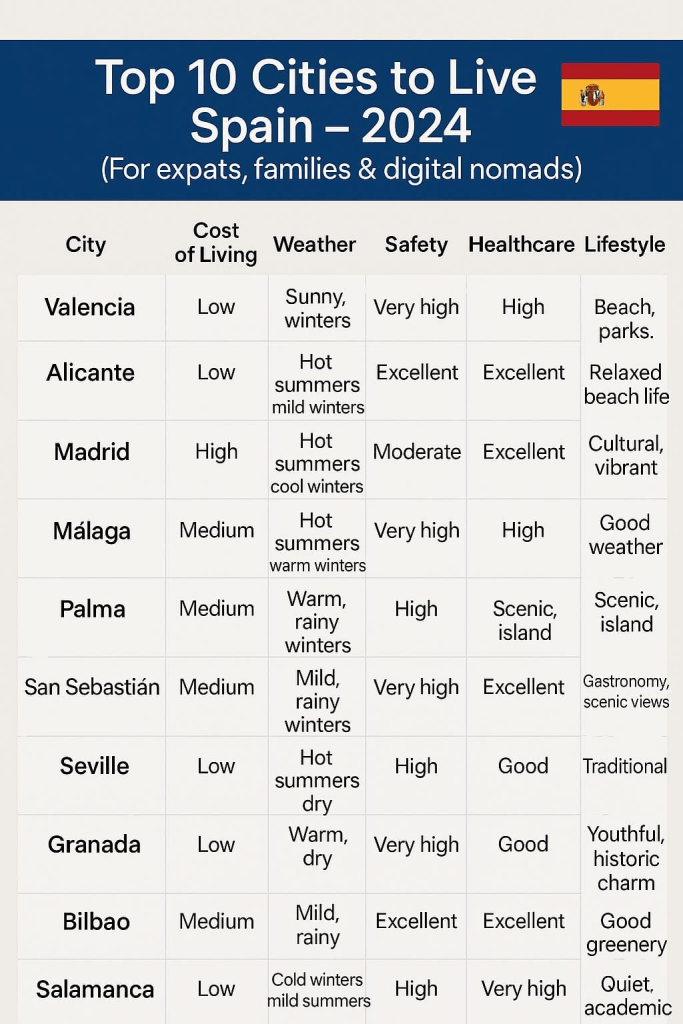
Want to live in Spain? Consider these top 10 cities.
An irrefutable reality of being a member of the LGBTQ community, at any age, is that you must give more thought than non-LGBTQ people about where to live. What are the local laws that apply to LGBTQ people regarding workplace and housing discrimination, marriage equality and conversion therapy? What does available public polling reveal about acceptance of the LGBTQ community? Even if you’re not married and don’t plan to be, or even if you no longer work, such laws — or the absence of them — suggest to LGBTQ folks how safe and welcoming the locale will be for them.
The above is true whether you’re LGBTQ and 30 — or a gay retiree. You can’t just spin the globe. If you’re LGBTQ and are considering retiring abroad, it is incumbent on you to do more due diligence than your straight friends and family members would have to do in the same situation.
Best places for LGBTQ people to retire abroad
If you enlist the services of a lawyer who specializes in retirement abroad, you have to ask more questions; you have to spend more late nights googling; and you have to read more articles like this one, in which we examine the knotty issues related to gay retirement outside the U.S., include advice from both experts and expats, and make some (hopefully helpful) recommendations.
If everything falls into place, you can breathe a sigh of relief once you’re in the midst of your retirement abroad. Chris Young and Jon Kinnally, who both worked in the television industry — Young was a writer for Comedy Central, and Kinnally was a writer and producer for the sitcoms Will & Grace and Ugly Betty — lived most recently in Los Angeles before the couple moved to Spain. They chose Sitges, a vibrant, walkable beach town about 45 minutes from Barcelona. “It’s so open. You see gay and lesbian couples holding hands. And you can be old and gay here, which you can’t be in L.A.,” Young says, not entirely joking.
Below, we recommend some beautiful and culturally rich countries where LGBTQ folks can retire happily and safely. But just as the U.S. isn’t uniform in terms of acceptance, neither are most countries. The LGBTQ community scarcely needs to be told that the more populous and diverse the area — in the U.S., that means urban or coastal, or both — the more accepting the area tends to be.
But it’s worth repeating. As the founder and managing director of Mitos Relocation Solutions, Federica Grazi helps expats retire in Greece and other European countries, and she is quick to note that not all of Greece is like the gay magnets of Athens and Mykonos. “I would not recommend that gay couples move to the countryside, where there are traditional communities and not many expats — it would be harder to integrate there,” she counsels, but the same might be said of France, Spain, Italy — or the U.S.
With that in mind, here’s our hot list of retirement places.
Spain
Spain is well-known as one of the most LGBTQ-friendly countries in the world. Spain legalized same-sex marriage in 2005, a full decade before the U.S. Naturally, this factored into Young’s and Kinnally’s decision to move to Sitges, a global destination for gay tourism.
The two appreciate the fact that the resort town, while heavily gay — with a spate of gay bars, nightclubs, and hotels — is demographically diverse. “It’s not a gay ghetto,” Young says. “Sitges is a great mix,” Kinnally adds. “It’s different than a place like Provincetown. There are kids running through the streets, old Spanish ladies, and gay couples — all mixing together. It’s kind of a utopia if you want to retire.”
With health care costing the couple only 250 euros a month and three-course lunches priced from 15 to 17 euros, they can breathe easy about expenses and work on their respective book projects. (Kinnally’s I’m Prancing as Fast as I Can comes out in August.) Of the major cities, Barcelona is a gay mecca, and Madrid boasts Chueca, a festive gay neighborhood.
Greece
While same-sex marriage was only recently legalized in 2024, same-sex sexual activity was decriminalized in Greece in 1951, which compares favorably to the U.S., which granted this right far later — in 2003. Likewise, employment discrimination against gays and lesbians has been illegal in Greece since 2005 (with gender-identity protections following later), while the U.S. did not grant this protection at the federal level until 2020.
Athens boasts a large and thriving LGBTQ community, especially in the Gazi neighborhood, and the Cycladic island of Mykonos is arguably the world’s most popular summer destination for the LGBTQ community, with famous gay beaches like Elia and Super Paradise.
Former New Yorker Daniel Rentillo says that even the small, low-key island of Symi, where he retired, is a comfortable place to be LGBTQ, and he’s noticed more gay couples visiting and even making moves to relocate to the island. The fact that Greece enjoys excellent health care and a relatively low cost of living makes this country of cultural antiquities, plentiful beaches, mild weather, and fresh seafood a fine choice for retirees — LGBTQ or not.
Malta
Not only was employment discrimination against the LGBTQ community banned here, and same-sex sexual activity decriminalized years before the U.S. made these civil rights moves, but the island nation of Malta was also the first European country to ban conversion therapy. Supermajorities of Maltese support civil rights and marriage equality.
With a tiny population of half a million people living on three sunny, inhabited islands (Malta, Gozo, and Camino), the country is located south of Sicily, enjoying a similar Mediterranean climate and stunningly clear waters to swim in, especially at the natural coves at St. Peter’s Pool.
Valetta is the pedestrian-friendly capital and is the best place for gays to hole up, along with nearby Sliema. “Everyone accepts the LGBTQ community today,” says Matthew Cassar, a citizenship advocate and lawyer based in Sliema. “No one would conceive of discrimination,” noting that “there is no opposition party” set on scaling back the community’s rights. One of Cassar’s clients, worried for his transgender daughter’s rights and safety in the U.S. under the Trump administration, is in the middle of the citizenship process.
The country has two official languages: Maltese and English.
Australia
For more than a decade, public polling has shown support for gay rights and marriage quality surpassing the 70% mark. And some advances have been swift and recent: Since 2021, the country has outlawed the so-called gay panic defense, legalized marriage equality, and banned conversion therapy (in regions representing 85% of the population). In 2013, Australia implemented federal protections based on sexual orientation, gender identity, and intersex status.
Though marriage equality did not arrive in Australia until 2018, the capital of Sydney has embraced gay culture for decades: The annual Gay and Lesbian Mardi Gras, one of the world’s biggest LGBTQ celebrations, has been going strong since the 1970s. While Sydney, Adelaide and Brisbane have gay neighborhoods, the LGBTQ presence in Melbourne is more spread out.
Most retirees will find a pathway to relocate through the expensive ($500,000 to $750,000) Investor Retirement Visa. Still, it is cheaper to live in Sydney than in New York or San Francisco.
For those seeking a mild climate, beautiful cities, a friendly populace, excellent health care, and zero language barrier, “Oz” (the affectionate slang for Australia) may be the ticket.
Costa Rica
Costa Rica’s former president, Carlos Alvarado Quesada, was a notable reformer and advocate in the area of LGBTQ rights, garnering global attention when he publicly apologized for the country’s past persecution and discrimination of gays, calling it “shameful.” Same-sex marriage became legal in 2020, which was also the year that hate crimes and blackmail based on sexual orientation were criminalized. (Transgender rights already had been significantly expanded in 2018.)
A center of eco-tourism and sustainable well-being with no standing army, tropical Costa Rica has long been regarded as a kind of peaceable utopia for expats. With the Caribbean Sea on one side and the Pacific on the other, Costa Rica is known for its lush landscape and hot springs.
Gay life is centered in the capital city of San Jose and the carefree beach resort town of Manuel Antonio. Retirees will find the country very affordable, even with household help.
The Netherlands
The first country in the world to legalize same-sex marriage (in 2001) also banned discrimination based on gender identity, gender expression, and sex characteristics in 2019. Not only do most Dutch people support LGBTQ rights; many Dutch, especially those under 40, can’t even comprehend the discrimination faced by the community in other countries.
It would be an understatement to say that you can be comfortably gay in Amsterdam, with Reguliersdwarsstraat the most prominent LGBTQ area. This world-class city is postcard-perfect, teeming with cyclists, and is pedestrian-friendly (just mind the bike lanes). The visa system is straightforward and leads to residency. English is widely spoken, and the cultural opportunities seem endless.
On the downside, the country’s cost of living can feel a little pricey for those living outside major U.S. cities, and the weather in the Netherlands is rainier and chillier than in southern Europe.
Thailand
In 2024, Thailand made headlines when it became the first UN member state to approve a marriage equality law, and the country, with its myriad cultural and recreation opportunities, has long been popular with LGBTQ tourists. Therefore, LGBTQ couples and individuals may want to consider Thailand, but only if they’re of a certain stripe: adventurous and very well-traveled; tolerant of tropical heat; and veterans of previous vacations or work stints in the country.
In an exotic culture so far from friends and loved ones, it’s best to have an expat community already in place if you’re thinking of moving there. In addition, though Thailand offers the LGBTQ community a range of protections and anti-discrimination laws, local attitudes are still evolving, and social interactions should be carefully navigated (cue the established expat scene).
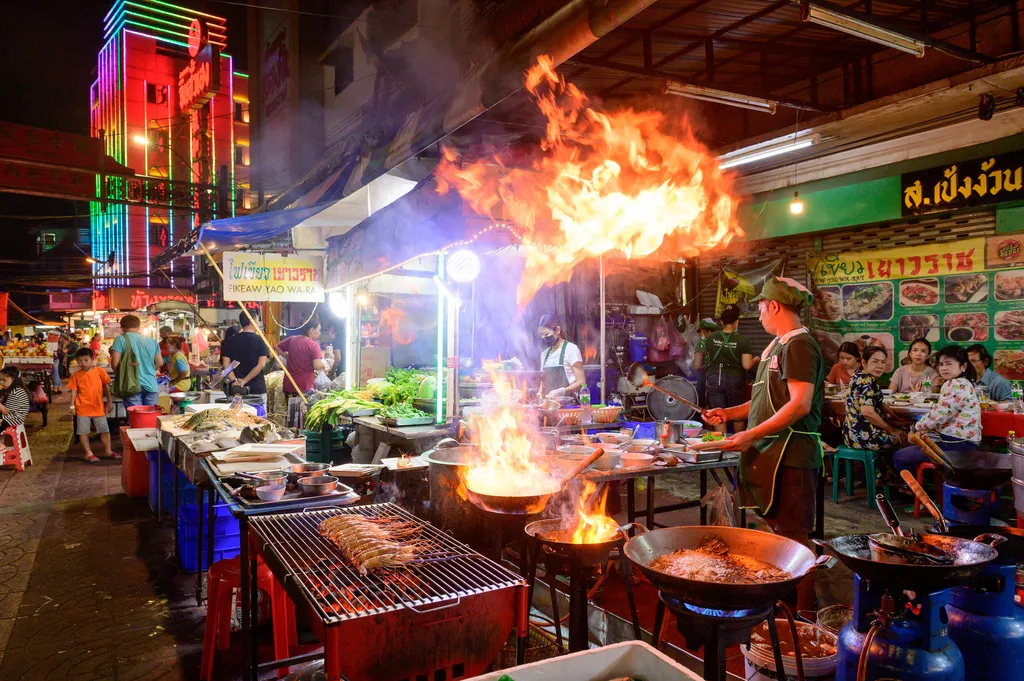
That said, this is a very inexpensive country with kind people. And if you love Thai food, having pad see ew where it was invented will be a revelation. The capital, Bangkok, is a uniquely stimulating place, where a ride on long-tailed boat along the Chao Phraya River may get you to your destination faster than an open tuk-tuk (taxi), given the city’s notoriously heavy traffic.
If you prefer a slower pace and a coastal setting, you can always base yourself in the resort areas of Phuket or Ko Samui, the latter the island where season 3 of The White Lotus was filmed.











 fleeredstates.blog
You must be logged in to post a comment.