Two ballot initiatives gathering signatures target transgender kids in Colorado

Read more at Colorado Newsline.

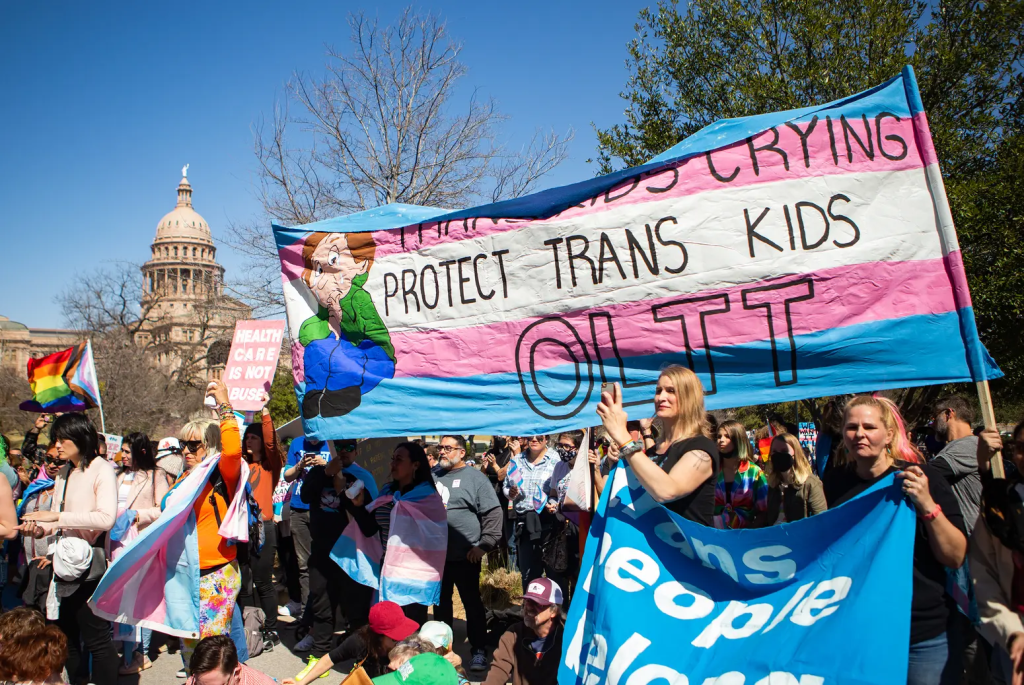
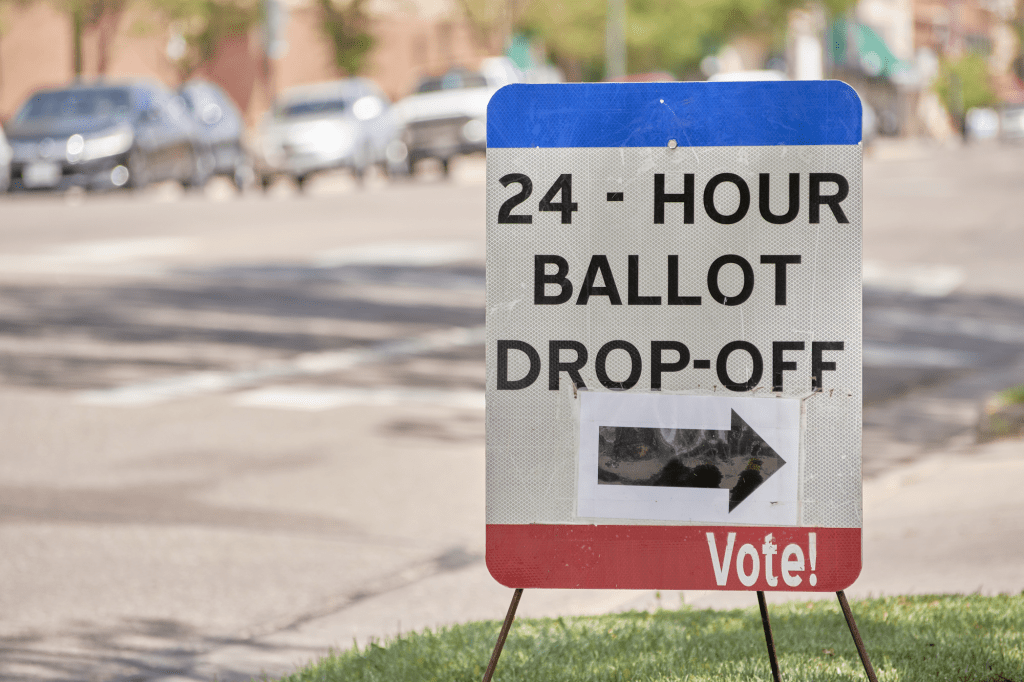
A Colorado organization is leading two ballot measures that would restrict rights for transgender children in the state. 

Protect Kids Colorado, a coalition led by prominent anti-LGBTQ activist Erin Lee, is gathering signatures for ballot measures that would prevent transgender children from participating in school sports and receiving gender-affirming surgeries. Lee led several anti-LGBTQ initiatives that the Colorado Title Board rejected ahead of the 2024 election. 

The group has until Feb. 20 to submit 124,238 valid signatures from registered voters for each initiative to the Colorado secretary of state’s office. If that threshold is met, the measures would be placed on the November 2026 ballot. 

Z Williams, co-director of the Denver nonprofit Bread and Roses Legal Center, said both of the issues the ballot measures seek to address are relatively minute. Williams said they have yet to see “actual validated science” that supports the need for the initiatives. 

“The number of trans athletes is incredibly small, and the number of gender-affirming surgeries done for transgender youth or minors is even smaller,” Williams said. “We have two ballot measures … that are going to require hundreds of thousands of dollars, waste a lot of time, create a lot of confusion during the election over two pretty much manufactured issues.”

Protect Kids Colorado did not respond to Newsline’s request for comment on the initiatives.

Coloradans value freedom, a freedom that belongs to everyone, including transgender youth and their families.

– Cal Solverson, spokesperson for One Colorado

There isn’t clear data on the number of transgender student athletes in Colorado, and the two major hospitals that provide gender-affirming care to minors do not offer surgeries to minors.

Cal Solverson, spokesperson for LGBTQ+ advocacy organization One Colorado, said the ballot measures are ill-informed and jeopardize individual freedom. They also put transgender people, their families and health care providers across the state at risk, Solverson said. 

“Coloradans value freedom, a freedom that belongs to everyone, including transgender youth and their families,” Solverson said in a statement. “The right to exist as we are extends beyond the exam room to the playing field, where every child deserves the opportunity to stay active, develop life skills, and experience the deep camaraderie of a team.”

If the measures make it to the ballot, Solverson said One Colorado trusts that Colorado voters will defend transgender youth and “ensure that freedom continues to exist for all Coloradans and not just some.”

Prohibit certain surgeries on minors

Ballot Initiative 110 would prohibit health care professionals from knowingly performing any surgery on a minor “for the purpose of altering biological sex characteristics.” 

The measure would also prohibit state and federal funding including Medicaid from being used to pay for gender-affirming procedures.  

Children’s Hospital Colorado and Denver Health have paused gender-affirming care for youth amid the Trump administration’s threats to pull Medicaid and Medicare funding entirely.   

document on Protect Kids Colorado’s website says that Children’s Hospital Colorado performs gender-affirming surgeries on minors, but Children’s Hospital said in a statement that it has never provided gender-affirming surgical care to patients under 18, and it stopped offering such surgeries to adults in 2023. Denver Health stopped offering surgeries to minors in early 2025.

The document also says that while the ballot measure only targets gender-affirming surgeries, the organizations has “a multi-pronged plan to outlaw puberty blockers and cross-sex hormones for minors as well.”

The language in the initiative includes medical terms that aren’t necessarily related to surgery, such as prescriptions. It also applies to health care professionals such as podiatrists, dentists and chiropractors, who wouldn’t be performing gender-affirming surgeries in the first place. That adds concern about how the measure would affect other elements of gender-affirming care, according to Mardi Moore, CEO of LGBTQ+ advocacy group Rocky Mountain Equality. 

“It’s kind of like they’re throwing the spaghetti at the wall to see what’s going to stick,” Moore said. “There’s not a lot of people you can trust anymore, and I think Protect Kids Colorado is one of those groups that cannot be trusted to think they will keep all children safe.”

If the measure passes, it would lead to discriminatory practices in medical care, affecting all children, not just transgender children, Moore said. 

Male and female participation in school sports

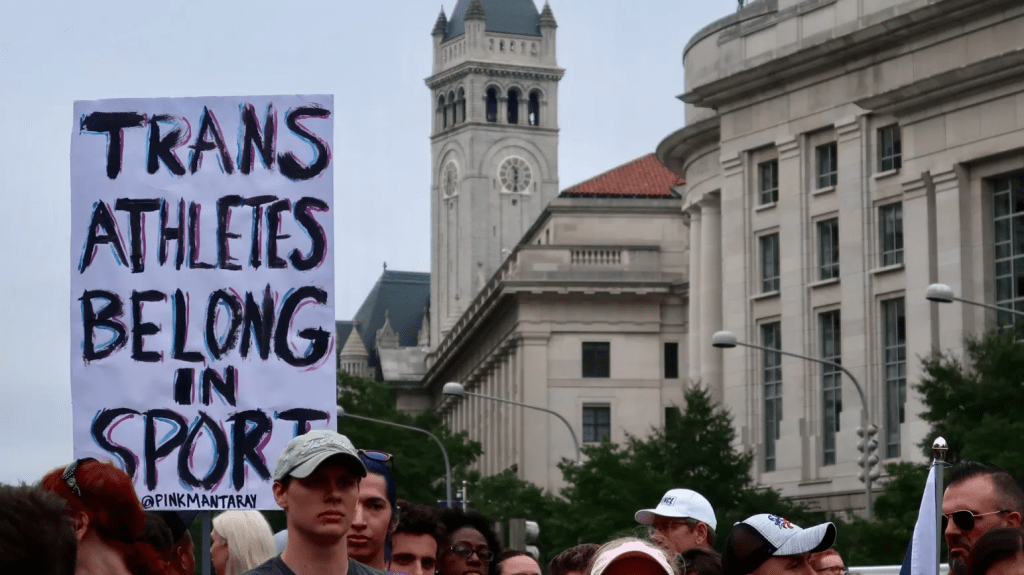
Ballot Initiative 109 would create definitions in state statute aiming to define boys and girls based on physical anatomy, excluding transgender people. 

Sports teams sponsored by schools or athletic associations would be required to expressly designate those teams as for men, women or co-ed. Schools and their athletic departments would be required to adopt policies implementing the requirements of the initiative.

The measure would not affect any student’s ability to participate in co-ed sports. 

The state’s commissioner of education would be tasked with enforcing the measure, and would have discretion to determine how to “take appropriate remedial action” against any school not in compliance with its requirements. 

“It would mean a little 8-year-old who loves to play soccer and who happens to be trans couldn’t play anymore,” Moore said of Initiative 109. 

Colorado is known to be a safe place for LGBTQ+ people, Williams said, and families have moved to the state from around the country because they share those values. 

“When I was a kid, we were ‘the hate state,’ and Colorado has unequivocally disavowed that stance,” Williams said. “So I think we need to remember that these are folks that are trying to use a very marginalized community to rebuild a political ideology that’s been rejected for a very long time here.” 

Protect Kids Colorado is running a third ballot measure to increase penalties for people convicted of human trafficking of a minor. 
Trans sports ban that could require genital exams will appear on the ballot in Washington

Read more at LGBTQ Nation.

A far-right political action committee says it has collected enough signatures to potentially get a trans sports ban onto Washington state’s ballot in November, and that ban would require girls to undergo physical examinations to participate in school sports.

As the Washington State Standard reports, Let’s Go Washington collected 445,187 signatures in support of Initiative Measure No. IL26-638, exceeding the 386,000 needed to advance the measure. The initiative would ban transgender girls from competing in girls’ school sports statewide

IL26-638 interprets existing state law as requiring students “to undergo a routine physical examination prior to participation in interscholastic sports, which includes documentation of the student’s sex assigned at birth.” It would require school districts and nonprofit entities to “prohibit biologically male students from competing with and against female students in athletic activities with separate classifications for male and female students.”

Under the proposed measure, students who want to participate in girls’ sports would be required to provide “a health examination and consent form or other statement signed by the student’s personal health care provider that verifies the student’s biological sex, relying only on one or more of the following: The student’s reproductive anatomy, genetic makeup, or normal endogenously produced testosterone levels.”

As journalist Erin Reed notes in her newsletter Erin in the Morning, trans sports bans with similar requirements have been highly controversial, as they could potentially result in minors being subjected to invasive physical exams simply to participate in school sports.

Reed cites the failure last March of the so-called Protection of Women and Girls in Sports Act, which would have amended Title IX — the federal civil rights law prohibiting sex discrimination in government-funded schools and education programs — to prohibit schools from allowing trans female athletes to participate in athletic programs or activities “designated for women or girls.” The Congressional Equality Caucus noted that the bill could have forced “any student to answer invasive personal questions about their bodies & face humiliating physical inspections to ‘prove’ that they’re a girl.”

Along with the signatures in support of IL26-638, Let’s Go Washington also submitted 416,201 signatures in support of a measure repealing changes to another of the PAC’s recent initiatives. The Let’s Go Washington-backed Initiative 2081, approved in 2024, codified the rights of the parents of public school students into law. As Reed notes, however, state lawmakers watered down provisions that would have reportedly mandated that schools out trans students to their parents.

According to Reed, Let’s Go Washington’s IL26-001 would restore language to the 2024 parental rights law that would effectively require the forced outing of trans students to their parents.

As the Washington State Standard reports, Let’s Go Washington submitted signatures in support of both measures to the Washington Secretary of State’s office on Friday. The Secretary of State’s office told the outlet that it may take up to four weeks to verify the signatures for the initiatives. Once verified, the initiatives will go before the state legislature, which can either approve them or reject them. If the state legislature rejects them, they will either appear on the November ballot on their own or alongside alternatives proposed by lawmakers.

Brian Heywood, the millionaire hedge fund manager and Republican megadonor who leads Let’s Go Washington, claimed that roughly half of the signatures the PAC had collected in support of the initiatives were from independent voters and Democrats. “This is not a partisan issue, this is a common sense issue,” Heywood said, according to the Standard. “This has broad support.”

However, in a statement issued by WA Families for Freedom, Gender Justice League board member Sophia Lee accused Let’s Go Washington of “playing political games with the lives of vulnerable trans and queer kids.”

Reed, meanwhile, notes that the trans sports ban is likely to face constitutional challenges should it become law. But it’s unclear whether the measure would succeed on the ballot. Reed notes that anti-trans messaging from Republicans last year coincided with significant GOP losses across the country in November’s off-year elections.

Colorado state sports association settles lawsuit by allowing schools to ban trans athletes

Read more at LGBTQ Nation.

The Colorado High School Activities Association (CHSAA) has settled a lawsuit brought by right-wing school districts for the right for schools to bar trans students from joining sports teams that align with their gender. The lawsuit targeted multiple defendants and will continue with the remaining ones without CHSAA’s involvement.

“Eligibility decisions have always been left to individual schools and districts, which is why being named in this lawsuit was both frustrating and unnecessary,” a CHSAA spokesperson said in a statement. She went on to call the organization’s inclusion in the lawsuit “much more performative than substantive.” 

The lawsuit was brought by several school districts but was led by District 49. That district’s board passed a controversial trans sports ban back in May by a narrow margin. The lawsuit against the state was filed the day after the policy was voted in, calling for Colorado to allow the ban to be enacted and to align policies with the demands laid out in the president’s “two sexes” executive order.

Colorado has state laws prohibiting discrimination against trans people, specifically people’s gender identity or gender expression. While the lawsuit cites the Equal Protection Clause of the Fourteenth Amendment in arguing that trans girls playing on the girls’ team affects the rights of cis girls, it does not mention the impact on the rights of trans girls.

To settle their part of the lawsuit, CHSAA agreed not to sanction the districts and schools named in the lawsuit for banning trans students from sports teams. It will also not respond to statements the schools make about “advantages of biological males over biological females in competitive sports” or potential propaganda about the hazards of “allowing biological males to play contact sports with or against biological females.” There will also be no penalties from CHSAA for forfeiting against a team because they allow trans children to play.

CSHAA has said that it will still sanction the schools and districts if any of those statements are demeaning in nature or call for violence against trans people. The organization is also recouping $60,000 in legal and operational fees.

While some Colorado school districts specifically allow trans students to play sports under their correct gender identity, others have no concrete rules about it. CSHAA has never stepped in over a trans person being allowed to play school sports, or not being able to.

The lawsuit will continue with the Colorado Attorney General Phil Weiser and other Colorado Civil Rights Division officials as the remaining defendants.

Colorado’s District 49 has around 27,000 students. In May, Board President Lori Thompson noted that, as far as she was aware, the district had only had one instance of a trans student trying to join a sports team that aligned with their gender identity. The student in question was a trans boy, and they did not pass tryouts.

Pro basketball team embraces homophobia, rejects the Pride rainbow

Read more at Outsports.

If you are an LGBTQ fan of the New Zealand Breakers of Australia’s National Basketball League, your favorite team won’t be wearing a Pride rainbow in 2026.

The NBL holds a Pride Round annually to celebrate the diversity of LGBTQ basketball fans worldwide, but the Breakers decided as a team to forgo wearing any Pride symbols, rainbows or colors this season that could be construed as supporting the gay community.

“In line with the league’s voluntary participation policy to wear the patch, the players discussed the matter as a team,” a team source said. “Some players raised religious and cultural concerns about wearing the insignia.”

The NBL’s Pride Round is from January 21 to February 1, 2026. The Breakers appear to be the only team that decided to skip honoring LGBTQ fans; the resulting uproar has spilled over to social media platforms like Instagram.

Many people have shared their disappointment with the players on the team in the comments section of any post involving the Breakers.

“Long-term member, won’t be anymore. Disgusted at the team, not supporting inclusion. Should all be ashamed,” someone wrote.

Another fan resounded the sentiment: “Been with the Breakers through thick and thin, but you’ve lost me on this one.”

It’s refreshing to see people stand with LGBTQ fans during a Pride controversy, as a handful of homophobes are often quick to complain anytime a pro sports franchise celebrates Pride.

Statistical analysis suggests that Australia is very supportive of gay people, with a study in 2023 reporting that seven percent more people in Australia support gay couples having children than an average of the rest of the world.

What makes the Breakers’ boycott of Pride even more disappointing is the fact that the team will be playing against the only openly gay player in the NBL during the Pride Round.

Isaac Humphries plays for the Adelaide 36ers, and he will face the Breakers in January during what could have been their Pride Night. Humphries went viral in 2022 when he came out in front of his teammates and talked about the difficulties of his journey.

Keeping the gay away from the Breakers certainly hasn’t given the team any sort of ability to win games this season. They are currently ninth in the NBL standings as of this writing. May their lack of support continue to deliver bad mojo for the rest of the year and beyond!

Parents demanded that a trans child be banned from sports. The town rejected their request.

Read more at LGBTQ Nation.

A town in Maine voted Monday night to continue to comply with the state’s Human Rights Act, allowing a transgender grade-schooler to play on a girls’ recreational basketball team.

The 3–2 vote at the November 10 special meeting of the St. George, Maine, Select Board came after a group of parents submitted a letter at last week’s regular monthly meeting raising their “deep concern” about the St. George Parks & Recreation Department’s youth basketball program allowing a transgender girl to play on its third and fourth grade girls’ team.

“While we understand that Maine law allows children to participate [in sports] based on how they identify, we also believe that these policies have created a very uncomfortable situation for many families in our community,” local parent Emily Chadwick read from the group’s letter during the public comment portion of the November 4 meeting.

In video from the meeting, Chadwick and others who spoke initially seemed to go out of their way not to mention the trans child or indeed to even specify the reason for their “concerns” or to ask the board to take any specific action beyond considering “how these policies impact all the children involved, not just one.”

Noting that the group seemed to be referencing the Maine Human Rights Act (MHRA), which bars discrimination based on gender identity, Select Board Chair Jane Conrad told those in attendance that their proper course of action would be “to lobby your legislators” to change the law. The Select Board members, she explained, “are in charge of enforcing the law.”

The board ultimately decided to schedule the November 10 special meeting to discuss whether it would continue to comply with the law and to allow for the broader community to weigh in.

Monday night’s meeting opened with Colin Hurd, deputy counsel for the Maine Human Rights Commission, clarifying precisely what is covered by the state human rights law.

“Under the Maine Human Rights Act, it’s illegal to prevent a person from playing sports on the team of their gender identity solely because their sex assigned at birth is different from the people that they will be playing with or against,” Hurd explained. “Furthermore, under the same provision, it’s illegal to prevent a person from using the restroom or locker room that most closely corresponds with their gender identity. So, the law, the Human Rights Act, is pretty unequivocal on these matters.”

Following the meeting’s hour-long public comment period, Conrad once again reiterated that it is not the board’s role “to determine or debate the law,” adding that in recent years, the board has consistently voted to follow state law, even when individual members disagreed with it. While she encouraged board members to voice their objections to the law, she also expressed her hope that they would vote to follow it, as not doing so would likely invite a lawsuit that they would lose, “and the taxpayers of our town would have to foot the bill.”

While some speakers at both the November 4 and 10 meetings seemed to reference a February 5 executive order banning transgender women and girls from women’s and girls’ sports (which neither changed nor established any law) and his administration’s interpretation of Title IX, Conrad noted that no court has ruled so far that any federal law supersedes the Maine Human Rights Act. She also noted that attempts in the state’s most recent legislative session to restrict trans people’s participation in sports have all been rejected.

As Them notes, the dust-up in St. George follows Maine’s Democratic Gov. Janet Mills’s months-long feud with the president over her refusal to comply with his anti-trans executive order. Mills has argued that the state’s human rights law prevents her from banning trans athletes from women’s and girls’ sports. However, as Them notes, several school districts in the state have nonetheless opted to institute trans sports bans in compliance with the executive order. An anti-trans advocacy group recently launched a new effort to amend the MHRA via ballot referendum so that it is in compliance with the presidential administration’s anti-trans interpretation of Title IX.

Cisgender male student kicked off boys’ basketball team due to birth certificate error in nightmarish ordeal

Read more at LGBTQ Nation.

In Arizona last week, a cisgender male 8th grader was “physically removed” from tryouts for his school’s boys’ basketball team because an error on his original birth certificate incorrectly identified him as being born female.

It’s the latest episode in a “gender ideology”-inspired nightmare for the teenager, Laker Jackson, and his family.

“I’m sad for everybody that it’s come down to this,” mom Becky Jackson told KNXV News in Phoenix.

The Kafkaesque drama was inspired by a clerical mistake 14 years ago, when hospital staff mistakenly identified Becky Jackson’s newborn son as a girl. It was an error Laker’s parents never noticed.  

“I give him the birth certificate and they’re like, ‘Did you know this says female?’” Becky Jackson recalled about handing over enrollment paperwork to a school administrator last year.

“I was like, ‘What?’” Becky Jackson said. “I was like, ‘Oh man, that’s so funny.’ So we come home, everyone’s laughing.”

The busy mom of six said correcting the document wasn’t a priority.

“So we just put it in the drawer and moved on,” she said.

The mix-up didn’t cause issues until recently, she told AZ Family.

Last spring, school staff began treating Jackson as female, Becky Jackson said.

The district removed Laker Jackson from an all-boys gym class and mandated he use a separate restroom, despite the family’s assertion that their son is a cisgender boy, assigned male at birth.

Becky’s mom had already started work on changing Laker Jackson’s birth certificate, but “it’s not something that you can fix quickly. You have to have an affidavit signed,” she said.

In the meantime, the 14-year-old continued training to make the boys’ basketball team at his Mesa high school, a 7th to 12th-grade school in the Queen Creek Unified School District.

Becky Jackson said she received the corrected birth certificate over the summer and provided the district with the revised document, along with a doctor’s note confirming Laker’s sex.

But Queen Creek administrators said it wasn’t enough, standing by a rule stating that the school’s determination of a student’s sex would rely solely on an original birth certificate.

“They sent the athletic director of Eastmark High to physically remove Laker from the basketball tryouts in front of all of his friends, in front of the coach,” Becky Jackson said.

“I am a biological boy. I was born a boy,” said Laker Jackson, who heard from friends on the basketball team that “they were talking about it for the entire tryout and even the next day’s tryouts because they were really confused.”  

After the family continued to raise objections to Laker Jackson’s treatment, a letter from an administrator said genetic testing to confirm their claim that the child is a boy “could be considered.”

“They may consider changing it if we get chromosomal testing. They didn’t say they would,” Laker’s mom said. She estimated the cost at $1500.

“So who’s going to pay that?” she asked.

In a statement, the district said it was “committed to ongoing dialogue.”

Becky Jackson also said her son will try out for a girls’ team if that’s what it comes to.

The ordeal is a prime example of what activists have long warned: that anti-trans policies are bad for everyone. It’s also quite ironic, considering the very people who want to stop anyone assigned male at birth from playing on girls’ sports teams may wind up forcing a cisgender boy to do just that.

House Republicans file bill to bar trans students from bathrooms, sports teams

Read more at The Hill.

House Republicans introduced legislation Tuesday to ban transgender girls from participating in girls’ school sports, moving to advance one of the Trump administration’s top priorities. 

The measure, titled the Safety and Opportunity for Girls Act, would define “male,” “female” and “sex” by reproductive function in Title IX, the federal civil rights law against sex discrimination in education. Schools receiving federal funds would be barred from allowing transgender students to use restrooms or locker rooms or play on sports teams that match their gender identity, according to the bill, sponsored by Rep. Mary Miller (R-Ill.). 

Miller introduced a similar measure to block locker room access for transgender students in March and spearheaded an earlier effort to reverse former President Biden’s expanded nondiscrimination protections for transgender students under the Congressional Review Act last summer. 

A news release from Miller’s office says the latest bill, which has 11 Republican co-sponsors, would preserve Title IX’s “original intent” and shield the decades-old law from reinterpretation “by radical leftists or activist judges.” 

President Trump’s administration has argued repeatedly that Title IX already prohibits transgender girls from competing on girls’ sports teams or using girls’ bathrooms and changing rooms at school. More than two dozen investigations into states, schools and athletic associations that accommodate transgender students have been opened since Trump’s return to office in January. 

School officials in states including California, Maine, Minnesota and Virginia assert their policies are compliant with state and federal law. 

A February executive order signed by Trump states that the U.S. opposes “male competitive participation in women’s sports” as a matter of “safety, fairness, dignity, and truth.” Trump warned schools at a signing ceremony that his administration was putting them “on notice.” 

“If you let men take over women’s sports teams or invade your locker rooms, you will be investigated for violations of Title IX and risk your federal funding,” he said. 

The Supreme Court agreed in July to decide whether states can ban transgender athletes from competing in girls’ and women’s school sports. Since 2020, more than half the nation has adopted laws barring trans students from participating on teams that match their gender identity. 

Laws in four states — Arizona, Idaho, Utah and West Virginia — are blocked by court orders, and New Hampshire’s ban on trans athletes is partially blocked. In February, the two New Hampshire high schoolers suing the state expanded their challenge to include the Trump administration. 

House Republicans, joined by two Democrats, passed legislation in January to ban transgender student-athletes from girls’ sports teams — an effort ultimately thwarted by Senate Democrats. 

New immigration policy bans visas for trans athletes: “Not in the national interest”

Read more at LGBTQ Nation.

U.S. Citizenship and Immigration Services (USCIS) has issued policy updates “effective immediately” to prevent trans women athletes abroad from entering the country to compete in sports competitions.

The agency said the updates are in accordance with an executive order against trans athletes that directed the Department of Homeland Security to bar entry to trans women from other countries who want to play sports in the United States.

The policy change is especially significant since the United States is set to host the 2028 Summer Olympics in Los Angeles.

The press release, issued on August 4, consistently misidentifies trans women as men.

“USCIS will affirmatively protect all-female athletic opportunities by granting certain athlete-related petitions and applications, that had previously been abused and offered to men, only to women, ensuring that male aliens seeking immigration benefits aren’t coming to the U.S. to participate in women’s sports,” it said, explaining the new eligibility policies for “extraordinary ability” visas.

“This policy update clarifies that USCIS considers the fact that a male athlete has been competing against women as a negative factor in determining whether the alien is among the small percentage at the very top of the field,” the release continued, saying the agency “does not consider a male athlete who has gained acclaim in men’s sports and seeks to compete in women’s sports in the United States to be seeking to continue work in his area of extraordinary ability.”

“Male athletes seeking to enter the country to compete in women’s sports do not substantially benefit the United States,” the agency claimed, “and it is not in the national interest to the United States to waive the job offer and, thus, the labor certification requirement for male athletes whose proposed endeavor is to compete in women’s sports.”

A statement from USCIS spokesperson Matthew Tragesser further emphasized the administration’s hostility to trans athletes and its refusal to address them by their actual genders.

“Men do not belong in women’s sports,” Tragesser said. “USCIS is closing the loophole for foreign male athletes whose only chance at winning elite sports is to change their gender identity and leverage their biological advantages against women.”

“It’s a matter of safety, fairness, respect, and truth that only female athletes receive a visa to come to the U.S. to participate in women’s sports.” He then claimed the administration “is standing up for the silent majority who’ve long been victims of leftist policies that defy common sense.”

The administration has been targeting trans folks abroad as part of its overall crackdown on trans participation in sports.

In February, the State Department told U.S. immigration officials around the world to deny visas to transgender athletes attempting to enter the U.S. and to permanently ban any athletes who “misrepresent” their birth sex on visa applications.

The February 24 message, authored by Secretary of State Marco Rubio, directs U.S. consulates and immigration offices worldwide to ban trans visa applicants under a section of the 1952 Immigration and Nationality Act that issues a “permanent fraud bar” for people who lie on their visa applications.

In addition to targeting trans athletes abroad, the executive order directs the Department of Justice to prosecute schools that allow trans female athletes in female sports programs. It also threatens to prevent cisgender U.S. athletes from competing in international sports competitions that allow international trans athletes to compete alongside cis athletes.

“Many educational institutions and athletic associations have allowed men to compete in women’s sports,” the order states, misgendering trans female athletes. “This is demeaning, unfair, and dangerous to women and girls, and denies women and girls the equal opportunity to participate and excel in competitive sports.”

“Therefore, it is the policy of the United States to rescind all funds from educational programs that deprive women and girls of fair athletic opportunities, which results in the endangerment, humiliation, and silencing of women and girls and deprives them of privacy,” the order continues. “It shall also be the policy of the United States to oppose male competitive participation in women’s sports more broadly, as a matter of safety, fairness, dignity, and truth.”

Trans athletes have argued that anti-trans politicians who talk about “protecting women’s sports” never fight to get increased funding or discourage the sexist discrimination and sexual abuse that keep many female athletes from competing in the first place.

Trans woman swims topless at meet to protest being forced to compete against cis men

*This is reported by LGBTQ Nation

Anne Isabella Coombes, a 67-year-old transgender female swimmer, swam topless with her breasts exposed at the Cornwall County Masters swim meet as a protest to being forced to compete with cisgender men by Swim England, the UK’s governing body overseeing the country’s competitive swimming.

Swim England told Coombes she was no longer eligible to compete in the women’s category, despite her doing so in 2022 and 2023. So the organization placed her in a new “open” category where trans female and nonbinary competitors swim against cis men. Swim England replaced its men’s category with its open category starting in September 2023, to “negate… post-puberty transgender females[‘]… biological level of performance advantage post-transition,” the organization wrote.

“It is widely recognised that fairness of competition must be protected and Swim England believes the creation of open and female categories is the best way to achieve this,” the organization said upon announcing the new policy. “The updated policy ensures there are entry-level competitive opportunities for transgender people to participate in the majority of our disciplines within their gender identity.”

When Coombes asked what she’d be required to wear during swim meets in the “open” category, Swim England informed her that she would “need to wear a female swimming costume despite having to compete with the men, which ‘outs’ me as a woman who is transgender,” she told The Reading Chronicle.

“I explained to the person on the phone that they are not allowed to do that, and he didn’t have an answer,” she added, saying that the swimsuit requirement compelled her to stop competitively swimming until 2025. She only resumed in order to protest Swim England’s policies, which say that competitors’ swimwear must be in “good moral taste.”

She said the organization told her that she can swim in a men’s swimsuit without having to ask in advance for a referee’s permission, but that the referee can disqualify her if they choose.

“Deciding on whether exposing my breasts is in ‘good moral taste’ or whether I need to cover them up so that ‘those involved in competitive swimming are appropriately safeguarded’ is an entirely subjective decision of the referee,” she told the aforementioned company.

“In other words, I could turn up to the competition and run the risk of not being able to compete in whichever costume I intend to wear,” she continued. “No other swimmer has this concern. These regulations also mean that Swim England is treating me as a male by default.”

The Reading Chronicle didn’t say whether the referee disqualified her for her protest.

“I’m trying to show the world that this policy isn’t thought through, and it’s meant to hit trans people and nobody else,” she said. “I want to make it clear through this protest that trans people are not a threat when it comes to sport. We aren’t winning everything, and if we started to, then I would be first in line to discuss other options. Right now, it is a non-issue.”

Numerous competitive sports’ governing bodies have recently changed their policies to ban trans women from competing against cis women in the name of fairness — despite previously having policies that allowed trans athletes using hormone therapy to compete with members of their own gender identity.

Critics of these policies say that they mostly harm female athletes who could be subjected to invasive medical investigations in order to prove their gender. Critics also say that these policy changes add to social stigma that vilifies trans female athletes as a threat to women’s rights and do nothing to address the sexism, abuse, and lack of funding that actually harm cis female athletes.

Coombes said she has been protesting against the recent UK high court ruling that the legal definition of a woman under the country’s 2010 Equality Act is based on “biological sex.” Though the court has said that trans women still have anti-discrimination protections under the law, the UK Human Rights Commission said in a confusing “guidance” that trans women can be excluded from “women-only” spaces in hospitals, shops, and restaurants, and trans men can be excluded from “men-only” spaces.

Coombes has spoken at protests against the ruling and told the aforementioned publication, “Most trans people just want to get on with their lives and be treated as the gender they are. But unfortunately, given what the Supreme Court has done, we need to stand up and say ‘I’m trans, I exist, and you’re not going to silence me.’ Existence is resistance.”

Trump administration is using anti-trans orders to roll back sports opportunities for all girls

*This is reported by LGBTQ Nation.

The Trump administration is using its anti-trans actions to try to dismantle civil rights for both trans and cis women alike – and it’s taking an unusual route to do so.

The Department of Energy (DOE) is seeking to rescind the section of Title IX that says schools must allow students to play on sports teams with the opposite sex if there is no team for their sex available (unless the sport is a contact sport). The rule has allowed girls to play on boys’ teams in schools that don’t offer an equivalent girls’ team.

The DOE claims the policy “ignore[s] differences between the sexes which are grounded in fundamental and incontrovertible reality” and says eliminating it aligns with Donald Trump’s anti-trans executive order, “Keeping Men Out of Women’s Sports.”

The rescission of the rule would only apply to schools that receive funding from the DOE, which provides money to some schools for research and other programs, such as its Renew America’s School grant to assist with energy upgrades.

What’s more, the administration is exploiting a loophole to try to rush the rule change through without the standard 60-day public comment period. The DOE is using a process called a direct final rule (DFR), which does not require the formal rulemaking process but is typically used for simple changes, such as form updates.

The DFR process allowed the rule change to take effect on July 15 unless “significant adverse comments” had been submitted by June 16. Thousands of comments were submitted, though they are not visible to the public. It’s not clear whether the rule will officially take effect.

If the rule does change, it will not only affect trans athletes. Schools that receive DOE funding will no longer be required to allow cisgender girls to play on boys’ teams when a girls’ team does not exist.

Shiwali Patel, senior director of safe and inclusive schools for the National Women’s Law Center, told K-12 Dive the change is “blatant sexism, and harmful to women and girls.”

″The Trump administration is trying to gut long-standing Title IX protections that intend to provide women and girls with more opportunities to play sports, and without following the legally required rulemaking process, no less.”

Patel added that the administration clearly “doesn’t actually care about ‘protecting’ women and girls,” as it has used this claim to justify its crusade against trans rights, especially when it comes to trans student-athletes.

Julia Martin, director of policy and government affairs at legal and consulting group The Bruman Group, explained that the administration was able to keep the proposed rule change under wraps for so long because no one would have expected it to come from the DOE, as the Department of Education typically handles these kinds of policies.

The proposed change, in fact, was slipped into the middle of a list of 47 so-called “burdensome and costly regulations” outlined in a DOE press release in May announcing the department’s plan for a major overhaul to puportedly “save the American people an estimated $11 billion and cut more than 125,000 words fro the Code of Federal Regulations.”

“Part of what I see happening is this sense of overwhelm,” Kel O’Hara, senior attorney for policy and education equity at Equal Rights Advocates, told HuffPost. “There’s so much happening that it’s hard to follow. [The Trump administration] is trying to put these things through back doors, which makes it hard for the people who normally keep an eye on these things to catch it.”

O’Hara said the administration’s use of the DFR process is also worrisome for the future of other civil rights protections. “The really concerning part from my perspective is that this could essentially provide a blueprint for dismantling civil rights protections across the board.”

A second proposed rule change also seeks to rescind similar Title IX protections for education programs. The administration is also using the DFR loophole to try to push this change through on the same timeline.

Blog at WordPress.com.

Up ↑