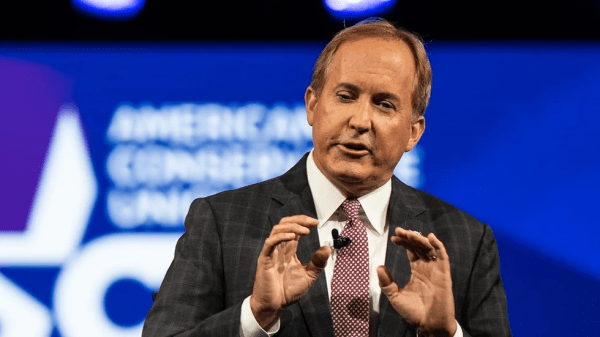
Texas Attorney General Ken Paxton is threatening legal action against the city of Dallas and the State Fair of Texas after the fair announced a new policy prohibiting guns on the fairgrounds this year.
Why it matters: The updated safety protocols come in response to a shooting incident last year that left three people injured. Previously, the fair allowed visitors with a valid handgun license to carry firearms. The shooter involved in last year’s incident did not have a license.
The latest: The State Fair of Texas recently announced new security measures, including a ban on all firearms except those carried by licensed peace officers. Paxton responded by sending a letter to interim city manager Kim Bizor Tolbert, claiming that the gun ban violates state law because the fairgrounds are city-owned. He warned that if the issue isn’t resolved within 15 days, he will take the matter to court.
The big picture: Texas has some of the most permissive gun laws in the nation, allowing most adults over 21 to carry firearms without a license. While schools and courtrooms are exceptions, private entities, like amusement parks, can impose their own restrictions.
Friction point: Fair Park, where the State Fair is held, is owned by the city of Dallas, but the fair leases the grounds during the event. Paxton argues that because the property is city-owned, the State Fair cannot legally ban firearms. However, fair officials contend that, as a private entity, they have the right to enforce their own safety policies.
State of play: The State Fair of Texas is a major event, drawing over 2.3 million attendees last year. In response to safety concerns, the fair has implemented measures like weapons detection systems at entry points and restrictions on unaccompanied minors after 5 p.m.
Context: More than 70 Republican state legislators have signed a petition urging the fair to reconsider its gun ban, arguing that gun-free zones are less safe. Fair officials, however, maintain that banning guns is in line with practices at other large gatherings and is necessary to ensure a safe, family-friendly environment.
What they’re saying: In a statement, fair officials acknowledged the significance of the issue for many Texans but stood by their decision, emphasizing their commitment to safety.
Zoom in: Cameron Alexander Turner, the 22-year-old accused shooter from last year’s incident, has been indicted on multiple felony charges, including aggravated assault with a deadly weapon. His trial is scheduled for October.
What’s next: Paxton has given Dallas 15 days to change the ban, threatening civil penalties of $1,000 to $1,500 per day if they do not comply. The State Fair is scheduled to run from September 27 to October 20.
According to the Human Rights Campaign, Texas is responsible for over 10% of all trans murder victims.
Dylan Gurley, a young transgender woman who was just shy of her 21st birthday on August 18, was tragically killed in Texas on July 23.
As reported by the Fort Worth Star-Telegram, police discovered Gurley with “traumatic injuries” at a residence in Denton, Texas around 11 p.m. that evening. She was rushed to the Medical City Denton hospital, where she succumbed to her injuries about 40 minutes later. According to the Tarrant County Medical Examiner’s Office, Gurley’s official cause of death was “blunt and sharp force injuries with strangulation,” indicating that she may have been beaten, cut, and strangled.
Few details have emerged about her death, other than that she was unhoused at the time, according to the Human Rights Campaign (HRC). A suspect has yet to be identified. An online obituary states that Gurley was born in Arlington, Texas, and is survived by her parents, step-parents, grandparents, and siblings. “Many other family members and friends loved Dylan,” the obituary reads.
Dylan’s sister, Senica Ciarallo, has launched a GoFundMe campaign to help raise funds “to give Dylan the memorial she wanted and deserved.” The money will be used for urns, bracelets, and necklaces to hold her ashes for those closest to Gurley. The family is also planning a special event to honor what would have been her 21st birthday.
In Austin, Texas, Joshua Ybarra, a gay man, was attacked by a group of men late at night while walking to his Uber. The assailants hurled an anti-gay slur at him during the assault. Ybarra, who was wearing a purse and black-heeled boots, expressed his frustration to KXAN, saying, “I believe they should all face charges. It started with one person, but they all joined in, especially as I was being beaten and the slurs were being shouted.”
Ybarra was repeatedly punched and beaten while being called a “gay f*g” until he lost consciousness and collapsed on the ground.
One of Ybarra’s friends tried to protect him during the assault, but she ended up being attacked herself. “She threw her body over me, and I just remember seeing them punch the back of her head,” Ybarra recounted. “I was just screaming at her, saying, ‘You need to move.’”
The Austin Police Department considers this incident a hate crime. Three University of Texas Delta Sigma Phi fraternity members—Alex Saenz, Bhavya Kaushik, and Sergio Martinez, the vice president of the Eta Chapter—were arrested after turning themselves in. An additional woman, believed to have been involved, has a warrant out for her arrest.
The defendants’ attorneys claim that a friend of Ybarra instigated the attack and assert there is evidence that will exonerate their clients, including security footage supporting their claims. Saenz, the only one charged with a hate crime, maintains that he did not use the slur.
Prosecuting hate crimes in Texas is notoriously difficult. Out of over 6,000 reported hate crimes since 2001, only 41 have been charged as such, with most not making it to court due to rare prosecutions.
Activists and lawmakers are pushing back against this lack of enforcement. “Where you live determines whether you’re going to get the help that you need. For many rural and suburban LGBTQ Texans, there is often no local recourse for having these crimes taken seriously,” Equality Texas Executive Director Ricardo Martinez told KXAN. “We need lawmakers to stand up and protect our community because violence, like what happened to Josh, falls squarely on their shoulders.”
Ybarra has yet to be cleared to return to work after the attack. Despite the trauma, he finds solace in a framed drawing from his niece, which quotes Ralph Waldo Emerson: “To be yourself in a world constantly trying to make you something else is the greatest accomplishment.” Ybarra reflected, “It’s funny because I always look at that, and I’m trying to remind myself to be my true, authentic self regardless of everything that has happened.”
In Austin, the Texas Supreme Court has upheld the state’s ban on gender-affirming care for minors, dismissing arguments from parents that it infringes on their rights to seek medical care for their transgender children.
In a decisive 8-1 ruling issued Friday, the all-Republican court upheld a law effective since September 1, 2023, making Texas the largest of over 25 states to enact laws restricting or banning gender-affirming medical care for transgender minors. Many of these states are facing legal challenges, with the U.S. Supreme Court recently agreeing to hear an appeal concerning similar bans in Tennessee.
The Texas law prohibits transgender minors from accessing hormone therapies, puberty blockers, and transition surgeries, despite medical experts’ consensus that such surgeries are rarely performed on children. Children already undergoing banned treatments must cease them in a medically appropriate manner.
“The Legislature made a permissible, rational policy choice to limit available medical procedures for children, given the nascent understanding of gender dysphoria and its treatments,” the ruling stated, defending the legislative authority to regulate medical practice.
Lambda Legal, a civil rights organization for LGBTQ+ individuals, criticized the decision, asserting that it undermines parental and medical decision-making in favor of political interference.
The lawsuit against the Texas law argued it severely harms transgender teens by denying them crucial medical care recommended by physicians and parents. While a lower court had deemed the law unconstitutional, it remained in effect pending the state Supreme Court’s decision.
This legislative trend reflects broader challenges to transgender rights, extending from healthcare to participation in sports and access to public facilities. As restrictions increase, families often face the burden of seeking necessary care out of state due to local shortages.
The Texas law, signed by Republican Governor Greg Abbott, has sparked significant controversy and activism, including protests during legislative sessions by transgender rights advocates.
Medical organizations such as the American Medical Association and the American Academy of Pediatrics support gender-affirming care for youths, emphasizing its role in alleviating gender dysphoria and promoting mental well-being. Despite opposition citing concerns about irreversible decisions, medical experts emphasize the benefits supported by research and clinical experience.
The church reportedly delayed a police investigation and then harassed a member after her child was sexually assaulted.
Gateway Church, an evangelical megachurch located in Southlake, Texas, has reached a legal settlement concerning allegations that five church pastors and a youth leader covered up a child sexual assault perpetrated by another church member. The pastors reportedly failed to report the assault to law enforcement or the child’s mother, delayed investigating the incident, and subjected both the victim and her mother — devoted church members — to punitive measures.
This settlement follows the recent resignation of Robert Morris, the church’s founder and a former member of Donald Trump’s evangelical executive advisory board. Morris stepped down shortly after publicly acknowledging that he had molested a 12-year-old girl during his tenure as a 20-year-old pastor.
In August 2020, an unnamed mother filed a recently settled lawsuit on behalf of her daughter. According to The Christian Post, both frequently attended worship services, church-sponsored functions, and participated in various ministries. The alleged sexual assault by an unnamed church member took place around March 14, 2018, at the member’s residence.
The recently settled lawsuit, filed in August 2020 by an unnamed mother on behalf of her daughter, detailed concerning allegations involving Church youth leader Logan Edwards. Edwards reportedly learned of the assault from conversations with the alleged assaulter and two other young church members, as stated in the lawsuit. Despite this knowledge, five church pastors — Kelly Jones, Rebecca Wilson, Samantha Golden, Mondo Davis, and Sion Alford — allegedly took no legal action. They reportedly spoke multiple times with the accused member and their parents but did not file a formal complaint with child protective or law enforcement agencies, nor did they inform the victim’s mother about the alleged assault.
“When the mother discovered the assault, she reported it to the Haltom City Police Department,” the lawsuit stated. Subsequently, the pastors allegedly engaged in efforts to conceal, distort, and discredit the assault accusations during the police investigation. This purported concealment, according to the lawsuit, allowed significant evidence of the alleged criminal assault to degrade, hampering law enforcement’s ability to conduct an accurate investigation.
Additionally, church leaders purportedly encouraged Gateway members to ostracize the minor’s mother and removed her from ministries where she had served diligently. As a result, the mother and daughter reportedly experienced profound shame, embarrassment, and emotional distress.
Although the lawsuit sought damages ranging from $200,000 to $5,000,000, the church settled for an undisclosed amount on April 18. The church emphasized it admitted no liability and settled solely to “buy peace,” according to a public statement.
Previously, the church reportedly settled a 2016 lawsuit involving allegations that church leaders destroyed video footage showing a boy sexually assaulting another in the church’s child care program, as reported by WFAA.
Last month, Gateway Church’s founder, Robert Morris, publicly admitted to molesting a 12-year-old girl on Christmas night in 1982 when he was 20 years old and staying with her family. Morris, who was married with a young son at the time of the molestation, is now 62 years old. He resigned shortly after his admission garnered national attention.
The COVID-19 pandemic in 2020 sparked a significant wave of migration among Americans. Many residents of costly and densely populated areas saw an opportunity. With the shift to remote work and a growing preference for greater physical distance between neighbors, urban dwellers were able to relocate from places like New York and California to states such as Texas and Florida.
During the pandemic, Texas ranked second only to Florida in terms of states with the highest net migration rates. However, four years later, many who relocated to the Lone Star State are reconsidering their decision to uproot and move their families there.
I’ve observed several reasons why some individuals who moved to Texas post-pandemic might be experiencing regrets,” said Jolean Olson, a veteran in the Texas housing market at Olson Home Buyers. “While Texas offers numerous benefits, such as a lower cost of living, no state income tax, and a thriving job market, there are also challenges and downsides that have become apparent to some new residents.”
Next point: Here are some reasons people may regret moving to Texas post-pandemic.
Extreme Weather Conditions
“Texas has earned a reputation for its scorching summers and frequent severe weather events, including hurricanes, tornadoes, and flash floods, among others.
“Many new residents may not have anticipated the intensity of Texas summers, where temperatures often surpass 100 degrees Fahrenheit,” Olson remarked.
Moreover, Olson highlighted the impact of the severe winter storm that struck Texas in early 2021. This event led to shortages of essential resources like water and widespread power outages across the state. According to Olson, the storm underscored “the state’s susceptibility to extreme weather and its inadequate infrastructure to manage such emergencies.”
Infrastructure and Public Services
“The surge of new residents has strained Texas’s infrastructure and public services,” Olson explained.
Cities such as Austin, Dallas, and Houston have experienced escalating traffic congestion on both highways and local roads, leading to longer commute times and heightened frustration for drivers.
“Compared to other states, public transportation options in Texas are limited, which can pose a significant adjustment for individuals accustomed to more extensive transit networks,” Olson added.
Housing Market Pressures
“Although Texas has long been recognized for its affordable housing, the pandemic-driven influx has sharply increased home prices and rental rates,” Olson noted. “Many newcomers who anticipated affordable housing options are now contending with a competitive and costly market.”
Olson highlighted how the heightened housing market activity has led to more intense bidding wars, rising property taxes, and, in some cases, “disappointment for those unable to secure their desired homes within their budget.”
Higher Property Taxes
Purchasing a house is just the beginning of the challenges for property owners in Texas. Property taxes, as highlighted in WalletHub’s 2024 report, rank Texas seventh-highest in the nation. For new residents, this can come as a surprise, potentially offsetting the savings from Texas’s lack of state income tax. This scenario is especially pronounced for those relocating from states with significantly lower average property tax rates.
Cultural and Lifestyle Adjustments
Texas boasts a unique cultural identity that can be both captivating and challenging for newcomers to acclimate to.
“Texas has a distinct cultural identity that may not appeal to everyone,” Olson emphasized, noting that “the political atmosphere leans more conservative compared to states such as California or New York, which can be a substantial shift for individuals with differing perspectives.”
Furthermore, Olson pointed out that life in Texas, especially outside its major cities, “tends to be more suburban and less cosmopolitan, which might not meet the expectations of those coming from more urbanized areas.”
Employment Market Realities
Securing a suitable job that aligns with one’s skills and provides a sufficient income for a family can be challenging in Texas, despite the state’s reputation for a robust and thriving job market.
“Many newcomers have discovered that the available job opportunities don’t always align with their skill sets or salary expectations,” noted Olson. “Competition for higher-paying positions has also intensified due to the influx of new residents, making it more difficult for some to land their desired roles.”
Education System Concerns
According to Olson, the quality of public education in Texas varies significantly. “While some districts excel, others suffer from underfunding and lower educational outcomes,” she noted.
Depending on the location within Texas, the school system can be a point of disappointment. “Families moving here with school-aged children might find the public education options in their chosen communities lacking, which can lead to added stress and even relocation within the state,” Olson explained.
Overall, while Texas has many positives, Olson emphasized the importance of considering various factors before deciding to move there. “Texas offers numerous advantages, but potential residents should carefully weigh these against the challenges,” she advised. “Understanding the complete picture of life in Texas, beyond the initial allure, is crucial for making an informed decision.”
“As a real estate professional, I always recommend thorough research and ideally visiting the areas under consideration to ensure they align with your expectations and needs,” Olson concluded.
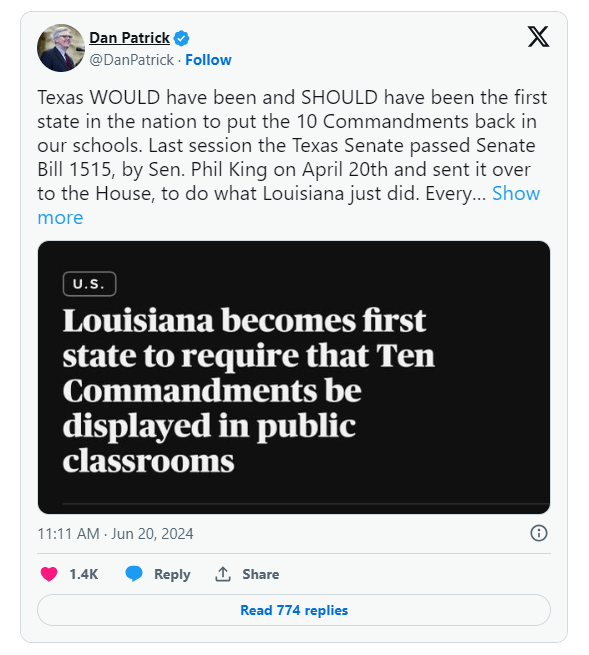
On X, Lt. Gov. Dan Patrick directly called out Texas House Speaker Dade Phelan for killing the bill “by letting it languish in committee for a month.”
AUSTIN, Texas — Following reports that Louisiana might become the first state to mandate the display of the Ten Commandments in every public school classroom, Texas Lieutenant Governor Dan Patrick criticized Texas House Speaker Dade Phelan for allowing similar legislation to stall in committee.
On Thursday, Lt. Governor Patrick made multiple posts on X, formerly known as Twitter, calling out House Speaker Phelan.
“Texas WOULD have been and SHOULD have been the first state in the nation to put the 10 Commandments back in our schools,” Patrick said in a post on X. “But, SPEAKER Dade Phelan killed the bill by letting it languish in committee for a month assuring it would never have time for a vote on the floor.”
Senate Bill 1515, which failed to advance from committee in the last legislative session, aimed to mandate the display of the Ten Commandments in Texas public elementary and secondary school classrooms.
In his post, Patrick pledged to reintroduce the bill in the Senate during the next session.
In another X post, the lieutenant governor persisted in attributing the demise of Senate Bill 1396, which proposed a “period of prayer and Bible reading” in Texas public schools, to House Speaker Phelan.
Texas and Kansas are spearheading separate multi-state lawsuits contesting a recent ATF regulation aimed at criminalizing private firearm sales. They argue that the rule is unlawful, unconstitutional, and runs counter to congressional intent, Second Amendment rights, and principles of due process.
On Wednesday, Texas Attorney General Ken Paxton and Kansas Attorney General Kris Kobach revealed that they are spearheading two distinct multi-state lawsuits against a recent regulation issued by the Bureau of Alcohol, Tobacco, Firearms and Explosives. This rule aims to criminalize private firearm sales.
The attorneys general contend that the rule, released on April 19, is both illegal and unconstitutional. They assert that it significantly broadens the definition of a firearm dealer and has the potential to unjustly cast hundreds of thousands of law-abiding gun owners as presumed guilty for engaging in private sales and trades of firearms.
Paxton declared at a press conference held at a Frisco, Texas gun range, “Joe Biden is attempting to alter this through regulatory redefinition, executive directives, and loopholes crafted to circumvent our Constitution. He has shown utter disrespect and disregard for the democratic process.”
In the Northern District of Texas, Texas is filing its lawsuit, while Kansas is spearheading a legal action in the Eastern District of Arkansas. Both lawsuits contend that the ATF rule breaches the statutory definition of a firearms dealer as established by Congress, encroaches upon Second Amendment rights, and is sufficiently ambiguous to contravene due process.
The involvement of school board trustees in apologizing suggests a recognition of responsibility for the incident involving Evangelische Omroep (EO) filming students. Their apologies likely aim to address any concerns or distress caused by the filming and to reassure the community that steps will be taken to prevent similar incidents in the future. The apologies may also reflect a commitment to transparency and accountability in addressing the situation.
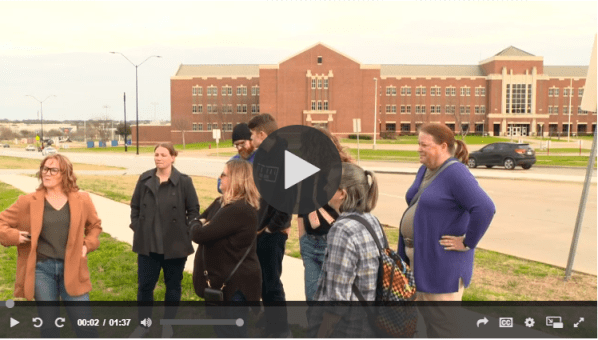
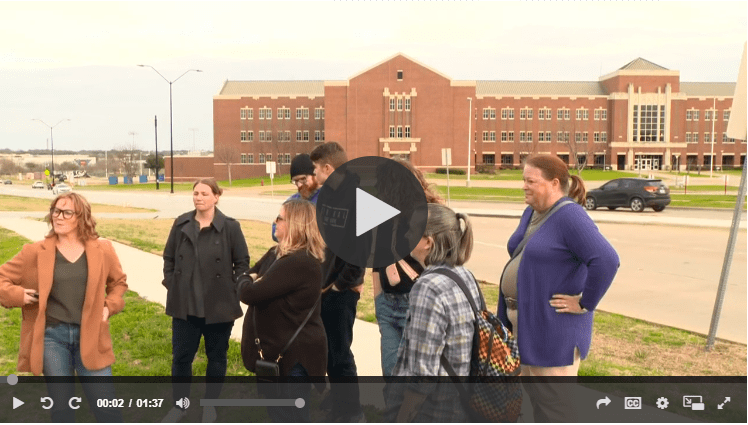
The gathering of parents near Keller ISD’s Central High School likely signifies a unified response to a specific issue or concern within the school district. Their anger and frustration suggest that they feel strongly about the matter and are seeking to voice their discontent publicly. This kind of collective action often serves as a way for community members to express their grievances and advocate for change within educational institutions.
“I’m livid,” said Laney Hawes, a parent whose child attends Central HS. “Our rights and our kids rights have been violated.”
The district’s confirmation of events on February 9 likely brought to light an incident or situation that has caused significant distress among the parents. The specificity of the date suggests that something notable occurred on that day, prompting the parents’ reaction.
The involvement of school board trustees in bringing an Evangelical-based film crew into the high school without obtaining consent from students and parents is likely the source of the anger and frustration expressed by the group of parents near Keller ISD’s Central High School. This breach of privacy and potential violation of consent rights could have serious implications for the trustees involved and has understandably elicited strong reactions from the community.
It seems there might be some confusion. Evangelische Omroep (EO) is indeed a Netherlands-based Evangelical broadcast television network, but there is no known documentary titled “God, Jesus, Trump” produced by EO. It’s possible that another production company or network created such a documentary. However, it’s essential to verify the accuracy of the information before drawing conclusions about the involvement of EO or any other organization in specific documentary productions.
“We don’t want politics in our kids schools,” Hawes said. “If kids wanna bring God into schools, beautiful, but it cannot be the administration. There is a separation of church and state.”
Thank you for providing additional context. Elliot Mullaney’s eyewitness account sheds light on the situation at Central High School.
“It’s an invasion of privacy,” said Mullaney. “I think that it’ll be used to spread hate and spread untrue opinions.”
It’s crucial to address such incidents transparently and responsibly, especially given the concerns raised by parents and students.
alker apologized in a post, saying: “I recently participated in a foreign documentary focused on public schools in Texas. Some filming took place while students were present. I take safety and privacy of our students seriously. I apologize for allowing students to be captured on film.”
Young, who said he “briefly assisted my colleague in an interview about Texas public schools,” said in a Facebook post: “I regret if any students were captured on film. My understanding is the District has been assured by the crew that no student will appear in the footage. The safety and privacy of our students is of utmost importance to me.”
Parents rightfully expect accountability from school officials, particularly when their actions compromise student privacy and well-being.
The absence of the principal on the day of the incident underscores the need for clear protocols and supervision to ensure that such breaches of student privacy do not occur in the future.
“If they’re bypassing certain rules, it’s time that they need to resign,” Mullaney said.
Friday evening, Keller ISD Superintendent Dr. Tracy Johnson sent a letter to Central HS parents. In the letter, Johnson confirmed that a production company from the Netherlands visited the campus to film an interview with trustees Walker and Young. Johnson confirmed the crew toured the school and talked to some students and employees.
According to Johnson, “the district and the board were not aware of the scheduled interview.”
Despite district officials’ saying they weren’t aware of the scheduled interview, the film crew said in a statement to WFAA that it “obtained permission to record at the school in advance.”
“The Evangelical Broadcasting, a channel that broadcasts on National Television in the Netherlands, has recorded at Central High School, part of Keller ISD, for a program called ‘God, Jesus, Trump!’. This program is a neutral journalistic program that examines Christian culture in the USA,” the statement from the film crew read. “The film crew obtained permission to record at the school in advance. The film crew went through all standard registration and administration procedures upon entering the building, and the crew was warmly welcomed by the staff that day. As stated prior, all children will be unrecognizable, and all ethical and journalistic guidelines were applied during the recording and will be applied in the process of making this program.”
Johnson’s letter said the matter is under review and that the district is “taking proactive steps to safeguard the privacy and security of our students. KISD administrators have been in contact with the film company who have assured us that no students or teachers would be visible in the video they are producing.”
Hawes said she spoke about the incident with the school’s principal, Liz Russo.
“Russo apologized. She let me know that policies were broken and this wasn’t done with permission, and it would’ve never been allowed,” Hawes said.
It’s concerning that the school board members and the principal did not respond to inquiries about the incident. Transparency and accountability are essential in addressing such breaches of protocol and maintaining trust within the school community.
It’s distressing to hear that a parent’s request for privacy was seemingly disregarded by the district, especially considering the circumstances they described. Respecting the privacy and safety of students should be a top priority for schools, and any failure to uphold such requests erodes trust and can have serious consequences for individuals’ well-being.
“It’s sickening, the parent said. “It’s very concerning. Now she’s being exposed. “It’s already tough enough trying to make sure our kids are safe, and if you can’t trust the people in the school building are gonna keep your kids safe, who can?”
It’s understandable that parents would demand accountability from the trustees involved and seek to address the situation through official channels such as filing grievances with the district. Trust in school leadership is crucial for maintaining a safe and respectful learning environment, and actions that undermine this trust must be addressed promptly and transparently.
Texas Attorney General Ken Paxton has once more sought medical records from a transgender healthcare provider in another state, even though he lacks legal jurisdiction.
Without legal jurisdiction, Texas Attorney General Ken Paxton has once more sought medical records from a transgender healthcare provider in another state.
The recent request was directed to QueerMed, a telehealth clinic in Georgia that caters to patients nationwide. Dr. Izzy Lowell, the founder of the organization, verified Paxton’s inquiry to the Houston Chronicle but refrained from providing details about the subsequent actions the group plans to take in response.
“I’m not breaking any laws,” she told the outlet. “We are doing everything by the book according to state law.”
This marks the second identified inquiry from Paxton, who previously demanded in November that the Seattle Children’s Hospital furnish information related to the count of Texas minors undergoing gender-affirming care at the clinic, their diagnoses, prescribed medications, and even guidance on gradually discontinuing such treatments.
In December, a judge in Washington prevented the hospital from disclosing the records, citing the state’s recently enacted shield laws that protect patients from civil or criminal legal actions for procedures prohibited in other states, such as gender-affirming care or abortions. Following this, Seattle Children’s Hospital filed a lawsuit against Paxton, urging him to halt the investigation.
Paxton has refrained from making public comments on the Seattle case or the inquiry in Georgia. His office has opted not to disclose details about other ongoing inquiries involving transgender health providers.
Texas is among 23 states that have implemented prohibitions on gender-affirming care for minors, contrary to abundant medical evidence. Organizations such as the American Medical Association, the American Psychiatric Association, the American Academy of Pediatrics, the American Academy of Child & Adolescent Psychiatry, the World Medical Association, and the World Health Organization collectively endorse the evidence-based and medically necessary nature of gender-affirming care for both adults and minors.
In his capacity as the attorney general of Texas, Paxton lacks jurisdiction over healthcare provided in other states, regardless of the patients’ place of residence. Despite Paxton’s request, Lowell affirmed that she is “not going to stop or be intimidated.”
“The unfairness and blatant discrimination and harassment and persecution of trans people in this country right now is outrageous, and I’m only becoming more and more passionate about it as things have gotten worse,” she continued.












 fleeredstates.blog
You must be logged in to post a comment.