Kyle Rittenhouse launches nonprofit with far-right Texans as he ramps up political engagement in the state

This blog originally appeared at WFAA ABC.

The activist known for shooting Black Lives Matter protesters in 2020 has created the Rittenhouse Foundation, which promises to fight for gun rights.
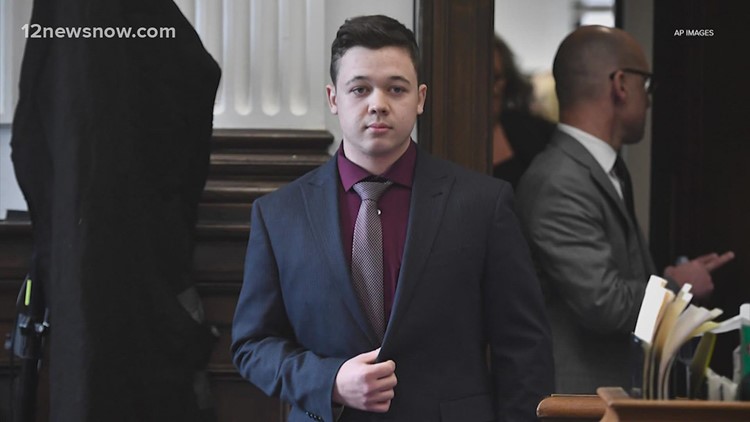
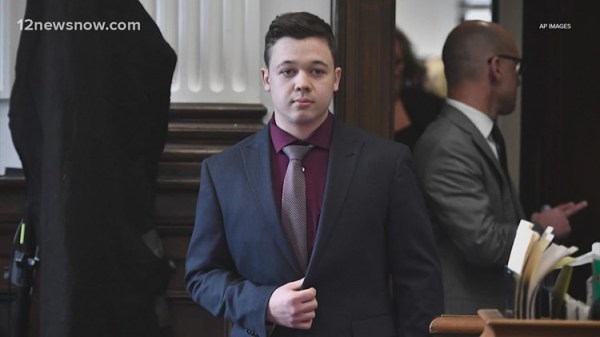
TEXAS, USA — Kyle Rittenhouse, the right-wing activist who was famously acquitted of killing two Black Lives Matter protesters in 2020, is stepping up his involvement in Texas politics.

This article originally appeared in The Texas Tribune.

Already this year, he’s rallied with a Texas secessionist movement leader, endorsed ultraconservative midterm candidates, and railed against Texas gun control legislation and the impeachment of Attorney General Ken Paxton.

Now, Rittenhouse is creating a nonprofit in the state — with help from well-connected, far-right political actors.

In a July 23 filing with the Texas secretary of state’s office, he described “The Rittenhouse Foundation” as a nonprofit that “protects human and civil rights secured by law, including an individual’s inalienable right to bear arms” and “ensures the Second Amendment is preserved through education and legal assistance.”

The foundation’s directors are Rittenhouse, Texas Gun Rights President Chris McNutt and Shelby Griesinger, treasurer for Defend Texas Liberty PAC, a key financier of far-right candidates in the state. The foundation’s registered agent is the law firm of Tony McDonald, who has for years represented Empower Texans and other deep-red organizations.

Defend Texas Liberty and Empower Texans have received tens of millions of dollars from a trio of West Texas oil tycoons — Tim Dunn and brothers Farris and Dan Wilks — who have for decades funded campaigns, nonprofits and movements to promote their ultraconservative religious and social views.

McDonald declined an interview request Tuesday. Other foundation officials could not be reached for comment.

RELATED: Kyle Rittenhouse found not guilty on all charges in Kenosha shootings

Rittenhouse moved to Texas last year after being acquitted of homicide charges in the fatal shooting of two people at a 2020 protest in Kenosha, Wisconsin. He’s since steadily ramped up his political involvement in Texas, often railing against the media, “cancel culture” and gun control groups.

In January, Rittenhouse appeared at a Conroe “rally against censorship” with Daniel Miller, president of the Texas Nationalist Movement, which advocates for Texas to secede from the United States. The event drew national media attention after a Conroe brewery said it was inundated with threats and harassment after pulling out as the event’s host venue.

In May, Rittenhouse joined Texas Gun Rights in opposing a House bill that would have raised the minimum age to purchase semi-automatic rifles from 18 to 21. And he’s been active on social media, condemning the Texas House impeachment of Paxton and endorsing pro-Second Amendment, ultraconservative candidates who were also backed by groups affiliated with Dunn and the Wilks brothers.

Rittenhouse has endorsed Andy Hopper, a primary challenger to state Rep. Lynn Stucky, R-Denton. Hopper, who came close to unseating Stucky in a runoff in 2022, had the support of Defend Texas Liberty in that primary and is expected to have it again.

Rittenhouse more recently backed Brandon Herrera, a gun rights activist and YouTube star known as “The AK Guy” who is running against U.S. Rep. Tony Gonzales, R-San Antonio. Gonzales represents the district where the 2022 Uvalde school shooting took place, and he was the only Texas Republican in the U.S. House to vote for a bipartisan gun law afterward.

Last year, Rittenhouse announced plans to attend Texas A&M University, only to walk back the claim after the university said he had not been accepted. Rittenhouse, an Illinois native, later said he planned to attend Blinn College, a two-year school in Brenham. It’s unclear if Rittenhouse is attending the school, which said he had not enrolled in classes after he announced his intention to go there.

Rittenhouse’s foray into Texas politics comes as Republicans continue efforts to reach out to younger Americans who are increasingly supportive of liberal policies. On Monday, The Texas Tribune reported on a new company, Influenceable, with ties to Dunn that has been quietly recruiting Gen Z social media influencers to do undisclosed political promotions.

Click here to see full blog: https://www.wfaa.com/article/news/local/texas/kyle-rittenhouse-launches-nonprofit-with-far-right-texans/503-1abab3b6-dd25-45f5-a4b8-927ed6a4d166?s=09


A Light in the Desert | | Santa Fe Reporter

This blog originally appeared at Santa Fe Reporter.

As surrounding states pass laws limiting access to gender-affirming services, New Mexico provides refuge

The phone began ringing during the initial week of June, to be precise, on June 3rd, just one day after Texas Governor Greg Abbott signed a prohibition on gender-affirming care for minors into law.

On that particular day, Marshall Martinez, the Executive Director of Equality New Mexico, mentioned that he received a minimum of five phone calls from individuals residing across the state border. In each case, they posed the identical query: “I’m relocating my family to New Mexico; what essential information should I be aware of?”

The phone calls have persisted throughout the summer.

Despite legal actions taken by families, physicians, and the American Civil Liberties Union (ACLU), and a temporary pause granted by a state district judge, the Texas Supreme Court reversed that ruling last week, and the law officially came into effect on Friday, September 1st.

Texas has now become one of over 20 states that have implemented legislation prohibiting or restricting gender-affirming care for minors. Some other states have adjusted their policies to create obstacles and discrimination against LGBTQ+ individuals. Given this situation, New Mexico is emerging as a sanctuary due to the recent enactment of laws that uphold rights and care within the state, particularly in response to the U.S. Supreme Court’s reversal of Roe v. Wade in June 2022.

The decision initiated a process of unraveling abortion rights nationwide, along with access to gender-affirming healthcare.

The altered legal landscape in New Mexico has led advocates and healthcare providers in the state to prepare for an increase in out-of-state visitors, potentially even new residents.

However, leaders within well-established resource organizations caution that the limited resources in other states could place excessive strain on the available services here.

Adrien Lawyer, co-director of the Transgender Resource Center of New Mexico, says the state has begun to experience “a very specific pressure” on providers and resources as a result of what is happening in Texas.

“I think it just goes to show that you can’t control these things this way,” Lawyer tells SFR. “Folks are still going to seek this care, but then it just puts a strain on systems that are already strained in a chronically under-resourced state like New Mexico. It just hurts everybody.”

Click here to see full blog: https://www.sfreporter.com/news/coverstories/2023/09/06/a-light-in-the-desert/

With no opposition in the room, a rural Texas county makes traveling for an abortion on its roads illegal

This blog originally appeared at Click 2 Houston.

Cochran County, situated along the border with New Mexico, becomes one of the few rural Texas counties to enact such ordinances. Advocates for abortion rights argue that these new policies may not hold up legally.

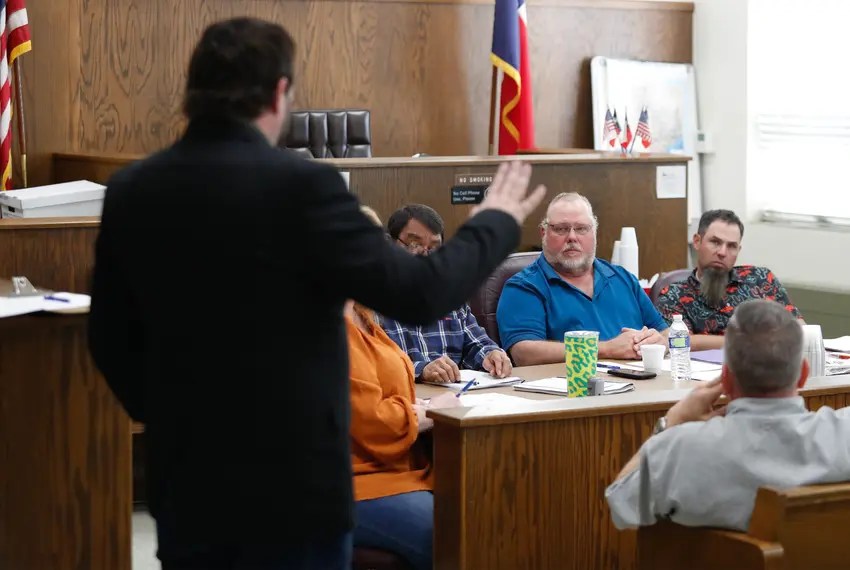
Mark Lee Dickson spoke at the Cochran County Commissioners meeting Thursday morning, Sept. 28. Dickson, an anti-abortion advocate, supports a new policy that forbids using county roads to seek an abortion.

MORTON — Commissioners in this rural Texas county that borders New Mexico on Thursday gave their unanimous blessing to a legally dubious policy that effectively outlaws travel on its local roads to seek an abortion.

In Cochran County, located approximately one hour west of Lubbock, the five-member panel sided with Mark Lee Dickson, the founder of the ‘sanctuary cities’ initiative. They concurred that the ordinance was necessary to complement the efforts initiated by the state’s nearly complete ban, commonly known as Senate Bill 8.

“This ordinance would close some of the loopholes that exist in this fight,” Dickson said. “It’s saying the roads, and the airport, could not be used for abortion trafficking into New Mexico.”

County Commissioner Eric Silhan introduced the ordinance to the county’s governing body, saying it’s a way to stand for “the people who can’t speak for themselves.”

Inside the county commissioners’ chambers, there were over a dozen individuals, all seemingly in favor of the ordinance. Judy Deavours, the former mayor of the nearby town of Whiteface, voiced her support. In 2020, while Deavours was in office, Whiteface became one of the first towns in the High Plains to pass the sanctuary city ordinance.

“We have to finish what we started,” Deavours said. “This is just wrapping it up, and if you vote for this, we’ll have what we need.”

The recently implemented travel ordinance in Cochran County establishes consequences for individuals knowingly using the county’s roads to transport someone seeking an abortion. Importantly, it specifies that the mother involved in this situation should not face prosecution or penalties under any circumstances. Similar to the sanctuary city ordinance, enforcement of this act would rely on private civil lawsuits.

Cochran County now joins a limited number of rural Texas counties adopting such ordinances. Notably, it’s the first county situated adjacent to a state where abortion remains legal. Critics, including abortion-rights advocates and legal experts, argue that these policies are unenforceable and unconstitutional.

“This is an effort, one by one by one, to create a statewide ban against travel to other states, literally creating a reproductive prison in the state of Texas,” Wendy Davis, a former state senator who is now a senior adviser at Planned Parenthood Texas Votes, said on Wednesday.

Texas law that restricted drag shows declared unconstitutional – ABC News

This blog originally appeared at ABC News.

It is the second law of its kind to be declared unconstitutional.

A federal judge has issued a permanent injunction against a Texas bill that restricted “sexually oriented performances” and has been criticized for limiting public drag performances in the state.

U.S. District Judge David Hittner said the law is an “unconstitutional restriction on speech” and “violates the First Amendment as incorporated to Texas by the Fourteenth Amendment of the United States Constitution.”

A similar law in Tennessee, the first state to restrict drag performances in public, was also blocked and ruled unconstitutional.

The law was set to go into effect on Friday, Sept. 1, but a preliminary injunction halted its enforcement.

“LGBTQIA+ Texans, venue owners, performers, and our allies all came together to uphold free expression in our state — and we won,” the ACLU of Texas said in a social media post. “This work isn’t done but for now we celebrate. Long live Texas drag!”

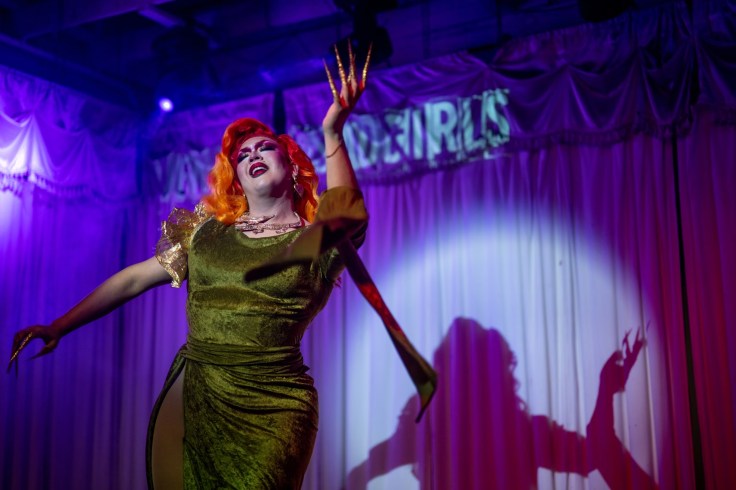
A Drag Queen performs during a show at the Swan Dive nightclub on March 20, 2023 in Austin, Texas.

The Texas law doesn’t specifically mention drag shows, but Lt. Gov. Dan Patrick said the bill would prohibit “sexualized performances and drag shows in the presence of a minor.”

The ACLU of Texas represented local LGBTQ groups, businesses and a performer in a lawsuit against state officials.

The “exhibition or representation, actual or simulated, of male or female genitals in a lewd state” as well as “the exhibition of sexual gesticulations using accessories or prosthetics that exaggerate male or female sexual characteristics” would have been restricted under the law.

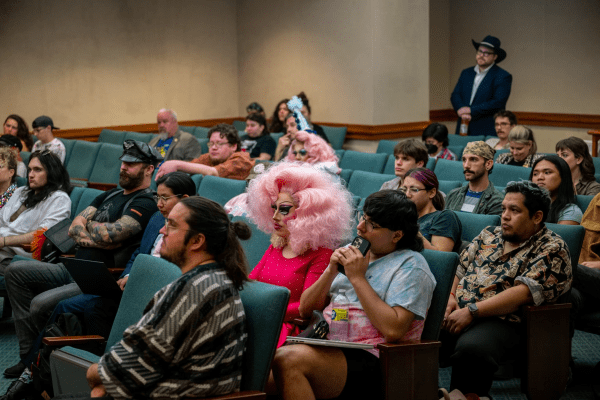
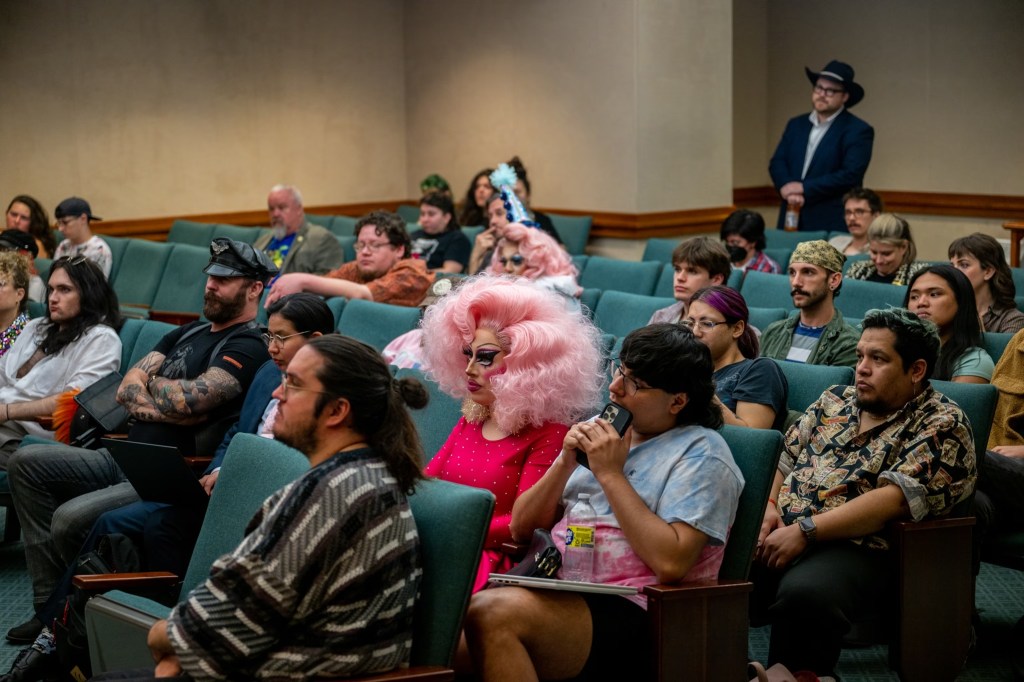
Members of the Drag Show community listen in during a meeting at the Texas State Capitol on March 23, 2023 in Austin, Texas.

Performances would be restricted from public properties or in the presence of someone under the age of 18.

Under the law, businesses would have faced a $10,000 fine for hosting such a performance. Performers could be charged with a Class A misdemeanor, which is punishable by up to one year in jail and/or a fine of $4,000.

Critics of the bill said traveling Broadway plays, theater performances, professional cheerleading routines and drag shows would have been impacted.

ABC News: Judge halts drag show restrictions from taking effect in Texas

The ACLU of Texas represented local LGBTQ groups, businesses and a performer in a lawsuit against state officials who would enforce the restrictions.


Brian Klosterboer, an attorney affiliated with the ACLU of Texas, expressed his concerns about the Texas Drag Ban, emphasizing its extensive impact on various forms of free expression in the state.

He further asserted, “This legislation directly contradicts the principles of the First Amendment. It is unacceptable for any entertainer to face imprisonment simply because the government disapproves of their speech. We are urging the Court to prevent this infringement on the constitutional rights of all Texans.”

Earlier this week, business proprietors and a drag performer provided testimony before U.S. District Judge David Hittner.

The legislation aims to limit displays or portrayals, whether actual or simulated, of male or female genitalia in a suggestive manner. It also encompasses the presentation of sexual gestures employing accessories or prosthetics that accentuate male or female sexual attributes, potentially affecting the practice of cross-dressing in public performances, as outlined in the bill.

Click here to see full blog: https://abcnews.go.com/US/judge-halts-drag-show-restrictions-taking-effect-texas/story?id=102673946

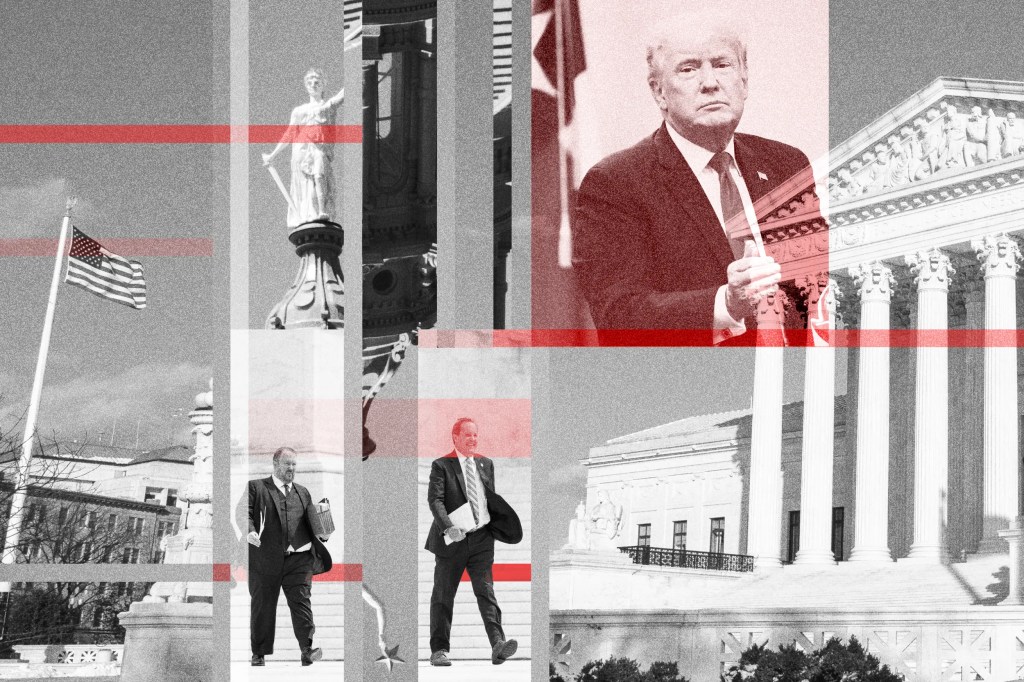
Part 3: Under Trump, Texas’ foot soldiers became federal judges, securing a conservative stronghold in the courts

This blog originally appeared at The Texas Tribune.

A federal judiciary full of ideological allies is helping Texas block Democratic priorities and advance right-wing legal doctrines. But the bigger prize is conservative control of the rule of law itself.

Righting the Rule of Law

For decades, an increasingly powerful movement of conservative lawyers, born from the Texas Office of the Attorney General, had been shouldering its way into the federal judiciary, filing lawsuit after lawsuit in an attempt to slowly reshape the nation’s jurisprudence to its liking.

The election of President Donald Trump swung the doors wide open and ushered them inside.

Trump entered office with more judicial vacancies than almost any president in U.S. history, and a resolute commitment to fill those openings with conservative loyalists. Texas, the workhorse of the movement, was rewarded especially richly, with more new federal district and appellate judges appointed than any other state.

Many of these new appointees shared a strikingly similar professional background.

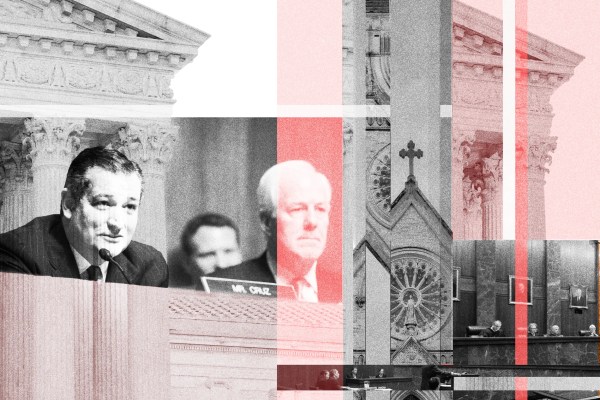
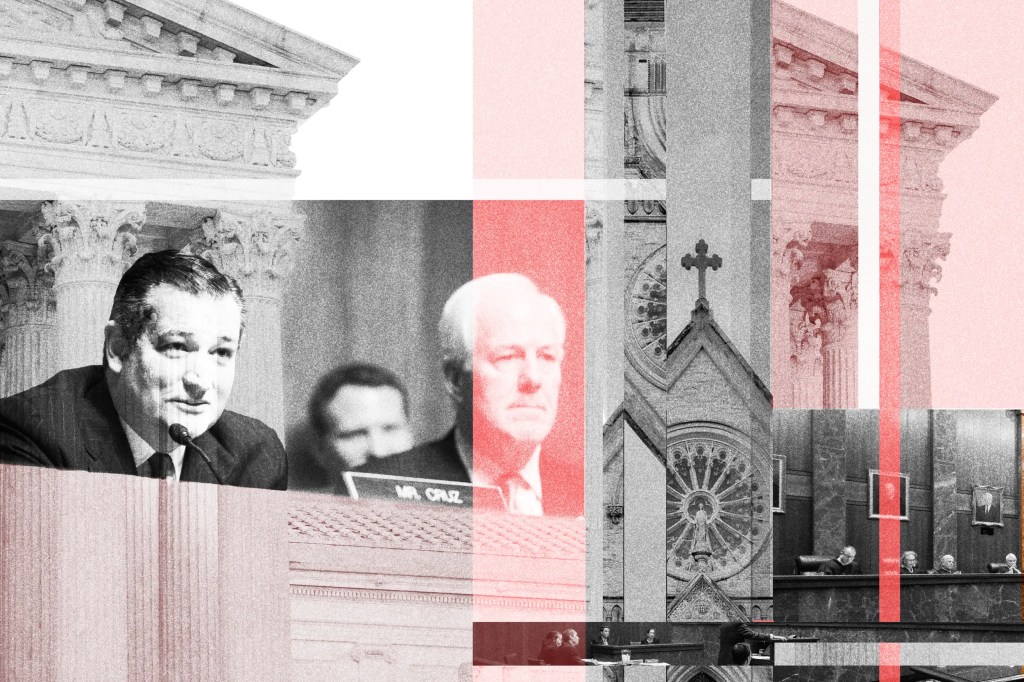
“The number of alums from the [Texas Office of the Solicitor General] who now wear robes on a daily basis, and not just because they have curious sartorial decisions, is an amazing and impressive thing,” said Sen. Ted Cruz, a former Texas solicitor general himself, at a Federalist Society event in 2019.

The progeny of Texas’ conservative legal revolution no longer just bring their legal theories before the federal bench. Now they’re sitting on it, ready to decide cases built on the same legal arguments they helped shape over the last two decades.

“They’re young, they’re smart, they’re principled, they’re constitutionalists,” Cruz said. “That is an incredible legacy, and it’s a legacy Texas is going to be benefitting from 10 years, 20 years, 30 years, 40 years from now.”

Transforming the district courts

When President Barack Obama left office, about half of Texas’ 52 federal judgeships were filled by Republican appointees, about a third were Democratic appointees and a full 20% were vacant, having languished under a Democratic president who didn’t prioritize judicial nominees and two Republican Texas senators who did.

After Trump was elected, those roadblocks swiftly resolved. Politically aligned with the president, Cruz and Sen. John Cornyn basically had free rein to nominate district judges. In 2013, Democrats eliminated the 60-vote requirement for judicial appointments, so with a Republican majority in the Senate, Cruz and Cornyn didn’t have to worry too much about finding consensus picks.

After years of helping Texas bring conservative causes to the courts, the senators had an opportunity to influence who would hear those cases going forward. And they took it, nominating a class of young, conservative judges, many of whom had helped build the litigation machine at the Texas attorney general’s office.

Brantley Starr, who worked under Cruz in the solicitor general’s office and “side by side” with Texas Attorney General Ken Paxton, was appointed as a district judge in Dallas. David Morales, one of Abbott’s top deputies at the attorney general’s office and former general counsel to Gov. Rick Perry, was appointed in Corpus Christi.

Former Deputy Solicitor General Sean Jordan was appointed in Plano, and then attended the swearing-in for J. Campbell Barker, who joined the bench in Tyler.

click here to see full blog: https://www.texastribune.org/2023/07/31/texas-federal-courts-conservative-takeover-trump/

Part 2: Texas backlash to Obama fueled conservative drive to reinterpret U.S. Constitution

This blog originally appeared at The Texas Tribune.

Barraging the Obama administration with lawsuits, the Texas attorney general’s office wasn’t just trying to block policies. It was injecting disruptive, overtly Christian legal philosophies into the mainstream, and grooming a generation of conservative legal warriors.

Righting the Rule of Law

In November 2008, almost 70 million people turned out to vote for the nation’s first Black president and their hope for once-in-a-generation political change.

Barack Obama, a young, former community organizer, promised he’d help more people afford health care, stop the pollution of the planet, expand pathways to legal citizenship and help families dig their way out of the worst recession in decades.

With congressional majorities at his back, it seemed Republicans in D.C. would be hard-pressed to stop Obama’s liberal juggernaut. But 1,500 miles away, a group of conservative attorneys were loading the canons and pointing them north.

Over the previous eight years, the Texas Office of the Attorney General had transformed from a Democrat-led bureaucratic workhorse into a Republican war machine, peppering the federal courts with conservative cases and friend-of-the-court filings. Now, Greg Abbott, a man elected by 2.5 million people to be the top lawyer for one of fifty states, stepped up to do what his fellow conservatives in Washington could not: stop, or at least slow, Obama’s agenda.

During the Obama administration, Abbott’s office, and especially its elite appellate unit, the Office of the Solicitor General, became a government in exile, a refuge for the Republican party’s brightest minds. Top-tier conservative attorneys came to Texas for the chance to gain courtroom experience, burnish their bonafides and strengthen their commitment to the cause.

They had plenty of opportunities. Under Abbott, Texas brought more than 30 lawsuits against the Obama administration in six years, including an average of one suit a month in 2010. Texas used the federal courts to try to stop the federal expansion of government subsidized health care; block protections for young people who entered the country illegally with their parents; guard businesses against environmental regulations intended to stave off climate change; and even extend the fishing season by two weeks.

Texas emerged as an almost co-equal party to the federal government, casting itself as the defender of state sovereignty, federalism and the U.S. Constitution, and quietly helping push the nation’s legal apparatus to the right.

Abbott defined his role quite simply: “I go into the office, I sue the federal government, and then I go home.”

Reformation takes root

Several forces aligned to allow Texas to punch above its constitutional weight during the Obama administration.

In the previous decade, state attorneys general had taken a more proactive stance in the federal courts, banding together to pursue consumer protection and environmental regulation cases. Many states, including Texas, built solicitor general offices to improve their performance before appellate courts, and even bring cases to the U.S. Supreme Court.

This accelerated after a 2007 U.S. Supreme Court decision, Massachusetts v. EPA, granted states “special solicitude” to bring lawsuits against the federal government, effectively lowering the bar for states to get into court. The ruling’s true meaning has been hotly debated since, but Texas took it as pre-clearance to file more, and more ambitious, cases.

“The AG’s have really latched onto that,” said Paul Nolette, a Marquette University political scientist. “They’ve really expanded their ability to be, in some ways, unlike any other plaintiff. It’s just a lot easier to get into court for them.”

click here to see full blog: https://www.texastribune.org/2023/07/31/texas-federal-courts-conservative-takeover-obama-paxton/

Part 1: In 1998, a legal revolution was quietly born in Texas. It would pull America’s courts rightward. | The Texas Tribune

This blog originally appeared at The Texas Tribune.

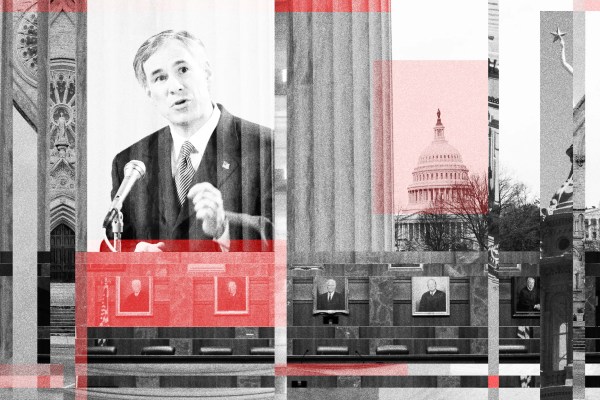
With his election as Texas attorney general, U.S. Sen. John Cornyn planted the seeds of conservatism. Gov. Greg Abbott used his tenure to cultivate them into an aggressive strain of right-wing activism aimed at driving the nation’s courts and laws to the right.

Righting the Rule of Law

In March, Texas Gov. Greg Abbott sat before the next generation of conservative legal warriors and shared with them the gospel of Texas.

The story began several decades earlier, when conservative lawyers like himself looked out over the nation’s legal landscape and saw “opinion after opinion after opinion that seemed to rewrite the Constitution,” Abbott told this gathering of law students put on by the Federalist Society.

The nation had strayed from its constitutional roots, as divined by these conservatives, and their vision of America as a Christian nation was slipping away: Federal courts were protecting abortion rights, keeping prayer out of schools, restricting gun ownership and letting the federal government rein in the liberties of states, businesses and individuals.

It was long past time to put an end to it.

“A principle that causes America to stand apart from all other countries is our Constitution and our adamant insistence on the rule of law,” Abbott explained. But the way things were going back then, “we would soon become the rule of men, whoever was interpreting and applying the law.”

The rule of law is often cast as democracy’s equalizer, a nonpartisan social contract insulated from politics and arbitrated by impartial judges. But as these conservative lawyers realized, quite the opposite is true.

Whoever shapes the courts shapes the law.

So it was to the federal judiciary, paradoxically ripe for ideological influence with its unelected, lifetime appointees, that those conservative lawyers turned for salvation. In that crusade, Texas would become their Jerusalem.

Gov. Greg Abbott speaks about this year’s legislative session to an audience at the Texas Public Policy Foundation offices in Austin on June 2.

In less than a generation, the Texas Office of the Attorney General transformed into the beating heart of a nationwide conservative legal revolution. Under three occupants, including Abbott, the office barraged the federal courts with state-funded lawsuits born of increasingly overt right-wing activism. The best and brightest of the conservative legal elite came to Austin to help Texas become “the standard bearer for the United States in showing what the rule of law is,” Abbott said.

By the time Abbott spoke to this auditorium of rapt law students in March, his was a success story. Disciples of this movement — alumni of the Texas attorney general’s office and their ideological allies — now fill the federal bench, often deciding the lawsuits Texas continues to bring against the federal government.

click here to see full blog: https://www.texastribune.org/2023/07/31/texas-federal-courts-conservative-takeover-cornyn-abbott/

Texas ban on gender-affirming care leaves trans teens without options

This blog originally appeared at CBC News.

Texas to become largest state in U.S. to ban puberty blockers and other gender-affirming care for teens

Pediatric endocrinologist Ximena Lopez worries for her young patients as she closes her clinic in Dallas that offered gender-affirming care to those under 18. With Texas banning that treatment, transgender teenagers are ‘livid’ and left without options. (Jason Burles/CBC)

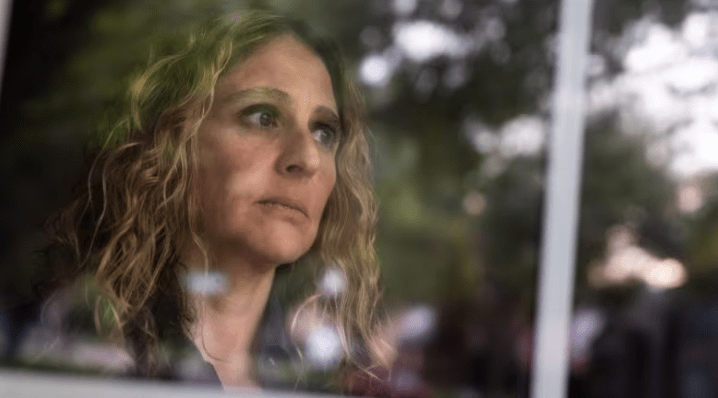
From her now near-empty home in the Dallas suburb of Plano, with moving boxes stacked high in the garage, pediatric endocrinologist Ximena Lopez says she never thought she’d see this day.

Fearing violence that could target her family — a response by some to the type of medical treatment she offers — Lopez is closing her health clinic, selling her house and fleeing Texas for California.

“I don’t feel safe,” she said. “With so many people with guns [who] have gone to protest against me, or our clinic … armed.”

She adds, “I’m afraid of leaving my son home alone, and I don’t want to live like that.”

For years, Lopez has operated a clinic at a Dallas medical centre that offers what’s known as gender-affirming care for young people. It’s aimed at aiding and comforting transgender teens.

Treatment includes recurrent counselling and — controversially — medication that temporarily blocks puberty.

In America, it’s an extremely divisive program. 

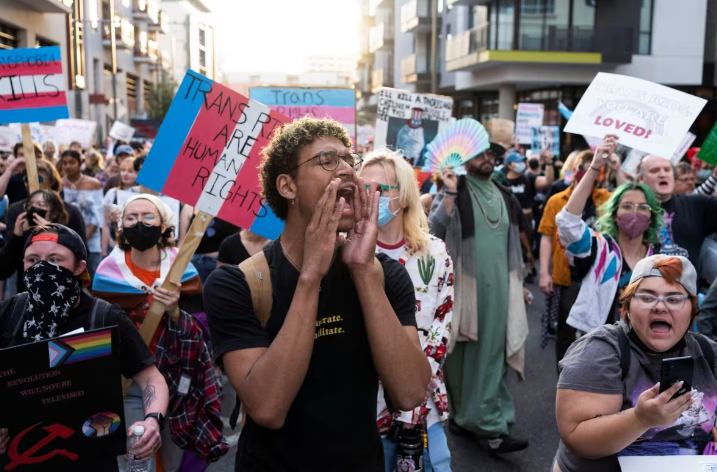
Amid rising anti-trans sentiment in the U.S., protesters rally for the International Transgender Day of Visibility in Tucson, Arizona on March 31. (Rebecca Noble/Reuters)

Nearly two dozen U.S. states, mostly Republican-led, have now taken steps to ban the treatment. (Some of those bans have been successfully challenged in court. Civil rights advocates pledge more challenges will follow.) 

Separately, various state legislatures have put forward roughly 500 bills this year alone deemed by the American Civil Liberties Union as being anti-LGBTQ, including restrictions on bathroom use, pronouns, drag performances and education. 

Civil libertarians describe it as a growing wave of intolerance in the U.S. targeting that community and medical providers such as Lopez.

Texas passed its bill banning gender-affirming care for teens this spring after a raucous debate, with vocal protests by the program’s supporters.

The new law takes effect in September.

Lopez and others underline that the treatment is decisively evidence-based, and she believes in it deeply. She calls it “one of the most important things I’ve done in my life.”

But opponents have called her a child abuser and a Nazi. Some have said she “should die in hell,” leaving Lopez frightened, frustrated and angry.

“The whole state has become crazy,” said Lopez. It “is right now full of hate.”

“I felt like things were evolving with society, with progress. Now we are going backwards,” she said.

“It has become unbearable.”

Patients caught in the crosshairs

Chief among those caught in the crosshairs are the patients of Lopez. When she moves to California, where her treatment remains legal, her patients in Texas will face dwindling access to medications and no easy path for direct care.

Most of those contacted directly by CBC News said they strongly support Lopez and her work but were afraid to speak out publicly, worried about stigma and violence that could target them.

But on agreement to withhold their surname to reduce the risk, parents Kristen and Wes and daughter Audrey sat down with CBC News at their home northeast of Dallas to talk about all of it. They strongly wanted others to know what Audrey has gained from her time with Lopez and what the new law in Texas now threatens. 

In short, they believe Lopez and her program saved Audrey’s life.

click here to see full blog: https://www.cbc.ca/news/world/texas-lgbtq-legislation-1.6887130

Waco JP’s suit on refusal of same-sex marriages to get Texas Supreme Court look

This blog originally appeared at Waco Tribune – Herald.

The Texas Supreme Court will review a case involving a Waco justice of the peace’s refusal to perform same-sex weddings.

McLennan County Justice of the Peace Dianne Hensley sued the Texas State Commission on Judicial Conduct after it issued a public warning against her in 2019 for refusing to perform weddings for same-sex couples, citing her religious views, while continuing to perform weddings for opposite-sex couples. Hensley requested April 10 that the Texas Supreme Court consider the matter after a district court in Travis County dismissed her lawsuit and an appeals court upheld the dismissal.

The Texas Supreme Court agreed Friday to grant the request for judicial review from Hensley. She has been the Precinct 1, Place 1 JP since 2014, and was unopposed last year in her most recent reelection bid.

In addition to Hensley’s attorney in Travis County, Jonathan Mitchell, three attorneys from the Plano-based First Liberty Institute joined the lawsuit, including deputy general counsel Justin Butterfield.

“Judge Hensley always followed the law,” Butterfield said in a statement Monday. “She sought to follow her religious beliefs and accommodate everyone, yet the government chose to punish her. We look forward to the Texas Supreme Court correcting this injustice.”

click here to see full blog: https://wacotrib.com/news/local/crime-courts/waco-jps-suit-on-refusal-of-same-sex-marriages-to-get-texas-supreme-court-look/article_9b357a8a-1453-11ee-9558-93b1c0513639.html

Blog at WordPress.com.

Up ↑