A judge has ruled Texas’ abortion ban is too restrictive for women with pregnancy complications

This blog originally appeared at AP News.

AUSTIN, Texas (AP) — A Texas judge ruled Friday the state’s abortion ban has proven too restrictive for women with serious pregnancy complications and must allow exceptions without doctors fearing the threat of criminal charges.

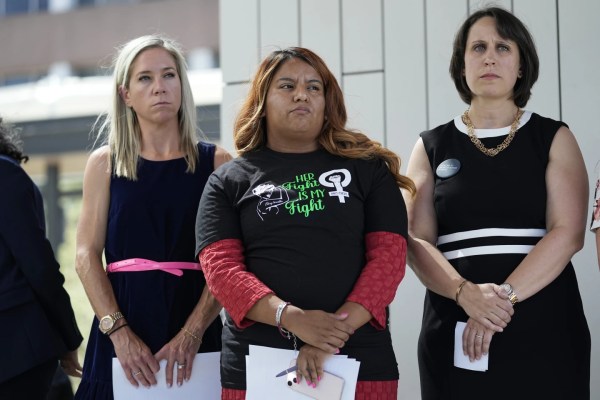
Amanda Zurawski, who developed sepsis and nearly died after being refused an abortion where her water broke at 18 weeks, left, and Samantha Casiano, who was forced to carry a nonviable pregnancy to term and give birth to a baby who died four hours after birth, center, stand with their attorney Molly Duane outside Travis Country Courthouse, Wednesday, July 19, 2023, in Austin, Texas. A Texas judge ruled Friday, Aug. 4, 2023, the state’s abortion ban has proven too restrictive for women with serious pregnancy complications and must allow exceptions without doctors fearing the threat of criminal charges. The challenge is believed to be the first in the U.S. brought by women who have been denied abortions since the Supreme Court last year overturned Roe v. Wade, which for nearly 50 years had affirmed the constitutional right to an abortion.

The ruling was the first to undercut Texas’ law since it took effect in 2022 and delivers a major victory to abortion rights supporters, who see the case as a potential blueprint to weaken restrictions elsewhere that Republican-led states have rushed to implement.

However, the injunction was immediately blocked by an appeal to the Texas Supreme Court, the state attorney general’s office said.

”The trial court’s injunction is ineffective, and the status quo remains in effect,” spokesperson Paige Willey said in an email.

State District Judge Jessica Mangrum’s ruling granted a temporary injunction that prevents Texas from enforcing the ban against physicians who in their “good faith judgment” end a pregnancy that, because of complications, creates a risk of infection or is otherwise unsafe for the woman to continue.

The injunction also applies to women who have a condition “exacerbated by pregnancy” who can’t be effectively treated during their term. It also covers cases where the fetus has a condition that makes it unlikely to survive after birth.

“For the first time in a long time, I cried for joy when I heard the news,” lead plaintiff Amanda Zurawski said in a statement. “This is exactly why we did this. This is why we put ourselves through the pain and the trauma over and over again to share our experiences and the harms caused by these awful laws.”

Mangrum’s decision said the injunction would run until the completion of the case, which is scheduled for a trial to begin next March 25.

However, the state’s immediate appeal “stays an activist Austin judge’s attempt to override Texas abortion laws pending a ruling by the Texas Supreme Court,” said a statement from First Assistant Attorney General Brent Webster.

The immediate impact of Mangrum’s decision also was unclear in a state where all abortion clinics have shuttered in the past year.

The challenge to the state law is believed to be the first in the U.S. brought by women who have been denied abortions since the Supreme Court last year overturned Roe v. Wade, which for nearly 50 years had affirmed the constitutional right to an abortion.

In a six-page ruling, the judge found that portions of the abortion law violated the rights afforded to pregnant people under the Texas Constitution.

The court found that the patients challenging the law each experienced “emergent medical conditions” during pregnancy that risked their health or lives “and required abortion care.”

click here to see full blog: https://apnews.com/article/abortion-texas-lawsuit-ban-exceptions-women-denied-pregnancy-d90f3bce68d86e5eafe3ba4ba5939188?fbclid=IwAR2v6UNMtThWNPWyrJ748SCn7lyuBoNVw3L_qew3V041hY5WpM46_6PY04w
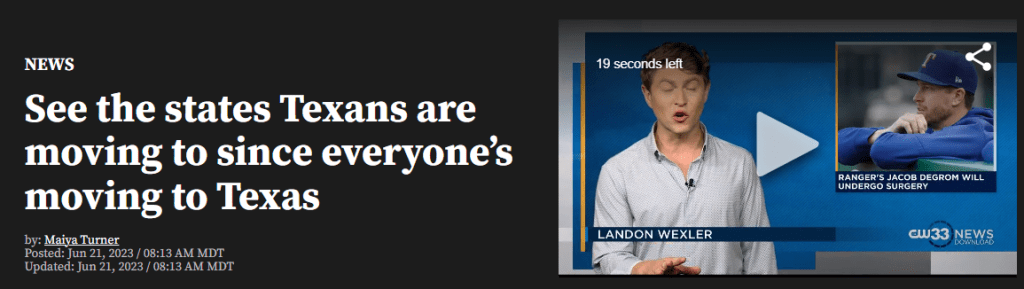
See the states Texans are moving to since everyone’s moving to Texas

This blog originally appeared at KTSM.com

DALLAS (KDAF) — Texas is getting too crowded with all our new neighbors that have moved on in and decided to make the Lone Star State their home.

click here to see full blog: https://www.ktsm.com/news/see-the-states-texans-are-moving-to-since-everyones-moving-to-texas/

Some Texans are realizing, “this town ain’t big enough ” and are making their exit from the state to newfound homes in some unexpected places.

“The U.S. is among the most mobile countries in the world, but our rates of moving have slumped in recent decades. In 2019, for example, a lower percentage of Americans changed residence than any year prior since 1947 when migration statistics were first gathered by the Census Bureau,” Stacker said.

Check out the top ten places Texans are moving to, according to Stacker. The number one spot… will definitely surprise you!

10. Tennesse

Moved from Texas to Tennessee in 2019: 15,068

https://bba250835f6475e4c8dd48eafb98d6c6.safeframe.googlesyndication.com/safeframe/1-0-40/html/container.html

9. New Mexico

Moved from Texas to New Mexico in 2019: 15,762

8. Arizona

Moved from Texas to Arizona in 2019: 17,482

https://bba250835f6475e4c8dd48eafb98d6c6.safeframe.googlesyndication.com/safeframe/1-0-40/html/container.html

7. Washington

Moved from Texas to Washington in 2019: 18,528

6. Lousiana

Moved from Texas to Louisiana in 2019: 19,675

https://bba250835f6475e4c8dd48eafb98d6c6.safeframe.googlesyndication.com/safeframe/1-0-40/html/container.html

5. Georgia

Moved from Texas to Georgia in 2019: 22,452

4. Florida

Moved from Texas to Florida in 2019: 26,174

https://bba250835f6475e4c8dd48eafb98d6c6.safeframe.googlesyndication.com/safeframe/1-0-40/html/container.html

3. Oklahoma

Moved from Texas to Oklahoma in 2019: 26,383

2. Colorado

Moved from Texas to Colorado in 2019: 32,295

https://bba250835f6475e4c8dd48eafb98d6c6.safeframe.googlesyndication.com/safeframe/1-0-40/html/container.html

#Ranked 1: California

Moved from Texas to California in 2019: 37,063

Why some people are choosing to move to states that protect gender-affirming health care

This blog originally appeared at CNN Health.

(KFF Health News)- Hal Dempsey wanted to “escape Missouri.” Arlo Dennis is “fleeing Florida.” The Tillison family “can’t stay in Texas.”

They are part of a new migration of Americans who are uprooting their lives in response to a raft of legislation across the country restricting health care for transgender people.

Missouri, Florida, and Texas are among at least 20 states that have limited components of gender-affirming health care for trans youth. Those three states are also among the states that prevent Medicaid — the public health insurance for people with low incomes — from paying for key aspects of such care for patients of all ages.

trans hormone replacement therapy STOCK RESTRICTED

Immediate access to gender-affirming hormone therapy eases distress, depression, suicidal thoughts for transgender adults, research finds

More than a quarter of trans adults surveyed by KFF and The Washington Post late last year said they had moved to a different neighborhood, city, or state to find more acceptance. Now, new restrictions on health care and the possibility of more in the future provide additional motivation.

Many are heading to places that are passing laws to support care for trans people, making those states appealing sanctuaries. California, for example, passed a law last fall to protect those receiving or providing gender-affirming care from prosecution. And now, California providers are getting more calls from people seeking to relocate there to prevent disruptions to their care, said Scott Nass, a family physician and expert on transgender care based in the state.

But the influx of patients presents a challenge, Nass said, “because the system that exists, it can’t handle all the refugees that potentially are out there.”

In Florida, the legislative targeting of trans people and their health care has persuaded Arlo Dennis, 35, that it is time to uproot their family of five from the Orlando area, where they’ve lived for more than a decade. They plan to move to Maryland.

Dennis, who uses they/them pronouns, no longer has access to hormone replacement therapy after Florida’s Medicaid program stopped covering transition-related care in late August under the claim that the treatments are experimental and lack evidence of being effective. Dennis said they ran out of their medication in January.

“It’s definitely led to my mental health having struggles and my physical health having struggles,” Dennis said.

click here to see full blog: https://edition.cnn.com/2023/06/23/health/families-moving-for-transgender-health-care/index.html

BBC News: She was denied an abortion in Texas – then she almost died

This blog originally appeared at BBC News.

A Texas law that bans all abortions except in dire medical circumstances is one of the strictest introduced since the right to the procedure was overturned. Critics say it is forcing many women, and their doctors, to choose between breaking the law and making the right decision for their health.

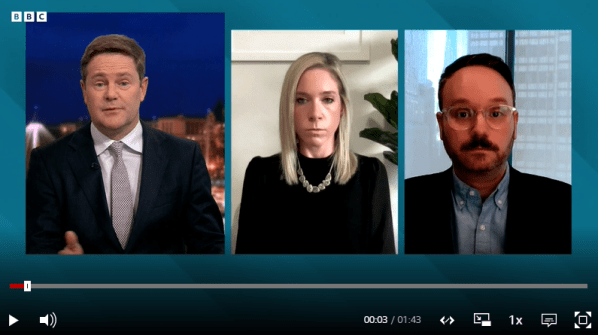
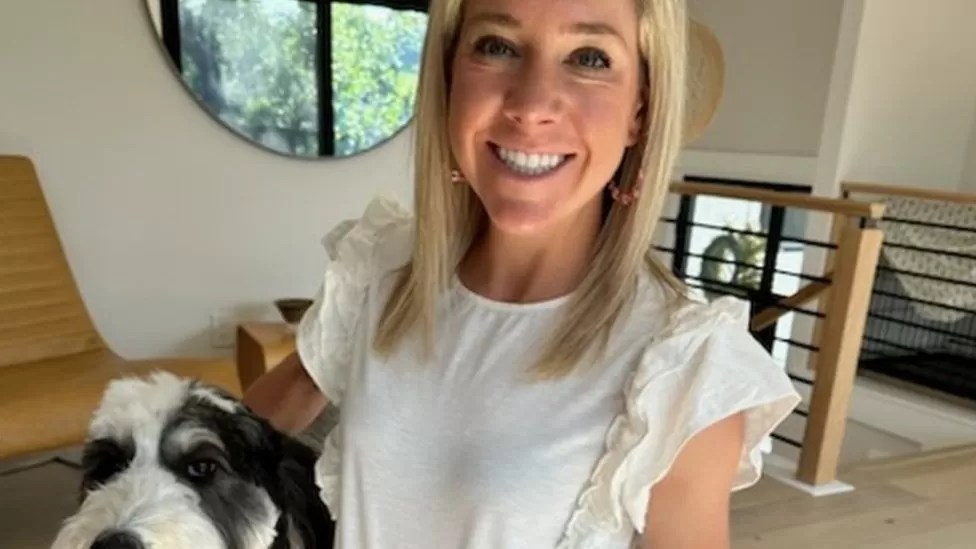
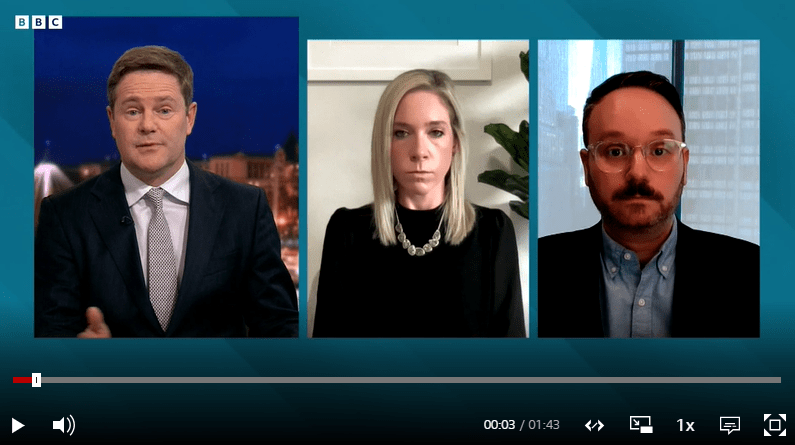
Amanda Zurawski says Texas’s abortion bans are “dystopian”

Amanda Zurawski and her husband Josh had recently purchased their dream home in Austin, Texas, a sought-after area with beautiful views. Excitedly awaiting the arrival of their first child, they envisioned a joyous moving day. However, their reality was far from what they expected. Amanda’s life was endangered when she was denied an abortion, just after being discharged from the hospital.

Reflecting on that day, Amanda shared with the BBC, “It felt like I was living in a dystopian world. In the United States, as a pregnant person, you should not be afraid for your life because of the laws.”

Since the Supreme Court’s decision to overturn Roe v Wade, granting states the power to ban abortions, 13 states have passed near-total bans. Texas, the largest state and one of the strictest, prohibits all abortions from the moment of conception, with exceptions only for a “life-threatening physical condition” or “a serious risk of substantial impairment of a major bodily function.” Violating this law can result in a hefty fine of $100,000 (£78,000) and even life imprisonment.

When Amanda discovered she was expecting a daughter, she and her husband were filled with joy. Unfortunately, on the same day she was compiling the guest list for her baby shower, she received devastating news. She was diagnosed with cervical insufficiency, a condition that weakens the cervical tissue and causes premature dilation. The doctors informed her that her unborn daughter would not survive. This heartbreaking situation placed Amanda directly in the crosshairs of Texas’s abortion ban, compounding their grief.

“She was a baby that we desperately, desperately wanted,” she said.

Texas abortion law: ‘I waited for my daughter to die so I wouldn’t die’

click here to see video: https://www.bbc.com/news/world-us-canada-65935189

Texas governor signs bill to ban DEI offices at state public colleges

This blog originally appeared at CNN Politics.


As of my knowledge cutoff in September 2021, there have been discussions and debates regarding the banning of diversity, equity, and inclusion (DEI) offices at state public colleges in Texas. However, I do not have information on the specific details or the status of any bill related to this topic being signed by the Texas governor.

It’s important to note that legislation and political developments can change over time, and it’s advisable to refer to the most recent news sources or official statements for the latest information on this matter.

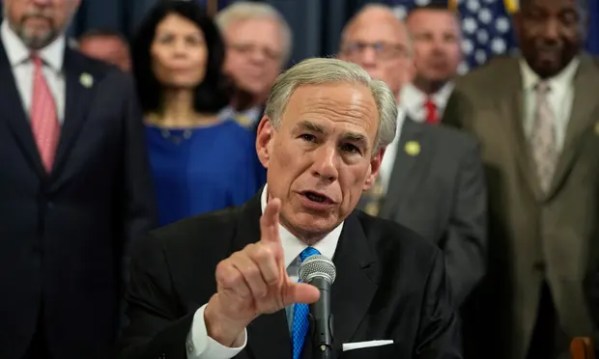
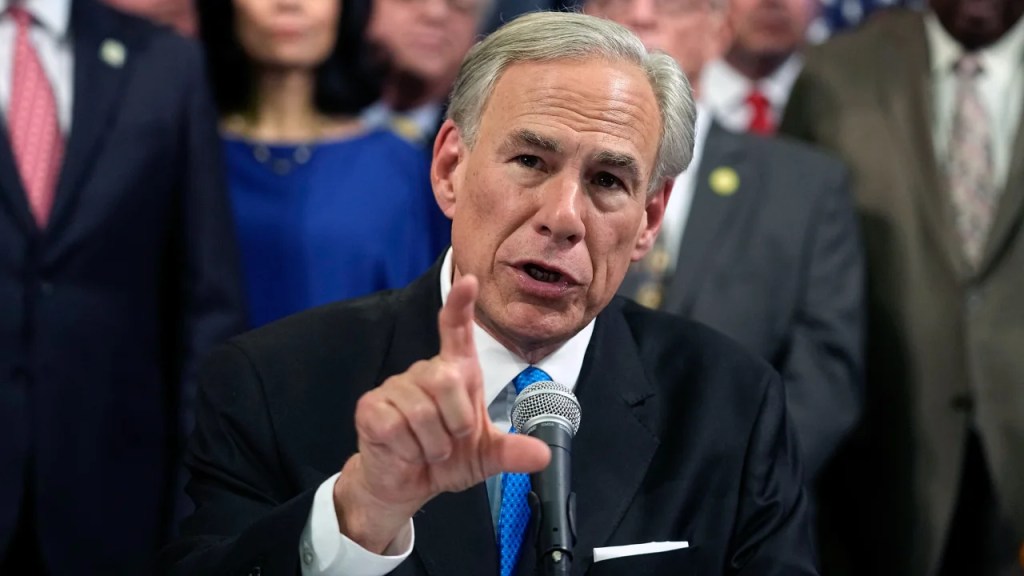
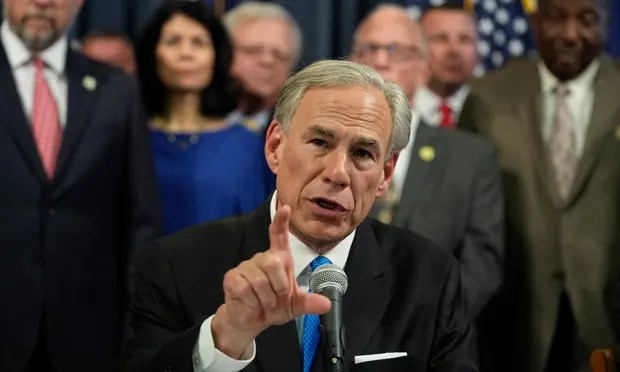
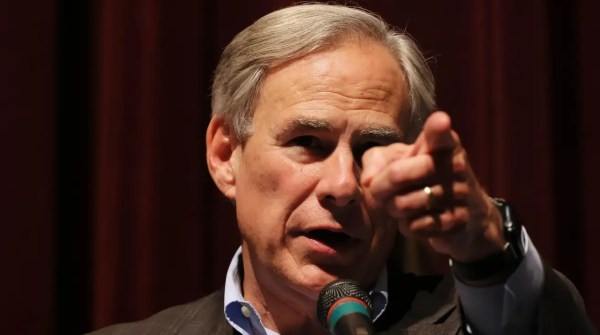
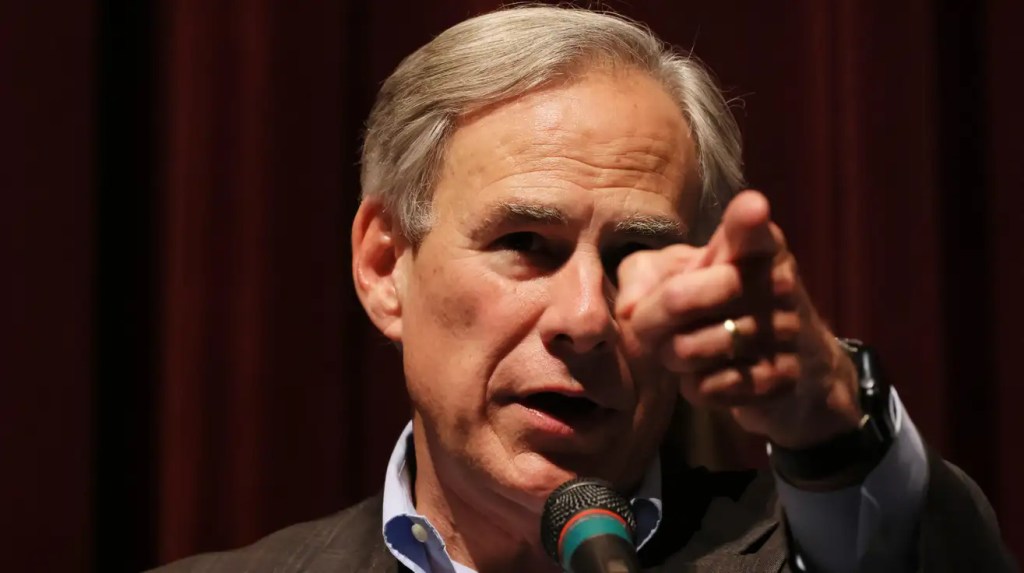
Texas Gov. Greg Abbott speaks after signing a bill at the Texas Capitol in Austin on June 6, 2023.

(CNN) – As of my knowledge cutoff in September 2021, it seems that Texas Governor Greg Abbott has signed a bill banning diversity, equity, and inclusion (DEI) offices at public colleges and universities in the state. The bill, known as SB 17, was passed by the state legislature with supporters arguing that DEI efforts promote racial profiling and that cutting funds for such programs would save taxpayers money. Critics of the bill have raised concerns about discrimination and the potential impact on attracting diverse students.

According to the information provided, SB 17 prohibits higher education institutions from establishing or maintaining DEI offices and also bans mandatory diversity training for students and employees. However, it is important to note that the bill does not restrict academic instruction related to race and diversity, and there are exceptions for equity measures required by court order or federal law.

Please note that this information is based on the details provided, and it’s always advisable to refer to the most recent news sources or official statements for the latest updates on this matter.

click here to see full blog: https://edition.cnn.com/2023/06/15/politics/greg-abbott-texas-dei-office-ban-colleges/index.html

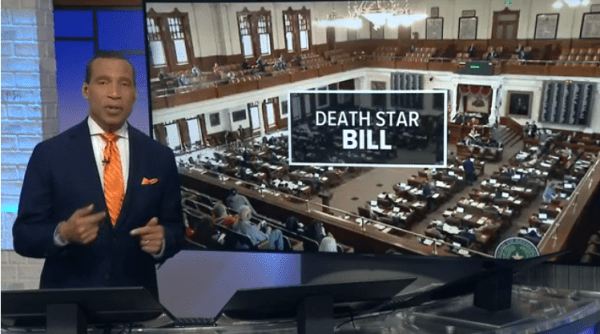
Death Star Bill aimed at expanding state authority signed into law

This blog originally appeared at KHOU 11.

Proponents of House Bill 2127 say the bill is aimed at reining in city and county leaders that exceed their authority.

House Bill 2127, also referred to as the Texas Regulatory Consistency Act, has generated both support and opposition. Supporters of the bill argue that its purpose is to establish consistent regulations across the state, which would contribute to maintaining a thriving Texas economy. They believe that uniformity in regulations would facilitate business growth, attract investments, and simplify compliance for companies operating in multiple jurisdictions.

However, opponents of the bill express concerns that it could have unintended consequences and potentially restrict the authority of local governments. They argue that local communities should have the autonomy to address specific issues that are relevant to their region, such as noise complaints, drought restrictions, and labor rights. Limiting local governments’ ability to create regulations tailored to their unique needs and circumstances may be seen as undermining local democracy and impeding their ability to address local concerns effectively.

The debate surrounding House Bill 2127 highlights the tension between statewide consistency and local autonomy. Balancing these competing interests is a complex task, as policymakers strive to strike a balance between statewide economic considerations and the ability of local governments to respond to local challenges and protect the interests of their communities.

click here to see full blog: https://www.khou.com/article/news/politics/texas-death-star-bill-hb-2127/285-799570c5-5add-47c7-988e-bc034c36f7d2

Greg Abbott signs law banning diversity offices in Texas higher education

This blog originally appeared at Support The Guardian.

The governor signed the bill prohibiting diversity, equity and inclusion offices in addition to another codifying tenure restrictions.

Greg Abbott’s office argued that DEI programs ‘push policies that expressly favor some demographic groups to the detriment of others’. Photograph: Eric Gay/AP

Texas Governor Greg Abbott has signed SB 17, a bill that will effectively ban diversity, equity, and inclusion (DEI) offices and initiatives in higher education institutions across the state. The new law mandates the closure of DEI offices in state colleges starting from January 2024. It also puts an end to activities that promote certain groups of individuals over others based on factors such as race, ethnicity, and gender.

Furthermore, the bill prohibits job applicants at Texas universities from making diversity statements, and it prohibits mandatory DEI training for any purpose. This legislation reflects a shift in the state’s approach to DEI efforts within the higher education system.

The impact of this law is a matter of ongoing debate. Supporters argue that it promotes equal treatment and prevents preferential treatment based on certain characteristics. On the other hand, critics contend that it undermines efforts to address systemic inequalities and promote diversity and inclusion within academic institutions.

It’s important to note that this law specifically applies to higher education institutions in Texas and does not have a direct impact on DEI initiatives in other sectors or within private institutions.

“Education is the greatest equalizer in our nation, and Texas is home to world class and innovative colleges and universities. The decisions we make for higher education today determine our Texas of tomorrow,” said the Republican state senator Brandon Creighton, who introduced the bill in March.

https://b6e53c7903577bf8e8ff2aa208e47325.safeframe.googlesyndication.com/safeframe/1-0-40/html/container.html

“Now that these bills are law, institutes of higher education are better equipped to prepare the next generation of leaders, and keep Texas the economic engine of the nation,” he added.

Creighton went on to explain that what sets the bill apart from other proposals is “that the legislation delivers strong enforcement with mandates to return Texas colleges and universities to their core mission: educate and innovate”.

He condemned DEI offices, saying that they have “failed to make progress advancing or increasing diversity”.

click here to see full blog: https://www.theguardian.com/us-news/2023/jun/14/new-texas-bans-law-diversity-offices-state-higher-education

Trans Eighth Grader Was ‘Shaking and Distressed’ As Texas Agency Pulled Him Out of Class for Investigation

This blog originally appeared at Jezebel.

An ongoing lawsuit exposes the state’s misguided “child abuse” investigations as being incredibly traumatic for trans children and their families.

Earlier this year, when Texas Governor Greg Abbott directed the state’s Department of Family and Protective Services to investigate instances of “child abuse” in families who’ve provided gender-affirming care for their trans children, people were rightly, extremely alarmed. Not only is gender-affirming care not child abuse, the lack of it is actually associated with risks of depression and suicide in trans children and teens. LGBTQ advocacy groups, public health experts, and health associations feared this bigoted and authoritarian directive would harm trans youth. They were right.

On Friday morning, the Washington Post published a story about a trans eighth grader in Texas, Steve Koe (a pseudonym), who was pulled out of class and questioned by the agency. His mother says he was “shaking and distressed;” she observed Steve go from “thriving” after his gender-affirming treatment to being “anxiety ridden” and suffering from frequent panic attacks after being investigated by the state. For nearly an hour the agency reportedly asked Steve personal questions about his medical history, his gender dysphoria, and his suicide attempt. While all of this was going on, Steve’s classmates got to go about their normal, uninterrupted school day.

CLICK HERE TO SEE FULL BLOG: https://jezebel.com/trans-eighth-grader-was-shaking-and-distressed-as-texas-1849517848

Texas drag queen challenges drag ban bill in dress bearing names of mass shooting victims

This blog originally appeared at The Pink News.

A Texas drag queen has given a powerful testimony against a drag ban bill currently making its way through the state legislature.

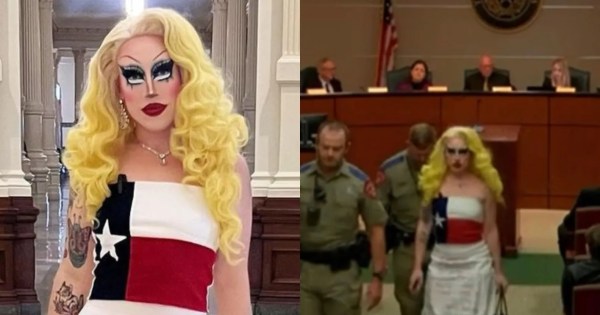
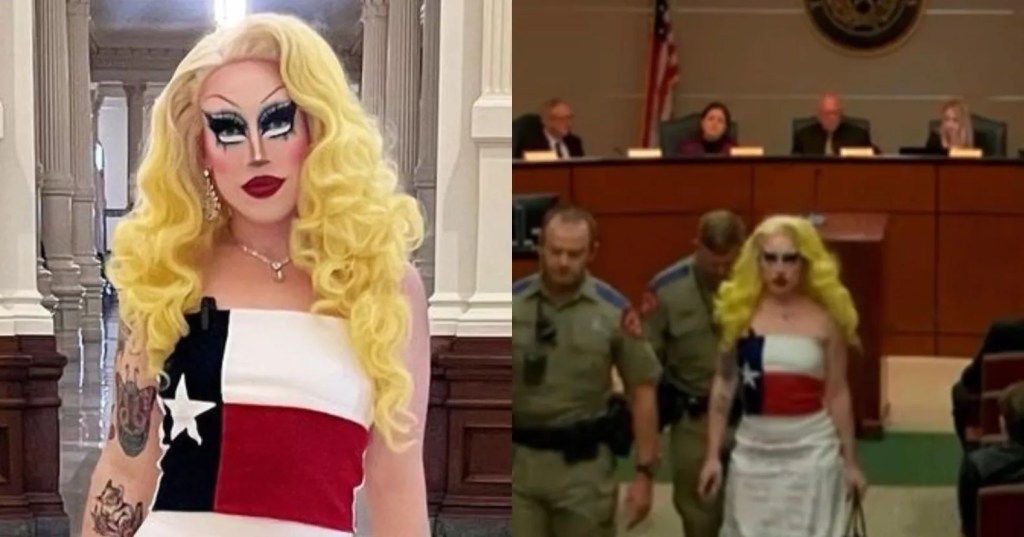
Texas drag queen Brigitte Bandit made a powerful statement at a state committee hearing on a new drag ban bill.

SB12, introduced by Republican state senator Bryan Hughes, seeks to impose restrictions on “certain sexually oriented performances” in public spaces and in the presence of children. The bill includes penalties for those who allow such performances on commercial properties, with a fine of $10,000, and the potential loss of state funding for public areas like libraries.

The bill defines “sexually oriented performances” as including instances where a male performer presents as a female or a female performer presents as a male, using clothing, makeup, or other physical markers, and engages in activities such as singing, lip-syncing, dancing, or performing before an audience.

Having already passed the Texas State Senate, the bill is currently under consideration by the state House of Representatives, both of which are controlled by Republicans.

During a public hearing before the House’s state affairs committee, Brigitte Bandit, an Austin-based drag queen, expressed her disbelief at recent claims that she poses a threat to the safety of children. Bandit stated that she had never faced concerns about working with children until recently and emphasized that those making such allegations had no evidence to support their claims.

CLICK HERE TO SEE FULL BLOG: https://www.thepinknews.com/2023/05/14/texas-drag-ban-bill-mass-shooting-victims/

Bill restricting sexually explicit performances in front of children heads to the governor

This blog originally appeared at The Texas Tribune.

Originally pitched as an effort to restrict children from seeing certain drag shows, the House and Senate agreed on a version of the bill that could still ensnare LGBTQ performers.

The Texas State Capitol on June 8, 2022.

The Texas Legislature has passed a bill that targets sexually explicit performances involving children and the businesses that host them. Originally focused on restricting minors from attending certain drag shows, the final version of the bill removed direct references to drag performers. The legislation, known as Senate Bill 12, now awaits Governor Greg Abbott’s signature.

Under this bill, business owners would be subject to a $10,000 fine if they host sexually explicit performances that involve nudity or appeal to the “prurient interest in sex.” Performers found to be violating these restrictions could face a Class A misdemeanor, carrying a maximum penalty of one year in jail and a $4,000 fine.

The bill reflects the concerns of lawmakers regarding sexually explicit content in shows involving children and aims to deter such performances and hold accountable both the performers and the businesses hosting them. Its passage demonstrates the ongoing discussions and legislative efforts surrounding the boundaries of explicit content and protecting the well-being of minors.

CLICK HERE TO SEE FULL BLOG: https://www.texastribune.org/2023/05/28/texas-legislature-drag-show-bill/?utm_source=articleshare&utm_medium=social

Blog at WordPress.com.

Up ↑