Texas Attorney General Ken Paxton withdrew the state’s lawsuit against pediatric endocrinologist Dr. Hector Granados on Thursday after finding no evidence that he violated the state’s ban on gender affirming care for trans youth.
Paxton sued Granados in October 2024, accusing him of providing puberty blockers and hormones to patients as young as 12 in treatment for gender dysphoria. Paxton accused Granados of falsifying medical and billing records to mislead pharmacies and insurance providers into covering the care.
Paxton initially called Granados a “scofflaw who is harming the health and safety of Texas children,” and Granados wasn’t notified before the lawsuit’s filing, in worries that he might try to destroy relevant records, The Hill reported.
However, Granados said he stopped providing gender-affirming care in May 2023, after the state’s legislature passed the law. Now that Paxton’s office has dropped its charges against him, Paxton’s office will now “focus on other ongoing cases against doctors who illegally provided harmful ‘transition’ treatments and drugs to children,” an attorney general spokesperson said, according to The Hill.
The state has also sued May Lau and M. Brett Cooper, two medical providers from the University of Texas’ Southwestern Medical Center in Dallas. If found guilty, both could possibly lose their medical licenses and face hundreds of thousands of dollars in fines.
Despite Paxton’s claim about gender-affirming care being “harmful,” the medications used in such care have been used safely in children for decades for the purposes of gender transition and to treat other medical issues in cisgender children as well. In fact, Texas’ law stands in opposition to the best care practices for treating gender dysphoria recommended by every major American medical association. These associations agree that such care is safe, effective, and essential for the overall well-being of trans people.
On Wednesday evening (Sept 3), the Texas Senate approved an extreme bill that, pending the governor’s signature, will empower citizens to sue anyone who “manufactures, distributes, mails, transports, delivers, prescribes, or provides” abortion pills to Texans for at least $100,000 in damages. While Texas already broadly bans abortion, with House Bill 7 Republicans aim to halt the flow of abortion medication from out of state, one of the only remaining avenues for Texans to still access this care. The measure has been sent to Governor Greg Abbott’s desk and is slated to become law in about three months, barring successful legal challenges.
Democrats and reproductive rights advocates caution the law will instill even more fear in abortion patients—living under bans since 2021—and may lead to additional pregnancy-related deaths in Texas.
“This bill will harm women and could even lead to more pregnant women dying because they couldn’t access life-saving medications,” said Rep. Donna Howard, an Austin Democrat and chair of the Texas Women’s Health Caucus, on the House floor before the lower chamber cast its vote late last month. “The only reason we haven’t returned to the days of [pre-Roe v. Wade] ‘coat-hanger abortions’ is because of the medication abortion pill. I ask you: ‘When will this be enough? How many women have to die or suffer severe bodily injury because they couldn’t access the care they needed?’”
The GOP-backed attempt to “crack down” on abortion pills and those who provide themcould potentially impact access in much of the country and serve as a blueprint for other states to adopt, a professed goal of Texas Republicans who support the bill.
“HB 7 exports Texas’ extreme abortion ban far beyond state borders,” said Blair Wallace, policy and advocacy strategist on reproductive freedom at the ACLU of Texas, in a statement. “It will fuel fear among manufacturers and providers nationwide, while encouraging neighbors to police one another’s reproductive lives, further isolating pregnant Texans, and punishing the people who care for them.”
Largely a revival of a bill that stalled in a House committee during the Legislature’s regular session (and also stalled during a first special session prior to the second special session that came to a close early Thursday morning), the so-called “Woman and Child Protection Act” claims to not target abortion patients. Domestic abusers or men who commit sexual assault resulting in pregnancy are not allowed to bring suit under the bill. Texas hospitals, doctors, and those who manufacture or distribute the pills for medical emergencies, ectopic pregnancies, and miscarriage management would be exempt; however, such medical gray areas have already confused and frustrated physicians, who say abortion law exceptions often don’t work in practice.
The bill is modeled after Senate Bill 8, the 2021 “bounty hunter”-style six-week abortion ban that encouraged reproductive health vigilantism with $10,000 lawsuits and chilled abortion care in Texas nearly a year before the fall of Roe. HB 7 allows those connected to someone who seeks out abortion medication—for instance, a pregnant person’s parent or partner—to sue in Texas court a doctor, distributor, or manufacturer of the medication based anywhere in the country and reap the legislation’s hefty cash payout.
Similar to its predecessor, HB 7 also seeks to evade judicial review by placing the power to sue in the hands of private citizens rather than state officials, preventing state court constitutional challenges to the law. It also relegates all appeals to the 15th Court of Appeals—a conservative court recently created to handle challenges to state statutes.
Among the many troubling concerns raised by Democrats including Representative Erin Zwiener: An abortion doesn’t need to take place for someone to sue a drug manufacturer or provider under the bill; pills only need to be mailed, potentially incentivizing “sting operations” by anti-abortion activists. HB 7 also allows Texans unrelated to the person ordering the pills to bring suit—but they can only be awarded $10,000 with the rest directed toward a charitable organization of their choice (as long as they or their family members don’t financially benefit from the organization). Advocates with the anti-abortion group Texas Right to Life have already openly suggested they could be a recipient of those funds.
While both a near-total abortion ban and a law prohibiting the mailing of abortion pills went into effect in 2021, the latter has been difficult to enforce due to the fact that proving a violation of the law requires accessing people’s mail, a federal crime.
With travel time, distance, and costs for abortion care rising dramatically, many abortion-seekers in Texas have relied on mail delivery of pills through online providers like Aid Access and out-of-state physicians, as a lifeline for care. About 2,800 Texas residents obtain abortion medication from telehealth providers across state lines per month, according to the Society of Family Planning. Texas accounts for the largest share of these types of patients nationally. (Across the United States, the total number of abortions has slightly increased since Roe was overturned in 2022, in part due to mail order access, raising the ire of abortion opponents.) Anti-abortion advocates in Texas and elsewhere consider these remaining channels a nagging loophole in abortion law and have worked to find ways to stop pill providers.
“We are cracking down, being vigilant, and giving Texans the tools necessary to enforce our existing abortion laws,” bill author and representative Jeff Leach, a Plano Republican, told a House committee last month. “I believe this bill provides the nation’s strongest tool to protect Texans’ unborn and their moms. Texas is proudly leading the charge and we hope other states will follow.”
Republicans and anti-abortion advocates have pushed the bill on the premise that women are being “victimized” by “dangerous” abortion pills, despite more than two decades of documented scientific evidence that proves mifepristone and misoprostol, the most common pill combination, are safe and effective drugs.
In reality, the process entails minimal health risk, and legal abortion care overall is shown to be 14 times safer than childbirth.There were five deaths associated with mifepristone use for every one million people in the country since 2000, amounting to a 0.0005% death rate, according to a CNN analysis of federal Food and Drug Administration data. The risk of death by Penicillin is four times greater while Viagra is nearly ten times deadlier, as Howard noted during debate on the floor.Last month, more than 260 researchers, including those with the University of California-based group Advancing New Standards in Reproductive Health, sent a letter to the FDA affirming the 25-year rigorous safety record of mifepristone.
HB 7 is part of a broader, aggressive effort by Texas officials and anti-abortion advocates to attack individuals and groups that supply abortion pills to Texans. In an ongoing legal battle that could potentially reach the U.S. Supreme Court, Attorney General Ken Paxton sued a New York-based doctor in 2024 for allegedly mailing abortion pills to a patient in Texas and, last month, sent cease and desist letters to abortion pill support groups in an attempt to put “an immediate end” to the shipment of abortion-inducing drugs across state lines. Paxton has also asked to join a lawsuit that seeks to restrict the FDA’s use of mifepristone, including the agency’s allowing it to be sent by mail.
Jonathan F. Mitchell, architect of the Texas abortion private enforcement scheme, is also working to bring down out-of-state providers, recently targeting a California doctor in federal court on behalf of a Galveston man who claims the doctor sent his girlfriend medication.
Some of these efforts are being thwarted by the “shield laws” of other states, measures put in place to protect doctors in abortion-legal states like California and New York from being sued by states where abortion is banned. HB 7 is crafted to directly bypass these shield laws, setting up “interstate legal warfare,” according to Democrats including state Senator Molly Cook, who stressed that the bill is rife with constitutional violations
“This bill doesn’t stop at our borders,” said Senator Carol Alvarado, a Houston Democrat, on the floor shortly before HB 7’s passage. “Providers outside Texas can be sued in Texas courts for lawful conduct in their own states. This sets a dangerous precedent; it flies in the face of state’s rights and contradicts the rationale behind the Supreme Court’s ruling in Dobbs that each state should set its own laws on abortion.”
Angel Foster heads the Massachusetts Medication Abortion Access Project, a telemedicine abortion pill service founded in 2023. One-third, or roughly 800, of the project’s patients per month are from Texas. Despite the threat of litigation, Foster’s organization will not succumb to fear and halt her practice of serving Texans; she still feels confident in protection from her state’s shield law.
“This Texas law would be a tremendous overreach and is meant to scare us away from helping our patients. We know that blocking access to pills is a huge part of the anti-abortion movement’s agenda today,” Foster told the Observer. “But our mantra is ‘no anticipatory obedience.’ We are not deterred in our mission. We will not stop our work.”
Social media posts made Tuesday evening show the south side of the building at 4014 Cedar Springs Road, the former home of Resource Center’s Nelson-Tebedo Health Center, painted a dark, dull gray. The blank slate wall came as a shock to many of the area’s residents, visitors and business who were used to seeing a vibrant, multi-color mural honoring the LGBTQ+ community and the fight against HIV/AIDS.
As Lee Daugherty noted in a post to the Friends of Oak Lawn page on Facebook, “Today a new tenant on Cedar Springs at the old Nelson-Tebedo [clinic] took it on themselves to paint over a 2018 mural of the AIDS quilt, a solemn remembrance and a dedication that we take care of each other. I’m unaware which clinic is moving in at this time, but it’s brave to move into a community and immediately erase it.”
The mural, known as Dallas Red Foundation’s HIV/AIDS Commemorative Mural, was conceived as a joint project between Dallas Red Foundation’s REDucate Committee and the community art group Arttitude, designed by Arttitude muralist Lee Madrid “after talking with community leaders and employees of Resource Center’s Nelson-Tebedo Clinic upon which the mural is painted. The mural offers a message of hope and community while acknowledging the HIV/AIDS crisis and the continued need for HIV/AIDS to be at the forefront of public attention,” John Anderson, secretary of Dallas Red Foundation and a member the REDucation Committee, explained in a January 2019 Voices column in Dallas Voice.
Anderson told Dallas Voice Tuesday night that the new tenant in the building is the AIDS Healthcare Foundation clinic. He wrote in a post on his own Facebook page, “A LOT of work was put into this by a few different local organizations. Community art is not something you can just erase. Someone has some explaining to do.”
In his 2019 column for Dallas Voice, Anderson explained that the mural was designed, with input from community leaders and employees of Resource Center’s Nelson-Tebedo Clinic, to “offer a message of hope and community while acknowledging the HIV/AIDS crisis and the continued need for HIV/AIDS to be at the forefront of public attention.”
He said that the mural featured “four diverse hands coming together to create red heart shapes” intended as the perfect backdrop for selfies. In addition, “References to the decline in deaths over time and the ever-increasing number of individuals living with HIV [were] incorporated between multicolored, geometric shapes” painted in colors “reminiscent of the quintessential rainbow motif common in LGBTQ art and culture. A large portion of the mural depict[ed] silhouettes looking over sections of the NAMES Project AIDS Memorial Quilt, created as a memorial celebrating the lives of people who have died of AIDS-related causes.”
Dallas Voice Senior Staff Writer David Taffet has written several articles chronicling the conception of the mural and its progress along the way. Read some of them here, here and here.
Dallas Voice will be contacting AHF to ask why the mural was painted over and who made the decision to do so. When we hear from them, we will update this post.
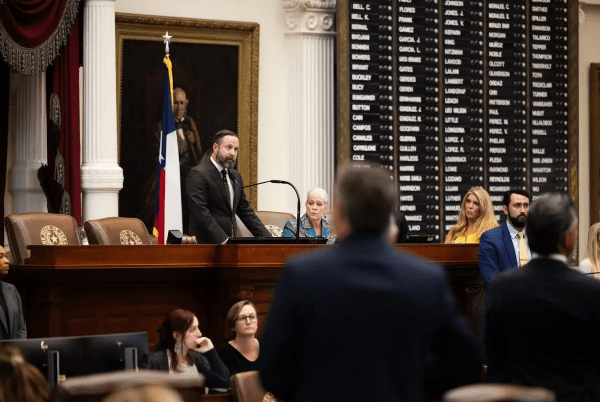
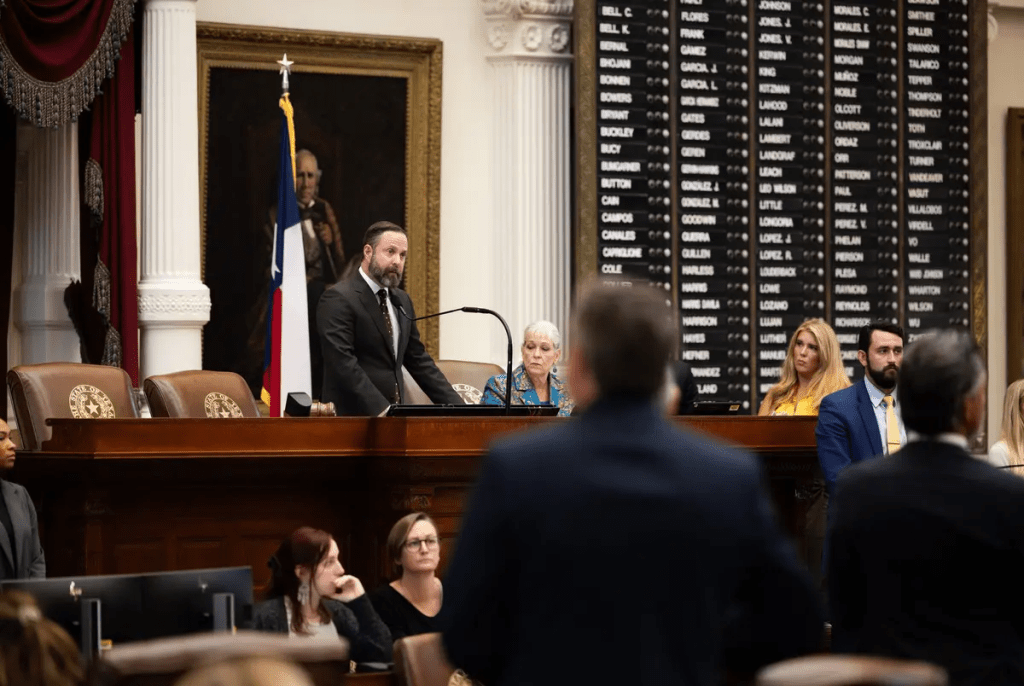
Texas House members clashed over a bill that would restrict which restrooms transgender people can use in government buildings and schools, but ultimately approved it late Thursday.
Representatives approved Senate Bill 8 on a 86-45 vote after several hours of tense debate that was at times interrupted by people in the gallery shouting insults at lawmakers who supported the bill. The House gallery, where visitors can watch proceedings, was emptied out by staff and Department of Public Safety officers after the disruptions continued.
SB 8 would restrict bathroom use in government-owned buildings, public schools and universities based of sex assigned at birth and would not allow exceptions for transgender inmates’ housing in prisons and jails. It would also bar those assigned male at birth from accessing women’s domestic violence shelters, unless they are under 17 and the child of a woman also receiving services.
Bathroom bills proposing civil or criminal penalties for entering restrooms not matching biological sex have been proposed in Texas for more than a decade, and 19 other states have successfully passed their own proposals. The Texas House, however, has largely failed to garner traction for bathroom bills after a tense battle over one proposal in 2017. The Texas Senate has passed six different bathroom bills since 2017.
A last-minute amendment from Rep. Steve Toth, R-Conroe, raised the proposed fines to $25,000 against institutions where violations occur, and $125,000 for any subsequent violations. The raised penalties would make SB 8 the most financially punitive bathroom bill in the country. The amendment was adopted without debate.
Supporters of SB 8, which has also been called the “Texas Women’s Privacy Act,” have said the bill is necessary to ensure safety and comfort for women in intimate spaces like changing rooms and bathrooms. The bill’s House sponsor, Rep. Angelia Orr, R-Itasca, said the goal of the bill is to prompt political subdivisions to create their own policies to ensure bathrooms are secure.
“The preference of someone’s sexual appearance does not override the safety and privacy of a biological female,” Orr said.
Orr said the bill does not affect privately owned or funded businesses, and will not create penalties against individuals.
Opponents of the bill have called the restrictions unnecessary, and that the bill would incite harassment against trans people and cisgender people falsely accused of entering the wrong facility. Rep. Jessica Gonzalez, D-Dallas, said she personally had been accused of entering the wrong restroom in the Texas Capitol, which already has a policy similar to SB 8’s proposal.
Questioning from Democrats who opposed the bill attempted to zero in on how the bill would be enforced, as it outlines that agencies will take “every reasonable step” to ensure the policy is followed. Orr said during questioning that it would be up to agencies how to enforce their policy. Previously when the bill was heard in committee, Orr said the policies would be determined based on how someone looked.
“Who do you think is more uncomfortable in the bathroom today? A cis woman, or a trans woman wondering if she’s about to be harassed?” Rep. Erin Zwiener, D-Driftwood, asked.
During testimony in both chambers through the session and on the House floor on Thursday, tensions between lawmakers for and against the bill flared. Several members argued in small groups multiple times and were separated by staffers as debate continued on the floor. At one point, Toth heckled Rep. Rafael Anchia, D-Dallas, for using Bible quotes as he spoke on a failed amendment designed to kill the bill. Toth was warned by a House staffer for the remarks.
Anchia later argued with Rep. Hillary Hickland, R-Belton, away from the floor debate after she chastised his use of the Bible and countered with her own quotes as she expressed support for the bill. Other members cited religion several times after to channel their support and opposition to the bill.
“Everyone is born a child of God, and everyone who is born into this life deserves to be treated that way,” Rep. John Bryant, D-Dallas said. “That is what the Bible says. That is what our hearts tell us. And the only time we act differently is when we get into politics.”
Representatives with family violence shelters expressed concern about the bill’s exclusivity during testimony earlier in the month, and said it could affect not just trans victims of domestic violence, but cisgender women with teenage dependents or adult dependents who are disabled. While four other states have similar sex-based restrictions on shelters, they still allow trans victims to be accepted if they have separate sleeping quarters.
“When you call the hotline, it is often the moment before you believe you will die. I don’t say that with hyperbole,” said Molly Voyles, director of public policy at the Texas Council on Family Violence, during the House State Affairs committee hearing last week when SB 8 was discussed. “Many women fleeing have a son who is 18 still in high school, or a child with a disability over that age for whom they are the primary caretaker. A choice to leave that includes leaving without your child is not a choice at all.”
SB 8 will be sent back to the Senate to approve the changes. Lawmakers have until Sept. 13 to approve any legislation during the second special session.
Senate Bill 8, an anti-trans “bathroom bill,” would require government buildings —including public universities — to designate restrooms, locker rooms, and other facilities strictly by “biological sex,” instead of gender identity. SB 8 penalizes institutions, not individuals: a first violation carries a $5,000 fine, with repeat violations rising to $25,000 each. It also empowers the state attorney general to investigate complaints.
“I will say it again: SB 8 does NOT protect women. It is an unconstitutional and a direct attack on the rights of the Trans community,” state Rep. Jessica González (D), who represents District 104 and chairs the Texas House LGBTQ Caucus, wrote on X. “This bill is nothing less than discriminatory and harmful, and it has no place in Texas.”
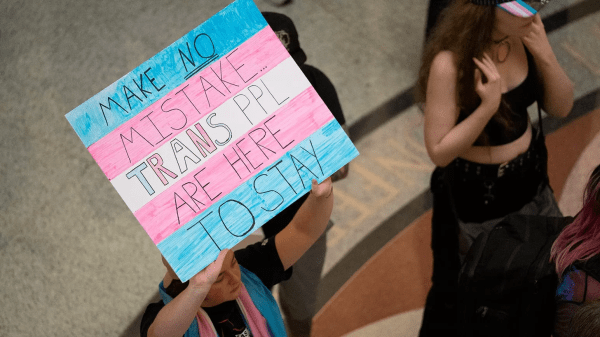
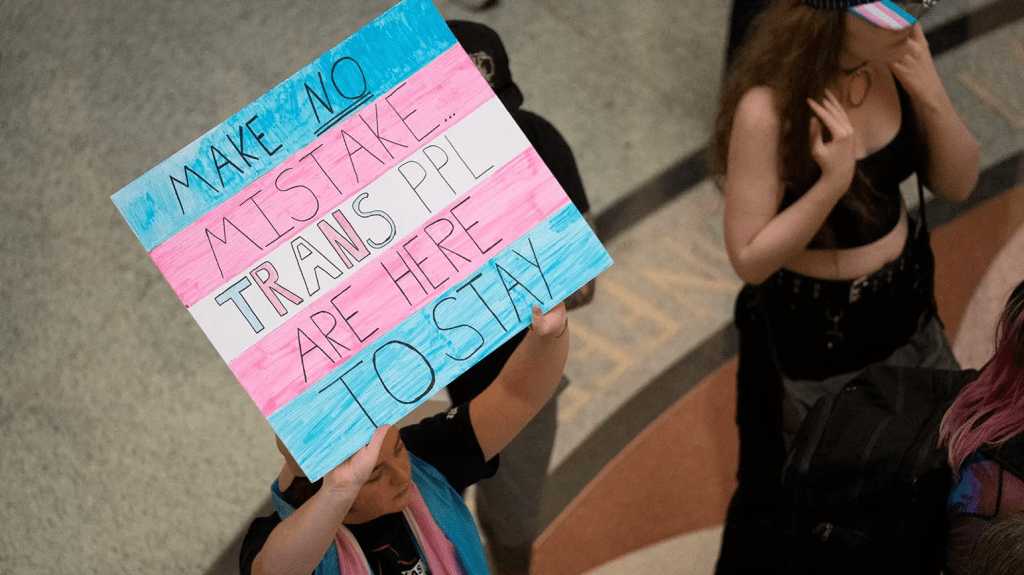
The state Senate approved SB 8 earlier this month, and it was subsequently greenlighted by the House State Affairs Committee on August 22, despite about 100 activists gathering at the Texas Capitol to protest it, with nearly half of the protesters participating in a sit-in.
Cameron Samuels, an incoming student at the Lyndon B. Johnson School of Public Affairs, told The Daily Texan that bills like SB 8 are designed to erase trans lives. “We are the experts of our lived experiences and this hate and bigotry relies on our inability to tell our stories,” Samuels said.
“They are seeking to silence and erase our narratives. But when we are telling our stories and demonstrating a more accurate reflection of what it means to be a transgender Texan, then we bust those myths and we challenge those narratives.”
According to Equality Texas, testimony on the bill was halted after just two hours, leaving nearly 100 people who had signed up to speak without the chance to testify. After Republicans ended the testimony early, Democratic Representatives Jessica González and Donna Howard held a “people’s hearing” in the Texas Capitol auditorium. SB 8 is now awaiting a final vote and debate on the House floor.
Protesters also rallied against House Bill 7, a sweeping measure that seeks to sharply restrict access to abortion medication. HB 7 would allow private citizens to sue anyone who manufactures, mails, prescribes, or provides abortion pills in Texas, with damages starting at $100,000 per violation.
The measure mirrors earlier “bounty” laws but expands them by targeting the most common method of abortion in the United States. On August 25, the House State Affairs Committee passed a revised version of the bill.
“Despite already having a total abortion ban on the books—one that is wreaking havoc on the state’s health care infrastructure and tragically taking the lives of pregnant people—the Texas legislature is voting on SB 7, another horrifying bounty hunter bill,” the Center for Reproductive Rights said on X. “If enacted, one of the very last avenues for Texans to access critical reproductive care will be closed off.”
Lawmakers have until September 13 to pass the bills during the special session. If approved, SB 8 and HB 7 would add to Texas’s growing slate of anti-trans and anti-abortion laws.
On Sunday, Texas Democrats denied House Republicans a quorum to approve a new Congressional map redrawn to add GOP seats to the slim majority Republicans hold in the U.S. House of Representatives.
They did it by fleeing the state.
While the Republicans’ gerrymandering power grab was top of mind for Texas Dems, another piece of legislation will also die without a vote if the lawmakers make good on their promise to stay absent from a special session called by Gov. Greg Abbott (R) to push the redistricting plan through the Republican-dominated House.
On Monday, Texas Senate Republicans passed a draconian new anti-trans “bathroom bill” through committee that provides a rigid penalty system for any facility that does not comply. A first offense would trigger a $5,000 fine, while subsequent violations would earn $25,000 fines for each infraction, the Dallas Observer reports.
Sponsors added S.B. 7 to the special session agenda at the request of Abbott, who called the discriminatory legislation a priority.
If Democrats remain out of state for the next two weeks, the quorum break-up would last through the session’s expiration. That means that even if S.B. 7 passes the Senate, it would be dead on arrival in the Texas House of Representatives.
Out state Sen. Venton Jones (D), who made news earlier this year when he proposed to his boyfriend on the Texas House floor, urged the public to testify against the bill regardless of its poor prospects in the Democrats’ absence, as he stood on a tarmac about to leave the state.
“Texas, it’s time to stand up against harmful legislation targeting the LGBTQ community,” Jones posted to Instagram. S.B. 7 “aims to erase transgender, non-binary, and intersex Texans from public life spaces. We encourage Texans to show up and testify against this bill, and to follow organizations like Equality Texas to stay informed and get involved in the defense of this special session.”
“Venton makes clear that at least for him, and it would seem to be the LGBTQ caucus as well, the quorum break was not only about ending the redistricting plan, but also cutting short these discriminatory bills like SB 7,” said a spokesperson for the LGBTQ+ advocacy group Equality Texas.
“While the maneuver might have been about redistricting, I think the timing considered what other legislation was still on the table.”
Over 100 people signed up to testify for and against S.B. 7 at Monday’s hearing.
“I was born female and I continue to identify as a woman, but I get mistaken for a man or a teenage boy when I go to the bathroom. I am who this bill claims to protect, but in execution, I will only be harmed,” said Caroline Green, an Austin resident.
While the extraordinary, mid-decade redistricting plan won’t affect state lawmakers like Jones, it does put the seat of Texas’ only out member of Congress, Rep. Julie Johnson (D), in jeopardy.
The new map would turn Johnson’s district from 68% Democratic to 60% Republican, the Dallas Voice reports. Texas’ 32nd Congressional District currently includes parts of Plano and Dallas. The new district would only include a portion of Dallas and more rural parts of eastern Texas.
Johnson called the proposed map a “disaster” and a “desperate move from a party losing its grip on a changing state.”
In 2021, when Johnson represented Dallas as a state representative, she and her Texas House Democratic colleagues fled the state in another walkout, denying Republicans a quorum, slowing down a right-wing, so-called voting rights bill from passage.
A transgender woman and several friends were harassed and assaulted in Austin, Texas last weekend, and one bystander who stepped in to defend them was hospitalized, in an incident police are investigating as a possible hate crime.
On July 26, the trans woman — who has requested anonymity during the ongoing investigation — and several friends visited Barton Springs, a public swimming hole in Austin’s Zilker Park, as Chron reported Wednesday. During their visit, three men they didn’t know flirted heavily with members of the group, the woman told Chron, but soon began harassing and pointing at her, making remarks about not “support[ing] that lifestyle.”
The three men then reportedly began shoving members of the group and poking the women “near their breasts,” according to a Reddit user who posted about the incident on Monday, claiming to be a friend of one of the victims. At that point, a bystander — identified as Jarod — intervened, and was attacked himself.
“The three men then proceeded to get violent and aggressive, yelling at us and getting in our faces until one of them decided to start swinging and punched Jarod in the jaw, knocking him unconscious,” the anonymous trans woman told Chron. “I quickly ran over to him in an attempt to help Jarod out but was then punched in the face by the assailant in the orange shorts.” The men then shoved another of the women to the ground and left the scene soon after, according to video footage of the incident posted to social media.
The Austin Police Department (APD) released a statement on Tuesday stating that the alleged assault was under investigation and could be declared a hate crime by the city’s Hate Crime Review Committee. “APD remains unwavering in its commitment to fostering a secure and inclusive Austin community,” the department stated. (Community leaders called for APD to be investigated for excessive force in March this year, after videos circulated online that appeared to show officers throwing a trans woman onto the ground during an arrest.)
Austin-area drag performer Brigitte Bandit posted about the assault on Instagram Monday, asking locals for help identifying the attackers. In a follow-up post the next day, Bandit stated that the men had been identified and the information had been shared privately with the victims. “I will not be posting their information without consent of the people involved in the attack,” Bandit wrote, adding, “[l]et’s let them decide which routes they decide [are] best.”
Jarod was treated by EMS personnel at the scene and taken to a hospital, KXAN reported. Per a GoFundMe campaign started by Jarod’s family, he suffered “gashes to his head, a bleeding ear, a broken jaw, and a concussion,” requiring surgery. The fundraiser drew more than $64,000 in donations at time of writing, more than triple its original goal.
“I just wanted to stand up for a nice person that I had just met,” Jarod wrote in a message shared by Bandit on Instagram, “but the outpouring of support from y’all’s community has been overwhelming, so thank you with all of my heart.”
In her comments to Chron, the anonymous trans woman said that she did not know Jarod prior to the assault, but called him “an absolute angel,” saying she was grateful he stepped in.
“I had never known him before that day, but he stood up for me when I was being harassed and he took the most of the assault,” the woman told Chron. “He deserves every penny to help pay for his surgery and his time off work to care of himself and his kid.” The amount of community support she received after the attack, she added, “truly helps my moral and emotional well-being, and makes me believe that this city really is a safe space for people like me.”
Thinking about retiring in the Lone Star State? A new study from Bankrate says you probably shouldn’t after listing Texas as the second-to-last worst state for retirement in 2025.
Bankrate, a personal finance website, released on Monday, July 21, its findings of the best and worst states to retire in 2025. To determine ranking, Bankrate analyzed multiple data points and assigned a weight to each category, including: affordability (28%), weather (18%), neighborhood safety (17%), health care (16%), local taxes (9%), arts, entertainment and recreation (7%), people of a similar age (3%) and miscellaneous (2%).
In the ranking, Texas was ranked at No. 49, while Louisiana placed in last place. Texas did well in the taxes category, ranking seventh. However, the Lone Star State ranked dead last in health care and 49th in people of similar age, according to the study. Safety was also notably weak, as the state ranked 38th.
On the other side, New Hampshire was named the best state for retirees, ranking well in neighborhood safety (1st), health care (5th), taxes (6th) and people of similar age (7th), according to the study. Four of the top 10 best states for retirees are in New England (Maine, New Hampshire, Rhode Island and Vermont).
Bankrate used metrics from the U.S. Census, the Council for Community and Economic Research, the Environmental Protection Agency, the U.S. Department of Health and Human Services and more. The researchers also surveyed 2,260 U.S. adults between May 14-16, 2025.
Texas Gov. Greg Abbott (R) has called a special legislative session to address the deadly floods that have left 134 people dead and 101 others missing. However, in preparation for the session, state GOP lawmakers have filed 82 measures, none of which address the flooding. Instead, they seek to ban transgender women from using women’s facilities (and Abbott personally supports the idea).
In Abbott’s proclamation for the special session, he laid out 18 priorities. The first four addressed the need for improved emergency warning, communication, and aid systems. The other priorities included further restricting abortions and election access, gerrymandering the state electoral map to favor Republicans, and “legislation protecting women’s privacy in sex-segregated spaces.”
The state constitution says legislators can only file bills related to the governor’s priorities, but Republican legislators haven’t filed any bills related to the deadly floods, KXAN reported.
Instead, Republican state Rep. Valoree Swanson filed H.B. 32, which would require people only to use facilities in public schools, state universities, government-owned buildings, jails, and family violence shelters that match the “biological sex” assigned on their original birth certificate. Texas recently changed its laws to forbid transgender people from changing the gender markers on their birth certificates and driver’s licenses.
Anyone who allows the proposed law to be violated could be subject to civil fines from $5,000 to $25,000, as well as additional penalties. Swanson filed a similar bill during the previous legislative session, but it failed to pass after missing several legislative deadlines, Chron reported.
Three other special session bills, H.B. 37, 65, and 70, would punish any person or internet service provider who aids or abets the distribution of abortion medication.
H.B. 38, introduced by Democratic state Rep. Jessica Gonzalez (who is also chair of the Texas House LGBTQ Ca ucus), would prohibit workplace, housing, and public accommodations discrimination against LGBTQ+ people, but there’s no way it’ll pass the state’s Republican-majority legislative chambers. It’s also unclear how the bill relates to Abbott’s list of priorities.
“I am proud to have filed H.B. 38 in preparation for the upcoming special session of our legislature,” González wrote in a statement on Tuesday. “H.B. 38 is a comprehensive nondiscrimination bill that would codify equal protection for the LGBTQ+ community and military veterans in employment, housing, and public accommodations.”
A lot of states are passing laws that target the LGBTQ+ community — but these 15 are the absolute worst.
Over 1,000 anti-LGBTQ+ laws have been proposed across every state legislature in the U.S. over the past two years, according to the American Civil Liberties Union, and 126 have passed into law. Less than two months into the 2025 legislative session, 390 laws targeting LGBTQ+ people have been proposed.
While marriage equality and anti-discrimination protections based on sexual orientation and gender identity are still guaranteed federally by U.S. Supreme Court rulings (for now), LGBTQ+ people are still concerned about their rights being taken away, especially when only 15 states have “shield laws” protecting access to gender-affirming care and abortion.
Based on laws surrounding marriage, family rights, health care, education, and youth collected by the Movement Advancement Project, here are the 15 worst states for LGBTQ+ people.
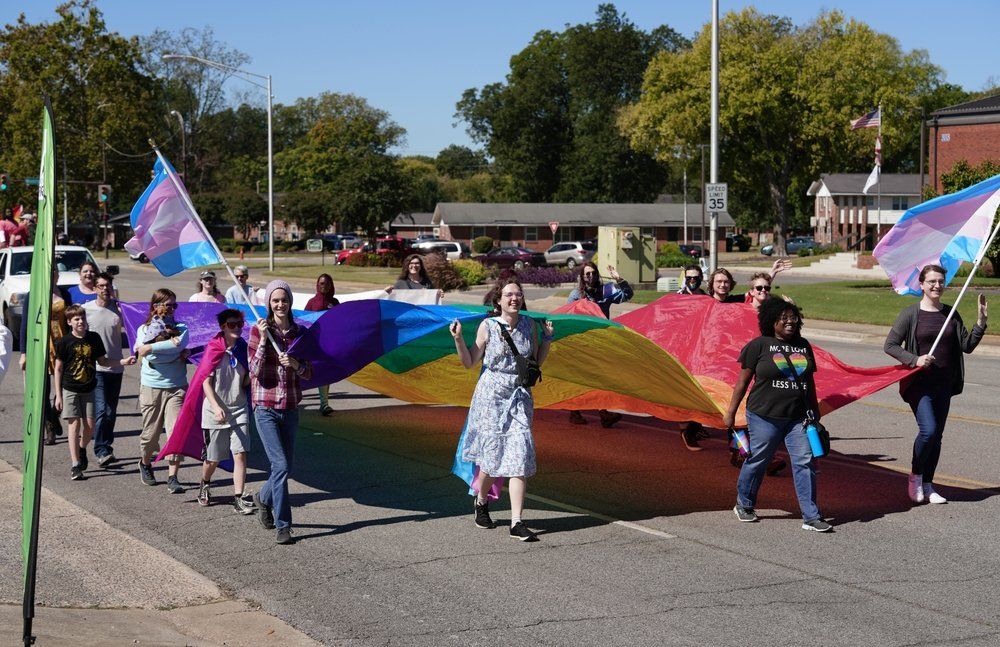
Pride Parade in Huntsville, Alabama (October 1, 2022)
Nondiscrimination laws: Alabama does not have nondiscrimination laws in employment, housing, health care, education, public accommodations, or credit/lending. Its state code incorrectly defines sex as exclusively male or female, and it prohibits transgender people from using public facilities that align with their identities.
Marriage equality and parental rights: Alabama does not have adoption or foster care nondiscrimination protections for LGBTQ+ parents. It does not have second-parent adoption for unmarried couples, confirmatory adoption, nor recognition for parents using assisted reproductive technologies. It also does not have family leave laws that encompass LGBTQ+ people.
Education and youth policies: Alabama has a “Don’t Say Gay” law restricting discussion of LGBTQ+ identities in classrooms. It has banned trans students from participating in sports or using school facilities based on their identities, and it requires staff to forcibly out LGBTQ+ students to their guardians. The state also has a “religious exemption” law for Child Welfare Services.
Healthcare access and rights: Alabama has banned life-saving gender-affirming care for youth, though it permits the discredited and harmful practice of so-called conversion therapy for youth. Health insurance companies, including Medicaid, are not required to provide coverage related to gender transition or fertility treatments. The state also has a “religious exemption” law for healthcare providers.
Criminal justice: Alabama’s hate crime laws do not encompass sexual orientation and gender identity, and it has not banned the so-called “LGBTQ+ panic” defense.
Arkansas
Danielsen_Photography / Shutterstock.com
3rd annual Pride Walk at Hot Springs National Park, Arkansas (June, 4 2021)
Nondiscrimination laws: Arkansas does not have nondiscrimination laws in employment, housing, health care, education, public accommodations, or credit/lending. The state bans cities and local ordinances from passing nondiscrimination laws, and it has law about “adult” performances that could be used to target or restrict drag.
Marriage equality and parental rights: Arkansas does not have adoption or foster care nondiscrimination protections for LGBTQ+ parents. It does not have second-parent adoption for unmarried couples, confirmatory adoption, nor recognition for parents using assisted reproductive technologies. It also does not have family leave laws that encompass LGBTQ+ people.
Education and youth policies: Arkansas has a “Don’t Say Gay” law restricting discussion of LGBTQ+ identities in classrooms. It has banned trans students from participating in sports or using school facilities based on their identities, and it requires staff to forcibly out LGBTQ+ students to their guardians.
Healthcare access and rights: Arkansas has banned life-saving gender-affirming care for youth, though it permits the discredited and harmful practice of so-called conversion therapy for youth. Medicaid is forbidden from providing coverage related to gender transition to minors, and insurance companies are not required to cover fertility treatments. The state also has a “religious exemption” law for healthcare providers.
Criminal justice: Arkansas’ hate crime laws do not encompass sexual orientation and gender identity, and it has not banned the so-called “LGBTQ+ panic” defense. It has an HIV criminalization law that may require sex offender registration.
Florida
Chris_Harris / Shutterstock.com
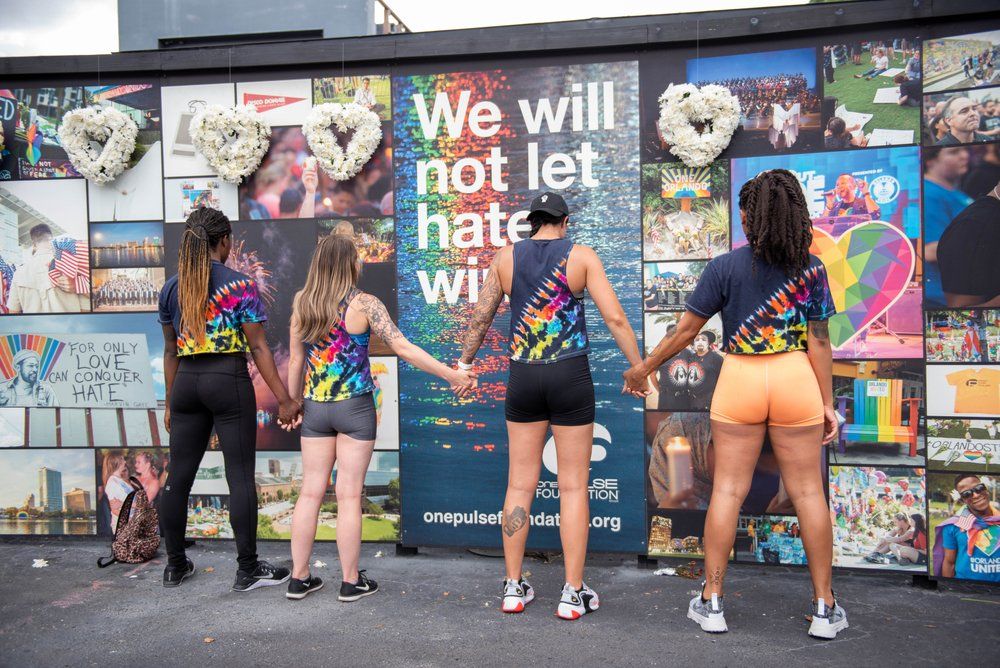
Mourners pay their respects to the fallen at the Pulse Nightclub memorial on the 5th anniversary of the Pulse mass shooting in Orlando, Florida (June 12, 2021)
Nondiscrimination laws: Florida has nondiscrimination laws in employment, housing, and public accommodations, but not in credit/lending, health care, nor education. The state prohibits transgender people from using public facilities that align with their identities, and it does not allow updating gender markers on driver’s licenses or birth certificates. It has law about “adult” performances that could be used to target or restrict drag
Marriage equality and parental rights: Florida does not have adoption or foster care nondiscrimination protections for LGBTQ+ parents. It does not have second-parent adoption for unmarried couples, confirmatory adoption, nor recognition for parents using assisted reproductive technologies. It also does not have family leave laws that encompass LGBTQ+ people.
Education and youth policies: Florida originated the “Don’t Say Gay” laws restricting discussion of LGBTQ+ identities in classrooms. It has banned trans students from participating in sports or using school facilities based on their identities, and it requires staff to forcibly out LGBTQ+ students to their guardians.
Healthcare access and rights: Florida has banned life-saving gender-affirming care for youth, though it permits the discredited and harmful practice of so-called conversion therapy for youth. Medicaid is forbidden from providing coverage related to gender transition for all ages, and insurance companies are not required to cover fertility treatments. The state also has a “religious exemption” law for healthcare providers.
Criminal justice: Florida’s hate crime laws only encompass sexual orientation, not gender identity. It has not banned the so-called “LGBTQ+ panic” defense, and it has an HIV criminalization law.
Idaho
Venture Out Media / Shutterstock.com
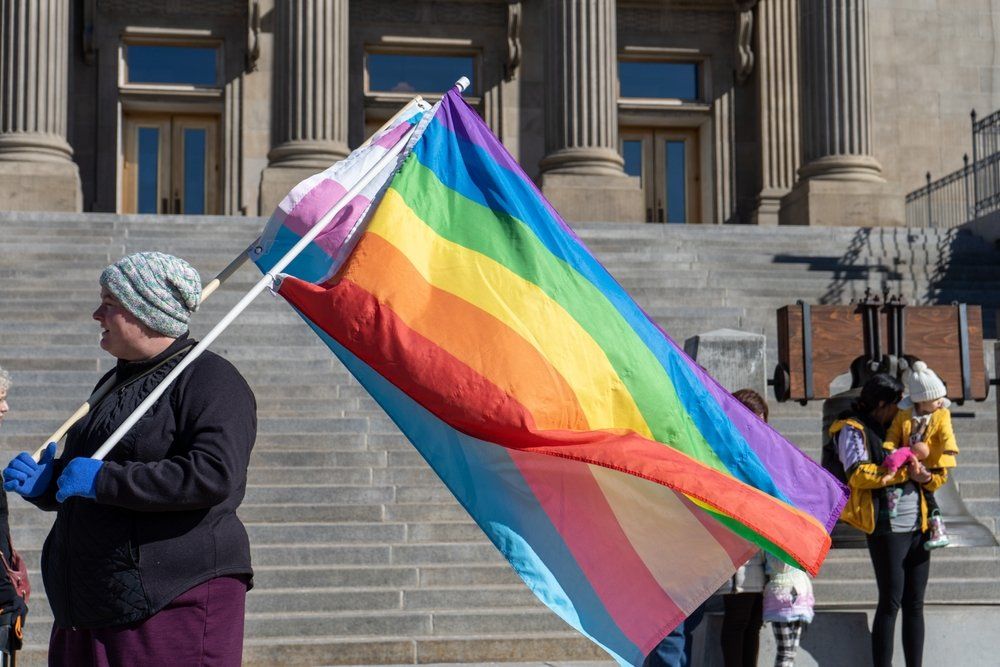
Rally in support of transgender youth and gender-affirming care in Boise, Idaho (February 24, 2023)
Nondiscrimination laws: Idaho has nondiscrimination laws in employment, housing, and public accommodations, but not in credit/lending, education, health care, nor for state employees. Its state code incorrectly defines sex as exclusively male or female.
Marriage equality and parental rights: Idaho does not have adoption or foster care nondiscrimination protections for LGBTQ+ parents. It has second-parent adoption for unmarried couples, but not confirmatory adoption nor recognition for parents using assisted reproductive technologies. It also does not have family leave laws that encompass LGBTQ+ people.
Education and youth policies: Idaho has banned trans students from participating in sports or using school facilities based on their identities, and it requires staff to forcibly out LGBTQ+ students to their guardians. The state also has a “religious exemption” law for Child Welfare Services, though it has protections for LGBTQ+ youth in the Child Welfare System.
Healthcare access and rights: Idaho has banned life-saving gender-affirming care for youth, though it permits the discredited and harmful practice of so-called conversion therapy for youth. Medicaid is forbidden from providing coverage related to gender transition for all ages, and insurance companies are not required to cover fertility treatments. The state also has a “religious exemption” law for healthcare providers.
Criminal justice: Idaho’s hate crime laws do not encompass sexual orientation and gender identity. It has not banned the so-called “LGBTQ+ panic” defense, and it has an HIV criminalization law.
Indiana
Umut Tolga Pehlivan / Shutterstock.com
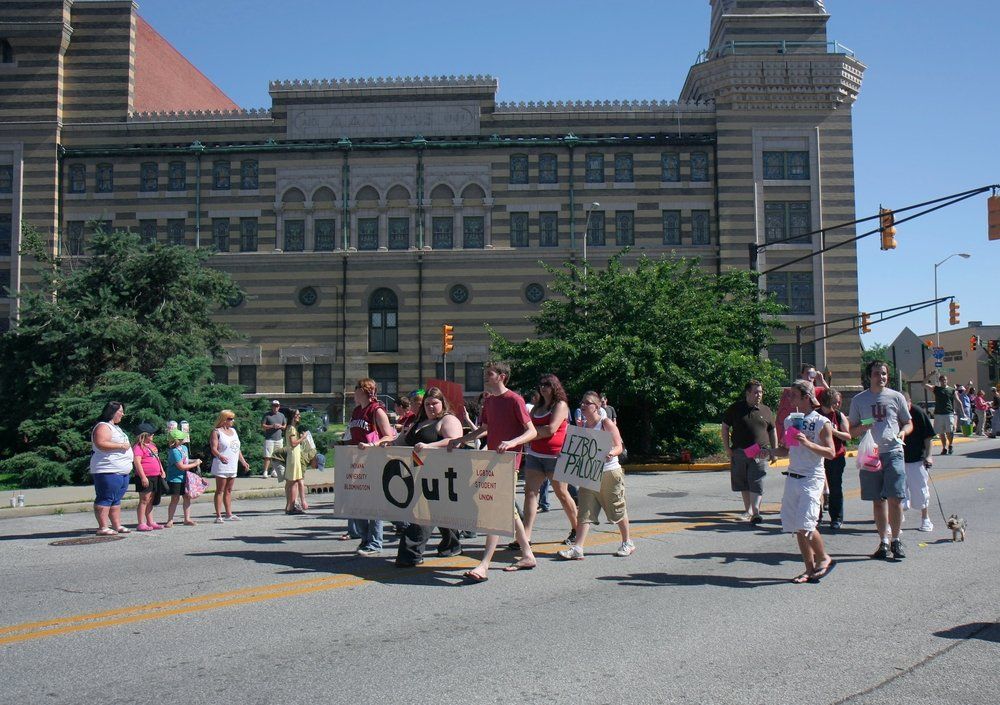
Indiana University Bloomington Students walking at Indy Pride in Indianapolis, Indiana (June 4, 2008)
Nondiscrimination laws: Indiana has weaker nondiscrimination laws in employment, housing, and public accommodations, but not in credit/lending, education, nor health care. The state also has a broad “religious exemption” law.
Marriage equality and parental rights: Indiana has adoption or foster care nondiscrimination protections based on sexual orientation, but not gender identity. It has second-parent adoption for unmarried couples, but not confirmatory adoption nor recognition for parents using assisted reproductive technologies. It also does not have family leave laws that encompass LGBTQ+ people.
Education and youth policies: Indiana has a “Don’t Say Gay” law restricting discussion of LGBTQ+ identities in classrooms. It has banned trans students from participating in sports or using school facilities based on their identities, and it requires staff to forcibly out LGBTQ+ students to their guardians.
Healthcare access and rights: Indiana has banned life-saving gender-affirming care for youth, though it permits the discredited and harmful practice of so-called conversion therapy for youth. Medicaid and state health insurance plans are not required to provide coverage related to gender transition or fertility treatments, but it has trans-inclusive health benefits for state employees.
Criminal justice: Indiana’s hate crime laws do not encompass sexual orientation and gender identity, and it has not banned the so-called “LGBTQ+ panic” defense. It has an HIV criminalization law that may require sex offender registration.
Louisiana
Scott Colesby / Shutterstock.com
Southern Decadence Parade march through the French Quarter in New Orleans, Louisiana (September 1, 2024)
Nondiscrimination laws: Louisiana does not have nondiscrimination laws in employment, housing, health care, education, public accommodations, or credit/lending. Its state code incorrectly defines sex as exclusively male or female, and it prohibits transgender people from using public facilities that align with their identities. The state also has a broad “religious exemption” law.
Marriage equality and parental rights: Louisiana does not have adoption or foster care nondiscrimination protections for LGBTQ+ parents. It does not have second-parent adoption for unmarried couples, confirmatory adoption, nor recognition for parents using assisted reproductive technologies. It also does not have family leave laws that encompass LGBTQ+ people.
Education and youth policies: Louisiana has a “Don’t Say Gay” law restricting discussion of LGBTQ+ identities in classrooms. It has banned trans students from participating in sports or using school facilities based on their identities, and it requires staff to forcibly out LGBTQ+ students to their guardians.
Healthcare access and rights: Louisiana has banned life-saving gender-affirming care for youth, though it permits the discredited and harmful practice of so-called conversion therapy for youth. Health insurance companies, including Medicaid, are not required to provide coverage related to gender transition or fertility treatments, and state employees do not have trans-inclusive benefits.
Criminal justice: Louisiana’s hate crime laws only encompass sexual orientation, not gender identity. It has not banned the so-called “LGBTQ+ panic” defense, and it has an HIV criminalization law that may require sex offender registration.
Mississippi
Carmen K. Sisson / Shutterstock.com
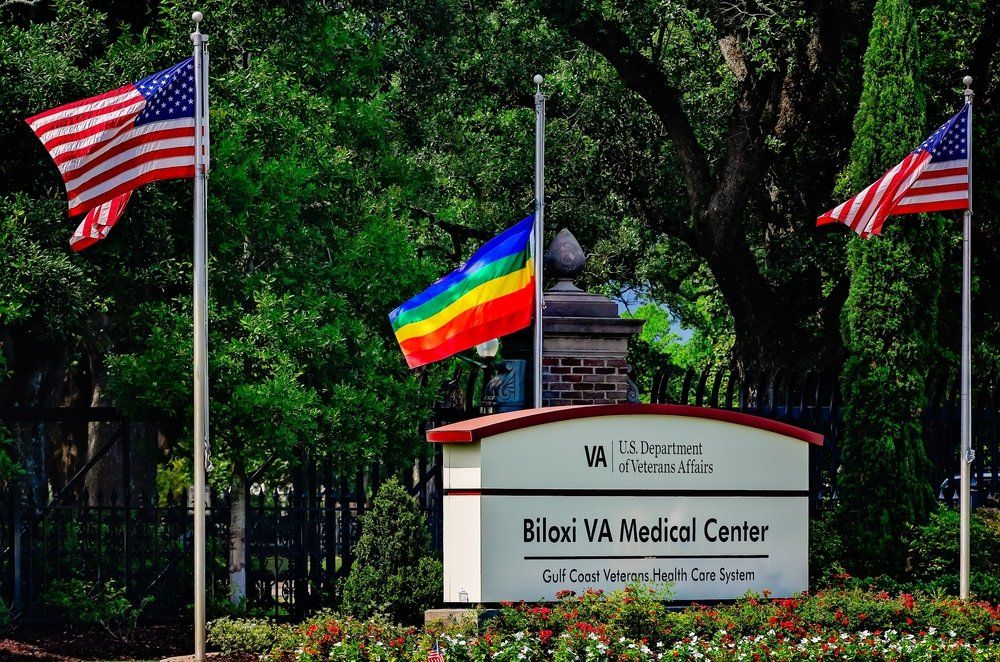
A rainbow flag supporting Pride month flies a the Biloxi VA Medical Center in Biloxi, Mississippi (June 5, 2023)
Nondiscrimination laws: Mississippi does not have nondiscrimination laws in employment, housing, health care, education, public accommodations, or credit/lending. Its state code incorrectly defines sex as exclusively male or female, and it prohibits transgender people from using public facilities that align with their identities. The state also has a broad “religious exemption” law.
Marriage equality and parental rights: Mississippi does not have adoption or foster care nondiscrimination protections for LGBTQ+ parents. It has second-parent adoption for unmarried couples, but not confirmatory adoption nor recognition for parents using assisted reproductive technologies. It also does not have family leave laws that encompass LGBTQ+ people.
Education and youth policies: Mississippi has a “Don’t Say Gay” law restricting discussion of LGBTQ+ identities in classrooms. It has banned trans students from participating in sports or using school facilities based on their identities, and it requires staff to forcibly out LGBTQ+ students to their guardians. The state also has a “religious exemption” law for Child Welfare Services.
Healthcare access and rights: Mississippi has banned life-saving gender-affirming care for youth, though it permits the discredited and harmful practice of so-called conversion therapy for youth. Medicaid is forbidden from providing coverage related to gender transition for youth, and insurance companies are not required to cover fertility treatments. The state also has a “religious exemption” law for healthcare providers.
Criminal justice: Mississippi’s hate crime laws do not encompass sexual orientation and gender identity. It has not banned the so-called “LGBTQ+ panic” defense, and it has an HIV criminalization law.
Missouri
Ryanzo W. Perez / Shutterstock.com
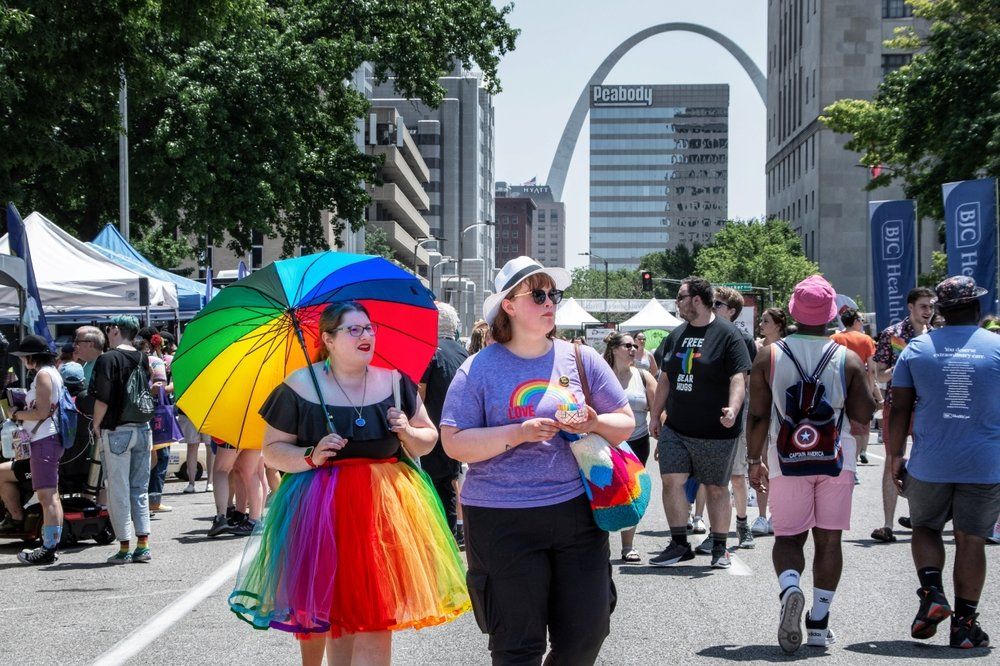
A view down one of the streets filled with celebrants during Saint Louis PrideFest in Missouri (June 24, 2023)
Nondiscrimination laws: Missouri has weaker nondiscrimination laws in housing, and public accommodations, but not in employment, credit/lending, education, nor health care. The state also has a broad “religious exemption” law.
Marriage equality and parental rights: Missouri’sadoption or foster care nondiscrimination protections only encompass sexual orientation, not gender identity. It does not have second-parent adoption for unmarried couples, confirmatory adoption, nor recognition for parents using assisted reproductive technologies. It also does not have family leave laws that encompass LGBTQ+ people.
Education and youth policies: Missouri has banned schools and districts from passing nondiscrimination or anti-bullying policies protecting LGBTQ+ students. It has banned trans students from participating in sports based on their identities, but not from using facilities that align with their identities.
Healthcare access and rights: Missouri has banned life-saving gender-affirming care for youth, though it permits the discredited and harmful practice of so-called conversion therapy for youth. Medicaid is forbidden from providing coverage related to gender transition for all ages, and insurance companies are not required to cover fertility treatments. The state also has a “religious exemption” law for healthcare providers.
Criminal justice: Missouri’s hate crime laws encompass sexual orientation and gender identity, though it has not banned the so-called “LGBTQ+ panic” defense, and it has an HIV criminalization law.
Montana
Cavan-Images / Shutterstock.com
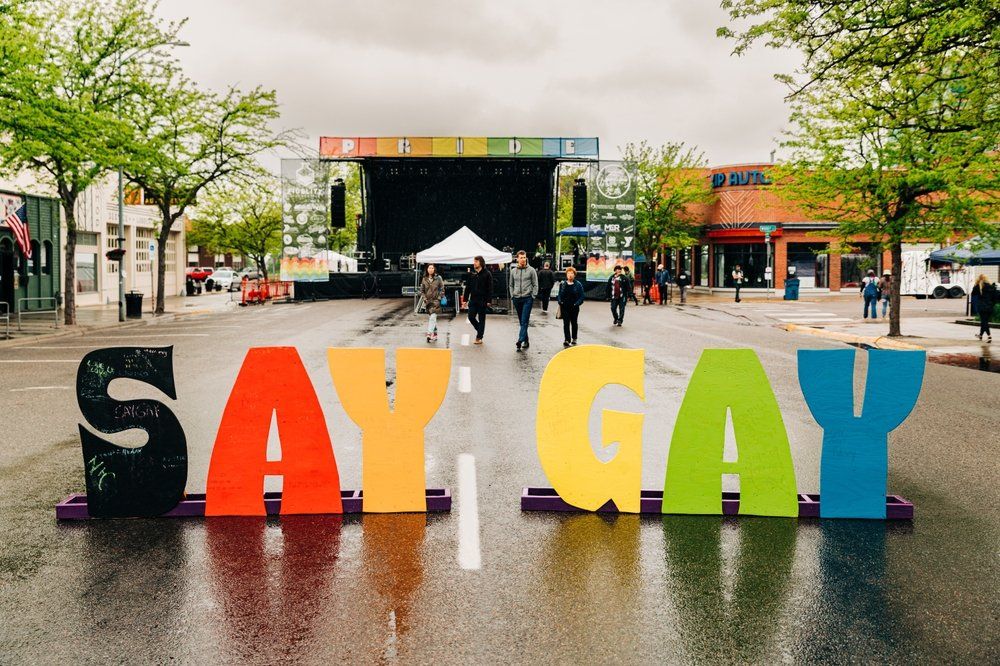
“Say Gay” sign at Missoula Pride in Montana (March 29, 2024)
Nondiscrimination laws: Montana does not have nondiscrimination laws in employment, housing, health care, education, public accommodations, or credit/lending.Its state code incorrectly defines sex as exclusively male or female, and it has a broad “religious exemption” law. The state has also explicitly restricted drag performances, and does not allow updating gender markers on birth certificates
Marriage equality and parental rights: Montana’sadoption or foster care nondiscrimination protections only encompass sexual orientation, not gender identity. It has second-parent adoption for unmarried couples, but not confirmatory adoption nor recognition for parents using assisted reproductive technologies. It also does not have family leave laws that encompass LGBTQ+ people.
Education and youth policies: Montana requires that parents be notified of LGBTQ+ curricula so they can opt out. It has banned trans students from participating in sports based on their identities, but not from using facilities that align with their identities. The state requires staff to forcibly out LGBTQ+ students to their guardians.
Healthcare access and rights: Montana has banned life-saving gender-affirming care for youth, though it permits the discredited and harmful practice of so-called conversion therapy for youth. Health insurance companies and Medicaid are required to cover care related to gender transition, and there is some coverage for fertility treatments. However, the state has a “religious exemption” law for healthcare providers.
Criminal justice: Montana’s hate crime laws do not encompass sexual orientation and gender identity. It has not banned the so-called “LGBTQ+ panic” defense, and it has an HIV criminalization law.
Oklahoma
Kit Leong / Shutterstock.com
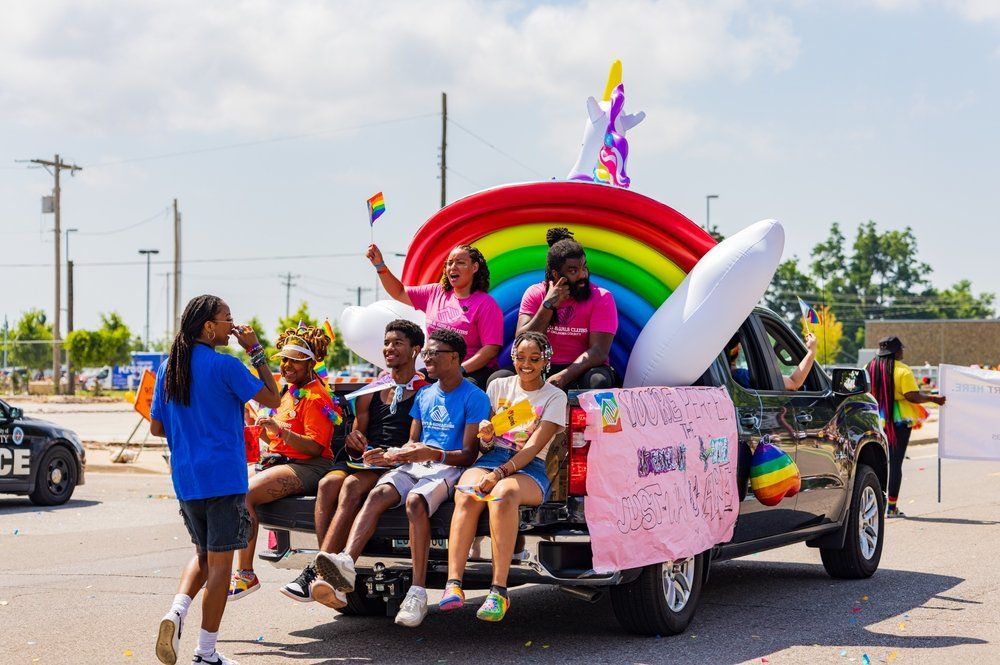
Pride Parade in Oklahoma (June 26, 2023)
Nondiscrimination laws: Oklahoma does not have nondiscrimination laws in employment, housing, health care, education, public accommodations, or credit/lending. Its state code incorrectly defines sex as exclusively male or female, and it prohibits updated gender markers on birth certificates. It also has a broad “religious exemption” law.
Marriage equality and parental rights: Oklahoma does not have adoption or foster care nondiscrimination protections for LGBTQ+ parents. It has second-parent adoption for unmarried couples, but not confirmatory adoption nor recognition for parents using assisted reproductive technologies. It also does not have family leave laws that encompass LGBTQ+ people.
Education and youth policies: Oklahoma has a weaker version of a “Don’t Say Gay” law that restricts the discussion of “homosexuality” in specific school subjects. It has banned trans students from participating in sports or using school facilities based on their identities. The state also has a “religious exemption” law for Child Welfare Services, though it has protections for LGBTQ+ youth in the Child Welfare System.
Healthcare access and rights: Oklahoma has banned life-saving gender-affirming care for youth, though it permits the discredited and harmful practice of so-called conversion therapy for youth. Health insurance companies, including Medicaid, are not required to provide coverage related to gender transition or fertility treatments, and state employees are not permitted trans-inclusive benefits.
Criminal justice: Oklahoma’s hate crime laws do not encompass sexual orientation and gender identity. It has not banned the so-called “LGBTQ+ panic” defense, and it has an HIV criminalization law.
South Carolina
Shuttershock creative
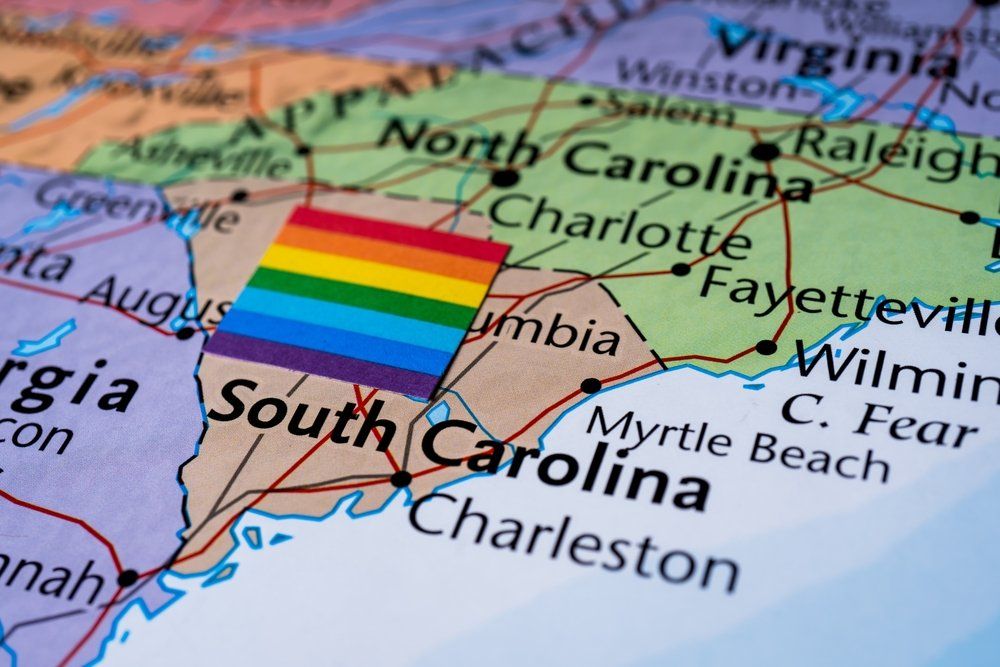
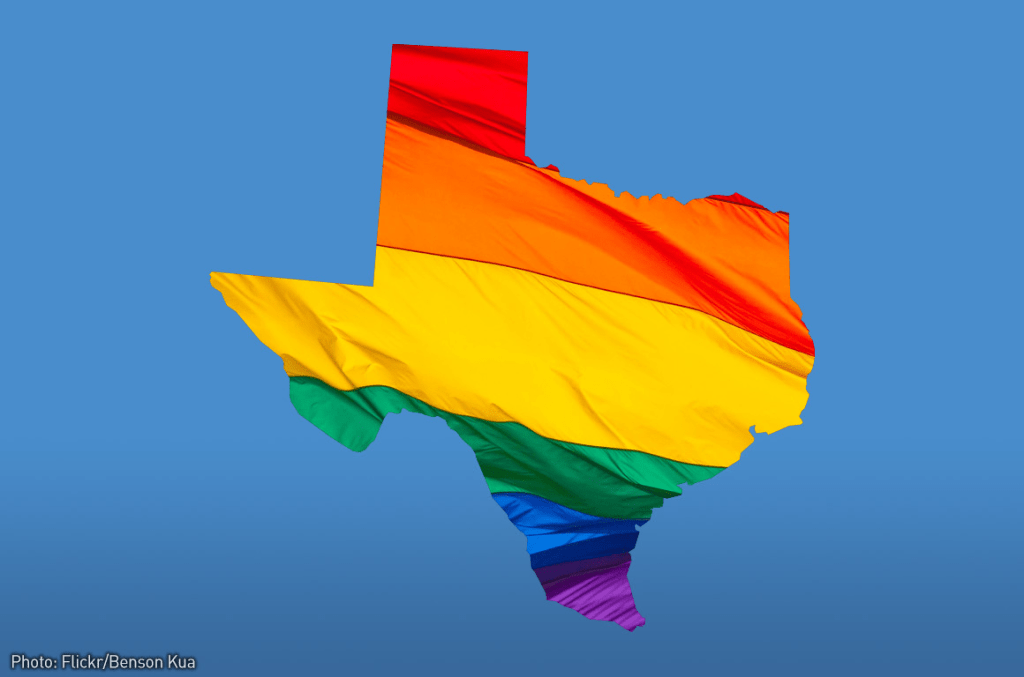
Rainbow flag on a map of South Carolina
Nondiscrimination laws: South Carolinadoes not have nondiscrimination laws in employment, housing, health care, education, public accommodations, or credit/lending. It has a broad “religious exemption” law.
Marriage equality and parental rights: South Carolina‘sadoption or foster care nondiscrimination protections only encompass sexual orientation, not gender identity. It does not have second-parent adoption for unmarried couples, confirmatory adoption, nor recognition for parents using assisted reproductive technologies. It also does not have family leave laws that encompass LGBTQ+ people.
Education and youth policies: South Carolinahas banned trans students from participating in sports based on their identities, but not from using facilities that align with their identities. The state requires staff to forcibly out LGBTQ+ students to their guardians. The state also has a “religious exemption” law for Child Welfare Services.
Healthcare access and rights: South Carolina has banned life-saving gender-affirming care for youth, though it permits the discredited and harmful practice of so-called conversion therapy for youth. Medicaid is forbidden from providing coverage related to gender transition for all ages, and insurance companies are not required to cover fertility treatments. The state also has a “religious exemption” law for healthcare providers.
Criminal justice: South Carolina‘s hate crime laws do not encompass sexual orientation and gender identity. It has not banned the so-called “LGBTQ+ panic” defense, and it has an HIV criminalization law.
South Dakota
Shuttershock creative
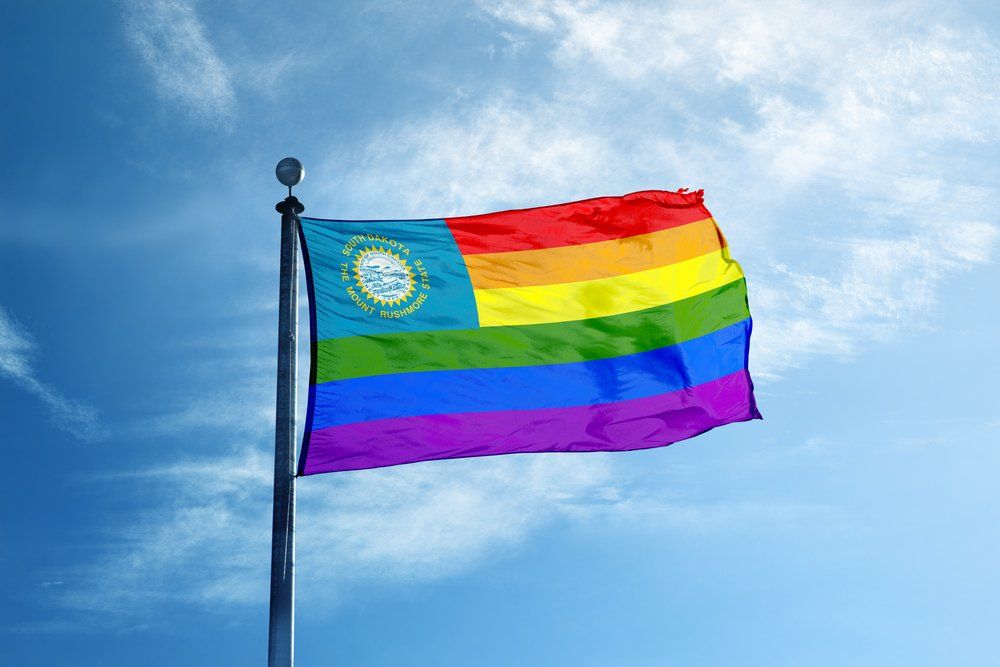
South Dakota state flag with rainbow stripes
Nondiscrimination laws: South Dakota does not have nondiscrimination laws in employment, housing, health care, education, public accommodations, or credit/lending. It has a broad “religious exemption” law.
Marriage equality and parental rights: South Dakota’sadoption or foster care nondiscrimination protections encompass sexual orientation and gender identity. However, it does not have second-parent adoption for unmarried couples, confirmatory adoption, nor recognition for parents using assisted reproductive technologies. It also does not have family leave laws that encompass LGBTQ+ people.
Education and youth policies: South Dakotahas banned schools and districts from passing nondiscrimination or anti-bullying policies protecting LGBTQ+ students. It has banned trans students from participating in sports based on their identities, but not from using facilities that align with their identities. The state also has a “religious exemption” law for Child Welfare Services, though it has protections for LGBTQ+ youth in the Child Welfare System.
Healthcare access and rights: South Dakota has banned life-saving gender-affirming care for youth, though it permits the discredited and harmful practice of so-called conversion therapy for youth. Health insurance companies, including Medicaid, are not required to provide coverage related to gender transition or fertility treatments, and state employees are not permitted trans-inclusive benefits.
Criminal justice: South Dakota‘s hate crime laws do not encompass sexual orientation and gender identity, and it has not banned the so-called “LGBTQ+ panic” defense. It has an HIV criminalization law that may require sex offender registration.
Tennessee
evenfh / Shutterstock.com
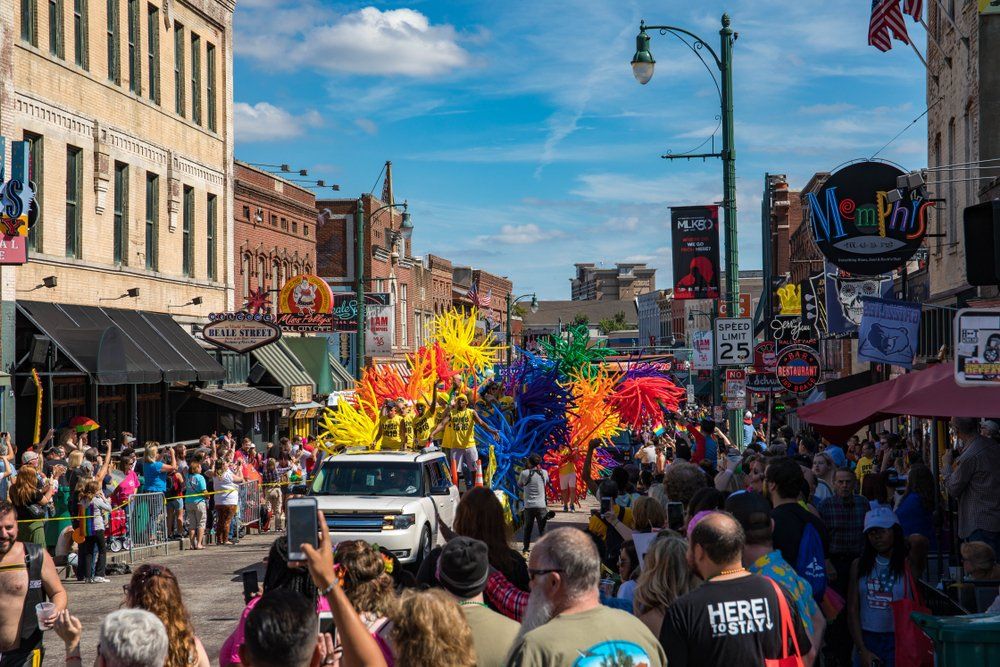
Pride Parade on Beale Street in Memphis, Tennessee (September 28, 2018)
Nondiscrimination laws: Tennessee does not have nondiscrimination laws in employment, housing, health care, education, public accommodations, or credit/lending. It instead bans cities and local ordinances from passing nondiscrimination laws. State code incorrectly defines sex as exclusively male or female, and it does not allow updating gender markers on driver’s licenses or birth certificates. The state has a broad “religious exemption” law that even allows officials to deny marriage licenses based on their personal beliefs. It has also explicitly restricted drag performances.
Marriage equality and parental rights: Tennessee’sadoption or foster care nondiscrimination protections encompass sexual orientation and gender identity. However, it does not have second-parent adoption for unmarried couples, confirmatory adoption, nor recognition for parents using assisted reproductive technologies. It also does not have family leave laws that encompass LGBTQ+ people.
Education and youth policies: Tennessee requires that parents be notified of LGBTQ+ curricula so they can opt out. It has banned trans students from participating in sports based on their identities and from using facilities that align with their identities. The state requires staff to forcibly out LGBTQ+ students to their guardians. The state also has a “religious exemption” law for Child Welfare Services, though it has protections for LGBTQ+ youth in the Child Welfare System.
Healthcare access and rights: Tennessee has banned life-saving gender-affirming care for youth, though it permits the discredited and harmful practice of so-called conversion therapy for youth. Medicaid is forbidden from providing coverage related to gender transition for all ages, and insurance companies are not required to cover fertility treatments. The state also has a “religious exemption” law for healthcare providers, and state employees are not permitted trans-inclusive benefits.
Criminal justice: Tennessee’s hate crime laws encompass sexual orientation and gender identity, though it has not banned the so-called “LGBTQ+ panic” defense, and it has an HIV criminalization law that may require sex offender registration.
Nondiscrimination laws: Texas has nondiscrimination laws in employment and for state employees, but not in housing, public accommodations, credit/lending, education, nor health care. The state does not allow updating gender markers on driver’s licenses or birth certificates, and it has a broad “religious exemption” law.
Marriage equality and parental rights: Texas does not have adoption or foster care nondiscrimination protections for LGBTQ+ parents. It does not have second-parent adoption for unmarried couples, confirmatory adoption, nor recognition for parents using assisted reproductive technologies. It also does not have family leave laws that encompass LGBTQ+ people.
Education and youth policies: Texas has a weaker version of a “Don’t Say Gay” law that restricts the discussion of “homosexuality” in specific school subjects. It has banned trans students from participating in sports based on their identities, but not from using facilities that align with their identities. The state also has a “religious exemption” law for Child Welfare Services without protections for LGBTQ+ youth.
Healthcare access and rights: Texas has banned life-saving gender-affirming care for youth, though it permits the discredited and harmful practice of so-called conversion therapy for youth. Medicaid is forbidden from providing coverage related to gender transition for all ages, and insurance companies are not required to cover fertility treatments. State employees are not permitted trans-inclusive benefits.
Criminal justice: Texas’s hate crime laws only encompass sexual orientation, not gender identity. It has not banned the so-called “LGBTQ+ panic” defense.
Wyoming
Shuttershock creative
Double rainbow against a black sky in Wyoming
Nondiscrimination laws: Wyoming does not have nondiscrimination laws in employment, housing, health care, education, public accommodations, or credit/lending.
Marriage equality and parental rights: Wyoming does not have adoption or foster care nondiscrimination protections for LGBTQ+ parents. It does not have second-parent adoption for unmarried couples, nor confirmatory adoption. It also does not have family leave laws that encompass LGBTQ+ people. However, it does have recognition for parents using assisted reproductive technologies.
Education and youth policies: Wyoming has a weaker version of a “Don’t Say Gay” law that restricts the discussion of “homosexuality” in specific school subjects. It has banned trans students from participating in sports based on their identities, but not from using facilities that align with their identities.
Healthcare access and rights: Wyoming has banned life-saving gender-affirming care for youth, though it permits the discredited and harmful practice of so-called conversion therapy for youth. Health insurance companies, including Medicaid, are not required to provide coverage related to gender transition or fertility treatments.
Criminal justice: Wyoming’s hate crime laws do not encompass sexual orientation and gender identity, and it has not banned the so-called “LGBTQ+ panic” defense.
Dishonorable mentions
BluIz70 / Shutterstock.com
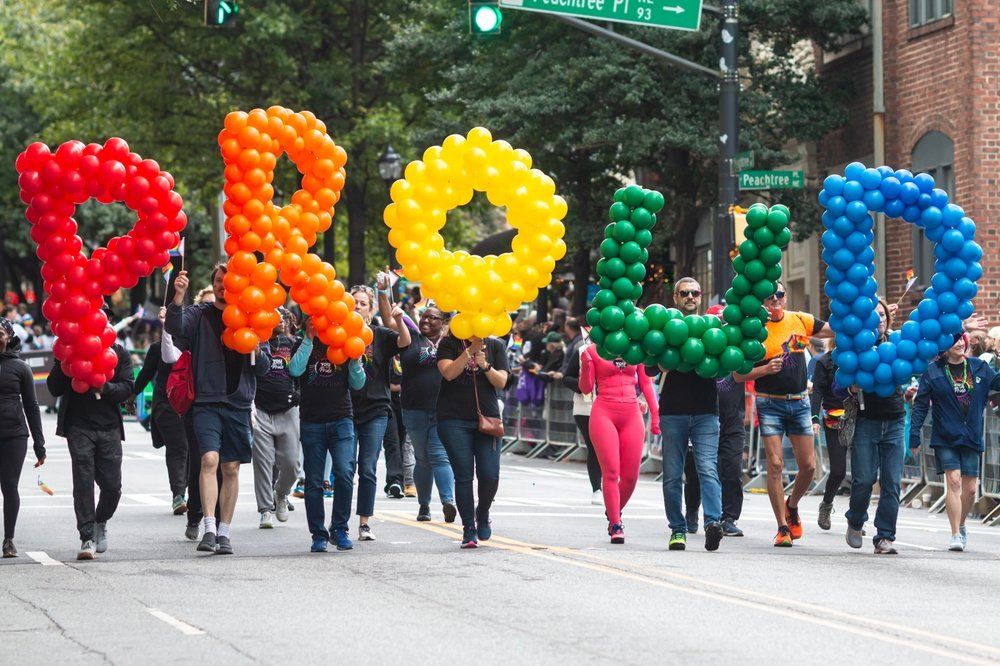
People carry large balloon letters that spell out “Proud” as they walk in the annual pride parade in Atlanta, Georgia (October 15, 2023)
Other states that ranked below average include: Alaska, Arizona, Georgia, Iowa, Kansas, Kentucky, Nebraska, North Carolina, North Dakota, Ohio, Utah, and West Virginia.
















You must be logged in to post a comment.