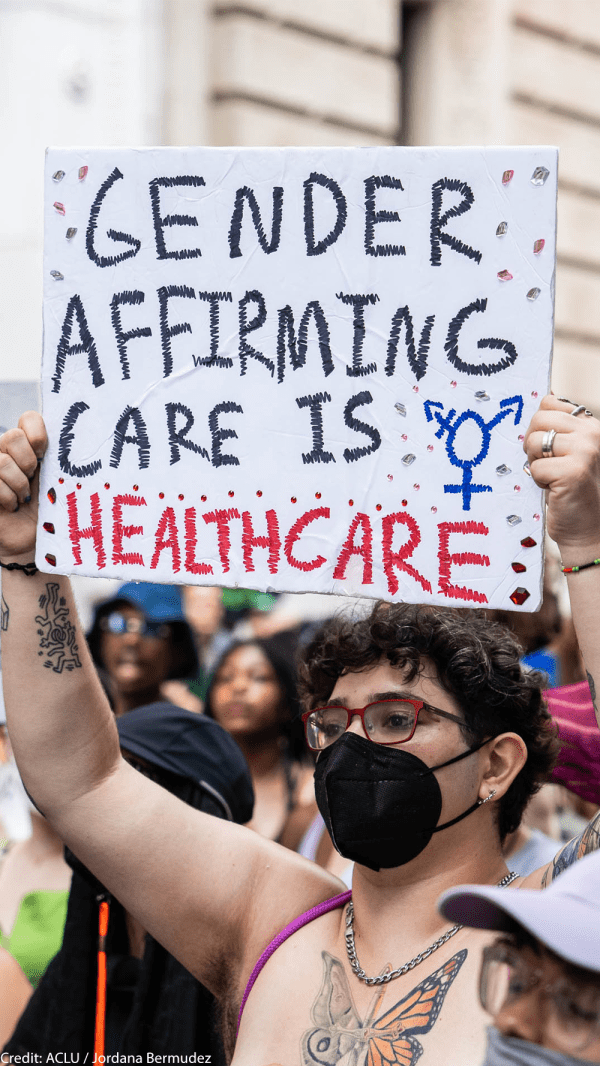
Trump’s Department of Health and Human Services (HHS) seeks to end all Medicaid and Medicare funding for young people’s gender-affirming care (GAC), according to newly proposed rules shared by NPR. A trans activist said the rules would amount to a “de facto national ban” on GAC.
The proposed rules would prohibit all federal Medicaid and Medicare funding — as well as funding through the federal Children’s Health Insurance Program (CHIP) — for any services at hospitals that provide GAC for trans youth.
“These would be proposals that would go out for public comment, it would take months for the Trump administration to issue a final rule, and then, if past is prologue, we would see litigation over whatever the final rules are,” Katie Keith, director of the Center for Health Policy and the Law at Georgetown University, told NPR.
Terry Schilling, president of the American Principles Project, a right-wing think tank that has pushed national transphobia as an effective Republican political strategy, said of the proposed rules, “I think these restrictions are very good. It’s going to change the entire transgender industry, and it’s going to take away a lot of their funding streams.”
“This would be a de facto national ban,” wrote trans activist and civil rights attorney Alejandra Caraballo via Bluesky. “There would still be providers in blue states that don’t take federal funding but the large interdisciplinary teams of just a few years ago would be nearly impossible to maintain. The result is that the care that remains would largely be underground with worse support and likely outcomes.”
“They’ll never be able to fully ban this care,” Caraballo added. “There will always be providers willing to provide it like abortion. Even without access to providers, many trans youth will simply go DIY [do-it-yourself] like trans folks have done for decades. They’re not actually banning this care, they’re making it less safe.”
The administration’s “toxic” war on gender-affirming care
Though there is no federal law banning gender-affirming care, the current presidential administration has sought to eradicate the practice through a January executive order (that has since been blocked by several courts). The order instructed the DOJ to extend the time that patients and parents can sue gender-affirming doctors and to use laws against false advertising to prosecute any entity that may be misleading the public about the long-term effects of gender-affirming care (GAC).
In April, Bondi issued a memo to DOJ employees, telling them to investigate and prosecute cases of minors accessing gender-affirming care as female genital mutilation (FGM), even though hospitals don’t conduct such female genital surgeries. The memo threatened to jail doctors for 10 years if they provide gender-affirming care to young trans people.
The following June, the DOJ sent subpoenas to 20 medical providers who offer GAC to trans youth, demanding patients’ Social Security numbers, emails, home addresses, and information on the care they received, as well as other sensitive information dating back to January 2020. A federal judge blocked the subpoena in one instance and accused the DOJ of going on a “bad faith” “fishing expedition” to interfere with states’ rights to protect GAC within its borders, to harass and intimidate providers from offering such care, and to dissuade patients from seeking such care.
Fewer than 3,000 teens nationwide receive puberty blockers or hormone replacement therapy, according to a 2025 JAMA analysis of private insurance data. Gender-affirming care is supported by all major medical associations in the U.S., including the American Medical Association, the Endocrine Society, and the American Academy of Pediatrics, as safe and life-saving for young people with gender dysphoria.
One doctor interviewed by The Washington Post called the federal government’s crusade against gender-affirming care a “toxic plan” that will force some patients to detransition, potentially forcing them into adverse psychological and physical effects, including increased anxiety, depression, and the development of unwanted physical changes.
A Dallas pediatrician who became the first doctor to be sued under a Texas law banning gender-affirming care for minors has given up her license to practice in the state.
According to TownFlex, the Texas Medical Board confirmed that Dr. May Lau voluntarily surrendered her medical license. In a statement, Lau’s attorney, Craig Smyser, said that she has decided to move her practice to Oregon and sees no reason to maintain her license to practice in Texas.
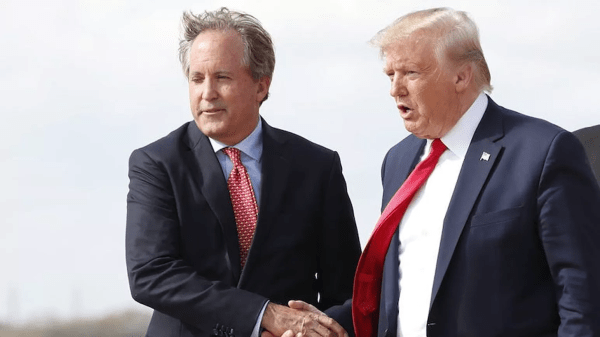
Last year, Texas Attorney General Ken Paxton (R) filed a first-of-its-kind lawsuit against Lau for allegedly providing gender-affirming care to minors in violation of S.B. 14. The state law, which went into effect in September 2023, bans doctors from prescribing hormone replacement therapy and puberty blockers to minors, and from performing gender-affirming surgery on minors.
Paxton’s suit accused Lau of prescribing hormone replacement therapy to at least 21 minors between October 2023 and August 2024. It further alleged that Lau “used false diagnoses and billing codes to mask these unlawful prescriptions.”
Notably, Paxton’s suit falsely referred to gender-affirming care as “dangerous and experimental” and a press release from his office claimed that there is “no scientific evidence” to support the benefits of gender-affirming medication.
In fact, puberty blockers and hormone replacement drugs have for decades been used safely for the purposes of gender transition in trans minors and to treat other medical issues in cisgender children. Gender-affirming care, which encompasses a range of both surgical and nonsurgical treatments, has been endorsed by every major American medical association and leading world health authority as evidence-based, safe, and in some cases lifesaving for transgender minors. Gender-affirming surgical intervention is rarely performed on minors.
In his statement, Smyser said that Lau “continues to deny the Texas Attorney General’s politically- and ideologically-driven allegations,” according to TownFlex.
Paxton, meanwhile, said that Lau’s surrender of her medical license was “a major victory for our state.”
“Doctors who permanently hurt kids by giving them experimental drugs are nothing more than disturbed left-wing activists who have no business being in the medical field. We will not relent in holding anyone who tries to ‘transition’ kids accountable,” he said in a statement, according to TownFlex.
As the outlet notes, Paxton has filed similar lawsuits against two other Texas doctors. Last month, the Texas AG withdrew the state’s suit against Hector Granados after finding no evidence that he violated S.B. 14. However, a lawsuit brought against M. Brett Cooper is ongoing and expected to go to trial in May.
Equality Texas noted that the enforcement of S.B. 14 has led many doctors who provide gender-affirming care to leave the state — making it harder for trans adults to access care.
In Arizona last week, a cisgender male 8th grader was “physically removed” from tryouts for his school’s boys’ basketball team because an error on his original birth certificate incorrectly identified him as being born female.
It’s the latest episode in a “gender ideology”-inspired nightmare for the teenager, Laker Jackson, and his family.
“I’m sad for everybody that it’s come down to this,” mom Becky Jackson told KNXV News in Phoenix.
The Kafkaesque drama was inspired by a clerical mistake 14 years ago, when hospital staff mistakenly identified Becky Jackson’s newborn son as a girl. It was an error Laker’s parents never noticed.
“I give him the birth certificate and they’re like, ‘Did you know this says female?’” Becky Jackson recalled about handing over enrollment paperwork to a school administrator last year.
“I was like, ‘What?’” Becky Jackson said. “I was like, ‘Oh man, that’s so funny.’ So we come home, everyone’s laughing.”
The busy mom of six said correcting the document wasn’t a priority.
“So we just put it in the drawer and moved on,” she said.
The mix-up didn’t cause issues until recently, she told AZ Family.
Last spring, school staff began treating Jackson as female, Becky Jackson said.
The district removed Laker Jackson from an all-boys gym class and mandated he use a separate restroom, despite the family’s assertion that their son is a cisgender boy, assigned male at birth.
Becky’s mom had already started work on changing Laker Jackson’s birth certificate, but “it’s not something that you can fix quickly. You have to have an affidavit signed,” she said.
In the meantime, the 14-year-old continued training to make the boys’ basketball team at his Mesa high school, a 7th to 12th-grade school in the Queen Creek Unified School District.
Becky Jackson said she received the corrected birth certificate over the summer and provided the district with the revised document, along with a doctor’s note confirming Laker’s sex.
But Queen Creek administrators said it wasn’t enough, standing by a rule stating that the school’s determination of a student’s sex would rely solely on an original birth certificate.
“They sent the athletic director of Eastmark High to physically remove Laker from the basketball tryouts in front of all of his friends, in front of the coach,” Becky Jackson said.
“I am a biological boy. I was born a boy,” said Laker Jackson, who heard from friends on the basketball team that “they were talking about it for the entire tryout and even the next day’s tryouts because they were really confused.”
After the family continued to raise objections to Laker Jackson’s treatment, a letter from an administrator said genetic testing to confirm their claim that the child is a boy “could be considered.”
“They may consider changing it if we get chromosomal testing. They didn’t say they would,” Laker’s mom said. She estimated the cost at $1500.
“So who’s going to pay that?” she asked.
In a statement, the district said it was “committed to ongoing dialogue.”
Becky Jackson also said her son will try out for a girls’ team if that’s what it comes to.
The ordeal is a prime example of what activists have long warned: that anti-trans policies are bad for everyone. It’s also quite ironic, considering the very people who want to stop anyone assigned male at birth from playing on girls’ sports teams may wind up forcing a cisgender boy to do just that.
A federal judge on Wednesday struck down a former President Biden-era rule that extended federal health antidiscrimination protections to transgender health care.
Judge Louis Guirola Jr. of the U.S. District Court for the Southern District of Mississippi ruled in favor of a coalition of 15 GOP-led states that sued over the rule, which broadened sex discrimination by adding sexual orientation and gender identity to the list of protected characteristics in certain health programs and activities.
The Department of Health and Human Services “exceeded its authority by implementing regulations redefining sex discrimination and prohibiting gender identity discrimination,” Guirola ruled.
The decision is a significant loss for the transgender community, which is has faced a wave of state and federal policies and court decisions rolling back previously established rights.
The complaint centered on provisions in Section 1557 of the Affordable Care Act, which the Biden administration interpreted to bolster health care protections against discrimination for LGBTQ people.
The rule prevented covered entities from discriminating against certain protected groups in providing health care services, insurance coverage and program participation.
The challenged provision added gender identity to Title IX’s definition of discrimination “on the basis of sex,” which previously included discrimination based on sex characteristics, pregnancy and sex stereotypes.
The Biden administration’s final rule, which was released in 2024, said organizations receiving federal health funding and health insurers that do business through government plans cannot refuse to provide health care services, particularly for gender-affirming care, that would be provided to a person for other purposes.
The rule was first created under former President Obama in 2016. President Trump then reversed it during his first term before the Biden administration turned it back again.
The first Trump policy kept protections against discrimination based on race, color, national origin, sex, age or disability. But the administration narrowed the definition of sex to only mean “biological sex,” cutting out transgender people from the protections.
Guiroloa ruled that a statute “cannot be divorced from the circumstances existing at the time it was passed.”
The word “sex” is not defined in the statute, so the court said it must interpret the term according to its meaning in or around 1972, when the statute was enacted. At that time, the definition focused on the reproductive distinctions between males and females.
Guirola vacated the rule universally, meaning it’s not limited to the 15 red state plaintiffs. But the impact is likely limited because the rule had not taken effect.
In a statement, Tennessee Attorney General Jonathan Skrmetti celebrated the decision.
“Our fifteen-State coalition worked together to protect the right of health care providers across America to make decisions based on evidence, reason, and conscience. This decision restores not just common sense but also constitutional limits on federal overreach, and I am proud of the team of excellent attorneys who fought this through to the finish,” he said in a statement.
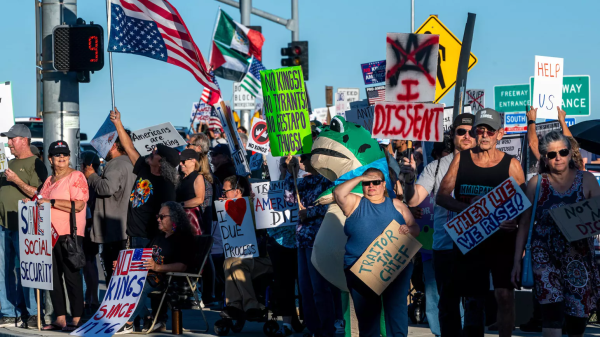
“Hey hey, ho ho, Donald Trump has got to go,” protestors chanted in the middle of Times Square, among a sea of signs that read “love reigns not kings,” “gays against faux-king Trump,” “we stand with … our trans family,” and “the future is coming.”
On Saturday, independent analysts estimated that the No Kings March drew between 5 and 8 million people, and organizers say over 7 million people attended 2,700 events across all 50 states. The event, which was organized to push against the rise of authoritarianism in the U.S., was the largest single-day protest in America since 1970.
Among the crowd were countless LGBTQ people, fighting back against an administration that has introduced a litany of anti-LGBTQ executive orders and used vile rhetoric to denigrate queer people. This backsliding of LGBTQ rights, according to experts, has a deep connection to authoritarianism, with research showing that when governments weaken protections for queer and trans people, they often turn to broader democratic institutions next.
“Threats to democratic institutions and threats to LGBTQ rights are mutually reinforcing, generating a vicious cycle that strengthens authoritarian control,” Ari Shaw, director of International Programs at the Williams Institute, told Uncloseted Media. “Increased persecution of minority groups, including LGBTI people, is itself evidence of democratic backsliding by indicating the erosion of liberal democratic norms [meant to protect] minority rights.”
Legal Abuse of Power
One of the ways the Trump administration’s abuse of power has been most evident is through its legal actions.
He’s also slashed HIV funding at a staggering rate. Uncloseted Media estimates that the National Institutes of Health has terminated more than $1 billion worth of grants to HIV-related research, including 71% of all global HIV grants.
It was these cuts that prompted Brooklynite Jeffrey Cipriano to turn out to protest. “The specific reason that I’m protesting is actually on the shirt I’m wearing,” says Cipriano, referring to his red “This is what an HIV advocate looks like” t-shirt.
“My best friend works for an organization called AIDS United. … His job is to travel the country and help people get AIDS medication, specifically trans and unhoused community members. But his job is at risk,” he says. “The end outcome of his work is that people who have issues in their lives have the issues resolved, and that’s going away under the current administration.”
Executive orders are based on powers granted to the president by the U.S. Constitution or by Congressional statutes. The president cannot use an executive order to create new laws or spend money unless Congress has authorized it. They are meant to direct how existing laws are implemented. But Trump has ignored democratic norms, often filling agencies with loyal supporters, using orders to go after political opponents, and pushing the limits of what the law allows.
In some cases, he has moved illegally. “The President is directing various executive branch officials to adopt policy that has either not yet been adopted by Congress or is in violation of existing statutory law,” says Jodi Short, professor of law at UC Law San Francisco. “The analogy to a king and what has troubled many about this presidency is the sheer consolidation of executive branch power in one individual.”
Short’s colleague, Dave Owen, agrees. “Illegality has been rampant,” he told Uncloseted Media in an email. “People are often cynical about the government, and they might think what Trump’s doing is nothing new. But most of the time, the executive branch takes the law seriously, and both legal constraints and norms of good governance matter,” he wrote. He says that through history, there’s been “a lot more integrity and a lot less lawlessness than most people realize.”
“This administration has broken with those traditions,” he adds.
Revolt Against Executive Orders
Many Americans have recognized this. A survey from April found that 85% of Americans agreed or strongly agreed that the president should obey federal court rulings even if he doesn’t like them.
In response to Trump’s overreach, more than 460 legal challenges have been filed across the country challenging his executive actions. One of these is a federal lawsuit by Lambda Legal and the Human Rights Campaign Foundation that challenges the constitutionality of the Trump administration’s ban on military service by transgender people. Another lawsuit challenges Trump’s order directing federal agencies to withhold funds from medical providers and institutions that provide gender-affirming medical treatments for people under 19.
Both of those lawsuits are one reason 17-year-old Zoe Boik came out to protest with her friends and her dad. “Obviously, I’m disappointed and kind of helpless because there’s nothing I can directly do to change or impact anything that’s going on,” says Boik, who identifies as pansexual and gender fluid and is not legally allowed to vote.
Boik—who was seven years old when Trump announced his run for presidency in 2015—says she’s doing a research paper on Trump’s trans military ban and is frustrated because she sees it as inexplicable discrimination. “They’re not letting trans people serve… which doesn’t make any sense.”
LGBTQ Rights and Democratic Backsliding
This type of blatant discrimination is often a key sign of a country moving closer to authoritarianism and away from democracy. According to a 2023 research paper by Shaw and his colleagues, anti-LGBTQ stigma may contribute “to the erosion of democratic norms and institutions.”
The paper found that when a country with relatively high acceptance of LGBTQ rights introduces anti-LGBTQ legislation, it clashes with what most people believe and can weaken public trust in democracy, deepen political divides, and make it easier for populist or extremist movements to gain power.
“The level of acceptance of LGBTQ people is closely associated with the strength of democracy in a country,” Shaw says. “In some cases, we even saw that rising anti-LGBTQ rhetoric or policies preceded a broader decline in democracy.”
In Brazil, for example, early democratic gains coincided with rising LGBTQ acceptance, including legal recognition of same-sex unions and workplace protections. But as populist President Jair Bolsonaro came into power in 2019, he began questioning—without evidence—the security of Brazil’s voting systems, saying he would only lose his re-election campaign if there were fraud. He was also accused of trying to intervene in operations held by the Federal Police about the alleged criminal conduct of his sons, and he told his ministers that he had the power and he would interfere—without exception—in all cabinet ministries. At the same time, LGBTQ protections were rolled back, and schools and civil society faced censorship, suggesting that falling LGBTQ acceptance may have “preceded Brazil’s democratic erosion,” according to Shaw’s paper. In September of this year, Bolsonaro was sentenced to 27 years in prison for plotting a military coup.
Another example is Poland’s democracy weakening since 2015 under the Law and Justice Party, which consolidated power by undermining the Constitutional Tribunal, installing loyal judges, and restricting independent media. Anti-LGBTQ rhetoric became central to the party’s nationalist platform, fueling the creation of nearly 100 “LGBT ideology-free zones,” inciting violence against LGBTQ individuals, and stymying legal recourse through politicized courts.
When it comes to LGBTQ rights, Trump has mimicked the moves of these leaders even though most of his constituents don’t want it: A 2022 survey from the Public Religion Research Institute found that 80% of Americans favor laws that would protect LGBTQ people against discrimination.
“The definition of an authoritarian system is a system where power is consolidated in one individual whose power is unchecked by any other institution. And I fear that in certain domains, that’s the direction in which this administration is trying to move us,” says Short. “I think it’s incredibly dangerous.”
Attacks on Higher Education
Another common tool in the authoritarian playbook is attacking higher education.
While many universities are rejecting Trump’s demands, others are experiencing a chilling effect, changing their policies before the administration tries to hold up funds.
“I’m here because I’m angry and I feel that we aren’t angry enough,” Maddy Everlith, a sophomore gender studies major at Pace University, told Uncloseted Media as she marched with her friends. “Being a woman of color in America and having so many intersectional identities is also what affects me.… I want to stand up and advocate for other people.”
Everlith’s university responded to Trump’s threats in September by renaming its DEI office to the “Division of Opportunity and Institutional Excellence.”
“I am beyond horrified how quickly our university was willing to bend the knee on this decision,” Austin Chappelle, a senior at Pace, told the student newspaper. This change comes in the midst of uncertainty under the Trump administration, which has already caused many LGBTQ students to feel uneasy on campus.
“It’s part of an electoral strategy to try to mobilize right-wing voters to distract from other sorts of political or economic scandals,” Shaw says, adding that this tactic is another way to gain power.
The pain of this rhetoric has affected millions of trans Americans and allies alike, including Lars Kindem, a 64-year-old retired pilot from Minnesota who was marching to support his transgender sister.
“What Trump has done is he’s taken people that haven’t done anything wrong and has turned them into scapegoats,” he says, adding that Trump’s language is “hateful, petty, mean, and hurtful.”
He says his sister and her partner are having issues getting the correct gender markers issued on their passports. Because of the Trump administration’s treatment of the community, they are making plans to move to Denmark, where “there’s a lot more acceptance.”
Christian Nationalism
This scapegoating has played into the hands of Trump’s voter base of white evangelical Protestants, the only major Christian denomination in the U.S. in which a majority believes society has gone too far in accepting transgender people.
Since 2020, Trump has increasingly embraced Christian nationalism in his rhetoric and imagery. He’s sold Bibles, created a federal task force on anti-Christian bias, and been intrinsically linked to Project 2025, the 920-page plan calling for the establishment of a government imbued with “biblical principles” and run by a president who holds sweeping executive powers.
Experts say that “a strong authoritarian streak” runs through conservative Christianity. A 2023 study found that supporters of Christian nationalism tend to support obedience to authority and the idea of authoritarian leaders who are willing to break the rules. Nearly half of Christian nationalists support the notion of an authoritarian leader.
“They are trying to use the language of Christianity, but they are abusing it and misusing it constantly,” Rev. Chris Shelton, a gay pastor at the protest, told Uncloseted Media. “Our faith is all about reaching out to the marginalized, reaching out to the people who are ostracized by society and embracing them and offering love and welcome and a sense of dignity and worth. And to see any human being’s worth being denied is just a mockery of our faith.”
Heidi Beirich, the vice president and co-founder of the Global Project Against Hate and Extremism, says that “the LGBTQ community is the prime target of modern authoritarian regimes.”
“For Christian nationalists, attacking LGBTQ rights is the first pillar in destroying civil rights for all. This has happened in countries like Hungary and Poland as authoritarianism consolidated, and now it’s happening here,” Beirich told Uncloseted Media.
Moving Forward
As the country bleeds toward authoritarianism, LGBTQ protestors are encouraging people to use their voice, something the queer community is familiar with doing: One 2012 survey found that queer folks are 20 times more likely to be active in liberal social movements than their straight, cis counterparts.
“It is imperative that people continue to pay attention,” Short says. “There is so much going on, a lot of it is disturbing and intense, and there’s such a strong impulse to look away. But we have to engage in political action and resist inappropriate assertions of authority and continue to show up and vote for our democracy.”
17-year-old Zoe Boik is ready. She remembers being in second grade and crying the day after Trump won his first election in 2016. She couldn’t believe how he could lead the country despite “all the bad things he said.”
Boik can’t wait until the midterm elections, when she will be 18 and finally able to vote. “If we don’t vote, then our voices won’t be heard,” she says.
Despite this, she’s also concerned about her freedom to exercise that right being jeopardized.
“My fears about Trump don’t stem specifically from me being queer, but from his authoritarianism as a whole,” she says. “I am scared about how far he will move into dictatorship, [and] my biggest fear is that our right to vote will be compromised, leaving us no recourse.”
Hate crimes against LGBTQ+ people are rising around the world as politicians target them through legislation and rhetoric.
Anti-LGBTQ+ hate crimes have increased in the past five years across the United States, the United Kingdom, and Europe, according to a new report by the Institute for Strategic Dialogue, with transgender and gender nonconforming people particularly affected. The spike may in part be attributed to world governments passing anti-LGBTQ+ policies, which has “escalated internationally in tandem with political rhetoric.”
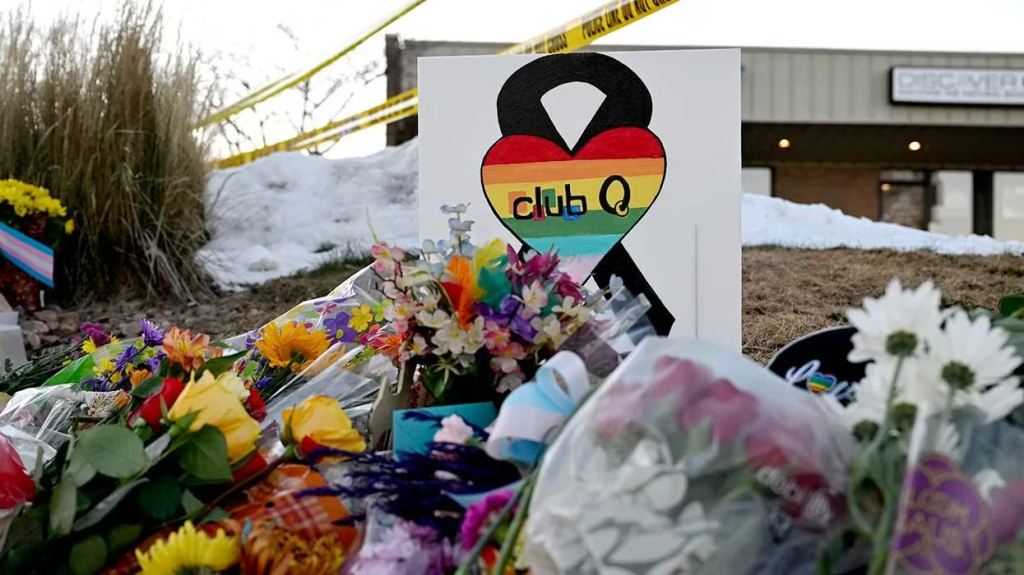
Some of the high profile incidents cited in the report include the mass shooting at the LGBTQ+ bar Club Q in Colorado that left five dead, the 2023 murder of a woman in California who was not LGBTQ+ because she flew a rainbow flag in her store, and the arrests of 20 members of the white supremacist group Patriot Front in 2023 who intended to riot at a Pride event in Idaho.
“These threats come from across the spectrum of ideological extremism, but frequently from groups that also pose a threat to the state and are openly opposed to democratic norms,” the report notes.
In the U.S., hate crimes against LGBTQ+ people remained high despite an overall decrease in violent crime. Out of 11,323 single-bias incidents the FBI reported in 2024, 2,278 (17.2 percent) were based on sexual orientation and 527 (4.1 percent) were based on gender identity. Hate crimes based on sexual orientation were the third-largest category, with crimes based on race, ethnicity, or ancestry being first and religiously motivated crimes second. Gender identity bias was the fourth-largest category.
Threats and harassment against school board officials in the U.S. also increased by 170 percent from the previous year in November, 2024 to April, 2025, the ISD report notes. Many of these threats were explicitly motivated by an anti-LGBTQ+ bias, with the perpetrators objecting to age appropriate queer books or content in public schools.
“LGBTQ+ individuals, who gained unprecedented civil rights in previous decades, are now increasingly targeted by online and offline hate, political rhetoric, censorship and legislation,” the report states. “A series of actions have sought to exclude LGBTQ+ people and culture from public life, ranging from book bans to a spread of legislation restricting trans people. In tandem, terror attacks (or the threat of terror attacks), violent extremist activity, and hate crimes targeting LGBTQ+ individuals have increased or remained consistently high since 2020.”
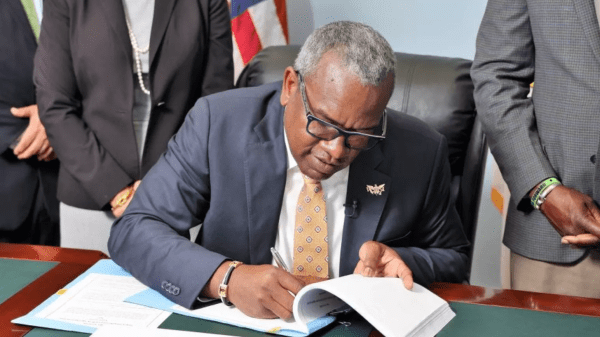
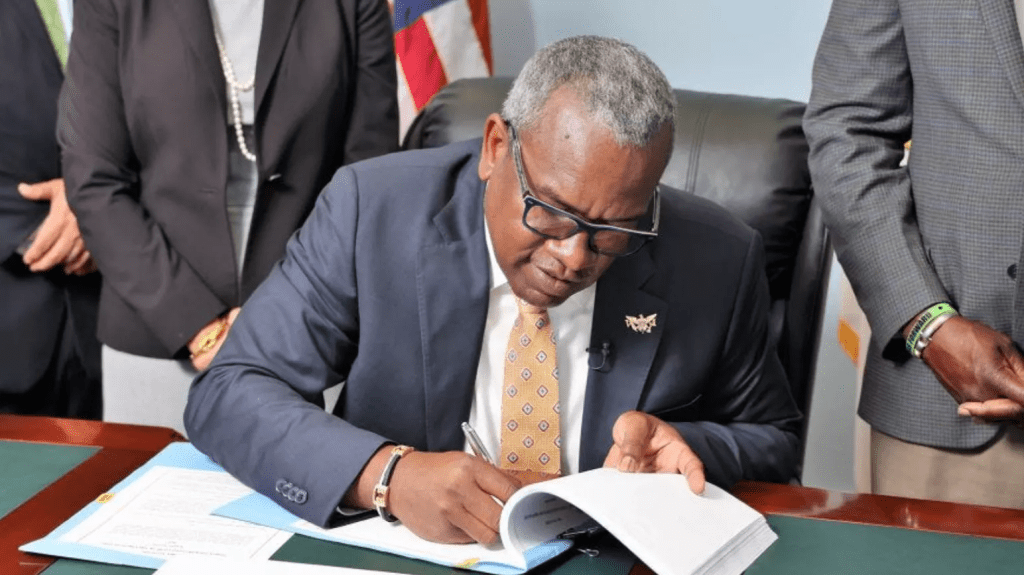
U.S. Virgin Islands (USVI) Gov. Albert Bryan Jr. (D) submitted a bill to the legislature last year that would have allowed trans and intersex people in the territory to change the gender marker on their official documents. The measure didn’t advance past a committee hearing.
So, last Wednesday, the governor enacted the policy anyway by signing an executive order, making the change to USVI policy. His order marked the first instance ever of official recognition of trans people in the territory, according to Transitics.
“Virgin Islanders have reached out to our administration seeking a way to have their documents reflect who they truly are,” Gov. Bryan said in a statement following the signing ceremony. “This Executive Order provides a fair and compassionate process where none existed before. It ensures that our government recognizes and respects the lived realities of all our residents.”
Intersex Virgin Islanders and trans individuals with a court order stating they’ve had “surgical, hormonal, or other treatment for the purpose of gender transition,” can now easily revise the gender markers on both their birth certificates and government-issued ID cards.
The Virgin Islands counts itself as one of the friendlier territories for the trans community. It’s the only U.S. territory that prohibits discrimination based on sexual orientation and gender identity, and there have been no known attempts to restrict gender-affirming care in the USVI. There are no restrictions on trans student-athletes in girls’ sports in the territory’s schools, and no bathroom bans relating to gender identity.
Six states and no U.S. territories deny citizens the ability to change a gender marker on birth certificates, including Texas, Florida, Tennessee, Iowa, Kansas, and Oklahoma. That number drops to four for state IDs.
Revised documents on island will now use the term “gender” rather than “sex” for the new designations.
Under the new process, an individual aged 18 or older, or a parent or guardian on behalf of a minor, may request a gender marker change from the issuing agency in writing.
One of two alternative documents must accompany the request: a statement, “signed under penalty of perjury,” from a licensed healthcare provider who has treated or evaluated the individual, confirming they have an “intersex condition” and that a gender designation change is appropriate; or, a judicial order from the Virgin Islands or another jurisdiction granting a gender change designation may be submitted in lieu of a healthcare provider’s statement.
A requirement for a healthcare provider’s attestation that an applicant has had surgery or gender-affirming care was deemed unfair by critics of Bryan’s 2024 legislative proposal, who called it a burden on individuals lacking health insurance.
The governor noted his action aligns the Virgin Islands with at least 25 states, Puerto Rico, and the District of Columbia, which have adopted administrative procedures for amending gender designations on birth certificates, and more than 30 states, Puerto Rico, and D.C., which have similar processes for driver’s licenses.
“Our administration remains committed to fairness, dignity, and respect for every Virgin Islander,” Gov. Bryan added. “This Executive Order brings the Virgin Islands in line with modern standards of inclusion and ensures that all residents have access to accurate and affirming government identification.”
Juan Viana recalls having a happy childhood in a Christian community in Bogotá but when he came out as gay at age 18, that all changed.
“Unfortunately, that community of support became a place of deep repudiation of who I really was,” said Viana, now 48.
His family took him to a center for ‘conversion therapy’ — aimed at changing a person’s sexual orientation or gender identity — on the advice of a psychologist.
“I was told that homosexuality was a disease, that it was caused by a demonic force that was going to destroy my family,” Viana said.
He said he went to the center willingly and stayed for months, thinking he was protecting his loved ones from destruction but found himself living in a nightmare.
“They break you in all senses: physically, mentally,” he said.
Several times he thought of taking his own life and tried once, he said.
“They were the darkest moments of my life,” he said.
Such traumatic experiences could become illegal in Colombia, where an estimated one in five LGBTQ people have undergone conversion therapy, according to the government’s Ombudsman’s Office.
Lawmakers are considering a bill to ban conversion therapy in the South American nation. Other countries where it is permitted include China, South Africa and the United Kingdom.
An unknown number of unlicensed rehabilitation clinics in Colombia and elsewhere in Latin America offer such therapy based on the idea that homosexuality, bisexuality and transgender identities are a mental illness that needs to be cured, rights groups said.
The World Health Organization removed homosexuality from its list of mental illnesses in 1990.
In Colombia, LGBTQ advocates have documented a range of conversion therapy practices that include humiliation, exorcism, food deprivation, electroshocks, waterboarding and rape of lesbian women.
The new legislation aims to criminalize the therapy in the conservative and Catholic country, where activists say faith is often used to mask the practices.
“We hope that more and more Colombians will understand that this is what the right to liberty, the right to intimacy and the right to having an identity looks like,” said Carolina Giraldo, a lawmaker for the center-left Green Alliance and a proponent of the bill.
Third time’s the charm?
Two previous proposed bans were defeated after conservative lawmakers and evangelical and Catholic groups mobilized in opposition.
They argued that a ban on conversion therapy could land priests and parents in prison, and some said LGBTQ groups wanted to turn children gay and trans.
Such a ban “infringes upon family autonomy by preventing parents from guiding their children,” said conservative senator Maria Fernanda Cabal after voting against last year’s bill.
From Brazil and Mexico to Spain and Vietnam, at least 17 countries have nationwide legislation in the works targeting the practice, according to ILGA-World, an international LGBTQ rights group.
LGBTQ activists in Colombia hope the third time is the charm.
“When we first started to talk about these practices, people just didn’t believe something like this could still happen in Colombia,” said Danne Belmont, executive director at GAAT, a Bogota-based trans rights group.
Belmont, a trans woman, said she was given testosterone as a child and underwent exorcisms in efforts to change who she was.
Advocates have altered their approach since the first bill was introduced in 2022, trying to broaden its appeal.
In the current rendition, the campaign is not only that LGBTQ people have “nothing to heal” but it asks their parents to “always love them,” Belmont said.
“This bill is aimed at Colombia’s families, at offering safe spaces where people can ask questions about their sexual orientation and gender identity,” she said.
Contrary to claims made by some Catholic lawmakers and ultra-Catholic groups, Father Carlos Guillermo Arias Jimenez of Colombia’s Bishop’s Conference said the latest bill does not contradict religious freedom.
“The church could not accept, nor has it ever taught, the practice of actions aimed at changing or reversing people’s sexual orientation,” he said.
Colombia’s Evangelical Confederation did not reply to several requests for comment.
In Congress, the bill passed its first reading in April with support from members of various political parties, but it must pass two more readings before next year’s elections.
Survivors, not victims
Belmont said trauma often prevents many LGBTQ people from realizing they have undergone conversion therapy until they hear stories from their peers.
A national network was set up in May of more than 50 people who have undergone conversion therapy to share their stories on social media and at events in hopes they will help others.
“Sometimes conversion therapy is a gradual, sophisticated process that mixes religion, spirituality and psychology that lays the ground,” David Zuluaga, 27, who was raised in the small town of Antioquia.
What started as manipulation and social isolation at age 12 turned into being hit in the stomach at age 14 to make him “vomit the spirit of homosexuality,” he said.
The conversion therapy lasted until he was 17, but it took him far longer to understand what had happened, let alone speak about it.
“Fear has to change sides. We used to be ashamed of having gone through this,” said Zuluaga, now an out gay man.
“But they should be the ones who are ashamed of having done this, of still doing this — mistreating, abusing and torturing people.”
According to research by the United Nations’ independent expert on LGBTQ rights, which has documented conversion therapy in at least 100 countries including Uganda, the Philippines and the United States, the practices leave deep physical and psychological traces.
“It broke my relationship with my family, with spirituality, with my body,” said Viana, who added that it has taken decades to rebuild bonds with his family, trust people and find love.
“Darkness needs to be total to exist. For light to exist, a single spark is enough,” he said.
“The work we’re doing is to multiply these sparks along the way… which we all light up together.”
In Iran, where being gay can carry the death penalty and the idea of marriage equality is an abomination, gender transition-related medical care has long been a booming business serving locals and foreigners alike.
Part of the Islamic Republic’s expertise in the field comes from 40 years of forcing gay people to choose between transitioning and death.
But now, in a desperate search for currency in the cash-strapped country, the government is luring patients from around the world with steep discounts and luxury lodging, The New York Times reports.
Crippled by war and economic sanctions, Iran has launched a PR blitz promoting its expertise to a global audience, luring foreigners with trans-themed packages including budget-conscious surgeries, luxury hotel stays, and sightseeing tours.
Iran’s theocratic government has set a goal of generating more than $7 billion from medical tourism annually, according to Iranian state news media, a seven-fold increase over a year ago.
In addition to nose jobs and hair transplants, glossy brochures and a social media campaign are offering vaginoplasties, mastectomies, and penis constructions for a song.
“We handle everything from start to finish, providing the best medical services to ensure a stress-free experience,” said Farideh Najafi, the manager of two medical tourism companies. “This includes booking hotels, hospitals, transportation, and more.”
According to one operator, while the cost of comprehensive surgery in the U.S. could be “around $45,000, and in Thailand, it’s approximately $30,000,” patients can pay “less than $12,000” in Iran. A government hospital stay can go for as low as $4,500.
The cut-rate prices are luring patients from wealthier countries like Australia, the United States, and Europe, according to medical tour operators and surgeons, despite the dark backdrop to the country’s transgender expertise.
Many gay and lesbian Iranians who are not trans are “pressured into undergoing gender reassignment surgery without their free consent,” according to a United Nations Human Rights Council report issued in March, and the alternative can be execution.
Amnesty International says more than 5000 gay people have been put to death in the Islamic Republic since the Iranian Revolution in 1979. Public flogging is even more common.
A British Home Office report in 2022 found that roughly 4,000 people underwent transition surgery each year in Iran, compared to just under 13,000 in the U.S. in 2020, which has a population four times greater. The vast majority of patients come from inside Iran, experts say.
The extraordinary number has its basis in a fatwa issued by Ayatollah Khomeini, the founding supreme leader of the Islamic Republic. He declared in the 1980s that transgender individuals could gain legal recognition of their identifying gender on the condition that they underwent transition surgery.
The volume of surgeries has come with a questionable safety record. A 2015 U.N. report described botched procedures like “abnormally shaped or located sexual organs.” Some activists have likened the country’s gender clinics to “butcher” shops.
Raha Ajoudani, a 20-year-old trans woman and activist, fled Iran rather than submit to a forced transition.
“I never wanted to undergo gender reassignment surgery,” she said. “I’ve defined myself outside of this binary. I didn’t want to live according to the governmental definition of cultural expectations of being a woman or a man, nor did I submit to Khomeini’s fatwa.”
Eric, a 45-year-old trans man living in Canada, did take advantage of Iran’s expertise in the field, but acknowledged competing feelings over his choice and the plight of gay people in the country.
“I have heard a lot, especially among trans women, that because they are gay, and they cannot be gay in Iran, they try to do the surgery,” he said. “I’m really sad that gays and lesbians are not recognized in Iran, but on the other hand, I’m happy for trans people because they can do what they’re willing to do.”
On Friday, the Trump administration began massive layoffs throughout the Department of Health and Human Services (HHS). As part of that, they completely removed the Office of Population Affairs, which was responsible for a wealth of public health programs, including specific initiatives for the LGBTQ+ community.
“This wasn’t a budget decision — it was ideological,” a former member of the Biden administration told The Advocate. “These are the programs that centered reproductive and queer health, and now they’re gone.”
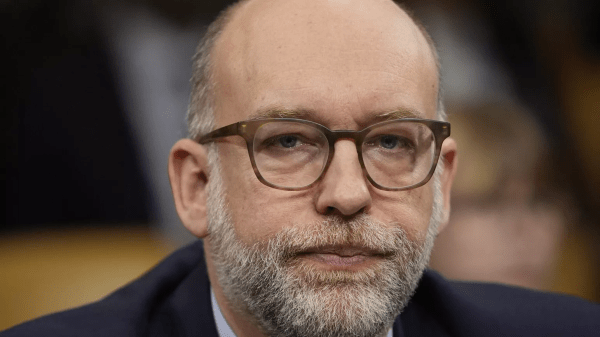
Donald Trump has welcomed the government shutdown as an opportunity to cut what he has called “Democrat Agencies” to shrink the government. The process is being led by Russ Vought, the head of the Office of Management and Budget (OMB) and key author of Project 2025, which advocated for such cuts. However, he has also tried to blame those government cuts on the Democrats.
Vought took to X/Twitter on Friday to announce the start of the “Reduction in Force,” or RIF. His office confirmed via Politico that federal employees were being permanently fired, not temporarily furloughed for the duration of the shutdown: “Can confirm RIFs have begun and they are substantial. These are RIFs, not furloughs.”
Adrian Shanker, who served as deputy assistant secretary for Health Policy during the Biden administration, told The Advocate that while the Office of Population Affairs often had its programs politicized, this is “the first time that the office itself is being cut.”
The Office of Population Affairs manages a huge range of public health initiatives. Those include Title X family planning services and grants; programs for adolescents that cover issues such as pregnancy prevention, mental health, and substance abuse; the Embryo Adoption Awareness and Services program; screenings and treatment for sexually transmitted infections and information on preventing the spread of HIV; and LGBTQ+ health initiatives, including information on gender-affirming care.
As well as restricting programming targeted specifically at the LGBTQ+ community, these cuts will restrict access to family planning programs that LGBTQ+ people are more likely to make use of to grow their families.
The cuts to the Office of Population Affairs will leave us lacking when it comes to sex education and with less support for LGBTQ+ youth, Shanker noted, saying it “leaves us more vulnerable to health inequities and worsened health outcomes.”
Wider cuts to the HHS will have broader effects as the CDC is losing over a thousand employees, including the elimination of entire departments. “CDC is over. It was killed,” said Dr. Demetre Daskalakis, the out gay former director of the CDC’s National Center on Immunization and Respiratory Diseases, after 1000 scientists, doctors, and public health officials were fired from HHS on Friday. Daskalakis, an infectious diseases expert, resigned in protest of the administration’s war on science-based public health earlier this year.
“This administration only knows how to break things. They have made America at risk for outbreaks and attacks by nefarious players. People should be scared.”
Previous federal layoffs have been litigated in court, with some resulting in court rulings that the people cannot be fired, while other courts have allowed the dismissals to proceed. That process, if it occurs here, will take time, during which public health will suffer a setback.
“Without these people in place, it’s unlikely that a lot of these programs will be able to continue even after the government reopens,” predicted Shanker.








 fleeredstates.blog
You must be logged in to post a comment.