Sex Field Requirements: Effective Oct. 14, 2025, CBP systems will only accept “M” (Male) or “F” (Female) in the sex field of APIS transmissions. Any other characters will result in an “X Response-Insufficient Information” error, requiring airlines to resubmit the passenger data with corrected information.
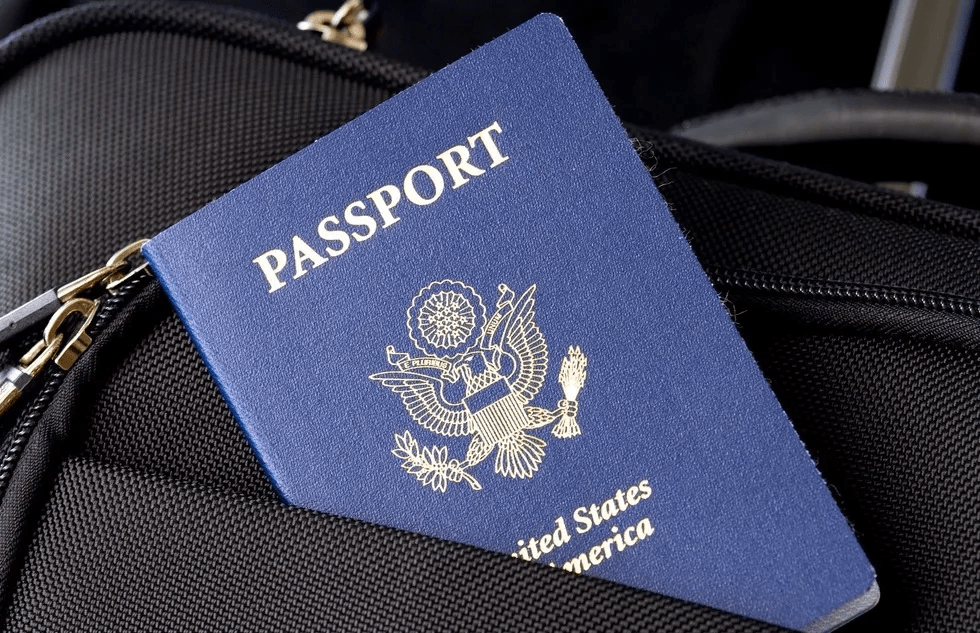
U.S. Passport Format Validation: Starting Oct. 6, 2025, CBP will implement stricter validation for U.S. passport numbers transmitted through APIS.
Implementation Timeline
Sept. 17, 2025: Testing environment (EDU) available for sex field validation changes.
Sept. 24, 2025: Testing environment available for U.S. passport format validation.
Oct. 6, 2025: U.S. passport format validation goes live in production.
Oct. 14, 2025: Sex field validation goes live in production.
U.S. Passport Number Format Requirements
Valid U.S. passport numbers must follow one of these formats:
Option 1: Numeric Format
Nine numeric digits
Must have a numerical value of 4XXXXXXXX or higher
Option 2: Alpha-Numeric Format
Nine characters total
First character must be A, X, Y, or Z
Followed by exactly eight numeric digits
The leading alpha characters indicate passport type:
A: Regular passport
X: Diplomatic passport
Y: Official passport
Z: Service passport
Impact on Business Travel
Employer Considerations:
Review travel policies and booking procedures with travel management companies;
Ensure corporate travel booking systems capture accurate passenger information;
Brief frequent business travelers on the importance of providing exact passport details; and
Consider potential delays if incorrect information requires resubmission.
Employees Considerations:
Double-check that passport information matches exactly what is on the physical document when booking travel;
Verify that airlines have the correct sex designation as listed on the passport;
Allow additional time for potential rebooking if passenger information errors occur; and
Ensure the U.S. passport number format is valid if traveling on a U.S. passport.
Carrier Responsibilities
Airlines remain responsible for comparing travel documents passengers present with the information transmitted to CBP. Airline carriers must ensure accuracy in all APIS data submissions, including traveler sex designation and passport number formatting.
Practical Considerations
Document Verification: Provide passport information exactly as it appears on travel documents.
Sex Designation Accuracy: Ensure the sex designation transmitted to CBP matches exactly what appears on passports, regardless of personal identification.
Passport Updates: Consider whether passport updates may be necessary to ensure smooth travel.
Early Booking: Complete travel bookings in advance to allow time for any necessary corrections.
Travel Management: Work with experienced travel agencies familiar with APIS requirements.
Communication: Ensure clear communication between travelers, booking agents, and airlines regarding exact document details.
Special Considerations
Document Inconsistencies: If travelers’ passports contains a sex designation that differs from their current identification, airlines must still transmit the information exactly as it appears on their passport documents. CBP systems will only accept the “M” or “F” designation that matches travel documents.
Non-Binary Passport Designations: Passports issued with “X” or other non-binary markers will be rejected by CBP systems, requiring resubmission with valid documentation showing “M” or “F” designation.
Passport Updates: Travelers experiencing documentation inconsistencies may wish to consult with the relevant passport issuing authority about available options for updating travel documents.
Takeaways
The implementation of these changes may cause initial adjustment periods. Business travelers and employers should work closely with their travel management companies to enhance compliance with these new requirements. Providing accurate and complete travel documentation remains essential for efficient international travel.
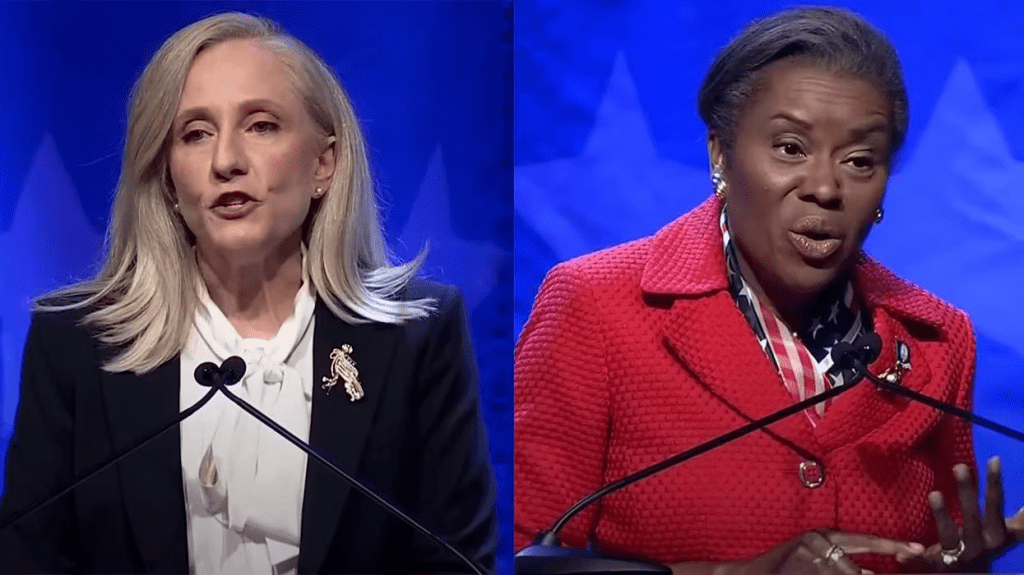
In a combative and chaotic debate Thursday nigh, in Norfolk, Virginia, Lt. Gov. Winsome Earle-Sears, the Republican candidate for governor, declared that opposing marriage equality and allowing employers to fire people for being gay “is not discrimination,” igniting a firestorm that has reverberated through Virginia politics and beyond.
The statement came during the only scheduled debate between Earle-Sears and Democratic nominee Abigail Spanberger, a former CIA officer and three-term member of Congress. The event, held at Norfolk State University and broadcast by TV station WAVY, was frequently interrupted by Earle-Sears’s outbursts, prompting moderators to repeatedly ask her to stop speaking over her opponent. “Please don’t interrupt,” one moderator said after Earle-Sears cut into Spanberger’s answer. Another warned, “Ms. Earle-Sears, we’re not going to be able to get to as many topics if we keep having to give Ms. Spanberger time.”
Spanberger, who leads in most polls, calmly cited Earle-Sears’s long record of opposing LGBTQ+ rights, including her refusal to support marriage equality or workplace protections for queer Virginians. “My opponent has previously said that she does not think gay couples should be allowed to marry,” Spanberger said. “She’s also said she thinks it’s OK for someone to be fired from their job for being gay.”
Before Spanberger could finish, Earle-Sears interjected, “That’s not discrimination.”
The remark drew immediate backlash online. The Human Rights Campaign, the nation’s largest LGBTQ+ civil rights organization, condemned the comment. Sam Lau, one of the organization’s spokespersons, said, “Yes, Lt. Gov. Earle-Sears, that is indeed discrimination. Vote for Abigail Spanberger.”
The Democratic Party of Virginia called the debate performance “atrocious,” and state Sen. Louise Lucas, who attended the event, wrote that Earle-Sears “took a page out of Donald Trump’s debate playbook — interrupt, interrupt, interrupt — anything to avoid real answers or substance.”
Even some Republicans criticized the lieutenant governor’s behavior. Former GOP U.S. Rep. Barbara Comstock said Earle-Sears “demonstrates her bigotry once again,” noting that she “wouldn’t stop babbling and talking over everyone when it wasn’t her time.”
Following the debate, the Spanberger campaign released a statement emphasizing Earle-Sears’s “decades-long, extreme record of opposing marriage equality and equal rights for all Virginians.” The campaign cited her opposition to bipartisan legislation protecting marriage equality that even Republican Gov. Glenn Youngkin signed, noting that she left a handwritten note on the bill stating she was “morally opposed.”
“Virginia families deserve better than a leader who refuses to protect their rights under the law,” Spanberger said in a statement. “The Lieutenant Governor last night showed Virginians that she is more focused on dividing people than solving problems. No company wants to grow in a state where the Governor excuses discrimination and supports firing workers because of who they are. Her comments tell businesses and families that Virginia is closed to the talent, investment, and innovation that keeps our economy strong.”
Democratic National Committee spokesperson Albert Fujii released this statement: “Winsome Earle-Sears is too extreme for Virginia. Her homophobic comments at last night’s debate are disqualifying and prove once again how out of step she is with Virginians. Virginians deserve a leader who will ensure Virginia is welcoming and affordable to everyone — and that champion is Abigail Spanberger. The DNC will keep fighting tooth and nail to ensure Abigail Spanberger wins big in November — the stakes could not be higher.”
A couple from Woburn, Massachusetts has lost their license to foster children after they refused to sign a gender affirming policy form from the Department of Children and Families (DCF).
Lydia and Heath Marvin have three kids in their teens, but they have fostered eight different children under the age of 4 since 2020. Their most recent foster child was a baby with complex medical needs who stayed with them for 15 months.
“Our Christian faith, it really drives us toward that. James says that true undefiled religion is to care for the fatherless,” said Heath.
The couple said they were prepared to care for more foster children until DCF pulled their license to foster in April.
Foster parents cite religious beliefs
That’s because the Marvins refused to sign the agency’s LGBTQIA+ Non-Discrimination Policy because of their Christian faith. Starting in 2022, the policy said that foster families must affirm the LGBTQIA+ identity of foster children.
“We asked, is there any sort of accommodation, can you waive this at all? We will absolutely love and support and care for any child in our home but we simply can’t agree to go against our Christian faith in this area. And, were ultimately told you must sign the form as is or you will be delicensed,” Lydia said.
The Marvins appealed the loss of their license, but lost. They’re considering their options but two other Christian foster families are plaintiffs in a federal lawsuit filed by the Massachusetts Family Institute and Alliance Defending Freedom against DCF.
The lawsuit alleges the policy forces parents to “accept[ ] a child’s assertion of their LGBTQIA+ identity”, “address[ ] children by their names and pronouns,” and “support[ ] gender-neutral practices regarding clothes and physical appearance.”
“There is a speech component and also a religious liberty component to the lawsuit,” said Sam Whiting, an attorney with the Massachusetts Family Institute.
Letter from Trump administration
Last week, the Trump administration sent a letter to DCF, addressing the lawsuit and specifically mentioning the Marvins.
“These policies and developments are deeply troubling, clearly contrary to the purpose of child welfare programs, and in direct violation of First Amendment protections,” wrote Andrew Gradison, Acting Assistant Secretary for the Administration for Children and Families.
LGBTQ+ advocates argue the policy was developed to protect kids. Massachusetts foster parents also receive a monthly stipend.
“The state has an obligation to children to make sure that they’re safe and well protected. And foster parents, they’re not parents. Foster parents are temporary. They’re a stop gap to make sure children can safely go back to their families of origin,” said Polly Crozier, Director of Family Advocacy at GLBTQ Legal Advocates and Defenders.
Data collection by DCF is poor but a report by the Massachusetts Commission on LGBTQ youth suggests that roughly 30 percent of foster children in the state could identify as LGBTQ, similar to data collected in California and New York.
The Marvins argue that DCF has been flexible about child placements in the past for a number of reasons.
“We would love and care and support any child but if there was an issue where we knew that we would have a different position than DCF, we would just be open and talk to them about it,” Heath said.
A DCF spokesperson said in a statement to WBZ-TV, “The Department does not comment on matters related to pending litigation.”
Life for LGBTQ+ people has gotten worse since Donald Trump was elected for a second term — and they’re been forced to make major changes to protect themselves.
Since the November election, the majority (57 percent) of LGBTQ+ people — including 84 percent of transgender and nonbinary people — have made significant life decisions, according to a new report from the Movement Advancement Project. This includes considering or actually moving to a different state, considering or actually finding a different job, attempting to update legal name or gender markers on identity documents, and crossing state lines to receive medical care.
While nearly half of all trans people (43 percent) and one quarter of all LGBTQ+ people (25 percent) have considered moving to a different state, only 9 percent of trans people and 5 percent of all LGBTQ+ people report they’ve actually moved since November.
Part of what is forcing their hands is the increased discrimination and violence against queer people, as 60 percent of LGBTQ+ people, including 82 percent of trans and nonbinary people, report that they or an immediate family member have had at least one negative experience related to being LGBTQ+ since the November, 2024 election.
Trans respondents reported these experiences nearly twice as often as all LGBTQ+ respondents, with 56 percent saying they or an immediate family member have been discriminated against due to being LGBTQ+, and 53 percent saying they have been harassed online.
Six in 10 LGBTQ+ people say they are worried about the impacts of Trump’s anti-LGBTQ+ policies on them or their families. For trans people, the number is nine in 10. Trans people are also significantly more likely to say they are “very worried,” with 60 percent agreeing compared to 36 percent of all LGBTQ+ people.
“As political attacks on LGBTQ people by federal, state, and local governments continue into the future, it is likely that these impacts will only accumulate,” the report concludes. “While the survey illustrates some of the many ways LGBTQ people are taking action to protect not only themselves but also their broader community, it is vital that people beyond LGBTQ people join in these efforts to protect their LGBTQ neighbors, friends, and family members, and to stop the ongoing attacks on LGBTQ people.”
A student activist at Louisiana State University in Baton Rouge says her arrest at a campus public hearing was a targeted attack based on her political views, and alleges police became menacing when they learned she’s transgender.
Gabriela Juárez, 20, was swarmed by campus police after she exceeded her allotted speaking time of three minutes at a campus presidential search forum last week.
At least a dozen other students leapt from their seats in support of Juárez as LSU cops dragged her from the room, Louisiana Illuminator reports.
Six other students were charged with misdemeanors and released from the campus police station after they blocked the police car taking Juárez away.
Juárez was charged with resisting arrest and “interference with educational process,” which is a felony. She was taken to East Baton Rouge Parish Prison.
All of the students involved are members of the LSU chapter of Students for a Democratic Society. The group claims Louisiana Gov. Jeff Landry (R) is secretly steering the process to hire the university’s next president to align with the governor’s far-right, Trump-inspired political agenda, while disenfranchising campus leaders, faculty and students.
Several students at the forum wore T-shirts with the slogan “No MAGA President.”
LSU cops initially referred to Juárez as “she” or “her,” the activist said in an interview, but began treating her differently when she shared her legal name. Then they turned hostile and referred to her as “he” and “him,” she said.
At the parish prison, Juárez was strip-searched and forced to stand naked while officers discussed where she should be kept.
“They said to the officer, ‘I have someone here who is bottom parts male but up top fully female,’” Juárez recounted. “And so they had no idea what to do with me.”
Juárez said she was put into a cell by herself and given a women’s uniform, along with a warning she’d be sexually assaulted anywhere else. Other cops interrogated Juárez about her gender and loudly referred to her as a man, she said.
Juárez said she was denied the opportunity for a phone call after her arrest, but fellow SDS members were able to post a $1000 bond to obtain her release late the same night.
The meeting that led to Juárez’s arrest was chaotic.
She and six other members of SDS made public comments, eviscerating the 20 search committee members and calling them illegitimate.
Several made profane comments, including Juárez, who alleged the only criteria for serving on the committee was to “be a millionaire and suck off the governor.”
“Don’t f**king touch me,” Juárez shouted as the first LSU cop grabbed her arm.
“Am I being detained?” she shouted as two officers dragged her out of the room and fellow SDS members shouted down cops and committee members in her support.
“Shame on you!” they shouted after Juárez was removed. Those students were also ejected from the meeting.
Outside, as her fellow SDS members and other students shouted and aimed their phones at officers, Juárez was searched, handcuffed, and placed in the back of an LSU Police cruiser.
Juárez says she was targeted.
“In a moment where they are actively cultivating a panic around the presence of Latinos and the presence of trans people, and especially transgender women,” Juárez said, “I do believe that that – combined with the fact that I have a high profile on campus – led to them wanting to make an example out of me, and wanting to intimidate me specifically, and to use me as a show of force to scare other students into being silent.”
The 20-year-old has political enemies, she said.
In September, Juárez was called out by the Louisiana Republican Party, which demanded that LSU discipline the activist for comments critical of slain conservative podcaster Charlie Kirk.
Juárez shared an Instagram story that referred to Kirk as a “world famous fascist” with the caption “rejoice.”
In this episode, we sit down with Help Me Leave (www.helpmeleave.us ) — an organization dedicated to creating pathways to safety for LGBTQ people in the United States.
Help Me Leave works to:
🌍 Support amnesty and refuge visas for LGBTQ Americans facing discrimination and hostility
✈️ Provide emergency relocation assistance to those in urgent need
🤝 Build a global network of allies, advocates, and skilled volunteers who can help
The conversation explores: Why LGBTQ people in the U.S. are increasingly seeking refuge abroad
How the group is building momentum toward meaningful immigration solutions
Ways YOU can get involved, contribute, or share your skills to support this mission
“Help Me Leave! is continuing to build momentum. Follow for further updates and get in touch if you have skills that can help.”
In a world and at a point where LGBTQ rights are under increasing threat, organizations like Rainbow Railroad are delivering life-saving action and offering hope as they do. Founded in 2006 as a grassroots response to the grave needs of LGBTQ individuals facing persecution, Rainbow Railroad has evolved into a global leader in queer humanitarian response. Their mission is clear and critical — to help LGBTQ people escape life-threatening situations and access the safety and freedom they deserve.
The Washington Blade was honored to speak with Latoya Nugent, head of engagement at Rainbow Railroad, a determined advocate and strategist who brings lived experience, passion, and vision to this work. In our conversation, Latoya sheds much-needed light on the evolution of the LGBTQ refugee crisis, the organization’s global impact, and how everyday people can get proactive in supporting LGBTQ asylum seekers and those displaced.
Can you share with us a little bit about Rainbow Railroad and how it was formed?
Rainbow Railroad is a global non-profit organization with offices in New York and Toronto. We were founded in 2006 as a volunteer-led initiative focused on helping LGBTQI+ people at risk find safety. Our primary work supports individuals living in what we call “countries of criminalization” – places where it’s illegal to be LGBTQI+.
We officially registered as a charity in Canada in 2013 and received 501(c)(3) status in the U.S. in 2015. Since then, we’ve grown to a team of about 60 staff working across direct service and advocacy. Our mission is to ensure LGBTQI+ people in danger can access safety and support, while also driving global advocacy to improve conditions on the ground.
Largely because there simply weren’t many organizations doing this work. While humanitarian protection has existed for decades, very few have focused specifically on how forced displacement affects LGBTQI+ people. The persecution faced by our community is often deeply personal and not adequately understood or addressed in global protection systems.
Rainbow Railroad was founded by a group of lawyers in Toronto who witnessed extreme anti-LGBTQI+ violence in Jamaica and the broader Caribbean. They knew a solution was needed to create safe passage for those fleeing persecution. What started as a small initiative has now become a global force, responding to crises like the fall of Kabul, the Chechnya purge in 2017, and the Anti-Homosexuality Act in Uganda.
Because we’ve worked so closely with governments, especially the Canadian government, and have deepened our involvement in global coalitions, our ability to respond at scale has expanded. In 2023, we secured a historic partnership with the Canadian government to provide comprehensive, end-to-end relocation support for LGBTQI+ people. That had never existed before within the humanitarian protection framework.
How has anti-LGBTQ and anti-transgender persecution evolved or intensified in recent years?
We’re seeing a rising, coordinated global movement against LGBTQI+ rights, heavily influenced by some religious and political groups. Alarmingly, some countries that had previously decriminalized LGBTQI+ identities are now reversing progress. Take Trinidad and Tobago, for example.
In 2023, Russia labeled the LGBTQI+ movement as “extremist.” In the U.S., under the current administration, we’ve seen federal resources for LGBTQI+ individuals and organizations stripped away. Websites have removed key information, and funding has been cut.
Globally, trans people are often the first targets, whether through state violence or community aggression. While we saw real progress for a while, a lot of that is now under threat. The movement today is focused on holding the line and preventing further erosion of rights.
What are some of the biggest misconceptions the public holds about LGBTQ refugees and asylum seekers?
A major one is the misunderstanding of how deeply personal the persecution is. Even people working in humanitarian spaces sometimes don’t grasp how intimate and life-threatening the experience is for LGBTQI+ people.
Unlike those fleeing war or natural disasters, circumstances that the world is more conditioned to understand, LGBTQI+ asylum seekers are often met with disbelief. People question their identity, their trauma, and even their right to seek protection.
And because the system isn’t designed with us in mind, many are retraumatized throughout the process. There’s also a lack of data. No one is formally tracking how many displaced people identify as LGBTQI+. So we’re forced to estimate based on global population models, but we believe there are upwards of 11 million LGBTQI+ individuals affected by displacement.
Also, the growing anti-immigrant sentiment worldwide paints refugees as threats, and LGBTQI+ asylum seekers get caught in that same narrative. Many wrongly believe that people choose to be refugees, but no one chooses this. It’s called forced displacement for a reason.
Here in the US, how does misinformation shape asylum policy?
Misinformation leads to policies that don’t reflect reality. If you start by distrusting asylum seekers, you miss their humanity. You see them as burdens or threats, not as people fleeing unimaginable violence.
As federal support gets cut, civil society organizations like Rainbow Railroad have to fill the gaps. But we’re not replacing a government system — we’re trying to patch a sinking ship.
And here’s the truth: LGBTQI+ asylum seekers will continue to arrive in the U.S. because it’s still safer than many of the countries they’re fleeing. Even with rising hostility here, they’re not being chased with machetes, like in parts of Nigeria, Jamaica, or Egypt. That’s the level of danger we’re talking about. And that needs to be understood.
In what ways does the US resettlement system fall short for LGBTQ refugees?
Before the federal program we partnered with was suspended in January 2025, we saw firsthand how the system wasn’t built with LGBTQI+ people in mind.
Most LGBTQI+ individuals relocate alone, often fleeing their own families. Yet the resettlement system assumes people arrive with built-in support networks, which they don’t. That leaves them vulnerable to social isolation and instability from day one.
Making an asylum claim also requires proving you deserve protection, which can be incredibly retraumatizing. You’re forced to provide evidence of your identity and persecution — even when you’ve had to hide both for survival. If you can’t “prove” it, your claim may be denied.
Add language barriers, lack of culturally competent translators, and complex paperwork, and you’ve got a system that’s often inaccessible to the very people it’s meant to help.
Can you tell us about the Communities of Care program? What prompted its creation?
The program launched in 2023 as part of a federal initiative to support LGBTQI+ refugee resettlement in the U.S. We mobilized small groups of volunteers, five or more LGBTQI+ individuals or allies, to support refugees as they settled into their new communities. They helped with housing, employment, education, transportation, and creating a sense of belonging.
When the program was suspended in January, we transformed it. Now, it focuses on supporting asylum seekers already in the U.S., many of whom are struggling without federal support.
We call on three or more volunteers to form a Community Support Team and work with an LGBTQI+ asylum seeker for six months. We train these teams to offer trauma-informed, competent care. It’s a way to create chosen family and rebuild community.
Can you tell us about the Community Access Fund?
That fund directly responds to the reduction in U.S. federal support for displaced LGBTQI+ individuals. We realized that many small, grassroots organizations doing vital work are severely underfunded or entirely volunteer-run.
So we created a pool of funds that these organizations can apply to. The first grantee was actually founded by someone we helped relocate to New York a few years ago. He saw that there were countless LGBTQI+ asylum seekers in NYC without access to community or services and decided to create that support himself.
We’ve supported groups in cities like New York, LA, and D.C., and the impact has been powerful. The fund is all about redistributing resources to the people who need them and who are already doing the work on the ground.
What can the average US citizen do to make a difference for LGBTQ asylum seekers and refugees?
So much! First, consider opening your home. Through our Rainbow Housing Drive, we ask people to offer a spare room or apartment at no cost, below-market, or even market rate, to someone in need.
You can also volunteer to form a Community Support Team with just two other people. Or donate to Rainbow Railroad. Honestly, even $5 helps. If everyone did that, the scale of what we could accomplish would be phenomenal.
We also encourage people to contact their elected officials at the city, state, or federal level. Let them know these issues matter to you. Support campaigns that uplift LGBTQI+ immigrants. Solidarity is powerful, and when we act together, we create real change.
This work can be heavy. As the Head of Engagement, how do you stay motivated?
Self-care is essential. Every morning, I wake up early and walk to work. It clears my mind. I take recovery seriously — emotional, physical, social, creative. Some evenings I turn my bathroom into a mini spa — candles, music, and a long bath. It grounds me.
But what really fuels me is my own journey. I’ve personally benefited from the work Rainbow Railroad does. I know how life-saving it is to be lifted from trauma and relocated somewhere you can truly live. Being part of gifting that to others drives me every day.
Our team is incredible. Resilient, dedicated, and deeply committed. And despite the challenges, we celebrate every win, no matter how small. Every life we help change matters.
Finally, what message of hope would you share with LGBTQ people who are fleeing persecution right now?
Hope is real, and it’s on the other side. There’s an entire global community, an army of people, who may not necessarily know your story, but who are bound together by our identities, understanding the persecution and discrimination that we as a community face. that knowledge makes us committed to doing everything in our power to ensure that everyone, every LGBTQI+ person, can live with not only dignity but also safety.
Trust that army to keep doing the work and to show up in solidarity. It may be difficult tomorrow or even next month, but there’s hope on the other side.
Loudoun County School Board proclamations are typically noncontroversial, but a proclamation recognizing October as LGBTQ+ History Month drew three no votes at the board’s Sept. 30 meeting.
Language in the proclamation says it honors the “history, achievements, and contributions of lesbian, gay, bisexual, transgender, and queer people” and celebrates “the strength, resilience, and impact of the LGBTQ+ community, whose contributions have enriched the cultural, educational, and civic life of Virginia and the world.”
“We reject discrimination based on gender identity, sexual orientation, and gender expression, and instead affirm kindness, acceptance, and respect as the foundation of our learning community,” the proclamation states. “Our school division is stronger when every student and staff member can live authentically and feels a true sense of belonging, and when we embrace the full diversity of our community.”
April Chandler, Algonkian; Linda W. Deans, Broad Run; board Vice Chair Anne P. Donohue, At Large; Arben Istrefi, Sterling; board Chair Melinda M. Mansfield, Dulles; and Sumera Rashid, Little River, voted yes.
Deana L. Griffiths, Ashburn; Karen “Kari” LaBell, Catoctin; and Lauren E. Shernoff, Leesburg, voted no.
The proclamation was initially included in the board’s consent agenda, which has items that are approved en masse.
However, Griffiths, who typically has abstained from voting on proclamations since taking office in 2024, wrote in an email that she moved the proclamation to the regular agenda, so she could speak about why she was voting against it.
“There is a meaningful difference between formally recognizing a group in history and promoting that group for its lifestyle to our students,” Griffiths said at the meeting. “It crosses the line into advocacy and raises serious concerns under the (Trump) executive order protecting our children from inappropriate content in our schools.
“Our communications must remain age appropriate and leave conversations about sensitive information to parents. Schools exist to teach children how to read, write, and think critically. Not engage them in conversations about sexuality at any age where they are far too young to process it.”
The January executive order from President Donald J. Trump that Griffiths referred to says people cannot identify as the opposite sex they were born as. It says the administration will “enforce all sex-protective laws to promote this reality,” including cutting federal funding used to “promote gender ideology.”
The Trump administration said in August it was suspending or terminating funding to Loudoun County Public Schools over its policy allowing transgender students to choose which bathroom or locker room they use. Federal money accounts for about $47 million of the current $2 billion LCPS budget.
Shernoff wrote in an email that some constituents complained to her after she voted for the proclamation last year about the way LGBTQ+ History Month was celebrated in schools. Specifically, their complaints were about how “certain spirit days” were celebrated and the effect on young students.
“I did some research into it and that in conjunction with knowing that LCPS also proclaims LGBTQ+ Pride Month in June, I decided to not support this,” Shernoff said. “I did however support the anti-bullying proclamation which specifically names and protects students based on their gender identity. I remain committed to ensuring all students are protected, safe, and can achieve to their fullest potential.”
LaBell said in an interview that she supported the proclamation last year because it was on the consent agenda and voting against it would’ve meant voting against everything on the agenda.
She said she opposed the proclamation because some of the issues it raises are “too political” to promote in school and might be inappropriate for young students to discuss.
Like Shernoff, LaBell said she voted for the Pride Month and anti-bullying proclamations, but believes one proclamation related to LGBTQ issues annually is enough.
“You want history? Put it in Pride Month,” she said. “It just seems to me it’s being pushed more so than anything else in our school system at this point in time. And it’s a family issue. It shouldn’t be a political issue in our schools.”
Two groups that support LGBTQ rights criticized the rationale of Griffiths, LaBell and Shernoff.
Candice Tuck, an Equality Loudoun board member, said the proclamation isn’t about promoting sexuality.
“There have been many brave queer pioneers throughout history who have fought for civil rights, who have been inventors, and who have moved our democracy forward,” Tuck said in an interview. “There is no reason that the queer community cannot be recognized for those accomplishments without individuals in our community perverting their history.”
Meredith Ray, the head of Loudoun4All, noted in an email that Griffiths previously said she wouldn’t vote for any proclamations, but chose to single out the LGTBQ+ proclamation for criticism.
Ray called Griffiths’ decision “malicious” and said her remarks were “ignorant commentary” on the issue.
“Recognition of history is not ‘promotion of a lifestyle.’ LGBTQ+ students, staff, and families exist in Loudoun and deserve the same dignity as everyone else. Griffiths’ attempt to frame recognition as ‘inappropriate content’ is harmful, especially to young people who already face higher rates of bullying and mental health struggles when leaders stigmatize them,” Ray said. “In fact, decades of research show that inclusive education that teaches respect and representation is one of the most effective ways to prevent bullying and improve school climate.”
Nate Rae had always felt secure living openly since coming out as a transgender man in his late 20s — until a recent U.K. Supreme Court ruling on the legal definition of biological sex changed everything.
Now, Rae — a PhD student and science communicator who grew up in a small Scottish town before moving to London — says he finds himself constantly weighing risks and assessing where it is safe — or unsafe — for him to be.
In April, the court affirmed that under equality laws, the term “sex” refers to biological sex, meaning a transgender woman is legally considered male, and a transgender man is considered female.
Equality watchdog EHRC stated in its interim guidance on the ruling’s practical implications that transgender people should be barred from facilities and services, from toilets to hospital wards and refuges, designed for the gender they live as.
“It’s almost like it’s been made legal to harass trans people,” Rae, 33, told Reuters in an interview at Gay’s The Word, Britain’s oldest LGBTQ bookshop, saying he was now “hyper aware” of people noticing him.
“I’ve got to factor in things that I’d never had to factor in before,” he said. “Where can I go? Where am I safe?”
Transgender rights flashpoint
Rae, who only started to medically transition last year, often uses the women’s bathroom as he feels he is still largely perceived as female.
Since the ruling, Rae has been told several times that he cannot use a certain bathroom and has been called “disgusting” when using a female toilet. On one occasion, someone approached him to ask: “Do you know there are kids here?”
Transgender rights have become a political flashpoint in Britain and elsewhere. In the U.S., President Donald Trump has targeted the rights of transgender people in a series of executive orders.
Some critics of the policies say the conservative right has weaponized identity politics to attack minority groups.
But others argue that support for transgender people has infringed on the rights of biological women and their safety in spaces such as hospitals, prisons and domestic violence refuges.
Britain’s government said the judgement brought clarity and a clear position to underpin gender policies, but for many transgender people, including Rae, it has left them feeling excluded from parts of society.
A report released in August by transgender rights group TransActual highlighted how, since the ruling, some trans people have planned to leave the country, concealed their identities, avoided public spaces like hospitals, felt outed at work, or have withdrawn from social life altogether.
Asked about the detrimental impacts of the ruling cited by transgender people, a government spokesperson said laws were in place to protect trans individuals from discrimination and harassment.
Young trans people ‘terrified’
Following a consultation, the EHRC, which is responsible for enforcing equality laws, submitted its updated draft guidance to the government at the start of September and parliament is expected to consider it by the end of the year.
Keyne Walker, strategy director for TransActual, said the interim guidance is already having a “dire effect” and said the EHRC’s interpretation of the judgement could have been far less “extreme”.
Some organizations have already updated their transgender policies. The Football Association has barred transgender women from competing in women’s soccer in England, and the British Transport Police now requires same-sex searches in custody to be conducted according to a detainee’s biological sex.
A spokesperson for the EHRC said everything they had done since the judgement was grounded in the law, and the guidance shared with the government was both legally accurate and clear.
Rae fears the court’s decision will discourage people from living freely in their chosen gender and threatens their safety if they do, as it has shifted public perceptions of transgender people.
“Every young trans person I’ve spoken to is terrified,” said Rae, who teaches science to young people as part of his job, adding that many were now questioning: “Am I going to be able to live the life I want to live as the person I want to be?”
After a grueling two-year fight, starting on Tuesday, the Kansas Department of Revenue (KDOR) will resume issuing accurate driver’s licenses to transgender Kansans, a spokesperson for the ACLU of Kansas told Erin in the Morning.
Last week, the Kansas Supreme Court declined to hear Attorney General Kris Kobach’s request to uphold a district court order preventing the state from updating IDs for trans residents. And while there is still a fight ahead, it marks a notable victory for trans people in a state that has been holding their driver’s licenses hostage for years.
“I want every transgender Kansan to be able to live their lives authentically,” said Kathryn Redman, a 65-year-old resident and a plaintiff in the case, Kansas v. Harper,brought on by the ACLU and Stinson LLP.
AG Kobach asserted that the courts needed to put a stop to the license updates indefinitely, claiming it would interfere with law enforcement’s ability to identify and apprehend criminal suspects. The Court of Appeals called this “mere speculation.”
“There is no hidden agenda,” Redman told Erin in the Morning. “All I tried to accomplish and what I have accomplished by my transition is, I now live my life at peace with myself.”
In theory, the case should now be returned to a new trial court for final resolution. But the conservative Kobach doesn’t want to let that happen. He and other Republican officials have sought to call a special legislative session on the matter—a process they were already undertaking in a transparent attempt at gerrymandering, and it has seen renewed fanfare in light of the court events this past week.
The fight to strip trans Kansans of their rights, state Senate President Ty Masterson wrote in an Oct. 1 letter, is considered “even more important than redistricting.” He called on the Kansas State Republican Caucus to simply “add a few words” to state law to stop Kansans from updating their gender markers.
The legal proceedings have ricocheted from court to court since July 2023, when legislators overrode Democratic Governor Laura Kelly’s veto on Senate Bill 180. The anti-trans law takes after legislation proposed by right-wing, anti-trans organizations, misleadingly dubbed the “Women’s Bill of Rights.” In practice, the only thing the bill does is codify sex segregation and target the equal rights of transgender people. It makes no mention of forcing Kansans to carry a driver’s license with an inaccurate gender marker.
“Rather than accepting the decisions of the two highest courts in our state, Mr. Kobach is resorting to backroom attempts to change the law and shut the courts out of our government so he can have full, unchecked power,” Micah Kubic, executive director of the ACLU of Kansas, said in a statement. “This is, simply put, a power grab by the attorney general that goes beyond his baseline of cheap political theater and wasteful litigation.”
Kubic denounced Kobach’s “extremist and discriminatory agenda,” adding that it “threatens not just the privacy and agency of all Kansans but also the very checks and balances of our state government.”





 fleeredstates.blog
You must be logged in to post a comment.