Equality Texas notes record number of anti-LGBTQ bills introduced in 2025 Legislature

*This is being reported by the Dallas Voice.

Friday was the bill filing deadline for Texas’ 2025 legislative session, and Equality Texas’ Interim Executive Director Brad Pritchett today issued a fundraising message warning the state’s LGBTQ community that “we have reached a grim milestone:”

As of Monday, March 15, 205 anti-LGBTQIA+ bills have been filed in the Texas legislature, Pritchett noted. That is, he said, the highest number ever recorded in Texas, surpassing the previous record of 141 bills filed in 2023.

“This is a distinction no Texan should be proud of,” Pritchett wrote. “These bills target our community’s basic rights and freedoms, from healthcare access to education to simply being able to live our lives with dignity. They aim to marginalize LGBTQIA+ Texans and erase our existence from public life.”

Pritchett pointed to Equality Texas’ efforts so far in 2025 which include hosting 30 advocacy training sessions across the state and training more than 1,000 advocates to mobilize at the Capitol, launching the largest pro-transgender TV ad campaign in Texas history, conducting more than 30 issue briefings on LGBTQ rights with legislators and stakeholders and organizing the “largest LGBTQIA+ advocacy day in Texas history.”

Pritchett said that while Equality Texas knows such strategies work, “we need your support to implement them, effectively … . The sheer volume of anti-LGBTQIA+ legislation means we must redouble our efforts.”

Help fund Equality Texas’ efforts in the fight for LGBTQ equality in the Lone Star State at this link.

Ohio appeals court tosses out ban on gender-affirming care for transgender minors

*This is being reported by The Columbus Dispatch.

Ohio’s ban on gender-affirming care for transgender minors is unconstitutional and should be tossed out, an appeals court ruled Tuesday.

The three-judge panel on the Tenth District Court of Appeals overturned a decision by a Franklin County judge that allowed the law to take effect last year. The GOP-controlled Legislature voted in early 2024 to override Gov. Mike DeWine’s veto of House Bill 68, but advocates quickly sued on behalf of two transgender girls and their families.

“It is difficult to understand why our legislature believes adults are equipped to make decisions about gender-affirming medical care for themselves but not for their minor children,” Judge Carly Edelstein wrote in the decision.

House Bill 68 prevents doctors from prescribing hormones, puberty blockers or gender reassignment surgery before patients turn 18. It also bans transgender girls and women from playing on female school sports teams, although the lawsuit didn’t target that piece of it.

The law allows Ohioans younger than 18 who already receive hormones or puberty blockers to continue, as long as doctors determine stopping the prescription would cause harm. It does not ban talk therapy, but mental health providers must get permission from at least one parent or guardian to diagnose and treat gender dysphoria.

The American Civil Liberties Union argued the law violates the right of transgender Ohioans to choose their health care under the Ohio Constitution.

“The state’s ban is discriminatory, baseless and a danger to the well-being of the same Ohioan youth lawmakers claim to want to protect,” said Harper Seldin, an attorney for the ACLU. “It’s also part of a sweeping effort to drive trans people out of public life altogether by controlling our health care, our families and our lives.”

Republican Attorney General Dave Yost, who is running for governor in 2026, pledged to appeal the decision.

Judge blocks implementation of Trump’s transgender military ban

*This is being reported by The Hill.

A federal judge on Tuesday indefinitely blocked implementation of President Trump’s executive order effectively barring transgender people from serving openly in the military, a stark blow to the administration’s efforts to curb transgender rights. 

U.S. District Judge Ana Reyes, an appointee of former President Biden, barred Defense Secretary Pete Hegseth and other military officials from implementing Trump’s order or otherwise putting new policy into place effectuating it. She also said the plaintiffs’ military statuses must remain unchanged until further order of the court.  

The judge said her order intends to “maintain the status quo” of military policy regarding transgender service that existed before Trump signed the order titled “Prioritizing Military Excellence and Readiness.” She stayed her order until Friday to give the administration time to appeal.  

“The Court knows that this opinion will lead to heated public debate and appeals,” Reyes wrote in her opinion. “In a healthy democracy, both are positive outcomes.”

Six active service members and two individuals seeking to enlist in the military sued the Trump administration soon after the Jan. 27 order was signed, asserting it violates their constitutional rights. Two similar lawsuits are moving through the courts. 

Trump’s order suggests that transgender people cannot “satisfy the rigorous standards necessary for military service” because they threaten the lethality of the armed forces and undermine unit cohesion, an argument long used to keep marginalized communities from serving.

“A man’s assertion that he is a woman, and his requirement that others honor this falsehood, is not consistent with the humility and selflessness required of a service member,” the executive order states. 

Reyes wrote in her opinion that the president has both the power and obligation to ensure military readiness but noted that leaders of the armed forces have long used that justification to “deny marginalized persons the privilege of serving.” 

“‘[Fill in the blank] is not fully capable and will hinder combat effectiveness; [fill in the blank] will disrupt unit cohesion and so diminish military effectiveness; allowing [fill in the blank] to serve will undermine training, make it impossible to recruit successfully, and disrupt military order,’” Reyes wrote.  

“First minorities, then women in combat, then gays filled in that blank,” she continued. “Today, however, our military is stronger and our Nation is safer for the millions of such blanks (and all other persons) who serve.” 

A 2016 RAND Corp. study commissioned by the Pentagon found that allowing trans individuals to serve in the military had no negative impact on unit cohesion, operational effectiveness or readiness. 

During several hearings across multiple weeks, Reyes tore into Justice Department lawyers over Trump’s order and Hegseth’s policy effectuating it, which was set to go into effect on March 26. 

A Department of Defense memo dated Feb. 26 said individuals with a “current diagnosis or history of, or exhibit symptoms consistent with, gender dysphoria” are not fit for military service. It added that the Pentagon recognizes only two sexes, male and female, in compliance with another Trump executive order, and requires service members to “only serve in accordance with their sex.” 

Reyes noted that symptoms of gender dysphoria could “mean anything,” from “cross-dressing” to mental health conditions like depression, which are also common among members of the military who do not identify as transgender. 

“How can I say that a policy is limited, when on its own terms, it could include almost any transgender person?” the judge asked Justice Department lawyers during a March 13 hearing. 

Department of Justice (DOJ) lawyer Jason Manion argued that judges must accede to the “current” military, not those under the leadership of past administrations. 

“You defer to the military,” he said. “You do not reassess the evidence they are doing.” 

Nonetheless, the judge questioned the Defense Department’s use of “cherry-picked” studies to back up its new policy, which she said were “totally, grossly” misrepresented by Hegseth. 

In her ruling Tuesday, Reyes pointed to that lack of evidence as reason to take a different course.

“Yes, the Court must defer,” the judge wrote. “But not blindly.” 

At an earlier hearing last month before Hegseth’s policy was announced, Reyes sparred with DOJ lawyer Jason Lynch over the breadth of Trump’s order, suggesting it amounted to “unadulterated animus” backed up by little evidence. 

She directed Lynch to sit down and purported she would ban all graduates of the University of Virginia School of Law — his alma mater — from appearing before her because they’re “liars” and “lack integrity,” terms mimicking Trump’s executive order. 

“Is that animus?” she asked, calling Lynch back to the podium. 

Following that hearing, the Justice Department filed a complaint against Reyes accusing her of misconduct. Attorney General Pam Bondi’s chief of staff, Chad Mizelle, claimed the judge sought to “embarrass” Lynch with her hypothetical scenario. 

Another seven transgender service members, backed by two LGBTQ civil rights organizations, are challenging Trump’s order on transgender troops in a separate lawsuit filed earlier this month in Washington state. Two more active-duty members challenged the order in a suit filed Monday in New Jersey.

In a statement, Jennifer Levi, senior director of transgender and queer rights at GLBTQ Legal Advocates & Defenders, one of the groups representing the plaintiffs at the center of Reyes’s ruling, said Tuesday’s decision “speaks volumes.”

“The Court’s unambiguous factual findings lay bare how this ban specifically targets and undermines our courageous service members who have committed themselves to defending our nation. Given the Court’s clear-eyed assessment, we are confident this ruling will stand strong on appeal,” Levi said.

Texas AG Paxton ‘opinion’ claims courts lack authority to order gender marker changes, tells state agencies to ‘immediately correct’ any such changes

*This is being reported by the Dallas Voice. A response by the Texas House LGBTQ Caucus is here.

Texas Attorney General Ken Paxton ramped up his war on transgender Texans yet another notch today (Friday, March 14), issuing a “legal opinion” declaring that state district courts do not have the judicial authority to order governmental agencies to change the gender markers on a trans person’s government-issued identification documents to reflect their actual gender identity rather than their gender assigned at birth.

Paxton also instructed state agencies to “immediately correct any unlawfully altered driver’s licenses or birth certificates that were changed pursuant to such orders.”

But the AG’s “opinions” are not legally binding on the courts, and Lambda Legal’s South Central Regional Director Shelly Skeen noted that her organization, as well as the ACLU, already have legal challenges in the works.

Paxton’s “opinion” was issued in response to a request made last September by the Texas Department of Public safety, the state agency which issues driver’s licenses in this state. A summary of the “opinion” reads:

“The ‘judicial power’ endowed to district courts does not countenance ex parte orders directing state agencies to amend a person’s biological sex on driver’s licenses or birth certificates. The underlying proceedings are coram non judice, and the resulting orders are void. State agencies must immediately correct any unlawfully altered driver’s licenses or birth certificates that were changed pursuant to such orders.”

(Ex parte means “on one side only; by or for one party.” Coram non judice means “not before a judge,” or “before one not a judge.”)

What Paxton is saying, Skeen explained, is that courts have been issuing orders directing state agencies to change gender markers on official documents such as birth certificates and driver’s licenses “without the agency being a part of the case.”

But, she added, “Courts have the authority to issue court orders based on what they find given the facts in any given case. The state doesn’t need to be party to that case.”

Skeen continued, “A court order is part of what the judiciary gets to do — interpret the law. The legislature makes the law, and the executive branch [of which Paxton is a part in Texas] is supposed to enforce the law. When a court issues an order, that order [applies to] the executive branch, and that order is entitled to full faith and credit under the U.S. Constitution.”

That means, basically, that Texas is required to honor court orders issued in other states, with a very few exceptions.

“We know the attorney general’s opinion is non-binding. But we also know state agencies will try to comply with it. Nevertheless, his opinion — in my opinion — is wrong. He is choosing to issue a non-binding opinion that is contrary to many legal doctrines, including separation of powers.” Shelly Skeen, Lambda Legal South Central Region director

“We know the attorney general’s opinion is non-binding. But we also know state agencies will try to comply with it,” Skeen said. “Nevertheless, his opinion — in my opinion — is wrong. He is choosing to issue a nonbinding opinion that is contrary to many legal doctrines, including separation of powers.”

Ash Hall, policy and advocacy strategist on LGBTQIA+ rights for the ACLU of Texas, said in a written statement, “We condemn Ken Paxton’s misuse of his office to repeatedly target transgender Texans. Attorney general opinions are non-binding and cannot supersede court orders. State agencies have no authority to retroactively change anyone’s valid legal documents.

“If state agencies attempt to implement this non-binding opinion, it would be an unlawful waste of resources that will not hold up in court nor stand the test of time,” Hall said. “We should all have identity documents that match who we are as a matter of basic safety and Paxton cannot erase transgender Texans’ right to exist.”

“We condemn Ken Paxton’s misuse of his office to repeatedly target transgender Texans … State agencies have no authority to retroactively change anyone’s valid legal documents.” Ash Hall, policy and advocacy strategist on LGBTQIA+ rights for the ACLU of Texas

An ACLU of Texas spokesperson added that there “not much more we can comment on beyond that yet since we don’t know how they plan to enforce this.”

Skeen said that anyone who finds their government-issued IDs have been or are being changed should contact the Lambda Legal Help Desk or the ACLU of Texas as soon as possible. She also stressed that legal challenges are already moving through the courts, including Fowler et al v. Stitt et al which is currently pending before the U.S Supreme Court.

According to the website, Lambda Legal filed that lawsuit in the U.S. District Court for the Northern District of Oklahoma on behalf of three transgender people born in Oklahoma — Rowan Fowler, Allister Hall and one plaintiff identified by his initials C.R.  — after Oklahoma Gov. Kevin Stitt issued an executive order in late 2021 that other state officials have invoked in denying transgender people’s applications to correct their birth certificates. That order is a reversal of prior policy, which had permitted such corrections for years, the lawsuit says, arguing that the government’s actions violate equal protection, privacy and liberty under the Equal Protection and Due Process Clauses of the U.S. Constitution and that forcing transgender people through their birth certificates to identify with a sex that conflicts with who they are violates their free speech rights under the First Amendment.

Unpopular Texas Congressman adjourns hearing after blowup over McBride introduction

*The Hill is reporting the unpopular Texas Congressman Keith Self has no sense of decorum on his own committee. Read below.

A House Foreign Affairs subcommittee hearing ended abruptly Tuesday after Rep. Keith Self (R-Texas) referred to Rep. Sarah McBride (D-Del.), the first transgender person elected to Congress, as “mister.” 

Self, who chairs the subcommittee on Europe, introduced McBride as “the congressman from Delaware” during a hearing on arms control and U.S. assistance to Europe. McBride responded by calling Self “Madam Chair.” 

As McBride delivered her remarks, ranking member Bill Keating (D-Mass.) interjected, asking Self to repeat his introduction. 

“Mr. Chairman, you are out of order,” Keating said. “Mr. Chairman, have you no decency? I mean, I’ve come to know you a little bit, but this is not decent.” 

“We will continue this hearing,” Self responded. 

“You will not continue it with me unless you introduce a duly elected representative the right way,” Keating said. 

Self then adjourned the hearing. 

In a post on the social platform X, Self said, “It is the policy of the United States to recognize two sexes, male and female,” referring to an executive order President Trump signed during his first hours back in office. 

Spokespeople for Keating and McBride did not immediately return requests for comment. 

Self’s intentional misgendering of McBride is not the first time the first-term lawmaker has faced jabs from her Republican colleagues over her identity. On Feb. 7, ahead of McBride’s first floor speech, Rep. Mary Miller (R-Ill.) introduced McBride as “the gentleman from Delaware.” 

McBride brushed off Miller’s introduction. “FWIW, there’s an entire speech after I’m recognized by the acting speaker that’s worth a watch much more than the 15 second video of me being called on,” she wrote on X after a video of the introduction went viral. 

Other House GOP members have referred to McBride as “a man” on social media and moved to bar her from women’s restrooms on Capitol grounds. In interviews and social media posts, McBride has called Republicans’ targeting of her and the trans community “an attempt to distract” from issues like the rising cost of living. 

“I think we are all united that attempts to attack a vulnerable community are not only mean-spirited, but really an attempt to misdirect,” McBride told CBS News’s “Face the Nation” in a November interview

Still, McBride has signaled a willingness to work with Republicans in Congress. She introduced her first bill, legislation to tackle fraudulent practices in the credit repair industry, with Rep. Young Kim, a California Republican. 

VA patient died by suicide at top of hospital’s garage in Syracuse

*Reported by Syracuse.com

A patient at Syracuse VA Medical Center died by an apparent suicide outside the top of the hospital’s parking garage Monday.

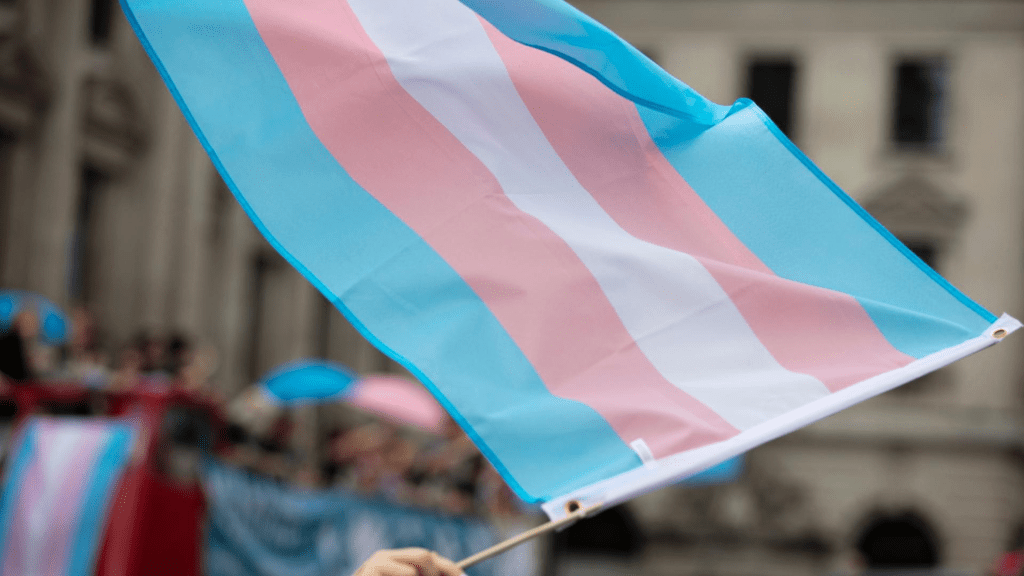
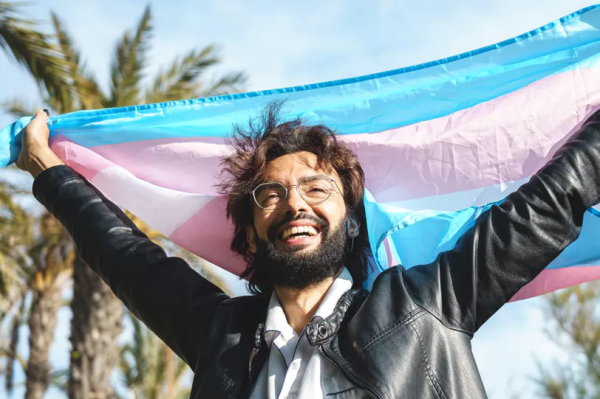
Witnesses said the person was wrapped in a body-length transgender pride flag.

The transgender veteran hanged themselves by jumping from the garage, according to a notification the VA gave government officials. The veteran had been discharged from the VA’s inpatient psychiatry unit on Jan. 21, according to the notification.

Passers-by spotted the body at the garage next to the hospital and across the street from Syracuse University’s JMA Wireless Dome at about 11:15 a.m. Monday. That day, syracuse.com reported that a body had been found.

Anne C. Bellows, a professor of food studies, said she was walking back to her office on the top floor of the Falk College building when she and other SU faculty saw the body.

She said the person was wrapped in a body-length flag that was light pink, light blue and white — which she confirmed to be the trans flag.

The Syracuse VA officials declined to answer questions from Syracuse.com | The Post-Standard about the death. A VA spokesperson issued a statement that only confirmed a veteran had died at the VA Monday. It said officials will not provide more details, citing respect to the veteran’s family and an ongoing investigation.

Several members of the SU community reported seeing the body Monday, according to a university community alert.

***

Do you have information about the incident Monday? Did you know the veteran and would like to share their story? Please contact Rylee Kirk at 315-396-5961 or rkirk@syracuse.com or Greta Stuckey at 484-379-7395 or gstuckey@syracuse.com.

***

Where to get help

If in crisis, help is available by calling, texting or chatting with the Suicide and Crisis Lifeline at 988, or contact the Crisis Text Line by texting TALK to 741741.

For a Veteran specific crisis line dial 988 and press 1 or text 838255.

For a transgender-specific crisis line, call the Trans Lifeline at 877-565-8860.

For an LGBTQ+ specific crisis line call 866-488-7386 or text 678678.

Texas House Representative Attempts to Criminalize Being Transgender

Not to be outdone by Rep. Money, who earlier filed an attempted ban on gender transition, Texas State House Representative Tom Oliverson (R-Cypress) filed House Bill 3817 on March 5 that would make simply being transgender a state felony. Below is the entirety of the bill text:

Oliverson is the Vice Chair of the House Republican Caucus. He had previously filed a bill in January to establish a “Religious Freedom Commission”.

Senate Democrats block GOP-led bill to ban transgender athletes from women’s sports

*This is being reported by CNN.


Senate Democrats on Monday blocked a GOP-led bill that would ban transgender athletes from women’s and girls’ sports at federally funded schools and educational institutions.

The bill’s failure to advance highlights the limits of Republicans’ narrow margins in Congress, despite control of both chambers. The party still needs support from Democrats in the Senate for most legislation to clear a 60-vote threshold. The party line vote was 51-45.

The Senate vote comes as GOP-led states across the country continue to put forward anti-trans measures, including bills intended to keep transgender students from playing on sports teams consistent with their gender identity.

Republicans put attacks over transgender issues front and center in competitive races during the last election cycle, including at the top of the ticket in the presidential race. In the aftermath of President Donald Trump’s White House win, some Democrats have said their party must do more to address potential voter concerns.

The GOP-led House passed their own version of the legislation in January by a vote 218-206 with two Democrats voting in favor and one Democrat voting “present.”

The bill seeks to amend federal law to require that “sex shall be recognized based solely on a person’s reproductive biology and genetics at birth,” for the purpose of determining compliance with Title IX in athletics, according to the legislative text.

Title IX prohibits discrimination on the basis of sex in education programs or activities that receive funding from the federal government, and applies to schools and other educational institutions.

Republicans have argued that transgender women hold a physical advantage over cisgender women in sports and thus their participation could consequentially limit opportunities for others.

Democrats have said that policies to restrict transgender athletes’ participation in team sports adds to the discrimination that trans people face, particularly trans youth. And they argue that Republicans are seeking to undermine the rights of LGBTQ students by advancing the bill.

Senate Republicans have 53 seats. Typically, that would mean that at least seven Democrats would need to vote with Republicans to hit the 60-vote threshold to advance a bill subject to a filibuster.

Iowa approves bill removing gender identity protections despite massive protests

*This is reported by PBS

DES MOINES, Iowa (AP) — Iowa moved to remove gender identity protections from the state’s civil rights code Thursday despite massive protests by opponents who say it could expose transgender people to discrimination in numerous areas of life.

The Iowa House approved the bill that would strip the state civil rights code of protections based on gender identity, less than an hour after the state Senate backed the legislation. First introduced last week, the measure raced through the legislative process.

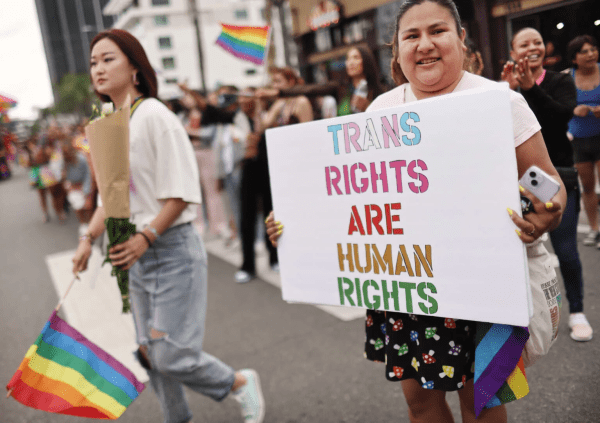
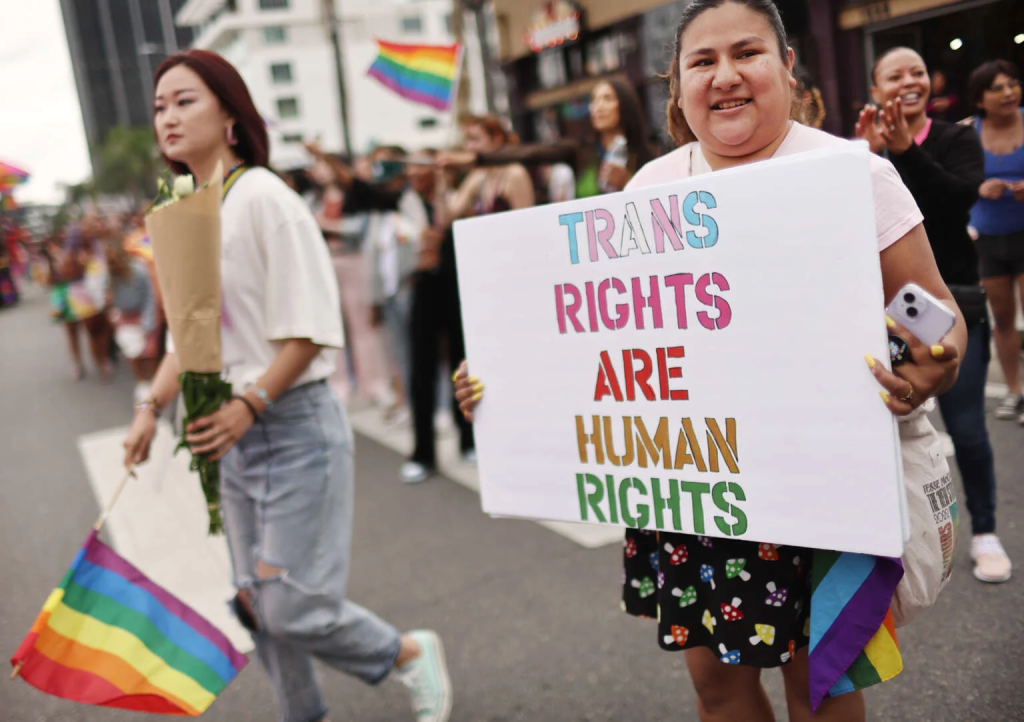
Hundreds of LGBTQ+ advocates streamed into the Capitol rotunda on Thursday waving signs reading “Trans rights are human rights” and chanting slogans including “No hate in our state!” There was a heavy police presence, with state troopers stationed around the rotunda. Of the 167 people who signed up to testify at the public hearing before a House committee, all but 24 were opposed to the bill.

Protesters that watched the vote from the House gallery loudly booed and shouted “Shame!” as the House adjourned. Many admonished Iowa state Rep. Steven Holt, who floor managed the bill and delivered a fierce defense of it before it passed.

The bill would remove gender identity as a protected class from the state’s civil rights law and explicitly define female and male, as well as gender, which would be considered a synonym for sex and “shall not be considered a synonym or shorthand expression for gender identity, experienced gender, gender expression, or gender role.”

The measure would be the first legislative action removing nondiscrimination protections based on gender identity, said Logan Casey, director of policy research at the Movement Advancement Project, an LGBTQ+ rights think tank.

Supporters of the change say the current law incorrectly codified the idea that people can transition to another gender and granted transgender women access to spaces such as bathrooms, locker rooms and sports teams that should be protected for people who were assigned female at birth.

The legislation now goes to Republican Gov. Kim Reynolds, who has been supportive of efforts to limit gender identity protections.

The Iowa lawmakers’ actions came on the same day the Georgia House backed away from removing gender protections from the state’s hate crimes law, which was passed in 2020 after the death of Ahmaud Arbery.

Iowa’s current civil rights law protects against discrimination based on race, color, creed, gender identity, sex, sexual orientation, religion, national origin or disability status.

Sexual orientation and gender identity were not originally included in the state’s Civil Rights Act of 1965. They were added by the Democratic-controlled Legislature in 2007, also with the support of about a dozen Republicans across the two chambers.

Iowa Republicans say their changes are intended to reinforce the state’s ban on sports participation and public bathroom access for transgender students. If approved, the bill would go to Republican Gov. Kim Reynolds, who signed those policies into law. A spokesperson for Reynolds declined to comment on whether she would sign the bill.

V Fixmer-Oraiz, a county supervisor in eastern Johnson County, was the first to testify against the bill at the public hearing. A trans Iowan, they said they have faced their “fair share of discrimination” already and worried that the bill will expose trans Iowans to even more.

“Is it not the role of government to affirm rather than to deny law-abiding citizens their inalienable rights?” Fixmer-Oraiz said. “The people of Iowa deserve better.”

Among those speaking in support of the bill was Shellie Flockhart of Dallas Center, who said she is in favor as a woman and a mother, a “defender of women’s rights” and someone “who believes in the truth of God’s creation.”

“Identity does not change biology,” Flockhart said.

About half of U.S. states include gender identity in their civil rights code to protect against discrimination in housing and public places, such as stores or restaurants, according to the Movement Advancement Project. Some additional states do not explicitly protect against such discrimination but it is included in legal interpretations of statutes.

Iowa’s Supreme Court has expressly rejected the argument that discrimination based on sex includes discrimination based on gender identity.

Several Republican-led legislatures are also pushing to enact more laws this year creating legal definitions of male and female based on the reproductive organs at birth following an executive order from President Donald Trump.

Transgender troops are now being identified for removal under Pentagon orders

*This is being reported by the AP on WFMY2’s website.

The military services have 30 days to figure out how they will seek out and identify transgender service members to remove them from the force — a daunting task that may end up relying on troops self-reporting or tattling on their colleagues.

A memo sent to Defense Department leaders on Thursday — after the Pentagon filed it late Wednesday as part of a response to a lawsuit — orders the services to set up procedures to identify troops diagnosed with or being treated for gender dysphoria by March 26. They will then have 30 days to begin removing those troops from service.

The order expands on the executive order signed by President Donald Trump during his early days in office setting out steps toward banning transgender individuals from serving in the military. The directive has been challenged in court.

A senior defense official said Thursday they believe there are about 4,200 troops diagnosed with gender dysphoria currently serving in the active duty, National Guard and Reserves.

The official, who spoke on condition of anonymity to discuss personnel issues, said that between 2015 and 2024, the total cost for psychotherapy, gender-affirming hormone therapy, gender-affirming surgery and other treatment for service members is about $52 million.

There are about 2.1 million troops serving.

However, the issue has taken up a large part of the Pentagon’s attention and time as Trump and Defense Secretary Pete Hegseth work to root them out, arguing that their medical condition doesn’t meet military standards.

The order expands on the executive order signed by President Donald Trump during his early days in office setting out steps toward banning transgender individuals from serving in the military. The directive has been challenged in court.

A senior defense official said Thursday they believe there are about 4,200 troops diagnosed with gender dysphoria currently serving in the active duty, National Guard and Reserves.

The official, who spoke on condition of anonymity to discuss personnel issues, said that between 2015 and 2024, the total cost for psychotherapy, gender-affirming hormone therapy, gender-affirming surgery and other treatment for service members is about $52 million.

There are about 2.1 million troops serving.

However, the issue has taken up a large part of the Pentagon’s attention and time as Trump and Defense Secretary Pete Hegseth work to root them out, arguing that their medical condition doesn’t meet military standards.

Sarah Warbelow, vice president for legal affairs for the Human Rights Campaign, said the new policy puts service members in a difficult position and pushes transgender troops to self-identify.

“All of a sudden, you are going to be required to out yourself. Other people are going to be required to out you,” Warbelow said. “If you’ve got a best friend in the military who happens to know that you are transgender, under this new guidance they’re required — if you are a woman who is transgender — they’re required to start referring to you as ‘he’ and ‘sir,’ as of today.”

Troops are put in the position of having to choose “between the safety of their friends and violating direct orders,” Warbelow said, adding that transgender service members may feel pressure to self-identify, knowing that they may be penalized by not coming forward.

On Thursday, U.S. officials said early rough numbers suggest about 600 transgender troops can be quickly identified in the Navy, between 300 and 500 in the Army and fewer than 50 in the Marine Corps. Officials said individuals could, for example, be identified by documented medical treatments, and acknowledged those numbers are likely to increase.

Other numbers were not available, according to the officials, who spoke on condition of anonymity to discuss personnel issues.

The officials noted, however, that the early numbers likely fall short of actual totals because some service members may have joined the service after any transition and may not have had medical or surgical procedures that could identify them. And officials also have warned that they may be limited by health privacy laws on what they can and can’t discern or report from records.

A 2018 independent study by the Palm Center, which researched LGBTQ issues, assessed there were an estimated 14,000 transgender troops among the more than 2 million troops serving.

The new Pentagon policy provides two exceptions: if transgender personnel who seek to enlist can prove on a case-by-case basis that they directly support warfighting activities, or if an existing service member, who was diagnosed with gender dysphoria, can prove they support a specific warfighting need and never transitioned to the gender they identify with and proves over 36 months they are stable in their biological sex “without clinically significant distress.”

Gender dysphoria occurs when a person’s biological sex does not match up with their gender identity.

If a waiver is issued, the applicant would still face a situation where only their biological sex was recognized for bathroom facilities, sleeping quarters and even in official recognition, such as being called “Sir” or “Ma’am.”

Warbelow said transgender troops should wait for additional clarity from the service and their commanding officers before doing anything that would affect their military service — also noting that ongoing court cases could affect the policy.

Trump tried to ban transgender troops from serving during his first term, but the issue ended up mired in lawsuits until former President Joe Biden was elected and overturned the ban.

Blog at WordPress.com.

Up ↑