North Carolina Democrats filed a slew of bills Tuesday all centered around reproductive health and LGBTQ+ protections.
According to Democratic lawmakers, some of the bills will guarantee the rights to use contraception to prevent pregnancy and access fertility treatments through IVF. Others will ban conversion therapy and the use/perception of gender and sexual orientation as a defense in assault and homicide cases. An equality for all bill is also proposed.
“We need to be done with treating people as anything less than full human beings deserving of respect and dignity,” state Sen. Julie Mayfield said.
State Sen. Sophia Chitlik said, “Contraception is taken to support people with a variety of health challenges, including polycystic ovary syndrome.”
While state Democrats said they’re pushing their priorities, Republicans filed Senate Bill 516 Tuesday. Entitled the Women’s Safety and Protection Act, it is sweeping legislation that would limit a transgender person’s access to bathrooms and their ability to change legal documents.
Republicans have previously said banning biological men from women’s bathrooms is a safety measure.
According to Democrats, Republicans are only attacking marginalized communities and putting LGBTQ+ and transgender communities in danger.
“If you don’t believe it, just look out there at all those people who just want to be recognized as humans,” state Rep. Allison Dahle said. “They don’t care if you recognize their pronouns, they just want to be human and live their lives.”
A surge of grant cancellations hit researchers focused on the health of gay, lesbian and transgender people last week, as the Trump administration continues to target what it describes as ideologically driven science.
Last week the U.S. government terminated at least 68 grants to 46 institutions totaling nearly $40 million when awarded, according to a government website. Some of the grant money has already been spent, but at least $1.36 million in future support was yanked as a result of the cuts, a significant undercount because estimates were available for less than a third of grants.
Most were in some way related to sexual minorities, including research focused on HIV prevention. Other canceled studies centered on cancer, youth suicide and bone health.
Health and Human Services spokesman Andrew Nixon said the agency is “dedicated to restoring our agencies to their tradition of upholding gold-standard, evidence-based science.” The grants were awarded by the National Institutes of Health, an agency under HHS.
One canceled project at Vanderbilt University had been following the overall health of more than 1,200 LGBTQ people age 50 and older. Most of the money has been spent from the grant funding the project, but it was up for renewal in April, said Tara McKay, who leads Vanderbilt’s LGBTQ+ Policy Lab.
She said the grant won’t be renewed because of the termination, which jeopardizes any long-term results. Still, the Vanderbilt project had already generated two dozen published papers, including work used to train doctors to provide better care to LGBTQ people, increasing the likelihood of cancer screenings and other preventive care.
“That saves us a lot of money in health care and saves lives,” McKay said.
Insights from minority populations can increase knowledge that affects everyone, said Simon Rosser, who studies cancer in gay and bisexual men at the University of Minnesota.
“We now no longer have anywhere studying LGBT cancer in the United States,” said Rosser, who saw his grants canceled on Friday.
“When you decide to cancel all the grants on sexual minorities, you really slow down scientific discovery, for everyone,” Rosser said. Young researchers will lose their jobs, and the field as a whole will suffer, he added.
“It’s a loss of a whole generation of science,” Rosser said.
Termination letters seen by The Associated Press gave as reasons that the research was “unscientific” or did “nothing to enhance the health of many Americans.”
That language felt personal and stinging, McKay said.
“My project’s been accused of having no benefit to the American people. And, you know, queer and trans folks are Americans also,” McKay said.
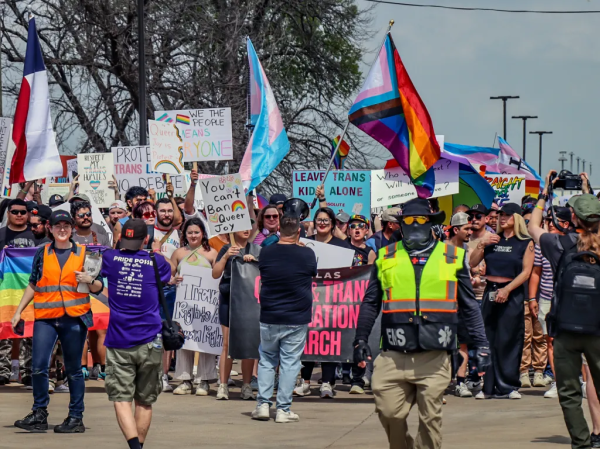
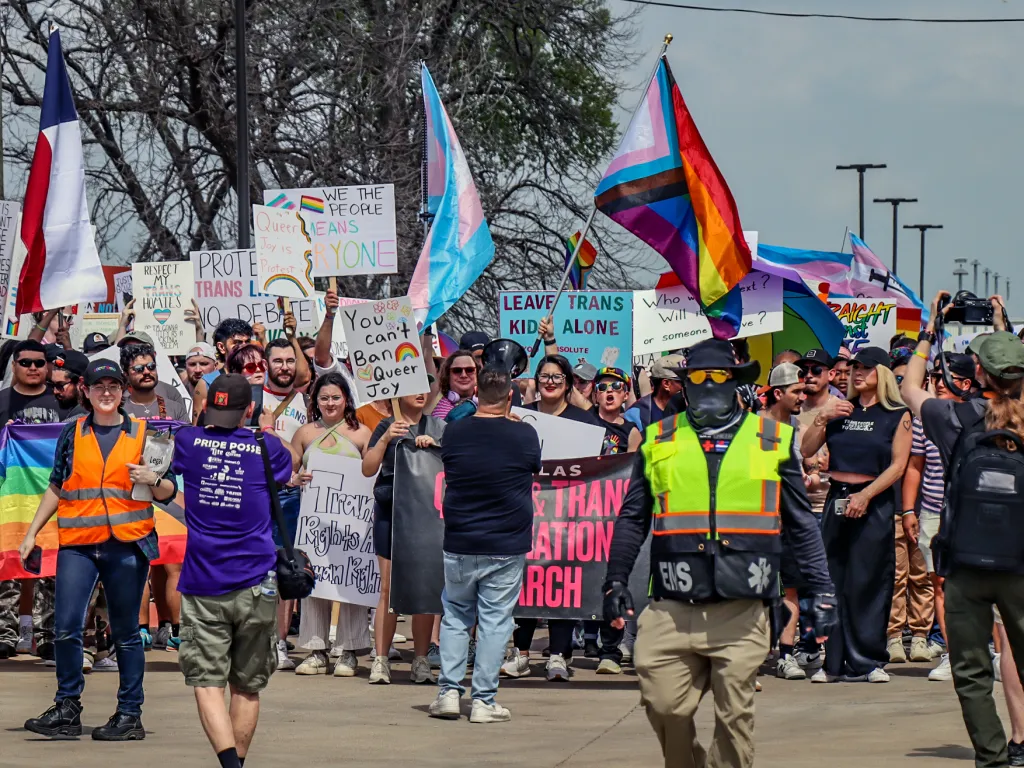
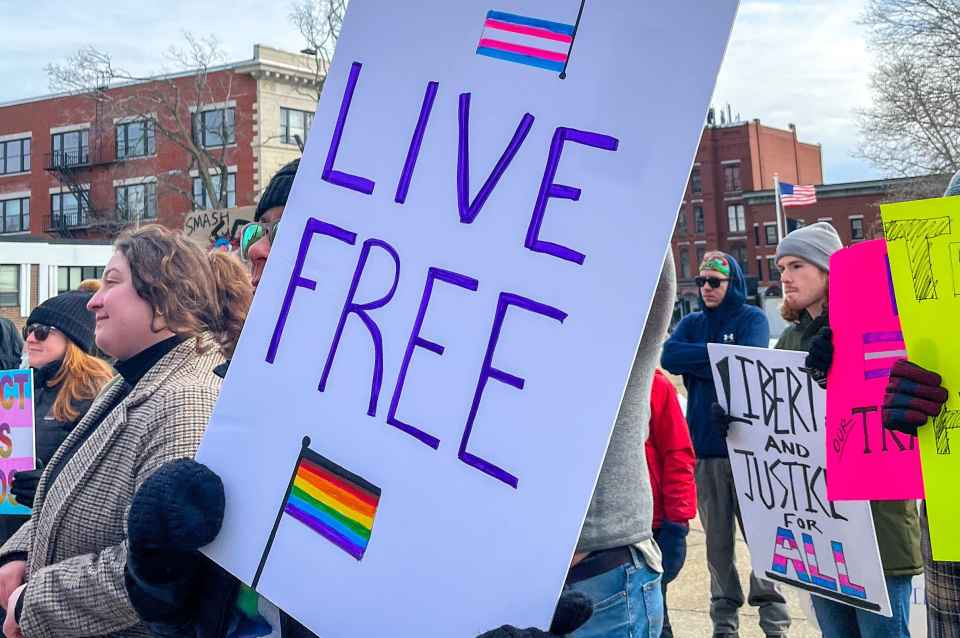
Several hundred people crowded into the parking lot between Cathedral of Hope and Resource Center on Sunday afternoon for a short rally before pouring out onto Cedar Springs Road and marching to The Crossroads.
The March for Queer & Trans Liberation, organized by a coalition of more than 20 local organizations with GLAAD’s Texas representative and communications director for Texas Latino Pride Jacob Reyes, was held in response to the ongoing wave of anti-LGBTQ legislation and policies coming out of Washington, D.C., and state Capitols around the country, including Austin where Texas lawmakers this session have introduced a record number — 205 — of anti-LGBTQ bills, especially focusing on anti-trans efforts.
In explaining the reasons last week for the march, Cece Cox, CEO for Resource Center which was one of the organizations behind the march said, “The Queer & Trans Liberation March sends a message to all in Dallas and across Texas that when we stand up and show up for our communities, we move closer to reclaiming justice.’
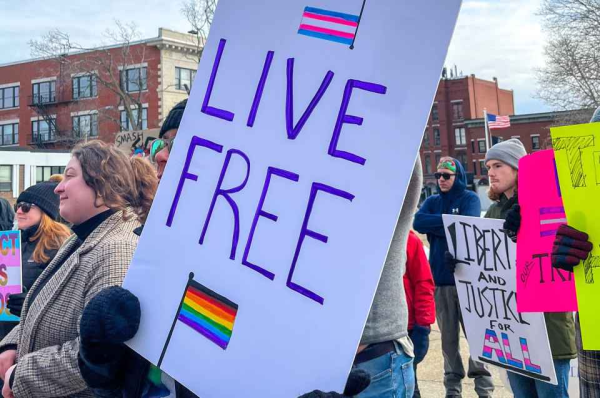
The New Hampshire House of Representatives voted 201-166 today to advance a bill that would strip rights of LGBTQ+ residents of the Granite State, with particular harm to transgender people.
HB 148 would roll back some of the gender discrimination protections passed in 2018, opening the door to discrimination in public spaces, including bathrooms. The bills now move to the Senate. In 2018, New Hampshire became the first U.S. state to pass an update to its anti-discrimination law to include transgender people through a fully Republican-controlled House, Senate, and Governor’s office. A bill similar to HB 148 ( HB 396 ) to roll back gender discrimination protections was vetoed by Governor Sununu last year.
Advocates for LGBTQ+ rights, public education, and child welfare issued the following statements:
Linds Jakows, founder of 603 Equality, said: Make no mistake: The majority of New Hampshire state representatives said loud and clear today that they intend to use the law to keep transgender and gender non-conforming people out of public life. This was never about bathrooms or parental rights. It is about using the power of the state to deny basic freedoms and control our bodies and lives. Transgender and gender non-conforming people are powerful and loved, and the overwhelming majority of witnesses and New Hampshire residents who signed to oppose these bills will continue to fight for freedom and safety.
Heidi Carrington Heath, executive director of NH Outright, said: LGBTQ+ youth in New Hampshire have the right to access all the spaces and places they need to thrive. They deserve to hear loud and clear from government that they are valued citizens of the Granite State. Transgender youth are a deeply vulnerable population, and today’s vote on HB148 only causes them further harm. This is not the way to live free or die. To our LGBTQ+ youth, especially transgender youth, we will continue to fight and work for a New Hampshire that reflects their inherent worth and dignity.
Chris Erchull, senior staff attorney at GLBTQ Legal Advocates & Defenders (GLAD Law), said: “ It is disheartening that members of the House of Representatives voted to strip away important protections for the Granite State’s LGBTQ+ community, especially for transgender residents, who are our friends, neighbors, and coworkers. Senators should reject this mean-spirited bill, which is part of a broader effort by local and national governments to prevent transgender people from simply being able to go about their daily lives. Lawmakers should work to improve the lives of all New Hampshire residents instead of passing an unnecessary law that discriminates against already vulnerable people and makes them even more unsafe. Respecting New Hampshire’s values of liberty and justice means we cannot tolerate any legislation that attacks people simply for who they are and declares them unworthy of protections from discrimination.”
Courtney Reed, policy advocate for the ACLU of New Hampshire, said: “ It is unacceptable to allow discrimination against LGBTQ+ people in New Hampshire legislation, but that is precisely what HB 148 would do. We urge the Senate to oppose this dangerous bill, which would undermine the right to equal protection under the law for transgender people. Our state has a proud tradition of respecting the rights of LGBTQ+ people, and it is time to make that clear once again.”
Devan Quinn, policy director for the New Hampshire Women’s Foundation , said, “Transgender, non-binary, and intersex people deserve equal treatment in schools, sports, correctional facilities, and every other aspect of public life. These laws will roll back the progress New Hampshire has made in recognizing transgender people in anti-discrimination legislation. Transgender women are women, and trans girls are girls. Like all women and girls, they deserve fair treatment in every aspect of their lives.”
Louise Spencer, Kent Street Coalition , said, “Transgender, non-binary, and intersex people are residents of the Granite State and deserve the same rights, freedom, and opportunities as anyone else here in the Live Free or Die state. For a majority of lawmakers to vote for a bill that denies our neighbors, friends, and families equality under the law is a betrayal not only of what New Hampshire stands for, but more importantly, a betrayal of the people and communities who deserve our unconditional support and respect. We urge the Senate to oppose this bill, which violates the humanity and dignity of LGBTQ+ people.”
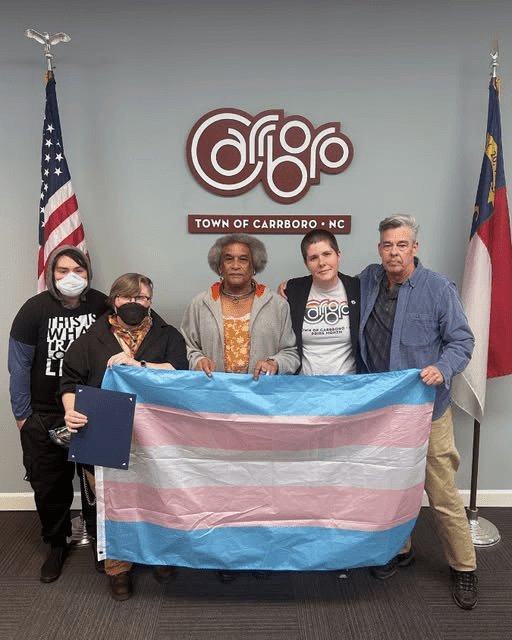
Carrboro, the small sister town of Chapel Hill NC, officially recognizes Transgender Day of Visibility. Carrboro’s welcomeness is well known, and elected the first openly gay mayor in the state back in 1995. The proclamation was read by Councilmember Catherine Fray, the first openly non binary person elected to office in NC.
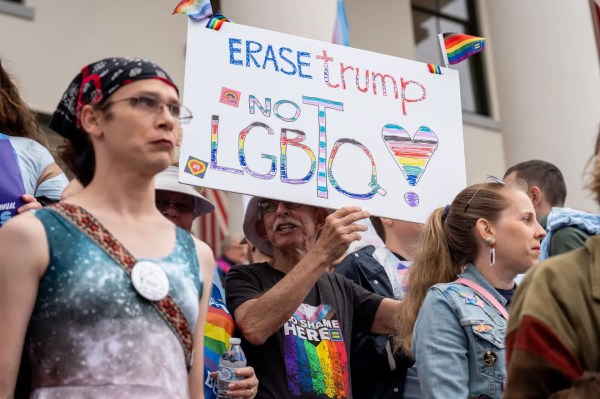
LGBTQ rights advocates from across Florida walked the streets of Tallahassee and met at the steps of the Historic Capitol Thursday to protest legislation that they say would further roll back their rights.
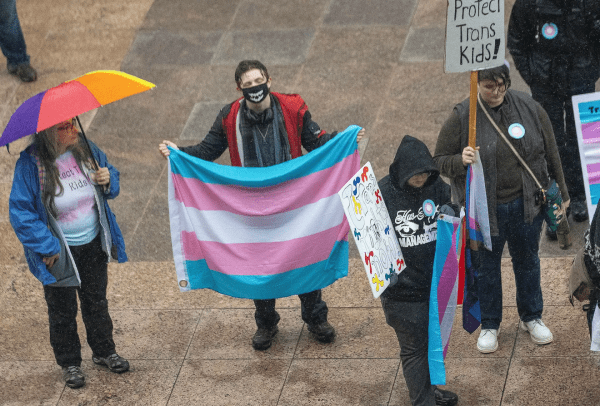
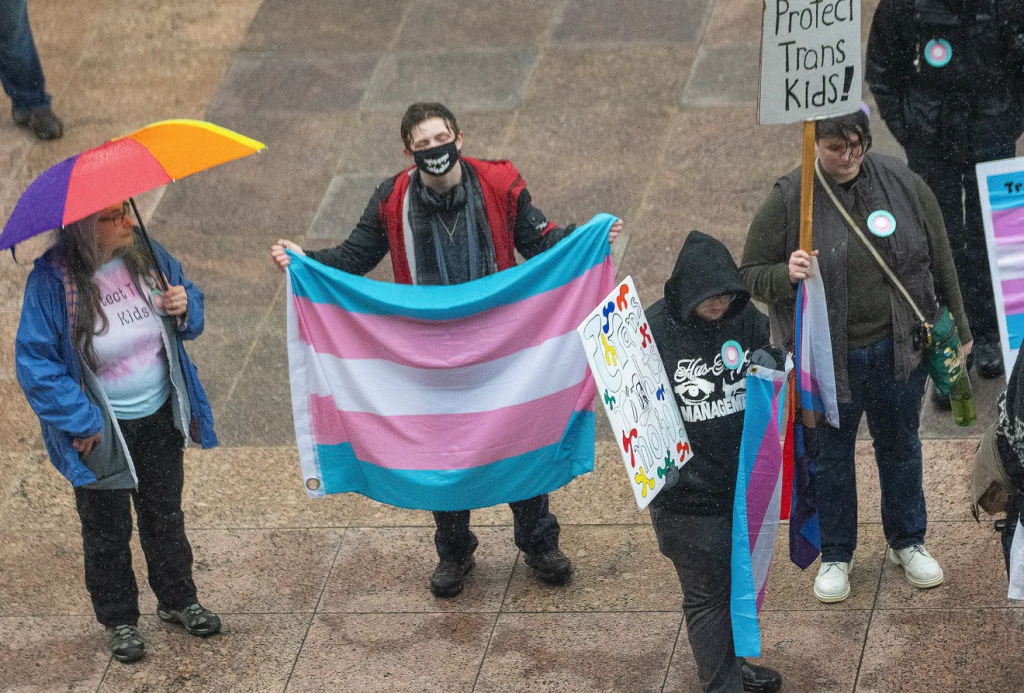
Wearing blue shirts that said “Let Us Live,” protesters chanted, “This is what democracy looks like,” in fierce wind and rain.
“We need to start running for office,” said Jules Rayne, a community organizer for Equality Florida and Manatee County resident. “We need to be everywhere, in every school district, in every county commissioner’s seat, in every mayor’s office.”
After years of the Florida Legislature passing bills that target the transgender community, the Republican-led branch of government still isn’t letting up. There are multiple bills attempting to further prohibit state funding for diversity, equity and inclusion in K-12 schools, state agencies and higher education.
Hundreds of Floridians marched from Cascades Park to the Capitol Thursday morning for the “Let Us Live March” to protest these bills and hold a rally on the front Capitol steps with trans leaders, who said they weren’t letting up, either.
LGBTQ advocates highlighted a small win that happened earlier this week, when two anti-DEI bills, “Gender Identity Employment Practices” (SB 440) and “Prohibited Preferences in Government Contracting” (SB 1694) were postponed in their committee on Tuesday.
SB 440, sponsored by Sen. Stan McClain, R-Ocala, and called the “Freedom of Conscience in the Workplace Act,” would prohibit employers from being required to use certain pronouns or requiring them to use a pronoun that does not correspond to the employee’s or contractor’s sex. Critics are calling it the “Don’t Say Gay or Trans at Work” bill.
And SB 1694, sponsored by Sen. Randy Fine, R-Melbourne Beach, would prohibit an awarding body from giving preference to a vendor on the basis of race or ethnicity.
More than 1,000 members of the public signed up to comment during the Senate Committee on Governmental Oversight and Accountability, which Sen. Carlos Guillermo Smith, R-Orlando, said attributed to the bills getting delayed. Smith said it’s evidence that “people power works.”
“All of this other stuff related to DEI is not solving any problems. It’s not improving anyone’s life, and it’s just honestly needlessly dividing us,” he said.
There are still other anti-DEI bills making their way through committees, however, including one that some say would push the controversy over book bans into overdrive and another that would potentially halt funds for efforts like domestic abuse shelters for women.
“Prohibitions and Limitations on Diversity, Equity, and Inclusion and Requirements for Medical Institutions of Higher Education” (SB 1710) was passed through the same committee that temporarily postponed SB 440 and SB 1674. That measure, sponsored by Sen. Nick DiCeglie, R-St. Petersburg, prohibits state agencies from expending certain funds for a DEI office or officer.
Another measure by McClain, the same sponsor as the so-called “Don’t Say Gay or Trans at Work” bill, would define the term “harmful to minors,” and further limit classroom materials. “Material that is Harmful to Minors,” (SB 1692), says: “The school board may not consider potential literary, artistic, political, or scientific value as a basis for retaining the material.” That bill passed through a Senate Criminal Justice Committee and is headed to the Committee on Education K-12.
If passed, work “by Shakespeare or other very well-known authors would be on the chopping block in our public schools, which brings us in the wrong direction all over again,” Smith said.
And most worrisome for Rayne, the Manatee County community organizer, is “Official Actions of Local Governments” (SB 420), which would prohibit counties and municipalities from funding, promoting or taking official action as it relates to DEI.
It would prohibit local governments from promoting or providing differential or preferential treatment or special benefits to a person or group based on that person’s or group’s race, color, sex, ethnicity, gender identity or sexual orientation.
Critics of the bill included some Republicans, who said the bill needed more work, especially with the word “differential” versus “preferential.”
“If we provide differential treatment to a person based on sex, that could create a problem with a program that was intended for abused women, which nobody would want to get rid of,” said Sen. Kathleen Passidomo, R-Naples. “We really need to hone in on where you’re trying to go.”
The bill still passed along party lines, with all Republicans voting yes.
Rayne said she believes this bill, along with many of the other anti-DEI measures, are broadly written, poorly defined and don’t serve the diverse, unique population of Florida.
“It’s going to put Floridians’ lives at risk and further erase our culture,” she said. “These bills are not what people are talking about at their kitchen table.
“Culture wars are not what Floridians care about.”
A bill introduced by Republican lawmakers in Arkansas aims to intimidate anyone who supports or affirms young people’s social transition.
Earlier this month, Arkansas state Rep. Mary Bentley (R) introduced H.B. 1668, the “Vulnerable Youth Protection Act,” and Republican state Sen. Alan Clark introduced the Senate version. As the American Civil Liberties Union of Arkansas and local advocacy group Intransitive note, the anti-trans bill does not actually criminalize anything. Arkansas law banning gender-affirming care for minors was already struck down by a federal judge in 2023.
Instead, H.B. 1668 “weaponizes civil enforcement by permitting lawsuits against any person who supports trans young people by providing or helping to receive gender-affirming care or by affirming young people in their transition,” according to the ACLU of Arkansas. Minors or their parents can sue for minimum damages of $10,000 and up to $10 million in punitive damages for certain forms of medical care. The bill also allows Arkansas parents to sue people or medical providers outside of the state who help Arkansas youth access gender-affirming care.
Sadly, in 2025, state laws aimed at preventing minors from receiving gender-affirming healthcare — which every major American medical association has long been endorsed as evidence-based, safe, and in some cases lifesaving for trans and gender-nonconforming youth — are nothing new. But Arkansas’s proposed law goes an alarming step further in targeting anyone who might support or affirm a young person’s social transition.
The bill defines social transitioning as “any act by which a minor adopts or espouses a gender identity that differs from the minor’s biological sex … including without limitation changes in clothing, pronouns, hairstyle, and name.”
As the ACLU of Arkansas notes, if enacted, H.B. 1668 could lead to frivolous lawsuits against “hairdressers who cut a trans teen’s hair, teachers who use a student’s chosen name, and nonprofits that offer support.” Such lawsuits, the organization says, would be unlikely to hold up in court, as the First Amendment guarantees the right to free speech and free expression.
However, the law is clearly meant to chill support for trans and gender-nonconforming young people with the threat of costly lawsuits. Describing the bill as “state-mandated bullying,” the ACLU of Arkansas writes that “H.B. 1668 fosters a climate of fear, where doctors, teachers, and even parents risk financial ruin simply for supporting transgender youth. It is a blatant overreach of government power, attempting to control private decisions and to circumvent our constitutional rights, including free speech, religious exercise, due process, and equal protection.”
During a Tuesday, March 18, hearing before the Arkansas House Judiciary Committee, a representative from the state attorney general’s office expressed concern that, as written, H.B. 1668 could not be legally defended, citing the First Amendment’s free speech protections.
“Particularly as it comes to the conduct that other individuals are allowed to have towards minors that can be deemed to be aiding in their social transitioning — things like a haircut, even clothing, or even the use of pronouns,” he said, “That’s all speech. And so our concern there is that when you are criminalizing or, in this case, providing a civil cause of action for certain forms of speech, that has to pass a very, very high constitutional bar, and we have to be able to defend that in court. And we think of this bill as it currently is, we can’t do that.”
The state of Texas collected information on transgender residents who have changed the sex listed on their identification documents.
According to internal agency documents provided to The Texas Newsroom, employees with the Department of Public Safety recorded each time a driver requested to change the sex listed on their license. The employee scanned and saved the driver’s information, the records show, and sent it to an internal email account created for collecting these data.
At least 42 such attempts, including instances where people asked for guidance about state policies during calls or in-person appointments, have been reported in the last five months, the records show.
It’s unclear why the state is gathering this information, with whom it is sharing it and whether the effort is ongoing.
The data collection occurred as state officials and lawmakers continue to erode LGBTQ rights, bolstered by the Trump administration’s policy rejecting the existence of transgender people.
On Friday, Paxton said it is unlawful for transgender Texans to change the sex listed on their state IDs. In an opinion that does not hold the force of law, he added that any documents that have been updated must be changed back.
Paxton’s agency and the Department of Public Safety did not respond to requests for comment for this story.
The Texas Newsroom spoke with one driver who was flagged by the agency. A transgender man who asked not to be named out of privacy concerns for himself and his child, he said he would not have asked the agency for help updating his license if he knew his information would be reported to the internal agency email account.
“Absolutely not,” he said. “I would not have emailed because now that’s further putting me and my business at risk. …It makes me uneasy.”
Policy change, data collection
For years, transgender people in Texas could update their state IDs to match their gender identity by obtaining a court order and then submitting this document to the state agencies that issue driver’s licenses and birth certificates.
Last fall, the Department of Public Safety said it would no longer let Texans change the sex on their licenses unless it is to fix a clerical error. In announcing the policy change, agency officials also directed employees to record anytime such a change was requested and send the information to an internal email address with the subject line “Sex Change Court Order.”
At first, LGBTQ activists spammed the email address with subscriptions to gay pornography blogs and adult toy companies, copies of the “Bee Movie” script and personal pleas to leave transgender Texans alone.
But The Texas Newsroom has learned that after the outcry died down, the department continued to use the email for its original purpose — to collect information from drivers who tried to change the sex listed on their driver’s license.
According to more than 100 pages of records obtained through an open records request, driver’s license division employees reported dozens of cases of drivers attempting to change the sex on their licenses in the last six months.
How people were treated and what information was collected varied by location and who dealt with their file, the records showed.
Some employees allowed the drivers to change the name listed on their licenses, but rejected their requests to update their sex. Others were declined on both fronts. Some new residents presented out-of-state or federal documents that matched their gender identity but were still denied a matching Texas license.
The records showed that some state employees also reported people who called the department or walked into a driver’s license office with questions about how to make these changes — even if they did not file a formal request to change their ID.
The Texas Newsroom reached out to the agency, as well as state leaders including Paxton and Gov. Greg Abbott, about the data collection. None answered questions about how the information was being used or how long the effort would last.
This isn’t the first time that state officials have expressed interest in tracking transgender Texans. In 2022, Paxton asked the Department of Public Safety to send his office data about drivers who may be transgender, according to the Washington Post.
At the time, the department said it did not track this exact information and no records were provided to Paxton.
This year, state lawmakers have proposed dozens of bills to whittle away at the rights of lesbian, gay, bisexual and transgender Texans. One proposes jailing anyone whose sex on state documents does not match that assigned to them at birth.
Transgender driver flagged
Most of the drivers’ names were redacted from the records released to The Texas Newsroom.
The aforementioned driver was identified using other information in the documents. In an interview, he said he was not aware that the state was no longer allowing people to change the sex on their IDs when he reached out to the department for help updating his license in October.
He had already updated his passport to match his gender identity, he said, and then went to update his license. But an employee at a local driver’s license office said he needed to contact the state directly and provide more documentation, the driver told The Texas Newsroom.
That’s when he sent a copy of his passport to the Department of Public Safety, he said.
“Hello, I’ve attached my passport in case you need it,” he wrote in an email, which was included in the records released to The Texas Newsroom. “Thanks in advance for your help.”
His email was then forwarded to the special address collecting information about transgender drivers, the records showed.
The driver said the request to change his license was then rejected. He is relieved that he has a passport and social security card that do match this gender identity. In February, the Trump administration stopped allowing transgender people to change the sex on their federal document; the policy change is being challenged in court.
“I feel at peace, honestly, just because I was able to get it done. But that doesn’t mean I don’t sympathize or empathize with the people that were unable to get the change,” he said. “I should be OK to live a normal life without being bothered or harassed.”
Friday was the bill filing deadline for Texas’ 2025 legislative session, and Equality Texas’ Interim Executive Director Brad Pritchett today issued a fundraising message warning the state’s LGBTQ community that “we have reached a grim milestone:”
As of Monday, March 15, 205 anti-LGBTQIA+ bills have been filed in the Texas legislature, Pritchett noted. That is, he said, the highest number ever recorded in Texas, surpassing the previous record of 141 bills filed in 2023.
“This is a distinction no Texan should be proud of,” Pritchett wrote. “These bills target our community’s basic rights and freedoms, from healthcare access to education to simply being able to live our lives with dignity. They aim to marginalize LGBTQIA+ Texans and erase our existence from public life.”
Pritchett pointed to Equality Texas’ efforts so far in 2025 which include hosting 30 advocacy training sessions across the state and training more than 1,000 advocates to mobilize at the Capitol, launching the largest pro-transgender TV ad campaign in Texas history, conducting more than 30 issue briefings on LGBTQ rights with legislators and stakeholders and organizing the “largest LGBTQIA+ advocacy day in Texas history.”
Pritchett said that while Equality Texas knows such strategies work, “we need your support to implement them, effectively … . The sheer volume of anti-LGBTQIA+ legislation means we must redouble our efforts.”
Ohio’s ban on gender-affirming care for transgender minors is unconstitutional and should be tossed out, an appeals court ruled Tuesday.
The three-judge panel on the Tenth District Court of Appeals overturned a decision by a Franklin County judge that allowed the law to take effect last year. The GOP-controlled Legislature voted in early 2024 to override Gov. Mike DeWine’s veto of House Bill 68, but advocates quickly sued on behalf of two transgender girls and their families.
“It is difficult to understand why our legislature believes adults are equipped to make decisions about gender-affirming medical care for themselves but not for their minor children,” Judge Carly Edelstein wrote in the decision.
House Bill 68 prevents doctors from prescribing hormones, puberty blockers or gender reassignment surgery before patients turn 18. It also bans transgender girls and women from playing on female school sports teams, although the lawsuit didn’t target that piece of it.
The law allows Ohioans younger than 18 who already receive hormones or puberty blockers to continue, as long as doctors determine stopping the prescription would cause harm. It does not ban talk therapy, but mental health providers must get permission from at least one parent or guardian to diagnose and treat gender dysphoria.
The American Civil Liberties Union argued the law violates the right of transgender Ohioans to choose their health care under the Ohio Constitution.
“The state’s ban is discriminatory, baseless and a danger to the well-being of the same Ohioan youth lawmakers claim to want to protect,” said Harper Seldin, an attorney for the ACLU. “It’s also part of a sweeping effort to drive trans people out of public life altogether by controlling our health care, our families and our lives.”
Republican Attorney General Dave Yost, who is running for governor in 2026, pledged to appeal the decision.










You must be logged in to post a comment.