Attacks on transgender rights didn’t start with Donald Trump — but neither did the movements resisting them.
Since 2022, 25 states have banned most gender-affirming care for trans youth, six of which make it a felony for doctors to provide the treatment. Two have banned surgery only. While only 14 and the District of Columbia have shield laws protecting the care, a small but growing coalition of “sanctuary cities” for trans people are filling in the gaps.
Many may know the term in reference to municipalities that limit cooperation with federal authorities like Immigration and Customs Enforcement that target immigrant communities, but “sanctuary cities” is also used to describe these places that aim to help transgender people.
These cities — of which there are an estimated fewer than 10 in the U.S. — are not superficial “safe spaces.” For trans kids and their families, they are meant to ensure that local resources aren’t used to aid officials from other jurisdictions prosecuting them or their doctors. They also prohibit officials from sharing information about someone’s gender, sex, or health care.
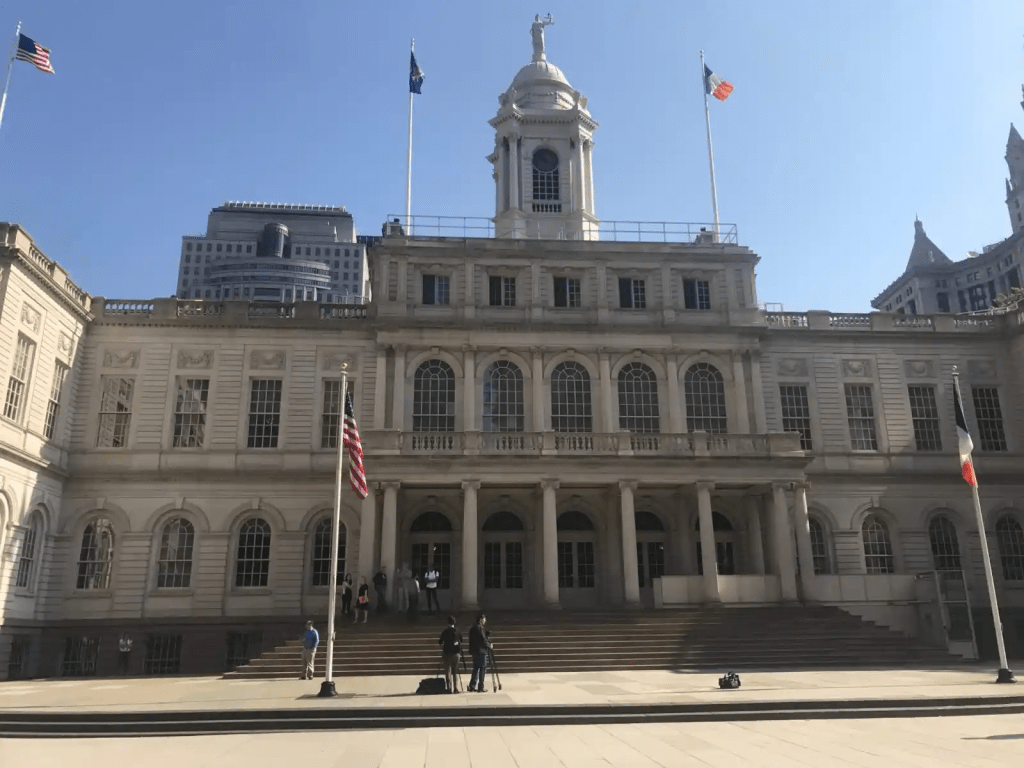
While the resolutions can’t overturn state or federal laws, “the closest point to the community is a council,” says Eric Guerra, mayor pro tem of Sacramento. The City Council voted unanimously to make Sacramento a sanctuary city in March 2024. It was the first state capital to adopt that status.
“It goes down to the fundamental belief that people are people, and we should respect people for who they are,” says Guerra, who was a council member at the time. “And that has helped let our cities move forward.”
Sanctuary city resolutions usually come when residents approach their city council members with evidence showing why they’re needed.
There wasn’t just one person who came forward and motivated officials to declare Olympia, Washington, a sanctuary city in January. Instead, several LGBTQ+ residents commented publicly that they were “feeling very fearful and unsafe” in the wake of Trump’s election, says Assistant City Manager Stacey Ray. The City Council initiated the resolution in response.
Public testimonials from community members about how they have been negatively impacted by anti-LGBTQ+ laws is what Guerra says can be legally considered “factual points of incidents that occur that go contrary to our nation’s fundamental beliefs.”
From there, resolutions go to city attorneys, who must make sure that they don’t go against the state or U.S. Constitution. Ray describes it as a “long, arduous process,” and says officials must consult with local law enforcement about “what we can do within our legal parameters” to enforce the resolution.
“One of the things our council said is they wanted something that was actionable. Not just ‘pretty words,’ but they really wanted something that would be seen as authentically providing the safety that folks were asking for,” Ray says.
California and Washington State have shield laws for abortion and gender-affirming care, making resolutions like those in Sacramento and Olympia in line with state law. Democratic-controlled cities passing local ordinances in Republican-controlled states can lead to more complications, like in Kansas City, Missouri.
The City Council there approved a sanctuary resolution for gender-affirming care in May 2023, shortly after the state legislature passed a bill banning the treatment for trans minors. While the city could not overturn state law, Mayor Quinton Lucas, who introduced the resolution, ordered local police and city personnel to make enforcement “their lowest priority.”
“It just means you have more fights, frankly,” Lucas says. “It also means that here in the red states, we have a little more experience with fighting.”
Sanctuary city resolutions are still helpful in blue states, especially under a federal government hostile to LGBTQ+ people. Since taking office in January, Trump has signed executive orders denying the existence of transgender people and banning federal support for gender-affirming care for those under 19.
“Trump has the authority over a bunch of federal employees, like with the civil rights protections he’s rolled back in hiring specifically for the federal government,” Guerra says. “I think people forget that those roles and those stages also exist in their local community.”
Trump has threatened to withhold federal funding from immigration sanctuary cities and could potentially do the same for cities that protect transgender health care and abortion access, prompting more than a dozen local governments — including the city of Sacramento — to file a lawsuit against the administration.
For Guerra, who is an immigrant, the benefits of protecting a marginalized group far outweigh the risk the Trump administration poses. Lucas also “encourage[s] every mayor with that opportunity to” stand up for LGBTQ+ rights.
“The thing that motivated me was our shared humanity,” he says. “When your state government or your federal government is saying you don’t deserve to exist and [is] trying to remove you as a human being, I think that those of us with whatever power, we have a duty to act.”
Since the Trump administration took office in January, it has launched a sweeping attack on LGBTQIA+ people, and particularly on trans rights. In January, President Donald Trump signed an executive order designed to ban trans service members from the military. He has also attempted to prevent trans, nonbinary, and intersex people from obtaining passports with accurate gender markers and tried to withhold funds from hospitals that provide gender-affirming care to trans youth.
These and other attacks have drawn lawsuits and been the subject of conflicting and ongoing court rulings. The result is that trans people and queer people face a bewildering, frightening, and chaotic legal landscape when they try to negotiate health care, travel, veterans’ benefits, education, employment, or just existence. Accessing resources, or even determining whether they can exist, can be difficult and disheartening.
Illinois, in partnership with numerous state LGBTQIA+ organizations, is attempting to help. In August, the state launched Illinois Pride Connect, a legal resource hotline for queer people. The initiative was launched with $250,000 from the state and another $100,000 in private donations; it includes a website and a legal hotline—(855) 805-9200—which is available Monday through Thursday, 9 a.m. to 4 p.m. CT.
According to Gov. J.B. Pritzker, Illinois Pride Connect makes Illinois “the only state in the nation to provide free legal advice and advocacy tools to protect the LGBTQ community.”
Illinois Pride Connect is led by the state’s Department of Human Services and the Legal Council for Health Justice (LCHJ), which runs and staffs the hotline. LCHJ Executive Director Julie Justicz said her organization began discussing the need for a resource hub last spring.
“We were getting an increased number of calls from community members who were concerned about the number of executive orders that were coming down, impacting LGBTQ families in Illinois,” she told Prism. The organization was fielding more and more calls about gender-affirming care, education, and passports. “We talked with these other partner groups and decided that it would be good to establish an up-to-date, well-vetted hub of information.”
The state and other LGBTQIA+ organizations got on board quickly, and the resource hub launched in the summer. Justicz said LCHJ has five or six of its 30 staff members working extensively on the hotline. The website has had around 8,800 hits, and the staff receives two or three calls a day. She noted that the hotline also gets some calls from out of state, as LGBTQIA+ people and families consider moving into Illinois.
LCHJ is aware that people using the Illinois Pride Connect hub may be in a vulnerable position. The website offers a quick escape option in case someone does not want others to know they are seeking information on LGBTQ issues. Callers are also anonymous to protect them, though Justicz was able to provide Prism with descriptions of some conversations.
One caller to Illinois Pride Connect, according to the caller description, was “a parent of a trans adolescent seeking information on the risks and benefits of applying for a passport to reflect her child’s gender identity.” The family had updated birth certificates and state ID but had not changed their passport or Social Security record, and was worried about trying to get through customs with inconsistent gender information. Pride Connect was able to provide “detailed information on the current federal policies on gender marker changes to vital records, and on the Orr v. Trump court case concerning the State Department’s gender marker policy,” a staff attorney with LCHJ’s trans health law program said in an email.
Another caller was “a veteran living in rural IL who could no longer access transition-related medical care through [Veteran Affairs] and Tricare,” said the attorney, who requested to remain unnamed due to safety concerns about harassment and doxxing. The veteran was trying to determine if she could access Medicaid or other health insurance. Illinois Pride Connect provided information about Medicaid coverage in the state and referred her to local providers. This was especially helpful since the veteran had not been aware that local services were available.
Mike Ziri, the director of public policy at Equality Illinois, an organization on the Pride Connect Steering Committee, told Prism, “We get frequent requests for legal support, and those requests have accelerated in the last few years, particularly this year.”
Equality Illinois is a lobbying and civil rights organization; it doesn’t provide individual legal advice. So, Ziri said, “having a resource like Illinois Pride Connect—it’s great, it’s important, it’s critical.”
In the past, he said, Equality Illinois might have scrambled to connect people with someone at the Department of Human Rights or to another partner who might provide legal services. But, he said, “having a dedicated hotline … fills that gap.”
Kaitian Healey, gender diverse navigation specialist at Central Illinois Friends in Peoria, told Prism that he had found out about Pride Connect after it launched.
“Our organization was not listed as a health care provider that offered gender-affirming care and LGBT, plus care. So I was a little offended.” He reached out to Pride Connect, and Central Illinois Friends was quickly added to the steering committee.
“I work a caseload of about 100 folks that are accessing gender-affirming care,” Healey said. “And we do know of at least two clients” who reached out to Pride Connect for advice on navigating legal resources. Central Illinois Friends is an organization that focuses on health care, including sexual health testing, gender-affirming care, and mental health counseling. Illinois Pride Connect allows the group to easily direct the populations they serve in the central part of the state—including Peoria, Bloomington-Normal, and Galesburg—to resources that Central Illinois Friends does not provide directly.
Justiecz said that LCHJ is exploring an afterhours option so that people can leave legal questions when the hotline is not in operation and receive callbacks. As for the future, she said, they are looking to secure funding to sustain the initiative through the next two or three years at least under the current administration. After that, she said, the group will try to assess “are things getting worse for the community where they need this more?”
Right now, there’s no question that the resource is needed.
“We have challenges,” Ziri of Equality Illinois told Prism. “But the values of our state are equality, inclusion, and justice. And this project is just one way those values are manifested.”
A federal judge has quashed the Department of Justice’s subpoena for the records of QueerDoc, a telehealth service that prescribes medications and offers consulting for gender-affirming care in 10 states.
The DOJ subpoenaed QueerDoc June 11, requesting personnel information, documents identifying patients, patients’ medical records, billing records, insurance claims, communications with drugmakers, and more. It was among more than 20 such subpoenas issued.
The same day, the DOJ’s Civil Division issued a memo saying it would “prioritize investigations of doctors, hospitals, pharmaceutical companies, and other appropriate entities” for “possible violations of the Food, Drug, and Cosmetic Act and other laws” regarding medications used in gender-affirming care and False Claims Act violations by health care providers who “evade state bans on gender dysphoria treatments by knowingly submitting claims to Medicaid with false diagnosis codes.”
These investigations derived from Donald Trump’s executive order recognizing only male and female sexes as assigned at birth and another denouncing gender-affirming care for minors as “a stain on our Nation’s history” that “must end” and threatening federal funding that provide such care. He also directed the DOJ to investigate providers. In April, Attorney General Pam Bondi released a memo saying the DOJ would “act decisively to protect our children and hold accountable those who mutilate them under the guise of care.” She used the same language about mutilation in a later press release. That a day after QueerDoc filed motions with a U.S. District Court in Washington State to quash the subpoena and seal the court proceedings, according to the court.
“DOJ issued its inflammatory press release declaring that medical professionals have ‘mutilated children in the service of a warped ideology,’ one day after QueerDoc filed these motions, effectively destroying any claim to investigative confidentiality while attempting to sway public sentiment against healthcare providers like QueerDoc,” Judge Jamal Whitehead wrote in his ruling, which came out Monday. “Such conduct appears calculated to intimidate rather than investigate.”
“The question before the Court is whether DOJ may use its administrative subpoena power to achieve what the Administration cannot accomplish through legislation: the elimination of medical care that Washington and other states explicitly protect. The answer is no,” he continued. He noted that gender-affirming care is supported by major medical groups and many courts.
Whitehead added, “When a federal agency issues a subpoena not to investigate legal violations but to intimidate and coerce providers into abandoning lawful medical care, it exceeds its legitimate authority and abuses the judicial process.”
He denied the motion to seal the proceedings “because, despite legitimate safety concerns, transparency in judicial proceedings remains paramount when challenging executive power,” he wrote.
QueerDoc welcomed the ruling. “The court affirmed that government power cannot be used to intimidate providers or breach the confidentiality of patients seeking medically necessary care,” the organization said in a statement on its website. “This is a win not just for QueerDoc, but for every clinician and patient fighting for the right to safe, private healthcare.”
The subpoena was “a calculated attempt by the Trump administration and Attorney General Pam Bondi to weaponize the Department of Justice against transgender people and the clinicians who care for them,” the statement noted. QueerDoc did not surrender any patient information to the DOJ, and care was not disrupted, the group said.
Asked by Politico for comment on the QueerDoc ruling, the DOJ issued this statement: “As Attorney General Bondi has made clear, this Department of Justice will use every legal and law enforcement tool available to protect innocent children from being mutilated under the guise of ‘care.’”
President Donald Trump’s second term has especially targeted two groups in particular: immigrants and LGBTQ people. On his first day in office, he ended the U.S. Refugee Admissions Program, which left thousands of refugees who had already been approved to live in the United States stranded. He also drastically lowered the cap on the number of refugees allowed to enter the U.S. from 125,000 to 7,500. Thankfully, Immigration Equality is here to help.
“For many decades, we’ve seen clients arrive with nothing but hope and fear, and walk out with safety and freedom,” Anto Chavez, Immigration Equality’s communications director, told LGBTQ Nation. “It’s just becoming harder to fight, but we’re still here with them. We still hold their hand every step of the way. We have more than 700 active legal cases, our legal staff trains thousands of lawyers nationwide to represent queer immigrants pro bono, and we fight in the courts and Congress to expand protections.”
Founded in 1994, Immigration Equality provides free legal help for immigrants and asylum seekers who are LGBTQ+ or HIV-positive. The group is fighting Trump’s seemingly arbitrary executive orders on immigration in courts — and winning.
Chavez spoke with LGBTQ Nation about how the sociocultural landscape around immigration has changed now that Trump is back in office and what average citizens can do to fight for the rights of queer immigrants in our community.
For forever, immigrant communities have learned how to take care of each other without relying on systems that have failed us. We have to continue to do that. We have to continue to fight. Anto Chavez, Immigration Equality communications director
LGBTQ Nation: What has changed under Trump’s second term for immigrants applying for asylum to escape anti-LGBTQ persecution in their home countries?
Anto Chavez: The anti-immigrant rhetoric has shaped the culture and the cultural shift in our country; this happened during Trump’s term as well. But it really changes how queer immigrants even envision themselves in the U.S.
At the beginning of this administration, some of our clients were refugees. We have an asylum program and a refugee program. Historically, we have worked with ICE (Immigration and Customs Enforcement), but we opened up our refugee program a few years ago. After we launched it, some folks were really scared to even just decide to come to the U.S. I think there was a lot of misinformation, [but] this is still a place that’s safer for many folks.
But when it comes to policy — I mean, if we talk about refugee work, every avenue has been blocked for us. The refugee resettlement program went from thousands a year to zero, and so we’ve had to really look into other options.
How has Donald Trump’s executive order drastically lowering the refugee cap affected refugees who were already approved?
Since January 20, after the executive order suspending the refugee resettlement program and halting the process for many folks, we had people who were ready to travel and had to cancel. So for queer and trans asylum seekers, this means just fewer pathways for relocation or protection from persecution.
The U.S. has historically been a place where queer immigrants have been able to come and live freely. It’s scary to think it’s starting to change.
There are increased barriers for asylum seekers who are already here as well. Policies like what was called “Remain in Mexico,” were reinstated. The CBP (Customs and Border Patrol) One app, which allowed those migrating for humanitarian reasons to schedule asylum interviews at ports of entry, was ended, and existing appointments were canceled.
There has been increased deportation, including of multiple LGBTQ asylum seekers. There’s also the abuse that happens in detention, particularly to queer and trans immigrants. It’s just out of this world. We have some reports that queer immigrants are more likely to be assaulted and abused in ICE detention and put into solitary confinement.
Trump’s Department of Health and Human Services (HHS) seeks to end all Medicaid and Medicare funding for young people’s gender-affirming care (GAC), according to newly proposed rules shared by NPR. A trans activist said the rules would amount to a “de facto national ban” on GAC.
The proposed rules would prohibit all federal Medicaid and Medicare funding — as well as funding through the federal Children’s Health Insurance Program (CHIP) — for any services at hospitals that provide GAC for trans youth.
“These would be proposals that would go out for public comment, it would take months for the Trump administration to issue a final rule, and then, if past is prologue, we would see litigation over whatever the final rules are,” Katie Keith, director of the Center for Health Policy and the Law at Georgetown University, told NPR.
Terry Schilling, president of the American Principles Project, a right-wing think tank that has pushed national transphobia as an effective Republican political strategy, said of the proposed rules, “I think these restrictions are very good. It’s going to change the entire transgender industry, and it’s going to take away a lot of their funding streams.”
“This would be a de facto national ban,” wrote trans activist and civil rights attorney Alejandra Caraballo via Bluesky. “There would still be providers in blue states that don’t take federal funding but the large interdisciplinary teams of just a few years ago would be nearly impossible to maintain. The result is that the care that remains would largely be underground with worse support and likely outcomes.”
“They’ll never be able to fully ban this care,” Caraballo added. “There will always be providers willing to provide it like abortion. Even without access to providers, many trans youth will simply go DIY [do-it-yourself] like trans folks have done for decades. They’re not actually banning this care, they’re making it less safe.”
The administration’s “toxic” war on gender-affirming care
Though there is no federal law banning gender-affirming care, the current presidential administration has sought to eradicate the practice through a January executive order (that has since been blocked by several courts). The order instructed the DOJ to extend the time that patients and parents can sue gender-affirming doctors and to use laws against false advertising to prosecute any entity that may be misleading the public about the long-term effects of gender-affirming care (GAC).
In April, Bondi issued a memo to DOJ employees, telling them to investigate and prosecute cases of minors accessing gender-affirming care as female genital mutilation (FGM), even though hospitals don’t conduct such female genital surgeries. The memo threatened to jail doctors for 10 years if they provide gender-affirming care to young trans people.
The following June, the DOJ sent subpoenas to 20 medical providers who offer GAC to trans youth, demanding patients’ Social Security numbers, emails, home addresses, and information on the care they received, as well as other sensitive information dating back to January 2020. A federal judge blocked the subpoena in one instance and accused the DOJ of going on a “bad faith” “fishing expedition” to interfere with states’ rights to protect GAC within its borders, to harass and intimidate providers from offering such care, and to dissuade patients from seeking such care.
Fewer than 3,000 teens nationwide receive puberty blockers or hormone replacement therapy, according to a 2025 JAMA analysis of private insurance data. Gender-affirming care is supported by all major medical associations in the U.S., including the American Medical Association, the Endocrine Society, and the American Academy of Pediatrics, as safe and life-saving for young people with gender dysphoria.
One doctor interviewed by The Washington Post called the federal government’s crusade against gender-affirming care a “toxic plan” that will force some patients to detransition, potentially forcing them into adverse psychological and physical effects, including increased anxiety, depression, and the development of unwanted physical changes.
A Dallas pediatrician who became the first doctor to be sued under a Texas law banning gender-affirming care for minors has given up her license to practice in the state.
According to TownFlex, the Texas Medical Board confirmed that Dr. May Lau voluntarily surrendered her medical license. In a statement, Lau’s attorney, Craig Smyser, said that she has decided to move her practice to Oregon and sees no reason to maintain her license to practice in Texas.
Last year, Texas Attorney General Ken Paxton (R) filed a first-of-its-kind lawsuit against Lau for allegedly providing gender-affirming care to minors in violation of S.B. 14. The state law, which went into effect in September 2023, bans doctors from prescribing hormone replacement therapy and puberty blockers to minors, and from performing gender-affirming surgery on minors.
Paxton’s suit accused Lau of prescribing hormone replacement therapy to at least 21 minors between October 2023 and August 2024. It further alleged that Lau “used false diagnoses and billing codes to mask these unlawful prescriptions.”
Notably, Paxton’s suit falsely referred to gender-affirming care as “dangerous and experimental” and a press release from his office claimed that there is “no scientific evidence” to support the benefits of gender-affirming medication.
In fact, puberty blockers and hormone replacement drugs have for decades been used safely for the purposes of gender transition in trans minors and to treat other medical issues in cisgender children. Gender-affirming care, which encompasses a range of both surgical and nonsurgical treatments, has been endorsed by every major American medical association and leading world health authority as evidence-based, safe, and in some cases lifesaving for transgender minors. Gender-affirming surgical intervention is rarely performed on minors.
In his statement, Smyser said that Lau “continues to deny the Texas Attorney General’s politically- and ideologically-driven allegations,” according to TownFlex.
Paxton, meanwhile, said that Lau’s surrender of her medical license was “a major victory for our state.”
“Doctors who permanently hurt kids by giving them experimental drugs are nothing more than disturbed left-wing activists who have no business being in the medical field. We will not relent in holding anyone who tries to ‘transition’ kids accountable,” he said in a statement, according to TownFlex.
As the outlet notes, Paxton has filed similar lawsuits against two other Texas doctors. Last month, the Texas AG withdrew the state’s suit against Hector Granados after finding no evidence that he violated S.B. 14. However, a lawsuit brought against M. Brett Cooper is ongoing and expected to go to trial in May.
Equality Texas noted that the enforcement of S.B. 14 has led many doctors who provide gender-affirming care to leave the state — making it harder for trans adults to access care.
In Arizona last week, a cisgender male 8th grader was “physically removed” from tryouts for his school’s boys’ basketball team because an error on his original birth certificate incorrectly identified him as being born female.
It’s the latest episode in a “gender ideology”-inspired nightmare for the teenager, Laker Jackson, and his family.
“I’m sad for everybody that it’s come down to this,” mom Becky Jackson told KNXV News in Phoenix.
The Kafkaesque drama was inspired by a clerical mistake 14 years ago, when hospital staff mistakenly identified Becky Jackson’s newborn son as a girl. It was an error Laker’s parents never noticed.
“I give him the birth certificate and they’re like, ‘Did you know this says female?’” Becky Jackson recalled about handing over enrollment paperwork to a school administrator last year.
“I was like, ‘What?’” Becky Jackson said. “I was like, ‘Oh man, that’s so funny.’ So we come home, everyone’s laughing.”
The busy mom of six said correcting the document wasn’t a priority.
“So we just put it in the drawer and moved on,” she said.
The mix-up didn’t cause issues until recently, she told AZ Family.
Last spring, school staff began treating Jackson as female, Becky Jackson said.
The district removed Laker Jackson from an all-boys gym class and mandated he use a separate restroom, despite the family’s assertion that their son is a cisgender boy, assigned male at birth.
Becky’s mom had already started work on changing Laker Jackson’s birth certificate, but “it’s not something that you can fix quickly. You have to have an affidavit signed,” she said.
In the meantime, the 14-year-old continued training to make the boys’ basketball team at his Mesa high school, a 7th to 12th-grade school in the Queen Creek Unified School District.
Becky Jackson said she received the corrected birth certificate over the summer and provided the district with the revised document, along with a doctor’s note confirming Laker’s sex.
But Queen Creek administrators said it wasn’t enough, standing by a rule stating that the school’s determination of a student’s sex would rely solely on an original birth certificate.
“They sent the athletic director of Eastmark High to physically remove Laker from the basketball tryouts in front of all of his friends, in front of the coach,” Becky Jackson said.
“I am a biological boy. I was born a boy,” said Laker Jackson, who heard from friends on the basketball team that “they were talking about it for the entire tryout and even the next day’s tryouts because they were really confused.”
After the family continued to raise objections to Laker Jackson’s treatment, a letter from an administrator said genetic testing to confirm their claim that the child is a boy “could be considered.”
“They may consider changing it if we get chromosomal testing. They didn’t say they would,” Laker’s mom said. She estimated the cost at $1500.
“So who’s going to pay that?” she asked.
In a statement, the district said it was “committed to ongoing dialogue.”
Becky Jackson also said her son will try out for a girls’ team if that’s what it comes to.
The ordeal is a prime example of what activists have long warned: that anti-trans policies are bad for everyone. It’s also quite ironic, considering the very people who want to stop anyone assigned male at birth from playing on girls’ sports teams may wind up forcing a cisgender boy to do just that.
A federal judge on Wednesday struck down a former President Biden-era rule that extended federal health antidiscrimination protections to transgender health care.
Judge Louis Guirola Jr. of the U.S. District Court for the Southern District of Mississippi ruled in favor of a coalition of 15 GOP-led states that sued over the rule, which broadened sex discrimination by adding sexual orientation and gender identity to the list of protected characteristics in certain health programs and activities.
The Department of Health and Human Services “exceeded its authority by implementing regulations redefining sex discrimination and prohibiting gender identity discrimination,” Guirola ruled.
The decision is a significant loss for the transgender community, which is has faced a wave of state and federal policies and court decisions rolling back previously established rights.
The complaint centered on provisions in Section 1557 of the Affordable Care Act, which the Biden administration interpreted to bolster health care protections against discrimination for LGBTQ people.
The rule prevented covered entities from discriminating against certain protected groups in providing health care services, insurance coverage and program participation.
The challenged provision added gender identity to Title IX’s definition of discrimination “on the basis of sex,” which previously included discrimination based on sex characteristics, pregnancy and sex stereotypes.
The Biden administration’s final rule, which was released in 2024, said organizations receiving federal health funding and health insurers that do business through government plans cannot refuse to provide health care services, particularly for gender-affirming care, that would be provided to a person for other purposes.
The rule was first created under former President Obama in 2016. President Trump then reversed it during his first term before the Biden administration turned it back again.
The first Trump policy kept protections against discrimination based on race, color, national origin, sex, age or disability. But the administration narrowed the definition of sex to only mean “biological sex,” cutting out transgender people from the protections.
Guiroloa ruled that a statute “cannot be divorced from the circumstances existing at the time it was passed.”
The word “sex” is not defined in the statute, so the court said it must interpret the term according to its meaning in or around 1972, when the statute was enacted. At that time, the definition focused on the reproductive distinctions between males and females.
Guirola vacated the rule universally, meaning it’s not limited to the 15 red state plaintiffs. But the impact is likely limited because the rule had not taken effect.
In a statement, Tennessee Attorney General Jonathan Skrmetti celebrated the decision.
“Our fifteen-State coalition worked together to protect the right of health care providers across America to make decisions based on evidence, reason, and conscience. This decision restores not just common sense but also constitutional limits on federal overreach, and I am proud of the team of excellent attorneys who fought this through to the finish,” he said in a statement.
“Hey hey, ho ho, Donald Trump has got to go,” protestors chanted in the middle of Times Square, among a sea of signs that read “love reigns not kings,” “gays against faux-king Trump,” “we stand with … our trans family,” and “the future is coming.”
On Saturday, independent analysts estimated that the No Kings March drew between 5 and 8 million people, and organizers say over 7 million people attended 2,700 events across all 50 states. The event, which was organized to push against the rise of authoritarianism in the U.S., was the largest single-day protest in America since 1970.
Among the crowd were countless LGBTQ people, fighting back against an administration that has introduced a litany of anti-LGBTQ executive orders and used vile rhetoric to denigrate queer people. This backsliding of LGBTQ rights, according to experts, has a deep connection to authoritarianism, with research showing that when governments weaken protections for queer and trans people, they often turn to broader democratic institutions next.
“Threats to democratic institutions and threats to LGBTQ rights are mutually reinforcing, generating a vicious cycle that strengthens authoritarian control,” Ari Shaw, director of International Programs at the Williams Institute, told Uncloseted Media. “Increased persecution of minority groups, including LGBTI people, is itself evidence of democratic backsliding by indicating the erosion of liberal democratic norms [meant to protect] minority rights.”
Legal Abuse of Power
One of the ways the Trump administration’s abuse of power has been most evident is through its legal actions.
He’s also slashed HIV funding at a staggering rate. Uncloseted Media estimates that the National Institutes of Health has terminated more than $1 billion worth of grants to HIV-related research, including 71% of all global HIV grants.
It was these cuts that prompted Brooklynite Jeffrey Cipriano to turn out to protest. “The specific reason that I’m protesting is actually on the shirt I’m wearing,” says Cipriano, referring to his red “This is what an HIV advocate looks like” t-shirt.
“My best friend works for an organization called AIDS United. … His job is to travel the country and help people get AIDS medication, specifically trans and unhoused community members. But his job is at risk,” he says. “The end outcome of his work is that people who have issues in their lives have the issues resolved, and that’s going away under the current administration.”
Executive orders are based on powers granted to the president by the U.S. Constitution or by Congressional statutes. The president cannot use an executive order to create new laws or spend money unless Congress has authorized it. They are meant to direct how existing laws are implemented. But Trump has ignored democratic norms, often filling agencies with loyal supporters, using orders to go after political opponents, and pushing the limits of what the law allows.
In some cases, he has moved illegally. “The President is directing various executive branch officials to adopt policy that has either not yet been adopted by Congress or is in violation of existing statutory law,” says Jodi Short, professor of law at UC Law San Francisco. “The analogy to a king and what has troubled many about this presidency is the sheer consolidation of executive branch power in one individual.”
Short’s colleague, Dave Owen, agrees. “Illegality has been rampant,” he told Uncloseted Media in an email. “People are often cynical about the government, and they might think what Trump’s doing is nothing new. But most of the time, the executive branch takes the law seriously, and both legal constraints and norms of good governance matter,” he wrote. He says that through history, there’s been “a lot more integrity and a lot less lawlessness than most people realize.”
“This administration has broken with those traditions,” he adds.
Revolt Against Executive Orders
Many Americans have recognized this. A survey from April found that 85% of Americans agreed or strongly agreed that the president should obey federal court rulings even if he doesn’t like them.
In response to Trump’s overreach, more than 460 legal challenges have been filed across the country challenging his executive actions. One of these is a federal lawsuit by Lambda Legal and the Human Rights Campaign Foundation that challenges the constitutionality of the Trump administration’s ban on military service by transgender people. Another lawsuit challenges Trump’s order directing federal agencies to withhold funds from medical providers and institutions that provide gender-affirming medical treatments for people under 19.
Both of those lawsuits are one reason 17-year-old Zoe Boik came out to protest with her friends and her dad. “Obviously, I’m disappointed and kind of helpless because there’s nothing I can directly do to change or impact anything that’s going on,” says Boik, who identifies as pansexual and gender fluid and is not legally allowed to vote.
Boik—who was seven years old when Trump announced his run for presidency in 2015—says she’s doing a research paper on Trump’s trans military ban and is frustrated because she sees it as inexplicable discrimination. “They’re not letting trans people serve… which doesn’t make any sense.”
LGBTQ Rights and Democratic Backsliding
This type of blatant discrimination is often a key sign of a country moving closer to authoritarianism and away from democracy. According to a 2023 research paper by Shaw and his colleagues, anti-LGBTQ stigma may contribute “to the erosion of democratic norms and institutions.”
The paper found that when a country with relatively high acceptance of LGBTQ rights introduces anti-LGBTQ legislation, it clashes with what most people believe and can weaken public trust in democracy, deepen political divides, and make it easier for populist or extremist movements to gain power.
“The level of acceptance of LGBTQ people is closely associated with the strength of democracy in a country,” Shaw says. “In some cases, we even saw that rising anti-LGBTQ rhetoric or policies preceded a broader decline in democracy.”
In Brazil, for example, early democratic gains coincided with rising LGBTQ acceptance, including legal recognition of same-sex unions and workplace protections. But as populist President Jair Bolsonaro came into power in 2019, he began questioning—without evidence—the security of Brazil’s voting systems, saying he would only lose his re-election campaign if there were fraud. He was also accused of trying to intervene in operations held by the Federal Police about the alleged criminal conduct of his sons, and he told his ministers that he had the power and he would interfere—without exception—in all cabinet ministries. At the same time, LGBTQ protections were rolled back, and schools and civil society faced censorship, suggesting that falling LGBTQ acceptance may have “preceded Brazil’s democratic erosion,” according to Shaw’s paper. In September of this year, Bolsonaro was sentenced to 27 years in prison for plotting a military coup.
Another example is Poland’s democracy weakening since 2015 under the Law and Justice Party, which consolidated power by undermining the Constitutional Tribunal, installing loyal judges, and restricting independent media. Anti-LGBTQ rhetoric became central to the party’s nationalist platform, fueling the creation of nearly 100 “LGBT ideology-free zones,” inciting violence against LGBTQ individuals, and stymying legal recourse through politicized courts.
When it comes to LGBTQ rights, Trump has mimicked the moves of these leaders even though most of his constituents don’t want it: A 2022 survey from the Public Religion Research Institute found that 80% of Americans favor laws that would protect LGBTQ people against discrimination.
“The definition of an authoritarian system is a system where power is consolidated in one individual whose power is unchecked by any other institution. And I fear that in certain domains, that’s the direction in which this administration is trying to move us,” says Short. “I think it’s incredibly dangerous.”
Attacks on Higher Education
Another common tool in the authoritarian playbook is attacking higher education.
While many universities are rejecting Trump’s demands, others are experiencing a chilling effect, changing their policies before the administration tries to hold up funds.
“I’m here because I’m angry and I feel that we aren’t angry enough,” Maddy Everlith, a sophomore gender studies major at Pace University, told Uncloseted Media as she marched with her friends. “Being a woman of color in America and having so many intersectional identities is also what affects me.… I want to stand up and advocate for other people.”
Everlith’s university responded to Trump’s threats in September by renaming its DEI office to the “Division of Opportunity and Institutional Excellence.”
“I am beyond horrified how quickly our university was willing to bend the knee on this decision,” Austin Chappelle, a senior at Pace, told the student newspaper. This change comes in the midst of uncertainty under the Trump administration, which has already caused many LGBTQ students to feel uneasy on campus.
“It’s part of an electoral strategy to try to mobilize right-wing voters to distract from other sorts of political or economic scandals,” Shaw says, adding that this tactic is another way to gain power.
The pain of this rhetoric has affected millions of trans Americans and allies alike, including Lars Kindem, a 64-year-old retired pilot from Minnesota who was marching to support his transgender sister.
“What Trump has done is he’s taken people that haven’t done anything wrong and has turned them into scapegoats,” he says, adding that Trump’s language is “hateful, petty, mean, and hurtful.”
He says his sister and her partner are having issues getting the correct gender markers issued on their passports. Because of the Trump administration’s treatment of the community, they are making plans to move to Denmark, where “there’s a lot more acceptance.”
Christian Nationalism
This scapegoating has played into the hands of Trump’s voter base of white evangelical Protestants, the only major Christian denomination in the U.S. in which a majority believes society has gone too far in accepting transgender people.
Since 2020, Trump has increasingly embraced Christian nationalism in his rhetoric and imagery. He’s sold Bibles, created a federal task force on anti-Christian bias, and been intrinsically linked to Project 2025, the 920-page plan calling for the establishment of a government imbued with “biblical principles” and run by a president who holds sweeping executive powers.
Experts say that “a strong authoritarian streak” runs through conservative Christianity. A 2023 study found that supporters of Christian nationalism tend to support obedience to authority and the idea of authoritarian leaders who are willing to break the rules. Nearly half of Christian nationalists support the notion of an authoritarian leader.
“They are trying to use the language of Christianity, but they are abusing it and misusing it constantly,” Rev. Chris Shelton, a gay pastor at the protest, told Uncloseted Media. “Our faith is all about reaching out to the marginalized, reaching out to the people who are ostracized by society and embracing them and offering love and welcome and a sense of dignity and worth. And to see any human being’s worth being denied is just a mockery of our faith.”
Heidi Beirich, the vice president and co-founder of the Global Project Against Hate and Extremism, says that “the LGBTQ community is the prime target of modern authoritarian regimes.”
“For Christian nationalists, attacking LGBTQ rights is the first pillar in destroying civil rights for all. This has happened in countries like Hungary and Poland as authoritarianism consolidated, and now it’s happening here,” Beirich told Uncloseted Media.
Moving Forward
As the country bleeds toward authoritarianism, LGBTQ protestors are encouraging people to use their voice, something the queer community is familiar with doing: One 2012 survey found that queer folks are 20 times more likely to be active in liberal social movements than their straight, cis counterparts.
“It is imperative that people continue to pay attention,” Short says. “There is so much going on, a lot of it is disturbing and intense, and there’s such a strong impulse to look away. But we have to engage in political action and resist inappropriate assertions of authority and continue to show up and vote for our democracy.”
17-year-old Zoe Boik is ready. She remembers being in second grade and crying the day after Trump won his first election in 2016. She couldn’t believe how he could lead the country despite “all the bad things he said.”
Boik can’t wait until the midterm elections, when she will be 18 and finally able to vote. “If we don’t vote, then our voices won’t be heard,” she says.
Despite this, she’s also concerned about her freedom to exercise that right being jeopardized.
“My fears about Trump don’t stem specifically from me being queer, but from his authoritarianism as a whole,” she says. “I am scared about how far he will move into dictatorship, [and] my biggest fear is that our right to vote will be compromised, leaving us no recourse.”
Hate crimes against LGBTQ+ people are rising around the world as politicians target them through legislation and rhetoric.
Anti-LGBTQ+ hate crimes have increased in the past five years across the United States, the United Kingdom, and Europe, according to a new report by the Institute for Strategic Dialogue, with transgender and gender nonconforming people particularly affected. The spike may in part be attributed to world governments passing anti-LGBTQ+ policies, which has “escalated internationally in tandem with political rhetoric.”
Some of the high profile incidents cited in the report include the mass shooting at the LGBTQ+ bar Club Q in Colorado that left five dead, the 2023 murder of a woman in California who was not LGBTQ+ because she flew a rainbow flag in her store, and the arrests of 20 members of the white supremacist group Patriot Front in 2023 who intended to riot at a Pride event in Idaho.
“These threats come from across the spectrum of ideological extremism, but frequently from groups that also pose a threat to the state and are openly opposed to democratic norms,” the report notes.
In the U.S., hate crimes against LGBTQ+ people remained high despite an overall decrease in violent crime. Out of 11,323 single-bias incidents the FBI reported in 2024, 2,278 (17.2 percent) were based on sexual orientation and 527 (4.1 percent) were based on gender identity. Hate crimes based on sexual orientation were the third-largest category, with crimes based on race, ethnicity, or ancestry being first and religiously motivated crimes second. Gender identity bias was the fourth-largest category.
Threats and harassment against school board officials in the U.S. also increased by 170 percent from the previous year in November, 2024 to April, 2025, the ISD report notes. Many of these threats were explicitly motivated by an anti-LGBTQ+ bias, with the perpetrators objecting to age appropriate queer books or content in public schools.
“LGBTQ+ individuals, who gained unprecedented civil rights in previous decades, are now increasingly targeted by online and offline hate, political rhetoric, censorship and legislation,” the report states. “A series of actions have sought to exclude LGBTQ+ people and culture from public life, ranging from book bans to a spread of legislation restricting trans people. In tandem, terror attacks (or the threat of terror attacks), violent extremist activity, and hate crimes targeting LGBTQ+ individuals have increased or remained consistently high since 2020.”
You must be logged in to post a comment.