Music superstar Chappell Roan has announced the launch of her organization devoted to supporting trans youth.
The Midwest Princess Project — a nod to her album, The Rise and Fall of a Midwest Princess — has already raised more than $400,000 through fundraising efforts at Roan’s recent pop-up shows.
“Those funds will be donated to incredible organizations making a positive impact for trans youth in their communities,” Roan wrote on social media when launching the project in late October.
The post named six organizations to which it has already donated: The Ali Forney Center and The Center in New York City, the GLO Center and The Center Project in Missouri, and the TransLatin@ Coalition and Trans Wellness Center in Los Angeles.
The TransLatin@ Coalition and The Ali Forney Center are some of the first beneficiaries. The project’s website says its goal is to “uplift trans youth and LGBTQ+ communities through action, care, and connection.”
The project’s launch is in keeping with Roan’s pledge to donate a portion of ticket sales from her tour to trans organizations. During a red-carpet interview at the Grammy Awards in early February, Roan acknowledged the state of transgender rights in the U.S. in just the first month of the current presidential administration.
“It’s brutal right now,” Roan said, “but trans people have always existed, and they will forever exist, and they will never, no matter what happens, take trans joy away, and that has to be protected more than anything.”
“I would not be here without trans girls,” she added. “So, just know that pop music is thinking about you and cares about you. And I’m trying my best to stand up for you in every way that I can.”
During a live show in October, she also opened up about how she struggles with fame but that it’s all worth it to be able to spread queer joy.
She said she has questioned why she continues in her career when it makes her feel so “left out in public” and “so awkward all the time,” but that the tour helped her realize exactly why she keeps going.
“I always felt, actually, ‘Why am I putting myself through this? If this is taking so much away from me, what is this for?’ Then I started doing shows again and it all made sense, it was to literally bring queer people joy,” she said.
“There [are] so many things in the world that are so ‘F**k you’,” she continued, “and then there is this. It’s the only thing that matters is joy anymore to me, and protecting that, and peace and safety. So, I hope you know that when you are here, you are safe, and I want you here. You can be whoever you are tonight. You’re cherished for everything that you are.”
She said protecting that joy is one of the most important things, and “even if you’re not queer, I hope you know that I include you.”
An incident at a gaming arcade and bar in the Chicago area recently had a transgender man and staff at odds over their definitions of safety and discrimination.
Lucien Bates, who is transgender and presents as alt-masculine with facial hair and piercings, was visiting Round1 Bowling & Arcade at the North Riverside Park Mall outside Chicago in September with his fiancé, when the pair decided to use the restroom before gaming.
Bates told the Windy City Times that he opted to use the women’s bathroom, where he said he feels more comfortable and less likely to be harassed.
“I typically feel safer in the women’s restroom, which I guess kind of bit me in the butt this time,” he said.
Before entering, Bates says he checked in with his fiancé and a friend to make sure they were okay accompanying him.
“It’s something that we have to think about often — making that decision about which one to go in, which one’s going to be safer,” Bates said of his bathroom choice.
Within minutes, a female security guard entered the restroom and told Bates, “You know you can’t be in here, right?”
The security guard refused to clarify what she meant, Bates said, and only kept repeating that Bates was “not supposed to be in there.”
“Eventually it got to the point where she was like, ‘You need to be in the bathroom that matches your ID,’” Bates said.
Bates refused to share his ID with the guard, he said, explaining that his fiancé had shown his own, which matched the restroom they were in.
After the group declined to leave, the guard then called for backup, Bates said, and three more security guards entered.
That’s when things started getting ugly.
“They just kept saying, ‘You should know what you’re doing is wrong,’ but they wouldn’t say it outright,” Bates recounted. “Eventually, they said it was dangerous for us to be in the restroom because children visit the facility.”
When Bates and his escorts did leave the restroom, they were confronted with another group of guards now stationed outside the door.
One of the guards “started just screaming in my face,” Bates said. “He just kept saying, ‘You’re going to get arrested,’ but wouldn’t tell me why. I was already on my way out, and now they’re threatening to arrest me — for what exactly?”
Bates and his fiancé decided to leave the arcade but returned to ask for a manager’s contact information to file a complaint.
They were immediately confronted by another staff member, who yelled, “What do you guys want? You have to be out of here,” Bates recalled.
When Bates started recording a video as they were escorted back outside, the manager showed up and told Bates the issue was “loitering.”
“That’s interesting, because I have not heard the word ‘loitering’ from anyone on your staff until right now,” he recalled telling her.
Bates told her the confrontation was “dehumanizing.” The manager responded, “Sorry this happened.”
By all appearances, the security team didn’t share that sentiment.
“Every security guard was smiling and waving cheerfully as we were leaving,” Bates said, providing a pic of the group doing just that.
The guards continued to watch them while Bates and his fiancé sat in his car outside the venue. Guards in cars drove by them several times.
Bates said he later filed complaints with both Round1 and the North Riverside Park Mall, and that a manager offered to add money to his arcade card.
In an emailed statement, a rep for Round1 said the company is “taking this matter very seriously, and that appropriate corrective measures have been taken.”
“Round1 does not tolerate discrimination of any kind — whether by or toward employees, guests, or third parties (such as security, vendors, or contractors),” the statement read. “This includes, but is not limited to, discrimination based on race, color, nationality, gender, sexual orientation, identity, religion, age, or disability.”
Despite those “corrective measures,” Bates is reluctant to return.
“They ruined my whole day,” the Dance Dance Revolution fan said.
“They ruined a place that I liked, and they had enough people who wouldn’t say anything to get away with what they did.”
A U.S. Court of Appeals just reversed a ruling made by a District Court judge in 2023, overturning his permanent injunction against Texas’ wide-reaching and vaguely worded drag ban, which the judge claimed infringed on First Amendment rights.
The plaintiffs in The Woodlands v. Paxton issued a joint statement, saying, “Today’s decision is heartbreaking for drag performers, small businesses, and every Texan who believes in free expression. Drag is not a crime. It is art, joy, and resistance — a vital part of our culture and our communities. We are devastated by this setback, but we are not defeated. […] We will not stop until this unconstitutional law is struck down for good.”
Texas S.B. 12 was signed into law in June 2023 by Gov. Greg Abbott (R) and was set to go into effect on September 1 of the same year. While the bill ostensibly made it a crime to provide “sexually oriented performances” in a commercial space, on public property, or in the presence of minors, the language of the bill and the rhetoric around it made it clear that it was intended to target drag shows in particular.
The law was quickly challenged by LGBTQ+ advocacy groups and drag groups, including The Woodlands Pride, Abilene Pride Alliance, and 360 Queen Entertainment. The case of The Woodlands v. Paxton went to U.S. District Court Judge David Hittner, who originally placed a temporary injunction on the law when plaintiffs’ arguments made it clear that the bill would impinge their First Amendment rights if it was allowed to go into effect. Hittner then doubled down by extending the injunction and then making it permanent in September 2023.
At the time, Hittner wrote that the bill “impermissibly infringes on the First Amendment and chills free speech,” while making it clear that he felt the bill discriminated on point of view, was overly broad, and vague. “Not all people will like or condone certain performances,” Hittner continued in his original decision. “This is no different than a person’s opinion on certain comedy or genres of music, but that alone does not strip First Amendment protection.”
The U.S. Court of Appeals for the Fifth Circuit made a majority ruling today to reverse Hittner’s ruling and remanded the case back to his court. The justices declared that most of the plaintiffs in the case did not have the requisite standing to bring the lawsuit in the first place, as they found the performances of The Woodlands Pride and Abilene Pride insufficiently sexual to have a real risk of punishment under the law’s wording.
They now require that Hittner revisit the case, focusing only on the claims from 360 Queen Entertainment, whose performances include simulated sexual acts and include other features more likely to be targeted by S.B. 12. They are also requiring Hittner to make his new decision under the standard established in the Supreme Court case for Moody v. NetChoice, which set the precedent for First Amendment challenges to only be viable if the law is unconstitutional more than it is constitutional.
One of the Appeals Court judges partially dissented, presenting concerns that the decision “turns a blind eye to the Texas Legislature’s avowed purpose: a statewide ‘drag ban.’” In doing so, he highlighted the rhetoric used by Republicans during the bill’s passage, which clearly expressed their intent, regardless of the letter of the law.
Both Texas and many of its cities already have laws on the books that protect minors from witnessing sexually explicit performances. Gov. Abbott shared on X/Twitter an article titled “Texas Governor Signs Law Banning Drag Performances in Public,” adding the words “That’s right.” Similarly, Lt. Gov. Dan Patrick (R) said it was to “ban children’s exposure to drag shows.” The author of the bill, state Sen. Bryan Hughes (R), provided “drag shows” as an example of the “sexually explicit performances” that would be prohibited.
While the intent is clear from the comments of those involved, the bill’s original text demonstrates the motivations that underpinned it. An earlier version of the bill has a line under the definitions of “features” in “sexual conduct” that includes “a male performer exhibiting as a female, or a female performer exhibiting as a male, who uses clothing, makeup, or other similar physical markers and who sings, lip syncs, dances, or otherwise performs before an audience.” That definition would include everything from Tom Holland’s Lip Sync Battle appearance to cosplayers.
The House Committee report from May 26, 2023, shows the line removed. Instead, the definition of “sexually oriented performances” is edited to include “exhibition of sexual gesticulations using accessories or prosthetics that exaggerate male or female sexual characteristics,” which clearly targets breast forms and packers common in drag shows.
The Supreme Court on Thursday ruled President Trump’s State Department can prohibit transgender Americans from listing their gender identity on their passports, for now.
It hands another legal victory for Trump in his efforts to eviscerate what his administration calls “gender ideology.” The Justice Department brought the emergency appeal after lower courts blocked the passport policy for being rooted in “irrational prejudice.”
“Displaying passport holders’ sex at birth no more offends equal protection principles than displaying their country of birth—in both cases, the Government is merely attesting to a historical fact without subjecting anyone to differential treatment,” the majority wrote in its unsigned ruling.
The ruling appeared to be along the court’s 6-3 ideological lines, though the justices do not have to publicly disclose their votes.
In dissent, the court’s liberals called the ruling “pointless but painful perversion.”
“Such senseless sidestepping of the obvious equitable outcome has become an unfortunate pattern,” wrote Justice Ketanji Brown Jackson, joined by Justices Elena Kagan and Sonia Sotomayor.
“So, too, has my own refusal to look the other way when basic principles are selectively discarded,” the dissent continued.
Solicitor General D. John Sauer called lower rulings blocking the administration’s policy “untenable,” casting them as infringing on Trump’s constitutional authority over foreign affairs.
“The President’s choice to revert to prior policy and rely on biological sex—a choice that bound the State Department—should be the last place for novel equal-protection claims or Administrative Procedure Act objections,” Sauer wrote in court filings.
The State Department policy requires passport holders to use their sex assigned at birth as their sex designation, prohibiting transgender people from matching it with their gender identity. The policy also removed the option for people to select “X,” leaving male and female as the only two options.
“This new policy puts transgender, nonbinary, and intersex people in potential danger whenever they use a passport,” American Civil Liberties Union (ACLU) attorney Chase Strangio warned in court filings.
Strangio and the ACLU represent transgender and nonbinary Americans who are suing over the State Department’s changes.
They argue it violates federal law and constitutional equal protection rights, convincing a federal district judge appointed by former President Biden and later the 1st U.S. Circuit Court of Appeals to halt the policy.
It marked the latest case implicating Trump’s Day 1 executive order that cracks down on what he calls “gender ideology” to reach the Supreme Court. Previously, the justices issued emergency orders allowing the administration to enforce its transgender troops ban and cancel diversity-linked health grants.
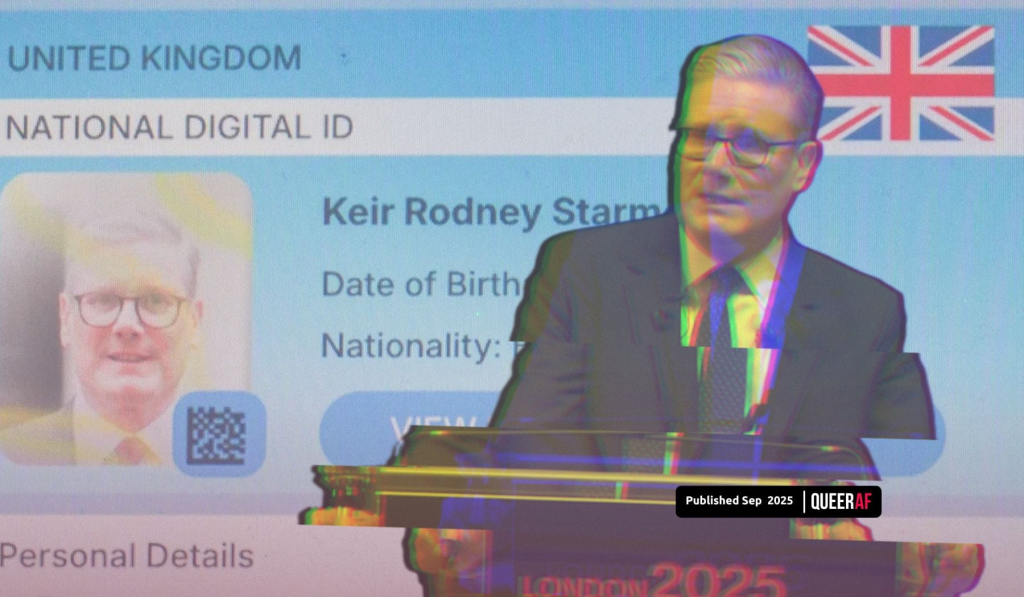
New digital IDs in the UK could be “catastrophic” for Trans+ people, who could be forced to out themselves when showing their ID – even if they don’t include a sex marker on them.
Keir Starmer announced the new scheme at a gathering of centre-left parties at the Global Progress Action conference. He said the move was designed to ‘crack down’ on people who don’t have the right to work in the UK getting jobs.
If the UK implements these IDs, it would join countries including Bosnia and Herzegovina, United Arab Emirates, China, Greece, France and Afghanistan.
However, within just hours of the announcement, he faced massive opposition to his ‘Brit Card’ system, withover a million people signing a parliamentary petition not to proceed. While we were monitoring the form, it was rising by around 200-300 new signatures every ten seconds.
The mock-ups shareddo not include a sex marker, and only require name, date of birth, nationality or residency status, and a photo. So far, Ministers have stressed there will never be a reason to carry IDs around or to produce them other than for work.
Implications of mandatory ID for LGBTQIA+ people
Keyne Walker, TransActual strategy director, tells QueerAF that even before the plans were announced anti-trans groups have already been lobbying ministers, civil servants and right-wing parliamentarians “to ensure that the single governmental record held lists trans people as their ‘birth sex'”.
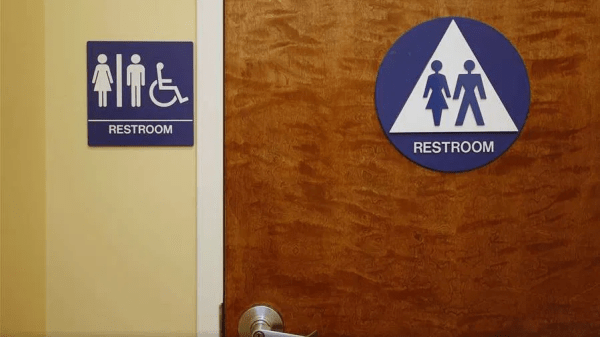
Walker believes this scheme could easily be weaponised and hijacked by MPs who are already trying to push anti-trans policies through Parliament. “It could provide the answer to the fundamental unworkability of bathroom bans… you don’t need to ask people to show their birth certificate if instead they have to scan an ID card to take a pee.”
Trans legal researcher, Jess O’Thomson, warns that the policy could have a “catastrophic” potential even just with the risk that it outs Trans+ people who haven’t yet got the legal recognition they need ahead of applying for a job:
“We know that anti-trans campaigning groups are looking for any opportunity to strip back trans people’s rights even further. I have no doubt that these groups will push for digital ID to record “biological sex”, forcibly outing trans people, and pushing them further out of public life.
“The real worry is that our government might go along with them, or else an amendment to the legislation could be forced through. These IDs could be catastrophic for the queer community.”
The UK’s history of ID cards
The UK hasn’t had a nationwide mandatory ID scheme since WWII, which ended after Lord Chief Justice Goddard said in a high court that the continuation of the wartime ID card scheme was an “annoyance” to much of the public and “tended to turn law-abiding subjects into law breakers”. Winston Churchill’s government scrapped them following the ruling and wider criticism over costs and police misuse –BBC
In more recent years, Tony Blair’s Labour government legislated for voluntary ID cards in the early 2000s, but the scheme was scrapped in 2011 by the Conservative-led coalition, which argued it was too costly and intrusive.
Analysis: Lists of queer people are incredibly vulnerable to being weaponised against us
“It is a big red flag when authoritarian governments that keep talking about putting people in camps start making lists of queer people,” Keyne Walker from Trans Actual remarked to QueerAF.
That, of course, is a big-picture view of this story – and we should be careful to see the news in its context at this stage, given there are scarce details on the scheme.
But the warnings from legal and privacy campaigners come amid a wider slide into authoritarian policies the UK has been adopting in recent years, including plans tomake it possible to criminalise wearing a mask at Pride events.
Indeed, from reporting on queer news for the best part of a decade now, I know well that the privacy concerns about the dangerlists of queer people can create, which we’re already hearing from campaigners are far from new.
Privacy campaigner and founding member of QueerAF Kyle Taylor, says on the surface, digital ID cards may seem innocuous enough – but you need only look to history to see how easily marginalised groups become victims of state-sponsored discrimination or violence:
“The last thing you want is for the government to know who you are and where you are when they decide to, for example, make conversion therapy mandatory. Make no mistake, privacy is power and this puts everyone at risk. Especially our community.”
There has always been a present danger of bad actors weaponising central lists; it’s one of the reasons the Covid Track and Trace appwas eventually decentralised amid opposition to how it could create a list of disabled people.
This is a development we should watch carefully, especially amid a growing focus and battleground on the right to privacy amid potential segregation of Trans+ people in public life.
To beat misinformation we need a well resourced queer led newsroom that can cut through the noise and get to the facts.
Our publisher is small, but mighty, and that’s because of some key principles in the way we produce news for you:
Our newsletter always has been, and always will be, free of adverts. That keeps us focused on what counts, not what drives clicks
Readers and members drive our news agenda, because that’s what our community deserves: news told both by and for us
Investing in a new generation of queer journalists, and packing the media full of us, is the best way to address the issue in the sector. Meanwhile, we’ll model the change we want to see and prove it’s possible to do justice to our community’s stories
Journalism is an expensive craft. It takes all week to put together this newsletter, so you can catch up on the queer world in five minutes. And we do that alongside mentoring creatives and lobbying the media sector.
If you believe in our unique model and the change we’re bringing to the queer news sector, please upgrade today if you can – and help us continue to grow.
Roz Keith found out her son was transgender on his terms.
The suburban mom was asking about haircuts, and Hunter, just shy of 14 at the time, texted her some photos. “He started texting me pictures of boys with short haircuts. And I said, ‘Oh, these are very masculine. And Hunter said, ‘Uh huh,’ and walked out of the room.”
It was typical teenage behavior, but the conversation that followed was life-changing, Keith said.
“I went upstairs, knocked on his door, and said, ‘What’s going on?’ And that’s when he told me. He said, ‘I’m a boy. I’m transgender.’ That was how he came out to me.”
Keith was caught off guard on multiple fronts. “All the little things from the time he was super little then became the hammer over the head.” She thought about Hunter playing with boy dolls, preferring time with boys to girls, choosing Narnia’s Prince Caspian over all the Disney princess costumes.
“I saw this one male avatar in a game, this buff, masculine character that he had created, and I said, ‘Oh, that’s a guy.’ And he’s like, ‘Yeah, okay.’ You know, no explanation. So, all along, I just kept saying ‘Okay,’ too.”
Keith wasn’t a helicopter parent. “We really encouraged our kids to be independent,” she said, “and we wanted them to be happy and successful and productive, whatever that meant for them.” But she also said a transgender child “just wasn’t in my consideration set.”
“In my world, I didn’t have a friend who had a trans child. We didn’t have any adult in our community who was trans or in the process of coming out or identified in any way remotely that way. So it was really a foreign concept from that perspective.”
While those conversations weren’t happening in Keith’s world, they certainly were in her precocious online teenager’s.
“He figured it out because he was watching YouTube, and he saw a trans person on this show talking about their coming out. And that was his light bulb moment. And he said, ‘Oh my God, that’s me.’”
Hunter spent a long time contemplating his revelation and researching what to do about it before he shared anything with his family.
“He’d been researching for two years,” Keith recalled. “He had a checklist of everything he wanted to do.”
With Hunter’s declaration, his state of mind came into focus for his mom.
“Based on things he shared when he was younger, he felt different, and he didn’t know why he felt different, and he didn’t have language to explain it,” Keith realized. “And it created a lot of struggle and conflict, and, I think, anger for him.”
“He said, you know, ‘I just felt like the weird kid.’”
Keith decided to close that gap – for her son and for others.
In 2015, she founded Stand with Trans, a support network devoted to trans kids and their parents and caregivers. The nonprofit provides transgender and nonbinary youth with life-saving programs like mental health services, peer support groups, educational resources, and, most importantly, Keith says, “validation and empowerment.”
Stand With Trans also provides critical support to parents or guardians of trans youth. Its Ally Parents program allows loved ones to text, call, or email other parents of trans youth for connection and advice.
Letting go
“Parents can have a hard time when their child comes out and wants to transition to a different gender than the one they were assigned at birth,” Keith said.
“They struggle to let go of the child they thought they had and the dreams that they had, right? If a child was assigned female at birth, a parent might say, ‘I just imagined her walking down the aisle in the white dress,’ you know? And they grieve this child as if the child has died.”
“I never took that approach,” Keith said, “because I knew that my child was very much alive and that it was my job to make sure that he stayed that way. You know, it was my job to make sure that he was mentally well and that he got what he needed so he could thrive.”
For Hunter and his family, checking off those steps to transition wouldn’t come easily.
“There were no pediatric gender clinics who were seeing trans youth covered by our insurance. There were no therapists who we could find who were trained to see trans adolescents. There were no support groups. There were no parent groups. There was nothing for youth. Like, literally every phone call was a brick wall,” Keith said.
But Hunter wasn’t waiting on the details. He decided to come out on Facebook.
“My daughter came to me and said, ‘Did you see what Hunter posted?’ And I said, ‘No.’”
While Keith and her husband had talked to a few close friends about Hunter, the family hadn’t been sharing much “because it wasn’t our story to share — that was up to him.”
With Hunter’s announcement, “It was like the floodgates had opened,” Keith said.
The family agreed to tell their story.
They began speaking publicly about their experience. “And there was just like this swell of relief, I guess, and joy from families in the community who had been trying to manage this process with their kiddo and had no one to talk to. There was really nobody — medically, psychologically emotionally — just literally no one was there.”
“Families like mine, trans adults, multi-generational families, like, every member of the community were reaching out and saying, ‘Oh, my God, I could have uttered those words. Your son reminds me of my son.’”
Hunter’s story had inspired an outpouring of empathy and recognition, but the story he shared online didn’t address his lingering sense of isolation.
“Even my son said, ‘I don’t know anyone like me.’ And so as we started to meet families,” Keith said.
“I was literally arranging play dates for my 14-15-year-old. Like, I was inviting kids to come over and just hang out, and — fly on the wall — they talked about stupid stuff, like, ‘Oh, don’t you hate getting socks for Christmas presents?’ And it showed these kids that being trans didn’t mean that you weren’t like other kids. You know, you were just another teen.”
Those interactions became the heart of the mission that guides Stand with Trans today.
The rise of parents’ rights
The founding of Stand With Trans accompanied a rising awareness of gender diversity in the 2010s, but with that also came a conservative backlash wrought with anti-trans animus.
Before Hunter came out, “Nobody was talking about bathroom bills and trans girls in sports. Those conversations weren’t happening,” Keith said.
Since then, trans kids like Hunter have been buried under an avalanche of discriminatory legislation, from gender-affirming care bans to a trans-erasing, book-banning frenzy organized by groups like Moms for Liberty to an online hate campaign led by accounts like Libs of TikTok.
Adding fuel to the fire: the president’s obsession with “gender ideology” and his “us” vs “them” politics of division.
The right has hawked its anti-LGBTQ+ agenda under the same, one-sided banner: parents’ rights.
Keith said the phrase is self-serving.
“I don’t think that any government should be allowed to say what my child has or doesn’t have access to, because I’m the parent. They’re not in my home parenting my child, so they don’t know what they’re going through. How do you make that global statement?” she asked.
“It is up to me to make a decision about my child’s medical care,” Keith said. “And as far as my child goes, if he was denied the opportunity to go on testosterone and not medically transition, I think our conversation would be very different.”
Keith points to a perversion of theology as one basis of the far-right’s anti-trans animus.
“I’m not Christian. I was raised Jewish. But my understanding from my friends who are Christian and very affirming and very accepting, their response is, ‘The Jesus I know would open the door for everyone, and would welcome everyone to the table.’ There’s really a disconnect between saying you’re a Christian and then not being open to accepting people as they are, as they show up.”
“Far be it for me to tell anyone what they should believe,” Keith added, “but you don’t get to bring it into my home and tell me how to care for my child, because those aren’t my beliefs. That’s not what I understand, right? It’s a secular society.”
“Your belief system should not infringe on my rights.”
Seeing around the corner
Stand with Trans was born to help protect trans kids from the attacks by providing love, knowledge and support — and power over their own lives.
“Our mission is so simple,” Keith said. “It’s empowering and supporting trans youth and their loved ones. So that’s it. We know that if we educate and support the caregivers, the loved ones, the parents, that the young people are going to do better, and if we find ways to make life better and easier for them, they’re not only going to survive, but they’re going to thrive.
“I know with my own kid, they couldn’t see themselves having a future. I think it’s hard enough for young people who don’t see around the corners, right? It’s hard to even imagine, like, ‘What do I want to be when I grow up.’ But for trans kids, it’s even harder.
“So it’s really important for us to show these young people that they can do whatever they want to do,” Keith said.
“Being trans is one part of their identity. It doesn’t define who they are.”
Attacks on transgender rights didn’t start with Donald Trump — but neither did the movements resisting them.
Since 2022, 25 states have banned most gender-affirming care for trans youth, six of which make it a felony for doctors to provide the treatment. Two have banned surgery only. While only 14 and the District of Columbia have shield laws protecting the care, a small but growing coalition of “sanctuary cities” for trans people are filling in the gaps.
Many may know the term in reference to municipalities that limit cooperation with federal authorities like Immigration and Customs Enforcement that target immigrant communities, but “sanctuary cities” is also used to describe these places that aim to help transgender people.
These cities — of which there are an estimated fewer than 10 in the U.S. — are not superficial “safe spaces.” For trans kids and their families, they are meant to ensure that local resources aren’t used to aid officials from other jurisdictions prosecuting them or their doctors. They also prohibit officials from sharing information about someone’s gender, sex, or health care.
While the resolutions can’t overturn state or federal laws, “the closest point to the community is a council,” says Eric Guerra, mayor pro tem of Sacramento. The City Council voted unanimously to make Sacramento a sanctuary city in March 2024. It was the first state capital to adopt that status.
“It goes down to the fundamental belief that people are people, and we should respect people for who they are,” says Guerra, who was a council member at the time. “And that has helped let our cities move forward.”
Sanctuary city resolutions usually come when residents approach their city council members with evidence showing why they’re needed.
There wasn’t just one person who came forward and motivated officials to declare Olympia, Washington, a sanctuary city in January. Instead, several LGBTQ+ residents commented publicly that they were “feeling very fearful and unsafe” in the wake of Trump’s election, says Assistant City Manager Stacey Ray. The City Council initiated the resolution in response.
Public testimonials from community members about how they have been negatively impacted by anti-LGBTQ+ laws is what Guerra says can be legally considered “factual points of incidents that occur that go contrary to our nation’s fundamental beliefs.”
From there, resolutions go to city attorneys, who must make sure that they don’t go against the state or U.S. Constitution. Ray describes it as a “long, arduous process,” and says officials must consult with local law enforcement about “what we can do within our legal parameters” to enforce the resolution.
“One of the things our council said is they wanted something that was actionable. Not just ‘pretty words,’ but they really wanted something that would be seen as authentically providing the safety that folks were asking for,” Ray says.
California and Washington State have shield laws for abortion and gender-affirming care, making resolutions like those in Sacramento and Olympia in line with state law. Democratic-controlled cities passing local ordinances in Republican-controlled states can lead to more complications, like in Kansas City, Missouri.
The City Council there approved a sanctuary resolution for gender-affirming care in May 2023, shortly after the state legislature passed a bill banning the treatment for trans minors. While the city could not overturn state law, Mayor Quinton Lucas, who introduced the resolution, ordered local police and city personnel to make enforcement “their lowest priority.”
“It just means you have more fights, frankly,” Lucas says. “It also means that here in the red states, we have a little more experience with fighting.”
Sanctuary city resolutions are still helpful in blue states, especially under a federal government hostile to LGBTQ+ people. Since taking office in January, Trump has signed executive orders denying the existence of transgender people and banning federal support for gender-affirming care for those under 19.
“Trump has the authority over a bunch of federal employees, like with the civil rights protections he’s rolled back in hiring specifically for the federal government,” Guerra says. “I think people forget that those roles and those stages also exist in their local community.”
Trump has threatened to withhold federal funding from immigration sanctuary cities and could potentially do the same for cities that protect transgender health care and abortion access, prompting more than a dozen local governments — including the city of Sacramento — to file a lawsuit against the administration.
For Guerra, who is an immigrant, the benefits of protecting a marginalized group far outweigh the risk the Trump administration poses. Lucas also “encourage[s] every mayor with that opportunity to” stand up for LGBTQ+ rights.
“The thing that motivated me was our shared humanity,” he says. “When your state government or your federal government is saying you don’t deserve to exist and [is] trying to remove you as a human being, I think that those of us with whatever power, we have a duty to act.”
Since the Trump administration took office in January, it has launched a sweeping attack on LGBTQIA+ people, and particularly on trans rights. In January, President Donald Trump signed an executive order designed to ban trans service members from the military. He has also attempted to prevent trans, nonbinary, and intersex people from obtaining passports with accurate gender markers and tried to withhold funds from hospitals that provide gender-affirming care to trans youth.
These and other attacks have drawn lawsuits and been the subject of conflicting and ongoing court rulings. The result is that trans people and queer people face a bewildering, frightening, and chaotic legal landscape when they try to negotiate health care, travel, veterans’ benefits, education, employment, or just existence. Accessing resources, or even determining whether they can exist, can be difficult and disheartening.
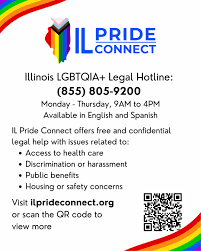
Illinois, in partnership with numerous state LGBTQIA+ organizations, is attempting to help. In August, the state launched Illinois Pride Connect, a legal resource hotline for queer people. The initiative was launched with $250,000 from the state and another $100,000 in private donations; it includes a website and a legal hotline—(855) 805-9200—which is available Monday through Thursday, 9 a.m. to 4 p.m. CT.
According to Gov. J.B. Pritzker, Illinois Pride Connect makes Illinois “the only state in the nation to provide free legal advice and advocacy tools to protect the LGBTQ community.”
Illinois Pride Connect is led by the state’s Department of Human Services and the Legal Council for Health Justice (LCHJ), which runs and staffs the hotline. LCHJ Executive Director Julie Justicz said her organization began discussing the need for a resource hub last spring.
“We were getting an increased number of calls from community members who were concerned about the number of executive orders that were coming down, impacting LGBTQ families in Illinois,” she told Prism. The organization was fielding more and more calls about gender-affirming care, education, and passports. “We talked with these other partner groups and decided that it would be good to establish an up-to-date, well-vetted hub of information.”
The state and other LGBTQIA+ organizations got on board quickly, and the resource hub launched in the summer. Justicz said LCHJ has five or six of its 30 staff members working extensively on the hotline. The website has had around 8,800 hits, and the staff receives two or three calls a day. She noted that the hotline also gets some calls from out of state, as LGBTQIA+ people and families consider moving into Illinois.
LCHJ is aware that people using the Illinois Pride Connect hub may be in a vulnerable position. The website offers a quick escape option in case someone does not want others to know they are seeking information on LGBTQ issues. Callers are also anonymous to protect them, though Justicz was able to provide Prism with descriptions of some conversations.
One caller to Illinois Pride Connect, according to the caller description, was “a parent of a trans adolescent seeking information on the risks and benefits of applying for a passport to reflect her child’s gender identity.” The family had updated birth certificates and state ID but had not changed their passport or Social Security record, and was worried about trying to get through customs with inconsistent gender information. Pride Connect was able to provide “detailed information on the current federal policies on gender marker changes to vital records, and on the Orr v. Trump court case concerning the State Department’s gender marker policy,” a staff attorney with LCHJ’s trans health law program said in an email.
Another caller was “a veteran living in rural IL who could no longer access transition-related medical care through [Veteran Affairs] and Tricare,” said the attorney, who requested to remain unnamed due to safety concerns about harassment and doxxing. The veteran was trying to determine if she could access Medicaid or other health insurance. Illinois Pride Connect provided information about Medicaid coverage in the state and referred her to local providers. This was especially helpful since the veteran had not been aware that local services were available.
Mike Ziri, the director of public policy at Equality Illinois, an organization on the Pride Connect Steering Committee, told Prism, “We get frequent requests for legal support, and those requests have accelerated in the last few years, particularly this year.”
Equality Illinois is a lobbying and civil rights organization; it doesn’t provide individual legal advice. So, Ziri said, “having a resource like Illinois Pride Connect—it’s great, it’s important, it’s critical.”
In the past, he said, Equality Illinois might have scrambled to connect people with someone at the Department of Human Rights or to another partner who might provide legal services. But, he said, “having a dedicated hotline … fills that gap.”
Kaitian Healey, gender diverse navigation specialist at Central Illinois Friends in Peoria, told Prism that he had found out about Pride Connect after it launched.
“Our organization was not listed as a health care provider that offered gender-affirming care and LGBT, plus care. So I was a little offended.” He reached out to Pride Connect, and Central Illinois Friends was quickly added to the steering committee.
“I work a caseload of about 100 folks that are accessing gender-affirming care,” Healey said. “And we do know of at least two clients” who reached out to Pride Connect for advice on navigating legal resources. Central Illinois Friends is an organization that focuses on health care, including sexual health testing, gender-affirming care, and mental health counseling. Illinois Pride Connect allows the group to easily direct the populations they serve in the central part of the state—including Peoria, Bloomington-Normal, and Galesburg—to resources that Central Illinois Friends does not provide directly.
Justiecz said that LCHJ is exploring an afterhours option so that people can leave legal questions when the hotline is not in operation and receive callbacks. As for the future, she said, they are looking to secure funding to sustain the initiative through the next two or three years at least under the current administration. After that, she said, the group will try to assess “are things getting worse for the community where they need this more?”
Right now, there’s no question that the resource is needed.
“We have challenges,” Ziri of Equality Illinois told Prism. “But the values of our state are equality, inclusion, and justice. And this project is just one way those values are manifested.”
A federal judge has quashed the Department of Justice’s subpoena for the records of QueerDoc, a telehealth service that prescribes medications and offers consulting for gender-affirming care in 10 states.
The DOJ subpoenaed QueerDoc June 11, requesting personnel information, documents identifying patients, patients’ medical records, billing records, insurance claims, communications with drugmakers, and more. It was among more than 20 such subpoenas issued.
The same day, the DOJ’s Civil Division issued a memo saying it would “prioritize investigations of doctors, hospitals, pharmaceutical companies, and other appropriate entities” for “possible violations of the Food, Drug, and Cosmetic Act and other laws” regarding medications used in gender-affirming care and False Claims Act violations by health care providers who “evade state bans on gender dysphoria treatments by knowingly submitting claims to Medicaid with false diagnosis codes.”
These investigations derived from Donald Trump’s executive order recognizing only male and female sexes as assigned at birth and another denouncing gender-affirming care for minors as “a stain on our Nation’s history” that “must end” and threatening federal funding that provide such care. He also directed the DOJ to investigate providers. In April, Attorney General Pam Bondi released a memo saying the DOJ would “act decisively to protect our children and hold accountable those who mutilate them under the guise of care.” She used the same language about mutilation in a later press release. That a day after QueerDoc filed motions with a U.S. District Court in Washington State to quash the subpoena and seal the court proceedings, according to the court.
“DOJ issued its inflammatory press release declaring that medical professionals have ‘mutilated children in the service of a warped ideology,’ one day after QueerDoc filed these motions, effectively destroying any claim to investigative confidentiality while attempting to sway public sentiment against healthcare providers like QueerDoc,” Judge Jamal Whitehead wrote in his ruling, which came out Monday. “Such conduct appears calculated to intimidate rather than investigate.”
“The question before the Court is whether DOJ may use its administrative subpoena power to achieve what the Administration cannot accomplish through legislation: the elimination of medical care that Washington and other states explicitly protect. The answer is no,” he continued. He noted that gender-affirming care is supported by major medical groups and many courts.
Whitehead added, “When a federal agency issues a subpoena not to investigate legal violations but to intimidate and coerce providers into abandoning lawful medical care, it exceeds its legitimate authority and abuses the judicial process.”
He denied the motion to seal the proceedings “because, despite legitimate safety concerns, transparency in judicial proceedings remains paramount when challenging executive power,” he wrote.
QueerDoc welcomed the ruling. “The court affirmed that government power cannot be used to intimidate providers or breach the confidentiality of patients seeking medically necessary care,” the organization said in a statement on its website. “This is a win not just for QueerDoc, but for every clinician and patient fighting for the right to safe, private healthcare.”
The subpoena was “a calculated attempt by the Trump administration and Attorney General Pam Bondi to weaponize the Department of Justice against transgender people and the clinicians who care for them,” the statement noted. QueerDoc did not surrender any patient information to the DOJ, and care was not disrupted, the group said.
Asked by Politico for comment on the QueerDoc ruling, the DOJ issued this statement: “As Attorney General Bondi has made clear, this Department of Justice will use every legal and law enforcement tool available to protect innocent children from being mutilated under the guise of ‘care.’”
President Donald Trump’s second term has especially targeted two groups in particular: immigrants and LGBTQ people. On his first day in office, he ended the U.S. Refugee Admissions Program, which left thousands of refugees who had already been approved to live in the United States stranded. He also drastically lowered the cap on the number of refugees allowed to enter the U.S. from 125,000 to 7,500. Thankfully, Immigration Equality is here to help.
“For many decades, we’ve seen clients arrive with nothing but hope and fear, and walk out with safety and freedom,” Anto Chavez, Immigration Equality’s communications director, told LGBTQ Nation. “It’s just becoming harder to fight, but we’re still here with them. We still hold their hand every step of the way. We have more than 700 active legal cases, our legal staff trains thousands of lawyers nationwide to represent queer immigrants pro bono, and we fight in the courts and Congress to expand protections.”
Founded in 1994, Immigration Equality provides free legal help for immigrants and asylum seekers who are LGBTQ+ or HIV-positive. The group is fighting Trump’s seemingly arbitrary executive orders on immigration in courts — and winning.
Chavez spoke with LGBTQ Nation about how the sociocultural landscape around immigration has changed now that Trump is back in office and what average citizens can do to fight for the rights of queer immigrants in our community.
For forever, immigrant communities have learned how to take care of each other without relying on systems that have failed us. We have to continue to do that. We have to continue to fight. Anto Chavez, Immigration Equality communications director
LGBTQ Nation: What has changed under Trump’s second term for immigrants applying for asylum to escape anti-LGBTQ persecution in their home countries?
Anto Chavez: The anti-immigrant rhetoric has shaped the culture and the cultural shift in our country; this happened during Trump’s term as well. But it really changes how queer immigrants even envision themselves in the U.S.
At the beginning of this administration, some of our clients were refugees. We have an asylum program and a refugee program. Historically, we have worked with ICE (Immigration and Customs Enforcement), but we opened up our refugee program a few years ago. After we launched it, some folks were really scared to even just decide to come to the U.S. I think there was a lot of misinformation, [but] this is still a place that’s safer for many folks.
But when it comes to policy — I mean, if we talk about refugee work, every avenue has been blocked for us. The refugee resettlement program went from thousands a year to zero, and so we’ve had to really look into other options.
How has Donald Trump’s executive order drastically lowering the refugee cap affected refugees who were already approved?
Since January 20, after the executive order suspending the refugee resettlement program and halting the process for many folks, we had people who were ready to travel and had to cancel. So for queer and trans asylum seekers, this means just fewer pathways for relocation or protection from persecution.
The U.S. has historically been a place where queer immigrants have been able to come and live freely. It’s scary to think it’s starting to change.
There are increased barriers for asylum seekers who are already here as well. Policies like what was called “Remain in Mexico,” were reinstated. The CBP (Customs and Border Patrol) One app, which allowed those migrating for humanitarian reasons to schedule asylum interviews at ports of entry, was ended, and existing appointments were canceled.
There has been increased deportation, including of multiple LGBTQ asylum seekers. There’s also the abuse that happens in detention, particularly to queer and trans immigrants. It’s just out of this world. We have some reports that queer immigrants are more likely to be assaulted and abused in ICE detention and put into solitary confinement.






 fleeredstates.blog
You must be logged in to post a comment.