Connecticut Children’s Medical Center in Hartford has agreed to stop providing gender-affirming medical treatments to minors, including puberty blockers and cross-sex hormones, as part of a settlement with the U.S. Department of Justice.
The DOJ announced the agreement Wednesday as part of its ongoing national investigation into gender-affirming care for children and adolescents.
According to the DOJ, Connecticut Children’s agreed not to perform gender-affirming procedures or surgeries on minors. The hospital also agreed to pay a monetary penalty and provide an additional $500,000 in medical care for people who previously received gender-affirming treatment at the facility.
The DOJ alleged that the hospital violated federal law in connection with its pediatric gender-affirming services.
“The Department of Justice will stop at nothing to protect America’s children,” Associate Attorney General Stanley Woodward said. “This resolution is a reminder to hospitals, medical providers, and pharmaceutical companies that the Justice Department will vigorously enforce federal law, especially where the lives of children are endangered.”
Connecticut Children’s confirmed the settlement in a statement and said the agreement allows the hospital to remain focused on its mission of improving children’s health.
The hospital said protecting patient privacy was its “foremost concern” throughout the process and that the matter was resolved without providing protected patient information to the federal government.
“We have complied and will continue to comply with all federal and state laws,” the hospital said.
The settlement is the latest agreement reached by the DOJ involving gender-affirming care for minors.
In May, Texas Children’s Hospital agreed to establish a “detransition clinic,” according to the DOJ. In June, the Cleveland Clinic Foundation agreed to provide detransition care.
The agreements come amid a broader federal effort to investigate and restrict gender-affirming care provided to children and adolescents.
South Dakota is reportedly set to enforce a policy that will make it impossible for trans people in the state to update the gender marker on their driver’s license. However, the policy has not yet been enacted, meaning trans people may still have a small window to update their gender markers.
There are currently ten states that bar trans people from obtaining an accurate driver’s license. Some have passed laws that strictly forbid gender correction for licenses under any circumstances; others have created policies that rely on other restrictions to do the job, such as requiring an amended birth certificate in a state where one cannot be legally obtained.
However, it wasn’t clear exactly how that law and ruling would impact drivers’ licenses. While an amended birth certificate could be used to update the gender marker on a license, it was not the only method.
The previous rules allowed gender markers to be updated based on an amended birth certificate, passport, or a court order, combined with either a court order certifying someone’s gender change or “a letter from a physician stating that the applicant is undergoing gender reassignment care (such as hormone replacement therapy),” as Equaldex explained. While the requirement for a doctor to sign off on gender-affirming care is a large hurdle, the restrictions are still looser than in some states, which require surgery before updating gender markers.
After a public records request was denied, Aleksandra Vaca of Transitics contacted employees at the South Dakota Department of Public Safety (DPS), who issue drivers’ licenses for the state. She was told that a policy was updated on July 1st to require applicants for a gender change to provide an amended birth certificate. That is no longer possible to obtain, and so the policy will prevent trans people born in South Dakota or other states that refuse to issue corrected birth certificates from updating their drivers’ licenses unless they already have an updated birth certificate.
But the policy isn’t being implemented yet. The DPS employees told Vaca they are waiting to “get word” from their superiors before starting enforcement.
There’s no telling how soon that might happen, but in the meantime, there remains a potential window for trans people in South Dakota. While some states, such as Kansas, retroactively revoked the licenses of trans drivers with practically no notice period, there’s no indication that the South Dakota policy would do the same.
South Dakota has moved forward with these policies despite evidence of flaws in the system and the harm they cause trans people (having an ID that does not match the way someone presents could out them in situations where it’s dangerous). Last month, a trans woman was charged for not having a valid license because the officer didn’t believe the male gender marker on her ID. The charges were eventually dropped.
Cabo Verdean make-up artist Leonardo put the finishing touches to a singer’s look at a shoot for a music video, open and comfortable about being a gay man in Africa.
Perfectly made up himself and wearing shorts and a top baring his shoulders, Leo, as he is known, works among the technicians and musicians without fear of being insulted, attacked or reported and sent to prison.
“Make-up has a power… and I love it when I transform people by creating artistic make-up or when I transform myself,” he told AFP, in the country’s second city of Mindelo on the island of Sao Vicente.
Freedom of sexual orientation for all Cabo Verdeans is ‘non-negotiable’, official says
Even as its neighbors in West Africa crack down on LGBTQ communities, Cabo Verde has stood out as a land of relative tolerance for queer people.
Leonardo Oliveira poses for a portrait at his home in Mindelo, on May 25, 2026. Homosexuality has been legal in Cabo Verde since 2004 and employment discrimination based on sexual orientation has been banned since 2008. (Photo courtesy of AFP)
Mindelo, Cabo Verde – Cabo Verdean make-up artist Leonardo put the finishing touches to a singer’s look at a shoot for a music video, open and comfortable about being a gay man in Africa.
Perfectly made up himself and wearing shorts and a top baring his shoulders, Leo, as he is known, works among the technicians and musicians without fear of being insulted, attacked or reported and sent to prison.
“Make-up has a power… and I love it when I transform people by creating artistic make-up or when I transform myself,” he told AFP, in the country’s second city of Mindelo on the island of Sao Vicente.
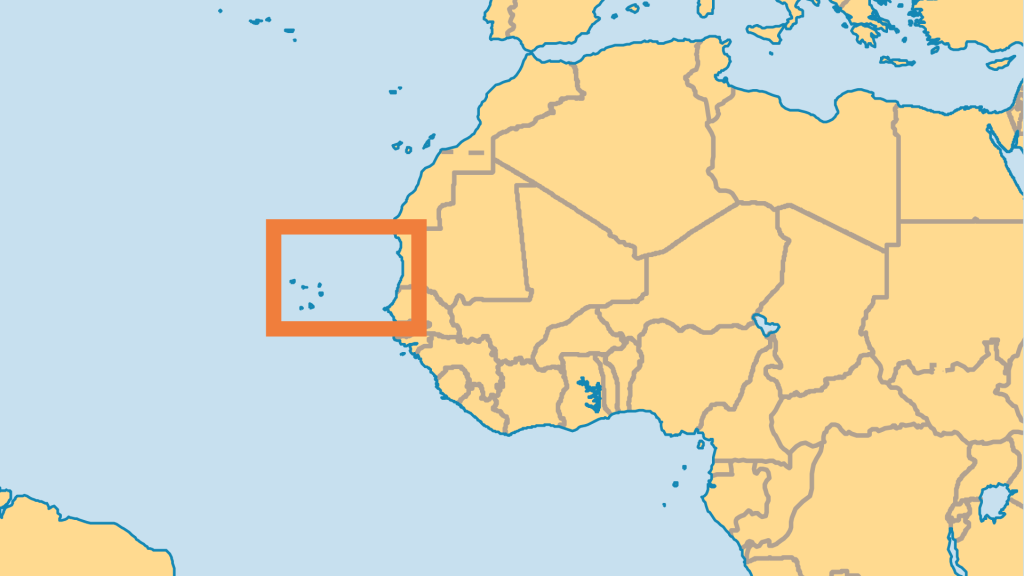
Location of Cabo Verde (Cape Verde) off the African coast. (Map courtesy of Operation World)
The Cabo Verde (Cape Verde) archipelago off the coast of West Africa is a bastion of tolerance in a continent where anti-LGBTQ laws have become increasingly repressive.
With long jail terms imposed for same-sex relations in other parts of Africa, Leo, 29, said he felt lucky to be a Cabo Verdean.
“Even now there are people with really closed minds,” he said. “But there is no comparison with other places.”
“It is hard to know that our brothers are passing through extremely difficult situations mostly in Africa.
“To be punished just because of who you are, I think, is extremely harsh,” he added.
Same-sex relations have been legal in Cabo Verde since 2004. Four years later, the country of around 500,000 inhabitants also banned workplace discrimination based on sexual orientation.
The archipelago is currently the most welcoming country in Africa for the LGBTQ community, ahead of South Africa, according to Equaldex, which assesses same-sex rights, laws and public opinion worldwide.
Around 30 African countries criminalise same-sex relations, with jail terms including life in prison and the death penalty, even if it is mainly not applied.
Sao Vicente, one of Cabo Verde’s 10 islands, has the largest LGBTQ community.
The country’s oldest port, it has always been open to the world, interacting with other nations and the diaspora in Europe and the United States.
“I think we are a mixed population,” Leo said. “We have a lot of different influences, we are really influenced by the Europeans and I think that helped a lot.”
‘Holding hands’
Tall, with a disarming smile framed by false eyelashes, Leo has a calm demeanor. Completing his look are tattoos, rings and false nails.
He lives with two black cats — one affectionate, the other more wild — which he said reflects the two sides of his personality.
As a small child, he knew he was gay and said that despite some difficulties growing up, he now felt comfortable in his own skin.
“When I was in the fourth or fifth grade (aged 9 or 10), I would leave the house to go to school, but I would never get there because of bullying,” he said.
After he turned 21, he began living by himself, pursued a career as a make-up artist and could wear clothes that reflect his feminine side.
“In my last relationship, we used to walk around holding hands” without encountering problems, he said.
Leo’s self-confidence partly comes from his relationship with his mother, Manuela, a 51-year-old hairdresser and nail technician.
The two share a salon in Mindelo where Leo’s customers come for make-up and manicure appointments, but his skills are in demand among singers and other artists, too.
“I am really proud of him because he fought for his goals,” Manuela said.
“I have dealt with (his sexual orientation) all by myself,” she added, becoming emotional.
“A mother… should respect their children. We have to support them in what they want to be, be it their love life or career.”
‘Paradise’
In another sign of Cabo Verde’s openness, a small group of gay actors last month performed at a theatre in Mindelo depicting the daily struggles of three cross-dressers from the Fonte Filipe area of the city, which has a sizeable LGBTQ community.
“You don’t choose to become homosexual. It’s not a choice! Why do people treat us like this?” one of the actors cried tearfully on stage.
The play, Font Flip is Burning, references the American documentary Paris Is Burning, which shone a light on the Harlem drag balls in the 1980s.
For two evenings, a long way from New York City, the three actors — Walter, Alessandro and Stephan — brought one of the balls to life, strutting to techno music in high heels, mini-dresses and glamorous make-up.
In real life, Walter Pires, 37, is a physical education teacher in Santo Antao, an island near Sao Vicente.
The charismatic actor and dancer is openly gay and a leading figure in the community.
“I never had any problem with my family,” he said. “I was always free since I was a child. Of course, sometimes I feel a little pressure from people, but I never felt the need to hide myself.”
Pires said he does not feel discriminated against and is “respected” by his students.
“I always try to bring the topic to the class and discuss these topics with them… what the LGBT+ acronym means, sexual orientation,” he said.
In years gone by, he said some gay people in Mindelo had faced prejudice, losing their jobs or their homes.
But Cabo Verde now is “almost a paradise,” he said. “The new generation is more open and respectful but that is the result of the work we have done in the past.”
Cape Verde’s outgoing minister of family and social inclusion, Fernando Elisio Freire, said that the constitution and government “protect those who have a different sexual orientation.”
“Cape Verde is a tolerant, open country and everyone deserves to be treated equally before the law,” he told AFP.
The decision to legalise same-sex relations stems from a “deep respect for individual dignity and difference” to allow peaceful co-existence, he added.
Freedom of sexual orientation for every citizen is “non-negotiable,” Freire said.
But Sindji Cawinny, a 29-year-old transwoman, has had a different experience.
She was forced to leave the island of Sal three years ago after the owner of the restaurant where she worked demanded she stop wearing make-up and women’s clothes to work.
“I quit that job. I wasn’t going to stop doing what I loved because of their ignorance,” she added.
Since then, she has been self-employed, working in events in Mindelo and giving catwalk lessons for beauty contests.
“I realised that if I am a gay man who dresses like a man, it’s easier to get a job,” she added. “I’d like to continue my life as a transgender woman but I’ve resigned myself.”
Worry over hard-won rights
English teacher and artist Janette da Graca, a 31-year-old lesbian, works to raise awareness and defend LGBTQ rights.
She worries that people may begin to question the situation in Cabo Verde if they see what is going on in Senegal and finds it “worrying” that hard-won rights are being rowed back.
“It doesn’t make sense that people would care about who I love or who I live with,” she said. “I just go with who I am. Accept me, who can. Who can’t, they’re not part of my life.”
She often looks solemn, especially when talking about her mother who, unlike her father and sisters, has not accepted her sexual orientation and still makes comments about her short hair and style, which includes combat boots, a Nirvana t-shirt and silver chains.
At the school where she teaches, Da Graca suspects that some colleagues disapprove of her look but said her “students just love it.”
She still gets stared at, disapproving comments or worse, mostly from men.
“I do believe that we have a lot of tolerance and awareness but we need more,” Da Graca said.
“There is a lot of ignorance, so knowledge is always the key. Of course, there will be people who won’t accept it anyway, but at least we try,” she added.
While the national conversation around LGBTQ+ rights often focuses on the West Coast or New England, the Mid-Atlantic region has quietly become one of the most dynamic legal battlegrounds in the country. From pioneering healthcare access to a historic marriage equality vote on the horizon, the laws of New Jersey, Maryland, Delaware, and Virginia tell a fascinating story of progress, defense, and active legal engineering.
Whether you are looking to relocate, working in advocacy, or just keeping tabs on civil rights, here is how these four neighbor states compare when it comes to protecting their LGBTQ+ residents.
1. New Jersey: The Brand-New Legislative Firewall
New Jersey has long held a “Safe Haven” designation from major equality groups, but until recently, its protection for transgender healthcare relied entirely on an executive order from the governor’s office. Because executive orders can be easily undone by a future administration, advocates pushed for years to codify these rules into permanent law.
The Big 2026 Update: On June 30, 2026, the New Jersey Legislature passed A2218/S2260, a comprehensive statutory shield law.
What the Law Does: This statute creates an absolute legal firewall. It legally prohibits New Jersey state courts, law enforcement, and medical boards from cooperating with out-of-state subpoenas, extraditions, or investigations targeting those who receive or provide gender-affirming care in New Jersey.
Everyday Protections: Under the Law Against Discrimination (LAD), New Jersey boasts some of the country’s strongest bans on discrimination in housing, employment, and public accommodations.
2. Maryland: Setting the Medicaid Gold Standard
Maryland is a powerhouse of structural equality, focused heavily on ensuring that legal protections translate to actual, affordable healthcare access.
The Trans Health Equity Act: Effective in 2024, this landmark law requires Maryland’s Medicaid program to cover comprehensive, medically necessary gender-affirming care. Rather than treating transition-related care as “cosmetic” or optional, Maryland codified it as a fundamental medical right.
Civil Rights & Safe Haven: The state’s “Fairness for All Marylanders Act” has protected gender identity and sexual orientation in housing, work, and public spaces since 2014. Additionally, Governor Wes Moore signed an executive order establishing Maryland as a safe state for out-of-state individuals seeking gender-affirming medical services.
3. Delaware: Protecting Rights Under Executive Defense
Delaware has strong, comprehensive civil rights statutes on the books protecting LGBTQ+ individuals from discrimination in housing, employment, and public spaces.
The Healthcare Shield: While Delaware has legislated shield protections for reproductive care (like abortion), its protections for gender-affirming care have largely been bolstered by the executive branch.
Executive Order 11: In June 2025, the Governor signed Executive Order 11. This directive prevents state agencies from cooperating with out-of-state investigations or extraditions related to lawful gender-affirming medical care provided within Delaware’s borders.
Identification: Updating birth certificates and driver’s licenses to match an individual’s gender identity is streamlined, requiring only a simple supporting statement from a licensed medical or social work professional.
4. Virginia: The Southern Battleground & The 2026 Ballot
Virginia occupies a unique space on this list. In 2020, it made history by passing the Virginia Values Act, becoming the first Southern state to enact comprehensive civil rights protections for LGBTQ+ residents in employment, housing, and public spaces. However, enforcement has faced political friction and rollbacks, particularly regarding school policies.
The 2026 Marriage Amendment: On November 3, 2026, Virginia voters will head to the polls to decide on a major, proactive constitutional referendum: the Repeal Same-Sex Marriage Ban Amendment.
What is at Stake: While same-sex marriage is federally protected under Obergefell v. Hodges, Virginia’s state constitution still contains outdated, unenforceable language banning same-sex unions. This referendum will officially strike that language and enshrine an affirmative, constitutionally protected right to marriage regardless of sex, gender, or race. It is one of the nation’s only proactive pro-LGBTQ+ ballot measures in 2026.
Side-by-Side: The Mid-Atlantic Landscape
State
Non-Discrimination Laws
Transgender Healthcare Shield
State Medicaid Coverage
Notable Highlight
New Jersey
Explicit & Robust (LAD)
Statutory Law (Passed June 2026)
Covered
Completely codified protections to survive shifting administrations.
Maryland
Explicit & Robust
Executive Order
Covered (Trans Health Equity Act)
Exceptional, legally mandated Medicaid coverage for gender-affirming care.
Delaware
Explicit & Robust
Executive Order 11
Covered
Seamless identity document updates via simple self-attestation.
Virginia
Explicit (Virginia Values Act)
None
Partially Covered (highly variable)
Currently voting to enshrine marriage equality in its state constitution.
The Takeaway
The Mid-Atlantic is a vital region for LGBTQ+ rights. While New Jersey has just finalized its legal fortress with a new legislative shield, Maryland leads the way in equitable healthcare funding, Delaware stands tall with deep executive protections, and Virginia remains the ultimate battleground—where the community is actively voting to secure the future of marriage equality at the ballot box.
In an increasingly fragmented legal landscape, civil rights, non-discrimination protections, and healthcare access for LGBTQ+ and transgender individuals vary significantly across the country. For individuals, families, and professionals seeking to understand where state law provides the most robust safeguards, several states stand out as national leaders.
By evaluating data from the Human Rights Campaign’s (HRC) State Equality Index and the Movement Advancement Project (MAP), we have highlighted key states—including Connecticut, a national pioneer—that have built comprehensive legal frameworks to protect LGBTQ+ and transgender residents.
Key States Leading LGBTQ+ Legal Protections
Connecticut: A Pioneer in Healthcare & Legal Safety
Connecticut stands out as a historic and statutory leader, consistently earning high policy scores for its proactive stance on civil rights and transgender safety.
The Original Shield Law: In 2022, Connecticut became the first state in the nation to enact a comprehensive “shield law” specifically designed to protect patients, medical providers, and out-of-state visitors receiving or delivering gender-affirming care. The law blocks out-of-state legal subpoenas, prevents extradition, and bars licensing boards from disciplining providers for administering legal medical care.
Data Privacy Protection: Connecticut enacted specialized laws restricting health apps and online entities from collecting, selling, or disclosing consumer data related to gender-affirming care.
Explicit Non-Discrimination: Gender identity, gender expression, and sexual orientation are fully protected under state civil rights laws spanning employment, housing, credit, and public accommodations.
California
California sets a national benchmark for comprehensive LGBTQ+ protections across every major area of civil law.
Healthcare & Shield Laws: Following Connecticut’s model, California passed strong safe-haven legislation protecting transgender individuals, families, and doctors from out-of-state legal liability related to gender-affirming care.
Non-Discrimination: The Unruh Civil Rights Act and the Fair Employment and Housing Act (FEHA) explicitly safeguard gender identity, gender expression, and sexual orientation in housing, workplace settings, and business transactions.
Identity Documents: The state allows streamlined updates to gender markers on driver’s licenses, birth certificates, and state IDs without requiring surgical confirmation or court orders.
Massachusetts
As the first U.S. state to legalize same-sex marriage in 2004, Massachusetts maintains a deeply entrenched system of legal protections.
Broad Public Protections: Anti-discrimination laws explicitly cover public accommodations—such as restaurants, retail stores, and healthcare facilities—alongside housing and employment.
Youth & Family Safeguards: The state enforces a complete ban on conversion therapy for minors and maintains robust anti-bullying and inclusion guidelines across public school districts.
Medicaid & Insurance Requirements: Private insurance and MassHealth (Medicaid) are legally required to cover medically necessary gender-affirming care.
Colorado
Over the last decade, Colorado has transformed into a major sanctuary state for transgender protections in the Mountain West.
The Reproductive and Gender-Affirming Care Shield Act: Enacted to shield out-of-state patients and local practitioners from external civil and criminal investigations or licensing penalties.
Administrative ID Updates: Jude’s Law permits non-binary “X” gender markers and allows transgender individuals to update state documents smoothly without requiring physician affidavits or court decrees.
Anti-Discrimination Enforcement: The Colorado Anti-Discrimination Act (CADA) covers employment, housing, and public spaces, enforced aggressively by the state civil rights division.
New York
With a deep history rooted in the modern LGBTQ+ civil rights movement, New York’s laws reflect comprehensive protections.
GENDA (Gender Expression Non-Discrimination Act): Passed in 2019, GENDA formally added gender identity and expression as explicit protected classes across housing, employment, public spaces, and non-sectarian education.
Medical Safeguards: Comprehensive shield laws ensure that healthcare institutions and practitioners face no administrative penalties or extradition requests for delivering legally protected medical services.
Informed Family Laws: New York maintains progressive legislation supporting gestational surrogacy, legal adoption, and parental recognition for LGBTQ+ families.
Illinois
Illinois serves as a critical legal sanctuary in the Midwest, backed by mature statutory protections.
The Illinois Human Rights Act: Enforces complete non-discrimination across real estate transactions, employment, public services, and banking.
Education & Youth Protections: State legislation requires public school curricula to include LGBTQ+ history and imposes strict safety and anti-bullying standards across districts.
Out-of-State Refuge: Illinois statutes shield healthcare providers treating patients traveling from surrounding jurisdictions, making it an essential hub for safe medical access.
The Bottom Line
Whether evaluating states for personal safety, corporate expansion, or legal analysis, these jurisdictions demonstrate what comprehensive protection looks like in practice. By pairing clear non-discrimination statutes with proactive health-privacy and shield laws, states like Connecticut, California, and Colorado offer the most legally secure environments for transgender and LGBTQ+ residents.
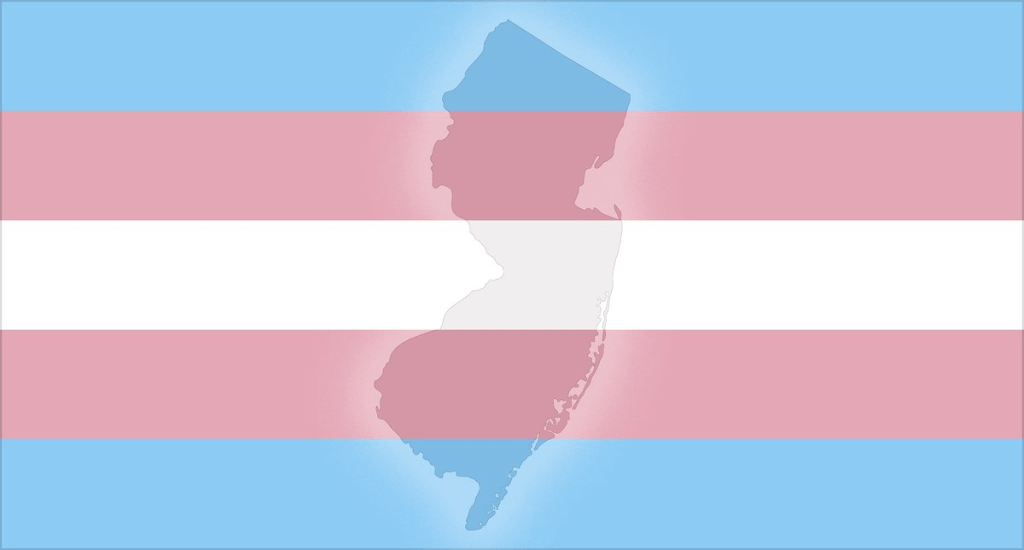
The New Jersey General Assembly passed new legislation on Tuesday, the last day of Pride Month, that strengthens the protections around gender-affirming health care, reproductive care, including abortion and IVF, and more. The bill now sits on Gov. Mikie Sherrill’s (D) desk awaiting her signature, which it is expected to receive.
The passage is a win for the trans community. The bill passed the same day the Supreme Court dealt a blow to trans rights with its West Virginia v. B.P.J. ruling.
Speaking with the New Jersey Monitorafter the vote, Jennifer Williams, a Trenton city council member who is trans, said, “New Jersey is a great, liberty-loving state that will remain a safe haven for those who want to live happy, productive lives while accessing medically necessary and proven medical care.”
The bill’s passage comes after a long battle from LGBTQ+ advocacy groups, including Garden State Equality. In a statement, Lauren Albrecht, the organization’s senior director of advocacy & organizing, said, “By passing this bill, the Legislature has sent the message that bodily autonomy and access to medically necessary, best-practice healthcare are New Jersey values. As other states and the federal government attack reproductive and trans healthcare, we have made it clear that the Garden State will protect both the lifesaving care itself and the people who provide it. Our priorities now will be to ensure Governor Sherrill swiftly signs this legislation and, afterwards, to educate healthcare providers on these new and bolstered protections.”
The new legislation makes no changes to what medical care is or isn’t available in the state, but protects access for all to the services that are already provided.
A major aspect of the bill protects providers and patients from being prosecuted by other states, affirming that those who receive or provide care in New Jersey are solely subject to the state laws of New Jersey and to federal law.
That applies not just to citizens of New Jersey, but to “those who travel to [New Jersey] for health care services,” with the bill noting that all “deserve the ability to safely access health care facilities in this State and the critical reproductive health and gender-affirming care services that they provide.”
This prevents states from prosecuting their residents who have crossed state lines to receive healthcare that is banned in their state but legally protected in New Jersey. The authors of the bill point to the fact that since Roe v. Wade was overturned in 2022, 21 states have either banned or restricted abortion access. Since then, New Jersey has seen a 30% increase in out-of-state patients.
They also highlighted Alabama’s ruling that embryos are “extrauterine children” and the threat that sort of ruling could pose to IVF fertility treatments, which are often used by same-sex couples to build their families. New Jersey has legally protected the right to access IVF treatment.
While New Jersey is the latest blue state to pass such a bill, theirs includes an aspect that hasn’t been seen in other legislation. The bill includes prohibitions on “interference with reproductive or gender-affirming health care services.” That includes inflicting injury, physically obstructing them, defacing property, recording people accessing care within 100 feet of the entrance to a clinic, or distributing such recordings.
The legislators cite the fact that since Roe was overturned, there has been a 538% increase in obstructions to reproductive health facilities, and in 2023, there were 23 reported violent incidents and threats made to gender-affirming care providers. The legislation states, “This act is intended to ensure that anti-abortion and anti-LGBTQ+ persons cannot harm patients or providers.”
Mirroring a proposed shield law in California, the bill also requires the written consent of a patient or their guardian for any of their medical records to be provided to an out-of-state authority. A similar shield law in New York was the reason that patients were informed when NYU Langone Health received a criminal subpoena, insisting that they hand over the medical records for minors who received gender-affirming care at the institution.
On Sunday, just hours before he marched in the Chicago Pride Parade, Illinois Gov. JB Pritzker (D) signed three trans rights bills into law.
HB 5095 solidifies the process for trans people to correct the gender marker on their IDs to male, female, or X. HB 5492 mandates that insurance companies cover up to a 6-month supply of prescribed hormone therapy, as well as “the necessary supplies for self-administration.” Both laws take effect on January 1, 2027.
HB 4834 updates the Illinois Prescription Monitoring Program (ILPMP) to remove testosterone and prohibit the addition of estrogen, mifepristone, and misoprostol. The law, effective immediately, will prevent the database, which is used to prevent certain drugs from being overprescribed, from being abused to prevent folks from obtaining gender-affirming and reproductive health care.
“Today, I’m proud to sign landmark legislation expanding on my administration’s work to make Illinois a safe, empowering, and inclusive place for the LGBTQ+ community,” Pritzker wrote on social media. “With my signature, we are a few steps closer to a state where all can live their lives without fear of hate.”
Pritzker then posted a video of himself touting the bills as he prepared to march in Chicago’s Pride Parade. “It’s very important to me that we have a state that stands up and protects the people who live here,” he said. “So I’m very happy, very proud, frankly, to live in the state of Illinois. I hope you are, too.”
Pritzker has been fighting for LGBTQ+ rights long before it was popular, as evidenced by a photo of him that often makes the rounds on social media, in which he is marching in the 1993 Pride parade.
As Governor, he has staunchly defended LGBTQ+ rights and has been especially outspoken for trans youth. He told then-Late Show host Stephen Colbert last year that his late mother was a huge activist who took him to protests when she was young. Her life, he said, inspired the work he does.
At a March 2025 Human Rights Campaign dinner, Pritzker vowed to stand up to anti-LGBTQ+ “bullies” and spoke directly to transgender youth to tell them they are not alone.
“And in the midst of this existential fight, this battle that seems to consume everything, well, let’s not take the soul-sucking path of sacrificing the most persecuted for that which we deem to be most popular,” he said.
“I know that there are transgender children right now looking out at this world and wondering if anyone is going to stand up for them and for their simple right to exist. Well, I am. We are. We will.”
In April of last year, he criticized “do-nothing” Democratic politicians who “want to blame our [election] losses on our defense of Black people, of trans kids, of immigrants instead of their own lack of guts and gumption.” He encouraged Democrats to “fight” the current presidential administration “everywhere and all at once,” even endorsing “mass protests, for mobilization, for disruption.” Last summer, he also announced a landmark free hotline for LGBTQ+ people in the state.
In 2023, he signed a landmark bill making Illinois the first state to bar libraries from banning books. “Here in Illinois, we don’t hide from the truth, we embrace it,” he said in a statement. “Young people shouldn’t be kept from learning about the realities of our world; I want them to become critical thinkers, exposed to ideas that they disagree with, proud of what our nation has overcome, and thoughtful about what comes next.”
Since Elliot Hefty came out as a trans man in 2020, he has lost his job, been evicted, and received KKK flyers at his front door – all because of his gender identity. He was also a victim of sexual assault in a men’s bathroom and thinks his gender identity is what caused the perpetrator to act.
After the 2024 presidential election, a person shoved him on the street and began yelling anti-trans slurs. “I’m laying in the street bleeding. Not one person stopped to help me or see if I was okay. And I got up, and I’m bleeding. My hands are bleeding, my knees are bleeding, my face is bleeding.” It was then that he decided he had to leave the country.
“I have to get out or I’m going to die,” he said.
In a conversation with WABE, Atlanta’s public radio station, Hefty opened up about his decision to move to the Netherlands, along with his brother, Koda. The pair share a bedroom in a refugee center in Limburg, where Hefty said he enjoys support from the other LGBTQ+ asylum seekers from around the world who share a kitchen and common dining area with them.
Hefty is part of the record number of LGBTQ+ people in the U.S. fleeing the president’s anti-transgender policies by seeking asylum in other countries, according to a report released last Saturday by the LGBTQ+ asylum relocation assistance group Rainbow Railroad.
Simultaneously, fewer LGBTQ+ refugees from other anti-LGBTQ+ countries are seeking asylum in the U.S., a result of the president’s anti-immigration policies, according to the group’s report, Understanding the State of Global LGBTQI+ Persecution, which was released on World Refugee Day.
Last year, Rainbow Railroad received 20,215 direct requests for relocation assistance from queer and trans people, a 51% increase over 2024 and the highest number of requests the group has received since its founding in 2006.
Approximately 31% of last year’s requests came from people living in the U.S. The previous year, that percentage was about 13%. While past requests to leave the U.S. had in the past predominantly come from queer immigrants who had been resettled in the states, about 88% of the requests in 2025 came from American citizens who said they were fleeing the current administration’s anti-LGBTQ+ policies.
Exactly 1,177 U.S. residents reached out to Rainbow Railroad for support the day after the president was re-elected, Rainbow Railroad’s Chief Programs Officer Devon Matthews told The Los Angeles Blade.
“That single day generated more than twice the number of requests for help we had received from across the United States during the previous 10 months combined,” Matthews said.
Matthews also told WABE that the United States has joined the likes of Uganda, Egypt, Afghanistan, Pakistan, Iraq, Russia, Canada, Turkey, and Kenya when it comes to the number of LGBTQ+ people seeking refuge outside of their home countries.
Hefty, whose lawyer is currently working on an appeal regarding his refugee status, said he has no plans to reenter the United States, not even to visit for a sibling’s wedding.
Trans people in the United States are also fleeing anti-trans red states and moving to blue states, some of which have declared themselves sanctuaries for trans rights.
An October 2025 survey by the Movement Advancement Project (MAP) found that between November 2024 and June 2025, roughly 9% of trans people in the United States moved to another state, with 43% considering a move.
But blue states are struggling to meet the demand. In May, for example, the Seattle LGBTQ Commission petitioned the city’s mayor to declare a civil state of emergency to accommodate the massive influx of LGBTQ+ people, which has strained the resources of community-based organizations that weren’t set up to handle this volume. Those organizations are responsible for a range of services, the letter explained, including “emergency financial assistance, transportation, housing navigation, legal support, safety planning, community connections, and access to gender-affirming healthcare.”
Doctors have also begged blue state legislators for more funding to accommodate the rise in demand for gender-affirming care services.
A recent court hearing on a lawsuit brought by six transgender Idahoans against the state’s latest bathroom bill has revealed just how unworkable the draconian new law would be. In fact, to enforce it, an attorney for the red state said restroom users might need to undergo forced DNA testing.
House Bill 752, which passed the Legislature this year with only Republican votes, prohibits trans people from using public restrooms that match their gender identity, both in government-owned buildings and private businesses that serve the public.
The law is set to take effect July 1.
The suit says the Idaho law — one of three recently passed by Republican legislatures that impose criminal penalties on offenders — violates the plaintiffs’ constitutional rights to due process, equal protection, and privacy. The challenge was brought by the American Civil Liberties Union (ACLU), the ACLU of Idaho, and Lambda Legal.
At the hearing, the judge in the case — Chief U.S. District Judge for the District of Idaho, Amanda K. Brailsford — questioned the state over how exactly they would determine the sex at birth of an individual accused of violating the law, The Idaho Capital Sun reports.
Kell Olson, a trans attorney for Lambda Legal, told the judge that if police confronted him and asked for his ID, officers would find that his ID lists him as male. Brailsford noted, for the record, that most of the plaintiffs suing the state also have state-issued IDs with gender markers that are aligned with their gender identity.
Idaho Solicitor General Michael Zarian suggested the solution was simple: “There is DNA testing.”
Pressed on whether DNA testing required consent, Zarian hedged, saying that wasn’t necessarily the case and that he doubted the accused would be asked to undergo DNA testing on the spot.
Lambda’s Olson told the court that DNA testing usually requires a warrant.
Both the Idaho Sheriffs’ Association and the Idaho Fraternal Order of Police called the proposed law impractical and unworkable.
There is no “clear or reasonable way” to determine a person’s sex at birth during a field contact without engaging in “invasive and inappropriate” questioning or searches, said one police group president.
Following the hearing, ACLU of Idaho attorney Emily Croston said the state didn’t help itself on the issue of enforcement.
“I don’t think the state has an answer for how you identify someone’s biological sex,” Croston told reporters. “Are we just going to look at folks as they enter a restroom and determine whether we think they look enough like a man or a woman? That’s ridiculous.”
The hearing only reinforced the plaintiffs’ argument that the law is unconstitutionally vague, and police organizations’ earlier doubts that it’s practically unenforceable.
Proving the former claim, Solicitor General Zarian tried using an exemption in the law to demonstrate how reasonable the ban is. The law allows individuals to use restrooms that don’t align with their sex if they are in “dire need” of going to the bathroom, he pointed out.
Pressed by Judge Brailsford, Zarian acknowledged that it “might be difficult to prove someone had a dire need,” but that vagueness, he claimed, doesn’t mean that the law itself is unconstitutionally vague.
Idaho law enforcement didn’t have to similarly tie themselves in knots when they formally opposed the ban during debate in the Legislature earlier this year. Both the Idaho Sheriffs’ Association and the Idaho Fraternal Order of Police called the proposed law impractical and unworkable.
There is no “clear or reasonable way” to determine a person’s sex at birth during a field contact without engaging in “invasive and inappropriate” questioning or searches, said one police group president.
The ACLU notes that analyses of public safety data have found policies inclusive of transgender people’s access to public accommodations have no impact on rates of harassment or violence, while policies that restrict access actually increase the risk of harassment and violence. Trans people are four times as likely as their cisgender peers to be the victims of violence.
Nine bathroom bans have passed by red state legislatures in recent years, but Idaho’s is the only one to cover private businesses as well as government buildings. A first offense is a misdemeanor, with up to one year in prison; a second offense jumps to a felony, with up to five years in prison.
A fourth violation would constitute a third felony conviction, punishable under Idaho’s persistent violator statute by a mandatory minimum of five years and up to life in prison.
Where is the best place to be gay in America? Increasingly, it’s a question of ZIP code.
While Massachusetts and California are known for championing supportive policies and rolling out the welcome mat to lesbian, gay, bisexual, transgender and queer residents, other areas like Arkansas and Tennessee that have unfurled a wave of LGBTQ+ rollbacks have a less hospitable reputation.
Today, that divide is wider than ever, according to the latest State LGBTQ+ Business Climate Index from Out Leadership shared exclusively with USA TODAY.
The index suggests America’s acceptance of gay people has continued a steep decline, reversing many of the civil rights advances that increased the well-being and safety of the LGBTQ+ population, Out Leadership’s founder and CEO, Todd Sears, told USA TODAY.
The national average score in the index has fallen for four straight years. The 10 highest-ranked states have held steady or improved, but the lowest-ranked have dipped more, and the middle ground is quickly disappearing, according to Sears.
On the index’s 100-point scale, the typical state scores just 53.1 and 26 states fall below 60, he said.
“When we started this index eight years ago, the goal was to show Americans the issues that were still live but invisible − HIV criminalization, conversion therapy, where state legislators actually stood − because once marriage equality passed, a lot of people assumed the work was done. It wasn’t,” Sears said. “What we’ve documented since is a genuine regression.”
4-year slide in gay and trans equality
Each year for the last eight, Out Leadership has released the index to map out where the 9% of U.S. adults who identify as lesbian, gay, bisexual, transgender, or something other than heterosexual are least and most welcome. Created as an inclusion reference guide for business leaders, LGBTQ+ people soon began consulting it to figure out where they should – and should not – live and work.
For years, the index has measured such factors as the impact of state government policies and prevalent attitudes, from support for young people and families to health access and safety to nondiscrimination protections.
Out Leadership decided to make the additions after the Supreme Court struck down state conversion therapy bans.
“For the last several years, we simply weren’t capturing forces that were already hitting LGBTQ+ citizens and their families,” Sears said.
As a result, the national average score fell five points to 60.87 out of 100. And the index shows even greater geographic polarization.
The gap between the most welcoming state – Massachusetts at 93.23 – and the least – Arkansas, 28.06 – widened from 55 points in 2019 to 65 points.
“Something Americans had come to take for granted, that LGBTQ+ people exist and deserve civil rights, has been thrown back into question,” Sears said.
From California to Arkansas, how states rank
Out Leadership’s new criteria boosted some states. California rose in the rankings for its leadership in pro-LGBTQ+ policy while Illinois gained ground for providing protections for access to gender-affirming care, among other measures.
Consideration of these additional factors tanked the rankings of some states. Bathroom bans, health care restrictions and other state measures pummeled Florida while Texas slipped because of anti-trans legislation.
Even LGBTQ+ friendly states fell in the rankings.
Maine, for example, declined, not because it passed unfriendly laws, but because the new indicators rewarded states that enacted protections that it had not. South Dakota, on the other hand, gained five positions because it has not adopted much of the anti-LGBTQ+ legislation that other states have.
Bottom line, half of America is increasingly unfriendly to the LGBTQ+ population, Sears said. “The math shows it,” he said.
Surge in anti-LGBTQ+ sentiment
From Pride parades to the federal legalization of same-sex marriage, for decades, America’s acceptance of gay people was on a steady march.
Bias against gay people declined from 2007 to 2020 and was on track to disappear altogether, according to a 2022 study by Tessa Charlesworth, an assistant professor of management and organizations at Northwestern University’s Kellogg School of Management and Harvard psychologist Mahzarin Banaji.
Then in the early 2020s, the trend reversed. Anti-gay bias jumped 10 points from 2021 to 2024.
By Gallup’s measure, acceptance of LGBTQ people – at an all-time high four years ago – has fallen every year since as public approval of LGBTQ+ legal protections recedes and transgender rights become a culture-war flashpoint.
The political shift has spilled over into the broadly supportive corporate world, which – despite a track record of backing the nation’s LGBTQ+ population – shrank Pride Month budgets, flashed fewer rainbow flags and downplayed solidarity amid the “go woke go broke” backlash against Target and Bud Light and pressure from activists to roll back LGBTQ+ commitments.
According to Charlesworth’s research, bias has been rising in most states since 2020.
Nearly two-thirds of states have seen an increase in implicit bias towards gay people – automatic judgments made about others based on sexual orientation – and three-quarters have seen an increase in explicit bias – the attitudes, prejudices, or stereotypes toward a person or group on a conscious level, she said.
“Geography certainly plays a role in the overall amount of bias toward gay, lesbian and trans people,” Charlesworth told USA TODAY. “There are systematic patterns across places that shape where is more tolerant and accepting versus more hostile.”
Even socially progressive cities in conservative states are no longer as safe or welcoming, Sears said. Surveys show many LGBTQ+ residents in red states have considered uprooting their lives or have already fled.
“Over the next 12 to 18 months, companies are going to feel this, and many already are,” he said. “There’s a talent flight underway. LGBTQ people are leaving anti-LGBTQ states, families of trans, nonbinary, and gay young people are relocating, and employees are going back into the closet. Whatever someone is hiding at work, they’re not bringing their full self, and they’re not bringing everything they could to the company. That’s why the economic impact will be felt for a long time.”
5 highest-ranking states for LGBTQ+
1. Massachusetts
2. New York
3. Connecticut
4. New Jersey
5. Illinois
5 lowest-ranking states for LGBTQ+
50. Arkansas
49. Tennessee
48. Idaho
47. South Carolina
46. Florida
Corrections & Clarifications: Out Leadership updated its methodology which resulted in some score and ranking changes for states in the index.












You must be logged in to post a comment.