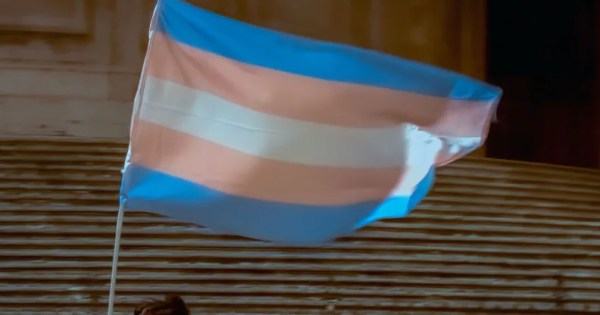
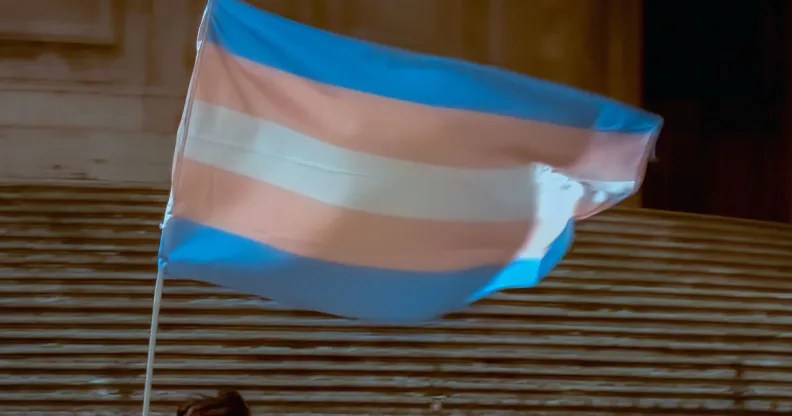
The federal government is set to only recognize two sexes, male and female, under an executive order that President Donald Trump is soon expected to sign.
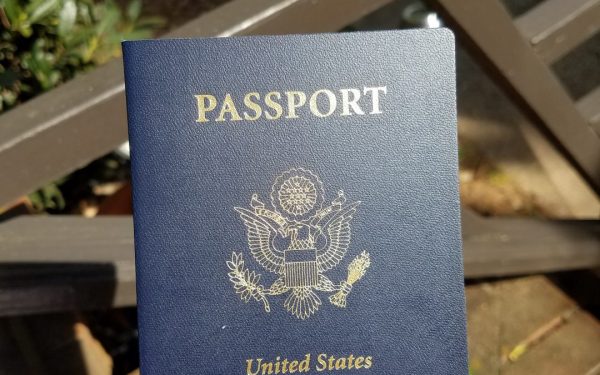
The order would reverse efforts by the Biden administration to broaden gender identity designations, including on passports.
“As of today, it will henceforth be the official policy of the United States government that there are only two genders, male and female,” Trump said during his inaugural address Monday, taking an early step to fulfill one of his culture war campaign promises.
The order, a Trump administration official told reporters Monday, is aimed at “defending women from gender ideology extremism and restoring biological truths to the federal government.” Male and female “are sexes that are not changeable, and they are grounded in fundamental and incontrovertible reality,” the official said.
The federal government would also shift from using the term “gender” to “sex,” and that sex would be “an individual’s immutable biological classification,” the official said.
All government agencies would ensure that official documents, including passports and visas, “reflect sex accurately,” the official said. Also, departments running federal prisons, migrant shelters, rape shelters and other “intimate spaces” would be directed to protect single-sex spaces for privacy. And employee records would also adhere to the executive order, as would federal departments’ messaging.
“Agencies are no longer going to promote gender ideology through communication forms and other messages,” the official said, adding that grants and contracts would be reviewed to ensure that “federal funds shall not be used to promote gender ideology.”
Reversing Biden expansion
Trump’s executive order would dismantle efforts by the Biden administration to be more inclusive of Americans’ gender identification.
As of 2022, US citizens have been able to select “X” as their gender marker on passports. One’s marker does not need to match the gender on citizenship documents or photo ID, nor is medical documentation needed to change one’s gender, according to the State Department.
“We promote the freedom, dignity, and equality of all people – including LGBTQI+ individuals,” the department’s website says. “We are demonstrating this commitment to better serve all U.S. citizens, regardless of gender identity.”
Later that year, Americans were able to start changing their sex identification with the Social Security Administration without needing to provide medical certification. However, Social Security’s record systems still require a designation of male or female, though the administration said it was exploring policy and systems updates to support an “X” designation.
“The Social Security Administration’s Equity Action Plan includes a commitment to decrease administrative burdens and ensure people who identify as gender diverse or transgender have options in the Social Security number card application process,” said Kilolo Kijakazi, the administration’s acting commissioner at the time.
A federal judge has determined that Ron DeSantis was disseminating falsehoods when he referred to gender-affirming care as “mutilation.”
This year has been a series of setbacks for Florida Gov. Ron DeSantis. His presidential ambitions are dwindling due to his lack of charisma and campaign missteps. His conflict with Disney is draining millions from Florida taxpayers. Additionally, a federal court has strongly suggested that DeSantis was dishonest in justifying his prohibition on medical care for transgender youth.
DeSantis consistently argued that the law was essential to prevent the “mutilation” of young individuals. For instance, he criticized a reporter who challenged him on this when he signed the bill in May.
“And when you talk to people—I know people in your industry will dress it up with a euphemism—and they’ll say it’s health care to cut off the private parts of a 14 or 15-year-old,” DeSantis stated. “That is not health care. That is mutilation.”
Inform that to U.S. District Judge Robert Hinkle.
“When assessing the governor’s motives, how should I interpret these statements? It appears to be more than mere exaggeration.”
Hinkle is overseeing a legal challenge to the law brought by three Florida families with transgender children. He has implemented a stay against the measure from being enforced during the legal proceedings and has consistently shown skepticism toward the state’s arguments. In a ruling that invalidated Florida’s ban on Medicaid coverage for gender-affirming care, Hinkle emphasized, “Gender identity is real.”
Hinkle conceded that he cannot completely discern DeSantis’ intentions. He raised the question of whether the plaintiffs could demonstrate that DeSantis endorsed the law “because he hates transgender people.” The families’ attorney argued that the law is inherently unconstitutional, making DeSantis’ motivations less pivotal to the case.
Hinkle indicated his belief that the law’s purpose isn’t truly to prevent mutilation but rather to obstruct transgender youth from accessing healthcare. This strongly suggests that DeSantis might face an unfavorable ruling from the court.
This development also signals that DeSantis might have based his campaign on an unsuccessful concept. Relying heavily on anti-trans stances to perform well in the Iowa presidential caucus, he finds himself facing challenges with Nikki Haley gaining popularity and his campaign in disarray. The outlook for him in Iowa appears uncertain, making the end of 2023 potentially regrettable for DeSantis, with the prospect of 2024 being even more challenging.
Colorado’s Supreme Court has ruled that Donald Trump cannot run for president next year in the state, citing a constitutional insurrection clause.
View: Trump describes indictments as a “badge of honor.”
In a 4-3 decision, the court declared that Mr. Trump was ineligible as a candidate due to his involvement in an insurrection related to the US Capitol riot almost three years ago.
This doesn’t prevent Mr. Trump from running in other states, and his campaign has stated its intention to appeal to the US Supreme Court.
They asserted that the decision was “fundamentally flawed.”
The verdict specifically addresses the state’s primary election on March 5, during which Republican voters will select their favored presidential candidate. However, it may have repercussions for the general election in Colorado next November.
This marks the inaugural application of Section 3 of the 14th Amendment of the US Constitution to disqualify a presidential candidate.
The decision made on Tuesday, which has been temporarily suspended pending an appeal until the next month, is applicable solely in Colorado. Similar efforts to remove Mr. Trump from the ballot in New Hampshire, Minnesota, and Michigan have been unsuccessful.
Is Trump still eligible to run for president following the decision in Colorado?
In their ruling, the justices stated, “We do not arrive at these conclusions lightly. We are cognizant of the significance and gravity of the questions presently under consideration.”
“We are also conscious of our solemn responsibility to uphold the law impartially, unaffected by public sentiment regarding the decisions that the law requires us to make.”
The ruling overturns a previous decision by a Colorado judge, who determined that the insurrection ban of the 14th Amendment did not extend to presidents because the section did not explicitly reference them.
‘Ecstatic’: Attorney for Colorado plaintiffs reacts to the ballot outcome.
The identical lower court judge also concluded that Mr. Trump had engaged in an insurrection during the US Capitol riot. His supporters stormed Congress on January 6, 2021, while lawmakers were in the process of certifying President Joe Biden’s election victory.
The ruling by the Colorado Supreme Court becomes effective on January 4, 2024, which is the day before the deadline for the state to finalize its presidential primary ballots.
“Leaders of the Democratic Party are experiencing heightened concern over the significant and increasing lead President Trump has secured in the polls,” stated Mr. Cheung in a press release.
“They have abandoned confidence in the ineffective Biden presidency and are employing every means to prevent American voters from ousting them from office next November,” remarked Mr. Cheung.
Mr. Cheung further stated that Mr. Trump’s legal team would promptly submit an appeal to the US Supreme Court, where conservatives maintain a 6 to 3 majority.
Understanding the Legal Attempt to Remove Trump from the Ballot
Representatives for Mr. Biden’s re-election campaign chose not to provide a comment on the Colorado ruling. However, a senior Democrat associated with the campaign informed CBS News, the BBC’s US partner, that the decision would aid Democrats by reinforcing their assertion that the US Capitol riot constituted an attempted insurrection.
The source mentioned that it would also assist Democrats in highlighting “the glaring distinctions” between Mr. Trump and Mr. Biden.
Republican legislators criticized the ruling, with House of Representatives Speaker Mike Johnson denouncing it as “a thinly veiled partisan attack.”
He expressed, “Irrespective of political affiliation, every registered voter should not be deprived of the right to endorse our former president, who currently leads in every Republican primary poll.”
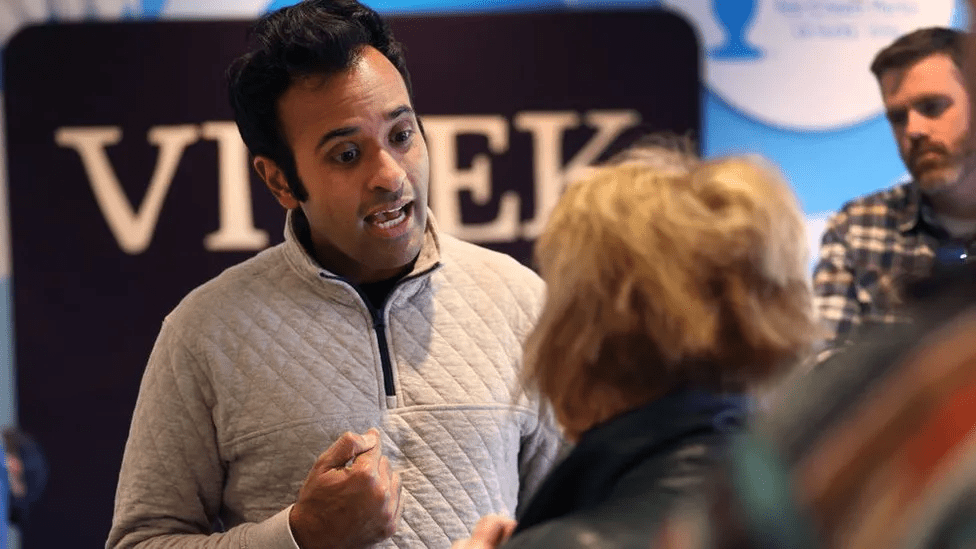
On the campaign trail, Mr. Trump’s rivals in the Republican primary also criticized the decision, with Vivek Ramaswamy vowing to withdraw his name from the ballot if Mr. Trump’s candidacy is not reinstated.
Mr. Trump, while speaking at a campaign event in Iowa on Tuesday night, did not comment on the ruling. However, a fundraising email sent by his campaign to supporters stated, “this is how dictatorships are born.”
The Colorado Republican Party also reacted, announcing that it would withdraw from the state’s primary process if the ruling was upheld.
Citizens for Responsibility and Ethics in Washington (CREW), the organization that initiated the case, expressed satisfaction with the ruling.
The group’s president, Noah Bookbinder, stated in a release, “It is not only historic and justified but is necessary to protect the future of democracy in our country.”
Vivek Ramaswamy urged all candidates to withdraw from the ballot in Colorado.
The 14th Amendment, ratified after the American Civil War, included Section 3 to prevent secessionists from resuming former government positions after southern states rejoined the Union.
The provision was applied to Confederate President Jefferson Davis and his vice-president, Alexander Stephens, both of whom had previously served in Congress. Its application has been rare since then.
In the previous presidential election, Mr. Trump faced a significant defeat in the state of Colorado. However, if courts in more closely contested states adopt a similar stance to Tuesday’s ruling, it could pose significant challenges for Mr. Trump’s White House aspirations.
In a one-week trial last month in Colorado, lawyers representing the former president argued that he should not be disqualified, contending that he did not bear responsibility for the US Capitol riot.
However, in its ruling, the majority of the Colorado Supreme Court disagreed.
They stated that Mr. Trump’s messages before the riot were a “call to his supporters to fight, and his supporters responded to that call.”
Carlos Samour, one of three dissenting justices, contended that the government could not “deprive someone of the right to hold public office without due process of law.”
“Even if we are convinced that a candidate committed horrible acts in the past—dare I say, engaged in insurrection—there must be procedural due process before we can declare that individual disqualified from holding public office,” he wrote.
Mr. Trump is currently confronting four legal cases, encompassing both federal and state charges in Georgia, linked to his alleged involvement in efforts to undermine the election.
Reform is Imperative to Counter Potential for Second Trump Term
In a potential second term, Donald Trump signals a departure from conventional governance, alluding to actions such as suspending the Constitution, constructing extensive deportation facilities, politicizing the Department of Justice, and widespread termination of career civil servants.
An overlooked aspect: reports suggest that on his inaugural day, he intends to employ the Insurrection Act, granting the president the authority to deploy the military for domestic law enforcement purposes.
In 2020, Trump orchestrated a chaotic insurrection. The concern now is that if faced with protests, he might use the law as a means to suppress dissent and consolidate power. It brings to mind the “Reichstag moment” reportedly feared by General Mark Milley three years ago.
Similar to the Electoral Count Act, another outdated and poorly drafted law that Trump sought to manipulate, the Insurrection Act was crafted for a different era and is in dire need of reform, as highlighted by my colleague Joseph Nunn.
There’s a rich historical backdrop to consider. In the 19th century, the military played diverse domestic roles: from oppressing Native American tribes on the frontier and apprehending escaped slaves to securing the voting rights of Black men and suppressing the Ku Klux Klan. Its role was intricate in a complex century.
In 1878, Congress intervened by forbidding the president from deploying federal troops to enforce civilian law in most situations. The Insurrection Act, dating back to 1792, was preserved as an exception to this restriction.
The legislation serves as a prime example of how not to draft significant laws. Essential terms such as “insurrection” and “rebellion” remain undefined. The language is archaic, leaving modern Americans uncertain about its precise meaning. When the law underwent revisions, they tended to enhance presidential power rather than limit it. Courts have interpreted it to bestow upon the president exclusive and unreviewable authority in determining whether the conditions for deploying the military have been satisfied.
A notable absence of checks and balances characterizes the situation. Consequently, we depend on the discernment and good intentions of a solitary individual to maintain the crucial barrier between military operations and domestic law enforcement.
Twice during his presidency, Trump purportedly contemplated invoking the Insurrection Act — initially to suppress Black Lives Matter protests and subsequently to cling to power following his electoral defeat.
The Brennan Center has suggested crucial reforms to the Insurrection Act. Congress should provide clear definitions for the law’s essential terms. Increased oversight by legislators and judges is necessary for the president’s implementation of the law. These reforms are sensible and non-partisan, and Congress has the capability to implement them promptly.
Job search platform Indeed has launched a new $10,000 payment scheme for their transgender employees to help them relocate to safer areas in the United States.
Amidst the increasing polarization in the United States regarding transgender rights and healthcare, along with the enactment of laws and policies in certain states that significantly affect the LGBTQ+ community, specific organizations and corporations are beginning to take a stand.
Although Indeed Inc. introduced this initiative to support transgender employees in July, it has only recently become public knowledge, as reported by Bloomberg.
Under this initiative, transgender employees or employees with transgender family members in their immediate household will be eligible for a $10,000 payment. This financial assistance is intended to facilitate their relocation to states that still provide gender-affirming care and are generally more inclusive and accepting of individuals seeking such care.
One employee, Sam Burger, disclosed to the publication that they promptly utilized the initiative as soon as it was introduced by Indeed Inc.
Burger, aged 30, who prefers they/them pronouns, holds the position of senior content creator at the company. They made the decision to utilize the funding to depart from their hometown in Austin, Texas, and establish their new residence in Denver, Colorado.
Upon learning that they would receive the financial support, Burger described the experience as a profound relief, sharing their sentiments with Bloomberg.
Since their move to Denver, accompanied by their dog and two cats, Burger has noted a significantly more welcoming atmosphere and has found local medical services to be much more accommodating compared to their previous experiences in Austin. They have expressed their intention to pursue gender-affirming surgery and hormone therapy in the near future.
Burger is one of the few employees who have participated in the program thus far. Other LGBTQ+ employees, particularly those residing in Texas and Florida, have conveyed concerns about their prospects in those states.
Misty Gaither, Indeed’s VP of Diversity, Equity, Inclusion, and Belonging, explained that the company has been collaborating with a business resource group for LGBTQ+ employees to determine the most effective response to the increasing number of states passing laws restricting LGBTQ+ healthcare.
Indeed conducted a survey earlier this year, which revealed that 62 percent of transgender individuals felt compelled to manage their identity while at work, with 38 percent experiencing pressure to conceal their identity altogether. Furthermore, 57 percent believed it was important for their employer to provide LGBTQ+-specific benefits, yet only 23 percent reported having such benefits in their current employment.
By extending a $10,000 payment to concerned employees, the company is aligning with its $10,000 annual reimbursement limit for employee travel expenses incurred outside of the state for medical purposes.
Indeed Inc. will cover any resulting tax liability arising from this payment, as it is regarded as income, according to Gaither.
The company, headquartered in Texas, acknowledges that this new initiative may face potential public, stakeholder, or state official backlash.
Nevertheless, Indeed appears prepared to handle any potential criticism or opposition.
Additionally, Indeed is not the sole company making efforts to support its transgender employees.
Intuit has introduced a similar relocation payment program for its employees, while Netflix and Amazon offer reimbursement of up to $10,000 for travel expenses associated with out-of-state healthcare.
Starbucks offers coverage for gender-affirming care for transgender employees and assistance in locating appropriate healthcare providers, while Meta aims to facilitate access to gender-affirming care for its employees and their dependents through its employee benefits package.
Although these initiatives represent a modest beginning, they have the potential to be profoundly transformative and even life-saving for LGBTQ+ employees. Hopefully, this trend will continue to gain momentum.
As Denver resident Sam Burger aptly puts it, “Individuals desire to work for a company they perceive as taking care of its employees.”
A judge has thrown out a case filed by sorority sisters who wanted to remove a trans woman from their chapter.
Judge Alan Johnson dismissed the case of six University of Wyoming sisters after they sued their sorority earlier in March for admitting the school’s first trans member.
Fraternities and sororities across the United States have found themselves at the center of legal disputes related to transgender membership eligibility. In a landmark case, six members of the Beta Phi Alpha (BPA) fraternity, an all-male organization at a prominent university, filed a lawsuit in March alleging that the national fraternity had violated its own charter and bylaws by admitting Taylor Monroe, a transgender individual, into their ranks. The plaintiffs sought damages from the national fraternity and called for Monroe’s expulsion.
On August 25th, US District Court Judge Alan Johnson dismissed the lawsuit, stating that the fraternity members could not compel a “private, voluntary” fraternity to adhere to their definition of “man,” which traditionally did not include transgender individuals, when determining membership eligibility. Judge Johnson emphasized that the fraternity’s chapter at the University had voted to admit Monroe, and a broader fraternity of hundreds of thousands had approved this decision. He concluded that it was not the court’s role to define the term “man” in this context.
This ruling marks an important legal precedent in addressing issues of transgender inclusion within traditionally gender-segregated student organizations. The case underscores the ongoing debate surrounding gender identity, civil rights, and the autonomy of private organizations in shaping their membership criteria.
The legal battles do not stop at fraternities. A similar lawsuit involving sororities has garnered attention, further illustrating the complexity of this issue. Six members of the Kappa Kappa Gamma (KKG) sorority, an all-female group at the University of Wyoming, filed a lawsuit alleging that the national sorority had violated its own charter and bylaws by admitting Artemis Langford, a transgender woman, into their sorority.
Just like the BPA case, the plaintiffs sought damages from the national sorority and called for Langford’s removal. However, on the same day as the BPA ruling, Judge Johnson also dismissed this lawsuit. He asserted that the members of the sorority could not force the “private, voluntary” organization to adhere to their specific definition of “woman,” which, traditionally in this context, did not encompass transgender individuals.
These legal battles come at a time when issues related to transgender rights and inclusion are gaining increasing attention nationwide. While the legal outcomes in these cases suggest that courts are hesitant to interfere with the internal decisions of private organizations, the broader implications for transgender individuals’ rights and acceptance remain subjects of ongoing discussion and advocacy.
It is essential to recognize that these cases reflect the complexities and debates surrounding gender identity, the rights of private organizations, and the ongoing struggle for inclusion and acceptance. As society continues to evolve and grapple with these issues, legal battles like these serve as milestones in the ongoing journey towards greater equality and understanding.
Canada has updated its travel advisory for the United States, warning its LGBTQ+ residents that they may be affected by some state laws if they travel across the border.
Global Affairs Canada (GAC) has updated its travel advisory to include a warning for LGBTQ+ visitors to the United States. The advisory now advises LGBTQ+ travelers to check state and local laws before planning their trips, as some states in the US have enacted laws and policies that may affect LGBTQ+ individuals. This update is part of the ‘Laws and Culture’ section of the Canadian travel advisory, which aims to inform citizens about potential risks and legal considerations when traveling to other countries.
Global Affairs Canada (GAC) has updated its travel advisory to include a warning for LGBTQ+ travelers to the United States. While the advisory doesn’t specify particular laws or states, it highlights that certain US states have passed laws restricting access to gender-affirming care, banning drag shows, and limiting transgender community participation in sports. GAC advises LGBTQ+ travelers to be aware of local laws and customs governing sexual orientation, gender identity, gender expression, and sex characteristics when traveling abroad. The update is meant to help travelers make informed decisions about their destinations, given the potential differences in legal frameworks and social customs. Deputy Prime Minister Chrystia Freeland emphasized that these travel advisories are professionally prepared to address specific risks to Canadians while abroad.
In a noteworthy move reflecting evolving global attitudes towards LGBTQ+ rights, Canada has issued a travel advisory that has sent ripples across the border. This advisory comes in response to a series of new laws enacted in several U.S. states, which have raised concerns over LGBTQ+ rights and freedoms. In this blog, we delve into the intricacies of this significant development, exploring both the legislative changes in the United States and Canada’s decision to caution its citizens traveling southward. Join us as we examine the intersection of travel, human rights, and international diplomacy in an ever-changing world.
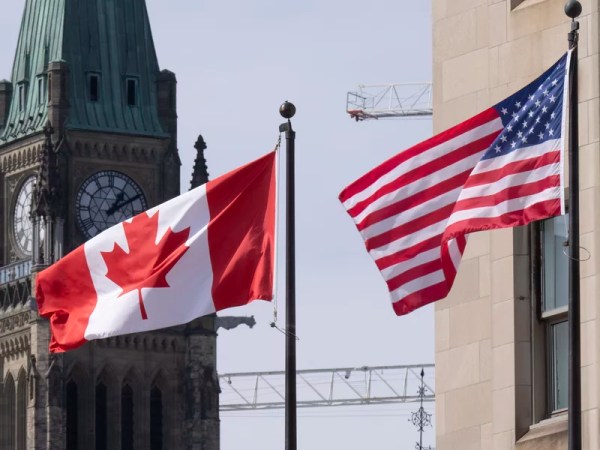
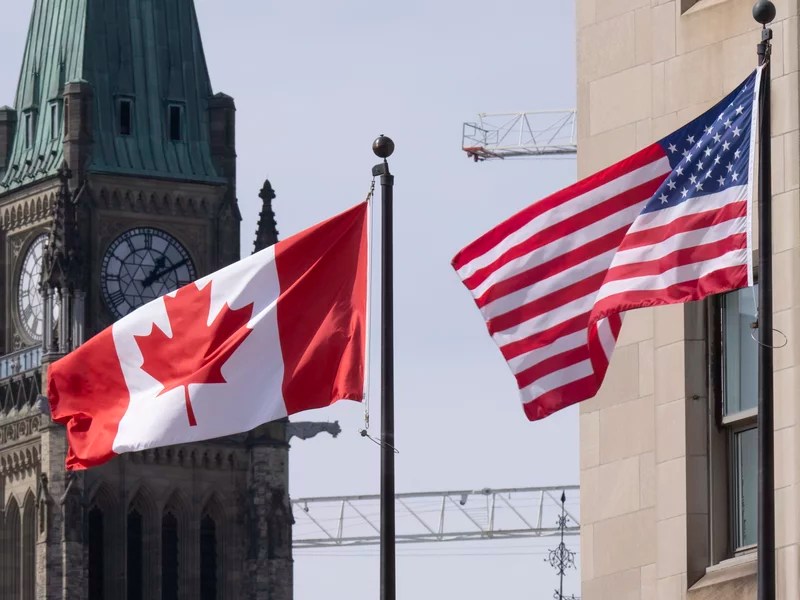
The Canadian and U.S. flags are displayed on lamp posts in the downtown area, March 22, 2023, near Parliament Hill in Ottawa, Ontario.
TORONTO — Canada has recently revised its travel advisory for the United States, cautioning members of the LGBTQ+ community about the existence of laws in some American states that could impact them.
The Global Affairs department of Canada did not explicitly mention which states these laws pertain to, but they are strongly advising travelers to research the local regulations of their destination before embarking on their journey.
Jérémie Bérubé, a spokesperson for Global Affairs, conveyed in an email statement on Thursday, “Since the beginning of 2023, certain states in the U.S. have passed laws banning drag shows and restricting the transgender community from access to gender-affirming care and from participation in sporting events.”
“Outside Canada, laws and customs related to sexual orientation, gender identity, gender expression and sex characteristics can be very different from those in Canada,” the statement added. “As a result, Canadians could face certain barriers and risks when they travel outside Canada.”
Bérubé said no Canadians in the U.S. have complained to Global Affairs of how they were treated or kept from expressing their opinions about LGBTQ+ issues.
The Human Rights Campaign — the largest U.S.-based organization devoted to the rights of lesbian, gay, bisexual, transgender and queer Americans — in June declared a state of emergency for LGBTQ+ people in the U.S.
The NAACP in May issued a travel advisory for Florida warning potential tourists about recent laws and policies championed by Gov. Ron DeSantis, including bills that ban gender-affirming care for minors, target drag shows, restrict discussion of personal pronouns in schools and force people to use certain bathrooms.
In Arkansas Gov. Sarah Huckabee Sanders this year signed a law prohibiting transgender people at public schools from using the restroom that matches their gender identity. Similar laws have been enacted in states such as Alabama, Oklahoma and Tennessee.
Asked about the travel advisory change this week, Canadian Deputy Prime Minister Chrystia Freeland said travel advisories issued by Global Affairs Canada are based on advice from professionals in the department whose job it is to monitor for particular dangers.
“Every Canadian government needs to put at the center of everything we do the interests — and the safety — of every single Canadian and every single group of Canadians,” Freeland said.
She did not say whether her government had discussed the matter with its U.S. counterpart.
“It sounds like virtue-signaling by Global Affairs,” said Nelson Wiseman, a political science professor emeritus at the University of Toronto.
“In no U.S. state, to my knowledge, has any government charged or discriminated against an LGBTQ+ traveler because of their sexual identity or orientation. This all strains the credibility of the department,” he added.








 fleeredstates.blog
You must be logged in to post a comment.